948
ANALYZING THE BENEFIT OF IMPLEMENTING
INTEGRATED DGPS AND TERMINAL OPERATING SYSTEM
AT YARD TERMINAL SURABAYA
1AMIN JAMAL, 2RIYANARTO SARNO, 3HARI GINARDI
Institut Teknologi Sepuluh Nopember, Surabaya Indonesia Email:[email protected], [email protected], [email protected]
ABSTRACT
Differencial Global Positioning System (DGPS) is a enhancement of the available publicly Global Positioning System (GPS) to increase its accuracy. GPS function to determine an object location in the earth’s surface by using orbiting satellites. Terminal Operating System (TOS) is the core application used by container terminal for both for planning, monitor and execute the containers movement from truck to yard, yard to truck, truck to vessel and vessel to truck using heavy lifting equipment (called Container Handling Equipment – CHE). In most cases, DGPS implementation within TOS for automatic container tracking will contributed significantly to reduce operating cost, therefore, this research analyze the benefit of this implementation. The author use balanced scorecard approach as performance metrics to define, measure and analyze the benefits of implementing the integration between DGPS and TOS by comparing the results before and after the implementation . The benefits of the implementation can be explained by reducing Truck Round Time(TRT) by 38.17 % compared year 2016 to that of year 2013. Box Container per Hour (BCH) increase 16.67 %, whereas operating cost decrease 3.3% compared year to that of year 2013.
Keyword: DGPS, GPS, TOS, Container, TRT, BCH.
1. INTRODUCTION
Competition becomes more competitive [1] with the emergence of competitors, both new competitors and as well as existing competitors in the container terminal business, such as BJTI (domestic), Nilam (domestic) and Terminal Teluk Lamong (domestic and international) in East Java, demanding TPS to improve customer service and optimize container tracking in CY (container yard). The problems that exist in CY: inaccurate container inventory accuracy, manual confirmation of moving container (by CHE operators), high operational cost [2], safety issue [3]. A main cause of those problems that exist in CY is unavailable actual cantainer location when container moving as requested by TOS. Our approach is study a existing process, find technology, literatures and benchmark related to main cause of problem. Those problems can be solved by implementing integrated DGPS technology to TOS (Terminal Operating System). So with impementation DGPS technology integrated with TOS can provide benefit to the Terminal Petikemas Surabaya (TPS).
1.1. TPS Profile
TPS located in the northern part of East Java Province, Surabaya, latitude: 70.12', 23"S and longitude: 1120.143', 41”E. TPS is a subsidiary of
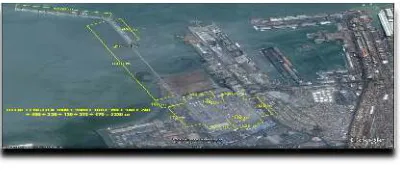
[image:1.612.319.519.529.615.2]PT. Pelabuhan Indonesia (Pelindo III), which in 1992 was still a UTPK (Container Terminal Unit). In 1999 carried out the privatization of which 49% owned by P & O Dover, 51% of the shares owned by Pelindo III. In 2006, P & O Dover acquired by Group DPW (Dubai Port World) [4]. TPS conduct business operations of loading and unloading containers at the berth and services in the accumulation of dry and reefer containers at CY. TPS activity as shown in Figure 1.
Figure 1: TPS Area
1.2. Container Yard (CY)
949
Figure 2: CY Area of TPS
Total capacity for CY amounted to 29,040 Twenty Foot Equivalent Unit(TEUs) consists of 9178 TEUs for block export, block import is 14 445 TEUs, block domestic = 2,974 TEUs, block behandle is 482 TEUs and block reefer is 1,960 TEUs.
1.3. Container Handling Equipment (CHE) CHE [5] which is currently owned by TPS consists of Rubber Tire Gantry Cranes (RTG), Reach Stackers (RS), Sky Stackers (SS), Forklift, Internal Transport Vehicle (ITV) or knows as Heat Truck (HT), Chassis, Cassette and Trans-lifter.
1.4. Computer Systems and TOS
Computer System [6] is divided into two major groups, infrastructure and applications. The application that is used to run TPS core operations is TOS (Terminal Operation System), it consist of front-end application (TOP-X Advance) and back-end application (CTOS Billing System). TOS is integrated with DGPS. This infrastructure including Local Area Network (LAN), Wide Area Network (WAN), Servers, Personal Computer (PC), Vehicle Mounted Terminals (VMT), Radio communication, Handheld Terminals (HHT). While the network media are in use in the form of WiFi 2.4 MHz, Fiber Optic (FO), core switches and coaxial cables. Core switches are in use in the new building (Administration office) is a type Cisco C6807 whereas in the old building (Customs service office) is a Cisco 6506 with a speed of 1 Gbps. For Network in CY, initially using the Access Point (AP) Cisco Aironet BR1242 ETSI (AP Transmit Power 1242 amounted to only 17-19 dBm). AP 1242 is changed to AP 1532E which has a 27-32 dBm transmit power. Total AP in CY is 34 units.
VMT are in use in each cabin RTG, RS, SS is LXE VX8 intended to operate with Windows XP operating system. For antennas in VMT using dual antenna Cisco 6 Dbi.
2. LITERATURE REVIEW
We use literature review to complete this journal. Some literature riview are:
2.1. DGPS
DGPS as a Global Navigation Satellite System (GNSS) which is the development of GPS location accuracy improvement [7]. DGPS [8] [9] at TPS, Receivers installed in each RTG with a total of 30 units and in each RS and SS with a total of 7 units and one unit of the base station. DGPS basic image at the TPS as Figure 3.
GNSS Satellite
GPS Receiver at RTG, RS, SS
Base Station Error correction
Figure 3: DGPS at TPS
The base station receives GNSS signals and calculating the pseudo range the satellite and it is determine the error range. Then, the base station sends a correction range to each GPS receiver in RTG, RS and SS via WiFi (2.4 GHz). Receiver in RTG, RS and SS will receive GNSS signals, calculating the correction range pseudo range and use this to determine where container location.
2.2. TOP-X
TOS are the core application is used for operational container by TPS, export, import and domestic. The application consists of two main modules, namely for planning and execution. We have been used Container Billing System(CBS) for billing system. TOS has upgrade since February 2012.
TOS application and the database (DB) on separate servers. Make a well in the DB server back up on a separate server in real time synchronization to ensure no data is lost if one machine was broken. TOS also connected to the system Enterprise Resource Planning (ERP) [10][11][12][13] specific in finance module. TOS can be accessed from the berth and from all of the gates with HHT devices in addition to using a PC or laptop / notebook. For in CY, RTG operators access TOS using VMT devices.
[image:2.612.331.514.252.377.2]950 11G, Central Processing Units (CPU) is 2 SPARC VII + 4-core 2.66 GHz processors, Memory 64 GB hard drive (HDD) is a 300 GB RAID 1.
2.3. Metric
[image:3.612.319.522.89.198.2]Table 1 explain metrics for measuring implementation of the optimization benefits of DGPS in CY [14] [15].
Table 1: Metric Measurement Optimization DGPS
From table 1, focus on analyzing the matric course of several items, including:
a. Truck Round Time b. Box Container per Hour c. Operating Ratio
3. RESEARCH METHOD
Research methods use a business process model based on the existing DGPS implementation business processes.
3.1. Business Process in CY
[image:3.612.89.298.199.302.2]Overall block and naming locations in CY TPS as shown in Figure 4. One block consists of rows, slots and tier. The location of a container in coded with block name, slot number, row number and tier; for example I 03 05 3; this container is located in the block I, slot 03, row 05 and tier 3. See Figure 5 (black box).
Figure 4: Block TPS
Figure 5: Naming Structure Block
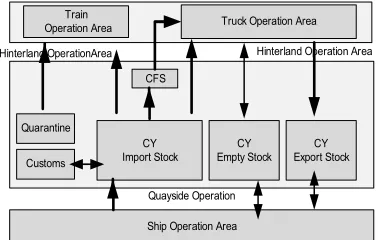
[image:3.612.329.518.260.380.2]Business process overall [16] terminal operation is almost the same at all the container terminals. There is little difference in the TPSs as shown in Figure 6.
Quayside Operation Hinterland OperationArea
Truck Operation Area
CY Import Stock
CY Empty Stock
CY Export Stock Train
Operation Area
CFS
Quarantine
Customs
Ship Operation Area
Hinterland Operation Area
Figure 6: Business Operational Process TPS
For export, container sent via truck by customers and once at the entrance (gate in) then the container will be planned to export CY. TPS also provide transshipment service, container discharged from a vessel and placed in CY transshipment prior loaded into the next connecting vessel [8]. For import, discharged containers from the vessel will be placed to import CY. Based on applicable government regulation, all import containers flagged with “red line” will be inspected by Customs in CFS area, once completed, it will be returned to the import CY waiting for pickup delivery process. Quarantine Department also checks the contents of containers (of animals, fish and plants products and its derivatives) for pests and diseases, the inspection is performed in block W. When a container is clear of all inspections (from Customs and Quarantine), its ready to be picked up for delivery by customers. For container with status empty, for both export and import will be treated as container with status full but without Customs and Quarantine inspection.
The business operation process in the CY using RTG, RS, SS are as follows:
3.1.1. Stack
[image:3.612.100.291.543.688.2]951 discharged from vessel will be stacked in Import CY and container received from gate will be stacked in Export CY. As shown in Figure 7 (step 5).
Figure 7: Stack Process
3.1.2. Unstack
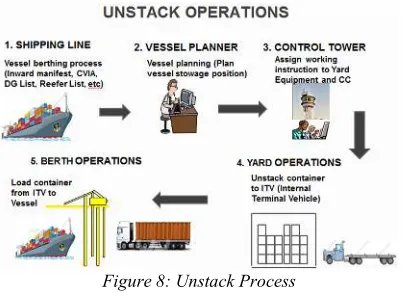
The unstack process is the opposite of the stack process, its moving container from CY's onto the truck. In export process, the unstack will send the container from CY to wharf to be loaded onto the vessel. While in import process, the unstack will deliver the container to customers. See Figure 8 (step 4).
Figure 8: Unstack Process
3.1.3. Shifting
The process of shifting is the process of moving the container in the same block and slot area without using a truck. Shifting is happen because the intended container for unstack is located underneath of the to-be-shifted container. Mainly happen during import unstack (for delivery) and yard consolidation.
3.2. Implementation of DGPS Technology and Integration Into The TOS.
The expected results are limits the scope of DGPS technology implementation, challenges and
integration of DGPS to the TOS and the change management process after the integration.
3.3. Benefit Analysis Measurement Technology Implementation DGPS. Implementation of DGPS technology integrated with TOS to the container tracking in CY to analyze, compare results based on the performance metric Balance Scorecard (BSC) approach [17] and Analytical Hirarchi Process (AHP) approach [18][19][20] to be implemented with the DGPS technology. There are some of the advantages of using DGPS technology.
4. DGPS TECHNOLOGY
IMPLEMENTATION AND INTEGRATION INTO TOS
In order to research the implementation of DGPS technology integrated with this TOS, writer needs to make the grouping into:
4.1. Scope DGPS Technology Implementation and Integration TOS.
Scope on DGPS technology implementation in all CY related CHE Kone RTG is 16 units, 8 units of Fels RTG, 6 units of Kalmar RTG, 6 units of RS and 2 units of SS. DGPS implemented throughout except CY "Gudang Api" at designated for empty container and CFS activities. DGPS applications (called CTAS: Container Automation System) will be integrated with the TOS. Communication between the CTAS and TOP-X is bidirectional. The base station is in use is one unit of the base station installed at the 9th floor of the administration building.
4.2. Challenges in The Implementation of DGPS and Integration TOS.
Some of the challenges in the implementation of DGPS technology this form:
4.2.1. RTG Age over 25 years.
RTG is in use at TPS have been aged over 25 years, making it difficult in terms of retrieval of data from the Programmable Logic Controller (PLC), Part of tools exist that are not original (reengineering), no guidebook is complete.
[image:4.612.95.298.418.567.2]952 4.2.3. Control heights are still using analog.
There are several brands RTG unit FELS using elevation measurements using a laser beam. Events is the result of the measurement altitude using an analog system. For example at 8 units of RTG brand FELS.
4.3. Conditions DGPS Technology Implementation and TOS.
There are several conditions that the authors grouped in the implementation of DGPS integrated with TOS, among others:
4.3.1. Integration of DGPS with TOS
[image:5.612.90.297.289.476.2]Details DGPS integration with TOP-X is the show in Figure 9.
Figure 9: Integration of DGPS with TOS
In each CHE, we install CTAS-Vehicle (messenger box). The functions of CTAS-Vehicle are:
1) Receive GPS signal location (longitude and latitude)
2) Receive correction beacon signal from base station
3) Receive spreader lock-unlock information from CHE’s PLC to determine the Lift (lock spreader and lift container) and Set (place the container and unlock spreader) activity of the CHE
4) Send the Lift and Set information along with location detail to CTAS-Server
The CTAS-Server main responsibilities are: 1) Consolidating all Lift and Set information of
all CHE
2) Send the Lift and Set action with location information to TOS (TOPX) using CTASXML format
The TOPX uses CTASXML information to update container position of each moves made by CHE, when the CHE is set in Auto mode (explained below). Data flow between TOPX-CTAS server-CTAS vehicle is shown in Figure 12.
4.3.2. DGPS mode and display VMT
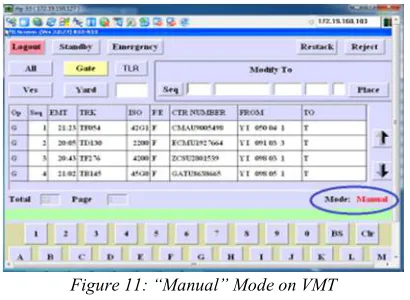
Having implemented this DGPS technology, there are 2 kinds of modes that appear on the screen VMT, the first mode "Manual" and second mode is "Auto". Manual mode indicates that CHE is working in manual confirmation mode (confirmation performed by CHE operators instead of DGPS). In this mode, CHE operator is required to select the job (select from the list) and confirm (touch “Place” button) of the container move manually. The process flow mode "Manual" is, as shown in Figure 10.
Legend : Set = Place Lift = Pick Start
Receipt Job from system
Operator select Job
Operator Press “Pick”
Operator Press “Place”
End Process without DGPS
[image:5.612.322.511.311.435.2]Set/ Lift Container on destination
Figure 10: Process flow Lift / Set without DGPS
The “Manual” and “Auto” setting mode is regulated by control towers using TOPX application. VMT mode with "Manual" on the screen VMT as shown in Figure 11.
Figure 11: “Manual” Mode on VMT
4.3.3. Automatic Container Lift/Set at CY area.
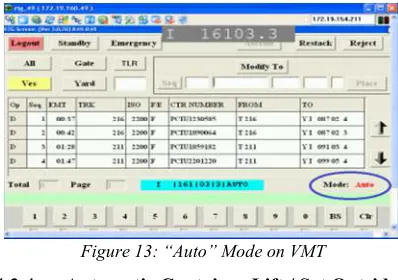
[image:5.612.316.521.514.664.2]953 Set via CTAS PLC interface, CTAS will send a message to the TOP-X through CTASXML that has occurred Lift/Set and recorded as a log in the CTAS. It happened on the location of container that has been mapped in the TOP-X and CTAS. The information sent to the TOP-X form: CHE-ID, type: Lift or Set, slot position (Block, Slot, row and tier). If CHE did Lift / Set according to which instructed the operator can proceed to the next step. If not then it will send a message to the TOS and recorded as an exception in the CTAS and a message will appear on the screen VMT like "Wrong container". Operators should return the container to the place of origin so that the message will disappear from the VMT. This lift container from CY to truck and vice versa. Set namely putting the container to CY from the truck and vice versa. All movement or displacement of the container with the Auto mode it will be recorded in the system, both system CTAS and TOP-X. RTG/RS/SS operators does not need to press the "Pick" and "Place" button to confirm Lift/Set so as to speed up the transaction process container. Process flow Lift/Set shown in Figure 12.
Start
Receipt Job from system Operator select Job Set/Lift Container on destination End Process with DGPS
[image:6.612.101.288.380.513.2]Legend : Set = Place Lift = Pick
Figure 12: Process flow Lift/Set with DGPS
VMT screen in this Auto mode as shown in Figure 13.
Figure 13: “Auto” Mode on VMT
4.3.4. Automatic Container Lift / Set Outside The Area CY
In Auto mode. Container location is not in the
location that is mapped (located outside the block) then that location was reported as a location "No slots" by CTAS. If this happens then CTAS will send information CHE-ID, type (lifts or Set), Virtual-ID (virtual location that holds a container that is not its location) and tier. All movement or displacement of the container with the Auto mode it will be recorded in the system, both system CTAS and TOP-X.
4.3.5. Automatic Container Lift / Set To Chassis Truck
Assumptions mode is Auto. If CHE detect any lifts or Set at the height of the truck chassis, the CTAS will report the slot position as the "Chassis". If this happens then CTAS will send information CHE-ID, type (lifts or Set), Slot Chassis that position as a tier. All movement or displacement of the container with the Auto mode it will be recorded in the system, both system CTAS and TOP-X.
4.3.6. Exceptions in General.
This general exception can occur caused by the absence of signals from the satellite DGPS, CTAS will send the slot position to TOS with "Slot No.". Another cause for their latencies caused by problems with infrastructure (LAN, servers, WAN, etc.).
4.3.7. Change Management
For DGPS system can run smoothly and can be applied by the direct stakeholders such as operators VMT, planner, team control center then they are given training and socialization. Preparing trainer that takes the operator VMT itself of each shift. 4.3.8. BSC and AHP.
[image:6.612.93.292.556.696.2]A reason of author used AHP in this research is to provide management of PT.TPS able to allocated weight for each perspective of BSC. BSC and AHP approach in a hierarchical structure for the purpose of implementation of DGPS advantage in TPS as in Figure 14. Goal=Benefit Implementation DGPS A=Perspective Finance B= Perspective Customer D=Learning & Growth
Return of Invesment (ROI)
C=Perspective Internal Process Bisnis
Net Profit Margin Operating Rasio Return of Asset (ROA)
Kepuasan pelanggan
Retensi Pelanggan Akuisisi Pelanggan Pangsa pasar
Truck Round Time
Inovasi Box Container Hour (BCH)
Throughput
Kapabilitas Pegawai
[image:6.612.314.521.559.635.2]Motivasi, pemberdayaan , Keselarasan Kapabilitas System Informasi
Figure 14: Structure Hirarchi Implementation DGPS
954
Figure 15: BSC Matrix
Then the next step is done normalized by dividing each element of the column with the total amount of each column and do the summation on each line, the result of normalization as in Figure 16.
Figure 16: BSC Matrix after Normalization
Sum of each row and then divided by the total element as shown in the Figure 17.
Figure 17: Priority
Figure 17 shows the customer perspective weighs highest priority, followed by finance perspective, the perspective of learning and growth and internal business processes.
5.BENEFIT ANALYSIS OF MEASUREMENT DGPS
To show the benefits of the implementation of DGPS technology integrated with TOS in the yard, the writer needs to do an analysis of performance metrics in more detail.
5.1. Metric Analysis.
In measuring the performance optimization benefits after the implementation of DGPS technology, there are several indicators that the authors have outlined in a metric optimization DGPS technology implementations, including:
5.2. Truck Round Time (TRT)
Implementation of DGPS technology is integrated with TOP-X can shorten the process TRT than before implemented DGPS technology. TRT is
calculated by measuring the time since the truck for delivery container at the entrance (gate in) until the truck at the exit (gate out). Formula is define as
WTRT = Wgate out - Wgate in (1) Where:
WTRT = TRT Time
Wgate out = Timestamp when the truck gate out
Wgate in = Timestamp when the truck gate in
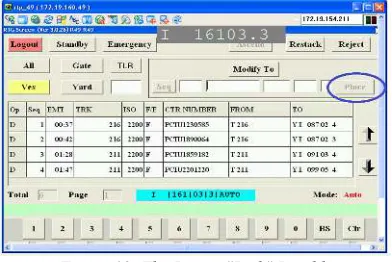
[image:7.612.117.272.247.305.2]At the time of the Lift, the operator selects the job (container to be done Lift) in VMT, would automatically HT ID / Trailer ID in the "Modify To" will be filled, they no longer need to confirm by pressing the "Pick" in VMT when container taken from CY or from the chassis, thereby eliminating this step will accelerate the process of the Lift. See Figure 18.
Figure 18: The Button "Pick" Disable
These Lifts can process transactions to Vessel loading, delivery to the custom either by truck or by train, shifting, in quarantine inspection. Set on the process, so the container will be in place, the VMT will change with the "Place" becomes inactive. See Figure 19.
[image:7.612.320.516.324.455.2]955
[image:8.612.117.513.128.356.2]
So with the rapid process of Lifts and container Set in CY, it will have an effect on TRT. With the formula 1, reports TRT data without and with implementasi DGPS shown in Table 2. Summary TRT per year as shown in Table 3.
Table 3: TRT from Year 2013 until Year 2016
From the table 3, TRT has been decresed since September 2015 implemented the technology DGPS. TRT descrease by 38.17 % compared year 2016 to that of year 2013.
5.3. Box Containe Hour (BCH)
[image:8.612.101.289.319.369.2]BCH is one indicator of the performance of services in CY by the RTG container. BCH is the number of transactions in the container and lifts Set by the RTG unit in an hour. The author takes BCH to show production before and after the implementation of DGPS technology. A result is there is changed in the direction of improvement. BCH increase to be average 18 (15 units to that year 2013, 16 units to that year 2014 and 17 units to that year 2015) units per hour or BCH increase 16.67 % compared year 2016 to that of year 2013. Graph BCH value increase is seen as in Figure 20.
Figure 20: Box Container per Hour
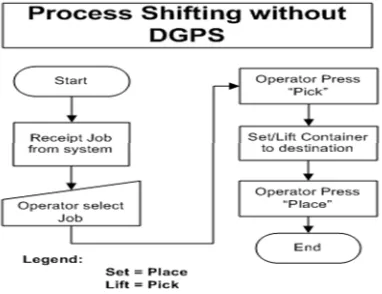
[image:8.612.321.512.422.569.2]Besides of BCH, RTG's performance can also be characterized by shifting. Process flow without DGPS applied as the Figure 21.
Figure 21: Shifting Process Flow without DGPS
For shifting process without DGPS, opeartor need to select a job then press “Pick” and “Place” button. For the process of shifting with DGPS, the process flow as shown in Figure 22.
10 15 20
2013 2014 2015 2016
Box Container Hour
Container per hour
956
Figure 22: Flow Shifting Process with DGPS.
For Shifting, operators do not need to select the job, but directly move the container to the place which in want and the system will confirm themselves as the Lift and Set, see the screen VMT in Figure 23.
Figure 23: Screen VMT Shifting Process with DGPS
5.4. Operating ratio. Operating ratio is define as
OR = (BO : PO) (2) Where:
OR = Operating Ratio BO = Operating cost
PO = Operating income
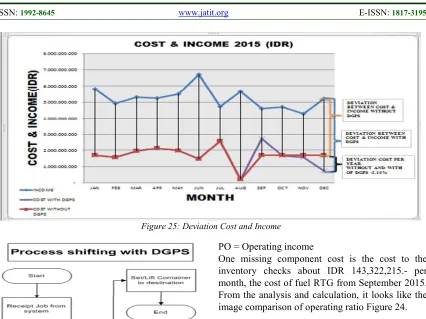
[image:9.612.317.519.392.489.2]One missing component cost is the cost to the inventory checks about IDR 143,322,215.- per month, the cost of fuel RTG from September 2015. From the analysis and calculation, it looks like the image comparison of operating ratio Figure 24.
Figure 24: Operating Ratio Year 2013 – Year 2015
In year 2013 before implementing DGPS, the ratio of operating cost is 45.3 %. The year of 2014, after preparing the implementation, the ratio of opearating cost is 45.3 %, whereas the year of 2015, after full implementation, the opearting cost is 42.0 %. A decline in operating ratio since the implementation of DGPS technology (since September 2015) amounted to 3.3% compared year 2015 to that year 2013. The author uses % to maintain the confidentiality of enterprise data. Benefit DGPS implementation in view of the income, costs before and after implementation in 2015, there is a deviation. If the projected usage costs on average since September 2015 and compared to usage charges after implementation then there is a fee of 2.15% deviation (Snapshot Dec 2015). Likewise, if compared to income after implementation larger in comparison with and
40.0% 45.0% 50.0%
2013 2014 2015
45.3% 45.2%
42.0%
OPERATING RATIO
[image:9.612.91.293.502.626.2]957 without DGPS. A deviation between costs and income shown in Figure 25.
5.5. Implementation Advantage DGPS Technology and TOS
There are several advantages of implementing an integrated DGPS with TOS in addition to the metric above. Advantages are:
5.5.1. Safety
RTG Operator, RS and SS no longer need Tallyman (Operator confirming with HHT) previously needed for confirmation as part of mandatory (compulsory). Tallyman position in CY. Counteracting this Tallyman operator function will reduce the risk of accidents (safety) against the Tallyman operator.
5.5.2. History movement of container in CY Any move container in CY will be recorded by the DGPS technology, making it easier for TPS (in terms of operation team) to determine the position or location of a container located.
In the Figure 25, container MSKU8953977 at the flick of a vessel, HT (Trailer), and last CY(yard), CY (there are two movements in CY).
5.5.3. Accuracy container inventory in CY
[image:10.612.312.521.75.202.2]Each transfer is done via the Lift / Set by DGPS will be updated to the TOP-X by CTAs. So that the container in DGPS location is the actual location that currently exist in the TOP-X. See Figure 26.
Figure 26: Location Container in CTAS vs TOP-X
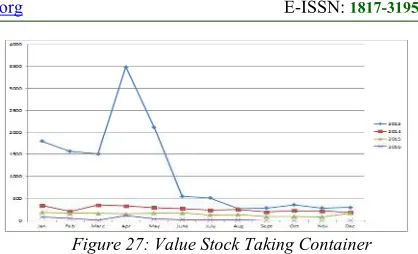
[image:10.612.316.520.313.446.2]With equal of actual location with the container in CTAS and TOP-X then the increase in CY container inventory accuracy. Accuracy container in CY. This is the main goal in implementing DGPS technology. Accurate inventory this container, accelerate TRT container to the customer upon delivery and loading to the vessel. Accuracy container is visible with the reduction in container repair position as on the show in Figure 27.
Figure 27: Value Stock Taking Container
The Figure 27 shows comparative reduction in the inventory check since implemented DGPS since September 2015 until now.
5.5.4. Position CHE on CY.
Team control center can also determine the position of each CHE with this DGPS. So, the control center can optimize each of these CHE, see Figure 28 (in blue ring).
Figure 28: Position CHE on CY.
6.CONCLUSION & FUTURE WORK From the description and analysis of the above, the authors make conclusions and learning.
6.1. CONCLUSION.
Based on the description and analysis of the above, the authors conclude:
a. By implementation of DGPS technology integrated with TOS provides actual containers location.
b. Implementation of DGPS technology integrated with TOS able to reduced costs 2.15% (Snapshot Dec 2015).
c. Those advantages that can be measured by performance metrics such as:
TRT average of 27.50 (44.48 in 2013, 28.49 in 2014 and 27.83 in 2015) minutes in year 2016 or TRT descrease by 38.17 % compared year 2016 to that of year 2013.
[image:10.612.92.298.446.563.2]958 BCH increase 16.67 % compared year 2016 to that of year 2013.
Operating ratio down 3.3% compared year 2015 to that year 2013.
d. In addition to the above performance metrics, implementation of DGPS technology provides others benefits, such as Safety, able trace history of the movement in CY container, increase container inventory accuracy, knowing the position of CHE in CY.
6.2. FUTURE WORK.
By implementing DGPS in some brands of CHE and the age of each CHE already too old, is in need of in-depth analysis if it would be to implement DGPS. In addition, the configuration takes longer and costs compared with if one brand CHE and with new ones. With DGPS implementation experience in this TPS can serve as a reference for other terminals in the group IPC and in general for DPW terminals worldwide.
Implementation of this DGPS need feature work are:
a. Need proof by using data after the implementation of DGPS technology to performance metric with long span, because the author is limited data (since September 2015 implementation of new technologies applied DGPS).
b. Need proof other than the performance metric analysis with TRT, BCH and Operating Ratio.
REFERENCES:
[1] M.E. Porter, “Competitive Advantage”, Karisma Publishing Group, 2015.
[2] C. Mhonyai, N. Suthikarnnarunai, Member, IAENG and W.Rattanawong, “Container Supply Chain management: Facts, Problems, Solution”, Proceedings of the World Congress on Engineering and Computer Science Vol II, 2011
[3] E.F. Robin, K. M. Satish, A.S. Thomas, “A New Generation of DGPS Broadcasting Stations”, Leica Geosystem, Torrance, pp. 1-16, Sept 1998.
[4] PT Terminal Petikemas Surabaya, Profile of PT Terminal Petikemas Surabaya, 2015. [5] C. Lindhjem, “Intermodal Yard Activity and
Emissions Evaluations”, ENVIRON International Corporation, pp. 4-6.
[6] PT Terminal Petikemas Surabaya, “Information Technology Blue Print”, 2016. [7] C. Jeffrey, “An Introduction to GNSS” GPS,
Glonass, Galileo and other Global Navigation Satellite System, First Edition,
Published by NovAtel, Calgary, Alberta, Canada, 2010.
[8] Amditis, A.T., Escamilla, L.M., & Huet, I, “The Inte-Transit Management System: Utilising DGPS and RFID Technologies for Optimizing Container Tracking in Valencia Port”, Journal of Traffic and Logistics Engineering Vol. 3, No. 2, pp. 1-8, 215. [9] S. Okuda, M. Toba, Y. Arai, “The
Propagation Characteristic of DGPS Correction Data Signal at Inland Sea - Propagation Characteristic on LF/MF Band Radio Wave”, the International Journal on Marine Navigation and Safety of Sea Transportation, pp. 1-6, 2012.
[10] S.Y. Chi, C.P. Shuw, W.C.Hsien, “A study of enterprise resource planning (ERP) system performance measurement using the quantitative balanced scorecard approach”, in Elsevier, Computers in Industry 75, pp. 127–139, 2016.
[11] R. Sarno, W.A. Wibowo, Kartini, F. Haryadita, “Determining Model Using Non-Linear Heuristics Miner and Control-Flow
Pattern”, TELKOMNIKA (Telecommunication Computing Electronics
and Control ),14(1),pp.349-360,2016. http://dx.doi.org/10.12928/telkomnika.v14i1 .3257
[12] R. Sarno, E.W. Pamungkas, R.H. Ginardi, D. Sunaryono, Clustering of ERP Business Process Fragments. Computer, Control, Informatics and Its Applications (IC3INA) (Page: 319-324, Year of Publication: 2013). http://dx.doi.org/10.1109/IC3INA.2013.681 9194
[13] N.Y. Setiawan, R. Sarno, “Multi-Criteria Decision Making for Selecting Semantic Web Service Considering Variability and Complexity Trade-Off”. Journal of Theoretical and Applied Information Technology, 2016, 86 (2), pp. 316-326. [14] E. Porter, “Competitive Advantage
(Keunggulan Bersaing)”. Tangerang:
Karisma Publishing Group, 2008
[15] R.S. Kaplan, & P. Norton, David, “The Balance Scorecard, Translation Strategy into Action”, Boston, 1996.
959
Choice Workflow Patterns. Computer, Control, Informatics and Its Applications
(IC3INA) (Page: 337-342 Year of
Publication: 2013).
http://dx.doi.org/10.1109/IC3INA.2013.681 9197
[17] U. Yudatama, R. Sarno, “Priority Determination for Higher Education Strategic Planning Using Balanced Scorecard, FAHP and TOPSIS (Case study: XYZ University)”, IOP Conference Series: Materials Science and Engineering, Vol 105, Issue1, pp. 012-0140
[18] M.R. Galankashi, S.A. Helmi, “Supplier selection in automobile industry: A mixed balanced scorecard–fuzzy AHP approach”, 2016, Alexandria Engineering Journal, 55, 93–100.
[19]
L.Saaty, Thomas. “Decision making withAnalytic Hierarchy Process”, Int. J. Services Sciences, Vol. 1, No. 1, 2008 [20] L.Saaty, Thomas. “How to make a decision: