IOP Conference Series: Materials Science and Engineering
PAPER • OPEN ACCESS
Compressive strength and initial water absorption
rate for cement brick containing high-density
polyethylene (HDPE) as a substitutional material
for sand
To cite this article: Noorwirdawati Ali et al 2017 IOP Conf. Ser.: Mater. Sci. Eng. 271 012083
View the article online for updates and enhancements.
Related content
Field Dependence of Thermally Stimulated Currents from High-Density Polyethylene Yasuo Suzuoki, Kazumitsu Yasuda, Teruyoshi Mizutani et al.
-Solidification behavior of high-density polyethylene (HDPE) during injection molding: Correlation between crystallization kinetics and thermal gradient field
Bin Yang, Yan-Li Deng, Gui-Jing Li et al.
-Anomalous Transient Currents in High-Density Polyethylene around 50–70°C Teruyoshi Mizutani, Masayuki Ieda and I. B. Jordan
1234567890
GCoMSE2017 IOP Publishing
IOP Conf. Series: Materials Science and Engineering 271 (2017) 012083 doi:10.1088/1757-899X/271/1/012083
Compressive strength and initial water absorption rate for
cement brick containing high-density polyethylene (HDPE) as
a substitutional material for sand
Noorwirdawati Ali1, Norhasmiza Din1, Faisal Sheikh Khalid1, Shahiron Shahidan1, Siti Radziah Abdullah1, Abdul Aziz Abdul Samad1 and Noridah Mohamad1
1Jamilus Research Centre, Faculty of Civil and Environmental Engineering, Universiti Tun
Hussein Onn Malaysia, 86400 Parit Raja, Batu Pahat, Johor Corresponding author: [email protected]
Abstract. The rapid growth of today’s construction sector requires high amount of building materials. Bricks, known to have solid properties and easy to handle, which leads to the variety of materials added or replaced in its mixture. In this study, high density polyethylene (HDPE) was selected as the substitute materials in the making of bricks. The reason behind the use of HDPE is because of its recyclable properties and the recycling process that do not emit hazardous gases to the atmosphere. Other than that, the use of HDPE will help reducing the source of pollution by avoiding the millions of accumulated plastic waste in the disposal sites. Furthermore, the material has high endurance level and is weatherproof. This study was carried out on experimenting the substitute materials in the mixture of cement bricks, a component of building materials which is normally manufactured using the mixture of cement, sand and water, following a certain ratios, and left dried to produce blocks of bricks. A series of three different percentages of HDPE were used, which were 2.5%, 3.0% and 3.5%. Tests were done on the bricks, to study its compressive strength and the initial water absorption rate. Both tests were conducted on the seventh and 28th day. Based on the results acquired, for compressive strength tests on the 28th day, the use of 2.5% of HDPE shown values of 12.6 N/mm2 while the use of 3.0% of HDPE shown values of 12.5 N/mm2. Onto the next percentage, 3.5% of HDPE shown values of 12.5 N/mm2.
1.Introduction
2 1234567890
GCoMSE2017 IOP Publishing
IOP Conf. Series: Materials Science and Engineering 271 (2017) 012083 doi:10.1088/1757-899X/271/1/012083
A huge number of building materials are made out of recyclable materials to reduce cost and save the environment. Many efforts were done to combine various kinds of waste products in the production of bricks and concrete such as natural fibres, processed tea waste, sewage sludge, structured glass waste from computers and televisions, sugarcane dregs, organic waste, grass ashes, marbles and granite waste [1- 5]. Recycling the waste produced by industrial and agricultural activities to form building materials is a viable resolution to not only pollution problems, but also to designing buildings economically [6].
Many researchers have conducted experimental investigation on the use or addition of plastic material (polyethylene terephthalate (PET), polypropylene (PP) and high density polyethylene (HDPE)) as concrete materials or replacement [1, 3, 7, 8, 9]. From their findings, plastic have shown to give promising results as partial concrete materials as addition or replacement. More studies need to be conducted on various parameters to investigate the performance of plastic in other parameters and testing.
This study focuses on the compressive strength and initial water absorption rate involving the use of different HDPE ratios. The produced samples are made out of HDPE, sand, water and Ordinary Portland Cement, where the size of the bricks are 215mm in length, 102.5mm of width and 65mm of thickness based on BS 3921: 1985 [10]. As for the tests on the compressive strength and water absorption rate, the samples were tested on the seventh and 28th day. The purpose of test done on the seventh day is to observe the condition of the samples on its premature state, as on the 28th day, the sample bricks can be classified as matured.
All data acquired were recorded. 24 samples of sand cement bricks were produced, where 12 of them were used in compressive strength test and the 12 rest were for initial water absorption rate test. HDPE ratios used to replace sand is at 2.5%, 3.0% and 3.5%. As for the mixture, the ratio of water-cement used is at 0:4.
2.Materials and methodology
Materials used to produce bricks are water, cement, sand and HDPE. The cement used for this particular study is Ordinary Portland Cement. This cement need to be stored in an air tight container, or sealed properly to prevent air from getting in. The reason for this is because cement when exposed to air, will lack in quality which makes it hardened and affect the strength of bricks produced later.
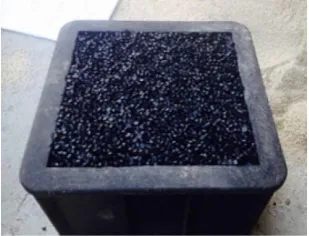
[image:3.595.220.375.568.686.2]River sand is used in the production of the bricks. In order to get a suitable size of sand grains to make bricks, a sieve analysis is done. According to British Standards BS EN 1052:1998 [11] the sand to be used are not more than 10% passing 75micron sieve, and the retained amount found on the 2.36mm sieve are not more than 1%. The percentage of HDPE used is at 2.5%, 3.0% and 3.5%. These ratios are to be used to replace sand in the mixture to make bricks. Recycled HDPE materials shown in figure 1 are acquired from a recycle factory.
1234567890
GCoMSE2017 IOP Publishing
IOP Conf. Series: Materials Science and Engineering 271 (2017) 012083 doi:10.1088/1757-899X/271/1/012083
2.1.Compressive strength test
This test is conducted to study the compressive strength of bricks that contains a certain percentage of HDPE as a replacement of sand. It was conducted based on BS EN 772-1:2011 [12]. The surface of the machine is cleaned from any kinds of dusts and dirt that can affect the test results. Specimens are sorted out in a uniform placement for uniform results to be obtained. Calculation of the compressive strength is done by dividing the maximum strength obtained with the area of which loads are forced to, and rounded off to the nearest 0.1 N/mm2.
2.2.Initial water absorption rate test
Specimens were placed in an oven where the temperature is near to 105°C ± 5° for 24 hours (mdry,s). They were then left to cool down to room temperature. When cooled down, dimensional measurements were done to obtain the bricks surfaces and calculation of the area, As. The height need to be sustained until the end of test. If the surfaces of the bricks are irregular, the level of water for soaking purpose need to be increased so that the whole bricks surfaces are in contact with water. The time taken for this particular test (tso) is around (1 ± 0.2) min. Once the time is right, specimens were removed from the water and then bricks were weighed (mso,s).
3.Results and discussion
This test study upon samples of cement bricks are done on the seventh and 28th day. The sum of bricks used in both test is 24 bricks. Every samples mixture use the same ratios of water and different percentages of High Density Polyethylene which are 0% (controlled), 2.5%, 3.0% and 3.5%.
3.1.Compressive strength test
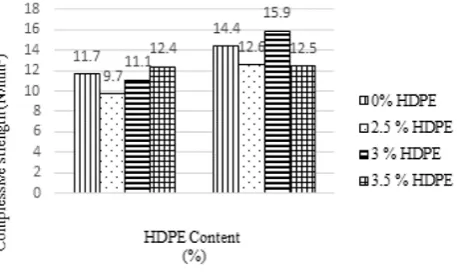
[image:4.595.184.413.551.687.2]Based on figure 2, it is found that controlled sample that used 0% of HDPE reached 11.7 N/mm2 of compressive strength on the seventh day, and increased by a small portion on the 28th day to 14.4 N/mm2. As for the sample with 2.5% of HDPE, it showed a drop in value of compressive strength which was 9.7 N/mm2 on the seventh day and 12.6 N/mm2 on the 28th day. Meanwhile, samples with 3.0% of HDPE showed almost similar value of compressive strength with samples that used 0% of HDPE, which were 11.1 N/mm2 on the seventh day and 15.9 N/mm2 on the 28th day. Next up, samples with 3.5% of HDPE showed an increment of compressive strength values on the seventh day which was 12.4 N/mm2 compared to samples with 0% and 2.5 % of HDPE. Whereas, it showed a significant drop of value on the 28th day, which was only 12.5 N/mm2, making it the lowest value when compared to samples with 0%, 2.5% and 3.0% of HDPE. This value almost matched up to the one on the seventh day.
4 1234567890
GCoMSE2017 IOP Publishing
IOP Conf. Series: Materials Science and Engineering 271 (2017) 012083 doi:10.1088/1757-899X/271/1/012083
Bricks samples with 3.5% of HDPE was going through a drop of values of compressive strength on the 28th day, and this might be caused by the imperfect condition of bricks placement, which in turn cause it to not drying out properly, and this indirectly affected the compressive strength value of the samples. Based on the analyzed data, it is found that compressive strength of bricks containing HDPE meets the standards set in MS 76: 1972 [13]. It also proves that compressive strength of bricks containing 3.0% of HDPE matches up to the ones with 0% (controlled). This in a whole, signifies that the optimum percentage of HDPE is at 3.0%.
As for the difference in compressive strength value for bricks that contains certain percentage of HDPE composition as shown in Figure 2 above, it showed that HDPE percentage of 2.5% gives out the highest difference which was 17.09%, as compared to others. This is caused by the lower value of compressive strength than the ones of controlled bricks. While the 3.0% HDPE percentage shows the lowest difference (5.13%) compared to all readings, caused by the almost similar values of compressive strength with the controlled bricks.
3.2.Initial rate water absorption test
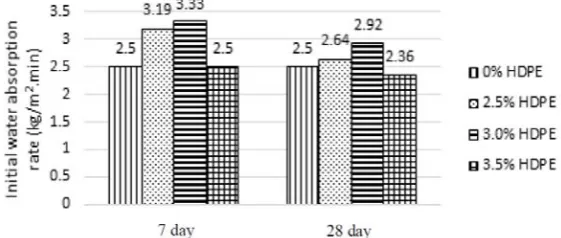
[image:5.595.156.437.392.511.2]Figure 3 shows a percentage graph of initial water absorption rate on the seventh and 28th day. Based on the data obtained, a high rate of initial water absorption recorded for samples with 3.5% of HDPE on the seventh day, at 3.33 kg/m2.min while it showed lower in values on the 28th day, at 2.36 kg/m2.min. On the 28th day, the initial water absorption rate recorded for all samples are lower than their seventh day.
Figure 3. Results of initial water absorption rate.
The good rate of initial water absorption is between 0.25 kg/m2.min to 2.00 kg/m2.min. This value can be referred to evaluate the performance of initial water absorption rate on certain bricks. As shown in Figure 3, it is found that each bricks showed different rates of initial water absorption. However, on the seventh day, bricks samples with 0% and 3.5% of HDPE gives out the similar values. The graph also shows that all sample bricks exceed the values of 2.00kg/m2.min.
3.3.Relationship between compressive strength and initial water absorption rate
1234567890
GCoMSE2017 IOP Publishing
[image:6.595.157.439.148.335.2]IOP Conf. Series: Materials Science and Engineering 271 (2017) 012083 doi:10.1088/1757-899X/271/1/012083
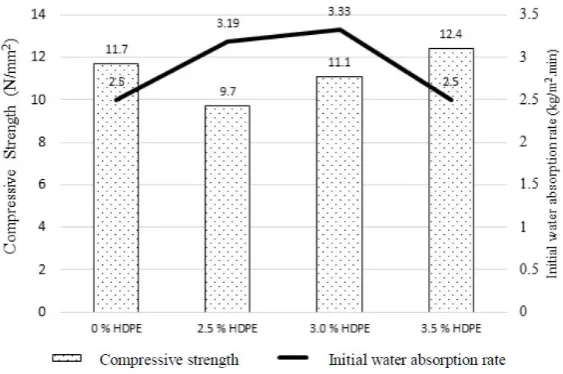
Figure 4. Relationship between compressive strength and initial water absorption rate on 7th day.
[image:6.595.144.455.447.641.2]Meanwhile, for the results of test done on 28th day, samples with 3.0% HDPE gives out highest value of compressive strength which was 15.9 N/mm2 compared to samples with 2.5% and 3.5%. However, the rate of initial water absorption for this set of samples was higher than others as shown in figure 5. This shows that its rate of initial water absorption did not affect the compressive strength when it reaches its maturity state.
6 1234567890
GCoMSE2017 IOP Publishing
IOP Conf. Series: Materials Science and Engineering 271 (2017) 012083 doi:10.1088/1757-899X/271/1/012083
4.Conclusion
The use of HDPE in making cement bricks can affect the physical properties of the bricks in various ways. Among the visible effect is the sign of the presents of HDPE in the form of small black beads. Other than that, it is concluded that:
• The values obtained for compressive strength recorded the highest at 3% replacement of HDPE (15.9 N/mm2) while the lowest initial water absorption rate recorded for 3.5% HDPE replacement of 2.35kg/m2.min.
• The initial water absorption rate shows an increasing trend up to 3% replacement. Beyond that, at 3.5% replacement, both values on seventh and 28th day recorded a decreased initial water absorption rate.
As a whole, the higher amount of HDPE used will cause higher compressive strength obtained up to a certain amount. However, this study found that 3.0% use of HDPE gives higher value of compressive strength than the controlled bricks, and at the same time reduce the use of sand in the production of bricks, as well as reducing pollution to the environment caused by plastics. As to improve the study carried out, a few considerations and suggestion could be applied in future studies. Among the suggestions for future studies are:
• The study was done with consistent ratios of water on all samples. Various ratios of water-cement can be used for future studies, to evaluate the optimum strength of bricks using different ratios of water and different percentage of HDPE.
• Substituting sand with HDPE into other kinds of bricks such as clay bricks in future studies, as HDPE has high potential to be used as replacement of sand, and not specific to only cement bricks.
• Smaller size of HDPE beads may be used. Theoretically, the smaller the aggregate size used, the higher the values of compressive strength of the bricks.
5.References
[1] Hadipramana J, Samad A A A, Zaidi A M A, Mohammad N and Wirdawati W 2012 Influence of Polypropylene Fiber in strength of foamed concrete, Advanced Materials Research, 488-489, 253-257
[2] Ali N, Yaacob K Y, Burhanudin M K, Shahidan S and Abdullah S R 2016 Investigation of compressed earth brick containing ceramic waste, ARPN Journal of Engineering and
Applied Sciences 11 (8) 5459-5462
[3] Khalid F S, Juki M I, Othman N and Wan Ibrahim M H 2017 Pull-out strength of polyethylene terephthalate bottle fibre in concrete matrix, Malaysian Construction Research Journal 21(1) 75-85
[4] Abdullah S R, Wan Zainal Abidin W R and Shahidan S 2016 Strength of concrete containing rubber particle as partial cement replacement 3rd Int. Conf. on Civil and Environmental
Engineering for Sustainability, IConCEES 2015 (Malacca, Malaysia) vol 47 (Paris: MATEC
Web Conference) 01009
[5] Chee-Ming C 2011 Effect of natural fibres inclusion in clay bricks: physico-mechanical properties, Geotechnical and Geological Engineering 73(51) 1-8
[6] Perez J A, Terradas R, Manent M R, Seijas M and Martinez S 1996 Inertization of industrial wastes in ceramic materials, Journal of Industrial Ceramics 1 1-7
[7] M Frigione 2010 Recycling of PET bottles as fine aggregate in concrete, Waste Management 30 1101-1106
1234567890
GCoMSE2017 IOP Publishing
IOP Conf. Series: Materials Science and Engineering 271 (2017) 012083 doi:10.1088/1757-899X/271/1/012083
[9] Fathi H, Lameie T, Maleki M and Yazdani R 2017 Simultaneous effects of fiber and glass on the mechanical properties of self-compacting concrete, Construction and Building Materials 133 443-449
[10] BS EN 771-1:2011+A1:2015 2011 Specification for Masonry Units. Clay Masonry Units (London: British Standard) pp 1-74
[11] BS EN 1052-1 1999 Methods of Test for Masonry. Determination of Compressive Strength. (London: British Standard) pp 1-12
[12] BS EN 772-1 2011 Methods of Test for Masonry Units. Determination of Compressive Strength. (London: British Standard) pp 1-18
[13] MS 76 1972 Specification for Bricks and Blocks of Fired Brick Earth, Clay or Shale (Selangor: Malaysian Standard) pp 1-74
Acknowledgments