
IOP Conference Series: Materials Science and Engineering
PAPER • OPEN ACCESS
A review on seashells ash as partial cement
replacement
To cite this article: Wan Ahmad Soffian Bin Wan Mohammad et al 2017 IOP Conf. Ser.: Mater. Sci.
Eng. 271 012059
View the article online for updates and enhancements.
Related content
Utilization of sugarcane bagasse ash in concrete as partial replacement of cement Sajjad Ali Mangi, N Jamaluddin, M H Wan Ibrahim et al.
-Review of palm oil fuel ash and ceramic waste in the production of concrete Puteri Natasya Mazenan, Faisal Sheikh Khalid, Shahiron Shahidan et al.
-Impact of Micro Silica on the properties of High Volume Fly Ash Concrete (HVFA) R Sripragadeesh, K Ramakrishnan, G Pugazhmani et al.
1234567890
GCoMSE2017 IOP Publishing
IOP Conf. Series: Materials Science and Engineering 271 (2017) 012059 doi:10.1088/1757-899X/271/1/012059
A review on seashells ash as partial cement replacement
Wan Ahmad Soffian Bin Wan Mohammad1, Nor Hazurina Othman1, Mohd Haziman Wan Ibrahim1, Masazurah A Rahim2, Shahiron Shahidan1 and Raha Abd Rahman1
1Faculty of Civil and Environmental Engineering, Universiti Tun Hussein Onn Malaysia,
86400 Parit Raja, Johor, Malaysia
2Fisheries Research Institute, Department of Fisheries Malaysia,11960 Batu Maung, Penang Corresponding author: [email protected]
Abstract. This review paper emphasis on various sea shells ash such as cockle, clam, oyster, mollusc, periwinkle, snail, and green mussel shell ash as partial cement replacement and its objective is to create sustainable environment and reduce problems of global warming. Cement production give huge impact to environment in every stage of its production. These include air pollution in form of dust and, gases, sound and vibration during quarry crushing and milling. One of the solutions to solve this problem is by using modified cement. The modified cement is a cementitious material that meets or exceeds the Portland cement performance by combining and optimizes the recycle and wasted materials. This will indirectly reduce the use of raw materials and then, become a sustain construction materials. Therefore, the replacement of cement in concrete by various sea shell ash may create tremendous saving of energy and also leads to important environmental benefits. This study includes previous investigation done on the properties of chemical and mechanical such as specific gravity, chemical composition, compressive strength, tensile strength and flexural strength of concrete produced using partial replacement of cement by seashells ash. Results show that the optimum percentage of seashells as cement replacement is between 4 – 5%.
1. Introduction
Concrete is one of the two most used structure materials in construction [1]. Every year, the used of concrete increasing 2 tonne for each people [2]. In order to reduce reliance of raw material in concrete producing, the green concrete had been promoted. Green concrete is the concrete that had been produced using recycle or wasted natural materials [3]. One of the ways to produce green concrete is by using modified cement. Cement is the second largest volume materials used by human being after water [4]. Cement plays the role of a binder, a substance that sets and hardens and might bind alternative materials along. During production of cement and hydration process of cement, the amount of CO2 emitted by the industry is nearly 900 kg of CO2 for every 1000 kg of cement produced [5]. This CO2 production causes serious environmental damages.
2
1234567890
GCoMSE2017 IOP Publishing
IOP Conf. Series: Materials Science and Engineering 271 (2017) 012059 doi:10.1088/1757-899X/271/1/012059
2. Literature Review
2.1. Specific gravity
Table 1. Specific gravity of the seashells
Researcher Type of seashell/Portland cement Value
Noel D. Binag (2016)
Portland cement 3.15
Oyster 3.09
Mussel 3.01
Mollusk 3.01
Lertwattanaruk Pusit et al. (2012)
Portland cement 3.11
Oyster 2.65
Mussel 2.86 Cockle 2.82
Clam 2.71
Adewuyi et al. (2015)
Periwinkle 2.50
Oyster 2.33
Snail shell 2.44
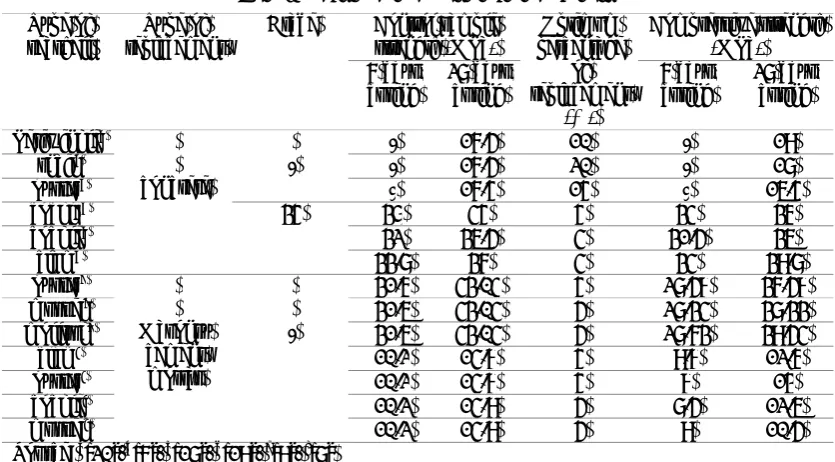
Specific gravity is the ratio of the density of a substance to the density of a suggest substance; equivalently, it is the ratio of the mass of a substance to the mass of a suggest substance for the same given volume. In construction industry, the specific gravity is important to determine the suitability of materials that will be used in concrete production. The specific gravity also used to estimate the weight of the concrete. From Table 1, the specific gravity of the seashells was approximately similar to the Portland cement. Although the specific gravity among the seashells was different, the value was approximately similar to specific gravity of Portland cement. [9-10] found that the specific gravity of oyster is different which is 3.09, 2.65 and 2.33. But, this value is below than the Portland cement which was 3.15[9] and 3.11[8]. Also, from the table it can be concluded that the specific gravity value of oyster shell is 2.33 and it was the most suitable to be used as cement replacement compare to other seashells.
2.2. Chemical composition
Calcium carbonate has the common properties of other carbonate. It reacts with acids, releasing carbon dioxide.
CaCO3 + 2H → Ca + CO2 + H2O (1) It also produces carbon dioxide when heating above 840 °C to form calcium oxide, commonly called burnt lime or quicklime. Through thermal decomposition process known as calcination, CaCO3 can be converted into calcium oxide (CaO) [22].
CaCO3 → CaO + CO2 (2) Calcium carbonate also will react with water that is saturated with carbon dioxide to form the soluble calcium bicarbonate.
1234567890
GCoMSE2017 IOP Publishing
[image:4.595.84.512.154.327.2]IOP Conf. Series: Materials Science and Engineering 271 (2017) 012059 doi:10.1088/1757-899X/271/1/012059
Table 2. Chemical composition of seashells and Portland cement
Chemical composition
(%)
Type of seashells/Portland cement Portland
Cementa
Clamb Musselb Oysterb Periwinklec Snailc Cockled Clame
SiO2 21.20 0.84 0.73 1.01 26.26 10.20 1.6 0.39 Al2O3 5.47 0.14 0.13 0.14 8.79 4.81 0.92 0.28 Fe2O3 3.31 0.06 0.05 0.07 4.82 3.15 - 0.02
CaO 65.52 53.99 53.38 53.59 55.53 61.95 51.56 67.70 MgO 1.97 0.08 0.03 0.46 0.40 0.18 1.43 -
K2O 1.71 0.03 0.02 0.02 0.20 0.05 0.06 - Na2O 0.46 0.39 0.44 0.23 0.25 0.04 0.08 -
SO3 1.90 0.16 0.34 0.75 0.18 0.03 - -
Cl - 0.02 0.02 0.01 - - - -
SO4 - 0.06 0.11 0.43 - - - -
CaCO3 - 96.8 95.6 96.8 - - - -
Source: a[16], b[8], c[17], d[18], e[19]
[image:4.595.84.502.375.606.2]2.3. Compressive strength
Table 3. Compressive strength of the seashells
Type of seashell
Type of replacement
Grade Control sample strength (MPa)
Optimum percentage
of replacement
(%)
Compressive strength (MPa) 7 days
curing
28 days curing
7 days curing
28 days curing
Periwinklea
concrete
-
- 17.5 10 - 19
snaila - 17.5 20 - 18
oystera - 17.5 15 - 16.5
cockleb 35 38 45 5 34 36
cocklec 32 36.5 4 31.5 36
clamd 33.8 37 4 34 39.8
oystere
Masonry cement mortar
-
31.6 43.04 5 28.59 37.59
mussele 31.6 43.04 5 28.34 38.33
molluske 31.6 43.04 5 28.73 39.54
clamf 10.2 14.9 5 9.9 12.6
oysterf 10.2 14.9 5 9 13
cocklef 10.2 14.9 5 8.5 12.6
musself 10.2 14.9 5 9 10.5
Source: a[20], b[7], c[18], d[19], e[9], f[8]
4
1234567890
GCoMSE2017 IOP Publishing
IOP Conf. Series: Materials Science and Engineering 271 (2017) 012059 doi:10.1088/1757-899X/271/1/012059
percentage of replacement, the result was different. Olivia et al.[18] found that the compressive strength for the 7 and 28 days curing cockle shell concrete are 31.5 and 36 MPa respectively, while for the control sample, it was 32 and 36.5 MPa. From both result, it can be seen that the compressive strength of the cockle shell was lower than the control sample. But, its value is still exceeding the minimum strength of grade 35 MPa concrete. For the grade 35 MPa concrete using the clam shells, the result is different. According to Olivia et al. [19], the compressive strength of clam shell concrete was higher than the control sample which is 34 MPa (7 days curing) and 39.8 MPa (28 days curing) while for the control sample, the value was 33.8 MPa (7days curing) and 37 MPa (28 days curing). Also, based on the Table 3, the clam shell was the only seashell that gains higher compressive strength than control sample. It can be concluded that the clam shell is the most suitable material to be used as cement replacement in concrete and the optimum percentage of replacement is 4%.
There are also a few research had been done on the use of seashells as cement replacement in cement mortar for masonry. Noel D. Binag [9] had been used oyster, mussel and mollusk shell in cement mortar while Lertwattanaruk Pusit et al. [8] used clam, oyster, mussel and cockle shell as cement replacement materials. Both of the studies used 5% as an optimum percentage of cement replacement. Both studies also found that the compressive strength of 7 and 28 days curing cement mortar result is lower than the control sample. But the cement mortar result is still acceptable and can be used in construction industry.
[image:5.595.86.515.409.579.2]2.4. Tensile strength
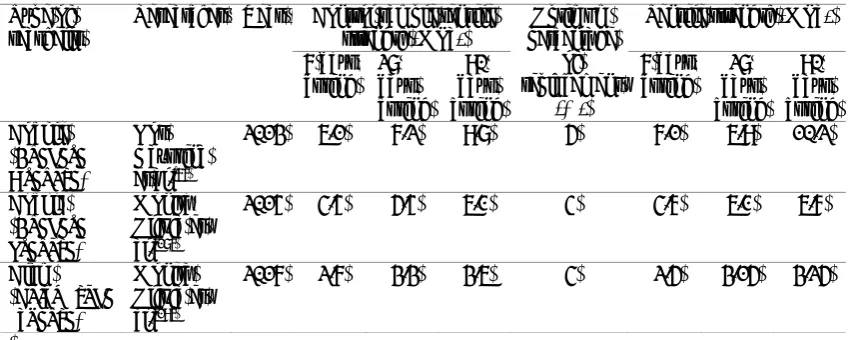
Table 4. The tensile strength of the seashells
Type of seashells
Researcher Year Control sample tensile strength (MPa) Optimum percentage of replacement (%)
Tensile strength (MPa)
7 days curing 28 days curing 90 days curing 7 days curing 28 days curing 90 days curing Cockle (Anadara Granosa) Nor Hazurina et al.[7]
2013 6.1 7.2 9.8 5 7.1 6.9 10.2
Cockle (Anadara granosa) Monita Olivia et al.[18]
2015 4.5 5.5 6.1 4 4.6 6.1 6.7
Clam (Polymesoda expansa) Monita Olivia et al.[19]
2017 2.7 3.3 3.6 4 2.5 3.15 3.25
1234567890
GCoMSE2017 IOP Publishing
IOP Conf. Series: Materials Science and Engineering 271 (2017) 012059 doi:10.1088/1757-899X/271/1/012059
[image:6.595.96.494.161.364.2]2.5. Flexural Strength
Figure 1. Flexural strength of OPC and cockle shell concrete at 7, 28 and 91 days by using 5% of cockle shell as cement replacement [18]
The average flexural strength of seashell concrete and ordinary Portland cement (OPC) was shown in Figure 1. Entirely, the values varied in the range of 4.5-6.75 MPa. It shown that the flexural strength of seashell concrete will rise at 28 and 91 days. After 28 days, a considerable strength was gained probably due to calcium content in the cement that produced a better bonding between aggregates and paste. The tension properties was encourage by the bonding. This additional increase in tension properties is worthwhile to improve composite action between concrete and steel reinforcement bars.
3. Type of seashells and it’s usage in concrete
[image:6.595.85.513.575.719.2]Table 5 shows a few types of seashell and how it was used in concrete mixture. [11,12,14] and [15] used different types of seashell to replace the coarse or fine aggregate in the concrete in range of 5% to 50% and found out that the compressive strength increased significantly. [13] had used oyster shells ashes to replace lime in production of cement based brick. It is showed that, at 15% replacement, the increment of the compressive strength was also significant.
Table 5. Another use of various seashells in concrete
Researcher Type of seashells
Application Result
Martínez-García et al. (2017)
Mussel shells
Replace coarse aggregate in concrete
Tensile strength increase at 5% replacement
Muthusamy et al.
(2012)
Cockle shells
Replace coarse aggregate in concrete
Compressive strength increase at 20% replacement
Gengying Li et al.
(2015)
Oyster shells
Produce cement based-brick using oyster shell ash
6
1234567890
GCoMSE2017 IOP Publishing
IOP Conf. Series: Materials Science and Engineering 271 (2017) 012059 doi:10.1088/1757-899X/271/1/012059
Sugiyama (2004) Scallops shells
Replace coarse aggregate in concrete
Compressive strength decrease at 50% replacement
Yusof (2011) Clam shells Replace fine aggregate in concrete
Compressive strength increase at 30% replacement
4. Conclusion
From this review, we can say that the development of sea shell ash as partial cement replacement could be produce as a cement-like material where the particle size will be the same or finer than cement. Concrete with seashells as cement replacement will produce better concrete in term of chemical composition, specific gravity, compressive strength, flexural strength and tensile strength. It could be investigated by using difference types of sea shells to reduce environmental issues. Implicitly, this effort will create better benefit in future economic value to the local community and industries and also, provide better solution in concrete technology. Good values on developing the future of concrete industry should be expend through quality research among industry players and higher learning institutions to involve all parties into sustainable situation. Besides that, collaboration with local authorities through regulations and laws will create better opportunity to stake holders to come up with programs on waste minimization and utilization. Therefore, utilizing of waste materials such as sea shell in developing green concrete should be explored, expended and supported through focus researches. Development of green concrete should be proved through performance on hardened state and fresh state to understand the behaviour of each material either in long or short term effect.
5. References
[1] Neville A M 1996 Properties of concrete 4th and final ed. (Addison Wesley Logman) 43-44
[2] Harrison A W John 2003 New cements based on the addition of reactive magnesia to Portland cement with or without added pozzolan CIA Conference: concrete in the third Millenium
CIA (Brisbane, Australia)
[3] Meyer Christian 2009 The greening of the concrete industry Cement and concrete composites 318 601-605
[4] Patel A J, Patel V M and Patel M A 2015 Review on Partial Replacement of Cement in Concrete UKIERI Concrete Congress – Concrete Research Driving Profit and Sustainability 17 831-837
[5] Mahasenan Natesan; Steve Smith; Kenneth Humphreys; Kaya Y 2003 The Cement Industry and Global Climate Change: Current and Potential Future Cement Industry CO2 Emissions
Greenhouse Gas Control Technologies– 6th International Conference2 995-1000
[6] Mosher Shad, Gregory W Cope, Frank X Weber, Damian Shea, and Thomas J. Kwak 2012 Effects of lead on Na+, K+-ATPase and hemolymph ion concentrations in the freshwater mussel Elliptio complanata Environmental toxicology275 268-276
[7] Nor Hazurina Othman, Badorul Hisham Abu Bakar, Mashitah Mat Don and Megat Azmi Megat Johari 2013 Cockle Shell Ash Replacement for Cement and Filler in Concrete Malaysian Journal of Civil Engineering25(2) 201–211.
[8] Lertwattanaruk Pusit, Makul N and Siripattarapravat C 2012 Utilization of ground waste seashells in cement mortars for masonry and plastering Journal of Environmental
Management111 133–141
[9] Noel D. Binag 2016 Powdered Shell Wastes as Partial Substitute for Masonry Cement Mortar in Binder, Tiles and Bricks Production International Journal of Engineering Research &
1234567890
GCoMSE2017 IOP Publishing
IOP Conf. Series: Materials Science and Engineering 271 (2017) 012059 doi:10.1088/1757-899X/271/1/012059
[10] Arroyo G Maria Antonia, Macias P Katrina Anna, Tayzon M Karlo Emir, Lorenzo D Maria Abigail 2005 The Feasibility of a Mollusk Shell – Based Adhesive as a Substitute for Mortar
Bato balani, Sophomore24(2) 2004-2005
[11] Martínez-García Carolina, Belén González-Fonteboa, Fernando Martínez-Abella, and Diego Carro-López 2017 Performance of mussel shell as aggregate in plain concrete Construction and Building Materials 139 570-583
[12] Muthusamy K and Sabri N A 2012 Cockle shell: a potential partial coarse aggregate replacement in concrete International Journal of Science, Environment and Technology 14 260-267
[13] Gengying Li, Xiaoyang Xu, Chen E Jie Fan and Guangjing Xiong 2015 Properties of cement-based bricks with oyster-shells ash Journal of Cleaner Production 91 279-287.
[14] Sugiyama M. 2004 The Compressive Strength of Concrete Containing Tile Chips, Crushed Scallop Shells & Crushed Roofing Tiles, edited by Limbachiya M C & Roberts J J in Sustainable Waste Management & Recycling: Construction Demolition Waste, London, Thomas Telford Publishing 165-172
[15] Yusof M, Ujai S J J, Sahari F, Taib S N L & Noor Mohamed N H 2011 Application of Clam (Lokan) Shell as Beach Retaining Wall Proceeding of EnCon 2011: 4th Engineering
Conference (Kuching, Sarawak)
[16] Limbachiya M C 2009 Bulk engineering and durability properties of washed glass sand concrete. Construction and building materials23 1078-1083
[17] Etuk B R, Etuk I F and Asuquo L O 2012 Feasibility of using seashells ash as admixtures for concrete. Journal of environmental science and engineering1 121-127
[18] Olivia, M., Mifshella, A.A. and Darmayanti, L., 2015 Mechanical properties of seashell concrete.Procedia Engineering,125 760-764
[19] Olivia, M. and Oktaviani, R., 2017 Properties of Concrete Containing Ground Waste Cockle and Clam Seashells. Procedia Engineering,171 658-663
[20] Adewuyi, A.P., Franklin, S.O. and Ibrahim, K.A. 2015 Utilization of Mollusc Shells for Concrete Production for Sustainable Environment. International Journal of Scientific & Engineering Research, 6 9 201-208
[21] Mehta P K and Monteiro J M 1993 Concrete: Structure, Properties and Methods, Second Edition (New Jersey: Prentice-Hall International (UK) Limited) 207-208
[22] Nor Hazurina Othman, Badorul Hisham Abu Bakar, Mashitah Mat Don and Megat Azmi Megat Johari 2013 Potential Use of Cockle (Anadara Granosa) Shell Ash as Partial Cement Replacement in Concrete Caspian Journal of Applied Sciences Research2 369-376
Acknowledgments
![Figure 1. Flexural strength of OPC and cockle shell concrete at 7, 28 and 91 days by using 5% of cockle shell as cement replacement [18]](https://thumb-us.123doks.com/thumbv2/123dok_us/8758225.893379/6.595.96.494.161.364/figure-flexural-strength-cockle-concrete-cockle-cement-replacement.webp)
