Themed Section: Science and Technology
Achieving Advance Security System over Raspberry Pi
Controlled via Android Application
Saurabh K. Patil, Dr Narendra G. Narole
M.Tech Scholar ETX Department, Rajiv Gandhi College of Engineering and Research, Nagpur, Maharashtra, India
Hod, ETC Department Rajiv Gandhi College of Engineering and Research, Nagpur, Maharashtra, India
ABSTRACT
As we have seen the tremendous development in the human life, we found that even after the improvement in the technology still lacks many scopes. The technology needs an increasing and advancing in the technology. The most trending technique in the human life is face detection security. The various techniques are available such as entry controlled security, door intercoms, etc. The main technical aspect of face detection security is the image capturation by camera as like human eye. The cameras in the present time are digital and their working and performances are improving the image capture process. When any camera takes the image , it may get error due to additive noise or other factors; that‟s why theirs need image processing algorithms for detecting the various phenomena such as background, image edges, grey levels, etc. for this purpose we have several amount of image processing algorithms such as HAAR,,PCA, etc. Hence to create a better image processing we are using advance PCA algorithm. This algorithm can be compatible on the automation instrument such as, microcontroller, raspberry pi, etc. The raspberry pi as a controlling instrument thus for the best result along with the cost effectiveness. This instrument provides the ability of the store data in the form of database. The android applications used for this system will help us to control the existing scenario from remote place. The future scope for this security system are too many such as car security, cabin security, etc. this system can be much useful to society as it can be implemented in every area with some changes. Thus this system is much useful for existing and futuristic conditions. This paper consists of the extended work review of the face detection project based on the raspberry pi module.
Keywords: DC Motor, GSM Module, LCD Display, Raspberry Pi Module, Pi Camera, Wireless Network
I.
INTRODUCTION
Face detection based security systems evolution creates the optimized security system which restricts the entry of unknown. There were so many new technical instruments like door intercoms but the security was still the question of matter as it is not that much compact and have no storage. So to improve the existing security and reduce the risks we come with this advance PCA algorithm for face detection based security.
A Face recognition System is a system which usually automatically identifies or verifies the identity of a person from digital images or a video frames from a video source and allow the user to interface with scenario. The image capturation and identification is done by OPEN CV and stores in database.
the result as image matched or not. Based on comparison result GSM module sends a security alert to the authorised person which is „person identified. You can enter now.‟ or „unknown intruder trying to unlock, take action‟. But, if the unknown person is in knowledge with authorized user then the authorised user will provide the entry to that person by using the android application. As soon as the door gets unlocked it will reset the system.
II.
LITERATURE REVIEW:
The author Akshay N. Patil and et al [1] describes the working of the face recognized door unlocking system in which they use the raspberry pi along with the GSM module. This module contains a secured face recognizer for automatic door opening. In this project they have the facility of the informing to the user regarding the door unlocking. But, this system lags the feature of making the door unlocking for known persons to the user. This system uses the basic PCA algorithm to execute the process, but still lacks in many feature; hence need to improve.
The author Sarath Chandu Gaddam and et al [2] describes the working of face recognized attendance system in which they use raspberry pi along with GSM module and Ethernet cable. In this project the automatic attendance of the students can be possible without wasting the time and send the attendance to the respective student after 24 hours. But, this system lags the feature of making the latecomers attendance available. In this system they have used the Eigen algorithm to execute the system, but due to huge mathematical calculation there may be chance of failure. Hence need to improve.
The author K.Shiva Prasd and et al [3] describes the working of the technique for real time human face detection and tracking using a modified version of the algorithm by using the raspberry pi module along with USB camera. In this project Simulation results of this developed algorithm shows the Real time human
face detection and tracking supporting up to 50 human faces. This lags the feature of the making more than 50 faces storage in the database. This system uses the viola jones algorithm for the execution but this system lacks the efficiency in the harsh backlighting and occlusions.
The author Mr. Ashwin K Kashyap and et al [4] describes the working of face recognition using raspberry pi module by using the python language. In this project the saved faces are detected using OPEN CV simulation. But, this project lags the feature of informing the user regarding the any unknown intruder and hence any burglary. This system uses the HAAR algorithm for execution but this system to depend on the OPEN CV simulation.
The author Akshay Kumar C and et al [5] describes ORB-PCA based face extraction technique for face recognition to overcome the problems of SIFT-PCA and SURF-PCA techniques. It improves the efficiency in face detection and also reduces the face detection time in comparison to other PCA techniques. But this technique is very much complex and much may produce the errors while combining the results of ORB and PCA techniques. Hence need to improve.
The author Hemant Makwana and et al [6] describes comparisons in various types of face detection algorithms such as geometry based and face appearance based algorithmjs. This kind of comparison will be helpful in the construction of this project.
The author Sungyoung Lee and et al [7] describes improvement in the PCA algorithm for face recognition which shows that the PCA algorithm can be improved and some of this improved features will be used for our project.
The author Liton Chandra Paul and et al [9] describes face recognition using principle component analysis method which shows the statistical approach to reduce the variable based on the eigen values. This paper shows the image identification along with changes in poses. This system will help to produce a good face detection result. But this system only deals with the eigen values and if this values may get mismatch for huge amount of images hence need to improve.
The author Santosh Kumar and et al [10] describes advance approach for faced detection using PCA algorithm and region based colour segmentation which Eigen values and noise removal in image. This system may get failed if there may have any noise disturbance. Practically this system is for testing captured images with stored images in database and based on that it will give result. This technique achieves much higher efficiency and execution time reduces but don‟t have ability to provide self-storage as well as reduction in errors. Hence need to improve.
The author Sougata Das and et al [11] describes a embedded system for home automation using SMS where the system uses the microcontroller as a main controlling component. In this system GSM module was used and it sends the SMS over the authorised users cell. In this system the the appliance condition can be monitored over a remote place. The status is send over the wireless network. Hence it provide the wireless control. But the system uses the GSM module along with microcontroller and some electronic circuit making system more bulkier and even more complicated when it comes to improvement. Hence it needs to improve and it comes with a raspberry pi module.
The author Kuen-Min Lee and et al [12] describes the an intelligent universal remote control system for home appliances uses the IOT technology for creating the point – n – press remote controller. In this system IR transceiver is used to connect the home appliances.
This leads to the reduction in the malfunctioning of the appliances and also creates a user controlled system which leads to the simplification of life. As this system is connected to the various time varying systems, it will create detoriation in performance in the system as long it works. Also this system totally depends on the IR transceivers work hence may get complicated when in any disturbance. Hence need to improve.
The author Mrutyunjaya Sahani and et al [13] describes an wireless network based system for monitoring of the kitchen on the internet. In this system it uses GSM model and zigbee and microcontroller as a sensor module. This system works for the any kind of extreme scenario such as fire ,LPG detection, room temperature,etc. it send message or email over the wireless network and allow the user to take action. But as we know this kind of system works on the JAVA. Hence it may create confusion when detection of so many kind of gases has to do. Hence proper care has to be taken. Hence need to improve. The author Biplav Choudhury and et al [14] describes the sms based home security system. This sytem is equipped with the GSM module, microcontroller, etc. to control the android over the remote place. Hence it is cost very negligible when comparing to other security system. But this system mostly works on the GPS performance and the advancing GPS in todays time limits the scope of this system. Hence need to improve the system and also to increase its performing areas.
tear of the system. Hence it is very limited use system as considering automation. Thus needs to improve.
The author Kalyani Pampattiwar and et al [16] describes the home automation using raspberry pi controlled via android application. This system uses webcam, android applications, and speakers along with the Gmail using the raspberry pi as a controller. This system is basically a home automation as well as alarm system of the home devices. This system provides the information of the home appliances conditions and also allows making this appliance to operate from remote place. This system gives these features at low cost. But this system is very basic as it can give only the limited coverage but if improve this system we will definitely have a compact and a confortable automation system which can be useful in every case.
The author Aniket V Joshi and et al [17] describes the IOT based home automation using raspberry pi. This system consists of relay and relay driver circuit, mobile device along with the raspberry pi as a controller. This system is a server and client based. This system is also a use the php software and thus makes it work on the pc – based automation. Also this system is only limited to only certain areas and hence it is very small scope and complex as it needs the UI on the web. Hence need to improve and simplify.
The author Sneha Kasrung and et al[18] describes the development of smart home security system using raspberry pi. This system consists of HDMI cable, relay interface circuit, LAN cable along with raspberry pi as a controller. This system uses the android application and it gets activated only when fan and light button is pressed on cell. This will gives the home condition of appliances. But when considering to home automation this concept can be very small if the current and other parameters are not defined properly. Hence it needs to improve along with proper parameter in control.
III.
PROPOSED SYSTEM
A) BLOCK DIGRAM
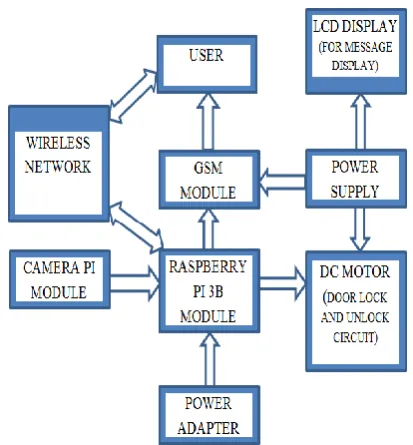
Figure 1. block diagram of “achieving advance security system over raspberry pi controlled via android
application”.
B) COMPONETS
In above figure 1 shows the basic block diagram of “achieving advance security system over raspberry pi via android”. The component working is described as follows:
Pi Camera module: Camera module is Pi camera interfacing to the raspberry pi module. It is used for captures an image and send captured image to the Raspberry pi 3B module. The captured images are used to create the database. This will also help to take videos in fraction of times if destined for it.
and this data base is compared with the live captured image. After comparing two images output is positive/negative; and based on the output response then it gives commands to GSM module and rest of the system.
GSM module: GSM module i.e. sim 900(GPS/GPRS module) is used to sending a message to the authorities after comparing the images based on whether output is positive or negative. If output is positive then "Person Identified!!you can enter now!!" message send to the authority person otherwise send “unknown person is trying to unlock the door”. If the unauthorised person is detected then the motor will block the door. If the unknown person is known to authorised user, the user through his android application will open the door for that person.
Display: The 16 pin LCD display will be a key instrument while checking the systems proper working. The LCD display will show every action of the system whether it is of camera or it is of GSM, it will give information regarding every action.
Wireless network: this network is basically a wireless network, in which the captured image of unknown person is send over the network to the authorizer users Gmail account. This will also help to interface the user with the system in the existing conditions. Also the android application will help the user to control the direct entry of the unknown intruder. The wireless network is also providing the platform to the have various controls such as automations, health care, security, etc.
Dc motor: the dc motor is the simple rotating device which has the ability to work as an blocking device. This motor is having the rotations and this will help user to program this motor for both clockwise and anti-clockwise rotation. In our proposed system the working of dc motor is controlled by motor driver IC.
This will also help the user to control the direct entry of the intruder.
C) WORKING
Figure 1 shows the block diagram of the “achieving advance security system over raspberry pi controlled via android application”. This system is basically Internet of Things (IOT) system. The working of this system can be explained as follows:
Our project system can be viewed in two different sections, i.e. one for capturing and creating a data base and the other section is to capture the image and which is used for identifying or comparing the images in the database.
When first the system gets on, the LCD display will shows the message regarding the pi cameras on/off status. When the camera gets on, it starts to take images. When it takes the images of intruder, it compares the captured image with the images stored in the system database. Based on the result of comparison it produces the signals for the system to proceed. The captured image if gets matched with the database image, the LCD shows that “the person is identified; you can enter now”. The same message is send over the GSM module to the authorised user.
If the captured image is not matched with the database image, it then blocks the door and the buzzer starts ringing. The LCD displays “the unknown person is detected. Door is blocked”. The same message is send over the GSM module to authorised user along with the capt6ured image of unknown intruder. If the unknown intruder is known to user then the user can allow that intruder to enter by using the android application from his cell. This will help the authorised user to interface the existing scenario from the remote place. As soon as the door gets open the buzzer stops ringing and system gets reset.
ringing buzzer allows the surrounding people to know that the unknown person is entered in the premises. This system is very low power consuming and also is very powerful enough to produce a well eco-friendly and economic system in the terms of security for any kind.
D) FLOWCHART
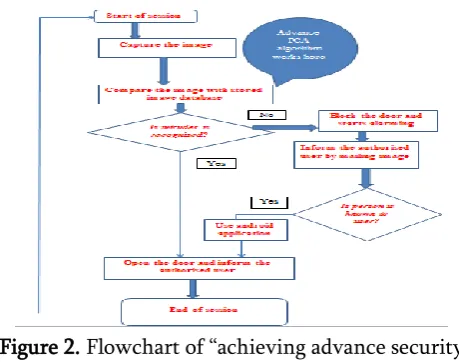
Figure 2. Flowchart of “achieving advance security system over raspberry pi controlled via android
application”.
The system first starts to take initialise by checking whether the camera is on. The pi camera module the starts to take images and this captured images are compared with the images stored in the database. This gives rise to two conditions:
1) When the intruder is recognized:-
The pi camera will first take the image and send it to the raspberry pi module. The raspberry pi module will then compare the captured image with the stored images in database. The advance pca algorithm comes in the action by comparing the captured image with stored images and based on this it produce the results. If the result is positive then door gets unlocked; the system informs the authorised user that “identified person has got entry” over the GSM module and the system gets reset.
2) When intruder is not recognized:-
When the result is negative, the system blocks the door and alarm starts ringing informing nearby about the unknown is trying to unlock the door. The system sends the message to the authorised user that “unknown intruder is trying to unlock the door” and also the system sends the image of the intruder to authorised used over the wireless network to user‟s Gmail account. If the intruder is known to the authorised user, he can allow the intruder to enter by using the android application in his cell. As soon as the door gets unlocked, the ringing alarm stops alarming and system gets reset.
IV.
APPLICATIONS
The “ achieving advance security system over raspberry pi controlled via android application” is basically based on embeded security system; the applications of this project are not limited as the each application gives rise to the new applications. so it can be implement in the following area of securities; for example,
In car security. In home security. In budgeted industies .
In survillance from remote place(depending on the communication network).
In the office cabins. In the shopping malls , etc.
V.
FUTURE SCOPE:
There are many future scopes regarding this project such as follows: -
1. If the condition improved, we can implement this system by using multimedia GSM module,in future. 2. To achieve more sound security, we can use the iris
scan method.
4. If needed, we can make this system to be used in the air services.
VI.
REFERENCES
[1]. Akshay N. Patil, Rohit B. Ranavare, Dayasagar V. Ballal: "Raspberry pi based face recognition system for door unlocking", International journal of innovative research in science and engineering vol.no.2,issue 3 march 2016.
[2]. Sarath Chandu Gaddam, N. V. K. Ramesh and Hema dhanekula: " face recognition based attendance management system with raspberry pi 2 using eigen faces algorithm", ARPN Journal of Engineering and Applied Sciences vol. 11, no. 13, July 2016 ISSN 1819-6608
[3]. K.Shiva Prasd: "Human Face Detection and Tracking Using Raspberry PI processor", International Journal & Magazine of Engineering, Technology, Management and Research, Volume No: 2 (2015), Issue No: 8 (August)
[4]. Mr. Ashwin K Kashyap, Mr. Abhishek S, Mr. Abhishek S A, Ms. Ratnakumari. C: " Face Detection using Raspberry Pi and Python", National Conference on Product Design (NCPD 2016), July 2016.
[5]. Vinat A., Akshay Kumar C., Gaurav Shenoy,K.N. Balasubramanayam Murthy, S. Natarajan: "ORB-PCA based features extraction technique for face recognition", second international symposium on computer vision and internet-2015.
[6]. Hemant Makwana & Taranpreet Singh: "Comparison of Different Algorithm for Face Recognition", Global Journal of Computer Science and Technology Graphics & Vision Volume 13 Issue 9 Version 1.0 Year 2013
[7]. Vo Dinh Minh Nhat and Sungyoung Lee:" An Improvement on PCA Algorithm for Face Recognition", J. Wang, X. Liao, and Z. Yi (Eds.):
ISNN 2005, LNCS 3496, pp. 1016.1021, 2005. © Springer-Verlag Berlin Heidelberg 2005
[8]. Ms. Varsha Gupta, Mr. Dipesh Sharma: "A Study of Various Face Detection Methods", International Journal of Advanced Research in Computer and Communication Engineering Vol. 3, Issue 5, May 2014
[9]. Liton Chandra Paul1, Abdulla Al Sumam2: " Face Recognition Using Principal Component Analysis Method", International Journal of Advanced Research in Computer Engineering & Technology (IJARCET) Volume 1, Issue 9, November 2012
[10]. Santosh Kumar, Ajmer Manish Mathuria, Atul Chaudhary, Ajmer Kailash Rathore: " An Advance Approach Of Face Recognition Using PCA And Region Base Color Segmentation", International Journal Of Computer Applications (0975-8887) Volume 89-No 17, March 2014 [11]. Sougata Das, Nilava Debabhuti, Rishabh Das,
Sayantan Dutta, Apurba Ghosh:- " Embedded System For Home Automation Using Sms", International Conference On Automation,Control,Energy And Systems(Aces),Feb 2014,978- 1 -4799- 3732-5/14@2014 IEEE
[12]. Kuan-Min Lee, Wei-Guang Teng,Ting Wei Hon:- " Point-N –Press: An Intelligent Universal Remote Controlsystem For Home Appliances", Ieee Transactions On Automation Science And Engineering, 1545-5955@2016 IEEE
[13]. Mrutyunjaya Sahani, Avinash Nayak, Rishabh Agrawal, Debhanshu Sahu:- " A Gsm, Wsn And Embedded Web Server Architecture For Internet Based Kitchen Monitoring System", International Conference On Circuit, Power And Computing Technologies(Iccpct), 978-1-4799 -7075-9/15@2015 IEEE
Home Security System",978-1-4799-6085-9/15@2015 IEEE
[15]. H. K. Merchant, D. D. Ahire:- " Industrial Automation using IoT with Raspberry Pi", International Journal of Computer Applications (0975-8887) Volume 168-No.1, June 2017 [16]. Kalyani Pampattiwar, Mit Lakhani, Rinisha
Marar and Rhea Menon:- " Home Automation using Raspberry Pi controlled via an Android Application", International Journal of Current Engineering and Technology E-ISSN 2277-4106, P-ISSN 2347-5161 ©2017 INPRESSCO®
[17]. Prof B.P Kulkarni, Aniket V Joshi, Vaibhav V Jadhav, Akshaykumar T Dhamange:- " IoT Based Home Automation Using Raspberry PI", International Journal of Innovative Studies in Sciences and Engineering Technology (IJISSET) ISSN 2455-4863 (Online) www.ijisset.org Volume: 3 Issue: 4 | April 2017
[18]. Pragati Ukey, Anita Shinde,Sneha Kasrung,