S Y S T E M A T I C R E V I E W
Open Access
Effects of pseudoephedrine on parameters
affecting exercise performance: a
meta-analysis
Maria D Gheorghiev
1,4, Farzad Hosseini
1, Jason Moran
1,3*and Chris E Cooper
1,2*Abstract
Background:Pseudoephedrine (PSE), a sympathomimetic drug, commonly used in nasal decongestants, is currently banned in sports by the World Anti-Doping Agency (WADA), as its stimulant activity is claimed to enhance performance. This meta-analysis described the effects of PSE on factors relating to sport performance. Methods:All included studies were randomised placebo-controlled trials and were conducted in a double blind crossover fashion. All participants (males and females) were deemed to be healthy. For the primary analysis, standardised mean difference effect sizes (ES) were calculated for heart rate (HR), time trial (TT) performance, rating of perceived exertion, blood glucose, and blood lactate.
Results:Across all parameters, effects were trivial with the exception of HR, which showed a small positive increase
in favour of PSE ingestion (ES = 0.43; 95% confidence interval:−0.01 to 0.88). However, subgroup analyses revealed
important trends. Effect sizes for HR (increase) and TT (quicker) were larger in well-trained (VO2max (maximal oxygen
consumption)≥65 ml/kg/min) and younger (< 28 years) participants, for shorter (< 25 mins) bouts of exercise and
when PSE was administered less than 90 min prior to performance. There was evidence of a dose-response effect for
TT and HR with larger doses (> 170 mg) resulting in small (ES =−0.24) and moderate (ES = 0.85) effect sizes respectively
for these variables.
Conclusions:We conclude, however, that the performance benefit of pseudoephedrine is marginal and likely to be less than that obtained from permitted stimulants such as caffeine.
Keywords:Performance-enhancing drugs, Anti-doping, Training, Sport, Pseudoephedrine, Stimulant
Key points
Pseudoephedrine use exerts an effect on heart rate, but there is no effect on time trial performance, perceived effort, or biochemical markers (blood glucose and blood lactate).
Effects could be more apparent in just those athletes of most concern to anti-doping agencies: younger and well-trained athletes.
Any performance benefit of pseudoephedrine is marginal and certainly less than that obtained through permitted stimulants such as caffeine
Background
Pseudoephedrine (PSE) is a sympathomimetic amine derived from the plant genus Ephedra, most commonly used at therapeutic levels (60 mg) to relieve nasal conges-tion. The principal mechanism of action of PSE relies on the indirect stimulation of peripheralα1-adrenergic
recep-tors, although it also has some ability to stimulate cardiac β receptors. This causes vasoconstriction at the level of the nasal mucosa, therefore reducing the blood flow to the nasal cavity and decreasing inflammation [1]. Despite be-ing the optimal drug for this condition in many countries, access to PSE is restricted as it is a precursor material for the illegal manufacture of amphetamine. Instead, the less effective phenylephrine is favoured [2].
Due to its similarity in structure with ephedrine and other central nervous system stimulants, there has been * Correspondence:[email protected];[email protected]
1Centre for Sports and Exercise Science, School of Biological Sciences,
University of Essex, Colchester, UK
Full list of author information is available at the end of the article
© The Author(s). 2018Open AccessThis article is distributed under the terms of the Creative Commons Attribution 4.0
International License (http://creativecommons.org/licenses/by/4.0/), which permits unrestricted use, distribution, and
speculation that PSE may also exert ergogenic effects. Pre-viously reviewed by Trinh et al. [3], these effects include increased systolic and diastolic blood pressure and heart rate, vasoconstriction in the cutaneous vessels, vasodila-tion in the skeletal muscle, and breakdown of glycogen in the liver and muscle. Increased glycogenolysis could lead to increased glucose supply when it is limiting in exercise, whereas the proposed inotropic and chronotropic effects on the heart could raise cardiac output, promoting blood flow to working muscle and potentially improving per-formance [4, 5]. Regardless of the theoretical advantages of PSE, the results of studies to document its efficacy as an ergogenic agent are equivocal. Many studies have found little, or no, ergogenic effect [6–12], although some researchers reported larger-than-therapeutic doses to be effective in enhancing performance [13–15].
This inconsistency in research findings is reflected in the variability in PSE’s regulation by anti-doping agencies and other sporting bodies. The International Olympic Committee banned PSE until 2004 when the World Anti-Doping Agency (WADA) removed it from the prohibited list. In 2010, after a monitoring program that suggested increased use by athletes following the lifting of the ban, it was banned again. However, pseudo-ephedrine is not banned in professional sports that do not follow the WADA prohibited list, one example being ice hockey, in which it is used extensively. Even one pill a day used as a decongestant can trigger a positive drug test, and this can lead to unfortunate consequences such as the banning of Swedish National Hockey League player Nicklas Backstrom from the gold medal game of the Sochi 2014 Winter Olympics.
A recent systematic review by Trinh et al. [3] used quali-tative analysis to suggest that only higher doses of PSE are likely to enhance performance. The authors argued the limited studies available were too heterogeneous to per-form a quantitative meta-analysis to supplement their find-ings. We performed a new review, finding seven additional articles not included by Trinh et al. [3]. The inclusion of these articles made a quantitative analysis possible, not just in terms of PSE’s potential effect on performance, but also on physiological (heart rate [HR]), biochemical (blood glu-cose [GLU], blood lactate [LAC]), and psychological (RPE) markers that could inform on the proposed mechanism of action. Our analysis provides quantitative support for the qualitative assertion by Trinh et al. [3] that therapeutic doses of PSE do not affect performance. However, we also question their view that supratherapeutic doses of PSE induce an ergogenic effect.
Methods
This review complies with the Preferred Reporting Items for Systematic Reviews and Meta-Analyses (PRISMA)
statement [16]. An extensive literature search was carried out prior to statistical analyses using a random-effects model.
Search and selection strategy
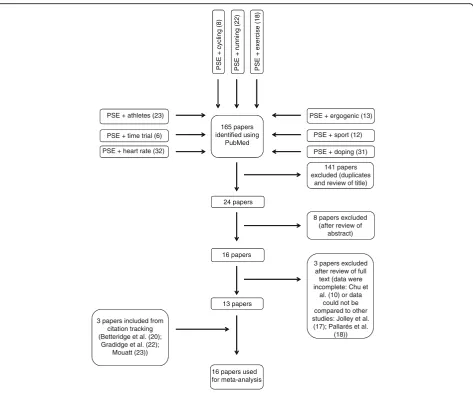
Figure 1 outlines the search process. A search of the PubMed database took place in October and November 2015. After the identification of 13 eligible studies, a citation track was conducted and three more articles were found. This was combined with a search of articles’ references lists, focusing on those which had cited the original 13 articles identified. This was further supple-mented by Google Scholar searches in November 2015 and August 2017. As of February 2018, no new relevant references were found using citation searches of the final 16 articles selected. Terms included in the search were ‘pseudoephedrine’ in combination with ‘heart rate’,‘time trial’, ‘athletes’, ‘cycling’, ‘running’, ‘exercise’, ‘ergogenic’, ‘sport’, and‘doping’. These terms were searched for in the title and the abstract of studies.
Study selection criteria
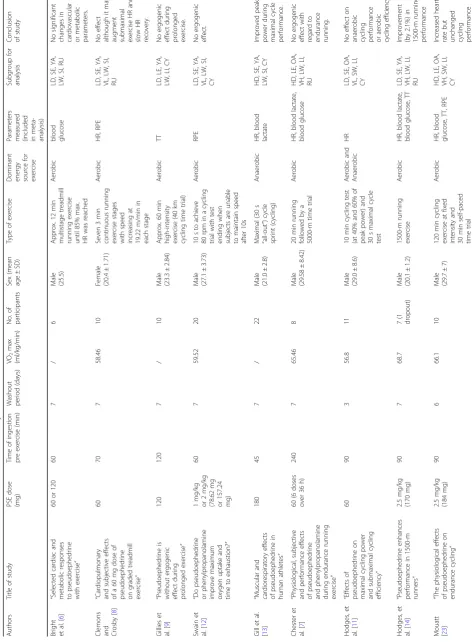
Only articles investigating the effect of PSE on exercise per-formance were selected. Authors must have provided enough information to derive means and standard devia-tions for performance tests. Studies must have used PSE as the only substance in the intervention, and they were excluded if the substance was not specifically being investi-gated for its ergogenic effect [17]. Also excluded were studies investigating the effects of PSE on strength and neuromuscular coordination because data were incompar-able with included articles [10,18]. Studies that investigated other substances were included if participants were not ad-ministered both substances simultaneously [7,12, 19]. All studies were randomised placebo-controlled trials and were conducted in a double blind crossover fashion. All partici-pants (males and females) were deemed to be healthy. Each protocol of the 16 studies included in this meta-analysis re-quired the participants to abstain from use of stimulants before the trials and some studies had a pre-planned meal.
Data extraction
Statistical analysis
The meta-analysis was carried out using the RevMan [27] software. The inverse-variance random-effects model for meta-analyses was used as it proportionately weights stud-ies based on the magnitude of their standard errors [28] and accounts for heterogeneity across trials [29]. Effect sizes are presented as the standardised mean difference with 95% confidence intervals and were evaluated with the scale of Hopkins et al. [30]: < 0.2 = trivial; 0.2–0.59 = small, 0.6–1.19 = moderate, 1.2–1.99 = large, 2.0–3.99 = very large,≥4.0 = extremely large. To account for the crossover design of the included studies, data for experimental and placebo conditions were analysed in the manner of a paral-lel group trial [28]. This method can result in wider than normal confidence intervals and underweighting of studies [28] though the short half-life of PSE (≤8 h [31]), coupled with more extensive washout periods, reduces the confounding impact of these factors. Study heterogeneity is represented by the I2 statistic which is the variation of
effects that could be attributed to differences across studies rather than to chance. Low, moderate, and high heterogeneity correspond to I2 values of 25%, 50%, and 75% respectively [32].
Results
The 16 analysed studies included 168 participants. Most (81%) had only male participants while two (12.5%) had only female participants. One (6.5%) study included both sexes. Mean ages ranged from 18 to 38 years, with only one study [22] allowing participants up to 60 years. Par-ticipants were either competitive athletes or volunteers with an interest in sport.
Primary effects
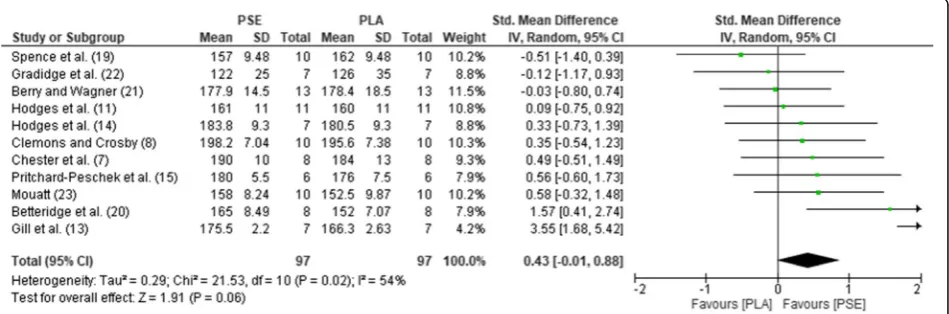
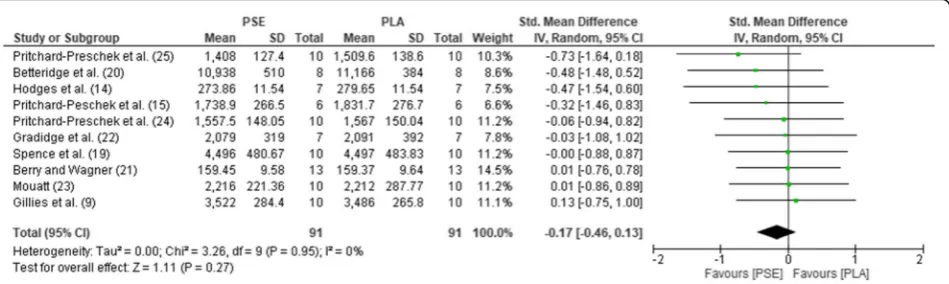
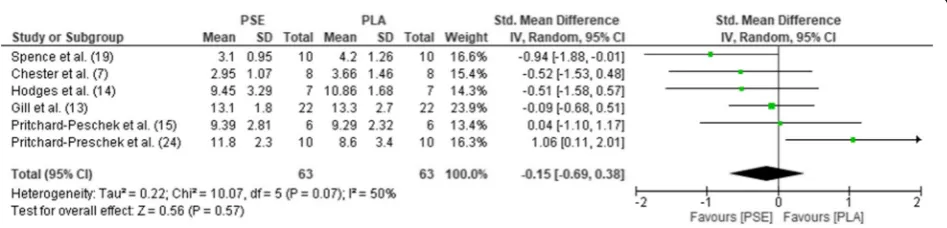
The pooled mean estimates for the effect of PSE on HR,
TT, RPE, GLU, and LAC are shown in Table 2 and
Figs.2,3,4,5, and6. Effects were generally positively or negatively trivial across parameters with the exception of 165 papers
identified using PubMed
PSE +
cycling
(8)
PSE +
running
(22)
PSE +
exercise
(18)
PSE + athletes (23)
PSE + time trial (6)
PSE + heart rate (32)
PSE + ergogenic (13)
PSE + sport (12)
PSE + doping (31)
24 papers
141 papers excluded (duplicates
and review of title)
8 papers excluded (after review of
abstract)
16 papers
3 papers excluded after review of full text (data were incomplete: Chu et
al. (10) or data could not be compared to other studies: Jolley et al.
(17); Pallarés et al. (18)) 3 papers included from
citation tracking (Betteridge et al. (20);
Gradidge et al. (22); Mouatt (23))
13 papers
16 papers used for meta-analysis
Table 1 Characteristics of studies included in the meta-analysis Authors Title of study PSE dose (mg) Time of ingestion pre exercise (min) Washout period (days) VO 2 max (ml/kg/min) No. of participants Sex (mean age ± SD) Type of exercise
Dominant energy source
for
exercise
Parameters measured (included in
meta-analysis) Subgroup for analysis Conclusion of study Bright et al. [ 6 ] “ Selected cardiac and metabolic responses to pseudoephedrin e with exercise ” 60 or 120 60 7 / 6 Male (25.5) Approx. 12 min multistage treadmill running exercise until 85% max. HR was reached Aerobic blood glucose LD, SE, YA, LW, SI, RU No significant changes in cardiovascular or metabolic parameters.
Clemons and Crosby
[ 8 ] “ Cardiopulmonary and subjective effects of a 60 mg dose of pseudoephedrine on graded treadmill exercise ” 60 70 7 58.46 10 Female (20.4 ± 1.71) Seven 3 min continuous running exercise stages with speed increasing at 19.22 m/min in each stage Aerobic HR, RPE LD, SE, YA, VL, LW, SI, RU No effect although it may
augment submaximal exercise
HR and slow HR recovery. Gillies et al. [ 9 ] “ Pseudoephedrine is without ergogenic effect during prolonged exercise ” 120 120 7 / 10 Male (23.3 ± 2.84) Approx. 60 min high-intensity exercise (40 km cycling time trial) Aerobic TT LD, LE, YA, LW, LI, CY No ergogenic effect during prolonged exercise. Swain et al. [ 12 ] “ Do pseudoephedrine or phenylpropanolami ne improve maximum oxygen uptake and time to exhaustion? ” 1 mg/kg or 2 mg/kg (78.62 mg or 157.24 mg) 60 7 59.52 20 Male (27.1 ± 3.73) 10 s to achieve 80 rpm in a cycling trial with test ending when subjects are unable to maintain speed after 10s Aerobic RPE LD, SE, YA, VL, LW, SI, CY No ergogenic effect. Gill et al. [ 13 ] “ Muscular and cardiorespiratory effects of pseudoephedrine in human athletes ” 180 45 7 / 22 Male (21.0 ± 2.8) Maximal (30 s “ all-out ” ) cycle sprint (cycling) Anaerobic HR, blood lactate HD, SE, YA, LW, SI, CY Improved peak power during maximal cycle performance. Chester et al. [ 7 ] “ Physiological, subjective and performance effects of pseudoephedrine and phenylpropanola mine during endurance running exercise ” 60 (6 doses over 36 h) 240 7 65.46 8 Male (29.58 ± 8.42) 20 min running followed by a 5000-m time trial Aerobic HR, blood lactate, blood glucose HD, LE, OA, VH, LW, LI, RU No ergogenic effect with regard to endurance running. Hodges, et al. [ 11 ] “ Effects of pseudoephedrine on maximal cycling power and submaximal cycling efficiency ” 60 90 3 56.8 11 Male (29.0 ± 8.6) 10 min cycling test (at 40% and 60% of peak power) and 30 s maximal cycle test Aerobic and Anaerobic HR LD, SE, OA, VL, SW, LI, CY No effect on
anaerobic cycling performance or
aerobic cycl ing effi ci enc y. Hodges, et al. [ 14 ] “ Pseudoephedrine enhances performance in 1500-m runners ” 2.5 mg/kg (170 mg) 90 7 68.7 7 (1 dropout) Male (20.1 ± 1.2) 1500-m running exercise Aerobic HR, blood lactate, blood glucose, TT LD, SE, YA, VH, LW, LI, RU Improvement (by 2.1%) in 1500-m running performance
Mouatt [23
] “ The physiological effects of pseudoephedrine on endurance cycling ” 2.5 mg/kg (184 mg) 90 6 66.1 10 Male (29.7 ± 7) 120 min cycling exercise at fixed intensity and 30 min self-paced time trial Aerobic HR, blood glucose, TT, RPE HD, LE, OA, VH, SW, LI, CY Increased heart rate but
Table 1 Characteristics of studies included in the meta-analysis (Continued) Authors Title of study PSE dose (mg) Time of ingestion pre exercise (min) Washout period (days) VO 2 max (ml/kg/min) No. of participants Sex (mean age ± SD) Type of exercise
Dominant energy source
for
exercise
Parameters measured (included in
meta-analysis) Subgroup for analysis Conclusion of study during endurance cycl ing. Betteridge et al. [ 20 ] “ The effect of pseudoephedrine on self-paced endurance cycling performance ” 2.5 mg/kg (187.5 mg) 90 6 69 8 Male (29.0 ± 6) 150 min cycling exercise at 70% VO 2 max Aerobic HR, TT HD, LE, OA, VH, SW, LI, CY No effect on
self-paced endurance exercise performance but
may affect the cardiac response to exercise. Pritchard- Peschek et al. [ 15 ] “ Pseudoephedrine ingestion and cycling time-trial performance ” 180 60 3.5 56.8 6 Male (33 ± 2) Approx. 30 min cycling exercise at 7 kJ/kg BM workload Aerobic HR, blood lactate, blood glucose, TT, RPE HD, LE, OA, VL, SW, SI, CY Significantly impr oved cy cling TT p er for mance by 5 .1% comp ar ed to plac eb o. Berry and
Wagner [21
HR which showed a small positive effect in favour of PSE ingestion.
Effects in subgroups
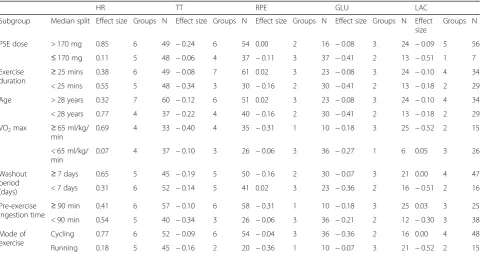
Subgroups, chosen by a median split, revealed important trends (Table3). Effect sizes on HR and TT tended to be larger in well-trained (≥65 ml/kg/min) and younger (< 28 years) participants. Effects were also larger for shorter (< 25 min) bouts of exercise and when PSE was adminis-tered less than 90 min prior to performance. For longer duration exercise (≥90 mins), small effects were also ap-parent for RPE. There was evidence of a dose-response for TT and HR with larger doses (> 170 mg) resulting in small and moderate effect sizes respectively for these variables.
Discussion
Our results quantitatively demonstrate that PSE causes a small increase in HR during exercise. In terms of the other parameters studied, there were trivial improvements in time trial performance, a trivial reduction in RPE and triv-ial decreases in GLU and LAC levels during exercise. It could be argued that these equivocal findings suggest a meta-analysis would better wait until a larger number of studies have been performed, thus leading to a more robust conclusion. However, the intriguing subgroup analyses argue against this. Effect sizes tended to be larger in just those athletes of most concern to anti-doping agen-cies (younger and well-trained athletes). They also suggest an optimal time and activity to take the drug, indicating PSE is most effectively administered less than 90 min before a short bout of exercise of less than 25 min. Of
particular concern is that our subgroup analysis confirms the qualitative review [3] that larger doses (> 170 mg) are likely to be the most effective in improving performance. However, this was accompanied by a larger effect on in-creasing HR. A recent study looking at neuromuscular performance effects using these more effective higher PSE doses (180 mg) noted adverse side effects such as tachy-cardia and heart palpitations 24 h after exercise [18]. This suggests it will be increasingly difficult to get ethical ap-proval to test the most effective doses of PSE, making it important to carry out the most complete analysis of the studies that have already been performed.
Comparison to previous systematic reviews
The initial search for our systematic review was carried out at approximately the same time as that of the recent systematic review by Trinh et al. [3] and subsequent searches uncovered no additional studies of interest. How-ever, the studies deemed appropriate for detailed analysis were different. Whilst our search confirmed and agreed with the many of the studies chosen by Trinh et al. [3], we included some additional publications. As our enhanced sample enabled the meta-analysis that Trinh et al., [3] felt not to be justified, we feel it is important to justify the rationale for the additional papers chosen.
Both reviews focused on the performance effects of PSE using a randomised-controlled trial approach. As our study was designed to enable a meta-analysis, it was restricted to sports performances that had a time trial component and/or included quantitative measures that could inform potential underlying mechanisms (such as
Table 2Effect sizes and descriptors for parameters studied
Parameter HR TT RPE GLU LAC
Effect size (95% confidence interval) 0.43 (−0.01, 0.88) −0.17 (−0.46, 0.13) −0.08 (−0.47, 0.30) −0.19 (−0.66, 0.27) −0.15 (−0.69, 0.38)
Effect size descriptor Small increase Trivial decrease Trivial decrease Trivial decrease Trivial decrease
HR, heart rate;TT, time trial;RPE, rate of perceived exertion;GLU, blood glucose;LAC,blood lactate
LAC, GLU, HR, and RPE). This biased our search to include only those studies that focused on sports events with an aerobic component. This approach ruled out one article included by Trinh et al. [3], a study by Chu et al. [10] showing that a moderate dose (120 mg) of PSE did not alter muscle action strength or anaerobic power. It also ruled out a recent study published after both system-atic searches. In 2015, Pallarés et al. [18] measured bench press and full squat exercise performance against four in-cremental loads (25%, 50%, 75%, and 90% one repetition maximum). No effects were seen except in the highest dose studied (180 mg) where PSE seemingly increased lower body muscle contraction velocity.
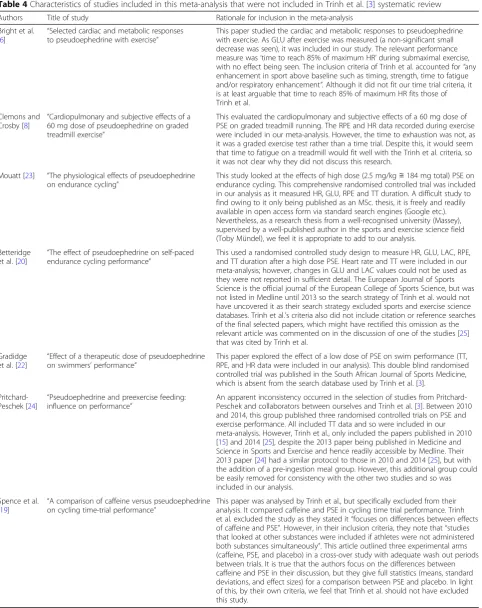
Trinh et al. [3] conducted their analysis on only 10 stud-ies and concluded that the data were insufficient and too variable to enable a meta-analysis. We feel that, at least in part, this conclusion is based on the combination of a flawed search strategy and an overly restrictive view of which articles to select from that search. We found seven additional papers omitted by Trinh et al. [3], all of which used randomised placebo designs to assess the effect of PSE on aspects of performance. On this basis, these studies could, in principle, fit the criteria used by Trinh et al. [3]. These articles are highlighted in Table1and owing to their importance to our final meta-analysis, it is crucial that we
justify their inclusion individually (see discussion in Table4).
Given that Trinh et al. [3] only included 10 articles in their final qualitative synthesis, the exclusion of seven relevant studies represents a significant fraction of the available literature. Crucially, all seven studies excluded showed no effect of PSE on performance. This may not be related to a dose effect as three studies [6,8,22] were at low (clinically approved) doses and four were at supratherapeutic doses [19,20,23,24]. It is possible that excluding such a large fraction of data biased the final conclusion of that review, particularly the comment that “qualitative analysis showed overall positive results in favour of PSE over placebo for PSE doses ≥180 mg or 2.5 mg/kg”. Of the 10 studies included by Trinh et al. [3], all three high dose studies showed an ergogenic effect, and all seven lower dose studies showed PSE to be ineffective, making their conclusion reasonable. How-ever, adding the seven omitted studies would signifi-cantly weaken this argument as only 3 out of 7 high dose studies demonstrate a positive effect of PSE. There-fore, although there is clearly an increase in HR during exercise due to PSE, we are more equivocal than Trinh et al. [3] about the drug’s positive ergogenic effects, even at high doses. Including these new articles does, Fig. 3Forest plot for effects of PSE on TT with 95% confidence intervals, PSE, pseudoephedrine; PLA, placebo; SD, standard deviation; Std., standardised; IV, instrumental variables; CI, confidence interval. Negative effect sizes represent a shorter TT performance due to PSE.
however, strongly favour the conclusion that when taken at clinically recommended doses, PSE has only a very minor effect on HR and no ergogenic effect in terms of performance.
Relevance for putative mechanism of any performance benefit
Our analysis suggests that only at high doses does PSE have the potential to enhance sports performance. It also sheds some light on to the possible mechanism that could be operating. A previous meta-analysis demonstrated that, at rest, PSE caused a statistically significant small increase in systolic blood pressure (1 mmHg) and HR (3 beats/ min), although diastolic blood pressure did not change. We found 11 studies reporting HR changes following PSE ingestion during exercise. Our data showed that this mean HR increase is maintained during exercise with the largest increase being 13 beats/min [20]. The subgroup analyses showed that the biggest effect sizes were seen at high doses and in athletes with high maximal oxygen uptake (VO2 max). Three individual studies showed a
perform-ance effect [13–15]. Gill et al. [13] showed that HR in-creased significantly from 166 to 175 beats/min, and Hodges et al. [14] demonstrated a non-significant increase from 185 to 190 beats/min. Similarly, Pritchard-Peschek et al. [15] also reported a non-significant increase was from 176 to 180 beats/min. Given that studies that showed no performance increase showed at least as large
and as significant HR increases during exercise, it seems unlikely that—in and of itself—changes in HR underpin any performance enhancement.
In relation to RPE, GLU, and LAC levels in exercise, a lack of data is more challenging to overcome with only be-tween five and seven studies reporting sufficient informa-tion. We observed a small, trivial decrease in all of these parameters. However, it is worth exploring the individual studies, as the statistical power of pairing individuals in a crossover study is lost during a meta-analysis.
For RPE, none of the five studies included showed meaningful differences between PSE and placebo [8, 12, 15, 22, 23]. An additional study did not report values, but did state that there were no significant differences [7]. Glucose levels were not significantly different in four of the five studies included in the meta-analysis [6,7,14, 23]. An additional study, not part of the analysis as it re-ported no values, again stated a lack of any PSE effect on GLU [25]. However, one study did report increased GLU levels post exercise following PSE treatment [15]. This was one of the few studies that also showed a per-formance effect (decreased time in cycling TT). Interest-ingly in this case, it was the pre-exercise GLU level that correlated with the increased performance in the cycling time trial. Lactate levels did not significantly change in five of the seven studies included in the meta-analysis [7, 13–15, 23]. However, they did significantly decrease in two studies [19, 24]. In one study, LAC levels were not Fig. 5Forest plot for effects of PSE on GLU with 95% confidence intervals. GLU, blood glucose; PSE, pseudoephedrine; PLA, placebo; SD, standard deviation; Std., standardised; IV, instrumental variables; CI, confidence interval. Positive effect sizes represent an increase in GLU due to PSE
reported, the authors nonetheless stating there was no significant change [25].
Given that only 3 of the 16 studies included in our ana-lysis showed a performance benefit, it is worth exploring in detail, which secondary parameters changed in these studies to see if this can inform mechanism. Gill et al. [13] measured an increase in maximum torque in an isometric knee extension and an improvement in peak power during maximal cycle performance in 22 healthy male volunteers. In terms of lung function, small, but significant, increases were seen in forced vital capacity (FVC) and forced ex-pired volume in 1 s (FEV) following ingestion of PSE. These are consistent with the well-characterised role of PSE in stimulating the sympathetic nervous system and acting as a bronchodilator [33]. This is unlikely to explain the effect on peak power observed here, nor is a small in-crease in FVC and FEV likely to improve sports perform-ance in endurperform-ance events given the lack of consistent ergogenic effect of drugs that are far more effective in increasing lung function such as salbutamol [34].
Hodges et al. [14] found that PSE significantly decreased time to completion of a 1500 m time trial in 7 healthy male subjects. However, no other measured pa-rameters (HR, LAC, GLU, arterial O2 partial pressure,
arterial carbon dioxide partial pressure and arterial oxygen saturation) were significantly altered.
Pritchard-Peschek et al. [15] reported a significant im-provement in a cycling TT performance following PSE in six trained male cyclists and triathletes. As previously
noted, this study reported increased post exercise GLU levels following PSE treatment. No significant PSE effect was found on LAC, blood pH, substrate oxidation, RPE, or HR. PSE did significantly increase plasma norepin-ephrine concentrations, an expected outcome for a drug that has indirect agonist activity on cardiac β receptors and peripheralα1receptors, through release of
norepin-ephrine from the cytoplasmic pool [14]. However, the validity of any ergogenic effects of this increased β re-ceptor activity is undermined by the two subsequent similar studies from this group, which used larger sam-ple sizes (n = 10) and showed no performance benefit despite an increase in plasma norepinephrine [24,25].
Readily available drugs used as decongestants that are not banned by WADA such as phenylephrine act dir-ectly on peripheral α receptors and have limited ability to cross the blood-brain barrier and/or act as a central stimulant [2]. PSE is more lipid soluble and is therefore more accessible to the central nervous system. Conse-quently, it can, in principle, act as both a peripheral or central stimulant. However, the biochemical, physio-logical, and psychological data in our systematic review and meta-analysis fail to give a consistent explanation to underpin a possible ergogenic mechanism. Heart rate did increase, however, in most studies there was no accompanying performance benefit; indeed in some studies which showed a performance benefit, there is no significant heart rate change. A few studies show plasma metabolite changes (GLU/LAC) that might suggest
Table 3Subgroup analysis
HR TT RPE GLU LAC
Subgroup Median split Effect size Groups N Effect size Groups N Effect size Groups N Effect size Groups N Effect size
Groups N
PSE dose > 170 mg 0.85 6 49 −0.24 6 54 0.00 2 16 −0.08 3 24 −0.09 5 56
≤170 mg 0.11 5 48 −0.06 4 37 −0.11 3 37 −0.41 2 13 −0.51 1 7
Exercise duration
≥25 mins 0.38 6 49 −0.08 7 61 0.02 3 23 −0.08 3 24 −0.10 4 34
< 25 mins 0.55 5 48 −0.34 3 30 −0.16 2 30 −0.41 2 13 −0.18 2 29
Age > 28 years 0.32 7 60 −0.12 6 51 0.02 3 23 −0.08 3 24 −0.10 4 34
< 28 years 0.77 4 37 −0.22 4 40 −0.16 2 30 −0.41 2 13 −0.18 2 29
VO2max ≥65 ml/kg/
min
0.69 4 33 −0.40 4 35 −0.31 1 10 −0.18 3 25 −0.52 2 15
< 65 ml/kg/ min
0.07 4 37 −0.10 3 26 −0.06 3 36 −0.27 1 6 0.05 3 26
Washout period (days)
≥7 days 0.65 5 45 −0.19 5 50 −0.16 2 30 −0.07 3 21 0.00 4 47
< 7 days 0.31 6 52 −0.14 5 41 0.02 3 23 −0.36 2 16 −0.51 2 16
Pre-exercise ingestion time
≥90 min 0.41 6 57 −0.10 6 58 −0.31 1 10 −0.18 3 25 0.03 3 25
< 90 min 0.54 5 40 −0.34 3 26 −0.06 3 36 −0.21 2 12 −0.30 3 38
Mode of exercise
Cycling 0.77 6 52 −0.09 6 54 −0.04 3 36 −0.36 2 16 0.00 4 48
Running 0.18 5 45 −0.16 2 20 −0.36 1 10 −0.07 3 21 −0.52 2 15
PSE, pseudoephedrine;HR, heart rate;RPE, rate of perceived exertion;TT, time trial;GLU, blood glucose;LAC, blood lactate; min, minute(s); VO2max, maximum
Table 4Characteristics of studies included in this meta-analysis that were not included in Trinh et al. [3] systematic review
Authors Title of study Rationale for inclusion in the meta-analysis
Bright et al.
[6] “
Selected cardiac and metabolic responses to pseudoephedrine with exercise”
This paper studied the cardiac and metabolic responses to pseudoephedrine with exercise. As GLU after exercise was measured (a non-significant small decrease was seen), it was included in our study. The relevant performance measure was‘time to reach 85% of maximum HR’during submaximal exercise, with no effect being seen. The inclusion criteria of Trinh et al. accounted for“any enhancement in sport above baseline such as timing, strength, time to fatigue and/or respiratory enhancement”.Although it did not fit our time trial criteria, it is at least arguable that time to reach 85% of maximum HR fits those of Trinh et al.
Clemons and Crosby [8] “
Cardiopulmonary and subjective effects of a 60 mg dose of pseudoephedrine on graded treadmill exercise”
This evaluated the cardiopulmonary and subjective effects of a 60 mg dose of PSE on graded treadmill running. The RPE and HR data recorded during exercise were included in our meta-analysis. However, the time to exhaustion was not, as it was a graded exercise test rather than a time trial. Despite this, it would seem that time to fatigue on a treadmill would fit well with the Trinh et al. criteria, so it was not clear why they did not discuss this research.
Mouatt [23] “The physiological effects of pseudoephedrine on endurance cycling”
This study looked at the effects of high dose (2.5 mg/kg≅184 mg total) PSE on endurance cycling. This comprehensive randomised controlled trial was included in our analysis as it measured HR, GLU, RPE and TT duration. A difficult study to find owing to it only being published as an MSc. thesis, it is freely and readily available in open access form via standard search engines (Google etc.). Nevertheless, as a research thesis from a well-recognised university (Massey), supervised by a well-published author in the sports and exercise science field (Toby Mündel), we feel it is appropriate to add to our analysis.
Betteridge et al. [20] “
The effect of pseudoephedrine on self-paced endurance cycling performance”
This used a randomised controlled study design to measure HR, GLU, LAC, RPE, and TT duration after a high dose PSE. Heart rate and TT were included in our meta-analysis; however, changes in GLU and LAC values could not be used as they were not reported in sufficient detail. The European Journal of Sports Science is the official journal of the European College of Sports Science, but was not listed in Medline until 2013 so the search strategy of Trinh et al. would not have uncovered it as their search strategy excluded sports and exercise science databases. Trinh et al.’s criteria also did not include citation or reference searches of the final selected papers, which might have rectified this omission as the relevant article was commented on in the discussion of one of the studies [25] that was cited by Trinh et al.
Gradidge et al. [22] “
Effect of a therapeutic dose of pseudoephedrine on swimmers’performance”
This paper explored the effect of a low dose of PSE on swim performance (TT, RPE, and HR data were included in our analysis). This double blind randomised controlled trial was published in the South African Journal of Sports Medicine, which is absent from the search database used by Trinh et al. [3].
Pritchard-Peschek [24]
“Pseudoephedrine and preexercise feeding: influence on performance”
An apparent inconsistency occurred in the selection of studies from Pritchard-Peschek and collaborators between ourselves and Trinh et al. [3]. Between 2010 and 2014, this group published three randomised controlled trials on PSE and exercise performance. All included TT data and so were included in our meta-analysis. However, Trinh et al., only included the papers published in 2010 [15] and 2014 [25], despite the 2013 paper being published in Medicine and Science in Sports and Exercise and hence readily accessible by Medline. Their 2013 paper [24] had a similar protocol to those in 2010 and 2014 [25], but with the addition of a pre-ingestion meal group. However, this additional group could be easily removed for consistency with the other two studies and so was included in our analysis.
Spence et al. [19]
“A comparison of caffeine versus pseudoephedrine on cycling time-trial performance”
improved substrate or oxygen utilisation. However, other studies show no metabolite changes even when there is a performance benefit. Unlike other WADA banned stimu-lants such as amphetamines [35], perception of effort (RPE) is completely unchanged by PSE at low or high doses, irrespective of any performance benefit.
Rationale for WADA listing pseudoephedrine as a prohibited doping substance
The WADA Prohibited List may include any substance that satisfies any two of the following three criteria: (i) it has the potential to enhance or enhances sport perform-ance; (ii) it represents an actual or potential health risk to the athlete; (iii) it violates the spirit of sport. Appar-ently, PSE fulfilled these criteria and was banned until 2004, did not fulfil them between 2004 and 2010 (when it was removed from the banned list), and then fulfilled them again after 2010 (when it returned to the banned list). Currently, PSE is only banned in competition. A doping offence is committed if an athlete has a urine PSE concentration of greater than 150μg/ml. Even given the biological variability of single point measurements, this level is high enough that it should not be possible to produce a positive urine test if an athlete discontinues a therapeutic dose of PSE more than 24 h before competi-tion. However, it is possible, though not guaranteed, to exceed these levels within 24 h of taking PSE at the normal therapeutic dose [9], and it is impossible not to exceed them when on a supratherapeutic dose [24].
WADA monitored PSE use in doping samples when it was not banned from 2004 to 2009. WADA’s case for reintroducing the PSE ban in 2010 was made in a Q and A statement published as part of the 2010 prohibited list [36]: “Results of the Monitoring Program over the past five years have shown a sustained increase in samples contain-ing pseudoephedrine. The program indicated clear abuse of this substance with high concentrations in a number of sports and regions. In addition, available literature shows scientific evidence of the performance-enhancing effects of pseudoephedrine beyond certain doses.”
Some increase in PSE use would be expected when the ban was lifted given that the best drug to treat nasal decongestion in competition was now freely available to athletes without the threat of sanction. Presumably, the geographic and sport-specific nature of the increase argued against this more benign interpretation. An additional concern, not specifically noted by WADA, but stated by some anti-doping researchers, is that one of PSE’s minor metabolites, norpseudoephedrine (cathine), was on the banned list during this period. Athletes could therefore claim a failed cathine doping result was a conse-quence of taking the now permitted PSE. PSE use would, therefore, mask cathine abuse [37].
However, our systematic review does question WADA’s statement that “available literature shows scientific evidence of the performance-enhancing effects of pseudo-ephedrine beyond certain doses.”A research article would need to have been published between 2004 and 2009 to inform this change of policy. In this period, our search uncovered three studies reporting no performance effect [7,14,23] and only one coming to the contrary view [14]. That study was published in 2006 and is the only paper WADA cite in the 2004–2009 period showing a perform-ance benefit in justification of their decision [38]. It showed a performance benefit based on only six UK college 1500 m runners, the fastest running over 4:15 min for the distance. The International Association of Athletics Federations (IAAF) qualifying standard for this event in the 2016 Olympics was 3:36 min, making this subject group far from elite. Given that PSE is not banned out of competition, a WADA-approved study in elite athletes would be beneficial to support the current policy.
Given the difficulty of taking measurements in elite ath-letes, it is possible that WADA treat the systematic abuse of a drug by elite athletes as partial evidence for its efficacy in that subject group. The use of a higher than necessary dose of a medicine (or even the use at all of a medicine where there is no clinical need) is also considered to be against the “spirit of sport”. A similar rationale was presumably used for the more infamous 2016 banning of the cardiac drug meldonium once the extremely wide-spread use of it amongst Eastern European athletes became known [39], despite the poor evidence base for its performance-enhancing effect. In the case of PSE, there is the added concern, that in some countries, to get access to the higher doses, athletes need to circumvent government regulations designed to combat the production of illegal recreational drugs [2].
Conclusions
In contrast to a previous systematic review [3], our analysis has shown that any performance benefit of PSE is marginal at best, and certainly less than the well-characterised per-mitted stimulant caffeine [40]. However, a small perform-ance benefit at high doses in elite athletes still cannot be completely ruled out at present.
Abbreviations
ES:Effect sizes; FEV: Forced expired volume; FVC: Forced vital capacity; GLU: blood glucose concentration; HR: Heart rate; IAAF: International Association of Athletics Federations; LAC: Blood lactate concentration; PLA: Placebo; PRISMA: Preferred Reporting Items for Systematic Reviews and Meta-Analyses; PSE: Pseudoephedrine; RPE: Rate of perceived exertion; TT: Time trial; WADA: World Anti-Doping Agency
Funding
Availability of data and materials
Data sharing not applicable to this article as no datasets were generated or analysed during the current study.
Author’s contributions
MDG collected the data, analysed the data, and wrote the manuscript. FH collected and analysed the data. JM analysed the data and wrote the manuscript. CEC conceived the study, analysed the data, and wrote the manuscript. All authors read and approved the final manuscript
Ethics approval and consent to participate
This study was approved by the ethics committee of the University of Essex.
Consent for publication
n/a
Competing interests
The authors, MD Gheorghiev, F Hosseini, J Moran, and CE Cooper, declare that they have no competing interests.
Publisher’s Note
Springer Nature remains neutral with regard to jurisdictional claims in published maps and institutional affiliations.
Author details
1
Centre for Sports and Exercise Science, School of Biological Sciences, University of Essex, Colchester, UK.2School of Sport, Rehabilitation and
Exercise Sciences, University of Essex, Colchester, UK.3Department of Sport, Hartpury University, Gloucestershire, UK.4Faculty of Medicine, Carol Davila
University of Medicine and Pharmacy, Bucharest, Romania.
Received: 25 April 2018 Accepted: 25 September 2018
References
1. Hughes DTD, Empey DW, Land M. Effects of pseudoephedrine in man. J Clin Pharm Ther. 1983;8:315–21.
2. Eccles R. Substitution of phenylephrine for pseudoephedrine as a nasal decongeststant. An illogical way to control methamphetamine abuse. Br J Clin Pharmacol. 2007;63(1):10–4.
3. Trinh KV, Kim J, Ritsma A. Effect of pseudoephedrine in sport: a systematic review. BMJ Open Sport Exerc Med. 2015;1:e000066.
4. Kobayashi S, Endou M, Sakuraya F, Matsuda N, Zhang XH, Azuma M, et al. The sympathomimetic actions of l-ephedrine and d-pseudoephedrine: direct receptor activation or norepinephrine release? Anesth Analg. 2003;97:1239–45. 5. Salerno SM, Jackson JL, Berbano EP. Effect of oral pseudoephedrine on blood
pressure and heart rate: a meta-analysis. Arch Intern Med. 2005;165:1686–94. 6. Bright TP, Sandage BW, Fletcher HP. Selected cardiac and metabolic responses
to pseudoephedrine with exercise. J Clin Pharmacol. 1981;21:488–92. 7. Chester N, Reilly T, Mottram DR. Physiological, subjective and performance
effects of pseudoephedrine and phenylpropanolamine during endurance running exercise. Int J Sports Med. 2003;24:3–8.
8. Clemons JM, Crosby SL. Cardiopulmonary and subjective effects of a 60 mg dose of pseudoephedrine on graded treadmill exercise. J Sports Med Phys Fitness. 1993;33:405–12.
9. Gillies H, Derman WE, Noakes TD, Smith P, Evans A, Gabriels G, et al. Pseudoephedrine is without ergogenic effects during prolonged exercise. J Appl Physiol. 1996;81:2611–7.
10. Chu KS, Doherty TJ, Parise G, Milheiro JS, Tarnopolsky MA. A moderate dose of pseudoephedrine does not alter muscle contraction strength or anaerobic power. Clin J Sport Med. 2002;12:387–90.
11. Hodges ANH, Lynn BM, Bula JE, Donaldson MG, Dagenais MO, McKenzie DC. Effects of pseudoephedrine on maximal cycling power and submaximal cycling efficiency. Med Sci Sports Exerc. 2003;35:1316–9.
12. Swain RA, Harsha DM, Baenziger J, Saywell RM. Do pseudoephedrine or phenylpropanolamine improve maximum oxygen uptake and time to exhaustion? Clin J Sport Med. 1997;7:168–73.
13. Gill ND, Shield A, Blazevich AJ, Zhou S, Weatherby RP. Muscular and cardiorespiratory effects of pseudoephedrine in human athletes. Br J Clin Pharmacol. 2000;50:205–13.
14. Hodges K, Hancock S, Currell K, Hamilton B, Jeukendrup AE. Pseudoephedrine enhances performance in 1500-m runners. Med Sci Sports Exerc. 2006;38:329–33. 15. Pritchard-Peschek KR, Jenkins DG, Osborne MA, Slater GJ. Pseudoephedrine
ingestion and cycling time-trial performance. Int J Sport Nutr Exerc Metab. 2010;20:132–8.
16. Liberati A, Altman DG, Tetzlaff J, Mulrow C, Gøtzsche PC, Ioannidis JPA, et al. The PRISMA statement for reporting systematic reviews and meta-analyses of studies that evaluate health care interventions: explanation and elaboration. J Clin Epidemiol. 2009;62:e1–34.
17. Jolley D, Dawson B, Maloney SK, White J, Goodman C, Peeling P. Hydration and urinary pseudoephedrine levels after a simulated team game. Int J Sport Nutr Exerc Metab. 2014;24:325–32.
18. Pallarés JG, López-Samanes A, Fernández-Elías VE, Aguado-Jiménez R, Ortega JF, Gómez C, et al. Pseudoephedrine and circadian rhythm interaction on neuromuscular performance. Scand J Med Sci Sport. 2015;25:e603–12. 19. Spence AL, Sim M, Landers G, Peeling P. A comparison of caffeine versus
pseudoephedrine on cycling time-trial performance. Int J Sport Nutr Exerc Metab. 2013;23:507–12.
20. Betteridge S, Mündel T, Stannard S. The effect of pseudoephedrine on self-paced endurance cycling performance. Eur J Sport Sci. 2010;10:53–8. 21. Berry C, Wagner DR. Effect of pseudoephedrine on 800-m-run times of
female collegiate track athletes. Int J Sports Physiol Perform. 2012;7:237–41. 22. Gradidge P-L, Constantinou D, Heard S-M, King C, Morris-Eyton H. Effect of a
therapeutic dose of pseudoephedrine on swimmers’performance. S Afr J Sports Med. 2013;25:43–6.
23. Mouatt J. The physiological effects of pseudoephedrine on endurance cycling: Massey University; 2008.
24. Pritchard-Peschek KR, Osborne MA, Slater GJ, Taaffe DR, Jenkins DG. Pseudoephedrine and preexercise feeding: influence on performance. Med Sci Sports Exerc. 2013;45:1152–7.
25. Pritchard-Peschek KR, Jenkins DG, Osborne MA, Slater GJ, Taaffe DR. The dose-response relationship between pseudoephedrine ingestion and exercise performance. J Sci Med Sport. 2014;17:531–4.
26. Rizzo S, Weiss R. Meta-analysis of odds ratios with incomplete extracted data: Cornell University; 2014.
27. Review Manager. The Nordic Cochrane Centre. Cochrane Collab. 2014:1–43. 28. Deeks JJ, Higgins JP, Altman DG. Analysing data and undertaking
meta-analyses. Cochrane Handb Syst Rev Interv Cochrane B Ser. 2008:243–96. 29. Kontopantelis E, Springate DA, Reeves D. A re-analysis of the Cochrane
library data: the dangers of unobserved heterogeneity in meta-analyses. PLoS One. 2013;8(7):e69930.https://doi.org/10.1371/journal.pone.0069930. 30. Hopkins WG, Marshall SW, Batterham AM, Hanin J. Progressive statistics for studies
in sports medicine and exercise science. Med Sci Sports Exerc. 2009;41:3–12. 31. Makhija SN, Vavia PR. Controlled porosity osmotic pump-based controlled
release systems of pseudoephedrine: I. cellulose acetate as a semipermeable membrane. J Control Release. 2003;89:5–18.
32. Higgins JPT, Thompson SG, Deeks JJ, Altman DG. Measuring inconsistency in meta-analyses. BMJ. 2003;327:557–60.
33. Empey D, Young G, Letley E, John G, Smith P, McDonnell K, et al. Dose-response study of the nasal decongestant and cardiovascular effects of pseudoephedrine. Br J Clin Pharmacol. 1980;9:351–8.
34. Koch S, Macinnis MJ, Sporer BC, Rupert JL, Koehle MS. Inhaled salbutamol does not affect athletic performance in asthmatic and non-asthmatic cyclists. Br J Sports Med. 2015;49:51–5.
35. Swart J, Lamberts RP, Lambert MI, St Clair Gibson A, Lambert EV, Skowno J, et al. Exercising with reserve: evidence that the central nervous system regulates prolonged exercise performance. Br J Sports Med. 2009;43:782–8. 36. WADA. Q&A 2010 Prohibited List 2009 [Internet]. Available from:http://
www.realchampion.jp/assets/uploads/2013/03/2010_ProhibitedList_QA.pdf
37. Pokrywka A, Tszyrsznic W, Kwiatkowska DJ. Problems of the use of pseudoephedrine by athletes. Int J Sports Med. 2009;30:569–72. 38. WADA. Additional information in regards to the reintroduction of
pseudoephedrine to the 2010 Prohibited list 2009 [internet]. Available from:
https://www.wada-ama.org/sites/default/files/resources/files/WADA_ Additional_Info_Pseudoephedrine_2010_EN.pdf
39. Stuart M, Schneider C, Steinbach K. Meldonium use by athletes at the Baku 2015 European Games. Br J Sports Med. 2016;50:694–8.