INTERNATIONAL RESEARCH JOURNAL OF PHARMACY
www.irjponline.com
ISSN 2230 – 8407
Research Article
FORMULATION AND EVALUATION OF ALGINATE-CELLULOSE FLOATING MICROSPHERES OF
CEFIXIME TRIHYDRATE
Sindhumol P.G.*
1, Sudhakaran Nair C.R.
2, Jyoti Harindran
31
Research Scholar, Department of Pharmaceutical Sciences, Cheruvandoor, Mahatma Gandhi University, Kerala, India
2Professor & Head (Retired), College of Pharmaceutical Sciences, Govt. Medical College, Thiruvananthapuram, Kerala, India
3Principal & Professor in charge of research, Department of pharmaceutical sciences, Center for Professional and Advanced
Studies (CPAS), Cheruvandoor, Kottayam, Kerala, India
*Corresponding Author Email: [email protected]
Article Received on: 19/02/18 Approved for publication: 12/03/18
DOI: 10.7897/2230-8407.09344
ABSTRACT
Gastro retentive floating microspheres is a type of dosage form used as an efficient means of enhancing the bioavailability controlled delivery of many drugs that are mainly absorbed from the stomach and upper part of the intestine. Floating microspheres of cefixime trihydrate were prepared using polymers to prolong gastric residence time and increase drug bioavailability with decreased gastro intestinal side effects. The floating micro carriers were prepared by ionotropic gelation method by dispersing cefixime trihydrate with calcium carbonate and sodium bicarbonate separately into a mixture of anionic sodium alginate, as primary polymer with copolymers namely, HPMC K4M, HPMC K15Mand ethyl cellulose into a solution of calcium chloride containing acetic
acid. The prepared microparticles were evaluated for drug entrapment efficiency, particle size, buoyancy and in vitro drug release studies. As the amount of gas forming agents increased, the size and floating properties increased. The NaHCO3 loaded microspheres were large compared to those produced with
CaCO3 but more buoyancy was shown by the microspheres formulated with CaCO3. The formulations without gas forming agents showed maximum
entrapment efficiency. Drug release rate increased proportionally with addition of NaHCO3 but the increase in the concentration of CaCO3 did not make any
change in the amount of drug release. From these studies we can conclude that CaCO3 is a more powerful gas forming agent than NaHCO3. The microspheres
formulated with CaCO3 show increased buoyancy and controlled drug release which makes it excellent in floating drug delivery systems (FDDS).
Key Words: Cefixime trihydrate, floating microspheres, ionotropic gelation, gas forming agents, buoyancy, sodium alginate.
INTRODUCTION
Oral route is the most preferred route of drug delivery due to ease of administration and greater patient compliance.1 However studies
revealed that this route is subjected to two physiological influences of short gastric residence time(GRT) and variable gastric emptying time (GET), which may lead to unpredictable bioavailability and times to achieve the peak plasma levels. Thus control of placement of drug delivery system in a specific region of the gastro intestinal tract (GI) offers numerous advantages like improved bioavailability and therapeutic efficacy, local delivery of drugs and possible reduction of dose size. These considerations have lead to the development of drugs of oral controlled release (CR) dosage forms possessing gastric retention capabilities. Gastric retention of dosage forms is possible by formulating the molecules as floating drug delivery systems (FDDS). FDDS have density lower than gastric fluid ~ 1.004 g/ cm3 which help them remain buoyant in the stomach
fluid. The drug is released for a prolonged period of time when the system is floating in the gastric content. Sangeeth et al2 prepared the
floating beads of theophylline for gastric retention and improved bioavailability.
Cefixime is an orally active 3rd generation cephalosporin antibiotic
active against enterobacteriaceae, Haemophilus influenzae,
Streptococcus pyogenes, Streptococcus pneumoniae, Moraxella, E.coli, Protease, Neisseria gonorrheae and is resistant to many β
lactamases. Cefixime is a weak acid which is primarily absorbed from the stomach and upper part of intestine. It usually remains unionized at acidic pH which helps in increasing the absorption at stomach region. Cefixime is insoluble in water. It is incompletely absorbed after oral administration which results in poor bioavailability of 40- 50%.3, 4 On behalf of these properties of
cefixime, the aim of the present study is to prolong gastric residence time of cefixime containing formulation and allow it to float in the stomach for a long period of time which helps in increasing the oral bioavailability. The biological half-life of cefixime is 3.0±0.4 hours and dosing of cefixime is 200 mg twice a day for 7-10 days. The principle of buoyant preparation offers a simple and practical approach to achieve increased gastric residence time for the dosage form and sustained drug release.5 Nijaguni et al6 prepared floating
generally unreliable and non-reproducible in prolonging the GRT. However, multiple-unit dosage forms reduce inter- subject variability in absorption and have lower dose- dumping probability as reported by Singh and Kwon.7 So multiple-unit dosage forms are
better suited compared to single-unit systems. In this study the multiple unit floating systems were developed using calcium carbonate (CaCO3) or sodium bicarbonate (NaHCO3) as gas
forming agent dispersed in an alginate- cellulose matrix.
MATERIALS AND METHODS
The drug cefixime was obtained as a gift from Sance Pharmaceuticals Pala. Sodium alginate was purchased from Loba Chemie Pvt.Ltd. Mumbai.HPMCs were purchased from Sigma Laboratories, Ethyl Cellulose from John Baker INC,Colorrado ,USA. Calcium carbonate and Sodium bicarbonate were purchased from S.D fine laboratories. All other chemicals used were analytical grade.
Drug Excipient Compatibility Studies
To investigate any possible interaction between the drug and the polymer, the Fourier Transform Infrared(FTIR) spectra of pure drug cefixime, polymers and the physical mixture of drug and polymers were carried out using Fourier Transform Infrared spectrophotometer (FTIR-8400S, Shimadzu, Japan). The samples were prepared as KBr disks compressed under a pressure of about 800Mpa the wave length selected ranged between 400-4000.cm-1
The FTIR spectrum of the physical mixture was compared with those of pure drug and polymer to detect any interaction.8
Preparation of Foating Alginate Microspheres
The drug cefixime trihydrate (114.3mg) equivalent to 100 mg of cefixime was dispersed in 5ml distilled water. This solution was added to 30 ml alginate solution (3%w/v) containing HPMC/ ethyl cellulose. (Alginate: HPMC=9:1 w/w). Then gas forming agents such as CaCO3 or NaHCO3 were added to the solution with levels from 0:1 to 1:1(gas forming agent/alginate, w/w). The microparticles were formed by dropping the bubble free dispersion (30ml) through 26G syringe needle into 100 ml of 0.5% (w/v) CaCl2
solution containing 10% (v/v) acetic acid. The dropping rate was adjusted to 30 drops/minute and falling distance was 5cm. The solution containing suspended micro carriers was stirred with a magnetic stirrer for 10 minutes to improve their mechanical strength and allowed to complete the reaction to produce gas. The fully formed micro carriers were collected, washed with distilled water twice and subsequently air dried.9,10,11 Floating alginate
microspheres of cefixime with different types of co-polymers such as HPMC K4M, HPMCK 15M, and ethyl cellulose were prepared.
The formulation details are given in Table 1, 2 & 3.
EVALUATION OF THE FLOATING ALGINATE MICROSPHERES
Determination of Percentage Yield
The prepared batches of all the microspheres were accurately weighed. The weighed quantity of prepared microspheres was divided by the total amount of the drug and all the polymers used in the formulation of microspheres, which gave the total % yield of all
the microspheres.12, 13 The procedure was done in triplicate and the
mean value of % yield was calculated.
Determination of Drug Entrapment Efficiency
The drug content in the microspheres were determined by pulverizing the drug loaded microspheres (equivalent to 100mg of the drug) followed by immersing them in 1000 ml simulated gastric fluid (pH 1.2 buffers) with agitating at room temperature for 24 hours. Filtered the solution through Whatmann No.1 filter paper, the drug concentration was determined spectrophotometrically at wave length 284nm using a UV spectrophotometer (UV 1800, Shimadzu, Kyoto, Japan). The filtered solution from the empty microspheres was taken as blank. All samples were analyzed in triplicate.14
Study of Particle Size and Morphology of Microspheres
The size of the microspheres was determined using an optical microscope fitted with an ocular micrometer and a stage micrometer. Randomly measured the particle diameters of about 100 microspheres and the average particle size were determined using the Edmondson’s equation:
dmean = ∑ nd/ ∑ n
Where “n” stands for the number of counted microspheres, and “d” for the mean size range
In Vitro Evaluation of Floating Ability (Buoyancy) of Microspheres
The floating properties of the microspheres were evaluated in a dissolution vessel filled with 1000 ml simulated gastric fluid (pH 1.2) containing 0.02% of Tween 80. Paddle rotation speed was at 100 rpm, temperature was maintained at 37±0.50C. For each sample
of microspheres, 50 individual microspheres were placed in the dissolution vessel. Time required for floating on surface after adding solution (floating lag time) the number of microspheres NF
(observed visually) and the floating duration FT (which is the time
during which the micro spheres remain buoyant on test solution) were then determined at fixed time intervals during a 24 hour period. Experiments were performed in triplicate and the percentage of floating microspheres were calculated.15
In Vitro Drug Release Studies
The dissolution studies of beads equivalent to 100mg of cefixime were performed using USP dissolution type apparatus II (paddle type). The drug release study was carried out using 900ml of pH 1.2 buffer, maintained at 37± 0.50C. The speed of stirrer was maintained
TABLE 1: FORMULATION OF FLOATING ALGINATE MICROSPHERS WITH HPMC K4M AS COPOLYMER
Formulation code
Cefixime (mg)
Sodium alginate (percentage)
HPMCK4M (mg)
CaCl2 (%w/v)
CaCO3: alginate (ratio)
NaHCO3: alginate
(ratio)
H1 100 3 100 0.5 0:1 -
H2 100 3 100 0.5 0.25:1 -
H3 100 3 100 0.5 0.5:1 -
H4 100 3 100 0.5 0.75:1 -
H5 100 3 100 0.5 1:1 -
H6 100 3 100 0.5 - 0.25:1
H7 100 3 100 0.5 - 0.5:1
H8 100 3 100 0.5 - 0.75:1
H9 100 3 100 0.5 - 1:1
TABLE 2: FORMULATION OF FLOATING ALGINATE MICROSPHERS WITH HPMC K15M AS COPOLYMER
Formulation code
Cefixime (mg)
Sodium alginate (percentage)
HPMCK15M (mg)
CaCl2 (%w/v)
CaCO3: Alginate (ratio)
NaHCO3: Alginate
(ratio)
M1 100 3 100 0.5 0:1 -
M2 100 3 100 0.5 0.25:1 -
M3 100 3 100 0.5 0.5:1 -
M4 100 3 100 0.5 0.75:1 -
M5 100 3 100 0.5 1:1 -
M6 100 3 100 0.5 - 0.25:1
M7 100 3 100 0.5 - 0.5:1
M8 100 3 100 0.5 - 0.75:1
M9 100 3 100 0.5 - 1:1
TABLE 3: FORMULATION OF FLOATING ALGINATE MICROSPHERES WITH ETHYL CELLULOSE AS COPOLYMER
Formulation code
Cefixime (mg)
Sodium alginate (percentage)
Ethyl cellulose
(mg)
CaCl2 (%w/v)
CaCO3: alginate (ratio)
NaHCO3: alginate
(ratio)
E1 100 3 100 0.5 0:1 -
E2 100 3 100 0.5 0.25:1 -
E3 100 3 100 0.5 0.5:1 -
E4 100 3 100 0.5 0.75:1 -
E5 100 3 100 0.5 1:1 -
E6 100 3 100 0.5 - 0.25:1
E7 100 3 100 0.5 - 0.5:1
E8 100 3 100 0.5 - 0.75:1
E9 100 3 100 0.5 - 1:1
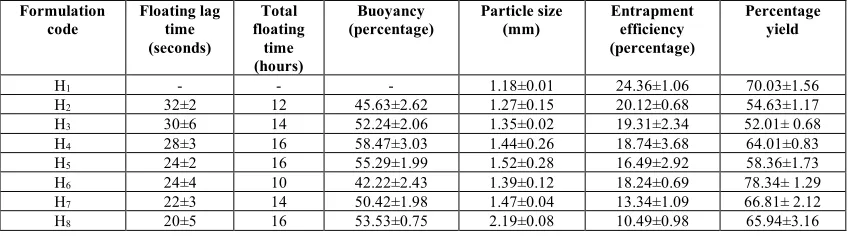
TABLE 4: IN VITRO FLOATING CHARACTERISTICS, PERCENTAGE YIELD, DRUG ENTRAPMENT EFFICIENCY AND PARTICLE SIZE OF THE FORMULATIONS WITH HPMC K4M
Formulation code
Floating lag time (seconds)
Total floating
time (hours)
Buoyancy (percentage)
Particle size (mm)
Entrapment efficiency (percentage)
Percentage yield
H1 - - - 1.18±0.01 24.36±1.06 70.03±1.56
H2 32±2 12 45.63±2.62 1.27±0.15 20.12±0.68 54.63±1.17
H3 30±6 14 52.24±2.06 1.35±0.02 19.31±2.34 52.01± 0.68
H4 28±3 16 58.47±3.03 1.44±0.26 18.74±3.68 64.01±0.83
H5 24±2 16 55.29±1.99 1.52±0.28 16.49±2.92 58.36±1.73
H6 24±4 10 42.22±2.43 1.39±0.12 18.24±0.69 78.34± 1.29
H7 22±3 14 50.42±1.98 1.47±0.04 13.34±1.09 66.81± 2.12
TABLE 5: IN VITRO FLOATING CHARACTERISTICS, PERCENTAGE YIELD, DRUG ENTRAPMENT EFFICIENCY AND PARTICLE SIZE OF THE FORMULATIONS WITH HPMC K15M
Formulation
code Floating lag time (seconds) Total floating time (hours) Buoyancy
(percentage) Particle size (mm) Entrapment efficiency (percentage)
Percentage yield
M1 - - - 1.08±0.11 36.05±2.76 84.75±2.36
M2 28±3 12 54.63±3.32 1.12±0.03 25.20±2.85 79.16±3.04
M3 24±4 14 58.24±2.06 1.23±0.42 24.05±1.46 63.74±2.63
M4 23±3 18 68.47±3.03 1.34±0.26 23.19±0.68 52.67± 1.57
M5 20±3 18 60.29±1.99 1.42±0.38 20.21±4.34 48.36±2.78
M6 28±4 12 52.22±2.43 1.39±0.22 22.09±2.32 81.98±3.07
M7 24±3 14 54.42±1.98 1.57±0.14 20.12±1.08 76.14±1.98
M8 22±5 16 56.53±0.75 1.78 ±0.38 17.21±1.19 79.93±1.56
TABLE 6: IN VITRO FLOATING CHARACTERISTICS, PERCENTAGE YIELD, DRUG ENTRAPMENT EFFICIENCY AND PARTICLE SIZE OF THE FORMULATIONS WITH ETHYL CELLULOSE
Formu-lation code Floating lag time (seconds) Total floating time (hours) Buoyancy (percentage) Particle size (mm) Entrapment efficiency (percentage) Percentage yield
E1 - - - 1.28±0.01 23.62±2.45 78±2.45
E2 32±3 12 52.03±1.92 1.32±0.05 21.01±3.06 62±3.84
E3 28±4 14 54.24±3.12 1.38±0.02 19.62±2.58 66±2.04
E4 26±3 16 62.47±4.12 1.47±0.06 18.36±3.48 54±3.25
E5 24±3 16 56.29±2.39 1.58±0.08 15.73±2.59 43±1.09
E6 40±4 10 45.02±1.43 1.42±0.12 18.05±1.87 74± 2.94
E7 38±3 14 48.42±2.18 1.57±0.04 15.34±2.14 60.36±3.48
E8 34±5 16 50.53±1.85 2.34±0.08 10.16±2.07 40.45±2.67
TABLE 7: DISSOLUTION STUDY OF THE FLOATING MICROSPHERES OF CEFIXIME WITH HPMC K4M AS COPOLYMER IN PH 1.2 BUFFER
Time (minutes)
Cumulative drug release% H1
(CaCO3: Alginate
0:1)
H2 (CaCO3: Alginate 0.25:1)
H3 (CaCO3: Alginate 0.5:1)
H4 (CaCO3: Alginate 0.75:1)
H5 (CaCO3: Alginate
1:1)
H6 (NaHCO3:
Alginate 0.25:1)
H7 (NaHCO3:
Alginate 0.5:1)
H8 (NaHCO3:
Alginate 0.75:1
0 0 0 0 0 0 0 0 0
30 14.28±3.43 36.12±3.74 28.43±4.07 22.19±0.02 20.02±2.09 32.98±1.45 30.23±1.66 38.43±2.03
60 22.19±2.64 50.63±2.96 39.78±3.47 29.73±1.03 28.53±1.76 50.67±2.03 52.36±2.07 58.12±1.98
90 35.57±1.98 62.19±1.64 58.43±2.43 42.36±0.47 40.04±2.43 59.39±3.94 69.12±3.21 79.46±3.04
120 50.90±4.07 75.54±2.09 74.69±4.61 59.17±0.25 56.34±3.56 72.58±1.00 78.06±2.05 88.06±2.84
150 68.08±3.54 89.18±1.69 89.15±2.09 79.92±2.09 75.81±2.01 80.87±2.31 84.45±2.54 94.45±1.44
180 78.43±2.54 98.44±1.85 99.44±1.06 96.12±1.85 83.12±1.13 96.12±196 98.06±1.07 99.29±2.06
Each value is the mean of three readings ± Standard Deviation.
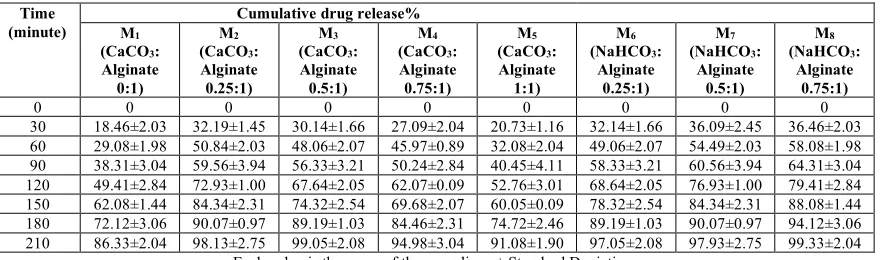
TABLE 8: DISSOLUTION STUDY OF THE FLOATING MICROSPHERES OF CEFIXIME WITH HPMC K15M AS COPOLYMER IN PH 1.2 BUFFER
Time (minute)
Cumulative drug release% M1
(CaCO3: Alginate 0:1)
M2 (CaCO3: Alginate 0.25:1)
M3 (CaCO3: Alginate 0.5:1)
M4 (CaCO3: Alginate 0.75:1)
M5 (CaCO3: Alginate 1:1)
M6 (NaHCO3:
Alginate 0.25:1)
M7 (NaHCO3:
Alginate 0.5:1)
M8 (NaHCO3:
Alginate 0.75:1)
0 0 0 0 0 0 0 0 0
30 18.46±2.03 32.19±1.45 30.14±1.66 27.09±2.04 20.73±1.16 32.14±1.66 36.09±2.45 36.46±2.03
60 29.08±1.98 50.84±2.03 48.06±2.07 45.97±0.89 32.08±2.04 49.06±2.07 54.49±2.03 58.08±1.98
90 38.31±3.04 59.56±3.94 56.33±3.21 50.24±2.84 40.45±4.11 58.33±3.21 60.56±3.94 64.31±3.04
120 49.41±2.84 72.93±1.00 67.64±2.05 62.07±0.09 52.76±3.01 68.64±2.05 76.93±1.00 79.41±2.84
150 62.08±1.44 84.34±2.31 74.32±2.54 69.68±2.07 60.05±0.09 78.32±2.54 84.34±2.31 88.08±1.44
180 72.12±3.06 90.07±0.97 89.19±1.03 84.46±2.31 74.72±2.46 89.19±1.03 90.07±0.97 94.12±3.06
210 86.33±2.04 98.13±2.75 99.05±2.08 94.98±3.04 91.08±1.90 97.05±2.08 97.93±2.75 99.33±2.04
TABLE 9: DISSOLUTION STUDY OF THE FLOATING MICROSPHERES OF CEFIXIME WITH ETHYL CELLULOSE AS COPOLYMER IN PH 1.2 BUFFER
Time
(minutes) E1 Cumulative drug release (%)
(CaCO3: Alginate 0:1)
E2 (CaCO3: Alginate 0.25:1)
E3 (CaCO3: Alginate 0.5:1)
E4 (CaCO3: Alginate 0.75:1)
E5 (CaCO3: Alginate 1:1)
E6 (NaHCO3:
Alginate 0.25:1)
E7 (NaHCO3:
Alginate 0.5:1)
E8 (NaHCO3:
Alginate 0.75:1)
0 0 0 0 0 0 0 0 0
30 20.28±3.43 35.12±3.74 32.43±4.07 30.19±0.79 22.19±0.02 30.43±4.07 35.12±3.74 38.28±3.43
60 24.19±2.64 47.63±2.96 49.78±3.47 39.73±4.03 29.73±1.03 46.78±3.47 52.63±2.96 54.19±2.64
90 36.57±1.98 60.19±1.64 58.43±2.43 52.36±2.47 42.36±0.47 58.43±2.43 60.19±1.64 66.57±1.98
120 56.90±4.07 73.54±2.09 74.69±4.61 69.17±1.25 59.17±0.25 67.69±4.61 70.54±2.09 78.90±4.07
150 76.08±3.54 90.18±1.69 89.15±2.09 84.92±2.09 79.92±2.09 79.15±2.09 81.18±1.69 88.08±3.54
180 92.43±2.54 98.44±1.85 99.44±1.06 98.12±1.84 96.12±1.85 97.44±1.06 98.44±1.85 99.43±2.54
Each value is the mean of three readings ± Standard Deviation.
Figure 1: FTIR Spectrum of cefixime Figure 2: FTIR Spectrum of sodium alginate
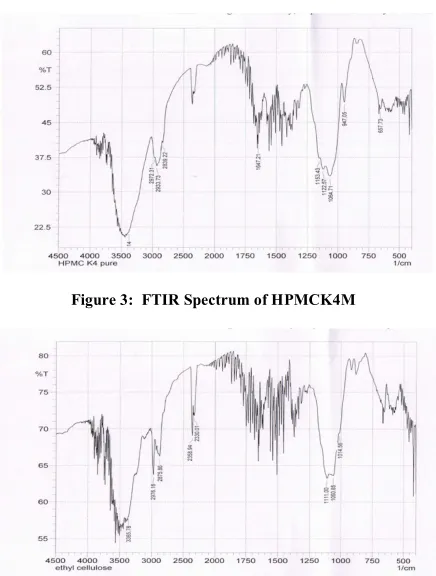
Figure 3: FTIR Spectrum of HPMCK4M Figure 4: FTIR Spectrum of HPMCK15M
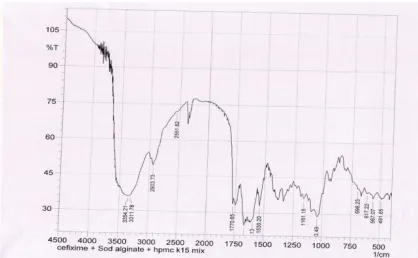
Figure7: FTIR Spectrum of cefixime, sodium alginate and HPMCK15M mixture
Figure 8: FTIR Spectrum of cefixime, sodium alginate and ethyl cellulose mixture
Figure 9: In vitro drug release profiles of floating microspheres prepared with alginate and HPMCK4M in pH 1.2 buffer.
Figure 10: In vitro drug release profiles of floating microspheres prepared with alginate and HPMCK15M in pH 1.2 buffer.
Figure 11: In vitro drug release profiles of floating microspheres prepared with alginate and ethyl cellulose in pH 1.2 buffer.
RESULTS
Preformulation Studies
The FTIR spectrum of pure drug showed characteristic peak at 1780-1710 cm-1 (C==O stretching of lactam), 1690-1630 cm-1 (C=O
stretching of amide), 1565- 1700 cm-1(C=N stretching of oxime),
1540-1380 cm-1(N=O stretching) and 1340-1300 cm-1(-NH 2 of
carbamate) (figure 1). Similarly all the characteristic peaks were observed in drug-polymers mixture as shown in figure 2 to 8.
Preparation of Foating Alginate Microspheres
Floating alginate beads were prepared by ionic gelation method with CaCO3 and NaHCO3 as gas forming agents. The polymers used
Evaluation of Floating Alginate Microspheres Percentage Yield
Percentage yield of the microspheres was found in the range between 84.75±2.36% to 40.45±2.67 as shown in tables 4, 5 & 6.
Drug Entrapment Efficiency
Encapsulation efficiencies of the alginate cellulose microspheres were given in tables 4, 5 & 6. The entrapment efficiency was found to be high in the case of formulations without gas forming agents.
Particle Size and Morphology of Microspheres
Theformed microspheres were almost spherical. The mean particle size of the formulation was between 1.08±0.11to 2.34±0.08 mm. From the tables 4,5 & 6 it was found that both gas forming agents significantly increased the size of the beads over the control (no gas forming agent) when the microspheres were observed under the optical microscope.
In Vitro Evaluation of Buoyancy (Floating Ability) of the Microspheres
It was observed that the microspheres without gas forming agents sank uniformly in the case of all the formulations and was non-buoyant. The floating microspheres with gas forming agents ascended to the upper one third of the vessel within a short time. The buoyancy lag times of all the formulations were less than a minute (ranging from 20 ±3 to 40 ± 5 seconds). All the formulations floated for more than 10 hours at the surface of the test fluid. The microspheres containing gas forming agents in proportions ranging from 0.5:1 to 1:1 ratios demonstrated excellent floating ability (100% floating) as shown in table 4, 5, 6. Among the formulations the % buoyancy was high with the formulations containing CaCO3
compared with formulations containing NaHCO3.
In Vitro Drug Release Studies
Cefixime was released rapidly from alginate- cellulose microspheres in pH 1.2 buffer. The formulations with HPMCK4M and ethyl cellulose as co-polymer, maximum drug release were occurred within 180 minutes. In the case of those formulations with HPMCK15M as copolymer the drug release was up to 210 minutes. In the absence of the gas forming agent the release rate was slow. The release details are given in table 7, 8, & 9 and release profiles are shown in figure 9, 10 &11.
DISCUSSION
The drug polymer compatibility studies were carried out by Fourier Transform –infrared spectroscopy. The FTIR spectra of the physical mixtures of the drug and polymers had all the characteristic peak and band values of pure drug cefixime confirming that all the functional groups of cefixime were well preserved. This study clearly indicated the absence of any chemical interaction between the drug and the polymers or no decomposition of cefixime during the preparation and thus confirming that the drug is compatible with the polymers used in the present investigation.
The floating microspheres were evaluated for percentage yield and drug entrapment efficiency. The formulations without gas forming agents (H1, M1, and E1) showed high production yield compared to
other formulations. Increasing the concentration of gas forming agent showed low yield percentage. The encapsulation efficiency of the microspheres were found to be low. The entrapment efficiency was decreased in the formulations which contained NaHCO3 and it
produced large sized microspheres. The microspheres without gas forming agents because of their highly dense internal structure of the alginate matrix were able to retain cefixime more effectively.It was observed that as the ratio of gas forming agent: alginate increased from 0:1 to 1:1 entrapment efficiency decreased. An earlier report by Shishu et al10 also proved that the entrapment
efficiency decreased with increase in the weight ratio of gas forming agents. The formed microspheres were almost spherical. The presence of the gas forming agents significantly increased the size of the microspheres. The microspheres formulated with NaHCO3
was larger than the microspheres which was formulated with CaCO3. The mean size of the microspheres increased prominently
with increasing weight ratios of the gas forming agents and alginate. Moreover when CaCO3 or NaHCO3 was added to the alginate
solution at 1:1 ratio, spherical microspheres could not be formed because the released carbon dioxode gas bursted the microspheres before the wall was sufficiently hardened.
In vitro evaluation of buoyancy (floating ability) of the microspheres revealed thatas the microspheres come into contact with an acidic medium, the gas forming agent effervesced releasing carbon dioxide and it was entrapped in the gel net work producing buoyant formulation for prolonged periods. The systems should float within less than 1minute after contact with the gastric fluid to prevent the dosage form from transiting into the small intestine together with food.16 Among the formulations, the % buoyancy was
high with the formulations containing CaCO3 compared to the
formulations containing NaHCO3. The floating matrix tablets of
cefixime prepared by Patel et al17 using HPMC K 100 LV, HPMC
K4M, HPMC K15M and HPMC K100M, alone or in combination and other standard excipients showed the floating duration for more than 12 hours. The formulations containing CaCO3 as gas forming
agent the total floating time was maximum with the formulations containing CaCO3: alginate in the ratio 0.75: 1 to 1:1. But in the
formulations with CaCO3: alginate in the ratio1:1 showed
significant decrease in entrapment efficiency. In this study the microspheres with HPMC K15M as copolymer and CaCO3: alginate
in the ratio 0.75:1 showed maximum duration of floating and good entrapment efficiency compared to other formulations.
In vitro release studies were done in order to investigate the release of drug from floating alginate microspheres. Cefixime was released rapidly from alginate- cellulose microspheres in the gastric fluid. In the formulations with HPMC K4M and ethyl cellulose as co-polymers maximum drug release occurred within 180 minutes. In the case of those formulations with HPMC K15M as copolymer the drug release was up to 210 minutes. In the absence of gas forming agents the release rate was slow. This can be explained as the highly dense internal structure of the alginate microspheres made without gas forming agent was expected to retain the drug more effectively. In the case of all the formulations which contain NaHCO3 as the gas
forming agent, the rate of release was found to be increased with increasing weight ratios of NaHCO3. This may be due to the porous
nature of the NaHCO3 containing microspheres. Conversely,
cefixime from the alginate matrix and it may be due to the internal ionotropic gelation effect of CaCO3.9 In the formulations where
CaCO3: alginate ratio is 1:1, more sustaining effect in drug release
was observed. From these studies it can be concluded that CaCO3 is
found to be superior to NaHCO3 as gas forming agent and CaCO3:
alginate ratio of 0.75: 1 imparted maximum buoyancy to the preparation.
REFERENCES
1. Satishbabu BK, Sandeep VR, Ravi RB, Shrutinag R. Formulation and evaluation of floating drug delivery system of famotidine. Indian Journal of Pharmaceutical Sciences 2010; 72(6): 738- 774. 2. Sangeetha S, Sakthisaravanan V, Komala M, Harish G, Sivakumar V. Design and evaluation of gastroretentive beads of theophylline by ionotropic gelation. International Journal of Pharmacy and Pharmaceutical Sciences 2010; 2(3): 99-101. 3. Sean L, Sweetman. Martindale Complete Drug Release. 33rd ed.
UK: Published by Pharmaceutical Press; 2002.
4. Antony C, David MM, Osselton, Clarks BW Analysis of Drugs & Poisons. 3rd ed. Great Britain: Published by Pharmaceutical
Press; 2004 .
5. Gambhire, MN, Ambadi KW, Kurosu SD, Kadam V, Jadhav KR. Development and in vitro evaluation of floating matrix tablet formulation of diltiazem hydrochloride. AAPS Pharm Sci Tech 2007; E1-E9.
6. Nijaguni RM, Gupta RMV. Preparation and evaluation of floating gastroretentive drug delivery system of cefixime trihydrate tablets. World Journal of Pharmacy and Pharmaceutical Sciences 2013; 2(3): 1147-61.
7. Singh BN, Kwon HK. Floating drug delivery systems: An approach to oral controlled drug delivery via gastric retention. Journal of Controlled Release 2000; 63: 235-59.
8.Patel P, Ahir K, Patel V, Manani L, Patel C. Drug –excipient compatibility studies: First step for dosage form development. The Pharma Innovation 2015; 4(5): 14-20.
9. Choi BY, Park HJ, Hawang SJ, Park JB. Preparation of alginate beads for drug delivery system: Effects of CO2 gas-forming agents.
International Journal of pharmaceutics 2002; 239: 81-91. 10. Shishu, Neeta Gupta, Nidhi Aggarwal. Stomach –specific drug delivery of 5- flourouracil using floating alginate beads. AAPS PharmSciTech2007; 8(2): E1-E7.
11. Salunke P, RaneB, Bakliwal S, Pawar S. Floating microcarriers of an antidiabetic drug: Preparation and its in-vitro evaluation. Journal of Pharmaceutical Sciences and Technology 2010; 2(6): 230-40.
12. Patel T, Vasava K, Patel P, Rajesh KS, Lalit JL. A factorial design approach for optimization of floating microspheres of cephalexin. Pharmagene 2013; 1:33-8.
13. Gattani YS, Bhagwat DA, Maske AP. Formulation and evaluation of intragastric floating drug delivery system of diltiazem hydrochloride. Asian Journal of Pharmaceutics 2008; 2: 28-31. 14. Ninan Ma, Lu Xu, Qifang Wang, Xiangrong Zhang, Wenji Zhang, Yang Li, Lingyu Jin, Sanming Li. Development and evaluation of new sustained- release floating microspheres. International Journal of Pharmaceutics 2008; 358: 82-90. 15. Junyaprasert VB, Pornsuwannapha S. Floating properties and release characterstics of hollow microspheres of acyclovir. Drug Delivery 2008; 15(5):331-41.
16. Amrutkar PP, Chaudhari PD, Patil SB. Design and in vitro evaluation of multiparticulate floating drug delivery system of zolpidem tartrate. Colloids and Surfaces B: Biointerfaces 2012; 89: 182-87.
17. Patel MP, Patel MM, Patel KN. Formulation and optimization of controlled released floating matrix tablets of cefixime. Journal of Pharmacy Research 2009; 2(6): 1110-12.
Cite this article as:
Sindhumol P.G. et al. Formulation and evaluation of Alginate-cellulose floating microspheres of cefixime trihydrate. Int. Res. J. Pharm. 2018;9(3):67-74 http://dx.doi.org/10.7897/2230-8407.09344
Source of support: Nil, Conflict of interest: None Declared