Lincoln
University
Digital
Thesis
Copyright
Statement
The
digital
copy
of
this
thesis
is
protected
by
the
Copyright
Act
1994
(New
Zealand).
This
thesis
may
be
consulted
by
you,
provided
you
comply
with
the
provisions
of
the
Act
and
the
following
conditions
of
use:
you
will
use
the
copy
only
for
the
purposes
of
research
or
private
study
you
will
recognise
the
author's
right
to
be
identified
as
the
author
of
the
thesis
and
due
acknowledgement
will
be
made
to
the
author
where
appropriate
you
will
obtain
the
author's
permission
before
publishing
any
material
from
the
thesis.
Effectiveness of Environmental Impact Assessment (EIA) in
addressing development-induced disasters: A comparison of the EIA
processes of Sri Lanka and New Zealand
A thesis
submitted in partial fulfilment
of the requirements for the Degree of
Doctor of Philosophy
at
Lincoln University
by
Arosh Buddika Hapuarachchi
Lincoln University
ii
"A nation's greatness is measured by how it treats its weakest members."
Abstract of a thesis submitted in partial fulfilment of the
requirements for the Degree of Doctor of Philosophy.
Abstract
Effectiveness of Environmental Impact Assessment (EIA) in addressing
development-induced disasters: A comparison of the EIA processes of Sri Lanka
and New Zealand
by
Arosh Buddika Hapuarachchi
There is an on-going exponential increase in development-induced disasters globally, especially in low and middle-income countries. This upward trend in the occurrence of development-induced disasters challenges sustainable development efforts. It has been generally accepted that
instruments such as an Environmental Impact Assessment (EIA) reduce disaster risks of development projects. The Hyogo Framework for Action (HFA) for disaster risk reduction promotes using EIAs to
address the disaster risk of development projects. Over 65 percent of the countries that have met the HFA progress-reporting obligation in the 2009-2011 reporting cycle, state that disaster risks of development projects are addressed by implementing EIA. However, the claims that EIA processes effectively address disaster risks have yet to be demonstrated empirically. It is clear that successful
implementation of EIA processes also depends on the level of governance quality existing in a particular country. It is suggested that a well-conceived EIA process should reflect many of the elements of good governance principles including transparency, sufficient information flows,
accountability, and stakeholder participation. Quality governance, therefore, is considered as having a direct bearing on why impact assessments in some countries are performing better than others.
The influence of governance quality on the effectiveness of EIAs can be addressed by comparing the EIA processes of two or more countries with different levels of governance quality. In this research, the effectiveness of the EIA process in addressing development-induced disasters is evaluated by comparing the EIA processes of Sri Lanka and New Zealand. These two countries have quite different governance quality ratings and, therefore, offer a test of the influence of governance characteristics
iv In order to evaluate the effectiveness of the EIA processes of the above countries, a set of evaluation criteria was identified, mostly from existing literature. Eight criteria were specifically developed for
this research. Data for the research were collected from in-depth interviews using a semi-structured questionnaire and focus group discussions with interviewees selected on the basis of their role, knowledge and expertise of the EIA process. Documents from both state and non-state actors relevant to the EIA process were also analyzed. Several recently conducted development projects in each country were used as cases to understand how the legislation is used in practice.
It is clear that explicit reference to disaster risk is absent in environmental management policies in both Sri Lanka and New Zealand. Even though the New Zealand EIA process has a higher procedural and contextual effectiveness than Sri Lanka, both countries have lower levels of substantive
effectiveness. Neither of the two EIA processes is found to be effective in addressing disaster risk
because of inadequate policy integration of disaster risk into the environmental legislation that governs the EIA process. The results suggest more specificity is needed in legislative provisions and suggest a review of standard practice in using EIA to address disaster risk. The findings also imply the need to undertake evaluations of EIA systems elsewhere to assess their effectiveness in addressing development-induced disaster risks.
Acknowledgements
It would have not been possible to undertake this study and write this doctoral thesis without the support and encouragement I received from some wonderful people. They have been a great strength to me throughout my student life in Lincoln University. It is with great respect and
appreciation that I mention their names here.
My supervisors Professor Ken Hughey and Dr Hamish Rennie deserve foremost mention for their helpful guidance given to me in accomplishing my PhD research. Both of them are outstanding supervisors. Without their tireless support and professional input, it would have not been possible to
complete this thesis.
Ken’s energetic greetings, strong comments, and his ability to guide me to steer the study on the right course have kept me inspired and given me tremendous motivation to stick to my plans. In most cases, the time lapse between sending drafts and receiving comments from Ken was limited to a couple of hours. Without this untiring professional input, finishing this work in less than three years
would have been impossible.
Hamish’s years of experience in resource management legislation and processes in New Zealand have been an immense resource for me to understand New Zealand’s EIA process and resource management practices. His critical comments always forced me to challenge my own perceptions
and knowledge.
I mention Professor Sandya Samarasinghe and Professor Don Kulasiri with great respect. They are among the first to encourage me to pursue a PhD in Lincoln University. Professor Sandya also guided me in the early stages of the application process.
I greatly appreciate and acknowledge Lincoln University for granting me the Lincoln University Doctoral Scholarship. While I have always been proud to hold this prestigious scholarship, it also gave me the much-needed financial support to complete my research. Special thanks to Jane Edwards who encouraged me to apply for the scholarship and her kind and friendly assistance during the application process. I take this opportunity to thank the administrative staff of the Faculty of
vi I would like to acknowledge the International Risk Governance Council (IRGC), Dr Wendy Saunders, UNDP, and UNISDR for granting me permission to use the materials they hold the copyright for.
Special thanks to the Caribbean Development Bank and the Caribbean Community Secretariat (CARICOM) for providing me the permission to use their copyrighted materials in my thesis.
I am very grateful to Dr Eric Scott for his role in style editing the thesis. Knowing my tight schedule, he took the extra effort to finish the job earlier than we originally agreed.
Special thanks to my former bosses in Practical Action, Dr Vishaka Hidellage and Madhavi Ariyabandu
for their encouragement to pursue a PhD. I would like to thank my friend Ramona Miranda, for her encouragement and spiritual support. Ramona has always been available, whenever I needed her assistance for a quick language edit or comments on my work. Thanks also go to colleagues from my former workplace: Manoj Saranga, Bhathiya Kakulandala and Chandana Siriwardena, who helped me
in organizing field data collection in Sri Lanka.
I express my deepest gratitude to my parents and my wife for their blessings, which have always been my energy during this exercise. My heartfelt gratitude I extend to my daughter Pavanya. She showed great maturity and patience when both her parents were busy with their PhDs and when we had little time to spend with her. Without her patience, understanding and cooperation it would
have been a difficult task to keep my focus on the study.
Finally, I would like to place on record my gratitude to all the planners and experts in Sri Lanka and New Zealand, who took time from their busy schedules to share with me their views and
perceptions. Most of all, my sincere gratitude is extended to the project affected people in the Kalutara, Galle and Nuwara Eliya districts of Sri Lanka, who shared their story about the hardships
Table of Contents
Abstract ... iii
Acknowledgements ... v
Table of Contents ... vii
List of Tables ... xi
List of Figures ... xii
Acronyms ... xiii
Chapter 1 Introduction ... 1
1.1 Research Questions ...3
1.2 Structure of the Thesis ...4
Chapter 2 Literature Review... 5
2.1 Introduction ...5
2.2 Disaster and disaster risk ...5
2.3 Hazards...8
2.4 Vulnerability ...9
2.5 Resilience ... 11
2.6 Mal-development: understanding the disaster development linkages... 12
2.7 Governance (Risk): a cause and a remedy for development disasters ... 16
2.8 Role of the international context in risk governance ... 18
2.9 EIA as a development control mechanism... 20
2.9.1 Steps in the EIA process ...22
2.9.2 Emerging challenges of the EIA process ...23
2.10 Assessing the effectiveness of the EIA ... 26
2.10.1 Procedural effectiveness ...29
2.10.2 Substantive effectiveness ...30
2.10.3 Contextual effectiveness ...30
2.11 Setting up a conceptual framework: the disaster risk incubation model ... 32
Chapter 3 Research Methodology ... 35
3.1 Introduction ... 35
3.2 Methodology ... 35
3.3 Rationale for the research methods ... 36
3.4 Identification and formulation of evaluation criteria ... 39
3.4.1 Measuring criteria conformity ...46
3.5 Selection of countries ... 46
3.6 Selection of projects ... 49
3.7 Field work and data collection ... 51
3.7.1 Human ethics ...52
3.7.2 Sample selection and conducting qualitative interviews ...52
3.7.3 Sample selection and conducting FGDs ...55
3.7.4 Document analysis ...56
viii
3.8 Data analysis ... 57
3.9 Limitations of the study ... 58
3.10 Chapter Summary ... 59
Chapter 4 The Legislative and Institutional Context for Disaster and Environmental Management in Sri Lanka and New Zealand... 60
4.1 Introduction ... 60
4.2 The disaster and environmental management context of Sri Lanka ... 60
4.2.1 Structure of the government ...60
4.2.2 Disaster management legal and institutional framework ...62
4.2.3 Planning framework and integration of disaster risk ...65
4.2.4 Environmental management in Sri Lanka ...67
4.2.5 Case Studies ...73
4.3 The disaster and environmental management context of New Zealand ... 74
4.3.1 Environmental management in New Zealand ...75
4.3.2 Planning framework under the RMA ...76
4.3.3 Natural hazard management in New Zealand ...85
4.3.4 Case studies ...90
4.4 Chapter summary ... 91
Chapter 5 The Effectiveness of the EIA process in Addressing Development-Induced Disaster Risk in Sri Lanka ... 93
5.1 Introduction ... 93
5.2 Policy integration ... 93
5.2.1 Integration of disaster risk into EIA legislation ...93
5.3 Procedural effectiveness ... 96
5.3.1 Legal basis ...96
5.3.2 Guidance on EIA ...103
5.4 Substantive effectiveness ... 109
5.4.1 Level of assessment ...109
5.4.2 Decision making process ...115
5.5 Contextual effectiveness ... 119
5.5.1 Consultation and public participation ...119
5.5.2 Policy context ...122
5.5.3 Accountability and transparency ...123
5.5.4 Political will ...126
5.5.5 Coordination ...127
5.5.6 Funding conditions ...130
5.6 Chapter Summary ... 134
Chapter 6 The Effectiveness of the EIA Process in Addressing Development-Induced Disaster Risks in New Zealand ... 139
6.1 Introduction ... 139
6.2 Policy integration ... 140
6.2.1 Integration of disaster risk into EIA legislation ...140
6.3 Procedural effectiveness ... 143
6.3.1 Legal basis ...143
6.3.2 Guidance on EIA ...148
6.4.1 Level of Assessment ...155
6.4.2 Decision making ...164
6.5 Contextual effectiveness ... 168
6.5.1 Consultation and public participation ...168
6.5.2 Policy context ...172
6.5.3 Accountability and Transparency ...173
6.5.4 Political will ...176
6.5.5 Coordination ...178
6.5.6 Funding conditions ...181
6.6 Chapter Summary ... 183
Chapter 7 Discussion ... 188
7.1 Introduction ... 188
7.2 EIA effectiveness: A comparative analysis of the EIA processes of Sri Lanka and New Zealand ... 190
7.3 Policy integration ... 191
7.4 Procedural effectiveness ... 193
7.5 Substantive effectiveness ... 200
7.5.1 Level of assessment ...201
7.5.2 Decision making ...205
7.6 Contextual effectiveness ... 208
7.6.1 Public participation ...208
7.6.2 Institutional capacity ...211
7.6.3 Policy and political context ...213
7.6.4 International governance context...216
7.7 Chapter Summary ... 217
Chapter 8 Conclusions ... 219
8.1 Introduction ... 219
8.2 Evaluation against the research questions ... 219
8.2.1 Policy integration: how well, if at all, is disaster risk reduction integrated into EIA processes? ...220
8.2.2 Procedural effectiveness: assuming it is integrated, then how well is it practised? ...220
8.2.3 Substantive effectiveness: does the EIA process achieve the objectives set and result in disaster risk reduction? ...221
8.2.4 Contextual effectiveness: what influence does risk governance have on substantive effectiveness? ...223
8.3 Theoretical and methodological implications ... 224
8.4 Policy implications ... 228
8.5 Limitations of the study ... 229
8.6 Recommendations for future research... 230
8.7 Conclusion ... 230
References ... 231
Appendix A Hyogo Framework for Action (based on UNISDR (2005, p. 23)) ... 254
x
Appendix C Questionnaire – Planners and EIA Experts ... 256
C.1 Name of the project: ... 256
C.2 The aim of the project... 256
C.3 Questionnaire ... 256
Appendix D Questionnaire – Community Representatives ... 258
D.1 Name of the project: ... 258
D.2 The aim of the project... 258
List of Tables
Table 2.1 Summary of disaster damage from 20 countries from 1971 to 2011 ... 7
Table 2.2 Disaster – Development Linkages ...14
Table 3.1 Evaluation criteria developed and used in this study ...42
Table 3.2 Scale value against the criteria conformity ...46
Table 3.3 A comparison of the Worldwide Governance Indicators for Sri Lanka and New Zealand ...48
Table 3.4 Summary project information from Sri Lanka and New Zealand ...50
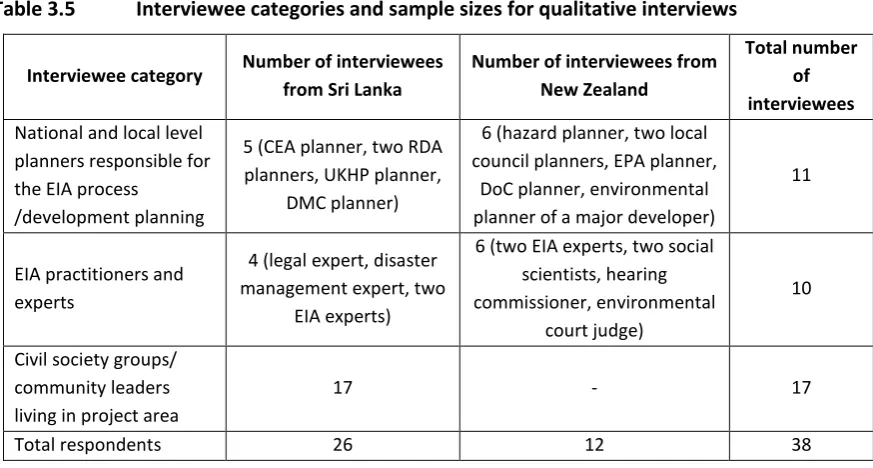
Table 3.5 Interviewee categories and sample sizes for qualitative interviews ...53
Table 3.6 Participants in the FGDs ...56
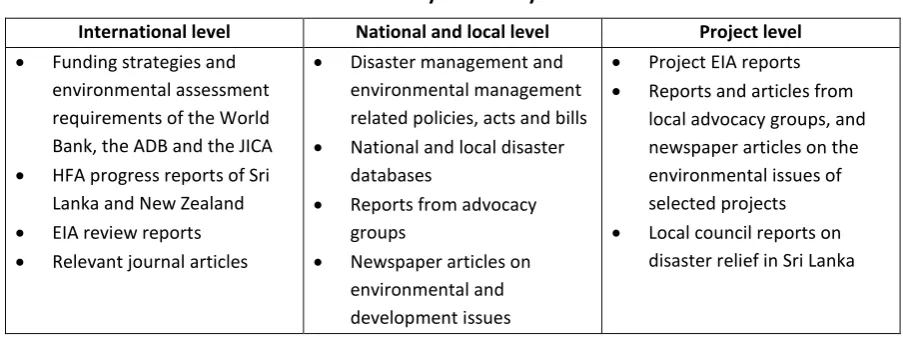
Table 3.7 Document sources for secondary data analysis ...56
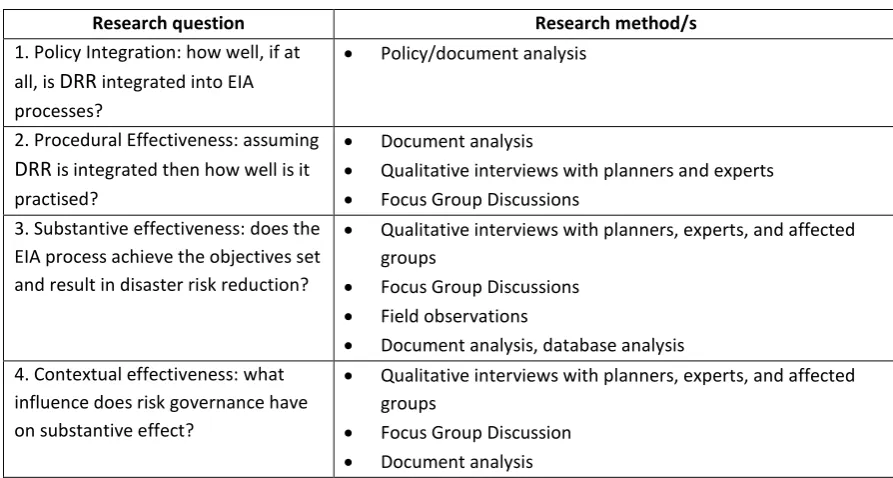
Table 3.8 A summary of the research questions and research methods ...59
Table 4.1 Flood exposure of different regions in the world (million people per year) ...63
Table 4.2 Summary comparison of EIA requirements under different legislation in Sri Lanka ...72
Table 4.3 Major disasters and their impacts in New Zealand 1900 – 2012 ...75
Table 4.4 Class of activity and tests required under the RMA ...79
Table 4.5 ‘Potential impact’ classification matrix for large dams in New Zealand ...90
Table 5.1 A summary of the criterion findings for policy integration ...96
Table 5.2 A summary of the criteria findings for the legal basis ...102
Table 5.3 A summary of the criteria findings for EIA guidance ...109
Table 5.4 A summary of the criteria findings for the level of assessment ...114
Table 5.5 A summary of the criteria findings for decision-making ...119
Table 5.6 A summary of the criteria findings for consultation and public participation ...122
Table 5.7 A summary of the criterion findings for disaster management policy context ...123
Table 5.8 A summary of the criteria findings for transparency and accountability ...126
Table 5.9 A summary of the criterion findings for political will ...127
Table 5.10 A summary of the criteria findings for coordination ...129
Table 5.11 Foreign borrowing for Sri Lanka from 2008 to 2013 ...130
Table 5.12 A comparison of the categorization of projects of ADB, WB and JICA ...132
Table 5.13 A summary of the criterion finding for funding conditions ...134
Table 5.14 A summary of the findings for the Sri Lankan EIA process against the criteria in Table 3.1 ...135
Table 6.1 Planners and experts interviewed and generic title used ...139
Table 6.2 A summary of the criterion findings for policy integration ...143
Table 6.3 A summary of the criteria findings for the legal basis ...148
Table 6.4 A summary of the criteria findings for EIA guidance ...155
Table 6.5 A summary of the criteria findings for level of assessment ...164
Table 6.6 A summary of the criteria findings for decision making ...167
Table 6.7 A summary of the criteria findings for consultation and public participation ...172
Table 6.8 A summary of the criterion findings for disaster management policy context ...173
Table 6.9 A summary of the criteria findings for the accountability and transparency ...176
Table 6.10 A summary of the criterion findings for political will ...178
Table 6.11 A summary of the criteria findings for coordination ...181
Table 6.12 A summary of the criterion findings for funding conditions ...182
Table 6.13 A summary of the findings for the New Zealand EIA process against the criteria in Table 3.1 ...184
xii
List of Figures
Figure 2.1 The environmental hazard framework ... 6
Figure 2.2 General steps of the EIA process ...22
Figure 2.3 The adjusted EIA process of the CDB ...26
Figure 2.4 Effectiveness triangle ...28
Figure 2.5 Disaster Risk Incubation Model ...34
Figure 3.1 Research concept map ...38
Figure 3.2 Research methods used for empirical study in New Zealand and Sri Lanka ...51
Figure 3.3 Data analysis process using NVivo ...58
Figure 4.1 Twin-streams of government in Sri Lanka ...61
Figure 4.2 Common disasters in Sri Lanka (% events recorded since 1974) ...64
Figure 4.3 Disaster management institutional arrangement for Sri Lanka ...64
Figure 4.4 The EIA process of Sri Lanka with the maximum number of days for key steps ...70
Figure 4.5 Planning Framework under the RMA ...77
Figure 4.6 Processing of resource consents in New Zealand under the RMA ...83
Figure 4.7 Key Acts and responsibilities and areas for improved connections for hazard management in New Zealand ...87
Figure 5.1 Foreign borrowings for Sri Lanka from major lenders 2008 – 2013 ...133
Figure 7.1 Modified effectiveness triangle ...190
Figure 8.1a Disaster incubation model for an approved development in New Zealand...226
Acronyms
AAA Analytic and Advisory Activities ABB ABB Switzerland Ltd
ADB Asian Development Bank
AEE Assessment of Effects on the Environment CADA Computer-Aided Data Analysis
CBO Community Based Organization CBSL Central Bank of Sri Lanka CCA Coast Conservation Act
CCD Coast Conservation Department CDB Caribbean Development Bank
CDEM Civil Defence and Emergency Management CDEMG Civil Defence and Emergency Management Group CEA Central Environmental Authority
CEB Ceylon Electricity Board
CRED Centre for Research on the epidemiology of Disasters DIA Disaster Impact Assessment
DiMCEP Disaster Management and Capacity Enhancement Project DMC Disaster Management Centre
DoC Department of Conservation DRR Disaster Risk Reduction DS Divisional Secretariat EA Environmental Assessment
EC Environmental Court
EIA Environmental Impact Assessment EPA Environmental Protection Authority
FAO Food and Agriculture Organization of the United Nations FFAA Fauna and Flora Protection Amendment Act No. 49 of 1993 FGD Focus Group Discussion
GN Grama Niladhari (Village Officer)
GND Grama Niladhari Division (Village Officer Division) HDI Human Development Index
HEC Human Ethics Committee HFA Hyogo Framework for Action HIA Health Impact Assessment
IAIA International Association for Impact Assessment IDNDR International Decade for Natural Disaster Reduction IDP Internally Displaced People
IEE Initial Environmental Examination
IPCC Intergovernmental Panel on Climate Change IRGC International Risk Governance Council JICA Japan International Cooperation Agency LGA Local Government Act
xiv
LTP Long-Term Plan
MCDEM Ministry of Civil Defence and Emergency Management MDM&HR Ministry of Disaster Management and Human Rights MfE Ministry for Environment
MOH Medical Office of Health NEA National Environmental Act
NEAA National Environmental Amendment Act NER National Environmental Regulation NES National Environmental Standards NGO Non-Governmental Organization NPPD National Physical Planning Department NPS National Policy Statement
NSDM National Strategy for Disaster Management
NZ New Zealand
NZCPS New Zealand Coastal Policy Statement NZTA New Zealand Transport Agency
OCDESC Officials Committee for Domestic and External Security Coordination PAA Project Approving Agency
PAR Population At Risk
PIM Project Information Memorandum
PP Project Proponent
RDA Road Development Authority RMA Resource Management Act
RMAA Resource Management Amendment Act SEA Strategic Environmental Assessment SIA Social Impact Assessment
SOP Standard Operating Procedure
STDP Southern Transport Development Project TAG Technical Advisory Group
TEC Technical Evaluation Committee TGP Transmission Gully Project ToR Terms of Reference
UDA Urban Development Authority UKHP Upper Kotmale Hydro-power Project UNDP United Nations Development Programme UNEP United Nations Environmental Programme
UNESCAP United Nations Economic and Social Commission for Asia and the Pacific UNISDR United Nations International Strategy for Disaster Reduction
USAID United State Agency for International Development
WB World Bank
Chapter 1
Introduction
The Global Assessment Report 2011 on Disaster Risk Reduction shows an exponential increase in extensive disasters over the past 20 years, especially in low and middle-income countries (UNISDR (United Nations International Strategy for Disaster Reduction), 2011). The UNISDR (2009a, p. 15)
defines extensive risk as “…the widespread risk associated with the exposure of dispersed populations to repeated or persistent hazard conditions of low or moderate intensity, often of a highly localized nature, which can lead to debilitating cumulative disaster impacts”. In contrast to intensive disasters, which are characterized by “…catastrophic disaster impacts involving high
mortality and asset loss” (UNISDR, 2009a, p. 19), extensive disasters may account for only a small proportion of overall disaster mortality. However, they are responsible for a very significant proportion of damage to the assets and livelihoods of low-income groups (UNISDR, 2009b). It is generally understood that extensive disasters are directly constructed by mal-development practices such as badly planned urbanization and regional development, and environmental degradation
(UNISDR, 2011). Therefore, extensive disasters can also be called development-induced disasters (the term used in this research). The impacts of development-induced disasters are expected to further worsen because of the increased severity and frequency of climate related hazards as a result of on-going climate change (IPCC, 2007; Tobin & Montz, 2009).
The upward trend in the occurrence of development-induced disasters worldwide, especially in
developing countries, challenges efforts toward sustainable development. Many economic development interventions have inadvertently created new forms of hazards and vulnerabilities, especially in low and middle-income countries, which also have poor governance records (UNISDR, 2011). Even though these occurrences are rarely the subject of scholarly work, they are widely
discussed in the media. However, media reports fail to provide a complete account of development-induced disasters or properly represent the sufferings of many millions of people. They are adequate to argue the importance of factoring disaster risk considerations into development planning at national, regional and local levels. Mainstreaming disaster risk reduction into development processes has been a topic at international conferences and in communication materials since the inception of
the International Decade for Natural Disaster Reduction in 1990 (IDNDR) (United Nations, 1989). Different agencies and countries advocating for disaster risk reduction integration into development have taken different routes to address the issue within or outside existing development. These vary vertically, from integration of sustainable development into national development policies, to
2 sectors from education and health, to infrastructure development. These integration efforts seem to be serving two distinct objectives, both leading to reduced disaster risk, namely: 1) to minimize the
disaster impact on various development sectors such as agriculture, housing and health; and 2) to prevent or mitigate development-induced disasters. This research will examine the second objective, but it will also contribute to the first objective indirectly. Evaluation of probable disaster risk of development initiatives and factoring those risk considerations into planning and investment decisions are crucial to achieving this objective.
Development control instruments such as Environmental Impact Assessment (EIA), Social Impact Assessment (SIA), Human Health Risk Assessment (HHRA), Risk Assessment (RA), Strategic Environmental Assessment (SEA), the precautionary principle, and Sustainability Assessment (SA) (Zhang, Pei, & Lin, 2010) are used in many countries to assess and mitigate the negative
consequences of development activities. Among these different tools, the oldest, most well
established tool is Environmental Impact Assessment (EIA) (IAIA (International Association for Impact Assessment), 2009). Following the World Conference on Environment and Development, the ‘Earth Summit’, held in Rio de Janeiro in 1992, EIA has been actively promoted as a vehicle to achieve sustainable development, especially in low and middle income countries (Marara et al., 2011). In
these countries, if Agenda 21 were fully implemented, all prescribed or significant development projects should undergo an environmental assessment to review the implications of such projects for the environment. SIA and RA are also practised in many contexts, but given a subordinate position compared with EIAs (Burdge & Taylor, 2012). For instance, RAs are generally practised as non-obligatory tools and being more selectively applied to selected activities within projects (Eduljee,
1999). Therefore, EIA can be considered the most widely available and promoted mechanism to address development-induced disaster risks.
The Hyogo Framework for Action (HFA) progress reports and UNISDR publications (UNISDR, 2011) show that both the UNISDR and national disaster management authorities have relied on EIA
processes to mitigate extensive or development-induced disaster risks. Indicator six of the fourth priority for action in the HFA progress monitoring framework requires the impacts of disaster risk be taken into account in the EIA process (UNISDR, 2014). A content analysis of the national HFA progress reports reveals that 72 out of 111 countries that have met the HFA progress reporting obligations in the 2009-2011 reporting cycle, use EIA as a mechanism to address the disaster risks of development
projects. Twelve countries assert that EIA is the only mechanism to incorporate disaster risk into development planning.
Development Bank (CDB), 2004; Contini & Servida, 1992; Cope & Hills, 1998; Harrop & Nixon, 1999; Kværner, Swensen, & Erikstad, 2006; Morgan, 1998; Vanclay, 2003), yet hardly any effort seems to
have been made to examine the EIA process from a disaster risk reduction perspective. Moreover, the effectiveness of the EIA in addressing disaster risks is yet to be researched. Effectiveness can be measured in terms of ‘procedural’, ‘substantive’ and ‘contextual’ effectiveness. Procedural
effectiveness means whether the EIA process conforms to the “…established provisions and
principles” (Sadler, 1996, p. 39), whereas substantive effectiveness means whether the EIA process achieves the objectives set (Sadler, 1996). It has also been suggested that successful implementation of any development control tool depends also on the level of risk governance that exists in a
particular country. The influence of governance quality on development control instruments is an important aspect that should not be neglected. Kakonge (1998) argues that a well-conceived EIA
should reflect many of the elements of good governance principles including transparency, sufficient information flows, accountability, responsibility, and stakeholder participation. Quality of
governance, therefore, is considered an indicator of ‘contextual’ effectiveness, which has a direct bearing on why impact assessments in some countries are performing better than others. The influence of governance quality on the effectiveness of EIAs can be addressed by comparing the EIA
processes of two or more countries with different levels of governance quality.
1.1
Research Questions
A potential negative effect of some forms of development (e.g., transport infrastructure) is increased
exposure to disaster risk. If development projects are to be sustainable then proposals should be properly assessed to ensure that disaster risk is not increased as a result of development projects. EIA is one of the development control mechanisms practised in many countries including many low and middle-income countries. But the extent to which country-specific EIA processes include disaster
risk considerations and how effective they are in addressing development-induced disaster risk has not been researched. Contextual factors such as legal and administrative arrangements as well as the quality of governance also have a direct bearing on the EIA process. It is generally accepted that such contextual and governance factors influence the involvement of participants, transparency and nature of EIA processes and, very importantly, EIA outcomes.
Consequently, the goals of this research are first to explore the effectiveness of the EIA process in addressing disaster risks and second to assess whether the quality of governance influences the outcome of EIA processes. To achieve the above, the thesis sets out to address four main questions:
Policy Integration: how well, if at all, is disaster risk reduction (DRR) integrated into EIA
4 Procedural Effectiveness: assuming DRR is integrated then how well is it practised?
Substantive effectiveness: does the EIA process achieve the objectives set and result in DRR?
Contextual effectiveness: what influence does risk governance have on the substantive
effect?
Moreover, the research does so in the different governance contexts of Sri Lanka and New Zealand1, two countries that have been assessed as having quite different levels of governance quality by international rating indices such as the Worldwide Governance Index (The World Bank Group, 2013).
1.2
Structure of the Thesis
This thesis comprises eight chapters including the Introduction. Chapter 2 reviews the literature in the fields of disaster risk, environmental impact assessment, risk governance, and the evaluation of the effectiveness of EIA. These concepts are often considered separately and the potential
inter-relationships have not been explicitly discussed in current literature. Therefore, Chapter 2
synthesises the above concepts into a conceptual model presented at the end of the chapter. The conceptual model captures linkages between the different concepts and argues that the
effectiveness of EIA is central to address the disaster risk of development projects. Chapter 3 presents the methodology adopted in this research and identifies evaluation criteria used in the
comparative evaluation. A comparison of the environmental, development and disaster management planning contexts in Sri Lanka and New Zealand is presented in Chapter 4. Chapters 5 and 6 present the findings for Sri Lanka and New Zealand, respectively, based on the evaluation criteria presented in Chapter 3. Chapter 7 conducts and presents the overall analysis of the findings presented in the
two previous chapters. The conclusions are derived and the conceptual model is revisited in Chapter 8 based on the findings of this research. This chapter also discusses the theoretical implications of this research and makes recommendations for future research.
1 My interest in EIA and disaster risk reduction arises from my work history as a disaster risk management
Chapter 2
Literature Review
2.1
Introduction
Much literature discusses the concepts of disaster risk reduction (DRR) and environmental impact assessment (EIA). However, integration of DRR into environmental planning, specifically into the EIA, has received relatively limited attention in the DRR and EIA literature. This chapter reviews the literature on DRR and environmental planning in order to identify possible conceptual and practical
connections between the two. The chapter begins with a brief account of common terms and concepts in DDR then moves into broader topics of factors affecting disaster risk, mal-development, disaster-development linkages, development control tools and, finally, the performance evaluation of EIA.
2.2
Disaster and disaster risk
According to Smith (2013), the interpretation and understanding of disaster risk has changed significantly over the years. Smith (2013) identifies two leading perspectives on disaster risks: the ‘behavioural paradigm’ and the ‘development paradigm’. According to Smith (2013), advocators of the behavioural paradigm (e.g., Gilbert White, Robert Kates, and Ian Burton) argue that natural
hazards are caused by human behaviour and decisions to settle and develop hazard-prone land. Thus, disaster management under this paradigm is generally characterised by over reliance on land-use planning and other engineering solutions to reduce disaster risk (Smith, 2013). In contrast, the
development paradigm is characterised by an understanding of economic dependency and social and political marginalization as causes of increased human vulnerability to natural hazards and increased disaster risks (Blaikie, Cannon, Davis, & Wisner, 1994; Prowse & Scott, 2008; Smith, 2013). Many scholars have treated the development paradigm as the mainstream view of understanding disaster
risks (Birkmann, 2006; Prowse & Scott, 2008; Tobin & Montz, 2009; UNISDR, 2005). This research adopts the development paradigm interpretation in defining disaster risk.
Disasters today are viewed “…as a result of the complex interaction between a potentially damaging physical event (e.g., floods, drought, fire, earthquake and storms) and the vulnerability of a society, its infrastructure, economy and environment, which are determined by human behaviour” (UNISDR,
2005, p. 1). Therefore, effective disaster risk reduction lies in understanding natural hazards and the vulnerability of society, the economy and built and natural environments to the hazards (Birkmann, 2006; UNISDR, 2005; Wisner, Blaikie, Cannon, & Davis, 2004). Drawing from the above, three
contributing factor for less attention being given towards development-induced disasters (UNISDR, 2011), which will be discussed later in this chapter.
Having this clear distinction between development-induced (extensive) and intensive risks is important to understanding the root causes of disaster risks we encounter today. Development-induced disaster risk is mainly a characteristic of marginalized areas where communities are exposed to, and vulnerable to, recurring localised weather-related hazards, which is often associated with poverty, mal-development and environmental degradation. On the other hand, intensive risk is
mainly a characteristic of large cities or densely populated areas that are exposed to intense hazards and have high levels of vulnerability to these hazards resulting in high mortality (UNISDR, 2011).
A study carried out by the UNISDR (2011) comparing extensive and intensive disasters in 21 countries over 40 years made an alarming discovery. Twenty-five deaths or the destruction of 600 or more
houses in any one location have been used as thresholds for intensive risk (Freire, 2010; OSSO, 2011a, as cited in UNISDR, 2011). For the researched period, extensive risk accounts for 99.1 percent of all disasters that occurred in these countries with 20 percent of houses destroyed and 53.9 percent of houses damaged during the last 40 years (Table 2.1). Moreover, compared with intensive disasters, 80 percent of people being affected, 83.1 percent of people injured, 45.2 percent damage
to schools, and 55.2 percent damage to health facilities resulted from extensive disasters (UNISDR, 2011). However, the extensive risk accounts for only 9.6 percent of deaths, whereas intensive risk accounts for the remainder. This significant difference in mortality has largely removed the attention of authorities from extensive risks.
Table 2.1 Summary of disaster damage from 20 countries from 1971 to 2011 (UNISDR, 2011, p. 37)
Risk Type
Hazard Type
Reports % Deaths % Houses destroyed
% Houses damaged
%
Extensive Weather-related
188,236 96.3 59,911 9.2 1,096,891 18.3 5,674,114 50.1
Extensive Geological 5,565 2.8 2,861 0.4 104,451 1.7 431,613 3.8 Intensive
Weather-related
1,293 0.7 182,723 27.9 3,079,749 51.4 3,806,413 33.6
Intensive Geological 464 0.2 408,303 62.5 1,717,405 28.6 1,410,417 12.5 Total 195,558 100.0 653,798 100.0 5,998,496 100.0 11,322,557 100.0
As discussed earlier, disaster risk is a product of hazards and vulnerability of human society to those hazards. In other words, disaster risk cannot be properly understood unless both the natural hazards and the social vulnerability are equally discussed and understood. The following sections discuss
8
2.3
Hazards
Disasters occur from the impact of a variety of natural and technological hazards and their combinations. Tobin and Montz (2009, p. 1) define environmental hazards as “…the potential
interaction between forces of the physical environment and the human-use system such that there is a negative impact on society – the potential for disaster”. UNISDR (2009a, p. 16) defines hazard as
“…a dangerous phenomenon, substance, human activity or condition that may cause loss of life, injury or other health impacts, property damage, loss of livelihoods and services, social and economic disruption, or environmental damage”. Here, UNISDR’s definition is considered as comprehensive and more appropriate to this research, since it takes both natural and man-made phenomena into
account and looks for all possible negative impacts that cause discomfort for society.
Both natural and man-made or technological hazards can be further divided based on their origin. According to the EM-DAT database classification, the natural hazards category is divided into five sub-groups, namely geo-physical, meteorological, hydrological, climatological and biological. The technological hazards category has three sub groups: industrial, transport and miscellaneous
accidents. However, there continue to be conflicting ideas in the literature on hazard definitions and classifications. Referring to Pointner’s (1995) and Adam’s (2006) work, Schenker-Schenker-Wicki, Inauen, & Olivares (2010) classify epidemics as a man-made hazard, whereas they are classified as a natural hazard in the EM-DAT database classification. However, in this research, epidemics like ‘dengue haemorrhagic fever’ and ‘leptospirosis’ are considered as caused by natural agents and,
therefore, the EM-DAT classification is adopted.
The concepts of frequency and magnitude are crucial in estimating natural hazard risk (Alcántara-Ayala, 2002; Alexander, 1993) in order to assess the disaster risk of a community. The potential damage that could be caused by a hazard is always linked to its magnitude and frequency or how
often it is likely to occur. Wisner et al. (2004) suggest that hazard magnitude varies with degree of intensity and severity. Systematic data gathering for many years has enabled us to model the likelihood of many hazards in terms of return period [frequency] and geographical distribution. However, accurate models are increasingly difficult to develop because of current anthropogenic climate change; scholars are sceptical about the adequacy of available models for calculating the
actual level of risk (Wisner et al., 2004). Moreover, it is recognized that natural hazard events cannot be controlled, but their impacts on people and their property can be reduced by systematic
2.4
Vulnerability
The term vulnerability is also used diversely in various disciplines and contexts. Birkmann (2006) identifies 25 different definitions for the term. Among these different definitions two in particular warrant discussion. Wisner et al. (2004, p. 11) define vulnerability as “…the key characteristics of a person or group and their situation that influence their capacity to anticipate, cope with, resist and
recover from the impact of a natural hazard”. UNISDR (2009a, p. 30) defines vulnerability as “…the characteristics and circumstances of a community, system or asset that make it susceptible to the damaging effects of a hazard”. Wisner et al. look at the vulnerability of an individual or group, UNISDR emphasizes community, system and even assets as elements in society that can be
vulnerable to hazards. Both definitions highlight the characteristics of community that make them more or less vulnerable to disasters.
People are not homogenous in their social make up. From a practical perspective, vulnerability varies from person to person depending on his or her social class, occupation, caste, ethnicity, gender, age, disability, health status, immigration status, and nature and extent of social networks (Wisner, 2009).
Aysan (1993) identifies a strong causal relationship between vulnerability to disasters and specific characteristics of vulnerable groups. From Aysan (1993, pp. 11,12) the characteristics of people most likely to be at risk from the impact of a hazard are:
1. Proximity/exposure: people who occupy or, for their livelihood, depend on areas of high hazard risk;
2. Capacities and resources: people who have limited means and capacity to mobilize them in order to increase… their defences against hazards; and
3. Disadvantage/marginalization: people who are peripheral or weak due to gender, age, ethnicity, class, etc.
Based on the above, Aysan (1993, p. 12) lists nine causes/types of vulnerability. It is important to look
at this list of vulnerabilities because it identifies the influence of broader socio-political and economic contexts in human vulnerability that otherwise are easily omitted in development planning. Aysan’s nine types of vulnerability are:
I. lack of access to resources (material/economic vulnerability),
II. disintegration of social patterns (social vulnerability),
III. degradation of the environment and the inability to protect it (ecological vulnerability),
10 V. lack of access to information and knowledge (educational
vulnerability),
VI. lack of pubic awareness (attitudinal and motivational vulnerability),
VII. limited access to political power and representation (political vulnerability),
VIII. certain beliefs and customs (cultural vulnerability), and
IX. weak buildings or weak individuals (physical vulnerability).
Wisner (2004) argues that Aysan’s list of vulnerability types is useful to orient the perceptions of planners and practitioners so that vulnerable people are not neglected before, during and after a
disaster. Consistent with Aysan’s list, Alcántara-Ayala (2002, p. 119) categorises all types of vulnerability into four main types as “…social, economic, political and cultural”. According to Alcántara-Ayala (2002, p. 119), the four types belong to human vulnerability. Alcántara-Ayala differentiates human vulnerability from natural vulnerability, which is characterised by the geographical location in which people live. However, natural vulnerability is caused by human
vulnerability, because the geographical location in which an individual lives vastly depends on his/her social, economic and political status as well as cultural values.
Poverty is also an important aspect of vulnerability because of its direct association with access to resources. Wisner et al. (2004) argue that poverty can be a relevant proxy to assess access to
resources. Access and control over resources largely determine livelihood security, an important dimension of disaster resilience that decides how well a person faces a disaster or bounces back after a disaster. However, Wisner (2009) argues that even though there is a strong correlation between income and access to resources with vulnerability, the straightforward identification of ‘the poor’ as vulnerable does not help planners and activists formulate short and medium-term plans and
demands. According to Hilhorst & Bankoff (2004, p. 2) “Not all poor people are vulnerable to disasters, nor are the poor all vulnerable in the same way, and some people who are not poor are also vulnerable”.
It has long been recognized that disasters are not natural (not even sudden ones) because hazards
affect different people or societies differently (Cannon, 1993). This inequality in risk is largely a function of the principal systems of power operating in all societies (Cannon, 1993) and the resultant governance mechanisms. Domestic and international governance is increasingly recognized as an influencing factor in social vulnerability and unequal distribution of risk in different societies. Pelling (2003, p. 34) states that “…inappropriate planning and legislature can exacerbate vulnerability”. The
countries are more vulnerable to disasters than others. To illustrate these points, it is helpful to compare two recent significant disasters.
In 2010, two major earthquakes hit Haiti and New Zealand. Even though the magnitude of the two events was similar, the consequences in the two countries were alarmingly different. While Haiti lost approximately 222,570 people (EM-DAT: The OFDA/CRED International Disaster Database) from this single event [though the final mortality figure is still not verified (Daniell, 2010)], New Zealand managed to cope with its disastrous event with zero casualties. Even though a lack of economic
development and high population density accounted for much of the death toll differences, Ambraseys (2011), a professor of civil engineering at Imperial College, London, argues that corruption in the social system in Haiti greatly contributed to the unprecedented number of casualties there.
It is important to look more closely at how contemporary development trends alter or increase existing vulnerabilities in human society. Internally Displaced People (IDP), because of massive development projects, is a classic example in this regard. The destruction of social networks,
displaced from the resource bases they were relying on for their livelihood, distorted market chains, and forced relocation to an unknown territory with no or less knowledge about hazardous situations,
all hamper people who have been uprooted from their traditional communities and locations, making them more vulnerable to future disasters. Moreover, in cases such as the destruction of mangroves to establish a shrimp farm or to construct a hotel can make neighbouring communities more vulnerable to storms or tsunamis because the natural barriers that otherwise protected them are no longer there (United Nations Environment Programme (UNEP), 2005b). This makes it clear
that any development project or programme should give due recognition to the existing vulnerability of people and carefully assess how the proposed development project might contribute to increased or decreased vulnerability.
2.5
Resilience
The reciprocal of vulnerability, ‘resilience’ as some authors define it (De Lange, Sala, Vighi, & Faber, 2010; Manyena, 2006), is also an important dimension in disaster risk reduction discussion.
Resilience is more about coping with disasters rather than promising to control or avoid their
12 UNISDR (2009a, p. 24) defines resilience as “…the ability of a system, community or society exposed to hazards to resist, absorb, accommodate to and recover from the effects of a hazard in a timely and
efficient manner, including through the preservation and restoration of its essential basic structures and functions”. In other words, it is the ability of the community or social system to bounce back from a shock. As the concept of ‘disaster-proof communities’ is unrealistic, most scientists have faith in a more realistic goal of creating communities that can bounce back from disasters and get ready to face the next event (Blanco, Alberti, Olshansky, Chang, & Wheeler, 2009). In addition, many scholars
have begun to use the term ‘resilience’ as a goal for communities, in post disaster rebuilding (Blanco et al., 2009).
Adger et al. (2005) studied socio-ecological resilience to coastal disasters and describe social resilience, including social institutions for collective action, robust governance systems, and a
diversity of livelihood choices as crucial assets for buffering extreme natural hazards and promoting social reorganization. Resilience includes not only a community’s capacity to return to the pre-disaster state but also to advance the state through continuous learning and adaptation (Cutter et al., 2008).
Even though the term resilience has mostly been used in post disaster situations, it is increasingly
also being used in pre-disaster situations. Most communities face multiple disasters over their lifetime. So, bouncing back from one disaster [recovery in a post disaster situation] is also a pre-disaster context for the next. Thus, resilience, as much as vulnerability, is an important dimension in DRR including development-induced disaster risks. Development actions, in an ideal situation, should increase the resilience of the community to various natural hazards, however, as discussed in the
next section, in many instances they have contributed to reducing the resilience of communities by depleting the ecosystems and displacing already vulnerable communities from their traditional lands. Resilience is considered in this research as a constituent of vulnerability, low resilience leads to increased vulnerability.
2.6
Mal-development: understanding the disaster development linkages
The root causes of current disasters can be traced back to decades or even centuries old
development decisions. Aysan (1993) states that the infamous 1991-1993 famine in Somalia can be
traced back to the policies of the first independent government. The current earthquake risks in Christchurch can be traced as far back as the urbanization decision made by the Royal Charter in 1856 (Christchurch City Council, 2010).
environmental unsustainability and socioeconomic inequality. Amin (2011) and Shiva (1988) draw on this eco-centric ideology and even call current development trends, which increase social and
economical inequality and environmental degradation, ‘mal-development’. The value of Amin’s and Shiva’s ideas on development are more widely felt today than ever before. Increasing numbers of social issues, environmental degradation and economic inequality are all deep rooted in growth oriented economic models that countries have pursued. According to Cannon (1993, p. 94), “There is a widespread recognition of human destruction of the environment, and that natural hazards
themselves can be precipitated (or exacerbated) by the pursuit of economic and social goals, which hitherto were seen as the normal objectives of economic growth”.
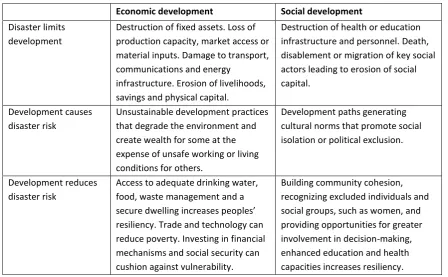
In 2004, the UNDP’s publication, ‘Reducing Disaster Risk: A Challenge for Development’ elaborates the complex inter-linkages between disaster and development (Table 2.2). The authors consider
economic development and social development separately in explaining disaster development linkages. As per UNDP, social development includes social assets such as inclusive governance and health and educational infrastructure. Economic development includes economic production and its supporting infrastructure and the integrity of natural resources for the sustainability of resource-dependent livelihoods. In Table 2.2, UNDP identifies three key correlations between disaster and
development: disaster limits development, development causes disaster risk, and development reduces disaster risks. UNDP argues that not all development increases the risk of disaster because some forms of development reduce disaster risks. Therefore, one key argument in Table 2.2 is that development is not a risk neutral process; it either increases disaster risk or reduces disaster risk. This research specifically focuses on situations where development causes disaster risk.
The upward trend in the number of development-induced disasters worldwide, as highlighted in the Global Assessment Report 2011, especially in developing countries, supports the argument that development increases the risk of disasters. Many economic development interventions have inadvertently created new forms of vulnerabilities, especially in low and middle-income countries
that also have poor governance records (Benson & Twigg, 2007; UNISDR, 2011). Hence, ill-planned mal-development initiatives can be labelled as channels for increased disaster vulnerability and hazard risk, especially leading to development-induced disasters. Urbanization, deforestation and the filling of wetlands have changed hydrologic regimes, creating the possibility of more incidents of small scale flooding in many parts of the world (Tobin & Montz, 1997). Disaster risks are created over
time by environmentally unsustainable development projects (Hilhorst & Bankoff, 2004). For
14
Table 2.2 Disaster – Development Linkages (UNDP, 2004, p. 20)
Economic development Social development
Disaster limits development
Destruction of fixed assets. Loss of production capacity, market access or material inputs. Damage to transport, communications and energy
infrastructure. Erosion of livelihoods, savings and physical capital.
Destruction of health or education infrastructure and personnel. Death, disablement or migration of key social actors leading to erosion of social capital.
Development causes disaster risk
Unsustainable development practices that degrade the environment and create wealth for some at the expense of unsafe working or living conditions for others.
Development paths generating cultural norms that promote social isolation or political exclusion.
Development reduces disaster risk
Access to adequate drinking water, food, waste management and a secure dwelling increases peoples’ resiliency. Trade and technology can reduce poverty. Investing in financial mechanisms and social security can cushion against vulnerability.
Building community cohesion, recognizing excluded individuals and social groups, such as women, and providing opportunities for greater involvement in decision-making, enhanced education and health capacities increases resiliency.
Although analyses of development-induced disasters have rarely been subjected to scholarly work, the misery associated with development-induced disasters appears a “hot” topic for the media if the
number of casualties is large enough to be of interest. The following paragraphs provide a brief account of how national and international media reported some development-induced disasters. Even though this does not provide a complete account of the misery that vulnerable people face today, it emphasizes the importance of re-visiting modern development interventions to incorporate DRR.
The South Korean media criticized authorities after a mudslide caused havoc in southern Seoul killing approximately 59 people in July 2011. The media scrutinized unplanned construction in hilly areas that led to heavy deforestation as the cause of the destruction (Chan-Kyong, 2011; NewsFlavor, 2011). In March 2012, TVNZ reported a deadly landslide occurred in the mountains of Papua New
Guinea, killing at least 25 locals. The report raised questions about the safety of excavations done by a major US oil company, Exxon Mobil. The landslide tore through a quarry used by Exxon in January creating suspicion about quarry activities (TVNZ, 2012).
Again, a number of examples can be seen in relation to the current trend of highway construction
major portion of these investments arrives as loans from bi-lateral or multi-lateral agencies. The social cost of these investments, however has frequently been overshadowed by government
propaganda.
The 2006 floods in Colombo, Sri Lanka, which cut off the country’s capital and its only international airport, created flood levels of 1-1.5 m over the A3 road and raised concerns over the Colombo Katunayake highway that was under construction. The media reported a similar level of rain in the area in 1992 and 2003. However, this was the first time the residents experienced a flood of such
magnitude (Dissanayaike, 2006). A study of recent landslide activity in the Dominical–Uvita corridor on the Pacific Coast in Costa Rica, suggests that recent unchecked economic development activities are the major cause of increased landslides in the study areas (Miller, 2011).
The South Asia Disaster Report 2008 (Duryog Nivaran & Practical Action, 2008a) illustrates a number
of such ‘alleged’ mal-development initiatives in the region that created problems for neighbouring communities. The 93 km Ahmedabad Vadodara Expressway in India was blamed for flooding in June 2005. The flood caused havoc in 600 villages within a 5 to 25 km range of the expressway, which had never experienced floods before. The Indian Rs. 6 billion (approx. 120 million USD) expressway is said to have blocked the natural drainage path of the low-lying areas (Duryog Nivaran & Practical Action,
2008a). Similar cases have been reported from Nepal, where road construction often exacerbates pre-existing slope instabilities resulting in the increased occurrence of landslides along road corridors (Duryog Nivaran & Practical Action, 2008a).
Ill-planned post-disaster recovery activities also lead to new forms of vulnerabilities. Benson & Twigg (2007) point to an example where a new aid-funded hospital has been re-constructed at the foot of a
volcano in the Caribbean island of Montserrat after it was destroyed by Hurricane Hugo in 1989. This hospital was subsequently destroyed by pyroclastic flows of a volcano, which erupted in mid-1995.
Studies of development-induced displacement are also common. Even though these do not directly contribute to disaster mortality statistics, increased vulnerabilities of the affected communities
cannot be simply neglected. In 1994, a study of World Bank-assisted development projects from 1986-1993 concluded that annually 4 million people associated with the hydropower sector and 6 million more people linked to transportation infrastructure projects are displaced worldwide
(Robinson, 2003). Unfortunately, it is the disadvantaged segments of society that are most frequently subjected to these involuntary displacements creating suspicions about the equitable distribution of
16 people. However, the tribal community is said to be only 8 percent of the total population of India (Robinson, 2003).
There are many media reports and in-depth studies about widely felt technological disasters such as Bopal, Chernobyl and Fukushima. The Bopal crisis in 1984 in India resulted in casualties of over 3,000 people due to a chemical gas leak (Sriramachari & Chandra, 1997). A similar disaster happened with the Chernobyl nuclear plant in Ukraine resulting in 125,000 deaths directly related to the crisis and leaving many thousand exposed to radiation in 1996 (Liberatore, 2013). These enormous human
tragedies question not only the lack of risk assessment inbuilt in development processes and lack of preparedness for any failures but also to the poor accountability and transparency of the authorities. History repeats; the recent Fukushima nuclear disaster in Japan in 2011 (UNISDR, 2011) is very similar to the two previous cases. Even though the Great East Japan earthquake of magnitude 9.0 (World
Nuclear Association, 2012) and the subsequent tsunami had triggered the Fukushima disaster, the main causes of the nuclear disaster are claimed to be lying in the institutional failures of political influence and industry-led regulation (Green Peace International, 2012). Green Peace International (2012, p. 1) concludes from its analysis that “It was a failure of human institutions to acknowledge real reactor risks, a failure to establish and enforce appropriate nuclear safety standards and a failure
to ultimately protect the public and the environment”. Therefore, in many respects, the Fukushima disaster is identical to Bopal and Chernobyl. The Fukushima disaster has also shocked the world, not only because it happened in one of the most developed countries, which is recognized as having high quality governance (The World Bank, 2014), but it also shows that we often fail to learn from past mistakes.
The above provides a partial account of development-induced disasters and the suffering of many millions of people, but the true suffering of the people involved is not captured by such simplistic facts. However, the examples are adequate to argue the importance of factoring disaster risk considerations into development planning at national, regional and local levels.
2.7
Governance (Risk): a cause and a remedy for development disasters
The role of governance in DRR is increasingly recognized, with the quality of governance being considered to have a direct bearing on why some countries have higher disaster losses than others
(UNISDR, 2009b). The World Bank (2011) defines governance as “…traditions and institutions by which authority in a country is exercised”. As per the World Bank, this also includes the process by which governments are selected, monitored and replaced. Although the World Bank’s definition is biased towards the formal coercive power of governments, some literature focuses on both formal and informal arrangements through which decisions are made and implemented in order to advance
in governance and their accountability towards protection of society and the environment is a fundamentally accepted norm today. In particular, the concern attached to bad governance is most
often directed at governments (Roberts, Wright, & O'Neill, 2007).
Bad or poor governance includes practices such as corruption, manipulation of the media, disrespect for human rights, arbitrary application of the rule of law, actual or potential political instability, lack of transparency, insufficient information flows, lack of accountability and responsibility, and lack of stakeholder participation in decision making. Good governance is represented by the ‘presence’ of
these elements in a society (Roberts et al., 2007).Access to information on disaster risk, particularly for the most vulnerable, is considered as the first step in effective DRR (UNISDR, 2011). However, countries with poor quality governance fail to exercise these fundamental responsibilities that lie at the centre of disaster resilience of any society.
Much research has shown a statistically positive correlation between levels of corruption and their significant impact on government efficiency and the rule of law, two key components of risk governance (e.g. Ambraseys, 2011; Anbarci, Escaleras, & Register, 2005; Escaleras, Anbarci, & Register, 2007). Ambraseys (2011) states that differences in death tolls in different countries in natural events, especially earthquakes, is not only because of lack of education, scientific knowledge
or technological capability in the country concerned, but rather are the consequences of the corrupt use of scientific knowledge. In general, “…more democratic, accountable states with more effective institutions tend to suffer lower mortality” (UNSIDR, 2011: p 141).
Technological disasters caused by poor governance have been emphasized in the previous section, which reiterates the importance of the concept of governance in DRR. In other words, the way in
which the society is governed has a direct bearing on the increased or decreased disaster risk of the people. This thinking has led to the development of a relatively new subject, ‘risk governance’. Renn, Klinke & van Asselt (2011, p. 231) define risk governance as “…both the institutional structure and the policy process that guide and restrain collective activities of a group, society or international
community to regulate, reduce or control risk problems”. The International Risk Governance Council (IRGC) provides a broader perspective to risk governance. According to the IRGC (2008, p. 4) risk governance includes: