Neural Automatic Post-Editing Using Prior Alignment and Reranking
Santanu Pal1, Sudip Kumar Naskar2, Mihaela Vela1, Qun Liu3and
Josef van Genabith1,4
1Saarland University, Saarbr¨ucken, Germany 2Jadavpur University, Kolkata, India
3ADAPT Centre, School of Computing, Dublin City University, Ireland 4German Research Center for Artificial Intelligence (DFKI), Germany 1{santanu.pal, josef.vangenabith}@uni-saarland.de
1[email protected] 2[email protected]
Abstract
We present a second-stage machine trans-lation (MT) system based on a neural ma-chine translation (NMT) approach to au-tomatic post-editing (APE) that improves the translation quality provided by a
first-stage MT system. Our APE system
(AP ESym) is an extended version of an
attention based NMT model with bilingual symmetry employing bidirectional
mod-els, mt → pe and pe → mt. APE
translations produced by our system show statistically significant improvements over the first-stage MT, phrase-based APE and the best reported score on the WMT 2016 APE dataset by a previous neural APE system. Re-ranking (AP ERerank) of the
n-best translations from the phrase-based APE andAP ESym systems provides
fur-ther substantial improvements over the symmetric neural APE model. Human evaluation confirms that the AP ERerank
generated PE translations improve on the previous best neural APE system at WMT 2016.
1 Introduction
The ultimate goal of MT systems is to provide fully automatic publishable quality translations. However, existing MT systems often fail to de-liver this. To achieve sufficient quality, transla-tions produced by MT systems often need to be corrected by human translators. This task is re-ferred to as post-editing (PE). PE is often under-stood as the process of improving a translation provided by an MT system with the minimum
amount of manual effort (TAUS Report, 2010). Nonetheless, translations produced by MT sys-tems have improved substantially and consistently over the last two decades and are now widely used in the translation and localization industry. To en-hance the quality of automatic translation without changing the original MT system itself, an addi-tional plug-in post-processing module, e.g. a sec-ond stage monolingual MT system (an APE sys-tem), can be introduced. This may lead to a more reasonable and feasible solution compared to re-building the first-stage MT system. APE can be defined as as an automatic method for improving raw MT output, before performing actual human post-editing (Knight and Chander, 1994). APE as-sumes the availability of source texts (src), cor-responding MT output (mt) and the human post-edited (pe) version of mt. However, APE sys-tems can also be built without the availability of
src, by using only sufficient amounts of target side “mono-lingual” parallelmt–pedata. Usually APE tasks focus on systematic errors made by first stage MT systems, acting as an effective remedy to some of the inaccuracies in raw MT output. APE approaches cover a wide methodological range such as SMT techniques (Simard et al., 2007a; Simard et al., 2007b; Chatterjee et al., 2015; Pal et al., 2015; Pal et al., 2016d) real time integra-tion of post-editing in MT (Denkowski, 2015), rule-based approaches to APE (Mareˇcek et al., 2011; Rosa et al., 2012), neural APE (Junczys-Dowmunt and Grundkiewicz, 2016; Pal et al., 2016b), multi-engine and multi-alignment APE (Pal et al., 2016a), etc.
In this paper we present a neural network based APE system to improve raw first-stage MT output
quality. Our neural model of APE is based on the work described in Cohn et al. (2016) which im-plements structural alignment biases into an atten-tion based bidirecatten-tional recurrent neural network (RNN) MT model (Bahdanau et al., 2015). Cohn et al. (2016) extends the attentional soft alignment model to traditional word alignment models (IBM models) and agreement over both translation di-rections (in our case mt → pe and pe → mt) to ensure better alignment consistency. We fol-low Cohn et al. (2016) in encouraging our align-ment models to be symmetric (Och and Ney, 2003) in both translation directions with embedded prior alignments. Different from Cohn et al. (2016), we employed prior alignment computed by a hy-brid multi-alignment approach. Evaluation results show consistent improvements over the raw first-stage MT system output and over the previous best performing neural APE (Junczys-Dowmunt and Grundkiewicz, 2016) on the WMT 2016 APE test set. In addition we show that re-ranking n-best output from baseline and enhanced PB-SMT APE systems (Section 3) together with our neural APE output provides further statistically significant im-provements over all the other systems.
The main contributions of our research are (i) an application of bilingual symmetry of the bidi-rectional RNN for APE, (ii) using a hybrid multi-alignment based approach for the prior ments, (iii) a smart way of embedding word align-ment information in neural APE, and (iv) applying reranking for the APE task.
The remainder of the paper is structured as fol-lows: Section 2 describes the our symmetric neu-ral APE model. Section 3 describes the experi-mental setup and presents the evaluation results. Section 4 summarizes our work, draws conclu-sions and presents avenues for for future work.
2 Symmetric Neural Automatic Post Editing Using Prior Alignment
Below we describe bilingual symmetry of bidirec-tional RNN with embedded prior word alignment for APE.
2.1 Hybrid Prior Alignment
The monolingual mt–pe parallel corpus is first word aligned using a hybrid word alignment method based on the alignment combination of three different statistical word alignment meth-ods: (i) GIZA++ (Och, 2003) word alignment with
grow-diag-final-and (GDFA) heuristic (Koehn, 2010), (ii) Berkeley word alignment (Liang et al., 2006), and (iii) SymGiza++ (Junczys-Dowmunt and Szał, 2012) word alignment, as well as two different edit distance based word aligners based on Translation Edit Rate (TER) (Snover et al., 2006) and METEOR (Lavie and Agarwal, 2007). We follow the alignment strategy described in (Pal et al., 2013; Pal et al., 2016a). The aligned word pairs are added as additional training examples to train our symmetric neural APE model. Each word in the first stage MT output is assigned a unique id (swid). Eachmt–peword alignment also gets
a unique identification number (aid) and a
vec-tor representation is generated for each suchaid.
Given aswid, the neural APE model is trained to
generate a correspondingaidbased on the context swid appears in. The APE words are generated
fromaidby looking up the hybrid prior alignment
look-up table (LUT). Neural MT jointly learns alignment and translation. Replacing the source and target words byswidandaid, respectively,
im-plicitly integrates the prior alignment and lessens the burden of the attention model. Secondly, our approach bears a resemblance to the sense embed-ding approach (Li and Jurafsky, 2015) since an embedding is generated for each (swid,aid) pair.
2.2 Symmetric Neural APE
Our symmetric neural APE model (AP ESym) is
inspired by the bilingual symmetry (Cohn et al., 2016) of the bidirectional RNN based MT (Bah-danau et al., 2015). Bilingual symmetry inferences of both directional attention models are combined. The bidirectional RNN is based on an encoder-decoder architecture, where the first-stage MT output is encoded into a distributed representa-tion, followed by a decoding step which gener-ates the APE translation. The encoder consists of a forward RNN (h→
i = f(h→i−1, ri)), which
reads in each input stringx sequentially from x1 toxm at each time step i, and a backward RNN
(h←
t = f(h←i+1, ri)), which reads in the opposite
direction, i.e., sequentially from xm tox1, f be-ing an activation function, defined as an elemen-twise logistic sigmoid with an LSTM unit. Here,
ri = σ(WrEx¯ i +Urhi−1), whereE¯ ∈ Rm×kx
is the word embedding matrix of the MT out-put, Wr ∈ Rm×n and Ur ∈ Rn×n are weight
kx and ky correspond to the vocabulary sizes of
source and target languages, respectively. The hid-den state of thedecoderat timetis computed as
ηt=f(ηt−1, yt−1, ct), wherectis the context
vec-tor computed asct=PTxi=1αtihi. Here,αtiis the
weight of eachhiand can be computed as in
Equa-tion 1
αti = Pmexp(eti)
j=1exp(etj) (1)
where eti = a(ηt−1, hi) is a word alignment
model. Based on the input (mt) and output (pe) sequence lengths,TxandTy, the alignment model
is computedTx×Tytimes as in Equation 2 a(ηt−1, hi) =vaTtanh(Waηt−1+Uahi) (2)
whereWa ∈ Rm×n,Ua ∈Rn×2nandva ∈ Rn
are the weight matrices ofnhidden units. T de-notes the transpose of a matrix. Each hidden unit
ηtcan be defined in Equation 3
ηt= tanh(WdEyt−1+Udηt−1rt+Cct) (3)
where, rt = σ(WrEyt−1 +Urηt−1 +Crct) E
is the word embedding matrix for PE.Wd, Wr ∈ Rn×m, Ud, Ur ∈ Rn×n and C, Cr ∈ Rn×2n
are weights. The joint training of the bilingual symmetry models is established using symmetric training with trace bonus, which is computed as
−tr(αmt→peαpe→mtT). This involves optimizing Las in Equation 4.
L=−logp(pe|mt)−logp(mt|pe) +γB (4)
where B links the two models as B =
sumjPiαi,jmt→peαpej,i→mt, whereαare alignment
(attention) matrices ofTx×Ty dimensions. The
advantage of symmetrical alignment cells is that they are normalized using softmax (values in between 0 and 1), therefore, the trace term is bounded above bymin(Tx, Ty), representing
per-fect one-to-one alignments in both directions. To train each directional attention model (mt→
peandpe→mt), we follow the work described in Cohn et al. (2016), where absolute positional bias between the MT and PE translation (as in IBM Model 2), fertility relative position bias (as in IBM Models 3, 4, 5) and HMM-based Alignment (Vo-gel et al., 1996) are incorporated with an attention based soft alignment model.
3 Experiments and Results
We carried out our experiments on the 12K English–German WMT 2016 APE task training
data described in Bojar et al. (2016) and for some experiments we also use the 4.5M artificially de-veloped APE data described in Junczys-Dowmunt and Grundkiewicz (2016). The training data con-sists of English–German triplets containing source English text (src) from the IT domain, corre-sponding German translations (mt) from a first-stage MT system and the corresponding human post-edited version (pe). Development and test data contain 1,000 and 2,000 triplets respectively.
We considered two baselines: (i) the raw MT output provided by the first-stage MT system serves asBaseline1 (W MTB1)and (ii)Baseline2
(W MTB2) is based on Statistical APE, a
second-stage phrase-based SMT system (Koehn et al., 2007) built using MOSES1 with default settings
and trained on the 12Kmt–petraining data. In addition to the two baselines, we also com-pared our attention based neuralmt–pe symmet-ric model (AP ESym) against the best performing
system (W MTBest) in the WMT 2016 APE task
and the standard log-linearmt–pePB-SMT model with hybrid prior alignment as described in Sec-tion 2.1 (AP EB2).AP EB2andAP ESymmodels
are trained on 4.55M (4.5M + 12K + pre-aligned word pairs) parallelmt–pedata. The pre-aligned word pairs are obtained from the hybrid prior word alignments (Section 2.1) of the 12K WMT APE training data. For building our AP EB2 system, we set a maximum phrase length of 7 for the translation model, and a 5-gram language model was trained using KenLM (Heafield, 2011). Word alignments between themtandpe(4.5M synthetic
mt-pedata + 12K WMT APE data) were estab-lished using the Berkeley Aligner (Liang et al., 2006), while word pairs from hybrid prior align-ment (Section 2.1) between mt–pe (12K data) were used for the additional training data to build
AP EB2. The reordering model was trained with the hierarchical, monotone, swap, left to right bidi-rectional (hier-mslr-bidibidi-rectional) method (Galley and Manning, 2008) and conditioned on both the source and target language. Phrase pairs that oc-cur only once in the training data are assigned an unduly high probability mass (1) in the PB-SMT framework. To compensate this shortcoming, we performed smoothing of the phrase table using the Good-Turing smoothing technique (Foster et al., 2006). System tuning was carried out using Mini-mum Error Rate Training (MERT) (Och, 2003).
For setting up our neural network, previous to training the AP ESym model, we performed a
number of preprocessing steps on themt–pe par-allel training data. First, we prepare a LUT con-tainingmt–pehybrid prior word alignment above (Section 2.1) a certain lexical translation proba-bility threshold (0.3). To ensure efficient use of the hybrid prior alignment we replaced each mt
word by a unique identification number (swid)
and each pe word by a unique alignment identi-fication number (aid) (cf. Section 2.1).
After-wards, to effectively reduce the number of un-known words to zero, we follow a preprocess-ing mechanism similar to Junczys-Dowmunt and Grundkiewicz (2016). We built our AP ESym
model with a single-layer LSTM as encoder and two-layer LSTM as decoder, using 1024 embed-ding, 1024 hidden and 512 alignment dimensions. Our neural APE model is trained end-to-end us-ing stochastic gradient descent (SGD), allowus-ing up to 20 epochs. The development set was used for regularization by early stopping, which terminated training after 10 epochs. The AP ESym model
maintains bilingual symmetry, and the inferences of both directional models are combined. In a bid to further improve the translation quality, we also preformed re-ranking (cf. AP ERerank in Table
1). For re-ranking2, we generated 100-best
trans-lations from each participating system (W MTB2 andAP EB2) along with ourAP ESymmodel. As
with the SMT based APE output, we added log probability features from our neural models. Ad-ditionally, we used the following features:n-gram (n = 3...7) language model probability as well as perplexity normalized by sentence length, min-imum Bayes risk scores, and mt–pelength ratio. We trained the re-ranking model on the develop-ment set using MERT with 100-distinct best trans-lations of each participating system which are op-timized on BLEU.
3.1 Automatic Evaluation
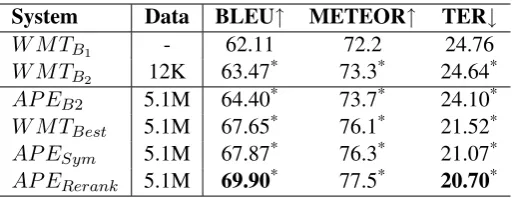
Table 1 provides a comparison of the base-line W MTB1, W MTB2, W MTBest, AP EB2,
AP ESymand theAP EReranksystem. Automatic
evaluation was carried out in terms of BLEU (Pa-pineni et al., 2002), METEOR and TER. Some general trends can be observed across all met-rics. Automatic post-editing, even trained on a small amount of training data (W MTB2),
pro-2Our approach is inspired by Och et al. (2004).
vides improvements over raw MT output in gen-eral. Additional training data, even artificially generated, helps improve system performance (compare AP EB2 with W MTB2). Neural MT
performs better than PB-SMT based approaches for the post-editing task on large amounts of training data (compare W MTBest and AP EB2 with W MTB2). Our AP ESym system based on
Cohn et al. (2016) with hybrid embedded prior word alignment provides the best performance among all the individual APE systems and sur-passes the W MTBest system. The AP ERerank
system performs significantly better than all the individual systems. The scores marked with * in Table 1 indicate statistically significant improve-ments (p <0.01) as measured by bootstrap resam-pling (Koehn, 2004) over the corresponding score in the previous row. We observed thatAP ESym
contributed to the majority (70.65%) of the trans-lations selected byAP ERerank.
3.2 Human Evaluation
In order to assess the performance of the APE system, we conducted experiments with hu-man evaluators comparing our best APE system (AP ERerank) against the WMT 2016 winning
APE system (W MTBest). Human evaluation was
carried out using CATaLog Online3 – an online
CAT tool (Pal et al., 2016c). Our human evalu-ators were 18 undergraduate students enrolled in a Translation Studies programme, attending a trans-lation technologies class, including sessions on MT and MT evaluation. All students were native speakers of German with at least a B2 level of En-glish. During evaluation students were presented an English source sentence and two German MT outputs (AP ERerank and W MTBest), the
order-ing of the MT outputs beorder-ing alternated for each presentation. They had to decide between the two MT outputs by marking the translation they con-sider of better quality in terms of both adequacy and fluency. Each student received a set of 30 sentences for evaluation, with 20 sentences drawn randomly and 10 sentences being common to all students, allowing us to compare the distribution of decisions across all sentences and the 10 com-mon sentences. The outcome of the evaluation is presented in Table 2. Assessors preferred the MT output produced by AP ERerank in 58.5% cases
3http://santanu.appling.uni-saarland.
System Data BLEU↑ METEOR↑ TER↓
W MTB1 - 62.11 72.2 24.76
W MTB2 12K 63.47* 73.3* 24.64*
AP EB2 5.1M 64.40* 73.7* 24.10*
W MTBest 5.1M 67.65* 76.1* 21.52*
AP ESym 5.1M 67.87* 76.3* 21.07*
[image:5.595.171.428.61.160.2]AP ERerank 5.1M 69.90* 77.5* 20.70*
Table 1: Automatic evaluation results
and chose the W MTBest output for rest of the
cases (i.e., 41.5%). On the 10 common sentences evaluated by all the evaluators, the results show a similar trend (57.8% in favour ofAP ERerank,
42.2% forW MTBest).
540 sentences 180 sentences AP ERerank 58.5% 57.8%
W MTBest 41.5% 42.2%
Table 2: Selection of suggestions by assessors for all sentences and for only the common sentences.
4 Conclusions and Future Work
In this paper we presented a neural APE model that extends the attention based NMT model to tra-ditional word alignment models and utilizes agree-ment of bidirectional models for alignagree-ment metry. The attentions are encouraged to sym-metrization in both translation directions. To the best of our knowledge this is the first work on in-tegrating hybrid prior alignment into NMT. Evalu-ation results show significant improvements over the first-stage raw MT system. Although the
AP ESym system provided only small (but
sig-nificant) improvements over W MTBest system,
re-ranking of the n-best outputs of the multiple APE engines yields large improvements. Hu-man evaluation also revealed the superiority of the
AP EReranksystem over theW MTBestsystem.
As future work we plan to integrate source knowledge into the neural APE framework. We will also study further the use of standard word alignment information to influence the attention mechanism in neural APE.
Acknowledgments
We would like to thank all the anonymous review-ers for their feedback. Santanu Pal is supported by the People Programme (Marie Curie Actions) of the European Union’s Framework Programme
(FP7/2007-2013) under REA grant agreement no 317471. Sudip Kumar Naskar is supported by Me-dia Lab Asia, MeitY, Government of InMe-dia, un-der the Young Faculty Research Fellowship of the Visvesvaraya PhD Scheme for Electronics & IT. Qun Liu and Josef van Genabith is supported by funding from the European Union Horizon 2020 research and innovation programme under grant agreement no 645452 (QT21).
References
Dzmitry Bahdanau, Kyunghyun Cho, and Yoshua Ben-gio. 2015. Neural machine translation by jointly learning to align and translate. InInternational Con-ference on Learning Representations (ICLR), San Diego, CA, USA.
Ondˇrej Bojar, Rajen Chatterjee, Christian Federmann, Yvette Graham, Barry Haddow, Matthias Huck, Antonio Jimeno Yepes, Philipp Koehn, Varvara Logacheva, Christof Monz, Matteo Negri, Aure-lie Neveol, Mariana Neves, Martin Popel, Matt Post, Raphael Rubino, Carolina Scarton, Lucia Spe-cia, Marco Turchi, Karin Verspoor, and Marcos Zampieri. 2016. Findings of the 2016 Confer-ence on Machine Translation. In Proceedings of the First Conference on Machine Translation, pages 131–198, Berlin, Germany.
Rajen Chatterjee, Marion Weller, Matteo Negri, and Marco Turchi. 2015. Exploring the Planet of the APEs: a Comparative Study of State-of-the-art Methods for MT Automatic Post-Editing. In Pro-ceedings of the 53rd Annual Meeting of the Associ-ation for ComputAssoci-ational Linguistics and the 7th In-ternational Joint Conference on Natural Language Processing (Volume 2: Short Papers), pages 156– 161, Beijing, China.
Michael Denkowski. 2015. Machine Translation for Human Translators. Ph.D. thesis, Carnegie Mellon University.
George Foster, Roland Kuhn, and Howard Johnson. 2006. Phrasetable smoothing for statistical machine translation. InProceedings of the 2006 Conference on Empirical Methods in Natural Language Pro-cessing, EMNLP ’06, pages 53–61, Stroudsburg, PA, USA.
Michel Galley and Christopher D. Manning. 2008. A simple and effective hierarchical phrase reorder-ing model. In Proceedings of the Conference on Empirical Methods in Natural Language Process-ing, EMNLP ’08, pages 848–856, Stroudsburg, PA, USA.
Kenneth Heafield. 2011. Kenlm: Faster and smaller language model queries. InProceedings of the Sixth Workshop on Statistical Machine Translation, WMT ’11, pages 187–197, Stroudsburg, PA, USA. Marcin Junczys-Dowmunt and Roman Grundkiewicz.
2016. Log-linear combinations of monolingual and bilingual neural machine translation models for au-tomatic post-editing. In Proceedings of the First Conference on Machine Translation, pages 751– 758, Berlin, Germany.
Marcin Junczys-Dowmunt and Arkadiusz Szał, 2012.
SyMGiza++: Symmetrized Word Alignment Models for Statistical Machine Translation, pages 379–390. Springer Berlin Heidelberg, Berlin, Heidelberg. Kevin Knight and Ishwar Chander. 1994. Automated
Postediting of Documents. In Proceedings of the Twelfth National Conference on Artificial Intelli-gence (Vol. 1), AAAI ’94, pages 779–784, Seattle, Washington, USA.
Philipp Koehn, Hieu Hoang, Alexandra Birch, Chris Callison-Burch, Marcello Federico, Nicola Bertoldi, Brooke Cowan, Wade Shen, Christine Moran, Richard Zens, Chris Dyer, Ondˇrej Bojar, Alexandra Constantin, and Evan Herbst. 2007. Moses: Open Source Toolkit for Statistical Machine Translation. In Proceedings of the 45th Annual Meeting of the ACL on Interactive Poster and Demonstration Ses-sions, pages 177–180, Prague, Czech Republic. Philipp Koehn. 2004. Statistical Significance Tests for
Machine Translation Evaluation. In Dekang Lin and Dekai Wu, editors, Proceedings of EMNLP 2004, pages 388–395, Barcelona, Spain.
Philipp Koehn. 2010.Statistical Machine Translation. Cambridge University Press, New York, NY, USA, 1st edition.
Alon Lavie and Abhaya Agarwal. 2007. Meteor: An Automatic Metric for MT Evaluation with High Levels of Correlation with Human Judgments. In
Proceedings of the Second Workshop on Statisti-cal Machine Translation, pages 228–231, Prague, Czech Republic.
Jiwei Li and Dan Jurafsky. 2015. Do Multi-Sense Em-beddings Improve Natural Language Understand-ing? In Proceedings of the 2015 Conference on Empirical Methods in Natural Language Process-ing, pages 1722–1732, Lisbon, Portugal.
Percy Liang, Ben Taskar, and Dan Klein. 2006. Align-ment by AgreeAlign-ment. In Proceedings of the Main Conference on Human Language Technology Con-ference of the North American Chapter of the Asso-ciation of Computational Linguistics, HLT-NAACL ’06, pages 104–111, New York, New York.
David Mareˇcek, Rudolf Rosa, Petra Galuˇsˇc´akov´a, and Ondˇrej Bojar. 2011. Two-step Translation with Grammatical Post-processing. InProceedings of the Sixth Workshop on Statistical Machine Translation, pages 426–432, Edinburgh, Scotland.
Franz Josef Och and Hermann Ney. 2003. A System-atic Comparison of Various Statistical Alignment Models.Computational Linguistics, 29(1):19–51. Franz Josef Och, Daniel Gildea, Sanjeev
Khudan-pur, Anoop Sarkar, Kenji Yamada, Alex Fraser, Shankar Kumar, Libin Shen, David Smith, Kather-ine Eng, Viren Jain, Zhen Jin, and Dragomir Radev. 2004. A smorgasbord of features for statistical machine translation. In Daniel Marcu Susan Du-mais and Salim Roukos, editors,HLT-NAACL 2004: Main Proceedings, pages 161–168, Boston, Mas-sachusetts, USA.
Franz Josef Och. 2003. Minimum Error Rate Training in Statistical Machine Translation. InProceedings of the 41st Annual Meeting on Association for Com-putational Linguistics – Volume 1, pages 160–167, Sapporo, Japan.
Santanu Pal, Sudip Naskar, and Sivaji Bandyopadhyay. 2013. A Hybrid Word Alignment Model for Phrase-Based Statistical Machine Translation. In Proceed-ings of the Second Workshop on Hybrid Approaches to Translation, pages 94–101, Sofia, Bulgaria. Santanu Pal, Mihaela Vela, Sudip Kumar Naskar, and
Josef van Genabith. 2015. USAAR-SAPE: An English–Spanish Statistical Automatic Post-Editing System. In Proceedings of WMT, pages 216–221, Lisbon, Portugal.
Santanu Pal, Sudip Kumar Naskar, and Josef van Gen-abith. 2016a. Multi-Engine and Multi-Alignment Based Automatic Post-Editing and its Impact on Translation Productivity. In Proceedings of COL-ING 2016, the 26th International Conference on Computational Linguistics: Technical Papers, pages 2559–2570, Osaka, Japan.
Santanu Pal, Sudip Kumar Naskar, Marcos Zampieri, Tapas Nayak, and Josef van Genabith. 2016c. CAT-aLog Online: A Web-based CAT Tool for Dis-tributed Translation with Data Capture for APE and Translation Process Research. In Proceedings of COLING 2016, the 26th International Conference on Computational Linguistics: System Demonstra-tions, pages 98–102, Osaka, Japan.
Santanu Pal, Marcos Zampieri, and Josef van Genabith. 2016d. USAAR: An Operation Sequential Model for Automatic Statistical Post-Editing. In Proceed-ings of the First Conference on Machine Translation, pages 759–763, Berlin, Germany.
Kishore Papineni, Salim Roukos, Todd Ward, and Wei-Jing Zhu. 2002. BLEU: A Method for Automatic Evaluation of Machine Translation. InProceedings of the 40th Annual Meeting on Association for Com-putational Linguistics, ACL ’02, pages 311–318, Philadelphia, Pennsylvania.
Rudolf Rosa, David Mareˇcek, and Ondˇrej Duˇsek. 2012. DEPFIX: A System for Automatic Correc-tion of Czech MT Outputs. In Proceedings of the Seventh Workshop on Statistical Machine Transla-tion, pages 362–368, Stroudsburg, PA, USA. Michel Simard, Cyril Goutte, and Pierre Isabelle.
2007a. Statistical Phrase-Based Post-Editing. In
Human Language Technologies 2007: The Confer-ence of the North American Chapter of the Asso-ciation for Computational Linguistics; Proceedings of the Main Conference, pages 508–515, Rochester, New York.
Michel Simard, Nicola Ueffing, Pierre Isabelle, and Roland Kuhn. 2007b. Rule-based translation with statistical phrase-based post-editing. In Proceed-ings of the Second Workshop on Statistical Machine Translation, pages 203–206, Prague, Czech Repub-lic.
Matthew Snover, Bonnie Dorr, Richard Schwartz, Lin-nea Micciulla, and John Makhoul. 2006. A study of Translation Edit Rate with Targeted Human An-notation. InProceedings of association for machine translation in the Americas, pages 223–231, Cam-bridge, Massachusetts, USA.
TAUS Report. 2010. Post editing in practice. Techni-cal report, TAUS.