A review of the effectiveness of a brief (8 session)
Cognitive Analytic Therapy (CAT) for clients with anger
problems
TURNER, James <http://orcid.org/0000-0002-8360-1420> and MACKINTOSH, Paula
Available from Sheffield Hallam University Research Archive (SHURA) at: http://shura.shu.ac.uk/4222/
This document is the author deposited version. You are advised to consult the publisher's version if you wish to cite from it.
Published version
TURNER, James and MACKINTOSH, Paula (2010). A review of the effectiveness of a brief (8 session) Cognitive Analytic Therapy (CAT) for clients with anger problems. Project Report. WellMind (Sheffield) Ltd / Sheffield Hallam University. (Unpublished)
Copyright and re-use policy
WellMind (Sheffield) Ltd
in Collaboration with NHS Sheffield PCT
and
Sheffield Hallam University
Sept 2008 – March 2010
Winn Gardens Mental
Health Project
Evaluation report
James Turner - CAT Practitioner
Paula Mackintosh – Health Improvement Practitioner
Monday, 09 August 2010
1 Brief Summary
2 Introduction
2.1The story behind the project
2.2 What do you expect to happen?
2.3 How will you know if the intervention has been successful?
2.4 Where will the data come from?
2.5 How will you get people to participate in the evaluation?
2.6 How will you collect the data?
2.7 What will you ask them?
3 The intervention/Project
4 Scope of evaluation
5 Aims of the evaluation
5.1 Process
5.2 Outputs
5.3 Outcomes
5.4 Measurement of change
6 Methods
6.1 Quantitative
6.2 Qualitative
7 Findings
7.1 Quantitative
7.2 Qualitiative
8 Discussion
9 Conclusion
9.1What did you learn
9.2 What works
9.3 What didn’t work
10 Recommendations
A review of the effectiveness of a brief (8 session) Cognitive Analytic Therapy (CAT) for clients with Anger problems
This report represents evaluative data from 12 months of psychotherapeutic intervention using Cognitive Analytic Therapy at Winn Gardens and some reflections on the subsequent development of the project into Burngreave.
The focus of the intervention was primarily managing anger but other psychological problems underlying anger have also been treated.
In total 23 referrals were received and 8 completed case of „evaluation‟ are presented here. Results indicate a significant improvement in general health, psychological health and behaviour change from what is a brief therapy consisting of 8 sessions and a follow up.
The intervention has diverted clients from assaulting behaviour, both to themselves and others, reducing the impact of violence on partners, others, health and social care services and police and court services. It is difficult to quantify this but the associated costs for anger and violence are significant an incalculable.
Up to July 2010 14 referrals were received at Burngreave all of whom were contacted, offered an appointment and/or undertook therapy. Four clients have completed therapy with a number of others taking up a number of sessions. It is anticipated that similar positive therapeutic outcomes to Winn Gardens will be found in the population at Burngreave on completion.
2 Introduction
Funding was secured to help support the residents at Winn Gardens following the catastrophic floods of 2007. There was a general sense that on the Winn Gardens estate there were considerable psychological health needs and needs in relation to managing anger; both in response to the reactions to the floods and as an identified general „social‟ problem. Two therapists were engaged in September 2008 to offer psychological support to residents of Winn Gardens and the surrounding flood corridor. The therapists are a Counsellor and a Cognitive Analytic Therapist (CAT). This interim report relates to the activity of the Cognitive Analytic Therapist.
Latterly it was noted that in the Burngreave area there was also significant health and psychological need for an approach to managing anger based on local news reports, health practitioners‟ examples and health improvement practitioners. In particular concerns about domestic violence have been recognised as becoming a significant issue within the Burngreave area.
2.1 The story behind the project
Focusing on anger management seems appropriate both at Winn Gardens and in Burngreave, as it appears that the world is becoming more violent (or society is less tolerant to violence) „due to living in a developing world with its associated stresses‟ (Novaco 1976). Although Novaco made this comment over 30 years ago the salience of a stressful developing world remains high for many people. In the UK and other countries, violent crime is increasing and violence is being viewed as a major social and psychological problem (Beck and Fernandez 1998). It has been reported that 32% of UK adults say someone close to them has a problem with anger (Mental Health Foundation 2008) and 64% of UK residents believe that people in the UK are becoming angrier (Mental Health Foundation 2008). However, there is some concern regarding anger management programmes with some evidence suggesting that they can make offenders more dangerous (Home office Report 2006). Anger is not just a problem with adults, as 48,000 under 11 year olds were sent home from school in 2007 for angry or aggressive behaviour (DCSF 2006). Therefore what is needed is evidence of effective interventions to address these „anger‟ problems.
There are a variety of problems associated with anger; property damage, physiological complaints, drug abuse, psychopathology, and aggressive or violent behaviour. Equally problems with anger control are frequent client problems, possibly prompting verbal aggression, child abuse, inappropriate withdrawal and reduced problem solving (Deffenbacher et al 1988). On balance, our world is probably no more violent now than it was in pre-classical times „but its present day salience represents a threat to both personal and community well being‟ (Novaco 1994).
Managing anger is also important in the health and social care service. In 1979, the industrial relations service indicated that health service staff were the highest statistical group for assault in the country, in particular casualty and psychiatric nurses (Bowie 1996). For example, in an American special hospital there were '135 assaults on 125 staff in one year' and in the workplace „more than 6 million Americans reported harassment in 1993‟ (Bowie 1996). In the United Kingdom similar statistics apply. Despite these statistics, and the plethora of clinical papers looking at anger and its management approaches, clinical staff still view violent patients as an expression of illness instead of treating the anger in itself (Renwick et al 1997).
Stanko et al., (1998) calculated selected costs to the public sector for domestic violence in Hackney to be over £5 million for the year 1996. The largest component of these costs, are those incurred by social services (£2.3 million) and civil justice (£1 million). Hackney can be compared similarly in social and demographic terms to the areas of Sheffield serviced by this project where there is also a significant social and financial impact in domestic violence and anger management problems. In particular demands on the health services, both in acute and psychological care areas can be noticed. For example, it costs approximately £124 per day to treat a common assault at A&E (Hocking 1989) probably £200 for a 2010 uplift.
support ( in Europe) can be between £169-£741 (E1 = £1) (Hakkaan et al 2006). Depression and low mood are often the experience of the „victim‟s of anger and aggression.
The cost to the public purse of violence against the person is on average £19,000 per incident (Brand and Price 2000). There are also costs to the corporate and business sector in loss of work days. Some of the clients seen within this service were assaulting others on a weekly basis therefore there is a positive cost benefit analysis anticipated in this study. In the USA, ffor example, the ‘net benefit of Violence Against Women Act-I is estimated to be $16.4 billion. Because the cost of VAWA-I is only $1.6 billion, $14.8 billion in averted victimization costs would be saved after implementation of VAWA-I‟(Clark et al., 2002, p. 423).
Not all costs of domestic violence and anger can be quantified, as Kerr and McLean (1996, p3) note „…in no way can we “cost” the horrifying physical and psychological damage of this violence to the women and their children‟. However, the largest component of indirect costs is the pain and suffering experienced by the victims/survivors of domestic violence (Laing and Bobic 2002).
Treatments for anger indicates some empirical research for the efficacy of a CBT approach to anger (Beck and Fernandez 1998). Approaches refer to anger as both state and trait emotion. State anger is the internal affective experience to the experience of the moment and trait emotion the propensity to experience state anger across time and situations (trait and situation specific anger) (Deffenbacher 1996). It is important to make these distinctions because clients who present with anger often want to deal with the state anger, the throttling of their partners, but not the general sense of injustice that they might carry with them on a daily basis.
The effects of anger are not wholly without risk and the effects of anger are not just on other people. There is a growing body of understanding regarding the deleterious effects that anger has on general health (Novaco 1989) and the cardiac or carcinogenic effects of either expressing anger or withholding it (Bennett 2000a), although recent evidence challenges these assumptions. Bennett (2000) has developed a CBT approach to managing health, using Rosenman and Friedman‟s identification of common characteristics in their heart patients. They noted type A clients were high scorers in competitiveness, time urgency, and hostility, Type B had lower scores in these areas, and Type C scored the opposite. Consequently, Type C clients are also a cause for concern, as the inhibition of anger and other negative emotions has been linked to the development of cancer (Bennett 2000).
The utility of the CBT model can also be effective across a range of psychiatric disorders where essentially what people think affects how they feel emotionally and physically and also alters what they do (Williams and Garland 2002). Cognitive therapies view arousal to anger has having autonomic, CNS and cognitive components. Whether or not anger leads to aggression depends on the magnitude and appraisal of the provocation, situational constraints, expected outcomes and the persons preferred style of coping (Novaco 1976, p33).
In therapeutic term‟s anger, is claimed to be a basic emotion, as it is a response to an ego threat or insecurity (Novaco 1976). Anger refers to internal affective experience, which may vary in intensity and chronicity and can pertain both to the experience of the moment (state anger) and to the propensity to experience state anger across time and situations (trait and situation specific anger) (Deffenbacher 1996). The CBT aim is to help the person see more/different alternatives to their situation, obstacles to their thinking, and therefore „aims to free patients to ways of interpreting and reacting to their situation, drawing from the fullest range of alternatives available‟ (Salkovskis 1996).
The roots of anger can be grounded in childhood, where it is formed from particular assumptions or beliefs learned from home, school and media. Anger and aggression must be viewed as a normal part of development and brings benefits to the individual as well as risks (Taylor 1993, Beck 1976, Goldstein et al 1998). Anger consists of four interacting events: external events and internal cognitive, emotional, physiological, and behavioural reactions that have a reciprocal relationship with each other (Howells and Watt 1998, Deffenbacher 1996, Novaco 1975). The Classical „pairing‟ and „natural worries‟ is combined with operant „consequence and development‟ learning seemingly in operation. For example, cognition may concentrate on the role of appraisal threat or danger. Cognitively, the thought could be anxiety with an associated belief that they are threatened with either physical or social/emotional harm (Salkovskis 1996).
In terms of operant conditioning, anger can be understood as an instrumental/incentive motivated emotion. Anger is not present, and the behaviour is motivated by the rewards potentially achieved in the environment. Hence, anger management procedures are „based on the conviction that emotional arousal and the course of action such arousal instigates, are defined or determined by ones cognitive structuring of the situation (Novaco 1977). Novoco views anger as not wholly destructive as it has a number of functions, these are:
“Energizing functions – energizes our behaviour, increasing vigour
Disruptive functions – when people are agitated they often act before they think.
Expressive functions – frustrated expectation leads to smouldering anger that disrupts intimate relationships. A healthy relationship depends on partners being able to express anger and give one another feedback.
Self-promotional functions – when a person is in the presence of others, he will organise his actions in such a way that they convey an impression of him that is in his interest. So when thwarted, it is sometimes better to be seen as angry rather than anxious, apprehensive or apathetic.
Potentiating functions – closely related to the defensive role of anger. Here one considers the role of anger as personal control or of being in charge of a situation. Anger arousal introduces a sense of potency.
Instigative functions – serves as a stimulus for aggression. The mixture of thwarted expectations; agitation and hostile internal dialogue serve to provide a vehicle for aggression to be enacted.
Discriminative functions – atunement to the signs of anger can alert one to the psychological significance of a situation and serve as a cue to using coping strategies that will be effective in resolving conflict.”
(Novaco 1976, p1125)
Although anger has positive adaptive functions there is also a view that here is considerable problem with anger in society. Treatment approaches have generally focused on thinking, feeling and behavioural aspects of anger, either separately or in combination. Of these, CBT approaches to anger management have shown CBT to prove effective in reducing anger in various populations (Deffenbacher et al 1990). Cognitive Analytic Therapy incorporates and integrates aspects of CBT within an integrated framework and has been the therapist in this studies approach to anger for 8 years. Positive responses to an 8 session CAT have been noticed in the therapists caseload and this is the reason he was approached to manage this service development. Therefore this evaluation should enable a two fold evaluation fist an evaluation of the service at Winn gardens and second an evaluation of the effectiveness of CAT as an approach for clients who present with anger problems.
2.2 What do you expect to happen?
Expected that referrals will flow from various sources and that a specific intervention CAT (Cognitive Analytic Therapy) will have a positive outcome for the factors clients bring to therapy related to anger and other psychological „problems‟.
2.3 How will you know if the intervention has been successful?
By seeing changes in self reports of anger and aggression expressed by the clients in their relationships and in self reports of general health and mental health improvement. Information for this can be gained for the clients „story‟ and from questionnaires and goodbye letters.
2.4 Where will the data come from?
Self reports using four standardised questionnaires during therapy at pre, post and follow up and a self evaluation (letter) at closure of therapy. Some demographic data has also been collected for comparison.
2.5 How will you get people to participate in the evaluation?
would still be completing all the questionnaires as these are standard evaluations of this intervention by the therapist.
In clarification, even though the data is „new‟ in terms of an evaluation of applying a brief CAT Therapy to anger management issues, the evaluation is part of the researchers‟ „normal duties‟ and the evaluations methods/questionnaires are part of „normal CAT practice‟, practice that the researcher has been involved in for 6 years. Therefore there is no „experimentation‟ taking place. This project was designed in the best interests of the clients and has their best interests at the forefront at all times. The researcher is in regular clinical supervision with an experienced clinician and CAT Practitioner. Consent was sought and information about the project given (appendix 4&5) from each client to use some of their clinical information, in particular demographic details, questionnaire data and information from letters between the therapist and client. All information is stored in a secure travelling case or filing cabinet and the electronic information is password protected. Clients will remain anonymous at all times.
2.6 How will you collect the data?
By using pre, post and follow up standardised evaluation questionnaires to measure the self reported health and psychological factors that anger has affected for these clients.
2.7 What will you ask them?
See appendix 6-9 the questionnaire utilised are:
Appendix 6 - General Health Questionnaire – (Goldberg 1988) GHQ-28: a 28 item scaled version – a standard assessment of overall health; assesses somatic symptoms, anxiety and insomnia, social dysfunction and severe depression
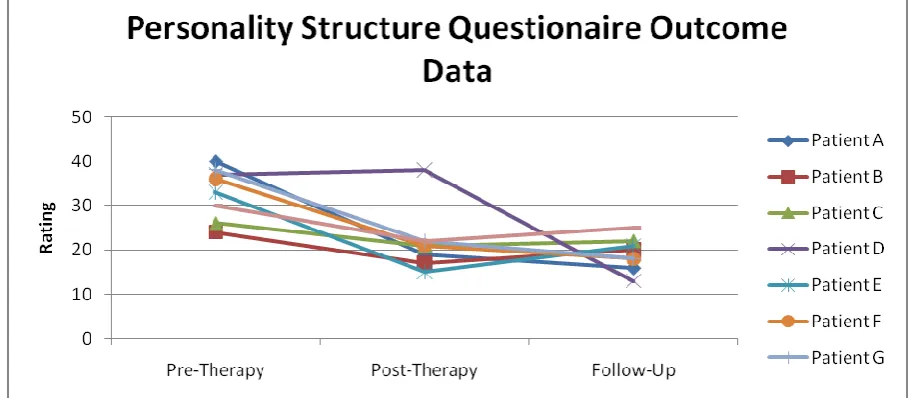
Appendix 7 - The Personality Structure Questionnaire – (Pollock et al 2001) The Personality Structure Questionnaire (PSQ) has been devised to measure deficits in personality integrity. (PSQ; Pollock, Broadbent, Clarke et al., 2001) is a well validated CAT-derived 8-item questionnaire, measuring identity disturbance characterised by multiplicity, mood variability and dissociation. Mean score levels in patients with complex problems are in the region of 30 and are significantly higher than the scores of around 20 in normal subjects. No large-scale data base of change in this measure is available
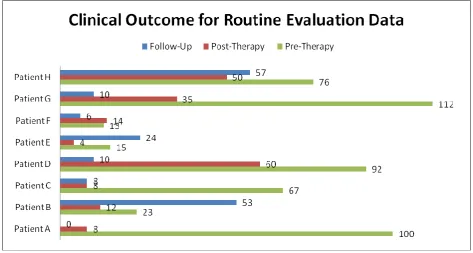
Appendix 8 - Clinical Outcome for Routine Evaluation (CORE) - (Barkham et al 2001) This questionnaire scores in four areas; Withdrawal, Physical, Feelings, Risk. (Clinical Outcomes in Routine Evaluation-outcome measure; Barkham, Margison, Leach, et al., 2001; Evans, Connell, Barkham et al., 2002). A widely used, well validated measure designed for repeat administration. The 34 items yield a total score and four sub-scale scores measuring well-being, symptoms, function and risk. Leach, Lucock, Iveson & Noble, R. (2004), on the basis of a very large scale study, conclude that the total score is the most appropriate main outcome measure for routine service evaluation.
anger. This is a relative, not a „scored‟ scale. However, useful data can be gleaned by examining alteration in each relative experience of anger. The overall totals here are split into positive anger expression and negative anger expression. The scoring is 1= almost never, 2=sometimes, 3=often, 4=almost always and the questions that are positives it refers to are q1, q2, q8 and q 20.
3 The intervention/Project
The author‟s approach to anger does not separate the emotion from other ways of coping because there are times when anger should not be conceptualised negatively. Equally blurring anger and aggression can view anger as being solely aggressive and fog its‟ „positive adaptive function‟ (Novaco 1976). Anger can have quite beneficial effects if the energising, expressive, discriminative and potentiating functions are considered (Novaco 1976). It seems important to recognise that anger, as well as being destructive, has considerable 'adaptive value for coping with the adversity of a depersonalised world and can facilitate perseverance in the face of frustration or injustice' (Novaco 1994).
Developing clinical services for anger problems arises in the context of the current development of specialist services of personality disordered clients and in some places anger management services. Currently Sheffield has access to anger management groups through the PCT but only one specific qualified therapist in a city of 600, 000 individuals. Factors associated with aggression in society appear to indicate that a focus on anger by the NHS is appropriate but that this focus requires a cogent model of application and necessitates the training of staff. At present, there is little firm evidence in support of any one psychological approach to managing anger in the NHS. It is clear, however, based on evidence and on anecdotal evidence from the author‟s 6 years of experience that focussing a CAT approach to anger has a major contribution to make in the field.
CAT is an integrative model of psychotherapy developed over the past 25 years (see Ryle 1995, Ryle and Kerr 2002). The approach is unique in terms of the psychotherapies, in that CAT combines and blends the development of descriptive formulations of patient‟s difficulties similar to that of cognitive-behavioural (CBT) approaches, with a central focus on the therapy relationship incorporating and extending psychoanalytic understandings of transference and counter-transference. From its conception within the NHS, due to the acknowledgement of limited resources, CAT was always carried out within predetermined time limits, usually of 16-24 weekly sessions but there is also a 'brief' therapy of 8 sessions. Time-limited CAT has been found to be effective for example CAT-based skills level training for workers in community mental health services and in-patient psychiatric services have been instituted and continuing to be evaluated (Bennett, 2003; De Normanville & Kerr, 2003; Thompson et al 2007). CAT is an evidence based therapy with a strong commitment to research (see Ryle, 1995).
This is seen to contribute to problems with self-reflection but also problems with „coping‟ or „responsive‟ (Leiman 2002) enactments which are encountered in complex cases. Therapeutic aims here are similarly directed at identification of underlying RRs and their maladaptive procedural enactments as well as at improving the capacity for self reflection. Work on symptoms and behaviours in isolation (e.g. substance abuse, self harm) are seen from this perspective as being important but in many ways secondary to these aims. Indeed, focus on symptoms alone would be seen from a CAT perspective as likely to collude with and reinforce underlying RRs if these are not concurrently identified and worked on, particularly if the patient experiences a focus on symptoms as being e.g. „controlling‟ or „neglecting‟. Before outlining the CAT method as applied to anger more fully it seems appropriate to look at other and complimentary approaches from the literature.
4 Scope of evaluation
A CAT intervention initially for 1 year at Winn gardens and subsequently for Burngreave offering a brief intervention for clients who have problems with anger and other associated mental health problems. Service is available for half a day only, three client sessions plus associated administration/referral management. Some clients have been seen in the therapists evening clinic as they were working and had difficulty accessing the half day clinic. Given the current economic climate it seemed prudent to support clients who were working rather than jeopardise their continued employment as they were in trades that made leaving work or getting time off complicated.
5 Aims of the evaluation
To outline the principles of CAT as applied to anger
To evaluate a practical CAT intervention which is successful in treating anger
To evaluate the social impact of a psychotherapeutic intervention for anger
To attempt to demonstrate accurately that CAT can impact on the client and community
5.1 Process
Clients access a brief 9 session (8 sessions plus follow up) Cognitive Analytic Therapy. Sessions are weekly same time same place with structured CAT process applied and following the CAT model. CAT is an integrative model of therapy developed in the UK by Ryle which has aimed to integrate the valid and effective elements of psychoanalytic object relations theory and cognitive psychology, especially Kellyian personal construct theory (Ryle 1990; Ryle and Kerr 2002). The CAT model has in recent years been further transformed by Vygotskian activity theory and Bakhtinian concepts of the dialogic self (Leimann 1995; 2004). Key Vygotskian concepts include that of internalisation (understood as a transformative process through which early interpersonal experience becomes intrapersonal, so contributing to the social formation of self), the zone of proximal development and
having a limited therapeutic effect and it is the therapist and the client who are the more dominant factors. This is one of the limitations of this study as it in reality only evaluates one persons use of CAT with anger management clients. The author would argue that because of the dialogical focus of CAT client and relationship factors are better integrated into the therapeutic work and foster an improved alliance than other psychotherapies. CAT sees these concepts as having important implications for understandings of development and psychopathology and also for therapeutic practice.
Thus, in addition to a cognitive focus on repetitive „procedural‟ sequences of thought and behaviour, CAT emphasises the relational and social origins and context of most human psychopathology. Early interpersonal development is seen as resulting in an internalised repertoire of reciprocal roles (RRs) with therapeutic focus directed to their identification and to their frequently maladaptive procedural enactments. Importantly, these will usually be manifest within the therapy or treatment relationship where their explicit description is helpful and important, lest they undermine or sabotage treatment. In CAT, therapists are constantly alert to the „invitation‟ to reciprocate (or „collude‟ with) these various role enactments by patients (for example „needy victim‟ or „vengeful attacker‟). CAT also makes use of psychological tools such as the co-constructed reformulation letters and diagrams aiming to summarise, in a „top-down‟ manner, the problems with which patients present (conceived of as reciprocal role procedural enactments) in the context of a narrative account of their social-psycho developmental origins. Although initially developed for use with a range of „neurotic‟ type disorders in outpatient settings, in recent years the model has been further developed to work with more severely disturbed, personality disorder type problems.
The aim of the method is to identify, in a language the patient can share, those mental constructions underlying the patients symptoms and difficulties and his inability to change and relate treatment and the evaluation of its effectiveness to those constraints (Ryle 1979 in Leiman 1994). CAT has a number of „steps and focus‟ which I shall outline.
Alliance and ZPD - Initial sessions of any therapy are crucial. One has to have multiple awareness of one‟s own snares „heal all, know all, love all‟ (Watts and Morgan 1994) and so the alliance becomes a crucial protective role, protecting patients from their strong negative feelings. Psychotherapy offers a relationship, an alliance, often not experienced by clients before through creating a space for dialogue (Kerr 1999). Whilst creating this space one must be aware of the client‟s self protection procedures and the therapist must „diffuse the power of these reciprocations‟ by joint working with the patient in recognition and by developing a higher order capacity for self-reflection‟ (Kerr 1999).
has been described as the Zone of Proximal Development from Vygotsky (ZPD). The ZPD is „the gap between what the child can do unaided and what it can do with the provision of appropriate help from a more experienced other‟ (Ryle 2001).
In building the possibility for change and providing a frame to climb, CAT offers a safe place for clients to practice change unaided but with the opportunity for reflecting in a safe place (the therapy). Scaffolding, like a child‟s climbing frame, should be ideally adjusted to the individual‟s „current capacity where learning takes place on two levels the first external the second internal‟. (Ryle 2001).
Transference and Counter Transference - In exploring psychodynamic anger I subscribe to the notion that there are unconscious processes behind everything we do. Ryle (1995) notes „we do not have to have a theory about them because this is difficult to get, but its process will be manifest‟. Of particular use are the concepts of Projection and Projective identification, the process by which people induce their feelings in others, encouraging others to have those feelings and act on them. Stiles comments, „If I feel your feelings and motives because I want to that is identification, if I feel your feelings and motives because you want me to, that is projective identification‟ (Stiles 1997, 172).
The Sequential Diagrammatic Reformulation (SDR) - An SDR is a tool for noticing role procedures and also for the tracing of exits to procedures in a strong and meaningful way. When developing an exit, cutting through the sequence, is visually powerful and representative. Dunn and Parry (1997) assert that through an SDR people are „able to identify the problem procedure and keep their understanding at that psychological rather than personal level‟. This helps both in the wider context of the client‟s life and in recognising enactments in sessions.
Reformulation and letters - Leiman (1994) describes reformulation as an „identification in the patient‟s language a succinct and accessible description of the underlying dynamics of symptoms and mental problems‟. In coming to a reformulation one must listen to the utterances of the client and the signs that are being passed over. Listening in this way helps the therapist identify reciprocal roles in a more general pattern, this nearly always elicits other parallel examples, which confirm or modify the pattern‟ (Ryle and Kerr 2002). There is a power in reformulation letters, they create clarity to feelings often unsaid in dialogue and provide a clear and chronological representation of a client‟s life, their difficulties, and their coping mechanisms. They are also transitional objects; parts of the therapy that can be taken away and internalised at the client‟s own pace.
transference. Clues come in the form of signs that can be a word, picture, a sound, gesture, a token or a story. Signs have lives of their own, „signs carry meaning between voices‟ (Stiles 1997). DSA is rooted in Object relations which sees the infant as highly dialogic in support of the infant seeking out iteration (Leiman 2002) and navigating itself by „using culturally derived information, skills and understanding through sign mediation‟ (Ryle 2001).
Rating Progress - Rating is as important in CAT as it is in CBT where symptoms are checked and evaluated. Recognition and revision of problems are key aspects of therapeutic work. Rating is usually carried out using sheets designed to outline particular problems and procedures.
Recognising Procedures As They Occur - The reciprocal role procedure (RRP) combines cognitive ideas with object relations. It sets itself within developmental dynamics related to behaviours intended to elicit appropriate reciprocation. Non reciprocation may lead to modification of procedures but is often met with efforts to force the others to play the expected role (Leiman 1994). For example an abused client learns an abused role and a strong uncaring abuser role which could, according to Stiles (1997), „lead the person to play the abused role or abusing role or recruiting others to do it for/to him‟. Recognising these roles as patterns of Traps, Snags, Dilemmas, seem to address the Freudian notion of „repetitive compulsion‟, or the „return of the repressed‟ (Leiman 1994) based on object relations rather than instinctual foundations.
Recapitulating and Reviewing the Session and Homework – Each CAT session usually closes with a discussion of how the session felt, points considered and expectations for the week ahead. This enables closure and also gives a space for the client to bring in a „monkey‟ to state something important to be mulled over during the week and brought back in the next session. It is important to ensure this „space‟ as it enables a client to divulge something, not deal with it there and then, knowing that it can be discussed in subsequent sessions.
Termination and Ending - Mann (1973) notes the last third of therapy begins the process of termination, noticing that number of sessions and being aware of what resolution is achieved/worked with and accompanying emotions. There is a real chance that separation will have no resolution because the person‟s previous endings have not given them a positive experience to draw upon. A good ending will enable the client to internalise the therapist as a replacement for previous ambivalence as the ending can become an adult event. Care must be taken that therapists do not collude with responses that might mask painful separation anxieties „and may sustain a degree of idealisation while others find it difficult to appreciate how important they have become for the patient‟ (Ryle and Kerr 2002). Ending is supported by another transitional object, the goodbye letter, that aids the therapist and the client in acknowledging termination issues and the work completed so far (Pollock 2001). As Ryle states, „The more clearly these feelings are acknowledged and understood the more likely it is that the patient will be able to hold onto what they have learned‟ (Ryle 1995, 1997).
5.2 Outputs
total of 126 client sessions are available in any one years timespan. This accounts to 14 clients who could complete therapy in one year if there were no „usual‟ complications with attendance. Often DNA rates can be 10-20% in mental health and social care services so this figure reduces to 11 clients if all sessions are planned and all clients remain in therapy. In terms of a cost benefit equation it is the authors view that this service has a high benefit verses cost ratio as these clients, once in and following completion of change through the therapy are returning to work, reducing cost to health and social care services and reducing psychological stress on families, costs that are mostly unquantifiable.
5.3 Outcomes
It is anticipated that a number of outcomes will be achieved
Reduction in feelings of anger (questionnaires)
Reduction in negative expression of anger (questionnaires)
Improvement in psychological awareness (questionnaires)
Reduction in assaults to others/threats to others particularly psychological damage to immediate family members (goodbye letter)
5.4 Measurement of change
As noted in 2.7 four questionnaires will be used to measure change in health and wellbeing as well as demographic data to indicate severity of „problem‟ and some client testimonies regarding their experience of CAT for anger in the form of their goodbye letters. The goodbye letters are standard to CAT and enable the client to reflect on their experience of therapy and any changes they have made.
6 Methods
Opportunity sample of all clients attending the clinic will be offered the opportunity to have their data collected as part of this study. A mixed qualitative and quantitative method seemed appropriate to provide data for measurement and reflection. Quantitative because subjective views are being scored, measured and analysed, qualitative because of the rich data enclosed in a clients goodbye letter.
Ethical principles were intact with supporting letters from the local NHS Clinical Governance Group. Sheffield PCT Mental Health leads, Project Lead and full and informed consent gained from clients. All information was stored in secure conditions both manually and electronically. Client‟s confidentiality has been ensured throughout.
6.1 Quantitative
participants to review the therapeutic process and monitor their own subjective experience of therapy i an objective way.
6.2 Qualitative
Qualitative research has an established tradition in health care research, and increasingly in nursing research (Morse and Field 1996) and psychotherapy (Gelloes and Vetere 2005). The growth of qualitative methods is still to reach maturity, in comparison to more established traditions of research in the mental health arena. However, the state of sophistication in the methods of investigation is growing (Good and Watts 1996). Qualitative research in health care provides the investigator with an opportunity to establish evidence and form new understandings related to the issues under investigation. For example, by exploring the perspectives of the individual being studied, it leads to the discovery of how illness, services and similar issues effect people's everyday lives and allows readers to appreciate the detail of such experiences. This new understanding allows the investigator the opportunity of building new theories that may be explored within other methodologies (Polgar and Thomas1995). This view is echoed by Good and Watts who write:
„one of the attractions of qualitative research is the possibility
it offers for developing such judgements into a formal research
strategy capable of yielding substantive and reliable contributions to knowledge‟ (Good and Watts 1997, p78)
For the purpose of this study I am reviewing the goodbye letters of clients to find out what some of their key experiences in therapy were and to inform „case study‟ approach. Qualitative research is guided by the same methodological principles as quantitative: collecting and analysing evidence; formulating and evaluating theories (Polgar and Thomas 1995). Through the application of qualitative methods I am able to examine the personal meanings of individual's experiences and actions in the context of their social environments, making detailed descriptions based on language or pictures recorded by the investigator. Thereby collecting systematic evidence about how a person views the world, in my case the change engendered from a CAT intervention leaving me able to be sensitive to and „observe subtle changes and nuances which a structured machine-like approach couldn‟t‟ (Polgar and Thomas 1995).
7 Findings
Findings cover all the clients referred to the service in relation to service uptake and contact as well as an in-depth analysis of 8 clients who completed a „full‟ data set of questionnaires and a selection of goodbye letters. As is often the case not all clients complete a goodbye letter but when they do the information is rich and reflective of their clinical journey.
7.1 Quantitative - Statistical Analysis
sessions. Unfilled sessions have been used for liaison work, discussions with local GP‟s, Health Visitors, Mental health workers and other staff who might have any leverage in developing referrals. I have also spent some time on outreach work following up on names of people who it has been indicated to me were significantly affected by the floods or are having other problems. To ensure „saturation‟ a letter drop was made two months prior to ending at Winn Garden and moving to Burngreave‟ to every 2nd
or 3rd house on the estate to ensure that we had „done the estate justice‟ in terms of advertising the service and encouraging uptake. 1 referral was received form this exercise who failed to turn up to his assessment session.
At Winn Gardens 19 referrals were received, of these 8 have had a full therapy the remainder have had less sessions or have not taken up the service on offer. All referrals have been contacted within two weeks of referral either by letter or telephone contact or a home visit with a number receiving follow up letters and phone contacts. The home visiting is not generally accepted practice for psychotherapy but in this instance it felt appropriate to do outreach work in the local community as it is a local project.
This story is similar so far in Burngreave where since Sept 2009 14 clients were referred; Four clients completed a 9 session therapy, with a number of clients received a range of contacts and support. There were a high level of DNA‟s due to the significant cold weather and other factors. DNA‟s are being followed up with a letter to encourage engagement. Some of the time at Burngreave was in seeing clients from Winn Gardens for follow up and ending therapy. One afternoon was spent in the men‟s health open day where we were lucky to also have Professor Malcolm Whitfield from Sheffield Hallam University attending to present a view of men‟s health.
Table 1 Referral management (Winn Gardens)
Of the 19 referrals at Winn gardens
8 clients have had an 8 session CAT plus follow up (1 client had 12 sessions)
6 clients were visited, sent letters and telephoned. Contact was established on two occasions and an initial assessment carried out but no further therapy was taken up 2 clients did not respond to letters and phone contact so no further action taken 1 client was passed to the GP counsellor
1 client declined service when contacted on phone
3 clients engaged with therapy then dropped out (in 2 cases this was due to work, for the other no information is available)
Two assessment schedules and four clinical outcome questionnaires are routine to the researchers CAT practice with clients who are expressing problems with anger management issues. The assessment schedules are the „Personal History Questionnaire‟, an unreferenced clinical tool, that provides personal details of family and important factors in the family and the „Psychotherapy File‟ (Ryle 1990) a general subjective assessment particularly adapted for cognitive analytic therapy and utilized to help clarify a person's reciprocal roles and procedural patterns. The clinical outcome questionnaires are detailed below.
Gender Male 6, Female 2
Initially six clients were in work, but due to the economic climate three of the six were unemployed at the end of therapy. Two clients were on long term social support.
Presenting problems
Risk towards others 5 Low self esteem 7
Risk towards self 6 Drugs and alcohol 4
Depression 6 Isolated/cut off 5
Anxiety/vigilant 5 (1 with OCD) Forensic history 2
[image:18.595.70.524.296.511.2]These factors indicate quite a troubled group of people with significant psychological problems as well as significant risks to themselves and others. Add in the fact that four clients had been using recreational drugs, often combined with alcohol, then the risks increase. The drugs most encountered were cocaine and cannabis.
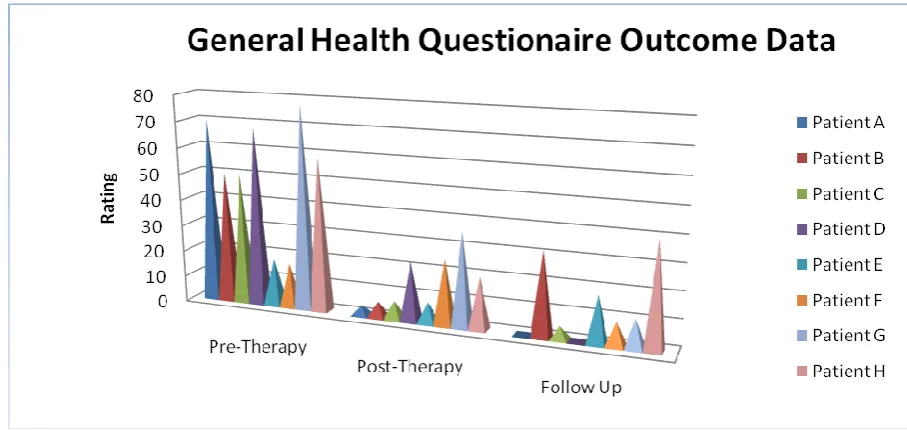
Table 2 GHQ outcome data
All clients noted a significant general health and mental health improvement at the end of therapy and five of the eight maintained this improvement at follow up. For example Client „b‟ was having a complex personal and wider relationship difficulties at follow up and her partner was facing the possibility of redundancy. These factors obviously affect a sensitive „mood assessment questionnaire‟ and as such a decline in general mental health and wellbeing at follow up was noted. However the goodbye letter received from the client (an excerpt of which is produced later) indicated a very positive experience of psychotherapy and positives for the future. Four clients experienced a virtual extinguishing of unpleasant general health problems, in both cases a reduction of 70 to 0.
The PSQ is one of the more complex questionnaires to alter effect of as it is about the person‟s core sense of themselves and so has a more imbedded self reflection than one of the „mood‟ scales which measure feelings and thoughts over the past week (generally). An overall positive change was noted in all eight clients with patient „d‟ and patient „a‟ having significant changes in the way they perceive themselves and the way others perceive them.
Clinical Outcome for Routine Evaluation (CORE) - (Barkham et al 2001) This questionnaire scores in four areas; Withdrawal, Physical, Feelings, Risk. (Clinical Outcomes in Routine Evaluation-outcome measure; Barkham, Margison, Leach, et al., 2001; Evans, Connell, Barkham et al., 2002). Core scores were generally high on first meeting the clients. Four of the clients had suicidal ideation and distressing thoughts half had been violent towards others recently. All eight clients had significant reduction in scores at closure with one client having an increase in scores at follow up.
[image:19.595.65.522.78.277.2]In relation to Risk to self the table below shows the scores on initial, closure and follow up.
Table 5 Core Risk (Suicide) Data
Client a Client b Client c client d client e client f client g client h Content I C F I C F I C F I C F I C F I C F I C F I C F
Better dead 4 0 0 0 0 2 1 0 0 3 1 0 0 0 0 0 0 0 3 0 0 2 1 1
Despairing 4 0 0 0 0 3 1 0 0 3 1 0 0 0 0 0 0 0 4 1 0 3 2 1
You will note that all eight clients show no or minimal risk to self factors on follow up except clinet „b‟ who scores sometimes (2) and often (3) an indication of how difficult things were for her at the time. However, there was resilience from the follow up session and the client recognised the „reactionary‟ nature of her feelings and felt more positive.
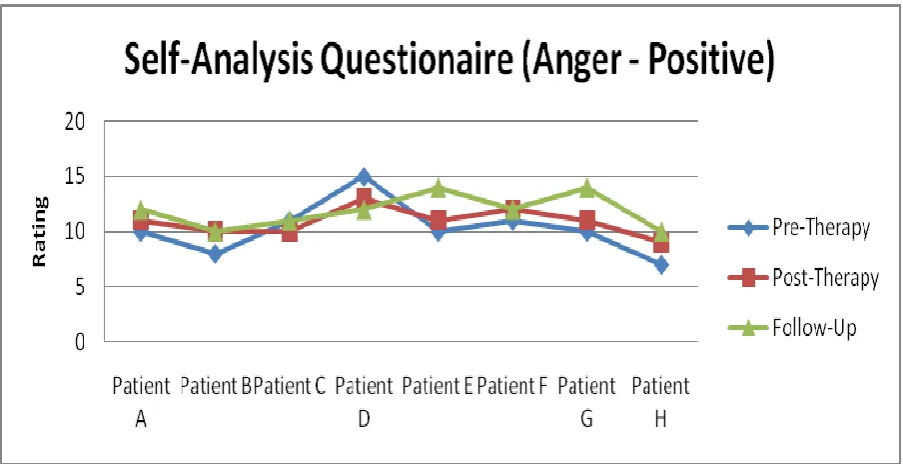
Self-Anlaysis Questionnaire (SAX) - (Bennett 2000, 2000a) A self reflective tool to provide an initial base line and to measure progress in therapy for anger. This is a relative, not a „scored‟ scale. However, useful data can be gleaned by examining alteration in each relative experience of anger.
[image:20.595.72.546.72.325.2]The overall totals here are split into positive anger expression and negative anger expression. The scoring is 1= almost never, 2=sometimes, 3=often, 4=always and the questions that are positives it refers to are q1, q2, q8 and q 20.
Table 6 SAX outcome data -ve
For all of the clients there was a noticeable reduction in anger expression. However, as noted earlier client b was having significant personal stresses in her relationship and other areas of her life at follow up so the scores raised slightly.
Table 7 SAX outcome data +ve
In line with recognition of anger being a positive and energising emotion a number of the statements indicate a positive expression of anger and speaking about how one is feeling to significant others if they were cross with them. An increase in positive expression of anger was noted for three clients and a slight decrease for one patient.
7.2 Qualitative - Case Examples
What is interesting to note are the repertoire of reciprocal roles the clients expressed within therapy. Reciprocal roles are the core psychological engines created by significant others as they were growing up and lead to behaviour that repeats the role to themselves or to others. Not all clients express roles outward and often harmful roles are directed inwards in the form of self harm, self criticism or risky behaviour. Five clients had experienced bullying and were either bullying others or themselves in turn. Six of the eight had a highly developed critical voice which either manifested itself in challenging the worth of their behaviour and feelings about themselves or was projected out to picking on others.
The importance of noticing these roles for clients is to help them find out when these are being stimulated, what procedure follows on from these roles and to practice changing the way they act and react to others when these roles are stimulated. The three „R‟s of CAT in effect, Reformulation of core psychological ways of working and acting, Recognition of problem procedures in contact with others and the self, and Revision of these through practice and reflection through he therapy relationship.
Reciprocal Roles in Evidence (most troubling)
A B C D E F G H
Bullying to bullied X X x x x
Criticising to picked on X X X X x x
Abandoning to abandoned X X x x
Neglecting to neglected/unloved X x
Over protective to cocooned X
Incapable to useless x
Charming to charmed x
Raped/abusing to wary x
The end emotional state in response to these reciprocal roles was predominantly „worthless‟, „upset‟ and „unsure of self‟ with the trigger to anger and rage generally coming from their attempts to change situations but finding no response with trying hard, being the good person, they rebelled and struck out at either the person who was triggering the role procedure or another. It seems as if all clients had a sense of having to manage their emotions on their own, bottle up feelings but this would only work for a short time and they would become increasingly needy. Their inner sense of self were thoughts like „What have I done…got to be careful about letting people get too close’, „If he can do this what can others do?‟, „not going to let this happen again‟ and „not good enough have to fight back‟. There is a lot sadness and
disempowerment embodied in these statements as well as those thoughts of resignation but wanting things to improve a sense of resistance. It is this resistance that seems to most often led to anger and aggression.
One factor worth noting about the clients experience is that two of them had had some access to psychological help in the past but that this help had not made any inroads into their management of their problems. The approach they had received was counselling. It seems that following only a brief 8 session intervention (12 in one case) each client has achieved significant health and psychological gain. One client in particular I had serious concerns for as he was 47 (client H), had long standing obsessional compulsive disorder but had received no treatment other than psychiatrist follow up for 8 years with no significant health improvement. This client improved by 50% as observed by his questionnaire scores, and was subsequently referred for further treatment to the local CMHT.
Changes are evidenced both on self report assessment scales but also in their own words in the form of their goodbye letters (reproduced here by express permission/consent)
Some case examples from this evaluation study.
Case study - Client ‘d’ had a significantly troubling upbringing with severe physical abuse as a child, issues of death in his family (his brother committed suicide six weeks prior to therapy, another brother died as an infant and his father has also died). He was working at the start of therapy but his work folded due to contraction in the construction industry. He had a forensic history for violence towards others and had received a custodial sentence in the past.
As you can see a significant improvement in scores on all measures at post and follow up. By the end of therapy he was drug free, had not harmed himself or anyone else for nearly three months and was looking forward to his future. His goodbye letter is a powerful example of how he felt…
Example good bye letter from client „d‟
When we first started our sessions I was feeling very trapped and alone. I was very depressed and down sometimes even suicidal. It was very easy for me to say it’s all because what’s happened to me in the past and yes it has had a massive impact into everything else I do now and how I feel but I really can’t blame all my actions on that.
My lifestyle has had a massive affect too. I was taking a load of drugs at the time and have been for a number of years. By doing this I have never been able to see things clearly and my emotions have been all over the place. I was basically going round in circles. I’d smoke cannabis in the week then take a shit load of more harder drugs at the weekend. Sometimes not even having any sleep. Then I’d start to feel very paranoid, alone and depressed but I was doing this to myself. I think that is the biggest thing for me. I can see now that I’ve been doing this to myself.
At one point in my life the littlest thing that went wrong would feel like the end of the world for me that just isn’t the case any more. Since stopping drugs and cutting down on the drink my life has had a massive turn around. Ok I might not be working at the moment but it ain’t the end of the world. I am in control of everything I do; I am in control of my life. Thanks for everything.
Case study - Client ‘a’ is a young man recently discharged from the forces. He had had numerous problems in the forces with feeling second best and with anger. At the beginning of therapy his aim was „I would just like to be able to sustain a stable life and deal with feelings and problems in a normal way‟. He had spent all his early life
useless, leaving him feeling worthless. He was also bullied significantly at school. He would come home seeking help for the bullying but be sent out to „sort it out himself‟. This led him to feel abandoned and to be very self reliant as if he had to cope alone.
He was very sensitive to being made to feel worthless and in his current relationship this was the main trigger or his anger, which he generally expressed by being overbearing and hitting out at inanimate objects. He engaged well in therapy, attending on time each week and being open and honest about how he was feeling in sessions. His scores again indicate a significant improvement on all measures with extinction of scores on CORE and GHQ.
This might be an over optimistic view of his health and wellbeing but he genuinely was feeling this positive. His goodbye letter corroborates his changes…
Example of goodbye letter from client „a‟
I came to therapy thinking I could not be helped from it. Fearing that I would never understand why I react in such a destructive way. To my surprise you have helped outline key events that act as a catalyst for this behaviour. I feel my main problem has been my inner feeling of worthlessness which I have lived with most of my life. I have never felt good enough to do or hold onto anything good in my life. The only way I have ever known how to deal with this feeling is to get angry and lash out at myself or others or just hide away and bottle it up. I have repeated this cycle my whole life and in turn become my own worst enemy. Even though this feeling is still present in me at the moment I feel this is down to my present situation with work and relationships. With that aside I now feel more confident I can work though difficult times and situations in the right way and really start my life over. I would like to thank you for all your help through this difficult time you have helped me greatly and it must not have been easy to listen to me moan on for so long.
Case study - Client ‘c’ had a different upbringing to the other three as she had a very positive if a bit overprotective and loving home life. At school however, she was bullied. The bullying was dealt with positively at home but still led her to be anxious and vigilant. As a young adult she was involved in an abusive relationship with a man who it appears had a particularly unpleasant narcissistic personality disorder. This person was a catalyst for reviving some of the vulnerabilities the client had from being a child and using them to hurt her to his advantage.
Extract from client letter „c‟
…the final session before Christmas was the most significant. I enjoyed listening to the letter you wrote to me, although it was difficult to listen to. I felt like the letter embodied all the hard work from the previous weeks. It was an accurate summary of my thoughts, fears, and patterns of behaviours and helped to clarify the complex diagram you drew of my brain. Receiving the letter has been the most important part of therapy for me.
I am extremely grateful to my doctor for not just fobbing me off with beta blockers, and for referring me for CAT and I can’t thank you enough Jim for helping me get to this point…I feel happy that therapy has come to a natural end and I feel confident that I can cope with life a little more than I could several months ago. I hope this feeling will continue and I hope I don’t find myself in the same situation I was in some months back – that I suppose is my only fear. I knew I would have to end on some kind of negative note!
Thank you for this experience it has been enjoyable, enlightening, liberating, upsetting, frustrating, embarrassing and exhausting – but well worth it! I think everyone should have the opportunity to access CAT.’
result of being significantly bullied. Bullying led him to be extremely self critical of his self and directed performance. Although his anger was not outwardly directed it was causing him significant psychological problems as well as relationship problems. At close of therapy he was much more positive and less anxious, his checking behaviour had reduced by 50% and he was considering voluntary work. Because of this and his long standing problems I referred hi onto occupational therapy in statutory services.
Client „h‟ goodbye letter
‘just a little letter to say a big thank you. This is the best I have felt about myself for numerous years. I know I will never feel confident wit myself or other people but to feel even a little self worth is a start. I realise I still need help and I thank you for referring me to Therapy Services. You are the only person I have had a frank and open discussion with in years about my problems and I thank you again. I do think these meetings have made me aware I do need help as I have stagnated and withdrawn more into myself in recent years’
The sense one gets from this letter is a client „unstuck‟ who is more positive and hoping for further change. In therapy we looked as whether how he was feeling is „as good as it gets‟ and found that this was not the case and he could improve. As you can see from his questionnaire scores his positive expressing of anger increased as al the other measures showed significant change at closure and some maintenance at follow up (PSQ, SAX) but the CORE and GHQ noted an increase but still well below the initial score.
Case study - Client ‘f’ was in a complicated relationship following the breakdown of his first marriage. An extract from his reformulation gives an indication here:
complications at home in relation to her thinking and behaviour but this is, as you know, no excuse for aggression.
A complicated beginning but no more so than the stories of the other clients. His scores show a positive response to intervention.
This man was a hard working family man and one who was desperately trying to manage a complicated childcare situation as well as a new relationship and doing both pretty well and then better once he understood where his anger generate from. In his goodbye letter he indicated this.
Client „f‟ goodbye letter - ‘First of all I wish to thank you for listening to me this past eight weeks. I feel the sessions have been beneficial to myself and to those around me especially those closest to me. Through our sessions I feel a lot more able to not only control my anger but to have a good understanding of why! I feel more confidence in myself and this leads me to feel secure and relaxed. If situations arise where before I would undoubtedly have felt rage I now feel tat I can take a step back, assess the situation and slow myself down (matrix style) and think to myself ‘is it worth it?’ If people speak to me I can now see that I have no reason to feel threatened, cornered nor angry. On the deepest personal level I’m sure that our chats have kept me in a relationship and helped it grow and hopefully it will continue to do so. Many Thanks.
A humbling experience to see such a strong man, who previously would not have opened up to anyone begin to really comprehend what motivates him towards aggression and the effects this has had on others.
Case study - Client ‘e’ was one of my significant concerns during this evaluation. He was raped when he was 17 and also bullied whilst at school because of his sexuality but to compound this he had a life long phobias of balloons which had become „paired‟ with his feelings from the rape/abuse leading to multiple occasions where he could become extremely anxious and also angry with himself. He had attempted suicide a number of times and had limited psychological support for these risky behaviours. We worked with a number of „problems' in therapy that related to the abuse and criticism he experienced growing, a couple of examples are:
involved and stay in charge but remain lonely and then I can pick on myself.
Feeling vulnerable my feelings build up and I am flippant and charming, seeking attention this way but can put others down to make myself feel better and then pick on myself and am left feeling vulnerable.
What was most remarkable was the extent that client „f‟ had actually „dealt with „ his assault but that the balloon phobia was blighting his life, as if he had a dark cloud over him all the time and expected to be always miserable in his life, he wondered if he had a variance of bipolar disorder. We had discussed this as a possible self diagnosis at one point because of the details of his cyclical mood swings he described to me.
In his goodbye letter he indicated this: Client „e‟ goodbye letter.
As I look back and reflect on where I was when we started the therapy, it seems like i am actually an outsider looking in on someone else’s life and issues. This proves in all aspects just how far we have come in our sessions and please note the use of the word we not juts I as the achievement would not have been nowhere this great without your hep, support and guidance. For this you must take your part of the credit and I am eternally grateful. To go into a little more detail, assessing and talking about the rape situation at the beginning of the therapy has helped me to realise and rationalise on my own mind that I have in fact come to terms with it and that it was only contributing a very small part to the depressive troughs I had been experiencing.
Through opening up and talking to you I realised very early on that the biggest and possibly sole contributory factor to my bouts of severe depression was my huge phobia of balloons. Having such a fantastic best friend as ‘x’ coupled with our weekly sessions and equally your help on the practical side, I have been able to go from not being able to stay in a room wit balloons to being able to blow them up, play with them and burst them as well as being in a room with others doing the same… something which at the beginning I genuinely believed was a point that was always just a distant dream and something that I could never reach or achieve.
constantly hanging over me seems to have disappear completely.
Before starting our therapy sessions, I will openly admit that I was apprehensive and also somewhat sceptical, but given the results that we have achieved and the very relaxed and open relationship that we have built together, I would wholeheartedly recommend such therapy to anyone who was thinking about it or who I think might benefit from it.
It seems clear from this letter and the questionnaires that a brief therapy can not only help a client to understand a problem but actually with practised and graded exposure lead to extinguishing a phobia which for his client was deep rooted. Thus the end result is a client who is no longer angry with themselves and one that is functioning at a much higher level in psychological terms and having wider options the world. Unfortunately follow up coincided with the ending of his marriage so there were significant emotional turbulences going on for the client, again to be expected but also indicating a decrease in general mental health and wellbeing. However, it is worth noting that the clients PSQ maintained its improvement as was there an increase in the positive expression of anger.
8 Discussion
It seems clear from this evidence that CAT has had a beneficial result for the clients who attended the anger management service at Winn Gardens. Each of the eight clients described here have had significant positive clinical outcomes at closure of therapy with some variance at follow up. Each has a story that is remarkable yet unremarkable as there are thousands of clients who have similar upbringings who are in need across the country.
CAT offers a cogent theoretical approach to managing a persons psychological wellbeing, not only focussing on anger as part of the problem but looking more deeply at the ‟whole‟ person. CAT seems to be able to get to the root cause of the problem, maintaining a focus on the anger whilst developing an understanding of how the person is with themselves and others. All the angry clients I have seen wanted not to be aggressive, which is an important factor. All had come forward, rather than being sent, hoping for support. It seems from the data and from their goodbye letters that this was forthcoming.
On reflection, in each case it was clear soon onto therapy that they had significant early life experiences that had led to the development of harmful reciprocal role procedures where aggression and hurt were common place. CAT has enabled me to assist clients in addressing their interconnected life events and early learning. As Ryle and Kerr (2002) note CAT is good at „doing with‟ rather than „to‟ (CBT) or „being with‟ (Psychoanalysis) they further note: