Analysis and Review of Rapid Prototyping Technology, &
Study of Material used in Process of 3D Printing
Ankit Chourasia
1, Dr Pravin Kumar
21
Student, M Tech - Product Design & Engineering
2
Assistant
ProfessorDepartment of Mechanical Engineering, University Institute of Technology
Bhopal, Madhya Pradesh, India
---***---Abstract -
Print in India’ campaign in Indian is a current affair in the maker community. The actual 3D printing starts with an idea and thinking of the user, secondly, he has to think of material for his use of the printed 3D item. There is a limitation and also a vast variety of material available for 3D printing for the selection to match the requirement of user need one has to think and make a decision to select. These need for guidance that might be appropriate at an early stage of the design process, when the design is not yet defined, and creative approaches could be adopted to generate innovative solutions that more cost-effectively exploit AM capabilities This is a paper on study of 3D printing material and review paper on rapid prototyping technology, its different process and material used for production. Rapid prototype, additive manufacturing and other such technology and process all come under the umbrella of 3D printing. The power of 3D printing ideation and design of new product across all industries is really where the revolution is taking place and will continue to thrive. 3D printing creates a physical object based on digital model. Commonly it creates by adding, fusing or melting a raw material successively on layer by layer. Apart from 3D printer itself no specified tool are required to create any shape or form imaginable, fashionable, usable or designableKey Words: 3DP, 3D printing, Print in India, Additive manufacturing, Rapid Prototyping, Material, PLA, ABS
1.INTRODUCTION
Rapid prototyping or additive manufacturing is a different word with same meaning 3D Printing, also there are other processes comes under the umbrella of this technically sounds alphanumeric word. Initially, it is kept as a secret tool of the companies in their own research labs but situation now changed totally from research and development laboratory to near the personal computer of individuals who anyhow connected to design or maker community. With its trending and unique quality it is now interesting subject topic for academician and scholars to research, explore and extend the limitation of this non-conventional technology of prototyping turning manufacturing tool.
This study was conducted to make the nascent 3D printing technology to a new way of thinking and sets some helpful tool to extend it further. It is not at all surprising to the fact that low-cost 3D printing technology has emerged from the maker world, not from some state of the art or some high-end expert giant techie laboratory. This overview and online survey focus on the different attributes like mechanical properties, visual quality and their process to make decision making faster while choosing the material for the 3D printing process.
2.GENERAL PRINCIPLE
A. CAD
Producing a digital model is the first step in the AM process. The most common method for producing a digital model is computer-aided design (CAD). There is a large range of open, free and professional additive manufacture. Reverse engineering can also be used to generate a digital model via 3D scanning.
B. STL conversion and file manipulation
A critical stage in the AM process that varies from traditional manufacturing methodology is the requirement to convert a CAD model into an STL (stereolithography) file. STL uses triangles (polygons) to describe the surfaces of an object. Once an STL file has been generated the file is imported into a slicer program. This program takes the STL file and converts it into G-code. It is used in computer-aided manufacturing (CAM) to control automated machine tools (including CNC machines and 3D printers). The slicer program also allows the designer to customize the build parameters includin
C. Printing
D. Removal of prints
For some additive manufacturing technologies removal of the print is as simple as separating the printed part from the build platform. For other more industrial 3D printing methods the removal of a print is a highly technical process involving precise extraction of the print while it is still encased in the build material or attached to the build plate. These methods require complicated removal procedures and highly skilled machine operators along with safety equipment and controlled environments.
E. Post-processing
Post-processing procedures again vary by printer technology. SLA requires a component to cure under UV before handling, metal parts often need to be stress relieved in an oven while FDM parts can be handled right away. For technologies that utilize support, this is also removed at the processing stage. Most 3D printing materials are able to be sanded and other post-processing techniques including tumbling, high-pressure air cleaning, polishing, and colouring are implemented to prepare a print for end-use.
Fig:-1: CAD design to 3D part Fig:-2: Support still attached Fig-3: Removing support Fig 4:3D printed
cardholder
3. 3D
P
RINTINGP
ROCESSESSelecting the most suitable AM process for a particular application can be difficult. The very large range of availab accuracy, surface finish and post-processing requirements.
3.1 Vat Photopolymerization
Photopolymerization occurs when a photopolymer resin is exposed to the light of a specific wavelength and undergoes a chemical reaction to become solid. A number of additive technologies utilize this phenomenon to build up a solid part one layer at a time.
3.1.1 Stereolithography (SLA)
uses a build platform submerged into a translucent tank filled with liquid photopolymer resin. Once the build platform is submerged, a single point laser located inside the machine maps a cross-sectional area (layer) of design through the bottom of the tank solidifying the material. After the layer has been mapped and solidified by the laser, the platform lifts up and lets a new layer of resin flow beneath the part. This process is repeated layer by layer to produce a solid part. Parts are typically then post-cured by UV light to improve their mechanical properties. Fig: 5 SLA SYMBOL
3.1.2 Direct Light Processing (DLP)
DLP follows a near-identical method of producing parts when compared to SLA. The main difference is that DLP uses a digital light projector screen to flash a single image of each layer all at once. Because the projector is a digital screen, the image of each layer is composed of square pixels, resulting in a layer formed from small rectangular bricks called voxels. DLP can achieve faster print times compared to SLA for some parts, as each entire layer is exposed all at once, rather than tracing the cross-sectional area with a laser. Fig: 6 DLP SYMBOL
3.1.3 Continuous DLP (CDLP)
Continuous Direct Light Processing (CDLP) (also known as Continuous Liquid Interface Production or CLIP) produces parts in exactly the same way as DLP. However, it relies on the continuous motion of the build plate in the Z direction (upwards). This allows for faster build times as the printer is not required to stop and separate the part from the build plate after each layer is produced. Fig: 7 CDLP SYMBOL
3.2 Powder Bed Fusion
3.2.1 Selective Laser Sintering (SLS)
time. The process begins by spreading an initial layer of powder over the build platform. The cross-section of the part is scanned and sintered by the laser, solidifying it. The build platform then drops down one layer thickness and a new layer of powder is applied. The process repeats until a solid part a. The result of this process is a component completely encased in unsintered powder. The part is removed from the powder, cleaned and then it is ready for use or further post-processing. Fig: 8 SLS SYMBOL
3.2.2 SLM & DMLS
Both SLM and Direct Metal Laser Sintering (DMLS) produce parts via a similar method to SLS. The main difference is that SLM and DMLS are used in the production of metal parts. SLM achieves a full melt of the powder, while DMLS heats the powder to near melting temperatures until they chemically fuse together. DMLS only works with alloys (nickel alloys, Ti64 etc.) while SLM can use single component metals, such as aluminium. Unlike SLS, SLM and DMLS require support structures to compensate for the high residual stresses generated during the build process. DMLS is the most well-established metal AM process with the largest installed base. Fig: 9 SLM SYMBOL
3.2.3 Multi Jet Fusion (MJF)
MJF is essentially a combination of th
nozzles (similar to the nozzles used in desktop 2D printers) passes over the print area, depositing fusing agent on a thin layer of plastic powder. At the same time, a detailing agent that inhibits sintering is printed near the edge of the part. A high-power IR energy source then passes over the build bed and sinters the areas where the fusing agent was dispensed, while leaving the rest of the powder untouched. The process repeats until all parts are complete. Fig: 10 MJF SYMBOL
3.3 Fused Deposition Modeling (FDM)
printing technology. FDM builds parts using strings of solid thermoplastic material, which comes a filament form. The filament is pushed through a heated nozzle where it is melted. The printer continuously moves the nozzle around, laying down melted material at precise locations following a pre-determined path. When the material cools it solidifies, building the part layer-by-layer. Fig 11 FDM SYMBOL
3.4 Material Jetting
Material jetting is often compared to the 2D ink-jetting process. Photopolymers, metals or wax that cure or harden when exposed to UV light or elevated temperatures can be used to build parts one layer at a time. The nature of the material jetting process allows for multi-material printing. This
ability is often used to pri Fig 12 MJ
SYMBOL
3.4.1 NanoParticle Jetting
Nanoparticle jetting (NPJ) uses a liquid, which contains metal nanoparticles
or support nanoparticles, loaded into the printer as a cartridge and jetted onto the build tray in extremely thin layers of droplets. High temperatures inside the building envelope cause the liquid to evaporate leaving behind metal parts. Fig 13 NJ SYMBOL
3.4.2 Drop-On-Demand (DOD)
3.5 Binder Jetting
Binder Jetting deposits a binding adhesive agent onto thin layers of powder material. The powder materials are either ceramic-based (for example glass or gypsum) or metal (for example stainless steel). The print head moves over the build platform depositing binder droplets, printing each layer in a similar way 2D printers print ink on paper. When a layer is complete, the powder bed moves downwards and a new layer of powder is spread onto the build area. The process repeats until all parts are complete. After printing, the parts are in a green state and require additional post-processing before they are ready to use. Often an infiltrant is added to improve the mechanical properties of the parts. The infiltrant is usually a cyanoacrylate adhesive (in case of ceramics) or bronze (in the case of metals). Fig 15 BJ SYMBOL
3.6 Direct Energy Deposition
Direct Energy Deposition (DED) creates parts by melting powder material as it is deposited. It is predominantly used with metal powders or wire and is often referred to as metal deposition.
3.6.1 Laser Engineered Net Shape (LENS)
LENS utilizes a deposition head, which consists of a laser head, powder dispensing nozzles, and inert gas tubing, to melt powder as it is ejected from the powder dispensing nozzles to build a solid part layer-by-layer. The laser creates a melt pool on the build area and powder is sprayed into the pool, where it is melted and then solidified. The substrate is typically a flat metal plate. Fig 16 LENS SYMBOL
3.6.2 Electron Beam Additive Manufacture (EBAM)
EBAM is used to create metal parts using metal powder or wire, welded together using an electron beam as the heat source. Producing parts in a similar fashion to LENS, electron beams are more efficient than lasers and operate under a vacuum with the technology originally being designed for use in space. Fig 17 EBAM SYMBOL
4.
MATERIAL USED IN3D
P
RINTING3D printing technology is capable to produce fully functional parts in a wide range of materials including ceramic, metallic, polymers and their combinations in form of hybrid, composites or functionally graded materials.Like any manufacturing process, 3D printing needs high-quality materials that meet consistent specifications to build a consistently high-quality product.
4.1 Metals
Metal 3D printing technology gain many attentions in aerospace, automobile, medical application and manufacturing industry because the advantages existing by this process. The materials of metal have excellent physical properties and this material can be used to a complex manufacturer from printing human organs to aerospace parts. The examples of these materials are aluminium alloys, cobalt-based alloys used in a dental application, nickel-based alloys, stainless steels, and titanium alloys. Titanium alloy has very exclusive properties, such as ductility, good corrosion, oxidation resistance and low density. It is used in high stresses and high operating temperatures and high stresses, for example in aerospace components.
4.2 Polymers
3D printing technologies are widely used for the production of polymer components from prototypes to functional structures with difficult geometries. By using fused deposition modelling (FDM), it can form a 3D printed through the deposition of successive layers of extruded thermoplastic filament, such as polylactic acid (PLA), ABS, Thermoplastic polyurethane (TPU), Nylon, Polycarbonates (PC) polypropylene (PP) or polyethene terephthalate (PET). 3D printing polymer materials in a liquid state or with a low melting point are widely used in 3D printing industry due to their low cost, low weight and processing flexibility.
4.3 Ceramics
for instance, has the potential to be processed by 3DP technology. Alumina is an excellent ceramic oxide with a very wide range of applications, including catalyst, adsorbents, microelectronics, chemicals, aerospace industry and another high-technology. 4.4 Composites
Composite materials with exceptional versatility, low weight, and tailorable properties have been revolutionizing high-performance industries. The examples of composite materials are carbon fibres reinforced polymer composites and glass fibres reinforced polymer composite. Carbon fibre reinforced polymers composite structures are widely used in the aerospace industry because of their high specific stiffness, strength, good corrosion resistance and good fatigue performance. At the same time, glass fibres reinforced polymer composites are widely used for various applications in 3D printing application and have great potential applications due to the cost-effectiveness and high-performance. Fibreglass has high thermal conductivity and a relatively low coefficient of thermal expansion.
4.5 Smart materials
Smart materials are defined as this material have the potential to alter the geometry and shape of an object, influence by an external condition such as heat and water. The example of a 3D printed object produces by using smart materials are self-evolving structure and soft robotics system. Smart materials also can be classified as 4D printing materials. The examples of group smart materials are shape memory alloys and shape memory polymers. Some shape-memory alloys like nickel-titanium can be used in biomedical implants to micro-electromechanical devices application. In the production of 3D printed products by using nickel-titanium, transformation temperatures, reproducibility of microstructure and density is an important issue. Meanwhile, Shape memory polymer (SMP) is a kind of functional material that responds to a stimulus like light, electric heat, and some types of chemical and so on.
4.6
The examples of
special materials
are
:• Food 3D printing technology can process and produce the desired shape and geometry by using food materials like chocolate, meat, candy, pizza, spaghetti, sauce and so on. 3D-food printing can produce healthy food because this process allows customers to adjust the ingredients of materials without reducing the nutrients and taste of the ingredients. • Lumar dust 3D printing process has the capability to directly produce multi-layered parts out of lunar dust, which has
potential applicability to future moon colonization.
• Textile With 3D printing technology, jewellery and clothing industry will shine with the development of 3D-textile printing. Some advantage of 3D printing technology in the fashion industry is a short processing time to make the product, reduced costs related to the packaging and reduce supply chain cost.
5.
ADVANTAGE,
DISADVANTAGE AND APPLICATIONAdvantages Disadvantages Application
Time to market Intellectual property issue Aeronautics and aerospace industries
Save Money Limitation of Size New product development
Mitigate Risk Limitation of raw material Jewellery Sector
Feedback Cost of Printers Architectural Model
Get the feel Fewer Manufacturing Jobs Automotive Industries
Personalizing Unchecked Production of danger items Robotics
Build your Imagination Limited accuracy Healthcare
Fail Fast, Fail Cheap Lower tolerance Education
6.
R
ESEARCHM
ETHODOLOGYChoosing the right type of material to print a given object is becoming increasingly difficult, as th regular emergence of radically new materials. I but their initial dominance was mostly fortuitous, so there should not be any major roadblocks for other polymers to play a key role in the future of 3D printing. We are now seeing new products become more popular, both pure polymers and composites. In this study, we focus on the main pure polymers that exist in the market today: PLA, ABS, PET, Nylon, TPU (Flexible) and PC
Materials are usually graded along 3 categories: mechanical performance, visual quality, and process. In this case, we further break down these categories to paint a clearer picture of the polymer’s properties. The choice of material really depends on what the user wants to print, so we listed the key decision criteria needed to choose a material (other than cost and speed):
i. Ease of printing: How easy it is to print a material: bed adhesion, max printing speed, frequency of failed prints, flow accuracy, ease to feed into the printer etc.
ii. Visual quality: How good the finished object looks. More info on how we test it.
iii. Max stress: Maximum stress the object can undergo before breaking when slowly pulling on it. iv. Elongation at break: Maximum length the object has been stretched before breaking.
v. Impact resistance: Energy needed to break an object with a sudden impact. vi. Layer adhesion (isotropy): How good the adhesion between layers of material.
vii. Heat resistance: Max temperature the object can sustain before softening and deforming.
We sum up the key differences between their properties in web graph profiles so that users can make a quick decision about the best polymer to use for their application in the 3D printing process.
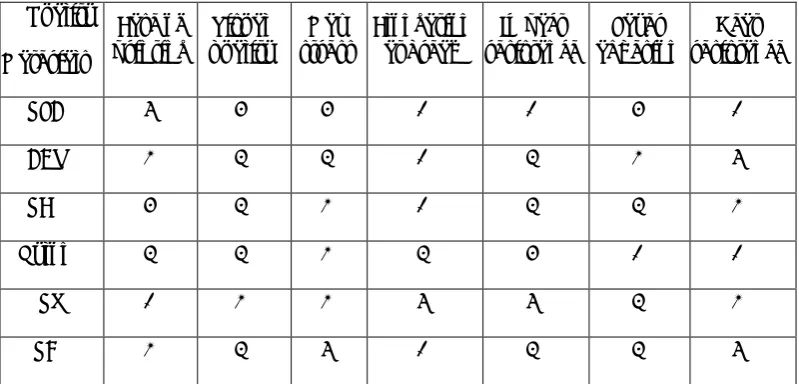
This study was conducted online with 67 Industrial Engineers and Designer who are the direct user of the 3D printing machine and has experience over choosing the right material for their required 3D print as per need of the application of material printed. We Provide them with the table below to rate them for each material criteria on a 1 (low) to 5 (high) scale with the respective quality categories
7. RESULTS
[image:6.595.105.505.530.722.2]Each material has been ranked along with the following criteria on a 1 (low) to 5 (high) scale. These are relative grades for the FDM process - they would look quite different if other manufacturing technologies were taken into account.
Table -1: Average result score from 67 samples of the survey
Quality
Materials
Ease of printing
Visual quality
Max stress
Elongation at break
Impact resistance
Layer adhesion
Heat resistance
PLA 5 4 4 1 1 4 1
ABS 2 3 3 1 3 2 5
PET 4 3 2 1 3 3 2
Nylon 3 3 2 3 4 1 1
TPU 1 2 2 5 5 3 2
Graph 1 Result score from 67 samples of the survey plotted on Spider web Graph
8
CONCLUSION
Choosing the right polymer is critical to get the right properties for a 3D printed part, especially if the part has a functional use. This study will help users find the right material depending on the properties they need. However, material suppliers also often provide blends or add additives to modify the properties of the pure polymer (e.g. adding carbon fibre to make the material stiffer)
.
REFERENCES
[1] Vinod G Gokhare et al “A review paper on 3D printing aspects and various process used in the 3D printing” International journal of engineering research & technology(IJERT) Vol. 6 issue 06 2017. [2] N. Shahrubudin et al “An overview on 3D Printing Technology: Technological, /Material, and Applications” Elsevier, Procedia Manufacturing 35, 2019. [3] John F. Sargent Jr. et al” 3D printing; overview, impacts and the federal role “Congressional Research Service” August 2019[4] Qian Yan et at “a review of 3d Printing Technology for medical application” Elsevier Engineering Vol 4 2018[5] Thierry Rayna et al “From rapid prototyping to home fabrication: how 3D printing is changing business model innovation” Elsevier, Technological forecasting & social change” 102 2016.[6]Ben Redwood et al "The 3D Printing Handbook" 2017 [7] Dr N Venkateshwaram “Opportunities and challenges of 3D printing technology – An Indian Perspective” International Journal of current research vol 7 issue 5 2015[8] Alexandru Pirjan et al “The impact of 3d printing technology on the society and economy” [9]Aman Sharma et al “Utility and challenges of 3d printing” IOSR journal of mechanical and civil engineering. 2278-1684[10] Thabiso Peter M et al “the impact and application of 3d printing technology” International journal of science and research vol 3 issue 6 June 2014[11]Shiwpursad Jasveer” comparison of different types of 3d printing technologies” international journal of scientific and research publication vol 8 issue 4 April 2018.
BIOGRAPHIES
1
2Dr Pravin Kumar, Assistant Professor, Department of Mechanical Engineering, University Institute
of Technology, Barkatullah University, Bhopal, India