Exploring the Universal Design Principles of a
Flipped Classroom Model for Inquiry-Based
Learning in Cyprus Primary Education Context:
A Multiple Case Study
Loizou, Maria
This dissertation is submitted for the degree of
Doctor of Philosophy
October 2019
ii
Declaration
This thesis has not been submitted in support of an application for another degree at this or any other university. It is the result of my own work and includes nothing that is the outcome of work done in collaboration except where specifically indicated. Many of the ideas in this thesis were the product of discussion with my supervisor Dr Lee Kyungmee.
Loizou, Maria
BA Primary School Teaching, University of Cyprus
MA ICT and Education, University of Leeds
Abstract
Background
In this thesis, a multi-case study will be presented to address an important gap in current literature concerning universal design principles (UDPs) for an effective implementation of a Flipped Classroom (FC) model for Inquiry-Based Learning (IBL), called the IB-FC model. Currently, there has been limited research focusing on the implementation of any FC model within the primary education context despite its potential benefits, such as developing higher order cognitive skills.
Method used
The study is a collaborative research project, during which the research, in collaboration with five primary school teacher participants, explored the effective ways of universal implementation of the initial IB-FC model developed, in five different primary schools in Cyprus. The model was implemented for a school year (2017-18), involving 5 teachers, 77 students and 48 of their parents. Qualitative data has been selected mainly through classroom observations and interviews.
Key results
community, differentiation and personalization, development and progression,
motivation and engagement and assessment and evaluation.
Conclusion
Table of Contents
Abstract ... iii
Acknowledgements ... ix
Publications derived from work on the Doctoral Programme ... xi
List of abbreviations ... xii
List of Tables ... xviii
Chapter 1: Introduction and Background ... 1
1.1 Introduction ... 1
1.2 Research Problem ... 3
1.3 Research Background ... 6
1.4 Research Contribution ... 10
1.4.1 Defining universal design principles (UDPs). ... 11
1.4.2 Research questions (RQs). ... 12
1.5 Overview of the Thesis ... 15
Chapter 2: Literature Review ... 18
2.1 Introduction ... 18
2.2 Flipped Classroom (FC) ... 19
2.2.1 Defining flipped classroom. ... 22
2.2.2 Benefits and challenges of FC. ... 26
2.3 Key Literature- Flipped Classroom in Primary, Secondary and Higher Education ... 38
2.3.1 Kinds of methodology. ... 38
2.3.2 Level of education. ... 42
2.4 Inquiry-Based Learning (IBL) ... 47
2.4.1 Defining inquiry-based learning. ... 49
2.4.3 Overcoming FC and IBL limitations- The integration. ... 52
2.5 Theoretical Framework ... 53
Chapter 3: Research Design ... 61
3.1 Pilot-design and results ... 61
3.1.1 The design of the pilot study. ... 61
3.1.2 Results of the pilot study. ... 66
3.1.3 Discussion/conclusion of the pilot study. ... 70
3.1.4 Implications of the pilot study. ... 71
3.2 Research Overview ... 71
3.3 Moodle Design ... 74
3.4 Research Methodology ... 78
3.4.1 Participants. ... 78
3.4.2 Data collection. ... 82
3.5 Ethical Concerns and Trustworthiness ... 98
Chapter 4: Research Implementation ... 101
4.1 Case Studies ... 101
4.2 Teachers’ Professional Development (TPD) ... 109
4.2.1 Research presentation. ... 109
4.2.2 IB-FC tools. ... 109
4.2.3 Moodle Teacher’s Page. ... 112
4.3 Parents’ Seminar ... 118
4.3.1 Research presentation. ... 118
4.3.2 Moodle Parents’ Page. ... 118
4.4 Research Implementation/ Educational Design ... 119
4.4.1 The design process. ... 119
CHAPTER 5: Presentation of Results ... 125
5.1 Teacher, Student, Parent Experience ... 126
5.1.1 Pre-class experiences. ... 126
5.1.2 In-class experiences- IBL activities. ... 152
5.1.3 After-class (IB-FCs evaluation). ... 165
5.2 Teachers, Student and Parent Perceptions ... 172
5.2.1 Benefits ... 172
5.2.2 Challenges and limitations. ... 186
Chapter 6: Universal Design Principles ... 199
6.1 Introduction ... 199
6.1.2 Deriving the principles. ... 200
6.2 UDP1: Structure and Flexibility ... 201
6.2.1 Structure. ... 201
6.2.2 Flexibility. ... 207
6.3 UDP2: Simplicity and Accessibility ... 211
6.4 UDP3: Interconnectivity and Community ... 216
6.4.1 Interconnectivity. ... 216
6.4.2 Community. ... 222
6.5 UDP4: Differentiation and Personalization ... 228
6.6 UDP5: Development and Progression ... 233
6.7 UDP6: Motivation and Engagement ... 239
6.8 UDP7: Assessment and Evaluation ... 245
6.9. The pedagogical importance of the UDPs and their relation to the IB-FC approach……….……….250
Chapter 7: Conclusion and Implications ... 254
7.2 Research Implications ... 258
7.3 Limitations and Future Research ... 264
REFERENCES ... 268
Appendix One: Literature Review, Table of Analysis ... 287
Appendix Two: Initial IB-FC Tools (Visuals and Tool Guides)- Screenshots ... 291
Appendix Three: Examples of lesson plan analysis-Screenshots ... 320
Appendix Five: Student Focus Groups Protocol ... 329
Appendix Six: Parents’ and Guardians’ Survey ... 331
Appendix Seven: Classroom Observation Protocol ... 334
Appendix Eight: Learning Designs, Moodle Screenshots ... 337
Appendix Nine: Ethical Approval, MOEC ... 359
Appendix Ten: Consent Form- Teachers ... 361
Appendix Eleven: Consent Form- Parents ... 362
Appendix Twelve: Consent Form-Students ... 363
Appendix Thirteen: Research Presentation to Parents ... 364
Acknowledgements
First and foremost, I would like to thank my parents for giving me the strength and support to complete this work.
Sincere gratitude and appreciation is extended to my supervisor, Professor Lee Kyungmee, for her invaluable guidance, and encouragement. I am very much grateful for her support throughout the PhD journey, which helped me to build my skills and competence as a researcher.
Many thanks go to Professor Murat Oztok, and Professor Nikleia Eteokleous for their valuable input in my upgrade Viva. I would also like to express my deepest gratitude to all the educators who have agreed to be part of this research, by implementing a completely new teaching model, and whom have spent a whole school year in the design and delivery of the IB-FC learning instructions.
Sincere thanks go to all the participant students and parents who took part in this research project. Without their participation, completing this study would not be possible.
My colleagues and friends at Lympia Primary School and the European University Cyprus, thank you very much for being a lovely, supportive, and caring family. My lovely family: thank you very much for your patience and endless love.
(CCERE) for granting ethical approval for this research, and hence access to schools and private archives of students.
Publications derived from work on the Doctoral Programme
Loizou-Raouna, M. & Lee, K. (2018). A Flipped Classroom Model for Inquiry-Based Learning in Cyprus Primary Education Context- A Multiple Case Study. 12th International Technology, Education and Development Conference,
3189-3196. doi:10.21125/inted.2018.0610.
Loizou-Raouna, M., & Lee, K. (2018). A Flipped Classroom Model for Inquiry-Based Learning in Cyprus Primary Education Context. In M. Bajić, N.B. Dohn, M. de Laat, P. Jandrić, T. Ryberg (Eds.), Proceedings of the 11th International Conference on Networked Learning 2018, 210-217.
Loizou-Raouna, M. & Lee, K. (2018). ‘So I rewinded my teacher many times’: Flipped Classroom in Primary Education. 11th annual International Conference
of Education, Research and Innovation, 4984-4993. doi:
10.21125/iceri.2018.0213.
List of abbreviations
UDP Universal Design Principle FC Flipped Classroom
IBL Inquiry-Based Learning
IB-FC Inquiry-based Flipped Classroom
MOEC Ministry of Education and Culture in Cyprus
CCERE Cyprus Centre of Educational Research and Evaluation CPI Cyprus Pedagogical Institute
TEL Technology-Enhanced Learning
CS Case Study
BYOD Bring Your Own Device
TPD Teacher Professional Development
ICT Information and Communication Technologies NL Networked Learning
RQ Research Question
K-12 Kindergarten to grade twelve classrooms SSCI Social Science Citation Index
ICO Interuniversity Centre for Educational Research FLN Flipped Learning Network
LMS Learning Management System VLE Virtual Learning Environment
ILAM Integrated Learning Accelerator Modules F2F Face-to-Face
OLRS Online Learning Readiness Scale HTS Historical Thinking Skills
STEM Science, Technology, Engineering, and Mathematics
SOP² “S”: Self-study; “O”: online group discussion; “P2”: Double-stage Presentations
PS Pilot Student
CSCL Computer Supported Collaborative Learning
Table of Figures
Figure 2.1. Bloom’s revised taxonomy in flipped classroom, Zainuddin & Halili,
2016, p. 316 ... 28
Figure 2.2. Comparison between traditional classroom and flipped classroom in achieving higher order thinking of Bloom’s Taxonomy, Zainuddin and Halili, 2016, p. 316 ... 28
Figure 2.3. Perceived usefulness of ‘Flipped Learning’, Yoshida, 2016, p. 432 ... 42
Figure 2.4. FC vs IBL activities ... 54
Figure 2.5. Interaction in the individual and group learning space in Flipped Learning, Winter, 2018, p.178 ... 57
Figure 2.6. Visualisation of the initial IB-FC framework ... 58
Figure 3.1. Example of an entrance ticket: screenshot of a mind-map on MindMaple ... 63
Figure 3.2. Pre-class forum for students’ questions/suggestions: screenshot from Mahara ... 66
Figure 3.3. Research overflow ... 74
Figure 3.4. Moodle homepage (Screenshot) ... 75
Figure 3.5. Moodle page for each case study (Moodle home page screenshot) ... 76
Figure 3.6. Moodle pages for each subject (CS5) ... 77
Figure 3.7. Choice of Moodle activities or resource upload- Screenshots ... 78
Figure 3.8. Teacher Reflection Page (CS3)-Moodle screenshot ... 88
Figure 3.9. Data collection and analysis flowchart ... 90
Figure 3.10. A visual of entrance ticket theme in NVivo (CS1 Feeds: Observation notes) ... 92
Figure 3.11. Students' dislike theme in NVivo (Student focus groups CS1-CS5) ... 93
Figure 3.13. Themes arising from all steps of data analysis- Teacher, student
and parent experiences (RQ1) ... 96
Figure 3.14. Themes arising from all the steps of data analysis- Teacher, student and parent perceptions (RQ2) ... 97
Figure 4.1. IB-FC pre-class tool on Moodle (Greek and English)- Screenshot ... 111
Figure 4.2. Moodle pages on Teachers’ Page ... 113
Figure 4.3. Teachers’ Page: What Is flipped classroom? ... 114
Figure 4.4. Teachers’ Page: Information sheets and consent forms ... 114
Figure 4.5. Websites and supports given to teachers (Moodle Teacher’s Page) ... 115
Figure 4.6. Pilot design on Moodle- Screenshot ... 116
Figure 4.7. Moodle Parents’ Page ... 119
Figure 4.8. Steps for the design of IB-FC instructions ... 121
Figure 5.1. Types of flips used in each case study ... 128
Figure 5.2. Moodle embedded ready-made videos-Screenshots….…..…..129
Figure 5.3. Voice-over of ready-made video (CS5)- Screenshot…………...130
Figure 5.4. Google-Drive screenshots with uploaded teacher flips………...132
Figure 5.5. Moodle embedded teacher flips (CS2, CS5)- Screenshots..…..132
Figure 5.6. Types of entrance tickets used in all case studies……..…….….137
Figure 5.7. Moodle forums used for answering questions (Entrance ticket)………....138
Figure 5.8. Moodle forum used for peer assessment (Separate threads)- Screenshot………...139
Figure 5.9. Moodle assignment upload for grading and comments (CS3)- Screenshot………...150
Figure 5.10. Example of assessment rubric (CS4)- Google Drive Screenshot………...151
Figure 5.11. Types of IBL activities used in the Greek Language lesson (CS1-CS5) ... 159
Figure 5.13. Types of IBL activities used in the Social Studies lessons and
Science (CS1-CS5) ... 159
Figure 5.14. E-Portfolio development following a Virtual Reality IB-FC lesson (Mahara Platform)- Mary’s classroom-Screenshot ... 161
Figure 5.15. Example of Google Slides use on Google Drive- Screenshot .. 162
Figure 5.16. E-Portfolio development on Mahara- CS5- Screenshot……….168
Figure 5.17. Assessment methods in all subjects (CS1-CS5)………..……..169
Figure 5.18. Moodle quiz in the Greek Language (CS3)- Screenshot……..170
Figure 5.19. Online quiz in Maths-Multiplication (CS4)- Screenshot……….……..170
Figure 5.20. Assessment/Evaluation methods during IB-FC implementation………172
Figure 5.21. Teachers' views in students' benefits from IB-FC implementation………177
Figure 6.1. Revised IB-FC lesson template ... 202
Figure 6.2. Example of IB-FC lesson design (Revised)- Moodle Screenshots ... 203
Figure 6.3. Revised IB-FC Orchestration Routines Tool ... 206
Figure 6.4. In-Flip station (CS1-15012018)/ In-Flip methodology (CS5-11112017) ... 208
Figure 6.5. IB-FC In-Flip Tool ... 210
Figure 6.6. IB-FC Device Management Tool ... 212
Figure 6.7. IB-FC Technology tool: Simple & Accessible ... 215
Figure 6.8. Revised IB-FC In-Class Tool ... 219
Figure 6.9. IB-FC Community Tool ... 224
Figure 6.10. IB-FC Differentiation Tool ... 233
Figure 6.11. IB-FC Skills tool ... 236
Figure 6.12. IB-FC Engagement Tool ... 244
List of Tables
Table 3.1. Sequence of learning activities: Pilot implementation of the IB-FC
model ... 65
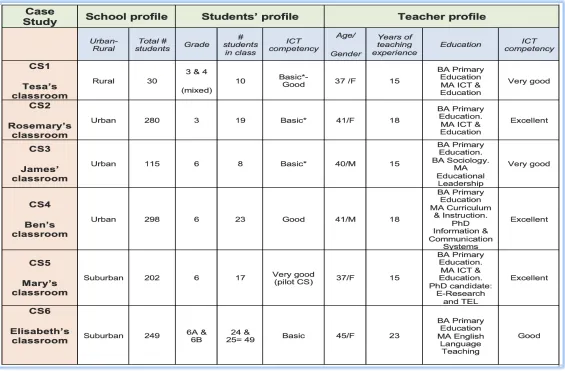
Table 3.2. Participants’ profile (School, Student, Teacher) ... 81
Table 3.3. Themes arising from teachers’, students’ and parents’ experiences and perceptions ... 95
Table 4.1. Case Study 1- Description ... 102
Table 4.2. Case Study 2- Description ... 102
Table 4.3. Case Study 3- Description ... 103
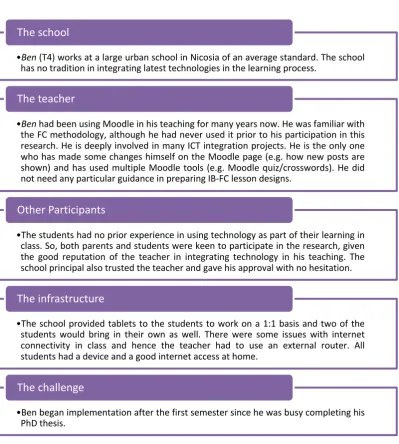
Table 4.4. Case Study 4- Description ... 104
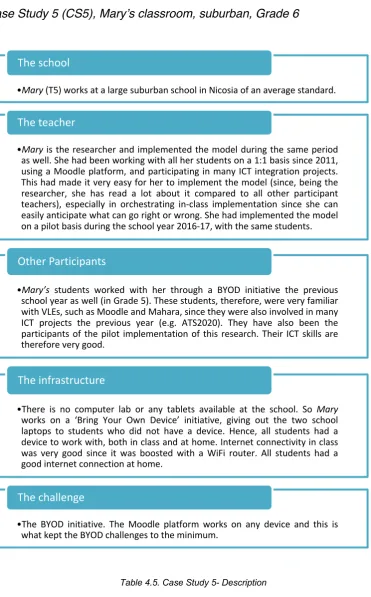
Table 4.5. Case Study 5- Description ... 105
Table 4.6. Case Study 6- Description ... 106
Table 4.7. Initial IB-FC lesson template ... 117
Table 4.8. Digital tools most widely used during IB-FC implementation ... 124
Table 5.1. Examples of parents' responses regarding their own support during implementation ... 145
Table 5.2. Examples of student responses to interview question SA6: How did you get any help/assistance when needed? ... 148
Table 5.3 Student responses to interview Question SC.16: Did you have any pressure during the completion of tasks after class? ... 166 Table 5.4. Student responses to Interview Question SC.17: After class,
Chapter 1: Introduction and Background
1.1Introduction
Over the past decade, education standards have emphasized the value of student-guided learning in which students are responsible of their own learning and they are actively involved in higher-order tasks and cognitive standards (Hannafin, Hill, & Land, 1997; Shea et al., 2012). This requires applying active learning approaches in the classroom which engage students to presenting their work, problem-solving, self and peer assessments, group work and discussions (Zappe, Leicht, Messner, Litzinger, & Lee, 2009).
Yet creating such inquiry-based learning (IBL) environments remains a challenge since teachers are either not trained or lack the confidence needed for applying, orchestrating and tackling the difficulties of these new student-oriented pedagogies (Brush & Saye, 2000; Hannafin et al., 1997). One example is the limited amount of classroom time available for both lecturing of new materials and applying active learning methodologies (Strayer, 2012). Contemporary teaching strategies, which usually utilise technology as the main tool of delivery, aim to ease this tension and allow for effective student-centred strategies.
methodology offers students access to online video lectures/tutorials (flips) prior to in-class sessions, so that they are prepared to take part in more interactive, collaborative and higher-order activities such as research, debates, problem solving and discussions, i.e. IBL methodology (Bergmann, Overmyer, & Wilie, 2012; Davies, Dean, & Ball, 2013; Fulton, 2012; Hughes, 2012; Lage, Platt, & Treglia, 2000; Talbert, 2012; Zappe et al., 2009).
Students benefit from this pre-class exposure to materials and outside classroom events because they can adjust their learning pace to meet their individual studying style and levels of understanding. During in-class classroom sessions, students have the opportunity to engage with the IBL activities, through group work, instead of passively listening to the teacher (i.e. lecturing). In turn, teachers can spend the in-class time for facilitation, observation of student performance and providing adaptive feedback to individual student or to groups of students (Fulton, 2012; Herreid & Schiller, 2013; Hughes, 2012).
1.2 Research Problem
FC is ‘a pedagogical model in which direct instruction moves from a group learning space to an individual learning space, and the resulting group space
is transformed into a dynamic, interactive, learning environment’ (Flipped Learning Network, 2014). The growing research in utilizing FC instructional approach has therefore its grounds on the capability to enrich teaching and learning; to promote better students’ learning outcomes (Giannakos, Krogstie & Chrisochoides, 2014) and; to expand learners’ experiences and competences (Bergmann & Sams, 2012).
On the other hand, IBL refers to:
‘The process of posing questions, problems or issues, gathering
information, thinking creatively about possibilities, becoming proficient in
providing evidence, making decisions, justifying conclusions, and
learning the ways of challenging, building upon and improving
knowledge of the topic or field of study.’ (Friesen, 2013, p. 154).
IBL therefore encourages students to explore, discover, collaborate, and communicate (Laursen & Kogan, 2014; Stephenson, 2012) by operating multiple perspectives (Short & Harste, 1996). Therefore, it has been reported a rather challenging task to implement effective IBL activities in primary education context (Capaldi, 2015).
Such a positive change, from traditional lecture-based learning to engaging student-centered study, can be made possible by utilizing a FC approach to the IBL design and implementation, i.e. by freeing-up classroom time for more guided IBL activities (Çakıroğlu & M. Öztürk, 2017; Chen & Chang, 2017; Huang & Lin, 2017; Love et al., 2015). Any literature review on FC which is highlighted in Chapter 2, confirms that in primary education the research on such practices is still at a minimum level (e.g. Hultén & Larsson 2016; Kim, 2017). Additionally, the research will draw from the current literature on IBL, a common instructional model in primary education with several limitations when implemented on its own (Capaldi, 2015). Literature on how to combine the models of FC and IBL in primary education in order to maximize their potentials and overcome their limitations is valuable but currently inadequate.
classroom model for inquiry-based learning), is first developed to initiate the exploration. This model has been used to design and develop a number of IB-FC cases, exploiting blended-learning technologies, across five different research sites, i.e. multiple case-studies (CSs): five primary schools in Cyprus.
1.3 Research Background
It is important to look at the particular context of implementation, ‘The Cyprus context’, and identify current issues concerning all of the above, including ICT integration policies, curriculum content and infrastructure. It is vital to note that primary school teachers in Cyprus teach all subjects of the National Cyprus Curriculum, which do not include a separate subject for ‘Computers/ICT skills development’. This means that a horizontal ICT integration model is promoted, where teachers use technology as an optional part of teaching in every subject. Hence, in cases when break-through initiatives have been implemented in Cyprus (Karagiorgi & Charalambous, 2004), such as the ones discussed below, a critical value to the emerging ‘communities of implementation’ (Hadjithoma & Karagiorgi, 2009, p.83) was given to schools. The notion of ‘resistance to change’ (Saunders, Bonamy, & Charlier, 2005, p. 48) also has and keeps arises as traditional practice is challenged, highlighting the importance of teachers’, students’ and parents’ experiences and perceptions.
TPD adopted or any official principles of implementation within the Cyprus context and the National Cyprus Curriculum arising.
practical tools (such as the IB-FC tools) and theoretical principles for specialized models (Vrasidas, 2015), such as the IB-FC model proposed in this research. Hence, TPD has been necessary within such a research for an effective IB-FC implementation, despite the fact that almost all participant teachers were chosen on the ground of prior ICT educational integration experience.
Recognizing the lack and the importance of academic research in ICT integration models in Cyprus, this research will try to address the gap in providing universal principles in implementing a new model, adopted for the first time in any level of education in Cyprus, the IB-FC model. This will be done through the lens of teachers’, students’ and parents’ experiences and perceptions.
My own prior knowledge and experience as a primary school educator, coordinating 1:1 initiatives, has leveraged my interest and competency in ICT integration models and has assisted me in designing this research, guiding the participant teachers towards effective implementation of the proposed IB-FC model. Since 2011, I was chosen to be the head educator and coordinator of the ‘One-to-one Kolossi Laptop initiative’ in Cyprus, given my personal interest, involvement and experience in many international ICT integration models (e.g. Entelis Network https://www.entelis.net/en/home, ATS2020
http://www.ats2020.eu, Demokleos Erasmus+
both at the European and Global Microsoft Partners in Learning forums as ‘Teacher as Innovator and Change Agent’ (in 2012 and 2014), for acknowledging the role of technology towards the development of the 21st
century skills of students. My belief that any well-designed technology-oriented teaching intervention/methodology can lead to improved student achievements was further recognised by the National UNESCO Commission, as I am this year nominated for the ‘UNESCO ICT in Education Award’, given the implementation of the current research. Hence, this research will not only fill a gap in the FC literature but also personally motivate myself as a TEL researcher, a primary school educator and an educational technologist, who is teaching the past four years ‘Computers and Educational Technology’ to student-teachers at the European University in Cyprus.
1.4 Research Contribution
1.4.1 Defining universal design principles (UDPs).
Design Principles have varying definitions but they should all have widely applicable laws, guidelines and design considerations, reflecting researchers’ and practitioners’ accumulated experience and/or knowledge. They are fundamental points of advice for making easy-to-use, well-orchestrated and pleasurable designs as we select, create and organize elements and features in the process of instruction. Hence, design principles in education represent the accumulated wisdom of practitioners/instructors and researchers in creating lesson designs and should inform us of how users will likely react to these designs. They should help educators find ways to improve engagement, influence perceptions positively and attain higher achievement levels.
Design principles are arrived at by adopting various different methodologies (e.g. action research, design-based research, mixed methods) and considering practical contexts but also theoretical frameworks. For example, subject oriented instructional design principles have been empirically validated by numerous studies (e.g. Doabler et al., 2012).
of any technology integration model. Implementation across multiple disciplines in primary education is important for reaching such applicable laws and guidelines. FC research has minimally dealt with FC UDPs, where none exists in primary education context.
1.4.2 Research questions (RQs).
This study aims to answer the following research questions:
RQ1: What are the experiences of teachers, students and parents in different IB-FCs in Cyprus primary school context?
RQ2: What are the overall perceptions of teachers, students and parents on different IB-FCs in Cyprus primary school context (benefits, challenges, limitations of implementing a IB-FC model in different subject matters)?
RQ3: What are the UDPs for an effective implementation of an IB-FC model in Cyprus primary school context across different subject matters?
instructions. Different IB-FC tools are provided for guidance through the design. Data collection tools and data analysis will assist in evaluating implementation and presentation of the benefits and challenges of IB-FC. These will contribute in defining UDPs for an effective implementation of IB-FC in primary education. The results in turn will contribute towards the revision of the IB-FC tools provided initially to help teachers develop effective IB-FC learning designs.
In particular, the intervention can help the teaching-learning practice by providing suggestions in how interaction, motivation and engagement can be enhanced through a more structured, but at the same time flexible, FC design. Teacher guidelines in how to maintain that can be given using orchestration routine frameworks and in-flip suggestions. The UDPs developed will also address the need for differentiation and personalisation, recognized in all contemporary teaching models, by providing evidence in how tested FC instructions have worked with primary school students.
use cannot be pursued without well-defined theory and frameworks (e.g. Neumann, 2016; Wang et al., 2014), especially in primary education (Hultén & Larsson, 2017). Consequently, this study is part of the growing research which explores teaching models which cater for differing learning styles (Bergmann & Sams, 2012), especially through the use of technology (Barak & Asad, 2012; Godzicki et al., 2013; Mayer, 2014) and multimedia (Leutner, 2014).
Finally, this study aims to contribute to the area of adopting blended learning methodologies through 1:1 or BYOD programs. With analysis of the UDPs in the effective implementation of a FC approach for IBL in primary education, this study offers many considerations in the incorporation of a blended learning model into a curriculum for young learners, e.g. which assessment and evaluation practices should be adopted, how motivation and engagement can be maximized etc. It also contributes towards avoiding ad hoc, ineffective technology-integration attempts, such as the ones adopted by MOEC for years now (e.g. Eteokleous, 2008; Vrasidas, 2015).
1.5Overview of the Thesis
the last part, the combination of the two methodologies is presented via the IB-FC research framework which guides the research design.
In Chapter 3, the research design is explained. The methodological paradigm discussed includes details on the pilot-study, the design of the technology tools, the background of the research site and the participants. Data collection methods and analytical procedures are also described and presented using visuals and theme tables. Ethical concerns and trustworthiness are also discussed within Chapter 3.
In Chapter 4, the research implementation is clarified by providing detailed descriptions of each case study. Five different IB-FC tools, which have been developed to help the teachers in designing their IB-FC lessons, are also discussed. The Teachers’ and Parents’ Page on Moodle is also presented. Finally, the chapter talks about the educational design of the research, providing details on the steps and tools used by participant teachers for the design of the IB-FC instructions.
Chapter 6 discusses the findings presented in Chapter 5 in relation to design considerations and RQ3. It particularly states, explains and discusses in detail the seven UDPs for IB-FC implementation. The discussion is supported by previous research findings and the new and revised IB-FC tools are presented.
Chapter 2: Literature Review
2.1 Introduction
This chapter will be divided into four parts. In the first part, the FC model will be defined and benefits and challenges will be identified. In the second part key literature on methods and FC frameworks in primary, secondary and higher education will be reviewed. In the third part, past research on IBL will be used to describe the corresponding instructional model, the IBL model, together with its benefits and challenges. The link to the FC model will be also explained through relevant literature. In part four, the gaps and challenges identified in the first three sections of the literature review are used to explain the combination of the FC model and the IBL model and the development of the research framework: the IB-FC framework.
not all students, especially children in primary school, have the ability or skills to deal with such real-life problems in class. IBL can help students develop such skills but lack of classroom time for specialized teacher guidance in traditional teaching models, has limited its application in primary education. Hence, the two methodologies, FC and IBL, could be combined and complement each other as the limitations of each can be overcome by the freed-up classroom time for teacher guidance needed to engage in IBL activities.
The gap in UDPs of a FC approach is therefore running bigger with the need to combine the two models and attempt implementation in a primary school setting. These gaps will be explained in detail throughout the literature review as well as the framework developed which guided the lesson designs of this research. This study will therefore offer the UDPs needed to close the gap in FC implementation in primary education, through its combination with IBL and a close study on the experiences and perceptions of teachers, students and parents involved.
2.2Flipped Classroom (FC)
libraries (e.g. Lancaster University’s OneSearch, Google Scholar) and databases (e.g. ScienceDirect, SpringlerLink, Tailor & Francis Online, ERIC, PICARTA, DARE-net, ISED, Web of Science, Academic Search Complete, British Education Index, the Social Sciences Citation index (SSCI) and PsychINFO). These databases are well known and considered adequate for research in social studies. The keywords used during the search included: flipped classroom, flipped learning, inverted classroom, flipped model, flipped
education, and flipped classroom approach. All keywords were indexed in both singular and plural forms, combined with ‘elementary and primary education’ or ‘K-12’. Only contemporary studies conducted between 2000 and 2018 were selected and only referred journals which were indexed and registered by the SSCI or by the Interuniversity Centre for Educational Research (ICO), were considered proper outlets for the articles.
During the second phase of the search process, the abstract, summary and references of chosen resources were scanned. Eight new key words turned out to be relevant: individual learning space, group learning space, flips, entrance ticket, post-class phase, Bloom’s taxonomy, student engagement
and interaction. All databases of phase one were used again for searching these terms. The first and second phase of the search process was therefore repeated.
- A specific focus on the FC model, in any educational level (primary,
secondary, higher).
- Any field of studies in the FC model, especially in the design and
implementation of the model, in any subject matter across any educational level.
- All technology integration models in line with the implementation of the
FC model in education.
The journals which did not meet the above criteria were not considered, especially if they did not define clearly the FC model methodology and the theory behind its implementation within any educational scenario. Moreover, key books which dealt with more practical issues on the implementation of the FC model have been used, e.g. ‘Flip your classroom: Reach every student, in every class every day’ (Bergmann & Sams, 2012); ‘Flipped Learning for Elementary Instruction’ (Begmann & Sams, 2015). In total, a number of 71 articles, 8 books, 2 book chapters, 7 conference papers, 6 reports, 2 dissertations and 3 more relevant online posts were selected.
secondary and higher education. The definition of the flipped classroom is divided into the FC learning process and the technology tools used. Benefits are about student achievement, motivation, engagement and interaction, whereas challenges are also recorded. Key literature has been divided according to the methodology adopted and the level of education.
2.2.1Defining flipped classroom.
The FC learning process
Flipped learning can be defined as a combination of direct instruction and constructivism, primarily based on the student-centered ideas of John Dewey (Jensen, Kummer, & Godoy, 2015). The concept of flipped learning was pioneered as the ‘classroom flip’ (Baker, 2000, p. 9) whereas later studies referred to it as ‘the inverted classroom’ (Gannod, Burge, & Helmick, 2008, p.777; Lage et al., 2000, p.30), reversing the classroom (Foertsch, Moses, Strikwerda, & Litzkow, 2002), and the flipped classroom (Bergmann and Sams, 2012). Halili and Zainuddin (2015) noted that the FC is an element of blended learning (Heilesen, 2010; Poon, 2014), integrating both face-to-face learning in the class and distance learning outside the class, by watching asynchronous video lessons and engaging into online collaboration.
In this study, as stated above, the definition of FC provided by the Flipped Learning Network (FLN) (2014) will be used:
‘A pedagogical approach in which direct instruction moves from the group learning space to the individual learning space, and the resulting
group space is transformed into a dynamic, interactive, learning
environment where the educator guides the students as they apply
concepts and engage creatively in the subject matter.’ (p. 1)
speeches, conversation, exploring real problems, peer reviewing etc. (Bergmann & Sams, 2008, 2012; Hamdam, McKnight, McKnight, & Arfstrom,
2013; Project Tomorrow, 2013; Toto & Nguyen, 2009; Ullman, 2013). Homework assignments and peer interaction sessions for the promotion of differentiated instruction, personalized and high-order learning are part of in-class session (Yarbro, Arfstrom, McKnight, & McKnight, 2014). However, since in-class activities can vary from one to another widely, it is unclear in the literature which and how FC can assist learners develop critical thinking skills effectively (Bergmann & Sams, 2008; O’Flaherty & Phillips, 2015; Rahimi, Van den Berg, & Veen, 2015).
Technology tools
Diverse technology tools have been used in FC research together with online learning platforms. The video tutorials, a basic form of a flip, are usually made by the educators with narration, text and enriched with various annotations and images, e.g. Love, Hodge, Grandgenett, and Swift (2014) have used LaTex beamer package; Davies et al. (2013) have used MyITLab videos and McLaughlin et el. (2013) Echo369 Classroom Capture. Widely accessible tools, such as iTunes and YouTube are employed for the creation and sharing of the videos (Kotlik, 2014). The Khan Academy has also created a digital video library for K-12 students by extending the type of ready-made online resources available for flipped learning (Hao, 2016). Other tools for sharing the flips (text, picture or videos) are also used to facilitate distance learning, such as blogs (e.g. Roach, 2014), wikis, Learning Management Systems (LMSs) or Virtual Learning Environments (VLEs), online platforms (e.g. Baker, 2000; Pempek, Yermolayeva, & Calvert, 2009) and Blackboard Journal page (Talley & Scherer, 2013). Hung (2015) has used WebQuests for promoting active learning whereas Kim, Kim, Khera, and Getman (2014) and Kong (2014) enhanced collaboration through Google Docs and Google Hangouts, after watching video lectures on Youtube. Other online software such as T1-89 graphing calculator (McGivney-Burelle & Xue, 2013) and interactive television (Missildine, Fountain, Summers, & Gosselin, 2013) have been used.
developed. However, most of them have not indicated how can these be used for younger students, focusing mainly only in secondary or higher education. For example, how can the structure of a VLE be simplified or how can administration of Google Docs or Hangouts be more suitable for young ages are scarcely explained. Moreover, digital video libraries (e.g. Khan academy) are useful for English-speaking students only. This means that teachers’ choice for ready-made flips is very limited for delivering content in another language.
2.2.2 Benefits and challenges of FC.
Benefits
Several studies have shown that the FC approach has positive impacts and benefits for the students, especially in relation to students’ achievement, engagement, motivation and interaction.
(i) Students’ achievement:
Bloom’s revised taxonomy of cognitive domain has been the base of the study of FC. The taxonomy has six levels of learning (see Figure 2.1), from lowest to the highest level:
2. Understanding: students show how they comprehend and interpret the information and summarize their learning.
3. Applying: students apply and practice the new knowledge to actual situations.
4. Analyzing: students use critical thinking in problem solving situations, use discussion and comparison, producing creative thinking to obtain new knowledge and ideas.
5. Evaluating: students go through self and peer assessment, evaluating the whole learning concepts using success criteria and making sufficient judgments.
6. Creating: students are being creative through the design, construction and production of new forms of content they have learned (Bloom, 1969).
During a FC instruction, the aim is for students to practice lowest levels of cognitive domain (remembering and understanding) away from the classroom, while focusing on higher orders of cognitive work (applying, analyzing, evaluating, and creating) in the classroom (Krathwohl & Anderson, 2010), as illustrated in Figure 2.1, given by Zainuddin and Halili (2016).
includes a screenshot of a table given by Zainuddin and Halili (2016), illustrating the comparison of a traditional vs a flipped learning methodology.
Figure 2.1. Bloom’s revised taxonomy in flipped classroom, Zainuddin & Halili, 2016, p. 316
[image:46.595.111.517.469.673.2]Some researchers have implemented the FC model to examine the impact on students’ achievement, showing that it can effectively support an improvement with several motives (Galway, Corbett, Takaro, Tairyan, & Frank, 2014). Davies et al. (2013) have particularly looked in how the use of technology can have an effect on student achievement levels given the use of the FC model. Their results have shown that the use of technology had been effective and scalable. They compared pre-test and post-test scores to verify the improvement, a common methodology adopted by other studies as well as (Enfield, 2013; Galway et al., 2014; Kong, 2014; Talley & Scherer, 2013). Therefore, students have indeed shown that they can understand learning content and achieve high orders of cognitive work through FC methodology, i.e. higher score in the port test or exam given. For example, Talley and Scherer (2013) talked about improved average course grades of the students when those have been compared to a previous semester without flipping. They reported how the academic performance in a flipped STEM course was increased through student-recorded lectures and other FC practices. McLaughlin et al. (2014), in their research on pharmacy student engagement, performance and perception in a flipped satellite classroom, measured students’ exam performance and added to the argument for improvement in the achievement levels through FC methodology.
by Hung (2015) verified that the structured and semi-structured flip lessons were more effective instructional designs than the non-flip lessons (flip >
semi-flip >, semi-flip > non-semi-flip, p < 0,05) in teaching the English language. The investment
on faculty time and effort for flipping a calculus class was also beneficial according to McGivney- Burelle and Xue (2013). Formative assessment, as the
instructor acts as a facilitator to motivate, provides guidance and feedback to students periodically (Bergmann & Sams, 2012; Deslauriers, Schelew & Wieman, 2011; Strayer, 2012) is another reason for improved learning outcomes. Students understand what is required since the instructor evaluates and gives feedback throughout the whole learning process (pre-class, in-class, after-class), overcoming deficiencies in learning (Kim et al., 2014).
Tune et al. (2013) also highlighted how students’ performance was improved, especially evident in the assessment practices by using a quiz and a class meeting to imitate the FC environment. Missildine et al (2013) have equivalently talked about students’ improved performance through research in a FC nursing course.
individualized attention from the instructor when struggling to understand concepts/new content. Beyond students’ perceptions, Kong (2015) highlighted the increase in students’ critical thinking abilities and their creativities (Al-Zahrani, 2015). Both researchers having integrated the FC model into an e-learning course. Basically, the video lectures should be highly related to classroom time and trigger student’s interest for the in-class activities which will follow (Gaughan, 2014). During classroom face-to-face time, sessions are used for discussions and analysis of the previously watched flip, and other student-engaging tasks, such as further primary and secondary sources analysis, debates, self and peer reviewing processes or simulations (Bergmann & Sams, 2012).
FC is also an ideal learning space for differentiation (Bergmann & Sams, 2012), normally associated with student success (Tomlinson & Moon, 2013). Empowerment through differentiation can improve self-motivation (Wormeli, 2006) and self-efficacy (Kim et al., 2014), especially through the use of technology (Barak & Asad, 2012; Godzicki et al., 2013; Mayer, 2014) and multimedia (Leutner, 2014).
(ii) Students’ motivation:
independently at their own pace. Davies et al. (2013) have noted that students undertake substantial out-of-class work, based on tutorials and simulations, which promotes motivation and paced learning. The increase in self-efficacy in independent learning was mentioned by Galway et al. (2014) and Enfield (2013). ILAMs (Integrated Learning Accelerator Modules) and LMSs used by McLaughlin et al. (2014) have also illustrated improved students’ autonomy and competence, hence elevated intrinsic motivation. A research by Kim et al. (2014) also proved, through the collection of the experiences of three FCs in an urban university, how the success of a FC model is based on students’ pre-class work as a main principle of implementation.
Furthermore, FC is recognized in the literature as a student-centered approach to learning where the students are more actively engaged than the instructor. Studies have indicated that learner autonomy, performance, and motivation can be maintained and enhanced through such student-centered instruction (Smit, de Brabander, & Martens, 2014) as it can move the traditional lecturer’s talk to video and the students can listen to the ‘lectures’ anywhere outside of class:
‘The flipped classroom allows students to watch the video according to their preferred time and need, and they can study at their own pace; this
type of activity also increases students’ collaborative learning in distance
education outside the class’ (Zainuddin & Halili, 2016, p. 315).
and affect further learning through such learning opportunities. Enfield (2013) has also worked through how FC can improve students’ self-efficacy in independent learning.
Enhancing motivation can be a result of FC implementation but also the reverse is substantial. Motivation should be enhanced in the first place in order for the students to be able to react positively to the new model of self-regulation learning at home. All in all, most FC research which dealt in collecting students’ experiences and perceptions (e.g. Davies et al., 2013; Enfield, 2013; Kim et al., 2014; McLaughlin et al., 2014) has given emphasis in how students are motivated to learn at their own pace and how they would recommend it to their own friends as well (McGivney-Burelle & Xue, 2013.)
(iii) Students’ engagement and interaction:
class time and authentic learning experiences (Bergman & Sams, 2008; Brunsell & Horejsi, 2013; DeLozier & Rhodes, 2016; Hamdam et al., 2013; Lo & Hew, 2017; Moraros, Islam, Yu, Banow, Schindelka, 2015; Project Tomorrow, 2013). This in contrast with traditional class activities which produce low level of student engagement (Nguyen, 2010), leading to negative habits such as boredom and disruptive behavior (Freeman et al., 2007).
All research agrees that the aim of flipped learning is to establish students' engagement with active learning. Students' desire to participate actively in a routine class activity, e.g. listening to a topic, submitting entrance tickets, collaborating and working with the instructor, has been reported in many FC studies (Delialioglu, 2012; Zepke, Leach, & Butler, 2009; Yang & Cheng, 2014). In particular, Talley and Scherer (2013) research reported that students could confidently produce their own summary of the biological process in their own words by implementing the flipped classroom and they could also be active learners in class. Other researchers, such as Kim et al. (2014) emphasized the importance of students’ confidence, i.e. by interacting with asynchronous video lectures outside the classroom, students feel more confident and prepared to participate in classroom discussions. Hung (2015) similarly highlighted that students engage and ‘feel part’ of the FC learning environment and are themselves engaged in the learning process more than in a traditional classroom setting.
Challenges
In K-12 research, TEL has had varied success. The ability of ‘digital native’ students to deal with technology is not always given and hence research can be misleading (Wang et al., 2014). Motivation in the classroom is overestimated in relation to technology (Housand & Housand, 2012; Koutropoulos, 2011), as it can only occur when ‘students experience competency, individualize their learning, and connect to a larger community’ (Jacobs, 2013, p. 271). Therefore, challenges exist, including requisite expertise, time and equipment costs for the creation of instructional material by the teachers (Lage et al., 2000; Yarbro et al., 2014) and access to networked and school technology by students (Ullman, 2013). Designing intellectually engaging FC materials can prove to be very challenging for teachers as they sometimes have to face less-attentive and less self-disciplined students compared to live instruction (Al-Zahrani’s, 2015). Instructors need support and guidance to successfully flip a class (Berrett, 2012).
Moreover, surveys also revealed that some educators were not convinced about the effectiveness of technology and improvement of students’ grades (Kim et al., 2014), while others expressed worries about the amount of time they had to devote for designing new activities and material and also the technological competence they should attain (Milman, 2012; Townsend, 2010).
Cook, 2013). A passive learning style also needs to be avoided, noted by Bergmann and Sams (2008), which provided videos which engage the learner and give the choice to pose questions, just like it would work with live lecturing. The design of the video lecture should be attractive to students and motivating in order to be effective and avoid disengagement (Enfield, 2013). Ηence, the possibility that FC ends up as an ineffective method needs to be considered by avoiding the exchange of boring face-to face (F2F) lectures with boring recorded lectures (Ash, 2012). Preference of students for a F2F lesson/lecture is also an issue (Chen, Wang, Kinshuk, & Chen, 2014; Toto & Nguyen, 2009) and needs to be studied in the reflect-phase of the research, considering ‘homework’ preference of students within a FC model (De Araujo, Otten, & Birisci, 2017). Overall, students’ perceptions to a FC model are very important to consider as students may feel helpless and discouraged (Mason, Shuman, & Cook, 2013; McLaughlin et al., 2013). The perceived quality and value of the approach are vital mediators to students’ satisfaction (Zhai, Gu, Liu, Liang, & Tsai, 2017). Promoting students’ responsibility and control over learning should
also be one of the instructor’ priorities within such a model (Kovach, 2014).
2.3Key Literature- Flipped Classroom in Primary, Secondary and Higher Education
Key literature on methods used for the FC studies will be assessed here, together with practices and tested frameworks, in order to locate the gaps, decide on the methodology and theoretical framework of this research. This will be followed with the observation that most of the studies on FC have been performed in higher-education settings and they are either descriptions of how teachers have implemented FC in their classrooms or are studies of the effect of using this method as compared to more traditional approaches (e.g. Herreid & Schiller, 2013; Slomanson, 2014; Teo et al., 2014).
2.3.1Kinds of methodology.
Chen et al., 2014; Roach, 2014; Kong, 2014; Davies et al., 2013; Enfield, 2013; Galway et al., 2014; Hung, 2015; Kim et al., 2014; McGivney-Burelle & Xue, 2013; McLaughlin et al., 2013; Simpson & Richards, 2015; Talley & Scherer, 2013). The same applies for more recent studies (e.g. Bauer-Ramazani, Graney, Marshall, & Sabieh, 2016) who have used experimental methodology
for a FC research in higher education discussing second language acquisition. They have incorporated multiple informal assessments and project-based learning for citing FC benefits and challenges. Similarly, the current study will use a mixture of qualitative data for investigating the combination of project-based learning through IBL methodology with the FC approach.
community, giving examples of effective FC practices to be integrated within the framework.
Comparisons of traditional to flipped classrooms were also effectively made in Kim’s (2017) case study, which through a variety of teaching and learning activities, used three factors of analyses: teacher presence, social presence and cognitive presence (Community of Inquiry-CoI- instrument). Students’ and teachers’ perceptions over traditional vs FC experiences were investigated to explore effective flipping strategies which would take students’ experiences into consideration. As students share differing learning types, Lage et al. (2000) have taken these into consideration through qualitative research. They particularly provided options to instructors in higher education on how to cater for most learning types through FC methodology while still maintaining control over course coverage and content. However, Marks (2015) argued that with careful curriculum design, both content and methods learning objectives can be taught and mastered with FC methods anyway, something he has proved using a mixed methods research in same educational level settings (i.e. higher). Similarly, in the current study, students’ experiences and perceptions should be evaluated, borrowing Lage et al.’s (2000) methodology which is to consider learning types within design and implementation.
(problem-based learning, self-directed learning and multimedia). Although their work is valuable in framing FC designs, they themselves proposed future studies which could include additional qualitative data (e.g. student observations; student artifacts) to triangulate the participant student interviews they have used. Additional data validity could also be provided with pre-post test scores and self- assessments.
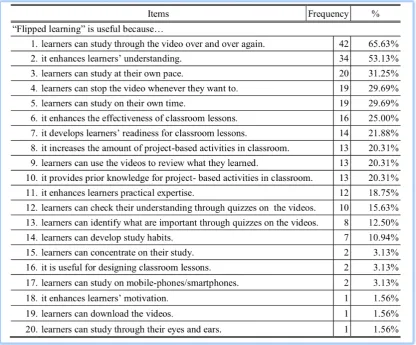
Figure 2.3. Perceived usefulness of ‘Flipped Learning’, Yoshida, 2016, p. 432
2.3.2 Level of education.
assess three learning designs using FC instruction: (a) Teachers are designers of learning; (b) Work students are asked to undertake is worth their time and attention; and, (c) Assessment practices improve student learning and guide teaching. Findings in their research indicated both strengths and areas for improvement, particularly in assessment practices, recommending further action research in FC in K-12 classrooms.
Students’ flipped learning readiness was surveyed by Hao (2016), using 387 middle school 7th-graders and the Flipped Learning Readiness Scale, designed
by the researcher. The scale was a modification of the Online Learning Readiness Scale (OLRS) (Hung, Chou, Chen, & Own, 2010) and the ICT literacy scale (Lau & Yuen, 2014). The quantitative data analysis showed that the students' flipped learning readiness ranged from a level slightly above neutral to below-neutral. It was also found that:
‘…Personal characteristics and individual circumstances, including language beliefs, student perceptions of teacher characteristics, the
availability of outside-school support and resources, learning
performance, study time and net-surfing time, can make a difference to
the levels of the readiness dimensions’ (Lau & Yuen, p. 295).
Student motivation and related performance on a 6th grade social studies
course at a K-12 private school in Hawaii was collected using a Likert-type survey. Findings suggested that ‘flipped learning benefits average achieving students through differentiated instruction’ (Winter, 2018, p.176). The practical implications of the research included the use of learner-centred strategies for maximizing student engagement levels, whereas it suggested further research in differing K-12 environments. The limitations of the research were the small participant size and the researcher being the sole implementing educator, asking for a multi-case study approach which the current research adopted.
All in all, although many research studies on FC have been conducted in various domain subjects, few studies have been carried out in primary education. Zainuddin and Halili (2016) have highlighted that the participants or samples of the most influential FC research between 2013-2015 have been undergraduate or graduate level students (Baepler et al., 2014; Chen et al., 2014; Davies et al., 2013; Enfield, 2013; Galway et al., 2014; Hung, 2015; Kim et al., 2014; Love et al., 2014; McGivney-Burelle & Xue, 2013; Mclaughlin et al., 2013; Missildine et al., 2013; Roach, 2014; Simpson & Richards, 2015; Talley & Scherer, 2013; Tune et al., 2013; Warner et al., 2014). This means that current research does not directly benefit K-12 teachers and that teachers who would feel keen to implement the approach are left with little support highlighted by Borrmann (2014) and Yoshida (2016). Even Bergmann and Sams, the so-called originators of flipped learning, published a guide for elementary school implementation (Bergmann & Sams, 2016) in an attempt to address the need, yet not based on empirical research.
Swedish primary schools, implementing a bottom-up FC strategy. Moreover, another research, by Hwang and Lai (2017), employed a quasi-experimental study in mathematics learning in a primary school, aimed in facilitating and bridging in- and out- of-class learning using an interactive e-book-based FC approach. The instructional videos, quizzes and learning guidance provided by the teacher were integrated into e-books and presented on mobile devices. The results indicated that the proposed approach not only endorsed learners’ self-efficacy for mathematics, but also enhanced their learning achievement, especially students with lower self-efficacy.
Aidinopoulou and Sampson’s (2017) research in a Greek primary school concentrated on history teaching and revealed that there is encouraging evidence for potential benefits of the FC model in primary school social studies courses. Their study revealed that ‘indeed the classroom-based sessions of the experimental group were used for engaging student-centered activities and that
this resulted into better learning outcomes in terms of demonstrating critical
Historical Thinking Skills (HTS)’ (Aidinopoulou & Sampson, 2017, p.237). Gough, Dejong, Grundmeyer and Baron (2017) also examined 44 K-12 teachers' perceptions that utilize FC in Southwest and South Central Minnesota through a researcher-developed survey instrument. It was found that additional time for active learning and increased student-teacher interaction is valuable, a valuable benefit of the FC model.
review identifies the gap in existing scholarship on flipped classroom instruction in primary education, specifically pertaining the main subject areas (Language, Maths, Science, Social Sciences) and instructional design ‘intended to maximize class time when implementing flipped classroom instruction’, which had been the target of Mazur et al. (2015, p. 3) research in Grade 9 students (secondary education). Moreover, because of the mixed impact of FC on students’ learning outcomes and students’ perceptions of FC, research into pedagogical design is needed in employing a set of research methods and combining frameworks (e.g. Jungić et al., 2015). Moreover, a close investigation of the pedagogical process would give light into the principles for an effective implementation, focusing on all stakeholders’ experiences and perceptions: teachers’, students’ and parents’, not just on one of them.
2.4 Inquiry-Based Learning (IBL)
Key studies on the IBL model were also collected through a four-phase process (Cooper, 1998) using a systematic electronic search of the same academic and online libraries and databases. The keywords used during the search included: inquiry-based learning model, inquiry-based leaning methodology, benefits and
The final choice of journals to be retrieved and used for the study in the third phase was based on the following rationales:
- A specific focus on the IBL model with analyzed frameworks on the
methodology and the theory behind it.
- Referred journals which were indexed by prominent databases.
- A current publication in the last 10 years, with exceptions on key studies
related to the model, such as ‘Problem based learning: An instructional model and its constructivist framework’ (Savery & Duffy, 1996).
- Containing a combination of IBL within a FC model in any subject matter
across any educational level, especially primary school education. - Containing technology integration models in line with the IBL model
and/or its combination with the FC model.
The journals and books which did not meet the above criteria were not included within the literature review.
2.4.1Defining inquiry-based learning.
IBL is a pedagogical method which refers to:
‘The process of posing questions, problems or issues, gathering information, thinking creatively about possibilities, becoming proficient in
providing evidence, making decisions, justifying conclusions, and
learning the ways of challenging, building upon and improving knowledge
of the topic or field of study’ (Friesen, 2013, p.154).
It therefore encourages students to explore, conjecture, discover, collaborate, and communicate (Laursen & Kogan, 2014; Savery & Duffy, 1996; Stephenson, 2012) by operating multiple perspectives and various types of knowledge, such as mathematics, science, language, and arts (Short & Harste, 1996).
be proactive (Maaß & Doorman, 2013). Instructors should be supportive to struggling students and challenging to succeeding ones through strategic questioning. Within an IBL classroom, a shared sense of ownership exists. Such conditions reinforce inquiring minds and attitudes which are essential for developing the ability to face and manage uncertain futures (Artigue & Blomhoej, 2013).
Justice, Rice, Warry, and Laurie (2007) suggest that IBL refers to both a process of pursuing knowledge and new understanding, as well as a method of teaching based in such a process. The Model of Inquiry Process they propose has been adapted to include the following steps the students need to undertake: (a) Engage a topic and build a knowledge base; (b) Develop a question; (c) Determine what needs to be known; (d) Identify resources and gather data; (e) Evaluate the data; (f) Organize and synthesize data; (g) Communicate new understandings; and, (h) Reflect upon the process and success.
2.4.2Benefits and challenges of IBL.
Benefits
When students are asked to engage in IBL in class, deeper understanding is promoted through active questioning, critical thinking and investigation (Bergmann & Sams, 2008; FLN, 2014; Mazur et al., 2011; Ullman, 2013). Exploring real-world problems, consulting experts and conducting field research enhances social interaction and active knowledge building (Cornelius-White & Harbaugh, 2010). The teacher does not lay out all the theorems, formulas and previous knowledge but active learning is promoted (Mazur & Board, 2015). In particular, such student-centered activities promote cognitive goals of the higher levels of Bloom’s revised taxonomy such as Analyzing, Evaluating and Creating (Krathwohl, 2002), as opposed to activities that promote cognitive goals of the lower levels of Bloom’s taxonomy, such as Remembering (see Figure 2.1). A large study by Laursen and Kogan (2014), in a Mathematics undergraduate course who assessed long-term effects of IBL, highlighted the benefits of this method to low-achieving students.
Challenges
2011). Hence, teachers should spend a lot of preparation and planning time to meet students' needs during the investigation and also manage in-class time well to make sure content is covered. Assessment of work can also be very difficult as students can take their investigations beyond the expected requirements. Rubrics are therefore essential for guidance. Beliefs, attitudes and worries over incorrect outcomes of experiments or activities may be additional internal problems during IBL (Magee & Flessner, 2012).
2.4.3Overcoming FC and IBL limitations- The integration.
Many studies have described how traditional teaching of social studies is challenged by both the use of technology and the adoption of IBL strategies in other subjects, such as Science, Technology, Engineering, and Math (STEM) (Bishop & Verleger, 2013; Hwang et al., 2015; Keengwe & Onchwari, 2015). Hence, despite of the drawbacks, the benefits of IBL encourage a change from the traditional lecturing in class, exploiting innovative pedagogical designs supported by digital technologies (Lyons, 2008).