warwick.ac.uk/lib-publications
Original citation:Dickson, Kelly, Melendez-Torres, G. J., Fletcher, Adam, Hinds, Kate, Stansfield,
James, Murphy, Claire, Campbell, Rona and Bonell, Chris (2018) How do contextual factors
influence implementation and receipt of positive youth development programmes addressing substance use and violence? A qualitative meta-synthesis of process evaluations. American
Journal of Health Promotion, 32 (4). pp. 1110-1121. doi:10.1177/0890117116670302
Permanent WRAP URL:
http://wrap.warwick.ac.uk/82042
Copyright and reuse:
The Warwick Research Archive Portal (WRAP) makes this work by researchers of the University of Warwick available open access under the following conditions. Copyright © and all moral rights to the version of the paper presented here belong to the individual author(s) and/or other copyright owners. To the extent reasonable and practicable the material made available in WRAP has been checked for eligibility before being made available.
Copies of full items can be used for personal research or study, educational, or not-for profit purposes without prior permission or charge. Provided that the authors, title and full bibliographic details are credited, a hyperlink and/or URL is given for the original metadata page and the content is not changed in any way.
Publisher’s statement:
Dickson, Kelly, Melendez-Torres, G. J., Fletcher, Adam, Hinds, Kate, Stansfield,
James, Murphy, Claire, Campbell, Rona and Bonell, Chris (2018) How do contextual factors
influence implementation and receipt of positive youth development programmes addressing substance use and violence? A qualitative meta-synthesis of process evaluations. American
Journal of Health Promotion, 32 (4). pp. 1110-1121. doi:10.1177/0890117116670302 Copyright © 2018 The Authors Reprinted by permission of SAGE Publications.
A note on versions:
The version presented here may differ from the published version or, version of record, if you wish to cite this item you are advised to consult the publisher’s version. Please see the ‘permanent WRAP url’ above for details on accessing the published version and note that access may require a subscription.
1 How do contextual factors influence implementation and receipt of positive youth
1
development programmes addressing substance use and violence? A qualitative
meta-2
synthesis of process evaluations
3
4
Kelly Dickson MSc 5
Department of Childhood, Families and Health, University College London Institute of 6
Education, 18 Woburn Square, London WC1H 0NR, UK. 7
[email protected]; Tel. +44 (0)20 612 6000 8
9
G.J. Melendez-Torres DPhil RN 10
Division of Health Sciences, Warwick Medical School, University of Warwick, Coventry 11
CV4 7AL, UK 12
[email protected]; Tel: +44 (0) 247 657 4877 13
14
Adam Fletcher PhD 15
Cardiff School of Social Sciences, Cardiff University, 1-3 Museum Place, Cardiff CF10 3BD, 16
UK 17
[email protected]; Tel. +44 (0)7973 686 904 18
19
Kate Hinds MSc 20
Department of Childhood, Families and Health, University College London Institute of 21
Education, 18 Woburn Square, London WC1H 0NR, UK. 22
[email protected]; Tel. +44 (0)20 612 6000 23
24
2 James Thomas PhD
1
Department of Childhood, Families and Health, University College London Institute of 2
Education, 18 Woburn Square, London WC1H 0NR, UK. 3
[email protected]; Tel. +44 (0)20 612 6000 4
5
Claire Stansfield MSc 6
Department of Childhood, Families and Health, University College London Institute of 7
Education, 18 Woburn Square, London WC1H 0NR, UK. 8
[email protected]; Tel. +44 (0)20 612 6000 9
10
Simon Murphy PhD 11
Cardiff School of Social Sciences, Cardiff University, 1-3 Museum Place, Cardiff CF10 3BD, 12
UK 13
[email protected]; Tel. +44 (0)29 208 79144 14
15
Rona Campbell PhD 16
School of Social and Community Medicine, University of Bristol, Canynge Hall, 39 Whatley 17
Road, Bristol BS8 2PS, UK 18
[email protected]; Tel. +44 (0) 117 928 7363 19
20
Chris Bonell PhD (corresponding author) 21
Department of Social and Environmental Health Research, London School of Hygiene and 22
Tropical Medicine, 15-17 Tavistock Place, London WC1H 9SH, UK. 23
[email protected]; Tel. +44 (0)20 612 6000 24
Acknowledgements
3 This project is funded by a grant from the National Institute for Health Research Public 1
Health Research programme (grant PHR 12/153/19). This report presents independent 2
research commissioned by the National Institute for Health Research (NIHR). The views and 3
opinions expressed by authors in this publication are those of the authors and do not 4
necessarily reflect those of the NHS, the NIHR, MRC, CCF, NETSCC, the Public Health 5
Research programme or the Department of Health. 6
7
The work was undertaken with the support of The Centre for the Development and 8
Evaluation of Complex Interventions for Public Health Improvement (DECIPHer), a UKCRC 9
Public Health Research Centre of Excellence. Joint funding (MR/KO232331/1) from the 10
British Heart Foundation, Cancer Research UK, Economic and Social Research Council, 11
Medical Research Council, the Welsh Government and the Wellcome Trust, under the 12
auspices of the UK Clinical Research Collaboration, is gratefully acknowledged. 13
14
15
16
Outline
17
Objective 18
Methods 19
Data sources 20
Inclusion and exclusion criteria 21
Data extraction 22
Data synthesis 23
Results 24
4 Characteristics and quality of process evaluations
1
Thematic synthesis of process evaluations 2
Theme 1: Collaboration with the community 3
Importance of cultural sensitivity, collaboration and integration with 4
ethnic minority communities 5
Challenges with community engagement and establishing trust 6
Collaborating with and utilising local community resources 7
Collaboration with schools 8
Theme 2: Young people’s relationship with programme providers and peers 9
Calm and authoritative programme providers 10
Positive peer relations 11
Theme 3: Staff retention 12
Staffing continuity essential to successful implementation 13
Difficulty offering full-time posts in the youth work field 14
Theme 4: Youth led empowerment 15
Young people determining their own engagement in activities 16
Limitations to choice provided 17
Tensions arising from choice 18
Conclusions 19
Limitations 20
Implications for research, policy and practice 21
Abstract words: 220 22
Paper words: 5,687 23
5 Structured abstract
1
Objective. Positive youth development (PYD) often aims to prevent tobacco, alcohol and 2
drugs use and violence. We systematically reviewed PYD interventions, synthesising process 3
and outcomes evidence. Synthesis of outcomes, published elsewhere, found no overall 4
evidence of reducing substance use or violence but notable variability of fidelity. Our 5
synthesis of process evaluations examined how implementation varied and was influenced by 6
context. 7
Data source. Process evaluations of PYD aiming to reduce substance use and violence. 8
Study inclusion criteria. Overall review: published since 1985; written in English; focused 9
on youth age 11-18 years; focused on interventions addressing multiple positive assets; 10
reported on theory, process or outcomes; and concerned with reducing substance use or 11
violence. Synthesis of process evaluations: examined how implementation varies with or is 12
influenced by context. 13
Data extraction. Two reviewers in parallel. 14
Data synthesis. Thematic synthesis. 15
Results. We identified 12 reports. Community engagement enhanced programme appeal. 16
Collaboration with other agencies could broaden the activities offered. Calm but authoritative 17
staff increased acceptability. Staff continuity underpinned diverse activities and durable 18
relationships. Empowering participants was sometimes in tension with requiring them to 19
engage in diverse activities. 20
Conclusion. Our systematic review identified factors that might help improve the fidelity and 21
acceptability of PYD interventions. Addressing these might enable PYD to fulfil its potential 22
as a means of promoting health. 23
6 Keywords: Young people; Positive Youth Development; Process evaluations Systematic 1
review; Qualitative 2
Indexing keywords
3
1. Manuscript format: literature review 4
2. Research purpose: intervention testing/ program evaluation 5
3. Study design: systematic review of qualitative evidence 6
4. Outcome measure: process evidence 7
5. Setting: community 8
6. Health focus: smoking control, social health 9
7. Strategy: education, skill building/behavior change 10
8. Target population age: youth 11
9. Target population circumstances: education/income level 12
7 Objective
1
Positive youth development (PYD) interventions aim to develop positive assets such 2
as resilience, social and emotional competencies and aspirations.1 They aim to address 3
multiple inter-correlated risk behaviours2,3 including substance use (i.e. tobacco, alcohol and 4
drugs) and violence. PYD is the dominant paradigm in youth work in the USA1,4,5 and UK.6 5
PYD has the potential to reduce substance use and violence through various complex 6
pathways, including addressing risk factors like disengagement from education and lack of 7
social support,1 diverting young people away from risk behaviours by engaging them in 8
positive forms of recreation,7-9 and providing credible health messages and signposting of 9
health services.10,11 10
However, the evidence base for PYD is unclear. Previous reviews of PYD effects on 11
violence and drug use1,8 suggest benefits, but they are out of date and in the latter case not
12
systematic. The review reported here is part of a larger study which synthesised evidence on 13
PYD theories of change, process and outcomes. Synthesis of outcomes suggested a lack of 14
evidence overall that PYD interventions are effective in reducing substance use and 15
violence.12 Interventions included in this review were notably variable in implementation 16
fidelity with some heterogeneity of effects. So that future PYD interventions might be more 17
acceptable, appropriate and ultimately more effective in promoting health, we here report 18
findings from our synthesis of process evidence. This synthesis aimed to examine how PYD 19
interventions were implemented, how young people received them and how this was affected 20
by contextual characteristics of places and persons. Synthesising process evidence is 21
important to understand what practical factors need to be considered to ensure feasibility, 22
fidelity, reach, acceptability and ultimately effectiveness13. Recent guidance on process 23
evaluation stresses the importance of qualitative data in understanding the complex processes 24
8 practitioners14. Examining how implementation varies with context also allows us to better 1
understand variations in intervention fidelity, which in the case of PYD ranges from very 2
good15,16 to suboptimal for some programmes and some sites17,18. 3
Methods
4
This systematic review was described a priori in a research protocol19 and adheres to 5
the Preferred Reporting Items for Systematic Reviews and Meta-Analyses (PRISMA) 6
guidance.20 The PRISMA checklist can be found in the online appendix.
7
Data sources
8
We systematically searched 19 electronic bibliographic databases between October 9
2013 and January 2014, including PsycINFO, MEDLINE and ERIC, in addition to topic-10
specific websites, clinical trials registers and consultation with experts (details in web 11
appendix). Our search strategy used both indexed and free-text terms relevant to key concepts 12
identified from the review question and inclusion criteria, such as: population (e.g. youth or 13
young people) AND intervention (e.g. after school clubs or community based programmes) 14
OR population/intervention (e.g. youth work or youth club). References were first screened 15
on title and abstract and then on full report where title and abstract suggested the study was 16
relevant or provided insufficient information to judge. At both stages, screening was initially 17
done by two researchers assessing batches of the same 100 references, moving to screening 18
by a single reviewer once a 90% agreement rate had been achieved. Reviewers referred to a 19
second screener where uncertain. 20
Inclusion and exclusion criteria
21
Studies were included in the overall review if they: were published from 1985 22
onwards; were written in English; focused on youth age 11-18 years; focused on PYD 23
interventions; reported on PYD theory, process or outcomes; and were concerned with 24
9 evidence if they reported data on implementation or receipt of PYD and how this varied or 1
was influenced by context (see web appendix for full details). Informed by existing 2
literature,1,5 we defined PYD interventions as voluntary education to address generalised 3
(beyond merely health) and positive (beyond merely avoiding risk) development. 4
Development was defined as promoting: bonding, resilience, social, emotional, cognitive, 5
behavioural or moral competence, self-determination, spirituality, self-efficacy, clear and 6
positive identity, belief in the future, recognition for positive behaviour, opportunities for 7
pro-social involvement or pro-social norms. Included PYD interventions needed to address at 8
least one of these criteria but apply them to different domains such as family, community or 9
school, or promote more than one of these criteria in a single domain. We included studies of 10
interventions provided in community settings outside of school time since school-based 11
interventions have been the subject of recent reviews.21,22 We excluded PYD interventions
12
delivered in custodial or probationary settings or clinical settings or employment training for 13
school leavers. 14
Data extraction
15
We extracted data using a modified version of an existing tool23 including items on: 16
study location; intervention/components, development and delivery, timing of delivery and 17
evaluation; provider characteristics; target population; sampling and sample characteristics; 18
data collection and analysis; and findings relevant to our review including verbatim quotes, 19
author descriptions and interpretations of the findings. After piloting and refinement, two 20
reviewers working independently extracted study reports, before meeting to agree on coding. 21
Reliability and usefulness of process evaluations were assessed using a standard tool 22
for process studies24 including: sampling; data collection; data analysis; the extent to which 23
the study findings were grounded in the data (criterion 1-4); the extent to which the study 24
10 Studies were assigned two types of ‘weight of evidence’ (low, medium or high): the
1
reliability or trustworthiness of the findings, and the usefulness of the findings for shedding 2
light on factors relating to the research questions. To be judged as highly reliable studies 3
needed to have taken steps to ensure rigour in at least three of the first four criteria. Studies 4
were judged as medium when scoring only two and low when scoring only one or none. To 5
achieve a rating of high on usefulness, studies needed to achieve both depth and breadth in 6
their findings or use methods that enable participants to voice their views on implementing or 7
engaging in programmes, to ensure richness and complexity in their analysis, to answer the 8
review questions. Studies rated as medium on usefulness only partially met this criteria and 9
low rated studies were judged to have sufficient but limited findings. Quality was used to 10
determine the qualitative weight given to findings in our synthesis, with none of the themes 11
represented solely by studies judged as low on both dimensions. 12
Data synthesis
13
We qualitatively meta-synthesised process evaluations using thematic synthesis 14
methods.25-27 Qualitative meta-synthesis aims to develop interpretive explanations and 15
understandings from multiple cases of a given phenomenon by utilising research examining 16
participant experiences. Two reviewers independently read study reports and then undertook 17
line-by-line coding of the findings sections. They first applied in vivo codes to what Schutz28 18
termed first-order (verbatim quotes from participants) and second-order constructs (authors’ 19
interpretations of the data). Reviewers wrote memos to summarise their interpretations of 20
these first-order and second-order constructs. The analysis was then deepened by use of axial 21
codes to make connections between in vivo codes. Reviewers wrote memos throughout to 22
describe emerging ‘meta-themes’. Each reviewer developed an emerging coding template, a 23
hierarchical organisation of the codes that were applied in the course of the analysis.29 The 24
11 basis for the synthesis, consisting of all the data as extracted and third-order constructs
1
developed by reviewers. As the coding template was developed, the reviewers referred to 2
tables summarising the methodological quality of each study to ensure the synthesis reflected 3
study quality. 4
5
Results
6
Search results
7
After removing duplicates, 32,394 studies were identified from the search. Of these, 8
ten studies reported in 12 papers, all concerned with reducing substance misuse and violence 9
or anti-social behaviour, met the inclusion criteria (see figure 1) for the synthesis of process 10
evaluations. All studies used qualitative methods of data collection and analysis to evaluate 11
processes related to implementation. 12
Characteristics and quality of process evaluations
13
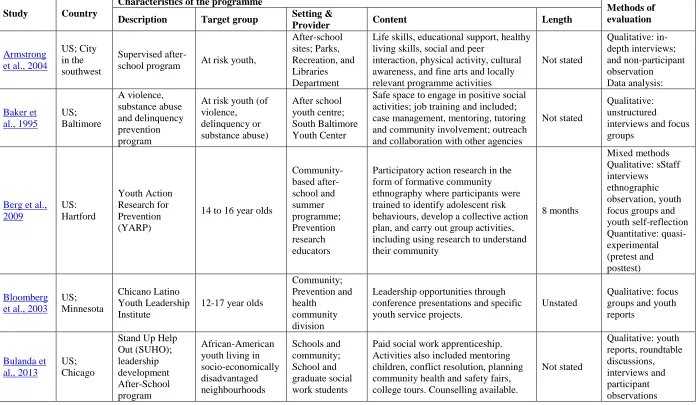
Of the ten included studies,18,30-38 eight were conducted in the USA,18,30-34,37,39 one in 14
Australia36 and one in England.38 Four studies targeted youth aged 14 or older18,32,34,37; three 15
targeted those aged both above and below 1433,35,38; and three did not report the age range 16
targeted.30,31,36 Four interventions targeted individuals on the basis of individual
17
disadvantage; two on the basis of area or school disadvantage; one on both individual and 18
area disadvantage; and three did not involve targeting on either basis (Table 1). 19
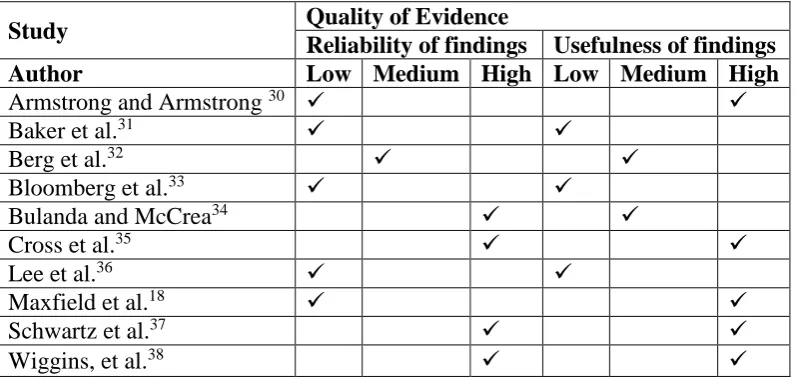
Study reliability and usefulness varied (Table 2). Three studies were judged to be of 20
high reliability and usefulness35,37,38; one as having medium reliability and usefulness32; and 21
three as of low reliability and usefulness.31,33,36 One study was judged as having high
22
reliability and medium usefulness34 while two were judged as having low reliability but high 23
usefulness.18,30 24
Thematic synthesis of process evaluations
12 Theme 1: Collaboration with the community. A major theme across a number of 1
studies18,30,32,33,36-38 was the importance of collaborating with local communities to support
2
implementation. Sub-themes within this were: the importance of cultural sensitivity with 3
ethnic minority communities; the challenges in building trust; and the importance of 4
collaborating with communities and with schools. 5
Importance of cultural sensitivity, collaboration and integration with ethnic
6
minority communities. The importance of cultural sensitivity and collaboration when 7
implementing programmes in ethnic minority communities was a sub-theme across three 8
studies,30,33,36 all judged to be of low reliability but varying degrees of usefulness. These 9
reported that formal and informal community engagement was a key factor in ensuring 10
programmes were culturally sensitive, accessible and appealing to young people and their 11
parents. This was particularly important when programmes were targeting or situated within 12
marginalised ethnic minority populations. For example, in a process evaluation judged to be 13
of high relevance but low reliability, Armstrong and Armstrong30 reported from interviews 14
with site coordinators delivering after-school programs in a south-western US state that a 15
programme’s cultural relevance withinan“ethnically diverse community” meant that it was 16
“important to have a strong cultural awareness” and was essential to the programme’s 17
success.This included both “outreach projects with parents” and with schools in the local 18
area, and “liaison … with a trusted member of the community who could communicate with 19
the parents, often times in Spanish”.30 20
Lee and colleagues’36 study, though judged to be of both low reliability and relevance,
21
corroborated this finding. In their evaluation of a PYD programme targeting the Aboriginal 22
communities of the Northern Territory of Australia, they highlighted the importance of 23
seeking and incorporating the views of the wider community, not just those of young people 24
13 allay fears among minority ethnic groups that the programme was "a non-Indigenous solution
1
so there is little ownership of it by Indigenous people”.36 p.78Community consultation led to
2
activities that were youth-orientated but culturally relevant, such as “bush hunting excursions
3
and using computers to record traditional music”. This study found that as the programme 4
progressed, staff became more active in encouraging community members to get involved, 5
including through “engaging in regular formal meetings and informal discussion” with 6
members of the community.36 p.78
7
Lee and colleagues36 also highlighted the importance of increasing both the cultural 8
relevance and participation of the local community; addressing potential language barriers by 9
“translating key proceedings” and communicating with indigenous members “in their
10
language”. Armstrong and Armstrong30 also found instances where young people were only 11
allowed to access and participate in the programme, because “the parents were able to
12
communicate with, and trusted the liaison” officer connected with the programme. 13
In some cases, programmes actively recruited community members as staff. Lee and 14
colleagues36 described this as “pivotal to the initiative’s success”. Such actions could also be 15
seen as providing the additional benefit of providing local role models. For example, after 16
identifying a “lack of Chicano Latino adult role models” that could “encourage, empower
17
and develop leadership skills and qualities” of local Chicano youth in Minnesota, 18
programme providers in the low-quality study by Bloomberg and colleagues33 trained local 19
community members, as “facilitators” who could “work closely with youth in the initial 2
20
day training” with the aim ofestablishing and maintaining a bond with them. 21
Challenges with community engagement and establishing trust. However, two 22
studies18,37 of differing quality noted challenges in relying on volunteer community 23
engagement and establishing trust of parents. These were studies of interventions that did not 24
14 community members. For example, as reported by a study of high reliability and usefulness 1
by Schwartz and colleagues,35 successful implementation of an intervention component
2
relying on volunteer mentors was challenging when mentors were not always reliable in 3
maintaining contact, leaving participants feeling “disappointed”; as one young person said, 4
she hoped her mentor “would be there more than she was…and, and she wasn’t”. 5
Building trusting and openly communicative relationships with parents could also be 6
challenging. Maxfield and colleagues18 studied the Quantum Opportunity Program,
7
implemented in the United States, in a process evaluation judged as providing highly useful 8
findings but with low methodological reliability. They found that trust and open 9
communication were seen as important means of maintaining contact with young people and 10
encouraging uptake of intervention activities. The case managers in this programme reported 11
parents who appeared “anxious to limit the exposure of family problems”, whoseemedto 12
experience case managers as “intrusive”, or may have “felt threatened” by the mentoring 13
relationships that case managers established with theirchildren,were subsequently the most 14
“most difficult to reach” compared to parents who actively supported case managers and 15
“reinforced the value of attending program activities”.18 all quotes p.58 16
Collaborating with and utilising local community resources. Another sub-theme 17
concerned with collaborations with others in the local community was the importance of 18
collaboration with other community agencies to enable programme implementation. This was 19
apparent in three studies18,30,32 of variable reliability and usefulness. Armstrong and 20
Armstrong30 found that it was “extremely important for the site to utilize community 21
resources from a programmatic standpoint” in order to expand the range of activities offered, 22
a critical element of PYD. Forexample, local libraries proved to be an “unplanned benefit” 23
that could help deliver a reading programme. Programme providers cited being able to host 24
15 Local funding bodies were considered another important local resource to support positive 1
youth activities. This was the case in the study of medium reliability and relevance by Berg 2
and colleagues32 where the programme received a grant that “enabled [young participants] to
3
receive training in photography and show their work at a photography exhibit”. 4
The importance of collaboration was also apparent in Maxfield and colleagues’18 5
study of the Quantum Opportunity Program in which providers forged “partnerships with
6
agencies that specialized [in a range of life skills training topics] such as substance abuse
7
prevention, conflict resolution training, date rape, and sexual abuse”. The importance of 8
being able to make use of other local services to maximise breadth of opportunities was 9
regarded as particularly important to fill gaps in programme providers' expertise, such as 10
when drawing on “student volunteers from the local university” to offer tutoring to support 11
sites where case managers felt they lacked the skills to provide such services.18 p.64
12
Collaboration with schools. A final sub-theme regarding community collaboration 13
highlighted that collaboration with schools, while critical to implementation, could be time-14
consuming and challenging. Three studies,18,30,38 two based in the US and one in the UK, 15
examined the importance of liaising with schools to support the successful implementation of 16
programmes. All three studies were judged to be of high usefulness but variable in terms of 17
methodological reliability. Site co-ordinators in Armstrong and Armstrong’s30 study of after-18
school programmes in the south-western US indicated that communicating with other 19
community stakeholders to support the development of youth “such as schools, had an
20
important impact on program implementation”,particularly because they had a number of 21
after-school programmes located off schools’ sites. One way of dealing with barriers to 22
communication arising from this was to designate a school liaison, who could work across 23
16 a channel to disseminateinformation about programme events to young people and their 1
families in order to reach a wider audience and increase programme reach. 2
Wiggins and colleagues’36 study of after-school youth development targeting at-risk 3
young people across England, which was judged to be of high reliability and usefulness, also 4
found that “working with schools was crucial” for recruiting young people to programmes,
5
thoughnegotiating “access and referral routes” was time-consuming. In a context of 6
providers aiming to meet challenging recruitment targets, some sites reformatted their 7
programme so that young people attended as an alternative rather than a supplement to their 8
normal schooling, a major distortion of the intended intervention model. Maxfield and 9
colleagues18 also reported that collaborations with schools in the Quantum Opportunity 10
Program were subject to logistical challenges. When case managers who transported young 11
people to the school where tutoring services were provided found it “proved too
12
burdensome”,participants’ uptake of tutoring plummeted. 13
Theme 2: Young people’s relationship with programme providers and peers. The 14
second major theme that was apparent across a number of studies18,34,35 was the importance of 15
young people’s relationships with programme providers and peers in maximising the 16
acceptability and potential impact of interventions. Sub-themes within this were the 17
importance of calm and authoritative providers and positive peer relations. 18
Calm and authoritative programme providers. One sub-theme was the importance of 19
programme providers attending to young people in a calm and nurturing yet authoritative 20
way, including in response to any challenging behaviour exhibited by participants.Three 21
studies of varying reliability and usefulness described provider attitudes and responses to 22
young people in this context. The ‘Stand Up Help Out’ programme was evaluated by Bulanda 23
and McCrea34 in a process evaluation judged as highly reliable and of medium usefulness. 24
17 continued commitment to providing ‘unconditional positive regard’ when faced with
1
challenging behaviour from young participants. It was reported that this response style was 2
acceptable to the young people, who did not feel they were treated ‘negatively’.34 Similarly,
3
Maxfield and colleagues’18 evaluation found evidence supporting the need for case managers
4
to engage with young people as individuals rather than collectively as a group. They found 5
that “the most successful mentors used a balance between nurturing and discipline” when 6
interacting with young people.18 p.59
7
In contrast, Cross and colleagues35 reported in what was judged a highly reliable and 8
relevant study that staff struggled to respond to young people’s frequent challenging 9
behaviour with “very little redirection from staff members” and a disciplinary approach that 10
“appeared capricious and confusing to youth”.35 In another site, the same evaluators, found 11
staff to be “irritated and apathetic”, appearing to engage more with each other than 12
interacting and addressing young people’s challenging behaviour.35
13
Positive peer relations. A further sub-theme was the importance of positive and 14
supportive peer relations underpinned by staff and by programme structure, as examined by 15
three studies of differing reliability and usefulness. For example, a high-quality study by 16
Bulanda and McCrea34 described a US after-school programme where social differences,
17
such as membership of different “street alliances” that could be a cause of conflict outside of 18
the programme, did not necessarily prevent mutual collaboration and support within the 19
programme as long as participants were able to “prioritize their connectedness over the
20
potential discord created by differences” and “recognize relationship problems and focus on
21
relationship strengths”. However, Cross and colleagues35 argued that tensions among
22
participants or between participants and staff could only be overcome in sites that were well 23
managed.A lack of organisation and high turnover of staff at one site within their study was a 24
18 positive outcomes observed in another site, might be attributable to “the friendships among
1
students, which were in part facilitated by stable site management”.35
2
Bloom et al.40 described how the National Guard Youth Challenge Program separated 3
participants who belonged to different gangs into different ‘squads’ and removed gang 4
symbols such as tattoos that could act as “physical reminders of past affiliations”. While
5
problems associated with gang membership were not always easily overcome, staff members 6
did report that external problems were less likely to intrude during the residential phase of 7
this programme, where they “have them 24/7” and can instil values that young people can 8
them take “home with them”.40 both quotes, p.37
9
Theme 3: Staff retention. Staff retention was another key theme evident across three 10
studies18,30,35 of differing reliability and usefulness. These studies reported on the importance 11
of staff continuity to ensure programmes were implemented fully and appropriately, and the 12
difficulty of offering full-time posts in the youth-work field. 13
Staffing continuity essential to successful implementation. Within this, a key sub-14
theme was the importance of staffing continuity to intervention delivery. As Armstrong and 15
Armstrong30 noted, after-school programme site co-ordinators felt that effective 16
implementation and sustainability relied on minimising staff turnover. This was a challenge 17
for some programmes. However, in the after-school programme Cross and colleagues35 18
evaluated, “six of the original fourteen staff members quit or were fired before the end of the 19
year”. Similarly, Lee and colleagues36 reported that turnover of staff “impacted significantly
20
on program continuity and workloads”. Maxfield and colleagues18 observed that they were 21
“fortunate [that] turnover [in certain sites] was relatively low”. However, staff turnover led 22
to a failure in sustaining mentoring relationships when unfilled staff positions resulted in 23
participants not having a “primary mentor for as long as two or three months”,and when 24
19
Difficulty offering full-time posts in the youth work field. Across a number of 1
studies, the lack of full-time positions increased the challenge of securing and retaining 2
qualified staff. To overcome this, Armstrong and Armstrong30 report how one programme 3
aimed to recruit staff who were not looking for full-time work, such as college students 4
interested in gaining experience of youth work. Difficulties with retaining trained employees 5
could also mean that replacement staff were not well trained. Cross and colleagues35 report 6
that youth workers who had been retained since programme initiation “received more than 40 7
h[ours] of training on average” compared to those who had replaced them, who “received
8
less than 6 hours” and thatsites with high employee turnover were less likely to have staff 9
who were highly trained because it was not possible to offer them the original training. 10
Creative attempts to compensate for lack of trained staff included drawing on existing 11
skills that happened to be held by staff members and incorporating these opportunistically 12
into programme activities. For example, Armstrong and Armstrong30 observed that at one site 13
an employee “with extensive orienteering skills” was encouraged “to organize camping trips
14
and day hikes for youth”,andthat atan another site, a staff-member “who enjoyed jazz
15
dancing started a dance program”. 16
However, two studies18,37 reported thatit was difficult to overcome limitations in
17
skills due to a lack of training, leading to an inability to provide the range of activities 18
normally expected of a PYD programme. For example, Bloom and colleagues40 a paper reporting on 19
the study by Schwartz et al. 2013 found that provision of individual tutoring was impossible to
20
implement because of lack of tutor capacity and had to be “abandoned midway through the 21
year”. The authors felt that despite providing an alternative academic activity, the lack of 22
one-to-one tutoring may have “contributed to withdrawal of youths whose parents viewed 23
tutoring as the main draw of the program”.40 p.54 In addition, Maxfield and colleagues18 24
20 PYD domains. For example, programmes expanded to include an educational component 1
challenged staff “hired on the basis they could be case managers not tutors or teachers” and 2
who “required extensive training and technical assistance”. Other sites that did not provide 3
“extensive in-service training to improve case managers’ tutoring skills” relied on volunteer 4
tutors instead, though these volunteers tended only to work for the programme for “one or
5
two semesters”.18 6
Theme 4: Youth led empowerment. Our final theme drawn from five 7
studies18,31,32,35,37 concerns the importance of, and potential contradictions and challenges 8
inherent in, ensuring young people are empowered to make decisions about their engagement 9
in programme activities. Sub-themes concerned young people determining their own 10
engagement, limitations to such choices and tensions arising from choice. 11
Young people determining their own engagement in activities. One sub-theme 12
within this relates simply to the extent to which young people were empowered to choose in 13
which PYD activities to participate. This was described in three studies of variable reliability 14
and usefulness. Berg and colleagues32 described youth empowerment as a key component in 15
their Youth Action Research for Prevention programme and suggested that staff needed to be 16
trained in “facilitation techniques” to halt the tendency for staff to determine decisions about 17
how community engagement is undertaken. Young people’s decision-making processes were 18
considered more important than their final choice of activity in Baker and colleagues’31 study 19
of the South Baltimore Youth Centre. The evaluation, judged as being of low reliability and 20
relevance, reported that when activities were “imposed [ in a] top down [manner they] failed 21
and were abandoned” and thus providers aimed to give young people authority in developing 22
and executing activities. Schwartz and colleagues’19 study of youth-initiated mentoring found 23
that when young people were able to choose their mentors, the mentoring relationship was 24
21
Limitations to choice provided. In contrast, two studies judged as highly reliable 1
reported that young people in some interventions had very limited empowerment to shape 2
and determine their involvement. For example, empowerment in the ‘All Stars’ curriculum35
3
was highly restricted. In this study, also judged to be of high usefulness, young people’s 4
choices were restricted to a list predetermined by the site director and programme assistant at 5
the start of each day. Empowerment was also restricted in the programme evaluated by 6
Schwartz and colleagues.19
7
Tensions arising from choice. Another sub-theme was the tensions that could arise 8
when empowering young people to choose which activities in which to engage. Four studies, 9
judged to be of high relevance with variable reliability, provided data on young people’s 10
choice of activities, finding that some programme components were often rejected by young 11
people on the basis that they were unappealing. Sometimes these were activities with a 12
learning component, such as “computer-assisted instruction” and “community service”, 13
which were not received with “enthusiasm”.18 all quotes, p.62 This was also the case for 14
“computerised job training” which was “ignored”31 p.73 andacademic assistance.35 Wiggins 15
and colleagues36 argue that an academic style could alienate young people, particularly those 16
whose lives are “chaotic and hard” andsuggest that young people need to be able to get 17
involved in activitiesat a level that is “most appropriate for them at any given time”.This 18
might suggest the importance of a diversity of provision, not only to enable choice but also 19
because different young people will have different preferences and developmental needs. 20
However, whereas some process evaluations, as well as much of the theoretical 21
literature, suggested that young people’s empowerment to choose activities is central to PYD, 22
process evaluation of the Quantum Opportunity Program18 suggested that facilitating choice 23
may in some cases deter engagement in the broad range of activities, which is also commonly 24
22 relevance, reported that some sites offered more recreational activities (such as outings to the 1
cinema, swimming, etc.) because they attracted ”more enrolees than did other activities”. 2
However, as young people got older they resisted staff’s promotion of “activities with 3
learning content” and continued to favour recreational activities that providers had originally 4
used “to attract youth to the program”. Participants reported “that they missed doing “fun 5
things” and that museum and other cultural activities were boring”. Similarly, when there 6
was a scheduling clash between attending summer school and taking up summer 7
employment, case managers were more likely to recommend summer school, but ultimately, 8
they were “not able to prevent an enrollee from choosing [paid work]”. This contrasted with 9
programme sites that provided a balanced combination but offered participants little choice, 10
which appeared to have “less difficulty in maintaining interest” of young people. A lack of 11
choice could be received positively by participants when it offered them something new. 12
Participants in the National Youth Guard mentoring programme “welcomed the small class
13
size, tailored instruction, and self-paced approach”40 p.48 of the high school completion 14
programme. The authors noted that a key element of the success of their educational 15
component was that it was noticeably different from what young people were used to 16
experiencing in school, as it combined both structure and individual support. 17
Maxfield and colleagues18 reported that some sites provided financial incentives to 18
increase engagement in specific educational activities, such as computer-assisted instruction 19
and assessment tests. However, the two sites that took these approaches found that it was 20
“effective for only short periods of time and only for students already inclined to spend time
21
on the computer” and did not prove effective in motivating already resistant young people.
22
The use of incentives was also reported as problematic by Cross and colleagues.35 To 23
increase engagement in programme activities, young people were randomly assigned to 24
23 unfair and decided to place high-attending youth together “to ensure the attending students
1
would receive the maximum points” thus undermining the intended system. This ”probably
2
did not encourage attendance among the lower attending youth because they were placed in
3
groups with very low probabilities for receiving points”.15, all quotes p.52-3 a paper reporting on the study by
4
Cross, 2010 In both of these programmes using incentives, there was a tension in providers’
5
attitudes to empowerment. Although programme providers wanted to enable choice, they also 6
sometimes wanted to constrain choice to ensure young people engaged in the programme 7
overall or in specific activities staff regarded as important. 8
Conclusions
9
A number of themes emerged from our synthesis. Formal and informal community 10
engagement was a key factor in ensuring programmes were culturally sensitive, accessible 11
and appealing to young people and their parents, as well as the wider community. Employing 12
community members could be pivotal to successful implementation and providing role 13
models. However, volunteers could be unreliable, for example, when acting as mentors. 14
Collaboration with other community agencies could also be important particularly in 15
expanding the range of activities being offered. Another theme was the importance of young 16
people’s relationships with providers and peers. Providers should ideally relate to young 17
people in a calm, nurturing yet authoritative way. Peer support was also important, sometimes 18
in the face of challenges with social differences among young people, such as in membership 19
of different gangs. Skilled providers could bridge these social differences by helping 20
participants recognize common ground, but this was difficult where staff were poorly trained. 21
More generally, staff continuity was reported to be critical for PYD since such 22
programmes require staff with a diversity of skills and experiences who can offer participants 23
a range of activities as well as durable relationships. Retention was challenging where 24
24 positions. A final theme concerns the importance of, and challenges with, ensuring young 1
people were empowered to make decisions about programme activities. This required that 2
staff were trained in facilitation rather than merely being directive. Tensions could arise 3
between PYD’s aims of empowering young people to choose and when requiring them to 4
engage in different activities to develop specific assets, such as vocational or academic skills. 5
Limitations
6
A limitation of the review was that it omitted potentially includable studies not written in 7
English or published before 1985. The preponderance of US evaluations means that the 8
generalisability of the evidence in our synthesis remains uncertain. This, coupled with the 9
poor reliability and lack of interpretative depth of most of the studies means that it is likely 10
that studies, and therefore our synthesis, may have missed important and relevant contextual 11
determinants of implementing PYD programmes. The qualitative studies included in this 12
review drew on subjective accounts and offered rich explanations of the processes for how 13
context might affect implementation. The review found no quantitative analyses of what 14
correlations exist between measures of context and implementation. Future implementation 15
studies should use mixed methods to examine these questions of both what and how. 16
17
Implications for research, policy and practice
18
Future process evaluations of the implementation of PYD programmes should be 19
conducted more rigorously and reported more transparently. Increased use of direct quotes of 20
staff or young people’s views would contribute to transparency. 21
Our synthesis of evidence on the effectiveness of PYD programmes to reduce or 22
prevent violence and substance use found no evidence overall that these are effective. The 23
interventions included in this review varied notably in their fidelity of intervention. The 24
25 successful implementation of PYD either when delivered within intervention studies or when 1
scaled up. Greater awareness of these factors might enable better implementation and greater 2
acceptability, and possibly enhanced effectiveness, of future PYD interventions. 3
The critical factors we identified include valuing and encouraging community 4
engagement in the delivery of PYD programmes. Specific efforts to mobilise the community 5
should focus on: adequately training and supporting community members as volunteers in the 6
delivery of PYD, increasing its cultural sensitivity and appeal to young people. At the outset, 7
programme funders and providers should engage with the challenges of establishing a highly 8
skilled work force that can implement PYD programmes, considering the numerous 9
challenges to recruiting, training and retaining practitioners who are often being offered part-10
time work, of potentially low wage, and for time-limited periods. Given the breadth of the 11
types of activities PYD aims to deliver, there is a high chance that programme providers will 12
also need to collaborate with other local agencies, such as schools, libraries or community 13
health initiatives. A balance is required between empowering young people to choose which 14
activities they wish to engage in, focusing their attention on particular activities of interest to 15
the programme aims, and offering a diversity of activities overall. 16
26 So what? Implications for health promotion practitioners and researchers
1
What is already known about this topic?
2
Positive youth development (PYD) interventions aim to develop positive assets such 3
as resilience, social and emotional competencies and aspirations and to use these assets to 4
address multiple inter-correlated risk behaviours, including tobacco, alcohol and drugs use 5
and violence. 6
What does this article add?
7
Our systematic review and synthesis of process evaluations suggests that community 8
engagement, collaboration with other agencies, and the recruitment and retention of calm but 9
authoritative staff are key to successful implementation. But staff retention staff is a 10
challenge with part-time contracts and limited funding. The PYD imperative of empowering 11
participants is sometimes in tension with the imperative to engage participants in diverse 12
activities. 13
What are the implications for health promotion practice or research?
14
Addressing these factors might enable PYD to fulfil its potential as a means of 15
promoting health. At the program outset, funders and planners should establish a highly 16
skilled workforce and mobilise the community including by training and supporting 17
community members as volunteers and increasing cultural sensitivity and appeal to young 18
people. 19
27 References
1
1. Catalano RF, Berglund LM, Ryan JAM, Lonczak HS, Hawkins JD. Positive Youth 2
Development in the United States: Research Findings on Evaluations of Positive 3
Youth Development Programs. Programs. Prevention & Treatment. 2002;5(1):1-166. 4
2. Jackson C, Sweeting H, Haw S. Clustering of substance use and sexual risk behaviour 5
in adolescence: analysis of two cohort studies. British Medical Journal Open.
6
2012;2:e000661. 7
3. Buck D. Clustering of unhealthy behaviours over time. London: The King's Fund; 8
2012. 9
4. Gavin L, Catalano R, David-Ferdon C, Gloppen K, Markham C. A review of positive 10
youth development programs that promote adolescent sexual and reproductive health. 11
Journal of Adolescent Health. 2010;46(3 Suppl):S75-91. 12
5. Roth J, Brooks-Gunn J. Promoting healthy adolescents: synthesis of youth 13
development program evaluations Journal of Research on Adolescence.
14
1998;8(4):423-459. 15
6. National Youth Agency. The NYA Guide to Youth Work in England. Leicester: 16
National Youth Agency; 2007. 17
7. Benson P, Scales P. Positive youth development and the prevention of youth 18
aggression and violence European Journal of Developmental Science. 2009;3(3.):218-19
234. 20
8. Roth J, Brooks-Gunn J. Youth development programs: risk, prevention and policy. 21
The Journal Of Adolescent Health: Official Publication Of The Society For
22
Adolescent Medicine 2003;32(3):170-182. 23
9. Schwartz S, Pantin H, Coatsworth J, Szapocznik J. Addressing the challenges and 24
opportunities for today's youth: toward an integrative model and its implications for 25
research and intervention. The Journal Of Primary Prevention. 2007;28(2):117-144. 26
10. Catalano RF, Hawkins JD, Berglund ML, Pollard JA, Arthur MW. Prevention science 27
and positive youth development: competitive or cooperative frameworks? . Journal
28
Of Adolescent Health. 2002;31(6 Suppl):230-239. 29
11. Philliber S, Kaye JW, Herrling S, West E. Preventing pregnancy and improving health 30
care access among teenagers: an evaluation of the Children’s Aid Society-Carrera 31
Program. Perspectives on Sexual and Reproductive Health. 2002;34(5):244-251. 32
12. Bonell C, Dickson K, Hinds K, et al. The effects of Positive Youth Development 33
interventions on substance use, violence and inequalities: systematic review of 34
theories of change, processes and outcomes Public Health Research Public Health
35
Research in press. 36
13. Gough D, Oliver S, Thomas J. An Introduction to Systematic Reviews. London: Sage 37
Publications 2012. 38
14. Moore GF, Audrey S, Barker M, et al. Process evaluation of complex interventions: 39
Medical Research Council guidance British Medical Journal Open. 2015;350 40
(h1258.). 41
15. Gottfredson DCA, Wilson D, Connell N, Rorie M A Randomized Trial of the Effects
42
28 16. Kuperminc GP, Thomason J, DiMeo M, Broomfield-Massey K. Cool Girls, Inc.: 1
promoting the positive development of urban preadolescent and early adolescent girls. 2
The Journal Of Primary Prevention. 2011;32(3-4):171-183. 3
17. Rodriguez-Planas N. Longer-Term Impacts of Mentoring, Educational Services, and 4
Learning Incentives: Evidence from a Randomized Trial in the United States. 5
American Economic Journal-Applied Economics. 2012;4(4):121-139. 6
18. Maxfield M, Castner L, Maralani V, Vencill M. The Quantum Opportunities Program
7
Demonstration: Implementation Findings. Mathematica Policy Research Inc;;2003. 8
19. Bonell C, Thomas J, Campbell R, Murphy S, Fletcher A. The effects of positive youth 9
development interventions on substance use, violence and inequalities: systematic 10
review of theories of change, processes and outcomes. PROSPERO
11
2013:CRD42013005439 Available from
12
http://www.crd.york.ac.uk/PROSPERO/display_record.asp?ID=CRD42013005439
13
2013. 14
20. Moher D, Liberati A, Tetzlaff J, Altman DG, The PRISMA Group. Preferred 15
Reporting Items for Systematic Reviews and Meta Analyses: The PRISMA 16
Statement. PLoS Med. 2009;6(7). 17
21. Hummel S, Naylor P, Chilcott J, Guillaume L, Wilkinson A, Blank L. Cost
18
effectiveness of universal interventions which aim to promote emotional and social
19
wellbeing in secondary schools: report for NICE Sheffield: University of Sheffield; 20
2009. 21
22. Durlak JA, Weissberg RP, Dymnicki AB. The impact of enhancing students’ social 22
and emotional learning: a meta-analysis of school-based universal interventions. Child
23
Development. 2011;82(1):405-432. 24
23. Peersman G, Oliver S, Oakley A. EPPI-Center Review Guidelines: Data Collection
25
for the EPIC Database. London: EPPI-Centre, Social Science Research Unit, Institute 26
of Education, University of London; 1997. 27
24. Shepherd J, Harden A, Rees R, et al. Young People and Healthy Eating: A systematic
28
review of barriers and facilitators. London: EPPI-Centre, Social Science Research 29
Unit; 2001. 30
25. Arai L, Roen K, Roberts H, Popay J. It might work in Oklahoma but will it work in 31
Oakhampton? Context and implementation in the effectiveness literature on domestic 32
smoke detectors. Inj Prev. 2005;11:148-151. 33
26. Noyes J, Popay J, Garner P. What can qualitative research contribute to a Cochrane 34
systematic review of DOT for promoting adherence to tuberculosis treatment? . 35
Qualitative Research and Systematic Reviews workshop; 28-29 June, 2005; 36
Continuing Professional Development Centre, University of Oxford. 37
27. Thomas J, Harden A. Methods for the thematic synthesis of qualitative research in 38
systematic reviews. BMC Medical Research Methodology. 2008;8:45. 39
28. Schutz A. Collected Papers Vol 1. The Hague Martinus Nijhoff; 1962. 40
29. Crabtree B, Miller WL. . Using codes and code manuals: A template organizing style 41
of interpretation. . In: Crabtree BF MW, ed. Doing Qualitative Research Vol 2nd. 42
29 30. Armstrong T, Armstrong G. The Organizational, Community and Programmatic 1
Characteristics that Predict the Effective Implementation of After-School Programs. 2
Journal of School Violence. 2004;3(4):93-109. 3
31. Baker K, Pollack M, Kohn I. Violence prevention through informal socialization: An 4
evaluation of the South Baltimore Youth Center. Studies on Crime & Crime
5
Prevention. 1995;4(1):61-85. 6
32. Berg M, Coman E, Schensul J. Youth Action Research for Prevention: a multi-level 7
intervention designed to increase efficacy and empowerment among urban youth. 8
American Journal Of Community Psychology. 2009;43(3-4):345-359. 9
33. Bloomberg L, Ganey A, Alba V, Quintero G, Alcantara Linda A. Chicano-Latino 10
Youth Leadership Institute: an asset-based program for youth. American Journal Of
11
Health Behavior. 2003;27 Suppl 1:S45-S54. 12
34. Bulanda J, J., McCrea K, T. The promise of an accumulation of care: Disadvantaged 13
African-American youths’ perspectives about what makes an after school program 14
meaningful. Child & Adolescent Social Work Journal. 2013;30(2):95-118. 15
35. Cross AB, Gottfredson DC, Wilson DM, Rorie M, Connell N. Implementation quality 16
and positive experiences in after-school programs. American Journal of Community
17
Psychology. 2010;45(3-4):370-380. 18
36. Lee K, Conigrave K, Clough A, Wallace C, Silins E, Rawles J. Evaluation of a 19
community-driven preventive youth initiative in Arnhem Land, Northern Territory, 20
Australia. Drug and Alcohol Review. 2008;27(1):75-82. 21
37. Schwartz S, E.O., Rhodes J, E., Spencer R, Grossman J, B. Youth initiated mentoring: 22
investigating a new approach to working with vulnerable adolescents. American
23
Journal of Community Psychology. 2013;52(1-2):155-169. 24
38. Wiggins M, Bonell Christopher P, Burchett H, et al. Young People's Development
25
Programme evaluation: final report. University of London. Institute of Education. 26
Social Science Research Unit; 2008. 27
39. Cross AB, Gottfredson DC, Wilson DM, Rorie M, Connell N. The impact of after-28
school programs on the routine activities of middle-school students: Results from a 29
randomized, controlled trial. Criminology & Public Policy. 2009;8(2):391-412. 30
40. Bloom D, Gardenhire-Crooks A, Mandsager, C. Reengaging High School Dropouts
31
Early Results of the National Guard Youth ChalleNGe Program Evaluation New 32
York MDRC;2009. 33
30 Figure captions
1
31 Table 1. Description of included studies.
Study Country
Characteristics of the programme
Methods of evaluation Description Target group Setting &
Provider Content Length
Armstrong et al., 2004
US; City in the southwest
Supervised
after-school program At risk youth,
After-school sites; Parks, Recreation, and Libraries Department
Life skills, educational support, healthy living skills, social and peer
interaction, physical activity, cultural awareness, and fine arts and locally relevant programme activities
Not stated Qualitative: in-depth interviews; and non-participant observation Data analysis: Baker et al., 1995 US; Baltimore A violence, substance abuse and delinquency prevention program
At risk youth (of violence, delinquency or substance abuse) After school youth centre; South Baltimore Youth Center
Safe space to engage in positive social activities; job training and included; case management, mentoring, tutoring and community involvement; outreach and collaboration with other agencies
Not stated
Qualitative: unstructured interviews and focus groups
Berg et al., 2009 US: Hartford Youth Action Research for Prevention (YARP)
14 to 16 year olds
Community-based after-school and summer programme; Prevention research educators
Participatory action research in the form of formative community ethnography where participants were trained to identify adolescent risk behaviours, develop a collective action plan, and carry out group activities, including using research to understand their community 8 months Mixed methods Qualitative: sStaff interviews ethnographic observation, youth focus groups and youth self-reflection Quantitative: quasi-experimental (pretest and posttest) Bloomberg et al., 2003
US; Minnesota
Chicano Latino Youth Leadership Institute
12-17 year olds
Community; Prevention and health
community division
Leadership opportunities through conference presentations and specific youth service projects.
Unstated
Qualitative: focus groups and youth reports
Bulanda et al., 2013
US; Chicago
Stand Up Help Out (SUHO); leadership development After-School program African-American youth living in socio-economically disadvantaged neighbourhoods Schools and community; School and graduate social work students
Paid social work apprenticeship. Activities also included mentoring children, conflict resolution, planning community health and safety fairs, college tours. Counselling available.
32 Cross et al.,
2010
US: East coast
The All Stars prevention curriculum: an enhanced after-school program
11 to 14 year olds
Middle schools; Government agency providing recreation and leisure activities
Leisure activities, e.g. fitness activities, board games, arts and crafts, field trips, computer projects, computer time, service learning, workforce skills, and holiday and special events celebrations
3 days per week, for 3 hours
Mixed methods Qualitative: routine documents and data, participant survey and site observations Quantitative: experimental (pretest and posttest)
Lee et al.,
2008 Australia
A community-driven youth initiative
All young people in the community Community; Programme co-ordinator, case worker and Indigenous youth worker
Diverse activities: including youth leadership opportunities, youth and community festivals, sporting carnivals and health promotion
Not stated
Qualitative: interviews, document analysis and staff diaries
Maxfield et al., 2003 US: various states Quantum Opportunities programme
14 year olds
Schools and community-based organisations
Intensive case management, mentoring and educational, developmental, recreational cultural and community based activities
14 hours per week; for up to 5 years
Mixed methods Qualitative: observational site visits Quantitative: experimental (pretest and posttest) Schwartz et al., 2013 US
The National Guard Youth Challenge Program Youth initiated mentoring (YIM) programme
Youth ages 16–18
Community; National Guard members
Two-week orientation / assessment followed by a 20-week residential phase. Classes on academic learning, life skills, health, and job skills. Other activities included physical training, sports, leadership, community service and citizenship activities. Post-residential phase: participants set and fulfil education vocational training or employment development plan
Full-time residential: 5 months, post-residential: 1 Year Qualitative: semi-structured interviews Quantitative: quasi-experimental (pretest and posttest) Wiggins et al., 2008 UK
Youth service providers
Young people aged 13-15 at risk of teenage pregnancy,
Youth centres after school; Community youth services
Overall activities: young people’s health, education and social development. Individual project activities also including: education,
33 substance use or
school drop out
training/employment opportunities, life skills, mentoring, volunteering, health education, arts and sports, and advice on accessing service
34 Table 2. Reliability and usefulness of findings.
Study Quality of Evidence
Reliability of findings Usefulness of findings
Author Low Medium High Low Medium High
Armstrong and Armstrong 30
Baker et al.31
Berg et al.32
Bloomberg et al.33
Bulanda and McCrea34
Cross et al.35
Lee et al.36
Maxfield et al.18
Schwartz et al.37