Opioids in Depression: Not Quite There Yet
Xin Yin, Nuri Guven, Nikolas Dietis*
Division of Pharmacy, School of Medicine, University of Tasmania, Hobart 7001, Australia
Article Information Received 2 November 2014 Received in revised form 26 Feb 2015 Accepted 27 Feb 2015
Abstract
Depression is a common mental disorder that affects people of all ages across the world. All current pharmacological interventions are based on the monoamine theory of depression and aim
to increase the concentrations of monoamines in the brain. However, since many patients show
no response or do not tolerate conventional therapies, there is an urgent need to identify new
therapeutic targets, explore new molecular pathways and develop novel drugs against depression. Opioids, a class of compounds used against chronic pain, have major analgesic
properties, but they are also well known for their anxiolytic and antidepressant effects. In
preclinical and clinical studies, some opioids showed encouraging results to alleviate depression-like symptoms. Although our knowledge about the antidepressant effects of opioids stretches
back to the late „70s, we still have a long way to cover. Predominantly, a clear understanding
about their mode of action as well as the opioid-associated issues of addiction and convulsions, are the main challenges that need to be addressed before we will see opioid compound used in
the clinic against depression.
Keywords: Opioids, Morphine, Depression, Monoamines, Serotonin, Antidepressants
*
Corresponding Author: E-mail: [email protected] Tel.: +61(03)622610031 Opioids and pain: an established relationship
Pain is a symptom associated with a number of conditions and
diseases such as cancer or neuropathies, which remain a global
public health concern due to the high percentage of documented
undertreatment1-4. There are three types of pain; a classification that has been endorsed by the International Association for the Study of
Pain (IASP): nociceptive pain, which is the stimulation of peripheral
nerve fibres in response to noxious stimuli5, neuropathic pain, which is based on neuronal damage or misfiring of peripheral or central
nervous system due to toxins, metabolic disturbances or virus
infection among other reasons6, and combinatory pain that has both a nociceptive and neuropathic component, such as cancer pain7. Opioids are strong analgesics and the main drugs of choice in the
treatment of moderate to severe acute pain, chronic pain and
post-operative pain. These drugs essentially mimic the opiate action of endogenous ligands such as endomorphins, enkephalins and
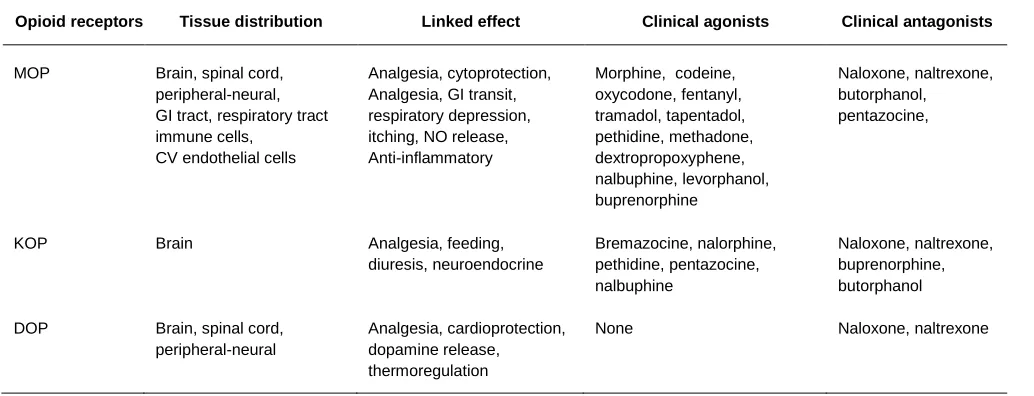
dynorphins, which activate the three classical Gi/o-coupled opioid receptors; mu- (MOP), delta- (DOP), kappa- (KOP)8. Basic classification, distribution, function, and pharmacology are
summarized in Table 1. Although DOP and KOP receptor opioid
binding plays a role in the modulation of pain signals, the MOP
receptor is the major opioid receptor responsible for the analgesic effect of opioids, since MOP knock-out animals show abolished
opioid-mediated analgesia9. A fourth receptor has been identified to exhibit a high degree of structural homology with the three opioid
receptors, called nociceptin receptor (or NOP)10, but has been characterised by the International Union of Basic and Clinical Pharmacology (IUPHAR) as an “opioid-like” receptor and not an
actual opioid receptor, due to its distinct pharmacology and its irrelevance with analgesia.
Even though the MOP receptors are mostly found in the central
nervous system (spinal cord dorsal horn, thalamus, cortex,
midbrain)11 where they inhibit nociceptive signals by intercepting ascending excitatory pathways and modulating the firing of
GABAergic, serotonergic and dopanimergic neurons12, the non-analgesic effects of opioids are very well documented in the literature13. Opioid receptors are found in peripheral tissues where MOP-ligand binding is responsible for a number of peripheral effects
such as respiratory depression, constipation and immunodepression 14. In addition, a number of behavioural non-analgesic opioid effects
have also been documented in the literature. Long-term morphine
treatment is associated with alternations of cellular signalling in the
UK Journal of Pharmaceutical and Biosciences
Available at www.ukjpb.com
UK J Pharm & Biosci, 2015: 3(1); 13 reward centres that contribute to addiction and mood impairment15.
MOP receptor desensitization has been shown to contribute to the development of physical dependence as a consequence of
modulating inwardly rectifying K+ conductance at a cellular level16,17.
Gene knockout technology has provided consistent evidence for the absence of opioid addiction in MOP-receptor knockout rodents even
after prolonged morphine treatment18-20. In parallel, opioid-induced behavioural non-analgesic effects such as sedation21 and euphoria 22 have been also well documented in the literature, although usually noted as opioid side effects. Nevertheless, since the analgesic
effects of opioids have attracted much of the attention, many other
opioid receptor-mediated behavioural effects have been therapeutically underestimated or ignored.
2 Depression, Anxiety and Pain: more than a triangle
Clinical depression is a common mood disorder that is characterized by behavioural and cognitive symptoms such as disturbances in
mood, sleep and eating behaviour, loss of interest, loss of pleasure
(anhedonia), decreased energy, feelings of guilt, helplessness, worthlessness and general emotional instability. Depression affects
more than 1 in 20 people in developed countries, and more than 350
million people worldwide in 201223. The current antidepressant pharmacotherapies, which include the use of selective serotonin reuptake inhibitors (SSRIs), serotonin-norepinephrine reuptake
inhibitors (SNRIs), monoamine oxidation inhibitors (MAOIs) and
tricyclic antidepressants (TCAs), are based on the monoamine
theory of clinical depression, which links the development of
depression with lower levels of dopamine, serotonin and
noradrenalin levels in certain brain areas24.
Table 1: Indicative tissue distribution of the three classical opioid receptor types (mu; MOP, delta; DOP, kappa; KOP), the respective effect upon activation and the relevant clinically-available opioid ligands
Opioid receptors Tissue distribution Linked effect Clinical agonists Clinical antagonists
MOP Brain, spinal cord, peripheral-neural, GI tract, respiratory tract immune cells,
CV endothelial cells
Analgesia, cytoprotection, Analgesia, GI transit, respiratory depression, itching, NO release, Anti-inflammatory
Morphine, codeine, oxycodone, fentanyl, tramadol, tapentadol, pethidine, methadone, dextropropoxyphene, nalbuphine, levorphanol, buprenorphine
Naloxone, naltrexone, butorphanol, pentazocine,
KOP Brain Analgesia, feeding,
diuresis, neuroendocrine
Bremazocine, nalorphine, pethidine, pentazocine, nalbuphine
Naloxone, naltrexone, buprenorphine, butorphanol
DOP Brain, spinal cord, peripheral-neural
Analgesia, cardioprotection, dopamine release, thermoregulation
None Naloxone, naltrexone
However, current antidepressant therapy remains a challenge due to
the high treatment failure rates among patients (63%) and the
general negative attitude towards using these agents from both patients and their partners due to their potent behavioural
side-effects 25. Both of those issues justify the need to explore novel ideas that could explain the pathology of depression. They also highlight the urgent need to develop new antidepressants that do not rely on
the monoamine theory.
Since the late „70s, a connection between untreated or undertreated
chronic pain and the development of anxiety-related symptoms has been well established 26. Today we know that the development of a number of different anxiety-related disorders can be caused by
untreated and persistent chronic pain, which leads to mood disturbances due the reduced quality of life27,28. Anxiety and
depression are usually reported as comorbid conditions, although
they possess distinct characteristics29, mainly due to the fact that they share common neurophysiological mechanisms of manifestation and sometimes even common interventions30. In parallel, depression has long been reported as a concomitant condition in chronic
untreated pain, although there is a wide range of onset (between 10-90%) among neuropathic pain patients31. More than 75% of depressed patients display symptoms of some kind of untreated
pain, whereas patients that suffer from persistent pain are more likely
to develop depression32. A number of published reviews have quite accurately described the relationship between pain and depression
in the literature at all levels of clinical science; diagnosis,
UK J Pharm & Biosci, 2015: 3(1); 13 Although today, there is still a “chicken & egg” type of discussion
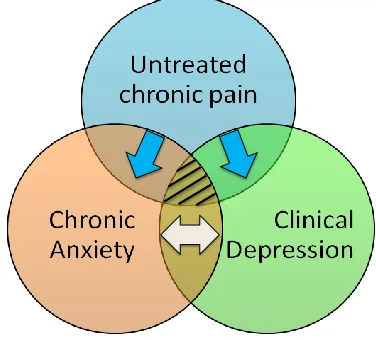
regarding the causal relationship between pain, anxiety and depression, a significant clinical association between these three
conditions is widely accepted (Figure 1). Their pharmacological
treatments have attracted particular attention since they share common efficacies; effective anxiolytics show efficacy against
depression and chronic pain, and vice versa37-39. Nevertheless, the use of clinically used opioids for the treatment of anxiety and
depression in particular, has not been explored sufficiently, although the euphoric effects of opioids have been described since the late „70s40
.
3 Opioids as antidepressants: how close are we?
The antidepressant effects of opioids have been explored
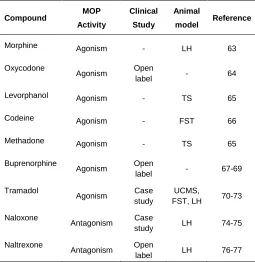
extensively during the last few decades as shown in Table 2 (for a
detailed review see Berrocoso et al 41). However, not much progress has been made towards developing novel opioids as antidepressants
or even exploring the clinical use of currently available opioids for the
treatment of mood disorders like depression. Despite a large volume
of in vitro and in vivo studies in the literature regarding the effects of
opioids on serotonergic and dopaminergic biology, only a few studies
have explored the antidepressant potential of opioids in clinical trials.
Buprenorphine, a KOP receptor antagonist and a weak MOP agonist, is one such example. The role of the KOP receptors and its
associated ligands in anxiety-related conditions has been studied
extensively in vitro and in vivo42. A number of studies confirmed antidepressant effects of laboratory KOP receptor antagonists (such as norbinaltorphimine and JDtic) in various preclinical in vivo models
of depressive-like behaviour, such as the force swimming test and
the learned-helplessness paradigm43-45. In humans, low dose buprenorphine use exhibited antidepressant effects within the first 3
weeks of treatment in adults with treatment-resistant depression46. Currently two opioid ligands as one therapeutic regimen are tested in a Phase II clinical trial as an antidepressant treatment by the
biopharmaceutical company Alkermes. The ALKS 5461 is a
combination of buprenorphine and samidorphan (a selective MOP antagonist), in an effort to promote buprenorphine‟s KOP receptor antagonistic actions by simultaneously blocking it‟s MOP receptor specific action and therefore inhibiting it‟s potential addictive
effects47. Another opioid that has been tested in clinical trials against depression is the atypical opioid tramadol (a MOP receptor agonist
and a serotonin-noradrenaline reuptake inhibitor), which exhibited an
antidepressant effect comparable to venlafaxine, a clinically-used serotonin-norepinephrine reuptake inhibitor for the treatment of
depression48. Tramadol‟s mechanism of action as a weak MOP receptor agonist, which promotes analgesia, and as an agent that
increases serotonin and noradrenaline concentrations in the brain, has been thought to be ideal to make it a first in the clinic as an
antidepressant49.
Fig 1 A simplified model for the proposed relationship among untreated chronic pain, chronic anxiety and clinical depression. Areas of overlap between two conditions represent comorbidity. In the case of concurrent pain and depression, the evidence in the literature suggests one-way causality (blue arrow), e.g. undertreating or untreating pain may lead to depression unlike the vice versa. A similar relationship exists between pain and anxiety. However, the relationship between anxiety and depression is described in the literature by a two-way causality (white arrow), e.g. chronic anxiety may lead to depression, as well as depressive episodes may lead to manifestation of anxiety. The triangle between pain, anxiety and depression represents the concurrent manifestation of all three conditions and a ‘gray’ area in the literature with many unanswered questions.
Since co-administration of tramadol with current antidepressants has
been suggested to present an increased risk of manifested serotonergic syndrome50, the therapeutic use of tramadol monotherapy in patients with depression has not been further
explored extensively in double-blind clinical trials. In addition, other atypical opioids (like tapentadol; a MOP receptor agonist and a
noradrenaline reauptake-inhibitor) have not been evaluated in vivo
for any potential advantages as antidepressants. Although there is a large pool of preclinical studies that show a strong correlation
between the MOP & DOP receptor activation and the increased
activity of serotonergic/dopaminergic pathways 41, the clinical exploration of MOP and DOP receptor agonists as potential antidepressants has been quite slow. A limited number of studies
have explored the clinical use of MOP agonists like oxycodone and
oxymorphone in depression51 whereas disturbance of beta-endorphin levels in depressed patients has been linked with specific
clinical symptoms like severe anxiety, phobia and obsession 52. Clinical studies using MOP agonists or antagonists against depression are scarce. Similarly, although there is a large number of
preclinical in vivo studies that have confirmed the key role of DOP
receptor agonism in the manifestation of antidepressant-like
UK J Pharm & Biosci, 2015: 3(1); 14
Table 2:Clinically-used opioids that have been investigated for
their their antidepressant effects in animal and human studies
Compound MOP
Activity
Clinical
Study
Animal
model Reference
Morphine Agonism - LH 63
Oxycodone
Agonism Open
label - 64
Levorphanol Agonism - TS 65
Codeine Agonism - FST 66
Methadone Agonism - TS 65
Buprenorphine
Agonism Open
label - 67-69
Tramadol
Agonism Case study
UCMS,
FST, LH 70-73
Naloxone
Antagonism Case
study LH 74-75
Naltrexone
Antagonism Open
label LH 76-77
In addition, the pharmacological trend of turning away from peptidic opioids towards non-peptidic analogues, brought the limitations of
manifested convulsions for some DOP receptor agonists to the
surface, although these could be prevented by a slow
dose-escalation strategy57,58. Overall, the unexplored molecular mechanisms of MOP and DOP receptor-mediated antidepressant
effects remains a major hindrance for the development of novel
opioids that will possess higher antidepressant efficacy.
The fact that latest epidemiological figures show that more than 50%
of patients do not respond to current first-line antidepressant
treatment, highlights the fact that there is an intense need for novel, more efficacious and fast-acting antidepressants that exploit new
mechanisms of antidepressant activity59. Based on the current pipeline in commercial pharmaceutical development, it seems that
there is the will to address this need. A significant number of non-monaminergic drugs are currently under investigation in in Phase II
and III for depression, such as ifepristone (an antiprogestogen
contraceptive by Corcept), lanicemine (an N-methyl-d-aspartate receptor antagonists by AstraZeneca), esketamine (a ketamine
enantiomer and an NMDA antagonist by Janssen-Cilag), RG1578 (a
negative modulator of metabotropic glutamate 2/3 receptor by Roche), MK-6096 (an orexin 1 & 2 antagonist by Merck) among
others47. However, none of these are opioid or opioid-receptor mediated ligands. The only ligand which is currently in trials as a potential therapeutic agent for major depression and can be
somehow linked to opioid action is the agent LY2940094 (a
nociceptin antagonist by Lilly) with Phase-I pharmacokinetic studies
being concluded in November 2011, followed by a Phase-II study (8-week administration, randomized, double-blinded,
placebo-controlled, parallel-group, multi-centered) for the efficacy and safety
of the ligand in patients with depressive disorder, concluded recently in March 2014. Although no results have been published yet from
these studies, the company conducted a third Phase-I study looking
at the occupancy of nociceptin receptors by the LY2940094 ligand in
healthy subjects as well as a second Phase-II study looking at the efficacy of the drug to reduce alcohol dependency (both concluded in
December 2014). Although the relationship between the nociceptin
receptor and stress responses has been described in the literature and the use of nociceptin antagonists as antidepressant agents has
been proposed based on data from animal studies60-62, similarly to classical opioid ligands, there is still an obvious absence of novel opioid ligands in clinical trials for the treatment of depression.
4 Conclusion
Although a large volume of preclinical studies support the
antidepressant activity of opioids, it does not appear that novel opioids are currently under development for the treatment of
depression, let alone close to clinical trials. Even though there is a
good amount of experimental in vivo evidence that supports the beneficial use of opioids in depression and anxiety, it is possible that
the addictive properties of opioids as well as their tendency to
produce tolerance of their resulted effect from long-term use, remains a point of concern that averts these agents from developed
further. Perhaps the opioid research community needs time to reflect
on recent advances in opioid pharmacology, both in non-addictive
opioid ligands and opioid/non-opioid dual ligands, in order to set appropriate strategies in the future that will lead to the initiation of
clinical studies, either as opioid monotherapies or as a co-treatment
with current antidepressants.
5 Competing interest
None
6 Author’s contributions
XY and ND researched the literature and drafted the manuscript. NG and ND provided conceptual input and proof read the manuscript.
7 References
1. Dietis N, Rowbotham DJ and Lambert DG. Controlling cancer pain: Is morphine the best we can do? Trends in
Anaesthesia and Critical Care 2011; (1): 227-229.
2. Cherubino P, Sarzi-Puttini P, Zuccaro SM and Labianca R. The management of chronic pain in important patient
subgroups. Clin Drug Investig. 2012; 32(1): 35-44.
3. Greco MT, Roberto A, Corli O, Deandrea S, Bandieri E,
UK J Pharm & Biosci, 2015: 3(1); 15 Management: An Update of a Systematic Review of
Undertreatment of Patients With Cancer. J Clin Oncol. 2014; 32 (36): 4149-4154.
4. Pergolizzi JV, Gharibo C and Ho KY. Treatment
Considerations for Cancer Pain: A Global Perspective. Pain Pract. 2014; doi: 10.1111/papr.12253 (ahead of
print).
5. Woolf CJ, Bennett GJ, Doherty M, Dubner R, Kidd B,
Koltzenburg M, Lipton R, Loeser JD, Payne R and Torebjork E. Towards a mechanism-based classification of
pain. Pain. 1998; 77(3): 227-229.
6. Woolf CJ and Mannion RJ. Neuropathic pain: aetiology, symptoms, mechanisms, and management. The Lancet.
1999; 353(9168): 1959-1964.
7. Urch CE, Suzuki R, Higginson IJ, Hearn J, Murtagh F, Twycross R, et al.. Pathophysiology of somatic, visceral,
and neuropathic cancer pain. Clinical Pain Management
Second Edition: Cancer Pain. 2008; 3(4): 13.
8. Dietis N, Rowbotham DJ and Lambert DG. Opioid receptor subtypes: fact or artifact? Br J Anaesth. 2011;107(1): 8-18.
9. Kieffer BL and Gavériaux-Ruff C. Exploring the opioid
system by gene knockout. Prog Neurobiol. 2002; 66(5):285-306.
10. Lambert DG. The nociceptin/orphanin FQ receptor: a
target with broad therapeutic potential. Nat Rev Drug Discov. 2008; 7(8):694-710.
11. Terman G and Bonica J. Spinal mechanisms and their modulation. Bonica‟s Management of Pain. 3rd ed.
Baltimore, MD: Lippincott Williams & Wilkins: 2001;73-152.
12. Inturrisi CE. Clinical pharmacology of opioids for pain. The
Clinical journal of pain. 2002; 18(4): S3-S13.
13. Mattia C. Editorial: non-analgesic effects of opioids: the dark side of the moon. Curr Pharm Des. 2012; 18(37):
5991-3.
14. Gutstein HB and Akil H. Opioid analgesics. Goodman and
Gilman's The Pharmacological Basis of Therapeutics, 10th ed. Edited by Hardman JG, Limbird LE, Gilman AG. New
York, McGraw-Hill2001; 569-620.
15. Nestler EJ. Molecular neurobiology of addiction. The American journal on addictions. 2001; 10(3): 201-217.
16. Kovoor A, Henry DJ and Chavkin C. Agonist-induced
desensitization of the mu opioid receptor-coupled potassium channel (GIRK1). Journal of Biological
Chemistry. 1995; 270(2): 589-595.
17. Mestek A, Hurley JH, Bye LS, Campbell AD, Chen Y, Tian
M, Liu J, Schulman H and Yu L.The human mu opioid receptor: modulation of functional desensitization by
calcium/calmodulin-dependent protein kinase and protein
kinase C. The journal of neuroscience. 1995; 15(3):
2396-2406.
18. Berrendero F, Kieffer BL and Maldonado R. Attenuation of
nicotine-induced antinociception, rewarding effects, and dependence in μ-opioid receptor knock-out mice. The
journal of neuroscience. 2002;22(24): 10935-10940.
19. Gaveriaux-Ruff C and Kieffer B. Opioid receptor genes
inactivated in mice: the highlights. Neuropeptides. 2002; 36(2): 62-71.
20. Hough L, Nalwalk JW, Chen Y, Schuller A, Zhu Y, Zhang
J, Menge WM, Leurs R, Timmerman H and Pintar JE.
Improgan, a cimetidine analog, induces morphine-like antinociception in opioid receptor-knockout mice. Brain
research. 2000; 880(1): 102-108.
21. Smith A, Farrington M and Matthews G. Monitoring sedation in patients receiving opioids for pain
management. J Nurs Care Qual. 2014; 29(4): 345-53.
22. Jasinski DR and Preston KL. Evaluation of tilidine for
morphine-like subjective effects and euphoria. Drug Alcohol Depend. 1986; 18(3): 273-92.
23. World Health Organization (WHO), World suicide
prevention day 2012.
http://www.who.int/mediacentre/events/annual/world_suici
de_prevention_day/en. Accessed 16.6.2012
24. Elhwuegi AS. Central monoamines and their role in major depression. Progress in Neuro-Psychopharmacology and
Biological Psychiatry. 2004; 28(3): 435-451.
25. Kessing LV, Vibe Hansen H, Demyttenaere K and Bech P.
Depressive and bipolar disorders: patients' attitudes and beliefs towards depression and antidepressants.
Psychological medicine. 2005; 35(08): 1205-1213.
26. Jones LP. Anxiety, as experienced by chronic pain patients. J Relig Health. 1985; 24(3): 209-17.
27. Jordan KD and Okifuji A. Anxiety disorders: differential
diagnosis and their relationship to chronic pain. J Pain
Palliat Care Pharmacother. 2011; 25(3): 231-45.
28. Asmundson GJ. Anxiety and related factors in chronic
pain. Pain Res Manag. 2002; 7(1): 7-8.
29. Nelson DV and Novy DM. Self-report differentiation of anxiety and depression in chronic pain. J Pers Assess.
1997; 69(2): 392-407.
30. Adamek ME and Slater GY. Depression and anxiety. J Gerontol Soc Work. 2008; 50 Suppl 1: 153-89.
31. Turkington RW. Depression masquerading as diabetic
neuropathy. Jama. 1980; 243(11): 1147-1150.
32. Lepine JP and Briley M. The epidemiology of pain in depression. Hum Psychopharmacol. 2004; 19 Suppl 1:
UK J Pharm & Biosci, 2015: 3(1); 16 33. Bair M, Robinson R, Katon W and Kroenke K. Depression
and pain comorbidity. Ach Intern Med. 2003; 163: 2433-2445.
34. Dickens C, McGowan L and Dale S. Impact of depression
on experimental pain perception: a systematic review of the literature with meta-analysis. Psychosom Med. 2003;
65(3): 369-75.
35. Rijavec N and Grubic VN. Depression and pain: often
together but still a clinical challenge: a review. Psychiatr Danub. 2012; 24(4): 346-52.
36. Holmes A, Christelis N and Arnold C. Depression and
chronic pain. MJA Open. 2012; 1 Suppl 4: 17-20.
37. King RB. Neuropharmacology of depression, anxiety, and
pain. Clin Neurosurg. 1981; 28:116-36.
38. Verma S and Gallagher RM. The psychopharmacologic treatment of depression and anxiety in the context of
chronic pain. Curr Pain Headache Rep. 2002; 6(1): 30-9.
39. Jongen JL, Hans G, Benzon HT, Huygen F and Hartrick
CT. Neuropathic pain and pharmacological treatment. Pain Pract. 2014; 14(3):283-95.
40. Levitt RA, Baltzer JH, Evers TM, Stilwell DJ and Furby JE.
Morphine and shuttle-box self-stimulation in the rat: a model for euphoria. Psychopharmacology (Berl). 1977;
54(3): 307-11.
41. Berrocoso E, Sánchez-Blázquez P, Garzón J and Mico JA. Opiates as antidepressants. Current pharmaceutical
design. 2009; 15(14): 1612-1622.
42. Van't Veer A and Carlezon WA Jr. Role of kappa-opioid
receptors in stress and anxiety-related behavior. Psychopharmacology (Berl). 2013; 229(3): 435-52.
43. Beardsley PM, Howard JL, Shelton KL and Carroll FI.
Differential effects of the novel kappa opioid receptor antagonist, JDTic, on reinstatement of cocaine-seeking
induced by footshock stressors vs cocaine primes and its
antidepressant-like effects in rats. Psychopharmacology. 2005; 183:118–126.
44. McLaughlin JP, Li S, Valdez J, Chavkin TA and Chavkin C.
Social defeat stress-induced behavioral responses are
mediated by the endogenous kappa opioid system. Neuropsychopharmacol. 2006; 31: 1241–1248.
45. Land BB, Bruchas MR, Lemos JC, Xu M, Melief EJ and
Chavkin C. The dysphoric component of stress is encoded by activation of the dynorphin kappa-opioid system. J Neurosci. 2008; 28: 407–414.
46. Karp JF, Butters MA, Begley AE, Miller MD, Lenze EJ,
Blumberger DM, Mulsant BH and Reynolds CF. Safety, tolerability, and clinical effect of low-dose buprenorphine
for treatment-resistant depression in midlife and older
adults. J Clin Psychiatry. 2014; 75(8): e785-93.
47. Harrison C. Nature Reviews Drug Discovery. Trial watch:
Opioid receptor blocker shows promise in Phase II depression trial. 2013; 12: 415.
48. Shapira NA, Verduin ML and DeGraw JD. Treatment of
refractory major depression with tramadol monotherapy. J Clin Psychiatry. 2001; 62(3): 205-6.
49. Barber J. Examining the use of tramadol hydrochloride as
an antidepressant. Exp Clin Psychopharmacol. 2011;
19(2): 123-30.
50. Shahani L. Tramadol precipitating serotonin syndrome in a
patient on antidepressants. J Neuropsychiatry Clin
Neurosci. 2012; 24(4): E52.
51. Stoll AL and Rueter S. Treatment augmentation with
opiates in severe and refractory major depression. Am J
Psychiatry. 1999; 156(12): 2017.
52. Darko DF, Risch SC, Gillin JC and Golshan S. Association
of beta-endorphin with specific clinical symptoms of
depression. Am J Psychiatry. 1992; 149(9): 1162-7.
53. Baamonde A, Daugé V, Ruiz-Gayo M, Fulga, IG, Turcaud S, Fournié-Zaluski MC and Roques BP.
Antidepressant-type effects of endogenous enkephalins protected by systemic RB 101 are mediated by opioid δ and dopamine
D1 receptor stimulation. Eur. J. Pharmacol. 1992; 216: 157–166
54. Tejedor-Real P, Micó JA, Smadja C, Maldonado R., Roques BP and Gibert-Rahola J. Involvement of δ-opioid
receptors in the effects induced by endogenous
enkephalins on learned helplessness model. Eur. J. Pharmacol. 1998; 354: 1–7.
55. Torregrossa MM, Jutkiewicz EM, Mosberg HI, Balboni G,
Watson SJ and Woods JH. Peptidic delta opioid receptor
agonists produce antidepressant-like effects in the forced swim test and regulate BDNF mRNA expression in rats. Brain Res. 2006; 1069: 172–181.
56. Saitoh A, Yamada M, Yamada M, Takahashi K,
Yamaguchi K, Murasawa H, Nakatani A, Tatsumi Y, Hirose N and Kamei J. Antidepressant-like effects of the
delta-opioid receptor agonist SNC80
([(+)-4-[(alphaR)-alpha- [(2S,5R)-2,5-dimethyl-4-(2-propenyl)-1-piperazinyl]-(3-methoxyphenyl)methyl]-N,N-diethylbenzamide) in an
olfactory bulbectomized rat model. Brain Res. 2008; 1208:
160-9.
57. Broom DC, Jutkiewicz EM, Rice KC, Traynor JR and
Woods JH. Behavioral effects of delta-opioid receptor
agonists: potential antidepressants? Jpn J Pharmacol.
2002; 90(1):1-6.
58. Jutkiewicz EM. The antidepressant -like effects of
UK J Pharm & Biosci, 2015: 3(1); 17 59. O'Leary OF, Dinan TG and Cryan JF. Faster, better,
stronger: Towards new antidepressant therapeutic strategies. Eur J Pharmacol. 2014; pii:
S0014-2999(14)00584-6 (ahead of print).
60. Gavioli EC and Calo G. Nociceptin/orphanin FQ receptor antagonists as innovative antidepressant drugs.
Pharmacol Ther. 2013; 140(1):10-25.
61. Vitale G, Ruggieri V, Filaferro M, Frigeri C, Alboni S,
Tascedda F, Brunello N, Guerrini R, Cifani C and Massi M. Chronic treatment with the selective NOP receptor
antagonist [Nphe 1, Arg 14, Lys 15]N/OFQ-NH 2
(UFP-101) reverses the behavioural and biochemical effects of unpredictable chronic mild stress in rats.
Psychopharmacology (Berl). 2009; 207(2):173-89.
62. Gavioli EC, Marzola G, Guerrini R, Bertorelli R, Zucchini S, De Lima TC and Rae GA, Salvadori S, Regoli D, Calo G.
Blockade of nociceptin/orphanin FQ-NOP receptor
signalling produces antidepressant-like effects:
pharmacological and genetic evidences from the mouse forced swimming test. Eur J Neurosci. 2003;
17(9):1987-90.
63. Tejedor-Real P, Mico JA, Maldonado R, Roques BP and Gibert-Rahola J. Implication of endogenous opioid system
in the learned helplessness model of depression.
Pharmacology Biochemistry and Behavior. 1995; 52(1): 145-152.
64. Stoll AL and Rueter S. Treatment augmentation with
opiates in severe and refractory major depression.
American Journal of Psychiatry. 1999; 156(12): 2017-2017.
65. Berrocoso E, Ikeda K, Sora I, Uhl GR, Sánchez-Blázquez
P and Mico JA. Active behaviours produced by antidepressants and opioids in the mouse tail suspension
test. International Journal of Neuropsychopharmacology.
2013; 16(1): 151-162.
66. Berrocoso E. and Mico JA. Cooperative opioid and serotonergic mechanisms generate superior
antidepressant-like effects in a mice model of depression.
International Journal of Neuropsychopharmacology. 2009; 12(8): 1033-1044.
67. Emrich, H, Vogt P and Herz A. Possible antidepressive
effects of opioids: action of buprenorphine. Annals of the New York Academy of Sciences. 1982; 398(1): 108-112.
68. Bodkin JA, Zornberg GL, Lukas SE and Cole JO.
Buprenorphine treatment of refractory depression. Journal of clinical psychopharmacology. 1995; 15(1): 49-57.
69. Nemeroff, C.B., Prevalence and management of
treatment-resistant depression. Journal of Clinical Psychiatry. 2007; 68(8): 17.
70. Shapira, NA, Verduin ML and DeGraw JD. Treatment of
refractory major depression with tramadol monotherapy.
2001.
71. Rojas-Corrales M, Berrocoso E, Gibert-Rahola J and Micó
JA. Antidepressant-like effects of tramadol and other
central analgesics with activity on monoamines reuptake, in helpless rats. Life sciences. 2002; 72(2): 143-152.
72. Yalcin I, Aksu F, Bodard S, Chalon S and Belzung C.
Antidepressant-like effect of tramadol in the unpredictable chronic mild stress procedure: possible involvement of the
noradrenergic system. Behavioural pharmacology. 2007;
18(7): 623-631.
73. Jesse CR, Bortolatto CF, Savegnago L, Rocha JB and Nogueira CW. Involvement of l-arginine–nitric oxide–cyclic
guanosine monophosphate pathway in the
antidepressant-like effect of tramadol in the rat forced swimming test. Progress in Neuro-Psychopharmacology and Biological
Psychiatry. 2008; 32(8): 1838-1843.
74. Terenius, L, Wahlstrom A and Agren H. Naloxone (Narcan®) treatment in depression: clinical observations
and effects on CSF endorphins and monoamine
metabolites. Psychopharmacology. 1977; 54(1): 31-33.
75. Hunziker ML. Opioid nature of learned helplessness and stress-induced analgesia observed without re-exposure to
shock. Behavioural Pharmacology, 1992; 3(2): 117-122.
76. Salloum, IM, Cornelius JR, Thase ME, Daley DC, Kirisci L and Spotts C. Naltrexone utility in depressed alcoholics.
Psychopharmacology Bulletin, 1997; 34(1): 111-115.
77. Grahn RE, Maswood S, McQueen MB, Watkins LR and
Maier SF. Opioid-dependent effects of inescapable shock on escape behavior and conditioned fear responding are
mediated by the dorsal raphe nucleus. Behavioural brain
research, 1999; 99(2): 153-167.