Available Online at www.ijpret.com 1204
INTERNATIONAL JOURNAL OF PURE AND
APPLIED RESEARCH IN ENGINEERING AND
TECHNOLOGY
A PATH FOR HORIZING YOUR INNOVATIVE WORK
A RESULT ON AUTOMATIC DISCRIMINATION IDENTIFICATION SYSTEM FOR
CORPORATE COMPANIES
AKSHAY P. RUDEY1, PROF. N. S. BAND2, DR. H. R. DESHMUKH3 1.Student of Master of Engineering in (CSE), IBSS college of Engineering and Technology, Amravati, India.
2.Assistant professor Department of (CSE), IBSS College of Engineering and Technology, Amravati, India. 3.Head of the Department of (CSE), IBSS College of Engineering and Technology, Amravati, India.
Accepted Date: 05/03/2015; Published Date: 01/05/2015
Abstract: Data mining is an increasingly important technology for extracting useful knowledge hidden in large collections of data. Automated data collection and data mining techniques such as classification rule mining have paved the way to making automated decisions, like loan granting/denial, insurance premium computation, etc. If the training data sets are biased in what regards discriminatory (sensitive) attributes like gender, race, religion, etc., discriminatory decisions may ensue. For this reason, antidiscrimination techniques including discrimination discovery and prevention have been introduced in data mining. Discrimination can be either direct or indirect. Direct discrimination occurs when decisions are made based on sensitive attributes. Indirect discrimination occurs when decisions are made based on no sensitive attributes which are strongly correlated with biased sensitive ones. We tackle discrimination prevention in data mining and propose new techniques applicable for direct or indirect discrimination prevention individually or both at the same time. Here we are developing an application in which employee’s loan, training and promotions depending on performance will be managed and also we are developing an application in which discrimination will be identified automatically and complaint will be posted against discriminator to the administrator.
Keywords: Antidiscrimination; data mining; direct and indirect discrimination prevention; rule protection; rule generalization; privacy;
Corresponding Author: MR. AKSHAY P. RUDEY
Access Online On:
www.ijpret.com
How to Cite This Article:
Akshay P. Rudey, IJPRET, 2015; Volume 3 (9): 1204-1210
Available Online at www.ijpret.com 1205 INTRODUCTION
In sociology, discrimination is the prejudicial treatment of an individual based on their membership in a certain group or category. It involves denying to members of one group opportunities that are available to other groups. There is a list of antidiscrimination acts, which are laws designed to prevent discrimination on the basis of a number of attributes (e.g., race, religion, gender, nationality, disability, marital status, and age) in various settings (e.g., employment and training, access to public services, credit and insurance, etc.). Although there are some laws against discrimination, all of them are reactive, not proactive. Technology can add proactively to legislation by contributing discrimination discovery and prevention techniques. Services in the information society allow for automatic and routine collection of large amounts of data. Those data are often used to train association/classification rules in view of making automated decisions, like loan granting/denial, insurance premium computation, personnel selection, etc
Discrimination can be either direct or indirect (also called systematic). Direct discrimination consists of rules or procedures that explicitly mention minority or disadvantaged groups based on sensitive discriminatory attributes related to group membership.
Indirect discrimination consists of rules or procedures that, while not explicitly mentioning discriminatory attributes, intentionally or unintentionally could generate discriminatory decisions
2. LITERATURE REVIEW & RELATED WORK:
Available Online at www.ijpret.com 1206
Although some methods have already been proposed for each of the mentioned approaches (preprocessing, in-processing, post processing), discrimination prevention stays a largely unexplored research avenue.
Discrimination prevention methods based on preprocessing published so far [1], [2] present some limitations, which we next highlight: They attempt to detect discrimination in the original data only for one discriminatory item and based on a single measure. This approach cannot guarantee that the transformed data set is really discrimination free, because it is known that discriminatory behaviors can often be hidden behind several discriminatory items, and even behind combinations of them.
3. Proposed Work & Objective:
Our approach for direct and indirect discrimination prevention can be described in terms of two phases:
3.1 Discrimination measurement:
Direct and indirect discrimination discovery includes identifying discriminatory rules and redlining rules. To this end, first, based on predetermined discriminatory items in DB, frequent classification rules in FR are divided in two groups: PD and PND rules. Second, direct discrimination is measured by identifying discriminatory rules among the PD rules using a direct discrimination measure (elift) and a discriminatory threshold (_). Third, indirect discrimination is measured by identifying redlining rules among the PND rules combined with background knowledge, using an indirect discriminatory measure (elb), and a discriminatory threshold (_).
3.2 Discrimination Prevention Algorithms:
Rule Mining Algorithms:
Association rule mining is an active data mining research area. However, most ARM algorithms cater to a centralized environment. For association rule mining, the target of mining is not predetermined. The Apriori algorithm probably the best known algorithm.
Algorithm 1. DIRECT RULE PROTECTION (METHOD 1).
Method 1 changes the discriminatory item set in some records (e.g., gender changed from male to female in the records with granted credits)
Available Online at www.ijpret.com 1207
Method 2 changes the class item in some records (e.g., from grant credit to deny credit in the records with male gender). Similar data transformation methods could be applied to obtain direct rule protection with respect to other measures Algorithm 2 details Method 2 for DRP.
In this case, after specifying the discrimination prevention method (i.e., direct rule protection or rule generalization) to be applied for each discriminatory rule based on the algorithm in Algorithm 3.
Algorithm 3. DIRECT RULE PROTECTION AND RULE GENERALIZATION (METHOD 3).
Algorithm 3 should be run to combine rule generalization and one of the two direct rule protection methods.
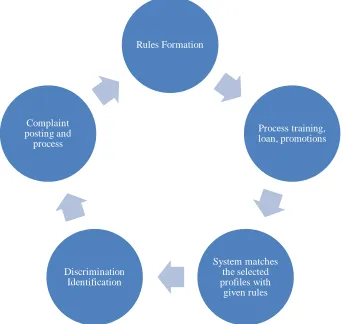
Fig 1: Proposed method of discrimination identification.
Modules:
Admin Module
Branch Admin
Employees
Training
Promotion
Loan Processing
Discrimination identification and prevention Rules Formation
Process training, loan, promotions
System matches the selected profiles with given rules Discrimination
Identification Complaint posting and
Available Online at www.ijpret.com 1208 Overview Of Project:
Screenshot 1: Admin Page
Screenshot 2: Adding Loan Rules
Available Online at www.ijpret.com 1209 Screenshot 4: Creating Rule Set For Training
4. Applications:
1. Automatic discrimination will be identified and can be prevented.
2. Loan Processing and Granting can be easily achieved.
3. Promotion can be easily accessed on the basis of performance.
4. Discrimination can be avoided with end user if he or she will be related with low categories (age, gender).
5. Every employee can gets the training if he is shortlisted for training or other facilities no one is excluded.
5. CONCLUSION:
Along with privacy, discrimination is a very important issue when considering the legal and ethical aspects of data mining. It is more than obvious that most people do not want to be discriminated because of their gender, religion, nationality, age, and so on, especially when those attributes are used for making decisions about them like giving them a job, loan, insurance, etc.
Available Online at www.ijpret.com 1210 6. REFERENCES:
1. F. Kamiran and T. Calders, “Classification without Discrimination,” Proc. IEEE Second Int’l Conf. Computer, Control and Comm. (IC4 ’09), 2009.
2. F. Kamiran and T. Calders, “Classification with no Discrimination by Preferential Sampling,” Proc. 19th Machine Learning Conf. Belgium and The Netherlands, 2010.
3. D. Pedreschi, S. Ruggieri, and F. Turini, “Discrimination-Aware Data Mining,” Proc. 14th ACM Int’l Conf. Knowledge Discovery and Data Mining (KDD ’08), pp. 560-568, 2008.
4. D. Pedreschi, S. Ruggieri, and F. Turini, “Measuring Discrimination in Socially Sensitive Decision Records,” Proc. Ninth SIAM Data Mining Conf. (SDM ’09), pp. 581-592, 2009.
5. D. Pedreschi, S. Ruggieri, and F. Turini, “Integrating Induction and Deduction for Finding Evidence of Discrimination,” Proc. 12th ACM Int’l Conf. Artificial Intelligence and Law (ICAIL ’09), pp. 157- 166, 2009.
6. S. Ruggieri, D. Pedreschi, and F. Turini, “DCUBE: Discrimination Discovery in Databases,” Proc. ACM Int’l Conf. Management of Data (SIGMOD ’10), pp. 1127-1130, 2010.
7. Sara Hajian and Josep Domingo-Ferrer, "A Methodology for Direct and Indirect Discrimination Prevention in Data Mining",ieee transactions on knowledge and data engineering, vol. 25, NO. 7, JULY 2013.