University of New Orleans University of New Orleans
ScholarWorks@UNO
ScholarWorks@UNO
University of New Orleans Theses and
Dissertations Dissertations and Theses
5-20-2005
The Impact of Whole Faculty Study Groups and Peer Observations
The Impact of Whole Faculty Study Groups and Peer Observations
on the Professional Learning Community
on the Professional Learning Community
Kelvin Adams
University of New Orleans
Follow this and additional works at: https://scholarworks.uno.edu/td
Recommended Citation Recommended Citation
Adams, Kelvin, "The Impact of Whole Faculty Study Groups and Peer Observations on the Professional Learning Community" (2005). University of New Orleans Theses and Dissertations. 253.
https://scholarworks.uno.edu/td/253
THE IMPACT OF WHOLE FACULTY STUDY GROUPS AND PEER OBSERVATIONS ON THE PROFESSIONAL LEARNING COMMUNITY
A Dissertation
Submitted to the Graduate Faculty of the University of New Orleans
in partial fulfillment of the requirements for the degree of
Doctor of Philosophy in
Educational Leadership
by
Kelvin R. Adams
B.A. Northeast Louisiana University, 1978 M.S. Xavier University, 1991
ACKNOWLEDGEMENTS
My eternal gratitude is extended to my major professor, Dr. Peggy Kirby. Without her
encouragement, guidance, direction and assistance I would never have continued the process and
completed the dissertation. She never wavered in her commitment to assist in this endeavor. She
demanded my best in every aspect of the program. Any draft was corrected with suggestions for
improvement. While I felt overwhelmed many times I never lost sight of the final goal because
of her dedication and steadfastness to the task at hand. Dr. Kirby was always very focused
regarding my program and kept me focused. I appreciated that she never accepted any doubt that
I would be able to complete this dissertation for the spring semester.
I also appreciate the assistance offered by my research committee: Dr. Brian Riedlinger,
Dr. Jeffery Oescher, and Dr. Juanita Haydel. Their comments have always been encouraging and
positive. They have assisted by making sure I have been accountable to the task and myself.
On a personal note, I would like to thank Karen, my son Jeremiah and my daughter
Jessica. Throughout the process, they have always been supportive and encouraging. Special
Table of Contents
List of Tables ... vi
Abstract ... vii
CHAPTER ONE INTRODUCTION ...1
Background ...3
Statement of Problem...7
Theoretical Framework...7
Conceptual Framework...10
Purpose of the Study ...11
Rationale ...12
Whole Faculty Study Groups...12
Peer Observations ...13
Time as a Factor in Implementing Whole Faculty Study Groups and Peer Observations ...14
Research Questions...15
Significance of the Study...15
Overview of Methodology...17
Assumptions...18
Definition of Terms...18
Organization of the Study ...19
CHAPTER TWO REVIEW OF LITERATURE ...20
Professional Learning Community ...20
Supportive and Shared Leadership ...22
Shared Values and Vision...27
Collective Learning...30
Supportive Conditions ...34
Physical Factors ...35
Human Resources ...36
Shared Personal Practice...37
Whole Faculty Study Groups...37
Peer Observation...40
School Culture ...42
Cultural Norms That Facilitate School Improvement...44
Instrumentation ...51
School Professional Staff as Learning Community Questionnaire…...………52
Reliability Analyses ...52
Validity Analyses...52
Focus Groups ...53
Procedure ...54
Implementation Fidelity...56
Data Analysis ...57
CHAPTER FOUR FINDINGS ...59
Whole Faculty Study Group Implementation and Progress ...59
Key Players ...60
Introduction of Whole Faulty Study Groups ...61
September-October ...61
November-December...62
January- February ...63
Peer Observation Implementation and Progress...66
Focus Group Interviews...72
Participant Profiles...72
Perceptions of Changes in School Culture ... 74
School Professional Staff as Learning Community Questionnaire...79
Participant Profile ...80
School Professional Learning Community Questionnaire Results...81
Conclusion ...83
CHAPTER FIVE RESULTS ...85
Overview...85
Discussion of Results...87
Supportive and Shared Leadership ...87
Shared Values and Vision...89
Collective Learning and Application of Learning ...91
Supportive Conditions ...92
Shared Personal Practice...93
Next Steps ...95
Personal Change ...97
Delimitations and Limitations...98
Implications for Further Research ...99
REFERENCES ...101
Appendix A: Human Subjects Approval Form...110
Appendix B: Copyright Permission Letter ...113
Appendix C: Consent Form ...116
Appendix D: Confirmation Letter...119
Appendix E: Focus Group Interview Questions ...121
Appendix F: Whole Faculty Study Group Questions ...122
Appendix G: Observation Checklist ...123
List of Tables
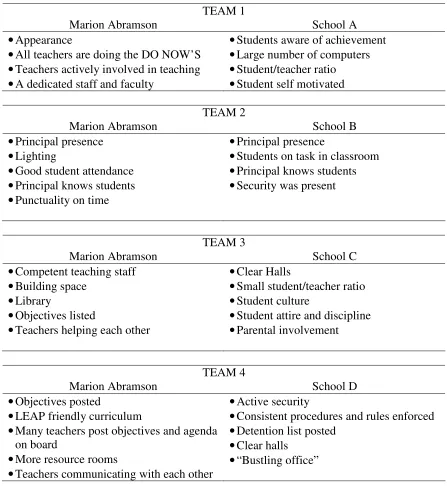
Table 1. Positive Attributes of Other High Schools Visited as Compared to Abramson...69
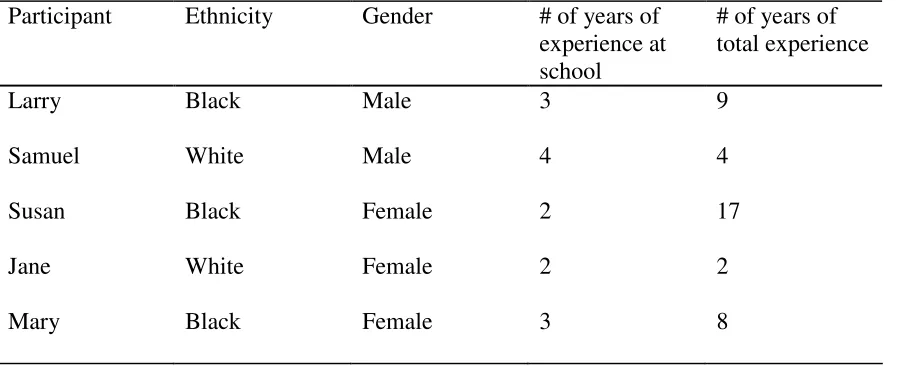
Table 2. Focus Group Participants ...73
Table 3. Gender of Teacher Respondents to SPSLCQ, 2nd Administration...80
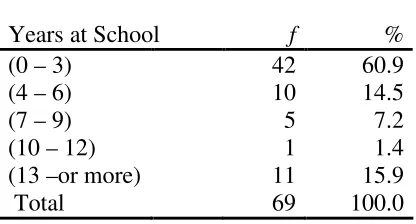
Table 4. Years Experience at School of Teacher Respondents ...80
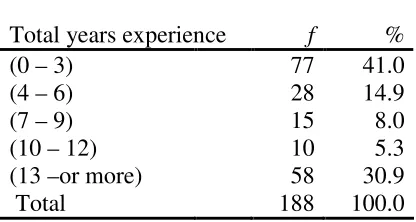
Table 5. Total Years of Teaching Experience of Teacher Respondents...81
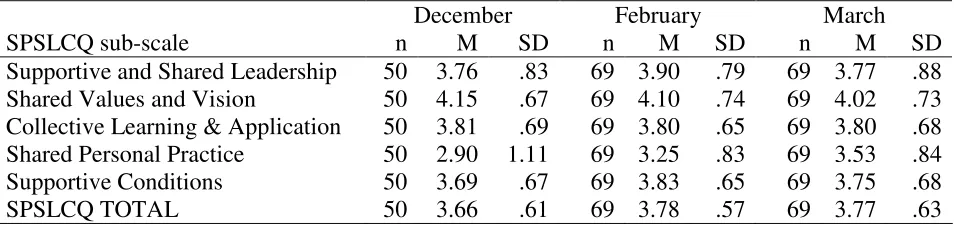
Table 6. Descriptive Statistics for SPSLCQ by Time of Administration...82
Table 7. ANOVA Summary Table for Effect of Time on SPSLCQ Total Mean...82
Table 8. MANOVA Summary Table for Effect of Time on SPSLCQ Sub-Scales ...83
ABSTRACT
In an era of school reform, it should not be uncommon for educators to review every
strategy or tool to initiate changes that will result in increased student achievement and school
improvement. The rhetoric is that the changes begin with the federal government, state board of
education, local school board, superintendent, and central office, but the reality is that the
changes must begin at the doors of the school. In the school, the changes must begin with and
become alive with learning among the staff, students, and the parents. The school staff must see
themselves as a community of learners, where the entire school learns together.
The term used to describe a school where the faculty sees themselves as a community of
learners is a “professional learning community” (Hord, 2004, p. 1). The purpose of this study
was to determine how one school began the process of becoming a professional learning
community through the implementation of whole faculty study groups and peer observation.
Professional learning communities do exist, but the manner in which they are created is
nebulous. The practitioner-researcher sought to document the work of a senior high school staff
as they underwent the process of implementing whole faculty study groups and peer observation.
A questionnaire was given to the staff before, during, and after the implementation of peer
observation and whole faculty study groups. A comparison was made of the results from the
questionnaires over time. Critical incidents create the basis for an action research case study
CHAPTER 1
INTRODUCTION
Educators freely use terms like No Child Left Behind, high stakes testing, charter
schools, and school vouchers on a regular basis. These terms have littered the educational reform
landscape over the past decade with hope for significant school improvement; however, only
modest changes have occurred at our local urban schools. Educational jargon has only helped to
confuse the public and taken the much-needed spotlight away from the individual school site.
School principals are constantly being challenged to improve schools but the focus is
more often than not away from the school site. Decisions that affect the school site are being
made at the central office or by persons who are not directly associated with the school site. Our
schools are desperately in need of changes, but the changes required are complex and difficult.
Change cannot simply be made by a change in the staff or organizational structure. The change
in structure of middle grade schools, for example, from sixth through eighth grade schools to
kindergarten through eighth grade schools, does not solve the many and varied problems of
urban middle schools. One can’t simply change high school from a nine through twelve
configuration to an eight through twelve configuration (New Orleans Public Schools, 2003).
Does a kindergarten through third grade primary school provide a better educational program
and environment than a kindergarten through first grade school? So-called agents of
change are simply moving the players around but not reforming the educational institution.
Do we improve our schools by buying a new program? Programs like High Schools That
Work (HSTW), First Things First (FTF), and the Talent Development High School (TDHS) are
supposed to make the instructional program in high schools better. Do these models alone
changed? Yes, there are new requirements and mandates, but has the staff become a community
of learners or simply learners of new initiatives? If teachers become learners of the next or new
initiative, they will only learn the language and terminology of these initiatives. Teachers can not
learn new programs or initiatives simply because they are required to learn for someone else’s
approval, rather than learning to become more adaptable and to create solutions to problems
(O’Neil, 1995).
In 1990, Peter Senge’s book The Fifth Dimension: The Art and Practice of the Learning
Organization arrived in bookstores and began showing up in the boardrooms of corporate
America. Senge (as cited in O’Neil, 1995) suggested that control mechanisms paralyze
employees and leaders, allowing them only to maintain their organization as machines rather
than reflecting trust in those across the organization to use their creativity in order to identify
localized problems and generate plausible solutions. He advocated a different organizational
structure, better suited to our complex, interdependent, and fast-changing society. Such an
organization structure is oriented toward learning rather than controlling mechanisms.
Senge’s (1990) work and views had their genesis in the organizational reform movement
of the 1980s and 1990s. This reform movement had as a common theme the centrality of
organizational culture. The organizational cultures that reflected the values of bigness, hierarchy,
rigidity, and rules had to be replaced with cultures that stressed flexibility, responsiveness,
individual empowerment, group empowerment, and customer service (Shafritz & Ott, 1996). The
reformation movement grew out of two beliefs:
• The origination of the movement was born out of the fear that accompanied widespread
• Organizational effectiveness, competitiveness, flexibility, and responsiveness could be
improved by changing the organizational culture.
(Shafritz & Ott, 1996)
The old command and control cultures had to be transformed to encourage and support the
widespread use of employee participation and empowerment, as well as individuals organized
into work teams (Shafritz & Ott, 1996).
For Senge (1990), change is learning, and learning is change – for people and
organizations alike. Thus, Senge believes it is possible for organizations to change because “deep
down we are all learners” (p. 24). He sought to destroy the illusion that the world is created of
separate, unrelated forces. Once we give up this illusion, we can then build learning
organizations, organizations where people continually expand their capacity to create the results
they really desire. Then, new and expansive patterns of thinking are nurtured, collective
aspiration is set free, and people are continually learning how to learn and work together (Senge,
1990). Hord (2004) was among the first to explore Senge’s paradigm in educational settings. She
used the term learning community to refer to the organization culture that supports continuous
improvement through shared leadership.
Background
In 1992, the staff from Southwest Educational Development Laboratory (SEDL) studied
a school they believed was markedly different in atmosphere and educational results from those
around it. In that school they found “an organization that was vibrant with learning – among both
students and teachers” (Hord, 2004, p. 1). The school staff saw themselves as a community of
learners where the entire school learned together. Four years were invested to follow this
In 1995, SEDL staff began to consider how to enable other schools to work as a
community of learners like their model school. They launched an inquiry into what they called a
“community of continuous inquiry and improvement” (SEDL, p. 11). This is known today as a
professional learning community. The first task was to conduct a literature review, which
informed them that there were other schools flourishing through democratic leadership and
ongoing professional development. A number of characteristics were identified within this type
of learning community. They were collapsed to five major dimensions as follows:
• Supportive and shared leadership,
• Shared values and vision,
• Collective learning and application of that learning,
• Supportive conditions, and
• Shared personal practice.
(Hord, 2004)
As part of this project, SEDL sought to find at least one school in each state from their
five-state region (Arkansas, Louisiana, New Mexico, Oklahoma, and Texas) from 1995 through
1997 that exhibited the five dimensions of a professional learning community (Hord, 2004).
They sought to learn from principals, teachers, and others who were connected to these schools
to determine how they went about creating an environment that supported the five dimensions.
As the new principal of Marion Abramson Senior High School in New Orleans in Fall
2003 and a doctoral student in Educational Administration, I wanted to use the framework of the
learning community to alter the environment of the school. I now see my first year as the
principal of the school as a foundation to creating an environment that could support the deeper
When I first arrived at Marion Abramson Senior High School after spending three years
in the central office of the Orleans Parish School Board as the Executive Director of Middle
Schools, I was confronted with a school that had awesome potential but was far from a
professional learning community. The first two weeks were spent meeting with selected staff,
community members, and students to ascertain their concerns and desires for the school. The
four major concerns that were addressed in these meetings were overcrowding, poor student
discipline, poor organization, and the challenge of implementing a new curriculum.
The first major concern overcrowding, was addressed through the registration process.
I personally registered all new students for the incoming school year. I reviewed all of their
records to determine if they were enrolled. Returning students who were 18 years old or older
were not re-registered unless they had attained enough Carnegie credits to graduate.
Authorization was requested and approved to limit enrollment to 1,620 students. I continued to
personally approve all new registrations throughout my first year and into my second year.
The second concern, poor student discipline, was addressed by meeting with students in
orientation sessions prior to the beginning of the school year. Students were required to sign
student contracts that held them personally responsible for their behavior and the school dress
code. Parents of ninth and tenth grade students were required to attend these sessions. Eleventh
and twelfth grade parents were invited but not required to attend. Picture identification cards
were issued to all students. Students were not allowed on campus until their ID pictures were
taken.
The third concern of organization was addressed by requiring students to enter the
campus through one entrance. They were searched and required to present their identification
required to remain in the cafeteria until the end of the first period. These students were detained
and parents were notified of their tardiness. Two lunch periods were consolidated into one lunch
period. This action prevented students from cutting class and reporting to both lunch sessions.
Administrators and security personnel were posted throughout the day in strategic locations on
the campus.
I addressed the fourth and last major concern with the implementation of Small Learning
Communities (SLC). The creation of small learning communities required that some teachers
had to change classrooms. While teachers were aware of the need to relocate, they were under
the impression that this movement would not occur for another year. In my initial meeting with
teachers, I indicated they would need to move, and I would provide the assistance needed to start
the transition to another classroom. At the end of my first year, all lockers were removed from
the first floor of the building and the entire first floor was painted. All doors were painted with
different colors to designate the separate small learning communities. The gym and locker room
were also painted. A new school sign was purchased by the parent-teacher association, and the
foyer was painted and redesigned.
While these changes were important first steps in changing the school climate, none were
focused on improving the teaching staff. In my second year, the school district required that
professional development sessions be held twice a week during teachers’ planning and
preparation period. I felt it was important in these sessions to create an environment that
supported a professional learning community. Building on the previous year’s work, the present
study sought to examine one technique that was used to create and sustain the developing
professional learning community at Marion Abramson Senior High school during my second
Statement of the Problem
This action research study was conducted to document the development of whole faculty
study groups and peer observations and their relationship to the development of a professional
learning community at one senior high school. It is based on the work of Senge (1990) and Hard
(2004), and uses the action research approach.
Theoretical Framework
For Peter Senge (1990, real learning gets to the heart of what it is to be human.
Individuals become able to re-create themselves; however, this applied to organizations as well.
Thus, for a “learning organization it is not enough to survive” (p. 14). “Survival learning” or
what is more often termed “adaptive learning” (p. 14) is important – indeed it is necessary. But
for a learning organization, “adaptive learning” must be joined by “generative learning” (p. 14),
“learning that enhances our capacity to create” (p. 14). School personnel must be developed to
function as professional learning communities to develop and sustain their capacity to create the
type of school they desire (Dufour & Eaker, 1998).
The dimension that distinguishes learning organizations from more traditional
organizations is the mastery of certain basic disciplines or “component technologies” (Senge,
1990, p. 14). A “discipline” is viewed as a series of principles and practices that we study,
master, and integrate into our lives. The five disciplines that Peter Senge identified were:
• Systems Thinking,
• Personal Mastery,
• Building Shared Vision, and
• Team Learning.
(Senge, 1990, p. 373)
Senge adds to this recognition that people are agents, able to act upon the structures and
systems of which they are a part. All the disciplines are, in this way, “concerned with a shift of
mind from seeing parts to seeing wholes, from seeing people as helpless reactors to seeing them
as active participants in shaping their reality, and from reacting to the present to creating the
future” (1990, p. 69).
The first discipline, systems thinking, is the conceptual cornerstone. It is the discipline
that integrates the others. It fuses the other dimensions into a coherent body of theory and
practice. It is defined as a body of knowledge and tools that help us see underlying patterns and
how they can be changed. Educators have found that making changes in one part of the system
has a ripple effect on the other parts. Systems thinking must become a part of a school’s culture
in order to support systemic reform instead of tinkering with parts and pieces of the school
organization (Fullan, 1991).
The second Senge (1990) discipline of personal mastery is the discipline of “continually
clarifying and deepening of our personal vision, of focusing our energies, of developing patience,
and of seeing reality objectively” (p. 142). People with a high level of personal mastery live in a
continual learning mode. They never “arrive.” Sometimes, language, such as the term “personal
mastery” creates a misleading sense of definiteness, of black and white (p. 142). But personal
mastery is not something one possesses. It is a process. It is a lifelong discipline. “People with a
high level of personal mastery are acutely aware of their intelligence and strengths as well as
commitment of the members of the organization is directly linked to the organizational capacity
for learning (Senge, 1990). The organization can not exceed individual commitment.
Senge’s (1990) third discipline of mental models starts with “turning the mirror
inward--learning to unearth our internal pictures of the world, bring them to the surface, and hold them
rigorously to scrutiny. It also includes the ability to carry on meaningful conversations that
balance inquiry and advocacy, where people expose their own thinking effectively and make that
thinking open to the influence of others” (Senge 1990, p. 9). Reflection on one’s practice
especially reflective conversation with other professionals, is key to organizational growth.
The fourth Senge (1990) discipline of building shared vision underscores that when there
is a genuine vision, as opposed to the all-too-familiar “vision statement,” (Doda & Thompson,
2002, p. 3) that is normally not genuine, people excel and learn, not because they are told to, but
because they want to. The literature on school reform is replete with phrases like “moral
purpose,” “collective responsibility,” and “democratic principles,” but rhetoric does not equal
practice.
The final Senge discipline of team learning starts with dialogue, the capacity of members
of a team to suspend assumptions and enter into a genuine “thinking together”
(p. 10). “To the Greeks, dia-logos meant a free-flowing meaning through a group, allowing the
group to discover insights not attainable individually…. [It] also involves learning how to
recognize the patterns of interaction in teams that undermine learning” (p. 10).
There is clearly a relationship between Peter Senge’s (1990) work on learning
organizations and Shirley Hord’s (2004) work at SEDL on professional learning communities.
This relationship provides a perspective on the professional learning community that this
Conceptual Framework
Senge’s (1990 work on organizational learning provides a set of powerful tools for
building professional learning communities. These are the tools that provided a framework for
Shirley Hord’s work at SEDL on professional learning communities. Hord (1995) labeled the
dimensions Supportive and Shared Leadership, Shared Values and Vision, Collective Learning
and Application of Learning, Supportive Conditions, and Shared Personal Practice. She noted
that the dimensions are not isolated, but intertwined. They are dependent on one another and
each affects the other in a variety of ways.
Hord’s (1995) five dimensions of professional learning communities provided a
framework for my actions during my second year at Abramson. Hord found that Senge’s notion
of systems thinking could only come about when a school provided supportive conditions.
Supportive conditions include the physical conditions and human capacity that encourage and
sustain a collegial atmosphere and collective learning. For a school learning community to
function productively, supportive conditions enable teachers to share leadership and practice this
means that time for collective learning must be scheduled and protected.
The parallel dimension to Senge’s (1990) personal mastery is for Hord (2004) shared
personal practice, which involves the review of a teacher’s behavior by colleagues and includes
feedback and assistance to support individual and community improvement. Adults in the school
must personally challenge their own assumptions about teaching and learning and must be
willing to try new ways of doing things in order to increase learning opportunities for all students
(Thompson, 2002).
Hord (2004) used the term collective learning and application to parallel Senge’s
all levels are engaged in identifying problems, seeking new methods, and applying that new
knowledge to address school needs. The changes needed in schools today will not come from
administrators alone. Teachers must develop skills in talking about their own mental models and
coming to agreement on collective mental models. To do so, they must develop skills in
collaboration (Thompson, 2002).
Hord (2004) uses shared vision as her fourth dimension as does Senge (1990), but Hord
adds the term values. For her, shared vision and values includes a real commitment to student
learning that is consistently articulated and referenced in the staff’s work. The leader alone
cannot “give” the vision but must truly share it and support it once it is collaboratively
developed.
Hord’s (2004) final dimension, supportive and shared leadership, is loosely derived from
Senge’s (1990) team learning. It requires the collegial and facilitative participation of the
principal who shares leadership – and thus, power and authority – by inviting staff input and
action in decision making. The teams where teachers engage in dialogue about matters of mutual
concern will reflect new levels of teacher interaction and lead to the creation of new and novel
solutions to problems (Erb, 1997).
Purpose of the Study
The purpose of this study was to document the relationship of whole faculty study groups
and peer observations to the development of a professional learning community. Secondarily, I
sought to study how whole faculty study groups and peer observations affected the culture of the
school.
Professional learning communities, or professional communities of learners, are those in
learn, for the purpose of improving their effectiveness as professionals so that students learn and
benefit (Asunto, Clark, Read, McGree, & Fernandez, 1993). A mechanism or process must exist
to create or continue the advancement of the professional learning community. I found through
my readings that whole faculty study groups and peer observations are directly aligned to the
challenges in creating professional learning communities.
Rationale for Interventions
Whole Faulty Study Groups
The first change introduced, whole faculty study groups, are a small group of school
personnel joining together to increase their capacity through new learning opportunities for the
benefits of students, themselves, and the school. When whole faculty study groups are created,
they provide a mechanism for the integration of individual and institutional development through
personal and group relationships, thus creating conditions where members can gain
understanding and learn together (Lick, 2000).
Whole faculty study groups are teacher-centered, inspire reflection, give opportunity for
experimentation, and motivate teachers to go beyond traditional boundaries and to construct new
learning (Murphy & Lick, 1998). In whole faculty study groups, all members of the faculty are
members of study groups. In their groups, teachers design their own learning agenda and
implement their findings for the benefit of their students, themselves, and the school. The whole
faculty must be committed to and involved in study groups, with each separate group having
particular responsibility for valuable and necessary change efforts (Lick, 2000). The strengths of
the whole faculty study group are precisely supportive of the professional learning community.
One strength of the study group is that all members are expected to be leaders and that the
powerful synergy of the entire group (Murphy & Lick, 1998). The single goal of the professional
learning community is a commitment by the faculty to supportive and shared leadership and a
shared vision. This commitment must be known by everyone, must be agreed upon by everyone,
and must be committed to by everyone (Breedson, 2003). This commitment to success is
centered on student learning and achievement. The sheer nature of the whole faculty study group
accomplishes this goal.
Another natural strength of whole faculty study groups is a requirement that the faculty
and staff work collectively to analyze information about the whole school and its students. The
faculty decide whether to focus on several categories of student needs or on one category and
address different aspects of that need (Murphy & Lick, 2000). This is exactly what a professional
learning community seeks to accomplish.
Peer Observation
The second change introduced, peer observation, involves faculty peers who review an
instructor's performance through classroom observation and examination of instructional
materials and course design. Observations of classroom behavior are intended for reviewing the
teaching process and its possible relationship to learning. The focus of the observation is on the
verbal and nonverbal behaviors of both the teacher and the students in the classroom (Svinicki,
2002). Observations are beginning to be viewed as a form of collaborative professional
development. This kind of observation can yield its greatest benefits when used as a means of
sharing instructional techniques, strategies, and ideologies between and among teachers (Israel,
2003). A great deal of trust is required to perform peer observations. Through practice and
constructive dialog about their observations, staff begin to develop a level of trust that they
must create opportunities for staff to share their practices. This occurs naturally with peer
observations.
Time as a Factor in Implementing Whole Faculty Study Groups and Peer Observation
One of the enemies of the professional learning community is time. Time needed for
working together may conflict with district rules and regulations, parent and educator
expectations, and collective bargaining agreements (Hord, 2004). These two variables, whole
faculty study groups and peer observations, are efforts which must be supported by time.
Providing time for study groups to meet and peers to meet for observations is a form of pressure.
Allocating resources is a form of support. Fullan and Stieigelbauer (1991) assert that it is
increasingly clear that both pressure and support are necessary for successful change efforts that
alter the fundamental ways in which an organization works. Whole faculty study groups and peer
observations have the potential to fundamentally alter the existing structures of schools and the
roles of teachers and administrators in those schools (Murphy & Lick, 2000). They force
supportive conditions.
As an experienced principal but new to the high school environment, I was looking
specifically at the development of actions and structures that enabled the school staff to identify
a shared vision, learn together, make informed decisions collectively, and collaborate with peers
in critically examining the quality of student work. The implementation of whole faculty study
groups and peer observations was intended to develop actions and structures that support
professional learning communities. Establishing a professional learning community within a
school does not occur quickly or spontaneously. It requires the dedicated and intentional efforts
school were whole faculty study groups and peer observations which could shift the school
toward becoming a professional learning community.
Research Questions
This study was designed to answer two major questions:
1. How does the development of whole faculty study groups and peer observations relate to
the development of a professional learning community at Abramson?
2. How do whole faculty study groups and peer observations relate to the culture of the
school?
Significance of the Study
The effectiveness of schools has been questioned by governmental, educational, and
various private sector reports (Ryan, 1991). These independent reports highlight the abject
failure of public schools. The failure of schools to produce literate graduates, the increasing
student drop-out rates, and a declining economic system have led researchers to dissect the
education system in search of explanations (Murphy, 1991). Schools in the United States are at a
crossroad; federal and state legislation have established benchmarks intended to improve
achievement for all students – including those who in the past were part of a routine failure
cycle. Standardized testing will be one measure of whether or not the benchmarks have been
met. In addition, an emphasis on raising achievement in subgroups of the student population,
such as English language learners and special education students, will require a more
comprehensive review of disaggregated data to ensure that all students are receiving the benefits
of our educational system.
Most principals and teachers took their first step down the path to educating children
acquire an education. Unfortunately, that dream is not being realized by all of our students. Many
schools have failed to understand and undertake the reforms that could have resulted in higher
student achievement. I believe they have failed because they have not understood how to enact
these reforms. Time is of the essence; each minute wasted means less time is spent addressing
the needs of students not achieving at acceptable levels (NAASP, 2004).
This study is important because, very simply, schools must improve. If there is truly a
relationship of whole faculty study groups and peer observations with professional learning
communities, and ultimately with school improvement, I hope to document and share this
information with educators and theorists.
In 1995, the Center on Organization and Restructuring of Schools published findings on
11,000 students in 820 secondary schools across the nation. In the schools that were described as
professional learning communities, the achievement gaps between students from different
backgrounds were smaller and students learned more, and, in the smaller high schools, learning
was distributed more equitably (Hord, 2004). Whereas many attempts to improve schools dwell
on monitoring adult behavior, controlling students, assuring student achievement, and teaching
prescribed skills, the central question for a community of learners is not, “What should students,
teachers, and principals know and do, and how do we get them to know and do it?” Instead the
underlying question is, “Under what conditions will principal and student and teacher become
serious, committed, sustained, lifelong, cooperative learners” (Barth, 1990, p. 45). This study is
significant in that it will provide data and insight into whether and how this type of environment
can be created in an urban senior high school with low test scores and poor discipline that has
Overview of Methodology
This study makes use of practical action research. In action research, the researcher is
part of the study (Schmuck, 1997). Action research calls for educators to involve teachers in
research to study concerns in their own school or classroom and to implement site-based
committees in schools to make research an integral part of daily life (Creswell, 2002). Action
research allows educators to test their own theories and explanations about learning, examine the
effects of their practice, and explore the impact of their approach with parents, colleagues, and
administrators within their school (Creswell, 2002). In this study, I collected data at my own
school. Teachers were active participants in the research. Their actions became the cornerstone
of the study.
I used several sources of data in this study. A survey of the faculty at a large urban high
school was conducted using a questionnaire concerning teachers’ perceptions of their school as a
professional learning community. The School Professional Staff as Learning Community
Questionnaire (SPSLCQ; Hord, 1996) was administered in December prior to the
implementation of whole faculty study groups and peer observations. The same survey was given
after the implementation of faculty study groups and given for a third time after peer
observations. The second source of data was from a focus group interview. The interview was
used to chronicle specific actions that were believed to facilitate change in the school culture,
specifically how implementation of faculty study groups and peer observation were related to the
movement of the school toward becoming a professional learning community. My own informal
observations and conversations with faculty also shaped my thinking about professional learning
Assumptions
One assumption of the study was that all respondents answered all survey questions
honestly and to the best of their abilities without being influenced by the role of the researcher. It
also was assumed that the respondents in the focus group interview were not unduly influenced
by their professional relationship with the researcher.
Definitions of Terms
The definitions of the most commonly used terms in this study are as follows.
Whole faculty study group is a professional development approach that has all teachers on
a faculty actively involved in study groups addressing student needs. The foundational question
is “what do our students need us to do so that they can most effectively learn what they need to
know?” Whole faculty study groups allow teachers the freedom and flexibility to explicate,
invent, and evaluate practices that have the potential to meet the needs of students and the
community they serve. The goal is to focus the entire school faculty on creating, implementing,
and integrating effective teaching and learning practices into school programs that will result in a
increased student learning and a decrease in negative behaviors of students (Murphy & Lick,
2000).
Peer observation involves faculty peers who review an instructor's performance through
classroom observation and examination of instructional materials and course design.
Observations of classroom behavior are intended for reviewing the teaching process and its
possible relationship to learning. The focus is on verbal and nonverbal behaviors of both the
instructor and the students in the classroom. Peer observation is a useful strategy through which a
team can deepen its support for each member’s practice. In the ideal situation, every member of a
course of the year. The goal of the observations and the meetings is to frame, discuss, and
address particular issues and questions about teaching, offering specific feedback and support
(Robbins, 1991).
Professional learning community is a group of learners with a common vision of what the
school should accomplish and what type of environment it should have. The entire staff sees
themselves as learning together. Teachers are innovative and encouraged to reflect on their
practices. If conflict occurs, it is shared openly and resolved. Five key characteristics describe a
professional learning community. These five themes are 1) supportive and shared leadership, 2)
shared values and vision, 3) collective learning and application of that learning, 4) supportive
conditions, and 5) shared personal practices (Hord, 2004). The School Professional Staff as
Learning Community Questionnaire was used to identify and assess faculty perceptions about
their school as a professional learning community (Hord, 1996).
Organization of the Study
Chapter One presented an overview of this study. Specifically, it has attempted to present
the theoretical framework for understanding the study, a basic overview of the literature, the
significance of studying professional learning community as it relates to peer observation and
whole faculty study groups, researcher assumptions, and an overview of the design of the study.
Chapter Two presents the complete literature review. Chapter Three focuses on the research
design, methodology, and instrumentation, including reliability and validity issues. Chapter Four
addresses the findings of the study and Chapter Five presents a discussion of the findings and
CHAPTER TWO
REVIEW OF LITERATURE
This literature review is divided into three sections: professional learning community,
whole faculty study groups, and peer observation. Each construct is reviewed in terms of
conceptual definitions and related empirical research.
Professional Learning Community
The concept of a professional learning community in schools has swept across the field of
education like a prairie fire fanned by the winds of educational reform and school improvement.
Dozens of scholars and practitioners have used the metaphor of community to describe the link
between professional learning, student achievement, and school improvement. There is no
shortage of interpretations, descriptions, and definitions of the concept of professional learning
community in the literature. Bredeson (2003, p. 41) cited several authors’ descriptions of
learning community:
• Coral Mitchell and Larry Sackney -- A learning community consists of a group of
people who take an active, reflective, collaborative, learning–oriented, and
growth-promoting approach toward both the mysteries and the problems of
teaching and learning.
• Roland Barth -- All teachers and administrators can learn. These words will
become a reality when we transform the schoolhouse into a community of
learners, a culture of adaptability, continuous experimentation and invention.
• Michelle Collay, Dianne Dunlap, Walter Enole and George W. Gagnon Jr.
who come together intentionally for the purpose of supporting each other in the
process of learning.
• Thomas Serigovanni--A community is a group of people who share certain
purposes, values, and beliefs, who feel a strong sense of place, and think of the
welfare of the group as being more important than that of the individual.
• Ernest Boyer --The school becomes a community for learning when it is a
purposeful place, a just place, a disciplined place, a caring place, and a celebrative
place.
• Peter Senge--A professional learning community is one that continually expands
its capacities to adjust to new realities, create new structures and processes that
move people and the organization to higher levels of performance.
These definitions of professional learning community seek to make clear and distinct its
meaning, but only give us a perspective of the term based on the authors’ experiences and
understandings. The definitions do not settle the question of “What is a professional learning
community and how does one emerge?” To further remove some ambiguity or misunderstanding
created by the variety of definitions of a professional learning community, a review of the
characteristics and the necessary conduct and habits of the people who work within them is
examined.
Hord’s (1997) literature on the professional learning community lists five attributes of
these organizational structures: supportive and shared leadership, shared values and vision,
collective learning and application of that learning, supportive conditions, and shared personal
practice. These dimensions were defined in Chapter I but are described below with a focus on the
Supportive and Shared Leadership
In the early 1950s, supporters and reformers of public education focused firmly on the
central administration of local systems. School boards and superintendents were seen as the most
effective agents for change, and the school district was considered the appropriate unit for
analysis and reform. In the decades that followed, attention shifted to the all-powerful federal
government, and then to the individual states, believing that they were the best agencies situated
to improve local schools. The assumption was that these centralized agencies had enough money,
the right sort of staff, the moral authority, or more and better ideas. The principal was viewed as
a middle manager, responsible for taking the plans of those outside the school and ensuring
compliance by those within the school (Barth, 1990).
Today, school change and educational leadership literature clearly recognizes the role and
influence of the campus administrator on whether change will occur in the school. Transforming
a school organization into a learning community can only be done with the clear sanction of the
school leader (Hord, 1997). Barth (1990, p. 64) captures the principal role particularly well:
“Show me a good school, and I’ll show you a good principal.”
Attention in recent years has shifted to the school principal because an able principal has
the ability to create conditions that bring out the best from students, teachers, and parents, most
of the time. Principals can arrange the school’s collection of unique needs and resources so that
everyone gets what is needed. Principals also have the capacity to stimulate both learning and
community (Barth, 1990). Thus, a look at the principal of a school whose staff is a professional
learning community seems to be a good starting point for describing what these learning
communities look like and how the principal learns to share leadership, power, and decision
Leaders matter. What leaders think and do and how they interact with others has a
profound effect on the level of performance of the organization in which they work. Leaders’
influence comes not from power to direct behavior but from a wide-ranging set of behaviors that
“perturb” (Sparks, 2001, p. 37) the system and focus the organization on achieving its highest
purpose. Only the leader has this unique ability. Change is always personal, so leadership is
about feelings, commitment, and, most importantly, relationships, as much as it is about altering
specific processes or practices (Fullan, 2001). Fullan argues that because significant change often
involves feelings of loss, anxiety, and struggle, the importance of addressing the human
dimensions in the change process cannot be overemphasized. Significant changes in schools
begin with significant changes in what leaders think, say, and do. Change in thought begins with
deep understanding of important issues and adoption of beliefs. Deep understanding typically
requires that we elaborate our learning through processes such as discussion, writing,
applications in real-life situations, teaching the subject to others, and reflecting on the results of
actions. A change in beliefs requires placing ourselves in situations that produce cognitive
dissonance (Sparks, 1997).
The message to principals that is particularly confusing is the area of leadership styles.
On the one hand, the importance of the principal serving as a strong instructional leader has
almost become a cliché. On the other hand, there are increasing calls for principals to delegate,
collaborate, and empower others to make decisions (Lezotte, 1997; Lieberman, 1995). What are
principals to do? They must move beyond the cookie cutter traditional roles to a role that
includes actively sharing leadership. In order for principals to share leadership effectively, there
must be a high level of trust among all stakeholders who are involved in the school. Before
trust their administrator and school system to provide the opportunities necessary for them to
become confident users of the new knowledge (Hord, 2004).
There is a natural level of conflict and tension that exists for principals as they seek to
share leadership and move beyond the traditional model of principalship. Ackerman, Donaldson,
and Van Der Bogert (1996) indicate two fundamental values that help make the most of the
tension of school leadership. The first of these is trust in community; the second of these is trust
in oneself as a leader. Tension exists in the uncomfortable coexistence of differing philosophies,
values, interests, and personalities. Schools thrive when they honor these differences.
Schools where people learn from one another are schools that foster trust, open inquiry,
and democratic ideas. The principal must trust in the school community’s collective judgment
and authority to resolve its own questions and problems. This is very difficult when they have
not been trained to trust the school community. Trust is engendered by helping others discuss
and decide who should have responsibility and authority in matters pertaining to students and
programs. A more precise definition of trust, drawn from Tschannen-Moran and Hoy’s (1998)
comprehensive review of the literature, includes four key components commonly used to
measure trustworthiness. The four components are:
1. Benevolence: Having confidence that another party has one’s best interests at heart
and will protect those interests is a key ingredient of trust.
2. Reliability: The extent to which individuals can depend upon another party to come
through for them, to act consistently, and to follow through.
3. Competence: Similar to reliability, competence has to do with belief in another
principal means well but lacks necessary leadership skills, he or she is not likely to be
trusted to do the job.
4. Honesty: A person’s integrity, character, and authenticity are all dimensions of trust.
The degree to which a person can be counted on to represent situations fairly makes a
huge difference in whether or not he or she is trusted by others in the school
community.
The notion of trust is critical to the development of the school as a professional learning
community. Every effort must be made by the principal to foster and develop this valuable and
necessary component in a school. Trust remains a difficult quantity to measure, let alone link
causally to concrete outcomes such as scores on standardized tests.
The new relationship forged between administrators and teachers leads to shared and
collegial leadership in the school, where all grow professionally and learn to view themselves as
“all playing on the same team and working toward the same goal: a better school” (Hoerr, 1996 p
96).
In examining the characteristics of struggling schools that have made significant gains,
researchers have verified what most educators already knew to be true --- the quality of the
relationships within a school community makes a difference. Again, this relationship cannot be
developed without the open leadership of the principal. In schools that are improving, where trust
and cooperative adult efforts are strong, students report that they feel safe, sense that teachers
care about them, and experience greater academic challenge. In contrast, in schools with flat or
declining test scores, teachers are more likely to state that they do not trust one another (Sebring
& Bryk, 2000). Relationships among teachers and principals, in particular, are being held out as
U.S. Department of Education’s Comprehensive School Reform Program (CSR), for example,
emphasizes that if improvement efforts are to be successful over the long term, school leaders
must first build a solid foundation for school-wide reform (U.S. Department of Education, 1998).
For a school community to work well, it must achieve agreement in each role relationship in
terms of the understandings held about personal obligations and expectations of others (Bryk &
Schneider, 2002).
Louis and Kruse (1995) identified the supportive leadership of principals as one of the
necessary human resources for restructuring staff into school-based professional communities.
The authors referred to these principals as “post–heroic leaders who do not view themselves as
the architects of school effectiveness” (p. 234). Prestine (1993) defined the characteristics of
principals in schools that undertook school restructuring as a willingness to share authority, the
capacity to facilitate the work of staff, and the ability to participate without dominating.
Sergiovanni (1994, p. 214) explained that “the sources of authority for leadership are
embedded in shared ideas,” not in the power of position. Snyder, Acker-Hocevar, and Snyder
(1996) asserted that it is also important that principals believe that teachers have the capacity to
respond to the needs of students, and that this belief “provides moral strength for principals to
meet difficult political and educational challenges along the way” (p. 19). Senge (as cited by
O’Neil, 1995, p. 19) adds “that the principal’s job is to create an environment in which the staff
can learn continuously.”
When the staff is fully involved in the decision-making processes of the school,
administrators pose questions, delegate authority, create collaborative decision-making
processes, and provide the staff with the information, training, and guidance they need to make
responsibility of the entire school community (Professional Learning Community Continuum
Rubric, 2003).
Shared Values and Vision
A true learning community is identified by a collective commitment to principles and
beliefs that guide long-range plans and day-to-day learning of all its members. These principles
and beliefs were best described by Ackerman, Donaldson, and Van Der Bogert (1996). They
listed four basic values that support the professional learning community: 1) modeling
democracy, 2) creating a whole that is greater than the sum of its parts, 3) nurturing healthier
relationships, and 4) meeting the leader’s needs. The authors asserted that schools were founded
on democratic principles and, as such, need to reflect those principles in how adults interact and
how children learn. Specifically, teachers should engage in participatory decision making in an
open, respectful manner. Further, they should teach students to be critical thinkers, to be
respectful of one another, and to take responsibility for the good of all.
With regard to creating a whole that is greater than the sum of its parts, Ackerman,
Donaldson, and Van Der Bogert (1996) found that teachers in schools in which practices are
open feel greater commitment and experience decreased isolation. The authors also contended
that school relationships are healthier when doors are open and students have greater freedom of
movement. Finally, Ackerman et al. warned principals that they had to attend to their own needs
in order to best serve their schools. Building community within the school helps principals meet
their needs for inclusion while also relieving them of some responsibility.
The tensions that surface in a school day are more creatively and effectively resolved
when adults work together as a healthy community with shared values. In a learning environment
sustained in a professional learning community, the values of the school are embedded in the
school culture. These shared values are evident to new staff and to those outside of the school.
They influence policies, procedures, and daily practices of the school as well as day-to-day
decisions of individual staff members.
Building a shared vision and a collective commitment to act in ways that advance that
vision and commitment are two of the most important responsibilities in learning communities.
When teachers have reached consensus on the questions, "what do we want our school to
become," and "what are we prepared to do to get it there," principals can exercise a "loose-tight"
leadership (Dufour, 2003, p. 33). They can be "loose" on strategies to promote the vision, but
must be "tight" on upholding the vision and requiring commitment to it. Principals can then
begin to provide staff with a sense of direction by promoting and protecting shared vision and
collective commitment rather than emphasizing rules or resorting to the authority of the position
to control the work of staff.
“Vision is a trite term these days, and at various times it refers to mission, purpose, goals,
objectives, or a sheet of paper posted near the principal’s office” (Issaacson & Baumberg, 1992,
p. 42). The sine qua non of a learning community is shared understandings and common values.
A learning community is separated from an ordinary school in that it has the collective
commitment to guiding principles that articulate what the people in the school believe and what
they seek to create. These guiding principles are not just articulated by those in positions of
leadership but more importantly, they are embedded in the hearts and minds of people
throughout the school (DuFour & Eaker, 1998).
Louis and Kruse (1995) maintained that a core characteristic of the vision must be an
considered. These shared values and vision lead to binding norms of behavior that the staff
supports. These binding norms in essence create the climate and culture for a professional
learning community. Barth (1990) indicated there are three reasons to restore, uncover, and
honor the vision of school people. First, there are bound to be commonly held beliefs among
staff members. Visions formulated around these beliefs have the best chance to be effectively
implemented. Second, according to Barth, researchers typically gather limited data on large
samples, “frequently with all the effect of a tea bag swished through a bathtub” (Barth, 1990, p.
142). But the school visions are based on rich and deep insights formulated over many years of
practice. Vision cannot be researched into existence. Finally, teachers and principals receive
considerable satisfaction from sharing their vision and skills.
Many researchers are finding a consistent relationship between the presence of teachers’
and principals’ visions and effectiveness of their schools. Lipstiz (1984, p. 216), for instance,
concluded that, “Extracting effective school practices from one setting and replicating them
elsewhere may make a bad school better. To become a good school requires a change in vision
from within.” After extensive observation of eight very good and very different elementary
school principals, Blumberg and Greenfield (1980) concluded that one characteristic shared by
all of them was that they had a vision for their schools that was noble, realistic, and clear.
One definition of school is “four walls surrounding a future” (Barth, 1990, p. 42). This
image captures the essence of what school improvement means. The character, culture, and
quality of schools will dramatically improve when, and if, those who work in schools develop a
positive relationship, come in touch with one another and their personal vision, and with the way
school improvement emerging from within the four walls of the schoolhouse. According to Barth
(1990), visions come from within us – or they don’t come at all.
When the vision is sustained in a professional learning community, staff members
routinely articulate the major principles of the shared vision and use those principles to guide
their day-to-day efforts and decisions. They honestly assess the current reality in their school and
continually seek effective strategies for reducing the discrepancies between the conditions
described in the vision statement and their current reality.
Collective Learning and Application
People from different and multiple constituencies at all levels who collaboratively and
collectively work together can create and demonstrate a learning community (Louis & Kruse,
1995). They work together in collaborative teams that engage in collective inquiry into both best
practices for accomplishing their aims and the current reality of the conditions in their
organization (Dufour, 2003). Such collaborative work is grounded in what Newmann (cited in
Brandt, 1995) and Louis and Kruse label reflective dialogue, or inquiry in which staff conduct
conversations about students, teaching, and learning, and identify related issues and problems.
Donaldson (2001) notes “collaboration and teamwork are more likely to occur around
students, curriculum, and the improvement of their own teaching than around the more global
challenges facing the school as a whole” (p. 79). Collaboration is viewed by researchers and
advocates of school reform as the key to complete and lasting school improvement (Barth, 1999;
Louis & Kruse, 1995; Sizer, 1984). According to Goodlad (1984), American teachers feel that
their work is more satisfying when they are involved in problem solving that influences teaching
Collaboration develops over time and with trust, and becomes the way in which a school
operates. Unfortunately, in schools that endorse the idea of collaboration, the staff’s willingness
to collaborate often stops at the classroom door. Some school staffs equate the term collaboration
with congeniality and focus on building group camaraderie. Other staffs join forces to develop
consensus on operational procedures, such as how they will respond to tardiness or supervise
recess. Still others organize themselves into committees to oversee different facets of the
school’s operation, such as discipline, technology, and social climate. Each of these activities can
serve a useful purpose, but none represents the kind of professional dialogue that can transform a
school into a professional learning community.
The powerful collaboration that characterizes professional learning communities is a
systemic process in which teachers work together to analyze and improve their classroom
practice. Teachers work in teams, engaging in an ongoing cycle of questions that promote deep
team learning. This process, in turn, leads to higher levels of student achievement (Dufour,
2004). Rosenholtz (1989) found a reciprocal relationship between teacher collaboration and
teacher certainty (efficacy). This means that the greater the collaboration, the stronger teachers'
efficacy, which then circles back to strengthen their collaborative efforts. Low-efficacy teachers,
who used only routine instructional practice, believed that low-achieving students were simply
not smart enough to learn. Routine practices were defined as existing in non-collaborative
settings. Those embedded in more collaborative cultures were more likely to define students'
learning potential as alterable and indeterminate. In conclusion, Rosenholtz (1989) argued that
when collaborative norms in achievement-oriented groups yield more creativity and collective
words, collaborative settings stress norms of continuous school- and self-renewal. Thus,
improvement in teaching is a collective rather than an individual enterprise.
Participants in reflection and learning conversations apply new ideas and information to
problem solving and are therefore able to create new conditions for students, whether it is
through establishing a new curriculum, revising instructional practices, or stepping up instruction
and expectations. The key to the importance of this inquiry is that it is a continuous, ongoing
process that focuses on students and their benefits. Collective inquiry and learning allow a staff
to develop in ways that can produce the kinds of changes necessary for increased student
learning and school improvement. Staff spend time assessing whether they have been effective
and decide what they need to learn to become more effective in their efforts to help students
become successful learners (Hord, 2004).
Principals must recognize that a collaborative culture is essential to a learning
community, but inviting people to collaborate will not create such a culture. Principals must
develop structures and strategies that systematically embed collaboration into the daily life of the
school. They must help each learning team develop effective working relationships by
facilitating the development of protocols for how members will operate with one another
(DuFour, 1999). School leaders shape the conversation’s space within their circles of influence
and they can have tremendous influence on teachers’ mental models and the collective meaning
regarding innovation and change held by those with whom they work (Sparks, 2004). “How we
converse with one another is fundamental to the way we work together, the decisions we make,
and the results we create,” write Ellinor and Gerard (1998, p. 59).
Leaders must replace assumptions that limit the potential of teachers and students with
teachers learn to reflect on and discuss their experiences, they begin to question old assumptions
and require that leaders take actions to create change (Sparks, 2004).
Sparks (2004) regards the specialized form of conversation known as dialogue as one of
the most effective conversation modes in affecting underlying beliefs and assumptions. Ross,
Smith, and Roberts (1994) identify this dialogue as public reflection--members of the team talk
about their assumptions and beliefs and challenge each other gently but relentlessly. “I
particularly value conversations which are meetings on the borderline of what I understand and
what I don’t, with people who are different from my self,” (p. 216) observed Zeldin (2000). He
believes a new type of conversation that provides awareness of choices and inspires courage can
transform the person. Zeldin tells us, “Ordinary people can make big changes by improving the
way they relate to each other in daily life” (p. 99).
Barth (2001) also advocates conversation. “Conversation has the capacity to promote
reflection, to create and exchange craft knowledge, and to help improve the organization.
Schools, I’m afraid, deal more in meetings – in talking at – than in conversation” (p. 68). Senge
(1990) believes dialogue is the form of conversation that is most likely to transform mental
models and behavior. Dialogue is most effective when teachers suspend assumptions, make their
views open to influence, and see one another as colleagues in a quest for deeper understanding
and clarity.
Dufour (1999) proposed that people in a true professional learning community are
relentless in questioning the status quo, seeking new methods, testing those methods, and then
reflecting on the results. Not only do they have an acute sense of curiosity and openness to new