The University of San Francisco
USF Scholarship: a digital repository @ Gleeson Library |
Geschke Center
Master's Theses Theses, Dissertations, Capstones and Projects
12-17-1999
Nonprofit Welfare-to-Work Programs: A Study of
the Programmatic Factors Related to Success for
Single TANF Women in Readiness Programs
Kathy Guidi
University of San Francisco
Follow this and additional works at:https://repository.usfca.edu/thes
This Thesis is brought to you for free and open access by the Theses, Dissertations, Capstones and Projects at USF Scholarship: a digital repository @ Gleeson Library | Geschke Center. It has been accepted for inclusion in Master's Theses by an authorized administrator of USF Scholarship: a digital
Recommended Citation
Guidi, Kathy, "Nonprofit Welfare-to-Work Programs: A Study of the Programmatic Factors Related to Success for Single TANF Women in Readiness Programs" (1999).Master's Theses. 1143.
The author of this thesis has agreed to make available
to the University community and the public a copy of this dissertation project.
Unauthorized reproduction of any portion of this dissertation is prohibited.
The quality of this reproduction is
contingent upon the quality of the original copy submitted.
University of San Francisco Gleeson Library/Geschke Center
2130 Fulton Street
Nonprofit Welfare-to-Work Programs:
A Study of the Programmatic Factors Related to Success for
Single TANF Women in Job Readiness Programs
A THESIS SUBMITTED
by
Kathy Guidi
In Partial Fulfillment of the Requirements
for the Degree of
Master of
Nonprofit Administration
The University of San Francisco
L,D
4
~ ~~Stto?q3
G.
Cl/5
Nonprofit Welfare-to-Work Programs:
A Study of the Programmatic Factors Related to Success for
Single TANF Women in Job Readiness Programs
This Thesis written by
Kathy Guidi
This Thesis written under the guidelines of the Faculty Advisory Committee, and
approved by all its members, has been accepted in partial fulfillment of the requirements for the degree of:
Master of Nonprofit Administration
at the
University of San Francisco
Research Committee:
(}
1a
( ' ~ ~ i'l/]~~~~{A ( . ' (:re[}
Chair rson
,d.c
(Lh~ C-~-;/•f/,
.•
TABLE OF CONTENTS
Abstract ... .iv
Vita Auctoris ... vi
Acknowledgements ... vii
List of Tables ... viii
List of Appendices ... .ix
Chapter One: Introduction ... 1
Chapter Two: Review of Related Literature ... 10
Chapter Three: Methodology ... 29
Chapter Four: Results ... 36
Chapter Five: Summary and Conclusions ... 69
References ... 80
ABSTRACT
This research project was a qualitative study with data collected primarily through
interviews with three constituencies of welfare-to-work job readiness programs: T ANF
(Temporary Assistance to Needy Families) clients, nonprofit agency staff, and
Department of Human Services (DHS) CalWORKs Department employment specialists.
Specifically, six TANF clients, six nonprofit agency staff, and two DHS CalWORKs
Department employment specialists were interviewed by the researcher. The study was
conducted to determine which programmatic factors were related to success for single
T ANF women participating in nonprofit organizations' work readiness programs in San
Francisco. Program factors were divided into four areas: program model/structure,
program curriculum, additional support services, and philosophy of agency staff. The
study demonstrated that program model/structure and philosophy and attitudes of agency
staff were perceived to be the most important factors influencing whether or not a T ANF
woman was likely to complete a work readiness program. Curriculum offerings did not
appear to have any bearing on program completion levels, and all the organizations
reviewed in this study provided instruction on similar topics under the categories of job
seeking skills, computer skills, workplace skills, and life management skills. Support
services offered by nonprofit agencies, such as counseling, housing, medical care, and
childcare referrals, were also not considered important criteria in determining whether a
T ANF woman would complete a work readiness program. Most respondents cited the
following factors as contributors to the success ofT ANF participants in completing work
readiness programs and subsequently finding work: T ANF participants developed
with employers; T ANF clients and employment specialists developed good relationships
with agency staff; T ANF participants received structure/goal setting from agencies and
Name:
Date of Birth:
High School:
Graduated:
Baccalaureate Degree :
College:
Graduated:
VITA AUCTORIS
Kathy Guidi
October 17, 1963
Harrison High School Harrison, New York
1981
Bachelor of Science, Finance
San Francisco State University San Francisco, California
ACKNOWLEDGEMENTS
I would like to acknowledge the many people who provided me with endless
support and encouragement during my undertaking of this project. I thank my advisors,
Mary Anna Culleton Colwell, Ph.D., and Kathleen J. Phillips, Ed.D., for their guidance
and wisdom; my MNA cohort, La Shon, Michele, Bob, Ken, Robert C., RobertS., Holly,
Liz, Pam, and Linda, from whom I sought and received moral support, and my professor,
Carol Silverman, whose cheerful attitude and inspiration kept me focused. Thanks also
to my dearest friends, Lori, Susan, Pam, Roni, Theresa, and Christine, for their
never-ending love and encouragement; to my mom, dad, and sister Joy, who have been rallying
for me with unconditional devotion; and finally, to my partner, Bruce, for the wonderful
energy and love he provided to me, especially when I did not think I could finish the
project. I sincerely appreciate all of you and can never thank you enough for your love
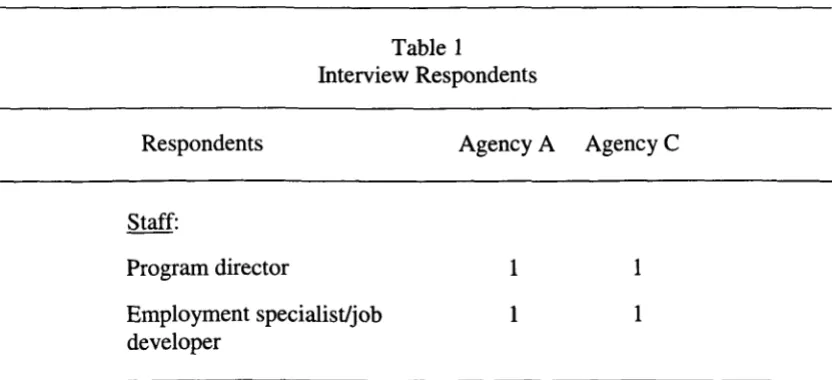
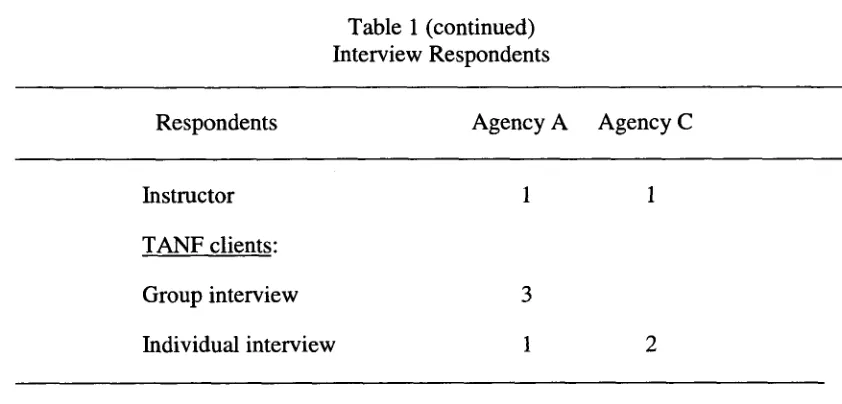
Table 1
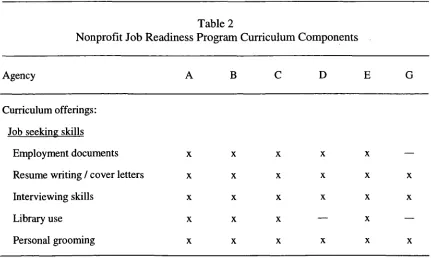
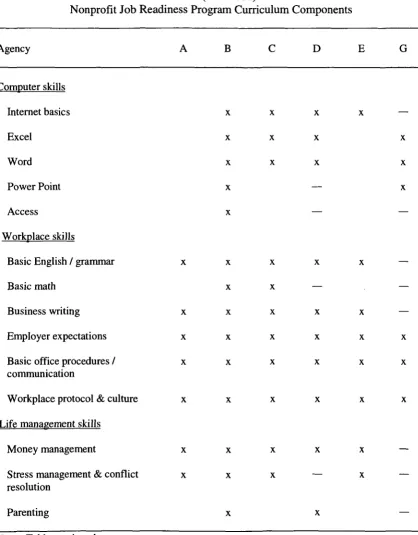
Table 2
Table 3
Table 4
Table 5
Table 6
Table 7
Table 8
LIST OF TABLES
Interview Respondents ... .39
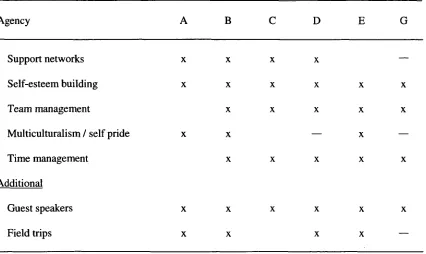
Nonprofit Job Readiness Program Curriculum Components ... .41
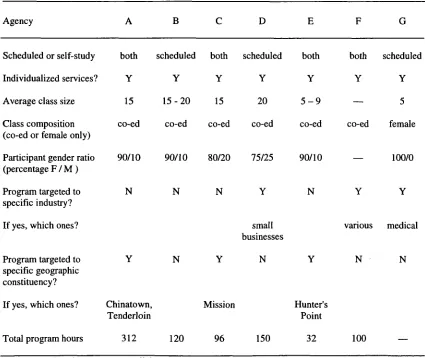
Nonprofit Job Readiness Program Statistics ... .44
Nonprofit Job Readiness Program Model Components ... .45
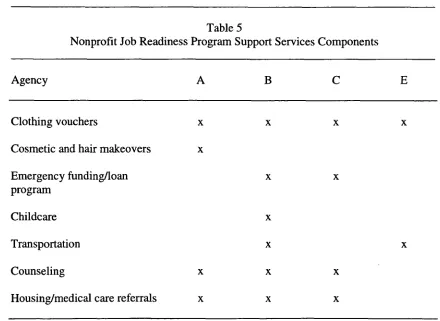
Nonprofit Job Readiness Program Support Services Components .... .47
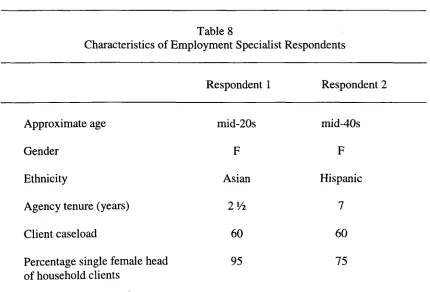
Characteristics of Staff Respondents ... .48
Characteristics of T ANF Respondents ... 56
LIST OF APPENDICES
Appendix A ... Introductory Letter to Contact Person
Appendix B ... Confirmation Letter and Consent Form to Contact Person
Appendix C ... Interview Guide A-T ANF Recipients
Appendix D ... Interview Guide B-Nonprofit Staff
Appendix E ... Interview Guide C-Employment Specialists
CHAPTER ONE: INTRODUCTION
Background
According to the U.S. Census Bureau, in 1997, more than 35 million people in
America, or 13 percent ofthe U.S. population, were classified as poor and living in
poverty. The official poverty threshold for a family of four was $16,000 per year at that
time. Thirty percent of these people (including adults and children) were receiving
welfare assistance through one of the many government welfare programs (Department
of Health and Human Services, 1998). During the past decade, single women with
children have comprised from 85 to 93 percent of adults on public assistance (Rose,
1995).
Throughout American history, the responsibility for caring for the poor has been
shared between federal and state governments and the nonprofit sector. Nonprofit
organizations have provided a variety of social welfare services to the poor including
convalescent care, care of dependent children and the aged, employment and vocational
guidance, family services, and children's health. From the early eighteenth century when
the first voluntary associations began to appear, the independent sector has taken on the
role of caretaker for the ill and destitute, providing for the community by helping
orphaned children, caring for the sick, and housing the poor. Not until the enactment of
the Social Security Act of 1931 did the federal government begin to provide welfare
assistance to the poor with programs such as Aid to Families with Dependent Children
(AFDC), food stamps, and Medicaid. Aid was means-tested and unlimited; if one met
Our national welfare policy has alternated throughout this century, calling for
either an entitlement approach or a work-first approach to aiding the poor. The
philosophy espoused has depended upon the political environment at any given time.
The most recent edict for reform supports the work-first approach in moving people off
of public assistance. Under the Personal Responsibility and Work Opportunity
Reconciliation Act (PRWORA) signed into law by President Clinton in August 1996, the
federal government again revised the way it provides welfare services. Among its
provisions, the new legislation eliminates AFDC, federal matching funds to states, and
the Job Opportunities and Basic Skills (JOBS) training program which emphasized
education, training, and skills-building as a means of achieving self-sufficiency. The new
legislation replaces AFDC with Temporary Assistance to Needy Families (T ANF),
introduces block grants to states, sets a lifetime welfare eligibility limit of five years, and
requires welfare recipients to engage in a work-related activity in exchange for aid.
People must not only get jobs, but also must retain them.
Under the new legislation, 50 percent of the entire welfare case load must be
placed into the workforce by the year 2002. When signing the PRWORA, President
Clinton issued a call to action to private employers, community based organizations
(CBOs), and state welfare agencies to form partnerships to move welfare recipients into
the labor force. Three years have passed since the enactment of this legislation and no
one can say for certain what the impact of time limits or the other changes will be for the
poor. Many states are only in the beginning stages of implementing their
for the provision of welfare services and calls on nonprofit and for-profit organizations in
the private sector to take on the responsibility for reducing poverty.
In San Francisco, at the end of 1997,30 percent of the 2.2 million people on aid
were adults and 70 percent were children (California Department of Social Services,
1997). An estimated 85 percent of the adult recipients in San Francisco were single
mothers. The Private Industry Council (PIC) estimates that more than 600 adults in San
Francisco need to be moved into the workforce each month in order to meet the new
federal government requirements for funding. The county welfare agency, in conjunction
with the PIC, is working to develop local collaborative efforts to provide welfare
services. As a result, more welfare-to-work services, such as job readiness and job
training programs, are being subcontracted to community-based organizations, the
majority of which are nonprofit organizations.
Statement of the Issue
Nationally, single parenting women comprise almost 93 percent of those families
on welfare (T ANF), others being dual-parenting families or single male head of
households (Rose, 1995). Faced with burdensome childcare costs and other supportive
service needs, single parenting women will continue to be impacted hardest by welfare
reform legislation. Benefits will be reduced or discontinued if T ANF recipients do not
sustain employment or participate in pre-employment workfare programs such as job
readiness programs.
To meet the federal mandates, nonprofit organizations offering work readiness
recipients, many of whom face significant barriers to employment such as physical
disabilities, mental health issues, and substance abuse and domestic violence issues, not
to mention the need to find adequate and affordable child care. A large number of the
welfare population are low-skilled and uneducated and are not experienced in the daily
routines of the business world. Educating T ANF clients about general business etiquette,
basic computer and business skills, and life management skills, will be a demanding task.
The success of nonprofit organizations in placing T ANF clients into the workforce will
also be dependent on the nation's economic situation. Trends in local and state wages,
growth of local industries, the location of jobs, and understanding gender, racial, and
ethnic differences in job opportunities will be important factors in moving recipients into
the workforce. The country has been fortunate to experience a robust economy over the
last seven years pushing unemployment to the lowest levels seen in decades, but it is hard
to predict how much longer this may last.
The PRWORA legislation specifies that each state must develop a
welfare-to-work plan and mandates that large numbers of welfare recipients be moved into welfare-to-
work-related programs by specified dates or else suffer monetary sanctions. California
responded with CalWORKs, the California Work Opportunities and Responsibility to
Kids act (AB1542), which was signed into law on September 11, 1997. Each of
California's 58 counties had to develop its own programs to meet its needs in moving a
diverse welfare population into the workforce. The welfare-to-work plan for the City and
County of San Francisco was adopted in April 1998. The programs under the plan are
administered jointly by the Private Industry Council of San Francisco and the county's
In February 1998, the PIC and DHS solicited proposals from the general
community seeking qualified organizations to provide welfare-to-work services under
two general categories: Work Readiness/Job Search/Job Retention Services and Job
Training/Placement/Job Retention Services. Within five months, more than 40
organizations had submitted more than 54 proposals. At least 35 of these organizations
were nonprofit 501(c)(3) organizations. Given the large numbers ofTANF recipients
expected to need basic job-readiness training, the PIC and the DHS elected to concentrate
first on awarding work readiness contracts so that the CalWORKs program could
commence, and then to focus their attention on reviewing proposals for job training
services. By October 1998, six nonprofit organizations were awarded work readiness
contracts.
The City and County of San Francisco seem ready to face the challenge. The
work readiness component of the City's welfare-to-work plan states that any agency
seeking government funding must demonstrate that their curricula include certain training
categories to ensure that T ANF clients will meet the basic job-readiness standards
adopted by the DHS, and that they have the ability to provide a continuum of work
readiness, job search, and placement/retention services either directly or through
partnership with other agencies.
San Francisco welfare and employment agencies are working together to make an
effort to streamline and coordinate the provision of welfare services. These agencies
includ~: the Private Industry Council, which is responsible for the general oversight and
management of the city's employment and training programs; the Department of Human
case management; and all of the PIC subcontractor agencies, the large majority of which
are nonprofit organizations. If the collective goal is to help the needy by providing a path
to self-sufficiency, then all the partners involved in welfare reform must provide
appropriate services to help welfare women make the transition to employment. All the
partners involved in providing welfare-to-work services, such as job-readiness programs,
must demonstrate that they understand the programmatic and personal factors that will
help single T ANF women succeed in these programs.
This research project seeks to understand, through discussions with three
constituencies-recipients (T ANF clients), providers (nonprofit agency staff), and
funders (DHS Cal WORKs Department staff)-the factors that enable singleT ANF
women to succeed in work readiness programs, and thus begin the long road to achieving
economic self-sufficiency. As discussed later in the literature review section, studies
have shown there are several aspects of comprehensive programs which can enable
T ANF women to succeed in completing a job readiness program. These have been
categorized into four areas: program structure/model, program curriculum, additional
support services, and philosophy of agency staff.
Research Questions
Several questions were explored through interviews with the following groups:
1) Staff of nonprofit agencies offering job readiness programs
2) Clients of nonprofit agencies' job readiness programs
What are the components of job readiness programs offered by nonprofit
organizations? (Groups 1, 2, and 3)
What program factors do nonprofit program administrators and staff perceive to
be related to the ability ofT ANF clients to successfully complete their programs? (Group
1)
What program factors do T ANF clients feel were important in helping them
successfully complete a job readiness program? (Group 2)
What program factors do the Department of Human Services staff consider to be
related to the ability ofT ANF clients to successfully complete a nonprofit job readiness
program? (Group 3)
What do these three constituencies believe to be the reasons some T ANF clients
benefit from certain nonprofit job readiness programs and not others? (Groups 1, 2, and
3)
Definitions of Major Concepts
For the purposes of this research project, the following definitions will be used:
Social welfare services: Includes, but is not limited to, supportive services such
as child care, food stamps, and medical care, and welfare-to-work services.
Welfare-to-work services: Includes, but is not limited to, job readiness, job
search, vocational training, job placement, and job retention services.
Job/work readiness program: A program which provides participants with
job-seeking and interviewing skills and interpersonal skills necessary to retain unsubsidized
Successful completion of job readiness program: The completion of a nonprofit
organization's job readiness program as defined by the requirements of the particular
nonprofit. This may include meeting attendance requirements, participation in the
classroom, and the completion of assignments.
Program structure/model: The descriptors of a job readiness program which may
include attendance requirements, class size, and length of course.
Additional support services: The services provided by a nonprofit organization in
addition to their job readiness program. These may include childcare, transportation
vouchers, counseling, and referrals.
Program curriculum: The subjects taught in a nonprofit organization's job
readiness program. These may include, but are not limited to, computer training, money
management, interviewing, resume writing, and life skills classes.
Welfare assistance or public assistance: Government programs providing money,
food, or housing subsidy or a combination of these. These terms will be used
interchangeably.
TANF client: Although technically a TANF client could signify a male
head-of-household or a dual-parenting family, the majority ofT ANF clients are single parenting
women. In this paper, the phrase "T ANF client" will be synonymous with the phrase
"single parenting woman."
Importance of the Study
Nonprofit organizations are an integral part of the social and economic fabric of
country for centuries. The data collected through this research project may help nonprofit
organizations understand which programmatic requirements are needed for T ANF clients
to successfully participate in work readiness programs and may assist agencies in
selecting specific clientele for their programs and in modifying their programs to address
client needs. These data may aid the DHS employment specialists, who are the first point
of contact for many T ANF recipients, in directing clients to programs where they are
most likely to succeed. The information provided in this report describes factors that
may enable T ANF clients to succeed in job readiness programs and be better prepared for
entry into the workforce. Finally, since there appears to be a substantial lack of
empirical research on program-specific offerings by nonprofit organizations in the field
of welfare-to-work services, the data collected from this project will add to the body of
CHAPTER TWO: REVIEW OF RELATED LITERATURE
The literature review explores four areas related to the topic of welfare-to-work
programs and the nonprofit sector. First, a history of the role of the nonprofit
sector/public sector relationship in the field of social welfare will be briefly reviewed.
Second, the theoretical framework of job readiness will be discussed. Third, previous
welfare-to-work programs and evaluations will be explored. And, finally, women and
welfare will be discussed. It is important to note that there is a substantial lack of
empirical research on program-specific offerings by nonprofit organizations in the field
of welfare-to-work services.
History of Nonprofit/Public Sector Relations
The social services subsector of the independent sector encompasses a wide
variety of organizations. M. O'Neill (1989) provides Hodgkinson and Weitzman's
definition of the sector as "organizations ... providing services to individuals and
families, job training and related services, child day care, and residential care ... " (p.
94). Analyzing the correlation between federal government spending for social welfare
programs and the proliferation of nonprofit organizations during the New Deal era, Mohr
and Guerra-Pearson (1996) divide the sector into six general categories of social welfare
service delivery: convalescent care, dependent children, aged, employment and
vocational guidance, family services, and children's health services. While there does
not appear to be an abundance of literature on nonprofit organizations and government
have written about the role of the nonprofit sector and the public sector in the provision
of social services in the welfare state.
The earliest development of the nonprofit private sector/public sector relationship
in the field of social welfare can be traced to colonial America. Two central institutions
prevailed at the time, church and state, and the politics of church, state, and family were
seen as complementary to one another. According to Hall ( 1987), families, compelled by
religious affiliation and state law, were required to provide for basic literacy and religious
training of members, provide training in a craft or occupation, and care for sick and poor
relatives. If families lacked resources, then local public authorities would pay individual
households to care for the needy. Hall (1987), M. O'Neill (1989), and Ostrander (1989)
all cite the colonies' adoption of England's "Elizabethan Poor Law," beginning in 1647,
as the point in time in which state localities became the social service provider of last
resort, responsible for financing and dispensing relief for the poor. Church related
charities were about the only nonprofit organizations involved in aiding and assisting the
poor during this early period.
Hall (1987), Katz (1986), Mohr and Guerra-Pearson (1996), M. O'Neill (1989),
and Ostrander ( 1989) provide historical accounts of the development of the social welfare
state and the roles that the nonprofit sector and government sector played in it. The
extent of the provision of services by both sectors stemmed from the political, social, and
economic ideas about the causes of poverty. As cities grew and changes in religious
attitudes developed during the 1800s, voluntary associations dedicated to helping the less
fortunate became more numerous and active. Most notably, welfare reformers formed
with regard to services for the poor (Katz, 1986, p. 75). The Charity Organization
Societies opposed government aid and were successful in eliminating public relief as a
municipal function in 12 large urban cities toward the end of the nineteenth century
(Kramer, 1987, p. 241).
The onset of the Great Depression of the 1930s permanently changed the
relationship between the public and private sectors in the field of social service
provisions. The private nonprofit sector and even local and state governments could not
cope with the millions of people who suddenly found themselves without jobs and in
need of assistance. For the first time, the U.S. federal government became heavily
involved in welfare assistance through the enactment of the Social Security Act of 1935.
The federal government put billions of dollars into the social services arena during the
New Deal Era (1933 -1941) and subsequent programs including the Great Society
programs of the Johnson Era (1964 through the early1970s). Large amounts of money
authorized by federal legislation during the Johnson and Nixon administrations were
poured into nonprofit social service agencies, mainly through the mechanisms of grants
and purchase-of-service contracts (M. O'Neill, 1989, p. 104). Poverty rates declined
during this time, although the causes for the declines have been disputed. By the late
1970s, poverty rates were again on the rise and government spending was deemed too
high. Severe cutbacks in funding for social service programs became the norm during the
Reagan administration; yet as M. O'Neill (1989) and Salamon (1989) point out, the
federal government still remained a large funder of nonprofit social service agencies
Lester Salamon conducted much theoretical and empirical research on the
relationships between the government and nonprofit sectors in the area of social welfare
and has shown evidence to support his "paradigm of partnership" (Salamon, 1989, p. 42)
and "partners in public service" theory (Mohr & Guerra-Pearson, 1996, p. 526) which
asserts that the financing and delivery of social services has been, and continues to be,
conducted through an elaborate network of partnership arrangements between the
government and the voluntary sector. This is in direct contrast to the "paradigm of
conflict" theory or "crowding out" theory developed by Marvin Olasky (Mohr &
Guerra-Pearson, 1996, p. 526) which says that the government/nonprofit relationship is a
"zero-sum" game whereby the expansion of one sector leads to the contraction of the other.
Mohr and Guerra-Pearson ( 1996) analyzed the federal spending patterns on social
welfare programs during the New Deal era to see if there was a correlation between the
increase in federal spending and the growth of nonprofit organizations providing social
service programs in New York City during this time. They found that as federal funding
in the social welfare sector increased, so too did the number of nonprofit organizations
that became working partners in federal welfare programs. Mohr and Guerra-Pearson
support Salamon's thesis that the relationship between the two sectors is symbiotic and
conclude that it is as partners in social service that nonprofit organizations are likely to
flourish.
In the early 1980s, Salamon and his associates at the Urban Institute conducted
research under the Nonprofit Sector Project to bring the current status of government
support to the nonprofit sector into clearer focus. The project sought to show the extent
statistics and surveying more than 3,400 nonprofit organizations at 16 representative
sites. Their findings showed that government support of nonprofit organizations is
extensive and is particularly important to social service and community development
organizations, with most of the support reaching nonprofit organizations indirectly,
through individuals or state and local governments. Their data suggest that the
government does not displace nonprofit organizations, but rather, is a major force in
underwriting nonprofit operations, providing a larger portion of revenues to nonprofit
service providers than private giving (Salamon, 1987, p. 107).
Salamon points out two very good reasons why a government/nonprofit
relationship makes sense in the delivery of social services. First, the partnership takes
advantage of the government's strengths in raising resources (through taxation) and
ensuring equity through a democratic political process, while the nonprofit sector has the
advantage of being a deliverer of services in a more informal, smaller-scale fashion than
large government bureaucracies. Second, it is more economical and efficient for
government to work with established organizations. Where existing institutions are
already performing social service functions, the government can carry out its purposes
more simply and with less cost by enlisting them in the government program, thereby
avoiding the need to create new organizations or specialized staffs. This has been
especially true where programs are experimental (Salamon, 1989).
The roots of government/nonprofit sector cooperation lie deep in American
history and, as Waldemar Nielsen wrote, "collaboration, not separation or antagonism
between the government and nonprofit sector ... has been the predominant
climate, under the new welfare reform laws, the political agenda supports policy to
reduce federal responsibility for the provision of welfare services and calls on nonprofit
and for-profit organizations in the private sector to take on the responsibility for reducing
poverty. The new legislation under the Personal Responsibility and Work Opportunity
Reconciliation Act brings an end to the guarantee of federal income support for single
women with children. M. O'Neill (1989, p. 108) and Salamon (1989, pp. 56-58) point
out that we are moving into a new arena where both the nonprofit sector and the for-profit
sector will need to work together alongside the public sector to help alleviate poverty and
to aid the less fortunate along the path to economic self-sufficiency.
Theories of Job Readiness
Several studies have been conducted to evaluate workplace readiness skills and to
develop a theoretical framework for measuring job readiness. Cockrell (1992), Hashim
(1992), and O'Neil, Allred, and Baker (1992) looked at various aspects of evaluating
workforce readiness skills, although they did so with different populations in mind.
O'Neil, et al. (1992) from the National Center for Research on Evaluation,
Standards, and Student Testing at the University of California, Los Angeles, reviewed the
findings of five national studies conducted between 1984 through 1991 which sought to
determine common job readiness categories required for high school students entering the
workforce. Their purpose was to develop a common framework for assessing workforce
readiness skills from these five previous studies. Four major themes emerged from the
First, basic skills were identified among all five studies as being important and
constituted the subcategories of reading, writing, arithmetic, speaking, and listening
skills.
Second, interpersonal and teamwork skills were identified as being especially
important in the five studies cited, although this area exhibited the greatest diversity in
terms of the specific subskills which constituted it. Three skill subsets, however, were
apparent: leadership skills, cooperation skills (ability to work with others from diverse
backgrounds), and negotiation/conflict resolution skills.
Third, higher-order thinking skills were cited as necessary for job readiness due to
the rapidity of change in the workforce. These skills, mentioned although not necessarily
included in all five studies, were problem solving, creativity, decision making, and
learning how to learn.
And fourth, personal characteristics and attitude skills were found to be important.
These included self-esteem, motivation, and responsibility.
From these findings, the authors developed two prototype testing instruments to
aid in measuring workforce readiness among high school students. The Conflict
Resolution test prototype would be used to measure interpersonal and negotiation skills,
and the Problem Solving test prototype would be used to measure basic competency
skills. The authors found that their prototype items could be highly generalized across
various theoretical frameworks, and they continue to conduct research to determine the
reliability and validity of their assessment measures (O'Neil et al., 1992, pp. 27 -28).
Hashim ( 1992) worked with college level students to determine whether students,
one-day job readiness workshop. Using a control/experimental group design, Hashim
randomly selected 100 students from Western Michigan University and split the group in
half. Fifty students were assigned to an experimental group and participated in a one-day
job training workshop, and 50 students were assigned to a control group. AlllOO
students were then tested using the Job Search Readiness Instrument (JSRI) which was
developed by A. Schlossman at the University of Florida in 1977. The JSRI consisted of
38 questions related to three important components of job readiness: self-awareness, job
analysis, and interview preparation. Hashim found that those participating in the
workshop scored significantly higher than those in the control group, thereby supporting
the notion that students could increase their job readiness competencies by participating
in a very brief work readiness program.
The job readiness competencies discussed above are not the only important
factors TANF clients need to display in order to be assessed as job-ready. Other
challenges must be overcome before entering the workforce. The majority ofT ANF
clients have children, and therefore the issue of childcare must be satisfied before looking
for and accepting a job. Other barriers to employment common to those on public
assistance are physical disabilities, substance abuse, mental health disabilities, domestic
violence issues, and lack of adequate housing and transportation. Ensuring that welfare
recipients have access to community resources to aid them in dealing with the
aforementioned issues are also important factors in determining whether T ANF clients
are job-ready (Brown, 1997; Cockrell, 1992; and Strawn, 1998).
Cockrell (1992) reviewed local welfare agency assessment practices used on
four states. She found that job readiness assessment as practiced by most welfare
departments considered the following factors: client's current family circumstances and
need for support services; prior work and educational history; current job skill set; and
client's job preferences. Cockrell found that determining the job readiness of a client was
a process that combined objective factors and intuitive understanding. Completion of
courses and activities in the education and training components of a program were not the
only conditions related to success in finding employment. Other factors case managers
noted as important for the success of welfare clients were: reduction of the number and
severity of barriers in the participant's life circumstances; meeting the minimum
qualifications of the chosen employment goal in terms of education, work experiences,
and skills; determining whether the participant's career choice would provide a wage
adequate to support her family; acquiring job-finding and interviewing skills; and
demonstrating attention to personal appearance. Intuitive factors mentioned by case
managers included the participant's maturity level and attitude towards work (i.e.
displaying self-awareness, a high level of self-esteem, and willingness to assume
responsibility); motivation to work; emotional stability; and whether both the case
manager and participant felt the participant was "job ready."
The job readiness checklist currently used by the DHS in San Francisco in
ascertaining aT ANF client's job readiness abilities incorporates many of the factors cited
in the literature review above. The job readiness check-off list to be filled out by the
DHS employment specialist includes such categories as basic reading, math and
communication skills; resume writing, interviewing, and job search skills; behavioral
and housing; and ability to manage disability (through support groups, therapy, and
doctor's supervision), all of which were mentioned as important in the Cockrell ( 1992),
Hashim (1992), and O'Neil et al. (1992) studies. If a TANF client is deemed to fall short
in satisfying any of these job readiness competencies upon the initial assessment by the
DHS employment specialist, she will be referred to one of many job readiness programs
offered by either the county welfare department or local community organizations, many
of which are nonprofit agencies.
Welfare-to-Work Evaluations
Many evaluations have been conducted throughout the country studying the
impact welfare-to-work programs have had on the reduction of welfare dependency.
Most notable are the studies conducted by the Manpower Demonstration Research
Corporation which has published hundreds of evaluations on welfare demonstration
projects such as the Greater Avenues for Independence (GAIN) programs in California,
and the Job Opportunities and Basic Skills (JOBS) and Work Incentive (WIN) programs
of major U.S. cities implemented over the last two decades. None of the studies
reviewed for this research project were conducted specifically on welfare-to-work
programs offered by nonprofit organizations per se, as the studies are typically conducted
at the macro level, collecting data from county welfare departments, even though the
administration of the welfare programs is done at the micro level, through hosts of public
and nonprofit social service agencies. Also, program successes are usually measured by
the ability to reduce welfare caseloads and not by the ability to move women out of
have been achieved from welfare-to-work programs with most of the increase due to the
increase in the amount of time worked rather than an increase in earnings rates and that
earnings increases tend to diminish after one to two years in the workforce (Brown, 1997;
Moffit, 1998; D. O'Neill & J. O'Neill, 1997; and Strawn, 1998). Much ofthe literature
does not offer specifics on the individual program offerings. Rossi (1997, p. 145) cites
the lack of detail provided on programs as analogous to "black boxes," saying that
detailed descriptions of programs as designed or delivered are not provided by many
studies. Also, it is important to note that studies tend to focus on the entire range of
welfare-to-work strategies employed, which typically encompass job readiness, job
training, job search, and job retention and support services, and not on job readiness
strategies alone. Nonetheless, pieces of information drawn from these studies can be,
and are, valuable to all parties involved in aiding aT ANF client through a job readiness
program. The providers of the programs, the funders of the programs, and the clients of
the programs can benefit from this knowledge.
What have the evaluations shown? The positive job-readiness program factors
drawn from these studies can be divided into four categories: the program
modeVstructure, the specific curriculum offerings, the philosophy of the agency staff, and
the additional support services provided by the agency.
There have been two commonly tried welfare-to-work approaches: the Quick
Employment (job search) approach and the Skills Building (training/education) approach.
Strawn (1998) concluded in her research that the most successful programs fall
somewhere in the middle of the job search and basic education continuum, favoring a
on securing employment, but is also combined with education, skills development, and
training, has been found to work best, and is more likely to help the most disadvantaged
TANF recipients (Brown, 1997; and Strawn, 1998). The length of the program itself has
not been studied to show whether there is a correlation with program completion success
rates. And, no data appears to exist on other specific components of a program model,
such as class size and class composition (co-ed or gender specific). However, the 16
programs covered in Strawn's (1998) research, Goldsmith's (1998) PG&E evaluation,
and Gustavson's (1997) analysis of JOBS programs in Kansas' three metropolitan areas,
show that programs consisting of classroom training and unpaid work/internships average
between 20 and 40 hours per week and last anywhere from 15 to 42 weeks. The national
Job Training Partnership Act evaluations showed that very short-term classroom training
has not been successful with welfare participants (Strawn, 1998, p. vi.). Programs
having positive impact tend to simulate the real-world work environment, requiring
participants to attend classes from 9 a.m. to 5 p.m. as one would in a typical office job.
Most of the literature on welfare-to-work evaluations does not discuss curriculum
details except within the broader context of stating that basic math, writing, and computer
skills are necessary for entry-level work. These job readiness competencies have been
identified and discussed earlier in this chapter. However, curriculum data drawn from
Strawn's (1998) research on 16 innovative welfare-to-work programs being conducted
throughout the country and Goldsmith's (1998) evaluation ofthe PG&E Education and
Employment Training Pilot Program can be grouped into four areas of curriculum
importance: computer skills such as learning the Microsoft suite of applications;
customer relations; job search skills such as resume writing, job interviewing, and
personal grooming; and life management skills, such as money management, stress
management, conflict resolution, and teamwork. These criteria, or subsets thereof, have
explicitly been required to be offered as part of the curriculum of any agency seeking
CalWORKs funding from the City and County of San Francisco. Several studies state
that a sectoral approach in training, i.e. training for a specific industry, is also helpful to
participants and future employers (Goldsmith, 1998; Roberts & Padden, 1998; and
Strawn, 1998).
Brown (1997), Cockrell (1992), Geen, Zimmerman, Douglas, Zedlewski, &
Waters (1998), and Goldsmith (1998) all mention in one form or another the importance
of an esprit de corps between staff, counselors, and program participants. Common
attitudes displayed by those on welfare are feelings of powerlessness, low self-esteem,
and feelings of alienation and isolation. Through no fault of their own, the attitudes of
people on public assistance are formed by the laws, the treatment they get at individual
agencies, and the opinions of the general population (Easley, 1995, p. 22). While not
specifically stated as such, the message that is communicated to clients by staff can act as
a positive psychological charge for participants, impacting their view of their self-worth
and self-esteem. Participants in the PG&E Education and Employment Training Pilot
Program in San Francisco praised their instructors, commenting on the individualized
attention they received and the display of personal concern about their progress
throughout the course. The initial assessment of the program also cited the relationships
between the DHS caseworker, nonprofit agency staff, and T ANF participants as a
(Goldsmith, 1998). The message communicated to clients is also reflected in the
environment in which the services are delivered. When California implemented the
GAIN program in 1986, the state decided to deliver GAIN services from locations other
than welfare offices. Respondents commented favorably on the attempt of the GAIN
offices to look and operate like professional employment offices, in dramatic contrast to
the stereotypical characteristics of welfare offices -long lines, little client/caseworker
interaction, and bulletproof glass (Geen et al., 1998).
Virtually all of the literature recommended comprehensive support services in
addition to basic skills development as necessary to promote client readiness for the
workforce (Brown, 1997; Cockrell, 1992; Goldsmith, 1998; Roberts & Padden, 1998; and
Strawn, 1998). Strawn (1998) states that "other services do matter, and employment and
training services by themselves are unlikely to succeed with the most disadvantaged
clients" (p. 2). Common areas for additional services are case management and
counseling, childcare, access to a health clinic, domestic violence and depression support
groups, career counseling, and stipends for transportation and childcare. In fact, the
candidates who responded to the PG&E pilot program flyer said that the critical elements
that sparked their interest in applying to the program were "computer skills, child care,
transportation, and the fact that PG&E was listed as a program sponsor" (Goldsmith,
1998, p. 15).
Additionally, partnership with a local employer was mentioned as an important
factor in transitioning TANF clients into the workforce (Cockrell, 1992; Goldsmith,
found among programs was the effort to tie training closely to the workplace by
involving employers in the design of training programs.
Strawn (1998) sums it up nicely, writing that "the most effective welfare-to-work
programs generally offer a wide range of individualized services, have a central focus on
employment, have close ties to local employers, and are intensive, setting high
expectations for participation" (p. 23).
Women and Welfare
Single unskilled mothers with children have traditionally had the highest poverty
rate in America. Due to decades of stagnant wages, ineffective child support
enforcement, and dwindling welfare benefits, single unskilled women have found
themselves at the bottom rung of the socioeconomic ladder (Edin & Lein, 1997).
Current welfare reform, with its time limitations for aid and imposed sanctions for not
working, may reinforce poverty for women who lack sufficient education and training or
the mental and physical health to make the transition from welfare to wage employment.
Children will also suffer if women cannot find the resources to provide suitable day care
for their children.
Many legislators and policymakers have designed legislation based on the myth
that women choose welfare as an alternative to work. Edin and Lein ( 1996, 1997),
Hershey (1997), D. O'Neill and J. O'Neill (1997), and Rose (1995) found in their studies
that women on welfare do work, and tend to work to subsidize their meager welfare
checks. Most T ANF mothers interviewed said their total benefits do not cover even their
Research found that 43 percent of a sample of single mothers who received public
assistance combined those funds with earnings (Hershey, 1997). The study found that the
women either shifted between work and welfare or received welfare and earned income
simultaneously. The federal statistics do not reflect this information for the simple reason
that T ANF recipients choose not to report their additional earnings to welfare
caseworkers for fear of losing their benefits. Neither wages in the unskilled labor market
alone, nor welfare benefits alone, are sufficient to cover the average expenses a single
mother incurs in a month. Edin and Lein ( 1997) conducted in-depth interviews with 379
income single mothers in four U.S. cities to show that welfare recipients and
low-wage workers have to employ a set of survival strategies to make ends meet. Women
tended to employ three supplemental income strategies: wages from employment,
assistance from their personal social network, or help from community agencies. The
mix of strategies employed depended upon the social-structural characteristics of the
cities in which they lived and varied by the quality of their private social safety nets.
Many women express the desire to leave welfare and do not want to rely on the
system for life. More than 60 percent of welfare recipients leave the rolls within two
years, but unfortunately, more than half return for a subsequent spell (Edin & Lein, 1997;
D. O'Neill & J. O'Neill, 1997). Fewer than 15 percent stay on for five continuous years
(Rose, 1995). Factors contributing to high rates of job loss include: temporary jobs,
frequent layoffs, low pay in relation to expenses, lack of experience in meeting employer
expectations, and personal or family problems (Hershey, 1997).
According to Hershey (1997, p. 18), there are several factors that can make it
abrupt termination of welfare benefits once employed; difficulty obtaining transitional
child care or Medicaid benefits; limited case management services available to the newly
employed who leave welfare; and the incentive to return to welfare if a job is lost.
Hershey states, "The system seems designed to push people off of welfare, not to sustain
them in employment" (p. 18).
The five-year lifetime welfare eligibility limitation under the new legislation
makes it all the more important for a T ANF recipient to select, or be referred to, the job
readiness program best suited to her needs. The sooner she receives job readiness
training and is assessed as employable, the sooner she can begin the journey of seeking
and securing employment, preferably in a position that will raise her economic status
above the poverty level. Her biggest challenge will be to maintain employment in a
position where she can earn a livable wage and thus begin to break the cycle of
dependency.
Leaving welfare is a process, not an event (Hershey, 1997). Women need
policies that respect the dignity of the individual and give them choices about combining
caretaking work in the home with wage labor while maintaining an adequate standard of
living (Rose, 1995). Instead of blaming the poor for their impoverishment, the structural
causes of poverty must be addressed in legislation. The solution to poverty is access to,
and sustained employment in, decent-paying jobs in the labor market (Rose, 1995).
Conclusion
The answer to the age-old question of how to move welfare recipients off public
nonprofit and government sectors have partnered to provide social services to the poor.
This partnership takes advantage of the government's strengths in raising resources
(through taxation) and the nonprofit sector's ability to deliver services in a more
informal, smaller-scale fashion than larger government bureaucracies. Studies by
Salomon (1987, 1989) and Mohr & Guerra-Pearson (1996) have shown that the
government does not displace nonprofit organizations, but is a major force in
underwriting nonprofit operations.
Although many strategies have been employed, no one strategy has been found
completely effective. The Quick Employment (job search) approach and the Skills
Building (training/education) have had mixed results. Many studies have shown that
only modest increases in annual earnings have been achieved from welfare-to-work
programs, with most of the increase due to the increase in the amount of time worked
rather than an increase in earnings rates. Earnings increases tend to diminish after one to
two years in the workforce.
Assessing a person as job-ready is the first step in transitioning single parenting
women off of welfare and into the workforce. Positive factors that have been found in
the existing body of literature on welfare-to-work strategies for job readiness programs
can be divided into four categories: the program model/structure, program curriculum,
additional support services, and philosophy of agency staff.
Leaving welfare is a process, not an event. The providers (nonprofit
organizations) of job readiness programs, the funders (DHS) of the programs, and the
programmatic factors that can aid T ANF clients through job readiness programs and thus
CHAPTER THREE: METHODOLOGY
Subjects/Respondents
The City of San Francisco was the region for the selection of subjects for this
research. The primary subjects/respondents of this study were threefold: staff from the
Department of Human Services Cal WORKs Department, staff from nonprofit
organizations offering job readiness programs, and T ANF clients from nonprofit job
readiness programs. More specifically, two employment specialists from the DHS
CalWORKs Department, three staff directly responsible for implementing job readiness
programs within each nonprofit organization, and six female T ANF clients who were
enrolled in or had completed a work readiness program from each of the selected
nonprofit organizations' job readiness programs participated in an interview conducted
by the researcher. Personal interviews were conducted with each of the respondent
constituencies to determine the factors related to success in aiding T ANF clients through
work readiness programs.
More than 30 nonprofit agencies offer job readiness programs in San Francisco.
Since the emphasis of this research project was to gain the perspectives of all the parties
involved in assisting T ANF clients through work readiness programs, only those
nonprofit agencies which were awarded CalWORKs funding by the DHS were potential
candidates for inclusion in this study. According to a list compiled by the PIC, as of
May 1999, there were nine nonprofit organizations which had been awarded CalWORKs
Research Design
This was a descriptive study of a complex situation. The design used a
qualitative, cross-sectional approach based on observation and in-depth interviews. The
data collected served as the basis for developing an understanding of the important
program factors which allow T ANF clients to successfully participate in a nonprofit job
readiness program as perceived by those parties involved in the process: funders (DHS),
providers (nonprofit agencies), and recipients (T ANF clients).
Instrumentation
Several sources of data were used to gather information for the research project.
First, data about the nonprofit agency and related work readiness program were collected
from currently available written materials. These included annual reports and program
description materials obtained directly from the nonprofit agencies selected for the study
and copies of the Request for Qualifications proposals and Qualitative Evaluations
submitted by nonprofit agencies to the Private Industry Council. These documents
provided a narrative on each nonprofit agency's work readiness program curriculum, its
program budget, and the challenges encountered in implementing the programs.
Second, an interview guide containing open-ended questions was used for
face-to-face interviews with subjects/respondents. The interview guide asked similar questions
of the DHS staff, nonprofit staff, and work readiness program clients. Each interview
lasted between one half hour to an hour. The survey was pre-tested with staff at Florence
serving T ANF clients. However, since the Young Parent Center did not receive a
CalWORKs work readiness contract, it was not included in the survey population.
As reflected in the interview guide, the researcher asked open-ended questions.
To the extent these questions were not answered by the respondents, the researcher asked
further questions related to four categories which were thought to be important to the
success ofT ANF clients in completing a job readiness program. These four categories
were: program model/structure, program curriculum, additional support services, and
philosophy of agency staff.
Procedures
The PIC was asked to provide a list of the organizations which had been awarded
CalWORKs work readiness subcontractor contracts. Nine agencies were in this category.
However, in discussing the list with the welfare-to-work special assistant at the DRS, it
was suggested to the researcher that contact be made with those agencies that had
received the largest numbers of referrals to date. Five of the nine agencies met this
criterion.
A letter introducing the researcher and the research project was sent to the
program director of each agency. The letter described the study, stated that the
information collected during the project would be kept confidential, and made known that
a copy of the research would be given to those participating in the study. A week later,
the researcher placed a follow-up call to the agency contact. This telephone contact
re-introduced the research project, solicited her cooperation, and determined the number of
the purpose of the survey-to understand the program factors which allow T ANF clients
to successfully participate in a nonprofit organization's job readiness program as
perceived by those parties involved in the process: funders (DHS), providers (nonprofit
agencies), and recipients (TANF clients). A mutually agreeable interview date was set
during this initial phone contact.
The researcher also asked each agency for permission to interview one graduating
class from the agency. The researcher proposed to conduct a group interview, akin to a
focus group, consisting of no more than six women. If a graduating class was composed
of more than six women, the researcher attempted to arrange the class into smaller groups
and conduct multiple group interviews per organization. Class members were also given
the option of not participating in the group interview if they felt uncomfortable sharing
their experiences. The structure of the interviews with the T ANF clients was designed to
be flexible, because the researcher did not know the exact cycle of each nonprofit
organization's job readiness program and the number of students in each class until
contact was made with the agency.
The researcher also contacted the manager of the Department of Human Services
CalWORKs unit by letter. The letter introduced the research project and solicited DHS
participation in the study. The researcher then placed a follow-up telephone call
tore-introduce the research project and asked for approval to participate in the study. This
contact served to clarify the purpose of the survey as indicated in the paragraphs above.
Subsequent to the initial phone contact, a letter was mailed to each nonprofit
agency representative contactee confirming the interview date. A consent form
Subsequent phone calls were made to the nonprofit agency contact person to arrange for
scheduling of interviews with the program T ANF clients. Interviews were conducted
over the course of two months from the date of the initial contact letters.
Operational Definition of Relevant Variables
Perceptions of program factors: Perceptions of job readiness programs were
collected by talking with nonprofit agency staff, DHS CalWORKs Department staff, and
clients of nonprofit job readiness programs through the use of the interview guide.
Clients: Women who are on T ANF and are participating in a job readiness
program offered by a nonprofit organization.
Program structure/model: The structure of a nonprofit job readiness program.
Program structure may include attendance requirements, class size, unisex classroom,
length of course, and continuum of services. Questions related to program structure were
asked in interview guide questions A3, B4, and C4.
Additional support services: The ancillary services offered by a nonprofit
organization. Additional support services may include childcare, transportation vouchers,
counseling, and housing/medical care referrals. Questions related to additional support
services were asked in interview guide questions A4, BS, and C6.
Program curriculum offerings: The job readiness curriculum taught by a
nonprofit organization. Curriculum offerings may include computer training, money
management, self-esteem building, personal growth skills, interviewing techniques,
resume writing, and workplace skills. Questions related to curriculum offerings were
Philosophy of agency staff: The esprit de corps exhibited by agency staff.
Descriptors of agency staff may include positive or negative adjectives such as friendly,
helpful, strict, resourceful, uncaring, professional, or dedicated. Questions related to
agency staff were asked in interview guide questions A5, B6, and C7.
Treatment of Data/Data Analysis
In conducting the analysis, the researcher looked for patterns in responses from
the three constituencies of job readiness programs. Responses included both similarities
and differences in the perceptions by the constituencies in any of the four areas of
program modeVstructure, program curriculum, philosophy of agency staff, and additional
support services, all of which were believed to be important programmatic factors related
to the successful completion of a job readiness program by T ANF clients.
Both qualitative and quantitative techniques were used to report and interpret the
data. Facts on the subject of program structure, program curriculum, and additional
agency services were extracted from published materials such as annual reports, printed
materials, the Report for Qualifications proposal, and from information collected in the
interviews. Perceptions of agency staff came from the interviews. Data are organized
by program model, program curriculum, and agency support services, and are presented
in written and table form. These data describe the components of job readiness programs
offered by nonprofit organizations.
The face-to-face interviews were recorded and transcribed verbatim. The
perceptions gleaned in the four areas of program structure/model, program curriculum,
described in the operational definitions above. Data from the interviews are presented in
a qualitative format. These data describe the perceptions of those parties involved in
aiding T ANF clients through successful completion of a nonprofit job readiness program.
Limitations of the Study
The project was limited in sample size involved. Due to the newness of the
CalWORKs legislation, only a small number of nonprofit agencies had been awarded
work readiness subcontractor contracts at the time of this study. Only nine nonprofit
agencies met the inclusion criteria for this study. Given this small sample size, it is
difficult to extrapolate sample findings to the T ANF population as a whole.
The respondents selected were limited to the geographic area of the City of San
Francisco. Participating agencies offering work readiness programs were limited to those
designated with 501c(3) nonprofit status, although several for-profit and government
agencies offer similar programs.
The research findings were also limited to describing respondents' perceptions
about job readiness programs and did not report on actual outcomes. It was too early to
CHAPTER FOUR: RESULTS
Introduction
This chapter summarizes results of the data collected through interviews with
nonprofit agency staff, TANF clients participating in work readiness programs, and DHS
CalWORKs Department employment specialists. Data collected from written materials
such as annual reports and program brochures are also presented. The chapter begins
with a discussion of the interview response rate and a description of the nonprofit
agencies selected for the study. This is followed by a review of the data, addressing the
research questions as stated in Chapter One:
1. What are the job readiness program components offered by the nonprofit
organizations selected for this research?
2. What program factors do program administrators and staff perceive to be
related to the ability ofT ANF clients to successfully complete their programs?
3. What program factors do TANF clients feel helped them successfully complete
a job readiness program?
4. What program factors do the Department of Human Services staff perceive to
be related to the ability ofT ANF clients to successfully complete a nonprofit
organization's job readiness program?
5. What do these three constituencies believe to be the reasons some T ANF
Description of Agencies
Five agencies were initially selected for participation in this study. An additional
two agencies were added after two of the initial five agencies declined to participate in
interviews. The agencies selected all have a history of providing employment and
training services to the community for many years; however, the programs and
curriculums reviewed for this study have only recently been created in response to
CalWORKs criteria and welfare-to-work Department of Labor eligibility requirements.
Many of the programs continue to be refined in response to the needs of the welfare
population. A brief description of each of the seven agencies follows.
Agency A: Primarily works with refugees and immigrants and offers English
language training in concert with their work readiness program. T ANF clients enrolled
asofMay31, 1999: 238.
Agency B: Historically has only worked with women, but recently expanded
services to provide work readiness training to both men and women. T ANF clients
enrolled as of May 31, 1999: 63.
Agency C: Primarily serves residents of the Mission District and focuses on
helping families move up and improve their quality of living. T ANF clients enrolled as
of May 31, 1999: 45.
Agency D: Provides work readiness training and placement in small business
enterprises throughout the city. TANF clients enrolled as of May 31, 1999: 41.
Agency E: Primarily serves members of the Bayview Hunters Point community
and focuses on collaborations within the community to provide job training. T ANF
Agency F: Combines vocational training with work readiness training in five
occupational fields. T ANF clients enrolled as of May 31, 1999: 44.
Agency G: Provides work readiness training in conjunction with vocational
training geared for the heath care services field. T ANF clients enrolled as of May 31,
1999: 63.
Interview Response Rate
Nonprofit agency staff and TANF clients
Introductory letters were mailed to each of the initial five agencies selected for
the study in early May 1999. Phone contact was made within two weeks of the mailing.
Agencies A, B, C, and D each agreed to participate in the study and interviews were
scheduled with each of the program directors for June. Agency E declined from
participating in the study due to a projected busy summer schedule and limited staff
availability during the summer months.
Interviews were conducted with Agencies A and C as scheduled. Agency B
phoned the researcher several days before the interview and cancelled, saying that "the
agency did not see the benefit it would receive from participation in the study." Agency
D phoned the researcher the day before the interview and cancelled due to illness.
Agency D further rescinded from participating in the study, saying that staff reductions
due to summer vacation schedules would not allow time to participate in this research.
Introductory letters to Agencies F and G were mailed in early August 1999.
Phone contact was made within one week of the mailing. Agency F agreed to participate