_____________________________________________________________________________________________________
*Corresponding author: Email: [email protected], [email protected];
Effect of Processing on the Nutritional Composition
of
Moringa olifera
Leaves and Seeds
N. N. Umerah
1*, A. I. Asouzu
2and J. I. Okoye
11
Department of Food Science and Technology, Enugu State University of Science and Technology, P.M.B. 01660, Enugu, Nigeria.
2
Ignatus Ajuru University of Education, Port Harcourt, Nigeria.
Authors’ contributions
This work was carried out in collaboration among all authors. Author NNU designed the study, performed the statistical analysis, wrote the protocol and wrote the first draft of the manuscript. Authors JIO and AIA managed the analyses of the study. Author NNU managed the literature searches. All authors read and approved the final manuscript.
Article Information
DOI: 10.9734/EJNFS/2019/v11i330155 Editor(s): (1)Dr. Hudson Nyambaka, Department of Chemistry, Kenyatta University, Nairobi, Kenya. (2)Dr. Kristina Mastanjevic, Assistant Professor, Department of Process Engineering, Faculty of Food Technology, Josip Juraj Strossmayer University of Osijek, Croatia. (3)Dr. Ho Lee Hoon, Department of Food Industry, Faculty of Bioresources and Food Industry, Universiti Sultan Zainal Abidin (UniSZA), 22200 Besut, Terengganu, Malaysia. Reviewers: (1) Karen Breshears, University of Central Missouri, USA. (2)B. Ramesh Kumar, Indian Institute of Technology Kharagpur, India. Complete Peer review History:http://www.sdiarticle4.com/review-history/51626
Received 12 August 2019 Accepted 18 October 2019 Published 06 December 2019
ABSTRACT
Background/Objective: Processing improves the nutritional quality of food and may/not lead to nutrient losses. Processing is done to eliminate inactive microorganisms/ antinutrients and extend the shelf life of food. Moringa oleifera plant is an important tree in some part of Nigeria having been successfully used as food, medicinal and for industrial purpose. This study was designed to determine the effect of processing on the nutritional profile of Moringa olifrera leaves and seeds.
Materials and Methods: The leaves and seeds were harvested from the forest. The leaves were washed, drained and divided into three portions. The first portion was processed raw, the sun and shade dried samples were the second and third portion. The seeds were cracked and divided into six portions. The first portion was processed raw and the other five portions were fermented for 24, 48, 72, 96 and 120 h respectively. The samples were analyzed for proximate, vitamin, mineral, and anti-nutrients contents using the standard method.
Results: The proximate composition of the seeds showed that the samples had a range of moisture, 16.63-17.75%, protein 13.92-38.45%, fat 14.93-19.00%, fibre 3.94-7.10%, ash 1.96-6.22% and carbohydrate 9.08-36.61%/100 g respectively. The ranges for the mineral contents of the seeds were iron 2.10-33.35 mg, zinc 1.19-1.35 mg/100 g, and iodine 12.33-126.61 mg. Also, the ascorbic acid content of the seeds ranged from 3.57- 24.55 mg. The anti-nutrient contents of the seeds were 0.03 – 1.35/100 g saponin, 0.21 – 6.25 mg/100 g of oxalate, 0.11 – 0.28 mg tannins and 5.69 – 16.81 mg/100 g of phytate. The proximate composition of the vegetables ranged from 8.99 – 75.33% moisture, 6.01 – 17.78% protein, 0.64 – 3.89% fat, 3.14 – 11.96% fibre, 2.46 – 15.22% ash and 12.01 – 48.52% carbohydrate. The ranges for mineral contents of the vegetables were iron 0.04 – 0.23 mg, zinc 0.03 – 0.10 mg and iodine 13.66 – 46.61 mg. The vitamin levels of the vegetables were ascorbic acid 56.43 – 167.66 mg/100 g. The level of the anti-nutrients in the vegetables ranged from 0.04 – 1.26 mg/100 g saponin, 0.31 – 8.44 mg/100 g oxalate, 0.05 – 0.20 mg/100 g tannins while phytate varied from 3.31 – 13.20 mg/100 g.
Conclusion: Processing of both leaves and seeds of Moringa olifera increased their nutrient density and reduced the concentration of anti-nutrients. The consumption of Moringa olifera should be popularized to diversify diet and extend their food use.
Keywords: Processing; Moringa oleifera; nutrients; seeds; vegetables.
1. INTRODUCTION
Moringa oleifera is known as the drumstick tree or horseradish tree. It is used as a vegetable [1]. It resembles a leguminous species at a distance especially when flowering. Moringa oleifera is known as Zogallagandi” (Hausa), “Ewe-igbale” (Yoruba) and “Okwe Oyibo” (Igbo) [2]. Moringa Oleifera has traditional, medicinal and nutritional uses and also have biological and physiological activities. These biological and physiological activities are hypotensive properties [3], hypogly-cemic and hypocholesterolemic effects [4,5,6], anti-inflammatory, antihepatotoxic activities [7], anti-helmic, analgesic, dyspepsia and in the management of heart diseases and ulcers [3]. The leaves represent an important source of proteins. The nutritional quality of protein found in food depends on the absolute and relative contents of essential amino acids and its bioavailability after digestion and absorption [8].
Teixeira et al. [9] observed that the dried leaf contained 28.7% crude protein, 7.1% fat, 10.9% ash, 44.4% carbohydrate and 3.0 mg 100 g−1 calcium and 103.1 mg 100 g−1 iron. Moringa is a good source of polyphenol and antioxidant [10]. Phytochemicals such as vanillin, omega fatty acids, carotenoids, ascorbates, tocopherols, beta-sitosterol, moringine, kaempferol, and quercetin have been reported in its flowers, roots, fruits, and seeds. The leaves, in particular, have been found to contain phenolic compounds and flavonoids [11,12].
Green Leafy Vegetables (GLVs) are the most nutritious agricultural products and are widely and preferably consumed in fresh form. They are
rich sources of calcium, iron, β-carotene, vitamin C, dietary fibre and many trace elements. Green leafy vegetables are generally consumed in the cooked form apart from the salads. Therefore, there is a need to assess the effect of processing on the nutritional quality of the dried leaf [13].
Processing improves and promotes digestibility, shelf live, palatability and lead to inactivation of anti-nutrients. Processing sterilizes food by killing harmful bacteria and other microorganisms, and lead to the bioavailability of nutrients. Vegetables and seeds undergo postharvest treatments of drying, roasting, fermentation and boiling to improve sensory properties, reduce anti-nutrient and extend the shelf life of foods. Some processing techniques alter (positive and negative) nutrient content of plants [14,15,16]. Processing makes food healthier, safer, tastier and more shelf-stable. The benefits of processing are numerous but can also be detrimental, affecting the nutritional quality of foods. Blanching, for instance, can lead to leaching of vitamins and minerals. Milling and extrusion during processing can cause the physical removal of minerals. The nutritional quality of minerals in food depends on their quantity as well as their bioavailability. Processing can lead to the removal of anti-nutrient and toxic content of foods thereby making the vitamin and minerals more bioavailable [17].
extensive hydrolysis of the protein and carbohydrate components [22,23]. In addition to increasing the shelf-life, fermentation reduces anti-nutritional factors [19,24]. Fermentation markedly improves the digestibility, nutritive value, flavours, reduces bulk and level of antinutrients. Increased digestibility is due to extensive hydrolysis of proteins to amino acids and the hydrolysis of galactooligosaccharides to simple sugar [19].
United Nations Food and Agriculture Organization [25] has widely noted that most widespread and debilitating nutritional disorders, including birth defects, mental and physical retardation, weakened immune systems, blindness and even death has resulted from poor fruits and vegetables consumption habits [26]. Promotion of traditional food consumption can help reduce food insecurity and improve the nutritional status of the dwellers [16,27]. The ideal strategy for fighting micronutrient deficiency is to improve the diet by including a large variety of food rich in micronutrients and to increase dietary absorption of these nutrients. According to [28] while the crisis caused by the lack of animal foods may require broad and fundamental rethinking about policy and action, traditional food may be the short term remedy. There is the need, however, to identify those foods that would enhance household and national food security. Foods from animal sources such as liver and eggs are good sources of micronutrients and are in the form in which the body can readily utilize them. Too often people cannot afford these foods. Micronutrients are found in vegetables, seeds and fruits but in a formless easily absorbed unless taken at the same time with enhancer or processed in a way to enhance the absorption of these micronutrients [29]. Thus, this study was designed to determine the effect of processing on the nutritional profile of Moringa olifrera leaves and seeds.
2. MATERIALS AND METHODS
The fresh Moringa oleifera leaves and seeds were collected from a home garden in Nri community of Anambra State of Nigeria.
2.1 Sample Preparation
The edible leaves were divided into three portions. One portion was processed raw, the second portion was shade dried and the third portion sun-dried. The seeds were scraped from the pulp to obtain clean seeds. The seeds were
cracked, boiled, drained and fermented by inherent micro-flora of the seeds for 24, 48, 72, 96 and 120 h at room temperature (28.0±2°C) using ash as the catalyst. The fermented seeds were dried until bristle in an air oven at 55°C and ground using hammer mill into a fine flour (70 mm-mesh screen). The flour from each sample was packaged, labelled and stored in an airtight container until needed for further use.
2.2 Chemical Analysis
Chemical analysis was done on all the samples and was performed in triplicate.
2.3 Moisture Determination
The moisture content of the samples was determined using the air oven method of AOAC [30].
2.4 Protein Determination
The crude protein content of the samples was determined using the automated micro-Kjeldahl method as described by AOAC [30].
2.5 Fat Determination
The fat content was determined using the Soxhlet extraction method [30].
2.6 Crude Fibre Determination
The crude fibre content of the samples was determined according to the procedure of AOAC [30].
2.7 Ash Determination
The ash content was determined according to the procedure of AOAC [30].
2.8 Carbohydrate Determination
Carbohydrate content was calculated by the difference when the estimated percentages of crude protein, ash, fat, fibre and moisture were summed up and the value subtracted from 100%. CHO = 100% - % (protein + fat + ash + fibre + moisture).
2.9 Mineral Determination
described by Pearson [31] using a Pye Unicam SP9 Atomic Absorption Spectrophotometer (AAS) connected to an SP9 computer (Pye Unicam Ltd, York Street, Britain). Total phosphorus was determined by the spectro-photometric molybdovanadate procedure [30].
2.10 Determination of ß-Carotene
The extraction of carotenoids was carried out according to the method of Seo et al. [32] with slight modifications.
2.11 Determination of Vitamin E Profile
Vitamin E content was analysed by the method described by Burri [33] using High-performance liquid chromatography (HPLC).
2.12 Vitamin C Determination
Vitamin C determination by iodine titration as described by Anne Helmenstine was carried out [30].
2.13 Statistical Analysis
All the analyses were carried out in triplicate and expressed as mean and standard deviation (SD). The calculation of means, SD and analysis of variance (ANOVA) were carried out using SPSS version 22 and Duncan’s New Multiple Range Tests (DMRT) were performed to study the differences at 5% level of significance.
3. RESULTS
The effect of processing on the proximate composition of Moringa oleifera leaves and seeds were shown in Table 1. The moisture content of the leaves ranged from 8.99 to 75.33% per 100 g edible portion, with fresh leaves having the highest moisture content and sun-dried leaves having the least value. The protein content varied from 6.01- 17.68% per 100 g sample with shade dried leaves having the highest protein content. The fat content of the samples ranged from 0.64 in fresh leaves to 3.89% in shade dried leaves per 100 g sample. The crude fibre contents of the samples ranged from 3.41-13.14%/100 g, with shade dried leaves having the highest crude fibre content. The ash content of the leaves varied between 0.26% in fresh leaves to 15.22% in shade-dried while the carbohydrate content of the samples ranged from 12.01-48.52%.
The moisture content of the seeds ranged from 12.63-17.75%, with 120 hours fermented
Moringa oleifera seed (FMS120) having the
highest moisture value and fresh seeds (FS) having the least value. The protein content varied from 13.92-38.45% with 24 hours fermented
Moringa oleifera seed (FMS24) having the highest
protein content. The fat content of the samples ranged from Traces-3.08%. The crude fibre contents of the samples ranged from 3.94-7.10%/100 g, with FS having the highest crude fibre value. The ash content of the fruits was between 1.96-6.22%/100 g sample while the carbohydrate contents of the samples were between 19.50-45.20%.
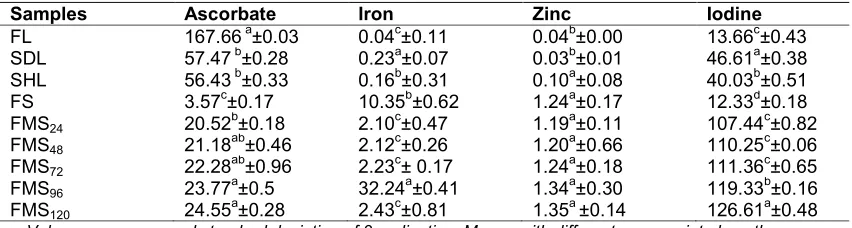
The effect of processing on the mineral and ascorbate composition of Moringa oleifera leaves and seeds are shown in Table 2. The iron content of the vegetables varied between 0.04- 0.16 mg/100 g with shade dried leaves having the highest iron content while fresh leaves had the least value. The zinc content were between 0.03- 0.10 mg/100 g and iodine 13.66- 40.03 mg/100 g. The ascorbate content ranged from 56.43-167.66 mg/100 g. The iron contents of these processed seeds were between 2.10- 3.35 mg/100 g with fresh seed having the highest iron content and 96 hours fermented Moringa
oleifera seed (FMS72) having the least value. The
zinc content was highest in 120 hours fermented Moringa oleifera seed (FMS96) 2.06
mg/100 g and lowest in 120 hours fermented
Moringa oleifera seed (FMS120) 1.19 mg/100 g.
Iodine content ranges from 12.33 to 126.61. The levels of ascorbic acid in the seeds range from 3.57 to 24.55 with 48 hours fermented
Moringa oleifera seed (FMS48) having the
highest value and fresh seed (FS) having the least value.
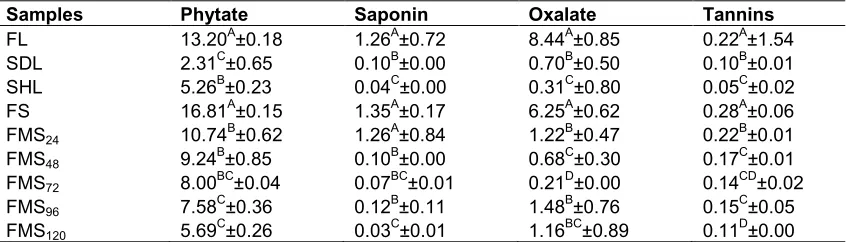
The effect of processing on the anti-nutrient content of Moringa oleifera leaves and seeds are shown in Table 3. The phytate content of the vegetables ranged between 3.31-13.20 mg/100 g. The saponin contents varied between 0.04- 1.26 mg/100 g, oxalate content ranges from 0.31 to 8.44 mg/100 g while the tannin contents ranged from 0.05 to 0.20 mg/100 g sample. The phytate content of Moringa oleifera seeds ranged from 5.26 to 16.81 mg /100 g with FShaving the highest value. The saponin contents varied between 0.03 in FMS120 to 1.35 mg/100 g in FS
edible samples. The oxalate contents ranged from 0.21 in FMS96 to 6.25mg/100g in FS
128
Table 1. Effect of processing on the proximate composition (%) of Moringa oleifera leaves and seeds
Samples Moisture Protein Ash Fibre Fat CHO
FL 75.33 a±0.77 6.01 c±0.02 2.46 b±0.26 3.41b±0.36 0.78 b±0.64 12.28c ±0.48 SDL 8.99 c±0.23 14.26 b±0.13 13.21 a±0.01 11.96 a±0.71 3.06 a±0.14 48.58 a±0.12 SHL 11.04 b±0.55 17.68 a±0.43 15.22 a±0.15 13.14 a±0.12 3.81a±0.86 39.11 b±0.18 FS 12.63b±0.35 13.92 c±0.38 6.22 a±0.11 7.10 a±0.51 14.93b±0.06 45.20a±0.00 FMS24 16.63
a
±0.06 31.26 b±0.44 3.00 b±0.00 4.66 b±0.03 16.94b±0.45 27.51b±1.02 FMS48 16.66 a±0.23 32.60 b±0.11 2.68 b±0.22 4.60 b±0.22 17.75 ab ±0.81 25.71 b±0.37
FMS72 16.68a±0.04 38.98 a±0.00 2.36b±0.14 4.00b±0.16 18.23a±0.30 19.75c±0.55
FMS96 17.64 a
±0.42 36.14 a±0.01 2.06b±0.16 3.94 b±0.28 18.50a±0.74 21.72 c±0.68 FMS120 17.75
a
±0.18 32.45b±0.71 1.96b±0.21 3.26b±0.00 19.00a±0.55 25.58 b±0.72
Values are means and standard deviation of 3 replication. Means with different superscripts along the same column for leaves and seeds are significantly different at p < 0.05. FL---Fresh leaves of Moringa oleifera; SDL---Sun-dried leaves of Moringa oleifera; SHL----Shade dried leaves of Moringa oleifera; FS---Fresh seed of Moringa oleifera; FMS24----24 hours fermented Moringa oleifera seed; FMS48----48 hours fermented Moringa oleifera seed; FMS72---72 hours fermented Moringa oleifera seed; FMS96---96
Table 2. Effect of processing on the ascorbate and mineral composition (mg/100g) of Moringa oleifera leaves and seeds
Samples Ascorbate Iron Zinc Iodine
FL 167.66 a±0.03 0.04c±0.11 0.04b±0.00 13.66c±0.43 SDL 57.47 b±0.28 0.23a±0.07 0.03b±0.01 46.61a±0.38 SHL 56.43 b±0.33 0.16b±0.31 0.10a±0.08 40.03b±0.51 FS 3.57c±0.17 10.35b±0.62 1.24a±0.17 12.33d±0.18 FMS24 20.52b±0.18 2.10c±0.47 1.19a±0.11 107.44c±0.82
FMS48 21.18ab±0.46 2.12c±0.26 1.20a±0.66 110.25c±0.06
FMS72 22.28ab±0.96 2.23c± 0.17 1.24a±0.18 111.36c±0.65
FMS96 23.77a±0.5 32.24a±0.41 1.34a±0.30 119.33b±0.16
FMS120 24.55 a
±0.28 2.43c±0.81 1.35a ±0.14 126.61a±0.48
Values are means and standard deviation of 3 replication. Means with different superscript along the same column for leaves and seeds are significantly different at p < 0.05.
FL---Fresh leaves of Moringa oleifera; SDL---Sun-dried leaves of Moringa oleifera; SHL----Shade dried leaves of Moringa oleifera; FS---Fresh seed of Moringa oleifera; FMS24----24 hours fermented Moringa oleifera seed; FMS48----48 hours fermented Moringa oleifera seed; FMS72---72 hours fermented Moringa oleifera seed;
FMS96---96 hours fermented Moringa oleifera seed; FMS120----120 hours fermented Moringa oleifera seed
4. DISCUSSION
4.1 Proximate Composition
4.1.1 Moisture
In this study, the moisture content of the Moringa
oleifera fresh leaves was 75.33%/100g. The
result of the present study is in line with the value reported by Sheela et al. [34] who observed that the moisture content of thirty-eight underutilized green leafy vegetables in Southern Karnatala was between the range of 68.00-93.00%. The high moisture content in these fresh vegetables was not a surprise as Ene-Obong [35]) noted that the most single constituent of vegetable is water, which accounts for more than 80% of the nutrients. This will result in a lower contribution of other proximate components. The high moisture content of these vegetables indicates that they will not have prolonged keeping quality. Drying led to reduced leaf moisture content. The loss was similar for both the shade and sun-dried leaves. The result of this study is in line with the report of Traore et al. [36], who observed that the moisture content of dried vegetables ranged between 7.22 - 11.82 in three leafy vegetables studied. The moisture content of the seeds increased with an increase in fermentation time. The increase could be as a result of water absorption during fermentation.
4.1.2 Protein
The protein content of the leaves varies between 6.01- 17.68%. Although vegetables are not good sources of protein. Fresh leaves (FL) had a
protein level of 6.01%. Eyo et al. [37] observed that the protein levels of fresh vegetables are comparable to those of cereals (7.90%). The protein contents of both the fresh and dried vegetables were lower than the values reported by Traore et al. [36]; Anin, et al. [38], and Grubben et al. [39]. The differences in protein content could be due to differences in vegetable composition. Drying increases the protein contents of vegetables. The higher protein content of sun and shade dried vegetables could be useful in fighting kwashiorkor in communities where protein-energy malnutrition is prevalence provided it is consumed in significant quantity. Fermentation increased the protein content of
Moringa oleifera seeds. This result is in line with
the findings of Buta and Emire, [40] who observed an increase in protein content of weaning food with an increase in fermentation time. Fermentation hydrolyzes protein into its amino acid components. The increase in protein was due to the increased activity of proteolytic enzymes that removed non-protein nitrogen to improve the protein quality.
4.1.3 Fat
vegetables are in line with the values (0.20-2.60%) reported by Sheela et al. [34] on fresh vegetable studied. The fat content increased from 14.93% in raw seed to 19.99% in fermented seed as fermentation time increases. Buta and Emire [40] observed that as fermentation time increases the fat content of fermented blends increased from 8.42% to 10.9% concerning the fermentation time of 0, 24 and 48 h. The increase in the fat content of fermented samples could be
due to increased activity of lipolytic
enzymes which increased the released of more fatty acids.
4.1.4 Crude fibre
The crude fibre content of the vegetables (0.36-13.14%/100 g) and seeds (3.94-7.10%) was of interest. The high fibre contents of sun-dried leaves (SDL) and shade dried leaves (SHL) (11.96 and 13.14%) could provide bulk in the diet, enhance gastrointestinal function, prevent constipation and may reduce the incidence of metabolic diseases like maturity-onset diabetes mellitus and hypercholesterolemia [41]. The values of the crude fibre after fermentation (4.66 for FMS24, 4.60 for FMS48, 4.26 for FMS72, 4.00
for FMS96 and 3.96 FMS120) are within the WHO
recommended 5% specification of the maximum requirement of crude fibre in complementary food [40]. This result showed that the crude fibre decreased with an increase in fermentation time.
Buta and Emire [40] had a similar observation that fermentation time significantly (p<0.05) reduced the crude fibre contents of the samples
studied. Amankwah [42] observed that high fibre
contents of weaning foods may inhibit mineral absorption and reduce the digestibility of proteins in foods. Fetugal et al. [22] observed that high fibre could trap and protect a large proportion of nutrients such as protein and carbohydrate from hydrolytic breakdown, thus reducing digestibility.
4.1.5 Ash
SDL (sun-dried leaves) and SHL (shade dried leaves) (13.21 and 15.22%) with high ash contents suggest that the mineral contents of the dried vegetables may be high. The ash levels of foods are an indication of the mineral content of the food. The values (0.60-3.40%) reported by Ajayi et al [43]. as the ash contents of some leafy vegetables studied were within the range of the values observed for fresh vegetables in this study (2.46%). Drying increased the ash content of vegetables from 2.46 to 15.22%. The ash content decreased with increased in fermentation time from 6.22 in raw to 1.96% in FMS120.
4.1.6 Carbohydrate
Vegetables and seeds are not major sources of carbohydrates compared to starchy foods, which form the bulk of food eaten. The very low carbohydrate content of the fresh vegetable (12.01%) is of interest. Drying increased the carbohydrate content of the vegetable. This may be as a result of the reduction in the moisture content of the food. There is a decrease in carbohydrate content with an increase in fermentation time. This result is in line with the findings of Buta and Emire [40] who observed a decrease in carbohydrate with an increase in fermentation time.The decrease in carbohydrate content of fermented foods is important for people with the challenges of obesity, high blood pressure and diabetes mellitus. The decrease in carbohydrate content of the fermented samples could be as a result of a decrease in amylolytic enzyme activity which hydrolyses starch into simpler sugar for quick energy supply.
4.2 Ascorbate and Mineral Content
4.2.1 Ascorbate
The ascorbic acid value 167.66 mg/100 g for the fresh vegetable studied was higher than the range of values (3.00-75.00 mg) observed by Sheela et al. [34] on 28 underutilized vegetables studied in Tanzania. There is a reduction in the ascorbate content of the dried vegetables. This could be as a result of the heat used in drying it. Sun-drying proved to be the most destructive of the drying methods tested in this study. The result conforms with results reported by earlier investigators [44]. The high ascorbate value for this fresh vegetable is of interest. The ascorbate content of the seed before fermentation was (3.57 mg/100 g). The ascorbate level increased
(20.52-24.55 mg) with an increase in
fermentation time. Consumption of adequate
Table 3. Effect of processing on the anti nutrient composition (mg/100 g) of Moringa oleifera
leaves and seeds
Samples Phytate Saponin Oxalate Tannins
FL 13.20A±0.18 1.26A±0.72 8.44A±0.85 0.22A±1.54 SDL 2.31C±0.65 0.10B±0.00 0.70B±0.50 0.10B±0.01 SHL 5.26B±0.23 0.04C±0.00 0.31C±0.80 0.05C±0.02 FS 16.81A±0.15 1.35A±0.17 6.25A±0.62 0.28A±0.06 FMS24 10.74B±0.62 1.26A±0.84 1.22B±0.47 0.22B±0.01 FMS48 9.24B±0.85 0.10B±0.00 0.68C±0.30 0.17C±0.01 FMS72 8.00BC±0.04 0.07BC±0.01 0.21D±0.00 0.14CD±0.02 FMS96 7.58C±0.36 0.12B±0.11 1.48B±0.76 0.15C±0.05 FMS120 5.69C±0.26 0.03C±0.01 1.16BC±0.89 0.11D±0.00
Values are means and standard deviation of 3 replication. Means with different superscripts along the same column for leaves and seeds are significantly different at p < 0.05. FL---Fresh leaves of Moringa oleifera;
SDL---Sun-dried leaves of Moringa oleifera; SHL----Shade dried leaves of Moringa oleifera; FS---Fresh seed of Moringa oleifera; FMS24----24 hours fermented Moringa oleifera seed; FMS48----48 hours fermented Moringa oleifera seed; FMS72---72 hours fermented Moringa oleifera seed; FMS96---96 hours fermented Moringa oleifera
seed; FMS120----120 hours fermented Moringa oleifera seed
4.2.2 Iron (Fe)
There were low levels (0.04-0.23 mg/100 g) of iron in both fresh and dried vegetables. There was a decrease in iron level (10.33 to 2.10 mg/100 g) with increased in fermentation time. The unprocessed seed had 10.33 mg/100 g of iron. The slight increase in iron contents of the sun and shade dried (0.23 and 0.16 mg/100 g) leaves showed that drying can improve the iron content of the food. The fresh seeds with high iron levels could be useful in the fight against iron deficiency anaemia.
4.2.3 Zinc (Zn)
The zinc contents of the vegetables studied were between 0.04 - 0.06 mg/100 g. The zinc levels in the seeds (1.24 – 1.35 mg/100 g) for both fermented and unfermented sample were quite low. The low level of zinc in this study may be due to low level of zinc in the soil where the plant was cultivated and this is a common phenomenon. The increase in zinc contents of the dried and fermented samples could be as a result of the increase in the activities of micro-flora enzymes that hydrolysed the zinc-protein-enzyme bond to release zinc for utilization.
4.2.4 Antinutrient
Antinutrients are the major limiting factors to the wider food use of many tropical plants. The effect ranged from a severe reduction in food intake and utilization to profound neurological effects and even death [45].
Phytate: Anti-nutrients such as phytate, oxalate, saponin and tannin are compounds which affect the nutritive value of food products. Phytate is naturally present in many foods especially cereals and legumes. When above a certain level, phytates reduce the availability of minerals and solubility, functionality and digestibility of proteins [46]. There is a decrease in phytate level after fermentation which may be due to the activity of the endogenous phytase enzyme within the sample and inherent microorganisms which are capable of hydrolyzing the phytic acid in the fermented food samples into inositol and orthophosphate [47]. Before fermentation, the
phytate content was high in the raw sample but after fermentation, the phytate content was
greatly reduced. The decrease in phytate content of cocoyam tubers after
processing has also been reported by Marfo and Oke [48].
biounavailable. Hydrolyzable tannins have 15-30 times more potent antioxidant effect than simple phenolics [50]. As phytochemicals, tannins increase high-density lipoprotein cholesterol and decreases low-density lipoprotein cholesterol concentration in rat models [50].
Oxalate: The study revealed a decrease in oxalate level after fermentation and drying which will lead to an improvement in nutrient availability. The oxalate levels for both fermented seeds and dried leaves were below the lethal dose in man 2-5 g [51,52]. It is known that oxalate forms an insoluble complex with some essential minerals thus, preventing their bioavailability. Also, it is often anticipated that oxalate containing foods when consumed may interfere with calcium metabolism. The similar result which revealed a decrease in oxalate content of fermented Bambara nut was reported in the findings of [53].
Saponin: The saponin content of both fermented seeds (0.21-1.48 mg/100 g) and dried leaves (0.04-0.10 mg/100 g) were quite low. Saponin has been shown to have both beneficial and detrimental effects and to exhibit structure-dependent biological activities [54].
5. CONCLUSION
The result of the study showed that Moringa
oleifera leaves and seeds are good sources of
protein, iron, ascorbate and iodine. Processing improved the nutrient content of the leaves and the seeds. Fermentation improved the protein, ascorbate, iron and iodine contents of Moringa oleifera. Drying improved the protein content of the sample. Both fermentation and drying reduced phytate, saponin, oxalate and tannin contents of Moringa oleifera seeds and leaves.
Moringa oleifera leaves and seeds could serve
as good sources of nutrients in food. Fermentation and drying are beneficial and are of nutritional importance to populations that prefer natural enhancement of nutrients to enrichment.
COMPETING INTERESTS
Authors have declared that no competing interests exist.
REFERENCES
1. Ranjan R, Swamp D, Patra CR, Vikas C.
Tamarindus indica L. and Moringa oleifera
extract administration ameliorates fluoride toxicity in rabbits. Indian Journal of Experimental Biology. 2009;49:900- 905.
2. Nikkon F, Haque ME, Aragianis K, Mosaddik MA. Isolation of aglycone of deoxy-nia-zimicin from Moringa oleifera
and its cytotoxicity. Review of Latinoamur Aunim. 2003;31(1):5-9.
3. Keay RJ. Medicinal Trees of Nigeria, 2nd edition. Oxford University Press, New York. 1989;476-479.
4. Dangi SY, Jolly CI, Narayanan S. Anti-hypertensive activity of the total alkaloids from the leaves of Moringa oleifera. Journal of Pharmaceutient Biology. 2002; 2:144-148.
5. Ghosi S, Nwobodo E, Ofili JO. Hypocholesterolemic effect of crude extract of leaf of Moringa oleifera in high fat diet fed wistar rats. Journal of Ethno pharmacology. 2000;69(1):21-25.
6. Naznin A, Mamunur R, Amran MS. Comparison of leaves extract with atenolol on serum triglyceride, serum cholesterol, blood glucose, heart weight, body weight in adrenaline induced rats. Saudi Journal of Biological Sciences. 2008;15(2):253-258.
7. Rao KS, Mishra SH. Anti – inflammatory and anti-hepatotoxic activities of fruits and the roots of Moringa pterygosperma. Indian Journal of Pharmaceutical Science. 1998; 60:12-21.
8. Galal AG. Physicochemical properties of
Moringa oleifera seeds and their edible oil
cultivated at different regions in Egypt Hassan Barakat, Food Science and Human Nutrition Department, College of Agriculture and Veterinary Medicine, Qassim University, Buraidah, Saudi Arabia; 2016.
9. Teixeira EM, Carvalho MR, Neves VA, Silva MA, Arantes-Pereira L. Chemical characteristics and fractionation of proteins from Moringa oleifera lam. Leaves. Food Chemistry. 2014;147:51-54.
Available:http://dx.doi.org/10.1016/j.foodch em.2013.09.135
10. Bharali R, Tabassum J, Azad MR. Chemomodulatory Effect of Moringa
oleifera, Lam, on hepatic carcinogen
11. Brunelli D, Tavecchio M, Falcioni C, Frapolli R, Erba E, Iori R, Rollin P, Barillari, J, Manzotti C, Morazzoni P, D'Incalci M. The isothiocyanate produced from glucomoringin inhibits NF-kB and reduces myeloma growth in nude mice in vivo. Biochemical Pharmacology. 2010;79: 1141-1148.
Available:http://dx.doi.org/10.1016/j.bcp.20 09.12.008
12. Melesse A, Steingass H, Boguhn J, Rodehutscord M. In vitro fermentation characteristics and effective utilisable crude protein in leaves and green pods of
Moringa stenopetala and Moringa oleifera
Cultivated at low and mid-altitudes. Journal of Animal Physiology and Animal Nutrition. 2013;97:537-546.
13. Rajeswari R, Pushp Abhara T,
Ramachandra NK, Shobhanaganur A.
Dehydration of Amaranthus leaves and its quality evaluation. Karnataka Journal of Agricultural Science. 2013;26:276-280.
14. Causeret J. L’alimentation humaine. Evolution et tendances (Human food: Evolution and trend). Documents. Dijon, France: National Institute of Agricultural Research; 1986.
15. Frances IO, Thomas MO, Gabriel IO. Effect of processing methods on the chemical composition of Vitex doniana leaf and leaf products. Food Science and Nutrition. 2013;1(3):241–245.
16. Shashi KY, Salil S. Effect of home processing and storage on ascorbic acid and β-carotene content of Bathua
(Chenopodium album) and fenugreek
(Trigonella foenum graecum) leaves. Plant
Foods for Human Nutrition. 1996;50:239– 247.
17. Devi R. Food processing and impact on nutrition. Research Scholar, Department of Economics, Kurukshetra University, Kurukshetra, Haryana, India; 2005.
18. Onwuliri VA, Attah I, Nwankwo JO. Anti-nutritional factors, essential and non essential fatty acids composition of ugba
(Pentaclethra macrophylla) sees at
different stages of processing and fermentation. Journal of Biological Sciences. 2004;4:671-675.
19. Odunfa SA. Microbiological and toxicological aspect of fermentation of castor oil seeds for ogiri production. Journal of food Science. 1985;50:1758-1759.
20. Aidoo KE. Lesser known fermented plant foods. Tropical Science. 1986;26:249- 258.
21. Achi OK. Quality attributes of fermented yam flour supplemented with processed soy flour. Plant foods for Human Nutrition. 1999;54:151-158.
22. Fetuga BL, Babatunde GM, Oyenuga VA. Protein quality of some Nigerian food stuff; Journal of Food Science and Agriculture. 1973;24:1505-1514.
23. Eka OU. Effeact of fermentation on nutrient status of locust beans. Food Chemistry. 1980;5:305-308.
24. Achi OK. Traditional fermented protein condiments in Nigeria. African Journal of Biotechnology. 2005;4:1612-1621.
25. FAO. United Nations Food and Agriculture Organization. Increasing fruit and vegetable consumption becomes a global priority; 2005.
Available:http://fao.org/english/newsroom/f ocus/2003/fruitveg1.htm
26. Mwangi S, Mumbi K. African leafy vegetables evolves from underutilized species to commercial cash crops. Research workshop on collective action and market access for smallholders; 2006. Available:www.afri.veg/res.
27. Kouame C, Batchep R, Kamga RT. Evaluation des pertes post-récolte dans la chaine de production et de commercialisation des légumes feuilles traditionnels à Yaounde (Cameroun) (Evaluation of post-harvest losses in the production and marketing of traditional leafy vegetables in Yaounde. Camroon). Agronomie Africaine. 2013;25(1):61– 70
28. Okigbo BN. Broadening the food base in Africa: The potentials of traditional food plants. Food and Nutrition. 1986;12:1 FAO/UN.
29. World Bank Enriching lives: Overcoming vitamins and mineral malnutrition. In Developing Countries:1994. Available:http/nut.jorn.org
30. AOAC Association of Official Analytical Chemist. Official methods of Analysis, Washington, D.C. 2000.
31. Pearson IO. Fundamental of Food Biochemistry, 2nd ed, Atlanta, Georgia, 30322 USA; 1976.
32. Seo JS, Burri BJ, Quan Z, Neidlinger TR. Extraction and chromatography of carotenoids from pumpkin. American Journal of Chromatography. 2005;1073: 371-375.
33. Burri BJ. Analysis of vitamin E by HPLC. The Encyclopedia of Vitamin E. 2007;172- 184.
34. Sheela K, Kamal G, Nath D, Vijayalakshmi,
GM, Yankanchi Roopa BP. Proximate
composition of underutilized green
leafy vegetables in Southern Karnataka. Journal of Human Ecology, 2004;15(3): 227-229.
35. Ene-Obong HN. Native species in national food consumption system. A paper presented during the inauguration of the R and D Team for the national programme on indigenous crops and animals by the Federal Ministry of Science and Technology at the conference hall of National Centre for Genetic Resources and Biotechnology, Moor Plantation, Ibadan on 4th May1998. 1998;5-34.
36. Traoré K, Parkouda C, Savadogo A, Ba/Hama F, Kamga R, Traoré Y. Effect of processing methods on the nutritional content of three traditional vegetables leaves: Amaranth, black nightshade and jute mallow. Food Science and Nutrition. 2017;5:1139–1144.
Available:https://doi.org/10.1002/fsn3.504 37. Eyo SE, Molime A, Abel HJ. Chemical
composition and amino acid contents of
Gnetum africana, Heinia crinita and Piper
guinense. Nigerian Journal of Nutritional Science. 1983;4:57-62.
38. Anin LOAA, Lêniféré CS, Christophe K, Edith AA, Kouakou KAK. Valeur nutritionnelle des légumes feuilles consommés en Côte d’Ivoire (Nutritional value of leafy vegetables consumed in Côte d’Ivoire). International Journal of Biological and Chemical Sciences. 20126(1):128–135.
39. Grubben G, Klaver W, Nono-Womdim R, Everaarts A, Fondio L, Nugteren JA, Corrado M. Vegetables to combat the hidden hunger in Africa. Chronica
Horticulturae; 2014;54(1):24–32.
40. Buta MB, Emire SA. Effects of fermentation on the nutritional quality of QPM and soybean blends for the production of weaning food. Journal of Food Processing Technology. 2015;6:507. DOI:10.4172/2157-7110.1000507
41. Mensah JK, Okoli RI, Ohaju-Obodo JO, Eifediyi K. Phytochemical, nutritional and medical properties of some leafy vegetables consumed by Edo people of Nigeria. African Journal of Biotechnology. 2008;7(14):2304-2309.
42. Amankwah EA, Barimah J, Acheampong
R, Addai LO, Nnaji CO. Effect of
fermentation and malting on the viscosity of Maize-Soyabean weaning blends. Pakistan Journal of Nutrition. 2009; 8:1671-1675.
43. Ajayi IE, Obasi NA, Chinyere GC, Ugbogu, AE. Nutritional and chemical value of
Amaranthus hybridus L. leaves from
Nigeria, African Journal of Biotechnology. 2007;6(24):2833-2839.
44. Adnani S. Health benefit of mineral; 2007. Available:http/www.organicfacts.net/health-benefits
45. Osagie AO. Antinutritional factors. In: Osagie A. U., and Eka, O.U. (eds), Nutritional quality of plant foods. Benin City: Post-Harvest Research unit publication; 1998.
46. Akubor PI, Badifu GIO. Chemical composition, functional properties and baking potential of African bread fruit kernel and wheat flour blends. International Journal of Food Science and Technology. 2004;39:223-229.
47. Reddy NR, Pierson MD. Reduction in
antinutritional and toxic components in plant foods by fermentation. Food Research International. 1994;27:281-290.
48. Marfo ER, Oke OL. Phytate, FAO
Corporate document Repository. In: Introductory to Animal Science. 1998;146-196.
49. Murwan K, Khier EI, Yagoub Abu A. Gasiri, EI. Quality assessment of milk powders packed in Sudan. Pakistan Journal of Nutrition. 2005;8(4):388-391.
50. Cassidy and Dalais. Phytochemicals (Tannins) In: Nutrition and metabolism edney MJ, Macdonald IA, Roche HM. 2003;312.
51. Munro A, Bassir O. Oxalate in Nigeria vegetables. West African Journal of Biological, Agriculture and Chemistry. 1969;12:14-17.
53. Olanipekun BF, Otunola ET, Oyelade OJ. Effect of fermentation on anti nutritional factors and in vitro protein digestibility of bambara nut (Voandzea subterranean L.). Food Science Quality Management. 2015; 39:98-112.
54. Price LL. Wild plant food in agricultural environment: A study of occurrence, management and gathering right in North East Thailand. Human Organisation, 1977; 56:209-221
© 2019 Umerah et al.; This is an Open Access article distributed under the terms of the Creative Commons Attribution License (http://creativecommons.org/licenses/by/4.0), which permits unrestricted use, distribution, and reproduction in any medium, provided the original work is properly cited.
Peer-review history: