Genetic and epigenetic regulation of phenotypic
variation in invasive plants – linking research trends
towards a unified framework
Achyut Kumar Banerjee1, Wuxia Guo1, Yelin Huang1
1 State Key Laboratory of Biocontrol and Guangdong Provincial Key Laboratory of Plant Resources, School of Life Sciences, Sun Yat-sen University 135 Xingangxi Road, Guangzhou, Guangdong, 510275, China
Corresponding author:Yelin Huang ([email protected])
Academic editor:Harald Auge | Received 7 February 2019 | Accepted 26 July 2019 | Published 19 August 2019
Citation: Banerjee AK, Guo W, Huang Y (2019) Genetic and epigenetic regulation of phenotypic variation in invasive plants – linking research trends towards a unified framework. NeoBiota 49: 77–103. https://doi.org/10.3897/ neobiota.49.33723
Abstract
Phenotypic variation in the introduced range of an invasive species can be modified by genetic variation, environmental conditions and their interaction, as well as stochastic events like genetic drift. Recent stud-ies found that epigenetic modifications may also contribute to phenotypic variation being independent of genetic changes. Despite gaining profound ecological insights from empirical studies, understanding the relative contributions of these molecular mechanisms behind phenotypic variation has received little attention for invasive plant species in particular.
This review therefore aimed at summarizing and synthesizing information on the genetic and epige-netic basis of phenotypic variation of alien invasive plants in the introduced range and their evolutionary consequences. Transgenerational inheritance of epigenetic modifications was highlighted focusing on its influence on microevolution of the invasive plant species. We presented a comprehensive account of epige-netic regulation of phenotypic variation and its role in plant invasion in the presence of reduced standing genetic variation, inbreeding depression and associated genomic events which have often been observed during introduction and range expansion of an invasive alien species. Finally, taking clues from the studies conducted so far, we proposed a unified framework of future experimental approaches to understand eco-logical and evolutionary aspects of phenotypic variation. This holistic approach, being aligned to the inva-sion process in particular (introduction-establishment-spread), was intended to understand the molecular mechanisms of phenotypic variation of an invasive species in its introduced range and to disentangle the effects of standing genetic variation and epigenetic regulation of phenotypic variation.
Keywords
epigenetics, evolution, genetic diversity, phenotypic variation, plant invasion, transgenerational inheritance
Introduction
With the increasing number of reports on negative impacts of invasive species on re-gional biota (Bellard et al. 2017; Early et al. 2016; Iacarella et al. 2015), biological invasion has become a severe problem globally and for obvious reasons, is in the spot-light of recent research trends. Numerous studies have been conducted to identify how a minor component of native communities has successfully established itself in a new and heterogeneous environment and becomes dominant in the invaded communities (Callaway and Maron 2006).
Multiple hypotheses have been put forward to explain successful invasion, e.g. re-source fluctuation, enemy release hypothesis, evolution of increased competitive abil-ity (EICA) [reviewed by (Catford et al. 2009; Inderjit et al. 2005)]. Among these, the influence of genetic diversity on invasion success has been long recognized (Baker and Stebbins 1965) and numerous studies have been conducted to explain this relationship [e.g. (Facon et al. 2006; Lavergne and Molofsky 2007; Roman and Darling 2007)]. Standing genetic variation can result in rapid selection of population showing greater fitness leading to successful establishment and range expansion of the introduced spe-cies (Barrett 2015; Sakai et al. 2001). On the other hand, introduction in a new loca-tion and range expansion from the point of introducloca-tion may cause populaloca-tion size reduction (demographic bottleneck) which can reduce genetic variation (Estoup et al. 2016; Uller and Leimu 2011), and subsequently may lead to inbreeding and consider-able loss of fitness (Schrieber and Lachmuth 2017). However, even genetically depleted founder populations may establish and spread successfully if:
i) detrimental inbreeding effects are mitigated (Hufbauer et al. 2013; Rosche et al. 2017; Schrieber and Lachmuth 2017) by one or several of preventive mechanisms like multiple introductions [(Dlugosch and Parker 2008a; Uller and Leimu 2011); but see Hagenblad et al. 2015], genetic admixture among introductions (Roman and Darling 2007), preadaptation to the environment found in the introduced range (Hufbauer et al. 2012), and polyploidy (Pérez et al. 2006), or
ii) the plasticity of ecologically relevant traits of a genotype is enhanced in a way it can take advantage of a wider ecological niche (Bossdorf et al. 2008; Muth and Pigliucci 2007; Richards 2006; Spens and Douhovnikoff 2016; Walls 2010). Evo-lutionary changes in traits related to log-distance dispersal, growth rate, tolerance to environmental heterogeneity, and competitive ability in response to novel en-vironmental conditions have been found to promote invasiveness (Bhattarai et al. 2017; Davidson et al. 2011; van Kleunen et al. 2010).
induced by environmental stresses, both biotic and abiotic [e.g. (Dowen et al. 2012; Verhoeven et al. 2010)], and invasive plants are frequently exposed to these interac-tions in their introduced environment (Blackburn et al. 2011; Nunez-Mir et al. 2017; Zefferman et al. 2015). However, while there has been some progress in epigenetic studies in model and non-model organisms, studies with invasive plants have so far been limited to reviewing broad patterns of epigenetic variation (Richards et al. 2017). Moreover, it has been found that adaptive evolution to local conditions, phenotypic plasticity, or sometimes a combination of both, help invasive species to compete in a range of environments (Liao et al. 2016; Montesinos and Callaway 2018). Experimen-tal studies on local adaptation and phenotypic plasticity are often conducted separately (but see Liao et al. 2016), thereby leaving a gap in comprehensive understanding of relative contribution of genetic differentiation and epigenetically regulated phenotypic variation on invasion success.
In this context, a comprehensive appraisal of the role of genetic and epigenetic vari-ation in plant invasion and future prospects for investigvari-ation appears to be timely. This review was therefore framed to i) recognize the factors responsible for phenotypic varia-tion; ii) identify the role of epigenetic processes in maintaining fitness of invasive plants; and iii) to propose a unified framework of experimental approaches to understand the relative importance of genetic differentiation and epigenetic regulation of trait fitness.
Factors responsible for phenotypic variation in the introduced range
Genetic basis of phenotypic variation
species (Dlugosch et al. 2015). Moreover, phenotypic divergence in the introduced range often occurs under non-equilibrium demographic conditions and is frequently affected by prior evolutionary history in native range and stochastic events (e.g. genetic drift) (Keller and Taylor 2008). Natural selection can, therefore, act in native as well as in invasive range or during establishment in the invasive range (adaptive divergence).
Epigenetic basis of phenotypic variation
In addition to genetic-differentiation driven phenotypic divergence among the intro-duced populations, an individual genotype may also produce phenotypic variation in response to different environmental conditions of the introduced range (phenotypic plasticity). Epigenetic changes (without any change in DNA sequence) can contribute to phenotypic variation in plant traits independently of genetic variation (Richards et al. 2012). Therefore, while in the case of genetically diverse populations, both local adaptation and phenotypic plasticity may contribute to successful establishment of an invasive species in a novel environment, epigenetically regulated phenotypic varia-tion may be responsible for the establishment of an invasive populavaria-tion in the absence of genetic variation. Epigenetic responses are caused by reversible enzyme mediated modifications of DNA, associated histones, and the generation of regulatory small non-coding RNA molecules leading to controlled transcriptional activity of genes, re-petitive sequences and transposable elements (TEs) (Pikaard and Mittelsten Scheid 2014). These epigenetic variations can be induced by several developmental signals and environmental stresses (Chinnusamy and Zhu 2009). One of the best studied epigenetic mechanisms to date in plants is DNA methylation in which a methyl group is added to one of the four bases (usually cytosine) in the DNA molecule (Finnegan et al. 1998). Cytosine methylation occurs in CG, CHG and CHH contexts, where H = Adenine (A), Cytosine (C) or Thymine (T) nucleotides, and the reaction is catalyzed by methyltransferase enzyme. DNA methylation is enzymatically reversible by the ac-tion of DNA glycosylase enzymes.
variation. Epigenetic variation can be operational even on a short time scale as evident from a study on an invasive plant Alternanthera philoxeroides. Epigenetic variation in morphological traits of this invasive plant was examined in two habitats (aquatic and terrestrial), first in natural condition followed by common garden experiments (Gao et al. 2010). Considerable DNA methylation polymorphisms were observed within and between natural populations. Reciprocal transplantation of the ramets from the source populations induced morphological changes and epigenetic reprogramming, thereby indicating reversible induction of DNA methylation in a short period of time.
In addition to environmentally induced epigenetic variation, spontaneous epi-mutation may also cause the observed epigenetic differences among natural popula-tion. For example, a multi-generation common garden experiment on Alternanthera philoxeroides revealed that a combination of environmental induction and spontaneous epimutation resulted in epigenetic variation in the species (Shi et al. 2019). These genetic variations, either induced environmentally or resulting from spontaneous epi-mutation or both, may be stably inherited across generations (Jablonka and Raz 2009). This phenomenon is usually termed as transgenerational epigenetic inheritance and in plants, this process depends on a methyltransferase enzyme that replicates methylation patterns during both mitosis and meiosis (Takeda and Paszkowski 2006). In case of sexual reproduction, either meiotic resetting of epigenetic variation may occur or the epigenetic changes may bypass the surveillance mechanisms and are transmitted to the next generation. In clonal propagation, epigenetic changes are more stably inherited to the progeny since it is assumed that meiosis does not occur in vegetative reproduc-tion. These heritable epigenetic modifications provide a platform for natural selection to act on ecologically relevant traits (Prentis et al. 2008), thereby contributing to the microevolution of natural populations (Bossdorf et al. 2008; Richards et al. 2017). Two mechanisms have been proposed to explain the role of epigenetic modifications in the evolution of natural populations.
First, similar to genetic variation, heritable epigenetic variation may translate into phenotypic variation and fitness differences among individuals for natural selection to act on. On the other hand, unlike genetic variation, epigenetic variation is altered by environmental conditions directly and, therefore, may provide an additional, accelerat-ed way for evolution (Bossdorf et al. 2008). For example, population genomic analysis of three climatologically distinct Quercus lobata populations (Platt et al. 2015) revealed that DNA methylation (specifically, CpG methyl polymorphisms) was involved in lo-cal adaptation, either directly or through linkage to regions under selection.
phe-notypic variation without changing DNA sequence (Quadrana and Colot 2016). The best studied examples so far highlight the inheritance of induced epigenetic effects to the unstressed progeny of parents exposed to biotic and abiotic stresses (reviewed by (Holeski et al. 2012)). For example, in an experiment with multiple genetic lines of an-nual Polygonum persicaria, parental plants were grown in dry (drought-stressed) versus moist (well-watered) soil and their offspring were exposed to a demethylating agent zebularine during seed germination (Herman and Sultan 2016). Under controlled conditions (without zebularine treatment), the offspring of dry soil grown (drought-stressed) parental population produced longer root systems and more biomass in com-parison to the offspring of moist soil grown parental population. Treatment with ze-bularine removed these developmental effects from the offspring of drought-stressed parents, while the offspring of well-watered parents showed non-significant alteration of phenotypic expression. These findings provide empirical evidence of epigenetic con-tribution to adaptive transgenerational plasticity from stressed parental population to offspring. However, the magnitude of epigenetic changes and their heritability may vary depending on the environmental conditions. For example, genetically identical apomictic Taraxacum officinale plants were exposed to different ecological stresses (salt, nutrient, chemicals mimicking herbivore and pathogen attacks) and the progeny of the stressed plants were raised in a common unstressed environment (Verhoeven et al. 2010). The study revealed heritability of induced changes; however, the variation in methylation pattern was noted among different stresses.
While most of the molecular investigations on transgenerational inheritance of epigenetic changes have been restricted to model and endemic species (Hauser et al. 2011; Henderson and Jacobsen 2007), evidences are rare for invasive plants which have been frequently exposed to biotic and abiotic stresses in the introduced environment. Exceptions exist, for example, in case of invasive Fallopia spp. (Japanese knotweed), Richards et al. (2012) observed epigenetic variation in leaves of the progeny plants after growing the rhizomes (collected from different habitats, i.e. across an abiotic stress gradient) in a common environment. This multigenerational experiment showed that parental exposure to abiotic stresses resulted in modified DNA-methylation in unexposed offspring.
Role of epigenetic processes in plant invasion
Genetic adaptation paradox and epigenetic regulation of phenotypic variation
success (in terms of higher population growth rates and higher adaptability and disper-sal ability) has been well-established (Bock et al. 2015; Collins et al. 2018; Crawford and Whitney 2010). A meta-analysis of differences in the frequency and magnitude of local adaptation between 47 alien invasives and 91 native species showed that local adaptation in invasive plant species was frequent and comparable to that exhibited by native plant species (Oduor et al. 2016).
However, contrasting examples also exist where introduced plant populations with very low genetic diversity (and lower in comparison to native populations) have been found to be successful invaders (Hagenblad et al. 2015; Ren et al. 2005; Zimmermann et al. 2010). For example, a global scale population genetic survey using amplified frag-ment length polymorphism (AFLP) markers of the aquatic invader Eichhornia crassipes (water hyacinth) revealed very low genetic diversity in the introduced populations, 80% of which were composed of a single clone leading to little differentiation com-pared with those from the native range (Zhang et al. 2010). In a recent study on inva-sive Fallopia (Japanese knotweed) in Norway (northerly distribution range in Europe), no genetic variation was observed within this invasive taxon (Holm et al. 2017).
The potential role of epigenetics in the expression of inbreeding depression in founder populations
Reduced genetic diversity during invasions may not only result in a loss of adaptive potential; it may also increase inbreeding rates. Inbreeding enhances the phenotypic expression of deleterious recessive mutations leading to a loss of fitness in the offspring generation (i.e., inbreeding depression), which can considerably hamper invasion suc-cess (Schrieber and Lachmuth 2017). Inbreeding depression is found more commonly in stressful environments (Reed et al. 2012) and multiple studies have been conducted to establish this synergistic relationship between inbreeding and environmental stress (e.g. (Campbell et al. 2013; Kariyat et al. 2012; Kristensen et al. 2010). Recent empiri-cal studies support that inbreeding x environment interactions can prevent or foster successful invasion (Hufbauer et al. 2013; Rosche et al. 2017; Schrieber et al. 2019), while molecular studies suggest that epigenetic modifications play a decisive role in stress responses (Chinnusamy and Zhu 2009) and the expression of inbreeding depres-sion. For example, a study on Scabiosa columbaria (a self-compatible but predomi-nantly outcrossing species) revealed that inbreeding caused inbreeding depression for fitness-related traits and increased methylation levels (Vergeer et al. 2012). This study observed elimination of inbreeding depression by restoring the increased DNA meth-ylation level in inbreds to the outbred level and concluded that DNA methmeth-ylation could mediate the negative effects of inbreeding. In summary, these studies suggest that epigenetic changes may be involved in purging (i.e. recovery from inbreeding depression) (Nebert et al. 2010). However, to the best of our knowledge, empirical evi-dence on the relationship between epigenetic modifications and inbreeding depression in invasive plants is lacking. We require more basic knowledge on the role of epigenet-ics in the expression of inbreeding depression from the field of genetepigenet-ics and molecular biology before we can apply and test this concept in the context of plant invasions.
Epigenetic alterations associated with genomic events during plant invasions
During these processes of intra-or inter-specific hybridization and allopolyploid formation, epigenetic alterations are found to be prevalent (Rapp and Wendel 2005). A classic example of epigenetic modification during intraspecific hybridization and its role in invasion success has been found in a series of studies involving the genus Spartina (Aïnouche et al. 2009; Parisod et al. 2009; Salmon et al. 2005). In these ex-periments, methylation repatterning was observed in two hybrid species (Spartina x townsendii and Spartina x neyrautii), although these hybrids were genetically uniform with their ancestors (American introduced Spartina alterniflora and European native Spartina maritima) (Salmon et al. 2005). These studies also identified intraspecific hy-bridization as a primary stimulus in the invasion success of polyploid Spartina species (Aïnouche et al. 2009). However, the connections between these epigenetic alterations and morphological or ecological phenotypes of the hybrids are yet to be discovered (Rapp and Wendel 2005). Nevertheless, genomic events (e.g. intra-or inter-specific hybridization, polyploidization) inducing epigenetic changes leading to morphologi-cal variation has been reported from various model plant systems, e.g. in allopolyploid Brassica rapa (diploid Brassica napus x Brassica oleracea) (Rapp and Wendel 2005). It is interesting to note that epigenetic modifications could vary between different groups of plants, and even between ploidy levels. For example, MS-AFLP analysis in synthetic Gossypium (cotton) tetraploids and hexaploids showed different methylation pattern in comparison to their diploid and tetraploid progenitors (Liu et al. 2001).
Towards a unifying research framework
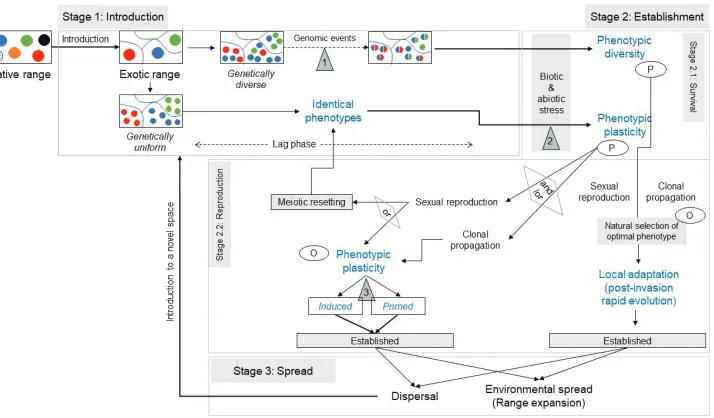
and vegetative means. We first aligned the proposed framework with three different stages of invasion (introduction, establishment and spread) to identify the possible locations where genetic differentiation and/or epigenetic regulation can act (Figure 1). We proposed future experimental studies (Figure 2) to understand the relative impor-tance of genetic and epigenetic regulation of trait fitness along the course of the inva-sion process. The methodologies usually adopted for these experiments have been given in Table 2 with their respective strengths and challenges while detailed methodologies for screening epigenetic variation in invasive plants have been provided in Box 1.
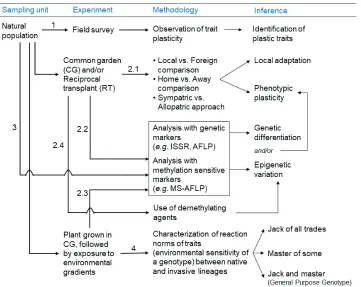
Field and controlled experiments are being conducted to characterize phenotypic variation of invading populations, often in comparison to their native congeners and to other species native to the invaded habitat (van Kleunen et al. 2010). Reciprocal transplant and/or common garden experiments are suitable for delineating the effects of local adaptation and phenotypic plasticity on successful invasion of an exotic species (Figure 2). In reciprocal transplant experiments, individuals from different populations are transplanted between the original habitats from where the populations were sampled and population x test habitat interactions are quantified in terms of fitness parameters (Kawecki and Ebert 2004). The alternative approach to this involves creating the proper-ties of different habitats in greenhouse or experimental plots, where fitness functions of different populations have been quantified. This experimental set-up is known as com-mon garden (explant) studies. In a comcom-mon garden experiment, two or more popula-tions of a species growing in their native and non-native environments are transplanted in a common environment so that the genetic basis of the observed differences among field populations can be identified (Molofsky et al. 2017; Parker et al. 2003). While in field experiments (marked ‘1’ in Figure 2), identifying plastic responses to a set of well-defined stress factors is important for comparative studies (Gratani 2014), manipulation of resource conditions in a biologically meaningful manner is required in reciprocal transplant and/or common garden studies (marked ‘2.1’ in Figure 2) to yield important and relevant information (Davidson et al. 2011). In a reciprocal transplant experiment, plants from different invasive populations can be grown in a common environment to compare fitness traits. Higher mean fitness for all the traits of the local population pared to foreign population will indicate local adaptation (Local versus Foreign com-parison). Significant difference in trait values among transplant sites (for a population) will indicate plastic responses whereas difference among populations (for a site) will indicate genetic differentiation. However, this approach is often confounded by intrinsic issues of population quality, e.g., inbreeding and transgenerational effects (Blanquart et al. 2013). The average effects of transplantation can be measured by comparing trait values between the local site and all away sites (Sympatric versus Allopatric comparison); however, this approach has been also found to be confounded by strong local advantage.
Figure 1. Conceptual framework for differentiating genetic and epigenetic basis for phenotypic vari-ations across three stages of alien plant invasion process (introduction, establishment, spread). While genetic differentiation between introduced populations may cause phenotypic variation which leads to local adaptation and post-invasion rapid evolution through selection of traits and natural selection of optimal phenotype across environmental conditions, epigenetically regulated phenotypic variations are more prevalent in genetically similar populations. Three sites where epigenetic mechanisms may influence invasion success have been marked with triangles: 1) in case of genetic admixture between different geno-types present in a region, 2) biotic and abiotic stress induced epigenetic alterations among the genetically similar populations, and 3) transmission of epigenetic information from the parents (P) to the offspring (O) making the progeny capable of dealing with similar kinds of parental environment.
might play a role in successful invasion of the species. In a recent transplantation ex-periment, local adaptation and phenotypic plasticity were examined in terms of fitness responses for sexual and clonal reproductive measures and vegetative responses of an invasive plant Fallopia japonica across a broad latitudinal range within North America (van Wallendael et al. 2018). This study reported significant effects of the source popu-lation (suggesting genetic differentiation) and transplant sites (suggesting phenotypic plasticity) for all vegetative traits, but no evidence of local adaptation was found for sexual or clonal reproductive traits. Contrasting examples are also found in which phenotypic plasticity can be operational being independent of genetic variation. For example, trait plasticity and genetic variation were examined across 16 populations of Crofton weed (Eupatorium adenophorum) in China in a common garden experiment followed by intersimple sequence repeat (ISSR) marker analysis. This study revealed the presence of high phenotypic plasticity of functional traits despite having low ge-netically based variation (Zhao et al. 2012).
Figure 2. Experimental framework for differentiating genetic and epigenetic regulation of phenotypic plasticity. While a field survey of natural populations may identify plastic traits (1), reciprocal transplant experiments comparing performances of local and foreign populations may give insights into local adap-tation, phenotypic plasticity and genetic differentiation as well (2.1). Plants grown in common garden experiments may be subjected to analysis with genetic and methylation-sensitive markers (2.2) or they can be exposed to environmental stresses before analysis (2.3) to identify genetic and epigenetic varia-tion regulating trait plasticity. The use of demethylating agents (2.4) can also provide indirect evidence of transgenerational epigenetic inheritance. Samples from the natural population can also be analyzed with these markers followed by proper statistical analysis to disentangle genetic and epigenetic effects on trait plasticity (3). Characterization of reaction norms of the plants (e.g. comparison between native and invasive lineages) grown in common garden in response to environmental gradients (4) may highlight the trade-offs between maintaining a high performance across a range of conditions (robustness or jack of all trades) and maximizing fitness in an environmental condition (opportunism or master of some) or both (robust to environmental conditions and high performance, the general-purpose genotype).
Table 1. Examples of experimental studies investigating the role of epigenetic variation in phenotypic plasticity in both non-native and native, model and non-model species in controlled as well as field-based experiments. The factors which may influence the experimental designing and outcomes are mentioned here: species reproduction (sexual, vegetative, or both), plant material used, environmental gradient re-sponsible for epigenetically controlled plastic changes and genetic as well as methylation sensitive genetic marker-based analysis (AFLP = Amplified Fragment Length Polymorphism; MS-AFLP/MSAP/met-AFLP = methylation sensitive AFLP).
Obs. Name of the
species Species status reproductionSpecies Experimental design materialPlant Environmental gradient Methodology Reference 1 Fallopia sp.
(Japanese knotweed)
Invasive Vegetative
and sexual Controlled Rhizome – Leaf Diverse habitats AFLP and MS-AFLP Richards et al. (2012)
2 Poa annua Non-native Sexual Field based Shoot Comparison between native
& invasive populations
AFLP and
met-AFLP Chwedorzewska and Bednarek (2012)
3 Alternanthera
philoxeroides Non-native Vegetative Field basedCommon Leaf Habitat – Aquatic and terrestrial AFLP and MSAP Gao et al. (2010) garden Plant
4 Spartina sp. (5 species – 2 parents, 2 hybrids and 1 allopolyploid
Non-native Sexual Controlled Leaf Allopolyploid
speciation AFLP and MSAP Salmon et al. (2005)
5 Phragmites
australis Introduced invasive and native non-invasive
subspecies
Facultative
clonal Field based Leaf between native & Comparison invasive subspecies
AFLP and
MS-AFLP Douhovnikoff Spens and (2016)
6 Ageratina adenophora (Crofton Weed)
Non-native Sexual and
vegetative Controlled Leaf Cold tolerance methylationICE1 gene Xie et al. (2015)
7 Taraxacum
officinale Endemic Apomictic Controlled Seed – Leaf Pathogen attackNutrient, Salt, AFLP and MS-AFLP analysis Verhoeven et al. (2010) 8 Arabidopsis
thaliana Model species Controlled Seed – Leaf Demethylating agent 5-azacytidine
Bossdorf et al. (2010)
9 Viola cazorlensis Endemic Sexual Field based Leaf Adaptive epigenetic variation
AFLP and
MSAP Bazaga (2010)Herrera and
10 Viola elatior Endemic Vegetative
and sexual Field based Leaf Light availability AFLP and MSAP Schulz et al. (2014) 11 Betula ermanii Endemic Sexual Field based Leaf Habitat AFLP and
MS-AFLP Wu et al. (2013) 12 Armeria
maritima Endemic outbreedingObligatory Controlled Seed – Leaf concentrationMetal AFLP and met-AFLP Abratowska et al. (2012) 13 Ilex aquifolium Endemic Sexual Field based Leaf –
heterophylly Herbivory MSAP Bazaga (2013)Herrera and 14 Laguncularia
racemose Mangrove-endemic and sexualVegetative Field based Leaf Habitat MSAP Lira-Medeiros et al. (2010) 15 Viola cazorlensis Endemic Sexual Field based
(long term: 20 years)
Leaf Herbivory AFLP and
MSAP Bazaga (2011)Herrera and
between native and introduced populations of two perennial plants Silene vulgaris and S. latifolia in a common garden experiment (Keller et al. 2009) using AFLP loci and statistically controlling neutral processes like colonization history, gene flow and genetic drift. The results revealed evidence of adaptive differentiation for some traits while the role of neutral processes governing phenotypic variation was also found for other traits.
To identify genetic and epigenetic regulation of phenotypic variation, the invasive populations of the common greenhouse environment can be subjected to analysis with genetic and methylation-sensitive markers (marked 2.2 in Figure 2) [e.g. Richards et al. (2012)]. The plants can be exposed to environmental stresses in common garden exper-imental set-up and stress-induced phenotypic variation can be analyzed using both ge-netic and methylation-sensitive markers (marked 2.3 in Figure 2) (2.3) (e.g. Verhoeven et al. 2010). Samples from natural populations can also be analyzed with these markers followed by proper statistical analysis to disentangle genetic and epigenetic effects on trait variation (3) (e.g. Herrera and Bazaga 2013). In addition, use of demethylating agents like 5-azacytidine and zebularine inhibits the enzyme methyltransferase activ-ity of DNA demethylation and therefore natural epigenetic variation can be identified from responses of different natural populations to the treatment of these demethylat-ing agents (marked 2.4 in Figure 2). Similar approaches have been found successful to identify genetic and epigenetic regulation of phenotypic variation in model and non-model species (Table 2). For example, a set of natural genotypes of the non-model species Arabidopsis thaliana was treated with demethylating agent 5-azacytidine, and the effect of reduced DNA methylation was identified as the main cause of the observed pheno-typic changes of plant traits (Bossdorf et al. 2010). In another greenhouse experiment, individuals of six genotypes of a perennial grass species Festuca rubra were treated with 5-azacytidine and their performances were measured across different environmental conditions (Münzbergová et al. 2019). This study found interactive effect of demethyl-ation with the environment and genotype, thereby suggesting that epigenetic varidemethyl-ation can be influenced by both genetic structure and local environment.
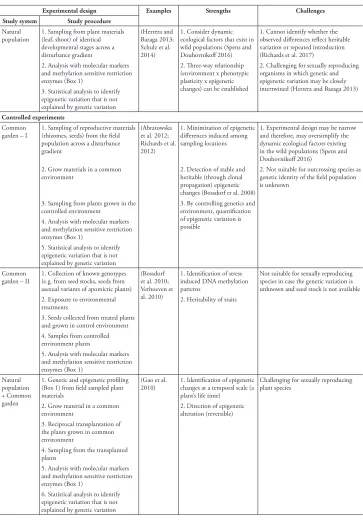
Table 2. Experimental designs commonly used for investigating the effect of epigenetic variation on phenotypic plasticity and transgenerational pattern of epigenetic changes across generations. Strengths and challenges associated with each of these approaches have been mentioned.
Experimental design Examples Strengths Challenges
Study system Study procedure Natural
population 1. Sampling from plant materials (leaf, shoot) of identical developmental stages across a disturbance gradient
(Herrera and Bazaga 2013; Schulz et al. 2014)
1. Consider dynamic ecological factors that exist in wild populations (Spens and Douhovnikoff 2016)
1. Cannot identify whether the observed differences reflect heritable variation or repeated introduction (Richards et al. 2017) 2. Analysis with molecular markers
and methylation sensitive restriction enzymes (Box 1)
2. Three-way relationship (environment x phenotypic plasticity x epigenetic changes) can be established
2. Challenging for sexually reproducing organisms in which genetic and epigenetic variation may be closely intertwined (Herrera and Bazaga 2013) 3. Statistical analysis to identify
epigenetic variation that is not explained by genetic variation Controlled experiments
Common
garden – I 1. Sampling of reproductive materials (rhizomes, seeds) from the field population across a disturbance gradient
(Abratowska et al. 2012; Richards et al. 2012)
1. Minimization of epigenetic differences induced among sampling locations
1. Experimental design may be narrow and therefore, may oversimplify the dynamic ecological factors existing in the wild populations (Spens and Douhovnikoff 2016)
2. Grow materials in a common
environment 2. Detection of stable and heritable (through clonal propagation) epigenetic changes (Bossdorf et al. 2008)
2. Not suitable for outcrossing species as genetic identity of the field population is unknown
3. Sampling from plants grown in the
controlled environment 3. By controlling genetics and environment, quantification of epigenetic variation is possible
4. Analysis with molecular markers and methylation sensitive restriction enzymes (Box 1)
5. Statistical analysis to identify epigenetic variation that is not explained by genetic variation Common
garden – II 1. Collection of known genotypes (e.g. from seed stocks, seeds from asexual variants of apomictic plants)
(Bossdorf et al. 2010; Verhoeven et al. 2010)
1. Identification of stress induced DNA methylation patterns
Not suitable for sexually reproducing species in case the genetic variation is unknown and seed stock is not available 2. Exposure to environmental
treatments 2. Heritability of traits 3. Seeds collected from treated plants
and grown in control environment 4. Samples from controlled environment plants
5. Analysis with molecular markers and methylation sensitive restriction enzymes (Box 1)
Natural population + Common garden
1. Genetic and epigenetic profiling (Box 1) from field sampled plant materials
(Gao et al.
2010) 1. Identification of epigenetic changes at a temporal scale (a plant’s life time)
Challenging for sexually reproducing plant species
2. Grow material in a common
environment 2. Direction of epigenetic alteration (reversible) 3. Reciprocal transplantation of
the plants grown in common environment
4. Sampling from the transplanted plants
5. Analysis with molecular markers and methylation sensitive restriction enzymes (Box 1)
Box 1. Methodologies for screening epigenetic variation in invasive plants.
Molecular markers with methylation sensitive restriction enzymes:
A standard Amplified Fragment Length Polymorphism (AFLP) process followed by methylation sensitive AFLP (MS-AFLP or MSAP). In MS-AFLP, pairs of methyla-tion sensitive restricmethyla-tion enzymes (isoschizomers) have been used to survey cystine methylation at restriction sites spread across the investigated genomes. In AFLP, MseI and EcoRI have been used to digestion of DNA extracts whereas HpaII and MspI with EcoRI have been used in MS-AFLP. AFLP and MS-AFLP are usually applied in parallel to compare genetic and epigenetic structures of populations us-ing statistical techniques. Unlike HPLC- and ELISA-based assays which determined the proportion of methylated cytosines across the entire genome, the MS-AFLP can distinguish between different genomic locations or contexts (CG, CHG, CHH) of cytosine methylation from the banding patterns: CpG methylated loci (bands pres-ent in EcoRI/MspI only); nonmethylated loci (bands prespres-ent in both profiles); loci hemimethylated at the external C of the restriction site (bands present in EcoRI/ HpaII only) and noninformative loci (bands absent in both profiles). This method-ology has been successfully applied to screen epigenetic variation in both invasive species [e.g. Alternanthera philoxeroides (Gao et al. 2010); Fallopia sp. (Iacarella et al. 2015; Richards et al. 2012); Phragmites australis (Spens and Douhovnikoff 2016)] and non-invasive species [Taraxacum officinale (Verhoeven et al. 2010); Viola elatior (Catford et al. 2009; Roman and Darling 2007; Schulz et al. 2014)].
Although the commonly used pair of isoschizomers (HpaII/MspI) can identify changes in methylation pattern, they fail to support data concerning genetic varia-tion exclusively. To circumvent this limitavaria-tion, some authors suggested use of met-AFLP along with met-AFLP procedure. In met-met-AFLP, the restriction enzymes Acc65I/ MseI and KpnI/MseI have been used. For example, Chwedorzewska and Bednarek (2012) used AFLP and met-AFLP to characterize genetic and epigenetic variation in invasive Poa annua population in Antarctica. In case of non-invasive species, Abra-towska et al. (2012) used this procedure to identify genetic distinctiveness of metal-licolous and non-metalmetal-licolous populations of a metallophyte, Armeria maritima. Future directions:
grown in drought condition and increased growth of offspring ramets from the parents treated with repeated application of jasmonic acid. Application of 5-azacytidine to the parents exposed to the drought condition and application of jasmonic acid reduced the growth of maternal ramets (transplanted main stolon). These findings provide evidence that parental environment can induce transgenerational effects in the offspring and some of these effects can be adaptive.
Focusing on a specific gene methylation variation can also provide two important insights: in case of genetically uniform species, variation in gene or protein expression (measured using microarrays or 2-D electrophoresis) indicate underlying epigenetic variation (Bossdorf et al. 2008) and secondly, the expression of the methylated gene may highlight the mechanism by which methylation differentiation contributes to the successful invasion (Xie et al. 2015). For example, the C-repeat/dehydration-responsive element binding factor (CBF) pathway governs plant responses to adverse low tempera-ture (Chinnusamy et al. 2003). Demethylated upregulation of cold response regulator ICE1 (inducer of CBF expression 1) was found to be the evolutionary mechanism re-sponsible for northward expansion of the invasive Ageratina adenophora (Crofton weed) in China (Xie et al. 2015). Use of Quantitative Trait Loci (QTL)-mapping approaches can be useful to link the natural epigenetic variation with the observed phenotype. QTLs have been recognized as genetic regions (associated with phenotypic traits) which control the magnitude of a specific trait (Cortijo et al. 2014). Epigenetic QTLs, or the loci associated with different methylation marks, have been found to control flowering time and root length in the model plant Arabidopsis, thereby demonstrating that herit-ability of some traits can be determined by epigenetic variation (Cortijo et al. 2014).
Finally, a higher degree of phenotypic plasticity in an invasive species does not nec-essarily mean that the species has become invasive due to the plasticity (Palacio‐López et al. 2015). To infer the role of phenotypic plasticity in successful invasion, observa-tions of trait plasticity should be followed by experimental studies to identify that the plastic response is adaptive or linked to fitness (Davidson et al. 2011; van Kleunen and Fischer 2005). Characterization of reaction norms of the study species (e.g. com-parison between native and invasive lineages) grown in common garden in response to environmental gradients (marked ‘4’ in Figure 2) may highlight the trade-offs between maintaining a high performance across a range of conditions (robustness or jack of all trades) and maximizing fitness in an environmental condition (opportunism or master of some) or both (robust to environmental conditions and high performance, the gen-eral purpose genotype) (e.g. Drown et al. 2011).
Concluding remarks
stud-ies should consider looking into the relative contributions of genetic variation and epigenetic modification to the observed phenotypic variation in invasive plant spe-cies, and characterizing the three-way relationship between environmental cue, phe-notypic plasticity and epigenetic changes. This framework also suggests that these studies should combine trait and molecular data and include comparative analysis of fitness functions between native and introduced ranges of a species (van Kleunen et al. 2018) and explore adaptive differentiation in invaders, while accounting for non-adaptive evolutionary changes. The unified research framework, therefore, may converge the parallel lines of research towards a better understanding of the mecha-nism of successful invasion.
Acknowledgements
This study is supported by grants from the National Natural Science Foundation of China (Grant Nos. 41776166 and 31700178), Special Fund for Science and Technol-ogy Development of Guangdong Province (2017A030303014), the Science Founda-tion of the State Key Laboratory of Biocontrol (32-2017-A30), the Science and Tech-nology Program of Guangzhou (Grant No. 201707020035) and the Chang Hungta Science Foundation of Sun Yat-sen University. The authors would like to thank Prof. Mark van Kleunen of the University of Konstanz, Germany, for providing valuable insights towards improving this manuscript’s quality and readability. The authors are grateful to the editor and three reviewers, Dr. Vit Latzel, Dr. Karin Schrieber and Dr. Stefan Michalski, for their constructive criticisms and valuable suggestions which have immensely improved the manuscript’s quality.
References
Abratowska A, Wąsowicz P, Bednarek P, Telka J, Wierzbicka M (2012) Morphological and ge-netic distinctiveness of metallicolous and non‐metallicolous populations of Armeria marit-ima s.l. (Plumbaginaceae) in Poland. Plant Biology 14: 586–595. https://doi.org/10.1111/ j.1438-8677.2011.00536.x
Agrawal AA, Hastings AP, Bradburd GS, Woods EC, Züst T, Harvey JA, Bukovinszky T (2015) Evolution of plant growth and defense in a continental introduction. The American Natu-ralist 186: 1–15. https://doi.org/10.1086/681622
Aïnouche ML, Fortune P, Salmon A, Parisod C, Grandbastien M-A, Fukunaga K, Ricou M, Misset M-T (2009) Hybridization, polyploidy and invasion: lessons from Spartina (Poace-ae). Biological Invasions 11: 1159. https://doi.org/10.1007/s10530-008-9383-2
Baker HG (1965) Characteristics and modes of origin of weeds. In: Baker HG, Stebbins GL (Eds) The Genetics of Colonizing Species. Academic Press, New York, 147–168
Baker HG, Stebbins GL (1965) The genetics of colonizing species. Academic Press, New York. Barrett SC (2015) Foundations of invasion genetics: the Baker and Stebbins legacy. Molecular
Bellard C, Rysman J-F, Leroy B, Claud C, Mace GM (2017) A global picture of biologi-cal invasion threat on islands. Nature Ecology & Evolution 1: 1862–1869. https://doi. org/10.1038/s41559-017-0365-6
Bhattarai GP, Meyerson LA, Anderson J, Cummings D, Allen WJ, Cronin JT (2017) Biogeog-raphy of a plant invasion: genetic variation and plasticity in latitudinal clines for traits re-lated to herbivory. Ecological Monographs 87: 57–75. https://doi.org/10.1002/ecm.1233 Biémont C (2010) Inbreeding effects in the epigenetic era. Nature Reviews Genetics 11: 234.
https://doi.org/10.1038/nrg2664-c1
Blackburn TM, Pyšek P, Bacher S, Carlton JT, Duncan RP, Jarošík V, Wilson JR, Richardson DM (2011) A proposed unified framework for biological invasions. Trends in Ecology & Evolution 26: 333–339. https://doi.org/10.1016/j.tree.2011.03.023
Blanquart F, Kaltz O, Nuismer SL, Gandon S (2013) A practical guide to measuring local ad-aptation. Ecology Letters 16: 1195–1205. https://doi.org/10.1111/ele.12150
Bock DG, Caseys C, Cousens RD, Hahn MA, Heredia SM, Hübner S, Turner KG, Whitney KD, Rieseberg LH (2015) What we still don’t know about invasion genetics. Molecular Ecology 24: 2277–2297. https://doi.org/10.1111/mec.13032
Bond DM, Baulcombe DC (2014) Small RNAs and heritable epigenetic variation in plants. Trends in Cell Biology 24: 100–107. https://doi.org/10.1016/j.tcb.2013.08.001
Bossdorf O, Arcuri D, Richards CL, Pigliucci M (2010) Experimental alteration of DNA meth-ylation affects the phenotypic plasticity of ecologically relevant traits in Arabidopsis thali-ana. Evolutionary Ecology 24: 541–553. https://doi.org/10.1007/s10682-010-9372-7 Bossdorf O, Auge H, Lafuma L, Rogers WE, Siemann E, Prati D (2005) Phenotypic and
genetic differentiation between native and introduced plant populations. Oecologia 144: 1–11. https://doi.org/10.1007/s00442-005-0070-z
Bossdorf O, Richards CL, Pigliucci M (2008) Epigenetics for ecologists. Ecology Letters 11: 106–115. https://doi.org/10.1111/j.1461-0248.2007.01130.x
Bräutigam K, Vining KJ, Lafon‐Placette C, Fossdal CG, Mirouze M, Marcos JG, Fluch S, Fraga MF, Guevara MÁ, Abarca D (2013) Epigenetic regulation of adaptive responses of forest tree species to the environment. Ecology and Evolution 3: 399–415. https://doi. org/10.1002/ece3.461
Callaway RM, Maron JL (2006) What have exotic plant invasions taught us over the past 20 years? Trends in Ecology & Evolution 21: 369–374. https://doi.org/10.1016/j. tree.2006.04.008
Campbell LG, Parker RJ, Blakelock G, Pirimova N, Mercer KL (2015) Maternal environment influences propagule pressure of an invasive plant, Raphanus raphanistrum (Brassicaceae). International Journal of Plant Sciences 176: 393–403. https://doi.org/10.1086/680683 Campbell SA, Thaler JS, Kessler A (2013) Plant chemistry underlies herbivore-mediated
inbreed-ing depression in nature. Ecology Letters 16: 252–260. https://doi.org/10.1111/ele.12036 Catford JA, Jansson R, Nilsson C (2009) Reducing redundancy in invasion ecology by
integrat-ing hypotheses into a sintegrat-ingle theoretical framework. Diversity and Distributions 15: 22–40. https://doi.org/10.1111/j.1472-4642.2008.00521.x
Chinnusamy V, Zhu J-K (2009) Epigenetic regulation of stress responses in plants. Current Opinion in Plant Biology 12: 133–139. https://doi.org/10.1016/j.pbi.2008.12.006 Chwedorzewska K, Bednarek P (2012) Genetic and epigenetic variation in a cosmopolitan
grass Poa annua from Antarctic and Polish populations. Polish Polar Research 33: 63–80. https://doi.org/10.2478/v10183-012-0004-5
Clements D, Ditommaso A (2011) Climate change and weed adaptation: can evolution of in-vasive plants lead to greater range expansion than forecasted? Weed Research 51: 227–240. https://doi.org/10.1111/j.1365-3180.2011.00850.x
Colautti RI, Barrett SC (2013) Rapid adaptation to climate facilitates range expansion of an invasive plant. Science 342: 364–366. https://doi.org/10.1126/science.1242121
Collins AR, Beckage B, Molofsky J (2018) Small-scale genotypic richness stabilizes plot bio-mass and increases phenotypic variance in the invasive grass Phalaris arundinacea. Journal of Plant Ecology 11: 47–55. https://doi.org/10.1093/jpe/rtx056
Cortijo S, Wardenaar R, Colomé-Tatché M, Gilly A, Etcheverry M, Labadie K, Caillieux E, Aury J-M, Wincker P, Roudier F (2014) Mapping the epigenetic basis of complex traits. Science 343: 1145–1148. https://doi.org/10.1126/science.1248127
Crawford K, Whitney K (2010) Population genetic diversity influences colonization success. Molecular Ecology 19: 1253–1263. https://doi.org/10.1111/j.1365-294X.2010.04550.x Davidson AM, Jennions M, Nicotra AB (2011) Do invasive species show higher phenotypic
plasticity than native species and, if so, is it adaptive? A meta‐analysis. Ecology Letters 14: 419–431. https://doi.org/10.1111/j.1461-0248.2011.01596.x
Dlugosch KM, Anderson SR, Braasch J, Cang FA, Gillette HD (2015) The devil is in the details: genetic variation in introduced populations and its contributions to invasion. Mo-lecular Ecology 24: 2095–2111. https://doi.org/10.1111/mec.13183
Dlugosch KM, Parker I (2008a) Founding events in species invasions: genetic variation, adap-tive evolution, and the role of multiple introductions. Molecular Ecology 17: 431–449. https://doi.org/10.1111/j.1365-294X.2007.03538.x
Dlugosch KM, Parker IM (2008b) Invading populations of an ornamental shrub show rapid life history evolution despite genetic bottlenecks. Ecology Letters 11: 701–709. https:// doi.org/10.1111/j.1461-0248.2008.01181.x
Dowen RH, Pelizzola M, Schmitz RJ, Lister R, Dowen JM, Nery JR, Dixon JE, Ecker JR (2012) Widespread dynamic DNA methylation in response to biotic stress. Proceed-ings of the National Academy of Sciences 109: 2183–2191. https://doi.org/10.1073/ pnas.1209329109
Drown DM, Levri EP, Dybdahl MF (2011) Invasive genotypes are opportunistic special-ists not general purpose genotypes. Evolutionary Applications 4: 132–143. https://doi. org/10.1111/j.1752-4571.2010.00149.x
Dyer AR, Brown CS, Espeland EK, McKay JK, Meimberg H, Rice KJ (2010) SYNTHESIS: The role of adaptive trans‐generational plasticity in biological invasions of plants. Evolu-tionary Applications 3: 179–192. https://doi.org/10.1111/j.1752-4571.2010.00118.x Early R, Bradley BA, Dukes JS, Lawler JJ, Olden JD, Blumenthal DM, Gonzalez P, Grosholz
Ellstrand NC, Schierenbeck KA (2000) Hybridization as a stimulus for the evolution of in-vasiveness in plants? Proceedings of the National Academy of Sciences 97: 7043–7050. https://doi.org/10.1073/pnas.97.13.7043
Eriksen RL, Desronvil T, Hierro JL, Kesseli R (2012) Morphological differentiation in a com-mon garden experiment acom-mong native and non-native specimens of the invasive weed yellow starthistle (Centaurea solstitialis). Biological Invasions 14: 1459–1467. https://doi. org/10.1007/s10530-012-0172-6
Estoup A, Ravigné V, Hufbauer R, Vitalis R, Gautier M, Facon B (2016) Is there a genetic paradox of biological invasion? Annual Review of Ecology, Evolution, and Systematics 47: 51–72. https://doi.org/10.1146/annurev-ecolsys-121415-032116
Facon B, Genton BJ, Shykoff J, Jarne P, Estoup A, David P (2006) A general eco-evolutionary framework for understanding bioinvasions. Trends in Ecology & Evolution 21: 130–135. https://doi.org/10.1016/j.tree.2005.10.012
Fenesi A, Dyer AR, Geréd J, Sándor D, Ruprecht E (2014) Can transgenerational plasticity contribute to the invasion success of annual plant species? Oecologia 176: 95–106. https:// doi.org/10.1007/s00442-014-2994-7
Fierst JL (2011) A history of phenotypic plasticity accelerates adaptation to a new environ-ment. Journal of Evolutionary Biology 24: 1992–2001. https://doi.org/10.1111/j.1420-9101.2011.02333.x
Finnegan EJ, Genger RK, Peacock WJ, Dennis ES (1998) DNA methylation in plants. An-nual Review of Plant Physiology and Plant Molecular Biology 49: 223–247. https://doi. org/10.1146/annurev.arplant.49.1.223
Galloway LF, Etterson JR (2007) Transgenerational plasticity is adaptive in the wild. Science 318: 1134–1136. https://doi.org/10.1126/science.1148766
Gao L, Geng Y, Li B, Chen J, Yang J (2010) Genome‐wide DNA methylation alterations of
Alternanthera philoxeroides in natural and manipulated habitats: implications for epigenetic regulation of rapid responses to environmental fluctuation and phenotypic variation. Plant, Cell & Environment 33: 1820–1827. https://doi.org/10.1111/j.1365-3040.2010.02186.x Geng Y-P, Pan X-Y, Xu C-Y, Zhang W-J, Li B, Chen J-K, Lu B-R, Song Z-P (2007) Phenotypic
plasticity rather than locally adapted ecotypes allows the invasive alligator weed to colo-nize a wide range of habitats. Biological Invasions 9: 245–256. https://doi.org/10.1007/ s10530-006-9029-1
Geng Y, van Klinken RD, Sosa A, Li B, Chen J, Xu C-Y (2016) The relative importance of genet-ic diversity and phenotypgenet-ic plastgenet-icity in determining invasion success of a clonal weed in the USA and China. Frontiers in Plant Science 7: 213. https://doi.org/10.3389/fpls.2016.00213 Gratani L (2014) Plant phenotypic plasticity in response to environmental factors. Advances in
botany 2014. https://doi.org/10.1155/2014/208747
Hagenblad J, Hülskötter J, Acharya KP, Brunet J, Chabrerie O, Cousins SA, Dar PA, Diek-mann M, De Frenne P, Hermy M (2015) Low genetic diversity despite multiple introduc-tions of the invasive plant species Impatiens glandulifera in Europe. BMC Genetics 16: 103. https://doi.org/10.1186/s12863-015-0242-8
Henderson IR, Jacobsen SE (2007) Epigenetic inheritance in plants. Nature 447: 418–424. https://doi.org/10.1038/nature05917
Herman JJ, Sultan SE (2016) DNA methylation mediates genetic variation for adaptive transgenerational plasticity. Proceedings of the Royal Society B: Biological Sciences 283. https://doi.org/10.1098/rspb.2016.0988
Herrera CM, Bazaga P (2010) Epigenetic differentiation and relationship to adaptive genetic divergence in discrete populations of the violet Viola cazorlensis. New Phytologist 187: 867–876. https://doi.org/10.1111/j.1469-8137.2010.03298.x
Herrera CM, Bazaga P (2011) Untangling individual variation in natural populations: ecologi-cal, genetic and epigenetic correlates of long‐term inequality in herbivory. Molecular Ecol-ogy 20: 1675–1688. https://doi.org/10.1111/j.1365-294X.2011.05026.x
Herrera CM, Bazaga P (2013) Epigenetic correlates of plant phenotypic plasticity: DNA meth-ylation differs between prickly and nonprickly leaves in heterophyllous Ilex aquifolium
(Aquifoliaceae) trees. Botanical Journal of the Linnean Society 171: 441–452. https://doi. org/10.1111/boj.12007
Holeski LM, Jander G, Agrawal AA (2012) Transgenerational defense induction and epige-netic inheritance in plants. Trends in Ecology & Evolution 27: 618–626. https://doi. org/10.1016/j.tree.2012.07.011
Holm A-K, Elameen A, Oliver BW, Brandsæter LO, Fløistad IS, Brurberg MB (2017) Low ge-netic variation of invasive Fallopia spp. in their northernmost European distribution range. Ecology and Evolution 8: 755–764. https://doi.org/10.1002/ece3.3703
Hufbauer RA, Facon B, Ravigné V, Turgeon J, Foucaud J, Lee CE, Rey O, Estoup A (2012) An-thropogenically induced adaptation to invade (AIAI): contemporary adaptation to human-altered habitats within the native range can promote invasions. Evolutionary Applications 5: 89–101. https://doi.org/10.1111/j.1752-4571.2011.00211.x
Hufbauer RA, Rutschmann A, Serrate B, Vermeil de Conchard H, Facon B (2013) Role of propagule pressure in colonization success: disentangling the relative importance of de-mographic, genetic and habitat effects. Journal of Evolutionary Biology 26: 1691–1699. https://doi.org/10.1111/jeb.12167
Iacarella JC, Mankiewicz PS, Ricciardi A (2015) Negative competitive effects of invasive plants change with time since invasion. Ecosphere 6: art123. https://doi.org/10.1890/es15-00147.1
Inderjit, Cadotte MW, Colautti RI (2005) The ecology of biological invasions: past, present and future. In: Inderjit (Ed.) Invasive Plants: Ecological and Agricultural Aspects. Birkhäu-ser Basel, Basel, 19–43. https://doi.org/10.1007/3-7643-7380-6_2
Jablonka E, Raz G (2009) Transgenerational epigenetic inheritance: prevalence, mechanisms, and implications for the study of heredity and evolution. The Quarterly review of biology 84: 131–176. https://doi.org/10.1086/598822
Kariyat RR, Mena-Alí J, Forry B, Mescher MC, De Moraes CM, Stephenson AG (2012) Inbreeding, herbivory, and the transcriptome of Solanum carolinense. Ento-mologia Experimentalis et Applicata 144: 134–144. https://doi.org/10.1111/j.1570-7458.2012.01269.x
Keller SR, Sowell DR, Neiman M, Wolfe LM, Taylor DR (2009) Adaptation and coloniza-tion history affect the evolucoloniza-tion of clines in two introduced species. New Phytologist 183: 678–690. https://doi.org/10.1111/j.1469-8137.2009.02892.x
Keller SR, Taylor DR (2008) History, chance and adaptation during biological invasion: sep-arating stochastic phenotypic evolution from response to selection. Ecology Letters 11: 852–866. https://doi.org/10.1111/j.1461-0248.2008.01188.x
Kristensen TN, Pedersen KS, Vermeulen CJ, Loeschcke V (2010) Research on inbreeding in the ‘omic’ era. Trends in Ecology & Evolution 25: 44–52. https://doi.org/10.1016/j. tree.2009.06.014
Lambertini C, Riis T, Olesen B, Clayton JS, Sorrell BK, Brix H (2010) Genetic diversity in three invasive clonal aquatic species in New Zealand. BMC Genetics 11: 52. https://doi. org/10.1186/1471-2156-11-52
Latzel V, Allan E, Silveira AB, Colot V, Fischer M, Bossdorf O (2013) Epigenetic diversity increases the productivity and stability of plant populations. Nature Communications 4: 2875. https://doi.org/10.1038/ncomms3875
Lavergne S, Molofsky J (2007) Increased genetic variation and evolutionary potential drive the success of an invasive grass. Proceedings of the National Academy of Sciences 104: 3883–3888. https://doi.org/10.1073/pnas.0607324104
Liao H, D’Antonio CM, Chen B, Huang Q, Peng S (2016) How much do phenotypic plastic-ity and local genetic variation contribute to phenotypic divergences along environmental gradients in widespread invasive plants? A meta‐analysis. Oikos 125: 905–917. https://doi. org/10.1111/oik.02372
Lira-Medeiros CF, Parisod C, Fernandes RA, Mata CS, Cardoso MA, Ferreira PCG (2010) Epigenetic variation in mangrove plants occurring in contrasting natural environment. PLoS One 5: e10326. https://doi.org/10.1371/journal.pone.0010326
Liu B, Brubaker C, Mergeai G, Cronn R, Wendel J (2001) Polyploid formation in cot-ton is not accompanied by rapid genomic changes. Genome 44: 321–330. https://doi. org/10.1139/g01-011
Marchini GL, Maraist CA, Cruzan MB (2019) Trait divergence, not plasticity, determines the success of a newly invasive plant. Annals of Botany 123: 667–679. https://doi.org/10.1093/ aob/mcy200
Massicotte R, Angers B (2012) General-purpose genotype or how epigenetics extend the flexibility of a genotype. Genetics research international 2012. https://doi.org/10.1155/2012/317175 Meimberg H, Milan NF, Karatassiou M, Espeland EK, Mckay JK, Rice KJ (2010) Patterns
of introduction and adaptation during the invasion of Aegilops triuncialis (Poaceae) into Californian serpentine soils. Molecular Ecology 19: 5308–5319. https://doi.org/10.1111/ j.1365-294X.2010.04875.x
Molofsky J, Collins AR, Imbert E, Bitinas T, Lavergne S (2017) Are invasive genotypes supe-rior? An experimental approach using native and invasive genotypes of the invasive grass
Phalaris arundinacea. Open Journal of Ecology 7: 125–139. https://doi.org/10.4236/ oje.2017.72010
Münzbergová Z, Latzel V, Šurinová M, Hadincová V (2019) DNA methylation as a possible mechanism affecting ability of natural populations to adapt to changing climate. Oikos 128: 124–134. https://doi.org/10.1111/oik.05591
Muth NZ, Pigliucci M (2007) Implementation of a novel framework for assessing species plasticity in biological invasions: responses of Centaurea and Crepis to phosphorus and water availability. Journal of Ecology 95: 1001–1013. https://doi.org/10.1111/j.1365-2745.2007.01268.x
Nebert DW, Gálvez-Peralta M, Shi Z, Dragin N (2010) Inbreeding and epigenetics: beneficial as well as deleterious effects. Nature Reviews Genetics 11: 662. https://doi.org/10.1038/ nrg2664-c2
Nicotra AB, Atkin OK, Bonser SP, Davidson AM, Finnegan E, Mathesius U, Poot P, Purug-ganan MD, Richards C, Valladares F (2010) Plant phenotypic plasticity in a changing cli-mate. Trends in Plant Science 15: 684–692. https://doi.org/10.1016/j.tplants.2010.09.008 Novak S, Mack R (2005) Genetic bottlenecks in alien plant species: influence of mating systems
and introduction dynamics. In: Sax DF, Gaines SD, Stachowicz JJ (Eds) Exotic Species-bane to Conservation and Boon to Understanding: Ecology, Evolution and Biogeography. Sinauer, USA, 95–122.
Nunez-Mir GC, Liebhold AM, Guo Q, Brockerhoff EG, Jo I, Ordonez K, Fei S (2017) Biotic re-sistance to exotic invasions: its role in forest ecosystems, confounding artifacts, and future di-rections. Biological Invasions 19: 3287–3299. https://doi.org/10.1007/s10530-017-1413-5 Oduor AM, Leimu R, Kleunen M (2016) Invasive plant species are locally adapted just as fre-quently and at least as strongly as native plant species. Journal of Ecology 104: 957–968. https://doi.org/10.1111/1365-2745.12578
Palacio‐López K, Beckage B, Scheiner S, Molofsky J (2015) The ubiquity of phenotypic plastic-ity in plants: a synthesis. Ecology and Evolution 5: 3389–3400. https://doi.org/10.1002/ ece3.1603
Parisod C, Salmon A, Zerjal T, Tenaillon M, Grandbastien MA, Ainouche M (2009) Rapid structural and epigenetic reorganization near transposable elements in hybrid and allopoly-ploid genomes in Spartina. New Phytologist 184: 1003–1015. https://doi.org/10.1111/ j.1469-8137.2009.03029.x
Parker IM, Rodriguez J, Loik ME (2003) An evolutionary approach to understanding the biology of invasions: local adaptation and general‐purpose genotypes in the weed Ver-bascum thapsus. Conservation Biology 17: 59–72. https://doi.org/10.1046/j.1523-1739.2003.02019.x
Pérez JE, Nirchio M, Alfonsi C, Muñoz C (2006) The biology of invasions: the genetic adaptation paradox. Biological Invasions 8: 1115–1121. https://doi.org/10.1007/s10530-005-8281-0 Pikaard CS, Mittelsten Scheid O (2014) Epigenetic regulation in plants. Cold Spring Harbor
perspectives in biology 6: a019315-a019315. https://doi.org/10.1101/cshperspect.a019315 Platt A, Gugger PF, Pellegrini M, Sork VL (2015) Genome‐wide signature of local adaptation
linked to variable CpG methylation in oak populations. Molecular Ecology 24: 3823– 3830. https://doi.org/10.1111/mec.13230
Quadrana L, Colot V (2016) Plant transgenerational epigenetics. Annual Review of Genetics 50: 467–491. https://doi.org/10.1146/annurev-genet-120215-035254
Rapp RA, Wendel JF (2005) Epigenetics and plant evolution. New Phytologist 168: 81–91. https://doi.org/10.1111/j.1469-8137.2005.01491.x
Reed DH, Fox CW, Enders LS, Kristensen TN (2012) Inbreeding-stress interactions: evolu-tionary and conservation consequences. Annals of the New York Academy of Sciences 1256: 33–48. https://doi.org/10.1111/j.1749-6632.2012.06548.x
Ren MX, Zhang QG, Zhang DY (2005) Random amplified polymorphic DNA markers reveal low genetic variation and a single dominant genotype in Eichhornia crassipes populations through-out China. Weed Research 45: 236–244. https://doi.org/10.1111/j.1365-3180.2005.00445.x Rendina González AP, Dumalasová V, Rosenthal J, Skuhrovec J, Latzel V (2017) The role of
transgenerational effects in adaptation of clonal offspring of white clover (Trifolium repens) to drought and herbivory. Evolutionary Ecology 31: 345–361. https://doi.org/10.1007/ s10682-016-9844-5
Rendina González AP, Preite V, Verhoeven KJF, Latzel V (2018) Transgenerational effects and epigenetic memory in the clonal plant Trifolium repens. Frontiers in Plant Science 9. htt-ps://doi.org/10.3389/fpls.2018.01677
Richards CL, Alonso C, Becker C, Bossdorf O, Bucher E, Colomé‐Tatché M, Durka W, Engel-hardt J, Gaspar B, Gogol‐Döring A (2017) Ecological plant epigenetics: Evidence from model and non‐model species, and the way forward. Ecology Letters 20: 1576–1590. https://doi.org/10.1111/ele.12858
Richards CL, Schrey AW, Pigliucci M (2012) Invasion of diverse habitats by few Japanese knot-weed genotypes is correlated with epigenetic differentiation. Ecology Letters 15: 1016– 1025. https://doi.org/10.1111/j.1461-0248.2012.01824.x
Richards EJ (2006) Inherited epigenetic variation-revisiting soft inheritance. Nature Reviews Genetics 7: 395. https://doi.org/10.1038/nrg1834
Richards EJ (2011) Natural epigenetic variation in plant species: a view from the field. Current Opinion in Plant Biology 14: 204–209. https://doi.org/10.1016/j.pbi.2011.03.009 Rius M, Darling JA (2014) How important is intraspecific genetic admixture to the success
of colonising populations? Trends in Ecology & Evolution 29: 233–242. https://doi. org/10.1016/j.tree.2014.02.003
Roman J, Darling JA (2007) Paradox lost: genetic diversity and the success of aquatic invasions. Trends in Ecology & Evolution 22: 454–464. https://doi.org/10.1016/j.tree.2007.07.002 Rosche C, Hensen I, Mráz P, Durka W, Hartmann M, Lachmuth S (2017) Invasion success in
polyploids: the role of inbreeding in the contrasting colonization abilities of diploid versus tetraploid populations of Centaurea stoebe s.l. Journal of Ecology 105: 425–435. https:// doi.org/10.1111/1365-2745.12670
Sakai AK, Allendorf FW, Holt JS, Lodge DM, Molofsky J, With KA, Baughman S, Cabin RJ, Cohen JE, Ellstrand NC (2001) The population biology of invasive species. Annu-al Review of Ecology and Systematics: 305–332. https://doi.org/10.1146/annurev.ecol-sys.32.081501.114037
Santos F, Hendrich B, Reik W, Dean W (2002) Dynamic reprogramming of DNA meth-ylation in the early mouse embryo. Developmental Biology 241: 172–182. https://doi. org/10.1006/dbio.2001.0501
Schield DR, Walsh MR, Card DC, Andrew AL, Adams RH, Castoe TA (2016) EpiRADseq: scalable analysis of genomewide patterns of methylation using next‐generation sequencing. Methods in Ecology and Evolution 7: 60–69. https://doi.org/10.1111/2041-210X.12435 Schrieber K, Lachmuth S (2017) The Genetic Paradox of Invasions revisited: the potential
role of inbreeding × environment interactions in invasion success. Biological Reviews 92: 939–952. https://doi.org/10.1111/brv.12263
Schrieber K, Wolf S, Wypior C, Höhlig D, Hensen I, Lachmuth S (2017) Adaptive and non-adaptive evolution of trait means and genetic trait correlations for herbivory resistance and performance in an invasive plant. Oikos 126: 572–582. https://doi.org/10.1111/oik.03781 Schrieber K, Wolf S, Wypior C, Höhlig D, Keller SR, Hensen I, Lachmuth S (2019) Release
from natural enemies mitigates inbreeding depression in native and invasive Silene latifolia
populations. Ecology and Evolution 9: 3564–3576. https://doi.org/10.1002/ece3.4990 Schulz B, Eckstein RL, Durka W (2014) Epigenetic variation reflects dynamic habitat
condi-tions in a rare floodplain herb. Molecular Ecology 23: 3523–3537. https://doi.org/10.1111/ mec.12835
Scoville AG, Barnett LL, Bodbyl‐Roels S, Kelly JK, Hileman LC (2011) Differential regula-tion of a MYB transcripregula-tion factor is correlated with transgeneraregula-tional epigenetic inherit-ance of trichome density in Mimulus guttatus. New Phytologist 191: 251–263. https://doi. org/10.1111/j.1469-8137.2011.03656.x
Shi W, Chen X, Gao L, Xu C-Y, Ou X, Bossdorf O, Yang J, Geng Y (2019) Transient stability of epigenetic population differentiation in a clonal invader. Frontiers in Plant Science 9. https://doi.org/10.3389/fpls.2018.01851
Spens AE, Douhovnikoff V (2016) Epigenetic variation within Phragmites australis among line-ages, genotypes, and ramets. Biological Invasions 18: 2457–2462. https://doi.org/10.1007/ s10530-016-1223-1
Takeda S, Paszkowski J (2006) DNA methylation and epigenetic inheritance during plant ga-metogenesis. Chromosoma 115: 27–35. https://doi.org/10.1007/s00412-005-0031-7 Uller T, Leimu R (2011) Founder events predict changes in genetic diversity during
hu-man-mediated range expansions. Global Change Biology 17: 3478–3485. https://doi. org/10.1111/j.1365-2486.2011.02509.x
van Boheemen LA, Lombaert E, Nurkowski KA, Gauffre B, Rieseberg LH, Hodgins KA (2017) Multiple introductions, admixture and bridgehead invasion characterize the introduction history of Ambrosia artemisiifolia in Europe and Australia. Molecular Ecology 26: 5421– 5434. https://doi.org/10.1111/mec.14293
van Gurp TP, Wagemaker NCAM, Wouters B, Vergeer P, Ouborg JNJ, Verhoeven KJF (2016) epiGBS: reference-free reduced representation bisulfite sequencing. Nature Methods 13: 322–324. https://doi.org/10.1038/nmeth.3763
van Kleunen M, Fischer M (2005) Constraints on the evolution of adaptive phenotypic plasticity in plants. New Phytologist 166: 49–60. https://doi.org/10.1111/j.1469-8137.2004.01296.x
van Kleunen M, Röckle M, Stift M (2015) Admixture between native and invasive populations may increase invasiveness of Mimulus guttatus. Proceedings of the Royal Society B: Biologi-cal Sciences 282. https://doi.org/10.1098/rspb.2015.1487
van Kleunen M, Weber E, Fischer M (2010) A meta‐analysis of trait differences between inva-sive and non‐invainva-sive plant species. Ecology Letters 13: 235–245. https://doi.org/10.1111/ j.1461-0248.2009.01418.x
van Wallendael A, Hamann E, Franks SJ (2018) Evidence for plasticity, but not local adapta-tion, in invasive Japanese knotweed (Reynoutria japonica) in North America. Evolutionary Ecology 32(4): 1–16. https://doi.org/10.1007/s10682-018-9942-7
Vergeer P, Wagemaker N, Ouborg NJ (2012) Evidence for an epigenetic role in inbreeding depression. Biology Letters 8: 798–801. https://doi.org/10.1098/rsbl.2012.0494
Verhoeven KJ, Jansen JJ, van Dijk PJ, Biere A (2010) Stress‐induced DNA methylation changes and their heritability in asexual dandelions. New Phytologist 185: 1108–1118. https://doi. org/10.1111/j.1469-8137.2009.03121.x
Vilatersana R, Sanz M, Galian A, Castells E (2016) The invasion of Senecio pterophorus across continents: multiple, independent introductions, admixture and hybridization. Biological Invasions 18: 2045–2065. https://doi.org/10.1007/s10530-016-1150-1
Walls RL (2010) Hybridization and plasticity contribute to divergence among coastal and wet-land populations of invasive hybrid Japanese knotweed sl (Fallopia spp.). Estuaries and Coasts 33: 902–918. https://doi.org/10.1007/s12237-009-9190-8
Wu W-Q, Yi MR, Wang X-F, Ma L-L, Jiang L, Li X-W, Xiao H-X, Sun M-Z, Li L-F, Liu B (2013) Genetic and epigenetic differentiation between natural Betula ermanii (Betulaceae) populations inhabiting contrasting habitats. Tree Genetics & Genomes 9: 1321–1328. https://doi.org/10.1007/s11295-013-0641-9
Xie H, Li H, Liu D, Dai W, He J, Lin S, Duan H, Liu L, Chen S, Song X (2015) ICE1 dem-ethylation drives the range expansion of a plant invader through cold tolerance divergence. Molecular Ecology 24: 835–850. https://doi.org/10.1111/mec.13067
Zefferman E, Stevens JT, Charles GK, Dunbar-Irwin M, Emam T, Fick S, Morales LV, Wolf KM, Young DJN, Young TP (2015) Plant communities in harsh sites are less invaded: a summary of observations and proposed explanations. AoB Plants 7: plv056. https://doi. org/10.1093/aobpla/plv056
Zhang Y-Y, Zhang D-Y, Barrett SCH (2010) Genetic uniformity characterizes the invasive spread of water hyacinth (Eichhornia crassipes), a clonal aquatic plant. Molecular Ecology 19: 1774–1786. https://doi.org/10.1111/j.1365-294X.2010.04609.x
Zhao Y, Yang X, Xi X, Gao X, Sun S (2012) Phenotypic plasticity in the invasion of croft-on weed (Eupatorium adenophorum) in China. Weed Science 60: 431–439. https://doi. org/10.1614/Ws-D-11-00198.1