R E S E A R C H A R T I C L E
Open Access
Renal dysfunction, restrictive left ventricular filling
pattern and mortality risk in patients admitted
with heart failure: a 7-year follow-up study
Morten Schou
1,2*, Jesper Kjaergaard
1, Christian Torp-Pedersen
3, Christian Hassager
1, Finn Gustafsson
1, Dilek Akkan
1,
Jacob E Moller
1, Lars Kober
1and on behalf of the EchoCardiography and Heart Outcome Study (ECHOS) investigators
Abstract
Background:Renal dysfunction is associated with a variety of cardiac alterations including left ventricular (LV) hypertrophy, LV dilation, and reduction in systolic and diastolic function. It is common and associated with an increased mortality risk in heart failure (HF) patients. This study was designed to evaluate whether severe diastolic dysfunction contribute to the increased mortality risk observed in HF patients with renal dysfunction.
Methods:Using Cox Proportional Hazard Models on data (N = 669) from the EchoCardiography and Heart Outcome Study (ECHOS) study we evaluated whether estimated glomerular filtration rate (eGFR) was associated with mortality risk before and after adjustment for severe diastolic dysfunction. Severe diastolic dysfunction was defined by a restrictive left ventricular filling pattern (RF) (=deceleration time < 140 ms) by Doppler echocardiography.
Results:Median eGFR was 58 ml/min/1.73 m2, left ventricular ejection fraction was 33% and RF was observed in 48%. During the 7 year follow up period 432 patients died. Multivariable adjusted eGFR was associated with similar mortality risk before (Hazard Ratio(HR)eGFR 10 ml increase: 0.94 (95% CI: 0.89-0.99, P = 0.024) and after (HReGFR 10 ml increase: 0.93 (0.89-0.99), P = 0.012) adjustment for RF (HR: 1.57 (1.28-1.93), P < 0.001).
Conclusions:In patients admitted with HF RF does not contribute to the increased mortality risk observed in patients with a decreased eGFR. Factors other than severe diastolic dysfunction may explain the association between renal function and mortality risk in HF patients.
Keywords: Estimated glomerular filtration rate, Restrictive filling pattern, Heart failure, Mortality risk
Background
An association between renal dysfunction and mortality risk has been documented several times in heart failure (HF) patients [1-6]. The cause of excess mortality in these patients is, however, poorly understood as is the interplay between renal dysfunction and other prognostic factors in HF. Several explanations–e.g. increased athero-sclerotic burden, impaired central haemodynamics and in-creased neurohormonal activity - have been proposed for the increased mortality risk in HF patients with a poor renal function [7-17]. However, an observational follow up
study, where all proposed prognostic factors in HF have been included has not yet been conducted in a large HF cohort and consequently it is still unclear if the effect of renal function and mortality risk can be explained by e.g. impaired diastolic function or other important confounders [18].
In patients with chronic kidney disease diastolic dys-function may be present in up to 70% of the patients [19] and a link between renal dysfunction and left ven-tricular hypertrophy resulting in diastolic dysfunction may also be present in patients with HF, where renal dysfunction is often present. In theory, renal dysfunction could contribute to the heart failure syndrome, nega-tively affecting prognosis, by adding the burden of im-paired filling to patients suffering from HF. However, studies with long-term follow-up and information on * Correspondence:[email protected]
1
Department of Cardiology, The Heart Centre and University of Copenhagen, Rigshospitalet, DK-2100 Copenhagen, Denmark
2
Department of Cardiology and Endocrinology, Hillerod University Hospital, DK-3400 Hillerod, Denmark
Full list of author information is available at the end of the article
systolic, diastolic and renal function are lacking in HF patients.
To address these issues we used data from the Echo-Cardiography and Heart Outcome Study (ECHOS) study to evaluate whether the increased mortality risk ob-served in HF patients with renal dysfunction potentially could be explained by severe diastolic dysfunction.
Methods
Study population and patient selection
The ECHOS study was a trial of the central symphatolytic agent CHF1035 versus placebo in patients with HF. The trial design and results have been described in detail previ-ously [20,21]. Briefly, from 2001 to 2002, 3954 consecutive patients admitted with congestive HF were screened in 43 hospitals in Scandinavia, primarily Denmark. Congestive HF was defined as current NYHA functional class II–IV, requiring intravenous treatment with diuretic and at least one episode of dyspnoea or fatigue at rest or during slight exertion within the last month corresponding to at least NYHA class III or IV). Demographic variables and comor-bid conditions were registered (Table 1). A Wall Motion Index (WMI)≤1.2 (≈ Left ventricular ejection fraction
(LVEF)≤35%) was found in 1831 patients and 1000
patients were eventually randomized in the drug trial. Patients were randomized to either placebo (N = 499) or
a selective agonist of the pre-synaptic DA2- and α
2-receptors (N = 501) and were followed for at least 12 months. The study drug had no effect on overall mor-tality or morbidity [20]. The study was carried out in ac-cordance with the Declaration of Helsinki II and the study was approved by The Ethical Committee of Copenhagen, Denmark. The current study is based on data obtained from screening of patients admitted with HF to the depart-ments participating in the ECHOS study. Hence, this study included both patients with systolic and diastolic HF.
For the present analyses, patients were selected as follows: Of the initial 3954 patients screened for the ECHOS study, only Danish patients were available for the extended follow up (N = 3078). Of these patients 2881 patients had measurement of LVEF. Both LVEF and serum(s)-creatinine were available in 2012 patients. S-creatinine together with left ventricular filling pattern obtained by the flow velocity across the mitral valve in the apical 4-chamber view were available in 669 patients (Table 1). Included (N = 669) and excluded (N = 2212) patients were subsequently compared concerning import-ant demographic variables (age, sex, NYHA class, WMI, eGFR, frequency of RF (available in 967 patients), and mor-tality risk (see Results)).
Echocardiography
Echocardiography was performed within the first 7 days after admission. Patient history and a physical examination
were obtained and all patients underwent 2-dimensional baseline transthoracic echocardiography in order to deter-mine LVEF. In addition to standard 2-dimensional echo-cardiography the centers were also encouraged to perform Doppler ultrasound and M-mode examinations on a vol-untary basis. Doppler flow recordings of sufficient quality were available for 972 patients. Echocardiograms were dig-itized and subsequently analyzed by two experienced in-vestigators (D.A. and J.K.) who were blinded to all clinical data. Analyses of wall motion index (WMI) were evalu-ated separately in a core lab. LVEF was assessed semi-quantitatively from WMI using a 16-segment model. Using a reverse scoring system, each of the 16 left ven-tricular segments were assigned a descending score from 3 to−1, according to myocardial function (hyperkinesis = 3, normokinesis = 2, hypokinesis = 1, akinesis = 0, paradoxical
motion =−1). WMI was calculated by dividing the sum
of the scores by the number of segments analyzed. Left ventricular filling pattern was obtained by measuring the diastolic flow velocities across the mitral valve in the apical 4- chamber view. Effort was made to detect maximal flow velocities during diastole with the sample volume placed at the tip of the mitral leaflets. Deceler-ation time of early filling (DT), peak flow velocity in early diastole (E velocity) and peak flow velocity at atrial contraction (A velocity) were measured as the av-erages of five consecutive cardiac cycles. DT was mea-sured similarly in patients with atrial fibrillation/-flutter, but was based on averages of 5 to 10 consecutive car-diac cycles. Carcar-diac cycles with fusion of early and late velocities or with nonlinear deceleration slope were ex-cluded. RF was considered present when deceleration time was ≤140 ms [21].
Estimated glomerular filtration rate
Estimated glomerular filtration rate (eGFR) was calcu-lated by the four-component Modification of Diet in Renal Disease (MDRD) equation incorporating age, race, sex and s-creatinine concentration [16]: eGFR = 186 * (s-creatinine [in milligrams per decilitre])-1.154 * (age
[in years])-0.203. For women the product of the
equa-tion has to be multiplied by a correcequa-tion factor of 0.742. The equation has been evaluated in heart failure patients [22].
End points
Statistics
Patients, were grouped by levels of eGFR: Group I:
eGFR < 45.0 ml/min/1.73 m2, Group II: eGFR
45.0-59.9 ml/min/1.73 m2, Group III: eGFR 60.0-74.9 ml/
min/1.73 m2and Group IV: eGFR≥75.0 ml/min/1.73 m2. Proportions are presented as percent and continuous vari-ables are presented as medians with 95% confidence inter-vals. Baseline characteristics were compared between
groups using chi-square test for discrete variables and, Cochran-Armitage Trend Test, Kruskal Wallis tests (non-parametric) or one-way ANOVA ((non-parametric) for continu-ous variables, as appropriate. The associations between eGFR and mortality were examined using Cox propor-tional hazards model. Survival curves were generated by means of Kaplan-Meier estimates, and differences in sur-vival were compared using log-rank test. Cox proportional
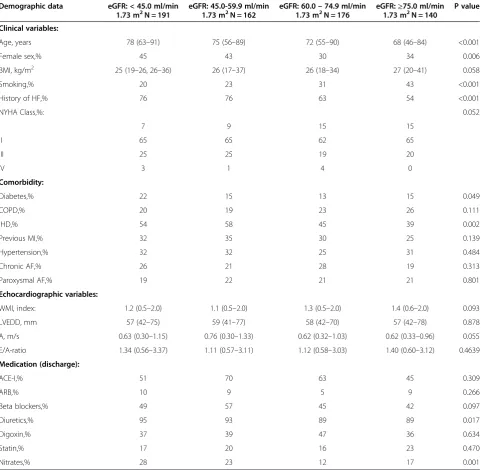
Table 1 Patients characteristics according to groups of eGFR (N = 669)
Demographic data eGFR: < 45.0 ml/min
1.73 m2N = 191 eGFR: 45.0-59.9 ml/min1.73 m2N = 162 eGFR: 60.01.73 m–2N = 17674.9 ml/min eGFR:1.73 m≥75.0 ml/min2N = 140 P value
Clinical variables:
Age, years 78 (63–91) 75 (56–89) 72 (55–90) 68 (46–84) <0.001
Female sex,% 45 43 30 34 0.006
BMI, kg/m2 25 (19–26, 26–36) 26 (17–37) 26 (18–34) 27 (20–41) 0.058
Smoking,% 20 23 31 43 <0.001
History of HF,% 76 76 63 54 <0.001
NYHA Class,%: 0.052
I 7 9 15 15
II 65 65 62 65
III 25 25 19 20
IV 3 1 4 0
Comorbidity:
Diabetes,% 22 15 13 15 0.049
COPD,% 20 19 23 26 0.111
IHD,% 54 58 45 39 0.002
Previous MI,% 32 35 30 25 0.139
Hypertension,% 32 32 25 31 0.484
Chronic AF,% 26 21 28 19 0.313
Paroxysmal AF,% 19 22 21 21 0.801
Echocardiographic variables:
WMI, index: 1.2 (0.5–2.0) 1.1 (0.5–2.0) 1.3 (0.5–2.0) 1.4 (0.6–2.0) 0.093
LVEDD, mm 57 (42–75) 59 (41–77) 58 (42–70) 57 (42–78) 0.878
A, m/s 0.63 (0.30–1.15) 0.76 (0.30–1.33) 0.62 (0.32–1.03) 0.62 (0.33–0.96) 0.055
E/A-ratio 1.34 (0.56–3.37) 1.11 (0.57–3.11) 1.12 (0.58–3.03) 1.40 (0.60–3.12) 0.4639
Medication (discharge):
ACE-I,% 51 70 63 45 0.309
ARB,% 10 9 5 9 0.266
Beta blockers,% 49 57 45 42 0.097
Diuretics,% 95 93 89 89 0.017
Digoxin,% 37 39 47 36 0.634
Statin,% 17 20 16 23 0.470
Nitrates,% 28 23 12 17 0.001
multivariate hazard models were fitted with the use of available clinical covariates (eGFR, age, sex, body mass index, smoking, RF, WMI, NYHA class, diabetes, history of hypertension, history of chronic obstructive pulmonary disease, history of ischemic heart disease, previous MI, and atrial fibrillation). The association between eGFR and mortality risk was evaluated by a univariate analysis (model 1), after adjustment for all covariates except RF (model 2) and after adjustment for all covariates including RF (model 3). The association between RF and mortality risk was evaluated in a similar way (model 4–6). The as-sumptions underlying the Cox proportional-hazards model (proportional hazards, lack of interaction, and linearity of continuous variables) were tested and found to be valid. A P-value < 0.05 was considered significant (two-sided). Analyses were performed using Statistical Analysis Software (SAS 9.1, Cary, NC, USA).
Results
Patients characteristics
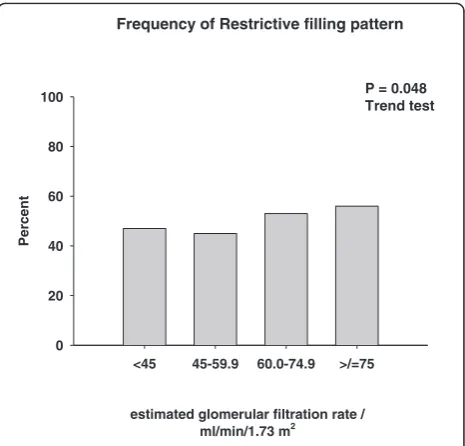
Patient characteristics according to groups of eGFR are presented in Table 1 and Figures 1, 2, 3. Patients with a low eGFR (group IV) were older (P < 0.001), more fre-quently female (P < 0.001), and less frefre-quently smokers (P < 0.001). More frequently patients with low eGFR suffered from diabetes (P = 0.049), had a history of HF (P < 0.001) and ischemic heart disease (P = 0.002). Fi-nally, patients with a low eGFR were treated with nitrates (P = 0.001) and diuretics (P = 0.017) more frequently. None of the Doppler parameters were affected by eGFR (Figures 1, 2, 3), except the prevalence of RF (P = 0.049), which increased with increasing eGFR (Figure 3).
Included (N = 669) versus excluded (N =2212) patients
The included and excluded patients did not differ with regard to age (P = 0.36), sex (P = 0.54), eGFR (P = 0.23)
and NYHA class (P = 0.11), but differed to a minimal ex-tent with regard to the frequency of left ventricular sys-tolic dysfunction (41% of the included patients had a LVEF < 0.50 compared to 35% of the excluded patients (P = 0.003)), which may be explained by the fact that s-creatinine was reported more frequently in the ran-domized patients.
<45 45-59.9 60.0-74.9 >/=75
Decelaration time / ms
0 50 100 150 200
estimated glomerular filtration rate / ml/min/1.73 m2
P = 0.098, trend test
P = 0.088 One-way ANOVA
Figure 1Deceleration time.
E (Peak Velocity)
<45 45-59.9 60.0-74.9 >/=75
E (Peak Velocity) / m/s
0 1 2
estimated glomerular filtration rate / ml/min/1.73 m2
P = 0.250 trend test
P = 0.260 One-way ANOVA
Figure 2E (peak velocity) and frequency of restrictive filling pattern.
<45 45-59.9 60.0-74.9 >/=75
Percent
0 20 40 60 80 100
Frequency of Restrictive filling pattern
estimated glomerular filtration rate / ml/min/1.73 m2
P = 0.049, trend test
P = 0.048 Trend test
Figure 3According to groups of estimated glomerular
filtration rate (Group I: eGFR < 45 ml/min/1.73 m2, Group II:
eGFR 45.0-59.9 ml/min/1.73 m2, Group III: eGFR 60–74.9 ml/
min/1.73 m2and Group IV: eGFR >/= 75.0 ml/min/1.73 m2).
Survival data
Kaplan-Meier plots showing mortality rates according to groups of eGFR are presented in Figure 4 (LogRank P < 0.001). In the follow-up period 432 patients died.
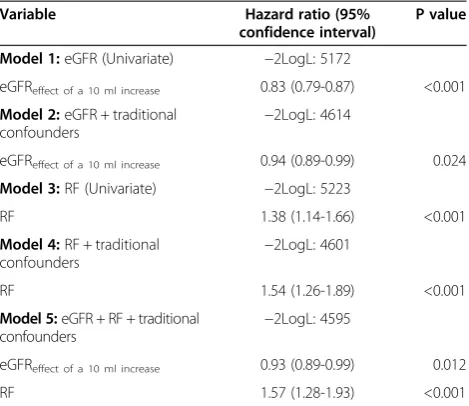
Univariate and multivariable Cox proportional hazard models are presented in Table 2. Adjustment for RF (model 4 versus model 5) did not affect the parameter estimates for eGFR suggesting that the association be-tween eGFR and mortality risk is not confounded by RF. Nor was the opposite the case (model 2 versus model 5) suggesting that nor is the association between RF and mortality risk confounded by eGFR. We did not observe any statistical interaction between eGFR, RF and mortal-ity risk (P > 0.05) nor was any interaction between mor-tality risk, eGFR < 30 ml/min/1.73 m2 and RF (P > 0.05) observed. Furthermore, we did not observe any inter-action between mortality risk, RF and ischemic versus non-ischemic cardiomyopathy (P > 0.05), between mor-tality risk, RF and history of hypertension (P > 0.05) and between mortality risk, RF and LVEF > 40% (P > 0.05). The prognostic significance of RF did, therefore, not interact with any of these important subgroups for which reason the patients were not divided further into subgroups.
Discussion
Our data suggest that eGFR is associated with mortality risk independently of RF in HF patients. We did not ob-serve any coupling between renal function and severe diastolic dysfunction and likely other factors than im-paired left ventricular filling explain the association be-tween renal function and mortality risk in HF patients.
Previously, it has been observed that eGFR adds prog-nostic information to RF in outpatients with chronic HF and systolic dysfunction [23]. However, our data differ from the data by Bruch et al. [23] since we investigated patients admitted for acute decompensated heart failure with preserved and reduced LVEF and selected death as endpoint, in contrast to Bruch et al. [23] that selected a composite endpoint of death, admission and heart transplantation.
It has been repeatedly documented that eGFR is asso-ciated with increased long term mortality risk in patients with HF [1-6], but adjustment for diastolic function has not been performed in previous studies. Data from the DIG-trial has shown that renal dysfunction carried in-cremental prognostic information in HF patients with preserved LVEF, but diastolic function was not recorded [6]. We observed that adjustment for RF did not affect the parameter estimates for eGFR (Table 2). Consequently, RF cannot explain the excess mortality associated with renal dysfunction. Early mitral inflow peak velocity (E), E/ A-ratio and DT did not correlate to eGFR (Figures 1, 2 and Table 1), but the frequency of RF increased slightly with increasing eGFR (Figure 3). Accordingly, the severity of diastolic dysfunction did not increase with decreasing eGFR. This observation may reflect that RF alone does not reflect severity of diastolic dysfunction and intracar-diac pressures accurately in this population [24] or that a diuresed HF population with a high prevalence of renal dysfunction is different from a chronic kidney disease population with cardiac dysfunction [19]. It could, of course also be a consequence of a type II error or selec-tion bias. Lending indirect support to the recorded left
Kaplan Meier estimates Mortality according to
to eGFR
Figure 4Kaplan Meier estimates according to groups of estimated glomerular filtration rate (Group I: eGFR < 45 ml/min/
1.73 m2, Group II: eGFR 45.0-59.9 ml/min/1.73 m2, Group III: eGFR
60–74.9 ml/min/1.73 m2and Group IV: eGFR >/= 75.0 ml/min/
1.73 m2).
Table 2 Multivariate cox proportional hazard models
Variable Hazard ratio (95%
confidence interval)
P value
Model 1:eGFR (Univariate) −2LogL: 5172
eGFReffect of a 10 ml increase 0.83 (0.79-0.87) <0.001
Model 2:eGFR + traditional confounders
−2LogL: 4614
eGFReffect of a 10 ml increase 0.94 (0.89-0.99) 0.024
Model 3:RF (Univariate) −2LogL: 5223
RF 1.38 (1.14-1.66) <0.001
Model 4:RF + traditional
confounders −
2LogL: 4601
RF 1.54 (1.26-1.89) <0.001
Model 5:eGFR + RF + traditional confounders
−2LogL: 4595
eGFReffect of a 10 ml increase 0.93 (0.89-0.99) 0.012
RF 1.57 (1.28-1.93) <0.001
ventricular filling patterns is the fact that symptom severity as assessed by NYHA class also was unaffected by renal function (Table 1) [25]. Finally, we did not observe any link between eGFR and RF in patients admitted with acute de-compensated HF (Cardio-renal syndrome Type I). How-ever, this observation does not exclude and association in e.g. acute and chronic reno-cardiac syndromes as previ-ously observed [19].
Despite the close association with morality risk no randomized clinical trials have indicated that an inter-vention raised against renal dysfunction in HF can im-prove outcome. In acute decompensated heart failure ultrafiltration has been suggested to prevent deterior-ation of eGFR [26], however, it remains to be determined whether this improve long-term clinical outcome. Re-cently, despite encouraging early results, an adenosine receptor antagonist (Rolofylline) failed to improve renal function in HF patients [27] and the role for nesiritide is also unclear [28]. However, one non-randomized trial of a systematic diagnostic and therapeutic approach directed against renal dysfunction in HF patients has indicated that it is possible to obtain a significant improvement in kidney function [29], and in patients, where cardiac resynchroni-zation therapy is indicated, this intervention may improve renal function [30]. Clearly the issue is complex. In some instances, such as during uptitration of ACE-inhibitors or angiotensin II receptor blockers, transient increase in s-creatinine is expected and accepted due to the well known long term benefit in terms of reduced morbidity and mortality. Thus, data suggest deterioration of renal function in HF are associated with a poor outcome, but op-timal management depends on the clinical setting e.g. epi-sodes of decompensation and hyperkalemia versus up-titration of an angiotensin converting inhibitor [31].
Based on the data from the present study as well as re-sults of previous studies, eGFR may be considered inde-pendently associated with mortality risk in HF patients. The underlying mechanism is not clear. In particular, it is uncertain if low eGFR is associated with mortality mainly due to a renal factor (complicating intrinsic renal disease) or mainly due to the fact that low eGFR reflects low renal perfusion pressure because of poor cardiac output (cardiac factor in turn leading to poor prognosis). Although the present study suggest that the adverse prognosis associated with low GFR is largely unrelated to low LVEF or advanced diastolic dysfunction, the data cannot determine whether the excess mortality is related to an intrinsic renal mechanism or merely reflect a more extensive vascular disease and thus increased risk in these patients. It may be speculated that activation of the renin-angiotensin-aldosterone-system (RAAS) causes progression of renal dysfunction in HF similar to the de-velopment of diabetic nephropathy, which is supported by the CATS study (post myocardial infarction) [32].
However, aggressive blockade of the Renin-angiotensin II-aldosterone system (RAAS) in HF may lead to wors-ening renal function as seen in the CHARM-added [33], VALHeft [34] and VALLIANT [35] studies. A better un-derstanding of the effect of RAAS inhibition on other renal endpoints like micro- and macroalbuminuria in HF is clearly needed [16,36,37].
Conclusions
In HF patients restrictive filling of the left ventricle does not explain the increased mortality risk observed with decreasing eGFR. Factors other than impaired left ven-tricular filling explain the association between renal dys-function and mortality risk. Whether the effect of eGFR and mortality risk in HFper se is causal deserves further study as does the association between eGFR and diastolic function in HF.
Competing interests
The authors declare that they have no competing interests.
Authors’contributions
MS: hypothesis, data analysis and manuscript preparation; JK: data collection, data analysis and manuscript preparation; CTP: data collection, data analysis and manuscript preparation; CH: data collection, data analysis and manuscript preparation; FG: hypothesis, data analysis and manuscript preparation; DA: data collection, data analysis and manuscript preparation; JEM: data collection, data analysis and manuscript preparation; LK: hypothesis, data collection, data analysis and manuscript preparation. All authors read and approved the final manuscript.
Acknowledgements
The ECHOS study was supported by unrestricted grants from Chiesi Pharmaceutical Company.
Author details
1
Department of Cardiology, The Heart Centre and University of Copenhagen, Rigshospitalet, DK-2100 Copenhagen, Denmark.2Department of Cardiology
and Endocrinology, Hillerod University Hospital, DK-3400 Hillerod, Denmark.
3Department of Cardiology, Gentofte University Hospital, DK-2600 Hellerup,
Denmark.
Received: 17 September 2012 Accepted: 26 November 2013 Published: 3 December 2013
References
1. Hillege HL, Girbes AR, de Kam PJ,et al:Renal function, neurohormonal activation, and survival in patients with chronic heart failure.Circulation 2000,102:203–210.
2. Hillege HL, Nitsch D, Pfeffer MA, Candesartan in Heart Failure: Assessment of Reduction in Mortality and Morbidity (CHARM) Investigators,et al:Renal function as a predictor of outcome in a broad spectrum of patients with heart failure.Circulation2006,113:671–678.
3. de Silva R, Nikitin NP, Witte KK,et al:Incidence of renal dysfunction over 6 months in patients with chronic heart failure due to left ventricular systolic dysfunction: contributing factors and relationship to prognosis.
Eur Heart J2006,27:569–581.
4. Dries DL, Exner DV, Domanski MJ, Greenberg B, Stevenson LW:The prognostic implications of renal insufficiency in asymptomatic and symptomatic patients with left ventricular systolic dysfunction.J Am Coll Cardiol2000,35:681–689.
5. Heywood JT, Fonarow GC, Costanzo MR, Mathur VS, Wigneswaran JR, Wynne J, ADHERE Scientific Advisory Committee and Investigators:High prevalence of renal dysfunction and its impact on outcome in 118,465 patients hospitalized with acute decompensated heart failure: a report from the ADHERE database.J Card Fail2007,6:422–430.
6. Ahmed A, Rich MW, Sanders PW,et al:Chronic kidney disease associated mortality in diastolic versus systolic heart failure: a propensity matched study.Am J Cardiol2007,99:393–398.
7. de Silva R, Nikitin NP, Bhandari S, Nicholson A, Clark AL, Cleland JG:
Atherosclerotic renovascular disease in chronic heart failure: should we intervene?Eur Heart J2005,26:1596–1605.
8. Zittermann A, Schleithoff SS, Tenderich G, Berthold HK, Körfer R, Stehle P:
Low vitamin D status: a contributing factor in the pathogenesis of congestive heart failure?J Am Coll Cardiol2003,41:105–112.
9. de Silva R, Rigby AS, Witte KK,et al:Anemia, renal dysfunction, and their interaction in patients with chronic heart failure.Am J Cardiol2006,
98:391–398.
10. Windram JD, Loh PH, Rigby AS, Hanning I, Clark AL, Cleland JG:Relationship of high-sensitivity C-reactive protein to prognosis and other prognostic markers in outpatients with heart failure.Am Heart J2007,153:1048–1055.
11. Mullens W, Abrahams Z, Francis GS,et al:Importance of venous congestion for worsening of renal function in advanced decompensated heart failure.J Am Coll Cardiol2009,53:589–596.
12. Cody RJ, Ljungman S, Covit AB,et al:Regulation of glomerular filtration rate in chronic congestive heart failure patients.Kidney Int1988,34:361–367. 13. Assomull RG, Prasad SK, Lyne J,et al:Cardiovascular magnetic resonance,
fibrosis, and prognosis in dilated cardiomyopathy.J Am Coll Cardiol2006,
48:1977–1985.
14. Smilde TD, Hillege HL, Navis G, Boomsma F, de Zeeuw D, van Veldhuisen DJ:
Impaired renal function in patients with ischemic and nonischemic chronic heart failure: association with neurohormonal activation and survival.
Am Heart J2004,148:165–172.
15. McAlister FA, Ezekowitz J, Tonelli M, Armstrong PW:Renal insufficiency and heart failure: prognostic and therapeutic implications from a prospective cohort study.Circulation2004,109:1004–1009.
16. Jackson CE, Solomon SD, Gerstein HC, CHARM Investigators and Committees,et al:Albuminuria in chronic heart failure: prevalence and prognostic importance.Lancet2009,374:543–550.
17. Damman K, van Deursen VM, Navis G, Voors AA, van Veldhuisen DJ, Hillege HL:
Increased central venous pressure is associated with impaired renal function and mortality in a broad spectrum of patients with cardiovascular disease.
J Am Coll Cardiol2009,53:582–588.
18. Smith GD, Phillips AN:Confounding in epidemiological studies: why “independent”effects may not be all they seem.BMJ1992,305:757–759. 19. Foley RN, Parfrey PS, Harnett JD,et al:Clinical and echocardiographic
disease in patients starting end-stage renal disease therapy.Kidney Int 1995,47:186–192.
20. Torp-Pedersen C, Køber L, Carlsen JE,et al:A randomised trial of a pre-synaptic stimulator of DA2-dopaminergic and alpha2-adrenergic receptors on morbidity and mortality in patients with heart failure.Eur J Heart Fail2008,10:89–95.
21. Akkan D, Kjaergaard J, Møller JE, Hassager C, Torp-Pedersen C, Køber L, EchoCardiography and Heart Outcome Study (ECHOS) investigators:Prognostic importance of a short deceleration time in symptomatic congestive heart failure.Eur J Heart Fail2008,10:689–695.
22. Smilde TD, van Veldhuisen DJ, Navis G, Voors AA, Hillege HL:Drawbacks and prognostic value of formulas estimating renal function in patients with chronic heart failure and systolic dysfunction.Circulation2006,
114:1572–1580.
23. Bruch C, Reinecke H, Rothenburger M, Scheld HH, Whalley GA, Stypmann J, Breithardt G, Wichter T, Gradaus R:Transmitral flow patterns and the presence of chronic kidney disease provide independent and incremental prognostic information in patients with heart failure and systolic dysfunction.J Am Soc Echocardiogr2007,20:989–997. 24. Aurigemma GP, Zile MR, Gaasch WH:Lack of relationship between
Doppler indices of diastolic function and left ventricular pressure transients in patients with definite diastolic heart failure.Am Heart J 2004,148:E12.
25. Packer M:Abnormalities of diastolic function as a potential cause of exercise intolerance in chronic heart failure.Circulation1990,81:78–86. 26. Costanzo MR, Guglin ME, Saltzberg MT, UNLOAD Trial Investigators,et al:
Ultrafiltration versus intravenous diuretics for patients hospitalized for acute decompensated heart failure.J Am Coll Cardiol2007,
49:675–683.
27. Massie BM, O'Connor CM, Metra M,et al:PROTECT Investigators and Committees.N Engl J Med2010,363:1419–28.
28. Chow SL, Peng JT, Okamoto MP, Heywood JT:Effect of nesiritide infusion duration on renal function in acutely decompensated heart failure patients.Ann Pharmacother2007,41:556–561.
29. de Silva R, Nikitin NP, Witte KK,et al:Effects of applying a standardised management algorithm for moderate to severe renal dysfunction in patients with chronic stable heart failure.Eur J Heart Fail2007,9:415–423. 30. Boerrigter G, Costello-Boerrigter LC, Abraham WT,et al:Cardiac
resynchronization therapy improves renal function in human heart failure with reduced glomerular filtration rate.J Card Fail2008,14:539–546. 31. Jose P, Skali H, Anavekar N, Tomson C,et al:Increase in creatinine and
32. Hillege HL, van Gilst WH, van Veldhuisen DJ,et al:CATS randomized trial. Accelerated decline and prognostic impact of renal function after myocardial infarction and the benefits of ACE inhibition: the CATS randomized trial.Eur Heart J2003,24:412–420.
33. McMurray JJ, Ostergren J, Swedberg K, CHARM Investigators and Committees,et al:Effects of candesartan in patients with chronic heart failure and reduced left-ventricular systolic function taking angiotensin-converting-enzyme inhibitors: the CHARM-added trial.Lancet2003,
362:767–771.
34. Cohn JN, Tognoni G, Valsartan Heart Failure Trial Investigators:A randomized trial of the angiotensin-receptor blocker valsartan in chronic heart failure.
N Engl J Med2001,345:1667–1675.
35. Pfeffer MA, McMurray JJ, Velazquez EJ, Valsartan in Acute Myocardial Infarction Trial Investigators,et al:Valsartan, captopril, or both in myocardial infarction complicated by heart failure, left ventricular dysfunction, or both.N Engl J Med2003,349:1893–1906.
36. van de Wal RM, Asselbergs FW, Plokker HW,et al:High prevalence of microalbuminuria in chronic heart failure patients.J Card Fail2005,
11:602–606.
37. Jose P, Tomson C, Skali H,et al:Influence of proteinuria on cardiovascular risk and response to angiotensin-converting enzyme inhibition after myocardial infarction.J Am Coll Cardiol2006,47:1725–1727.
38. Meta-Analysis Research Group in Echocardiography (MeRGE) AMI Collaborators, Møller JE, Whalley GA, Dini FL,et al:Independent prognostic importance of a restrictive left ventricular filling pattern after myocardial infarction: an individual patient meta-analysis: meta-analysis research group in echocardiography acute myocardial infarction.Circulation2008,
117:2591–2598.
39. Meta-analysis Research Group in Echocardiography (MeRGE) Heart Failure Collaborators:Independence of restrictive filling pattern and LV ejection fraction with mortality in heart failure: an individual patient meta-analysis.
Eur J Heart Fail2008,10:786–792.
40. Solomon SD, Stevenson LW:Recalibrating the barometer: is it time to take a critical look at noninvasive approaches to measuring filling pressures?Circulation2009,119:13–15.
41. Nielsen OW, Køber L, Torp-Pedersen C:Heart failure with preserved ejection fraction: dangerous, elusive, and difficult.Eur Heart J2008,29:285–287.
doi:10.1186/1471-2369-14-267
Cite this article as:Schouet al.:Renal dysfunction, restrictive left ventricular filling pattern and mortality risk in patients admitted with heart failure: a 7-year follow-up study.BMC Nephrology201314:267.
Submit your next manuscript to BioMed Central and take full advantage of:
• Convenient online submission
• Thorough peer review
• No space constraints or color figure charges
• Immediate publication on acceptance
• Inclusion in PubMed, CAS, Scopus and Google Scholar
• Research which is freely available for redistribution