World Inventia Publishers
J
ournal of
S
cientific
R
esearch in
P
harmacy
http://www.jsrponline.com/
Vol. 6, Issue 12, 2017 ISSN: 2277-9469
USA CODEN: JSRPCJ
Research Article
DEVELOPMENT OF SPECTRUM INDEX BASED STABILITY INDICATING ANALYTICAL METHOD STUDIES FOR
DETERMINATION OF VARIOUS PROTON PUMP INHIBITORS IN ITS BULK AND MULTICOMPONENT
PHARMACEUTICAL DOSAGE FORMS
Vijaya Kuchana
a, Bimidi Shamili
a*, CH. Naveen Kumar
ca Teegala Krishna Reddy College of Pharmacy, Department of Pharmaceutical analysis & Quality Assurance, Medbowli, Meerpet, Saroornagar, Hyderabad, Telangana, INDIA.
b Department of Pharmaceutical Analysis & Quality Assurance , Shadan College of Pharmacy, Peerancheru, Himayathsagar Road, Hyderabad, Telangana State, Pin Code: 530003, INDIA.
Received on: 19-11-2017; Revised and Accepted on: 14-12-2017
ABSTRACT
A
stability indicating analytical method was developed for simultaneous determination of four active pharmaceutical ingredients for the simultaneous Determination of four active ingredients including Pantaprazole (PAN), Rabeprazole (RAB), Lansaprazole (LAN) and Domperidone (DOM) in its bulk and pharmaceutical dosage forms by RP-HPLC-DAD and the analytical separation was carried out by reverse phase chromatographyon X Bridge (3x100mm;3.9 μm) C18 column with the gradient program. Sol-A is composed of Buffer pH 7.5 adjusted with Ortho phosphoric acid
(10 ml of Triethylamine and 20 mM Potassium Dihydrogen Ortho Phosphate in to 1000ml of HPLC water) and Sol -B Mixture of Methanol and Acetonitrile in a ratio of 85:15 v/v and the M.P- A is a Mixture of Sol-A : Sol-B in the ratio of 90:10 v/v M.P-B consists of Sol-A : Sol-B in the ratio of 20:80 v/v . M.P-A (0-3min: 70-70, 3-7min:70-40, 7-20min:40-40, 20-21min:40-40,21-25min:70-70) with gradient programme the flow rate for the mobile phase elution is 0.6 ml per minute and the column oven temperature is maintained at 21-240c, run time was 25 minutes. The quantification was achieved with PDA detector and the effluents were monitored at 283 nm for four drugs and their combination drug products were subjected to various stress conditions. the calibration curves for all four drugs was found to be linear and the correlation coefficient for all four drugs is not less than (r2=0.999).The LOD Concentration for PAN, RAB, LAN & DOM was found to be 0.782 μg/mL,0.897 μg/mL,0.142 μg/mL & 0.185μg/mL respectively. Then
the LOQ Concentration for 2.524 μg/mL, 2.894 μg/mL, 0.459 μg/mL and 0.599μg/mL were found respectively. There was no interference observed with
excipients and degradation products in the determination of API and FP thus providing the stability indicating superiority of the method.
KEYWORDS: Forced Degradation studies, RP-HPLC-PDA Detector, Pantoprazole (PAN), Rabeprazole (RAB), Lansoprazole (LAN), Domperidone (DOM).
INTRODUCTION
P
antoprazole (PAN) is proton-pump inhibitor that inhibits gastric acid by blocking the H+/K+-adenosine triphosphatase enzyme system of the gastric parietal cell [1-5]. Its application is in the short-termtreatment of erosion and ulceration of the esophagus [6]. Pantoprazole is
5-(Difluoromethoxy)– [[(3,4-dimethoxy-2-Pyridiynyl)Methyl]sulphinyl]-1H–benzimidazole. Its sodium form that is used in pharmaceuticals is known as Pantoprazole sodium has the structure given in (fig. 1).
Rabeprazole sodium (RAB) is chemically known as 2-[[[4-(3-
methoxypropoxy)-3-methyl-2-pyridinyl]methyl]sulfinyl]-1H-benzimidazole sodium salt (Fig.2). It is a proton pump inhibitor and used for the treatment of peptic ulcer or GERD [7-11].
Lansoprazole (LAN) is chemically 2-({3-methyl-4-(2,2,2-trifluoroethoxy)-2-pyridyl)methyl}sulfinylbenzimidazole (Fig.3), is used as a gastric proton pump inhibitor. It has an empirical formula of
*Corresponding author:
Bimidi Shamili
Teegala Krishna Reddy College of Pharmacy,
Department of Pharmaceutical analysis & Quality Assurance, Medbowli, Meerpet, Saroornagar, Hyderabad, Telangana, INDIA. * E-Mail: [email protected]
DOI:https://doi.org/10.5281/zenodo.1129460
C16H14F3N3O2S with the molecular weight of 369.36. Literature survey
revealed HPTLC, spectrophotometric and spectrofluorometric methods for determination of lansoprazole in bulk, dosage forms, biological fluids and acid-induced degradation studies [12-15].
Domperidone is chemically known as 5-chloro-1-[1-[3-(2,3-dihydro-2-oxo-1Hbenzimidazol-1-yl)propyl]piperidin-4-yl]-2,3-dihydro -1H-benzimidazol-2-one (Fig.4). It is a gastro-kinetic and anti-emetic. It is a peripheral dopamine-2 receptor antagonist It is official in B.P. The present work describes the development of a high resolution validated stability indicating RP-HPLC method which can quantify these components simultaneously from a combined dosage forms with high resolution and with proper stability indicating studies. A few chromatographic methods in dosage forms and biological fluids have been reported for the simultaneous determination of PAN, RAB, LAN, and DOM in multicomponent dosage forms[16-20] but there is no proper
evidential stability indicating features in many papers so the attempt was made to optimize and developing stability indicating method with high resolution power. The present RP-HPLC method was validated following the ICH guidelines [21-23] the developed method can be
Fig. 2: Chemical structure of Rabeprazole (RAB)
Fig. 3: Chemical structure of Lansoprazole (LAN)
Fig. 4: Chemical structure of Domperidone (DOM)
MATERIALS & METHODS
P
harmaceutical grade working standards Pantoprazole (PAN), rabeprazole (RAB), lansoprazole (LAN), domperidone (DOM) were obtained from Dr. Reddys Labs, Hyderabad as gratis samples. The HPLC-grade methanol was purchased from Merck. All other chemicals like acetonitrile, KH2PO4, 0. 22µ membrane filter, 0.45µ filter paper andsolvent used were of analytical grade (Merk). High purity water was prepared by using a Milli-Q RO system (Millipore). All the chemical and reagents were purchased from Merck chemicals.
Instrumentation:
The analysis was performed using waters-2695(Model
alliance) High Performance liquid chromatography waters auto
sampler–PDA detector 996 by using, Empower-software version-2,
analytical balance (MettlerToledo) UV/Visible-Detector (Standard cell)
and data handling system (Autochrome-3000), pH meter (lab India),
Sonicator. The column used isWaters X Bridge 3x100mm; 3.7 μm C18
withthe flow rate 0.5ml/min (Gradient elution).
Preparation of solutions:
Sol-A: is composed of Buffer pH 7.5 adjusted with Ortho phosphoric
acid (10 ml of Triethylamine and 20 mM Potassium Dihydrogen Ortho Phosphate in to 1000ml of HPLC water).
Sol-B: Mixture of Methanol and Acetonitrile in a ratio of 75:25 v/v
Preparation of Placebo Solution:
The placebo Solution was prepared by dissolving the Specified amount Excipients in diluent (in house made).
Preparation of STD stock solution:
Standard solution of PAN, RAB, LAN and DOM-were prepared by dissolving 10 mg of each drug into 10 mL volumetric flask separately. Then dilution was made by adding 10 mL of the Diluent solution to 10 mL standard flask and making up the volume with the Diluent. The final concentration of each drug was found to be 1000µg/ml.
Preparation of STD solution:
From the Prepared individual Standard Stock Solution of PAN, RAB, LAN and DOM take 0.3 ml of PAN, RAB, LAN and DOM into a 10ml of standard flak to this add 10ml of diluent. Finally make up the solution upto the mark with diluent. The Final concentration of the individual was 30 µg/ml respectively.
Preparation of Test solution:
The test solution was prepared by taking an equivalent amount of PAN, RAB, LAN and DOM into a 10ml of volumetric flask make up with diluent,from that take 1ml into 10 ml of standard flask make up the solution with diluent. Final concentration of PAN, RAB, LAN and DOMwas 30 µg/ml respectively.
Optimization of HPLC Method:
The HPLC method was optimized and developed for simultaneous method for PAN, RAB, LAN and DOM. The mixed standard solution was injected in HPLC by the following chromatographic conditions.
The chromatographic separation was achived on X Bridge
3x100mm; 3.9 μm C18, Gradient mode and the Mobile phase consists of
Triethylamine and Potassium Dihydrogen Ortho Phosphate pH – 7.4) : Methanol and Acetonitrile in a ratio of 85:15 v/v and the flow rate of mobile phase was 0.5ml/min , run time was 25 min and the column temperature was maintained at Room temp21-240c,volume of injection
loop was 20µl.detection was monitored at 283 nm. (Table 1).
RESULTS AND DISCUSSIONS
T
he simultaneous HPLC method was optimized and developed for PAN, RAB, LAN and DOM. The mixed standard solution was injected in HPLC by the following chromatographic conditions. The chromatographic separation was achived on X Bridge 3x100mm;3.9 μmC18, Gradient mode and the Mobile phase consists of Triethylamine and Potassium Dihydrogen Ortho Phosphate pH – 4.7) : Methanol and Acetonitrile in a ratio of 85:15 v/v and the flow rate of mobile phase was 0.5ml/min , run time was 25 min and the column temperature was maintained at Room temp(21-240 c),volume of injection loop was
20µl.detection was monitored at 283 nm
Method Development and Optimization:
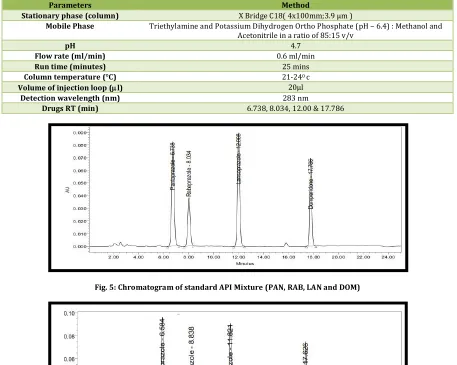
The HPLC procedure was optimized with a view to develop a suitable LC method for the analysis PAN, RAB, LAN and DOM in fixed dose for bulk and combined dosage form. It was found that mobile phase consists of Triethylamine and Potassium Dihydrogen Ortho Phosphate( pH – 4.7) : Methanol and Acetonitrile in a ratio of 85:15 v/v has given
Table No. 1: Optimized Chromatographic Conditions
Parameters Method
Stationary phase (column) X Bridge C18( 4x100mm;3.9 μm )
Mobile Phase Triethylamine and Potassium Dihydrogen Ortho Phosphate (pH – 6.4) : Methanol and Acetonitrile in a ratio of 85:15 v/v
pH 4.7
Flow rate (ml/min) 0.6 ml/min Run time (minutes) 25 mins Column temperature (°C) 21-240 c
Volume of injection loop (l) 20µl Detection wavelength (nm) 283 nm
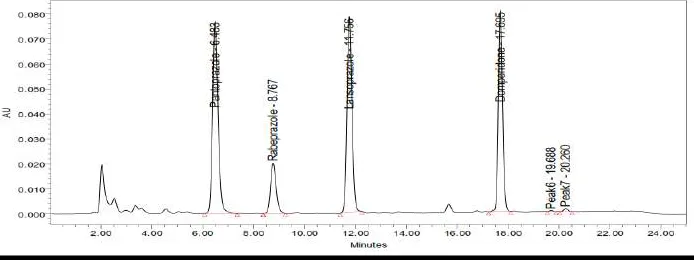
Drugs RT (min) 6.738, 8.034, 12.00 & 17.786
Fig. 5: Chromatogram of standard API Mixture (PAN, RAB, LAN and DOM)
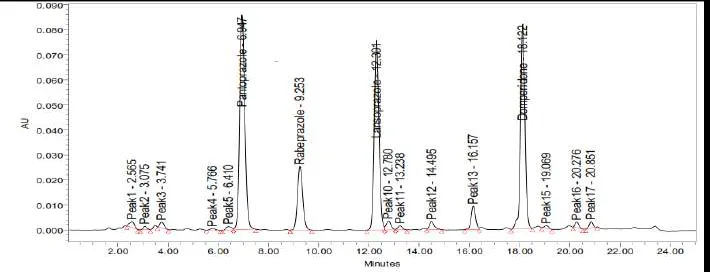
Fig. 6: Chromatogram of Sample Drug Product Mixture (PAN, RAB, LAN and DOM)
Degradation study:
In a order to to establish the inherent stability and stability indicating assay method and to determine whether the analytical methods were stable PAN, RAB, LAN and DOM dosage forms are stressed on the different conditions to applied degradation studies. The guidelines are expressed in ICH Q2A, Q3B, Q2B & FDA 21 CFR section of 211 all the required for development & for the validation of stability study.
The degradation of a sample was prepared by the transfer the individual tablet powder was equivalent to the weight of each tablet was transfer into 100 ml flask & it was treated under the acidic, alkaline, thermal, oxidizing and photolytic conditions. When degradation was
complete the solution were left to equilibrate to the room temp & dil. with mobile phase to furnish the solutions of a concentration equivalent to a 30 µg/mL of PAN, RAB, LAN and DOM. The specific degradative conditions are described below.
Acid degradation study: TheAcid degradation was done by sample was
Fig. 7: Chromatogram of acidic forced degradation of PAN, RAB, LAN and DOM
Fig. 8: Purity Plots for PAN in acidic forced degradation
Fig. 9: Purity Plot for RAB in acidic forced degradation
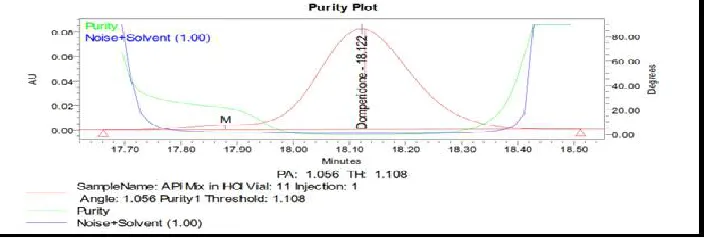
Fig. 11: Purity Plot for DOM in acidic forced degradation
Fig. 12: Spectrum index for PAN, RAB, LAN and DOM in acidic forced degradation
Alkaline degradation: TheAlkaline degradation was done by sample
was treated with 3ml of 1N sodium hydroxide and kept the sample for 10hr. After 10hr solution was neutralized to add 3ml of 1N hydrochloric
acid, made the volume up to the mark with irrelevant media and analyzed using HPLC. In alkali degradation study, it was found to be 7.78% of the degraded drug (Figure 13-18) & (Table 2).
Fig. 13: Chromatogram of alkali forced degradation of PAN, RAB, LAN and DOM
Fig. 15: Purity Plot for RAB in alkali forced degradation
Fig. 16: Purity Plot for LAN in alkali forced degradation
Fig. 17: Purity Plot for DOM in alkali forced degradation
Fig. 18: Spectrum index for PAN, RAB, LAN and DOM in Base (Alkali) forced degradation
Oxidative degradation: Theoxidative degradation was done by sample
was mixed with 3mL of 30%v/v aqueous hydrogen peroxide solution and kept for 10hrs. After 10hrs made the volume upto the mark with
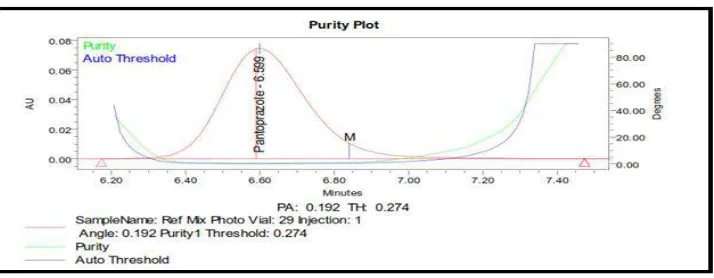
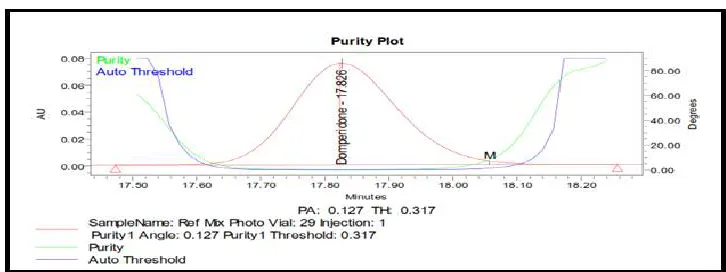
Photolytic degradation: The photolytic degradation was done by exposingof drug content under the UV light for 15mins to 7days. There is 5.63% of the drug degradation observed in the above specific photolytic degradation condition (Figure 25-30) & (Table 2).
Thermal degradation:TheThermal degradation is to be performing by
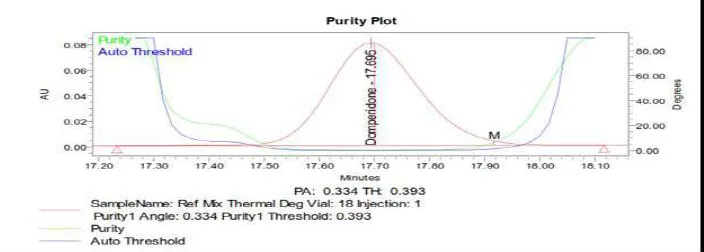
the exposing the solid drug at the80°C for 15mins to 60mins and at 220°C for 2-5mins. Resultant chromatogram of thermal degradation study (Figure 31-36) & (Table 2) was indicates that the drug was found to be slightly stable under thermal condition. It was only 11.08% of the drug content were degraded.
Fig. 19: Chromatogram of oxidative forced degradation of PAN, RAB, LAN and DOM
Fig. 20: Purity Plot for PAN in oxidative forced degradation
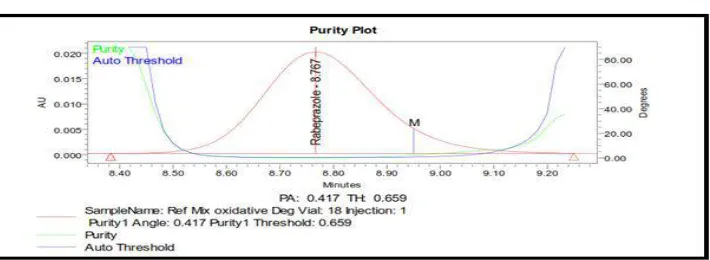
Fig. 21: Purity Plot for RAB in oxidative forced degradation
Fig. 23: Purity Plot for DOMPERIDONE in oxidative forced degradation
Fig. 24: Spectrum index for PAN, RAB, LAN and DOM in oxidative forced degradation
Fig. 25: Chromatogram of UV-light degradation of PAN, RAB, LAN and DOM
Fig. 27: Purity Plot for RAB in UV-light degradation
Figure 28: Purity Plot for LAN in UV-light degradation
Figure 29: Purity Plot for DOMPERIDONE in UV-light degradation
Fig. 31: Chromatogram of thermal degradation of PAN, RAB, LAN and DOM
Figure 32: Purity Plots for PAN in thermal degradation
Fig. 33: Purity Plot for RAB in thermal degradation
Fig. 35: Purity Plot for DOM in thermal degradation
Fig. 36: Spectrum index for PAN, RAB, LAN and DOM in Thermal forced degradation
Table No. 2: Peak purity results of PAN, RAB, LAN and DOM
Stress
Condition PANT RABE Purity Angle LANS DOMP PANT Purity Threshold RABE LANS DOMP
Acid Degradation 0.441 0.276 0.167 1.056 1.073 1.245 1.083 1.108
Alkali Degradation 0.531 1.495 0.213 0.619 1.096 2.662 1.179 1.087
Oxidative Degradation 0.202 0.417 0.136 0.303 0.286 0.659 0.276 0.334
Photolytic Degradation 0.192 0.153 0.096 0.127 0.274 0.310 0.265 0.317
Thermal Degradation 0.202 0.417 0.136 0.334 0.286 0.659 0.276 0.393
Table No. 3: Percentage of degradation of PAN, RAB, LAN and DOM
Drug Name Acid Alkali Oxidative Photolytic Thermal
PANTOPRAZOLE Sample Area Std Area 1219484 1219484 1343441 1219484 1219484 1219484
% of Degradation 9.22% 8.48% 7.24% 3.41% 7.24%
RABEPRAZOLE Sample Area Std Area 520888 520888 564788 520888 520888 520888
% of Degradation 7.77% 5.50% 10.83% 8.08% 10.84%
LANSOPRAZOLE Sample Area Std Area 1107974 1107974 1225575 1107974 1107974 1107974
% of Degradation 9.59% 6.73% 13.29% 3.26% 13.29%
DOMPERIDONE Sample Area Std Area 808342 808342 843270 808342 808342 808342
% of Degradation 4.14% 10.42% 12.95% 7.70% 12.95%
% Average of Degradation 7.67 % 7.75% 11.08% 5.68% 11.09%
CONCLUSION
A
new RP-HPLC method described in this manuscript provides a simple, convenient and reproducible approach for the simultaneous estimation and quantification of Pantaprazole (PAN), Rabeprazole (RAB), Lansaprazole (LAN) and Domperidone (DOM) and there was no interference observed with excipients and degradation products in the determination of API and FP thus providing the stabilityindicating superiority of the method. This method can also use in routine quality control analysis.
REFERENCES:
High-performance liquid chromatography method for the quantification of pantoprazole in human plasma. J Chromatogr B 2005;822:1-2.
6. Rahman N, Kashif M. Pharmazie. Initial-rate method for the determination of pantoprazole in pharmaceutical formulations using 1-fluoro 2,4- dinitrobenzene. 2005;60:197-200.
7. Roche VF, Roche VF. The chemically elegant proton pump inhibitors. Am J Pharm Educ 2006;70:1-11.
8. Reguri Buchireddy, Khagga Mukkanti, Polisetty srinivasulu, Koduri Srinivas SV. A validated, Stability indicating, LC Method for rabeprazole sodium. 2008;68:275-280.
9. Crowther JB. Validation of pharmaceutical test methods. In: Ahuja S, Scypinski S (Handbook of modern pharmaceutical analysis. Academic press,New York, 2001; p 415–443.
10. Rindi, Fiocca, Miller. Europ J Gastroenterol and Hepatol 2005;17:559.
11. El-Gindy A, El-Yazby F and Maher M. Spectrophotometric and chromatographic determination of rabeprazole in presence of its degradation products. J Pharm Biomed Anal 2003 ;31:229-242.
12. Masatomo M, Tada H, Suzuki T. Simultaneous determination of lansoprazole enantomers and their metabolites in plasma by liquid chromatography with solid-phase extraction. J Chromatogr B Analyt Technol Biomed Life Sci 2004;804:389-95.
16. Dollery C. Therapeutic Drugs. Edinburgh, Scotland, Churchill Livingston,
17. Kobylinska M and Kobylinska K. High-performance liquid chromatographic analysis for the determination of domperidone in human plasma. J Chromatogr B 2000;744:207-212.
18. Zavitsanos AP, MacDonald C, Bassoo E and Gopaul D. Determination of domperidone in human serum and human breast milk by high-performance liquid chromatography-electrospray mass spectrometry. J Chromatogr B 1999 ;730:9-24.
19. Hagino K, Yamamoto M and Kotaki H, IGA. Quantitative determination of domperidone in rat plasma by high-performance liquid chromatography with fluorescence detection. J Chromatogr B 1998;720:1-2.
20. M. Mondal, TK. Pal Jayakumar, Chattaraj, Banerjee, J. Indian Medical Association, 2004;102(26).
21. ICH, Q2A Text on validation of analytical procedures, international conference on Harmonization, Oct. 1996. 22. Chaibva FA, Walker RB. Development and validation of a
stability-indicating analytical method for the quantitation of oxytocin in pharmaceutical dosage forms. J Pharm Biomed Anal 2007;43:79-185.
23. International conference on harmonization (ICH), Q1AR2: stability testing of new drug substances, products IFPMA, Geneva, 2003.
How to cite this article:
Bimidi Shamili et al. DEVELOPMENT OF SPECTRUM INDEX BASED STABILITY INDICATING ANALYTICAL METHOD STUDIES FOR
DETERMINATION OF VARIOUS PROTON PUMP INHIBITORS IN ITS BULK AND MULTICOMPONENT PHARMACEUTICAL DOSAGE
FORMS. J Sci Res Pharm 2017;6(12):157-168.
DOI:
https://doi.org/10.5281/zenodo.1129460
Conflict of interest: The authors have declared that no conflict of interest exists.