Original Research Article
Physical health problems among the geriatric population in Perambalur
municipality, Tamil Nadu: a community-based cross-sectional study
Karthikeyan Kulothungan*, Tamilarasan M., D. Rock Britto,
T. SriRanganathan, V. SriAndaal
INTRODUCTION
Aging is a normal complex physiological and irreversible process.1 It is the product of certain structural and functional changes taking place in different parts of the body as the life progresses.2 So there is a progressive decrease in the normal functioning of the body resulting in an increased burden of diseases affecting different systems.3
The number of people surviving into old age is greater than ever, and it is a trend affecting both developing and developed countries.4 Elderly aged 65 and above constituted from 6.0 to 15.5% of the populations in Asia, Europe, and North America by the year 2000. These data are expected to rise to approximately 12 to 24.3% by 2030.5 These demographic and epidemiological changes, coupled with rapid urbanization, modernization, globalization, and accompanying changes in risk factors and lifestyles, have increased the prominence of chronic conditions.6 By 2011, the prevalence rate of at least one
ABSTRACT
Background: Aging is a complex process that occurs by an increase in cellular injury that occurs at the biological level over a period. These injuries lead to decline in the capacity of the individual due to a gradual reduction in physiological reserves. The objectives of the study were to estimate the prevalence of common physical health problems and to assess the effect of aging influencing them among the geriatric population.
Methods: A community-based cross-sectional study was conducted in 9 randomly selected wards among 400 elderly subjects of aged 60 years or above by using probability proportionate to size (PPS) sampling method in urban residents of Perambalur municipality, Perambalur district, Tamil Nadu using semi structured questionnaire. Data entry and analysis was done using SPSS version 16.0.
Results: The mean age of the study population was 71.28±7.85. Three-fourths of the study subjects were not doing any work and the majority of them (80%) was living with family members and looked after by their family members (88%). In our study, it was found that the most prevalent common physical health problem among the geriatric population was dental diseases (85.75%) followed by diseases of the locomotor system (81.75%). Almost 99% of the elderly have at least a single system involvement.
Conclusions: The preventive and rehabilitative services planned by the government have to be elder-friendly. To improve the health status of the elderly various health schemes, policies and programs can be designed based on the study findings.
Keywords: Aging, Physical health problems, Locomotor system, Dental diseases
Department of Community Medicine, Dhanalakhsmi Srinivasan Medical College, Perambalur, Tamil Nadu, India
Received: 08 September 2018
Revised: 23 October 2018
Accepted: 26 October 2018
*Correspondence:
Dr. Karthikeyan Kulothungan, E-mail: [email protected]
Copyright: © the author(s), publisher and licensee Medip Academy. This is an open-access article distributed under the terms of the Creative Commons Attribution Non-Commercial License, which permits unrestricted non-commercial use, distribution, and reproduction in any medium, provided the original work is properly cited.
recognizable chronic non-communicable diseases was 648 per 1000 elderly in India and 395 per 1000 elderly in Tamil Nadu.7 It is the responsibility of the Government to plan effectively the Health Care Services for the elderly and prepare a possible implementation design relevant to the needs. The struggles associated with the aging of the population are that of the nonexistence of facilities for medical treatment and of providing financial and social support. Hence knowledge on the health status of this population is necessary for planning its healthcare facilities.8
With this setting, the present study was undertaken to estimate the prevalence of common physical health problems among the elderly population and to find out the effect of aging influencing them in the urban field practice area of Dhanalakshmi Srinivasan Medical College and Hospital in Perambalur district of Tamil Nadu.
Objectives
To estimate the prevalence of common physical health problems among the elderly population.
To assess the effect of aging influencing the common physical health problems among the study population.
METHODS
A community based cross-sectional study was done among urban residents of Perambalur municipality, Perambalur district, Tamil Nadu from July 2017 to June 2018 (1 year). Assuming the prevalence of common physical health problems of 50% and taking the allowable error of 5% with 95% confidence level, the sample size was calculated to be 400 using the formula { }. There are 19 wards in the urban field practice area of DSMCH in Perambalur municipality covering a population of 36361. We decided to cover one third of the population. By simple random sampling, 8 wards were chosen randomly. The number of samples required from 8 wards was calculated by probability proportional to the size of wards.
400 elderly subjects aged 60 years and above of both sexes, equally i.e. 200 male subjects and 200 female subjects were selected for the study. The principal investigator reached the centre of ward e.g. junction road and chosen the direction of random sample selection. Then he visited every 3rd house in the clockwise direction till the required sample is obtained. If the house was door locked even after 3 visits, then the near most house was taken as a sample. If more than one elder was found with same-sex was in the same house the eldest one was chosen. If more than one elder was seen with different sex was in the same house both of them were taken as samples.
Selection criteria
All elderly aged 60 years and above in the field practice of urban health training centre: Dhanalakshmi Srinivasan Medical College and Hospital (Siruvachur), Perambalur. Permanent residents were included and terminally ill are excluded from the study.
Method of data collection
The study subjects were contacted through household visits in the study ward for data collection. In each household, the head of the family or any other responsible adult was contacted and the nature & purpose of the study were explained to him/her. Inquiries regarding the old age persons of that particular family were made i.e. a total number of old age persons present in that house, their age, and sex. Information regarding the age was cross-checked by asking children‘s age(s), relating to major events, verifying with the records like ration card, etc. if present. Where the subject was living alone or living with his/her spouse i.e. nuclear family, the nature and the purpose of the study was explained to the study subjects themselves. Informed consent was obtained before the study. Maximum of two persons were taken from one house as study subjects, giving first priority to the age and the next priority to the sex.
Study tool
The randomly selected elderly under this study was interviewed personally using a questionnaire which was developed to achieve the statistical objectives. This questionnaire was validated by experts and field tested in a pilot study among 10% of the study population before being used in the main study.
The pre-designed, pre-tested, semi-structured questionnaire consisted of two parts: The first part of the questionnaire contained questions relating to personal, family and socio-demographic characteristics (age, sex, level of education, marital status, occupation, income, living status etc). The second part of the questionnaire was regarding morbidity pattern, past medical history (respiratory, cardiovascular, musculoskeletal, neuro-logical, endocrine ailments etc.) for the majority of events. Those were cross verified by diagnosed and treatment records. Socio-economic status of the study subject was assessed using the modified Kuppuswamy classification. While assessing the socio-economic status, the family was taken as the unit instead of the individual i.e. the study subjects of the same family/house was given the same scoring.
Operational definition
Status in the family
Just looked after, Looked after well and Respected and consulted
i) Neglected: The subject was considered to be neglected
by family members if he/she was living alone in spite of having children or grandchildren who have totally ignored the subject or not even giving any money or provisions.
ii) Just looked after: The subject was considered to be ‗just looked after‘ by family members if they were providing food and shelter only or if the subject was living alone, providing some amount of money or provisions.
iii) Looked after well: The subject was considered to be ‗looked after well‘ by the family members if they were providing health care and some pocket money for expenditure in addition to the basic care services.
iv. Respected and consulted: The subject was considered
to be ‗respected and consulted‘ if the subject himself/herself was the head of the family or if the head of the family or other family members used to discuss the family matters and issues with the subject, asking the subject to give his/her opinions, advice
Data analysis
The data was entered and compiled in a Microsoft Excel sheet. The analysis was done using SPSS software version 16.0. All qualitative variables are presented as frequencies and percentages. The prevalence rates are given in percentages. Pearson Chi-square test of significance was used to find the association between variables. Fisher exact of probability test was used when more than 20% of the expected cell value was <5. P value of <0.05 was considered as statistically significant.
Ethical consideration
The Ethical approval was obtained from the Institutional Ethics Committee of Human Subjects (IECHS), DSMCH.
All the ethical morality adhered in the study. The collected data was used only for the proposed purpose of the study; the privacy and secrecy of participants were maintained all over the process as promised by the researchers. The researchers did not gather any forms of private identification such as address and social security numbers throughout the research work. The results obtained from the data collection were handled with privacy and the researchers will abandon entire data gathered after the article publication.
RESULTS
The study was conducted among 400 geriatric populations in the urban field practice area of DSMCH. The mean age of the study population was 71.28±7.85. The Table 1 shows that 48.75% of the study subjects were in the age group of 60 to 69 years and 33.75% of the participants were in the age group of 70 to 79 years. Only 17.50% belonged to ≥80 years of age. 200 Male and 200 Female subjects were selected equally for the study. In this study, male participants were higher than female in the age group of 70 to 79 years, whereas female participants were higher than male in other age groups. Majority of the elderly were found to be Hindus (93.5%), followed by Christian (4.75%) and Muslim (2.25%). Nearly half of the study participants were separated or widowed. Among them, female (68%) were higher than male (33.50%). More than three fourth of the elderly (77.50%) were not doing any work. About 62.75% of the geriatric population were literates and among them, female literates (80.50%) are higher than male (45%). It was observed that 57.75% belonged to the Middle class and 40.25% belonged to the lower class according to modified Kuppuswamy socio-economic status classification. In this study, 80.75%% of the elderly population was living with family members and only 2% were living alone without family support. It was observed that the majority of the geriatric population (87.75%) was taken care of by their family members while only 12.25% was neglected by their family. Male was respected and consulted more than female in our study population. This is represented in the following Table 1.
Table 1: Socio-demographic distribution of geriatric population.
Variables Male (n=200) Female (n=200) Total (n=400)
N % N % N %
Age (years)
60-69 85 42.50 110 55.00 195 48.75
70-79 86 43.00 49 24.50 135 33.75
≥ 80 29 14.50 41 20.50 70 17.50
Religion
Hindu 184 92.00 188 94.00 372 93.00
Christian 12 6.00 7 3.50 19 4.75
Muslim 4 2.00 5 2.50 9 2.25
Marital status
Married 133 66.50 64 32.00 197 49.25 Widowed/separated 67 33.50 136 68.00 203 50.75
Variables Male (n=200) Female (n=200) Total (n=400)
N % N % N %
Occupation
Working 55 27.50 35 17.50 90 22.50
Not doing any work 145 72.50 165 82.50 310 77.50
Education
Literate 90 45.00 161 80.50 251 62.75 Illiterate 110 55.00 39 19.50 149 37.25
Socio-economic status
Upper class 7 3.50 1 0.50 8 2.00
Middle class 129 64.50 102 51.00 231 57.75 Lower class 64 32.00 97 48.50 161 40.25
Living arrangement
Living alone 11 5.50 44 22.00 55 13.75 Living with family 181 90.50 142 71.00 323 80.75 Living with others 8 4.00 14 7.00 22 5.50
Status in the family
Neglected 11 5.50 38 19.00 49 12.25 Just looked after 23 11.50 42 21.00 65 16.25 Looked after well 80 40.00 85 42.50 165 41.25 Respected and consulted 86 43.00 35 17.50 121 30.25
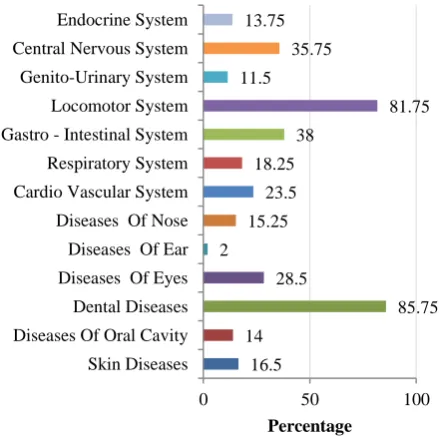
Figure 1: Frequency distribution of the study population according to physical health problems
(n=400).
In our study, it was found that the most prevalent common physical health problem among the geriatric population was dental diseases (85.75%). It was followed by diseases of the locomotor system (81.75%). About one-third of the study population have gastrointestinal system (38%) and central nervous system involvement (35.75%). Nearly one-fourth of the geriatric population have diseases of eyes (28.5%) and cardio-vascular system involvement (23.5%). This is represented in the following Figure 1.
Figure 2: Distribution of study population according to the number of system involvement.
In our study, 98.8% of the elderly population reported one or more medical condition. The prevalence of multi-system involvement in our study subjects was 92% and 1.2% reported to be normal. This is represented in the following Figure 2.
In Table 2 the Chi-square test of significance was used to test the association between age and individual system involvement among the study population. Fisher exact test was used when more than 20% of the expected cell value was <5. In this study, it was observed that prevalence of skin diseases, diseases of eyes, nose and gastro-intestinal system were higher among the elderly of age group ≥80 years than other age groups and the difference was statistically significant by chi-square test (p<0.05). In the similar way prevalence of dental diseases and diseases of the locomotor system were higher among the elderly of age group ≥80 years than other age groups and the difference was statistically significant by Fisher‘s exact test (p<0.05). There was the difference in the
16.5 14
85.75 28.5
2 15.25
23.5 18.25
38
81.75 11.5
35.75 13.75
0 50 100
Skin Diseases Diseases Of Oral Cavity Dental Diseases Diseases Of Eyes Diseases Of Ear Diseases Of Nose Cardio Vascular System Respiratory System Gastro - Intestinal System Locomotor System Genito-Urinary System Central Nervous System Endocrine System
Percentage
1% 7%
92%
prevalence of diseases of the oral cavity, ear, cardiovascular system, respiratory system, genitourinary system, central nervous system and endocrine system
with an increase in age among the elderly. But the difference between them was not statistically significant (p>0.05). This is represented in the following Table 2.
Table 2: Distribution of study participants according to age and common physical health problems.
Systems involved
60 - 69 years (n=195)
70 - 79 years (n=135)
≥80 years and
above (n=70) χ
2 value P value
N (%) N (%) N (%)
Skin diseases Yes
No
18 (9.2) 26 (19.3) 22 (31.4)
19.548 0.000 177 (90.8) 109 (80.7) 48 (68.6)
Diseases of oral cavity Yes
No
26 (13.3) 18 (13.3) 12 (17.1)
0.696 0.706 169 (86.7) 117 (86.7) 58 (82.9)
Dental diseases Yes
No
143 (73.3) 130 (96.3) 70 (100)
53.931* 0.000 52 (26.7) 5 (3.7) 0 (0)
Diseases of eyes Yes
No
24 (12.3) 48 (35.6) 42 (60)
62.473 0.000 171 (87.7) 87 (64.4) 28 (40)
Diseases of ear Yes
No
5 (2.6) 1 (0.7) 2 (2.9)
1.826* 0.452 190 (97.4) 134 (99.3) 68 (97.1)
Diseases of nose Yes
No
25 (12.8) 18 (13.3) 18 (25.7)
7.205 0.027 170 (87.2) 117 (86.7) 52 (74.3)
Cardio vascular system Yes
No
46 (23.6) 28 (20.7) 20 (28.6)
1.574 0.455 149 (76.4) 107 (79.3) 50 (71.4)
Respiratory system Yes
No
27 (13.8) 28 (20.7) 18 (25.7)
5.710 0.058 168 (86.2) 107 (79.3) 52 (74.3)
Gastro intestinal system Yes
No
64 (32.8) 50 (37.0) 38 (54.3)
10.154 0.006 131 (67.2) 85 (63.0) 32 (45.7)
Locomotor system Yes
No
144 (73.8) 117 (86.7) 66 (94.3)
18.363* 0.000 51 (26.2) 18 (13.3) 4 (5.7)
Genito-urinary system Yes
No
20 (10.3) 15 (11.1) 11 (15.7)
1.538 0.463 175 (89.7) 120 (88.9) 59 (84.3)
Central nervous system Yes
No
70 (35.9) 53 (39.3) 30 (42.9)
1.144 0.564 125 (64.1) 82 (60.7) 40 (57.1)
Endocrine system Yes
No
31 (15.9) 18 (13.3) 6 (8.6)
2.361 0.307 164 (84.1) 117 (86.7) 64 (91.4)
Note: *Fisher exact test was used when more than 20% of the expected cell value was <5.
DISCUSSION
The purpose of the study was to estimate the prevalence of common physical health problems and the effect of aging influencing them in the urban residents of Perambalur municipality, Perambalur district, Tamil Nadu. In our study it was observed that major fraction (48.75%) of the study subjects were in the age group of 60 to 69 years and this finding was found to be lower than the study done by Sanghamitra et al (54.9%) in West Bengal, Sowmiya et al in Mettupalayam (57.8%), Tamil Nadu and Lena et al in Udupi Taluk, Karnataka.2,9,10 The reason might be that this study was done in the urban area whereas the other studies in rural settings. Female participants were higher than Male in the age group 60 to 70 years as seen in a study of Quality of life among elderly by Kumar et al.11
An equal number of male and female participants was selected for this study. A comparable study was done by
Lena et al in Karnataka and Sharma et al in North India.10,12 Most of them (93%) were found to be Hindus in our study and this finding was higher than the study done by Srinivasan et al in Bangalore and Lahariya et al in New Delhi.13,14 This is due to the difference in selection of study area.
More than one-third of the study subjects belonged lower socioeconomic status and the comparable finding was seen in the study by Gopal et al in India and in Malaysia.15 80% of our elderly population was living with family members and comparable to various studies where 60% to 93% of elderly respondents lived with their families.15,3,18
Nearly 12% of the elderly were neglected by their family members. They felt they were ignored by family members because of their physical illness. 30% of the elderly were respected and consulted by the family members and lower than the study done in West Bengal.9
98.8% of the elderly population reported one or more medical condition. The reason might be due to decreased physiological reserves in the process of aging. The prevalence of morbidity among non-institutionalized older people in Spain was 95.3% and this study is comparable to our study.5
It was found that more than 85% of the elderly reported one or more medical condition from various studies in India.13,18,19
In our study, it was found that the common physical health problem among the geriatric population was dental diseases and diseases of the locomotor system. Dental diseases were found to be the commonest health problem among elderly in various studies in India.18,19 Involvement of locomotor system as the commonest health problem among elderly was observed in various studies in India.1,20 There was a statistically significant association between the effect of aging and skin and dental diseases, diseases of eyes, Nose, Gastro-intestinal system and locomotor system. This association was explained in various in India.1,18,21
The differences in morbidity can be partly explained by the differences in the racial and ethnic origin of the study population, and the prevailing socioeconomic differences among them. A possible source for biased reporting of medical conditions might arise from differential access and utilization of health care services by different segments of the population.
CONCLUSION
Our study concluded that majority of the geriatric population was looked after by their family members. In our study, it was found that the most prevalent common physical health problem among the geriatric population was dental diseases followed by diseases of the locomotor system. Almost 99% of the elderly have at least a single system involvement. There was a statistically significant association between aging and skin and dental diseases, diseases of eyes, nose, gastro-intestinal system and locomotor system. The preventive and rehabilitative services planned by the government have to be elder-friendly. The great challenge for public health over the coming decades lies in diagnosing and
preventing the possible risks associated with morbidity. To improve the health status of the elderly various health schemes, policies and programs can be designed based on the study findings.
Recommendations
Although the process of aging, disorders, and disabilities of old age cannot be totally prevented, suitable measures can be taken that would retard this progress thereby leading to a longer period of health and thus preserving their quality of life. Living arrangement, financial position and wellbeing would undergo a change in old age. Therefore in-depth studies through a multi-disciplinary assessment of issues like socioeconomic problems, morbidity pattern, and quality of life and social security needs of the elderly should be done nationwide. The traditional role of respecting and caring elders should be reinforced at school level and interventions from the primary level. The experiences and expertise of the elderly should be utilized for the society. Policymakers should evaluate successful programmes for the elderly of other countries and adapt them to suit local conditions and economic viability. Separate processing schemes for the elderly should be organized to meet their needs of reduced mobility and safety precautions. Our ―Womb to Tomb‖ social security policy should be strengthened.
Limitation
There may be a subjective bias introduced during the interview period. Underreporting of chronic diseases or subclinical cases is also another limitation because the study has taken into consideration only the diagnosed cases. There was also no measurement of disease severity or stage, which might predict mortality. Although we included several standard outcome variables in our analyses, many important outcome variables were not included e.g., mortality, mental illnesses like depression, quality of life for practical difficulties. In spite of these limitations, this community based cross-sectional study gives valuable information.
ACKNOWLEDGEMENTS
We thank the study participants for their co-operation and the Department of Community Medicine, Dhanalakshmi Srinivasan Medical College and Hospital for giving this opportunity.
Funding: No funding sources Conflict of interest: None declared
Ethical approval: The study was approved by the
Institutional Ethics Committee of Human Subjects
(IECHS), DSMCH
REFERENCES
Varanasi District. Indian J Public Health. 2007;51:92-4.
2. A Study on Quality of Life of Elderly Population in Mettupalayam, A Rural Area of Abstract : 2012;1(3):139–43.
3. Dasgupta A, Ray D, Roy S, Sarkar T, Ghosal A, Das A, et al. Depression among the Geriatric Population is a Matter of Concern : A Community Based Study in a Rural Area of West Bengal. Nepal J Epidemiol. 2013;3(4):282–7.
4. Abdulraheem IS, Oladipo AR, Amodu MO. Prevalence and Correlates of Physical Disability and Functional Limitation among Elderly Rural Population in Nigeria. J Aging Res. 2011;2011:1– 13.
5. Woo E, Han C, Jo SA, Park MK, Kim S, Kim E, et al. Morbidity and related factors among elderly people in South Korea : results from the Ansan Geriatric (AGE) cohort study. BMC Public Health. 2007;9:1–9.
6. Ceschia A. Health in an ageing world — what do we know ? Lancet. 2015;385:484–6.
7. Alam M, James KS, Giridhar G, Sathyanarayana KM, Kumar S, Raju SS, et al. Report on the Status of Elderly in Selected States of India, 2011. Building a Knowledge Base on Population Ageing in India. New Delhi, India; 2012.
8. Rahul P, Choudhary SK, Singh US. A study of morbidity pattern among geriatric population in an urban area of Udaipur, Rajasthan. Indian J community Med. 2004;29(1):35–40.
9. Maulik S, Dasgupta A. Depression and its determinants in the rural elderly of WestBengal -a cross sectional study. Int J Biol Med Res. 2012;2(4):1299–302.
10. Lena A, Ashok K, Padma M, Kamath V, Kamath A. Health and Social Problems of the Elderly : A Cross-Sectional Study in Udupi Taluk, Karnataka. Indian J Community Med. 2009;34(2):131–4. 11. Kumar SG, Majumdar A, Pavithra G. Quality of
Life (QOL) and Its Associated Factors Using WHOQOL-BREF Among Elderly in Urban Puducherry, India. J Clin Diagnostic Res. 2014;8(1):54–7.
12. Sharma D, Parashar A, Mazta SR. Functional status and its predictor among elderly population in a hilly
state of North India. Int J Heal Allied Sci. 2014;3(3):159–63.
13. Srinivasan K, Vaz M, Thomas T. Prevalence of health related disability among community dwelling urban elderly from middle socioeconomic strata in Bangaluru, India. Indian J Med Res. 2010;4:515–21. 14. Lahariya C, Khandekar J, Pradhan SK. Effect of
Impairment and Disability on Health- Related Quality of Life of Elderly : A Community- Based Study from Urban India. 2012;37(4):18–21. 15. Sherina M sidik, Lekhraj R, Mustaqim A. Physical
and mental health problems of the elderly in a rural community of Sepang, Selangor. Malaysian J Med Sci. 2004;11(1):52–9.
16. Bhatia SPS, Swami HM, Thakur JS, Bhatia V. A Study of Health Problems and Loneliness Among the Elderly in Chandigarh. Indian J Community Med. 2007;32(4):255–8.
17. Dutta S, Basu M, Das P, Dasgupta A. Morbidity Profile and Hidden Psychiatric Disorders Among Geriatric Women in a Village of West Bengal. Int J Trop Med. 2012;7(1):38–41.
18. Ingle GK, Nath A. Geriatric Health in India : Concerns and Solutions. Indian J Community Med. 2008;33(4):214–8.
19. Joshi K, Kumar R, Avasthi A. Morbidity profile and its relationship with disability and psychological distress among elderly people in Northern India. Int J Epidemiol. 2003;32(6):978–87.
20. Padda AS, Mohan V, Singh J, Deepti S, Singh G, Dhillon H. Health profile of aged person in urban and rural field practices area of Medical College. Indian J Community Med. 2018;23(2):72.
21. Gebreyohannis B, Kharel K. Needs assessment for assisted living facilities among elderly population. 2012;8:43.