3516
Secure Data Communication Using
Internet Of Things
C.R.Bharathi, Vejendla. Lakshman Narayana, L.V. Ramesh
Abstract: The rapid growth of the Internet of Things (IoT) has led to a situation where individual manufacturers develop their own communication protocols and frameworks that are often incompatible with other systems. Part of this is due to the use of incompatible communication hardware, and part is due to the entrenched proprietary systems. This has created a heterogeneous communication landscape, where it is difficult for devices to coordinate their efforts. To remedy this, a number of IoT Frameworks have been proposed to provide a common interface between IoT devices. There are many approaches to common frameworks, each with their strengths and weaknesses, but there is no clear winner among them. This proposed work presents a virtual network testbed for implementing smart home IoT Frameworks. The components of various IoT architecture proposals as well as the novel component, the Thing Management System, were combined, consolidated and related to each other to develop the Holistic IoT Architecture Framework. Subsequently, it was shown that the specifications of the architecture framework are suitable to guide the implementation of a prototype.
.
Index Terms: Secure data Tansfer, Internet of Things, Security, Protocols, IoT Devices..
—————————— ——————————
1
INTRODUCTION
The Internet of Things (IoT) is growing quickly. Some estimates indicate that there will be 13.5 billion consumer IoT devices in use by 2020, and that excludes business and industrial applications [1]. The term ―Internet of Things‖ has become something of a buzzword, but what does it mean? In this case, the name is somewhat apt. IoT devices are ―things‖ that are networked together and connected to the Internet. This can be anything from an array of hundreds of weather sensors to a coffee maker that starts brewing when your alarm clock goes off. Home automation is not a new thing, but until recently it has been done primarily by amateur tinkerers and hobbyists rigging something together to make it work. Now, there are thousands of devices that are sold Internet-ready; they can often be set up in a few minutes by a layperson. Among these devices are things like door locks, lightbulbs, thermostats, security cameras and practically anything else you can imagine. IoT platforms aim to enable secure connectivity between things, be it humans, sensor-devices or services of some sort, and are regarded as an integral part of any IoT architecture. These platforms provide software suites and various cloud based services to facilitate the operation of ―IoT endpoints‖ to enable communication between various, different devices. Currently available IoT platforms provide functions for device and application management (PaaS), data aggregation, transformation, storage and management as well as some means to analyze and visualize data streams [12]. However, if a user wants to use the functionalities of any IoT platform he must adhere to some constraints imposed by IoT platforms.
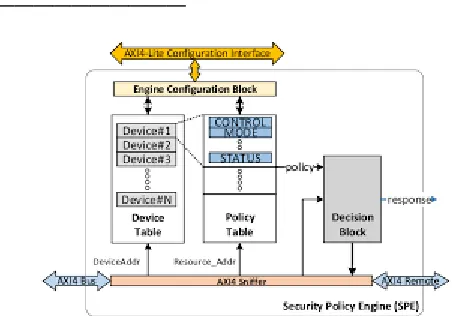
Fig 1. Block diagram for a typical IoT configuration.
The reason for this lack of dynamics lies in the low level of abstraction of IoT application development required by current IoT platforms. On the one hand, users have visual tools (e.g. node based and visual development tools) to create an application. On the other hand, users need to directly address devices (e.g. provide a one-to-one mapping of an ―IoT endpoint‖ node to a device talking to that endpoint [13]. Thus, adding a new device requires creation of a new node on the respective application, provision of a device-node mapping, manually normalizing of the retrieved data and redeploying the application on the IoT platform. The goal of this proposed work is to illustrate how IoT devices can be accurately simulated. Specifically, the focus is on communication between devices, so a particular emphasis will be on building simulated devices that can accurately mimic their real-life counterpart to the extent possible. Further, this proposed work will illustrate how these simulated devices can be combined in simulated networks using an IoT Framework. This will provide a base from which new devices can be simulated and different frameworks can be implemented [14]. Ultimately, having simulated smart home devices on a simulated smart home network can serve as a testbed for IoT Frameworks. Different frameworks can be applied to the same devices to see how well they interact, students can study protocols and interact with modeled devices in a virtual setting and developers can test how new devices and applications interact with already-modeled setups. This architecture framework aims to combine the various IoT architecture proposals to a common denominator. Based on this holistic framework literature
__________________________________
• Associate Professor , Department of ECE, Vel Tech Rangarajan Dr.Sagunthala R&D Institute of Science & Technology, Avadi , Chennai , Tamil Nadu. E-mail: [email protected] • Assoc.Professor, Department of IT, Vignan’s Nirula Institute of
Technology and Science for Women, Peda Palakaluru,
Guntur-522009,Andhra Pradesh, India.. E-mail:
3517 proposing implementations, technologies or behaviours for
each component of the architecture can be examined and the definition of each architectural component can be refined [15]. An increased level of abstraction in the development process addresses both issues of IoT development platforms mentioned previously. The lack of system dynamics (e.g. because a user cannot simply add new IoT endpoints with respective devices on-the-fly) is reduced by introducing and specifying high level architectural elements. These high-level elements, their behavior, interfaces, roles and data structures are to be defined by the holistic architecture framework [16]. These high-level elements could then be used by users in the development process.
2
LITERATURE SURVEY
The Internet of Things is deemed to have a high impact on every aspect of everyday life. It is envisioned to be the integration of the physical world into the digital world or vice versa. Enterprises and countries alike have already assessed the importance of IoT and started to move into strategically advantageous positions to exploit the most value of IoT. For example, the National Intelligence Council (2008) sees IoT as one of the Five Disruptive Civil Technologies, which has a potentially important impact on the country´s interests out to 2025. Ahmad et al [3] also assumes that by 2020 there will be a black market worth of five billion US$ for fake sensor data, which emphasizes the need for information reputation and evaluation techniques in IoT. For IoT to be successful, a trust environment has to be established. As already elaborated on and highlighted again in this chapter, IoT can very well be considered as a hyped technology. With IoT being a relatively new concept and under high coverage of both media, businesses and researchers it is not surprising that the term itself and related research field lack a commonly accepted and established definition. Designed to operate in a noisy environment, the 802.15.4 standard uses Direct-Sequence Spread Spectrum (DSSS), which minimizes the effect of random noise [17]. This makes it ideal for a cluttered environment like one would expect in IoT applications. These underlying features of 802.15.4 as a whole provide a stable foundation, on top of which several different protocols have been built. Many of these protocols are ideally suited to smart home applications because they provide communication within a house-sized area and use very low power [18]. Both ZigBee and 6LoWPAN are built on the same physical and data-link layers, this means they use the same physical hardware. The difference is the implementation of the higher levels. ZigBee has been around longer and is supported by more devices, but 6LoWPAN is easier to use with the Internet [19]. This is because 6LoWPAN is essentially a low power version of IPv6. This mimicking of IP formatting allows it to communicate with things outside the local network using a simple gateway. ZigBee can also do this, but the conversion required at the gateway is more involved and adds overhead [20]. 6LoWPAN has an adaptation layer that is between the link layer and network layer, and it provides a few solutions that allow for IPv6 traffic to translate to 6LoWPAN traffic relatively seamlessly. It fragments and reorders IPv6 packets to account for smaller packet size, compresses the headers as much as possible, allows for stateless addressing, and provides infrastructure for mesh routing [21]. This sounds like a lot, but it’s significantly easier than translating from Bluetooth or
ZigBee to and from IPv6.
Fenn et al. [10] also say that IoT can and will not merely be a global EPC system based on RFID. More different and kinds of things will be added and connected by using different communication technologies. Things will need to be managed and organized into networks (e.g. Wireless Sensing and Actuating Networks (WSAN)). The upcoming heterogeneity was already considered in the formal definition of IoT provided by the International Telecommunications Union (2005). The definition states that the internet cannot only connect anyone at any time and any place but anything at any time and any place. This view focuses more on the networking aspect of IoT and Atzori et al. (Atzori et al. 2010) name it the Internet Oriented Vision of IoT. Having agreed upon these ideas and with IoT gaining significant interest, both research and industry tried to develop relevant use cases for IoT.
3
PROPOSED METHOD
3518
Fig 2: RFID Working Principle of Internet of Thing
In the daily life, things are generating so fast. The RFID technology has already been implemented everywhere. In Figure 3, it shows the size of RFID chip in 2016. It can exist in anything, such like the passport, library cards or even some advanced business application. Moreover, RFID is commonly applied in the asset tracking industry to manage the huge information that is happening around the world. This technology helps user to improve the efficiency and transparency in the supply chain among all the aspects.
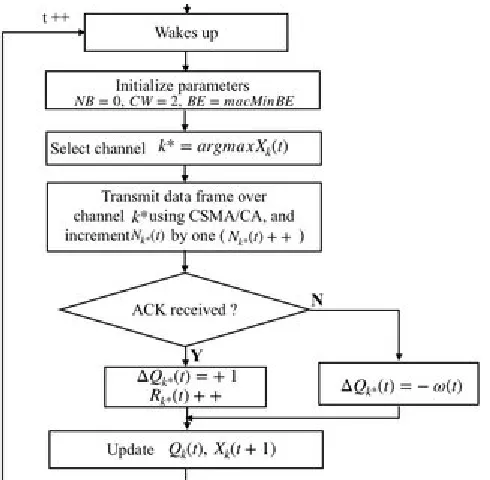
Fig 3: Flow Char for Cognitive IoT
As mentioned before, cognitive IoT is trying to mimic the way the human brain works. It involves self-learning system. The cognitive IoT does not have a certain module, but it should start with certain basic knowledge block. With the IoT application implement, all the data that have been collected to the IoT platform should be stored and personalized in order to fit the different need in real life acquirement.
Extended service providers provide value added services to sensor data consumers, this component of S2aaS as the most ―intelligent‖ one, as it provides a wide variety of different services, where each requires different methods, technologies and approaches to transform the requirements set by sensor
data consumers to sensing tasks and analyze as well as present the resulting data. One of the main tasks of an extended service provider is to formalize the informal sensing requests of sensor data consumers into sensing tasks. These tasks must be generic and universal, so that each sensor publisher can understand and handle the task. Additionally, extended service providers need to be able to support different sensing paradigms as well as incentive mechanisms. Based on the Generic IoT Architecture, described and the individual components of IoT architecture proposals are analyzed in order to work out common concepts of each component´s tasks, responsibilities and requirements. Therefore, each IoT architecture proposal is examined and the descriptions, requirements, tasks and intentions of each component are categorized based on the Generic IoT Architecture’s layers. Ideally, each component is described with each layer of the Generic IoT Architecture in mind, which would mean in conclusion that the component is holistically described. A holistic IoT architecture component description will consider the Business-, Application-, Middleware-, Network- and Perception Layer of the Generic IoT Architecture. The previous method suggested the so-called Thing Management System as a tool for Owners to manage their Things and share their Things services with Publishers. By being responsible for these tasks, the Thing Management System is expected to ensure the privacy and anonymity of a Thing´s Owner while simultaneously simplifying the management of these Things. In order to be able to design and develop such a system guiding principles or a domain model need to either be developed or identified and transferred from other research or problem domains
4
RESULTS
The main deliverable was definitely the bulb simulation, but its development also necessitated the creation of a control interface that allowed users to send specific packets and make sure the simulation was behaving correctly. This ended up being a couple of different program. The first program merely sent one packet and printed the replies. This was useful for testing corner cases or probing unexpected behavior.
Fig 4: IOT users Range
3519
Fig 5: User interface for control.py.
A simple GUI controller was also made that performed the base functions of controlling power, color and performing device discovery.
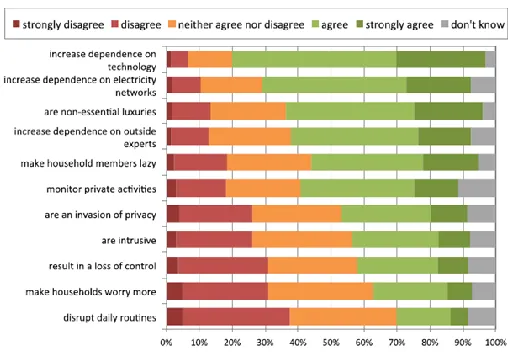
Fig 6: smart home technologies risks.
5
CONCLUSION
The primary goal of this proposed work was to illustrate how simulating IoT devices and networks can be used to build a testbed for IoT Frameworks. First, a home network was successfully simulated using separate Virtual Machines for each node on the network, linked together through a VM hypervisor. The network behaved just like a home network, relying on the Router VM for things like DNS lookup and routing outside the network. Next, IoT Device simulations were implemented. A simulation of a LIFX Smart Lightbulb was implemented from scratch based on published specifications and observations from actual hardware. Also, the existing Nest Home Simulator was employed to illustrate that other simulations can be incorporated. Finally, the OpenHAB IoT Framework was implemented in the simulated network on simulated devices, being unable to distinguish the simulations from actual hardware. The successful implementations of the simulations and Framework shows the feasibility of using a
simple testbed like this to perform analysis of Frameworks without having to use physical hardware. In its current form, this can be used as a tool for observing an accurate representation of the network traffic generated by the simulated devices. This can be an educational tool to illustrate how IoT devices work under the hood, or it can be used for more practical applications like optimization.
REFERENCES
[1]. Abdelwahab, S. et al., 2015. Cloud of Things for Sensing as a Service: Sensing Resource Discovery and Virtualization. In 2015 IEEE Global Communications Conference (GLOBECOM). IEEE, pp.
1–7. Available at:
http://ieeexplore.ieee.org/document/7417252/.
[2]. Abdelwahab, S. et al., 2014. Enabling Smart Cloud Services Through Remote Sensing: An Internet of Everything Enabler. IEEE Internet of Things Journal,
1(3), pp.276–288. Available at:
http://ieeexplore.ieee.org/document/6817547/.
[3]. Ahmad, A. et al., 2016. Model-Based Testing as a Service for IoT Platforms. In Leveraging Applications of Formal Methods, Verification and Validation: Discussion, Dissemination, Applications. Cham: Springer International Publishing, pp. 727–742. Available at: http://link.springer.com/10.1007/978-3-540-88479-8.
[4]. ARM Limited, 2017. CoAP. Available at: http://coap.technology/ [Accessed January 28, 2017]. [5]. Ashton, K., 2009. That ―Internet of Things‖ Thing. RFID
Journal. Available at:
http://www.itrco.jp/libraries/RFIDjournal-That Internet of Things Thing.pdf [Accessed February 15, 2017]. [6]. Atzori, L., Iera, A. & Botterman, M., 2009. Internet of
Things: an early reality of the Future Internet, Available at:
http://scholar.google.com/scholar?hl=en&btnG=Search &q=intitle:Internet+of+Things+:+an+early+reality+of+th e+Future+Internet#0.
[7]. Bradner, S., 1997. Key words for use in RFCs to Indicate Requirement Levels. , pp.1–3. Available at: https://www.ietf.org/rfc/rfc2119.txt.
[8]. Burke, J. et al., 2006. Participatory sensing. In ACM SenSys 2006. Boulder, Colorado, USA. Available at: http://citeseerx.ist.psu.edu/viewdoc/summary?doi=10.1 .1.122.3024.
[9]. Emmerich, W., Aoyama, M. & Sventek, J., 2008. The impact of research on the development of middleware technology. ACM Trans Softw Eng Methodol, 17(4), pp.1–48. Available at: http://discovery.ucl.ac.uk/46712/. [10]. Fenn, J. & LeHong, H., 2011. Hype Cycle for Emerging Technologies, Stamford. Available at: http://www.gartner.com/newsroom/id/2819918%5Cnhtt ps://www.google.be/url?sa=t&rct=j&q=&esrc=s&source =web&cd=9&cad=rja&uact=8&ved=0ahUKEwjxzq6mnr
3JAhUGPQ8KHR-WBGgQFghRMAg&url=http://isites.harvard.edu/fs/docs /icb.topic1360759.files/hype_cycle_for_emerging_t. [11]. Ferna et al., 2015. Ubiquitous Computing and Ambient
3520 http://link.springer.com/10.1007/978-3-642-35377-2.
[12]. Lakshman Narayana Vejendla and Bharathi C R ,(2018),―Multi-mode Routing Algorithm with Cryptographic Techniques and Reduction of Packet Drop using 2ACK scheme in MANETs‖, Smart Intelligent Computing and Applications, Vo1.1, pp.649-658. DOI: 10.1007/978-981-13-1921-1_63 DOI: 10.1007/978-981-13-1921-1_63
[13]. Lakshman Narayana Vejendla and Bharathi C R, (2018), ―Effective multi-mode routing mechanism with master-slave technique and reduction of packet droppings using 2-ACK scheme in MANETS‖, Modelling, Measurement and Control A, Vol.91, Issue.2, pp.73-76. DOI: 10.18280/mmc_a.910207 [14]. Lakshman Narayana Vejendla , A Peda Gopi and
N.Ashok Kumar,(2018),― Different techniques for hiding the text information using text steganography techniques: A survey‖, Ingénierie des Systèmes d'Information, Vol.23, Issue.6,pp.115-125 DOI: 10.3166/ISI.23.6.115-125
[15]. A Peda Gopi and Lakshman Narayana Vejendla (2018), ―Dynamic load balancing for client server assignment in distributed system using genetic algorithm‖, Ingénierie des Systèmes d'Information, Vol.23, Issue.6, pp. 87-98. DOI: 10.3166/ISI.23.6.87-98 [16]. Lakshman Narayana Vejendla and Bharathi C R,(2017),―Using customized Active Resource Routing and Tenable Association using Licentious Method Algorithm for secured mobile ad hoc network Management‖, Advances in Modeling and Analysis B, Vol.60, Issue.1, pp.270-282. DOI: 10.18280/ama_b.600117
[17]. Lakshman Narayana Vejendla and Bharathi C R,(2017),―Identity Based Cryptography for Mobile ad hoc Networks‖, Journal of Theoretical and Applied Information Technology, Vol.95, Issue.5, pp.1173-1181. EID: 2-s2.0-85015373447
[18]. Lakshman Narayana Vejendla and A Peda Gopi, (2017),‖ Visual cryptography for gray scale images with enhanced security mechanisms‖, Traitement du Signal,Vol.35, No.3-4,pp.197-208. DOI: 10.3166/ts.34.197-208
[19]. A Peda Gopi and Lakshman Narayana Vejendla, (2017),‖ Protected strength approach for image steganography‖, Traitement du Signal, Vol.35, No.3-4,pp.175-181. DOI: 10.3166/TS.34.175-181
[20]. Lakshman Narayana Vejendla and Bharathi C R,(2016),―Secured Key Production and Circulation in Mobile Ad hoc Networks Using Identity Based Cryptography‖, International conference on Engineering and Technology, Vol.1, pp.202-206. [21]. A Peda Gopi and Lakshman Narayana Vejendla,
(2019),‖ Certified Node Frequency in Social Network Using Parallel Diffusion Methods‖, Ingénierie des Systèmes d' Information, Vol. 24, No. 1, 2019,pp.113-117.. DOI: 10.18280/isi.240117
[22]. Lakshman Narayana Vejendla and A Peda Gopi, (2019),‖ Avoiding Interoperability and Delay in Healthcare Monitoring System Using Block Chain Technology‖, Revue d'Intelligence Artificielle , Vol. 33, No. 1, 2019,pp.45-48.
[23]. Yang, D. et al., 2012. Crowdsourcing to smartphones. In Proceedings of the 18th annual international
conference on Mobile computing and networking - Mobicom ’12. New York, New York, USA: ACM Press,
p. 173. Available at:
http://dl.acm.org/citation.cfm?doid=2348543.2348567. [24]. Yasrab, R. & Gu, N., 2016. Multi-cloud PaaS
Architecture (MCPA): A Solution to Cloud Lock-In. In 2016 3rd International Conference on Information Science and Control Engineering (ICISCE). IEEE, pp.
473–477. Available at:
http://ieeexplore.ieee.org/document/7726205/.
[25]. Fleisch, E., 2010. What is the Internet of Things? An Economic Perspective (white paper). In Zurich, Switzerland: Auto-ID Labs, pp. 1–27.
[26]. Fremantle, P. et al., 2014. Federated Identity and Access Management for the Internet of Things. In 2014 International Workshop on Secure Internet of Things.
IEEE, pp. 10–17. Available at:
http://www.scopus.com/inward/record.url?eid=2-s2.0-84926431695&partnerID=40&md5=2726c8ea5ad90df9 9e17f7e8099ca815.
[27]. Gamma, E. et al., 1995. Design Patterns Elements of Reusable Object-Oriented Software, Boston, MA, USA: Addison-Wesley Longman Publishing Co., Inc.
Available at:
http://www.cs.up.ac.za/cs/aboake/sws780/references/p atternstoarchitecture/Gamma-DesignPatternsIntro.pdf. [28]. Vaishnavi, V. & Kuechler, W., 2007. Design Science
Research Methods and Patterns, Boca Raton, USA: Auerbach Publications. Available at: http://www.crcnetbase.com/doi/book/10.1201/9781420 059335.
[29]. Vazquez, J.I. & Lopez-de-ipina, D., 2008. Social Devices : Autonomous Artifacts That Communicate on the Internet. In pp. 308–324.
[30]. Velosa, A., Schulte, R.W. & Lheureux, B.J., 2015. Hype Cycle for the Internet of Things, 2015. , (July), pp.1–69.
Available at:
http://www.gartner.com/document/3098434?ref=solrAll &refval=161158590&qid=40f7a175899f78812787998fff 35a614.
[31]. Wortmann, F. & Flüchter, K., 2015. Internet of Things. Business & Information Systems Engineering, 57(3),
pp.221–224. Available at:
http://link.springer.com/10.1007/s12599-015-0383-3. [32]. Zachariah, T. et al., 2015. The Internet of Things Has a