R E S E A R C H A R T I C L E
Open Access
High-intensity interval training and
moderate-intensity continuous training in
adults with Crohn
’
s disease: a pilot
randomised controlled trial
Garry A. Tew
1*, Dean Leighton
2, Roger Carpenter
3, Simon Anderson
4, Louise Langmead
5, John Ramage
6,
James Faulkner
7, Elizabeth Coleman
8, Caroline Fairhurst
8, Michael Seed
3and Lindsay Bottoms
9Abstract
Background:This study assessed the feasibility and acceptability of two common types of exercise training— high-intensity interval training (HIIT) and moderate-high-intensity continuous training (MICT)—in adults with Crohn’s disease (CD). Methods:In this mixed-methods pilot trial, participants with quiescent or mildly-active CD were randomly assigned 1: 1:1 to HIIT, MICT or usual care control, and followed up for 6 months. The HIIT and MICT groups were offered three exercise sessions per week for the first 12 weeks. Feasibility outcomes included rates of recruitment, retention, outcome completion, and exercise attendance. Data were collected on cardiorespiratory fitness (e.g., peak oxygen uptake), disease activity, fatigue, quality of life, adverse events, and intervention acceptability (via interviews).
Results:Over 17 months, 53 patients were assessed for eligibility and 36 (68%) were randomised (47% male; mean age 36.9 [SD 11.2] years); 13 to HIIT, 12 to MICT, and 11 to control. The exercise session attendance rate was 62% for HIIT (288/465) and 75% for MICT (320/429), with 62% of HIIT participants (8/13) and 67% of MICT participants (8/12)
completing at least 24 of 36 sessions. One participant was lost to follow-up. Outcome completion rates ranged from 89 to 97%. The mean increase in peak oxygen uptake, relative to control, was greater following HIIT than MICT (2.4 vs. 0.7 mL/kg/min). There were three non-serious exercise-related adverse events, and two exercise participants experienced disease relapse during follow-up.
Conclusions:The findings support the feasibility and acceptability of the exercise programmes and trial procedures. A definitive trial is warranted. Physical exercise remains a potentially useful adjunct therapy in CD. [ID: ISRCTN13021107].
Keywords:Inflammatory bowel disease, Exercise therapy, Randomised controlled trial
Background
Regular exercise training has been recommended as an adjunct therapy for people with Crohn’s disease (CD) [1–3] because of its potential beneficial effects on physical fitness, mental health, and disease-related factors such as fatigue, bone mineral loss and inflammation [4–6]. How-ever, empirical evidence on the effects of exercise training in CD is sparse, with only a handful of intervention studies [7–11], some of which have methodological limitations,
such as short follow-up, no control group, and a small sample size. Among adults with other chronic inflamma-tory diseases, a traditional model of exercise prescription has been moderate-intensity continuous training (MICT; e.g. 30–60 min of moderate-intensity continuous endura nce-type exercise such as swimming, cycling or running performed 3–5 times per week) [12], but a growing body of evidence indicates that high-intensity interval training (HIIT; e.g. 0.5–4 min bouts of vigorous exercise inter-spersed by periods of passive or active recovery) is a more time-efficient exercise strategy, eliciting similar or even superior cardio-metabolic adaptations compared to MICT, at least when compared on a work-matched basis [13–16].
* Correspondence:[email protected]
1Department of Sport, Exercise and Rehabilitation, Northumbria University,
Newcastle-upon-Tyne NE1 8ST, UK
Full list of author information is available at the end of the article
There has only been one published study investigating HIIT in CD patients to date [17], which showed that a sin-gle session of cycle-based HIIT was well tolerated and did not markedly increase pro-inflammatory cytokines (e.g., TNF-α) in a group of 15 teenagers. A greater understand-ing of the feasibility, acceptability and effects of different types of exercise training is needed to support the devel-opment evidence-based exercise guidelines and promotion strategies that are specific to CD.
We hypothesised that supervised endurance exercise training (either as HIIT or MICT) is a safe and effective strategy for improving cardiorespiratory fitness, fatigue, quality of life and mental health in people with CD. Be-fore embarking on a full-scale randomised controlled trial to test this hypothesis, we conducted a pilot trial to address several areas of uncertainty. For example, the possibility that many potential participants would be of working age and have disease-specific barriers to exer-cise (e.g., fatigue [18]) raised questions about the ability to recruit and retain individuals with CD to a clinical trial of supervised exercise training. Hence, the main aims of the Exercise for Adults with Crohn’s disease Trial (EXACT) study were to determine the acceptability and potential benefits and harms of HIIT and MICT in adults with quiescent or mildly-active CD, and the feasi-bility of conducting a full-scale trial.
Methods
Study design and setting
A full description of the methods has been published [19]. The study was a multi-centre, three-arm, parallel-group, pilot randomised controlled trial. Participants were randomised 1:1:1 to receive usual care, usual care plus HIIT or usual care plus MICT. Study assessments were conducted at baseline and at 3 and 6 months after randomisation. Recruitment was from three hospital trusts in England: Guy’s and St Thomas’ NHS Founda-tion Trust, Barts Health NHS Trust, and Hampshire Hospitals NHS Foundation Trust. The exercise pro-grammes were delivered in the exercise science facilities of the University of East London and the University of Winchester. Data management and statistical analysis took place at York Trials Unit, University of York. Ethics approval was granted by the Camden and Kings Cross Research Ethics Committee (reference 15/LO/1804), and all participants provided written informed consent be-fore enrolment. The trial was registered prospectively (ISRCTN13021107).
Participants
We included male and female patients between 16 and 65 years of age with a clinical diagnosis of CD. Patients had to have a stool calprotectin of < 250μg/g, stable medication (> 4 weeks), and quiescent or mildly-active
disease, as indicated by a Crohn’s Disease Activity Index (CDAI) of < 150 or 150–219, respectively. Exclusion cri-teria were: contraindication to exercise testing or train-ing [20], coexistent serious autoimmune disease (e.g. rheumatoid arthritis or systemic sclerosis), pregnant, planned pregnancy or major surgery within the first 3 months after randomisation, poor tolerability of vene-puncture or inadequate access for venous blood sam-pling, and current participation in > 90 min/week of purposeful exercise (e.g. cycling, swimming or running) or another clinical trial.
Randomisation and allocation concealment
A statistician at York Trials Unit managed the random-isation process. Following baseline assessment, a re-search assistant emailed the statistician for notification of the participant’s group allocation. Participants were randomly assigned 1:1:1 to one of the three study groups using a computer-generated randomisation schedule strati-fied by centre and baseline disease status (inactive [CDAI < 150] or mild [CDAI 150–219]) using randomly permuted blocks of sizes 3 and 6. The block sizes and allocation se-quence were not disclosed to ensure concealment.
Interventions
All three groups received usual care, which comprised evidence-based medical treatment optimisation. Partici-pants allocated to usual care did not receive any super-vised exercise or exercise advice as part of the trial; however, following the final study assessment they were offered a telephone-based consultation with a research assistant who discussed their individual facilitators/bar-riers to exercise, and provided guidance on incorporat-ing physical activity into their lifestyle.
11-point feeling scale) were recorded at regular intervals during each session. The feeling scale data will be pub-lished elsewhere. Incremental cycle exercise testing to maximum volitional exertion was performed in the final sessions of weeks 4 and 8 to re-calculate Wpeak and de-termine if the power output of the upcoming exercise sessions needed to be changed.
After the initial 12-week supervised training period, all exercise group participants were encouraged to continue a similar exercise regime in their own home or commu-nity setting without the support of the trial team.
Feasibility and acceptability outcomes
Trial feasibility outcomes included rates of recruitment, retention, and outcome completion. Barriers and facilita-tors to recruitment were also identified using a standar-dised questionnaire [22], which was completed by trial staff who had a responsibility for recruitment. The ac-ceptability of the exercise programmes was assessed using group preference data (assessed before randomisa-tion), rates of session attendance and completion, a measure of exercise enjoyment completed at 3 months after randomisation (Physical Activity Enjoyment Scale, PACES [23]), and participant feedback via telephone in-terviews conducted after the 6-month assessments. The safety of the exercise programmes was also assessed by ex-ploring rates of disease relapse at 3 months, the number and type of adverse events, drop-out rates, and reasons for withdrawal in each group. Relapse was defined as an in-crease in CDAI of≥100 points to a score≥150 [24].
We pre-specified that this pilot trial would be deemed successful and lead to the development of a proposal for a full-scale trial if: (i) at least one of the exercise pro-grammes was shown to be acceptable, based principally on participant feedback (i.e. interview data) and exercise session attendance data (acceptable attendance defined as at least 67% of participants completing at least 24 of the 36 sessions); (ii) at least 24 patients being recruited within 12 months, and; (iii) complete data on cardiore-spiratory fitness, CDAI, and quality of life at 3 months for at least 67% of participants.
Behaviour, fitness and health outcomes
The following outcome measures were assessed in all participants at baseline and 3 months after randomisa-tion: body mass, stature, waist circumference, blood pressure, resting heart rate, cardiorespiratory fitness (ventilatory threshold and peak oxygen uptake recorded during incremental cycle ergometer testing to maximum volitional exertion), disease status (CDAI), intestinal in-flammation (faecal calprotectin), and blood markers of inflammation (T lymphocyte subsets [Th1/Th2/Th17] and various cytokines including IL-6, IL-10, TNF-α and C-reactive protein; data to be published elsewhere).
Standard questionnaires were also administered at base-line and 3 and 6 months after randomisation, including the Inflammatory Bowel Disease Quality of Life Question-naire (IBDQ [25]), EuroQol EQ-5D-5 L (to measure health-related quality of life, [26]), IBD Fatigue Scale [27], Hospital and Anxiety Depression Scale (HADS [28]), and International Physical Activity Questionnaire-long (IPAQ [29]). (Please note that the published trial protocol con-tains a typographical error in that it states that the short version of the IPAQ would be administered).
Sample size
Following sample size guidelines for pilot studies [30], we aimed to have at least 12 participants in each group complete the study. To allow for up to 20% attrition, an overall target of 45 participants was used (15 per group).
Blinding
Due to the nature of the trial, blinding of participants and intervention facilitators to group allocation was not possible. Questionnaires were completed by participants independently and checked by a researcher for com-pleteness. Anthropometric, cardiorespiratory fitness and disease activity outcomes were assessed by researchers blinded to group allocation. Participants were asked not to disclose their allocation.
Statistical analysis
Data from paper case report forms were entered and checked for missing and invalid values in Microsoft Excel® then imported into Stata v15 (StataCorp) for ana-lysis. The flow of participants through the trial is pre-sented in a CONSORT diagram (Fig. 1). Baseline data are summarised descriptively by trial arm. The guidance around analysing pilot studies states that no formal hy-pothesis testing should be undertaken [31], and as such quantitative outcome data are summarised using de-scriptive statistics only, using the principles of intention to treat. Exit interviews were analysed using qualitative content analysis [32].
Results
Recruitment took place between May 2016 and September 2017, with all follow-up data collection completed by March 2018. The trial was stopped at the end of the grant funding interval, with the minimum recruitment target having been achieved.
Recruitment, group allocation and participant characteristics
each. The most common reason for exclusion was having active disease (n= 11). Interview data (analysed forn= 31; summarised in Additional file1) revealed that most partici-pants were recruited via face-to-face approach in clinic, with the most common reasons for enrolment being potential health benefits (n= 20), altruistic motives (n= 12), and it being seen as a good way to start an exercise regime (n= 10). Five investigators provided feedback on barriers and facilitators to recruitment (Additional file2). These in-vestigators and several participants suggested that recruit-ment might have been easier had there been more exercise venues. An investigator from the site with the least partici-pants (Hampshire Hospitals NHS Foundation Trust;n= 5), also stated that their recruitment was hampered by there being fewer eligible patients than expected; most patients attending their clinics had active disease.
Thirteen participants were allocated to HIIT, 12 to MICT, and 11 to control (Fig. 1). Of the 27 partici-pants who expressed a preference for a specific group before allocation, 20 (74%) preferred HIIT, 6 (22%) MICT, and one (4%) control. Interviewees recognised the need for a control group, and al-though control participants were generally disap-pointed with their allocation, they were willing to complete the study. All but one control participant reported maintaining their pre-trial exercise habits during the follow-up period, with the remaining par-ticipant explaining that they had started doing aer-obic and strength training 3–4 times per week shortly after randomisation. One exercise participant said that they would have dropped out if they had been allocated to control.
Allocated to MICT (n=12) • Received MICT ( 1 session;
n=12) Withdrew prior to randomisation (n=3) • Patient uncontactable after
screening (n=3)
Excluded (n=14)
• Planned major surgery (n=1)
• CDAI 220 (n=1)
• Faecal calprotectin 250mcg/g (n=10)
• Faecal calprotectin result unavailable (n=2)
Assessed for eligibility (n=53)
Recruited (n=39)
Allocated to HIIT (n=13) • Received HIIT ( 1 session;
n=11)
• Did not receive HIIT (n=2: one due to illness, one due to work and holiday commitments)
Enrolment
Alloc
a
ti
on
Follow
-up
Lost to 6-month follow-up (n=1) • Reasons: uncontactable after
3-month follow-up
Discontinued HIIT (n=1) • Reasons: moved abroad
Cardiorespiratory fitness 12 analysed, 1 excluded Disease activity
12 analysed, 1 excluded Self-report questionnaires 11 analysed, 2 excluded Exit interview
11 analysed, 2 excluded
Analy
si
s
Allocated to control (n=11) • Received usual care (n=11)
Lost to 6-month follow-up (n=0)
Discontinued MICT (n=0)
Lost to 6-month follow-up (n=0)
Cardiorespiratory fitness 12 analysed, 0 excluded Disease activity
12 analysed, 0 excluded Self-report questionnaires 12 analysed, 0 excluded Exit interview
11 analysed, 1 excluded
Cardiorespiratory fitness 11 analysed, 0 excluded Disease activity
11 analysed, 0 excluded Self-report questionnaires 10 analysed, 1 excluded Exit interview
10 analysed, 1 excluded Randomised (n=36)
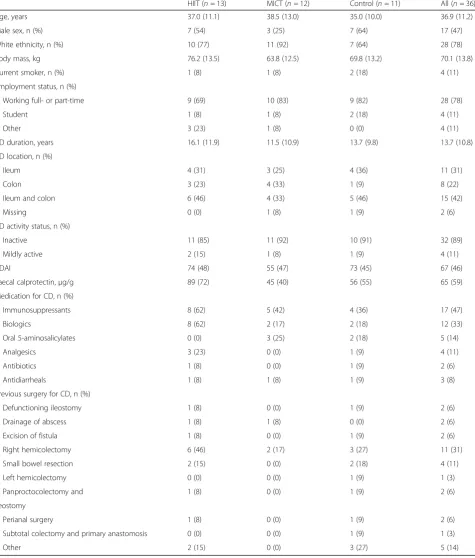
Table 1 shows the participant characteristics at base-line. The groups appear well balanced for the majority of variables. Seventeen participants (47%) were male and the mean age was 36.9 years (SD 11.2). A higher
proportion of participants were male in the HIIT (54%) and control (64%) groups than the MICT group (25%). Most participants were of white ethnicity (78%), had qui-escent disease (89%), and were in paid employment
Table 1Baseline demographics and clinical characteristics
HIIT (n= 13) MICT (n= 12) Control (n= 11) All (n= 36)
Age, years 37.0 (11.1) 38.5 (13.0) 35.0 (10.0) 36.9 (11.2)
Male sex, n (%) 7 (54) 3 (25) 7 (64) 17 (47)
White ethnicity, n (%) 10 (77) 11 (92) 7 (64) 28 (78)
Body mass, kg 76.2 (13.5) 63.8 (12.5) 69.8 (13.2) 70.1 (13.8)
Current smoker, n (%) 1 (8) 1 (8) 2 (18) 4 (11)
Employment status, n (%)
Working full- or part-time 9 (69) 10 (83) 9 (82) 28 (78)
Student 1 (8) 1 (8) 2 (18) 4 (11)
Other 3 (23) 1 (8) 0 (0) 4 (11)
CD duration, years 16.1 (11.9) 11.5 (10.9) 13.7 (9.8) 13.7 (10.8)
CD location, n (%)
Ileum 4 (31) 3 (25) 4 (36) 11 (31)
Colon 3 (23) 4 (33) 1 (9) 8 (22)
Ileum and colon 6 (46) 4 (33) 5 (46) 15 (42)
Missing 0 (0) 1 (8) 1 (9) 2 (6)
CD activity status, n (%)
Inactive 11 (85) 11 (92) 10 (91) 32 (89)
Mildly active 2 (15) 1 (8) 1 (9) 4 (11)
CDAI 74 (48) 55 (47) 73 (45) 67 (46)
Faecal calprotectin,μg/g 89 (72) 45 (40) 56 (55) 65 (59)
Medication for CD, n (%)
Immunosuppressants 8 (62) 5 (42) 4 (36) 17 (47)
Biologics 8 (62) 2 (17) 2 (18) 12 (33)
Oral 5-aminosalicylates 0 (0) 3 (25) 2 (18) 5 (14)
Analgesics 3 (23) 0 (0) 1 (9) 4 (11)
Antibiotics 1 (8) 0 (0) 1 (9) 2 (6)
Antidiarrheals 1 (8) 1 (8) 1 (9) 3 (8)
Previous surgery for CD, n (%)
Defunctioning ileostomy 1 (8) 0 (0) 1 (9) 2 (6)
Drainage of abscess 1 (8) 1 (8) 0 (0) 2 (6)
Excision of fistula 1 (8) 0 (0) 1 (9) 2 (6)
Right hemicolectomy 6 (46) 2 (17) 3 (27) 11 (31)
Small bowel resection 2 (15) 0 (0) 2 (18) 4 (11)
Left hemicolectomy 0 (0) 0 (0) 1 (9) 1 (3)
Panproctocolectomy and 1 (8) 0 (0) 1 (9) 2 (6)
ileostomy
Perianal surgery 1 (8) 0 (0) 1 (9) 2 (6)
Subtotal colectomy and primary anastomosis 0 (0) 0 (0) 1 (9) 1 (3)
Other 2 (15) 0 (0) 3 (27) 5 (14)
(78%). The mean time since diagnosis was 13.7 years, ranging from 4 months to 38.2 years. Twenty-six partici-pants (72%) reported having slight-to-moderate fatigue and eight (22%) reported having severe fatigue. There were very few comorbidities, which included asthma (n= 3), anaemia (n= 2), diabetes (n= 1), ankylosing spondylitis (n= 1), and bipolar disorder (n= 1). The most common medication used for CD was immuno-suppressants (47%) and biologics (33%). The most common previous surgery for CD was right hemico-lectomy (n= 11).
Trial retention and assessment completion rates
No participants formally withdrew from the study, but one HIIT participant was lost to the 6-month follow-up (Fig. 1). At 3 months (i.e., intervention end-point), 34 (94%) participants completed the hospital visit, and 35 (97%) completed the university visit. At 6 months, 33 (92%) participants completed the postal questionnaire, and 32 (89%) completed the telephone interview. The in-terviewees stated that the logistics and content of the as-sessment visits were acceptable (Additional file1).
Exercise adherence, enjoyment and acceptability
Of the 465 and 429 exercise sessions that were offered to HIIT and MICT participants, respectively, 288 (62%) and 320 (75%) were attended, giving a combined attend-ance rate of 68% (608/891). All 608 attended sessions were completed as planned. The mean (SD) power out-put used in the exercise sessions of weeks 1–4 and 9–12 were 148 (25) W and 173 (36) W respectively for the HIIT group and 50 (14) W and 54 (13) W respectively for the MICT group. The median (range) number of ses-sions attended was 25 (0–36) and 25 (18–34) for the HIIT and MICT groups, respectively. Eight (62%) of the HIIT participants and eight (67%) of the MICT partici-pants achieved the pre-specified attendance criterion of at least 24 sessions. Two HIIT participants did not at-tend a single exercise session: one due to illness, and the other due to work and holiday commitments. Another HIIT participant withdrew from the intervention after completing 5 sessions due to moving abroad. The main reasons for sessions being missed were work commit-ments (25%, 72/286), illness (25%, 71/286 [only two of which were CD-related]) and holiday (14%, 40/286) (data from both exercise groups combined).
The interviews indicated mixed views about there be-ing three sessions per week. Some participants (n= 12) stated that this frequency was, or would have been (for controls), difficult to adhere to, whereas others felt this frequency to be achievable (n= 11) and necessary for im-proving fitness (n= 6). Two participants indicated that they would not have achieved this frequency had the ses-sion times not been as flexible. Three other participants
stated that the frequency would have been more achiev-able had weekend sessions also been offered.
The intensity of training completed by the HIIT par-ticipants, based on data recorded at exercise interval 9 of 10, is summarised as follows: mean (SD) RPE-C = 5.1 (1.7) (i.e. ‘hard’), RPE-L = 5.5 (1.6) (i.e. ‘hard’) and heart rate = 92% of maximum (5%). Corresponding values for the MICT participants were: RPE-C = 2.9 (1.5) (i.e.‘ mod-erate’), RPE-L = 3.3 (1.5) (i.e. ‘moderate’) and heart rate 68% of maximum (6%). None of the interviewees thought that either training programme was too hard or too easy. Two participants were initially concerned that the HIIT might be too hard, but found that this did not turn out to be the case.
All interviewees found cycling to be an acceptable mode of exercise, with some recognising that it could be carefully controlled and was suitable for a range of fit-ness levels. However, two participants said that the seat was uncomfortable. Six participants stated that they would have also liked to try other exercise modes in-cluding muscle-strengthening exercises (n= 4), running (n= 1), and arm-cranking (n= 1). Another six partici-pants stated that they were glad running was excluded, with two participants explaining that it has previously caused them to experience bowel urgency. Feedback on other aspects of the exercise programmes (e.g. duration, setting, provider) is summarised in Additional file1. The mean (SD) PACES score at 3 months (i.e. intervention end-point) out of a possible 126 was 99.4 (12.9) for HIIT and 101.3 (17.4) for MICT, equating to participants reporting the exercise sessions as‘enjoyable’.
Behaviour, fitness and health measures
Summary data for the behaviour, fitness and health mea-sures are presented in Tables2and3. The mean change in peak oxygen uptake from baseline to 3 months, rela-tive to control, was greater following HIIT than MICT (+ 2.4 vs. + 0.7 mL/kg/min). This corresponded with the mean (SD) change in peak power output from baseline to 3 months, which was + 24 W (17) for HIIT, + 12 W (16) for MICT, and + 4 W (14) for control.
said that they had continued exercising (a variety of re-gimes) since finishing the supervised sessions.
Disease activity and safety
Summary data for disease activity (CDAI and faecal cal-protectin) are presented in Table2.
Two participants, one from each exercise group, expe-rienced disease relapse between baseline and 3 months. The HIIT participant was a 29-year-old male. His CDAI score increased from 62 to 278 and faecal calprotectin increased from 117 to > 400μg/g. No medications were recorded at baseline or follow-up. In his exit interview, he referred to his stomach “going a bit funny but it not being a complete flare”at approximately one third of the way through the exercise programme. He thought that this “mini flare” was related to stress and not the exer-cise, and he was well enough to continue exercising, completing 33 sessions. Further review of his results
show that a FC result done in the 6 months prior to entry to the trial was > 400μg/g. At the time of entry to the trial he was on no medication having previously been on anti-TNF which was stopped due to antibody formation and clinical remission and his faecal calpro-tectin was being monitored. It seems likely that the in-trial flare occurred due to the progressive nature of his disease whilst on no treatment. He has since started on vedolizumab with a good response.
The MICT participant was a 37-year-old female. She was stable on 15 mg/week methotrexate at baseline but and had switched to 50 mg/day azathioprine by 3 months due to troubling hair loss which she perceived as a side effect of methotrexate. Within a few weeks of that switch she was suffering symptoms of a relapse and her faecal calprotectin was raised. She also developed anaemia. Over the course of the trial her CDAI in-creased from 38 to 181, and faecal calprotectin from 46 to > 400μg/g. She completed 25 exercise sessions. Of the missed sessions, six were missed due to ill health (five of which due to virus/vomiting). In her exit inter-view, she referred to feeling tired at the end of the super-vised period, and she put this down to anaemia, which she had only recently become aware of and received treatment for. It seems possible that her relapse was re-lated to her switch in medication. She was eventually started on infliximab with a good response.
Four adverse events were also reported during the trial; all within the HIIT group. Three were rated as non-serious but exercise-related. One participant experienced a mild headache and dizziness after exercise on two separate oc-casions. After clinical review, these symptoms were deemed to be related to dehydration-induced migraine. The participant was re-informed about appropriate dietary and hydration habits in relation to the exercise sessions. After this, these symptoms no longer occurred. For the other adverse event, one participant vomited 5 min after the end of a session. This was likely due to the participant having eaten immediately before the session. The partici-pant was re-informed about appropriate timing of meals in relation to the exercise sessions. The final adverse event was unrelated to the trial and non-serious; a participant became ill with a chest in-fection shortly after randomisation, resulting in them missing all of their exercise sessions.
Discussion
A key finding of this pilot randomised controlled trial was that the pre-specified criteria for progressing to a full-scale trial of supervised exercise training in CD were all satisfied. The minimum recruitment target was achieved, and rates of exercise attendance and outcome completion were good. Interview feedback about the ex-ercise programmes was generally positive, with most Table 2Fitness and health measures at baseline and follow-up
HIIT MICT Control All
Body mass, kg
Baseline 76.2 (13.5) 63.8 (12.5) 69.8 (13.2) 70.1 (13.8) 3 months 76.4 (14.4) 63.0 (12.7) 71.0 (13.5) 70.1 (14.3) Waist circumference, cm
Baseline 87.3 (11.8) 79.5 (14.7) 83.1 (9.8) 83.4 (12.4) 3 months 86.5 (9.8) 76.8 (12.8) 84.8 (8.5) 82.6 (11.1) Resting heart rate, beats/min
Baseline 72 (8) 75 (12) 73 (11) 73 (10) 3 months 72 (10) 74 (9) 76 (10) 74 (10) Systolic blood pressure, mmHg
Baseline 130 (12) 122 (17) 126 (13) 126 (14) 3 months 126 (11) 120 (16) 128 (15) 125 (14) Diastolic blood pressure, mmHg
Baseline 82 (10) 76 (9) 78 (8) 79 (9) 3 months 78 (9) 74 (10) 79 (10) 77 (9) Ventilatory threshold, mL/kg/min
Baseline 16.5 (4.9) 16.0 (4.1) 16.6 (6.1) 16.4 (4.9) 3 months 16.8 (5.5) 18.2 (3.7) 16.1 (4.7) 17.0 (4.7) Peak oxygen uptake, mL/kg/min
Baseline 27.3 (7.7) 28.7 (8.6) 28.6 (10.0) 28.2 (8.6) 3 months 29.7 (8.2) 29.3 (6.6) 28.5 (9.2) 29.2 (7.9) CDAI
Baseline 74 (48) 55 (47) 73 (45) 67 (46) 3 months 59 (74) 78 (48) 99 (50) 77 (59) Faecal calprotectin,μg/g
participants stating that they enjoyed attending and ex-perienced fitness and health benefits. There were very few exercise-related adverse events.
This is the first study to test and demonstrate the feasi-bility and acceptafeasi-bility of HIIT in adults with CD. Several trials have shown HIIT to be a safe and effective exercise strategy in other clinical populations [13, 33, 34], but all previous prospective studies in CD have investigated low-to-moderate-intensity exercise programmes [7–11]. The reasons for this are unclear, but may include concerns that high-intensity exercise will acutely exacerbate inflam-mation and CD symptoms [4]. Such concerns are not sup-ported by the current findings or other non-trial data. Indeed, both our cycle-based HIIT and MICT pro-grammes had good attendance figures and positive feed-back, with no participant reporting exercise causing a
worsening of their symptoms. Interestingly, the majority of participants had a pre-randomisation preference for HIIT, suggesting that many patients want to exercise at a high-intensity and are not fearful of doing so (at least when under supervision and in a controlled environment). In previous work, Ploeger et al. [17] demonstrated that a single session of cycle-based HIIT was well-tolerated and did not exacerbate inflammation or disease symptoms in 15 teenagers with CD. Similarly, a conference abstract reporting a prospective study of seven adults with CD par-ticipating in high-intensity continuous exercise events such as triathlons, marathons, and long-distance bike races showed no abnormal elevation of faecal calprotectin measured at 24 h and one week after the event [35]. Five of the seven patients also had no change in their symp-toms or disease activity scores. The two remaining Table 3Questionnaire data at baseline and follow-up
HIIT MICT Control All
IBDQ (32 to 224)a
Baseline 184 (16) 181 (23) 164 (17) 177 (20)
3 months 186 (19) 192 (18) 174 (21) 184 (20)
6 months 180 (20) 189 (22) 175 (23) 182 (22)
EQ-5D (−0.285 to 1)a
Baseline 0.85 (0.13) 0.83 (0.12) 0.70 (0.20) 0.80 (0.16)
3 months 0.85 (0.10) 0.87 (0.13) 0.78 (0.17) 0.83 (0.14)
6 months 0.85 (0.12) 0.83 (0.12) 0.77 (0.22) 0.81 (0.16)
IBD-F, Fatigue (0 to 20)b
Baseline 8.2 (3.0) 7.8 (5.3) 9.3 (4.1) 8.4 (4.1)
3 months 8.3 (3.2) 8.3 (4.9) 7.8 (4.2) 8.1 (4.0)
6 months 7.5 (2.5) 7.3 (4.2) 7.5 (4.0) 7.4 (3.6)
IBD-F, Activities (0 to 120)b
Baseline 22.3 (19.0) 22.7 (22.5) 34.3 (20.5) 26.1 (20.8)
3 months 26.4 (20.5) 25.4 (28.1) 35.0 (20.4) 28.7 (23.1)
6 months 27.7 (12.4) 26.2 (20.6) 32.4 (21.3) 28.7 (18.4)
HADS, Anxiety (0 to 21)b
Baseline 5.5 (3.9) 6.8 (5.2) 7.7 (4.3) 6.6 (4.4)
3 months 5.2 (2.5) 5.5 (3.6) 6.2 (4.2) 5.6 (3.4)
6 months 3.8 (3.5) 5.3 (4.3) 5.5 (3.6) 4.9 (3.7)
HADS, Depression (0 to 21)b
Baseline 3.6 (3.1) 3.8 (2.9) 5.2 (2.9) 4.1 (3.0)
3 months 2.7 (1.7) 2.7 (3.3) 2.6 (2.5) 2.7 (2.5)
6 months 2.7 (1.5) 3.1 (3.1) 4.4 (4.0) 3.4 (3.1)
IPAQ, Total physical activity, MET-min/week, median (IQR)
Baseline 2874 (1273, 6474) 3237 (1383, 5442) 1602 (526, 2781) 2484 (1028, 4409) 3 months 3618 (1692, 5271) 2099 (1441, 3729) 2928 (2118, 5351) 2897 (1645, 5213) 6 months 1188 (99, 4149) 2163 (1328, 7993) 2817 (2243, 3969) 2557 (1109, 4451) Data are presented as mean (SD) unless otherwise stated
a
Higher score is better b
patients showed elevated disease activity scores at 24 h after exercise, with scores returning to baseline within one week. Together, the available data appear promising regarding the safety of cycle-based HIIT; however, lar-ger prospective studies are needed before firm recom-mendations can be made about the suitability of this type of training.
The pre-specified criteria for planning a full-scale trial were largely met. Sixty four percent of HIIT and MICT participants attended at least 24 of the 36 sessions (the aim was for at least 67%, this was achieved in MICT group but not in HIIT). A total of 36 participants were recruited over 17 months (mean 2.4 per month), with 27 randomised in the first 12 months. The 3-month re-sponse rate exceeded 67%. We therefore plan to progress to a full-scale trial, with some changes, that would have a main aim of determining the efficacy and safety of su-pervised exercise training in people with CD. The find-ings from our pilot work have implications for this future trial, and the proposed changes to study design are summarised in Additional file 3. The main changes relate to the intervention. Firstly, we plan to investigate one exercise programme instead of two (i.e., change to a 2-arm, exercise versus control design). Although this will remove the ability to compare different exercise pro-grammes, it will simplify the design and make the re-cruitment target more attainable. Secondly, we plan to expand the exercise regime to include resistance and flexibility exercises. The addition of resistance training, the benefits of which we are currently investigating [36], will ensure the programme aligns with global recom-mendations on physical activity for health [37], and pro-mote improvements in skeletal muscle function and bone strength [38], both of which are commonly im-paired in people with CD [3, 39, 40]. For the aerobic component, we plan to use a mixture of HIIT and MICT because of evidence that doing so increases the likeli-hood of an improvement in cardiorespiratory fitness be-ing observed [41], and that variety can support regular attendance [42]. Offering sessions on weekends might also improve attendance rates. This was not feasible in the current study because the university facilities were unavailable at weekends. For the future trial, we are ex-ploring whether we could deliver the intervention in community-based exercise facilities that are open 7 days per week. Potential challenges include finding an exer-cise venue to pair with each of the hospital sites, and en-suring appropriate staffing.
Strengths of this study include blinded outcome as-sessment, low rates of attrition and missing data, and ex-ercise sessions being consistently delivered as planned (when attended). The study did have some limitations, however. Firstly, the intentionally small sample size makes the study underpowered to assess efficacy, and
the upper target sample size of 45 was not achieved. However, our preliminary data could be used in a meta-analysis in the future. A second limitation was the use of self-reported physical activity, which has been shown to be inaccurate when compared with objective measurement from devices such as accelerometers [43]. Thirdly, we did not use endoscopies to directly visualise the effect of exercise on the gastrointestinal tract. These two limitations can be addressed easily in the future trial by using accelerometry and capsule endoscopic evalu-ation, respectively. A fourth limitation was that partici-pants were not blinded to group allocation during follow-up, making the patient-reported outcomes sus-ceptible to bias [44]. Using a control condition that matches the exercise programme(s) for attention (e.g., flexibility or light resistance training) is a potential ap-proach to minimising the risk of this bias. Finally, uncer-tainty remains about how successful recruitment and retention would be at other potential trial sites. Given that many more sites would be required in a subsequent trial, the continued monitoring of feasibility issues through an internal pilot phase would be beneficial, par-ticularly within the first year of recruitment.
Conclusion
In conclusion, cycle-based HIIT and MICT are feasible and acceptable exercise strategies in adults with quiescent or mildly-active CD. Larger-scale trials are needed to pro-vide precise estimates of the benefits and harms of differ-ent exercise programmes, and our findings suggest that a multi-centre trial of supervised exercise training is feasible in the UK. Physical exercise remains a potentially useful adjunct therapy and lifestyle behaviour in CD.
Additional files
Additional file 1:Summary of telephone interview data. (DOCX 14 kb)
Additional file 2:Summary of recruitment survey data. (DOCX 12 kb)
Additional file 3:Implications and proposed changes for the full-scale trial. (DOCX 16 kb)
Acknowledgements
Abu-Bakarr Karim (Research Nurse, Barts Health NHS Trust).
Krzysztof Rutkowski (Research Nurse, Guy’s and St Thomas’NHS Foundation Trust). Megan Topping (Clinical Research Assistant, Hampshire Hospitals NHS Foundation Trust).
Barbara King (Research Nurse, Hampshire Hospitals NHS Foundation Trust). Alex Crane and Ariyan Alimadadi (Research Assistants, University of Winchester). Trial Sponsor: University of Hertfordshire.
Funding
This work was supported by the Living with IBD Research Programme at Crohn’s and Colitis UK (grant number: SP2015/1). This funding source had no role in the design or execution of this study or in the analysis and interpretation of the data. The views expressed are those of the authors and not necessarily those of Crohn’s and Colitis UK.
Availability of data and materials
The dataset supporting the conclusions of this article will be made available upon reasonable request to the corresponding author.
Authors’contributions
GAT designed and managed the trial, and led the write-up of this paper. DL coordinated the majority of exercise sessions and assessments at the University of East London. RC contributed to the design of the trial and helped coordinate trial activity at the University of East London. SA was the Principal Investigator at Guy’s and St Thomas’NHS Foundation Trust, contributing to trial design and patient recruitment. LL was the Principal Investigator for Barts Health NHS Trust, contributing to trial design and patient recruitment. JR was the Principal Investigator for Hampshire Hospitals NHS Foundation Trust, contributing the patient recruitment. JF was the Principal Investigator at the University of Winchester, coordinating trial activity at this site. EC contributed to data analysis. CF contributed to the trial design and led the data analysis. MS was the Principal Investigator at the University of East London, designing the blood analysis aspects of this trial. LB was the Chief Investigator, who conceived and designed the trial, and contributed to its management. All authors had full access to the data from this trial, provided comments on drafts of this paper, and read and approved the final version that was submitted for publication.
Ethics approval and consent to participate
Ethics approval was granted by the Camden and Kings Cross Research Ethics Committee (reference 15/LO/1804), and all participants provided written informed consent before enrolment.
Consent for publication
Not applicable.
Competing interests
The authors declare that they have no competing interests.
Publisher’s Note
Springer Nature remains neutral with regard to jurisdictional claims in published maps and institutional affiliations.
Author details
1Department of Sport, Exercise and Rehabilitation, Northumbria University,
Newcastle-upon-Tyne NE1 8ST, UK.2Centre for Immunobiology, Queen Mary
University of London, Blizard Building, Newark Street, Whitechapel, London E1 2AT, UK.3School of Health, Sport and Bioscience, University of East
London, Stratford Campus, London E15 4LZ, UK.4Guy’s and St Thomas’NHS
Foundation Trust, London, UK.5Digestive Diseases Clinical Academic Unit,
Barts and the London NHS Trust, London, UK.6Hampshire Hospitals NHS Foundation Trust, Hampshire, UK.7Department of Sport, Exercise and Health,
University of Winchester, Winchester SO22 4NR, UK.8York Trials Unit,
University of York, Heslington, York YO10 5DD, UK.9Centre for Psychology
and Sports Science, University of Hertfordshire, Life and Medical Sciences, CP Snow Building, College Lane, Hatfield AL10 9AB, UK.
Received: 27 September 2018 Accepted: 21 January 2019
References
1. Pérez CA. Prescription of physical exercise in Crohn's disease. J Crohns Colitis. 2009;3(4):225–31.
2. Lykouras D, Karkoulias K, Triantos C. Physical exercise in patients with inflammatory bowel disease. J Crohns Colitis. 2017;11(8):1024. 3. Reboredo MM, Pinheiro BV, Chebli JMF. Physical exercise Programmes in
patients with inflammatory bowel disease. J Crohns Colitis. 2017;11(10):1286. 4. Bilski J, Brzozowski B, Mazur-Bialy A, Sliwowski Z, Brzozowski T. The role
of physical exercise in inflammatory bowel disease. Biomed Res Int. 2014;2014:429031.
5. Shephard RJ. The case for increased physical activity in chronic inflammatory bowel disease: a brief review. Int J Sports Med. 2016;37(7):505–15.
6. Engels M, Cross RK, Long MD. Exercise in patients with inflammatory bowel diseases: current perspectives. Clin Exp Gastroenterol. 2018;11:1–11. 7. D'Incà R, Varnier M, Mestriner C, Martines D, D'Odorico A, Sturniolo GC.
Effect of moderate exercise on Crohn's disease patients in remission. Ital J Gastroenterol Hepatol. 1999;31(3):205–10.
8. Loudon CP, Corroll V, Butcher J, Rawsthorne P, Bernstein CN. The effects of physical exercise on patients with Crohn's disease. Am J Gastroenterol. 1999;94(3):697–703.
9. Ng V, Millard W, Lebrun C, Howard J. Low-intensity exercise improves quality of life in patients with Crohn's disease. Clin J Sport Med. 2007;17(5):384–8. 10. Klare P, Nigg J, Nold J, Haller B, Krug AB, Mair S, Thoeringer CK, Christle JW,
Schmid RM, Halle M, et al. The impact of a ten-week physical exercise program on health-related quality of life in patients with inflammatory bowel disease: a prospective randomized controlled trial. Digestion. 2015; 91(3):239–47.
11. Robinson RJ, Krzywicki T, Almond L, al-Azzawi F, Abrams K, Iqbal SJ, Mayberry JF. Effect of a low-impact exercise program on bone mineral density in Crohn's disease: a randomized controlled trial. Gastroenterology. 1998;115(1):36–41.
12. Nolte K, van Rensburg DJ. Exercise prescription in the management of rheumatoid arthritis. S Afr Fam Pract. 2013;55:345–9.
13. Gibala MJ, Little JP, Macdonald MJ, Hawley JA. Physiological adaptations to low-volume, high-intensity interval training in health and disease. J Physiol. 2012;590:1077–84.
14. MilanovićZ, SporišG, Weston M. Effectiveness of high-intensity interval training (HIT) and continuous endurance training for VO2max improvements: a systematic review and meta-analysis of controlled trials. Sports Med. 2015;45(10):1469–81.
15. Bartlett DB, Shepherd SO, Wilson OJ, Adlan AM, Wagenmakers AJM, Shaw CS, Lord JM. Neutrophil and monocyte bactericidal responses to 10 weeks of low-volume high-intensity interval or moderate-intensity continuous training in sedentary adults. Oxid Med Cell Longev. 2017;2017:8148742. 16. Klonizakis M, Moss J, Gilbert S, Broom D, Foster J, Tew GA. Low-volume high-intensity interval training rapidly improves cardiopulmonary function in postmenopausal women. Menopause. 2014;21(10):1099–105.
17. Ploeger H, Obeid J, Nguyen T, Takken T, Issenman R, de Greef M, Timmons B. Exercise and inflammation in pediatric Crohn’s disease. Int J Sports Med. 2012;33(8):671–9.
18. Tew GA, Jones K, Mikocka-Walus A. Physical activity habits, limitations, and predictors in people with inflammatory bowel disease: a large Cross-sectional online survey. Inflamm Bowel Dis. 2016;22(12):2933–42. 19. Tew GA, Carpenter R, Seed M, Anderson S, Langmead L, Fairhurst C,
Bottoms L. Feasibility of high-intensity interval training and moderate-intensity continuous training in adults with inactive or mildly active Crohn's disease: study protocol for a randomised controlled trial. Pilot Feasibility Stud. 2017;3:17.
20. American College of Sports Medicine. ACSM’s guidelines for exercise testing and prescription. Eighth ed. Philadelphia: Lippincott Williams & Wilkins; 2009.
21. Borg GA. Psychophysical bases of perceived exertion. Med Sci Sports Exerc. 1982;14(5):377–81.
22. Kaur G, Smyth RL, Williamson P. Developing a survey of barriers and facilitators to recruitment in randomized controlled trials. Trials. 2012;13:218. 23. Kendzierski D, DeCarlo KJ. Physical activity enjoyment scale: two validation
studies. J Sport Exerc Psychol. 1991;13:50–64.
24. Van Assche G, Dignass A, Panes J, Beaugerie L, Karagiannis J, Allez M, Ochsenkühn T, Orchard T, Rogler G, Louis E, et al. The second European evidence-based consensus on the diagnosis and management of Crohn's disease: definitions and diagnosis. J Crohns Colitis. 2010;4(1):7–27. 25. Cheung WY, Garratt AM, Russell IT, Williams JG. The UK IBDQ-a British
version of the inflammatory bowel disease questionnaire. development and validation. J Clin Epidemiol. 2000;53(3):297–306.
26. Herdman M, Gudex C, Lloyd A, Janssen M, Kind P, Parkin D, Bonsel G, Badia X. Development and preliminary testing of the new five-level version of EQ-5D (EQ-EQ-5D-5L). Qual Life Res. 2011;20(10):1727–36.
28. Zigmond AS, Snaith RP. The hospital anxiety and depression scale. Acta Psychiatr Scand. 1983;67(6):361–70.
29. Craig CL, Marshall AL, Sjöström M, Bauman AE, Booth ML, Ainsworth BE, Pratt M, Ekelund U, Yngve A, Sallis JF, et al. International physical activity questionnaire: 12-country reliability and validity. Med Sci Sports Exerc. 2003; 35(8):1381–95.
30. Julious SA. Sample size of 12 per group rule of thumb for a pilot study. Pharm Stat. 2005;4:287–91.
31. Eldridge SM, Chan CL, Campbell MJ, Bond CM, Hopewell S, Thabane L, Lancaster GA, et al. CONSORT 2010 statement: extension to randomised pilot and feasibility trials. BMJ. 2016;355:i5239.
32. Elo S, Kyngäs H. The qualitative content analysis process. J Adv Nurs. 2008; 62(1):107–15.
33. Elliott AD, Rajopadhyaya K, Bentley DJ, Beltrame JF, Aromataris EC. Interval training versus continuous exercise in patients with coronary artery disease: a meta-analysis. Heart Lung Circ. 2015;24(2):149–57.
34. Tew GA, Batterham AM, Colling K, Gray J, Kerr K, Kothmann E, Nawaz S, Weston M, Yates D, Danjoux G. Randomized feasibility trial of high-intensity interval training before elective abdominal aortic aneurysm repair. BJS. 2017; 104(13):1791–801.
35. Hassid B, Lamere B, Kattah M, Mahadevan U. Effect of intense exercise on inflammatory bowel disease activity. Am J Gastroenterol. 2016;111(S1):S312. 36. Tew GA. Resistance training in adults with Crohn’s disease. ISRCTN registry,
2017.https://doi.org/10.1186/ISRCTN11470370. Accessed 13 Aug 2018. 37. World Health Organization. Global recommendations on physical activity for
health. Geneva: World Health Organization; 2010.
38. Foster C, Armstrong M. What types of physical activities are effective in developing muscle and bone strength and balance? Journal of Frailty, Sarcopenia and Falls. 2018;3(2):58–65.
39. Wiroth JB, Filippi J, Schneider SM, Al-Jaouni R, Horvais N, Gavarry O, Bermon S, Hébuterne X. Muscle performance in patients with Crohn's disease in clinical remission. Inflamm Bowel Dis. 2005;11(3):296–303.
40. Reinshagen M. Osteoporosis in inflammatory bowel disease. J Crohns Colitis. 2008;2(3):202–7.
41. Bonafiglia JT, Rotundo MP, Whittall JP, Scribbans TD, Graham RB, Gurd BJ. Inter-individual variability in the adaptive responses to endurance and Sprint interval training: a randomized crossover study. PLoS One. 2016; 11(12):e0167790.
42. Morgan F, Battersby A, Weightman AL, Searchfield L, Turley R, Morgan H, Jagroo J, Ellis S. Adherence to exercise referral schemes by participants -what do providers and commissioners need to know? A systematic review of barriers and facilitators. BMC Public Health. 2016;16:227.
43. Prince SA, Adamo KB, Hamel ME, Hardt J, Connor Gorber S, Tremblay M. A comparison of direct versus self-report measures for assessing physical activity in adults: a systematic review. Int J Behav Nutr Phys Act. 2008;5:56. 44. Hróbjartsson A, Emanuelsson F, Skou Thomsen AS, Hilden J, Brorson S. Bias