2727
Usage Of Cloud Computing Technology And
Challenges In Japanese Higher Educational
Institutes
Muhammad SuhaibAbstract— Japan is the top market for cloud services internationally, ranked 1st in my research analysis. Japan has consistently been one of the top markets for growth in information and communications technology (ICT) and cloud services. The emergence of cloud computing (CC) and its prevalence in the IT industry in recent years has pulled substantial attention to a multitude of private-public sectors. When it comes to the educational sector, a number of universities all around the world have been seen transmitting traditional ways of conducting classes to digital learning services, thereby aking the most of today‟s technological boom. In this research we design and developed web base application http://cloudcomputingreview.muhammadsuhaib.com for data collection. The utilization of cloud computing in educational institutes renders numerous benefits cost-effectively, and that is why many other institutes, especially in Asian countries, are adapting to this digital service. Taking the position of higher education institutes into consideration, the adoption of Cloud Computing has now become an imperative research area. This write-up endeavors to probe the present behavior of educational institutes in Japan with respect to CC adoption with a view to enriching the interest of researchers in this particular area. Moreover, the limitations and gaps during the research conduct are identified. Besides, further areas of research vis-à-vis cloud computing are also demarcated for the favor of future research. Educational institutes need to get encouragement through this research regarding the adoption of cloud computing technology.
Index Terms— Cloud Computing, Higher Education in Japan, Cloud Computing Solutions, Cloud Computing Challenges, Cloud Storage, Cloud Computing Technology
—————————— ——————————
1 I
NTRODUCTIONThe post-fourth revolution age has nudged the human mind towards accomplishment of numerous goals that the human of preceding centuries could only have imagined for. In the same way, the employment staffs of different public-private organizations used traditional methods of getting their tasks done (Botta and Pescape, 2016). Similarly, educational faculties used to record prolonged reports of examination in papers. This and other hackneyed tasks were both time-consuming and irritating. It was consequently supplanted by new digital technologies which make any work easier to handle (Karim and Goodwin, 2013). From this perspective, cloud computing has become one of the key technologies which can store as much gigabytes of files and remain them intact for future. As the technology has yet to take the all private and governmental institutes by storm, many are being seen making of the most of this technology, especially the educational institutes where faculties are rendering the content of students and other workloads through the internet service and recording their work progresses in various cloud-based storage applications (Karim et al., 2013). Moreover, Higher Educational Institutes (HEIs) are also taking keen interest in e-learning and steering to bring such a service in almost all the educational institutes in Japan. In order to do so, these institutes ought to rely upon the veracity of information and communication technology (ICT) and establish adequate infrastructure where the service can easily be utilized (Micrea and Andreescu, 2011).
————————————————
Author Working as Sr. Full Stack Developer at T-Mark Inc., Tokyo, Japan, Ph.D. Computer Science Candidate, Author of Book “Goal Oriented Requirements Analysis In Software Development Process
ISBN-13: 978-620-0-46491-0 ISBN-10:620046491
XEAN:9786200464910” Published more than 8 Peer Review Research Papers, [email protected], www.muhammadsuhiab.con, +81-702-8058303.
Although the technology is cost-effective, many universities are currently yearning for some investment from the government side to provide the same service to their university staff. Since it is asserted that CC technology provides solutions to the challenges linked with impartation of effective study.
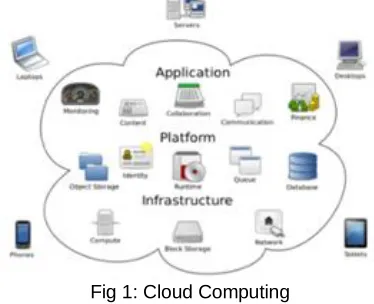
Fig 1: Cloud Computing
One of the recent studies conducted by non-governmental organizations reported that as many as 43 per cent of universities in the Middle East have implemented CC technology (Karim et al., 2013). Where every lad in the present world is using Internet consistently, CC technology can give quick access to the teachers regarding deliverance of lectures and to the students for getting rapid responses from the teachers for any query.
CLOUD COMPUTING
While a standard definition of cloud computing is difficult to be articulated, some peculiar benefits of CC will explore the benefits of the very technology. Some of the benefits of cloud computing for the universities are given below:
Mobility and cloud effort together to provide a rich user
2728 their mobile phones to remain update from any development in
their surroundings, cloud-based storage applications can facilitate their communication with the teachers (Alharthi and Wills, 2015). Cloud storage is a model of pc or computer data storage in which the digital data is saved in logical groups. Individuals and organizations purchase or lease storage capacity from the providers to store user, organization, or application data. Universities often come across the challenge of storing important material like video lectures and virtual conferences on a specific device. Cloud services allow such universities to adopt to using Cloud Computing technology and provide the same service to the student‟s vis mobile phones or computers (Ecran, 2010). Cloud computing model provides your business the ability to interconnect and share more easily external of the traditional methods. It allows much greater teamwork between employees allowing multiple workers to share and work on data and document at the same time. Educational institutes often grapple with keeping their previous records intact. A recent survey namely „The Cloud State‟ by Falcon Mobile indicated that 55 per cent of global universities contend with the examination records of the previous decade. Cloud services offer state of the art technology where universities can store heap of data in a minimum possible time and retain that as many years as they want (Ecran, 2010).
PROS AND CONS OF CLOUD COMPUTING
Since the iron age has been shifted towards technological age, many innovations have been witnessed by the scientific world which facilitates erroneous tasks effectively. However, there are always some boons and banes for any innovation which ought to be utilized sagaciously. As far as cloud computing technology is concerned, it is also teeming with multifarious benefits and hazards. The former entails cost-effective system of this technology, coupled with access from infinite options like mobile phones, netbooks and tablets, easy recovery of hidden or lost data, and sharing capability (Gorelik, 2013). The latter, on the other hand, cloud computing definitely provides access to data, it is impossible to fix any bug-related issue without recognizing it. The other disadvantage is the incompatibility of several applications that could not be accessed to any personal computer as a result of lower specifications. It means that cloud computing requires strong specifications in order to run it (Gorelik, 2013). Lastly, there exist some security issues like vulnerable hacking, which could be secured by maintain complete security of a business. These peculiarities need to be learnt before using the CC technology.
HOW IS THE CLOUD TECHNOLOGY SOLVING CHALLENGES IN
EDUCATION?
Ercan (2010) is of the view that in a demographic manner, students enrolled in universities have become technologically interconnected. As per a general survey, usually one student in the European and North American regions bring at least two to three gadgets with him for performing his or her academic tasks. Taking this perspective into consideration. These practices should be imparted among the Middle East universities. The solution cloud computing brings into the education sector involves transferring of important materials from one student to another. Moreover, it helps the students learn relevant academic lessons without bothering their preceptors. They can find answers of their queries in a minimum time without any hassle. (Gorelik, 2013) argued that as cloud computing provides flexibility to the universities for
storage and memory capacity, it is considerably prevailing across the region to facilitate every student with its benefits. In the Western region of the Middle East, there appears to be a scant interest of university staff to adapt to CC technology for cultural or religious barriers. However, they seemed to take interest to adapt to CC at least at a departmental level for their faculty members. As per the findings of University of Berkley, London, cloud-based applications such as Software as a Service (SaaS) provides strong computational power to the universities by renting cloud servers. For instance, University of Wisconsin was reeling from some budget constraints. With adoption of cloud computing service, it is now enabled to expand exhaustive service to its departments (Gorelik, 2013).
HOW HAS CLOUD TECHNOLOGY CHANGED EDUCATION AND
TRAINING?
Since cloud computing has become one of the powerful agencies of change, it has made huge strides in the education sector. A study conducted by MeriTalk cited that as much as fifty-one per cent of universities in the Middle East have upped their cloud spending. As a result, students seem to be more interested in benefiting from this technology for the academic purposes. Accessibility is the most potent resource of this technology, besides data storage and analysis platform (Karim et al., 2013). Today, almost seventy-five per cent teachers upload their important results and students‟ performance evaluation scores on this technology for future purposes.
VIRTUAL CLASSROOMS AND CLOUD COMPUTING
Another interesting development emanated from this technology is the virtual classroom facility through cloud computing. It provides the teachers a paperless roadmap to conduct their lectures, coupled with distribution and collection of assignments, gauging students‟ progress in any mobile phone or desktop browser. Though virtual classroom software concept is as old as hills, their deployment in a rational manner materialized in recent years. Tech companies like G Site or Blackboard offers cloud services to the education sector with acceptable charges. Google launched its own education app in 2014 related to cloud computing (Karim et al., 2013). It opens a unified and attentive environment in the universities.
VIRTUAL TRAINING LABS AND CLOUD COMPUTING
Platforms like cloud computing is a boon for professional tasks, especially when it comes to analyzing and collecting heaps of data from a bulge of students. For virtual training, cloud technology provides cost-effective and flexible way to deploy it, such as Cloud Share which enables enterprises to install virtual training labs in universities. With it, trainers can create an operating system for monitoring different student activities. It uses in the virtual training labs give immense benefits to the classroom setting (Mircea et al., 2011). It also rivets the attention of those students who abhor reading stockpiles of books or other hard copies. your paper.
2
METHODOLOGY
2729 population because it delivers the investigator with data and
material that may contribute meaningfully to the explanation and understanding of the data, which supports well understand the phenomenon. This research entails review of cloud computing in middle-east higher educational institutes, we are applying empirical method to complete this study and we design and developed web base application http://cloudcomputingreview.muhammadsuhaib.com for data collection and doing analysis of different research publication related to cloud computing in Japanese universities as well. The researchers endeavored to identify constraints in the adoption of Cloud Computing by Japanese universities. The main focus this research is upon Cloud Computing adaptation by the Japanese higher educational institutes.
Overview of Cloud Computing in Japan
Private or Public cloud models are both common in Japan, public cloud model, multiple users share a single cloud environment provided by a cloud provider, and in the private cloud model, a company builds its own cloud environment for its use or use by its group companies. Japan is the top market for cloud services worldwide, ranked 1st in our analysis. Japan boasts the greatest consistent and advanced market for cloud services; furthermore, there is significant room for growth for United States. cloud services providers. Despite the presence of a recognized market with local competitors, internal players do not seem to enjoy business barrier-related benefits over overseas vendors. Japan‟s commitment to universal broadband access for all households, its presents a uniquely connected market with near-total participation in ICT service needs. There should be
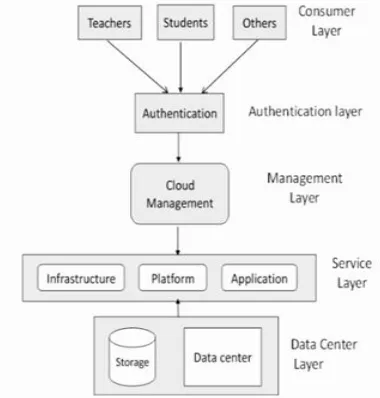
Figure 2: E-Cloud Model for Universities
caution and attention paid to potential privacy and data protection laws in the country as well as a decrease in consumer spending; however, Japan is still the top market for cloud services in 2019.
Amazon Web Services(AWS)
AWS distributes a set of storage, compute, database, analytics, and application placement services that cheaper costs, scale applications, respond rapidly in emergencies, and meet the ever-changing needs of the modern student.
Wireless Network Technologies in Educational Institutes
Wireless communications technology has observed a wonderful technical leap, which executed itself strongly on all areas of society, comprising the educational sector, in modern years. There is no reservation that this technology is playing numerous roles and moving everything in our daily lives, as dependence on wireless Internet connectivity remains to raise. Followers of educational technology trust that the usage of wireless communications technology will lead to growing the effectiveness and productivity of the educational system and acknowledge free access to bases of scholastic material, as well as mitigate the deficiency of technically and scholastically experienced faculty members, all the while studying distinctive differences and overwhelming various educational troubles. Notably, it also provokes concentration and satisfies the desires of students to study and spread their contribution in the educational development.
Figure 3: Wireless Networks Connectivity (Source: Best)
Penetration of cloud computing in the educational system
(Gorelik, 2013) argued that as cloud computing provides flexibility to the universities for storage and memory capacity, it is considerably prevailing across the region to facilitate every student with its benefits. In the Japan, there appears to be a scant interest of university staff to adapt to Cloud Computing technology for cultural or religious barriers. However, they seemed to take interest to adapt to CC at least at a departmental level for their faculty members. As per the findings of University of Berkley, London, cloud-based applications such as Software as a Service (SaaS)
Educational Cloud Services
provides strong computational power to the universities by renting cloud servers. For instance, University of Wisconsin was reeling from some budget constraints. With adoption of cloud computing service, it is now enabled to expand exhaustive service to its departments (Gorelik, 2013).
Architecture for Universities
2730 can apply to university student‟s records, formation of their
management more efficient in universities with different buildings and campuses, where students manage to work from different places in the same day, or even expend a semester abroad. For instance, a printed academic file can be stored in a main archive, and different departments of the university can be access an online copy from any place in campus at any given moment. In order to facilitate the universities by offering them cost-effective service for cloud computing, a specific architecture for its easy adaptation has been designed which builds upon a CC model called Infrastructure as a Service (IaaS). Besides this strategy to adopt to Cloud Computing, it is mandatory for the universities to acquire first-hand knowledge and user requirement of the cloud-based applications, coupled with any project feasibility while utilizing cloud technology (Lakshminarayanan and Raju, 2013). It is followed by Software as a Service (SaaS).
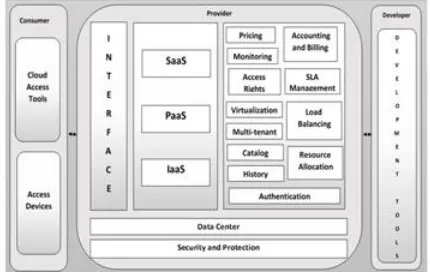
Figure 4: Important Roles in Cloud (Source: Wikipedia)
RESEARCH QUESTIONS
Cloud computing has changed from the initial technology called grid computing, but recently has reached the stage of commercialization. Cloud computing has extended from a large growth of the Internet and the rising number of e-commerce transactions, carried out all around the world. After the world economic crisis, several institutions which suffered great budget cuts, have had difficulty maintaining and increasing their computation capacity to match the always growing need of computational resources for research. In order to analyze the behavior of different Japanese Universities, questions have been delivered more than under-graduate and under-graduate universities students and faculty members including technical staff and Management via
web-based application
www.cloudcomputingreview.muhammadsuhaib.com from following Public and Private Japanese Higher Education Institutes.
1- Ritsumeikan University 2- Kyoto University 3- Soka University 4- Meiji Gakuin University 5- NICT, Tokyo
6- NAIST
7- Tokyo Metropolitan University 8- Nagoya University
9- Sophia University 10- Kyushu University
2731 Fig5: Snapshot of Web Based Private Cloud Questionnaire
Fig6: Snapshot of Web Based SaaS Questionnaire
Fig7: Snapshot of Web Based IaaS Questionnaire
Fig8: Snapshot of Web Based IaaS Questionnaire
These research questions included in the questionnaire for university students include:
Question 1: Does your university have ever had an experience of cloud computing?
Question 2: If so, do you know about deployment methods of cloud computing?
Question 3: Has your university ever appealed to the government for issuing for funds to bridge technological gap in the universities?
These research questions included in the questionnaire for university staff and management included:
Question 1: Does your university have plan to use Private/Internal Cloud?
Question 2: Does your university have plan to use Private/Internal Cloud in production?
Question 3: Does your university have plan to use Private/Internal Cloud for development and
testing?
2732 Question 5: Does your university have plan to use
Storage-as-a-Service in Production?
Question 6: Does your university have plan to use Storage-as-a-Service for development and testing?
Question 7: Does your university have plan to use Storage-as-a-Service?
Question 8: Does your university have plan to use Storage-as-a-Service in Production?
Question 9: Does your university have plan to use Storage-as-a-Service within 3 months?
Question 10: Does your university have plan to use Storage-as-a-Service within 3-6 months?
Question 11: Does your university have plan to use Storage-as-a-Service within 6-12 months?
Question 12: Does your university have plan to use Storage-as-a-Service more than 12 months?
Question 13: Does your university have plan to use Storage-as-a- Not sure?
Question 14: Cost savings on software? Question 15: Cost savings on hardware
Question 16: Ability to grow and shrink IT capacity on demand?
And other many important questions requested about infrastructure-as-a-Service, Platform-as-a-Service, Software-as-a-Service, cost, hardware, software, IT operations, products, development teams, investments, collaboration in questionnaire.
3 RESULTS AND DISCUSSION
To implement the Cloud on the education we first construct the structure to create the cloud and upload the, files, images, videos on the cloud. Then we can access it from anywhere through internet. The findings of the research compiled by the researches revealed universities are somewhat keen to get benefits from Cloud Computing technology and learning more about it. However, basic techniques of its usage and deployment are yet to be learned by the universities. Lastly, though installation, maintenance and upgrading of cloud-based applications require much investment, the researchers endeavored to spread the word and ensure technological benefits to the universities (Hashem and Khan, 2015). Out of all the responses, the universities in Japan appeared to have more knowledge and responsibility towards implementation of this technology. Taking empirical study of the research into
consideration, the findings of the research also concluded that issues with the adaptation of Cloud Computing still exists in some institutions where religious education is preferable to academic. It prevents the students from getting the same opportunities other universities‟ students are acquiring. It was also concluded that some of the systems have restricted access to the campuses and lacks access support from anywhere near their region.
CHALLENGESFORTHEUNIVERSITIES
Universities specially in the Asian Countries and in Middle East are facing challenges to provide cloud computing technology for their faculties or students for educational activities. While the utilization of Cloud Computing is cost-effective, its installation remains a conundrum for the institutes. For this, the proposed architecture model that contains installation phases have already been designed. Additionally, universities often seem to be in dilemma regarding what model of CC should be the most effective for class presentations and video lectures (Ritting house and Ransome, 2016). The most common model that has had a glaring impact on the teaching field is Software as a Service (SaaS). Therefore, et al explored that if there is a viable option of SaaS to be adapted to the universities of the Middle East. (Mircea et al., 2011) stated that although the technology of cloud computing is gaining grounds in the universities, some issues related to CC ought to be addressed. Since the investigation conducted by the researches aimed at assessing the behavior of the educational faculties regarding adaptation to Cloud Computing, both the teachers as well as students found to have a keen interest in implementing cloud services in their institutes. There were of the view that the technology will reduce the exchange gap between them and impart instant knowledge to them. The research lastly concluded that there is a dire need to establish web-based applications related to cloud computing and address the concerns of some universities regarding its adaptation (Rittinghouse et al., 2016).
4 CONCLUSION
Japanese universities are fully equipped and well maintained; Japan is the one of the top ranked country where universities providing Cloud services computing is regarded as gradually emerging technological drive that warrants the provision of best solutions to the universities regarding retention of their academic records. The transformation from traditional IT systems to Cloud Computing will enable the universities with the needs of retrieval and storage of data with minimum cost (Anshari and Hamid, 2016). It will consequently stimulate innovation within the institutes to support technological blueprints for the educational activities. This paper comprehensively articulated the traits and benefits emanated from CC technology along with the mode of adopting to it by the educational institutes. he challenges or complexities lie in its adoption are also addressed, followed by some measures. The problems related to cloud computing must properly be addressed for its future implementation in the public-private organizations (Anshari et al., 2016). Cloud computing trust on the accessibility of great speed internet access and reliability of the cloud. Without it university students cannot approach their files or applications.
5 ACKNOWLEDGMENT
2733 have been involved to this research.
R
EFERENCES[1] A. Ghazizadeh, (2012), ”Cloud Computing Benefits and Architecture in E-Learning,” in Wireless, Mobile and Ubiquitous Technology in Education (WMUTE), 2012 I.E. Seventh International Conference, IEEE, 2012, pp. 199201.
[2] P. Li, and L. Toderick,” Cloud in cloud- approaches and imple- mentations,” ACM SIGITE 2010, Midland, Michigan, 2010, PP. 105- 110.
[3] R. Lakshminarayanan, B. Kumar and M. Raju, Cloud Computing Benefits for Educational Institutions, Information Security and Computer Fraud, vol. 2, no. 1, pp. 5-9, 2014.Alharthi, A., Yahya, F., Walters, R. J., & Wills, G. (2015). An overview of cloud services adoption challenges in higher education institutions.
[4] Anshari, M., Alas, Y., Sabtu, N. P. H., & Hamid, M. S. A. (2016). Online Learning: trends, issues and challenges in the Big Data Era. Journal of e-Learning and Knowledge Society, 12(1).
[5] Botta, A., De Donato, W., Persico, V., & Pescapé, A. (2016). Integration of cloud computing and internet of things: a survey. Future generation computer systems, 56, 684-700.
[6] Ercan, T. (2010). Effective use of cloud computing in educational institutions. Procedia-Social and Behavioral Sciences, 2(2), 938-942.
[7] Gorelik, E. (2013). Cloud computing models (Doctoral dissertation, Massachusetts Institute of Technology). [8] Hashem, I. A. T., Yaqoob, I., Anuar, N. B., Mokhtar, S.,
Gani, A., & Khan, S. U. (2015). The rise of “big data” on cloud computing: Review and open research issues. Information systems, 47, 98-115.
[9] Suhaib, Muhammad (2019), Effects of Visual and Auditory Response Times in Males and Females by using Tactile and Mouse on Web Based Environment. International Journal of Recent Technology and Engineering (IJRTE) ISSN: 2277-3878, Volume-8 Issue-3, September 2019. [10] Karim, I., & Goodwin, R. (2013). Using cloud computing in
e-learning systems. learning, 1, 2.
[11] Lakshminarayanan, R., Kumar, B., & Raju, M. (2013). Cloud computing benefits for educational institutions. arXiv preprint arXiv:1305.2616.
[12] Mircea, M., & Andreescu, A. I. (2011). Using cloud computing in higher education: A strategy to improve agility in the current financial crisis. Communications of the IBIMA.
[13] Rittinghouse, J. W., & Ransome, J. F. (2016). Cloud computing: implementation, management, and security. CRC press.
[14] Ercan, T. (2010), ―Effective Use of Cloud Computing in Educational Institutions,
[15] Katz et al. “Demystifying Cloud Computing for Higher Education.” ECAR Research Bulletin. Web. Sep 22, 2009. [16] Suhaib, Muhammad (2019), Conflicts Identification among
Stakeholders in Goal Oriented Requirements Engineering Process. International Journal of Innovative Technology and Exploring Engineering (IJITEE) 2278-3075, Volume-8 Issue-12, October 2019.
[17] White Paper Cloud Computing, Alternative sourcing strategy for business ICT. Published by: T-Systems
Enterprise Services GmbH Mainzer Landstrasse 50 60325 Frankfurt, Germany.
[18] S. Yokoyama, N. Yoshioka, and T. Shida, ”Cloud in a Cloud for Cloud Education,” Principles of Engineering Service Oriented Sys- tems (PESOS), 2012 ICSE Workshop on Principles of Engineering Service-Oriented Systems, 2012, pp.63-64.