193
Original Article
Efficacy and safety of thalidomide in treatment of
prurigo nodularis
Introduction
Prurigo nodularis (PN) is a pruritic skin disease manifesting as papulonodular lesions. The disease tends to have a chronic clinical course, and the management is frequently exigent. It was initially described by Hardaway in 1880 as a dermatosis that presents as itchy skin tumors.1 Later on, it was named as PN by Hyde.2 The cutaneous disorder is characterized by extremely itchy, lichenified or excoriated papules and nodules on the extensor surfaces of the lower extremities. It frequently affects middle-aged females and in general shows a bilaterally symmetrical distribution. However, cases
affecting children and men have also been reported.2 Etiology of PN is not precisely explained but it is considered to be a cutaneous response to recurring physical trauma, like scratching and rubbing, resulting from pruritus of various etiologies. This pruritic dermatosis has been coupled with a wide range of systemic and cutaneous disorders like atopic dermatitis, diabetes mellitus and chronic renal failure chronic active hepatitis C, and underlying malignancies etc. but the exact cause of PN remains indistinguishable.3
There is an ambiguity in explaining whether PN is a primary dermatological disorder or it is an abnormal response to itching aggravated or caused by a secondary underlying cause. However, a number of hypotheses have been put forward to explain the etiopathogenesis.4 It has been reported that the number of calcitonin Uzma Ahsan*, Sumara Rashid**, Uzair Wazir*
* Dermatology Department, Sharif Medical & Dental College, Lahore
** Dermatology Department, Fatima Memorial Medical & Dental College, Lahore
Abstract Objective To determine the efficacy and safety of thalidomide in treatment of idiopathic prurigo nodularis.
Methods A total of 12 patients were enrolled in the study. Patients of child bearing potential and those with active systemic disease were excluded. All the patients had the histopathological confirmation of diagnosis. Patients were given 100mg/day of thalidomide for a period of three months. Follow up visit was every one month and therapy was stopped at three months. Patients were again evaluated for relapse two months after stopping the treatment.
Results 7 (58.3%) patients had successful response to the treatment. 3 (25%) patients had a partial response and 2 (16.7%) had unsuccessful treatment.
Conclusion Thalidomide is safe and effective treatment option for idiopathic recalcitrant prurigo nodularis.
Key words
Thalidomide, pruritus, prurigo nodularis.
Address for correspondence
Dr. Uzma Ahsan, Associate Professor Department of Dermatology
194 gene-related peptide (CGRP) and substance-P
immunoreactive nerves is markedly increased in lesions of prurigo nodularis as compared to the normal skin.4 These neuropeptides are considered to be the mediators of neurogenic inflammation and extreme itching in prurigo nodularis. As the pathogenesis of PN is incomprehensible, the management often remains disappointing and annoying for both the patients and the physicians. A considerable number of patients are refractory to the available therapeutic options.5 A variety of therapeutic options have been tried in patients with PN. The outcome of these is generally unpredictable. Therapies that are frequently utilized in patients consist of topical antipruritic, oral antihistamines, tricyclic antidepressants, topical and intra lesional steroids, narrowband UVB, psoralen-UVA therapy, cryotherapy, topical vitamin D, thalidomide, ciclosporin and naltrexone and many others.5
Sheskin in 1973 initiated the use of thalidomide in PN. The drug acts by inhibiting chemotaxis of polymorphonuclear leukocytes.6 It also selectively inhibits the production of tumor necrosis factor-alpha (TNF-α) by augmenting the degradation of TNF-α mRNA. It is approved by the US FDA in the treatment of erythema nodosum leprosum and in Europe by EMEA in the treatment of multiple myeloma along with other chemotherapeutic agents. In dermatology, it is being used frequently in a wide range of primary and secondary dermatoses.7,8 Commonly reported side effects are teratogenecity, irreversible neuropathy, sedation, constipation and dizziness. Less common adverse effects include dryness, neutropenia, bradycardia, tachycardia, headache and mood changes.9 It is being used globally in PN in the recent past and literature also reports that this drug induces reduction in severity pruritus and flattening of lesions of PN in patients with minimal/no serious adverse events.10,11,12 Local research is
sparse to assess the efficacy and safety of this therapeutic agent. We, therefore, conducted a study to evaluate the efficacy and safety of thalidomide in patients with idiopathic PN in the local context.
Methods
195 Table 1 Grading of clinical response.
Clinical response Clinical status
Successful treatment Disappearance of pruritus and reduction of nodules.
Slight improvement Reduction of the nodules, i.e. number and/or flattening, no disappearance of itching. Unsuccessful Still some nodules remaining.
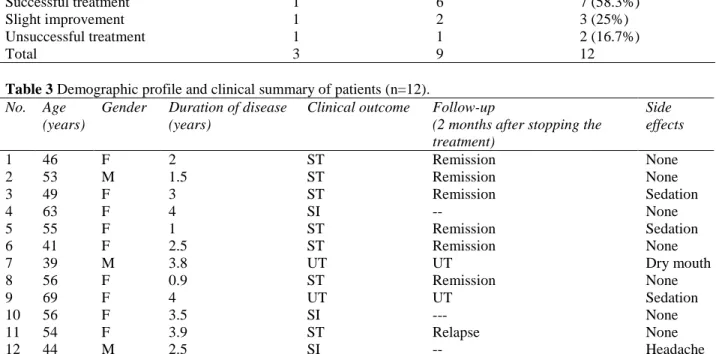
Table 2 Response to the treatment to thalidomide.
Response to treatment Males Females N (%)
Successful treatment 1 6 7 (58.3%)
Slight improvement 1 2 3 (25%)
Unsuccessful treatment 1 1 2 (16.7%)
Total 3 9 12
Table 3 Demographic profile and clinical summary of patients (n=12). No. Age
(years)
Gender Duration of disease (years)
Clinical outcome Follow-up
(2 months after stopping the treatment)
Side effects
1 46 F 2 ST Remission None
2 53 M 1.5 ST Remission None
3 49 F 3 ST Remission Sedation
4 63 F 4 SI -- None
5 55 F 1 ST Remission Sedation
6 41 F 2.5 ST Remission None
7 39 M 3.8 UT UT Dry mouth
8 56 F 0.9 ST Remission None
9 69 F 4 UT UT Sedation
10 56 F 3.5 SI --- None
11 54 F 3.9 ST Relapse None
12 44 M 2.5 SI -- Headache
ST= Successful treatment, UT=Unsuccessful treatment, SI=Slight improvement
Results
A total of 12 patients with idiopathic PN were enrolled in the study. There were 9 females and 3 males. Mean age of the patients was 41.5 years. Duration of disease ranged from 9 months to 4 years. In 3 (25%) patients the dose of thalidomide had to be decreased to 50mg /day due to excessive sedation and drowsiness. Seven (58.3%) patients demonstrated disappearance of pruritus and reduction of nodules, i.e. successful treatment after 3 months of treatment. On last follow-up visit, 6 of these complete responders were in remission and only one patient had developed new lesions (Table 2 and 3). Three (25%) patients showed slight improvement, and the drug was reviewed to be unsuccessful in 2 (16.7%) patients. Table- II shows the response to the treatment
Safety was established by evaluation for side effects of the drug. Three patients reported excessive sedation and drowsiness at the dose of 100mg/day after first month of treatment and the dose was reduced to 50mg/day in those patients. Headache and dryness of mouth was reported in only one patient.
Table 3 describes the demographic profile and clinical summary of the patients
Discussion
long-196 lasting dissatisfaction among the patients, as
well as, the physician. A variety of therapeutic modalities, including topical, intralesional and systemic agents have been used in this disorder with variable responses. These include topical or intralesional glucocorticoids, topical vitamin D3 and topical capsaicin. In addition, several oral therapies such as cyclosporine and thalidomide have demonstrated to be effective in PN, by not only improving the skin lesions but reducing the itching also.3,5
Thalidomide was initially used in West Germany in 1950’s as a sedative with minimal unwanted effects. A decade later the drug was withdrawn from the market owing to its serious teratogenic potential and polyneuritis but was reintroduced after a few years to be used as a sedative for management of patients with erythema nodosum leprosum (ENL). It was later approved by the US Food and Drug Administration (FDA) for ENL and is categorized as an orphan drug.6,7 After being categorized an orphan drug, its off label use started in numerous FDA unapproved dermatological conditions that were unmanageable with the conventional therapy, e.g. in discoid lupus erythematosus, PN, Behcet’s disease, oral aphthosis, pyoderma gangrenosum, actinic prurigo, Jessner’s lymphocytic infiltrate, sarcoidosis, and recurrent erythema multiforme. All the above-mentioned conditions have been shown to be variably responsive to thalidomide.14
There are numerous reports documenting the efficacy of thalidomide in international literature with encouraging responses. Review of literature revealed that around 20 cases of PN had received this therapeutic agent in 1980’s in England.10,14,15 Even though patient number was small, the clinical outcome was hopeful with a dose ranging from 200-400 mg/day and a duration of treatment lasting in the range 6-14
months (except a few cases reported by Sheskin et al.16 and Wulff et al.15 where treatment continued for 1-6 years). Thalidomide treatment was found to be effective, but some cases relapsed after the discontinuation of treatment. The major side effect observed is neurotoxicity, which was reported commonly with doses of >100 mg/day. Wulff et al.15 also reported 100% peripheral neuropathy (confirmed by electrophysiological studies) in patients receiving high daily doses of thalidomide between 150 and 400 mg. Our results were in contrast to these reports as we did not give high dose thalidomide for prolonged periods of time. The difference in the percentage of clinical responses and side effects could possibly be due to disparity in dosage and duration of drug administration.
197 showing no noticeable improvement. He also
reported that the initial doses of >50mg of thalidomide/day were associated with no relapse even after tapering the daily dose to at least 50 mg/day of thalidomide. Similarly, Aronson et al.18 reported peripheral neuropathy in 60% of patients treated with higher doses of thalidomide i.e. ranging from 100mg-300 mg/day. Alfadley et al.4 reported symptoms of peripheral neuropathy in 15.4% of our patients after 8 and 20 months of thalidomide at 100 mg/day
Our results were consistent with Lan et al.13, Crouch et al.17 and Orlando et al.12, as we also treated the enrolled patients with a lower dose i.e. 100mg/day but the response to treatment was slightly different. 58.3% of our patients had successful response to therapy in comparison to 100%, 84% and 60% successful responses of Lan et al.13 Alfadley et al.4 and Doherty and Hsu,11 respectively.
This dissimilarity might be due the dissimilar protocol used to evaluate patients on follow-up visit or due to genetic and racial differences related to drug pharmacokinetics. Literature also reports that the neuropathy caused by thalidomide has no relation to the cumulative dose of the medicine; rather it is linked to the daily dose regardless of the duration of treatment.10,11 None of our patients developed neuropathy while on treatment with thalidomide.
Conclusion
We, therefore, conclude that low-dose thalidomide is an effective and safe therapeutic modality for the treatment of idiopathic recalcitrant prurigo nodularis. Physicians should exhibit high index of clinical suspicion to monitor and manage the potential side effects of the drug during the treatment. Further multicentre trials with increased sample size, higher doses of thalidomide and long-term
follow-up are recommended to firmly establish its efficacy and safety in our population. Research is also needed to compare its effectiveness in other dermatological conditions that do not respond to conventional therapies.
References
1. Hardaway WA. Case of multiple tumor of
the skin accompanied by intense pruritus.
Arch Dermatol. 1880;6:129-32.
2. Hyde JN. Prurigo nodularis. In: Hyde JN, Montgomery FH, eds. A Practical Treatise on Diseases of the Skin for the Use of Students and Practitioners. Philadelphia: Lea and Febiger; 1909. P. 174-5.
3. Accioly-Filho JW, Nogueira A, Ramos-e-Silva M. Prurigo nodularis of Hyde: an update. J Eur Acad Dermatol Venereol. 2000;14:75-82.
4. Alfadley A, Al-Hawsawi K, Thestrup-Pedersen K, Al-Aboud K. Treatment of prurigo nodularis with thalidomide: a case report and review of the literature. Int J Dermatol. 2003;42:372-5.
5. Jorizzo JL, Gatti S, Smith EB. Prurigo: a clinical review. J Am Acad Dermatol. 1981;4:723-8.
6. Radomsky CL, Levine N. Thalidomide.
Dermatol Clin. 2001;19:87-103.
7. Sampaio EP, Sarno EN, Galilly R, Cohn
ZA, Kaplan G. Thalidomide selectively inhibits tumor necrosis factor-α production
by stimulated human monocytes. J Exp Med.
1991;173:699-703.
8. Winkelmann RK, Connolly SM, Doyle JA,
Padilha-Goncalves A. Thalidomide
treatment of prurigo nodularis. Acta Derm Venereol. 1984;64:412-7.
9. Radomsky CL, Levine N. Thalidomide.
Dermatol Clin. 2001;19:87-103.
10. Calderon P, Anzilotti M, Phelps R.
Thalidomide in dermatology. New
indications for an old drug. Int J Dermatol.
1997;36:881-7.
11. Doherty SD, Hsu S. A case series of 48 patients treated with thalidomide. J Drugs Dermatol. 2008;7:769-73.
198 13. Lan CC, Lin CL, Wu CS, Chai CY, Chen
WT, Chen GS. Treatment of idiopathic prurigo nodularis in Taiwanese patients with low-dose thalidomide. J Dermatol. 2007;34:237-42.
14. Stirling DI. Thalidomide and its impact in dermatology. Semin Cutan Med Surg. 1998;17:231-42.
15. Wulff CH, Høyer H, Asboe-Hansen G, Brodthagen H. Development of polyneuropathy during thalidomide therapy. Br J Dermatol. 1985;112:475-80.
16. Sheskin J, Gorodetzky R, Loewinger E, Weinreb A. In vivo measurements of iron, copper and zinc in the skin of prurigo
nodularis patients treated with thalidomide. Dermatologica. 1981;162:86-90.
17. Crouch RB, Foley PA, Jonathan CH, Baker CS. Thalidomide experience of a major Australian teaching hospital. Australas J Dermatol. 2002;43;278-84.