The Collaborative Cross: A Systems Genetics
Resource for Studying Host-Pathogen Interactions
Kelsey E. Noll,1Martin T. Ferris,2,*and Mark T. Heise1,2,*
1Department of Microbiology and Immunology, The University of North Carolina at Chapel Hill, Chapel Hill, NC, USA
2Department of Genetics, The University of North Carolina at Chapel Hill, Chapel Hill, NC, USA
*Correspondence:[email protected](M.T.F.),[email protected](M.T.H.)
https://doi.org/10.1016/j.chom.2019.03.009
Host genetic variation has a major impact on infectious disease susceptibility. The study of pathogen
resis-tance genes, largely aided by mouse models, has significantly advanced our understanding of infectious
disease pathogenesis. The Collaborative Cross (CC), a newly developed multi-parental mouse genetic
refer-ence population, serves as a tractable model system to study how pathogens interact with genetically
diverse populations. In this review, we summarize progress utilizing the CC as a platform to develop
improved models of pathogen-induced disease and to map polymorphic host response loci associated
with variation in susceptibility to pathogens.
studying the role of specific genes in the response to a variety of pathogens (Masopust et al., 2017). Furthermore, the use of classical genetic crossing approaches (e.g., intercrosses), as well as reproducible mouse genetic reference populations (GRPs), has facilitated the discovery of key regulators of host im-munity and pathogen susceptibility such as the innate immune receptor Tlr4, oligoadenylate-synthetase Oas1b, and divalent metal transporterNramp1(Perelygin et al., 2002; Qureshi et al., 1999; Vidal et al., 1993). The recent development of multi-parental GRPs, such as the Collaborative Cross (CC), promises to further extend genetic mapping capabilities, while also leading to the development of mouse models that more accurately reproduce the genetic diversity and phenotypic range seen in human populations (Churchill et al., 2004). This review will sum-marize recent advances in the use of mouse GRPs, with an emphasis on the use of the CC for studying infectious diseases and immunity.
Human Genetic Variation and Infectious Disease
The impact of host genetics on pathogen susceptibility can be illustrated by genes exhibiting large effects such as the chemo-kine receptor CCR5 and fucosyltransferase 2 (FUT2), for which specific variants have a major impact on resistance to viral infec-tion (HIV and norovirus, respectively) (Quillent et al., 1998; Thorven et al., 2005). Likewise, deleterious mutations in immune genes can result in PIDs, which cause enhanced susceptibility to specific or entire classes of pathogens (Carneiro-Sampaio and Coutinho, 2007). To date, over 350 genetically driven PIDs have been identified in humans (Picard et al., 2018). The identifi-cation of these monogenic resistance and susceptibility genes has enhanced our understanding of human immunity and host-pathogen interactions while contributing to the development of antiviral therapies, such as HIV entry inhibitors, as well as gene therapy and immune replacement therapies (Collins and Thrasher, 2015; Lenardo et al., 2016).
Though genes of large effect can impact human health, inher-itance patterns suggest that susceptibility to infectious disease is largely polygenic (driven by tens to thousands of variants of smaller effect) (Hill, 2012). This is supported by results from Introduction
Pathogensoftencause variablediseaseoutcomes across in-fected individuals, ranging from asymptomatic infection to se-vereorfataldisease.Multiplefactorsinfluenceanindividual’s susceptibility to a pathogen, including variation in pathogen doseorvirulenceaswellashostage,priorimmuneexperience, microbiome/coinfection, and genetics. A role for host genetics in pathogensusceptibilityissupportedbothbytwinstudies (Kall-mann and Reisner, 1943) and by evidence of pathogen-driven selectivepressureontheevolutionofthehumanimmunesystem (CaglianiandSironi,2013).Humangeneticstudieshave demon-strated a role for host genetics in pathogen susceptibility and identifiedpolymorphic geneticlociandgenesassociatedwith variation in susceptibility to specific pathogens (e.g., HIV) (McLarenetal.,2015),classesofpathogens(e.g.,mycobacteria) (Bustamante et al., 2014), and more generalized primary immu-nodeficiencies (PIDs) that result in severe immune defects (Chapman and Hill, 2012). This information has enhanced our un-derstandingofhowhostgeneticvariationaffectspathogen sus-ceptibility and how specific genes regulate human immunity and host-pathogeninteractions.
International Mouse Phenotyping Consortium (IMPC) depend upon the ability to control background strain to analyze the impact of specific gene deletions or mutations on a wide range of developmental and immune phenotypes (Mun˜oz-Fuentes et al., 2018), and have thus generated these mutants on common backgrounds using largely identical procedures. C57BL/6J is the most commonly used inbred mouse strain; it is the source of the mouse reference genome and the genetic background for the majority of knockout mice. Other strains, such as the BALB/c substrains, also have a rich history of use in immunology and infectious disease research (Watanabe et al., 2004). While the ongoing use of such strains is driven by the need to compare results across studies, it is important to note that every inbred strain has a unique set of genetic features, and thus no one strain is representative of all mice, let alone of a genetically complex population such as humans.
Although genetically modified mice have been an essential resource for gene discovery and mechanistic analysis, there has been a growing acknowledgment in the field that knockout approaches have limitations. Approximately 15% of genes cannot be knocked out because they are developmentally essential (NIH, 2015). Similarly, other knockouts have no observ-able phenotype, due to genetic redundancy and/or lack of robustness in the phenotyping pipeline (Barbaric et al., 2007). In other cases, knockouts have disparate phenotypes on different genetic backgrounds due to gene-gene interactions (Doetschman, 2009). Furthermore, gene knockouts result in null alleles (complete loss of gene function), whereas naturally occurring genetic variants are most likely to be hypomorphic or hypermorphic alleles (partial loss or gain of gene function; alter-ations in timing and magnitude of expression). Lastly, while single-gene approaches are straightforward, they are isolated systems that do not model the simultaneous contribution of var-iants in multiple pathways, as would most likely be observed in a natural system. Thus, to better model and understand the role of genes in complex phenotypes such as immunity and infectious disease, it is pertinent to consider complex genetic interactions across diverse genetic backgrounds.
Genetic Reference Populations
In contrast to the approaches discussed above, researchers have also studied the role of natural genetic variants by leveraging dif-ferential phenotypes across inbred strains, using classical genetic breeding strategies to identify pathogen susceptibility genes such asOas1b, immune cell activating receptorLy49H, and large inter-feron-induced GTPaseMx1(Casanova et al., 2002). In contrast to mapping crosses between stocks (e.g., F2 crosses), where each mouse is unique and therefore ephemeral, GRPs serve as repro-ducible models to study the role of genetic diversity. GRPs consist of anywhere from a few to hundreds of inbred lines derived and split from a common ancestral population, and each line has a fixed and known genome that can be replicated indefinitely. The existence of reproducible yet genetically diverse individual mouse strains facilitates study designs that involve case versus control, genotype by environment interactions (GxE), and phenotypic penetrance or threshold traits. These populations further facilitate the integration of phenotypic, genotypic, and molecular data for systems-level data analysis while also allowing retrospective inte-gration of new layers of data.
genome-wideassociationstudies(GWAS)designedtomaploci associated with variation in pathogen susceptibility and vaccine response.Forexample,GWASofHIVviralloadhaveshownthat mutations in the HIV co-receptor CCR5 and variants in human leukocyteantigen(HLA)explainapproximately15%ofthetotal variance, with an additional 5% of heritable variance explained byadditiveeffectsofothergenes(McLarenetal.,2015).GWAS on malaria susceptibility have identified variants in multi-ple genes including the calcium ATPase ATP2B4, the glucose phosphatedehydrogenaseGP6D,andHLAs,aswellas confirm-ing previously identified variants in hemoglobin genes (sickle cell andthalassemia)(Hedrick,2011;Timmannetal.,2012).Multiple loci have been associated with clearance of hepatitis C virus, including the cytokine IL-28b and HLA genes (Duggal et al., 2013), and over 20 loci have been associated with leprosy sus-ceptibility(Wangetal.,2016).
While GWAS have been applied to and enhanced our under-standing of infectious diseases, these studies explain only a frac-tionoftheheritablevariationinpathogensusceptibility(Hill, 2012). This is partly attributable to factors such as small cohort sizes,ethnicstriations,andlackofreplicates,whichlimit detec-tion and interpretadetec-tion of results (Du et al., 2012). Rare genetic variantsareunlikelytobedetectedbyGWAS,duetobothlack of power and lack of tagging on conventional genotyping arrays (AuerandLettre,2015).AspecificconcernforGWASin infec-tious diseases is that studies can be confounded by pathogen genetics, pathogen dose, and other environmental factors. Furthermore,validationandmechanisticanalysiscanbedifficult in humans due to factors such as lack of replicates and inability toroutinelyaccessmanyaffectedtissuetypes.Forthese rea-sons, the use of appropriate animal models has been a critical resourcefor identifying and studying pathogensusceptibil-ity genes.
MouseModelsofDisease
Whileavarietyofmodelgeneticsystemshavebeenusedto analyze host-pathogen interactions (e.g., Caenorhabditis ele-gans,Daniorerio,andDrosophilamelanogaster) (Allenand Neely, 2010; Dionne and Schneider, 2008; Marsh and May, 2012),thelaboratorymouse(Musmusculus)providesthemost robustmammaliansystemfordissectinggeneticregulationof immune responses in human-relevant diseases. Mice are relativelyinexpensive,canbeeasilycontrolledindietand envi-ronment, and reproduce quickly. A wide variety of well-charac-terizedmouseimmunologicalreagentsareavailable,aswellas genetic tools such as reproducible inbred strains, gene-specific knockouts,genome-widemutagenesisstrategies(e.g., N-ethyl-N-nitrosourea [ENU] and CRISPR/Cas9), and transgenic technologies. These systems facilitate the identification and mechanisticcharacterizationofspecifichostgenesthataffect disease pathogenesis and/or immunity (Pelletier et al., 2015; Takakietal.,2017).
While the DO has only been used in a limited number of infectious disease studies (McHugh et al., 2013; Niazi et al., 2015), the DO and CC should be viewed as complementary resources for studying how genetic variation affects pathogen susceptibility and immunity.
While classical mouse GRPs remain actively used, and in some ways provide a more straightforward analytical path than the CC due to reduced complexity, several aspects of the CC make it more attractive for discovery-based research. The CC captures approximately 90% of common genetic variants described within laboratory mice, with up to eight distinct haplo-types at any region of the genome (Roberts et al., 2007). Due to higher genetic diversity with novel allele combinations and epistatic interactions, the CC yields more phenotypic variation and extreme phenotypes than classical GRPs. The selection of founder strains and the breeding design, as well as higher levels of recombination, result in lower levels of long-range disequilib-rium and population structure than classical GRPs, allowing for higher resolution quantitative trait locus (QTL) mapping (Iraqi et al., 2012; Threadgill et al., 2002). Genetic variation is also more uniformly distributed across the genome, removing several genomic ‘‘blind spots’’ that interfere with mapping in classical inbred strains and GRPs (Roberts et al., 2007).
Although the CC has only been available for a relatively short period of time, it has been utilized across a number of disciplines, including response to environmental toxins (Venkatratnam et al., 2017), nutrition (Schoenrock et al., 2018), body composition (Mathes et al., 2011), and immunity and pathogenesis (discussed further here). Importantly, these studies have highlighted previ-ously uncharacterized phenotypic diversity, including expansion of the phenotypic range, disassociation of traits previously thought to be connected, and identification of completely novel phenotypes (Srivastava et al., 2017). The CC is an especially useful resource for studying the role of host genetics in host-pathogen interactions because it allows for control of many of the factors described above that confound infectious disease studies in humans. Over the past decade, a variety of studies uti-lizing the CC, including non-fully inbred incipient CC lines (commonly termed the pre-CC) and derived CC populations (such as CC-F1s), have been used to probe the role of host ge-netics in the response to infectious disease. Here we will discuss the current work in this field, including studies focusing on phenotypic characterization (e.g., model development and mo-lecular signatures of disease response) and genetic mapping of disease trait-associated QTL.
Phenotypic Characterization in the CC
There is an ongoing debate over the validity of mouse models in recapitulating human disease (Seok et al., 2013; Takao and Miyakawa, 2015). While the utility of the mouse is undeniable in the infectious disease field, it is equally true that individual clas-sical inbred strains do not fully recapitulate human disease and most models recapitulate only a portion of the disease pheno-types observed in humans. In an effort to improve model fidelity to human disease, a number of researchers have turned to the CC to develop new mouse models. Genetically diverse CC strains show a range of responses to pathogens, from variation in disease severity to completely novel disease phenotypes. This phenotypic variability better mimics the diversity of disease The first recombinant inbred panel, the CXB (BALB/cJ 3
C57BL/6J),wascreatedbyDonaldBaileytofacilitatemapping of the MHC locus (Bailey, 1971). Subsequent biparental recom-binantinbred panels includethe AXB/BXA(A/J 3 C57BL/6J, C57BL/6J3 A/J), theBXH (C57BL/6J 3 C3H/HeJ), and the BXD (C57BL/6J 3 DBA/2J), which is the largest and most exten-sivelyusedofthesepanels(Peirceetal.,2004).Thoughoriginally developed to study monogenic traits, use of these panels has beenextendedtostudygeneticallycomplextraitssuchas sus-ceptibility to murine plasmodia (Hoffmann et al., 1984), murine leukemiavirus(Panoutsakopoulouetal.,1998),groupA strepto-coccus (Chella Krishnan et al., 2016), and influenza A virus (IAV) (Nedelko et al., 2012). As results from these panels accumulated, therewasacommunity-widerecognitionthatlargerandmore genetically diverse GRPs would improve the ability to genetically dissectmorecomplextraits(Threadgilletal.,2002).
TheCollaborativeCross
Based on results from the early GRPs as well as genetic mapping studies, theComplex Trait Consortium proposedto createa second-generation, multi-parent advanced intercross GRP to promotecomplextraitgeneticmappingandsystemsgenetics research (Threadgill et al., 2002). In contrast to single-gene ap-proaches, systems genetics considers phenotypes in the context of global genetic variation as well as intermediate molec-ularfactorssuchasgeneexpression,proteinabundance,and environmental interactions. The resource ultimately derived from this proposal was the CC, a large panel of recombinant inbred strains derived from eight genetically diverse founder strains. The CC was designed to facilitate systems genetics ap-proacheswithimprovedresolutionandhigherstatisticalpower compared to traditional GRPs, to expand the pool of genetic variation segregating in the population, and to bridge the analysis of genetic and molecular networks across diverse phenotypes(Churchilletal.,2004).
presentation across the human population, thus providing a more comprehensive platform to develop newer, more represen-tative mouse models.
Ebola Virus
Ebola virus (EBOV) causes severe, and often lethal, hemorrhagic fever in humans. While classical inbred strains are susceptible to mouse-adapted EBOV (MA-EBOV), they do not display many of the characteristic symptoms observed in severe human cases such as coagulopathy, hemorrhagic manifestations, and rash (St Claire et al., 2017). Rasmussen et al. infected a panel of F1 crosses between CC strains (CC-F1s) following an initial assess-ment in founder strains (Rasmussen et al., 2014). They observed significant phenotypic variation following MA-EBOV infection, from high resistance to complete lethality, and covering a spec-trum of different pathologies similar to the range of clinical disease observed in humans. Importantly, some strains pre-sented with severe hemorrhagic disease and liver damage, consistent with human EBOV disease. Follow-up studies with representative susceptible and resistant strains found differen-tial transcriptional responses, highlighting the central transcrip-tional regulatory geneTek, for which haplotypes across these
CC-F1s correlated with weight loss and mortality following MA-EBOV infection.
West Nile Virus
West Nile virus (WNV), a neuroinvasive flavivirus, induces a diverse spectrum of immune responses and clinical outcomes in humans that classical mouse models do not fully recapitulate (Graham et al., 2015). Graham et al. assessed WNV susceptibility in a panel of CC-F1 crosses that were heterozygous for the H-2b MHC haplotype, which allowed quantification of WNV-specific T cells with the same MHC tetramer. WNV outcome ranged from highly resistant to highly susceptible, including a novel outcome group in which mice were outwardly asymptomatic despite higher viral titers and immunopathology in the brain.
Graham et al. followed up on one unique CC-F1 ((CC032/ GeniUnc 3 CC013/GeniUnc)-F1), in which half of the mice that survived infection displayed sustained weight loss and persistent viral loads in the CNS. They found that these mice exhibited a rapid early innate inflammatory response character-ized by increased early expression of IFN-band the interferon-stimulated geneIFN1, as well as high early viral titers and the ability to control, but not clear, viral replication in the CNS Figure 1. Representative CC Funnels
used to predict patient outcome. Elbahesh and Schughart observed that gene signatures from IAV-infected humans were reproduced in the peripheral blood of CC founders (Elbahesh and Schughart, 2016). In a follow-up study, Kollmus et al. char-acterized the transcriptional response to IAV in the peripheral blood of eleven CC strains (Kollmus et al., 2018). Though both human and mouse datasets were globally heterogeneous, the CC dataset showed that genetic background strongly influenced gene expression, highlighting the importance of genetics in driving the immune response. For the most differentially ex-pressed genes, the transcriptional responses in mice and hu-mans were largely similar, demonstrating the utility of the CC in recapitulating IAV-induced host response in humans.
Xiong et al. characterized transcriptomic variation in response to severe acute respiratory syndrome coronavirus (SARS-CoV) and IAV across the eight CC founder strains (Xiong et al., 2014). Differential gene expression analysis at days 2 and 4 post SARS-CoV or IAV infection showed significant differences driven by mouse strain, infection status, and time point. Genes with strain-specific differential expression patterns were largely enriched for immune pathways, while more generic differential expression patterns were enriched for basic biological functions. The study also noted the presence of strain-specific isoforms and novel transcripts not present in the C57BL/6J reference annotation.
Pseudomonas aeruginosa
Pseudomonas aeruginosais an opportunistic bacterial pathogen with variable clinical outcomes across susceptible individuals. Human studies, including twin studies as well as association studies, have identified multiple genes associated with suscep-tibility toP. aeruginosa. Lore` et al. studiedP. aeruginosainfection in 17 pre-CC lines, focusing on survival time and early body weight change, and observed a large amount of variation in these phenotypes (Lore` et al., 2015).
Genetic Mapping of Disease Response in the CC
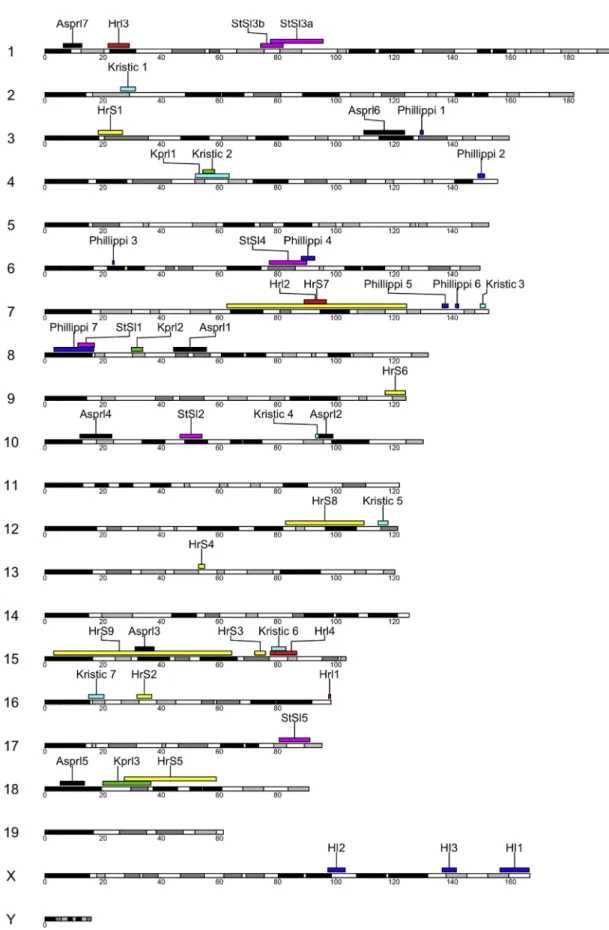
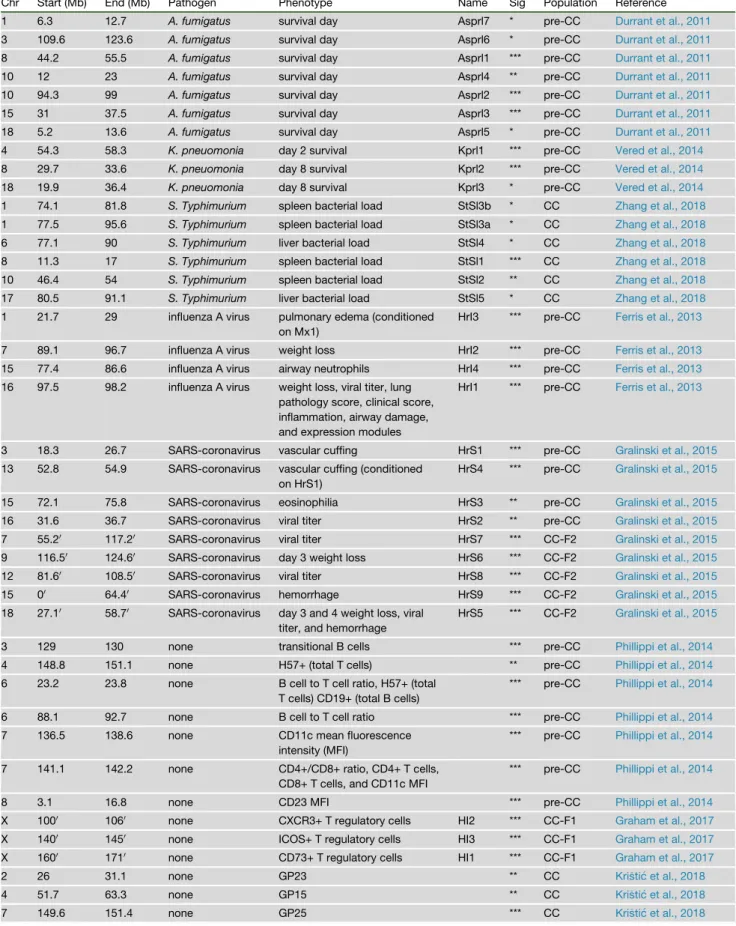
As described above, the CC was initially envisioned as a genetic mapping population with approximately 1,000 strains (Threadgill et al., 2002). While the number of available CC RI strains is closer to 100, this population has proven to be sufficient for successful QTL mapping. Mapping studies have identified QTLs spanning the genome that are driven by variants from all eight CC founders and show very little overlap across pathogens (Figure 2;Table 1; discussed below). Overall, infectious disease phenotypes map-ped in the CC show a broad range in overall heritability (the proportion of population-wide variation explained by differences between strains) as well as effect sizes (the proportion of popu-lation-wide variation explained by specific loci). Across the studies described inTable 1, reported estimates for heritability range from 12% to over 80%, while reported estimates for effect size range from 5% (for a QTL of small effect influencing SARS-CoV viral titer) to over 40% (for a large effect QTL containing the geneMx1on influenza-induced weight loss). Authors have nar-rowed many of these QTLs to lists of candidate genes, and a small number of these candidates have been subsequently validated.
To date, most publications have highlighted QTLs mapped by phenotyping large panels of CC strains; however, this is not the only successful strategy. As mentioned above, some CC strains (Graham et al., 2016). Additionally, (CC032/GeniUnc 3 CC013/
GeniUnc)-F1mice had a unique immunoregulatorysignature, with a high number of T regulatory cells in both infected and un-infectedanimals andadistinctivepost-infectiongene expres-sionprofilethatindicatedreducedcytolyticability.
The initial Graham et al. study (Graham et al., 2015) found that WNVresponselargelytrackedwiththehaplotypeofOas1b, a known flavivirus resistance gene, although there was still consid-erablediseasevariationwithinOas1bhaplotypegroups.Green et al. continued to dissect the impact of Oas1b on the innate im-munetranscriptionallandscapefollowingWNVinfection(Green et al., 2017) by performing genome-wide micro-array analysis acrossmultipletimepointspost-infectioninsevenCC-F1s car-ryingdifferentcombinationsoffunctional(wild-derived)or non-functional (classical inbred strain-derived) Oas1b haplotypes. Transcriptional correlation analysis of differentially expressed immune genes across CC-F1s yielded three gene clusters, and pathwayanalysisledtotheconstructionofinnateimmune regu-latory networks associated with WNV infection between Oas1b haplotypegroups.
Mycobacteriumtuberculosis
Mycobacterium tuberculosis (Mtb) infection varies broadly in diseasepresentationandpathologyinhumans.Likewise,the ef-ficacy of the standard TB vaccine, the live-attenuated BCG, is variableacrossindividuals(Mangtanietal.,2014).Smithetal. studied Mtb pathogenesis and BCG vaccine efficacy in the CC foundersandthreeRIstrainsthatwereselectedbasedonapilot study assessing Mtb susceptibility (Smith et al., 2016). The au-thorsobservedawiderangeofsusceptibilitytoMtband disso-ciationofpreviouslyassociatedphenotypessuchasbacterial burden, immune cell recruitment, and tissue damage. When theBCGvaccinewasadministeredpriortoMtbchallenge, vac-cine efficacy was low overall and not correlated with susceptibil-ity to primaryinfection. While BCG vaccination reduced Mtb burden in four strains, there was an increased bacterial burden inNZO/HlLtJmice,amodelforobesityandtype2diabetes.In addition to highlighting the importance of host genetics on Mtb susceptibility and BCG-induced vaccine responses, the study illustratesthepotentialimpactof comorbidities,suchas type 2 diabetes in NZO/HlLtJ mice, on vaccine responses in geneti-callydiversepopulations.
InfluenzaAVirusandSARS-Coronavirus
Maurizioetal.analyzedtheheritabilityofIAV-induceddisease using CC-F1s as well as F1 crosses between founder strains (Maurizio et al., 2018). These studies determined that IAV-inducedweightlosswas57%heritableatday4post-infection, and that this heritability was mostly composed of additive effects largelyattributabletothehaplotypeofMx1,apolymorphic large-effect anti-IAV gene. The genetic dominance of the protective Mx1 haplotype varied depending on subspecies origin, with the M. musculus musculus allele acting dominantly and the CAST/EiJallele, identifiedbyFerriset al.(2013),acting addi-tively. Consistent with Ferris et al. (discussed below), these authors determined that when controlling for Mx1, non-Mx1 her-itableeffectsstillaccountedfor34%ofthephenotypicvariation, and this effect was consistent across founder diallel, pre-CC, andCC-F1populations.
Figure 2. Summary of Infectious Disease and Immunity QTLs Mapped in the CC
Table 1. Summary of Infectious Disease and Immunity QTL Mapped in the CC
Chr Start (Mb) End (Mb) Pathogen Phenotype Name Sig Population Reference
1 6.3 12.7 A. fumigatus survival day Asprl7 * pre-CC Durrant et al., 2011
3 109.6 123.6 A. fumigatus survival day Asprl6 * pre-CC Durrant et al., 2011
8 44.2 55.5 A. fumigatus survival day Asprl1 *** pre-CC Durrant et al., 2011
10 12 23 A. fumigatus survival day Asprl4 ** pre-CC Durrant et al., 2011
10 94.3 99 A. fumigatus survival day Asprl2 *** pre-CC Durrant et al., 2011
15 31 37.5 A. fumigatus survival day Asprl3 *** pre-CC Durrant et al., 2011
18 5.2 13.6 A. fumigatus survival day Asprl5 * pre-CC Durrant et al., 2011
4 54.3 58.3 K. pneuomonia day 2 survival Kprl1 *** pre-CC Vered et al., 2014
8 29.7 33.6 K. pneuomonia day 8 survival Kprl2 *** pre-CC Vered et al., 2014
18 19.9 36.4 K. pneuomonia day 8 survival Kprl3 * pre-CC Vered et al., 2014
1 74.1 81.8 S. Typhimurium spleen bacterial load StSl3b * CC Zhang et al., 2018
1 77.5 95.6 S. Typhimurium spleen bacterial load StSl3a * CC Zhang et al., 2018
6 77.1 90 S. Typhimurium liver bacterial load StSl4 * CC Zhang et al., 2018
8 11.3 17 S. Typhimurium spleen bacterial load StSl1 *** CC Zhang et al., 2018
10 46.4 54 S. Typhimurium spleen bacterial load StSl2 ** CC Zhang et al., 2018
17 80.5 91.1 S. Typhimurium liver bacterial load StSl5 * CC Zhang et al., 2018
1 21.7 29 influenza A virus pulmonary edema (conditioned
on Mx1)
HrI3 *** pre-CC Ferris et al., 2013
7 89.1 96.7 influenza A virus weight loss HrI2 *** pre-CC Ferris et al., 2013
15 77.4 86.6 influenza A virus airway neutrophils HrI4 *** pre-CC Ferris et al., 2013
16 97.5 98.2 influenza A virus weight loss, viral titer, lung
pathology score, clinical score, inflammation, airway damage, and expression modules
HrI1 *** pre-CC Ferris et al., 2013
3 18.3 26.7 SARS-coronavirus vascular cuffing HrS1 *** pre-CC Gralinski et al., 2015
13 52.8 54.9 SARS-coronavirus vascular cuffing (conditioned
on HrS1)
HrS4 *** pre-CC Gralinski et al., 2015
15 72.1 75.8 SARS-coronavirus eosinophilia HrS3 ** pre-CC Gralinski et al., 2015
16 31.6 36.7 SARS-coronavirus viral titer HrS2 ** pre-CC Gralinski et al., 2015
7 55.20 117.20 SARS-coronavirus viral titer HrS7 *** CC-F2 Gralinski et al., 2015
9 116.50 124.60 SARS-coronavirus day 3 weight loss HrS6 *** CC-F2 Gralinski et al., 2015
12 81.60 108.50 SARS-coronavirus viral titer HrS8 *** CC-F2 Gralinski et al., 2015
15 00 64.40 SARS-coronavirus hemorrhage HrS9 *** CC-F2 Gralinski et al., 2015
18 27.10 58.70 SARS-coronavirus day 3 and 4 weight loss, viral
titer, and hemorrhage
HrS5 *** CC-F2 Gralinski et al., 2015
3 129 130 none transitional B cells *** pre-CC Phillippi et al., 2014
4 148.8 151.1 none H57+ (total T cells) ** pre-CC Phillippi et al., 2014
6 23.2 23.8 none B cell to T cell ratio, H57+ (total
T cells) CD19+ (total B cells)
*** pre-CC Phillippi et al., 2014
6 88.1 92.7 none B cell to T cell ratio *** pre-CC Phillippi et al., 2014
7 136.5 138.6 none CD11c mean fluorescence
intensity (MFI)
*** pre-CC Phillippi et al., 2014
7 141.1 142.2 none CD4+/CD8+ ratio, CD4+ T cells,
CD8+ T cells, and CD11c MFI
*** pre-CC Phillippi et al., 2014
8 3.1 16.8 none CD23 MFI *** pre-CC Phillippi et al., 2014
X 1000 1060 none CXCR3+ T regulatory cells HI2 *** CC-F1 Graham et al., 2017
X 1400 1450 none ICOS+ T regulatory cells HI3 *** CC-F1 Graham et al., 2017
X 1600 1710 none CD73+ T regulatory cells HI1 *** CC-F1 Graham et al., 2017
2 26 31.1 none GP23 ** CC Kristic et al., 2018
4 51.7 63.3 none GP15 ** CC Kristic et al., 2018
7 149.6 151.4 none GP25 *** CC Kristic et al., 2018
present with unique disease phenotypes, which may be driven by complex genetic regulatory networks involving multiple loci with epistatic interactions. When one or a few CC strains possess the combination of genetic variants needed to manifest the novel phenotype, population-wide studies may not possess sufficient mapping power. In these cases, researchers have suc-cessfully used more traditional F2 or backcross approaches to identify causal genes (Rogala et al., 2014). In this section, we will highlight results of both population-wide and intercross-mediated CC studies of relevance to infectious disease research.
Aspergillus fumigatus
The first host-pathogen study in the CC examined susceptibility to the fungus Aspergillus fumigatus, which is pathogenic in immunocompromised individuals. Durrant et al. found that sur-vival time varied between 4 days and over 28 days post-infection in 66 pre-CC lines (Durrant et al., 2011). The authors mapped multiple genome-wide significant QTLs for survival time that were largely driven by wild-derived founder haplotypes. Candi-date genes were identified using merge analysis, a procedure that compares the pattern of sequence variants (e.g., SNPs or indels) to the pattern of haplotype effects (impact of each founder strain haplotype on the phenotype) observed under the QTL (Yalcin et al., 2005). The application of merge analysis to the CC enables more effective gene refinement compared to studies in classic biparental GRPs, where the presence of only two haplotypes means that every genetic variant in a locus is a putative candidate causal variant. Merge analysis supported the candidate geneIrf2, an interferon regulatory transcriptional factor gene, under the most significant QTL; however, for the re-maining QTLs there was no strong concordance betweena priori and merge-supported candidates.
Klebsiella pneumoniae
Vered et al. challenged 73 pre-CC lines withK. pneuomonia, which causes severe pneumonia and sepsis in immunocompro-mised individuals (Vered et al., 2014). The pre-CC mice displayed broad and heritable variation in survival time exceeding that observed in classic inbred strains, as well as dissociation of sur-vival time from temperature or body weight changes. The study identified one QTL at day 2 post-infection and two at day 8 post-infection. The authors used merge analysis to refine candi-date genes; however, they found that the best merge candicandi-dates showed simpler allele effect patterns than the more complex haplotype effects observed under the QTL. The strongest candi-date genes identified wereIkbkap, a transcriptional elongation factor complex component, andActl7a,Actl7b, andCtnnal1, which are involved in cell adhesion and cytoskeletal structure.
Influenza A Virus
Bottomly et al. analyzed a set of 99 pre-CC lines infected with mouse-adapted influenza A/PR/8/34 and assessed weight loss, clinical score, and mortality through 4 days post-infection (Bottomly et al., 2012). A subset of pre-CC lines, classified as high and low responders based on a composite metric of weight loss and histopathological scoring, were selected for transcrip-tomic profiling. Over 2,000 transcripts were differentially expressed between susceptible and resistant classes, and map-ping identified 21 significant expression QTLs (eQTLs). Twelve of the eQTLs were validated in CC founder strains, and structural equation modeling was applied to these candidates to infer reactive expression networks underlying the transcriptional differences.
In a companion study, Ferris et al. further characterized varia-tion in response to influenza A/PR/8/34 in 155 pre-CC lines (Fer-ris et al., 2013). While disease-associated phenotypes (weight loss, viral titer, and inflammation) were largely correlated, sub-sets of these pre-CC mice showed breakdowns in these relation-ships, resulting in novel phenotypic combinations not observed in classical mouse strains (e.g., high weight loss with minimal inflammation). This study identified four significant QTLs, including one strong QTL that explained approximately 42% of IAV-induced weight loss, over the IAV resistance gene Mx1. Importantly, whileMx1is well studied, the authors identified a novel allelic variant derived from CAST/EiJ that protects from weight loss but less efficiently inhibits viral replication compared to the functionalM. musculus musculus-derived allele carried by NZO/HiLtJ and PWK/PhJ. Consistent with Ferris et al.’s finding of a uniquely functional CAST/EiJMx1variant, Leist et al. found that CAST/EiJ mice have a unique response to an H3N2 strain of IAV (Leist et al., 2016). While theMx1locus had a dominating ef-fect in the Ferris et al. study, large phenotypic variation occurred withinMx1classes, suggesting the presence of modifier alleles. Three additional QTLs were mapped when controlling forMx1 haplotype, corresponding to variation in weight loss, pulmonary edema, and airway neutrophils. Notably, aside from the Mx1 locus, none of the QTLs identified by Ferris et al. matched influ-enza susceptibility loci found in mapping studies conducted in the BXD population. (Boon et al., 2009; Nedelko et al., 2012). These differences may reflect the more complex genetics of the CC compared to the BXD and/or differences in the strain of influenza or other experimental variables across studies. Salmonella enterica
Salmonella enterica serovar Typhimurium (S. Typhimurium) causes typhoid fever, and previous mouse mapping studies have identified multiple loci associated with susceptibility (Roy
Table 1. Continued
Chr Start (Mb) End (Mb) Pathogen Phenotype Name Sig Population Reference
10 93 94.1 none GB17b *** CC Kristic et al., 2018
12 114.5 117.9 none GP1, GP14, GP16, GP17a,
and GP20
*** CC Kristic et al., 2018
15 77.9 82.8 none GP6 and GP10 *** CC Kristic et al., 2018
16 15 20.3 none GP17b *** CC Kristic et al., 2018
Significance threshold levels: *<0.1, **0.1, ***0.05. Genome coordinates marked with0refer to genome assembly GSCv38/mm10; otherwise,
Homeostatic Immunity
In addition to exhibiting high levels of variation in pathogen-induced responses, the CC also exhibits variation in baseline (homeostatic) immunity. Variation in immune homeostasis has been associated with variation in vaccine responses in humans (Tsang et al., 2014), and the CC provides a novel resource to study how variation in pre-existing immunity affects the host response to infection or vaccination. Phillippi et al. analyzed sub-sets of lymphocytes and antigen-presenting cells in the CC foun-ders, CC founder F1s, and 66 pre-CC strains (Phillippi et al., 2014). They observed variation in the pre-CC exceeding that in the founders, as well as novel extreme phenotypes such as lym-phopenia and inverted CD4/CD8 ratios. While some immune phenotypes were highly correlated, others showed little or no correlation to other immune populations. Mapping identified 10 significant QTLs across 8 phenotypes, including B/T cell ratio and mean fluorescence intensity for CD23, also known as Fc epsilon RII. The CD23 QTL contains the geneFcer2a, which co-des for CD23 itself, and a combination of merge analysis, condi-tional association, and residue conservation was used to identify specific coding polymorphisms withinFcer2adriving the QTL.
Graham et al. also performed an extensive examination of homeostatic immunity in over 100 CC-F1 crosses, with a focus on T cell populations, expression of activation markers, and production of inflammatory cytokines (Graham et al., 2017). CC strains exhibited high levels of phenotypic variation that extended well beyond the variation observed between C57BL/6J and BALB/c, the most common laboratory strains in immunological studies. Mapping identified two highly significant QTLs driving the frequency of specific T regulatory subsets, and candidates were chosen based on concordance of haplotype ef-fects with founder polymorphisms that were coding or splice var-iants. Similar to the cis-QTL for CD23 expression identified by Phillippi et al., the QTL mapped by Graham et al. for CXCR3+ T regulatory cells contains theCxcr3gene itself.
Kristic et al. studied variation in IgG glycosylation, which is important for antibody structure and function, in 95 CC strains and observed nearly double the variation observed in humans (Kristic et al., 2018). Glycosylation patterns were up to 80% her-itable, and multiple QTLs associated with variation in different glycans were identified. Variation in 5 different glycans all map-ped to the immunoglobulin heavy chain locus. Variation in 2 other glycans mapped to a locus containing the glycosyltransferase-encoding gene Mgat3, which was identified as a strong candidate.
Commensals and the Microbiome in the CC
While the focus of this review is on genetic control of immune populations and response to infectious agents, there is a growing appreciation for the role commensals play in shaping health and modulating immune responses. Two studies have addressed these responses in the CC (Snijders et al., 2016) and DO (Carmody et al., 2015) populations. Both found that there were significant contributions of host genetic back-grounds. Further, the CC study found strong genomic signals for many bacterial groups (OTUs) around the genome. Given the increasing appreciation and awareness of the microbiome in modulating a variety of biomedically relevant traits, as well as the impact of commensals and the virome (Virgin, 2014) et al., 2006; Sebastiani et al., 1998). To identify novel loci
associ-atedwith S.Typhimuriumsusceptibility, Zhangetal. infected 35 CC RI strains and measured bacterial load in the liver and spleenat4dayspost-infection(Zhangetal.,2018).QTLscans for bacterial load mapped multiple significant or suggestive QTL (Figure 2; Table 1), which differed from those identified in studies conductedin other mapping populations (Roy etal., 2006; Sebastiani et al., 1998). Zhang et al. used merge analysis in combination with immune cell gene expression, gene ontology, and analysis of known protein functions to narrow thelistofcandidategenesunderthetwosignificantloci.They identified candidate genes Cul4a (ubiquitin ligase), Lamp1 (lyso-somal membrane protein), Mcf2l (guanine nucleotide exchange factor),Pcid2(TREX-2complexcomponentinvolvedinmRNA nuclear export), and a high-priority candidate Slc35f1, which has lactate dehydrogenase activity that may be important in the S.Typhimuriumpyruvate metabolism pathway. The study also noted that one strain, CC042/GeniUnc, had extremely high bacterial loads, suggesting that it may be uniquely suscep-tibletoS.Typhimurium.
SARS-Coronavirus
SARS-CoV causes severe acute respiratory syndrome in hu-mans,butthegenesregulatingtheseprocessesarepoorly un-derstood. Gralinski et al. infected the CC founder strains and 147pre-CClineswithmouse-adaptedSARS-CoVandstudied disease through day 4 post-infection (Gralinski et al., 2015). Variation in weight loss and viral titer was significant in the CC founders and even broader in the pre-CC mice. Similar to IAV, phenotypic dissociation was observed in some pre-CC lines,withviraltiternotcorrelatedwithweightloss.QTL map-ping identified a significant main effect QTL, as well as a mod-ifierQTLforvascularcuffinginthelungs,explaining 26%and 21% of the variation, respectively. Suggestive QTLs were iden-tifiedforeosinophilia (26%ofvariation) andviraltiter(22%of variation) (Figure 2; Table 1). The candidate region for the main effect vascular cuffing QTL was narrowed to a small 450kbregion ofsharedancestrybetweenthehigh-response haplotypes. This region contained only one functional gene, Trim55, a RING zinc-finger-containing protein expressed in smooth muscle, which had not previously been implicated in any immune phenotypes. Follow-up validation studies using Trim55knockout mice, which showed altered chemokine and tightjunctiongeneexpressionaswellasalteredinflammatory cell recruitment, confirmed a role for this gene in SARS-CoV-induced vascular cuffing. The authors also noted a high-priority candidateunderthemodifierQTL,thecadherinfamilymember Cdhr2, which may be involved in migration of inflammatory cell fromthebloodintothelung.
(e.g., across the entire CC) or conduct a focused analysis of one or more strains with extreme or novel phenotypes via clas-sical intercrosses. Unlike CC mice, which are fully inbred and genotyped, each mouse in an F2 or other intercross mapping population will need to be genotyped. In both cases, genetic mapping should identify a subset of the variants impacting the phenotype of interest (e.g., disease). While an in-depth dis-cussion of mapping methods is beyond the scope of this re-view, several robust mapping strategies have been successfully applied to the CC, including DOQTL, BAGPIPE, and R/qtl (Arends et al., 2010; Gatti et al., 2014; Valdar et al., 2009). Once QTLs have been mapped, investigators can confirm the underlying haplotype effects by screening additional CC strains with high or low responder haplotypes under the QTLs that were not included in the initial screen, or by screening a set of mice from the related DO population. While not essential, this step confirms the initial mapping studies and provides con-fidence in the QTL effects prior to embarking on candidate gene investigation.
The identification and validation of candidate genes can be a challenging and intensive process. QTLs are often large, con-taining tens to hundreds of genes. In contrast to mapping in biparental GRPs or intercross populations, where there are only two haplotypes and every variant is a putative candidate, in the CC, merge analysis (Yalcin et al., 2005) can be used to narrow candidates based on how the pattern of variants (e.g., SNPs or indels) for each founder matches the distribution of phenotypic responses associated with each founder haplo-type. As described above, merge analysis has been a useful tool in the CC; however, a drawback of merge analysis is that it assumes a single SNP variant driving the locus. In multi-parental populations, different SNPs or other mutations within the same gene may phenocopy one another (e.g., different Mx1 null alleles; Ferris et al., 2013). Furthermore, other genetic variants (e.g., copy number variants and trans-posable elements) are often missed by traditional merge data-bases. Other in silico tools, including baseline tissue and/or haplotype-specific gene expression (e.g., ImmGen and GECCO) (Shay and Kang, 2013; http://csbio.unc.edu/gecco) and protein functional consequence prediction (e.g., SIFT; Sim et al., 2012), can help narrow candidates to a single high-priority candidate gene or small set of candidates (Ferris et al., 2013; Gralinski et al., 2015). Alternatively, if causal vari-ants are suspected of altering transcript levels,de novogene expression analysis can be used to further refine candidate genes under the locus.
Following candidate gene identification, there are several op-tions for testing whether the candidate is actually causal. When the phenotype is driven by an individual cellular factor, such as an antiviral molecule or receptor, gene function can be vali-dated in vitro using techniques such as CRISPR or ectopic expression of different variants. When the phenotype has a more systemic cause,in vivovalidation is generally necessary. This can be facilitated by the wide availability of knockout mouse lines (Gralinski et al., 2015, 2017). However,in vivo vali-dation studies should take into account factors such as genetic background of the knockout, the effect of the variant, and the distribution of haplotypes (e.g., a knockout on a C57BL/6J background may not provide an interpretable phenotype if, in on directly modulating immune responses (Masopust et al.,
2017), future work within the CC will allow for the disentangling ofdirectroles onhostgeneticvariants ondiseaseresponses, as well as indirect roles mediated through effects on commen-salsorpriorimmuneexposure.
UtilizationoftheCC
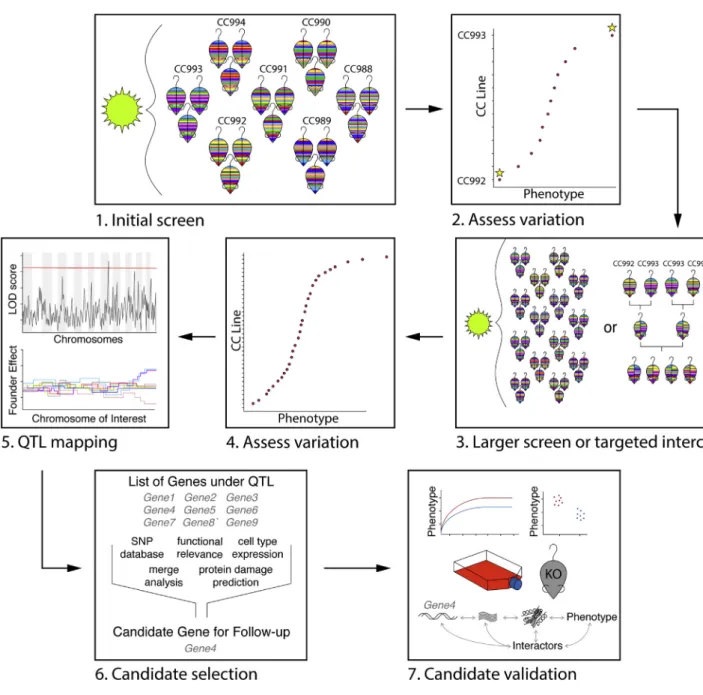
The CC is a powerful resource for model development, extreme phenotype discovery, population-based QTL map-ping, intercross mapping, validation of candidate genes across genetic backgrounds, and a variety of other ap-proaches. Here, we provide an overview of different study designs that can be implemented to study the impact of host genetic variation on pathogen outcomes or immunity us-ingtheCC(Figure3).
Many of the geneticmapping studies describedabove uti-lized large panels of CC strains and were able to identify loci of moderate to large effects on pathogen outcomes. However, these types of studies are extremely resource intensive and may notalwaysbetheoptimalapproach.Rather,wesuggestatiered approach to study design within the CC, starting with a small-scaleanalysisinasetofstrains(e.g.,12–16)thatsam-plemost of the haplotypes present across the CC genomes, and expanding as necessary. The efficacy of this type of approach is demonstrated bythe successof smallCC screens thathave identified strains with unique phenotypes and pro-ceeded with furthertargetedstudiessuchasF2crossestorevealcomplex polygenic networks driving the outlier pheno-type (Gralinski et al., 2017; Rogala et al., 2014). Furthermore, even when investigators opt for large mapping studies, they may still identifystrainswith unique outlier phenotypesthatcannot be explainedbyQTLsidentifiedintheinitialscreen.This missing heritability may be driven by complex genetic in-teractions such asepistasis,whicharedifficulttostudyincom-plexpopulations and are more effectively studied in targeted crosses (Rogala et al.,2014).
Initially screening small sets of CC strains (e.g., 12–16) allows theinvestigatortoobtaininsightintothedistributionoftrait vari-ation (e.g., continuous, bimodal), while testing whether any strainsshowuniqueorstrongoutlierphenotypes(Gralinskietal., 2015;Rasmussenetal.,2014;Rogalaetal.,2014).Thesesmall screens also facilitate estimation of the proportion of phenotypic variation explained by genetics within the test popu-lation (heritability), identification of potential confounding factors (e.g., mouse size and activity levels), and performance of power calculations before embarking on a large-scale screen. In contrasttoconductingtheinitialscreenintheCCfounders,CC strains exhibit more phenotypic diversity due to re-assort-ment of allelic variants throughout the genome. Furthermore, a specificsetofCCstrainscanbechosentoavoidthepresence of large effect resistance genes such as Mx1 or Oas1b that may dominate the response to some pathogens.Likewise, strains can be selected that carry specific gene haplotypes to facilitate specificassays (e.g., MHC haplotypes for antigen-spe-cific T cell analysis) (Graham et al., 2015, 2017).
Challenges and Future Directions
In less than two decades since the CC was conceptualized (Churchill et al., 2004), the CC has proven to be a fruitful resource across many fields, including infectious disease and immu-nology. Expanding use of the CC has highlighted certain chal-lenges and considerations that should be recognized to drive future development in both experimental design and resource expansion.
Figure 3. CC Workflow Schematic
(1) Small screen in a subset of CC strains (12–16), selected based on availability or a genotype of interest (e.g., MHC haplotype).
(2) Assess variation across strains, identify outliers, measure heritability, perform power calculations, and identify confounding variables and reassess experi-mental design if necessary.
(3) Perform a larger screen either in the full CC population or a targeted intercross. Following mapping, this can be repeated to follow-up on modifier alleles or other unexplained loci.
(4) Reassess variation, outliers, and heritability across mapping population.
(5) Map QTLs driving phenotype of interest; analyze founder haplotype effects if mapping is done in the CC. (6) Rationally select candidate genes using different tools as applicable.
(7) Perform validation studiesin vitroand/orin vivoto confirm effect of candidate gene on phenotype.
new models and testing platforms that will better reproduce spe-cific human disease outcomes or host responses to pathogens and vaccines.
ACKNOWLEDGMENTS
We would like to thank Sharon Taft-Benz, Sanjay Sarkar, Emily Madden, and Brea Hampton for critical reading of the manuscript. Chromosome ideograms
shown inFigure 2were generated using the karyoploteR package for R (Gel
and Serra, 2017). This work was supported by U19 AI100625 and P01AI132130. K.E.N. received support from T32AI007419.
REFERENCES
Allen, J.P., and Neely, M.N. (2010). Trolling for the ideal model host: zebrafish take the bait. Future Microbiol.5, 563–569.
Arends, D., Prins, P., Jansen, R.C., and Broman, K.W. (2010). R/qtl: high-throughput multiple QTL mapping. Bioinformatics26, 2990–2992.
Auer, P.L., and Lettre, G. (2015). Rare variant association studies: consider-ations, challenges and opportunities. Genome Med.7, 16.
Bailey, D.W. (1971). Recombinant-inbred strains. An aid to finding identity, linkage, and function of histocompatibility and other genes. Transplantation 11, 325–327.
Barbaric, I., Miller, G., and Dear, T.N. (2007). Appearances can be deceiving: phenotypes of knockout mice. Brief. Funct. Genomics Proteomics6, 91–103.
Beck, J.A., Lloyd, S., Hafezparast, M., Lennon-Pierce, M., Eppig, J.T., Festing, M.F.W., and Fisher, E.M.C. (2000). Genealogies of mouse inbred strains. Nat. Genet.24, 23–25.
Boon, A.C.M., deBeauchamp, J., Hollmann, A., Luke, J., Kotb, M., Rowe, S., Finkelstein, D., Neale, G., Lu, L., Williams, R.W., and Webby, R.J. (2009). Host genetic variation affects resistance to infection with a highly pathogenic H5N1 influenza A virus in mice. J. Virol.83, 10417–10426.
Bottomly, D., Ferris, M.T., Aicher, L.D., Rosenzweig, E., Whitmore, A., Aylor, D.L., Haagmans, B.L., Gralinski, L.E., Bradel-Tretheway, B.G., Bryan, J.T., et al. (2012). Expression quantitative trait Loci for extreme host response to influenza a in pre-collaborative cross mice. G3 (Bethesda)2, 213–221.
Bouabe, H., and Okkenhaug, K. (2013). Gene targeting in mice: a review. Methods Mol. Biol.1064, 315–336.
Bustamante, J., Boisson-Dupuis, S., Abel, L., and Casanova, J.-L. (2014). Mendelian susceptibility to mycobacterial disease: genetic, immunological, and clinical features of inborn errors of IFN-gimmunity. Semin. Immunol.26, 454–470.
Cagliani, R., and Sironi, M. (2013). Pathogen-driven selection in the human genome. Int. J. Evol. Biol.2013, 204240.
Carmody, R.N., Gerber, G.K., Luevano, J.M., Jr., Gatti, D.M., Somes, L., Sven-son, K.L., and Turnbaugh, P.J. (2015). Diet dominates host genotype in shaping the murine gut microbiota. Cell Host Microbe17, 72–84.
Carneiro-Sampaio, M., and Coutinho, A. (2007). Immunity to microbes: les-sons from primary immunodeficiencies. Infect. Immun.75, 1545–1555.
Casanova, J.L., Schurr, E., Abel, L., and Skamene, E. (2002). Forward genetics of infectious diseases: immunological impact. Trends Immunol.23, 469–472.
Chapman, S.J., and Hill, A.V.S. (2012). Human genetic susceptibility to infec-tious disease. Nat. Rev. Genet.13, 175–188.
Chella Krishnan, K., Mukundan, S., Alagarsamy, J., Hur, J., Nookala, S., Siemens, N., Svensson, M., Hyldegaard, O., Norrby-Teglund, A., and Kotb, M. (2016). Genetic architecture of group A Streptococcal necrotizing soft tis-sue infections in the mouse. PLoS Pathog.12, e1005732.
Chick, J.M., Munger, S.C., Simecek, P., Huttlin, E.L., Choi, K., Gatti, D.M., Ra-ghupathy, N., Svenson, K.L., Churchill, G.A., and Gygi, S.P. (2016). Defining the consequences of genetic variation on a proteome-wide scale. Nature 534, 500–505.
Churchill, G.A., Airey, D.C., Allayee, H., Angel, J.M., Attie, A.D., Beatty, J., Bea-vis, W.D., Belknap, J.K., Bennett, B., Berrettini, W., et al.; Complex Trait GeneticmappingstudiesintheCChavesuccessfully
identi-fied loci underlying infectious disease and immune phenotypes; however,relativelyfewhavesubsequentlyvalidatedtheinitially identified candidate genes. Even more challenging than candi-dategenevalidationistheidentificationofspecificcausal vari-ants within a gene. While strategies such as merge analysis can helprefinecandidatesandvariants,thesetoolsarenotalways informative. There is a need for more refinement method-ologies thatcanbeappliedincombinationwithexperimentalvalidation tonarrowandidentifycausalvariants.
The wide array of genomic, molecular, and immunological reagents available is a valuable asset for mouse research; however, these do not necessarily uniformly work across the CC and should be validatedbefore use. ExistingCC-specific re-sources, such as GECCO, are not necessarily informative for in-fectiousdiseaseresearch sincelymphoidorgans,suchasthe spleen, thymus, and bone marrow, are not profiled. Furthermore, the development of new CC-specific tools, such as CC-derivedcell lines(e.g., MEFsand IPSCs),willexpand the utility of the CC across fields, including the infectious diseases andimmu-nologyfields.
One of the largest challenges across all of model organism researchisconnectingbacktohumanrelevancy.TheCChas alreadyprovenusefulinprovidingimprovedmodelsof human-like disease, as highlighted above. A number of genes that have been highlighted in the CC, such as Mx1 and Oas1b, have human paralogs relevant in infectious disease susceptibility (LinandBrass,2013;Simon-Loriereetal.,2015),demonstrating the overlap between important genetically diverse infectious disease pathways in mouse and humans. However, the majority ofstudieshavenotyetmadedirectconnectionsbacktohuman datasets. As CC research develops, it will be increasingly impor-tant to continue to extend analysis from the CC to human ge-neticsandviceversa.Thiswillrequiremorecrosstalkbetween mouse and human geneticists to bridge gaps in research and communication.
Conclusions
Host immunity and susceptibility to infectious disease is a com-plexresponsedrivenbyamultitudeoffactors,fromenvironment and immune experience to the genetics of both the pathogen andthehost.Studyingtheroleofhostgeneticsininfectious dis-ease directly in humans is challenging because of this
Hoffmann, E.J., Weidanz, W.P., and Long, C.A. (1984). Susceptibility of CXB recombinant inbred mice to murine plasmodia. Infect. Immun.43, 981–985.
Iraqi, F.A., Mahajne, M., Salaymah, Y., Sandovski, H., Tayem, H., Vered, K., Balmer, L., Hall, M., Manship, G., Morahan, G., et al.; Collaborative Cross Con-sortium (2012). The genome architecture of the Collaborative Cross mouse ge-netic reference population. Gege-netics190, 389–401.
Kallmann, F.J., and Reisner, D. (1943). Twin studies on genetic variations in resistance to tuberculosis. J. Hered.34, 293–301.
Kollmus, H., Pilzner, C., Leist, S.R., Heise, M., Geffers, R., and Schughart, K. (2018). Of mice and men: the host response to influenza virus infection. Mamm. Genome29, 446–470.
Kristic, J., Zaytseva, O.O., Ram, R., Nguyen, Q., Novokmet, M., Vuckovic, F., Vilaj, M., Trbojevic-Akma cic, I., Pezer, M., Davern, K.M., et al. (2018). Profiling and genetic control of the murine immunoglobulin G glycome. Nat. Chem. Biol. 14, 516–524.
Leist, S.R., Pilzner, C., van den Brand, J.M.A., Dengler, L., Geffers, R., Kuiken, T., Balling, R., Kollmus, H., and Schughart, K. (2016). Influenza H3N2 infection of the collaborative cross founder strains reveals highly divergent host re-sponses and identifies a unique phenotype in CAST/EiJ mice. BMC Genomics 17, 143.
Lenardo, M., Lo, B., and Lucas, C.L. (2016). Genomics of immune diseases and new therapies. Annu. Rev. Immunol.34, 121–149.
Lin, T.-Y., and Brass, A.L. (2013). Host genetic determinants of influenza path-ogenicity. Curr. Opin. Virol.3, 531–536.
Lore`, N.I., Iraqi, F.A., and Bragonzi, A. (2015). Host genetic diversity influences the severity of Pseudomonas aeruginosa pneumonia in the Collaborative Cross mice. BMC Genet.16, 106.
Mangtani, P., Abubakar, I., Ariti, C., Beynon, R., Pimpin, L., Fine, P.E.M., Ro-drigues, L.C., Smith, P.G., Lipman, M., Whiting, P.F., and Sterne, J.A. (2014). Protection by BCG vaccine against tuberculosis: a systematic review of randomized controlled trials. Clin. Infect. Dis.58, 470–480.
Marsh, E.K., and May, R.C. (2012). Caenorhabditis elegans, a model organism for investigating immunity. Appl. Environ. Microbiol.78, 2075–2081.
Masopust, D., Sivula, C.P., and Jameson, S.C. (2017). Of mice, dirty mice, and men: using mice to understand human immunology. J. Immunol. 199, 383–388.
Mathes, W.F., Aylor, D.L., Miller, D.R., Churchill, G.A., Chesler, E.J., de Villena, F.P., Threadgill, D.W., and Pomp, D. (2011). Architecture of energy balance traits in emerging lines of the Collaborative Cross. Am. J. Physiol. Endocrinol. Metab.300, E1124–E1134.
Maurizio, P.L., Ferris, M.T., Keele, G.R., Miller, D.R., Shaw, G.D., Whitmore, A.C., West, A., Morrison, C.R., Noll, K.E., Plante, K.S., et al. (2018). Bayesian diallel analysis reveals Mx1-dependent and Mx1-independent effects on response to influenza A virus in mice. G3 (Bethesda)8, 427–445.
McHugh, K.J., Mandalapu, S., Kolls, J.K., Ross, T.M., and Alcorn, J.F. (2013). A novel outbred mouse model of 2009 pandemic influenza and bacterial co-infection severity. PLoS ONE8, e82865.
McLaren, P.J., Coulonges, C., Bartha, I., Lenz, T.L., Deutsch, A.J., Bashirova, A., Buchbinder, S., Carrington, M.N., Cossarizza, A., Dalmau, J., et al. (2015). Polymorphisms of large effect explain the majority of the host genetic contri-bution to variation of HIV-1 virus load. Proc. Natl. Acad. Sci. USA 112, 14658–14663.
Mun˜oz-Fuentes, V., Cacheiro, P., Meehan, T.F., Aguilar-Pimentel, J.A., Brown, S.D.M., Flenniken, A.M., Flicek, P., Galli, A., Mashhadi, H.H., Hrabe de Angelis, M., et al.; IMPC consortium (2018). The International Mouse Phenotyping Con-sortium (IMPC): a functional catalogue of the mammalian genome that informs conservation. Conserv. Genet.19, 995–1005.
Nedelko, T., Kollmus, H., Klawonn, F., Spijker, S., Lu, L., Heßman, M., Alberts, R., Williams, R.W., and Schughart, K. (2012). Distinct gene loci control the host response to influenza H1N1 virus infection in a time-dependent manner. BMC Genomics13, 411.
Newport, M.J., and Finan, C. (2011). Genome-wide association studies and susceptibility to infectious diseases. Brief. Funct. Genomics10, 98–107.
Consortium(2004).TheCollaborativeCross,acommunityresourceforthe ge-neticanalysisofcomplextraits.Nat.Genet.36,1133–1137.
Churchill,G.A.,Gatti,D.M.,Munger,S.C.,andSvenson,K.L.(2012).The Diver-sityOutbredmousepopulation.Mamm.Genome23,713–718.
Collins,M.,andThrasher,A.(2015).Genetherapy:progressandpredictions. Proc.Biol.Sci.282,20143003.
Dionne,M.S.,andSchneider,D.S.(2008).Modelsofinfectiousdiseasesinthe fruitflyDrosophilamelanogaster.Dis.Model.Mech.1,43–49.
Doetschman,T.(2009).Influenceofgeneticbackgroundongenetically engi-neeredmousephenotypes.MethodsMol.Biol.530,423–433.
Du,Y.,Xie,J.,Chang,W.,Han,Y.,andCao,G.(2012).Genome-wide associ-ation studies: inherent limitations and future challenges. Front.Med. 6, 444–450.
Duggal,P.,Thio,C.L.,Wojcik,G.L.,Goedert,J.J.,Mangia,A.,Latanich,R., Kim,A.Y.,Lauer,G.M.,Chung,R.T.,Peters,M.G.,etal.(2013). Genome-wideassociationstudyofspontaneousresolutionofhepatitisCvirusinfection: datafrommultiplecohorts.Ann.Intern.Med.158,235–245.
Durrant,C.,Tayem,H.,Yalcin,B.,Cleak,J.,Goodstadt,L.,deVillena,F.P., Mott,R.,andIraqi,F.A.(2011).CollaborativeCrossmiceandtheirpowerto maphostsusceptibilitytoAspergillusfumigatusinfection.GenomeRes.21, 1239–1248.
Elbahesh, H., and Schughart, K. (2016). Geneticallydiverse CC-founder mousestrainsreplicatethehumaninfluenzageneexpressionsignature.Sci. Rep.6,26437.
Ferris,M.T.,Aylor,D.L.,Bottomly,D.,Whitmore,A.C.,Aicher,L.D.,Bell,T.A., Bradel-Tretheway,B.,Bryan,J.T.,Buus,R.J.,Gralinski,L.E.,etal.(2013). Modelinghostgeneticregulationofinfluenzapathogenesisinthecollaborative cross.PLoSPathog.9,e1003196.
Gatti,D.M.,Svenson,K.L.,Shabalin,A.,Wu,L.-Y.,Valdar,W.,Simecek,P., Goodwin,N.,Cheng,R.,Pomp,D.,Palmer,A.,etal.(2014).Quantitativetrait locus mapping methods for diversity outbred mice. G3 (Bethesda) 4, 1623–1633.
Gel,B.,andSerra,E.(2017).karyoploteR:anR/Bioconductorpackagetoplot customizable genomes displaying arbitrary data. Bioinformatics 33, 3088–3090.
Graham,J.B.,Thomas,S.,Swarts,J.,McMillan,A.A.,Ferris,M.T.,Suthar, M.S.,Treuting,P.M.,Ireton,R.,Gale,M.,Jr.,andLund,J.M.(2015).Genetic diversityinthecollaborativecrossmodelrecapitulateshumanWestNilevirus diseaseoutcomes.MBio6,e00493–e15.
Graham,J.B.,Swarts,J.L.,Wilkins,C.,Thomas,S.,Green,R.,Sekine,A., Voss,K.M.,Ireton,R.C.,Mooney,M.,Choonoo,G.,etal.(2016).Amouse modelofchronicWestNilevirusdisease.PLoSPathog.12,e1005996.
Graham,J.B.,Swarts,J.L.,Mooney,M.,Choonoo,G.,Jeng,S.,Miller,D.R., Ferris,M.T.,McWeeney,S.,andLund,J.M.(2017).Extensivehomeostatic Tcell phenotypic variationwithin theCollaborative Cross. CellRep. 21, 2313–2325.
Gralinski,L.E.,Ferris,M.T.,Aylor,D.L.,Whitmore,A.C.,Green,R.,Frieman, M.B.,Deming,D.,Menachery,V.D.,Miller,D.R., Buus,R.J.,etal.(2015). GenomewideidentificationofSARS-CoVsusceptibilitylociusingthe Collab-orativeCross.PLoSGenet.11,e1005504.
Gralinski,L.E.,Menachery,V.D.,Morgan,A.P.,Totura,A.L.,Beall,A.,Kocher, J.,Plante,J.,Harrison-Shostak,D.C.,Sch€afer,A.,Pardo-ManueldeVillena,F., etal.(2017).AllelicvariationintheToll-likereceptoradaptorproteinTicam2 contributestoSARS-coronaviruspathogenesisin mice.G3(Bethesda) 7, 1653–1663.
Green,R.,Wilkins,C.,Thomas,S.,Sekine,A.,Hendrick,D.M.,Voss,K.,Ireton, R.C.,Mooney,M.,Go,J.T.,Choonoo,G.,etal.(2017).Oas1b-dependent im-munetranscriptionalprofilesofWestNilevirusinfectionintheCollaborative Cross.G3(Bethesda)7,1665–1682.
Hedrick,P.W.(2011).Populationgeneticsofmalariaresistanceinhumans. He-redity(Edinb)107,283–304.
Shorter, J.R., Huang, W., Beak, J.Y., Hua, K., Gatti, D.M., de Villena, F.P.-M., Pomp, D., and Jensen, B.C. (2018). Quantitative trait mapping in Diversity Outbred mice identifies two genomic regions associated with heart size. Mamm. Genome29, 80–89.
Sim, N.-L., Kumar, P., Hu, J., Henikoff, S., Schneider, G., and Ng, P.C. (2012). SIFT web server: predicting effects of amino acid substitutions on proteins. Nucleic Acids Res.40, W452-7.
Simon-Loriere, E., Lin, R.-J., Kalayanarooj, S.M., Chuansumrit, A., Casade-mont, I., Lin, S.-Y., Yu, H.-P., Lert-Itthiporn, W., Chaiyaratana, W., Tangtha-wornchaikul, N., et al. (2015). High anti-Dengue virus activity of the OAS gene family is associated with increased severity of Dengue. J. Infect. Dis. 212, 2011–2020.
Smallwood, T.L., Gatti, D.M., Quizon, P., Weinstock, G.M., Jung, K.C., Zhao, L., Hua, K., Pomp, D., and Bennett, B.J. (2014). High-resolution genetic map-ping in the diversity outbred mouse population identifies Apobec1 as a candi-date gene for atherosclerosis. G3 (Bethesda)4, 2353–2363.
Smith, C.M., Proulx, M.K., Olive, A.J., Laddy, D., Mishra, B.B., Moss, C., Gu-tierrez, N.M., Bellerose, M.M., Barreira-Silva, P., Phuah, J.Y., et al. (2016). Tuberculosis susceptibility and vaccine protection are independently controlled by host genotype. MBio7, 1–13.
Snijders, A.M., Langley, S.A., Kim, Y.M., Brislawn, C.J., Noecker, C., Zink, E.M., Fansler, S.J., Casey, C.P., Miller, D.R., Huang, Y., et al. (2016). Influence of early life exposure, host genetics and diet on the mouse gut microbiome and metabolome. Nat. Microbiol.2, 16221.
Srivastava, A., Morgan, A.P., Najarian, M.L., Sarsani, V.K., Sigmon, J.S., Shorter, J.R., Kashfeen, A., McMullan, R.C., Williams, L.H., Giusti-Rodrı´guez, P., et al. (2017). Genomes of the mouse Collaborative Cross. Genetics206, 537–556.
St Claire, M.C., Ragland, D.R., Bollinger, L., and Jahrling, P.B. (2017). Animal models of Ebolavirus infection. Comp. Med.67, 253–262.
Takaki, H., Oshiumi, H., Shingai, M., Matsumoto, M., and Seya, T. (2017). Development of mouse models for analysis of human virus infections. Micro-biol. Immunol.61, 107–113.
Takao, K., and Miyakawa, T. (2015). Genomic responses in mouse models greatly mimic human inflammatory diseases. Proc. Natl. Acad. Sci. USA 112, 1167–1172.
Thorven, M., Grahn, A., Hedlund, K.-O., Johansson, H., Wahlfrid, C., Larson, G., and Svensson, L. (2005). A homozygous nonsense mutation (428G–>A) in the human secretor (FUT2) gene provides resistance to symptomatic noro-virus (GGII) infections. J. Virol.79, 15351–15355.
Threadgill, D.W., Hunter, K.W., and Williams, R.W. (2002). Genetic dissection of complex and quantitative traits: from fantasy to reality via a community effort. Mamm. Genome13, 175–178.
Timmann, C., Thye, T., Vens, M., Evans, J., May, J., Ehmen, C., Sievertsen, J., Muntau, B., Ruge, G., Loag, W., et al. (2012). Genome-wide association study indicates two novel resistance loci for severe malaria. Nature489, 443–446.
Totura, A.L., Whitmore, A., Agnihothram, S., Sch€afer, A., Katze, M.G., Heise, M.T., and Baric, R.S. (2015). Toll-like receptor 3 signaling via TRIF contributes to a protective innate immune response to severe acute respiratory syndrome coronavirus infection. MBio6, e00638–e15.
Tsang, J.S., Schwartzberg, P.L., Kotliarov, Y., Biancotto, A., Xie, Z., Germain, R.N., Wang, E., Olnes, M.J., Narayanan, M., Golding, H., et al.; Baylor HIPC Center; CHI Consortium (2014). Global analyses of human immune variation reveal baseline predictors of postvaccination responses. Cell157, 499–513.
Valdar, W., Holmes, C.C., Mott, R., and Flint, J. (2009). Mapping in structured populations by resample model averaging. Genetics182, 1263–1277.
Venkatratnam, A., Furuya, S., Kosyk, O., Gold, A., Bodnar, W., Konganti, K., Threadgill, D.W., Gillespie, K.M., Aylor, D.L., Wright, F.A., et al. (2017). Editor’s highlight: Collaborative Cross mouse population enables refinements to char-acterization of the variability in toxicokinetics of trichloroethylene and provides genetic evidence for the role of PPAR pathway in its oxidative metabolism. Toxicol. Sci.158, 48–62.
Vered, K., Durrant, C., Mott, R., and Iraqi, F.A. (2014). Susceptibility to Klebsi-ella pneumonaie infection in collaborative cross mice is a complex trait controlled by at least three loci acting at different time points. BMC Genomics 15, 865.
Niazi,M.K.K.,Dhulekar,N.,Schmidt,D.,Major,S.,Cooper,R.,Abeijon,C., Gatti,D.M.,Kramnik,I.,Yener,B.,Gurcan,M.,andBeamer,G.(2015).Lung necrosisandneutrophilsreflectcommonpathwaysofsusceptibilityto Myco-bacteriumtuberculosisingeneticallydiverse,immune-competentmice.Dis. Model.Mech.8,1141–1153.
NIH(2015).Knockoutmousefactsheet.https://www.genome.gov/12514551/
knockout-mice-fact-sheet/.
Panoutsakopoulou,V.,Little,C.S.,Sieck,T.G.,Blankenhorn,E.P.,andBlank, K.J.(1998).Differencesintheimmuneresponseduringtheacutephaseof E-55+murineleukemiavirusinfectioninprogressorBALBandlongterm non-progressorC57BLmice.J.Immunol.161,17–26.
Peirce,J.L.,Lu,L.,Gu,J.,Silver,L.M.,andWilliams,R.W.(2004).Anewsetof BXDrecombinantinbredlinesfromadvancedintercrosspopulationsinmice. BMCGenet.5, 7.
Pelletier,S.,Gingras,S.,andGreen,D.R.(2015).Mousegenomeengineering viaCRISPR-Cas9forstudyofimmunefunction.Immunity42,18–27.
Perelygin,A.A.,Scherbik,S.V.,Zhulin,I.B.,Stockman,B.M.,Li,Y.,and Brin-ton,M.A.(2002).Positionalcloningofthemurineflavivirusresistancegene. Proc.Natl.Acad.Sci.USA99,9322–9327.
Phillippi,J.,Xie,Y.,Miller,D.R.,Bell,T.A.,Zhang,Z.,Lenarcic,A.B.,Aylor,D.L., Krovi,S.H.,Threadgill,D.W.,deVillena,F.P.,etal.(2014).Usingtheemerging CollaborativeCrosstoprobetheimmunesystem.GenesImmun.15,38–46.
Picard,C.,BobbyGaspar,H.,Al-Herz,W.,Bousfiha,A.,Casanova,J.-L., Cha-tila,T.,Crow,Y.J.,Cunningham-Rundles,C.,Etzioni,A.,Franco,J.L.,etal. (2018).InternationalUnionofImmunologicalSocieties:2017Primary Immuno-deficiencyDiseasesCommitteeReportonInbornErrorsofImmunity.J.Clin. Immunol.38,96–128.
Quillent,C.,Oberlin,E.,Braun,J.,Rousset,D.,Gonzalez-Canali,G.,Me´tais, P.,Montagnier,L.,Virelizier,J.L.,Arenzana-Seisdedos,F.,andBeretta,A. (1998).HIV-1-resistancephenotypeconferredbycombinationoftwoseparate inheritedmutationsofCCR5gene.Lancet351,14–18.
Qureshi,S.T.,Larivie`re,L.,Leveque,G.,Clermont,S.,Moore,K.J.,Gros,P., andMalo,D.(1999).Endotoxin-tolerantmicehavemutationsinToll-like recep-tor4(Tlr4).J.Exp.Med.189,615–625.
Rasmussen,A.L.,Okumura,A.,Ferris,M.T.,Green,R.,Feldmann,F.,Kelly, S.M.,Scott,D.P.,Safronetz,D., Haddock,E.,LaCasse,R., etal.(2014). Hostgeneticdiversityenables Ebolahemorrhagicfeverpathogenesisand resistance.Science346,987–991.
Roberts, A., Pardo-Manuel de Villena, F., Wang, W., McMillan, L., and Threadgill,D.W.(2007).Thepolymorphismarchitectureofmousegenetic re-sourceselucidatedusinggenome-wideresequencingdata:implicationsfor QTLdiscoveryandsystemsgenetics.Mamm.Genome18,473–481.
Rogala,A.R.,Morgan,A.P.,Christensen,A.M.,Gooch,T.J.,Bell,T.A.,Miller, D.R.,Godfrey,V.L.,anddeVillena,F.P.M.(2014).TheCollaborativeCross asaresourceformodelinghumandisease:CC011/Unc,anewmousemodel forspontaneouscolitis.Mamm.Genome25,95–108.
Roy,M.F.,Riendeau,N.,Loredo-Osti,J.C.,andMalo,D.(2006).Complexityin thehostresponsetoSalmonellaTyphimuriuminfectioninAcBandBcA re-combinantcongenicstrains.GenesImmun.7,655–666.
Schoenrock,S.A.,Oreper,D.,Farrington,J.,McMullan,R.C.,Ervin,R.,Miller, D.R.,Pardo-ManueldeVillena,F.,Valdar,W.,andTarantino,L.M.(2018). Peri-natalnutritioninteractswithgeneticbackgroundtoalterbehaviorina parent-of-origin-dependentmannerinadultCollaborativeCrossmice.GenesBrain Behav.17,e12438.
Sebastiani,G.,Olien,L.,Gauthier,S.,Skamene,E.,Morgan,K.,Gros,P.,and Malo,D.(1998).Mappingofgeneticmodulatorsofnaturalresistanceto infec-tion with Salmonella typhimurium in wild-derived mice. Genomics 47, 180–186.
Seok,J.,Warren,H.S.,Cuenca,A.G.,Mindrinos,M.N.,Baker,H.V.,Xu,W., Richards,D.R.,McDonald-Smith,G.P.,Gao,H.,Hennessy,L.,etal.; Inflam-mationandHostResponsetoInjury, LargeScaleCollaborativeResearch Program(2013).Genomicresponsesinmousemodelspoorlymimichuman in-flammatorydiseases.Proc.Natl.Acad.Sci.USA110,3507–3512.
Vidal, S.M., Malo, D., Vogan, K., Skamene, E., and Gros, P. (1993). Natural resistance to infection with intracellular parasites: isolation of a candidate for Bcg. Cell73, 469–485.
Virgin, H.W. (2014). The virome in mammalian physiology and disease. Cell 157, 142–150.
Wang, Z., Sun, Y., Fu, X., Yu, G., Wang, C., Bao, F., Yue, Z., Li, J., Sun, L., Ir-wanto, A., et al. (2016). A large-scale genome-wide association and meta-analysis identified four novel susceptibility loci for leprosy. Nat. Commun. 7, 13760.
Watanabe, H., Numata, K., Ito, T., Takagi, K., and Matsukawa, A. (2004). Innate immune response in Th1- and Th2-dominant mouse strains. Shock 22, 460–466.
Xiong, H., Morrison, J., Ferris, M.T., Gralinski, L.E., Whitmore, A.C., Green, R., Thomas, M.J., Tisoncik-Go, J., Schroth, G.P., Pardo-Manuel de Villena, F., et al. (2014). Genomic profiling of collaborative cross founder mice in-fected with respiratory viruses reveals novel transcripts and infection-related strain-specific gene and isoform expression. G3 (Bethesda) 4, 1429–1444.
Yalcin, B., Flint, J., and Mott, R. (2005). Using progenitor strain information to identify quantitative trait nucleotides in outbred mice. Genetics 171, 673–681.