Abstract
This study examined the social phenomenon of gender policing. Gender policing refers to the words and actions of individuals used to police gender expression, based on expected societal norms surrounding gender. Gender policing is a particular experience that occurs for individuals who are perceived as not adequately or accurately performing their gender, with the assumption that one's gender must be directly linked with "biological" sex. A total of 457 UNC students completed self-report questionnaires assessing their personal attitudes about and experiences of gender policing. Additionally, participants completed self-report measures of depression, loneliness, and sense of belonging. Consistent with hypotheses, experiences of gender policing were associated with higher levels of negative psychosocial outcomes. There was no difference in rates of experiencing gender policing by biological sex. However, sex was found to be a moderator of the relationship between experiencing gender policing and negative outcomes, such that the relationship was stronger among "biological" females. The results shed light on an area of psychology that is not well researched, providing us with further information regarding the negative outcomes associated with gender policing. By examining the undergraduate experience, it is clear that gender policing is a social phenomenon that continues to exist on college
Gender Policing: Undergraduate Experience and Psychosocial Outcomes Gender, and the extent to which an individual conforms to cultural expectations of gender, is an important aspect of identity development (Horn, 2007). As defined by the APA (2012), gender “refers to the attitudes, feelings, and behaviors that a given culture associates with a person’s biological sex” (p. 11). The APA defines conformity as “behavior that is compatible with cultural expectations” while gender non-conformity is defined as “behaviors that are viewed as incompatible with these expectations [of gender]” (p. 11). Gender might be better understood through its association with one’s personal identification with masculinity and/or femininity. Sex is differentiated from gender through its association with biology and an individual's
chromosomes and genitalia (APA, 2012). Thus, conforming to one’s gender means conforming to society's interpretation of the roles and attitudes associated with one’s prescribed biological sex.
Gender Identity and Conformity
Gender is something that cannot merely be defined in dichotomous terms; it favors a spectrum-based understanding (Huston, 1985). One end of this spectrum contains masculine qualities while the other contains feminine. Furthermore, gender does not have to remain stagnant—it can change through development (Huston, 1985). Since gender may fluctuate, it should then be clearly understood as an impressionable aspect of identity.
status or likability. This was particularly true for boys; while girls receive more relational victimization, boys receive higher rates of physical victimization. Kreiger and Krochenderfer-Ladd (2013) suggest an association between effeminate male behavior and victimization. Masculinity is the most expected and accepted male gender performance. They also produce research findings suggesting gendered behaviors are associated with victimization — masculine traits leading to better peer acceptance while feminine traits leading to less acceptance based on self-reported data. Children (both boys and girls) who act more “masculine” seem to receive less victimization (Beautrais, 2002).
Gender should be understood as a rigid identity category. For adolescents, ranging from early development leading up to adulthood, aspects of gendered norms which include style of dress, mannerisms, types of speech, passions, and masculine/feminine behaviors are sedimenting (Eder, 1985; Alfieri et al., 1996). In addition to gender, sexuality sediments, or becomes rigid in structure, with a particular socialization in which adolescents align their beliefs and feelings with heterosexuality, the most socially accepted sexuality (Blumenfield, 1992; Kimmel & Mahler, 2003). Selectively deciding to not befriend individuals outside of hegemonic sexuality structures as well as prejudice towards “gay” identified folks also occurs during adolescence and is a regular practice (Baker & Fishbein, 1998; Eder et al., 1995; Kimmel & Mahler, 2003; Lobel, 1994; Lobel et al., 1993; Lobel et al., 1999; Marsigilio, 1993). Society deems certain behaviors “desirable,” and as early as adolescence, young people are able to make quick judgments about desirability in regards to gender and sexual expression.
Gender Policing
regulations. Butler (2004) defines ‘gender regulations’ as “that which makes [emphasis in original] regular, but it is also… a mode of discipline and surveillance [emphasis in original] within late modern forms of power… regulations operate by way of norms, they become key moments in which the ideality of the norm is reconstituted, its historicity and vulnerability temporarily put out of play” (p. 55). Thus, the regulation of gender does not consider the flexibility of gender or the fact that gender has changed across time and location. Gender regulation often focuses on encouraging or recalibrating the “correct” gendered norm in others.
Given past research and theory as well as terminology proposed by scholars such as Butler, the term ‘gender policing’ will be used in the current study. “Gender policing” will be defined as words and actions of individuals used to police gender expression based on expected societal norms surrounding gender, assuming one’s gender must be directly linked with
“biological” sex. More simply put, gender policing is an experience that occurs for individuals who are perceived as not adequately or accurately performing their gender. Rather than using “gender regulation,” which implies a more returning to order in society, this phenomenon will be referred to as “policing,” for the term more accurately encompasses the violence, negativity and forcefulness that accompanies this social monitoring (Baker & Fishbein, 1998; Eder et al., 1995; Kimmel & Mahler, 2003; Lobel, 1994; Lobel et al., 1993; Lobel et al., 1999; Marsigilio, 1993). Frequencies of Gender Policing
harassment within school (Kosciw et al., 2008). Sausa (2005) reported statistics concerning transgender individuals: 96% of the transgender participants reported experiencing physical harassment and 83% reported experiencing verbal; all of this being experienced at school.
Gender policing also seems to disparately affect certain individuals based on their
biological sex. Men seem to be facing the greater victimization for their gender performance than women. Parents seem to do significantly more policing of male bodies rather than female bodies (D’Augelli et al., 2006). Female bodies seem to find assent or approval for their gender
performance, even if it is gender nonconforming, up until the start of puberty (Carr, 2007). In documented studies of youth, negative assertions made about gender nonconformity were reported (by the youth) to be directed towards boys 53.8% of the time versus 39.4% of the time for girls; other youth reported thoughts of their school as more safe for gender nonconforming girls rather than the gender nonconforming boys (Kosciw et al., 2008; O’Shaughnessy et al., 2004). One primary goal of the current research will be to examine prevalence rates of gender policing, as well as how these rates may differ based on biological sex. Additionally, it should be noted that past research has mainly focused on primary or secondary educational institutions, oft excluding the possibility of this experience occurring on college campuses. Thus, the current study will explore the undergraduate experience.
Outcomes of Gender Policing
have a much stronger likelihood to experience general victimization, or physical assault, than that of gender conforming, heterosexual youth (Kosciw, Diaz, & Greytak, 2008; O’Shaughnessy, Russell, Heck, Calhoun, & Laub, 2004). Specifically, there seems to be a heightened risk for certain negative psychosocial behaviors, including depression, anxiety and suicidality (D’Augelli, Grossman, & Starks, 2006; Pilkington & D’Augelli, 1995).
Gender schema theory may help to explain why negative outcomes can result from the experience of one’s gender being policied. Bem’s (1981) presentation of gender schema theory addresses levels and identification with masculinity and femininity while comparing them with what society sees as desirable performances of gender. Associations between these variables indicate the formation of gender schemas, which in turn motivate individuals to regulate their gendered behavior in order to align one’s gender expression with socially desirable expressions of gender. In turn, individuals feel immense pressure to then self-regulate their behaviors in order to achieve alignment with societal understandings and definitions of manhood and womanhood (Bem, 1981; Witt & Eagly, 2010). Outside pressure to conform to these gendered expectations may exacerbate the stress of self-regulatory behavior, resulting in negative outcomes such as depression and depleted senses of belonging, something this study sought to examine. The Current Study
outside of her/his gender category, yet she/he might fear the policing that will ensue, so she/he avoids it; p.11). With this in mind, the current study explored gender nonconformity
independently from sexuality.
Study aims and hypotheses. The first aim of the current study was to provide basic descriptive information on the experience of gender policing among undergraduate students (i.e. prevalence rates and attitudes and beliefs). The second aim of the study was to test two specific hypotheses regarding gender policing. First, it was hypothesized that higher levels of gender policing would be found to occur for men rather than women, due to past research indicating that men may be particularly vulnerable to conforming with societal beliefs and expectations, and more likely to experience victimization in the event of nonconformity with these expectations. Second, it was hypothesized that experiences of gender policing would be associated with negative outcomes (i.e. depressive symptoms, loneliness, and less feelings of belonging among peers).
Methods Participants
This study contained 457 participants. “Psychology 101: General Psychology” students at The University of North Carolina at Chapel Hill are required to participate in research studies for course credit, so this study was included in the pool of research studies the students could
accessible via email to a Women’s and Gender Studies introductory course. Across both efforts for recruitment, the ages of participants fell between 18 and 28 (mean age 19), with 321 being female, 127 being male and 16 being other. Regarding ethnic composition, 70.4% of the sample were White/Caucasian, 6.9% of the sample was African American/Black, 8.8% of the sample was Hispanic/Latino, 12.2% of the sample was Asian, and 1.8% of the sample identified as other ethnicities. All of the following procedures detailed below maintained the integrity standards established by the university human subjects committee.
Procedure
Students provided electronic consent through the Qualtrics survey. Out of the 457 recruited participants, 46 did not complete all relevant measures; thus, the final sample for analyses was limited to 409 participants.
results in the creation of four variables: First, the item “[Victim in the scenario] should change [his or her] behavior to avoid similar situations” was used to create the Belief that Victim Should Change Behavior variable (Cronbach’s alpha .90). The item “[Perpetrator in the scenario] should change [his/her] behavior to avoid similar situations” was used to create the Belief that
Perpetrator Should Change Behavior variable (Cronbach’s alpha .91). The question “How likely is it that this situation could happen to other people?” was used to created the Likelihood
Situation Could Happen to Others variable (Cronbach’s alpha .88). Finally, the question “How likely is it that this situation could happen to you?” was used to create the Likelihood that Situation Could Happen to Youvariable (Cronbach’s alpha .71 for males; Cronbach’s alpha .74 for females).
Frequency of Gender Policing. Following the scenarios, participants were asked a series of questions regarding gender policing in a general sense. A set of six questions were used to address the participants personal experience with gender policing, so the questions addressed whether or not participants gave (3 questions) or received (3 questions) “gender reminders,” the term in place of gender policing, on UNC’s campus, on social media as well as in general. The questions were rated on a 7-point Likert scale (1 = very unlikely, 2 = unlikely, 3= somewhat unlikely, 4 = neither likely nor unlikely, 5 = somewhat likely, 6 = likely, 7 = very likely).
Cronbach’s alpha for Receiving Gender Reminders was .91; for Perpetrating Gender Reminders, it was .86.
3-point Likert scale addressing the level of truth for each provided statement (0 = not true, 1 = sometimes true, 2 = true). The SMFQ has been shown to have good psychometric properties in previous research (Rothon et al., 2009). In the current sample, the measure showed good internal consistency (Cronbach’s alpha .91)
Sense of belonging. The Pictorial Measure of Community Connectedness was adapted and used as a creative device to measure participants’ feelings of belonging (Mashek, Cannaday, & Tangney). This scale uses interlocking circles in the mode of a Venn diagram in order to assess participants’ sense of belonging within a given community. Interlocked circles signify a strong sense of belonging while separation of the circles indicates a lack of belonging. There were five sets of two interlocked circles, ranging from fully separated to fully interconnected. This scale consisted of two items, which asked about a sense of belonging with peers in high school and in the community at UNC (the college the participants were/are attending).
Loneliness. A 5-item adaptation of the Loneliness and Social Dissatisfaction
Questionnaire (LSDQ, Cassidy & Asher, 1992) was used to measure loneliness. Three loneliness
items from the LSDQ (e.g., “Are you lonely at school?”) were selected (cf. Parker & Asher,
1993) and conjoined with two additional loneliness items developed by Ladd and Burgess (1999)
(e.g., “Are you sad and alone at school?”). This combined 5-item loneliness scale showed good
validity and reliability in previous studies (Ladd & Burgess, 1999). For this study, the internal
consistency was excellent (Cronbach’s alpha = .94).
Results Descriptive Statistics
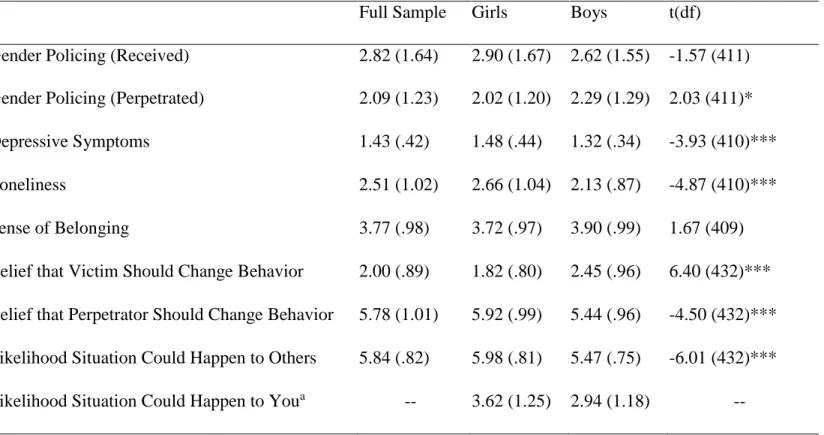
amount of gender policing perpetrated. Analyses were conducted separately for biological females and males as well as for the full sample. Separate means and standard deviations also conducted based on the hypothetical scenarios instrument created for this study: belief that victim should change behavior, belief that perpetrator should change behavior, likelihood situation could happen to others, and likelihood situation could happen to you. For the
“likelihood situation could happen to you,” an examination of the full sample was not completed due to fact that the scenarios I created asked about masculine and feminine situations, so
responses could not be combined across sex.
Descriptive analyses were used to indicate prevalence rates of gender policing. Significantly more males (M = 2.29) than females (M = 2.02) reported perpetrating gender policing (t(411) = 2.03, p = .04). Significance at the p<.001 level showed more males (M = 2.45) than females (M = 1.82) reporting beliefs that the victims of gender policing should change their behavior (t(432) = 6.40, p = .000), and at the same statistically significant level, females (M = 5.92) rather than males (M = 5.44) reported more beliefs that the perpetrators of the gender policing should change their behavior (t(432) = -4.50, p = .000). Furthermore, at the same p<.001 significance level, females (M = 5.98) reported more feelings than males (M = 5.47) that the proposed policing situations could happen to others (t(432) = -6.01, p = .000).
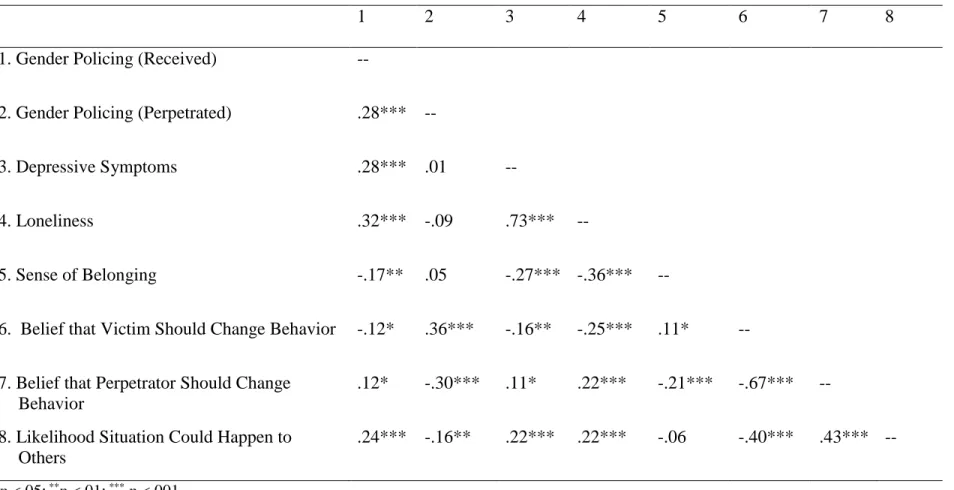
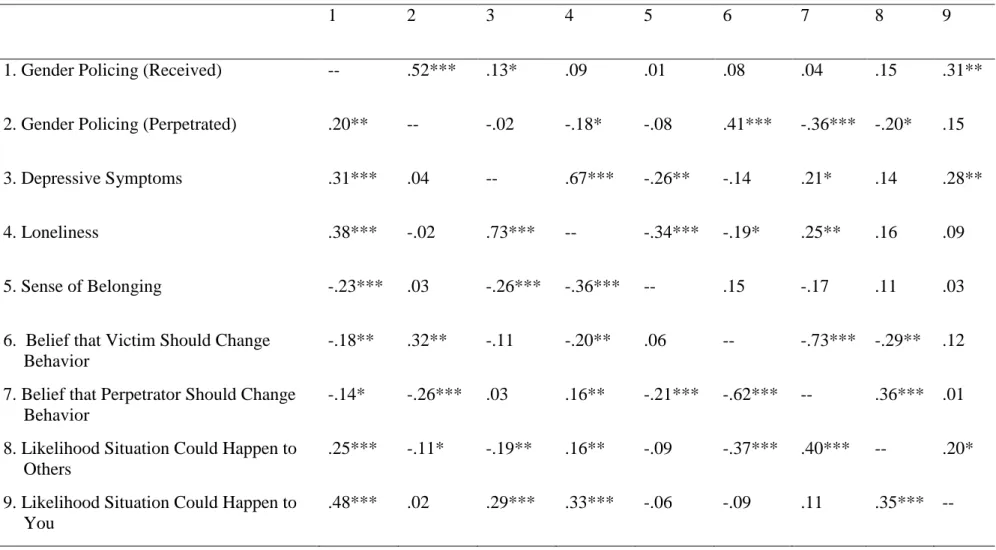
In addition, Pearson correlations were conducted to examine bivariate associations between all variables, separately for males and females. Results for this portion of the analyses can be found in Table 2 (full sample) and Table 3 (by sex). For both sexes, depressive
women, gender policing was significantly positively associated with depression and loneliness, and negatively associated with sense of belonging.
Hypothesis Testing
Independent sample t-tests were used to test my first hypothesis, found in Table 1, which stated that men would experience gender policing at higher rates than women. Participants who identified as female (M = 2.90, SD = 1.67) did not receive any more gender policing than those in the male condition (M = 2.62, SD = 1.55), (t(411) = -1.57, p = .12). Thus, results did not support the first hypothesis and indicate that males and females may experience gender policing at equal rates.
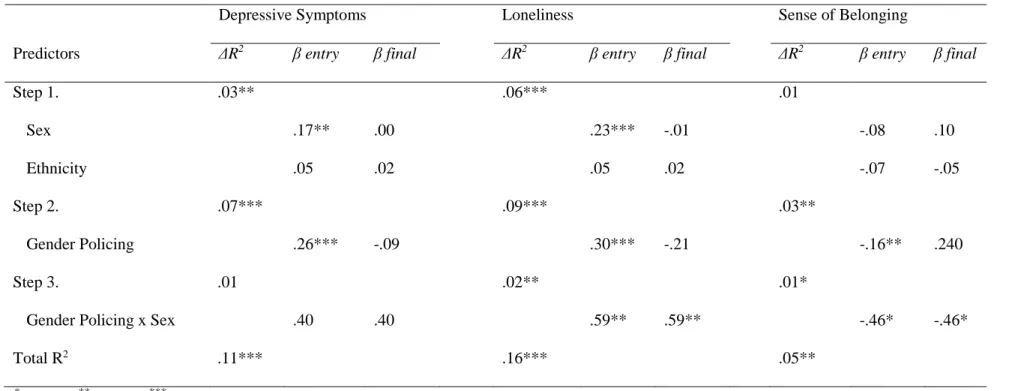
To test my second hypothesis, that experiences of gender policing would be associated with negative psychosocial outcomes, a hierarchical multiple linear regression framework using maximum likelihood estimation in SPSS 22.0 was used. Three separate regression analyses were run for each of three dependent variables: depressive symptoms, loneliness, and sense of
belonging. Biological sex and ethnicity were entered as covariates in an initial step. The main effect of frequency of receiving gender policing was added in the second step.
In order to test whether sex moderated the relationship between gender policing and depression, loneliness, and lower sense of belonging, interaction terms were created by computing the product of sex and gender policing. These interaction terms were added at the third step (see Table 4).
Thus, results indicate that more frequent experiences of gender policing were associated with higher levels of depressive symptoms for both males and females.
Loneliness. The full regression model explained a significant proportion of the variance in loneliness symptoms, R2= .16, p<.001. In support of the second hypothesis, results revealed a significant main effect of gender policing on loneliness symptoms (B = .30, p <.001).
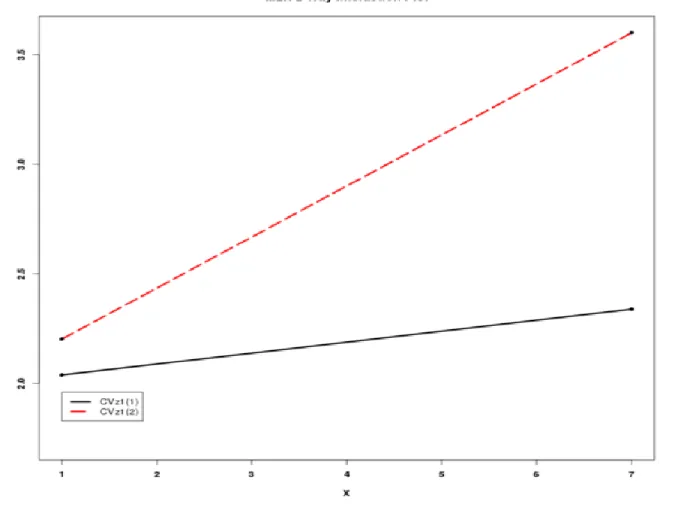
Additionally, analyses revealed a significant gender policing by sex interaction effect (B = .59, p <.01).
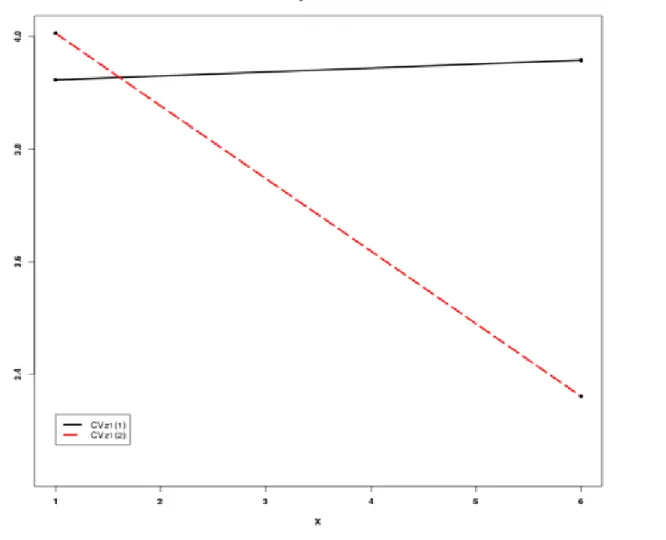
Sense of Belonging. The full regression model explained a significant proportion of the variance in sense of belonging, R2= .05, p<.01. In support of the second hypothesis, results revealed a significant main effect of gender policing on sense of belonging (B = -.16, p <.01). Additionally, analyses revealed a significant gender policing by sex interaction effect (B = -.46, p <.05).
Discussion
Understanding the effects of policing an individual’s gender expression in our current society is a necessary next step in clinical research, a tenet I aimed to further delineate in this study. Since past research emphasizes the experience of overt victimization in regard to gender nonconformity, there has been little research that captures the social interactions within peer relations that police gender in more subtle ways. Through the use of both novel and existing measures, I was able to garner a further understanding of these occurrences in our society and how they are affecting mental health. In particular, results indicate there is a connection between higher levels of gender policing and multiple types of negative outcomes (depression, loneliness, and depleted sense of belonging). This is in fact one of the first psychological studies to look at the clinical outcomes of “gender policing,” or the regulation of gendered expression.
Descriptive analyses indicated that gender policing may occur somewhat regularly among college students. Based on the findings, males were significantly more likely to be doing the policing and not believing that victims of policing should change their behavior. One might argue this is an unsympathetic approach. Females seemed to be more sympathetic, so to speak, for the victims of the policing and more concerned about the prevalence of policing, due to the results from the Likelihood Situation Could Happen to Others measure. One particular
Results from the first hypothesis revealed that there was no significant difference between rates of gender policing received for biological males versus females. This finding seems to differ from previous research, which indicates higher levels of victimization as a result of gender nonconformity for boys (D’Augelli et al., 2006; Kosciw et al., 2008; O’Shaughnessy et al., 2004). Since this study examined the social phenomenon of policing of gender to be more broadly defined than victimization, this could account for such a finding as presented in the study. It is possible males are experiencing harsher forms of gender policing, more in line with traditional measures of victimization, whereas there may be no sex differences in rates of gender policing more broadly. In other words, the current measures did not ask participants how caustic or extreme their policing might be; rather, it simply assessed the frequency that such situations occur. Additionally, past research regarding victimization of nonconforming students has
focused on children and young adolescents through high school (Jewell & Brown, 2014; Kosciw et al., 2008; O’Shaughnessy et al., 2004; Toomey et al., 2010). It is possible that the experiences of gender policing are less frequent in college or perhaps are occurring in different forms.
question or attacked could be harmful (Eder, 1985; Alfieri et al., 1996). Thus, it seems probable that the college years, again a time of identity exploration and development, would be a time period in which gender policing could be particularly harmful.
Interestingly, the relationships between frequency of gender policing and loneliness and between gender policing and sense of belonging were moderated by sex. Specifically, males who received higher levels of gender policing reported higher levels of depression, but not loneliness nor sense of belonging. Females who received higher levels of gender policing
reported higher levels of depression and loneliness, as well as lower levels of sense of belonging. There are multiple possible explanations for this finding. First, it is possible that the experience of gender policing is particularly problematic for females. While past research has suggested that males are more likely to experience victimization, it is possible that the peer exclusion and verbal victimization that females receive will hold longer psychological damage than the physical victimization that males receive (Smith & Leaper, 2006).
Limitations
This study was unique in its attempt to capture the phenomenon of gender policing; however, given its preliminary nature, it was not without limitations. To begin, there were unique measures created for this study. While the creation of these measures was necessary in order to capture the experiences of gender policing, given that no other measures exist to capture this construct, they have not been validated. Future research should continue to validate and expand on this instrument in order to assess gender policing in ways that are more sophisticated.
Additional limitations of the study concern the sampled population. The entire sample was comprised of college students who were mainly first or second years at the university (83% of the sampled population). Due to the relatively recent transition to college, these participants might not have been at the university long enough to experience the social phenomenon of gender policing, especially since the peer interactions are quite new. A limitation due to the sampled population as well was the clear lack of self-identified transgender/gender
nonconforming participants (n=16), as reported in the sample breakdown. While targeted sampling was used to attempt and capture more of these identities, very few transgender/gender nonconforming participants responded. Further studies should certainly address this limitation, beginning with ongoing targeted sampling as well as possibly examining participants in different regions of the country. Finally, this study was cross sectional, thus causal conclusions cannot be established. For example, it is possible that students who were already more depressed or lonely were more likely to report on experiences of gender policing.
Future Directions
gender policing holds the potential to come in benign forms. While the current study aimed to address the fluctuations in intensity of gender policing, all scenarios created were constructed in a way to have at least some level of harm administered to the gender policing victim. While the fictitious scenarios do have less severe encounters with gender policing, they do not specifically address benign forms of gender policing occurring for the undergraduate student. Many
psychological understandings of gender policing only focus on “victimization” (Meyer, 2003; Oswald, Blume, & Marks, 2005); however, benign forms of gender policing have been identified in feminist research. For example, the phrase “you look so pretty” within the Western, United States space, would only be directed at a girl, hardly ever to a boy (Bem, 1991). Such a comment could be construed as positive and complimentary. The problem arises when one realizes the importance of the biased nature of such a compliment. Society is then teaching women they must be pretty while not teaching men the same. Such social interactions as the one provided
regarding women and beauty could reinforce rather than reprimand the gendered experience, a benign form of gender policing. The effects of such social interactions were not addressed in the current study. Hence, further studies should assist in highlighting the benign aspects of gender policing.
might oppress. Being a male is considered a privileged identity in the United States whereas being homosexual is not (Crenshaw, 1989; Verloo, 2013). The experience of an individual in the world is shaped by the way their identities intersect, an idea that needs further examination from within the psychological community. Given that intersectionality is a prominent tenet of feminist thought, and that the construct of gender policing relies on feminist research, understanding the intersectionality of identities concerning gender policing will be essential in future research.
For example, some research indicates that race-based understandings of gender hold strict guidelines for gender performance (Roberts-Douglass & Curtis-Boles, 2012). In such research, reported anecdotes made by young black men depict social environments where their role models encouraged hypermasculine behavior including (1) athleticism (2) the objectification of women (3) toughness and (4) fixation with wealth. This finding implied popular culture
representations of Black masculinity were particularly important from individuals of a low SES background. Thus, future research should examine the role of race and socioeconomic status in the experience of gender policing.
Implications
understand how to handle situations of gender policing. The current study asked questions regarding the frequency that individuals policed the gender expression of others and whether or not individuals thought that the gender policing victims should change their behavior or the gender policing perpetrators should change theirs. However, this was only the start to gathering information of such a phenomenon. Other studies should devote complete focus to this “victim blaming,” probing a richer understanding of why others might police gender rather than do they simply police or not. Thus, future studies should explore how individuals who do not have experience with gender policing feel about changing behavior to reduce victimization versus thwarting the victimization. While the research in schools indicate that a lack of knowing how hold to handle nonconforming identities might be the reason people continue to police gender, I feel there is more to unearth.
Since it appears that gender policing may lead to clinical outcomes, future research should begin to address how this social phenomenon would be incorporated in therapeutic models. Continuing along this knowledge of the hesitancy for teachers and parents to intervene in the victimization of gender nonconforming youth, individuals may not know how to “handle” gender nonconforming youth and older adolescents (Perez, Schanding, & Dao, 2013). Therapists and other clinical workers should be trained to treat and intervene in these instances where gender policing leads to difficulties in mental health. Existing therapeutic models should be examined for whether or not such a unique experience as gender policing deserves a specific focus in order to effectively treat clients.
Conclusion
negative psychosocial outcomes. Such findings aid in the understanding of the undergraduate experience, indicating a problem that needs to be addressed. Research in the area of gender policing is novel, yet this study is a step forward in understanding peer relations on college campuses as well as indication that our “conversational” language, when it contains instances of gender policing, is leading to highly negative outcomes (i.e. depression, loneliness, and
Resources
Alfieri, T., Ruble, D. N., & Higgins, E. T. (1996). Gender stereotypes during adolescence: Developmental changes and the transition to junior high school. Developmental Psychology, 32(6), 1129–1137. http://doi.org/10.1037/0012-1649.32.6.1129
Baker, J. G., & Fishbein, H. D. (1998). The development of prejudice towards gays and lesbians by adolescents. Journal of Homosexuality, 36(1), 89–100.
http://doi.org/10.1300/J082v36n01_06
Beautrais, A. L. (2002). Gender issues in youth suicidal behaviour. Emergency Medicine, 14(1), 35-42.
Bem, S. L. (1981). Gender schema theory: A cognitive account of sex typing. Psychological Review, 88, 369–371.
Blumenfeld, W. J. (1992). Squeezed into gender envelopes. Homophobia: how we all pay the price. Beacon Press, Boston, 23-38.
Butler, J. (2004). Gender Regulations. Undoing Gender (pp. 40–56). New York: Routledge. Carr, C. L. (2007). Where have all the tomboys gone? Women’s accounts of gender in
adolescence. Sex Roles, 56, 439–448.
Cassidy, J., & Asher, S. R. (1992). Loneliness and peer relations in young children. Child Development, 63(2), 350–365. http://doi.org/10.1111/j.1467-8624.1992.tb01632.x Crenshaw, K. (1989). Demarginalizing the Intersection of Race and Sex: A Black Feminist
D’Augelli, A. R., Grossman, A. H., & Starks, M. T. (2006). Childhood gender atypicality, victimization, and PTSD among lesbian, gay, and bisexual youth. Journal of Interpersonal Violence, 21, 1462–1482.
Eder, D. (1985). The cycle of popularity: Interpersonal relations among female adolescents. Sociology of education, 154-165.
Eder, D. (1995). School talk : gender and adolescent culture. New Brunswick, N.J.: Rutgers University Press.Huston, A. C. (1985). The development of sex typing: Themes from recent research. Developmental Review, 5(1), 1-17.
Jewell, J. a., & Brown, C. S. (2014). Relations among gender typicality, peer relations, and mental health during early adolescence. Social Development, 23(1), 137–156. http://doi.org/10.1111/sode.12042
Kimmel, M. S., & Mahler, M. (2003). Adolescent Masculinity, Homophobia, and Violence: Random School Shootings, 1982-2001. American Behavioral Scientist, 46, 1439–1458. http://doi.org/10.1177/0002764203046010010
Kosciw, J. G., Diaz, E. M., & Greytak, E. A. (2008). The 2007 national school climate survey: The experiences of lesbian, gay, bisexual and transgender youth in our nation’s schools.
New York, NY: Gay, Lesbian and Straight Education Network.
Kreiger, T. C., & Kochenderfer-Ladd, B. (2013). Gender behaviors as predictors of peer acceptance and victimization. Personal Relationships, 20(4), 619-634.
doi:10.1111/pere.12003
Lobel, T. E. (1994). Sex typing and the social perception of gender stereotypic and
nonstereotypic behavior: the uniqueness of feminine males. Journal of Personality and Social Psychology, 66(2), 379–85. http://doi.org/10.1037/0022-3514.66.2.379
Lobel, T. E., Bempechat, J., Gewirtz, J. C., Shoken-Topaz, T., & Bashe, E. (1993). The Role of Gender-related Information and Self-Endorsement of Traits in Preadolescents’ Inferences and Judgments. Child Development, 64(4), 1285–1294. http://doi.org/10.1111/j.1467-8624.1993.tb04201.x
Lobel, T. E., Gewirtz, J., Pras, R., Shoeshine-Rokach, M., & Ginton, R. (1999). Preadolescents’ social judgments: The relationship between self-endorsement of traits and gender-related judgments of female peers. Sex Roles, 40(5-6), 483–498.
http://doi.org/10.1023/a:1018827827921
Marsiglio, W. (1993). Attitudes toward homosexual activity and gays as friends: A national survey of heterosexual 15‐ to 19‐year‐old males. Journal of Sex Research, 30(1), 12–17. http://doi.org/10.1080/00224499309551673
Meyer, I. H. (2003). Prejudice, social stress, and mental health in lesbian, gay, and bisexual populations: Conceptual issues and research evidence. Psychological Bulletin, 129, 674– 697.
O’Shaughnessy, M., Russell, S., Heck, K., Calhoun, C., & Laub, C. (2004). Safe place to learn: Consequences of harassment based on actual or perceived sexual orientation and gender
non-conformity and steps for making schools safer. San Francisco, CA: California Safe Schools Coalition.
M. Klein (Eds.), Sourcebook of family theory and research (pp. 143–165). Thousand Oaks, CA: Sage.
Parker, J. G., & Asher, S. R. (1993). Friendship and friendship quality in middle childhood: Links with peer group acceptance and feelings of loneliness and social dissatisfaction. Developmental Psychology, 29(4), 611–621. http://doi.org/10.1037/0012-1649.29.4.611 Perez, E. R., Schanding, G. T., & Dao, T. K. (2013). Educators' perceptions in addressing
bullying of LGBTQ/Gender nonconforming youth. Journal of School Violence, 12(1), 64-79. doi:http://dx.doi.org/10.1080/15388220.2012.731663
Pilkington, N. W., & D’Augelli, A. R. (1995). Victimization of lesbian, gay, and bisexual youth in community settings. Journal of Community Psychology, 23, 34–56.
Sausa, L. A. (2005). Translating research into practice: Trans youth recommendations for improving school systems. Journal of Gay and Lesbian Issues in Education, 3, 15–28. Smith, T. E., & Leaper, C. (2006). Self-perceived gender typicality and the peer context during
adolescence. Journal of Research on Adolescence, 16(1), 91–103. http://doi.org/10.1111/j.1532-7795.2006.00123.x
Toomey, R. B., Ryan, C., Diaz, R. M., Card, N. a., & Russell, S. T. (2010).
Gender-nonconforming lesbian, gay, bisexual, and transgender youth: School victimization and young adult psychosocial adjustment. Developmental Psychology, 46(6), 1580–1589. http://doi.org/10.1037/a0020705
Verloo, M. (2013). Intersectional and cross-movement Politics and Policies: reflections on current practices and debates. Signs: Journal of Women In Culture and Society, 38(4), 893–915. http://doi.org/10.1163/_afco_asc_2291
Table 1. Means (and Standard Deviations) of Variables, with Comparisons by Sex
Full Sample Girls Boys t(df) Gender Policing (Received) 2.82 (1.64) 2.90 (1.67) 2.62 (1.55) -1.57 (411) Gender Policing (Perpetrated) 2.09 (1.23) 2.02 (1.20) 2.29 (1.29) 2.03 (411)* Depressive Symptoms 1.43 (.42) 1.48 (.44) 1.32 (.34) -3.93 (410)***
Loneliness 2.51 (1.02) 2.66 (1.04) 2.13 (.87) -4.87 (410)***
Sense of Belonging 3.77 (.98) 3.72 (.97) 3.90 (.99) 1.67 (409)
Table 2. Bivariate Associations for Full Sample
*p <.05; **p <.01; *** p <.001
1 2 3 4 5 6 7 8
1. Gender Policing (Received) --
2. Gender Policing (Perpetrated) .28*** --
3. Depressive Symptoms .28*** .01 --
4. Loneliness .32*** -.09 .73*** --
5. Sense of Belonging -.17** .05 -.27*** -.36*** --
6. Belief that Victim Should Change Behavior -.12* .36*** -.16** -.25*** .11* --
7. Belief that Perpetrator Should Change Behavior
.12* -.30*** .11* .22*** -.21*** -.67*** --
8. Likelihood Situation Could Happen to Others
Table 3. Bivariate Associations by Sex
Note: results for males are recorded above the line and females are below; *p < .05, **p < .01, ***p < .001
1 2 3 4 5 6 7 8 9
1. Gender Policing (Received) -- .52*** .13* .09 .01 .08 .04 .15 .31**
2. Gender Policing (Perpetrated) .20** -- -.02 -.18* -.08 .41*** -.36*** -.20* .15
3. Depressive Symptoms .31*** .04 -- .67*** -.26** -.14 .21* .14 .28**
4. Loneliness .38*** -.02 .73*** -- -.34*** -.19* .25** .16 .09
5. Sense of Belonging -.23*** .03 -.26*** -.36*** -- .15 -.17 .11 .03
6. Belief that Victim Should Change Behavior
-.18** .32** -.11 -.20** .06 -- -.73*** -.29** .12
7. Belief that Perpetrator Should Change Behavior
-.14* -.26*** .03 .16** -.21*** -.62*** -- .36*** .01
8. Likelihood Situation Could Happen to Others
.25*** -.11* -.19** .16** -.09 -.37*** .40*** -- .20*
9. Likelihood Situation Could Happen to You
Table 4. Hierarchical Linear Regression Predicting Outcomes for Gender Policing by Sex
Depressive Symptoms Loneliness Sense of Belonging
Predictors ΔR2 β entry β final ΔR2 β entry β final ΔR2 β entry β final
Step 1. .03** .06*** .01
Sex .17** .00 .23*** -.01 -.08 .10
Ethnicity .05 .02 .05 .02 -.07 -.05
Step 2. .07*** .09*** .03**
Gender Policing .26*** -.09 .30*** -.21 -.16** .240
Step 3. .01 .02** .01*
Gender Policing x Sex .40 .40 .59** .59** -.46* -.46*
Total R2 .11*** .16*** .05**
Figure 1. Plot of simple slopes for gender policing by sex interaction on loneliness.
Figure 2. Plot of simple slopes for gender policing by sex interaction on sense of belonging.