law Enforcement Based
Motor Vehicle Injury Prevention Programs
By
Gordon Tsatoke Jr.
A Master's Paper submitted to the faculty of the University of North Carolina at Chapel Hill
In partial fulfillment of the requirements for the degree of Master of Public Health in
the Public Health Leadership Program.
Law Enforcement Based
Motor Vehicle Injury Prevention Programs
By
Gordon Tsatoke Jr.
A Master's Paper submitted to the faculty of the University of North Carolina at Chapel Hill
In partial fulfillment of the requirements for the degree of Master of Public Health in
the Public Health Leadership Program.
Introduction
Comprehensive Law Enforcement Based Motor Vehicle Injury Prevention Programs
By Gordon Tsatoke Jr., BS
Injuries continue to be a large public health burden for most populations in the United States (US). In 2005 alone, motor vehicle crashes were responsible for 43,667 deaths and 37% of unintentional injury deaths (Centers for Disease Control and Prevention [CDC], 2008). According to the CDC website, motor vehicle injuries are also problematic for the American Indian (AI) population. Motor vehicle crashes and pedestrian-related injury were the leading causes of unintentional injury-related death among AI adults 20 years and older. Adult motor vehicle-related death rates for Ais were more than twice that of whites and almost twice that of blacks (CDC, 2007).
Tribal law enforcement based motor vehicle injury prevention programs have been very successful in addressing motor vehicle injuries and deaths in AI communities (Reede,
Piontkowski, Tsatoke, 2007). This study explores comprehensive law enforcement based motor vehicle injury prevention programs. The objectives of this study were three-fold: to identify the process, key elements, and challenges for establishing comprehensive law enforcement based motor vehicle injury prevention programs. This information will be especially helpful to local public health agencies (LPHAs) choosing to collaborate with law enforcement given that it is now recommended that public health strengthen partnerships and collaborations in road safety to further reduce and prevent motor vehicle injuries (Dellinger, Sleet, Shults, and Rinehart, 2007). Background
Both programs employed one full-time motor vehicle injury prevention coordinator and proposed to conduct sobriety checkpoints and saturation patrols, enhanced enforcement, and strengthen occupant restraint laws. One program also proposed to amend the 0.10% blood alcohol concentration law to a 0.08% blood alcohol concentration law.
Five LPHA representatives, the Chief of Police at both police departments, and several community representatives developed the proposals for these programs. The LPHA identified and consulted with the community representatives to acquire their assistance with the
development of these proposals based on their historical experience in public health, law
enforcement, and injury prevention. These representatives were former law enforcement officers and allied health professionals (e.g., health educators) with many years of experience in
developing and implementing injury prevention proposals and programs. There were also many partners that not only helped establish these programs but also ensured these interventions were effective and efficiently implemented in the communities. Table 2 summarizes the key partners and their roles in establishing these comprehensive law enforcement based motor vehicle injury prevention programs.
Table2
Key Partner Role
Tribal Police Administer comprehensive law enforcement based injury prevention Departments program: implement evidence-based interventions, conduct media
awareness and community activities, collect data to quantify injury problem, monitor trends/patterns and risks for injury, evaluate activities, and work with stakeholders and community partners.
Indian Health Provide on-site technical assistance with all aspects of program Service development and implementation: data collection, development of
program plans, recommendations on best strategies to conduct
community activities and media awareness campaign, review and assist with program reporting, continuation application, and formal reports to public health and law enforcement professionals (i.e., conference presentations, posters, and papers).
Prevention and Control
State Department of Provide additional officers to assist with enhanced enforcement efforts Public Safety to support interventions and share additional equipment if necessary
(e.g., lighting and generators for sobriety checkpoints when needed). State Highway Provide additional funds through their grant program for overtime pay Safety Office for officers to participate in initiatives and necessary equipment.
External Evaluator Assist with preparing the evaluation plan, meet with coalition to discuss evaluation objectives and procedures, assist in clarify goals/objectives and action steps, review data collection instruments and protocols, provide recommendations for data entry, storage, and analysis, specific recommendations to improve and tailor interventions for the
community, formal reports to public health and law enforcement professionals (i.e., conference presentations, posters, and papers). Tribal Health Assist with community events: media awareness and educational Department presentations.
Mother's Against Help increase awareness about impaired driving in the community Drunk Driving
Community Victims participate in media campaign, advocate support for
Members strengthened laws, and provide program feedback to tailor interventions. County Law Provide additional officers for strategies to deter impaired driving and Enforcement increase seat belts.
Other Law Provide additional officers for strategies to deter impaired driving and Enforcement increase occupant restraint use.
Agencies (e.g., neighboring Tribal law enforcement)
Originally, it was recommended by the program funders, the CDC, that these programs be coordinated and administered by the LPHA. This was because the program funder was a public health agency and the recommended role for public health in these interventions was to
implement the most effective programs and policies (Dellinger et al., 2007). The local public health agencies lacked sufficient office space, equipment, personnel, and other essential
computer software to implement these projects. Additionally, the interventions involved law enforcement related activities. After much discussion of these strengths and weaknesses by the funding agency and applicants the police departments were allowed to administer, coordinate, and implement these interventions and programs.
Table 3 describes the two reservations in which these programs were implemented by the police departments. A reservation is simply a land base occupied and inhabited by AI tribes. Table3
Reservation A Reservation B
Police
•
Oversight by Tribal Council•
Oversight by Tribal CouncilDepartments subcommittee subcommittee
•
Chief of Police•
Chief of Police•
21 sworn officers•
37 sworn officers•
Enforce Tribal, federal and State•
Enforce Tribal, federal and State criminal and traffic laws criminal and traffic laws•
90-100 calls for services daily•
130-140 calls for services dailyGeneral
•
10,000 population•
13,000 population•
2 small communities•
2 small and one large•
2600 square mile communities•
Sovereign and remote•
2800 square miles•
Medical care services,•
Sovereign and remote community health services,•
Medical care services, housing and other programs community health services,•
Five major highways/multiple housing and other programs other paved roads•
One major state•
Many unpaved roads highway/multiple paved roads•
Many unpaved roadsefforts resulted in a 33% increase in Driving under the Influence (DUI) arrests, a 20% reduction in crashes involving injuries and/or fatalities, a 33% reduction in nighttime crashes, and a 27% reduction in overall police-reported crashes (Reede eta!., 2007). In 2007, one site also lowered the presumption of alcohol impairment from a BAC of 0.10% to 0.08% and established a primary occupant restraint law for the reservation. Both law enforcement -based motor vehicle injury prevention programs have expanded their focus to now include efforts to increase occupant restraint use.
These results are consistent with those published in the scientific literature for these types of interventions. In Indian country, these are very unique programs and there are only three nation-wide. All other injury prevention interventions and programs in these communities and
elsewhere, according to the knowledge of the author, have been historically or are currently delivered and administered by the LPHA or other health related entity. These programs have been so successful that the state highway safety office for Indian country, the Bureau of Indian Affair's Indian Highway Safety Program, is restructuring their grant announcement to be similar to CDC's request for proposals for these comprehensive law enforcement based motor vehicle injury prevention programs. This paper will share the lessons learned from implementing comprehensive law enforcement based motor vehicle injury prevention programs.
Literature Review
federal highway safety organization now known as the National Highway Traffic Safety
Administration (NIITSA). The organization and its director, Dr. William Haddon, approached
the motor vehicle injury problem by use of a model that considered injuries in phases of time and
three factors - human, environmental, and vehicle (CDC, 1999). This strategy provided for
federal legislation and standards aimed at safety in motor vehicles and on highways and
ultimately resulted in many of the vehicle and roadway safety features we now have today (CDC,
1999). Accordingly, the focus of motor vehicle injury prevention broadened to include
enforcement and environmental modification strategies.
Education, enforcement, and
environmental modification to
influence behavior, improve vehicles
and roadways are strategies that are
still recommended to the public health
field to further reduce motor vehicle
injuries. Evidence-based strategies
refer to injury prevention
interventions that have been proven
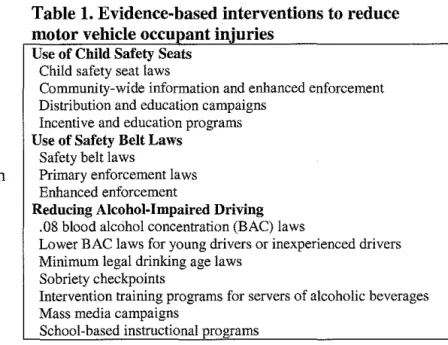
Table 1. Evidence-based interventions to reduce motor vehicle occupant injuries
Use of Child Safety Seats Child safety seat laws
Community-wide information and enhanced enforcement Distribution and education campaigns
Incentive and education programs Use of Safety Belt Laws
Safety belt laws
Primary enforcement laws Enhanced enforcement
Reducing Alcohol-Impaired Driving .08 blood alcohol concentration (BAC) laws
Lower BAC laws for young drivers or inexperienced drivers Minimum legal drinking age laws
Sobriety checkpoints
Intervention training programs for servers of alcoholic beverages Mass media campaigns
School-based instructional programs
through scientific research to reduce injuries (Reede eta!., 2007). There are now 14
evidence-based strategies that have been proven in the published scientific literature to reduce and prevent
motor vehicle injuries and deaths (Dellinger et a!., 2007). These interventions were identified by
a multi-disciplinary team as evidence-based in systematic reviews by: developing an approach
to selecting the interventions, systematically searching for and retrieving evidence, summarizing
(CDC, 2001). The interventions target child safety seat use, seat belt use, and impaired-driving in vehicle occupants. Table 1 summarizes the evidence-based strategies to reduce motor vehicle occupant injuries (Dellinger et al., 2007).
The evidence-based interventions that target occupant restraint use should be especially useful to health departments since public health has traditionally focused on protecting the vehicle occupants (Christoffel and Gallagher, 1999). It is not clear who has the primary responsibility to implement these evidence-based interventions in communities. In fact, health departments and law enforcement agencies often compete for state highway safety office funds to carry out certain highway safety initiatives related to occupant restraint use and impaired driving (Christoffel and Gallagher, 1999). What is clear, however, is that state and local health departments have been charged with responsibility for the defense of the public's health (State and Territorial Injury Prevention Directors' Association [STIPDA], 1997). Health departments have the statutory responsibility for the public's health, provide direct personal health services,. and are extremely experienced in working with community groups, other health entities, and social agencies (Christoffel and Gallagher, 1999). Accordingly, public health plays a critical role in plans to address motor vehicle injuries (Dellinger et a!., 2007). These plans must include a coordinated comprehensive approach that ensures the most effective and efficient delivery of the evidence-based interventions and target the highest risk populations (e.g., lack of seat belt use, teen age drivers, impaired drivers, etc.) especially given the fact that the motor vehicle injury problem is generally too large and complex of a problem for any single discipline or entity in communities.
were demonstrated to reduce fatal and nonfatal crashes by rigorous evaluation (Shultz et al., 2001). Enhanced enforcement programs rely on increasing the number of officers on patrol, increasing the number of safety belt violations, safety belt checkpoints, publicity, or a
combination of these activities. Enhanced enforcement was demonstrated to reduce fatal and nonfatal motor vehicle injuries also in 2001 (Dinh-Zarr et al., 2001). Furthermore, traditional law enforcement has historically focused on community policing as a means to maintain order, detect and prevent crime, and enforce laws to protect and serve its citizens. In recent years, however, that role has expanded to include a variety of activities in the public health areas of emergency preparedness and response, bioterrorism, promoting safe communities, and motor vehicle injury prevention. For example, law enforcement's role in a disaster has involved enforcing public orders, securing the perimeter of contaminated areas, securing health facilities, controlling crowds, and protecting national stockpiles of vaccines or other medicines (U.S. Department of Justice, 2006). Hence, law enforcement has taken on a greater role in public health in recent years and these functions seem to coincide well with the public health approach.
vehicle injury prevention programs, therefore, can be defined as programs with the following functions (STIPDA, 1997):
1. The program is coordinated, led, and administered by the police department, 2. Police department data are collected and utilized by the program,
3. The program develops and implements motor vehicle injury interventions based on collected data, and
4. Program evaluation activities are conducted for program improvement.
The Boston Public Health Commission sponsors a child safety seat distribution and education program known as "Buckle Up Boston!" (Boston Public Health Commission, 2007). This program provides low-cost car seats and education to under-served families. Many medical health care facilities focus on motor vehicle injury prevention program by providing occupant restraint education and resources. One of the best examples of this type of program is the
Children's Hospital of Pennsylvania. Additionally, the Indian Health Service (illS), Department of Health and Human Services, is charged to raise the physical, mental, social, and spiritual health of Ais and Alaska Natives. It is evident that illS takes this charge seriously by
specifically funding an injury prevention program within its agency, which focuses on injuries (website: http://www.ihs.gov/MedicalPrograms/InjuryPrevention/index.cfm). The published literature does not suggest that comprehensive injury prevention programs, as they are defined in Christoffel and Gallagher and by STIPDA, may be best suited in law enforcement agencies. This study may be the first to suggest that these programs are best suited, at least in Indian country, in law enforcement agencies.
Violence Prevention is the most recent publication that recommends use of evidence-based
strategies (see Table 1). Several entities have also published numerous guides directed toward state injury prevention programs and police departments describing how these evidence-based strategies might be effectively implemented in communities (NHTSA. 2002). NHTSA's
Saturation Patrols and Sobriety Checkpoint Guide clearly identifies a systematic approach that
includes highly visible and coordinated efforts by law enforcement. prosecutors, judicial officials, traffic safety organizations and community partners as a key element to protecting innocent victims from impaired drivers (NHTSA, 2002). In particular, advocacy and health care groups, local businesses, judges and prosecutors, and elected official are important because they can help communicate the message the community does not tolerate impaired drivers (NHTSA, 2002). This suggests police departments should be engaged in local efforts and programs that target motor vehicle injuries, especially those that involve enforcement. One way some injury prevention programs have realized successful programs is through partnerships at the national, local, and internal levels (Hicks, et. al., 2007). For example, the CDC might serve as the funding agency and technical resource for a program's community-wide information and enforcement campaign while the LPHA, local motor vehicle injury prevention coalition, and community members help tailor specific components of the interventions (i.e., media awareness). Successful partnerships require each partner to show respect for one another, set aside personal or
The literature identifies leadership, criminal justice collaboration, and communication as key factors for successful police department motor vehicle injury prevention programs (International Association of Chiefs of Police, 2006; NHTSA, 2002). These key factors are for very specific interventions and programs. For example, one publication recommends that leadership ensure that enforcement is an agency priority mission to address the issue of impaired driving.
However, these publications lack a thorough discussion of leadership as they relate to
comprehensive programs. In addition, limited resources and competing priorities tend to be the emerging challenges to widespread use of these programs (NHTSA, 2006). There are several guides available on the NHTSA website and others that clearly describe how to conduct specific motor vehicle injury prevention interventions (NHTSA, 2002). These guides rarely consider or describe the process for establishing comprehensive law enforcement based motor vehicle injury prevention programs. There are also several additional resources that further describe the
Research Methods
The purpose of this study was to identify the processes, key elements, and challenges of comprehensive law enforcement based motor vehicle injury prevention programs.
Table 4
Recruitment and
participants Group
Two focus groups were conducted at different Group 1 police departments to acquire extensive Group 2 information about these programs. Law
No. in group(# of males) 5 (4)
3 (2)
Method of recruitment Telephone calls to participants Telephone calls to participants
enforcement officers were recruited who were directly involved in the programs by participation in the interventions or who had enhanced knowledge of the program's activities. Due to the intimate involvement of the officers with the program they could best attest to the programs' efficacy, design, and implementation. The participants were targeted because they regularly observed the programs, and were perceived to be in the best position to. Telephone calls were made to the participants to solicit their voluntary participation in the focus groups. The composition of the groups consisted of a police captain, police sergeants, and patrol officers. There were eight total persons who participated in the focus groups (table 4 ).
Each focus group was lead by a moderator using a pre-designed "Moderator's Guide"
agreed to have their responses analyzed for this study. The focus groups were conducted for approximately 60 minutes.
Key informant interviews were also conducted with two police department staff from the same police department who could not attend the focus group meeting and the five LPHA representatives involved in establishing these programs. Telephone calls were made to the participants to solicit their voluntary participation as key informants. Key informant interviews were conducted by using a specific line of questions (Appendix V). A "key informant" was an individual who was directly involved in the programs' by participation in the interventions or who had enhanced knowledge of the programs' activities. The interviews were conducted with the chief of police and the motor vehicle injury prevention coordinator. The interviews were conducted for approximately 60 minutes.
Several limitations were accepted in conducting the study. The small sample size makes the results less reliable than having a large number of study participants. The participating law enforcement officers were from a Tribal police department in rural locations. Therefore, the results of this study may not be generalizable to other local public agencies and police departments.
Results
Results are based on the focus groups and key informant interviews. These findings can fall into three categories: processes, key elements, and challenges. The results reported in this study were based upon the police departments' experience of developing, implementing, and
Processes
There were several steps identified through these key informant interviews and focus groups as essential for establishing law enforcement based motor vehicle injury prevention programs:
• use a coalition to advise the program,
• develop and implement a media campaign to address motor vehicle injuries, • conduct a needs assessment to determine the community's preference for specific
interventions and programs,
• secure the police departments support to establish a program, • identify and acquire a well-qualified program coordinator,
• develop a program plan with specific goals and objectives, and
• adopt evidence based strategies.
The participants also identified the final four bulleted steps as key elements to the programs' success.
Key Elements
There were seven key elements identified by the focus group participants and key informants of successful law enforcement based motor vehicle injury prevention programs. Key elements are factors that may enhance an effective program as identified by the participants. The
following key elements were identified and described in no particular order of importance: (I) a well-defined program plan, (II) a well-qualified program coordinator within the police
department, (III) leadership and management support, (IV) engaged partnerships with external stakeholders, (V) effective use of technical experts and public health consultants, (VI)
Developing and implementing well-defined program plans were key elements of successful
law enforcement based motor vehicle injury prevention programs. The program plans served to
guide the program planners in their pursuit of implementing effective interventions. Successful
programs developed plans annually with input from the police department's management and
leadership, technical experts, and public health consultants. A well-defined and developed plan
was described as specific, identified the persons responsible for the plan's deliverables, and
included a timeline.
Another key element of these programs was employing a well-qualified program coordinator.
A well-qualified coordinator was described as a person having a basic knowledge of community
policing, computer skills, an ability to work as part of a team, and a general knowledge of how to
conduct and participate in community events. For small and under funded police departments, it
was strongly recommended that police departments employ a civilian coordinator. This was
because of the perceived relative ease of management's ability to reassign sworn officers serving
as program coordinators to policing duties, which would negatively affect the department's
motor vehicle injury prevention program.
Leadership and management support for the
program was another important key element identified
as important for law enforcement-based motor vehicle
injury prevention programs. Leadership and
management must fully endorse the program and
provide all the necessary approvals to conduct and
Box 1: Leadership and management support
"Support and approvals by Leadership and Management through written and verbal communication is necessary for an effective program"
-Key Informant
implement the interventions. They must also provide the police officer with the tools necessary
Providing opportunities for police officers to provide feedback to management and leadership concerning improvement of the interventions will facilitate sustained officer participation in the program. In instances with wavering law enforcement leadership and management. complete cooperation and participation by patrol officers was a limiting factor.
A fourth identified key element was ensuring engaged partnerships with external
stakeholders. Partnerships with other external law enforcement agencies, national public health and highway safety entities, local public health agencies, external technical consultants, and grass roots organizations such as Mother Against Drunk Driving were all critical to overcoming both major and minor program challenges to deliver effective interventions. This was identified as a key element because it maximized resources for police departments toward a very complex community problem. Using a coalition or task force with membership consisting of the
program's external partners and stakeholders to serve, as an advisor to the program was one means of encouraging an engaged partnership with these entities. Use of a coalition facilitated a friend! y environment and atmosphere that allowed law enforcement to embrace the external stakeholders such as the local public health agency and vice versa. It also encouraged these entities to learn more about each other's strengths and weaknesses and to work outside their traditional professional comfort zones.
police departments' motor vehicle injury prevention programs. The technical experts and public health consultants for these projects provided a broad spectrum of services to the programs.
Another important key element was securing community support for the program.
Community support for these programs was identified by the focus groups and key informants as local judicial support, political support, and community/advocacy groups. Acquiring local judicial support was critically important for initial implementation of the program. This was because the judicial system retained the capacity to ensure certain, swift, and severe punishment in support of impaired driving and occupant restraint use. Securing their support through face-to-face meetings and invitations to program trainings were means of acquiring the support of the local judicial system.
Equally important were political and community support for these programs. Without political and community support, interventions were less effective because of the ability of these groups to undermine the programs. This was illustrated in the example of a politician who attempted to influence or persuade the judicial system from prosecuting one of his constituents for impaired driving. Political will was increased by providing regular reports on the status of impaired driving and occupant restraint use to local leaders and decision makers.
Use of evidence-based interventions was the most agreed upon key element identified for those seeking to establish a successful law enforcement based motor vehicle injury prevention program. By use of these interventions, the programs were able
Box 2: Evidence-based strategies "Because of these interventions, we are better able to slow people down, encourage use of seat belts, and child safety seats than without this program."
-Key Informant
Additional reported positive outcomes resulting from the use of these interventions were the
increased recognition and publicity for the departments and individual officers and the extent to
which external partnerships were favorably enhanced with other police departments. Clearly
written standard operating procures (SOPs), training, and equipment were also essential to
conducting many of these interventions. The SOPs contained the departments' rules,
regulations, policies, and procedures for interventions and programs. Example or model SOPs
were acquired through the NHTSA website, state public safety offices, and other police
departments (NHTSA, 2002). These procedures were reviewed and modified for use by these
programs. Furthermore, training for patrol officers consisted of basic and advanced field testing
related to specific interventions such as training on the program's SOPs or the standard field
sobriety test battery that is used to assess alcohol impairment.
Finally, police department staff must be provided the necessary equipment to carryout the
evidence-based strategies. For impaired driving, essential equipment consisted of safety
equipment such vests and cones as well as state-of-the-art breath alcohol testing equipment
including breathalyzers and passive alcohol sensors.
Challenges
One challenge to implementing law enforcement
injury prevention programs was maintaining staff
patience and morale while waiting for the observed
increases in seat belt use, child safety seats, and
reductions in impaired driving.
Box 3: Challenges
"It was the people accepting the change and public adjusting to the increased enforcement efforts in these areas that were a challenge ... "
The police departments identified incentives as an effective means to keep officers motivated and participating in program activities. Incentives used by the programs to motivate officers included overtime pay, special department recognition awards, nomination for larger external awards (e.g., annual state highway safety awards and MADD awards), and trips to attend national meetings and conferences.
Competing police officer priorities were also a challenge to implementing interventions and programs. For example, patrol officers volunteered after their routine patrol duty to provide a safety presence on sate construction projects for bonus pay above that of regular overtime salary. This resulted in lack of patrol officers for program interventions targeting impaired driving and occupant restraint use. Effective uses of partnerships and, for sobriety checkpoints, low manpower checkpoints were utilized to address challenges involving police officer shortages.
Finally, thorough completion of traffic accident reports and paperwork related to
interventions, such as citations for impaired driving and occupant restraint use, were problematic for some patrol officers. This results in incomplete data, which is inadequate for demonstrating effective interventions and feedback to tailor programs. Requiring only the necessary
information and data to demonstrate program impacts and outcomes will simplify paperwork for patrol officers and support reliable and complete data for interventions and programs. Also, use of overtime to pay patrol officers to complete their paper work encourages complete traffic accident reports and paper work related to interventions and programs.
Discussion
steps. The Micik model including the steps used to establish these programs (in bold letters) follow:
1. Gather and analyze data on motor vehicle injuries in the community.
2. Secure the police department's support for establishing a law enforcement based motor vehicle injury prevention program.
3. Identify, select and acquire stakeholders and partners to serve advisors to the program through use of a coalition.
4. Identify and acquire a well-qualified program coordinator.
5. Develop and implement a media campaign to address motor vehicle injuries in the community to acquire both a broad and specific base of support for the program.
6. Select and prioritize your target injuries and population, looking at preventable risk factors such as speeding, occupant restraint use, impaired driving, and any other risks as well as severity of injury, medical and social costs, and availability of interventions.
7. Conduct a needs assessment survey to determine the community's preference for specific interventions and programs.
8. Determine your intervention strategies and implementation methods. Focus on evidence-based strategies and best practices, support existing in the community, potential barriers (e.g., available resources such as materials, equipment, funds, and staff), and the political feasibility of strategies and methods.
b. Provide training to program partners and individuals to carryout the motor vehicle injury prevention program.
c. Publicize program impact and outcomes in a media campaign. 10. Implement the motor vehicle injury prevention program.
11. Monitor and support the program, providing feedback and technical assistance in an ongoing fashion.
12. Evaluate and revise the program. 13. Institutionalize the program.
14. Share lessons learned with other programs.
to help police departments develop and establish well-defined goals, objectives, and activities can enhance the process of establishing law enforcement based motor vehicle injury prevention programs.
There currently are no competencies published in the literature that help identify a well-qualified motor vehicle injury prevention program coordinator. The author recommends the following competencies and skills be considered as a part of identifying a well-qualified program coordinator based on the results from these focus groups, key informant interviews, and
identified in the Council on Linkages Competencies Project (website: http://www .trainingfinder.org/competencies!list nolevels.htm).
• Applies data collection processes, information technology applications, and computer systems storage/retrieval strategies
• Collaborates with community partners to promote the health of the population
• Utilizes leadership, team building, negotiation, and conflict resolution skills to build community partnerships
• Leads and participates in groups to address specific issues
• Effectively presents accurate demographic, statistical, programmatic, and scientific information for professional and lay audiences
• Accomplishes effective community engagements
program has the necessary equipment and financial resources to carryout program interventions and activities. Without law enforcement management and leadership support, the author recommends local public health agencies work with police departments to build this type of relationship prior to developing and implementing programs.
Ensuring engaged partnerships with external stakeholders can be difficult and challenging for some police departments especially since many stakeholders and partners may be involved in establishing these programs. The local public health agency in these projects ensured engaged partnerships with the external stakeholders by helping the police departments effectively
communicate with the large number of stakeholders. Rowitz recommends several interpersonal communication guidelines that may help police departments ensure engaged partnerships with stakeholders through effective communication. Accordingly, local public health agencies can assist law enforcement based motor vehicle injury prevention program by advising them of the importance of communication with stakeholders and helping them follow these effective
communication strategies. The following guidelines were published in Public Health Leadership (Rowitz, 2003) and may be helpful in ensuring engaged partnerships through effective
communication: (1) use understandable language, speak from the heart, and take a positive perspective, (2) respect the agendas of others and know when to abandon personal agendas, and (3) converse with other people in a meaningful way and on meaningful topics. In addition to ensuring engaged partnerships, enhancing communication with the program's stakeholders also resolved personal and organizational conflicts throughout the initiative since the majority of conflicts were the result of miscommunication.
assist police departments in establishing these programs by providing or helping to identify technical experts and consultants to serve as advisors to the programs. In these projects, environmental health specialists developed data collection tools (i.e., forms and a database) for use at the field level. They also helped formulate detailed program plans, the coordinator position description, and the program proposals, which are all higher level public health skills that were necessary to establish these programs. Hence, these advisors may be from any public health field within the local public health agency as long as their public health skills and/or specific competencies meet the needs of the program. Technical experts and public health consultants utilized for establishing these programs, however, must have the skills and abilities to work as a part of a team. These program resources must show respect for other technical experts and consultants, set aside personal or organizational agendas, and treat each other as equals (Rowitz, 2003).
enhanced by use of a coalition. Local public health agencies can also assist police departments with establishing or facilitating a program coalition to support advocacy efforts as a means to acquire community support. The publication, Developing Effective Coalitions, provides practical recommendations that may be useful to local public health agencies in their efforts to help
establish coalitions in support of these programs (Cohen, 1994)
It is doubtful that any law enforcement based motor vehicle injury prevention program will be as successful without use of evidence-based interventions. It is very important for both local public health agencies and police departments to realize that use of other strategies forgoes the large body of knowledge base that has accumulated in the published scientific literature that demonstrate these interventions reduce motor vehicle injuries. As stated in Injury in America, "Many injuries result less from lack of knowledge than from failure to apply what is known." Although this statement was directed toward society as a whole and referring to education only approaches, the author believes that public health must be better than the populations we are attempting to influence by applying what is known concerning use of evidence-based
interventions to reduce motor vehicle injuries. Local public health agencies can assist police departments with these programs by ensuring evidence-based interventions are the primary interventions used by the programs and helping to tailor the interventions for community use. Law enforcement based motor vehicle injury prevention programs are wise to apply this information to ensure that the public's health is best protected from motor vehicles.
outcomes. This process is known as the Deming's PDCA (planning, doing, checking, acting) cycle (Walton, 1991). This particular program lacked at least two key elements and preserved two challenges identified in this study. Because the program utilized this very useful process, they had indeed modestly improved their program's performance. Although the program is still not at ideal operation, they continue to endorse the key elements and challenges identified in this study. This finding highlights the importance of CQI in establishing injury prevention programs even though it was not identified as a key element in this study.
Conclusions and Reconunendations
Injuries continue to be a large public health burden for Ais. Injuries are the third leading cause of death for Ais and leading cause of death for persons 1-44 years (CDC, 2003). Motor vehicle injuries also continue to be problematic for AI. Motor vehicle crashes and pedestrian-related injury were the leading causes of unintentional injury-pedestrian-related death among American Indian adults 20 years and older (CDC, 2003).
support, engaged partnerships with external stakeholders, effective use of technical experts and public health consultants, conununity support, and use of evidence-based strategies. Although there were also challenges in implementing these programs by the police departments, these challenges were effectively resolved by a use of a basic continuous quality improvement process.
Though there were only two project sites in this study, much was learned from the police departments' effort to implement evidence-based interventions to reduce motor vehicle injuries. Most importantly, local public health and law enforcement agencies could work together to more effectively reduce injuries. Comprehensive law enforcement based motor vehicle injury
prevention programs appear promising for others who may wish to use this strategy to address motor vehicle injuries.
Appendix I
Law Enforcement Based
Motor Vehicle Injury Prevention Programs
Moderator's Guide Introductory Statement:
Hello everyone and thank you for being here today. My Name is Gordon Tsatoke and I am a student at the University of North Carolina seeking a Master's degree in Public Health Leadership. I will be the moderator for the meeting today.
Before we get started I would like everyone to review the Informed Consent Form with you.
[Verbally read the consent fonn]. Do you all understand the consent form? Are there any
questions about the Consent Form? If not, Please sign and date the Consent Form and this will be the original Consent Form that you will keep for your records.
Again, welcome everyone and thank you for your participation. At this time, I will go ahead and have the recorder(s) introduce themselves. I would like to now go around the table and have everyone introduce themselves. Please tell us your first name and your position within the Police Department.
Thank you.
Before we begin, I would like to give a brief overview of the goal and the ground rules of this meeting. I would like to identify the key elements, challenges, and process of implementing law enforcement based motor vehicle injury prevention programs. We will do this by discussing the issue openly at this gathering.
This meeting will be a guided discussion, moderated by myself. There are no right or wrong answers, so please do not worry about that. When I ask a question, I am not looking for any particular answer, so please answer the way you feel, know or believe. It is okay to disagree with another individual's answer. If you must respond, please do so by responding respectfully. Please speak one at a time and share both positive and negative comments with the group. It is possible that while talking about this topic, some sensitive or personal information may be brought up. Please respect each other's privacy. You can talk about the general purpose and experience in this session with your family and friends, but please keep private any personal information that is shared among this group. Remember: "What is said in this room, stays in this
room."
Before we begin do you have any questions? Line of Questions:
If there are no questions, I would like to first begin with the definition of a law enforcement based motor vehicle injury prevention program ...
A law enforcement based motor vehicle injury prevention program is a motor vehicle injury prevention program administered within a police department and uses any of the elements of education, enforcement, and environmental strategies to prevent or reduce motor vehicle injuries. I. Do you consider the Motor Vehicle Injury Prevention Program successful?
Probe: Why? Probe: Wby not? Responses:
2. What specific things made this motor vehicle injury prevention program successful? Probe: Why?
Probe: Why not?
3. As a result of the program, did anything happen that you didn't expect, either good or bad?
4. What were the biggest challenges of implementing a law-enforcement based motor vehicle injury prevention program and how can other police departments avoid or resolve
these challenges? ·
Probe: Administrative? Probe: Others?
5. In working with other police departments, police officers have told me that they do not feel this type of work is police work. What do you think?
6. Would you recommend other police departments implement law-enforcement based motor vehicle injury prevention programs?
Probe: Why? Probe: Wby not?
8. In a typical police department organizational structure, do you have any
recommendations as to where the program should reside and to whom the program should report within the organization?
Probe: Can you elaborate or expand on your answer?
Probe: Would it be better to have the program report directly to the Chief of Police or to another person/program/unit and why?
9. What type of support do you need out of police management in order to have an effective program?
Probe: Stated support?
Probe: Meeting participation? Probe: Participation in checkpoints? Probe: Others?
10. What specific resources were most critical in the success of this program? Probe: Staff? Funds? Overtime pay? Staffing? Technology? Consultants? Data? Training? Media? Publicity? Others?
11. Is there any thing the program could have done that it did not do to be more successful? Probe: Resources, Staff, Political Support, etc
12. What current technologies available or not available to you were essential for implementing this program and why were they important?
Probe: Preliminary breath testers? Passive Alcohol Sensors? Videotaping of DWIIDUI offenders? In-vehicle computer terminals for license/criminal record checks?
Breathalyzers? Phlebotimists?
13. What advanced training, not available in your police academy training, is essential for implementing this type of program and why is it important?
14. Certificates of achievement, overtime pay, meals, performance appraisals, and salary increases were all incentives used to motivate officers to participate in this program. Were their any incentives not mentioned or used that would have motivated you just as much or more that we should consider for these types of programs?
Probe: Designation for good details? Opportunities to attend coveted training? Others? 15. Many programs such as these involve help from multiple agencies, groups, and
16. How was the participation from the judicial side- the judges/prosecutor? 17. Is political support important for these programs and why?
18. What role do advocacy and community groups have in a law-enforcement based motor vehicle injury prevention program? In other words, do you want help from the
community in implementing these programs and how can the community help?
19. Reliable data is critical to most all public health programs. How can police departments encourage and support their police officers in their efforts to complete paperwork and reports for this type of program?
20. Is there any other information that you would like to share with us that would help other Police Departments implement this type of program?
Conclusion:
Appendix II
Recorder's Form
Date: Location:
Question N o . - - - - Recorder's
Initials _ _ _
Appendix III
Privacy Pledge for Meeting Staff
Pnrpose and Benefits
Gordon Tsatoke Jr., MPH Public Health Leadership candidate at the UNC, is conducting a meeting to identify the key elements, challenges, and process for implementing a law-enforcement based motor vehicle injury prevention program. Your participation in this meeting will help other law enforcement programs in their efforts to implement evidence-based motor vehicle injury prevention programs.
Procedures
I will recruit about 10 participants for the focus groups and key informant interviews. The meetings will take 60 minutes to complete and will include several questions concerning implementation of evidence-based motor vehicle injury prevention programs in police departments.
Privacy
Participants from the community will not be identified with the information they provide because the focus group meeting is private. No one but the moderator will know how participants answered the questions during this focus group. Participants' names will be eliminated from all documents associated with this focus group. Any identifying information will be destroyed immediately after the data have been transcribed. The information (with any names on them) will be destroyed after the data is analyzed. Only I as project staff will have access to the focus group and key informant interview data. I will not use participants' names when I report results.
Staff Agreement
I consent to ensure the privacy of focus group meeting participants is secure and the identity of each participant is kept confidential.
Staff Signature Date
Appendix IV Informed Consent Form
Purpose and Benefits
Gordon Tsatoke Jr., MPH Public Health Leadership candidate at the University of North Carolina, is conducting meetings with law enforcement officers and local public health agency representatives to identify the key elements, challenges, and process of implementing a law-enforcement based motor vehicle injury prevention program. Your participation and the information that you provide will help other entities establish programs with the intent to reduce and prevent motor vehicle injuries and deaths.
Procedures
We will recruit about 10 to 12 officers and representatives to participate in the meetings. The meeting will take 60 minutes to complete and will include several questions related to establishing and implementation of law enforcement based motor vehicle injury prevention programs.
Privacy
You will not be identified with the information you give because the meeting is private. No one but the moderator and recorder will know how you answered the questions during the meeting. The moderator and recorder have each signed a pledge to keep all information about you private. Your name will not be associated with the meeting. In place of your name, a code will be assigned to each of you. Any personal identifying information will be destroyed immediately after the data have been analyzed. Only staff will have access to the data. We will not use your name when I report results of the meeting. The information we collect from you will be combined with information from other participants with the intent of meeting the objectives of the focus group.
Risk and Benefits
If you feel uncomfortable with any of the questions, you can refuse to answer. You may also skip questions you do not want to answer. You can choose to leave the meeting at any time. The likely benefits to you are minimal; however, the overall impact on other police departments and public health will be significant, because new information on the topic will become available to better address motor vehicle injuries.
Rights as a Volunteer
Your participation in the meeting is voluntary. You have the right to stop participating in the meeting at anytime during the meeting.
Respondent Agreement
The Informed Consent Form has been explained to me. I voluntarily consent to participate. I have had an opportunity for my questions to be answered. I know that I may refuse to participate or to stop participating in the meeting at any time. I understand that if I have questions about this meeting or my rights as a respondent, I may contact Gordon Tsatoke Jr.
Respondent Signature Date
Moderator Signature Date
AppendixV
Key Informant Interviews Name:
Date:
Questions about Standard Operating Procedures
1. What do you mean by having a standard operating procedure in place prior to starting motor vehicle injury prevention programs? (In other words, define standard operating procedures for motor vehicle injury prevention programs.)
2. What are the key elements of a standard operating procedure? (Prioritized?)
3. What are the most common challenges with having standard operating procedures in place? (Prioritized?)
4. Are the model standard operating procedures for tribal police departments and if not, how do you recommend police departments proceed with developing these procedures?
5. How important is training of officers concerning SOPs? Probe: How? Who? Frequency?
6. Other available resources to consider in developing SOPs? 7. Were there any additions to your SOPs after implementation? Questions about Equipment
8. Lights, barricades, breathalyzers, and preliminary breath testers were all equipment decided as essential for the motor vehicle injury prevention program. Are there any other equipment that is considered essential and how would you prioritize this list?
9. What resources are available to help police departments purchase equipment? 10. Do you know of any non-reimbursable grants that would help purchase equipment? Questions about Staffing
11. How might other police departments address staff shortages and still implement program?
Questions about Partnerships
13. What guidance would you give to public health programs, such as tribal health department, who want to implement motor vehicle injury prevention programs? 14. How do police department's best initiate/engage a partnership with other entities? 15. What can partnerships offer to motor vehicle injury prevention programs?
16. What specific partnerships are most and least important for this program? Questions about Training
17. Impaired driving, the SFST, and DUI test are required of officers to implement this program?
18. Any special considerations or training required to have state officers participate in tribally operated motor vehicle injury prevention programs?
Questions about Implementation
,
REFERENCES
Blincoe, LJ (1996). The economic cost of motor vehicle crashes. Washington, DC: National
Highway Traffic Safety Administration. (Publication no. DOT HS 808 425.)
Bobrow EE (1998). Ten Minute Guide to Planning. New York: Macmillan, Spectrum, and
Alpha Books.
Boston Public Health Commission (1997). BuckleUpBoston! Available from URL:
http://www. bphc .org/pro grams!ini tiati ve. asp ?b=2&p=212&i =24 7.
Centers for Disease Control and Prevention (1999). Motor-vehicle safety: a 20th century public health achievement. Journal of the American Medical Association, 281,2080-2082.
Centers for Disease Control and Prevention (2001). Motor-Vehicle Occupant Injury: Strategies for Increasing Use of Child Safety Seats, Increasing Use of Seat Belts, and Reducing Alcohol Impaired Driving. A Report on Recommendations of the Task Force on Community Preventive Services. Morbidity and Mortality Weekly Report, 50, (No.RR-7), (2). Accessed on July 13,2008 at http://www.cdc.gov/mmwr/PDF/rr/rr5007.pdf. Centers for Disease Control and Prevention (2001). Motor-Vehicle Occupant Injury: Strategies
for Increasing Use of Child Safety Seats, Increasing Use of Seat Belts, and Reducing Alcohol Impaired Driving. A Report on Recommendations of the Task Force on Community Preventive Services. Morbidity and Mortality Weekly Report, 50, (No.RR-7), (2). Accessed on July 13,2008 at http://www.cdc.gov/mmwr/PDF/rr/rr5007.pdf. Centers for Disease Control and Prevention (2003). Web-Based Injury Statistics Query and
Reporting System (WISQARS). Available from: URL: www.cdc.gov/ncipc/wisgars. Centers for Disease Control and Prevention (2007). Accessed on November 10, 2008 at
http://www .cdc. gov /ncipc/factsheets/nati veameri cans.htm.
Centers for Disease Control and Prevention (2008). Accessed on August 11, 2008 from Web-based Injury Statistics Query and Reporting System (WISQARS): Causes of death reports. Website http://www.cdc.gov/ncipc/wisqars.
Christoffel, T., Scavo-Gallagher, S (1999). Injury Prevention and Public Health Practice: Practical Knowledge Skills, and Strategies (2nd ed.). Sudbury, MA: Jones and Bartlett. Christoffel, T., Scavo-Gallagher, S (2006). Injury Prevention and Public Health Practice:
Practical Knowledge Skills, and Strategies (2nd ed.). Sudbury, MA: Jones and Bartlett. Cohen, L (1994). Developing Effective Coalitions: An Eight Step Guide. Pleasant Hill, CA:
Reede, C, Piontkowski, S, Tsatoke, G (2007). Using evidence-based strategies to reduce motor vehicle injuries on the San Carlos Apache Reservation. The IRS Primary Care Provider, 32, 209-212.
Richards, E, Rathburn, K, Brito, C, Luna, A, (2006). The Role of Law Enforcement in Public Health Emergencies. U.S. Department of Justice: unpublished document. Available at http://www.ojp.usdoj.gov/BJA/pdf/role law enforce.pdf.
Rivara, F, Thompson D, Beahler, C, MacKenzie, EJ (editors). (1999). Sysetmatic Reviews of Strategies to Prevent Motor Vehicle Injuries. American Journal of Preventive Medicine, 16, (15).
Rowitz L, (2003). Public Health Leadership: Putting Principles into Practice. Sudbury, MA: Jones and Bartlett Publishers.
State and Territorial Injury Prevention Directors' Association (1997). Safe States: Five
Components of a Model State Injury Prevention Program and Three Phases of Program Development. Accessed on November 17,2008 at http://www.stipda.org/stipda/core.htm.
U.S. Department of Justice (2006). The Role of Law Enforcement in Public Health Emergencies. Rockville, MD: Bureau of Justice Assistance.
Wallace, D, (2002). Evidence-Based Effective Strategies for Preventing Injuries: Child
Restraints, Seat Belts, Reducing Alcohol-Impaired Driving, Teen Drivers, Child Abuse Prevention, Bike Helmets, Residential Fire, and Drowning. National Center for Injury Prevention and Control: unpublished article.
IRB Notice
Subject: IRB Notice
From: IRB <[email protected]> Date: Thu, 4 Dec 2008 11:12:21 -0500 (EST) To: [email protected]
CC: lesneski @email.unc.edu
To: Gordon Tsatoke PH Leadership Program CB: 7469
From: Public Health-Nursing IRB
Date: 12/04/2008
RE: Notice ofiRB Exemption
Exemption Category: 3.Elected officials Study #: 08-1899
Study Title: Law Enforcement Based Motor Vehicle Injury Prevention Programs
This submission has been reviewed by the above IRB and was determined to be exempt from further review according to the regulatory category cited above under45 CFR 46.101(b).
Study Description:
Purpose: The purpose of this project is to identify the key elements, challenges, and processes involved with implementing law enforcement based motor vehicle injury prevention programs. Participants: Law enforcement officers in two police departments who are involved with their motor vehicle injury
prevention programs. Procedures (methods): The purpose will be realized by conducting focus groups and key informant interviews with key staff to acquire their knowledge, perceptions, and attitudes toward these programs. This information will be disseminated to the public health field so that effective collaborative partnerships can occur between local public health agencies and law enforcement to further reduce motor vehicle injuries.
Investigator's Responsibilities:
If your study protocol changes in such a way that exempt status would no longer apply, you should contact the above IRB before making the changes. The IRB will maintain records for this study for 3 years, at which time you will be contacted about the status of the study.
Researchers are reminded that additional approvals may be needed from relevant "gatekeepers" to access subjects (e.g., principals, facility directors, healthcare system).
CC:
Cheryl! Lesneski, Ph Leadership Program
Council on Linkages. Competencies Project: Core Competencies Without Skills Levels. Accessed on November 8, 2008 at:
http://www.trainingfinder.org/competencies!list nolevels.htm.
Dellinger AM, Sleet DA, Shults RA, Rinehart CF (2007). Interventions to Prevent Motor Vehicle Injuries. In: HassEN, Doll LS, Bonzo SE, Sleet DA, Mercy JA, eds. Handbook of Injury and Violence Prevention (pp 55-79). New York: Springer.
Dinh-Zarr, B., Sleet, D. A., Shults, R.A., Zaza, S., Elder, R.W., Nichols, J.L, Thompson, R.S., Sosin, D.M., & the Task Force on Community Preventive Services. (2001). Reviews of Evidence regarding interventions to increase the use of safety belts. American Journal of Preventive Medicine, 21 (4s), 48-66.
Hicks KR, Morones R, Wallace D, and Bill N (2007). Public Health Practice and the IHS Injury Prevention Program: Guiding Principles. The Indian Health Service Primary Care Provider, Volume 32, Number 9, pages 274-280.
Indian Health Service (2008). Retrieved on November 21, 2008, from http://www.ihs.gov/MedicalPrograms!InjuryPrevention/index.cfm.
International Association of Chiefs of Police. Impaired Driving Guidebook: Three keys to renewed focus and success. June 2006. Accessed on July 17, 2008 at:
http://www.nhtsa.dot.gov/people/injury/enforce/ImpDrGuidebook/images!ImpDrvGuide. pQf.
Micik S, Miclette M, (1985). Injury prevention in the community: A systems approach. Pediatr Clin North Am: 32,251-265.
National Highway Traffic Safety Administration (2002). Saturation Patrols and Sobriety Checkpoints: A How-to Guide for Planning and Publicizing Impaired Driving Enforcement Efforts. Accessed on July 17, 2008 at:
http://www.nhtsa.dot.gov/PEOPLEIINJURY/alcohol/saturation patrols/index.html.
National Highway Traffic Safety Administration (2002). The Economic Impact of Motor Vehicle Crashes. Press release accessed on October 31,2008 at: http://www.nhtsa.dot.gov.
National Highway Traffic Safety Administration (2006). Grassroots support for impaired-driving law enforcement crackdown efforts. Washington DC: Department of Transportation (DOT HS 810 364).
Shults, R.A., Elder, R.W., Sleet, D.A., Nichols, J.L, Alao, M.O., Carande-Kulis, V.G., Zaza, S., Sosin, D.M., Thompson, R.S., & the Task Force on Community Preventive Services. (2001). Reviews of Evidence regarding interventions to increase the use of safety belts.
American Journal of Preventive Medicine, 21 (4s), 66-88.