HURRICANE FLORENCE IN THE CAROLINAS: EXPERIENCES OF HOSPITAL STAFF
Meriel McCollum
A dissertation submitted to the faculty at the University of North Carolina at Chapel Hill in partial fulfillment of the requirements for the degree of Doctor of Philosophy in the School of
Nursing.
Chapel Hill 2020
ABSTRACT
Meriel McCollum: Hurricane Florence in the Carolinas: Experiences of Hospital Staff (Under the direction of Cheryl B. Jones)
Introduction: Disasters, such as hurricanes, pandemics, and mass casualty incidents, have become a fixture of modern life. Requirements for hospitals to prepare for and respond to disasters can be challenging, given resources available and today’s healthcare
environment. This study explored these challenges by describing hospital employees perceptions of the disaster response experience, and the hospital work environment during disaster response.
Background: Little is known about the challenges hospital employees face during disaster response. Prior research has identified concerns related to inadequate supplies, space, and staff to conduct successful healthcare responses to disasters. The safety and
psychological wellbeing of hospital staff who participate in disaster response are additional concerns. Hospital employees’ experiences of disaster response may also be affected by employment factors such as job role and job level within the hospital organization.
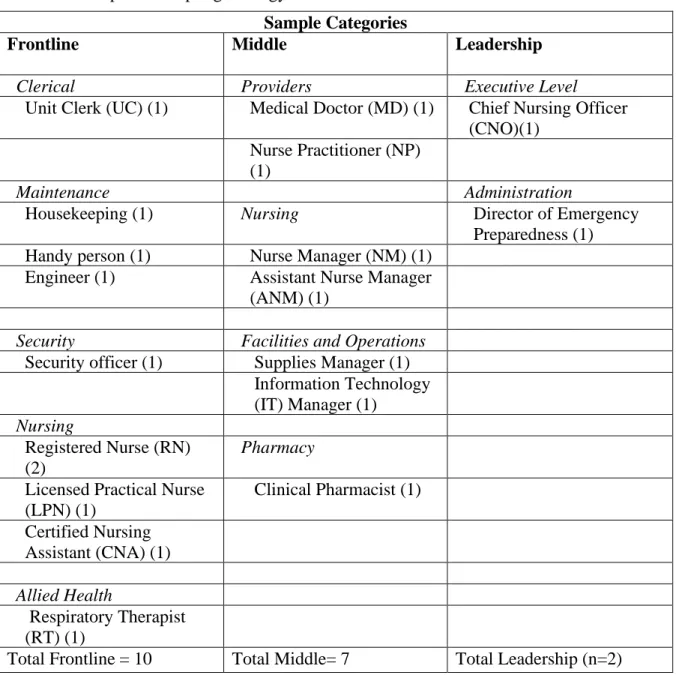
Methods: Qualitative description was used to examine the experiences of hospital employees who were involved in a hospital evacuation during Hurricane Florence in 2018. Sixteen hospital employees, sampled from the Frontline, Middle, and Leadership
working during the disaster, and participants’ perceptions of the disaster response work
environment.
Results: Participants described the cultures of teamwork, communication, and organizational learning during the disaster response experience. The disaster experience was shaped by participants’ job role and job level: Frontline employees described dissatisfaction
with pay and fears about their own safety and the safety of their families; employees with clinical duties described patient safety concerns. Participants also described a second disaster: the permanent closure of the obstetrics unit after the hurricane, and the impact on hospital staff and the community.
ACKNOWLEDGEMENTS
TABLE OF CONTENTS
LIST OF TABLES ... x
LIST OF ABBREVIATIONS ... xi
CHAPTER 1: INTRODUCTION ... 1
The Hospital Environment During Disaster Response ... 5
Purpose of This Study ... 5
Research Questions ... 6
Significance of the Study ... 6
Chapter Summary ... 7
CHAPTER 2: LITERATURE REVIEW ... 9
Introduction ... 9
Understanding Disasters ... 9
Preparedness ... 12
Response ... 17
Employee Experiences of Disaster Response at the Workplace ... 21
Two Key Factors: Willingness and Ability to Respond ... 22
Job Characteristics ... 23
Employee Needs During Disaster Response ... 24
Psychological Effects of Disaster Response ... 26
Resource Availability and Workarounds ... 30
Media Coverage of Event ... 31
Communication ... 33
Staffing and Workload ... 35
Organizational Justice ... 37
Chapter Summary ... 38
CHAPTER 3: RESEARCH METHODS ... 39
Introduction ... 39
Research Design... 39
Addressing Validity ... 40
Setting ... 42
Sample... 43
Procedures ... 47
Site Selection ... 47
Recruitment ... 48
Data Collection ... 51
Qualitative Data Analysis ... 54
Protection of Human Subjects ... 57
Special Research Considerations for Victims of Disasters ... 58
Chapter Summary ... 60
CHAPTER 4: RESULTS ... 61
Introduction ... 61
Summary of Hurricane-Related Events ... 62
The Hurricane ... 63
The Birth Center Closure ... 66
Results ... 67
Preparation for the Hurricane ... 69
The Hurricane Response ... 75
The Aftermath ... 87
RQ2: The Work Environment ... 99
Facilities ... 100
Organizational Culture ... 107
Comparison of Findings by Job Role and Job Level ... 119
Comparison of Findings by Recruitment Method ... 120
Chapter Summary ... 121
CHAPTER 5: DISCUSSION ... 123
Introduction ... 123
Summary of Major Findings ... 123
Staff Satisfaction ... 124
The Influence of Job Role and Job Level ... 126
Duty, Obligation, and Standards of Care ... 127
Stress, Burnout, and Psychological Debris ... 129
The Second Disaster: Loss of the Birth Center ... 132
Building Hazards and Cascading Effects ... 134
Hospital Culture ... 135
Community Networks ... 138
Implications... 139
Implications for Practice ... 140
Implications for Education ... 144
Implications for Future Research ... 145
Limitations and Methodological Considerations of this Dissertation... 149
Conclusion ... 151
APPENDIX A: RECRUITMENT EMAIL ... 153
APPENDIX B: FOLLOW-UP RECRUITMENT EMAIL ... 154
APPENDIX C: FLYER ... 155
APPENDIX D: INTERVIEW GUIDE ... 156
LIST OF TABLES
LIST OF ABBREVIATIONS
CMS Centers for Medicaid and Medicare Services CNA Certified Nursing Assistant
CSC Crisis Standards of Care ED Emergency Department EMS Emergency Medical Services EOP Emergency Operations Plan
FEMA Federal Emergency Management Agency HICS Hospital Incident Command System HIC Hospital Incident Command
IC Incident Commander ICU Intensive Care Unit
NG Nasogastric
OSHA Occupational Safety and Health Administration RN Registered Nurse
SARS Severe Acute Respiratory Syndrome
CHAPTER 1: INTRODUCTION
When two airplanes flew into the World Trade Center in downtown Manhattan, New York on September 11, 2001, one of the largest workplace evacuations during a disaster in United States history took place (Gershon, Magda, Riley, & Sherman, 2011). More than 14,000 employees and visitors were successfully evacuated from the building within two hours, amid smoke, fire, noise, mass confusion, and clouds of falling ash (Gershon, Qureshi, Rubin, & Raveis, 2007; Groeger, Stellman, Kravitt, & Brackbill, 2013). The success of this disaster response is especially significant considering the flaws in building design and engineering, the evacuees’ lack of familiarity of the safety features and layout of the building, the environmental hazards that resulted from the disaster, and the relatively high rate of medical conditions and disabilities reported by those who experienced the disaster at the time (23%) (Gershon et al., 2011).
These examples illustrate the wide variation in the outcomes of disaster management, and the impact that it has on human lives. Disaster management is generally described as a cycle that consists of four phases: preparedness, or planning to handle a disaster; response, or actions taken to save lives and prevent damage during a disaster; recovery, or actions taken to return to normalcy or safety after a disaster; and mitigation, or activities that prevent or lessen the impact of disasters (Couch, 2008). This cycle is generally used by businesses and governmental agencies at local state, and national levels to prevent, plan for, and reduce the impact of disasters.
Disasters are extreme events that can occur suddenly or over a period of time, and cause damage to human beings, infrastructure, and the environment. Disasters are often characterized as natural or manmade. Natural disasters include events brought on by natural phenomena. These events are generally caused by movements of the earth (such as in volcanic eruptions, earthquakes, and tsunamis), climate change (such as hurricanes,
tornadoes, extreme drought, extreme heat, famine, and landslides) (Vasilescu, Khan, & Khan, 2008), and the spread of infectious diseases, such as severe acute respiratory syndrome (SARS), Ebola Virus Disease (EVD), and novel coronavirus disease (COVID-19). The number of people affected by these extreme hazards has significantly increased during the past decade (Guha-Sapir, Hoyois, Wallemacq, & Below, 2016).
decade, such as the Boko Haram (CNN, 2018a) and ISIS (CNN, 2018b) attacks, the Charlottesville, Virginia protests (Spencer & Gay Stolberg, 2017), the Pulse Nightclub massacre (Ellis, Fantz, Karimi, & McLaughlin, 2016), and the litany of school shootings that continue to occur in the United States (Grabow & Rose, 2018). When these events occur in exposed areas, with vulnerable or un-prepared people, organizations, or structures, they can result in humanitarian conditions that are similar in severity to natural disasters (The United Nations Office for Disaster Risk Reduction [UNISDR], 2015).
When natural or man-made disasters occur, local hospitals often become the nexus of relief, providing shelter, food, water, electricity, and communication, in addition to providing care for the sick and injured (The Institute of Medicine [IOM], 2012). The hospital may even become the victim of a disaster if, for example, a hospital’s infrastructure or utility system
become affected by flooding from a hurricane, its staff and patient safety are threatened by an approaching wildfire, or a suspicious package is left unattended in the hospital lobby. Under such conditions, hospital leaders must respond in some way, often making the critical decision to fully or partially evacuate hospital premises. Hospitals that are affected by disaster and experience an evacuation are potentially burdened with enormous financial, logistical, and safety challenges to the hospital and its staff, often requiring staff to quickly make decisions, provide care using whatever means or supplies available, and protect both themselves and their patients under rapidly changing conditions. Despite the high stakes of disasters, research concerning the logistics and experience of evacuating a hospital is sparse.
Generally, the literature on disasters in healthcare can be sorted into four main categories: a) narrative or non-empirical accounts of organizational staff or patient
managing injuries or illness during or after disaster (see Jain, Noponen, & Smith, 2003); c) studies of disaster response simulations in hospitals (see Pucher et al., 2014), and d) survey studies of hospital employee willingness and ability to report for work during or after a disaster (see Charney, Rebmann, & Flood, 2015). Narrative accounts of staff experiences are often presented in editorials, the news media, and in non-fiction books to describe personal experiences and observations during a disaster response. Clinical best practices, staff availability, and simulations are also important areas of the literature that inform disaster planning. Although captivating to read, these accounts are not rigorous empirical work. A 2010 analysis of public health emergency preparedness literature published between 2000-2008 found that nearly 68% of the literature were non-empirical articles such as narrative accounts and editorials (Yeager, Menachemi, McCormick, & Ginter, 2010). These efforts do not provide critical information about the work environment during disasters, such as
communication, resources and supplies, facilities, teamwork, and administrative processes. Research designed to examine the hospital work environment during disaster
The Hospital Environment During Disaster Response
Depending on the type and context of the disaster, hospitals are vulnerable to numerous health and safety hazards during disaster response. Thephysical work
environment, or the infrastructure, utilities, and supplies, may be affected by power loss, flooding, infrastructure damage, loss of plumbing or potable water, dramatic shifts in
temperature due to loss of cooling or heating, insufficient food supply, fire, chemical spills or odors, or insufficient supplies required for patient care. These changes in the physical work environment can directly affect both patient and employee health and safety during disaster response.
The non-physical work environment—such as the teamwork and communication between staff, management and leadership styles, organizational culture, and financial aspects of the organization—also may be altered by changes in communication or cohesion between team members, changes in job roles and responsibilities, supervisory support, or inequalities in pay, resources, or aid. Changes in the non-physical work environment can affect employee satisfaction and organizational commitment, and ultimately affect patient safety and the quality of care provided to patients (Aiken et al., 2012; Djukic et al., 2014). Purpose of This Study
The purpose of this dissertation was to explore hospital employees’ experiences and
perceptions of their work environment during a hospital evacuation that was triggered by a natural disaster, Hurricane Florence, that struck the Carolinas in September 2018. Using qualitative methods, the investigator identified factors in the work environment that shaped participants’ perceptions of the hospital disaster response experience. Qualitative description
hospital that evacuated due to Hurricane Florence, and Hospital Incident Command System (HICS) notes were examined to provide context. Interview transcripts were examined following the principles of conventional content analysis (Hsieh & Shannon, 2005). Research Questions
The following questions were used to guide this study:
1. What were the experiences of staff working in a hospital during a disaster-related evacuation?
2. How did hospital staff describe the work environment during a disaster-related evacuation?
Significance of the Study
This study is significant in several ways. First, an empirical approach was used to examine a topic that is both under-studied and critically important in protecting humans during disaster response. The researcher was able to explore the perspectives of hospital employees who experienced a disaster and worked during a hospital evacuation. Although narrative reports, media stories and articles, personal blogs, and nonfiction books have been published on the topic, these reports are primarily personal accounts of individuals’
experiences, and subject to biases and perhaps the temptation to sensationalize disaster events. These empirically derived findings will add to the small body of evidence on the topic of hospital employee experiences during disaster response, and inform hospital preparedness and response planning.
studies of hospitals responding to disasters often do not sample staff members who are outside the patient care role, such as environmental services staff, security, and facilities engineers. Yet, these individuals play an important role during a disaster response, are able to contribute a unique perspective on the hospital work environment during disaster response, and provide a broader understanding of how individuals and groups work together during actual, difficult, and high-risk situations.
Third, the hospital where data were generated is a rural hospital that, in response to a natural disaster, closed its birth center. Although natural disasters, like hurricanes, do not discriminate between rural and urban areas, rural communities are often more adversely affected because they lack the resources and expertise needed to prepare for and recover from a disaster. The impact of the natural disaster on the rural hospital in this study resulted in the closing of its birth center, which limited access to needed obstetrical services and potentially jeopardized quality of care for community residents (Kozhimannil, Casey, Hung, Prasad, & Moscovice, 2014). The magnitude of the impact of this closure on the hospital employees who participated was an unexpected and significant finding.
Chapter Summary
CHAPTER 2: LITERATURE REVIEW
Introduction
The literature reviewed focuses on three main areas. First, an overview of the
concepts of “disasters” and “emergencies” is provided. The policies and agencies that govern
organizational actions taken to prepare and plan for disasters are also discussed. Second, a review of the literature regarding employee experiences of responding to a disaster at the workplace (research question 1) is provided, followed by a review of the literature regarding the disaster response work environment (research question 2). Research related to employee experiences of responding to disasters at the workplace is limited. Thus, this review includes both academic research and non-academic (“grey”) literature. Although a cursory review of these topics was conducted prior to data collection, this review was largely completed during the data analysis phase of the study, as is appropriate with qualitative description
methodologies. To provide a foundation for this study, relevant literature in the following areas was reviewed: understanding disasters; employees’ experiences of disaster response in the workplace; and the disaster response work environment. Each of these areas is discussed in subsequent sections.
Understanding Disasters
Although the terms “disaster” and “emergency” are often used interchangeably by the
during, and after disasters and emergencies. Within the context of a hospital’s environment, these terms take on additional meaning.
Hospitals routinely deal with clinical patient emergencies, such as respiratory distress or cardiac arrest. These emergencies are “expected,” and require resources that are generally available and anticipated on a daily basis, such as specific types of clinical staff (staff who provide direct clinical care to patients), medications, and medical equipment. In hospitals, emergencies may also include events that are not related to routine patient care, such as the occurrence of small fires, bomb threats, or suspicious packages left on site, temporary utility losses limited to a small area, or chemical spills. These emergencies may require action by hospital facility staff such as security personnel, engineering or facilities management staff, and administrators.
In general, emergencies have certain characteristics. First, emergencies convey a specific sense of timing and urgency to manage the event and prevent injury or loss of life. Second, emergencies are typically able to be contained (Couch, 2008). For example, a fire in a garbage bin can be extinguished, a chemical spill can be cleaned, and an armed intruder can be apprehended. Third, emergencies are events that call for the immediate and temporary suspension of normal operating procedures and the activation of “extraordinary measures” to contain the event. Finally, actions taken in response to an emergency are typically managed by an organization using their own staff and resources, and do not usually require support from external resources.
Disasters, on the other hand, are typically of a much larger scale, scope, and impact than emergencies. Disasters usually cannot be contained and instead require some larger
individuals, organizations, systems, and governments) vulnerability to a hazardous event that leads to injuries, fatalities, and significant economic breakdowns (Mezinska, Kakuk,
Mijaljica, Waligóra, & O’Mathúna, 2016). Disasters require the activation of both internal “extraordinary” measures that require additional external supports from government
agencies, local first responders, and law enforcement personnel to adequately respond to a disaster (Couch, 2008; Mezinska et al., 2016). In other words, the response to a disaster typically cannot be managed using resources from within the organization alone (Couch, 2008).
Healthcare organizations are not required to report disaster response activities to a central database or agency, which makes it difficult to accurately estimate the frequency of hospital disaster response. Currently there are no reported estimates of the frequency of hospital disaster response. There are, however, there are a few estimates of hospital
evacuations in response to a disaster. Although these estimates do not include situations in which a hospital experiences a disaster and but does not evacuate, these numbers may provide some insight on the frequency of hospital disaster response.
respond to hazardous materials incidents (Burgess, Blackmon, Brodkin, & Robertson, 1997). Burgess at al. (1997) reported that 13% of the hospitals in Washington had evacuated the emergency department or other area of the hospital due to contamination accidents.
The most recent study of the frequency of hospital evacuations, conducted by Bagaria et al. (2009), searched published academic papers, media reports, and online disaster agency resources to estimate the frequency of hospital evacuations worldwide. Bagaria et al.
identified 65 hospital evacuations in the United States between 1979-2009, 16 of which took place after 2000. The difference in total numbers of hospital evacuations between the
Sternberg et al. study (2004) and the Bagaria et al. study likely represents a difference in methodologies, but nonetheless underscores the lack of available data and, in turn, our limited knowledge of hospital disaster response.
Preparedness
Most organizations are not required to develop in-depth disaster response plans. Although businesses are required by the Occupational Safety and Health Administration (OSHA) to identify processes for fire response and evacuation, management of hazardous materials, personal protective equipment, and general first aid, there is little motivation for business owners to spend the time and money to develop disaster response plans and initiate practice drills using them. Thus, most businesses do very little to prepare for disasters (Alesch, Holly, Mittler, & Nagy, 2001). For example, in a study of businesses impacted by the 1989 Loma Prieta earthquake in Santa Cruz County, California, less than 10% of
For those businesses that do prepare for disasters, the general guidance on where to focus efforts is flawed (Tierney, 2007). Most preparedness plans for businesses focus on protecting the physical structure of the business, with the intent to reduce loss of life and property. Preparedness materials for businesses do not typically address the issues they will realistically face in the post-disaster environment, such as a decrease in the supply or demand for products or services, the migration of staff or available labor away from the disaster site, or suggestions for operating during long-term community disruption (Tierney, 2007). In a summary of the findings of studies examining the preparedness efforts of 5,000 private-sector businesses across the US, Webb et al. (2000) report that most businesses place very little emphasis on engaging in disaster preparedness activities or planning. In a study of Des Moines businesses, for example, nearly half had not carried out a single preparedness measure (Webb at al., 2000). In Los Angeles, pre-earthquake preparedness activities were similarly uncommon: only 18% of businesses surveyed had purchased earthquake insurance, 13% had obtained a generator, 17% had conducted earthquake drills, 29% had developed an emergency response plan, and only 14% had developed a recovery plan (Webb et al., 2000).
For organizations in high-risk industries, including healthcare, transportation, utilities, or nuclear power, constructing a comprehensive disaster preparedness and response plan could mean the difference between not only financial loss or viability, but large-scale loss of human life. As such, these organizations are typically required to develop disaster plans that address more topics than basic first aid or fire containment, and in some cases, are required to practice these response plans annually.
Southern California Gas Company regularly inspect their disaster plans, and employees are tested using drills, in which they activate the emergency response center, mobilize field workers, manage calls from customers, and write press releases (Hickman & Crandall, 1997). Every two years, nuclear power plants in the US are required to conduct similar drills; these drills often involve plant employees plus a variety of community stakeholders, such as hospitals, nursing homes, schools, daycares, and municipal offices (Adalja, Sell, Ravi, Minton, & Morhard, 2015). Disaster planning for nuclear power plants is so detailed that some plans include detailed provisions for sheltering nearby livestock, and creating databases of nearby farms to note where feed and other agricultural assets are stored (Adalja et al., 2015).
Healthcare organizations are also required to develop and practice disaster response plans. It is critical that staff and administrators engage in preparedness efforts to decrease the impact of disasters on both staff and patients. Hospitals are required by the Centers for Medicare and Medicaid Services (CMS) and by The Joint Commission to maintain disaster and emergency response plans, commonly called an Emergency Operations Plan (EOP) (The Centers for Medicare and Medicaid Services (CMS), 2016; The Joint Commission, 2016). It is important to note that despite being referred to as “Emergency Operations Plans”, these plans address response protocol for both emergencies (such as chemical spills or small fires) and disasters (mass casualty events, natural disasters).
hurricanes for coastal facilities, or tornadoes for midwestern locations). The EOP should address topics specific to disaster preparedness, to include strategies for evacuating and sheltering in place, collaborating with area providers, governments, and agencies, addressing the needs of specific patient populations, ensuring operations continuity, and succession planning. Hospitals must also develop policies and procedures related to the provision of food and water for patients and staff, waste disposal, and alternate energy sources. These procedures must address considerations for safe evacuation, such as care and treatment needs, the use of identification bands, medical documentation, and evacuation locations. There must be policies related to the use of volunteers, the role of state and federal agencies such as Medical Reserve Corps and the National Guard, and arrangements with outside hospitals and providers in the event of surge or evacuation (CMS, 2016c).
The communication plan must contain the names and contact information for staff, outside hospitals and agencies, volunteers, and state and local emergency management officials. The communication plan must also address alternative means of communication, processes for contacting emergency management agencies, and methods of sharing patient health information and medical records with outside providers.
Finally, hospitals are required to develop a training and testing program as a part of disaster planning. This program must include two annual testing exercises: one community-based, full-scale exercise, and one exercise of the hospital’s choice. A full-scale exercise is considered to include multiple agencies and jurisdictions and should involve “boots on the ground” simulations, including the medical treatment or decontamination of mock victims. Alternatively, a hospital may conduct a “table-top” exercise, in which a facilitator leads a
For hospital staff, preparedness activities generally involve securing and documenting a staffing plan, designating how patients will be relocating, securing supplies and
medications, organizing leadership teams, and developing a communication plan. For example, with the imminent threat of a disaster and in anticipation of losing electricity or running out of medical supplies and drugs, staff may attempt to wean patients from ventilators and intravenous medications either prior to a disaster striking, or prior to an impending evacuation (Barkemeyer, 2006; Berggren, 2005; Uppal et al., 2013).
Leaders may also set up Hospital Incident Command Systems (HICS) or response headquarters prior to or at the start of the disaster in order to centralize command and provide more efficient communication (Bailey, Williford, Cawley, Wain, & Lehman-Huskamp, 2020; Nakagawa et al., 2013). HICS is an incident management system for healthcare
organizations, based on principles of the National Incident Management System (NIMS). HICS provide guidance to healthcare organization regarding documentation and reporting requirements to meet Joint Commission Standards (Assistant Secretary for Preparedness and Response (ASPR), 2015).
and equipment to ensure adequate levels, bringing in extra supplies if needed or relocating supplies to higher floors to protect them from flood waters or building damage (Adalja et al., 2014; Bernard & Mathews, 2008; Danna et al., 2010; Ginsberg, 2006; Haverkort et al., 2016; Okumura et al., 1998). Leaders may also review staffing plans and make staff
accommodations (e.g., lodging, food, travel) in advance of the disaster to ensure the availability of adequate personnel to care for patients following the actual disaster event (Adalja et al., 2014; Barkemeyer, 2006; Bernard & Mathews, 2008; Danna et al., 2010; Ginsberg, 2006; Haverkort et al., 2016). Additionally, staff members may be encouraged to bring in “overnight bags” with extra clothes, food, water, flashlights, batteries, radios, and
personal hygiene supplies to further ensure preparedness for the disaster (Adalja et al., 2014; Barkemeyer, 2006; Bernard & Mathews, 2008; Danna et al., 2010; Ginsberg, 2006).
Response
Following a disaster, businesses and hospitals may experience tragic consequences if preparedness efforts are ineffective or inadequate. In addition to the loss of human life, disasters can financially devastate businesses and local governments, and effectively turn thriving cities into ghost towns as workers and residents move away from the disaster site. Hurricane Katrina caused the largest migration of physicians since World War II, and led to the closure of most businesses in the area (Edwards, 2006). Eighty percent of the New Orleans Police Department’s officers were made homeless by the storm, and 247 officers
Businesses that build employee support into their disaster response plans may fare better after an event. Advanced planning—beyond the development of required standard disaster preparedness materials—could mean the difference between failure and viability after a disaster. In a study of 50 small businesses that had been affected by the 1994
Northridge, California earthquake, these “management mitigations”—such as making plans for staffing and payroll—predicted whether the business would stay open or close
permanently after the disaster (Alesch et al., 2001).
After Hurricane Katrina, Northrop Grumman, a defense contractor employing over 20,000 people at shipyards in New Orleans and Pascagoula, Missouri, flew finance
department staff to its location in Texas, where they sent out paychecks and Western Union deposits to workers who could not get to their workplace. This action allowed employees to pay their bills and afford repairs to their homes. The labor contracts for these employees also allowed employees to automatically switch to vacation status rather than unemployment when the shipyard closed after the hurricane, ensuring the employees would receive full paychecks instead of meager unemployment payments (Edwards, 2006). Before Hurricane Katrina hit, Hibernian Bank rented office space and apartments seven hours from New Orleans, and allowed employees, their families, and their pets to occupy the apartments and office spaces after the disaster. Because of these actions, the bank was able to reopen 47 branches of the bank within one week of the hurricane, and 39 more branches within a month (Edwards, 2006).
threats, suspicious packages, armed intruders, and chemical spills may result in “shelter in place” orders or staff and patient evacuations.
Hospital responses to disasters are typically quite different. Such conditions may require taking in victims of a disaster unexpectedly, such as a mass casualty or exposure to an infectious disease, or providing shelter, food, electrical power, and internet access if a natural disaster or large-scale terrorist act occurs. If a hospital’s infrastructure is
compromised, the disaster response may require partially or fully evacuating patients and staff to safety. Conditions under which hospitals respond to emergencies and disasters vary depending on the nature of the event, but vulnerabilities may include the loss of vital utilities (e.g., electricity, lighting, air conditioning, plumbing), the lack of clear roles and
responsibilities of staff, broken communication pathways among the care team, insufficient preparation or training of staff on specific evacuation procedures, and inadequate supplies and equipment. During such conditions, staff must find ways to interact with each other and with organizational leaders to address immediate patient care and staff concerns, adapt to changing conditions, and access needed resources to safely provide care and to protect themselves and patients.
When hospitals activate their EOP, organizational processes shift into a state of “planned” chaos, in which alternative standards of patient care and operations are adopted. Typically, standards of care, or “conventional” standards, refer to the staff, supplies, and
spaces that are consistent with daily facility practices and needs. During an actual disaster and emergency response, standards of care shift along a continuum from conventional to “contingency” or “crisis” standards. Contingency standards guide hospital staff to operate in
“functionally equivalent” to normal patient care (IOM, 2012). Contingency standards are
more likely to be used during emergencies, when staff and resources are unaffected or only moderately affected by the emergency. An example of a contingency standard would be the processes activated if a small, contained fire occurred on a hospital unit that required
evacuating patients from the area.
Crisis standards of care (CSC) guide staff to provide the best possible care under the specific circumstances of an event, acknowledging that workarounds and substitutions may be necessary. CSC are more likely to be used when hospital staff, resources, or the
infrastructure is severely affected by a disaster. A hospital’s shift to CSC reflects a significantly altered capacity to provide care following a disaster event. Indicators that an organization may be forced to shift to crisis care following a disaster include the decreased availability of essential hospital resources, such as oxygen, ventilators, hospital staff, intensive care beds, essential medicines, and medical transportation (Gostin & Hanfling, 2009). Because EOPs may not accommodate a particular incident’s demand on staffing or resources, CSC often require hospitals to make difficult decisions regarding the allocation of scarce resources and the manner in which staff perform their duties (IOM, 2009). Extreme examples of these difficult decisions are detailed in Sheri Fink’s (2013) investigation of the events that occurred within Memorial Medical Center during Hurricane Katrina. Because hospitals are rarely required to use CSC, these plans are often overlooked and
underdeveloped (IOM, 2012).
Hospitals responding to disasters must rely on teamwork within and among
teams, ambulances, police, medical staff from local hospitals, and the National Guard worked together to save the lives of 184 passengers and crew members (Jacobs, Quevillon, &
Stricherz, 1990). Hospital staff may work alongside Emergency Medical Services (EMS) personnel, military personnel, FEMA, Wildlife and Fisheries Departments, special weapons and tactics (SWAT) teams, Disaster Medical Assistance Teams (DMAT), Fire Departments, State Troopers, the National Guard, civil defense volunteers, and independent helicopter pilots to safely evacuate and transport patients and employees to and from facilities (Adalja et al., 2014; Bernard & Mathews, 2008; Chavez & Binder, 1996; Daigle, 2004; Downey et al., 2013; Ginsberg, 2006; Spedale, 2006; Taylor, 2007; Uppal et al., 2013; VanDevanter, Kovner, Raveis, McCollum, & Keller, 2014b; Verni, 2012). Hospital staff may coordinate patient evacuation and relief efforts with staff from other area hospitals (Barkemeyer, 2006; Bernard & Mathews, 2008; Ginsberg, 2006; Spedale, 2006; Taylor, 2007; Uppal et al., 2013; VanDevanter et al., 2014b; Verni, 2012; Wilson, 1964), and hold interdisciplinary leadership and council meetings to review emergency response plans prior to and during disasters (Bernard & Mathews, 2008; Ginsberg, 2006; Maunder et al., 2003; Spedale, 2006; Uppal et al., 2013; Wilson, 1964; Zhuravsky, 2015).
Employee Experiences of Disaster Response at the Workplace
Two Key Factors: Willingness and Ability to Respond
Employees’ decision to report to work during a disaster has been shown to be influenced by two concepts, as identified by Qureshi et al. (2005): willingness to respond, and ability to respond. Willingness to respond refers to employees’ personal motivations to report to work or to stay home, and ability to report to work refers to employees’ capacity to report to work—or their availability and means of getting to work. Hospital staff willingness to respond during a disaster that affects their work has been associated with factors such as the type of event, employees’ personal obligations and priorities, the work environment and organizational culture, and employees’ knowledge and perceptions of personal efficacy (Al-Hunaishi, Hoe, & Chinna, 2019).
Healthcare workers tend to be less willing to report to work during radiological events, and pandemics or infectious disease outbreaks, and more willing to report to work during natural disasters and mass casualty incidents (Al-Hunaishi et al., 2019). For example, in hurricanes, flooding, and other environmental or natural disasters, percentages of
healthcare staff willing to respond during the disaster has been reported to be as high as 77.3% (Al-Hunaishi et al., 2019), 80.4% (Adams & Berry, 2012), and 84.2% (Qureshi et al., 2005). By contrast, their willingness to report to work during radiological events has been reported to be lower, at 57.3% (Qureshi et al., 2005), 63% (Mercer, Ancock, Levis, & Reyes, 2014), and 69.1% (Adams & Berry, 2012).
Healthcare workers’ job roles, personal characteristics, and past experiences may also
Ancock, Levis, & Reyes, 2014; Shapira, Friger, Bar-Dayan, & Aharonson-Daniel, 2019). Nurses, as compared to physicians, may also be less willingto respond, and age has also been found to be positively correlated with willingness to respond (Shapira et al., 2019).
Job Characteristics
When employees experience a disaster in the workplace, their reactions and responses to the event may vary based on the characteristics of their position, and the placement of their position within the organizational hierarchy. The two characteristics that are most commonly reported are job level and job role. For example, in a study of workers who had been
affected by the September 11, 2001 terrorist attacks on the World Trade Center in New York, managers expressed difficulty managing both their own emotions, their feelings
responsibility for the wellbeing of their employees, and a lack of preparation for managing the safety of both themselves and their employees (North et al., 2013). Some employees evacuating the World Trade Center delayed evacuation out of fear that their supervisors would not approve of them leaving without permission (Gershon et al., 2011, 2007). After the 2011 bombing of government headquarters in Oslo, Norway, employees without
leadership responsibilities were less likely to feel safe at work following the attack, and had higher expectations of another terrorist attack at their workplace (Nissen, Nielsen, Solberg, Hansen, & Heir, 2015). Sources of information about a natural disaster sought by employees also varied by job level, according to Drabek (2020, 2001): higher-level employees tended to seek information from a government agency, while lower-level employees sought
information from relatives.
exists between job level and job satisfaction (Cranny, Smith, & Stone, 1992; Robie, Ryan, Schmieder, Parra, & Smith, 1998). Higher level positions tend to include better working conditions, promotion opportunities, pay, autonomy, supervision, and responsibility (Robie et al., 1998). In a disaster scenario, factors such as pay, autonomy, job satisfaction, working conditions, and responsibility may amplify an employee’s negative or positive experience of
the event.
In hospitals, those who are on the “front line” providing care to patients report experiencing higher levels of job-related stress during disasters. In studies of hospital employee experiences during disasters such as hurricanes and infectious disease outbreaks, nurses, technicians, facility staff, and support staff experienced higher levels of stress, felt they were more likely to suffer adverse physical effects from the disaster (Chong et al., 2004; Koh et al., 2005; Maunder et al., 2004; Nickell et al., 2004), reported decreased levels of job satisfaction (Bai et al., 2004; Tam et al. 2004) and increases in workload (Koh et al., 2005), compared to employees in administrative positions. Employees in positions of power, control, or those privy to communications among hospital management reported
experiencing less stress and more satisfaction with their jobs than those who worked in direct patient care roles (Nickell et al. 2004).
Employee Needs During Disaster Response
pandemics, where employees may be exposed to dangerous pathogens if they lack personal protective equipment (PPE). One nurse working with Ebola patients during the 2003 Ebola outbreak in central Africa noted, “The greatest worry at work was that I had no protective gear in place. At the beginning of the isolation, there were only gloves, no masks” (Hewlett
& Hewlett 2005, p.293). In another investigation, when staff had adequate supplies to safely complete their tasks, such as PPE, employee morale was greater (Lee et al., 2005).
Basic Needs. Services, supplies, or assistance that leadership offer or neglect to offer related to basic physical needs—such as housing, food, water, rest, and hygiene—are of particular importance to employees. In studies of hospital disaster response, some staff have complained of a lack of adequate food, water, rest, toilets, sleeping areas, and debriefing after the disasters (French, Sole, & Byers, 2002; King et al., 2016; Nakagawa et al., 2013). This reflection of Maslow’s hierarchy of needs is not surprising. It is possible, however, that the
basic needs of employees are not included in standard disaster response planning. Other studies have identified incidences of basic needs unfulfilled: in a study hospital disaster response during Hurricane Katrina, one nurse addressed staff complaints about a lack of working toilets by building a toileting system out of biohazard bags, a bedpan, and a chair, and taught the rest of the staff how to use it (Berggren, 2005). At other facilities, it was reported that bathrooms were created by tying privacy blankets around bushes (Chavez & Binder, 1996) or placing plastic bags into garbage cans (Wilson, 1964).
surgical gown, a respirator, a face shield, double layer gloves, and double layer foot protection over surgical scrubs and clogs—was limited to 45 minutes followed by a 20 minute recovery period to minimize staff discomfort, and employees who experienced claustrophobia were not required to care for Ebola patients (Haverkort et al., 2016).
Moral Support. Employees affected by disasters have needs beyond food and shelter. Interventions to boost morale and support employees’ emotional and spiritual needs may ultimately improve employee’s experiences of disaster response, especially during times
of extended response, such as in a hurricane or pandemic. Organizations have found various means of doing so, for example, one hospital provided a movie and snacks to staff who had been asked to sleep at the hospital the night of Hurricane Sandy (Uppal et al., 2013). Other studies reported that hospital administrators held group prayer services for patients and staff (Barkemeyer, 2006; Berggren, 2005). Staff of a hospital flooded by Hurricane Katrina hung inspirational banners on the walls of the units and hosted a talent show for employees and patients, illuminated by flashlight (Berggren, 2005). During the COVID-19 pandemic, staff of a medical intensive care unit (MICU) at a Texas hospital promoted wellness and relaxation by creating a makeshift breakroom for staff to eat, drink, and relax (Newby, Mabry, Carlisle, Olson, & Lane, 2020). These efforts to improve the comfort, happiness, and morale of staff working during disasters, although typically not planned for in EOPs, are an important factor in ensuring an adequate workforce to respond to disasters.
Psychological Effects of Disaster Response
Workers who are regularly exposed to trauma, such as police, firefighters, healthcare workers, and rescue workers are at a higher risk for psychological problems such as
(Brooks, Dunn, Amlôt, Rubin, & Greenberg, 2019). Workers who are not routinely exposed to trauma as a result of their occupation can also suffer psychological symptoms after
experiencing a disaster at the workplace. For example, mental health issues were reported in Capital Hill staff who were exposed to the 2001 anthrax attacks (North et al., 2009),
Pentagon employees who were working the day of the September 11th terrorist attacks (Grieger, Fullerton, & Ursano, 2003), and factory workers who experienced an earthquake (Bland et al., 2005).
In one study, it was estimated that 24% of employees directly exposed to a disaster at the workplace suffered from PTSD at 10 months after the traumatic event (Hansen, Nissen, & Heir, 2013), and 17% still showed symptoms of PTSD after 22 months (Hansen et al., 2017). The psychological impact of experiencing trauma in the workplace can vary based on factors such as training, social support, extent of the exposure, and prior history of
psychological symptoms (Brooks, Dunn, Amlôt, Greenberg, & James Rubin, 2016; Brooks et al., 2015). Alcohol dependence, anxiety, prior psychiatric symptoms, and higher perceived stress are also associated with increased risk for employee PTSD at the workplace (Song, Jeong, Choi, Kim, & Ahn, 2018), and symptoms of trauma may be worsened with poor workplace support (Biggs, 2014), identification with trauma survivors or victims
(Hodgkinson & Shepherd, 1994; Ursano & McCarroll, 1990), repeated exposure to trauma (Fullerton, Ursano, & Wang, 2004; Marshall, 2006) or media coverage of trauma (Jenkins, 1997; Nishi et al., 2012), and avoidance of thinking of the event (or “deliberate detachment”) (Brown, Mulhern, & Joseph, 2002; Linley & Joseph, 2006).
their overall disaster experience. Employees who felt unsupported by their organizations in past disasters may be reluctant to report to work during future disasters (French et al., 2002; Moore, Gilbert, Saunders, Bryce, & Yassi, 2005; Powell-Young, Baker, & Hogan, 2006). To support the wellbeing of hospital staff after an earthquake, nurses were given time off after the disaster to rest, recover emotionally, attend to damaged homes or move into new homes, and stave off burnout (Johal, Mounsey, Brannelly, & Johnston, 2016). When the staff of a hospital treating SARS patients exhibited stress and anxiety about their close contact with the infectious disease, psychiatric and occupational therapy staff opened a drop-in support center for fellow employees to talk candidly about their fears and learn about further employee support resources (Maunder et al., 2003). These interventions and efforts by hospital leaders and managers may help employees recover emotionally and hasten their productive return to the workplace.
Although in-depth disaster preparation and planning, good organizational leadership, and a supportive organizational culture may have a positive effect on the mental health and wellbeing of employees during and after the disaster (Biggs, 2014; Hsu et al., 2004), interventions implemented to address the psychological effects of employees exposed to trauma is limited, and findings are inconsistent (Brooks, Dunn, Amlôt, Greenberg, & Rubin, 2018). For example, critical incident stress debriefing (CISD), often just referred to as “debriefing”, has long been encouraged for occupational groups exposed to a trauma at the
Rose, Bisson, Churchill, & Wessely, 2009); these conclusions by Rose et al. are also contested (Hawker & Hawker, 2014).
Psychological symptoms experienced by traumatized employees may ultimately affect work outcomes. Employees who are traumatized by disasters at the workplace may experience reduced productivity and concentration (Miller-Burke, Attridge, & Fass, 1999; Paterson, Leadbetter, & Bowie, 1999), and have difficulty returning to the workplace, as PTSD is characterized by difficulty returning to the scene of the trauma (Stergiopoulos, Cimo, Cheng, Bonato, & Dewa, 2011). Employees who report high levels of stress after a traumatic event may be more likely to be call in sick to work (Byron & Peterson, 2002), and employers may suffer financially due to decreased productivity and absenteeism (El-Guebaly et al., 2007; Kessler & Frank, 1997).
Stigma is an additional concern for the mental health of workers exposed to disasters. In the case of a public health disaster, employees exposed to the contagion within the context of their work may experience negative reactions from the community. Several studies report hospital workers’ frustration with the stigma and social isolation produced by working with
SARS and Ebola patients. This perceived stigma provoked stress in participants (Maunder et al., 2004). For example, individuals in one study expressed anxiety when using public
2004). Some employees who cared for infected patients even reported being instructed by supervisors to limit their contact with colleagues to prevent the spread of infection (Bai et al., 2004; Styra et al., 2008).
Social avoidance and isolation have been reported to have significant effects on employee stress (Maunder et al., 2004) and turnover intent (Shiao, Koh, Lo, Lim, & Guo, 2007). To prevent the spread of infectious disease, staff members of one facility were
discouraged from holding meetings or interacting with colleagues outside the hospital, which prevented staff from gaining emotional support from each other (Maunder et al., 2003). Emotional support from coworkers is important to employees after disasters strike; being able to talk to and commiserate with people who understand the experience provides a source of stress relief for employees (Brooks et al., 2019; Robertson et al., 2004; VanDevanter et al., 2014b).
Employees may feel shame or embarrassment about their psychological symptoms, and thus may avoid or delay help until problems are too severe to ignore (Brooks et al., 2019; Henderson et al., 2012; Iversen et al., 2011). Members of leadership speaking openly about their own mental health struggles may help to reduce the stigma of psychological suffering, and encourage employees to make use of counseling or other services (Brooks et al., 2019). Training for managers regarding the psychological effects of experiencing a disaster may also help foster a supportive atmosphere at the workplace (Brooks et al., 2019).
Resource Availability and Workarounds
In the absence of adequate supplies, studies also report the use of “workarounds” by
perceived disturbances to workflow; workaround behaviors may include problem solving, improvisation, violations, deviations, or shortcuts (Debono et al., 2013). In two studies of Hurricane Sandy, investigators reported that pharmacists created a courier system to deliver medications to patients when electrical power and communications were lost, and that operating room staff used flashlights to provide lighting for surgical operations (Daigle, 2004; Uppal et al., 2013). One study also reported the formation of a “bucket brigade” to deliver drums of fuel from basements to generators, by manually using ropes and a pulley system to raise drums to successively higher floors (VanDevanter, Kovner, Raveis,
McCollum, & Keller, 2014); a similar “human chain” system was reported as being used to manually lift and transport patients out of flooded areas and onto to higher floors of another hospital (Bernard & Mathews, 2008). Lacking air conditioning, one study reported that staff used damp towels to cool themselves and their patients, or fanned patients manually,
enlisting the help of family members and staff who were not caring for patients to fan staff who were providing care (Barkemeyer, 2006; Bernard & Mathews, 2008; Daigle, 2004; Giarratano, Orlando, & Savage, 2008; Orlando, Bernard, & Mathews, 2008). These examples highlight the importance of securing adequate and appropriate supplies and resources before disasters strike.
Media Coverage of Event
The media plays an important role in how employees learn about their organization during a disaster event, and how employees and their organizations are perceived by the public. One study reported that employees felt targeted by negative media reports that undermined their professionalism (Speroni et al., 2015b), and that even positive media
(Lee et al., 2005). Media reports have also been shown to overwhelm SARS-affected communities with information and misinformation, and contributed to the stigma of healthcare workers (Chong et al., 2004). In one study, media reports about the SARS outbreak resulted in a public outpouring of support for healthcare workers, and employees reacted positively to this attention (Koh et al., 2005). Conversely, the psychological impact of experiencing a disaster at the workplace may be intensified by repeated viewing of media coverage of the event (Brooks et al., 2019).
Hospital staff have also reported using television and internet sources to monitor the status of disasters. Some hospitals reported having limited or no access at all to news sources due to damage from the disaster (Bernard & Mathews, 2008; Danna et al., 2010; Ginsberg, 2006; Nakagawa et al., 2013; Orlando et al., 2008). Staff in one hospital responding to the subway gas attack in Tokyo learned that sarin had been confirmed as the chemical used from watching television reports—the police failed to contact the hospital to communicate this information (Okumura et al., 1998). Staff who worked during a hurricane and an earthquake were subsequently unaware of the severity of the disasters or the damage they caused to local areas and homes until seeing images of affected cities and victims (Barkemeyer, 2006;
Ginsberg, 2006; Nakagawa et al., 2013). Seeing news of disasters on the television or internet may provoke anxiety in some hospital staff, causing them to worry about their personal safety, and their homes, families, and friends (Barkemeyer, 2006; Maunder et al., 2003).
After Hurricane Katrina, one study reported that hospital staff felt that the media focused on what staff did wrong during the disaster rather than what they did right
(CNN) medical correspondent; hospital officials approved of this communication, saying “…the media is our rescue plan now” (Berggren, 2005, p.2). Several days after Hurricane
Katrina made landfall, one hospital was so inundated with press requests from the media that they designated one physician as a spokesman, and instituted regular press conferences twice a day (Spedale, 2006).
The Work Environment During Disaster Response
To better understanding findings from research question 2, the literature was examined for information regarding the disaster response work environment. Major topics identified in the review included communication, staffing and workload, and organizational justice. These topics are discussed further below.
Communication
Compassionate communication, in the form of emails, phone calls, text messages, and services and assistance offered to employees, shape employees’ stress reactions and positive
or negative regard of their organization during and after disasters (Davidson et al., 2009). When managers or leadership do not reach out to employees after disasters to “check in” on their physical and mental health, employees may interpret this as a lack of concern (Brooks et al., 2019). In one study, it was reported that the Chief Executive Officer (CEO), Chief
reported reduced stress (Lee et al., 2005). These actions by leadership and management communicate to staff that they are valued, cared for, and worried about. Staff members who do not feel their role or position is perceived as important by leadership may also be less inclined to report to work during future disasters (Davidson et al., 2009). It is important for hospital leaders to use compassionate communication to make all staff feel they are a crucial part of the team.
Employees also have informational needs. Staff trust in leadership is eroded by incorrect, insufficient, or untimely information regarding disaster details, safety information, and situation updates. For example, hospital employees responding to SARS who learned of news about their organization from the media instead of their management, and complained that information given to them by their employer conflicted with this information released by public health authorities and the media, felt frustrated and distrustful of their employers (Robertson et al. 2004). In another study the SARS response, hospital staff reported that the infectious disease policies offered by their organization were ambiguous, and the
dissemination of those policies was ineffective (Tam et al. 2004). Hospital employees responding to infectious disease outbreaks were also uncomfortable with the frequent
changes to infection control procedures made by their organizations during the disasters (Bai et al., 2004; Lee et al., 2005; Speroni et al., 2015b).
Hospital employees responding to disasters at their workplace have also reported lacking means of communication with coworkers and supervisors (Chong et al., 2004;
members of the staff during disaster response. During severe flooding and winter storm events in 2015 and 2018 respectively, the Medical University of South Carolina (MUSC) Health System used DCIs to relay information regarding resources, staffing, and
transportation to staff members (Bailey et al., 2020). While relying on telephone and cellular capability presents challenges in the disaster environment, providing such a service to staff members may improve organizational operations during disaster response.
It is possible that because high-risk industry staff in particular may feel like they are working on the frontline of the response to disasters, they feel they are entitled to earlier or more in-depth information regarding the disaster at hand than the general public. Having to obtain this information themselves, or be informed up updates from the media rather than from leadership, may make staff feel that they are not valued or trusted by their employer. Therefore, it is incumbent upon leaders of high-risk organizations to provide clear and direct communication regarding news of the disaster, and situation updates within the organization. Doing so will build trust among leaders and employees, and help staff feel they are a valued component of the disaster response.
Staffing and Workload
quarantined healthcare workers: “Once you provide care, you are quarantined… so what
happens when you run through your nurses that quickly? Where are all of the other nurses going to come from to provide care for the other patients?” (Speroni et al. 2015b, pp.548-49).
Several studies have reported that hospitals responding to disasters suffered staffing shortages resulting in higher workloads (Downey et al., 2013; Johal et al., 2016; Maunder et al., 2003; Spedale, 2006). One study noted that a particular hospital struggled to meet staffing needs, but was reluctant to bring in nurses from an evacuated hospital for fear of being
perceived as poaching staff (Adalja et al., 2014). While hospitals are required to provide adequate staffing to safely and effectively respond to disasters (McHugh, 2010), some studies reported enlisting only “key” or “essential” staff to respond to a particular disaster
(Barkemeyer, 2006; Ginsberg, 2006; Taylor, 2007). While designating essential vs. non-essential staff is a common practice in organizational emergency response planning (United States Code, 1986), this practice could potentially have a negative impact on staff members who are resent being labeled “non-essential”, and could result in staffing shortages during the
able to get to the hospital (Bernard & Mathews, 2008; Danna et al., 2010; French et al., 2002; Ginsberg, 2006). When staff are displaced from their workplaces by the disaster, they may be deployed or “absorbed” by other local hospitals to meet demand (Adalja et al., 2014;
Ginsberg, 2006; Uppal et al., 2013; VanDevanter et al., 2014b).
Certain types of disasters, such as pandemics and extended infectious disease outbreaks, may require significant increases in staffing. In the case of a hospital that had admitted a patient infected with Ebola, additional staff were needed for security,
administration, and direct care of the patient, including a “buddy” for the bedside nurse, who watched for errors in infection control and assisted with the donning and doffing of PPE (Haverkort et al., 2016; Jennings et al., 2018). During the COVID-19 pandemic, shortages of ED and ICU staff resulted in many states, particularly New York, calling on retired and inactive clinicians to volunteer to supplement the workforce (New York State Department of Health, 2020). The need for increases in overall staffing, or increases in staff with a specific skill set or specialization, is an important consideration in the development of EOP staffing plans.
Organizational Justice
Employees have reported being dissatisfied with what they perceived as a lack of fairness in how their hospitals delegated resources, time, training, pay, praise, and workload during disaster response. Employees have reported feeling resentment towards coworkers who were away from work longer after the disaster, or who were not part of the disaster response, or were not required to work after the disaster but were being compensated
operations” employees, or those employees who were given resources such as shelter and
food (French et al., 2002). These injustices made employees feel that their employers did not value them equally.
One study described participants’ frustrations with preferential treatment: physicians and their families were given private hospitals rooms to stay in during Hurricane Floyd, while nurses and their families were directed to local shelters (French et al., 2002). Nurses were also concerned with the level of visible leadership and direction from their managers, who were not “in the trenches” during the evacuation (French et al., 2002). In another study,
nurses on units not caring for SARS patients felt their needs became secondary to the needs of staff who worked with SARS patients (Maunder et al., 2003). It is important for hospital staff to feel that they are valued equally by leaders, for resources to be distributed as equitably as possible among hospital staff.
Chapter Summary
CHAPTER 3: RESEARCH METHODS
Introduction
The aims of this dissertation were to: 1) explore the experiences of staff who work in a hospital during a natural disaster; and 2) describe their perceptions of the work environment during the disaster. In this chapter, the methodological approaches used will be described, to include the study design, sample, and analysis. A holistic approach to validity, guided by Cho and Trent (2006) was integrated throughout the study, and is discussed in this chapter. Research Design
This study was carried out using the qualitative description approach, with
conventional content analysis for data analysis. Qualitative description is a methodology that is used to conduct an in-depth depiction and analysis of an event or experience. This
approach utilizes a “low-inference” form of interpretation, wherein multiple researchers would more readily agree on the facts of a case, as the conclusions stay close to the data, or “data-near” (Sandelowski, 2010, p.78), instead of moving to a level of more complex
augmented after data collection was complete and concurrent with data analysis, to ensure that relevant literature was intentionally integrated into the discussion section.
Addressing Validity
As with any study, an important aspect of qualitative research is to maintain and ensure the legitimacy and soundness of the study. The realist approach to validity described by Maxwell (1992) rejects the positivist view that a single reality exists, which can be accurately measured and described to ensure validity through the use of study designs, methods, and approaches typically associated with quantitative research. Instead, the realist approach acknowledges that a participant’s perception of reality, as well as the researcher’s own perceptions of reality and personal biases, affect the interpretation of data. Validity in qualitative research, then, “…pertains to the kind of understanding that accounts can embody” (Maxwell, 1992, p.284). Validity in qualitative research is not tested during data
analysis or near the end of a study using specific tools and statistics, but is built into every step of the research process (Morse, Barrett, Mayan, Olson, & Spiers, 2002). In other words, simply employing common qualitative approaches such as member checking, bracketing, and reflectivity analyses do not guarantee validity in a study; instead, the researcher must
intentionally select the appropriate tools to be used, clearly understanding when and why certain tools should be used in specific cases (Cho & Trent, 2006). The use of these
purposeful approaches can result in a more “holistically valid” (Cho & Trent, 2006, p.335)
approach than simply applying specific measures and assuming a “valid” study will be born from them.
Qualitative methods are typically vulnerable to two types of validity threats:
perspective on the design, analysis, and conclusions of the study. Reactivity is the effect the researcher may have on participants or the setting of study, and conversely, the effect of the participant and the data on the researcher (Maxwell, 2013; Paterson, 1994). Because neither researcher bias nor reactivity can be completely eliminated in any research, it is critical for researchers to be aware of these concerns and take steps to minimize, understand, and address these issues effectively within the design of the study.
Threats to validity in this project included researcher bias, sampling bias, reactivity, generalizability, and the truth value of multiple individual perspectives (Whittemore, Chase, & Mandle, 2001). These threats were addressed using a combination of strategies, namely triangulation, maintaining reactivity and reflexivity memos and analyses, holding in-depth discussions of the findings with a second coder, and the construction of an audit trail. These strategies helped to protect validity, and are meant to produce an account of participants’ experiences that is truthful, trustworthy, and non-judgmental (Cho & Trent, 2006).
Triangulation, or the use of multiple methods or data sources, was used in this study by conducting semi-structured interviews with study participants and reviewing
potential for the researcher’s own “situatedness within the research” (Berger, 2015, p.220) to
affect participants, was also addressed in this study. In particular, before, during, and following the field experience, the researcher reflected on how factors such as her race, gender, age, personal experiences, beliefs, biases, and political stances may have affected the research processes and outcomes (Berger, 2015), and wrote memos of those reflections. Other members of the dissertation committee, in particular the chair and qualitative experts, were available to discuss any issues raised during the field experience so that the researcher remained as open and unbiased as possible.
An audit trail consists of a series of notes and documents recorded and organized by the researcher to track and document the evolution of the project. These notes may include memos, fieldnotes, and reactivity analyses, and serve to provide context for data collected, the rationale for decisions made related to methods and design, the interpretation of findings, and the researcher’s orientation or relationship to the data (Rodgers & Cowles, 1993).
Memos and reactivity analyses were included in the audit trail to preserve the data and document the context for methodological and analytical decisions.
Setting
used for patients who require intravenous medication therapy, skilled physical therapy, or other skilled care services before they are able to return home (CMS, 2019).
Prior to Hurricane Florence, this hospital setting operated a birth center, which was comprised of four labor, delivery, recovery, and postpartum (LDRP) beds, a well-baby nursery, and gynecological services. The birth center was officially closed in January of 2019. This closure is discussed in further detail in Chapters 4 and 5.
Sample
The goal throughout sample recruitment and data collection in qualitative research is to obtain an adequate and appropriate sample (Morse, 1986, 1995). An adequate sample is one that consists of enough participants so that no new information is obtained by adding additional participants (Morse, 1995). An appropriate sample is one that supplies a sufficient amount of quality data to answer research questions (Morse, 1986). Adequacy and
appropriateness of the sample in this project were achieved through the guidance of
dissertation committee members, thoughtful planning of the sampling strategy and interview guide construction, and the researcher’s interview skills and experience. Recruitment for this project was ongoing to ensure that an adequate sample was obtained. The adequacy of the sample was assessed on an ongoing basis, as data were reviewed and analyzed. The
appropriateness of the sample was ensured by recruiting participants who were a part of the hospital disaster event and relevant to help address the study purpose and research questions.