Evaluating a New Writing Material: Students’
Perception towards the Use of a Teacher-made
Coursebook
Mansur Akil
State University of Makassar, Indonesia
Arifuddin Hamra
State University of Makassar, Indonesia
Haryanto Atmowardoyo State University of Makassar, Indonesia
Magdahalena Tjalla
State Islamic College of Parepare, Indonesia
Abstract—This study discusses an evaluation of a teacher-made coursebook for teaching essay writing course. Forty students were asked to give their perception of the use of the coursebook in terms of goal, contents, organization and design, and methodology. The analysis of the students’ answers showed that their perception towards the coursebook was positive. The majority of the students said that the coursebook objective was relevant to their needs, the contents were complete, the topics were interesting and were relevant to their needs and interests as well as their sociocultural background, the explanation was easy to be understood, the tasks and activities were attracting and helped them expressed their knowledge, experiences, and interests in a variety of essay types. Similarly, the coursebook was well-arranged from unit to the subunit. Students also said that the methodology used by the coursebook helped them expressed their knowledge, experiences, and interests accurately and fluently.
Index Terms—materials evaluation, teacher-made coursebook, students’ perceptions
I. INTRODUCTION
Instructional materials played an essential role in EFL teaching and learning. Instructional materials are defined as anything which is used to help language learning. The common examples are coursebooks, workbooks, CDs, flashcards, and CD-ROMs (Tomlinson, 1998).
Coursebooks are the most familiar materials to teachers. Dudley-Evans & St. John (1998) state four reasons for teachers using coursebooks, such as the use of the coursebooks as the source of language, as the learning support, as the medium to motivate students to learn, and the use of coursebooks for reference. Coursebooks are functioned as a source of language when English is taught as a foreign language. In this context, coursebooks play an important role as language exposure for students. To achieve the function, coursebooks for EFL students have to present real language and the full range that students need. As a learning support, coursebooks have to work, to be consistent, and to have some distinct patterns in thinking of and using language by stimulating students cognitive competence.
Coursebooks can be used by teachers to stimulate and motivate students if they are challenging, presenting ideas and information that are based on students’ experience and knowledge, and encouraging fun and creativity in doing the tasks. Moreover, coursebooks may stimulate and motivate if the inputs and knowledge involve both familiar and new concept and knowledge. Similarly, coursebooks can stimulate and motivate if the exploitation fits to the use the language in a real situation and the learning objectives. To function effectively, coursebooks need to clearly state the purpose and the connection of the language to the students’ reality. As a reference, students rely on coursebooks for self-study purpose. To be a reference, coursebooks have to be complete, have a good layout, and can be learned independently.
communicate eventhough they have mastered the rules of the language. Communicative coursebooks, on the other hand, try to create opportunities for students to use the language in the classrooms before using it in real situation.
Communicative coursebooks are characterized by the emphasis on the communicative function of language, the contents are the reflection of students’ needs and interests, the focus is on using language and not the form, the balance among the four language skills although sometimes may focus on speaking and listening, both contents and method show the authentic language for everyday use, activities are mostly designed for pair and group work, and the emphasis on both fluency and accuracy. Besides, we also know commercial coursebooks and teacher-made coursebooks. Commercial coursebooks are those produced to be used by all teachers and students in the world and are sold commercially in the market. As global coursebooks, they are intended for the diverse teachers and learners. Teacher-made coursebooks, on the other hand, are developed by teachers to be used locally in their own courses.
In many cases, teachers use commercial coursebooks which are available to them. Educational institutions often prepares their libraries with books to be used by their teachers. Sometimes teachers buy the coursebooks in a bookstore in their location. Teachers get benefits for using the available coursebooks since they will have enough time to prepare their teaching without thinking of what materials to be presented to their students. However, other teachers choose to develop their own coursebooks to be used in their own classes. Teachers devote their time to write their own coursebooks that meet the objectives of the course as well the needs and interests of their students.
Despite some of the weaknesses of coursebooks developed by teachers, they have some strengths over the commercial coursebooks. Richard (2012) points out some advantages in using teacher-made coursebooks such as they are relevant to students’ and institutional needs, so they can reflect local content, issues, and concerns. Moreover, doing the process of coursebooks development is helpful to develop expertise among staffs, and giving them a greater chance to understand the characteristics of effective coursebooks. In addition, teacher-made coursebooks show the teachers’ institution committed to providing materials that meet the specific needs of the students, which may enhance the reputation of the teachers’ institution. Finally, teacher-made coursebooks are revisable and adaptable, thus, giving more chance to meet the students’ needs in longer period.
On the other hand, the use of commercial coursebooks in ESL/EFL context produces some critics Bell and Gower in Tomlinson (1998), for instance criticized the topics of commercial coursebooks which may not be based on the cultural context of learners, so learners think they are irrelevant for their lives. Likewise, Hutchinson & Waters (1987) report that some of the commercial coursebooks do not match the specific needs of particular students. The specific needs are required due to their different levels and different types of learning styles and learning strategies (Jafarigohar & Ghaderi, 2013). Moreover, the use of commercial coursebooks limits teachers’ creativity. Likewise, organization and structure of commercial coursebooks may not be realistic and useful for all situations (Jafarigohar & Ghaderi, 2013).
This study was a part of a coursebook development project, in which the researcher developed a new essay writing coursebook. The coursebook was intended to be used to teach the fourth-semester students in English Education Department of Tarbiyah and Education Faculty at STAIN Parepare. The new coursebook was developed based on the results of a needs analysis conducted to students. Lecturers at the institution have used commercial coursebooks for years, but some critics on the inappropriateness of the coursebook in terms of the students’ needs and sociocultural context appeared. The new course book was developed based on students’ needs and interest by involving experiential learning as the basis for creating and developing the new coursebook.To address the sociocultural context, topics of the essay models are chosen based on the student's needs and interests. This is in line with Sheldon’s opinion (1987) that argues that the interesting topics of materials will motivate students to understand and find their meaning. Students said that they are interested in the topics in which they have background knowledge
This study aims to answer the following questions: a) What is the model of a teacher-made writing coursebook? b) What are the students’ perception towards the use of the new writing coursebook?
II. LITERATURE REVIEW
A. Writing Skill
is important to understand the way native speakers of English organize their thought”. The knowledge of native English pattern of thought is important to produce good English writing (Blanchard and Root, 2004)
B. Materials Evaluation
Hutchinson and Waters (1987) state that evaluation is “a matter of judging the fitness of something for a particular purpose”. Tomlinson (2001) argue that textbook evaluation is an activity involving teachers, material developers, administrators, and supervisors to judge on the efficiency of the materials for the people using them in a particular context. The activity can also involve teachers and learners to explore their experiences and opinions about the textbooks as used in the classroom. Evaluation in this study adopts the definition stated by Richards (2014) as “the process by which a coursebook is reviewed and assessed according to a set of criteria”. This research focuses on exploring students’ experiences, opinions, and perceptions about the use of a teacher- made coursebook after it’s use in the classrooms.
Hutchinson and Waters (1987) offer four stages of materials evaluation:1) define the criteria on which the evaluation will be based and choose the more important criteria among others, 2) analyze the nature and underlying principles of the program where the materials used, (subjective analysis), 3) analyze the nature and underlying principles of the materials and test the analysis in the classroom (objective analysis), and 4) compare the findings of subjective analysis and objective analysis. The evaluation must be based on some criteria used to judge materials. Therefore, it is important to decide the criteria used to evaluate. Some criteria might be more important than the others. The evaluation should decide the more important criteria to be used in judging materials. Some questions can be asked for the purpose of determining the criteria such as (2) what realization of the criteria do we want in our course? 3) how does the material realize the criteria? and 4) how far does the material match your need? The answers to the questions will guide us in deciding the best criteria used in judging materials to be used for a particular course.
III. METHODOLOGY
This study was a qualitative research involving observation and documents analysis as the techniques for collecting research data. The documents were prototypes of the coursebook. The prototypes were the two units of the coursebook which discuss the topics of culture and religion. To find the students’ perception, students were asked to answer some questions of a coursebook evaluation. The questions were adapted from the checklist of coursebook evaluation developed by Cunningsworth (1995) and Grants (1991). The questions were included three optional answers, yes, partly, and no. Each yes answer got 2 scores, no got 1 socre, and partly got 0 (Grant, 1991.) Data on students’ perception were analyzed to find the frequency, percentage, and score.
A. Participants
There were forty students of the English Education Department at the State Islamic College of STAIN Parepare participated in the study. They were the students who took essay writing course.
B. Research Procedures
In doing the research, the prototypes of the new coursebook was used to teach students.The prototypes were the two units about culture and religion. Students did some tasks and activities and the end of the meetings they wrote their own essays about topics interesting to them. At the end of the learning, students were asked to give their perception on the use of the prototypes in teaching. To collect data on students’ perception, the researcher used a questionnaire of materials evaluation adapted from Grant (1995) and Cunningsworth (1995) which consisted of some questions of coursebook evaluation consisted three optional answers: yes, partly, and no. Students were also asked to give a reason for each of their answer. The questions deal with coursebook objective, contents, organization and design, and methodology used to develop the coursebook. The questions were adapted to fit the context of students as the users. Data on students’ and teachers’ perception were analyzed in terms of frequency, percentage, and score and were then interpreted qualitatively to find out how students think about the coursebook.
IV. RESULTS AND DISCUSSIONS
A Teacher-made Coursebook
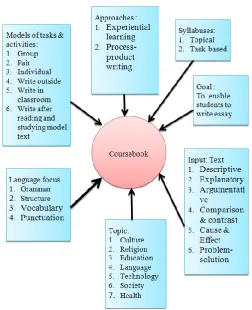
Figure 1. A Model of A Teacher-made Coursebook Developed based on Experiential Learning
As shown in the figure above the model shows that the writing coursebook consists of seven aspects: approaches, syllabuses, goal, input, topic, language focus, and models of activities. The aspects are explained as follows:
V. APPROACHES
As explained previously, the new coursebook adopted the principles of experiential learning in the contents. Experiential learning is a learning approach that focuses on learner experience and reflection as the source of skill, knowledge, attitude, and way of thinking (Lewis & William, 1995). To adopt the principles, the coursebook focuses on students to write their own interesting topics to express their ideas and opinions. Students chose their own topic to write which were categorized into seven topics: culture, religion, education, language, technology, social, and health. The coursebook also views students as a person who has background knowledge that is inseparable from their society and culture. For that reason, the coursebook reflected the social-cultural context of students. Topics of the essay models are then classified into three: local, national, and international.
Moreover, experiential learning was also adopted in presenting the course. Each unit of the coursebook was divided into four parts: activation, participation, reflection, and dissemination. In activation phase students do an activity for activating background schema. This is important to prepare students to be ready to accept new knowledge by relating it to their current knowledge. The next phase is participation phase, in which students learn new knowledge and skills related to essay types. Since it is essay writing course, students are exposed to essay models, learn the structure of each type of essay. Students also learn the language aspects, particularly of each different essay type. Reflection is one of the keys to successful learning, in each unit of the coursebook, students do reflection to ensure that they have progressed in their learning. The final phase of experiential learning is dissemination. Students are considered ready to apply their knowledge on writing essay type after doing the three previous phases: activation, participation, and reflection. In dissemination phase, students write their own essay by choosing their own interesting topic following the steps of the writing process.
The coursebook also combined process and product approaches to writing. As process product employs three steps in writing: prewriting, writing the draft, and revising and editing, product approach presented model texts as a guide for students to write. This mixture enables students to write accurately and fluency.
1. Syllabuses
For example, after studying essay structure in unit one, students were asked to rearrange the essay parts. This task was intended to familiarize students with each part of the essay and to enable them to distinguish each of the parts. Understanding to essay parts is important to prepare studentst to write the whole parts of the essay.
2. Goal
The goal of the coursebook is enabling students to write an essay of any types since essay writing is one of the skills that should mastered by EFL students. To achieve the goal, the book presented students with enough explanations and tasks to expose students to the types of essay. Each type of the essay discussed one particular topic. The book also involved structure, grammar, and punctuation to guide the students to accurate writing. Besides, the coursebook also included the vocabulary of a specific term in each unit to help students write fluently.
3. Topics
Since the coursebook was developed using a topical syllabus, the coursebook structure was divided into topics. Each unit discussed a different topic and was related to students’ social-cultural background. Topics of materials are important to consider since they can motivate students to understand and find their meaning (Sheldon, 1991). Based on the needs analysis, it was found that there were several topics that students were interested in. They were about culture, religion, education, technology, language, society, and health. In addition, the topics were categorized into three: local or regional, national, and international contents. The local contents were the ones related to the social background of the students as people who live in South Sulawesi Province, Indonesia. Students had their own experiences as the result of their interaction with their society and culture that were different from those in other regions of Indonesia. The experiences that they chose to express through essay writing. The national contents were the ones that discuss common experiences faced by the people of Indonesia, such as topics about Indonesian heroes, Indonesian famous women, and other topics. Besides, they also chose to write about religious issues, i.e. issues related to the religion of all the students, Islam. The contents of the topics were also related to international contents such as English language, culture of the countries in the world, education, technology, and health.. The choices of various topics were intended to enable students to use language as a means of conveying information and feelings as Hutchinson and Waters (1987) argue that “language is not an end in itself, but a means of conveying information and feeling about something”.
4. Input
Input in writing coursebook is text. In this coursebook, the input were essays of five types: descriptive, explanatory, argumentative, division and classification, cause and effect, and problem- solution. Each unit included several essay models to be learned before students write their own essay. Students preferred to study a model essay before writing their own essay as they stated in the needs analysis.
5. Language aspects
As writing is a complex skill, students needs to master a variety skill to be a good writer. The coursebook facilitated students with explanations on structure, grammar, vocabulary, punctuation. and exercises related to those aspects to make students ready to write their own essays.
6. Model of activities
Activities in the coursebook were designed and developed to enable students to use language as its function as a communication tool. In writing, language is exploited by the writers to send messages to the readers. To be able to write a readable text, students should be facilitated with interesting and fun writing activities. This coursebooks tried to present such activities to meet students learning needs such as they prerred writing in group and pair to writing individually, doing writing activities outside the classroom to inside the classoom, and studying essay models before writing their own essays.
A. Students ‘Perception towards the use of the coursebook
Students’ perception towards the new writing coursebook can be categorized into two: positive perception and negative perception. The student's perception towards each aspect of the coursebook was explained as follows:
1. The Goal of Coursebook
The result of the research shows that all of the students said that the coursebook goal was relevant to their needs. As shown by data in the table, all of them chose to answer yes for the question “ Is the goal of the coursebook relevant to your needs?” All of the students argued that they need to learn how to write an essay.
2. The Contents of Coursebook
they liked to read such topics. The attractiveness of the topics was closely related to the interest of the students towards the topics. Most of them (97.5%) said that the topics of the coursebook were relevant to their needs and interests because they like to read topics that are related to their daily lives, current topics, and because such topics were meaningful to their lives and were easy to be understood. One of them (2%) said that the topics were relevant to his/her needs but there should be more subjects discussed in the topics. Moreover, all of the students said that the topics reflected their socio-cultural condition. This means that the textbook was contextual to the students.
Moreover, the majority of the students (90%) said that the coursebook explanations were easy to be understood for several reasons such as the language was simple and easy, the essay structure was explained one by one, there were enough examples and exercises, and the topics were familiar. One of them (2.5%) said they were quite easy to be understood, and three of the students (7.5%) said there were some words that were difficult to find the meaning and in some parts, they still need more explanations.
Dealing with the tasks and activities, the majority of the students (95%) agreed they were interesting since they could express their experiences, write essay systematically, and think creatively. In addition, they were easy to be done, motivating, and were related to the explanations. Two of them (5%) said the tasks and activities were repetitious and were not varied. Moreover, most of the students (95%) believed the tasks and activities were helpful since they could express their knowledge, experiences, and interests in writing using a variety of essay types. Two of them (5%) said that the tasks and activities were helpful but only for students who were interested in writing.
3. The organization and design of coursebook
Dealing with the organization of coursebook, the majority of the students (90%) said yes, the coursebook was well-organized from unit to subunit and was arranged from easy materials to the difficult ones. They said that it had a good and systematic structure since it was started by introducing the essay definition and structure and followed by the examples. It was also well-organized since the coursebook was organized with the materials explanations in the first part followed by tasks and activities and ended with evaluation. Two of the students (5%) were not clear with the structure, and two others (5%) said that sometimes he/she found some difficult materials presented before the difficult ones. Therefore they said the coursebook was not totally well organized.
In terms of the design of coursebook, there were twenty-seven students (67.5%) said the coursebook design and illustration were attracting. They argued the design was colorful and the picture of the cover was relevant to the topic. However, some of them (32.5%) said the coursebook was not attracting because it had few picture. The majority of the students (90%) said that the whole contents of coursebook were interesting because they were easy to be understood, motivating, and were relevant to the students’ needs. There were four students (10%) said that some parts were not interesting and none of the students said the whole contents were totally uninteresting.
4. The Methodology of Coursebook
Most of the students (95%) said that the coursebook helped them in producing their essay by following the process of writing from prewriting to post writing (editing and revising). They argued the method wa easy, systematic, and presented a variety of tasks and activities. Two of the students (5%) said that instructions were not clear except for doing the tasks and activities. Moreover, most of the students (92.5%) said that doing the process of writing helped them in expressing their ideas accurately and fluently, they were more careful about their grammar and punctuation and could have more ideas to be written. However, three of them (7.5%) said that the processes sometimes were not helpful if they only focused on one process and had no more time to do the other processes. None of them said the processes were not helpful for them. Finally, the majority of the students (95%) said that writing their own topics helped them in expressing their ideas fluently because they hade been familiar with the topics, therefore they have already had the knowledge to be written. Moreover, they were free to share their knowledge, experiences, and interests. Two of the students (5%) said writing using their own topics was not motivating.
TABLE 1.
STUDENTS’PERCEPTION TOWARDS A TEACHER-MADE COURSEBOOK
Aspects to evaluate
Statement Answers
Yes (2) Partly (1) No (0)
Fr % Sc Fr % Sc Fr % Sc Total
A. Objective 1. Coursebook objective is relevant to my needs.
40 100 80 0 0 0 0 0 0 80
B. Content 1. For me, coursebook is complete because it covers the components of writing (sentence structure, grammar, vocabulary, and punctuation)
26 65 52 14 35 14 0 0 0 66
2. Coursebook presents a variety of essay types.
40 100 80 0 0 0 0 0 0 80
3. Topics of model essay discuss a variety of subjects.
36 90 72 2 5 2 2 5 0 74
4. Topics of essay models are interesting. 40 100 80 0 0 0 0 0 0 80 5. The choice of topics are relevant to my
needs and interests.
39 97,5 78 1 2.5 1 0 0 0 79
6. Topics of essay models are the reflection of culture and social condition of the society where I live.
40 100 80 0 0 0 0 0 0 80
7. Explanations are easy to be understood. 36 90 72 1 2.5 1 3 7.5 0 73 8. Tasks and activities are interesting. 38 95 76 0 0 0 2 5 0 76 9. Tasks and activities help me express my
knowledge, experiences, and interests in writing using a variety of essay types.
38 95 76 2 5 2 0 0 0 79
C. Organization and Design
1. Coursebook is well-arranged from unit to the subunit.
36 95 76 2 5 2 2 0 0 78
2. Coursebook is organized from the easy materials to the difficult ones.
38 95 76 2 5 2 0 0 0 78
3. Pictures and illustrations attract me. 27 67.5 54 0 0 0 13 32.5 0 57 4. The whole content of coursebook is
interesting.
36 90 72 4 10 4 0 0 0 76
D. Methodology 1. Coursebook helps me write step by step from planning, drafting, revising to editing.
38 95 76 2 5 2 0 0 0 78
2. The writing process help me express my ideas accurately and fluently.
37 92.5 74 3 7.5 3 0 0 0 77
3. Writing my own topics help me express ideas fluently.
38 95 76 0 0 0 2 5 0 76
VI. CONCLUSIONS
Students’ perception towards the teacher-made coursebook reflected what they need towards a good course book. A good course-book is the one that facilitates learning, and a teacher-made coursebook can best do it since teachers know best their students. A writing coursebook can be contextualized through the choices of topics that are relevant to students socio-cultural background. Through a checklist of perceptions, a teacher-made coursebook was perceived positively by students. The result of the analysis towards the students’ answers showed that the coursebook was good in most of the aspects evaluated but it is needed to be improved in terms of the design.
APPENDIX
TABLE 4.1
CHECKLIST OF QUESTIONS ON STUDENTS’PERCEPTION TOWARDS TEACHER-MADE COURSEBOOK
Aspects to evaluate Questions Answers
Coursebook Goal 1. Is the coursebook goal relevant to your needs? Yes Partly No 1. Contents 1. Is the coursebook complete? (Does it cover the components of
writing (sentence structure, grammar, vocabulary, and punctuation?)
2. Does coursebook present a variety of essay types? 3. Do the topics discuss a variety of subjects?
4. Do the choices of topics relevant to your needs and interests? 5. Do the topics reflect socio-cultural background?
6. Are the explanations easy to be understood? 7. Are the tasks and activities interesting?
8. Do the tasks and activities help you express your knowledge, experiences, and interests in writing using a variety of essay types. Organization and Design 1. Is the coursebook well-arranged in each unit?
2. Is the coursebook arranged from easy to difficult? 3. Do the pictures and illustrations attract you? 4. Does the whole content of coursebook interesting?
Methodology 1. Do the coursebook help you write step by step from planning, drafting, revising to editing?
2. Does writing process help you express your ideas accurately and fluently?
3. Does writing your own topics help you express ideas fluently?
REFERENCES
[1] Bell & Gower. (1998). Writing Course Materials for the World: A Great Compromise in Tomlinson, B. (Ed.), Materials Development in Language Teaching, pp. 116-129. Cambridge: Cambridge University Press.
[2] Blanchard, K., & Root, C. (2004). Ready to Write 3. From Paragraphs to Essay. USA: Pearson. [3] Cunningsworth. (1995). Choosing Your Coursebook. Oxford: Heineman.
[4] Evans-Dudley, Tony & Maggie Jo St John. (1998). Development in English for Specific Purposes. A multi-disciplinary approach. Cambridge: Cambridge Language Teaching Libray
[5] Grant, Naville. (1991). Making the most of your textbook. London, Longman. [6] Harmer, J. (2008). How to Teach Writing. England: Pearson Education Limited.
[7] Harsono, Y.W. (2007). Developing Learning Materials for Specific Purposes. TEFLIN Journal, 18(2), p.169-179. [8] Hutchinson, T., and A. Waters. (1987). English for Specific Purposes. Cambridge: Cambridge University Press.
[9] Jafarigohar, M. & Gadheri, E. (2013). Evaluation of Two Popular EFL Coursebooks. International Journal of Applied Linguistics & English Literature, 2(6), p.194-201.
[10] Leki. (1996). Material, Educational, and Ideological Challenges of Teaching ESL Writing at the Turn of the Century. University of Tennessee Department of English. P.1-25.
[11] Lewis, L.H., & William, C.J. (1995). Experiential Learning: Past and Present. New Directions for Adult and Continuing Education, 62, p.5-16.
[12] Sheldon, L.E. (1987). English Language Teaching Textbooks and Materials: Problems in Evaluation and Development. USA: McMillan Education.
[13] Richards, J.C. and Renandya, W. A. (2002). Methodology in Language Teaching. Anthropology of Current Practice. Cambridge: Cambridge University Press.
[14] Richard, J..C. (2012). Advantage and disadvantage in using instructional materials in teaching ESL http://www.professorjackrichards.com/advantages-and-disadvantages-of-using-instructional-materials-in-teaching-esl/(accessed 5/11/2017).
[15] Richard, J.C. (2017). Evaluation, Use, and Adapation. https://www.professorjackrichards.com/evaluation-use-and-adaptation (accessed 5/11/2017).
[16] Rondon, E.J.C., & Vera L.F.V. (2016). Understanding the Role of Teaching Materials in a Beginners’ Level English as a Foreign Language Course: A case study. PROFILE, 18(2), 125-137.
[17] Tomlinson, B. (1998). Materials Development. Materials Development in Language Teaching, pp. 116-129. Cambridge: Cambridge University Press.
Arifuddin Hamra is a professor in English Language Education at State University of Makassar, Indonesia. His research interests focuses on reading and materials development. Some of his research are “A Model of Reading Teaching for University EFL Students: Need Analysis and Model Design” (2012), “The Role of a Lecturer’s Performance in Facilitating Problem Solving for Students in Learning Translation” (2016), and “Communicative Task Analysis on Students’ English Books for Senior High School” (2017).
Haryanto Atmowardoyo is a professor in English Language Education at State University of Makassar, Indonesia. He focuses his research on research methodology. Some of his research are “Multilingual Instructional Model of Pesantren Schools in Indonesia” (Nov, 2017), “Perception of Senior High School EFL Teachers in Papua, Indonesia towards Their Own Competence” (Nov, 2017), and “Research Methods in TEFL Studies: Descriptive Research, Case Study, Error Analysis, and R & D “(Jan, 2018),