ENTREPRENEURSHIP AS EMPOWERMENT: ECONOMIC MOBILITY IN THE UNITED STATES
Ryan R. Herron
An honors thesis submitted to the faculty of the Kenan-Flagler Business School at the University of North Carolina at Chapel Hill
Chapel Hill 2020
ABSTRACT
Ryan R. Herron
Entrepreneurship as Empowerment: Economic Mobility in the United States (Under the direction of Dr. Larry Chavis)
Although many coin the United States as “the land of opportunity,” recent research suggests the country does not provide the level of opportunity that many imagined it to have. Research related to the underlying factors behind this lack of opportunity revealed that economic mobility in the United States is impacted by residential segregation,
income inequality, school quality, social capital, and family stability. To date, researchers in the United States have yet to explore the potential impact of entrepreneurship—known to be a promoter of economic growth, job creation, and wealth accumulation—on
ACKNOWLEDGEMENTS
The completion of this thesis was made possible by the continuous support of several individuals that I am so thankful for. Thank you to everyone who pushed me to go the extra mile with this thesis and provided a helping hand every step along the way. This research would not have been possible without the help of a few key individuals.
Dr. Larry Chavis – Thank you for providing guidance and support throughout this process. Your passion for helping your students and your ability to relate on an individual level with every student is truly inspiring.
Dr. Patricia Harms – Thank you for walking alongside during this process. Amid the ups and downs of writing our theses, your presence and motivation kept us going.
Dr. Andrew Boysen – Thank you for taking the time to provide valuable data sources and insights. When I was stuck and confused with my analysis, your words and guidance through the data helped to solidify the results of my analysis.
Dr. Michael Meredith – Thank you for your constant support and knowledge regarding business writing. You helped to form the foundation of my writing skills.
The Kenan Scholars Program and the Kenan Institute – Thank you for your continued engagement with our research from the moment we stepped into the program. You provided endless resources that supported our growth and helped us complete original research.
Mom and Dad – Since the start of my education journey, you have encouraged and motivated me to take on the next biggest challenge and make the most of every opportunity. I would not be where I am today if it was not for your loving support.
TABLE OF CONTENTS
ABSTRACT ... ii
ACKNOWLEDGEMENTS ... iii
TABLE OF CONTENTS ... iv
LIST OF TABLES ... vii
LIST OF FIGURES ... viii
INTRODUCTION ...1
Entrepreneurship’s Formative Influence on America’s History ... 2
The Entrepreneurial Spirit of America’s Founders ... 3
The State of Entrepreneurship in the United States Today ... 3
The Structural Makeup of the U.S. is Conducive to Entrepreneurial Growth ... 5
The High-Risk Tolerance of the United States Citizen ... 6
A Legal System that Supports Failure ... 7
The Strength of the U.S. Venture Capital Industry ... 8
The Benefits of Established University-Firm Relations in America ... 9
LITERATURE REVIEW ...12
Situation Overview ... 12
The Mobility-Entrepreneurship Relationship in South America ... 14
Methods to Increase Entrepreneurship ... 16
Economic Mobility in America ... 19
Conclusion ... 23
METHODOLOGY ...25
Data Selection ... 26
Economic Mobility Data ... 26
Entrepreneurship Data ... 28
County Selection ... 30
Quantitative Analysis ... 33
Limitations ... 34
The Availability of County-Level Entrepreneurship Data ... 34
The Potential for Reverse Causality ... 35
The Entrepreneur Gap for Women and Racial Minorities ... 35
The Sampling Method Used to Obtain Entrepreneurship Data ... 37
RESEARCH FINDINGS ...38
Section 1: The Factors with the Strongest Influence on Economic Mobility... 38
Section 2: Understanding the Structure of Counties at Different Mobility Levels .. 41
Section 3: Understanding the Mobility-Entrepreneurship Relationship ... 46
CONCLUSION ...50
FUTURE RESEARCH OPPORTUNITIES ...53
Analyzing the Economic Mobility of Individual Entrepreneurs ... 53
The Effects of the Small Business Funding Gap ... 54
A Case Study on the Local Effects of Entrepreneurship ... 54
APPENDIX ...56
Appendix A: Intergenerational Correlations of Various OECD Countries ... 56
Appendix C.1: The Most Developed Countries in 2018 ... 58
Appendix C.2: Tracking Entrepreneurship ... 59
Appendix D: Average Risk Propensity by Count... 60
Appendix E: Venture Capital Investments by Country in 2018 ... 61
Appendix F: Ease of Doing Business Metrics in Developed Countries ... 62
Appendix G: Income of America's Top 0.1% as a Multiple of Bottom 90 ... 63
Appendix H: County-Level Covariates ... 64
Appendix I: Descriptions of Variables with the Largest Influence on Mobility ... 65
LIST OF TABLES
Table 1 The Entrepreneurship Index of the 10 Most Developed Countries ...6
Table 2 Global Entrepreneurship Index by Country ...13
Table 3 The Variables Chetty et al. (2014) Found to Influence Economic Mobility ....28
Table 4 The Self-Employment Variables Used to Measure Entrepreneurship ...30
Table 5 Counties with Available Economic Mobility and Entrepreneurship Data ...31
Table 6 The Metropolitan vs. Nonmetropolitan County Divide in the Dataset ...32
Table 7 Population Distribution by Region ...33
Table 8 Correlates of Economic Mobility ...39
Table 9 Self-Employment Measures Across Four Economic Mobility Tiers ...41
Table 10 Structural Differences Between Counties ...42
Table 11 County-Level Racial and Segregation Differences ...44
Table 12 Economic Mobility Comparison by U.S. Region ...45
LIST OF FIGURES
INTRODUCTION
Although many coin the United States as “the land of opportunity,” the
proliferation of recent research has resulted in a realization contrary to popular belief— the United States is not the land of opportunity that so many have thought it to be. Riddled with regions that are among some of the lowest opportunity areas in the world, the United States has confounded researchers who have sought to understand and provide policy solutions to this American Dream dilemma. One potential solution that researchers have yet to examine is entrepreneurship. In this thesis, I test the validity of using
entrepreneurship to influence mobility trends in America. To understand the effects of entrepreneurship on economic mobility, I analyze the relationship between
entrepreneurial activity and economic mobility on a county level across the United States. The use of entrepreneurship as a potential lever to increase economic mobility stems from the inherent positive effects entrepreneurship has on local economies. These effects range from the creation of jobs to the promotion of economic development to the accumulation of wealth. Ultimately, global economies rest on the continued development of new firms to foster competition and continued economic growth (Klapper, Laeven, & Rajan, 2006). Thus, this thesis examines whether entrepreneurship is a one-sided value-creating activity, in that it only provides benefit to the economies through increased competition, job creation, and wealth accumulation, or if it has potential two-sided effects that contribute to the positive development of both the local economies and the
To understand how entrepreneurship will continue to influence America on a local level, it is important to understand that entrepreneurship has played a vital role in the development of the American economy and the American citizen. The remainder of this introduction sets the backdrop for my analysis of the relationship between economic mobility and entrepreneurship in the United States. I use this introduction to describe two concepts regarding the history of entrepreneurship in the United States and the reasons behind its continued success:
1. Entrepreneurship has had a formative influence on America’s economic history
2. The structural makeup of the United States is conducive to entrepreneurial growth
Entrepreneurship’s Formative Influence on America’s History
America’s history is largely dictated by the effects of entrepreneurship. From Thomas Edison’s invention of the incandescent lightbulb in 1879 to Henry Ford’s Model T in 1908 to the personal computer in 1971, innovative change and entrepreneurial activity have played a pivotal role in the major structural shifts in the U.S. economy.
inventive and willing to take on the risks associated with business creation to enable these changes to occur. In short, new business creation, or entrepreneurship, must exist at the individual level for economies to continually develop. Thus, to examine the history of the U.S. economy, one must analyze the history of the U.S. entrepreneur. The remainder of this section will examine entrepreneurship from America’s conception to the present day.
The Entrepreneurial Spirit of America’s Founders
Entrepreneurs founded the United States over 200 years ago. The decision to break away from England and start a new country brought with it intrinsically entrepreneurial ideas. These ideas involved a high level of risk in light of the largely uncertain ideal of creating a new country—a situation akin to the start of a new business. These entrepreneurial attitudes held by the founders of the United States flowed into the tangible forms of entrepreneurship that we know of today.
The State of Entrepreneurship in the United States Today
F for a breakdown of the metrics used to measure the ease of doing business on a country level.
U.S. businesses have flourished within an economy that encourages
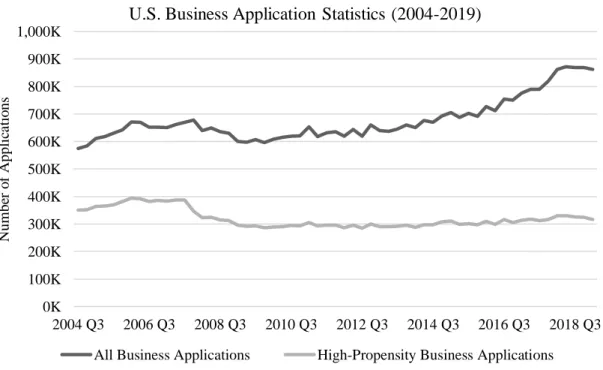
entrepreneurial growth, evidenced by the ease of doing business in America. Hundreds of thousands of individuals are applying to start businesses every month. Figure 1 provides a quarterly breakdown of the business application statistics in the United States from 2004 to 2019.
Figure 1 U.S. Business Application Statistics from 2004-2019
As seen in Figure 1, despite a small drop off in applications during the recession from 2007 to 2009, business applications have steadily risen over the past decade. However, high-propensity business applications have remained at a level of around three hundred thousand. High-propensity business applications refer to applications that have a higher likelihood of becoming businesses. With over 300,000 business applications per quarter
0K 100K 200K 300K 400K 500K 600K 700K 800K 900K 1,000K
2004 Q3 2006 Q3 2008 Q3 2010 Q3 2012 Q3 2014 Q3 2016 Q3 2018 Q3
N um be r o f A ppl ic ati o ns
U.S. Business Application Statistics (2004-2019)
in the United States, the United States continues to churn out businesses, reinforcing its image as an entrepreneurial and economic engine.
The stable trend of business conception in the United States over the past decade coupled with the ease of business development places the country into an opportune position to support the continued success of its entrepreneurial environment.
Entrepreneurship flourishes when the barriers to enter the business of doing business are kept to a minimum (Klapper, Laeven, & Rajan, 2006). The United States has managed to do exactly that—reduce the barriers to entry to encourage business creation. The
following section will expand on the structural advantages the United States has purposefully implemented to encourage firm creation.
The Structural Makeup of the U.S. is Conducive to Entrepreneurial Growth
The United States is a country that naturally breeds entrepreneurs due to the high-risk tolerance of its citizens, the structure of its legal system, the size and strength of its venture capital resources, and the close relationships between academic institutions and the private sector (“The United States,” 2009). For these reasons, the Global
Entrepreneurship Monitor (GEM) finds the United States to be the most entrepreneurially active country. A description of the GEM, according to their website, is:
The GEM is an entrepreneurship-focused organization that surveys entrepreneurs in over 100 countries around the world. The organization primarily uses academic institutions around the globe to carry out an Adult Population Survey and
National Expert Survey to provide succinct analyses on the characteristics, motivations, and ambitions of individuals starting businesses and social attitudes toward entrepreneurship (“Mission,” para. 2).
indexes of the 10 most developed countries in the world. The Entrepreneurial Index is derived from an average of each country’s ranking across 15 metrics tracked by the GEM in 2018 (see Appendix C.2 for a list of these 15 metrics).
Table 1 The Entrepreneurship Index of the 10 Most Developed Countries
Country Entrepreneurship Index
United States 7.9
Canada 7.7
Germany 5.6
United Kingdom 5.5
Brazil 5.2
France 5.1
India 4.9
China 4.7
Italy 4.3
Japan 3.3
Note: The Entrepreneurship Index is based on a 10-point scale. See Appendix C.2 for a detailed breakdown of the components of the Entrepreneurship Index.
As shown in Table 1, the United States has the highest Entrepreneurship Index out of the 10 most developed countries. The structural makeup of the United States fosters
entrepreneurship and helps to continue the tradition of a wealth of entrepreneurial activity within the country.
The High-Risk Tolerance of the United States Citizen
financial behaviors provide one of the best proxies to understand risk on a country level because one’s attitude toward risk is one of the most influential factors contributing to one’s financial behaviors (Hoffman, Post, & Pennings, 2015). After analyzing the ING International Survey on Savings, which asked 15,000 individuals several questions regarding their likelihood of investing in different investment products characterized by varying risk levels, Ferreira (2018) calculated an average measure of risk propensity by country. The results validated the assumption that the average United States citizen has a substantially higher tolerance for risk when compared to the citizens of other developed countries (see Appendix D for a list of countries ranked by their average propensity toward risk). A key point to note when analyzing risk tolerance between countries is that developed countries have a much lower tolerance for risk than developing countries; however, for the context of this analysis, I only considered developed countries due to their structural similarities with the United States.
Higher tolerance for risk increases the likelihood that individuals would be willing to consider the option of starting their own business. The risks associated with entrepreneurship stem from the uncertainty of wages, benefits, and future growth
between early-stage ventures and established firms. Thus, a key reason behind the United States’ high level of entrepreneurial activity is the risk tolerance of its citizens.
A Legal System that Supports Failure
The second structural advantage of the United States concerns the structure of the U.S. legal system. The legal system’s tolerance toward bankruptcy stimulates and
business creation once the bankruptcy has been discharged. Additionally, the United States has established Chapter 11 bankruptcy protection, which is a form of protection that gives individuals or businesses time to reorganize their assets and renegotiate the payment terms with creditors. Moreover, the general mantra of the United States is that failure is not an end in itself, but rather an opportunity to grow and learn in the future. As a result, many entrepreneurial individuals in the United States end up starting multiple businesses. On the contrary, the legal and social attitudes toward bankruptcy in other developed countries are not as lenient in comparison to the same attitudes in the United States. For instance, Germany has no equivalent to Chapter 11 bankruptcy protection, providing very few options for indebted individuals. If an individual were to go bankrupt in Germany, they cannot start a business for nine years. The social reaction toward bankruptcy in Germany includes attitudes of shame and treatment as social pariahs (Hoff, 2011). The lack of these social and legal attitudes in the United States induces a space for failure in the American economic system, helping fuel the entrepreneurial spirit of the U.S. citizen.
The Strength of the U.S. Venture Capital Industry
entrepreneurs to receive the funding needed to bring their ideas to fruition—a luxury not available to citizens of other countries.
The Benefits of Established University-Firm Relations in America
The final structural advantage of the United States that leads to a high level of entrepreneurial activity is the strong relationship between academic institutions and the private sector. Companies, ranging from non-profits to public sector companies to private sector firms, across America use universities as their main source of talent to fill entry-level positions. Over 70% of companies recruit on college campuses (Laurano, 2018). A central reason behind these recruiting efforts can be attributed to the proliferation of internships in the twenty-first century. Companies are no longer just recruiting the
graduating population out of universities, they are recruiting students from all age groups within the university. This mutually beneficial relationship between firms and
universities has helped establish universities as the main source of talent.
others—and laid the framework for the eventual development of modern-day Silicon Valley (Trikha, 2015). The Stanford Research Park is just one example of how the interconnectedness of firms and universities has contributed to the development and expansion of the entrepreneurial ecosystem of the United States.
******
The United States entrepreneurial ecosystem is evident from a historical perspective due to various structural advantages that have placed the country in an optimal position to produce high levels of entrepreneurial activity. Despite the wealth of entrepreneurial activity in the United States, researchers have yet to fully examine the potential effects of entrepreneurship on mobility. The economic mobility-focused literature has primarily focused on the reasons behind the widespread variation in
economic mobility across the United States. Amid the vast body of literature surrounding the potential causes of this variation in economic mobility, the economic mobility
literature lacks clarity regarding how the growing entrepreneurial environment of the United States affects mobility. This thesis brings together ideas from the mobility and entrepreneurship literature to better understand the potential link between
entrepreneurship and economic mobility in America.
The current research that studies the relationship between entrepreneurship and economic mobility has been centralized in the developing nations of South America. Researchers have yet to study the relationship in the United States, where
analyzing the relationship between entrepreneurship and economic mobility in the United States. I pair the South American approaches with new county-level data on economic mobility in the United States.
My research assesses the validity of using entrepreneurship as an effective tool to increase economic mobility in low-mobility areas across the United States. The goal of the research is to influence the policy agenda to evaluate the inclusion of funding toward sustainable methods of increasing entrepreneurship as a mechanism to encourage local and national-level mobility growth.
I am hopeful that this introduction provides the foundation for the rest of my analysis. The remainder of this paper will:
• examine the current state of the body of economic mobility and entrepreneurship literature in the United States and South America,
• detail the processes used to collect and analyze economic mobility and entrepreneurial data in the United States,
• present and discuss the results of my analysis, and
LITERATURE REVIEW
This literature review will assess the bodies of literature surrounding economic mobility, entrepreneurship, and the relationship between the two. The following sections will explain (1) the mobility-entrepreneurship relationship, (2) the findings regarding the relationship in South America, (3) the methods to increase entrepreneurial activity, (4) the changing views on economic mobility in America, and (5) a conclusion to cite the gaps in the literature that this research will expand on.
Situation Overview
The lack of research regarding the economic mobility-entrepreneurship relationship in the United States led me to analyze a growing body of literature from several studies performed in South America. The South American literature provides the basis from which my research expounds upon in the United States; however, the specifics of the findings are not perfectly transferrable across continental borders due to the
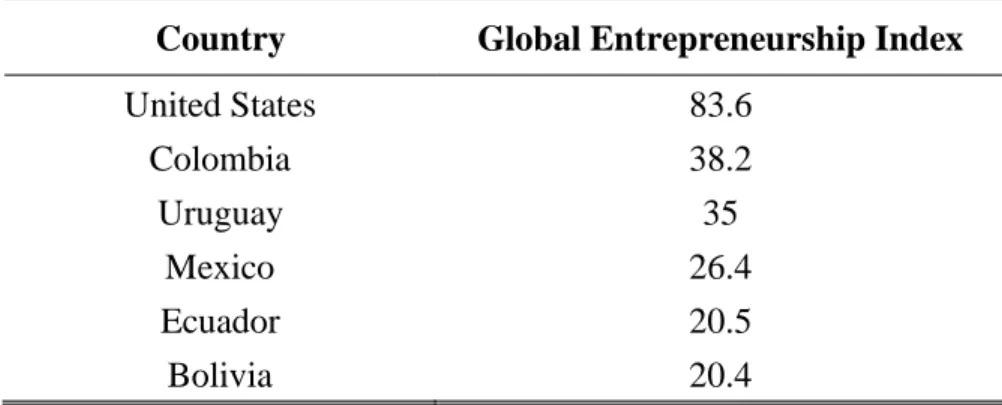
inherent differences in economic structure and rates of entrepreneurship between South American countries and the United States. Table 2 elaborates on the specifics of the entrepreneurial nature of the South American countries and the United States by comparing the country’s Global Entrepreneurship Indexes.
Table 2 Global Entrepreneurship Index by Country
Country Global Entrepreneurship Index
United States 83.6
Colombia 38.2
Uruguay 35
Mexico 26.4
Ecuador 20.5
Bolivia 20.4
As shown in Table 2, the differences in entrepreneurial structure between the South American countries studied in the literature (Bolivia, Colombia, Ecuador, Mexico, Uruguay) and the United States are rather drastic. My research attempts to understand if a mobility-entrepreneurship relationship exists in the highly entrepreneurial United States—a country with an entrepreneurial makeup that is very different from the entrepreneurial structure of countries in South America. Moreover, while the South American literature studied individual entrepreneurs, my research provides a higher-level overview of the mobility-entrepreneurship relationship by studying entrepreneurship and economic mobility at the county level.
The developing nature of the South American countries is a confounding variable to note when comparing the South American countries with the United States. Due to the developing status of these countries, the literature agreed on the need to distinguish “necessity” from “opportunity” entrepreneurs (e.g., Ardagna & Lusardi, 2008; Bukstein & Gandelman, 2014; Castellani & Lora, 2014; Mwasalwiba, 2010). Researchers
United States—from individuals pursuing businesses in places where market opportunity exists. However, distinguishing between subsistence-focused individuals and true
entrepreneurs will carry less weight in the United States where a much smaller portion of people experience a subsistence standard of living. In the next section, I examine the key findings regarding the mobility-entrepreneurship relationship in South America.
The Mobility-Entrepreneurship Relationship in South America
The consensus across the South American literature surrounding the mobility-entrepreneurship relationship is that mobility-entrepreneurship leads to greater upward economic mobility. Hernani-Limarino, Eid, & Villarroel (2011) first studied the
mobility-entrepreneurship relationship in Bolivia and found that entrepreneurs are more likely to experience upward economic mobility. The researchers determined the relationship only existed when defining entrepreneurs as those individuals who employed more than one person (Hernani-Limarino et al., 2011). When analyzing all self-employed individuals, the data produced opposing results—entrepreneurship did not contribute to an increase in mobility (Hernani-Limarino et al., 2011).
Researchers examining the mobility-entrepreneurship in Uruguay reached the same conclusion as found in Bolivia—entrepreneurs, defined as individuals running companies with more than one employee, experienced greater upward economic mobility than self-employed individuals (Bukstein and Gandelman, 2014). As evidenced by the Bolivian study, researchers found it important in South America to distinguish
In Colombia and Uruguay, entrepreneurs both experience upward economic mobility and transfer mobility to their children (Castellani & Lora, 2014). Entrepreneurs in Colombia experience greater levels of upward mobility than non-entrepreneurs. Castellani and Lora (2014) assessed economic mobility by comparing the number of years of education received by the children and their respective parents. In Uruguay, the authors focused on the economic mobility of the entrepreneur’s children. They found that the children of entrepreneurs experience greater upward mobility than the children of non-entrepreneurs (Castellani & Lora, 2014). This study paralleled the work of Bukstein and Gandelman (2014) during the same year which found that entrepreneurs both experience upward mobility and transfer mobility to the next generation through their children. The transference of economic mobility from one generation to the next through entrepreneurship creates a strong case to support policy initiatives to fund entrepreneurial activities due to the sustainable impact of entrepreneurship.
Methods to Increase Entrepreneurship
The South American literature that supports the use of entrepreneurship as a vehicle for upward economic mobility naturally points to the methods used to increase the level of entrepreneurship within a country. The five methods in the literature that are effective means of increasing the level of entrepreneurship within a country are (1) establishing role models, (2) strengthening social capital, (3) lowering the cost of business, (4) building entrepreneurial education, and (5) defining the steps to exit a business (e.g., Ardagna & Lusardi, 2008; Castellani & Lora, 2014; Kantis, Federico, & Tratenberg, 2013; Ordeñana & Arteaga, 2013; Rauch & Hulsink, 2015; Vélez-Grajales & Vélez-Grajajes, 2014).
A primary way individuals develop into entrepreneurs is by watching and learning from others who model entrepreneurship around them. Some of the key role models of entrepreneurs are their parents (Castellani & Lora, 2013). Researchers found in Mexico that an individual’s decision to become an entrepreneur is largely dependent on the father’s occupation, more so than the individual’s level of wealth or education (Vélez-Grajales & Vélez-Grajajes, 2014). Furthermore, Ardagna and Lusardi (2008) revealed that knowing any entrepreneur substantially increases the chance that an individual becomes an entrepreneur. Role models play a significant role in expanding the level of entrepreneurial activity within a region. Thus, to influence the level of entrepreneurship within a region, communities can focus on increasing spaces that are dedicated to
Beyond the effects that parents and other role models play in modeling entrepreneurship, networks and institutions play a vital role in establishing and maintaining an entrepreneurial environment (e.g., Kantis et al., 2013; Ordeñana & Arteaga, 2013). These networks and institutions are pivotal to sustaining a high level of entrepreneurship within a country because they assist entrepreneurs in overcoming the initial obstacles associated with starting a business (Ordeñana & Arteaga, 2013). While the main source that entrepreneurs tend to rely on to overcome challenges is themselves, commercial networks (suppliers, customers, and other entrepreneurs), universities, and other institutions are valuable in supporting entrepreneurs during the early stages of their business (Ordeñana & Arteaga, 2013).
Increasing the amount of time and cost associated with incorporating new businesses substantially weakens the ease of new business creation (“Doing Business 2020”, 2020). To increase the level of entrepreneurship, policies that favor new firm creation should reduce the number of steps and capital required to establish and maintain a business (“Doing Business 2020”, 2020). These steps include reports, paperwork, and taxes that businesses must complete at the inception of the business and on an annual basis thereafter.
Beyond creating and maintaining businesses, the ease of firm destruction is equally important to incentivize entrepreneurship. If individuals are aware of the steps they can take to exit a business, they will be more likely to enter the business in the first place (“Doing Business 2020”, 2020).
Researchers have shown that education is an effective method to increase the level of entrepreneurship in a region (Rauch & Hulsink, 2015). Postsecondary entrepreneurial education encourages entrepreneurship within individuals that have ideas but lack the fundamental business knowledge to grow their ideas (Castellani & Lora, 2014). Individuals that participate in entrepreneurship education tend to have higher
entrepreneurial intentions to start a new business at the end of their educational program (Rauch & Hulsink, 2015). The focus of this education should address the proper
management of finances, human resources, and technology (Castellani & Lora, 2014). Capital requirements to start a new business seem to provide a barrier to
establishing a culture of entrepreneurship. However, the results from the literature are mixed regarding whether capital requirements are indeed a hindrance to the start of new businesses. Many researchers argue that increasing small businesses’ access to credit helps to cultivate a region’s entrepreneurial environment by alleviating the barriers to entry into entrepreneurship (Gentry & Hubbard, 2004; Castellani & Lora, 2014). While other researchers found no relationship between household wealth and the propensity to start a business; they concluded that the traditional views on capital requirements to start a business do not hold up in the data (Hurst & Lusardi, 2004).
The literature reached five major conclusions regarding the methods to increase entrepreneurship within a region:
1. Increase entrepreneurial education
3. Develop shared spaces to establish collaboration, communication, and mentorship within the entrepreneurial community
4. Establish networks and institutions to support entrepreneurs in the early stages of their businesses
5. Clearly delineate the steps required to exit a business
Economic Mobility in America
In the United States, economic mobility research dates back to the early 1990s when Solon (1992) wrote his seminal article that argued the United States was
dramatically less mobile than the world thought—challenging the idea of the American Dream. While previous studies existed, none had cited a lack of economic mobility in America. Recent studies have surfaced that built upon the seminal work completed in the 1990s and provided further substantiation to the lack of economic mobility in the United States. A repeated new claim in the literature brings light to a new phenomenon that researchers had not analyzed up to this point—the level of economic mobility in the United States differs from region to region (Chetty, Hendren, Kline, & Saez, 2014). The remainder of this section will discuss (a) the trends in the United States’ economic mobility, (b) the discrepancies in economic mobility across the United States, and (c) the key contributing factors to upward economic mobility in America.
Trends in Economic Mobility in the United States
high levels of economic mobility during the twentieth century. However, Becker and Tomes (1986) used single-year earnings as their primary methodology, which was later determined to not capture the whole story.
The 1990s brought with it new time-series methods of analyzing the economic mobility of children by comparing the income levels of children with the income of their parents (Solon, 1992). This method, commonly calculated through the intergenerational correlation or the intergenerational elasticity of income, contrasted with the previously used single-year earnings method by providing a more accurate portrait of economic mobility in America through the use of longitudinal datasets that followed individuals and their parents over 20- to 30-year time spans. Solon (1992) became one of the
pioneers to use this time-series method to study economic mobility in America. Using the Panel Study of Income Dynamics (PSID), Solon (1992) found evidence that challenged the popular belief that America was the land of opportunity—revealing dramatically less economic mobility in America than previously thought.
Using this newly popularized method, other researchers sought to determine the economic mobility of specific populations within America. The first of such populations analyzed were immigrants (Borjas, 1993). Borjas (1993) demonstrated that an
immigrant’s source-country labor market economic mobility affects that of his or her children. For instance, an Asian immigrant carries a different level of economic mobility than a European immigrant due to the differences in mobility levels between the original Asian and European countries.
America. During the early years of the century, researchers concluded that economic mobility has been increasing in America (Aaronson and Mazumder, 2005). However, later research that analyzed birth cohorts between 1952 and 1975 in the PSID concluded that the level of economic mobility in America has remained stagnant (Lee & Solon, 2009). In recent years, researchers have sought out more robust measurements of
economic mobility by analyzing differences between quantiles of the income distribution and mobility differences over time (Palomino, Marrerro, and Rodríguez, 2018). Using the PSID, the researchers revealed a U-shaped relationship where mobility is highest at the 70th percentile of the income distribution and lowest at the tails of the distribution (Palomino, Marrerro, and Rodríguez, 2018). Moreover, for the lower quantiles, researchers found that economic mobility increased over the last two decades of the twentieth century before decreasing in the 2000s (Palomino, Marrerro, and Rodríguez, 2018). The upper quantiles experienced little to no change in their economic mobility levels (Palomino, Marrerro, and Rodríguez, 2018). Despite these differing viewpoints regarding the changing level of economic mobility in the United States, recent research has come to a consensus that economic mobility differs from region to region in America.
Discrepancies in Economic Mobility Across America
Although the direction of economic mobility on a macro level has been
ambiguous over the past decades, relatively recent research has found that the variation in economic mobility between geographic regions within America is apparent (Chetty et al., 2014). Children throughout the country are born into different levels of economic
Western cities (Chetty et al., 2014). The researchers found that San Jose, California, and Salt Lake City, Utah, are two of the highest mobility areas, while Cincinnati, Ohio, and Milwaukee, Wisconsin, are two of the lowest mobility areas in the United States (Chetty et al., 2014). Following this finding regarding the variation in economic mobility across the United States, the authors sought to determine the primary drivers of the variation.
The main drivers of the variation of economic mobility within the United States are segregation, income inequality, education quality, and family structure (Andrews & Leigh, 2009; Chetty et al., 2014). First, areas with higher levels of segregation have lower levels of economic mobility (Chetty et al., 2014). Second, regions that have greater inequality are less mobile than regions with lower levels of inequality (Andrews & Leigh, 2009; Chetty et al., 2014). Third, the quality of education systems is positively correlated with economic mobility (Chetty et al., 2014). Lastly, weaker family structures, measured by the fraction of single-parent households in a region, are negatively correlated with economic mobility (Chetty et al., 2014).
These measures to describe the variation in mobility across America can also be used to generate a proxy for the quality of neighborhoods within the United States, another strong predictor of economic mobility. The consensus across the literature is that children who have prolonged exposure to better neighborhoods experience greater levels of economic mobility (Chetty & Hendren, 2018). This exposure is linearly related to the number of years that a child lives within the neighborhood (Chetty & Hendren, 2018).
the strength of social networks and community involvement, is positively correlated with economic mobility. Commonly cited examples of strong social networks are religious organizations. Areas in the United States with large densities of religious organizations and individuals participating in civic organizations have high degrees of upward economic mobility (Chetty et al., 2014). Salt Lake City, Utah, is a prime example of a city with a large number of religious individuals (due to the presence of The Church of Jesus Christ of Latter-day Saints) and a high degree of upward economic mobility.
Stronger social networks also influence health, crime rates, tolerance, inequality, and child welfare (Putnam, 1995). Putnam (1995) presented evidence that pointed toward increased health outcomes, lower crime rates, lower inequality levels, and greater child welfare for those individuals with high social levels of social capital. These qualities are strongly correlated with an individual’s level of economic mobility (Chetty et al., 2014).
Colleges across the United States generate substantial differences in economic mobility for their respective students, largely due to differences in access to higher
education across income quantiles (Chetty, Friedman, Saez, Turner, & Yagan, 2017). The highest rates of economic mobility are found at the elite colleges, namely the Ivy League universities, and at several mid-tier public institutions (Chetty et al., 2017). However, the lower-income students, where economic mobility can have the largest positive effect, have seen stagnated attendance at the elite colleges and decreased attendance at the mid-tier universities with the highest levels of mobility (Chetty et al., 2017).
Conclusion
the evidence supports entrepreneurship as an effective mechanism to increase economic mobility not only in one generation but in the next as well. The multigenerational impact of entrepreneurship poses an interesting phenomenon to examine from a policy lens— funding resources that focus on increasing entrepreneurship could leave a sustainable impact for several generations.
The United States’ economic mobility-focused literature came alongside the South American entrepreneurship research and found the U.S. to be riddled with
discrepancies in economic mobility across its different regions. The differences between regions are evident in the literature; however, the research did not reach a consensus regarding whether economic mobility has increased or decreased since the turn of the century in America. Despite this ambiguity, one idea is certain—economic mobility varies across America. The research has addressed this variation in economic mobility and revealed the fundamental drivers of mobility to be residential segregation, income inequality, school quality, social capital, family stability (Chetty et al., 2014).
METHODOLOGY
The purpose of this section is to describe the approach I employ to analyze the relationship between entrepreneurship and economic mobility in the United States. To best analyze this relationship, I use a quantitative analysis to analyze the mobility-entrepreneurship relationship across all regions of the United States.
My methodology references specify terminology that may be unfamiliar but are important to understanding many of my ideas. I have defined a few terms below:
• The Chetty Approach: Many aspects of my methodology mirrors the approach
taken by Chetty, Hendren, Kline, and Saez (2014), one of the most recognized and cited papers in the mobility literature. When referencing the methodology used by Chetty et al. (2014), I will refer to it as the Chetty Approach.
• Opportunity: I use economic mobility and opportunity interchangeably
throughout this section because economic mobility is often used as a proxy for opportunity in the literature (Athreya and Romero, 2015; Chetty et al., 2014).
• Statistical Significance: A finding which implies that the coefficient of the given
variable is unlikely to be zero with 90%, 95%, or 99% confidence.
Data Selection
The data needed for my study surrounds individual- and region-specific data regarding levels of entrepreneurship and economic mobility over time. The
entrepreneurship-centric data requires an individual’s occupation status and geographic location over a period of time. The economic mobility data is generated on a county level across the United States by tracking the incomes of parents and children over 30 years. Beyond the baseline entrepreneurship and economic mobility data, I collect other relevant county-level covariates to use as controlling factors in my analysis of the relationship between entrepreneurship and economic mobility in America. The remainder of this section will examine the (a) economic mobility data, (b) entrepreneurship data, and (c) choice of counties used in my analysis.
Economic Mobility Data
I use several datasets from The Opportunity Atlas’ public database, the data source generated by Chetty et al. (2014), to retrieve economic mobility-related data on a county level.
The Opportunity Atlas is a publicly available database based out of Harvard University that provides datasets surrounding various life outcomes of American citizens ranging from economic mobility to life expectancy to patent rates by neighborhood, college, parental income level, and racial background (“Data Library,” para. 1).
parents’ earnings to calculate a number between zero and one. A number closer to zero implies a higher level of economic mobility and a number closer to one implies little to no economic mobility. The Chetty Approach pairs parental income data from 1980 with the child’s income data from 2012 to determine the levels of mobility for children born between 1980 and 1982.
My study determines the IGE through the use of the economic mobility index. I derive the economic mobility index from the rank-rank slope data in the Opportunity Atlas. The rank-rank slope data is derived from the slope of the ordinary least squares regression of the child’s income rank on the parent’s income rank. To determine the economic mobility index, I multiply the rank-rank slope by -1 and add 1. The index is on a scale from 0 to 1, where 1 represents the highest degree of economic mobility.
After collecting the economic mobility data, I gather relevant region
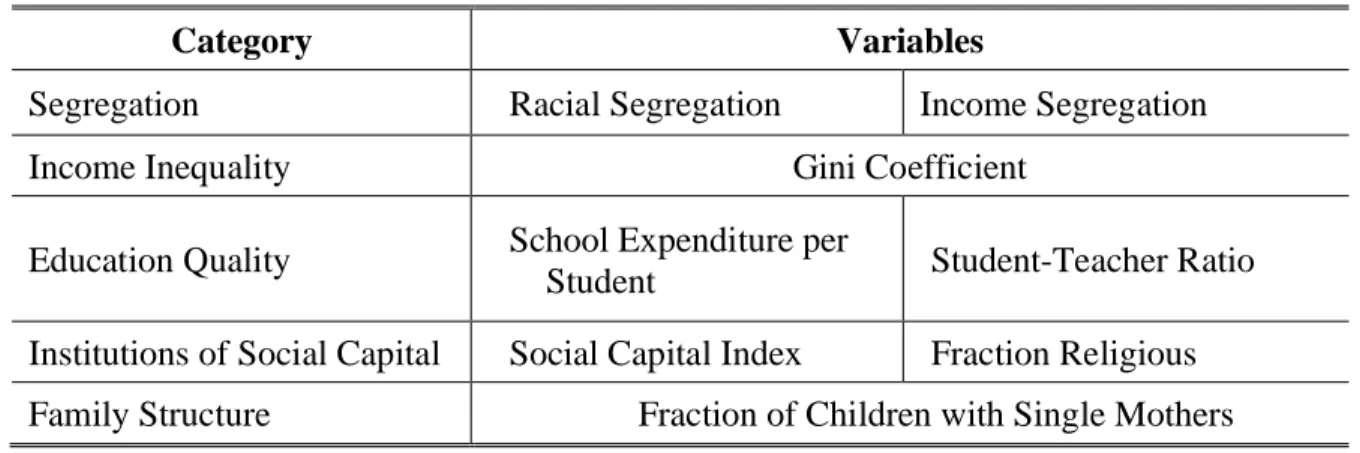
Table 3 The Variables Chetty et al. (2014) Found to Influence Economic Mobility
Category Variables
Segregation Racial Segregation Income Segregation
Income Inequality Gini Coefficient
Education Quality School Expenditure per
Student Student-Teacher Ratio
Institutions of Social Capital Social Capital Index Fraction Religious Family Structure Fraction of Children with Single Mothers
Note: See Appendix I for descriptions on how these variables are calculated.
The eight variables shown in Table 3 provide the baseline for my analysis of the significance of the relationship between entrepreneurship and economic mobility.
Entrepreneurship Data
Although entrepreneurship is a commonly used word today, finding metrics to accurately track it on a county level can be difficult. For this research, I mirror the Kauffman Foundation’s approach to measuring entrepreneurship.
The Kauffman Foundation is one of the premier sources for entrepreneurship-related research, data, and strategies. The foundation exists to, “work with entrepreneurs, empower them with tools and resources, and work to break down barriers that stand in the way of starting and growing their businesses”
(“Entrepreneurship,” para. 2).
Foundation’s method and use entry into self-employment as one of several proxies for entrepreneurship.
The measurement of individual entry into self-employment requires data on individuals and their work status over a period of time. I use the Integrated Public Use Microdata Series (IPUMS), a subset of the monthly CPS, to retrieve and analyze data on individual people. To effectively measure entrepreneurship, I use the Annual Social and Economic Supplement (ASEC) of the IPUMS-CPS data to extract microdata on an individual’s work status at the time of the survey and one year prior. Because the economic mobility data is from 2012, I pull IPUMS-CPS data from 2010 to 2014 to calculate an average level of entrepreneurship over these five years. I average
entrepreneurial activity over several years rather than a single year to mitigate the effects of any large one-year changes in entrepreneurship.
Table 4 The Self-Employment Variables Used to Measure Entrepreneurship
Variable Description
Becomes Self-Employed*
Individuals who were not self-employed in the prior year and have moved into self-employment in the current year
*the Kauffman Foundation’s proxy for entrepreneurship Stays Self-Employed Individuals who are self-employed in the current and prior year Leaves Self-Employment Individuals who were self-employed in the prior year and have
moved to a different occupation in the current year
Self-Employed Either Year Individuals who are self-employed in the current or prior year Change in Self-Employment
Between 2010-2014
The average change in self-employment between 2010 and 2014 on a county level
The inclusion of the change in self-employment between 2010 and 2014 (CSE) variable in Table 4 is meant to control for potential economic factors that may encourage
individuals to become self-employed. Individuals who turn to self-employment during economic downturns are known as necessity entrepreneurs. My analysis is focused on opportunity entrepreneurs—those who start businesses when they see a market
opportunity—versus necessity entrepreneurs. By including the CSE variable, I filter out the effects of necessity entrepreneurs on entrepreneurial activity within a county.
County Selection
I narrow the scope of my analysis to certain counties that have a sufficient number of respondents and available economic mobility and entrepreneurship data. First, I
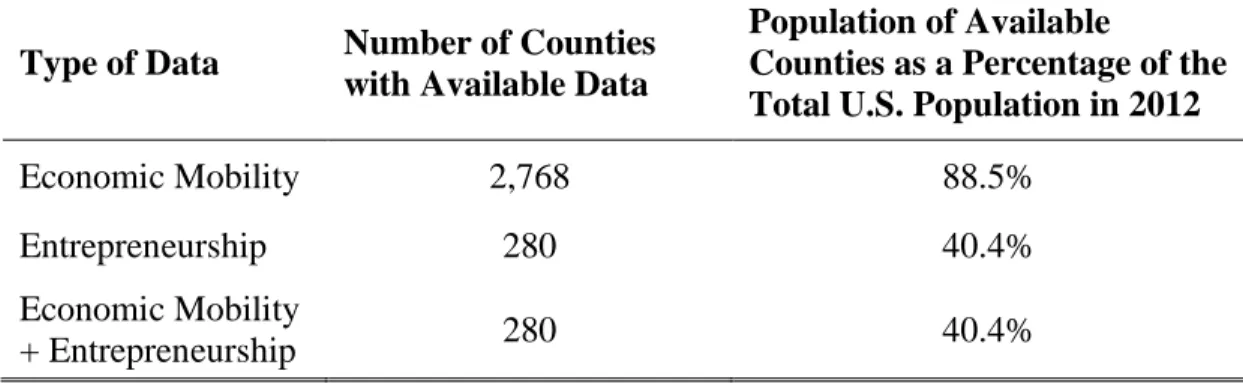
within the United States, the ASEC supplement of the IPUMS-CPS data does not list county codes for every individual surveyed in order to retain anonymity within the dataset. Thus, I limit the scope of my research to the counties where individuals have available geographic identifiers. Table 5 provides a breakdown of the number of counties with available economic mobility and entrepreneurship data.
Table 5 Counties with Available Economic Mobility and Entrepreneurship Data
Type of Data Number of Counties
with Available Data
Population of Available
Counties as a Percentage of the Total U.S. Population in 2012
Economic Mobility 2,768 88.5%
Entrepreneurship 280 40.4%
Economic Mobility
+ Entrepreneurship 280 40.4%
a
As seen in Table 5, my analysis uses the 280 counties with available economic mobility and entrepreneurship data. Although the 280 counties comprise less than 10% of the 3,031 counties in the United States in 2012, they represent over 40% of the total U.S. population in 2012.
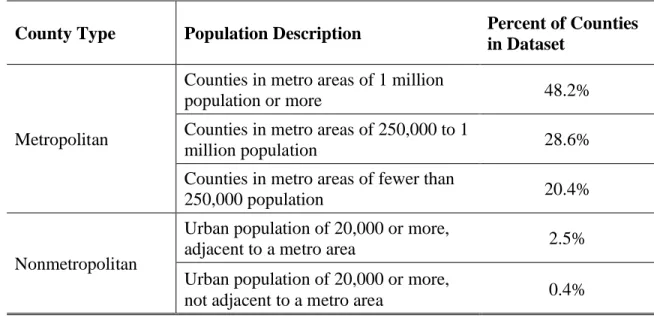
The 280 counties used in my analysis are primarily located in larger metropolitan regions. Table 6 provides additional detail regarding the metropolitan versus
Table 6 The Metropolitan vs. Nonmetropolitan County Divide in the Dataset
County Type Population Description Percent of Counties
in Dataset
Metropolitan
Counties in metro areas of 1 million
population or more 48.2%
Counties in metro areas of 250,000 to 1
million population 28.6%
Counties in metro areas of fewer than
250,000 population 20.4%
Nonmetropolitan
Urban population of 20,000 or more,
adjacent to a metro area 2.5%
Urban population of 20,000 or more,
not adjacent to a metro area 0.4%
As seen in Table 6, the prevalence of these larger metropolitan regions in my dataset limits the scope of my analysis to more developed and urbanized regions where entrepreneurship tends to be more prevalent.
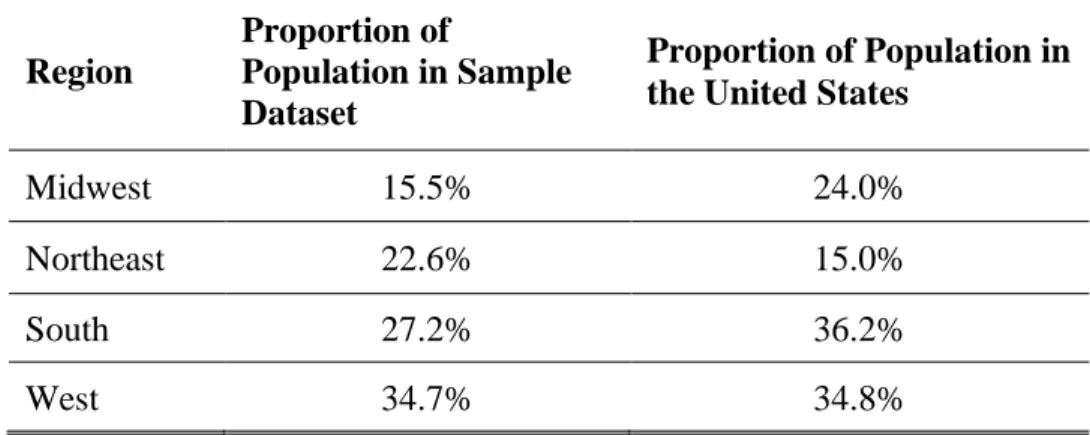
Table 7 Population Distribution by Region
Region
Proportion of
Population in Sample Dataset
Proportion of Population in the United States
Midwest 15.5% 24.0%
Northeast 22.6% 15.0%
South 27.2% 36.2%
West 34.7% 34.8%
Table 7 illustrates that the counties used in the sample are relatively proportionally representative of the U.S. population distribution across all counties. Although the small differences between the dataset and the actual data may pose as a limitation to my study, I do not foresee significant changes in the results because the counties in the dataset are relatively aligned with the actual population distribution.
Quantitative Analysis
In my quantitative analysis, I link the economic mobility and entrepreneurship data to analyze the mobility-entrepreneurship relationship. I combine the two disparate datasets through the use of state and county FIPS codes—unique numeric codes needed to identify counties in the United States. I employ several correlations and multivariate regressions to provide an overview of the relationship between economic mobility and entrepreneurship in the United States. The multivariate regression regresses
significant relationship exists and provide evidence toward a potential relationship between economic mobility and entrepreneurship in the United States.
I begin by performing a series of regressions to determine the strength and significance of the mobility-entrepreneurship relationship. First, I regress several key variables that Chetty et al. (2014) found to significantly influence economic mobility. These variables fall into the categories described in Table 3: segregation, income
inequality, education quality, institutions of social capital, and family structure. I perform this regression to determine the strength and explanatory power of these variables.
Subsequently, I add in the entry into self-employment variable to the previous regression to identify the effects of entrepreneurship on economic mobility. By including these variables, I can understand if entrepreneurship is significantly related to entrepreneurship and discern whether the addition of these entrepreneurial variables increases the
explanatory power of the regression.
Limitations
I foresee several limitations to my methodology that may impact the measurement of entrepreneurship and economic mobility in the United States. The following section discusses (a) the lack of available entrepreneurship data, (b) the potential for reverse causality, (c) the entrepreneur gap, and (d) the sampling method used to obtain the data.
The Availability of County-Level Entrepreneurship Data
toward regions with developed entrepreneurial environments. This bias may leave out the effects of entrepreneurship on smaller towns in America. However, the counties included in the analysis still represent over 40% of the United States’ population and are regionally distributed in a manner that is similar to the distribution of the U.S. population.
Moreover, the focus of my research is on opportunity entrepreneurs, which tend to be located in larger towns. Necessity entrepreneurship tends to take precedent in smaller towns due to the lack of formal employment. Consequently, the lack of individual occupation data in smaller counties should not affect the intended results of the study.
The Potential for Reverse Causality
The second limitation of my research comes from the fact that reverse causation may exist in the relationship between entrepreneurship and mobility. While my study seeks to understand if higher levels of entrepreneurial activity lead to more economically mobile communities, the reverse effect may be occurring: entrepreneurs may be drawn to live in communities with higher degrees of mobility. The direction of the relationship may be unclear regarding whether entrepreneurs affect communities or communities affect entrepreneurs.
The Entrepreneur Gap for Women and Racial Minorities
The gender gap in entrepreneurship funding negatively affects women’s ability to start businesses. Despite owning 40% of all businesses, women received just 2.2% of all venture capital funds in 2018 (“The 2018 State”, 2018; Hinchliffe, 2019). This stark disparity likely stems from a gender bias within venture capital partners—a group that is 92% male—who approach and question male- and female-owned businesses differently during the capital raising process (Teare & Desmond, 2017; Kanze, Huang, Conley, & Higgins, 2018). My methodology does not account for this gender discrepancy within United States’ entrepreneurs because (1) the gender funding gap may have unforeseen implications on women who choose not to become entrepreneurs due to the funding gap, and (2) if less women-owned businesses are funded, the number of women entrepreneurs may appear lower than the number of women entrepreneurs in a non-gender biased funding environment. In turn, the gender gap in entrepreneurial funding weakens the associated levels of entrepreneurial activity throughout the United States, creating a confounding variable that has unforeseen implications on the relationship between economic mobility and entrepreneurial activity in America.
The racial funding gap that exists between white and racial minority entrepreneurs skews entrepreneurial activity toward majority-white regions. The racial funding gap establishes barriers to capital for racial minorities. Take black entrepreneurs as an example. Although black entrepreneurs are twice as likely to start a business than white entrepreneurs, black entrepreneurs are significantly underrepresented within the
entrepreneurial landscape (Köllinger & Minniti, 2001). Moreover, black individuals who start businesses must overcome the significant funding gap. The average black
businesses with $106,000 in capital (Fairlie, Robb, & Robinson, 2016). As a result of this smaller initial capital foundation, black entrepreneurs end up seeking businesses with lower projected revenues compared to the ventures sought out by white entrepreneurs (Singh, Knox, and Crump, 2008). Similar to the effect of the gender gap on
entrepreneurial activity in the United States, the racial funding gap presents a limitation to my research by inhibiting the number of racial minorities that can start businesses. Venture capitalists disproportionately support white entrepreneurs, skewing the level of entrepreneurial activity across the United States away from regions with racial minorities and toward regions with high concentrations of white individuals.
The Sampling Method Used to Obtain Entrepreneurship Data
RESEARCH FINDINGS
The following section highlights the findings of the research I performed to understand the relationship between entrepreneurship and economic mobility in the United States at the county level. Through an analysis that included several regressions on 280 U.S. counties between 2010 to 2014, I determined that entrepreneurship is significantly related to economic mobility. The remainder of this section will (1)
introduce the factors that have the strongest influence on economic mobility, (2) discuss the structure of counties depending on the level of economic mobility, and (3) provide a high-level overview of the results of the quantitative analysis performed to understand the mobility-entrepreneurship relationship.
Section 1: The Factors with the Strongest Influence on Economic Mobility
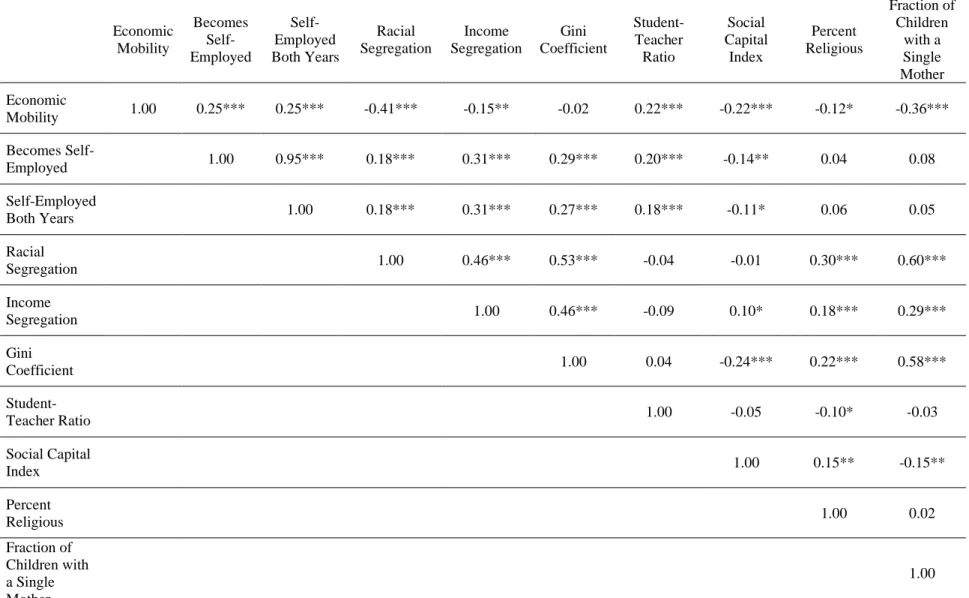
Table 8 Correlates of Economic Mobility Economic Mobility Becomes Self-Employed Self-Employed Both Years Racial Segregation Income Segregation Gini Coefficient Student-Teacher Ratio Social Capital Index Percent Religious Fraction of Children with a Single Mother Economic
Mobility 1.00 0.25*** 0.25*** -0.41*** -0.15** -0.02 0.22*** -0.22*** -0.12* -0.36***
Becomes
Self-Employed 1.00 0.95*** 0.18*** 0.31*** 0.29*** 0.20*** -0.14** 0.04 0.08
Self-Employed
Both Years 1.00 0.18*** 0.31*** 0.27*** 0.18*** -0.11* 0.06 0.05
Racial
Segregation 1.00 0.46*** 0.53*** -0.04 -0.01 0.30*** 0.60***
Income
Segregation 1.00 0.46*** -0.09 0.10* 0.18*** 0.29***
Gini
Coefficient 1.00 0.04 -0.24*** 0.22*** 0.58***
Student-Teacher Ratio 1.00 -0.05 -0.10* -0.03
Social Capital
Index 1.00 0.15** -0.15**
Percent
Religious 1.00 0.02
Fraction of Children with a Single Mother
1.00
Table 8 reveals the strongest relationships exist between economic mobility and self-employment, racial segregation, and the fraction of children with a single mother.
Segregation and family structure are negatively correlated with economic mobility while self-employment is positively correlated. The negative correlation between segregation, family structure, and economic mobility implies that more economically mobile counties have a lower number of children with single mothers and are less racially segregated. The fact that both family structure and segregation play an important role in dictating a
county’s economic mobility aligns with the results of the literature that found the two categories to significantly impact mobility in the United States (Chetty et al., 2014). This relationship suggests that in order to increase economic mobility, policymakers should work to decrease racial segregation and encourage family stability in their communities.
The positive relationship between self-employment and economic mobility implies that counties with more individuals who are self-employed—the key proxy for entrepreneurship—tend to experience greater levels of upward economic mobility. This finding aligns with the results of the South American literature that found a significant relationship between entrepreneurship and upward economic mobility (Vélez-Grajales & Vélez-Grajajes, 2014; Bukstein & Gandelman, 2014; Castellani & Lora, 2014;
Section 2: Understanding the Structure of Counties at Different Mobility Levels
As Section 1 confirmed that various factors are related to the level of economic mobility of counties across the United States, this section will demonstrate the inherent structural differences between U.S. counties. These differences evolve from the region’s entrepreneurial activity, racial makeup, education quality, and family structure. Due to the entrepreneurial-focus of this research, I begin by outlining the different
self-employment measures across the 280 counties in the dataset. Table 9 provides the average self-employment measures across four economic mobility tiers.
Table 9 Self-Employment Measures Across Four Economic Mobility Tiers
(Fraction of Individuals)
Mobility Tier
(n = 70 each) Economic Mobility Index Average Unemployment Rate 2010-2014 Became Self-Employed Self-Employment Both Years Self-Employed in Either Year Left Self-Employment
1 0.76 0.089 0.0162 0.114 0.142 0.0114
2 0.70 0.077 0.0134 0.081 0.104 0.0093
3 0.66 0.075 0.0092 0.057 0.074 0.0073
4 0.61 0.082 0.0090 0.063 0.079 0.0072
Note: Tier 1 = 75th - 100th Percentile; Tier 2 = 50th - 75th Percentile; Tier 3 = 25th - 50th Percentile; Tier 4 =
0 - 25th Percentile. For all variables above except for Left Self-Employment, the Tier 1 value is statistically
different than the Tier 4 value at an 85% confidence level.
individuals may not be entering into self-employment for potential economic reasons; moreover, if individuals are entering into self-employment for economic reasons, the rate at which they are entering is similar across all mobility tiers, weakening the
counterargument that links self-employment with economic hardship. In conclusion, this preliminary analysis between counties with varying levels of economic mobility and several self-employment measures reveals that higher rates of self-employment are correlated with higher rates of economic mobility.
Beyond the entrepreneurial differences between counties with different economic mobility levels, counties exhibit several other structural differences ranging from
disparities in county size, home value, obesity rates, and education quality. Table 10 provides averages across several categories to provide further insight into the structural differences between counties across the four mobility tiers.
Table 10 Structural Differences Between Counties
Mobility Tier
(n = 692 each)
County Population Size Median House Value Percent of Children with a Single
Mother Percent Foreign Born Percent Obese Student-Teacher Ratio
1 115,357 $141,580 16.6 5.29 27.7 16.99
2 104,556 $120,907 18.2 3.68 30.8 16.81
3 93,420 $109,834 20.3 2.95 31.2 16.83
4 88,055 $97,416 25.2 2.26 34.6 16.66
Note: Tier 1 = 75th - 100th Percentile; Tier 2 = 50th - 75th Percentile; Tier 3 = 25th - 50th Percentile; Tier 4 =
0 - 25th Percentile. For all variables above except for County Population Size, the Tier 1 value is
statistically different than the Tier 4 value at a 99% confidence level.
level of economic mobility and median home value is positively related to the size of the county. More mobile counties tend to be larger and have homes of greater value. Second, as Table 8 revealed, more economically mobile counties have a greater number of two-parent households. Third, a greater population of foreigners tend to live in counties with higher mobility levels. One potential explanation for this observation is that the level of risk foreigners take when leaving their home country may induce the need to succeed within their children, increasing economic mobility for their families. A second
explanation may be related to the fact that foreigners choose to immigrate to larger, more economically mobile American cities. Fourth, more mobile counties tend to be healthier. A potential explanation for this observation is that active and healthy individuals tend to be located in larger cities where fitness and body-image plays a larger role. Lastly, the student-teacher ratio is highest in the most economically mobile counties. This finding is counterintuitive at first glance; however, one potential rationale for the higher student-teacher ratio is county size. The first mobility tier is comprised of counties with larger populations than the other three mobility tiers, which would naturally push the student-teacher ratio up. On the other hand, the differences in the student-student-teacher ratio between mobility tiers are so minor that they may solely be a product of chance.
The impact of racial disparities and segregation on a county’s economic mobility level is prevalent across the literature. These racial differences stem from a history of racism in America where different groups of people are treated differently when it comes to buying homes, accessing schools, and several other common actions. Table 11
Table 11 County-Level Racial and Segregation Differences
Mobility Tier
(n = 692 each)
Percent Black
Percent Hispanic
Racial Segregation
Income Segregation
Gini Coefficient
1 1.97 9.36 0.0571 0.0244 0.356
2 4.21 6.40 0.0733 0.0288 0.364
3 9.42 4.51 0.0883 0.0314 0.386
4 21.80 3.52 0.1094 0.0299 0.425
Note: Tier 1 = 75th - 100th Percentile; Tier 2 = 50th - 75th Percentile; Tier 3 = 25th - 50th Percentile; Tier 4 =
0 - 25th Percentile. For all variables above, the Tier 1 value is statistically different than the Tier 4 value at a
99% confidence level. See Appendix I for explanations on how Racial Segregation and Income Segregation were calculated.
Table 11 demonstrates that counties with higher levels of economic mobility have smaller black populations. One potential explanation behind this observation could be attributed to the systemic racism that disavows black individuals from living and growing up in more economically mobile communities. Moreover, this finding may also be related to the fact that the Southern region of the United States is home to a majority of America’s black population and is one of the least mobile regions of the country (Chetty et al., 2014). Second, counties with more economic mobility have a higher Hispanic population. This finding likely results from the fact that the majority of the Hispanic population in the United States is located in the West and the rural Midwest, two of the highest mobility regions in America. Third, less racial and income segregation exists in towns with more economic mobility. The reason behind this observation may be linked with the
explanation of why black communities exhibit less mobility—higher levels of
inequality. Hence, communities that exhibit less inequality tend to be more economically mobile.
The final analysis in Section 2 surrounds the differences in economic mobility between regions within the United States. The differences stem from a wide variety of reasons but are evident throughout Table 12, which reveals the differences across all 2,768 U.S. counties in 2012 with available mobility data.
Table 12 Economic Mobility Comparison by U.S. Region
Mobility Tier
(n = 692 each)
Percent in Midwest
Percent in Northeast
Percent in South
Percent in West
1 23.09 16.98 7.65 52.28
2 25.19 37.27 17.81 19.73
3 28.81 29.45 34.92 6.82
4 23.53 14.35 57.24 4.88
Note: Tier 1 = 75th - 100th Percentile; Tier 2 = 50th - 75th Percentile; Tier 3 = 25th - 50th Percentile; Tier 4 =
0 - 25th Percentile. Regions were normalized to 1000 counties per region to control for differences in region
size.
To conclude, Section 2 illustrated the inherent differences that counties across America exhibit dependent on their respective level of economic mobility. Counties with greater levels of economic mobility tend to be located in larger counties in the Western United States with higher levels of self-employment, less segregation, more foreign individuals, larger home values, and healthier populations.
Section 3: Understanding the Mobility-Entrepreneurship Relationship
Table 13 Economic Mobility Regressed Against Key Variables
Dependent variable: Economic Mobility Index
(1) (2) (3) (4)
Racial Segregation –0.219
(0.000) –0.185 (0.000) –0.201 (0.000) –0.209 (0.000)
Income Segregation 0.010
(0.936) –0.136 (0.236) –0.119 (0.264) –0.179 (0.096)
Gini Coefficient 0.199
(0.041) 0.109 (0.008) 0.007 (0.856) 0.003 (0.934)
School Expenditure per Student 0.002 (0.359) 0.000 (0.953) –0.001 (0.653) –0.001 (0.682)
Student-Teacher Ratio 0.001
(0.010) 0.002 (0.000) 0.002 (0.000) 0.001 (0.001)
Social Capital Index –0.010
(0.003) –0.014 (0.000) –0.016 (0.000) –0.015 (0.000)
Percent Religious –0.0001
(0.502) 0.000 (0.773) 0.000 (0.239) 0.000 (0.257)
Percent of Children with Single Mothers –0.317 (0.000) –0.210 (0.000) –0.087 (0.127) –0.081 (0.151)
Level of Obesity –0.450
(0.000)
–0.281 (0.000)
–0.237 (0.001)
Median House Value 0.000
(0.000) 0.000 (0.000) Become Self-Employed (i.e. Entrepreneur) 0.0004 (0.006)
R-squared 0.356 0.443 0.523 0.536
Observations 280 280 280 280