WORKING MEMORY NETWORK CONNECTIVITY AND INHIBITORY CONTROL IN COCAINE USE
Jennifer Y. Yi
A thesis submitted to the faculty at the University of North Carolina at Chapel Hill in partial fulfillment of the requirements for the degree of Masters of Arts in the Department of
Psychology and Neuroscience (Clinical Psychology).
Chapel Hill 2017
ABSTRACT
Jennifer Y. Yi: Working Memory Network Connectivity and Inhibitory Control in Cocaine Use (Under the direction of Stacey B. Daughters)
Support exists for inhibitory control and working memory deficits among cocaine users. Existing literature suggests that working memory is central in successful inhibitory control, and that working memory processes may be best captured by examining network connectivity. This study examined whether working memory network connectivity mediates the relationship
between group (cocaine users versus controls) and working memory performance, and group and inhibitory control performance. Participants completed working memory and inhibitory control tasks during functional magnetic resonance imaging. Cocaine users demonstrated poorer inhibitory control performance and reduced activation during the working memory task compared to controls. Working memory network connectivity did not account for group
ACKNOWLEGMENTS
TABLE OF CONTENTS
LIST OF TABLES ... vii
LIST OF FIGURES ... viii
LIST OF ABBREVIATIONS ... ix
INTRODUCTION ...1
Inhibitory Control ...2
Working Memory...6
Relationship between Inhibitory Control and Working Memory ...10
Neural Deficits in Working Memory among Cocaine Users ...13
Summary ...17
Current Study ...17
MATERIALS AND METHODS ...18
Participants ...18
General Procedure ...19
Measures ...19
Experimental Design Considerations ...22
Behavioral and Task Data Acquisition and Analyses ...24
Imaging Acquisition and Analyses ...25
Study Aims...28
RESULTS ...30
Sample Characteristics ...30
Association between Sample Characteristics and Task Performance ...30
Whole Brain Neural Activation in Response to Working Memory Load ...31
Working Memory Network Connectivity as a Mediator between Group and Working Memory Task Performance (Aim 1) ...32
Working Memory Network Connectivity as a Mediator between Group and Inhibitory Control Task Performance (Aim 2) ...33
DISCUSSION ...35
Limitations and Future Directions ...39
Summary ...41
APPENDIX 1: TABLES...42
APPENDIX 2: FIGURES ...51
LIST OF TABLES
Table 1 – Means (and standard deviations) of self-report sample characteristics ...42 Table 2 – Frequency of substance use ...43 Table 3 – Task performance on the NBack and Go/No-Go...44 Table 4 – Clusters and max Z-values in response to working memory load
[(2-Back)-(1-Back)] among healthy controls...45 Table 5 – Clusters and max Z-values in response to working memory load
[(2-Back)-(1-Back)] among cocaine users ...46 Table 6 - Clusters and max Z-values in response to working memory load
[(2-Back)-(1-Back)] for the contrast of cocaine users < healthy controls ...47 Table 7 – Aim 1 mediation results of mediators in the relationships between
group and working memory task performance (accuracy),
adjusted for gender ...48 Table 8 - Aim 2 mediation results of mediators in the relationships between
LIST OF FIGURES
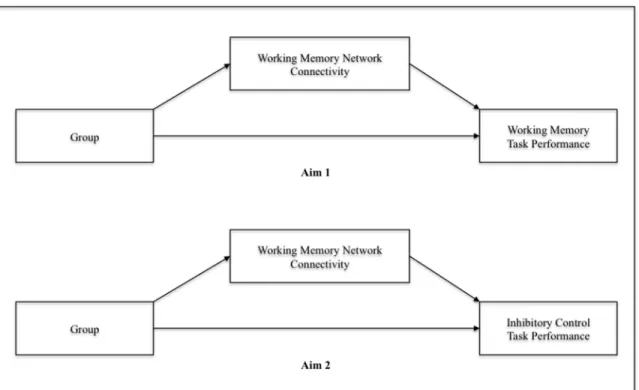
Figure 1 – Conceptual models for Aims 1 and 2 ...51
Figure 2 – Consort diagram ...52
Figure 3 – Timeline of study visit for all participants ...53
Figure 4 – N-back task ...54
Figure 5 – Go/no-go task ...55
Figure 6 – Mediation models 1 and 2 for Aim 1...56
Figure 7 – Mediation models 1 and 2 for Aim 2...57
LIST OF ABBREVIATIONS
CI Confidence interval
CU Cocaine user
DLPFC Dorsolateral prefrontal cortex DMN Default mode network
DV Dependent variable
FMRI Functional magnetic resonance imaging FP Frontal pole
GIMME Group Iterative Multiple Model Estimation HC Healthy control
IFG Inferior frontal gyrus
INS Insula
IPL Inferior parietal lobule IQ Intelligence quotient IV Independent variable MFG Middle frontal gyrus
MRI Magnetic resonance imaging PFC Prefrontal cortex
PREC Precuneus
INTRODUCTION
Cocaine use continues to be a large public health concern, as cocaine is one of the most commonly abused illicit drugs in the United States. In 2014, over 14% of the U.S. population was estimated to have used cocaine sometime in their life (SAMHSA, 2015). Furthermore, in 2011, there were over 500,000 emergency department visits related to cocaine use (SAMHSA, 2013). Consequently, cocaine use places a large economic burden on society as a result of numerous costs including healthcare, drug enforcement, incarceration, and work productivity loss. Furthermore, cocaine use is associated with a multitude of negative experiences including trauma (Freeman, Collier, & Parillo, 2002; Hyman et al., 2008; Thompson, Lown, & Fullilove, 1992; Wasserman, Havassy, & Boles, 1997), risky sexual behaviors (Campsmith, Nakashima, & Jones, 2000; Hudgins, McCusker, & Stoddard, 1995; Joe & Simpson, 1995), mental disorders (e.g., depression, attention deficit hyperactivity disorder) (Brown et al., 1998; Kleinman et al., 1990; Luthar & Rounsaville, 1993; Rounsaville et al., 1991), serious medical conditions (e.g., cardiovascular events), and death (Cregler & Mark, 1986). Appropriately, there have been considerable efforts to investigate the mechanisms underlying cocaine use in order to better understand its etiology and maintenance and ideally inform prevention and treatment.
Current theories propose that the development and maintenance of substance use
understood to be largely voluntary and primarily motivated by the reinforcing and rewarding effects of substances; however, after repeated use, various environmental and internal stimuli become associated with substance-seeking and -taking behaviors and subsequently gain saliency, procuring greater substance use (Volkow et al., 2004; Volkow & Li, 2004). Eventually, these behaviors become habitual and then inflexible and compulsive, ultimately resulting in the loss of impulse control (Everitt et al., 2008a).
Research has suggested that cognitive processes involved in executive control, namely processes responsible for the coordination and implementation of goal-directed and more complex decision-making (Royall et al., 2002; Tranel, Anderson, & Benton, 1994) may contribute significantly to these transitions and vulnerability to relapse (Norman & Shallice, 2000; Perner & Lang, 1999; Verdejo-García & Pérez-García, 2007). In particular, inhibitory control, the ability to inhibit a pre-potent cognitive or motor response (Carlson, Moses, & Breton, 2002; Luijten et al., 2014; Roberts, Fillmore, & Milich, 2011; Smith, Mattick, Jamadar, & Iredale, 2014) and working memory, the temporary storage, processing, integration, and manipulation of gained information (Engle, Tuholski, Laughlin, & Conway, 1999; Kane, Bleckley, Conway, & Engle, 2001; Kane & Engle, 2003; Owen, McMillan, Laird, & Bullmore, 2005) may be two especially important executive control processes related to compulsive cocaine use.
Inhibitory Control
One important component of executive control is inhibitory control. As a core element of behavior, this ability is necessary to implement adaptive control over everyday cognitions and behaviors, particularly to maintain appropriately efficient responses to changes in the
Marriott, & Logan, 1995). Difficulties with inhibitory control can manifest in several ways including increased susceptibility to irrelevant information, initiation of responses before the availability of sufficient information, or failure to correct inappropriate or incorrect responses (Schachar & Logan, 1990). In everyday behavior, such difficulties can manifest as an inability to persist at a task, engagement in behaviors without thoroughly considering potential negative consequences, a short attention span, or a tendency to engage in risky behaviors or seek out novel situations (Mitchell, Fields, D'Esposito, & Boettiger, 2005). Poor inhibitory control is a common symptom shared by a number of clinical disorders characterized by impulsivity, including attention deficit hyperactivity disorder (ADHD) (Crosbie et al., 2013; Nigg, 2001; Rubia, Smith, Brammer, Toone, & Taylor, 2014), autism spectrum disorders (ASD) (Chan et al., 2011; Mosconi et al., 2009; Sinzig, Morsch, Bruning, Schmidt, & Lehmkuhl, 2008), obsessive-compulsive disorder (OCD) (Bannon, Gonsalvez, Croft, & Boyce, 2002; Penades et al., 2007; Woolley et al., 2008), and pathological gambling (Goudriaan, Oosterlaan, De Beurs, & Van Den Brink, 2006; Leeman & Potenza, 2012).
(iRISA), described by four core symptoms: craving, intoxication, bingeing, and withdrawal. Among these cores symptoms, inhibitory control is hypothesized to play a role in all but withdrawal. Appropriately, regular use of cocaine and relapse can be understood as a failure of inhibitory control or in other words, a failure to inhibit the pre-potent response of cocaine-seeking and –taking behaviors when encountering cocaine triggers, in turn leading to a continuation of associated negative consequences (e.g., financial problems, social isolation, poorer physical health, comorbid psychiatric conditions).
Deficits in inhibitory control may be particularly relevant to the development and maintenance of compulsive cocaine use, as well as relapse given the binge-like nature of
and binge eating behavior (Claes, Vandereycken, & Vertommen, 2002; Kane, Loxton, Staiger, & Dawe, 2004).
Behavioral deficits in inhibitory control among cocaine users. A commonly used behavioral paradigm to measure the behavioral inhibition component of inhibitory control while attempting to dissociate these processes from other executive control processes (Simmonds, Pekar, & Mostofsky, 2008) is the Go/No-Go task. Although it was primarily designed to assess error awareness (Garavan, 2011), it is also widely utilized to measure motor inhibition. During Go/No-Go tasks, individuals are required to make a motor response to a more frequently presented stimulus and withhold to another, less frequently presented stimulus (Swick, Ashley, & Turken, 2011). Inhibitory control performance can be measured with accuracy, calculated as the number of errors of commission (i.e., failed inhibitions), such that fewer errors indicate greater inhibitory control.
Task conditions in Go/No-Go tasks can be conceptualized as “consistent mappings,” as different stimuli are associated with different responses and have the potential to be learned and somewhat automated (Verbruggen & Logan, 2008). Therefore, successful inhibitory control performance requires “action restraint” (Eagle, Bari, & Robbins, 2008; Schachar et al., 2007) or in other words, withholding a pre-potent response that has not yet been initiated (Morein-Zamir & Robbins, 2014; Smith et al., 2014). Such a conceptualization can be appropriately extended to better understand the development of compulsive cocaine use such that when cocaine and
Existing literature supports the existence of deficient inhibitory control among cocaine users as they demonstrate poorer performance on Go/No-Go tasks, such that cocaine users demonstrate a greater number of errors of commission compared to healthy controls (Fernández-Serrano, Perales, Moreno-López, Pérez-García, & Verdejo-García, 2012; Hester & Garavan, 2004; Hester, Simoes-Franklin, & Garavan, 2007; Kaufman, Ross, Stein, & Garavan, 2003; Lane, Moeller, Steinberg, Buzby, & Kosten, 2007; Verdejo-García, Perales, & Pérez-García, 2007; Verdejo-García & Pérez-García, 2007). These findings suggest that cocaine users may have impairments in one or more components of inhibitory control, such as stimulus recognition, maintenance of stimulus and response associations, and response selection (Simmonds et al., 2008). Cocaine dependent individuals and healthy controls also demonstrate differences in neural response to inhibitory control (Hester, Bell, Foxe, & Garavan, 2013; Hester & Garavan, 2004; Kaufman et al., 2003). More specifically, aberrant neural response to inhibitory control among cocaine users may reflect inefficient engagement and recruitment of cognitive resources for central components of inhibitory control such as appropriate utilization of rule- and goal-oriented information to inform response selection and updates of motor planning that ultimately aid in response execution (Chambers, Garavan, & Bellgrove, 2009; Chikazoe, 2010; Corbetta & Shulman, 2002; Dosenbach et al., 2007; Hampshire, Chamberlain, Monti, Duncan, & Owen, 2010; Li, Huang, Constable, & Sinha, 2006; Luijten, Littel, & Franken, 2011; Mostofsky & Simmonds, 2008; Simmonds et al., 2008).
Working Memory
In addition to inhibitory control, working memory is an important component of executive control as it is crucial for a wide array of cognitive tasks such as reasoning,
working memory, although bearing some similarities to short term and long term memory, refers to information being utilized in order to plan and execute behaviors (Cowan, 2008). Short-term memory primarily refers to storage of a limited capacity of information that is marked by its temporary accessibility and limitations of decay over time. In comparison, long-term memory primarily refers to storage of more permanent skills, knowledge, and information, that is not as markedly limited by capacity, but that needs to be accessed by retrieval processes. Thus, working memory can be understood as providing an interface between more immediate actions and long term memory through which information is maintained and manipulated in a temporarily active state.
Working memory is generally understood to achieve active information storage and manipulation through a multi-component system. In particular, Baddeley and Hitch (1974) propose a tripartite model of working memory involving a phonological loop, visuo-spatial sketchpad, and the central executive. The phonological loop, the first storage component of working memory allows active storage of memory traces that can be retrieved and rearticulated during recall or recycled by means of rehearsal (Baddeley, 2003). The second storage
component, the visuo-spatial sketchpad, provides a continuous memory record utilizing feature recognition and grouping information (Wheeler & Treisman, 2002). And lastly, the central executive, although relatively less understood than the storage components of working memory is arguably the most important as it is hypothesized to be involved in the manipulation of
from distraction and interference by engaging attentional processes to maintain or suppress information (Engle, 2002; Kane et al., 2001).
Working memory impairment has been found in a range of clinical disorders including attention deficit hyperactivity disorder (ADHD) (Martinussen, Hayden, Hogg-Johnson, & Tannock, 2005; Rapport et al., 2008), autism spectrum disorders (ASD) (Geurts, Verté, Oosterlaan, Roeyers, & Sergeant, 2004; Hill, 2004; Verté, Geurts, Roeyers, Oosterlaan, & Sergeant, 2006), schizophrenia (Aleman, Hijman, de Haan, & Kahn, 1999; Lee & Park, 2005), and various types of traumatic brain injury (TBI) (Christodoulou et al., 2001). Of particular interest, deficits in working memory have also been found among substance users (Franken & Wiers, 2013; von der Goltz & Kiefer, 2008) and are associated with more severe cocaine use and poorer treatment outcomes (e.g., relapse) (Moeller et al., 2010; Vonmoos et al., 2014).
triggers and cocaine-seeking and –taking behaviors that increase in saliency due to an attentional bias towards cocaine and cocaine-related stimuli. Concurrently, with limited memory storage, non-cocaine-related stimuli or the negative aspects of cocaine use become more difficult to retain in working memory (Finn, 2002), Ultimately, this difficulty in utilizing abstinence-promoting information manifests through problematic response selection and execution that instead favor the immediate reward of intoxication.
Behavioral deficits in working memory among cocaine users. Working memory tasks,
such as the widely used N-Back task have been utilized to measure working memory
performance. During N-Back tasks, individuals are required to make a response every time a currently presented stimulus (e.g., letter, shape, number) is the same as the stimulus presented “n” trials back with increases in “n” reflecting increases in working memory load and capacity demands placed on individuals. Thus, in order to perform successfully, individuals must have the ability and capacity to engage in continuous monitoring of incoming stimuli, while also updating and manipulating content in their working memory, such as previously presented stimuli to appropriately inform response selection (Owen et al., 2005).
In support of the role of working memory in regular cocaine use, studies utilizing N-Back tasks have shown behavioral evidence for working memory deficits among regular cocaine users. During N-Back tasks, cocaine users demonstrate poorer performance as evidenced by more errors compared to healthy controls (Albein-Urios, Martinez-González, Lozano, Clark, &
controls. In contrast to studies that found differences in N-Back performance between cocaine users and healthy controls, it is not clear whether some of the cocaine dependent men in the sample had any other substance dependencies beyond self-reported recreational use of alcohol, cannabis, and amphetamine. Comorbid substance dependencies may have contributed to differential findings.
Relationship between Inhibitory Control and Working Memory
Although behavioral and neural paradigms seek to isolate the constructs of inhibitory control and working memory, these executive control processes are well understood to interact with one another in order to give rise to higher-order cognitions and behaviors. In a review article, Barrett and colleagues (2004) propose that working memory capacity is related to self-regulatory processes, such as inhibitory control that engage controlled and reflective processes as opposed to relying on more automatic and impulsive processes. Accordingly, when encountering environmental or internal stimuli that activate automatic associations, such as those between cocaine triggers and cocaine-seeking and -taking behaviors, an individual with intact working memory is expected to engage inhibitory processes while utilizing regulatory goal-oriented information as a standard of reference for action selection and execution (Hofmann,
Gschwendner, Friese, Wiers, & Schmitt, 2008). Ultimately, this gives rise to self-regulatory cognitions and behaviors, such as those contributing to the maintenance of abstinence from cocaine use. In contrast, an individual with impaired working memory should have more difficulty engaging in inhibitory processes to impede pre-potent cognitions and behaviors, ultimately leading to relapse.
proposes that decision-making is dependent on the intactness of working memory, while the reverse does not need to hold true. In particular, disruptions in working memory may result in disruptions in inhibitory control in substance use disorders, resulting in “myopia” for the future, such that individuals are unable to successfully operate on the contents of relevant information to inform their action selection and execution (e.g., failure to learn from repeated mistakes)
(Bechara, 2005).
Additional literature more explicitly investigating the relationship between working memory and inhibitory control, as well as impulsivity among healthy controls and individuals with other psychopathology lends support to the proposed relationship between these two executive control processes (Barkley, 1997, 2001; Finn, 2002). In a series of experiments, Hinson and colleagues (2003) utilized a delay discounting task under different working memory load conditions with healthy controls in order to examine the relationship between working memory and impulsive consequences of action. When asked to make hypothetical and monetary-based delay discounting decisions under various working memory loads, individuals displayed more impulsivity, as evidenced by greater discounting of delayed rewards (i.e., preference towards short-term over long-term benefits) with increasing working memory load. Although these findings cannot speak to the relationship between specific components of working memory and inhibitory control, they demonstrate the influence of working memory on impulsivity such that working memory constraints are predictive of more impulsive decision-making.
task ability tests. Bogg and Finn (2010) found a negative association between behavioral disinhibition personality traits and working memory capacity, arguing that a decreased capacity to actively store and utilize information leads to less sufficient attentional control in the presence of distractors. In turn, diminished control increases the likelihood of disinhibited
decision-making. Although the working memory paradigms used in this study do not reflect the appetitive influences involved in encounters with drug triggers, it reveals the significant relationship
between working memory and inhibition.
relationship between these constructs, ultimately to better understand increased vulnerability to relapse during substance use.
Neural Deficits in Working Memory among Cocaine Users
Although behavioral deficits in working memory among cocaine users are well supported, evidence indicates the importance of understanding the system-based neural
architecture contributing to working memory performance.Studies utilizing fMRI with healthy populations have largely demonstrated the central role of the prefrontal cortex (PFC) in working memory. In a meta-analysis of N-Back studies, Owen and colleagues (2005) argue for distinct working memory functions among more specific divisions of the PFC. The ventrolateral prefrontal cortex (VLPFC), primarily the inferior frontal gyrus (IFG) is thought to receive
information after being initially received and inspected by the posterior parietal cortex in order to guide the implementation of current and future plans (D'Esposito, Postle, & Rypma, 2000; Dove, Manly, Epstein, & Owen, 2008; John Jonides et al., 1998; Owen & Evans, 1996; E.E. Smith & Jonides, 1998; Wagner et al., 1998). During this information transfer, the dorsolateral prefrontal cortex (DLPFC), primarily the middle frontal gyrus (MFG) is hypothesized to be involved in the use of organization strategies in order to reduce cognitive load accompanying increasing working memory demands (Bor, Duncan, Wiseman, & Owen, 2003; D'Esposito et al., 2000; Duncan & Owen, 2000; Ericcson, Chase, & Faloon, 1980; Owen, Morris, Sahakian, Polkey, & Robbins, 1996). This is further accomplished by continuous information monitoring and appropriate information manipulation. Additional neural involvement includes the inferior parietal lobule (IPL) which has been implicated in a variety of working memory processes including the
recollection (Cabeza et al., 2008; Vilberg & Rugg, 2008). In addition, the insula, although more typically associated with cognitive control surrounding emotion, self-awareness, interoception, and motor control has also been hypothesized to be engaged during N-Back tasks (Owen et al., 2005; Wager & Smith, 2003). Working memory processes must work in an integrated fashion with other executive processes, thus the rostral PFC/frontal pole is hypothesized to help coordinate relevant information between working memory processes and related cognitive processes (Owen et al., 2005; Ramnani & Owen, 2004).
gyrus (MFG)/ventral anterior cingulate cortex (vACC) and working memory performance in healthy controls. In another study, healthy controls demonstrated a positive correlation between greater working memory network connectivity, namely between the dorsolateral prefrontal cortex (DLPFC) and left premotor cortex during a working memory task and working memory performance (Hampson, Driesen, Roth, Gore, & Constable, 2010). In addition, disruptions in functional connectivity during a working memory task have also been demonstrated among clinical populations characterized by inhibitory control deficits, such as attention deficit hyperactivity disorder (ADHD) and autism. Among adults with ADHD, Wolf and colleagues (Wolf et al., 2009) found significantly lower functional connectivity among the bilateral ventrolateral prefrontal cortex (VLPFC), anterior cingulate cortex (ACC), superior parietal lobule (SPL), and cerebellum during a working memory task compared with healthy controls. Adults with ADHD also demonstrated increased functional connectivity in right prefrontal regions, left dorsal cingulate cortex, and left cuneus. Koshino and colleagues (Koshino et al., 2005) found lower functional connectivity between the left inferior parietal lobule (IPL) and right dorsolateral prefrontal cortex (DLPFC) and increased functional connectivity between the left DLPFC and right inferior temporal lobule during a working memory task, compared to healthy controls. Taken together, these studies suggest that functional network connectivity may provide an advantageous method of examining the organization and communication of neural mechanisms contributing to better understanding of behavioral deficits among clinical
relation to other executive control processes such as inhibitory control in contributing to behavioral deficits.
Summary
Taken together, in order to more fully understand the deficits in inhibitory control among cocaine users that in turn have been shown to predict the frequency of cocaine use and treatment outcomes, it is imperative to consider what processes may be accounting for these deficits. In particular, based on the reviewed theoretical and empirical evidence, working memory network connectivity may play a central role in the maintenance of cocaine use and relapse due to failures to engage in inhibitory control processes.
Current Study
MATERIALS AND METHODS
Participants
A total of 31 cocaine users and 29 healthy controls were recruited from Baltimore and Washington, D.C. metropolitan areas using newspaper flyers, provided verbal and written consent approved by the Institutional Review Board (IRB) of the National Institute on Drug Abuse (NIDA), and participated in study procedures. Of these participants, 13 were excluded from analyses with 4 for excessive head motion (CU n=3, HC n=1), 5 for poor behavioral performance defined as greater than 2 standard deviations from the group mean (CU n=2, HC
n=3), and 4 for technical problems with the fMRI (CU n=3, HC n=1). The final sample included 23 cocaine users and 24 healthy controls (Figure 2).
Cocaine users were included if they endorsed regular cocaine (i.e., ≥two times per week) and nicotine (i.e., daily smoker) use during the past year prior to participation and did not meet DSM-IV (Association, 2000) diagnostic criteria for current or past substance dependence for any other substances other than nicotine as assessed by the Structured Clinical Interview for DSM-IV-TR(SCID-I/NP) (First, Spitzer, & Gibbon, 2002). Healthy controls were included if they did not meet DSM-IV criteria for any current or past substance abuse or dependence, and did not endorse any use of illicit substances in the past 30 days nor current smoking. Exclusion criteria for all participants included: (1) pregnancy, (2) implanted metallic devices (e.g., cardiac
pacemaker, surgical clips) or claustrophobia rendering them unsafe to undergo a fMRI scan, (3) major illnesses (e.g., hypertension, diabetes, HIV), (4) neurological illness (e.g., seizure
personality disorder, psychotic disorders, anxiety disorders), (6) regular use of any prescription, over-the-counter, or herbal medications that may alter central nervous system function,
cardiovascular function, or neuronal-vascular coupling, (7) cognitive impairment (i.e., IQ<85) as assessed by the Wechsler Abbreviated Scale of Intelligence (WASI-II) (David Wechsler & Hsiao-pin, 2011), and (8) acute drug intoxication or positive urinalysis results at the start of the study.
General Procedure
The present study includes data from a larger assessment battery (Figure 3). Following informed consent procedures, a pre-scan assessment was administered to all participants,
including a MRI Screening Form to determine a participant’s eligibility and safety to undergo an MRI scan, a test for current drug use (Triage®), alcohol use (breathalyzer), and pregnancy, the vocabulary portion of the Wechsler Abbreviated Scale of Intelligence (WASI-II VIQ)(D. Wechsler, 2011), Fagerström Test for Nicotine Dependence (FTND) (Heatherton, Kozlowski, Frecker, & Fagerstrom, 1991), and a questionnaire assessing frequency of substance use across 11 drug classes in the past year prior to participation. All cocaine users smoked a cigarette 60 minutes prior to entering the MRI scanner for structural and functional MRI scans. At the end of the visit, participants were debriefed and compensated.
Measures
Self-report and interview measures.
Demographics Form. A Demographics Form was used to collect basic demographic
information such as age, ethnicity/race, and gender.
Fagerström Test for Nicotine Dependence (FTND) (Heatherton et al., 1991). The FTND
ranging from 0.49 to 0.97 (all ps<0.001) on individual items (Pomerleau, Carton, Lutzke, Flessland, & Pomerleau, 1994). HC were excluded if they reported being a current smoker.
MRI Screening Form. The MRI Screening Form was used to help determine a
participant's eligibility and safety to undergo an MRI scan. It includes questions regarding MRI contraindications such as metallic implants (e.g., cardiac pacemakers, braces, screws),
claustrophobia, and pregnancy.
Structured Clinical Interview for DSM-IV-TR Non-Patient Version (SCID-I/NP)
Substance Use Disorders Module E (First et al., 2002). This clinician-administered, non-patient
version of the SCID Substance Use Disorders module is specifically designed for research settings. It has been found to demonstrate fair to excellent median interrater reliability for both alcohol (κ=.65-1.0) and drug abuse and dependence (κ=.77-1.0) (Lobbestael, Leurgans, & Arntz, 2011; Zanarini et al., 2000). It has also been found to demonstrate fair to good test-retest
reliability for alcohol abuse and dependence (κ=.77), as well as drug abuse and dependence (κ=.76) (Zanarini et al., 2000). It was used to determine current or past substance abuse or dependence, categorized by seven separate drug classifications (i.e., alcohol, amphetamine, cannabis, hallucinogen, opioid, phencyclidine, sedative/hypnotic/anxiolytic).
Timeline Followback (TLFB) (Sobell, Maisto, Sobell, & Cooper, 1979). The TLFB is
of outpatient substance abuse patients (Fals-Stewart, O'Farrell, Freitas, McFarlin, & Rutigliano, 2000). In addition, it has demonstrated good convergent and discriminant validity from other measures, such as the Addiction Severity Index (ASI) (McLellan, 1985), Michigan Alcoholism Screening Test (MAST) (Selzer, 1971), and the Drug Abuse Screening Test (DAST) (Skinner, 1982) and good agreement with patients' self-reported and collaterals' report of patients' substance use and urinalysis results (Fals-Stewart, O'Farrell, Freitas, McFarlin, & Rutigliano, 2000).
Wechsler Abbreviated Scale of Intelligence (WASI-II) (Wechsler & Hsiao-Pin, 2011).
The WASI-II is an abbreviated version of the Wechsler Adult Intelligence Scales (WAIS-III) (Wechsler, 1997) that provides intelligence quotient (IQ) measures. The Vocabulary subtest of the WASI-II was administered during the screening procedure. Cognitive impairment and learning disabilities have been found to be associated with aberrant neural activity during task, thus, participants were deemed ineligible for the study if they had a Vocabulary subtest score below 48, corresponding to a full IQ of below 85. In addition, this criterion was implemented to ensure that participants were capable of providing informed consent and comprehend study instructions.
Working memory and inhibitory control tasks.
Working memory task. All participants completed an N-Back task (Yang, Ross, Zhang,
Stein, & Yang, 2005) utilized to assess working memory, as shown in Figure 4. The block design task consists of an alternating block design between three conditions: a baseline vigilance condition (0-back) and two working memory conditions (1-back and 2-back). During the
instructed to press a button on a joystick whenever the letter displayed was the same as the letter presented "n" ago (e.g., one or two presentations ago). In total, there are 12 blocks, each 30 seconds long, consisting of either 15 1-back or 15 2-back trials. The duration of the entire task was approximately 10 minutes. Working memory task performance was measured by accuracy, calculated as the number of correct working memory trials (“hits”).
Inhibitory control task. All participants completed a Go/No-Go task (Kaufman et al., 2003). This event-related design task is used to assess motor inhibitory control, as shown in
Figure 5. Participants viewed a 1-Hertz serial stream of alternating letters (“X” and “Y” as “Go” stimuli) and were instructed to continuously press a button on a joystick for each stimuli, but inhibit their responses when Go stimuli were presented consecutively (repeated second stimuli as lure/”No-Go” stimuli). Individual ability levels of participants were determined during a practice session in the mock scanner before the MRI scan. Participants practiced four levels of difficulty for which the stimuli presentations were varied at 600, 700, 800, and 900ms. Following the stimuli presentations, a blank screen was presented in order to take up the remainder of the 1-Hertz serial stream of alternating letters. The level of difficulty for each participant was selected in order to most closely achieve near equal numbers of successful inhibitions and errors of commission, as well as comparable behavioral performance across participants in each group. The duration of the entire task was approximately 15 minutes. Inhibitory control task
performance was measured with the number of successful inhibitions given the presence of group differences.
Experimental Design Considerations
There is mixed evidence regarding alignment of self-report and laboratory measures of
impulsivity-related constructs among substance users (Meda et al., 2009; Reynolds, Ortengren, Richards, & de Wit, 2006; Sharma, Markon, & Clark, 2014), with the most critical evaluations asserting that the two modalities of measurements may assess different components of the construct. Such arguments may originate from general concerns surrounding the face validity of self-report measures due to factors such as socially desirable responding (SDR) (Cyders & Coskunpinar, 2011). Furthermore, there is a high degree of variability in self-reported behaviors among substance users, such as frequency and severity of substance use (Maisto, McKay, & Connors, 1990). Thus, a behavioral measure of inhibitory control may be a more reliable, valid method of capturing differences in inhibitory control performance between cocaine users and healthy controls.
behavioral alternatives, ideally one centered on withholding, as opposed to responding to a stimuli that explicitly prompts an inhibitory action.
Behavioral and Task Data Acquisition and Analysis
Preliminary analyses. Initial analyses were conducted among study variables in order to (1) examine significant violations of normality and (2) identify potential covariates of study variables, thus prompting their inclusion in analyses of Aims 1 and 2. Normality was assessed by examining histograms of frequency distributions, generating normality probability plots of all variables of interest, and conducting Shapiro-Wilk tests. No transformations to the data to approximate normality were deemed necessary. Theoretically relevant sociodemographic variables selected a priori (e.g., age, gender, ethnicity/race) were analyzed using Pearson’s correlations, chi-square analyses, and independent samples t-tests and were included as covariates if they were found to be significantly related to study variables.
N-Back and Go/No-Go task performance data acquisition and analyses. Task
performance data for the N-Back and Go/No-Go tasks were collected using E-Prime Version 2.0 (Schneider, Eschman, & Zuccoloto, 2007). Task performance variables for the N-Back (e.g., hits, response time) and Go/No-Go (e.g., successful inhibitions, errors of commission and omission, response time) were extracted from E-Prime, exported into Microsoft Excel Version 14, and entered into SPSS Version 22 (IBM Corp, 2013). Descriptive statistics (i.e., mean and standard deviations) were calculated for all study variables. Participants were considered outliers for task performance and excluded from further analyses if their N-Back and/or Go/No-Go task
Imaging Acquisition and Analyses
Acquisition. All imaging data was collected on a Siemens 3T Magnetom Trio MR
Scanner (Siemens, Erlangen, Germany) with a 12-channel head coil at NIDA Intramural Research Program (IRP) in Baltimore, Maryland. Blood oxygen level-dependent (BOLD) functional echo-planar imaging (EPI) T2*-weighted images were acquired in 39 axial slices (thickness=4mm) covering the whole brain with repetition time (TR)/echo time (TE)=2s/27ms, field of view (FOV)=220x220mm, flip angle (FA)=78°, in-plane resolution=3.44x3.44mm, and acquisition plane=30° axial to coronal, AC-PC (Deichmann, Gottfried, Hutton, & Turner, 2003). Whole-brain T1-weighted structural images (MPRAGE) (1mm3 isotropic voxels,
TR/TE=1.9s/3.51ms, and FA=9°) were also collected for anatomical reference.
Pre-processing. Anatomical and functional MRI data was analyzed using FSL FEAT
(FMRI Expert Analysis Tool) Version 6, part of FMRIB'S Software Library (FSL, www.fmrib.ox.ac.uk/fsl). Pre-processing of data included motion correction (MC) with
Whole-brain analysis. In order to examine recruitment and engagement of working memory processes during the working memory task and potential group differences, within- and between-group whole brain activation maps were generated for the contrast [(2-Back)-(1-Back)], including demeaned values of the gender covariate. FMRIB’s Local Analysis of Mixed Effects (FLAME) Stage 1. Z Gaussianized T/F statistic images were thresholded at Z>3.0 and a
corrected cluster significance threshold of p=0.05.
Regions-of-interest (ROIs) selection. A priori regions-of-interest (ROIs) were selected from Wesley and Bickel's (Wesley & Bickel, 2014) meta-analysis of foci from working memory studies, and included the right and left inferior parietal lobule (R. and L. IFG), frontal pole (R. and L. FP), middle frontal gyrus (R. and L. MFG), inferior frontal gyrus (R. and L. IFG), right insula (R. INS), and right precuneus (R. PREC). They were created from lateralized masks from the Harvard Oxford Subcortical and Cortical probabilistic atlases set at 10% and overlaid on the MNI152 standard-space T1-weighted average structural template image. The average time-series for the set of voxels defined by each ROI for each run of the N-Back task was extracted using the fslmeants command-line utility and then combined across both runs.
Working memory network functional connectivity. Individual-level data was
compiled in a t-by-r matrix, where t was the set of time points (length of a single time-series) and
functional connectivity, cognitive control, and emotion processing among alcohol users (Beltz et al., 2013). GIMME utilizes an iterative search procedure in order to determine the best fitting model for the group data, starting with a null (empty) model. Lagrange Multiplier equivalents, (i.e., modification indices) are compiled in a matrix indicating how much variation in the ROI signal would be explained if the specific path of interest is freed (Gates, Molenaar, Hillary, Ram, & Rovine, 2010). The procedure consists of selecting paths in a forward selection procedure until the model is no longer significantly improved. This was first executed at the group-level that maximized the fit for the majority of the participants’ models in the specified group, producing the network connectivity map among the a priori ROIs. This was then executed at the individual-level to refine each participant’s model to account for individual differences, beginning with the paths found in the group-level search. Non-significant paths are pruned from the individual-level models, producing models that favor parsimony (reduced complexity). GIMME generated (1)
network connectivity efficiency, or the number of contemporaneous paths in the working memory network, (2) network connectivity strengths, or the average beta weight for all retained paths in the working memory network, and (3) individual path strengths, or the individual beta weights for all retained paths. More specifically, greater network connectivity efficiency will be reflected by a smaller number of contemporaneous paths (less complexity), greater network connectivity strengths and individual path strengths are reflected by larger average beta weights. Past studies have utilized similar mediation analyses to examine connectivity as a mediator between
Study Aims
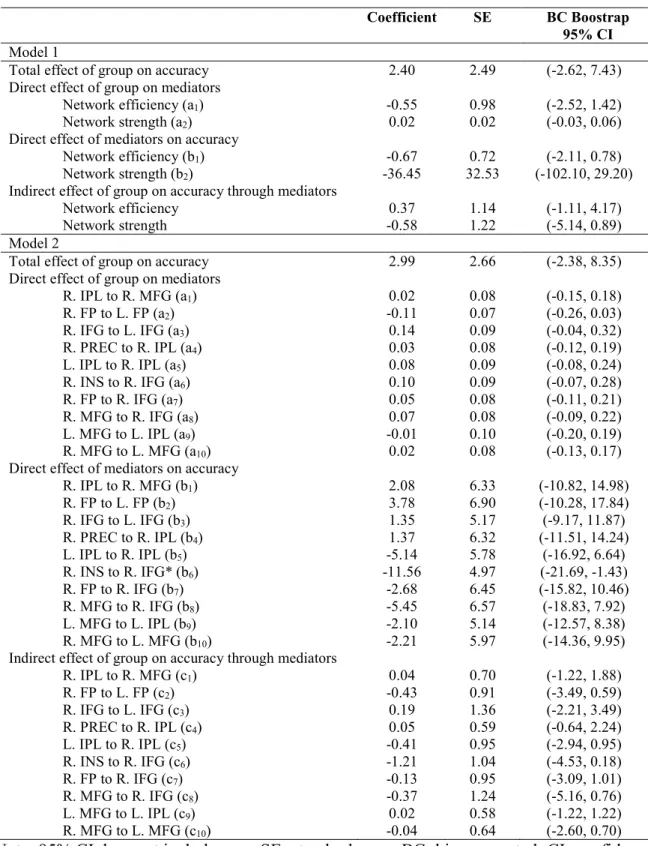
In order to examine whether working memory network connectivity mediates the relationship between group and working memory task performance (Aim 1) and inhibitory control processes (Aim 2), two separate parallel mediation models were tested per Aim using the PROCESS macro for SPSS (Hayes, 2012) (Figures 6 and 7). This mediation analysis estimated the total effect (i.e., direct + indirect effects), direct effects of the independent variable (IV) on the DV (path c’), IV on the mediator (path a), the mediator on the DV (path b), and indirect effects of the IV on the DV through the mediator, according to principles of mediation (MacKinnon, Lockwood, Hoffman, West, & Sheets, 2002). For the first parallel mediation model, the independent variable (IV) was group, the mediators were working memory network connectivity efficiency and strength, and the DV was working memory task performance (accuracy; Aim 1) and inhibitory control task performance (successful inhibitions; Aim 2). For the second parallel mediation model, the mediators were the individual path strengths.
PROCESS generated individual beta coefficients (unstandardized weights), standard errors (SE), t-values, and p-values for each estimated direct effect for each path. Significance testing of the indirect effects was calculated using 1000-sample, bias-corrected (BC) bootstrapping to compute 95% confidence intervals (CI). If zero was not included in the 95% CI, it was argued that the indirect effect was significant at p<0.05.
RESULTS
Sample Characteristics
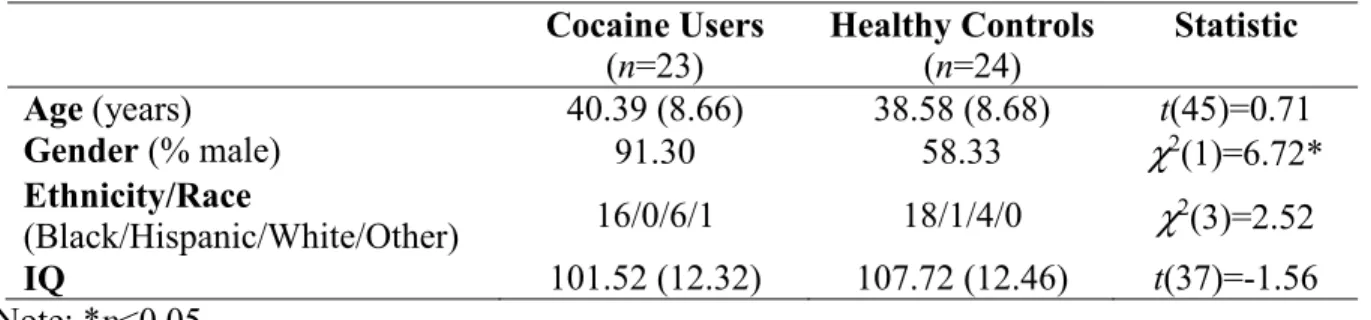
Sample characteristics are presented in Table 1. There were no group differences in age, ethnicity/race, IQ, and education. There were significantly more females among the healthy controls than the cocaine users. Thus, gender was included as a covariate in all group analyses. Cocaine users reported additional use of substances, including alcohol, heroin, marijuana, methamphetamine, ecstasy, sedatives, phencyclidine (PCP), and prescription opiates (Table 2).
Task Performance
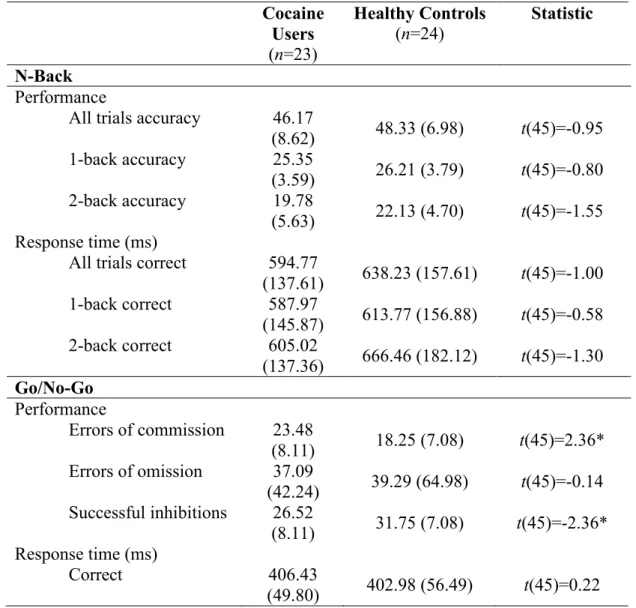
Task performance on the N-Back and Go/No-Go tasks is presented in Table 3. For the N-Back, there were no group differences in task performance (accuracy) or response time on correct trials. For the Go/No-Go, cocaine users had a significantly more errors of commission and less successful inhibitions compared to healthy controls. There were no group differences in errors of omission or response time on correct trials. These results suggest that cocaine users are performing comparably to healthy controls on the N-Back task, but not the Go/No-Go task, particularly in terms of their ability to withhold responses when necessary.
Association between Sample Characteristics and Task Performance
dependence (r=-0.05, p=ns).For the Go/No-Go task, task performance was not significantly associated with gender (t(45)=-1.12, p=ns), age (r=-0.06, p=ns), ethnicity/race (F(3,42)=0.14,
p=ns), IQ (r=0.09, p=ns), or level of nicotine dependence (r=-0.16, p=ns).
Whole Brain Neural Activation in Response to Working Memory Load
Whole brain neural activation in response to working memory load during the N-Back was obtained with the contrast [(2-back)-(1-back)]. Cocaine users and healthy controls displayed expected neural response to working memory load in regions implicated in components of working memory and additional cognitive control processes, in line with working memory literature (Baddeley, 2003; Owen et al., 2005; Wager & Smith, 2003; Wesley & Bickel, 2014) (Tables 4 and 5). Such regions included the middle frontal gyrus (organizational strategy use, manipulation of information), inferior frontal gyrus (attentional control, storage, retrieval), inferior parietal lobule (encoding, rehearsal), frontal pole (integration), precentral and postcentral gyri (sensorimotor integration) suggesting individuals reliably recruited and engaged working memory processes in response to working memory load.
Healthy controls demonstrated greater activation than cocaine users in response to working memory load in the right frontal pole, right and left middle frontal gyrus, right
supramarginal gyrus, and right paracingulate gyrus (Table 6 and Figure 8). Cocaine users did not demonstrate greater activation than healthy controls in any regions. These findings are in line with previous studies that also provide evidence for decreased activation in regions implicated in working memory processes among cocaine users, suggesting functional differences in
Working Memory Network Connectivity as a Mediator Between Group and Working
Memory Task Performance (Aim 1)
Model 1 (Table 7)
Total and direct effects. There were no significant total or direct effects of group on
working memory network connectivity efficiency or strength. In addition, there were no significant direct effects of working memory network connectivity efficiency or strength on working memory task performance.
Indirect effects. All bias-corrected, 1000-sample bootstrapped 95% confidence intervals
contained zero, suggesting that no within network working memory network connectivity parameters emerged as significant mediators between group and working memory task performance.
Model 2 (Table 7)
Total and direct effects. There were no significant total effect or direct effects of group
on individual working memory network connectivity paths. There was a significant direct effect of the individual working memory network connectivity path from the right insula (R. INS) to the right inferior frontal gyrus (R. IFG), in line with the 95% confidence interval that did not include zero. There were no other significant direct effects of on individual working memory network connectivity paths on working memory task performance.
Indirect effects. All bias-corrected, 1000-sample bootstrapped 95% confidence intervals
Working Memory Network Connectivity as a Mediator Between Group and Inhibitory
Control Task Performance (Aim 2)
Model 1 (Table 8)
Total and direct effects. There was a significant total effect of group on inhibitory
control task performance (Table #), as well as significant direct effects of working memory network connectivity efficiency and strength on inhibitory control task performance, in line with the 95% confidence intervals that did not include zero. There were no other direct effects of group on working memory network connectivity efficiency or strength. In addition, there were no significant direct effects of working memory network connectivity efficiency or strength on inhibitory task performance.
Indirect effects. All bias-corrected, 1000-sample bootstrapped 95% confidence intervals
contained zero, suggesting that no within network working memory network connectivity parameters emerged as significant mediators between group and inhibitory control task performance.
Model 2 (Table 8)
Total and direct effects. There were no significant total effect or direct effects of group
on individual working memory network connectivity paths. There was a significant direct effect of the individual working memory network connectivity path from the right precuneus (R. PREC) to the right inferior parietal lobule (R. IPL), in line with the 95% confidence interval that did not include zero. There were no other significant direct effects of on individual working memory network connectivity paths on inhibitory control task performance.
Indirect effects. All bias-corrected, 1000-sample bootstrapped 95% confidence intervals
DISCUSSION
This study examined group differences between cocaine users and healthy controls in neural response to a working memory task and whether working memory network connectivity accounts for group differences in both working memory and inhibitory control task performance. As expected, and in line with previous working memory studies (Moeller et al., 2010; Tomasi et al., 2007b), cocaine users demonstrated reduced activation during the working memory task compared to healthy controls in neural regions implicated in working memory processes,
including the bilateral middle frontal gyri, right pre- and post-central gyri, and right frontal pole. In addition, in line with past inhibitory control studies (Fernández-Serrano et al., 2012; Hester & Garavan, 2004; Hester et al., 2007; Kaufman et al., 2003; Lane et al., 2007; Verdejo-García et al., 2007; Verdejo-García & Pérez-García, 2007), cocaine users demonstrated deficits in
inhibitory control task performance, compared to healthy controls. Contrary to study hypotheses, working memory network connectivity did not account for group differences in working memory or inhibitory control task performance.
understood to be involved in a larger cognitive control network (Cole & Schneider, 2007), including the preparation and execution of goal-oriented tasks, such as those involving working memory processes (e.g., inhibition of distractors, maintenance, rehearsal) (Chein & Fiez, 2001; McNab et al., 2008). Other studies have highlighted the importance of the connection between the insular cortex and R. IFG. Of particular note, Cisler and colleagues (2013) found stronger connectivity between the insula and the R. IFG among cocaine dependent individuals compared to healthy controls. More specifically, the R. INS and R. IFG are hypothesized to be critical components of the right lateralized ventral attentional system, supporting the allocation of attention to salient, unpredicted stimuli and spatial organization (Corbetta, Kincade, & Shulman, 2002). Although there were no significant group differences in the strength of this specific path between cocaine users and healthy controls, greater connection between the R. INS and R. IFG may thus reflect generally greater inefficiency, as reflected by a need for compensatory
recruitment of attentional resources and monitoring, as working memory load increases.
Moreover, greater reduction of DMN activity has been found as task difficulty and cognitive demand increase (McKiernan, Kaufman, Kucera-Thompson, & Binder, 2003). Thus, this finding is in line with other studies that have provided evidence for strong functional coupling between DMN regions during working memory tasks, which is attributed to the facilitation and
monitoring of the DMN throughout the task execution (Gilbert, Simons, Frith, & Burgess, 2006; M. Hampson et al., 2006). Regulation of the DMN may contribute to greater allocation of neural resources to working memory processes, as well as those, in turn contributing to inhibitory control task performance.
Given the lack of significant group differences between cocaine users and healthy controls in working memory network connectivity, it is important to consider possible factors that may contribute to these findings. Although previous working memory studies among cocaine and other substance users have utilized versions of the well-validated N-Back task, it is important to determine whether the N-Back task with two working memory conditions is the most appropriate paradigm to utilize in order to examine differences in working memory
based on self-report measures, only 25% of participants reported using cocaine greater than or equal to four times a week, 50% of participants reported using cocaine greater than or equal to two times a week, and 12.5% of participants reported using cocaine only greater than or equal to two times a week. As such it is likely that this sample contains recreational cocaine users who according to past work, do not exhibit the same cognitive deficits as regular cocaine users. In one study, the magnitude of inhibitory control deficits of recreational cocaine users, as defined as using cocaine monthly for a minimum of two years and not meeting DSM-IV substance abuse criteria, was proportional to the degree of life cocaine exposure (Colzato, van den Wildenberg, & Hommel, 2007). In another study with the same recreational cocaine use criteria, recreational cocaine polydrug users did not demonstrate working memory deficits with equivalent
performance to healthy controls (Colzato, Huizinga, & Hommel, 2009). Taken together, a sample including only participants meeting criteria for cocaine use disorder may reduce unintended variability in the data.
of their fMRI scan, thus nicotine could have contributed to enhanced working memory task performance, contributing to comparable working memory task performance between cocaine users and healthy controls.
Taken together, findings from this study suggest the contribution of particular
characteristics of working memory connectivity, such as attention allocation and engagement, and regulation of the DMN in working memory and inhibitory control task performance.
Limitations and Future Directions
cocaine use and related experiences. Finally, the N-Back task utilized in this study was limited to only two working memory conditions, the 1- and 2-Back. Although more demanding working memory conditions (e.g., 3- or 4-Back) will likely result in poorer task performance, a greater working memory load may provide more insight into the recruitment and engagement of
working memory neural resources in response to a working memory task by providing a stronger contrast of parameter estimates for neural activity. Greater working memory load may more accurately reflect the cognitive demands placed on substance users engaging in goal-oriented activities, while also attempting to regulate responses to hypersalient internal and external stimuli related to substance use. Lastly, the working memory and inhibitory control tasks were counterbalanced; however, task order should be included as a covariate in order to examine the potential effect of order on task performance and neural response to the working memory task.
Future work should consider the most appropriate and comprehensive method for quantifying potential group differences between cocaine users and healthy individuals in the neural mechanisms contributing to working memory and inhibitory control task performance. Although there are numerous ways to measure neural response during a working memory task, one particularly comprehensive approach may be to examine potential group differences in the degree of network modularity. Network modularity, also known as community structure quantifies the efficiency of network defined by a subset of nodes that are more densely
interconnected with each other than other nodes and dedicated to dissociable functions (Menon, 2011). Measuring the degree of modularity is based on two principles (Stevens, Tappon, Garg, & Fair, 2012). First, dense connections within network sub-systems result in more efficient
connections. Taken together, greater network modularity reflects more optimal functional organization (Dosenbach et al., 2006). Stevens and colleagues (2012) found that network modularity predicted individual differences in working memory capacity in healthy controls using a visual memory task. Thus, network modularity may provide a particularly promising approach to examine the neural mechanisms contributing to working memory and inhibitory control deficits in cocaine users.
Summary
APPENDIX 1: TABLES
Table 1. Means (and standard deviations) of self-report sample characteristics
Cocaine Users
(n=23)
Healthy Controls (n=24)
Statistic
Age (years) 40.39 (8.66) 38.58 (8.68) t(45)=0.71
Gender (% male) 91.30 58.33 χ2(1)=6.72*
Ethnicity/Race
(Black/Hispanic/White/Other) 16/0/6/1 18/1/4/0 χ
2(3)=2.52
IQ 101.52 (12.32) 107.72 (12.46) t(37)=-1.56
Table 2. Frequency of substance use
Cocaine Users
(n=23)
Healthy Controls
(n=24)
Cocaine ≥ 4 times/week 25.0% --
≥ 2 times/week 50.0% --
≥ 2 times/month 12.5% --
≤ monthly 6.3% --
Alcohol ≥ 4 times/week 18.8% --
≥ 2 times/week 25.0% 9.1%
≥ 2 times/month 18.7% 9.1%
≤ monthly 31.3% 45.5%
Heroin ≥ 2 times/month 6.3% --
≤ monthly 6.3% --
Marijuana ≥ 2 times/week 6.3% --
≥ 2 times/month 6.3% --
≤ monthly 37.5% --
Methamphetamine ≥ 4 times/week 6.3% --
≤ monthly 6.3% --
Ecstasy ≥ 4 times/week 6.3% --
Sedatives ≥ 4 times/week 6.3% --
Phencyclidine (PCP)
≤ monthly 6.3% --
Prescription Opiate ≤ monthly 12.5% --
Smoking FTND Score 3.33 (2.11) --
Number of cigarettes/day
9.87 (8.17) --
Table 3. Task performance on the N-Back and Go/No-Go Cocaine
Users
(n=23)
Healthy Controls
(n=24)
Statistic
N-Back
Performance
All trials accuracy 46.17
(8.62) 48.33 (6.98) t(45)=-0.95 1-back accuracy 25.35
(3.59) 26.21 (3.79) t(45)=-0.80 2-back accuracy 19.78
(5.63) 22.13 (4.70) t(45)=-1.55 Response time (ms)
All trials correct 594.77
(137.61) 638.23 (157.61) t(45)=-1.00 1-back correct 587.97
(145.87) 613.77 (156.88) t(45)=-0.58 2-back correct 605.02
(137.36) 666.46 (182.12) t(45)=-1.30
Go/No-Go
Performance
Errors of commission 23.48
(8.11) 18.25 (7.08) t(45)=2.36* Errors of omission 37.09
(42.24) 39.29 (64.98) t(45)=-0.14 Successful inhibitions 26.52
(8.11) 31.75 (7.08) t(45)=-2.36* Response time (ms)
Correct 406.43
Table 4. Clusters and max Z-values in response to working memory load [(2-Back)-(1-Back)] among healthy controls
Cluster Index Voxels p Z-Max X
(mm)
Z-Max Y (mm)
Z-Max Z (mm)
R. postcentral gyrus
- R. precentral gyrus 183
3.00x10
-3 20 -30 68
L. precentral gyrus
- L. postcentral gyrus, R. precentral gyrus
135 1.70x10
-2 -2 -30 64
L. parietal operculum cortex - L. central opercular cortex, L. supramarginal gyrus (anterior division)
131 1.98x10
-2 -44 -28 24
Table 5. Clusters and max Z-values in response to working memory load [(2-Back)-(1-Back)] among cocaine users
Cluster Index Voxels p Z-Max X
(mm)
Z-Max Y (mm)
Z-Max Z (mm)
R. central opercular cortex - R. frontal operculum cortex, R. insular cortex
339 9.54x10⁻⁷ 38 8 8
L. inferior frontal gyrus (pars opercularis)
- L. precentral gyrus, L. frontal operculum cortex
258 1.85x10⁻⁵ -50 10 10
R. superior frontal gyrus
- L. superior frontal gyrus
242 3.46x10⁻⁵ 2 42 42
L. middle frontal gyrus - L. frontal pole, L. superior frontal gyrus
125 5.62x10⁻³ -28 34 34
L. insular cortex
- L. central opercular cortex
116 8.78x10⁻³ -36 4 4
L. precentral gyrus
- L. central opercular cortex, L. planum polare, L. superior temporal gyrus (anterior division), L. temporal pole, L. planum temporale
107 1.39x10⁻² -60 2 2
L. precentral gyrus
- L. inferior frontal gyrus (pars opercularis), L. central opercular cortex, L. frontal operculum corterx
95 2.59x10⁻² -52 6 6
R. precentral gyrus - R. temporal pole
88 3.77x10⁻² 66 6 6
Table 6. Clusters and max Z-values in response to working memory load [(2-back)-(1-back)] for the contrast of cocaine users < healthy controls.
Cluster Index Voxels p Z-Max X
(mm)
Z-Max Y (mm)
Z-Max Z (mm)
R. frontal pole
- R. middle frontal gyrus
592 8.01x10⁻⁹ 40 40 32
R. precentral gyrus - R. postcentral gyrus
432 5.36x10⁻⁷ 60 -3 48
R. paracingulate gyrus - L. cingulate gyrus (anterior division), R. cingulate gyrus (anterior division)
337 8.94x10⁻⁶ 0 32 34
R. frontal pole 195 9.83x10⁻⁴ 40 62 6
L. middle frontal gyrus - L. frontal pole
185 1.42x10⁻³ -40 36 32
R. middle frontal gyrus - R. inferior frontal gyrus (pars
triangularis), R. inferior frontal gyrus (pars opercularis)
104 3.75x10⁻² 56 24 32
Table 7. Aim 1 mediation results of mediators in the relationship between group and working memory task performance (accuracy), adjusted for gender
Coefficient SE BC Boostrap
95% CI
Model 1
Total effect of group on accuracy 2.40 2.49 (-2.62, 7.43) Direct effect of group on mediators
Network efficiency (a1) -0.55 0.98 (-2.52, 1.42)
Network strength (a2) 0.02 0.02 (-0.03, 0.06)
Direct effect of mediators on accuracy
Network efficiency (b1) -0.67 0.72 (-2.11, 0.78)
Network strength (b2) -36.45 32.53 (-102.10, 29.20)
Indirect effect of group on accuracy through mediators
Network efficiency 0.37 1.14 (-1.11, 4.17)
Network strength -0.58 1.22 (-5.14, 0.89)
Model 2
Total effect of group on accuracy 2.99 2.66 (-2.38, 8.35) Direct effect of group on mediators
R. IPL to R. MFG (a1) 0.02 0.08 (-0.15, 0.18)
R. FP to L. FP (a2) -0.11 0.07 (-0.26, 0.03)
R. IFG to L. IFG (a3) 0.14 0.09 (-0.04, 0.32)
R. PREC to R. IPL (a4) 0.03 0.08 (-0.12, 0.19)
L. IPL to R. IPL (a5) 0.08 0.09 (-0.08, 0.24)
R. INS to R. IFG (a6) 0.10 0.09 (-0.07, 0.28)
R. FP to R. IFG (a7) 0.05 0.08 (-0.11, 0.21)
R. MFG to R. IFG (a8) 0.07 0.08 (-0.09, 0.22)
L. MFG to L. IPL (a9) -0.01 0.10 (-0.20, 0.19)
R. MFG to L. MFG (a10) 0.02 0.08 (-0.13, 0.17)
Direct effect of mediators on accuracy
R. IPL to R. MFG (b1) 2.08 6.33 (-10.82, 14.98)
R. FP to L. FP (b2) 3.78 6.90 (-10.28, 17.84)
R. IFG to L. IFG (b3) 1.35 5.17 (-9.17, 11.87)
R. PREC to R. IPL (b4) 1.37 6.32 (-11.51, 14.24)
L. IPL to R. IPL (b5) -5.14 5.78 (-16.92, 6.64)
R. INS to R. IFG* (b6) -11.56 4.97 (-21.69, -1.43)
R. FP to R. IFG (b7) -2.68 6.45 (-15.82, 10.46)
R. MFG to R. IFG (b8) -5.45 6.57 (-18.83, 7.92)
L. MFG to L. IPL (b9) -2.10 5.14 (-12.57, 8.38)
R. MFG to L. MFG (b10) -2.21 5.97 (-14.36, 9.95)
Indirect effect of group on accuracy through mediators
R. IPL to R. MFG (c1) 0.04 0.70 (-1.22, 1.88)
R. FP to L. FP (c2) -0.43 0.91 (-3.49, 0.59)
R. IFG to L. IFG (c3) 0.19 1.36 (-2.21, 3.49)
R. PREC to R. IPL (c4) 0.05 0.59 (-0.64, 2.24)
L. IPL to R. IPL (c5) -0.41 0.95 (-2.94, 0.95)
R. INS to R. IFG (c6) -1.21 1.04 (-4.53, 0.18)
R. FP to R. IFG (c7) -0.13 0.95 (-3.09, 1.01)
R. MFG to R. IFG (c8) -0.37 1.24 (-5.16, 0.76)
L. MFG to L. IPL (c9) 0.02 0.58 (-1.22, 1.22)
R. MFG to L. MFG (c10) -0.04 0.64 (-2.60, 0.70)
Table 8. Aim 2 mediation results of mediators in the relationship between group and inhibitory control task performance (successful inhibitions), adjusted for gender
Coefficient SE 95% CI
Model 1
Total effect of group on successful inhibitions* 4.95 2.42 (0.07, 9.83) Direct effect of group on mediators
Network efficiency -0.55 0.98 (-2.52, 1.42)
Network strength 0.02 0.02 (-0.03, 0.06)
Direct effect of mediators on correct inhibitions
Network efficiency* 1.38 0.67 (0.03, 2.72)
Network strength* 66.61 30.31 (5.44, 127.79)
Indirect effect of group on successful inhibitions through mediators
Network efficiency -0.76 1.66 (-5.43,1.53)
Network strength 1.07 1.77 (-1.37,5.88)
Model 2
Total effect of group on successful inhibitions 4.82 2.59 (-0.40, 10.04) Direct effect of group on mediators
R. IPL to R. MFG (a1) 0.02 0.10 (-0.15, 0.18)
R. FP to L. FP (a2) -0.11 0.07 (-0.26, 0.03)
R. IFG to L. IFG (a3) 0.14 0.09 (-0.04, 0.32)
R. PREC to R. IPL (a4) 0.03 0.08 (-0.12, 0.19)
L. IPL to R. IPL (a5) 0.08 0.08 (-0.08, 0.24)
R. INS to R. IFG (a6) 0.10 0.09 (-0.07, 0.28)
R. FP to R. IFG (a7) 0.05 0.08 (-0.11, 0.21)
R. MFG to R. IFG (a8) 0.07 0.08 (-0.09, 0.22)
L. MFG to L. IPL (a9) -0.01 0.10 (-0.20, 0.19)
R. MFG to L. MFG (a10) 0.02 0.08 (-0.13, 0.17)
Direct effect of mediators on successful inhibitions
R. IPL to R. MFG (b1) -2.12 3.02 (-4.36, 7.96)
R. FP to L. FP (b2) 8.10 5.90 (-3.93, 20.13)
R. IFG to L. IFG (b3) 7.20 4.42 (-1.80, 16.21)
R. PREC to R. IPL* (b4) 12.15 5.41 (1.14, 23.17)
L. IPL to R. IPL (b5) -1.82 4.95 (-11.90, 8.26)
R. INS to R. IFG (b6) 6.97 5.52 (-1.70, 15.64)
R. FP to R. IFG (b7) 3.66 5.52 (-7.59, 14.90)
R. MFG to R. IFG (b8) -7.48 5.62 (-18.92, 3.97)
L. MFG to L. IPL (b9) 3.37 4.40 (-5.59, 12.34)
R. MFG to L. MFG (b10) 0.40 5.10 (-10.00, 10.90)
Indirect effect of group on accuracy through mediators
R. IPL to R. MFG (c1) -0.04 0.58 (-2.04, 0.71)
R. FP to L. FP (c2) -0.92 1.03 (-4.48, 0.19)
R. IFG to L. IFG (c3) 1.01 1.05 (-0.36, 4.53)
R. PREC to R. IPL (c4) 0.42 1.04 (-1.05, 3.48)
L. IPL to R. IPL (c5) -0.14 0.70 (-2.32, 0.63)
R. INS to R. IFG (c6) 0.73 0.63 (-0.13, 2.43)
R. FP to R. IFG (c7) 0.18 0.76 (-0.72, 2.68)
R. MFG to R. IFG (c8) -0.50 0.91 (-4.72, 0.35)
L. MFG to L. IPL (c9) -0.03 0.59 (-1.49, 0.95)
R. MFG to L. MFG (c10) 0.01 0.50 (-0.97, 1.05)
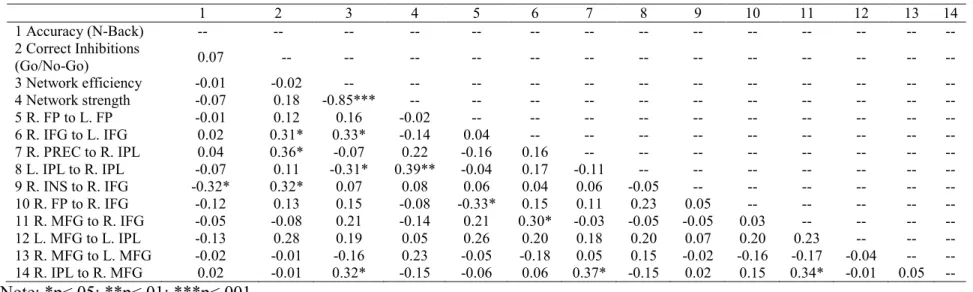
Table 9. Correlations (r) between study variables
1 2 3 4 5 6 7 8 9 10 11 12 13 14
1 Accuracy (N-Back) -- -- -- -- -- -- -- -- -- -- -- -- -- --
2 Correct Inhibitions
(Go/No-Go) 0.07 -- -- -- -- -- -- -- -- -- -- -- -- --
3 Network efficiency -0.01 -0.02 -- -- -- -- -- -- -- -- -- -- -- --
4 Network strength -0.07 0.18 -0.85*** -- -- -- -- -- -- -- -- -- -- --
5 R. FP to L. FP -0.01 0.12 0.16 -0.02 -- -- -- -- -- -- -- -- -- --
APPENDIX 2: FIGURES
Figure 8. Significant clusters in response to working memory load [(2-back)-(1-back)] for the contrast of cocaine users < healthy controls. Clusters determined by Z>3.0 and a (corrected) cluster significance threshold of p=0.05.
Axial
3.0 4.2
Sagittal x=0
Coronal y=32

![Table 4. Clusters and max Z-values in response to working memory load [(2-Back)-(1-Back)]](https://thumb-us.123doks.com/thumbv2/123dok_us/8297443.2197412/54.918.117.778.169.404/table-clusters-max-values-response-working-memory-load.webp)
![Table 5. Clusters and max Z-values in response to working memory load [(2-Back)-(1-Back)]](https://thumb-us.123doks.com/thumbv2/123dok_us/8297443.2197412/55.918.105.798.168.800/table-clusters-max-values-response-working-memory-load.webp)
![Table 6. Clusters and max Z-values in response to working memory load [(2-back)-(1-back)] for the contrast of cocaine users < healthy controls](https://thumb-us.123doks.com/thumbv2/123dok_us/8297443.2197412/56.918.118.764.172.653/table-clusters-response-working-contrast-cocaine-healthy-controls.webp)