551
Calculations of Electrets Property of Single Human Renal Stones at Regular
Interval of Removing Minerals Compositions
R. Ramesh, J. Kishorekumar, P. Suresh and P. Sundaramoorthi*
Department of Physics, Thiruvalluvar Govt. Arts College,Rsipuram, Namakkal, India-637401
*Corresponding Author: [email protected], Phone -04287-231802
Abstract
In the modern science and technology the electrical and thermal conductivity studies of renal stone plays an impotent role to understand the natural formation. The free electrons act as carriers to carry their energy. In the present investigations, three renal stones are collected poor hard working male who was affected with mineral deposition in the urinary tracts in a periodic collection within three years. The stones are collected from the hospital by Lithotropic treatment process. Electrical, thermal conductivities are measured at different temperatures and calculated temperature coefficients of the renal stones.
Key words: Renal stones, minerals, Process instrumentation, Bio-chemical, electron exchange
and energy transfer.
1. INTRODUCTION
2. MATERIALS AND METHODS
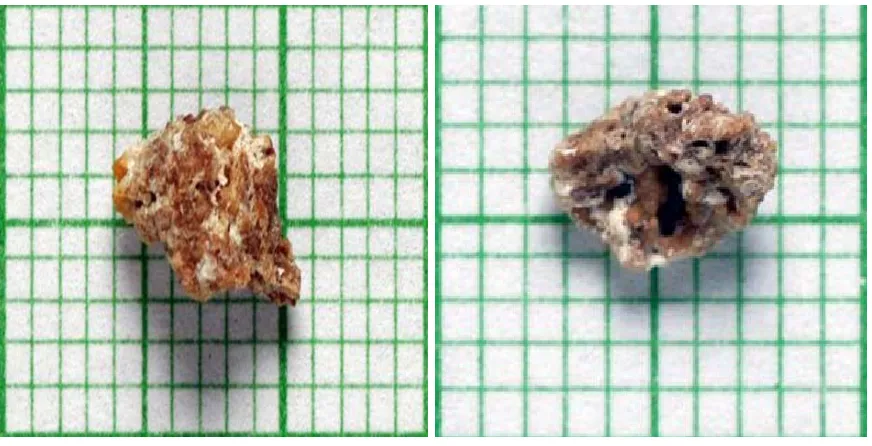
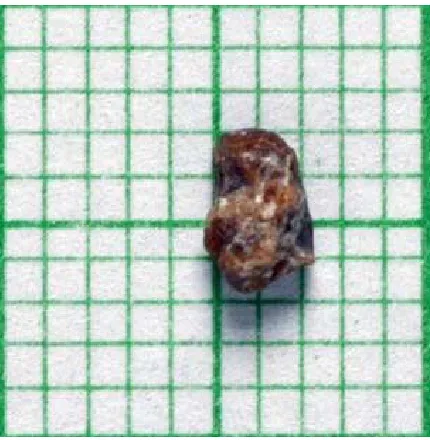
Kidney stones are removed from the affected patient continuously for a period of three years by Lithotropic process in the Rasi stones diagnosing center in Rasipuram, Namakkal, India. The three stone constituents are analyzed by bio-chemical analysis process. The renal stone constituent’s presences are reported in Table 1. The major constituents of the samples are calcium phosphate and its oxalate ions bonded to an organic and sulponated muscoproteins [5]. The investigation results on TSP, TSD are reproducible from stone to stone. Due to the lengthy process of research, only three samples are used in a single person (Figures 1-3).
Table 1. Chemical composition present in the renal stones.
Stones Presence of Chemical constituents
1 Calcium, silica-chromium, phosphate with hydrogen oxalate group. 2 Calcium oxalate, mono silica, di-hydrate with phosphate and chromium.
3 Calcium oxalate with silica chromium (major) monohydrate with Phosphates.
Figure 1. Stone-1. Figure 2. Stone-2.
[image:2.612.69.505.395.618.2]
[image:3.612.188.403.119.339.2]
Figure 3. Stone-3.
Stone samples are initially removed in the bloodstains and other impurities from the surfaces of the sample and dried naturally. Then the renal stone sample surfaces are smoothened by using very thin grain artificial grinder. The renal stone samples are placed in the probes with in contact. The full set up are kept inside the micro oven, which is automatically heated with monitor and controller (the accuracy is 2oC). The D.C conductivity is studied at the temperature (T) from 300 K to 370 K at a desired temperature. The electric field varied from 2 Volts to 16 Volts and the corresponding current flows are measured. The all the three renal stone are kept in hot Owen at a particular temperature at least 20 minutes to reach the entire heat distribution. The current flow of the renal stones mainly depends upon the presence of the carriers in a samples according to the Curie-Von-Schweidlar law. The conductivity has been reported for polymer samples [6-8] and ionic materials also [9-10].
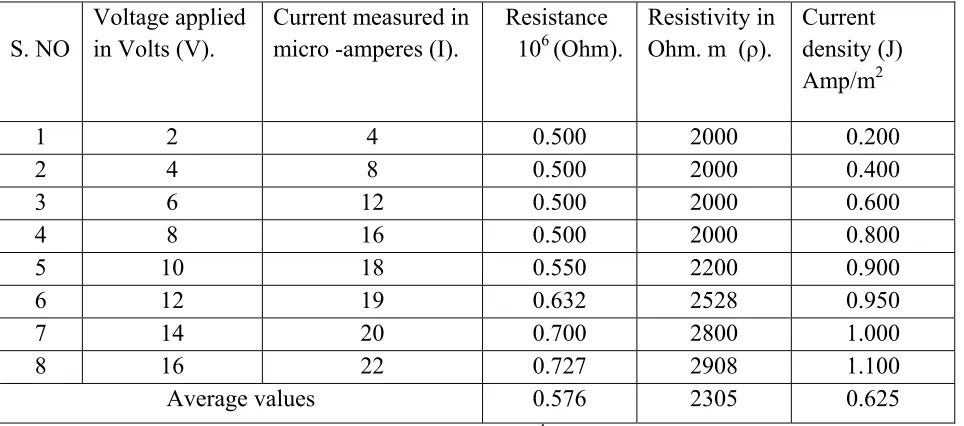
Table 2. Electrets properties of renal stone A at 30oC, A=20x10-6 m2, L=5x10⁻³m.
S. NO
Voltage applied in Volts (V).
Current measured in micro -amperes (I).
Resistance 106 (Ohm).
Resistivity in Ohm. m (ρ).
Current density (J) Amp/m2
1 2 4 0.500 2000 0.200
2 4 8 0.500 2000 0.400
3 6 12 0.500 2000 0.600
4 8 16 0.500 2000 0.800
5 10 18 0.550 2200 0.900
6 12 19 0.632 2528 0.950
7 14 20 0.700 2800 1.000
8 16 22 0.727 2908 1.100
Average values 0.576 2305 0.625
Co efficient of electrical conductivity (σ) = 4.4338x10⁻⁴ mho.m-1
Table 3. Electrets properties of renal stone A at 50oC, A=20x10-6 m2, L=5x10⁻³m.
S. NO
Voltage applied in Volts (V).
Current measured in micro -amperes (I).
Resistance 106 (Ohm).
Resistivity in Ohm. m (ρ).
Current density (J) Amp/m2
1 2 6 0.333 1332 0.300
2 4 10 0.400 1600 0.500
3 6 12 0.500 2000 0.600
4 8 16 0.500 2000 0.800
5 10 20 0.500 2000 1.000
6 12 24 0.500 2000 1.200
7 14 28 0.500 2000 1.400
8 16 29 0.552 2208 1.450
Average values 0.473 1893 0.906
[image:4.612.72.542.411.627.2]Table 4. Electrets properties of renal stone A at 75oC, A=20x10-6 m2, L=5x10⁻³m.
S. NO
Voltage applied in Volts (V).
Current measured in micro -amperes (I).
Resistance 106 (Ohm).
Resistivity in Ohm. m (ρ).
Current density (J) Amp/m2
1 2 7 0.286 1144 0.350
2 4 12 0.333 1332 0.600
3 6 16 0.375 1500 0.800
4 8 19 0.421 1684 0.950
5 10 23 0.434 1736 1.150
6 12 26 0.462 1848 1.300
7 14 29 0.480 1932 1.450
8 16 32 0.500 2000 1.600
Average values 0.358 1430 0.844
Co efficient of electrical conductivity (σ) = 6.8965x10⁻⁴ mho.m-1
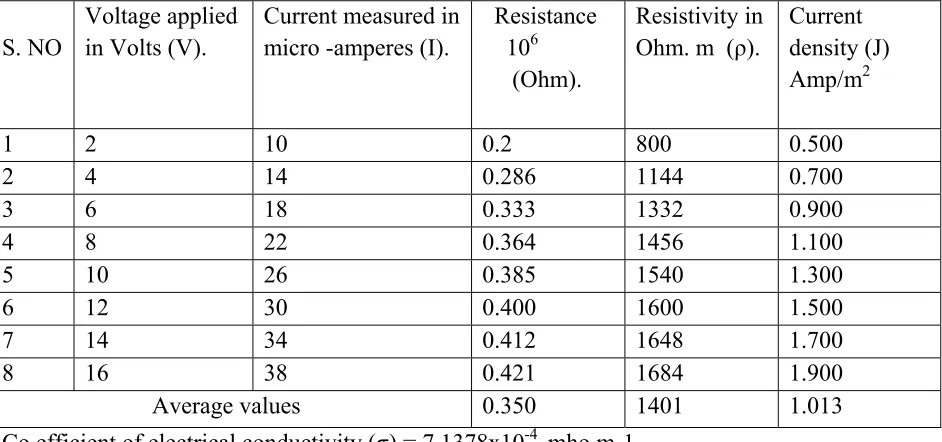
Table 5. Electrets properties of renal stone A at 95oC, A=20x10-6 m2, L=5x10⁻³m.
S. NO
Voltage applied in Volts (V).
Current measured in micro -amperes (I).
Resistance 106 (Ohm).
Resistivity in Ohm. m (ρ).
Current density (J) Amp/m2
1 2 10 0.2 800 0.500
2 4 14 0.286 1144 0.700
3 6 18 0.333 1332 0.900
4 8 22 0.364 1456 1.100
5 10 26 0.385 1540 1.300
6 12 30 0.400 1600 1.500
7 14 34 0.412 1648 1.700
8 16 38 0.421 1684 1.900
[image:5.612.71.542.430.651.2]Table 6. Electrets properties of renal stone B at 33oC, A=30x10-6 m2, L=5x10⁻³m.
S. NO
Voltage applied in Volts (V).
Current measured in micro -amperes (I).
Resistance 106 (Ohm).
Resistivity in Ohm. m (ρ).
Current density (J) Amp/m2
1 2 6 0.333 1650 0.200
2 4 8 0.500 2500 0.267
3 6 11 0.545 2755 0.367
4 8 14 0.571 2855 0.467
5 10 15 0.667 3335 0.500
6 12 16 0.750 3750 0.533
7 14 18 0.778 3890 0.600
8 16 20 0.800 4000 0.667
Average values 0.618 3088 0.450
Co efficient of electrical conductivity (σ) = 3.2383x10⁻⁴ mho.m-1
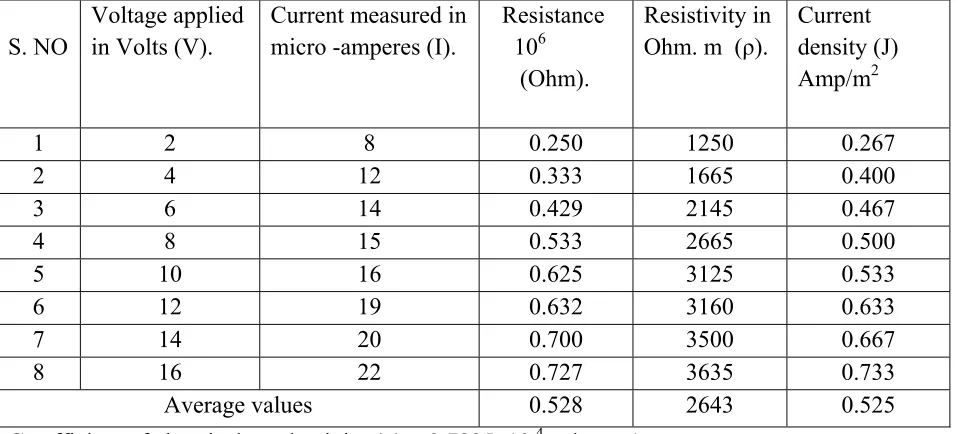
Table 7. Electrets properties of renal stone B at 51oC, A=30x10-6 m2, L=6x10⁻³m.
S. NO
Voltage applied in Volts (V).
Current measured in micro -amperes (I).
Resistance 106 (Ohm).
Resistivity in Ohm. m (ρ).
Current density (J) Amp/m2
1 2 8 0.250 1250 0.267
2 4 12 0.333 1665 0.400
3 6 14 0.429 2145 0.467
4 8 15 0.533 2665 0.500
5 10 16 0.625 3125 0.533
6 12 19 0.632 3160 0.633
7 14 20 0.700 3500 0.667
8 16 22 0.727 3635 0.733
Average values 0.528 2643 0.525
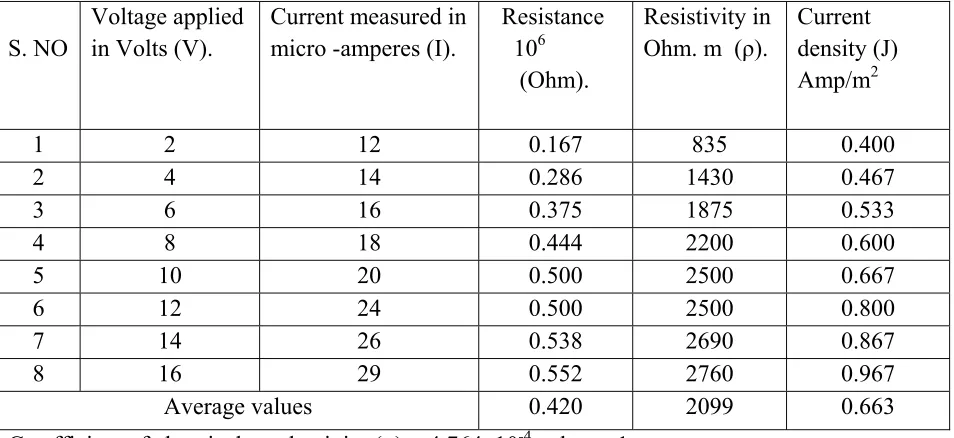
[image:6.612.68.547.429.646.2]Table 8. Electrets properties of renal stone B at 74oC, A=30x10-6 m2, L=6x10⁻³m.
S. NO
Voltage applied in Volts (V).
Current measured in micro -amperes (I).
Resistance 106 (Ohm).
Resistivity in Ohm. m (ρ).
Current density (J) Amp/m2
1 2 12 0.167 835 0.400
2 4 14 0.286 1430 0.467
3 6 16 0.375 1875 0.533
4 8 18 0.444 2200 0.600
5 10 20 0.500 2500 0.667
6 12 24 0.500 2500 0.800
7 14 26 0.538 2690 0.867
8 16 29 0.552 2760 0.967
Average values 0.420 2099 0.663
Co efficient of electrical conductivity (σ) = 4.764x10⁻⁴ mho.m-1
Table 9. Electrets properties of renal stone B at 98oC, A=30x10-6 m2, L=6x10⁻³m.
S. NO
Voltage applied in Volts (V).
Current measured in micro -amperes (I).
Resistance 106 (Ohm).
Resistivity in Ohm. m (ρ).
Current density (J) x 10-4 Amp/m2
1 2 14 0.143 715 0.467
2 4 18 0.222 1110 0.600
3 6 19 0.316 1580 0.633
4 8 21 0.381 1905 0.700
5 10 24 0.417 2085 0.800
6 12 28 0.426 2130 0.933
7 14 32 0.438 2190 1.070
8 16 35 0.457 2285 1.167
[image:7.612.68.550.445.662.2]Table 10. Electrets properties of renal stone C at 31oC, A=8x10⁻⁶ m2, L=2x10⁻³m.
S. NO
Voltage applied in Volts (V).
Current measured in micro -amperes (I).
Resistance 106 (Ohm).
Resistivity in Ohm. m (ρ).
Current density (J) x 10-4 Amp/m2
1 2 3 0.667 2668 0.376
2 4 5 0.800 3200 0.625
3 6 6 1.000 4000 0.750
4 8 8 1.000 4000 1.000
5 10 10 1.000 4000 1.250
6 12 12 1.000 4000 1.500
7 14 14 1.000 4000 1.750
8 16 16 1.000 4000 2.000
Average values 0.933 3734 1.156 Co efficient of electrical conductivity (σ) = 2.6780x10⁻⁴ mho.m-1
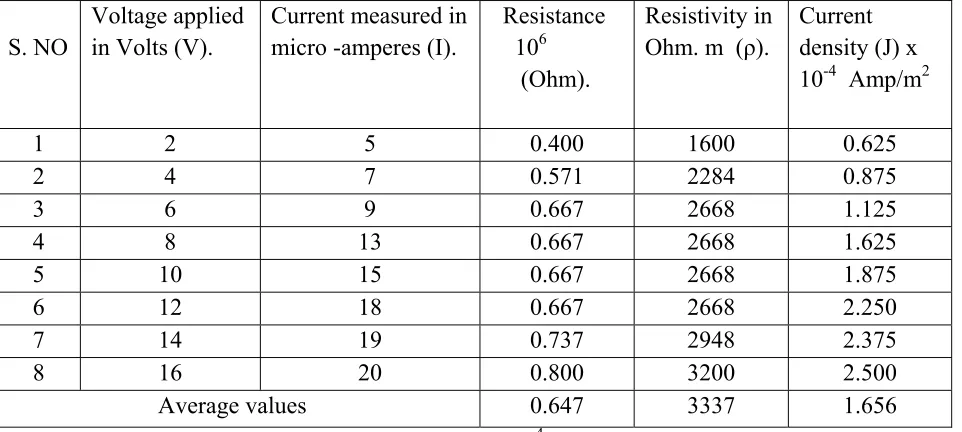
Table 11. Electrets properties of renal stone C at 48oC, A=8x10⁻⁶ m2, L=2x10⁻³m.
S. NO
Voltage applied in Volts (V).
Current measured in micro -amperes (I).
Resistance 106 (Ohm).
Resistivity in Ohm. m (ρ).
Current density (J) x 10-4 Amp/m2
1 2 5 0.400 1600 0.625
2 4 7 0.571 2284 0.875
3 6 9 0.667 2668 1.125
4 8 13 0.667 2668 1.625
5 10 15 0.667 2668 1.875
6 12 18 0.667 2668 2.250
7 14 19 0.737 2948 2.375
8 16 20 0.800 3200 2.500
[image:8.612.68.549.446.662.2]Table 12. Electrets properties of renal stone C at 76oC, A=8x10⁻⁶ m2, L=2x10⁻³m.
S. NO
Voltage applied in Volts (V).
Current measured in micro -amperes (I).
Resistance 106 (Ohm).
Resistivity in Ohm. m (ρ).
Current density (J) x 10-4 Amp/m2
1 2 6 0.333 1332 0.750
2 4 9 0.444 1776 1.125
3 6 12 0.500 2000 1.500
4 8 13 0.615 2460 1.625
5 10 16 0.625 2500 2.000
6 12 18 0.667 2668 2.250
7 14 21 0.667 2668 2.625
8 16 24 0.667 2668 3.000
Average values 0.565 2259 1.859
Co efficient of electrical conductivity (σ) = 4.4267x10⁻⁴ mho.m-1
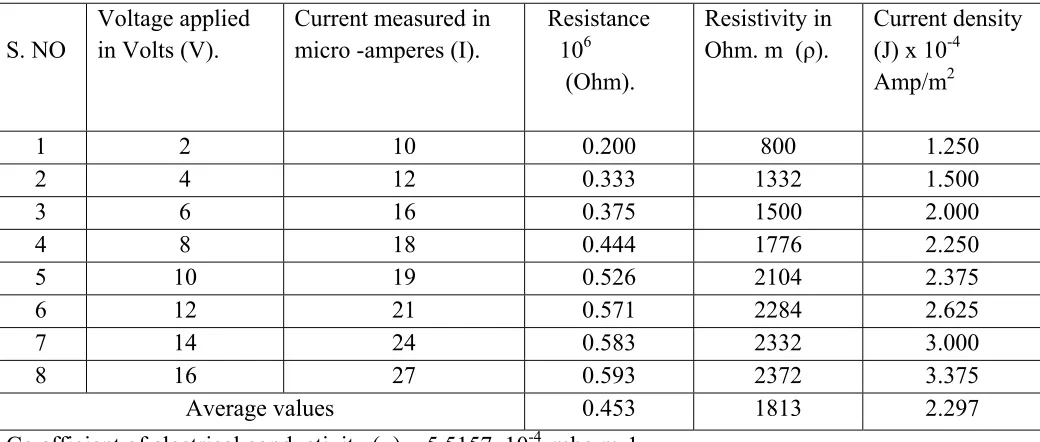
Table 13. Electrets properties of renal stone C at 93oC, A=8x10⁻⁶ m2, L=2x10⁻³m.
S. NO
Voltage applied in Volts (V).
Current measured in micro -amperes (I).
Resistance 106 (Ohm).
Resistivity in Ohm. m (ρ).
Current density (J) x 10-4 Amp/m2
1 2 10 0.200 800 1.250
2 4 12 0.333 1332 1.500
3 6 16 0.375 1500 2.000
4 8 18 0.444 1776 2.250
5 10 19 0.526 2104 2.375
6 12 21 0.571 2284 2.625
7 14 24 0.583 2332 3.000
8 16 27 0.593 2372 3.375
Average values 0.453 1813 2.297
[image:9.612.69.589.444.665.2]Table 14. Electrical parameters of renal stone samples.
S. No Stones Temperature in degree Celsius
R in 106 ohms
ρ Ohm-meter
J x10-4 Ampere/met2
1 A 30 0.576 2305 0.625
50 0.473 1893 0.906
75 0.358 1430 0.844
95 0.350 1401 1.013
2 B 32 0.618 3088 0.450
51 0.528 2643 0.525
74 0.420 2099 0.663
98 0.350 1750 0.7963
3 C 31 0.933 3734 1.156
48 0.647 3337 1.656
76 0.565 2259 1.859
97 0.453 1813 2.297
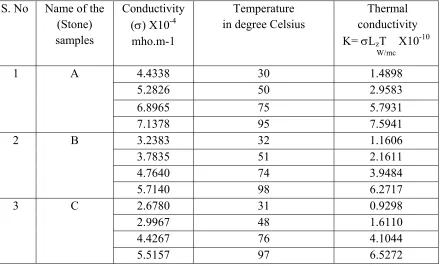
Table 15. Thermal conductivity of renal stones at different temperature.
S. No Name of the (Stone) samples
Conductivity () X10-4
mho.m-1
Temperature in degree Celsius
Thermal conductivity K= LzT X10-10
W/mc
1 A 4.4338 30 1.4898
5.2826 50 2.9583 6.8965 75 5.7931 7.1378 95 7.5941
2 B 3.2383 32 1.1606
3.7835 51 2.1611 4.7640 74 3.9484 5.7140 98 6.2717
3 C 2.6780 31 0.9298
[image:10.612.71.511.413.679.2]One can unable to measure the hall coefficient of the renal stones. The stones containing collagens like micro-protein and apatite also have some organic matrix like protein at 5% of the total weight [13]. The protein matrix is clearly visible under a scanning microscope. The D.C electrical conductivity of the renal stones are compared and calculated with the standard ionic conductors [11] and semiconductors [12].
The ionic conduction for the renal stone is:
=1exp(A/KT)+2exp(-B/KT)
Where 1,2 are the zero field conductivity, A and B are constants. The two exponential terms are nature of normal conductors.
In semiconductors the conductivity,
=0exp(-Eg/2KT)
Here 0 is the zero field conductivity and Eg is the activation energy of the conductors at a particular temperature (T). Because of practical inconvenience of electron microscope (SEM), a fine powder of kidney stone was observed under a high resolution optical microscope and shows fibrils of protein. Thus renal stones can be regarded as a mixture of semi conducting materials like N type and P type, but totally it behaves like N type material or conductors. Hence, conductivity of a kidney stone shows it may be interpreted in terms of a partially compensated semiconductor. Available mechanism for conduction of renal stones may be sought with the help of various scattering mechanism of conductors and semiconductors [14]. The conductivity of samples depends upon the scattering by lattice vibrations. In conductor the curve between conductivity and temperature should be straight line, but in semiconductor, it is not in usual [15].
3. CONCLUSION
For all the three renal stone samples, thermal conductivity and electrical conductivity are calculated. At higher temperature, the thermal conductivity of all the samples is increased and the electrical conductivity changed. The entire samples are high conductivity at low temperature, but when the temperature increases, the conductivity decreases.
REFERENCES
[1] C.Simionescu, et al., Topics in biochemistry and Biogenetics, John Willy and sons, New York, 27, 151-204 (1976).
[2] Ya. Yagik, etal., Solid State Phys Sym. BARC, Bombay, India, 23-25, 27c., 205 (1984). [3] Ya.Yagik, etal., Bioelectrets of renal calculi (kidney stone) in proc. 5th Int. Sym. Electrets
Heidelberg, 819-824 (1985)
[4] Ya.Yagik, etal, 8(b), 503-505 (1987).
[5] C.W.Vermuclen, etal., J.urology, 95,681 (1964). [6] J. Lowell, J. Phys. D, 15,109 (1982).
[7] I.M.Talwar, etal., Ind.J.Pure.Appl.Phys., 7, 681 (1982). [8] B. Sharma, Polymer, 73, 17 (1987).
[9] J.Consh, etal., J.Phys.Chem.solids, 33, 1799 (1972). [10] C.Ramasastry, etal., Proc.R.Soc. A 325, 34715.(1971)
[11] A.Vanderzerd, Solid state physical Electronics printer’s hall of India, New Delhi, 492 (1971).
[12] R.Pething, Dielectrics & electronic properties of biological materials. John Willy and sons, New York., 303 (1979).
[13] R.K.Jethi, etal., Ind. J medical research, 78, 422-25 (1983).
[14] P.S.Kareev, Semiconductor physics Mir publishers, Moscow, 428-436 (1974). [15] P.S.Greeve, Physics and technology of semiconductor devices. John Willy and sons,
Newyork, 109 (1967).
[16] S.W.S.Mckeever, et al., J.phy. D, 8, 1520 (1975).
[17] J.S.Black more, Solid state physics 2nd edi. W.B. Sawnders Company Tokyo, Japan, 357-358 (1974).