1 2 3 4 5 6 7 8 9 10 11 12 13 14 15 16 17 18 19 20 21 22 23 24 25 26 27 28 29 30 31 32 33 34 35 36 37 38 39 40 41 42 43 44 45 46 47 48 49 50 51 52 53 54 55 56 57
Using Fractionation and Diffusion Ordered Spectroscopy to
Study Lignin Molecular Weight.
James R. D. Montgomery
+, Priory Bazley
+, Tomas Lebl,* and Nicholas J. Westwood*
[a]Recent reports demonstrate that applications of the biopolymer lignin can be helped by the use of a fraction of the lignin which has an optimal molecular weight range. Unfortunately, the current methods used to determine lignin’s molecular weight are inconsistent or not widely accessible. Here, an approach
that relies on 2D DOSY NMR analysis is described that provides a measure of lignin’s molecular weight. Consistent results were obtained using this well-established NMR technique across a range of lignins.
1. Introduction
Lignin is an abundant biopolymer that has an important role to play in the future of bio-refineries.[1,2]
However, the valorization of lignin remains a challenge due to its complex structure.[3–9]
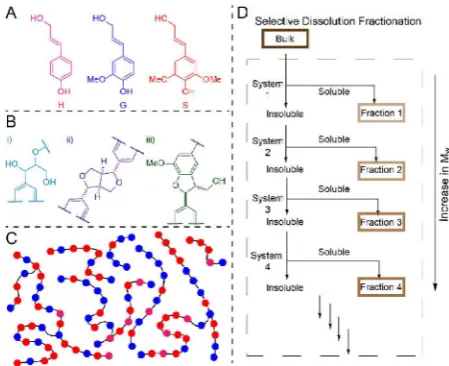
Its inherent heterogeneity is a result of at least three contributing factors: i) Lignin is made up of variable amounts of 3 possible C9 monomers (H, G, and S, Figure 1A); ii) different types of linkages are formed by coupling of the C9 monomers, the most abundant of which is the β-O-4 linkage (Figure 1B); iii) Lignin has considerably higher variation in chain lengths compared to standard polymers leading to a high polydispersity (2.0–9.0 depending on the source and pretreatment method used, Figure 1C).[10]
It is becoming evident that for any lignin application, discrete regions of the bulk molecular weight distribution (MWD) will be most suitable.[11,12]
For example, low molecular weight (MW) Kraft lignin fractions were shown to form thermosets with more optimal properties.[13]
This was determined by first fractionating the bulk material taken directly from the industrial process using a selective dissolution protocol (see Figure 1D). Subsequent conversion of the selected fractions into the corresponding thermosets identified the best fraction to use. From a research point of view, fractionation has also proved to be a vital step in assessing lignin’s depolymerisa-tion potential across its MWD. For instance, this approach has been elegantly used to demonstrate that the Lig family of enzymes do in fact process longer lignin chains rather than just di- or trimeric lignin-derived units.[14] Clearly, lignin MW is an
important property to monitor as we progress towards its efficient and complete valorization.
There are numerous approaches for measuring lignin’s MW, each with their own limitations. One option is to use MALDI-TOF MS however, it is challenging to both ionize lignin and ensure uniform ionization across its polydisperse MWD.[15]
Recently, a multiangle laser light scattering (MALLS) method was developed that circumvented issues arising from lignin’s florescence when more conventional analyses of this type were performed.[16]
The most popular method used to analyse lignin MW is gel permeation chromatography (GPC).[17]This excellent technique
separates lignin as a function of MW by size exclusion chromatography and the resulting elution profile is calibrated using polymeric standards (e. g. polystyrene).[18]This technique
also provides access to all statistical averages of polymer MWDs the most commonly reported of which are the weight average [a] J. R. D. Montgomery,+P. Bazley,+Dr. T. Lebl, Prof. N. J. Westwood
School of Chemistry and Biomedical Sciences Research Complex University of St Andrews and EaStCHEM
St Andrews, Fife, KY16 9ST, UK E-mail: [email protected]
[+] These authors have contributed equally
Supporting information for this article is available on the WWW under https://doi.org/10.1002/open.201900129
[image:1.595.312.537.251.434.2]©2019 The Authors. Published by Wiley-VCH Verlag GmbH & Co. KGaA. This is an open access article under the terms of the Creative Commons Attribution License, which permits use, distribution and reproduction in any medium, provided the original work is properly cited.
Figure 1. AThe monolignol phenyl propanoid units that make up lignin:p -coumaryl (H), coniferyl (G) and sinapyl (S) alcohols;Bthe three most abundant linkages present in lignins: i)β-O-4, ii)β-βand iii)β-5;C
Representation of a mixture of lignin chains of different lengths and compositions of aromatic units from the monolignols (colour-coded as inA);
1 2 3 4 5 6 7 8 9 10 11 12 13 14 15 16 17 18 19 20 21 22 23 24 25 26 27 28 29 30 31 32 33 34 35 36 37 38 39 40 41 42 43 44 45 46 47 48 49 50 51 52 53 54 55 56 57
(Mw) and number average (Mn) molecular weights. Although
there is wide spread use of this technique, it has been shown that repeat analyses performed on different GPC setups are inconsistent, inhibiting fair comparisons of data across different labs.[19]
Moreover, lignin samples for GPC analysis are usually subject to acetylation to enhance the solubility, although this is not always necessary. If acetylation is required then the GPC analysis can become quite time consuming. Therefore, there is arguably a need for additional analytical approaches. Very recently, IR has been used in combination with multivariate analysis to determine MW and linkage abundances in lignins.[20]
We have previously shown that diffusion ordered spectro-scopy (DOSY-NMR) has potential for use in monitoring lignin MW.[21]
This technique initially measures the diffusivity of molecules in solution and this parameter can then be related to the MW of both small molecules[22,23]
and polymers including lignin.[15,24–26]
In our previous report, diffusion coefficients of lignin fractions of variable MW were linearly correlated with MW data generated via GPC using the Mark-Houwink-Sakurada (MHS) relationship.[21]
These fractions were generated by a selective dissolution solvent fractionation that used acetylation to enhance the solubility of Kraft lignin in acetone. It is important to note that the DOSY data was generated using a standard NMR probe, making the method accessible to any lab with a modern NMR spectrometer. The data was processed using standard protocols available within the Topspin 3 and Dynamic Centre 2.5 software packages (the processing of polymer DOSY data has been discussed in detail in a recent review).[27]
All post-processing of diffusion constants was performed using MS Excel. It should be noted that our earlier study only used acetylated lignin or acetylated model polymers. Therefore we decided to explore whether the correlation we had previously observed between the DOSY-determined diffu-sivity and the GPC-determined molecular weight held for native lignins – that is lignins that had not been acetylated prior to fractionation and NMR analysis. If this were the case, then it is possible that the approach we propose could have much wider scope than we had originally imagined.
The linear scaling of lignin diffusion coefficients found in our and more recently, other[28]
reports, led us to consider the use of MHS analysis to establish a DOSY NMR calibration that would allow quick estimates of lignin MW alongside routine NMR analysis (1H NMR and 1H,13C-HSQC). To build upon our
earlier study, 151 lignin fractions, generated in 13 different fractionations of several types of lignins were analysed. MHS analysis revealed a linear correlation with a reasonable r2value
(~ 0.9). All DOSY measurements were performed using NMR samples of fixed lignin concentration (86 mg mL 1) and
temper-ature 295 K. Several types of lignins were then used to test the concept and showed good agreement between the DOSY derived MW and that measured directly using GPC.
2. Results
The study was carried out using three diverse types of lignin (Table S1). An industrial Kraft lignin (ISK, Figure S1), was
fractionated twice. Until very recently, it has been difficult to achieve this type of fractionation for unmodified Kraft lignin using volatile organic solvents only.[29–31]
In addition, two dioxasolv lignins, one from the softwood, Douglas fir (DFSD) and one from the hardwood, beech (BHD), were prepared using a previously reported method[32,33]
(Figures S2 and S3). Several different batches of BHD were prepared using different pretreatment scales. One of the BHD batches was also fractionated and analysed repeatedly to assess reproducibility. The lignins used in this study vary not only in the type of wood and pretreatment used but also in their Mwand Mnmolecular
weights, polydispersity, and linkage content (Table S1).
2.1. Solvent Optimisation
In order to generate fractions of lignin of variable MW, a solvent fractionation was used to divide the bulk material into narrower MW bands. Whilst our previous acetylation followed by selective dissolution approach enabled the use of volatile organic solvents only, new challenges arose in the further processing of these modified lignins.[34]
Consequently, we decided to focus on the fractionation of unmodified lignins. Recent publications in this area include ultrafiltration,[35–37]
selective dissolution[30,31,38]
and selective precipitation protocols.[29,39,40]
Of note was the “fast fractionation” reported by Ragauskas,[40]
as it optimized a solvent/co-solvent system to maximize the amount of soluble kraft lignin using Hilderbrand solubility parameters (for details see Supplementary Information Sections 3 and 4). From this, an experimental solvent optimization was conducted where lignin was stirred in differ-ent acetone/methanol (AM) ratios. Yields of the AM soluble material were compared for each type of lignin and for each ratio, giving an optimum of 3 : 2 AM (Tables S2-S4 and Fig-ure S4). Given the reported protocol followed the selective precipitation approach, we then compared this to a selective dissolution protocol using the same AM solvent system. In brief, whilst the selective precipitation protocol (P2) required less time to complete, the bulk material was more effectively fractionated using the selective dissolution protocol (P1) as this generated fractions of lower and more consistent polydispersity (for more details see Supplementary Information Section 4).
2.2. Fractionation and Analysis
Inspired by our previous studies,[21] diethyl ether was used as
the anti-solvent and all three types of lignin were then fractionated using a protocol that started with 100 % diethyl ether and increased by inclusion of 5 % increments of the 3 : 2 acetone-methanol (AM3,2) solution (Figure 1D and Table S6). In
all cases, 22 fractions were obtained (fraction 22 refers to the insoluble residual lignin, Figure S6). As expected, yield profiles across the fractions showed considerable differences between lignins (Figure S6 and Tables S6–S8) but the percentage of the starting bulk lignin found in AM3,2 soluble fractions 1–21 was
1 2 3 4 5 6 7 8 9 10 11 12 13 14 15 16 17 18 19 20 21 22 23 24 25 26 27 28 29 30 31 32 33 34 35 36 37 38 39 40 41 42 43 44 45 46 47 48 49 50 51 52 53 54 55 56 57
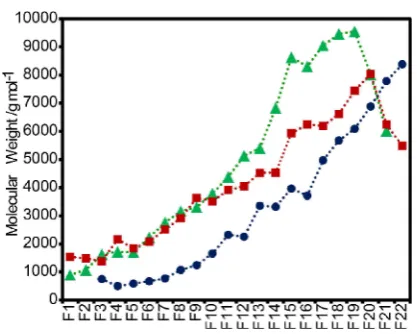
independent data points for subsequent studies, DFSD and BHD lignin samples were also fractionated in an analogous way using 9 : 1 and 4 : 1 AM solutions, respectively (Tables S6 and S7). The success of the fractionation protocol was confirmed by GPC analysis showing, with only a few exceptions, that Mw values
increased gradually with fraction number (Figure 2 and Tables S10–S12).
2.2.1. DOSY NMR Analysis of Lignin Fractions:
DOSY analysis was carried out on selected fractions from 10 different fractionations (Douglas Fir, Beech and Kraft lignins, Tables S13–S15). Importantly, a standard protocol was used for each analysis (see Supplementary Information). The resulting diffusivity values were used in conjunction with the GPC-determined Mwvalues in a Mark-Houwink-Sakurada (MHS)[15,21,41]
analysis to generate scaling parametersαand log K (Table S16). All MHS analyses resulted in linear Log(D)/Log(Mw) correlations
with reasonably high r2values for all fractionation experiments
(e. g. DFL 0.9374; BWL-1 0.8846 and ISK-1 0.9265, Table S16).
Surprisingly, there was only very small variations in the calculated values of α and log K as a function of the lignin (Table S16). Of note was the similarity of MHS parameters when comparing fractions from unmodified Douglas Fir Softwood lignin with the fractions after they had been acetylated and reanalysed (Table S16, entries 2 and 3). From this comparison, it seems evident that acetylation has only a marginal effect on the structure adopted by lignin chains in a DMSO solution (i. e. modified vs native lignins).
The data in Table S16 imply that a generic set of MHS scaling parameters are applicable to a wide range of lignins. Overall MHS analysis based on 151 data points that were obtained in this and previous studies[21]
allows us to propose the generic scaling parameters for lignin of α= 0.63�0.02 and log K= 8.05 m2
s 1�
0.06 when a solution of lignin at 86 mg mL 1
in d6-DMSO is analysed at 295 K (Figure 3). These
parameters could be used to provide an estimate of Mw from
the diffusivity of lignins analysed solely by a DOSY-NMR experiment.
Despite the convincing correlations observed, it was decided to explore in more detail potential limitations. Consid-ering the DOSY NMR component of the analysis, we have previously reported that the heavy fractions, with log D values below 10.6 m2
· s 1
, exhibited a significantly higherα scaling factor.[21]
This observation was attributed either to the hardware limits of the gradient coil in the standard NMR equipment or to dramatic changes in lignin structure. The latter was further investigated using EPR which showed, in accordance with our hypothesis, that these fractions contained considerably more radicals than the lighter fractions. To minimise systematic errors, all fractions with log D values below the threshold of
10.6 m2
s 1
were excluded from the correlation in Figure 3 and this approach is not recommended for determining the Mwof
the heaviest lignin fractions. The standard error of regression (σ) was found to be �962 g mol 1
and the mean absolute percentage error (MAPE) was calculated as 19 % (Table S16, entry 11). The size of error was MW dependent with the greatest uncertainty found towards the heaviest fractions (Fig-ure S7). This could be the result of poor signal to noise in the DOSY experiment or a result of greater degrees of freedom of possible conformations of the larger polymer chains in these fractions. The latter would not be detected by GPC leading to underestimations and possible outliers. Further error analysis was performed to investigate this by removing outliers from the dataset however this did not lead to a significant difference in theαand log K scaling factors, (see Table S16 & Supporting Information Section 10).
Next, potential pitfalls in the GPC determination of the Mw
data were considered. GPC elution profiles are usually calibrated by well-defined standards (in our case polystyrene), that are likely structurally different to lignin. For instance, it has been reported that an acetylated hardwood Kraft lignin is more compact than polystyrene in organic solvents (THF and DMSO) and could be approximately 6 times larger than estimated by GPC.[42]This results from GPC’s inability to discriminate between
[image:3.595.65.274.61.228.2]polymers of different shapes/conformations. The plot of meas-ured GPC-determined Mwagainst Mwderived from DOSY for all
[image:3.595.60.278.272.406.2]Figure 2.GPC-determined weight average molecular weights (Mw) of fractions from fractionations DFL-1 (Green), BWL-1 (red) and ISK-1 (blue).
1 2 3 4 5 6 7 8 9 10 11 12 13 14 15 16 17 18 19 20 21 22 23 24 25 26 27 28 29 30 31 32 33 34 35 36 37 38 39 40 41 42 43 44 45 46 47 48 49 50 51 52 53 54 55 56 57
151 data points clearly shows that the largest residuals from the identity line occur at high Mw(Figure S7). In this region of the
Mw distribution, there is likely a wider range of possible
conformations/shapes of the lignin. Consequently, lignin is more likely to deviate from the structure of polystyrene in THF leading to inaccurate MW measurements. This hypothesis would be supported by the biasing of residuals seen in Figure S8, however, biasing of the MHS scaling factors by branching of larger lignin polymers cannot be excluded as well. We believe this further demonstrates the limitations of the Mw
determination of lignin using GPC as suggested in the recent literature.[16]
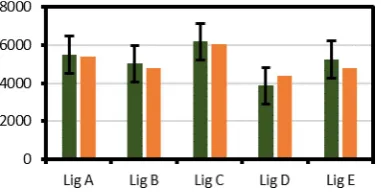
[image:4.595.75.266.66.162.2]Despite these likely sources of error, it was decided to test the calibration curve, and hence the overall utility of the proposed DOSY approach, on additional bulk samples of lignins (Figure 4). Therefore, 4 different lignins were prepared and subjected to DOSY NMR analysis. Values for Mw were then
calculated using the observed diffusivities and our generic MHS scaling parameters. These Mwvalues were then compared with
the Mw values measured by GPC. Bulk samples of Lig A, Lig B,
and Lig C are lignins that are represented in the calibration chart (Figure 3) and showed good agreement with the DOSY derived Mwbeing well within the error of the calibration curve
(Figure 4). Bulk samples of Lig D and Lig E (lignins that are not represented in Figure 3) also gave DOSY-derived Mw values
within the error of correlation. This illustrates the ability of this method to obtain reliable Mw estimations for a wide range of
lignins. Therefore, a remarkable match between these two values has been obtained despite the potentially large error associated with the conversion of diffusivity into molecular weight (Figure 4).
In summary, a wide range of lignins were fractionated using a selective dissolution solvent fractionation protocol. A MHS plot containing 151 data points from 13 separate fractionations showed a general trend in lignin diffusivity with increasing MW with an r2value of 0.89. This observation opened the possibility
of defining a calibration curve that can be used to deliver a measurement of the molecular weight (Mw) of lignin samples
from diffusivity values measured by DOSY NMR. This approach is potentially a widely accessible method to compare the Mwof
lignins without GPC analysis that could be utilized by the community of synthetic chemists in addition to the qualitative monitoring of the polymer through processing strategies, in this case fractionation. A potential user only needs to do two things: (i) analyse their lignin sample by DOSY NMR under the conditions we describe and (ii) use our equation to convert the DOSY-determined diffusivity into an estimate of the molecular weight. Although the proposed method streamlines access to Mw of lignin samples, the accuracy of these estimates is likely
limited by the reliance on the use of the GPC during the calibration phase and we cannot exclude that there might be occasions when the proposed approach cannot be used. In the future, this may be improved by using more accurate methods to determine the lignin Mw for MHS calibration, providing
access for the wider community.
Experimental Section
Full Experimental details of this study can be found in the Supporting Information.
Acknowledgements
This work was supported by EPSRC Ph.D. studentships EP/1654168 (JRDM). We would like to thank Dr. Chris Lancefield and Ingevity for the kind gift of a sample of kraft lignin that was used in the comparison of the different fractionation protocols. Raw data files can be found at DOI: 10.6084/m9.figshare.8034680.
Conflict of Interest
The authors declare no conflict of interest.
Keywords: DOSY NMR · biomass · lignin · molecular weight determination·fractionation
[1] N. D. Fitzgerald,Nat. Rev. Chem.2017,1, 0080.
[2] J. N. Rogers, B. Stokes, J. Dunn, H. Cai, M. Wu, Z. Haq, H. Baumes,Biofuels Bioprod. Biorefin.2017,11, 110–128.
[3] Y. Song, J. K. Mobley, A. H. Motagamwala, M. Isaacs, J. A. Dumesic, J. Ralph, A. F. Lee, K. Wilson, M. Crocker,Chem. Sci.2018,9, 8127–8133. [4] A. Rahimi, A. Ulbrich, J. J. Coon, S. S. Stahl,Nature2014,515, 249–252. [5] C. S. Lancefield, L. W. Teunissen, B. M. Weckhuysen, P. C. A. Bruijnincx,
Green Chem.2018,20, 3214–3221.
[6] P. J. Deuss, M. Scott, F. Tran, N. J. Westwood, J. G. De Vries, K. Barta,J. Am. Chem. Soc.2015,137, 7456–7467.
[7] R. Rinaldi, R. Jastrzebski, M. T. Clough, J. Ralph, M. Kennema, P. C. A. Bruijnincx, B. M. Weckhuysen, Angew. Chem. Int. Ed.2016, 55, 8164– 8215;Angew. Chem.2016,128, 8296–8354.
[8] C. S. Lancefield, H. J. Wienk, R. Boelens, B. M. Weckhuysen, P. C. A. Bruijnincx,Chem. Sci.2018,9, 6348–6360.
[9] C. Crestini, H. Lange, M. Sette, D. S. Argyropoulos,Green Chem.2017,19, 4104–4121.
[10] A. Tolbert, H. Akinosho, R. Khunsupat, A. K. Naskar, A. J. Ragauskas,
Biofuels Bioprod. Biorefin.2014,8, 836–856.
[11] S. Gillet, M. Aguedo, L. Petitjean, A. R. C. Morais, A. M. da Costa Lopes, R. M. Łukasik, P. T. Anastas,Green Chem.2017,19, 4200–4233.
1 2 3 4 5 6 7 8 9 10 11 12 13 14 15 16 17 18 19 20 21 22 23 24 25 26 27 28 29 30 31 32 33 34 35 36 37 38 39 40 41 42 43 44 45 46 47 48 49 50 51 52 53 54 55 56 57
[12] H. Sadeghifar, D. S. Argyropoulos,ACS Sustainable Chem. Eng.2016,4, 5160–5166.
[13] C. Gioia, G. Lo Re, M. Lawoko, L. Berglund,J. Am. Chem. Soc.2018,140, 4054–4061.
[14] D. L. Gall, W. S. Kontur, W. Lan, H. Kim, Y. Li, J. Ralph, T. J. Donohue, D. R. Noguera,Appl. Environ. Microbiol.2018,84, DOI 10.1128/AEM.02076-17. [15] J. Rönnols, A. Jacobs, F. Aldaeus,Holzforschung2017,71, 563–570. [16] G. Zinovyev, I. Sulaeva, S. Podzimek, D. Rössner, I. Kilpeläinen, I.
Sumerskii, T. Rosenau, A. Potthast,ChemSusChem2018,11, 3259–3268. [17] H. Lange, F. Rulli, C. Crestini,ACS Sustainable Chem. Eng.2016,4, 5167–
5180.
[18] C. S. Lancefield, N. J. Westwood,Green Chem.2015,17, 4980–4990. [19] S. Constant, H. L. J. Wienk, A. E. Frissen, P. de Peinder, R. Boelens, D. S.
van Es, R. J. H. Grisel, B. M. Weckhuysen, W. J. J. Huijgen, R. J. A. Gosselink,Green Chem.2016,18, 2651–2665.
[20] C. Lancefield, P. de Peinder, S. Constant, P. Bruijnincx, ChemSusChem
2019, DOI 10.1002/cssc.201802809.
[21] J. R. D. Montgomery, C. S. Lancefield, D. M. Miles-Barrett, K. Ackermann, B. E. Bode, N. J. Westwood, T. Lebl,ACS Omega2017,2, 8466–8474. [22] R. Evans, Z. Deng, A. K. Rogerson, A. S. McLachlan, J. J. Richards, M.
Nilsson, G. A. Morris,Angew. Chem.2013,125, 3199–3202;Angew. Chem. Int. Ed.2013,52, 3117–3120.
[23] R. Evans, G. Dal Poggetto, M. Nilsson, G. A. Morris,Anal. Chem.2018,90, 3987–3994.
[24] J.-G. Rosenboom, J. De Roo, G. Storti, M. Morbidelli, J. De Roo, G. Storti, M. Morbidelli,Macromol. Chem. Phys.2016,218, 1600436.
[25] Q. Mei, X. Shen, H. Liu, H. Liu, J. Xiang, B. Han,Chem. Sci.2019,10, 1082–1088.
[26] X. Gong, E. W. Hansen, Q. Chen, Macromol. Chem. Phys. 2011, 212, 1007–1015.
[27] P. Groves,Polym. Chem.2017,8, 6700–6708.
[28] V. A. Belyy, A. P. Karmanov, L. S. Kocheva, P. S. Nekrasova, M. V. Kaneva, A. N. Lobov, L. V. Spirikhin,Int. J. Biol. Macromol.2019,128, 40–48.
[29] C. Cui, R. Sun, D. S. Argyropoulos,ACS Sustainable Chem. Eng.2014,2, 959–968.
[30] A. Duval, F. Vilaplana, C. Crestini, M. Lawoko,Holzforschung2016,70, 11–20.
[31] C. G. Boeriu, F. I. Fiţigău, R. J. A. Gosselink, A. E. Frissen, J. Stoutjesdijk, F. Peter,Ind. Crops Prod.2014,62, 481–490.
[32] D. V. Evtuguin, C. P. Neto, A. M. S. Silva, P. M. Domingues, F. M. L. Amado, D. Robert, O. Faix,J. Agric. Food Chem.2001,49, 4252–4261. [33] C. S. Lancefield, O. S. Ojo, F. Tran, N. J. Westwood,Angew. Chem. Int. Ed.
Engl.2015,54, 258–62.
[34] J. R. D. Montgomery, K. Kempf, D. M. Miles-Barrett, O. Kempf, T. Lebl, N. J. Westwood,ChemSusChem2018,12, 190–193.
[35] C. A. E. Costa, P. C. R. Pinto, A. E. Rodrigues,Sep. Purif. Technol.2018,
192, 140–151.
[36] A. Toledano, A. Garcia, I. Mondragon, J. Labidi,Sep. Purif. Technol.2010,
71, 38–43.
[37] M. Norgren, B. Lindström,Holzforschung2000,54, 528–534.
[38] H. Zhang, Y. Bai, B. Yu, X. Liu, F. Chen,Green Chem. 2017,19, 5152– 5162.
[39] H. Lange, P. Schiffels, M. Sette, O. Sevastyanova, C. Crestini, ACS Sustainable Chem. Eng.2016,4, 5136–5151.
[40] Y. Y. Wang, M. Li, C. E. Wyman, C. M. Cai, A. J. Ragauskas,ACS Sustainable Chem. Eng.2018,6, 6064–6072.
[41] T. M. Garver, P. T. Callaghan,Macromolecules1991,24, 420–430. [42] L. Wang, Y. Uraki, K. Koda, A. Gele, X. Zhou, F. Chen,Holzforschung
2018, DOI 10.1515/hf-2018-0119.
[43] L. Shuai, M. T. Amiri, Y. M. Questell-Santiago, F. Héroguel, Y. Li, H. Kim, R. Meilan, C. Chapple, J. Ralph, J. S. Luterbacher,Science2016,354, 329– 333.
1 2 3 4 5 6 7 8 9 10 11 12 13 14 15 16 17 18 19 20 21 22 23 24 25 26 27 28 29 30 31 32 33 34 35 36 37 38 39 40 41 42 43 44 45 46 47 48 49 50 51 52 53 54 55 56 57
FULL PAPERS
Evening the playing field: Using DOSY NMR and the Mark Houwink Sakurada relationship to streamline access to reproducible lignin molecular weight estimations.
J. R. D. Montgomery, P. Bazley, Dr. T. Lebl*, Prof. N. J. Westwood*
1 – 6