Original citation:
Atherton, Helen C., Brant, Heather, Ziebland, Sue, Bikker, Annemieke, Campbell, John, Gibson, Andy, McKinstry, Brian, Porqueddu, Tania and Salisbury, Chris (2018) The
potential of alternatives to face-to-face consultation in general practice, and the impact on different patient groups : a mixed-methods case study. Health Services and Delivery
Research, 6 (20). doi:10.3310/hsdr06200
Permanent WRAP URL:
http://wrap.warwick.ac.uk/103057
Copyright and reuse:
The Warwick Research Archive Portal (WRAP) makes this work by researchers of the University of Warwick available open access under the following conditions. Copyright © and all moral rights to the version of the paper presented here belong to the individual author(s) and/or other copyright owners. To the extent reasonable and practicable the material made available in WRAP has been checked for eligibility before being made available.
Copies of full items can be used for personal research or study, educational, or not-for-profit purposes without prior permission or charge. Provided that the authors, title and full bibliographic details are credited, a hyperlink and/or URL is given for the original metadata page and the content is not changed in any way.
Publisher’s statement:
© Queen’s Printer and Controller of HMSO 2018. This work was produced by Atherton et al. under the terms of a commissioning contract issued by the Secretary of State for Health and Social Care. This issue may be freely reproduced for the purposes of private research and study and extracts (or indeed, the full report) may be included in professional journals provided that suitable acknowledgement is made and the reproduction is not associated with any form of advertising. Applications for commercial reproduction should be addressed to: NIHR Journals Library, National Institute for Health Research, Evaluation, Trials
and Studies Coordinating Centre, Alpha House, University of Southampton Science Park, Southampton SO16 7NS, UK.
A note on versions:
The version presented in WRAP is the published version or, version of record, and may be cited as it appears here.
VOLUME 6 ISSUE 20 JUNE 2018 ISSN 2050-4349
The potential of alternatives to face-to-face
consultation in general practice, and the impact on
different patient groups: a mixed-methods case study
Helen Atherton, Heather Brant, Sue Ziebland, Annemieke Bikker,
John Campbell, Andy Gibson, Brian McKinstry,
consultation in general practice, and the
impact on different patient groups:
a mixed-methods case study
Helen Atherton,
1
* Heather Brant,
2
Sue Ziebland,
3
Annemieke Bikker,
4
John Campbell,
5
Andy Gibson,
6
Brian McKinstry,
4
Tania Porqueddu
3
and
Chris Salisbury
2
1
Warwick Medical School, University of Warwick, Coventry, UK
2
Centre for Academic Primary Care, University of Bristol, Bristol, UK
3
Nuffield Department of Primary Care Health Sciences, University of Oxford,
Oxford, UK
4
Usher Institute of Population Health Sciences and Informatics, University of
Edinburgh, Edinburgh, UK
5
Collaboration for Academic Primary Care (APEx), University of Exeter, Exeter, UK
6
Health and Social Sciences, University of the West of England, Bristol, UK
*Corresponding author
Declared competing interests of authors:Helen Atherton has received fellowship funding from the
National Institute for Health Research (NIHR) School for Primary Care Research (SPCR) during the conduct of the study. Chris Salisbury is a member of the NIHR Health Services and Delivery Research board.
Published June 2018
DOI: 10.3310/hsdr06200This report should be referenced as follows:
Atherton H, Brant H, Ziebland S, Bikker A, Campbell J, Gibson A,et al. The potential of alternatives to face-to-face consultation in general practice, and the impact on different patient groups:
ISSN 2050-4349 (Print)
ISSN 2050-4357 (Online)
This journal is a member of and subscribes to the principles of the Committee on Publication Ethics (COPE) (www.publicationethics.org/).
Editorial contact: [email protected]
The full HS&DR archive is freely available to view online at www.journalslibrary.nihr.ac.uk/hsdr. Print-on-demand copies can be purchased from the report pages of the NIHR Journals Library website: www.journalslibrary.nihr.ac.uk
Criteria for inclusion in theHealth Services and Delivery Researchjournal
Reports are published inHealth Services and Delivery Research(HS&DR) if (1) they have resulted from work for the HS&DR programme or programmes which preceded the HS&DR programme, and (2) they are of a sufficiently high scientific quality as assessed by the reviewers and editors.
HS&DR programme
The Health Services and Delivery Research (HS&DR) programme, part of the National Institute for Health Research (NIHR), was established to fund a broad range of research. It combines the strengths and contributions of two previous NIHR research programmes: the Health Services Research (HSR) programme and the Service Delivery and Organisation (SDO) programme, which were merged in January 2012.
The HS&DR programme aims to produce rigorous and relevant evidence on the quality, access and organisation of health services including costs and outcomes, as well as research on implementation. The programme will enhance the strategic focus on research that matters to the NHS and is keen to support ambitious evaluative research to improve health services.
For more information about the HS&DR programme please visit the website: http://www.nets.nihr.ac.uk/programmes/hsdr
This report
The research reported in this issue of the journal was funded by the HS&DR programme or one of its preceding programmes as project number 13/59/08. The contractual start date was in November 2014. The final report began editorial review in February 2017 and was accepted for publication in June 2017. The authors have been wholly responsible for all data collection, analysis and interpretation, and for writing up their work. The HS&DR editors and production house have tried to ensure the accuracy of the authors’report and would like to thank the reviewers for their constructive comments on the final report document. However, they do not accept liability for damages or losses arising from material published in this report.
This report presents independent research funded by the National Institute for Health Research (NIHR). The views and opinions expressed by authors in this publication are those of the authors and do not necessarily reflect those of the NHS, the NIHR, NETSCC, the HS&DR programme or the Department of Health and Social Care. If there are verbatim quotations included in this publication the views and opinions expressed by the interviewees are those of the interviewees and do not necessarily reflect those of the authors, those of the NHS, the NIHR, NETSCC, the HS&DR programme or the Department of Health and Social Care.
© Queen’s Printer and Controller of HMSO 2018. This work was produced by Athertonet al.under the terms of a commissioning contract issued by the Secretary of State for Health and Social Care. This issue may be freely reproduced for the purposes of private research and study and extracts (or indeed, the full report) may be included in professional journals provided that suitable acknowledgement is made and the reproduction is not associated with any form of advertising. Applications for commercial reproduction should be addressed to: NIHR Journals Library, National Institute for Health Research, Evaluation, Trials and Studies Coordinating Centre, Alpha House, University of Southampton Science Park, Southampton SO16 7NS, UK.
NIHR Journals Library Editor-in-Chief
Professor Tom Walley Director, NIHR Evaluation, Trials and Studies and Director of the EME Programme, UK
NIHR Journals Library Editors
Professor Ken Stein Chair of HTA and EME Editorial Board and Professor of Public Health, University of Exeter Medical School, UK
Professor Andrée Le May Chair of NIHR Journals Library Editorial Group (HS&DR, PGfAR, PHR journals)
Dr Martin Ashton-Key Consultant in Public Health Medicine/Consultant Advisor, NETSCC, UK
Professor Matthias Beck Professor of Management, Cork University Business School, Department of Management and Marketing, University College Cork, Ireland
Dr Tessa Crilly Director, Crystal Blue Consulting Ltd, UK
Dr Eugenia Cronin Senior Scientific Advisor, Wessex Institute, UK
Dr Peter Davidson Director of the NIHR Dissemination Centre, University of Southampton, UK
Ms Tara Lamont Scientific Advisor, NETSCC, UK
Dr Catriona McDaid Senior Research Fellow, York Trials Unit, Department of Health Sciences, University of York, UK
Professor William McGuire Professor of Child Health, Hull York Medical School, University of York, UK
Professor Geoffrey Meads Professor of Wellbeing Research, University of Winchester, UK
Professor John Norrie Chair in Medical Statistics, University of Edinburgh, UK
Professor John Powell Consultant Clinical Adviser, National Institute for Health and Care Excellence (NICE), UK
Professor James Raftery Professor of Health Technology Assessment, Wessex Institute, Faculty of Medicine, University of Southampton, UK
Dr Rob Riemsma Reviews Manager, Kleijnen Systematic Reviews Ltd, UK
Professor Helen Roberts Professor of Child Health Research, UCL Great Ormond Street Institute of Child Health, UK
Professor Jonathan Ross Professor of Sexual Health and HIV, University Hospital Birmingham, UK
Professor Helen Snooks Professor of Health Services Research, Institute of Life Science, College of Medicine, Swansea University, UK
Professor Jim Thornton Professor of Obstetrics and Gynaecology, Faculty of Medicine and Health Sciences, University of Nottingham, UK
Professor Martin Underwood Director, Warwick Clinical Trials Unit, Warwick Medical School, University of Warwick, UK
Please visit the website for a list editors: www.journalslibrary.nihr.ac.uk/about/editors
Abstract
The potential of alternatives to face-to-face consultation in
general practice, and the impact on different patient groups:
a mixed-methods case study
Helen Atherton,
1* Heather Brant,
2Sue Ziebland,
3Annemieke Bikker,
4John Campbell,
5Andy Gibson,
6Brian McKinstry,
4Tania Porqueddu
3and Chris Salisbury
21Warwick Medical School, University of Warwick, Coventry, UK 2Centre for Academic Primary Care, University of Bristol, Bristol, UK
3Nuffield Department of Primary Care Health Sciences, University of Oxford, Oxford, UK 4Usher Institute of Population Health Sciences and Informatics, University of Edinburgh,
Edinburgh, UK
5Collaboration for Academic Primary Care (APEx), University of Exeter, Exeter, UK 6Health and Social Sciences, University of the West of England, Bristol, UK
*Corresponding author [email protected]
Background:There is international interest in the potential role of different forms of communication technology to provide an alternative to face-to-face consultations in health care. There has been considerable rhetoric about the need for general practices to offer consultations by telephone, e-mail or internet video. However, little is understood about how, under what conditions, for which patients and in what ways these approaches may offer benefits to patients and practitioners in general practice.
Objectives:Our objectives were to review existing evidence about alternatives to face-to-face consultation; conduct a scoping exercise to identify the ways in which general practices currently provide these alternatives; recruit eight general practices as case studies for focused ethnographic research, exploring how practice context, patient characteristics, type of technology and the purpose of the consultation interact to determine the impact of these alternatives; and synthesise the findings in order to develop a website resource about the implementation of alternatives to face-to-face consultations and a framework for subsequent evaluation.
Design:Mixed-methods case study.
Setting:General practices in England and Scotland with varied experience of implementing alternatives to face-to-face consultations.
Participants:Patients and practice staff.
Interventions:Alternatives to face-to-face consultations include telephone consultations, e-mail, e-consultations and internet video.
Main outcome measures:How context influenced the implementation and impact of alternatives to the face-to-face consultation; the rationale for practices to introduce alternatives; the use of different forms of consultation by different patient groups; and the intended benefits/outcomes.
Results:Alternatives to the face-to-face consultation are not in mainstream use in general practice, with low uptake in our case study practices. We identified the underlying rationales for the use of these alternatives and have shown that different stakeholders have different perspectives on what they hope to achieve through the use of alternatives to the face-to-face consultation. Through the observation of real-life use of different forms of alternative, we have a clearer understanding of how, under what circumstances and for which patients alternatives might have a range of intended benefits and potential unintended adverse consequences. We have also developed a framework for future evaluation.
Limitations:The low uptake of alternatives to the face-to-face consultation means that our research participants might be deemed to be early adopters. The case study approach provides an in-depth examination of a small number of sites, each using alternatives in different ways. The findings are therefore hypothesis-generating, rather than hypothesis-testing.
Conclusions:The current low uptake of alternatives, lack of clarity about purpose and limited evidence of benefit may be at odds with current policy, which encourages the use of alternatives. We have highlighted key issues for practices and policy-makers to consider and have made recommendations about priorities for further research to be conducted, before or alongside the future roll-out of alternatives to the face-to-face consultation, such as telephone consulting, e-consultation, e-mail and video consulting.
Future work:We have synthesised our findings to develop a framework and recommendations about future evaluation of the use of alternatives to face-to-face consultations.
Funding details:The National Institute for Health Research Health Services and Delivery Research programme.
Contents
List of tables xiii
List of figures xv
List of boxes xvii
List of abbreviations xix
Plain English summary xxi
Scientific summary xxiii
Chapter 1Introduction 1
Background 1
Evidence explaining why this research is needed now 2
What is the problem being addressed? 4
Use of alternatives to the face-to-face consultation 4
Types of technology 4
Telephone consultations 4
E-mail consultation 5
E-consulting 5
Video 5
Aim 6
Objectives 6
Identifying the evidence base 6
Developing a theory 6
Modelling the process and outcomes 7
Conceptual framework 7
Team 8
Structure of the report 8
Chapter 2Conceptual review 11
Background 11
Aim 11
Methods 11
Types of studies 11
Setting 11
Types of alternatives to the face-to-face consultation 11
Search for material 13
Selecting material 13
Collation of material and identification of themes 13
Appraisal of articles 14
Synthesis of findings 14
Theoretical framework 14
Development of the conceptual map 14
Results 15
Initial themes 15
Patient and public involvement workshop 15
Conceptual map 15
Organisational disruptions and dynamics 16
Uptake and awareness 16
Organisation of alternatives to the face-to-face consultation in the health-care setting 16
Safety 16
Organisation of space 17
Professional disruptions and dynamics 17
Proximity in the consultation 17
Professional indemnity 17
Health-care professional attitudes 17
Health-care professional skills 18
Spatial disruption and dynamics 18
The nature of the communication medium 18
Patient interface with alternatives to the face-to-face consultation 18 Unintended consequences 19
Key questions 19
Case study guide 19
Conclusion 22
Chapter 3Scoping study 23
Introduction 23
Methods 23
The postal survey 23
Ethics and research governance permissions 25
Analysis 25
Exploring practice websites 25
Contacting commercial organisations 25
Utilising local and national links with those working in primary care 25
Results 25
Postal survey 25
Profile of respondents 26
The current and planned use of alternatives to face-to-face consultations at the
practice level 26
The current provision of alternatives to face-to-face consultations at an individual
general practitioner level 27
Thematic analysis of free text 27
Exploring practice websites 29
Video consultations 30
Conclusion 30
Chapter 4Focused ethnographic case studies, methodology and description of sites 31
Rationale for the methodological approach 31
Focused ethnography approach 31
Focused ethnographic team 31
Composition 31
Communication 31
Patient and public involvement 32 Case study recruitment 32
Selection of sites 32
Data collection and management 32
Consent and observational work 33
Summary profile 33
Document collection 34
Semistructured interviews 34
Interview participant recruitment 34
Case study site staff 34
Users of video consultation 35
Patients/carers 35
Hard-to-reach and disadvantaged groups 35
Quantitative data 36
Data analysis 36
Coding 36
Analysis 36
Ethics and research governance permissions 37 Description of the case study sites 37 Description of interview participants 37
Staff interview participants 37
Patient and carer interview participants 38
Hard-to-reach and disadvantaged groups 38
Patient and public involvement and young people 38
Chapter 5Case study results 39
Introduction 39
Understandhow and in what waysalternatives to face-to-face consultations may offer
benefits to patients and practitioners in general practice 39
Rationale for introducing an alternative to the face-to-face consultation 39
Organisation of workload 42
Conversion to a different consultation type 43
Adaptation 45
Understandfor which patientsalternatives to the face-to-face consultation may offer benefits 45
Patient–clinician relationship 45
Types of patients and conditions 46
Patients’perspectives of alternatives to the face-to-face consultation 48 Understandunder what conditionsalternatives to the face-to-face consultation may
offer benefits to patients and practitioners in general practice 49
Lack of shared understanding within the practice 49
Role of reception staff 50
Practice investment and training 51
Logistics 52
Recording the consultation and storing data 53
Information governance and clinical governance 54 Understanding how the findings relate to the conceptual review 55
Chapter 6Collection and analysis of routine consultation data 57
Introduction 57
Aim 57
Objectives 57
Methods 58
Practice policies 58
Assessing the reliability of data recording 58
Extracting pseudo-anonymised data 58
Details of appointments 59
Details of consultations 59
Analysis 59
Results 60
Practice policies 60
Assessing the reliability of data entry of consultation types 61
Feasibility of assessing the use of alternatives to the face-to-face consultation 62
Issues with data cleaning 62
Patient demographics 62
Multimorbidity 62
Annual consultation rates 63
Multivariate analysis 67
Feasibility of assessing duration of consultations 68
Patients reconsulting within 14 days 70
Conclusions 71
Chapter 7Synthesis and framework for future evaluation 73
Introduction 73
Methods for synthesis 73
Stakeholder workshop 73
Patient and public involvement input to the synthesis 74
Programme theory 74
Context 75
Mechanism and intended outcomes 75
Unintended consequences 77
Implementation 78
Contextual factors affecting implementation 78
Moderating factors affecting implementation, barriers and facilitators 78
Effects on different patient groups 79
Implications for evaluation 80
Potential research questions 80
Telephone consulting 80
E-consulting 81
E-mail consulting and webmail 81
Video consulting 82
Which patients 82
Which technology 83
Is there a need for a standard implementation of alternatives to the face-to-face
consultation in undertaking research? 83
Measures of the process of care 84
Measures of outcome 84
Feasibility of practice recruitment 84
Feasibility of patient recruitment 84
Sample size 86
Feasibility of data collection for process measures and outcomes 86
The website resource 87
Chapter 8Discussion 89
Summary of the main findings 89 Strengths and limitations of the study 91
Conceptual review 91
Scoping study 91
Focused ethnographic case studies 92
Routine consultation data 93 Impact of patient and public involvement 93
Advisory group 93
Workshop on the conceptual review 93
Focused ethnographic case studies 93
Stakeholder workshop 94
Comparison with other studies 94 Implications for practice and service delivery 96 Research recommendations 97
Conclusions 98
Acknowledgements 99
References 103
Appendix 1Search strategies used in the conceptual review 115
Appendix 2Matrix template for the conceptual review 127
Appendix 3Conceptual review: list of relevant articles identified in the search 129
Appendix 4Case study guide 139
Appendix 5Topic guides for semistructured interviews 149
Appendix 6Description of the case study practices 155
Appendix 7Staff interview participant characteristics 163
Appendix 8Patient interview participant characteristics 165
Appendix 9Issues related to the recording of consultations in routine general
practice computer systems 167
Appendix 10Data collection sheet to assess the reliability of recording of
alternative consultation types 169
Appendix 11Clusters of diseases used to create a multimorbidity score 171
Appendix 12Recoding the consultation type in each case study practice 173
Appendix 13Recoding professional type in each case study practice 177
Appendix 14Demographic details of patients by practice 181
Appendix 15Prevalence of conditions in study practices and nationally 185
Appendix 16Prevalence of conditions by practice: patients aged≥18 years 187
Appendix 17Proportion of patients with multimorbidities in different age
Appendix 18Consultation rates (all practices) by type of consultation and type
of professional 191
Appendix 19Rates of different types of consultation by age group, sex,
deprivation, ethnicity and multimorbidity 193
Appendix 20Rates of different types of consultation by number of morbidities:
natural units and logarithmic scale 195
Appendix 21Consultations and reconsultations with general practitioner only 197
List of tables
TABLE 1 Team member roles in the project 9
TABLE 2 Characteristics of the practices where responses were received
compared with those where they were not 26
TABLE 3 Practice-level plans to introduce alternatives to face-to-face consultations 26
TABLE 4 Individual GPs’use of alternatives to face-to-face consultations 27
TABLE 5 Description of case study sites 37
TABLE 6 Audit of the reliability of coding consultations of different types in each
case study practice 61
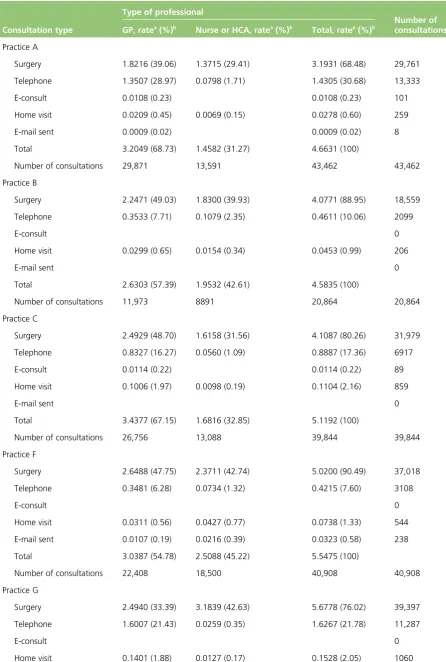
TABLE 7 Annual consultation rates of different types in each practice 64
TABLE 8 Relationship between patient characteristics and rates of face-to-face surgery consultation (all practices, clustered by practice): negative binomial
regressions 67
TABLE 9 Relationship between patient characteristics and rates of telephone
consultations (all practices, clustered by practice): negative binomial regressions 68
TABLE 10 Relationship between patient characteristics and rates of electronic consultations (e-consultations and e-mails combined; all practices, clustered by
practice): negative binomial regressions 69
TABLE 11 Patients reconsulting within 14 days, by consultation type 70
TABLE 12 Patients having any type of reconsultation within 14 days 70
TABLE 13 Proposed quantitative outcome measures for assessment of
List of figures
FIGURE 1 Different elements of the study and their relationship 6
FIGURE 2 Map of initial themes 15
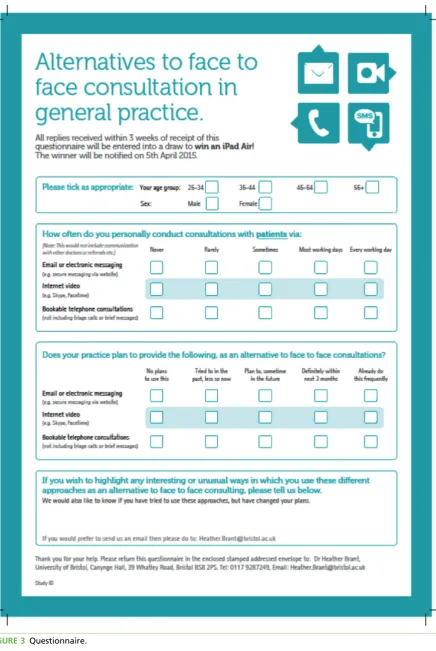
FIGURE 3 Questionnaire 24
FIGURE 4 Distribution of patients’age by practice 63
FIGURE 5 Rates of different types of consultation by age group 66
List of boxes
BOX 1 Summary of the steps taken to develop a‘conceptual map’of the
potential for alternatives to face-to-face consultations in primary care 12
BOX 2 Key questions to consider when planning, implementing and researching
alternatives to face-to-face consultations 20
BOX 3 Informal conversation with deputy practice manager 41
BOX 4 Informal conversation with nurse 43
BOX 5 Observation of a receptionist 44
BOX 6 Observation of an informal practice meeting 44
BOX 7 Observation of a GP 44
List of abbreviations
CCG Clinical Commissioning Group DHSC Department of Health and
Social Care
EMIS Egerton Medical Information Systems
GP general practitioner
HCA health-care assistant ICC intraclass correlation
ICT information and communications technology
IMD Index of Multiple Deprivation
IT information technology
MRC Medical Research Council
NIHR National Institute for Health Research
OSOP one sheet of paper
PPI patient and public involvement
RCT randomised controlled trial
SD standard deviation
Plain English summary
I
n many areas of their lives, people use the telephone, e-mail, internet videos and social media to communicate. These forms of contact can be more convenient than meeting face to face, but health care has been slow to change. Most general practice consultations still occur face to face. Our research aimed to understand why, how and with what consequences some practices have tried using the telephone, e-mail or internet-based systems alongside face-to-face consultations. We looked at different kinds of health problems, patients and practices within big cities and more rural areas, serving different populations.Researchers spent time in eight practices across the UK. The practices were selected because they were using alternative forms of consultation. Researchers observed and interviewed staff and patients about their experiences of using alternative forms of consultation.
We found that telephone consultations were common. However, very few practices offered other alternatives, and those that did used them infrequently. This was often contrary to practice expectations. Patients and staff generally liked the convenience of consulting by telephone or e-mail, but only in certain situations, such as familiar ongoing treatment or to exchange simple information. Face-to-face meetings were preferred for infant illness, new or complex problems. General practice staff were not always aware of what alternatives their colleagues were using or why. Practices did not always record the mode of alternative consultations consistently, and some types needed extra administrative effort, which could lead to hidden work. Patients were not always aware of alternative ways of consulting and how they work and, in some cases, had little choice about whether or not they consulted with their doctor using an alternative.
Scientific summary
Background
There is international interest in the potential role of different forms of communication technology to provide alternatives to face-to-face consultations in health care, with several countries routinely offering these in primary care settings. In the UK, there has been considerable rhetoric from policy-makers about the potential for consultations conducted by telephone, e-mail or internet video to alleviate staff workload and improve patient access.
Despite this pressure, most general practices have been slow to adopt the use of alternatives to the
face-to-face consultation, citing concerns about their potential impact, particularly on workload. The underlying assumptions that drive the policy rhetoric relate to convenience and accessibility for patients, and an efficient use of practitioners’time. However, there is little evidence to support either the concerns of practices or the assumptions of policy-makers.
The existing literature is largely based on the speculative opinions of patients and doctors about the advantages and disadvantages of alternative methods of consultation. This project builds on previous research by focusing on the experiences of patients and practitioners who have used these alternatives to the face-to-face consultation with different groups of patients for different purposes. Using a theory-based evaluation approach, we sought to understand how, under what conditions, for which patients and in what ways alternatives to face-to-face consultations may offer benefits to patients and practitioners in general practice. We sought to use this understanding to develop both recommendations for general practices and a framework for subsequent evaluation.
Objectives
Our study covers the first stages of the Medical Research Council (MRC) complex intervention framework, that is, identifying the evidence base, developing a theory, and modelling process and outcomes. It utilises a mixed-methods case study design.
Identifying the evidence base
1. We conducted a conceptual review, synthesising the literature (qualitative and quantitative) on patients’ and practitioners’experiences of alternatives to face-to-face consultations, with particular focus on the views of different groups of patients and factors that promote or hinder the wider implementation and uptake of these alternative forms of consultation.
Developing a theory
2. We used a scoping exercise to identify the range of ways in which general practices in England and Scotland are currently providing alternatives to face-to-face consultations.
3. We identified and recruited eight demographically diverse practices, each implementing a range of alternatives to face-to-face consultations, to act as focused ethnographic case studies.
4. In case study practices, we explored how the practice context, patient characteristics, type of
technology and purpose of the consultation appeared to interact to determine the feasibility and impact of alternatives to face-to-face consultations, from the perspectives of both patients and staff. This included the impact on the clinician–patient dynamic. The impact on isolated, disabled, disadvantaged and other vulnerable or hard-to-reach groups was a particular focus.
Modelling process and outcomes
6. We used the findings to develop guidance and a website resource for general practice, detailing the most promising applications of alternatives to face-to-face consultations for different patient groups, for different purposes and in different practice and population contexts.
7. Treating the provision of alternatives to face-to-face consultations as an intervention, we developed a framework for future evaluation. We clarified the target population, appropriate outcome measures and the best methodological approach for this evaluation.
Methods
We used a mixed-methods case study design. Our study focused on alternatives to face-to-face consultations, which included telephone consultations, e-mail, e-consultations and internet video. We excluded the use of the telephone for the initial assessment of all requests for consultation, as this was the focus of a parallel study.
Conceptual review
We conducted a conceptual review, using an approach informed by realist review–a method for synthesising research evidence regarding complex interventions. We sought to identify explanations of why and how various alternatives to face-to-face consultations might work (or not) in primary care. We conducted a search for evidence using databases, snowballing and our existing knowledge of the literature. We appraised the articles and extracted ideas and material that were relevant to the research question, before synthesising the findings to produce a conceptual map of the evidence. The findings of the review fed directly into a case study guide used to support the ethnographers, in relation to the scope of data collection, in conducting the focused ethnography.
Scoping survey
We conducted a scoping exercise. We sent a postal survey to all the practice managers, general practitioner (GP) partners and salaried GPs (n=2719) at all the practices in and around Bristol, Oxford, Lothian and the Highlands and Islands of Scotland (n=421). This was supplemented by four further approaches: (1) exploring the practices’websites, (2) contacting companies that offer support in providing alternatives to face-to-face consultations, (3) utilising local and national links with those working in primary care and (4) utilising existing knowledge within the team. Based on the exercise, we constructed a matrix of practices, detailing various practice characteristics in relation to their use of alternatives to face-to-face consultations.
Focused ethnographic case studies
The case study sites were general practices identified in the scoping exercise and selected as having differing levels of experience of implementing different combinations of alternatives to face-to-face consultations.
The ethnographic team consisted of five researchers: a day-to-day lead, a senior lead and three
ethnographers working in the field. One ethnographer was based at each practice. Data were gathered through non-participant observation, informal conversations and semistructured interviews with practice administration staff, GPs and patients. Practice documents and protocols on alternatives to the face-to-face consultations were reviewed. Anonymised data about consultations were collected, and these contributed to a quantitative analysis.
Collection and analysis of routine consultation data
We extracted pseudo-anonymised data from computerised records at case study practices, including patient demographic details and all clinical consultations within the same 12-month period. These data were exported, merged, cleaned and analysed to explore the numbers and characteristics of patients using
different types of consultation. This exercise allowed us to assess the feasibility of using routinely collected data to assess the number of consultations of different types in UK general practice.
Synthesis of the findings
We synthesised the findings from each element of the study, before optimising and validating them by sharing them with stakeholders at a workshop. From the synthesised findings, we developed a web resource for practitioners and policy-makers, which outlines things to consider when thinking about the introduction of alternatives. We also derived a framework and recommendations for future research.
Results
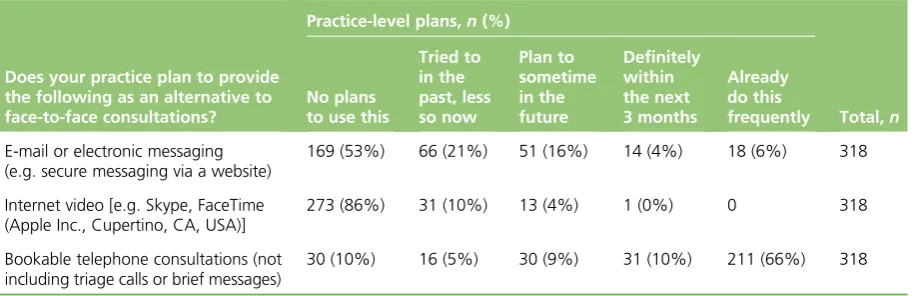
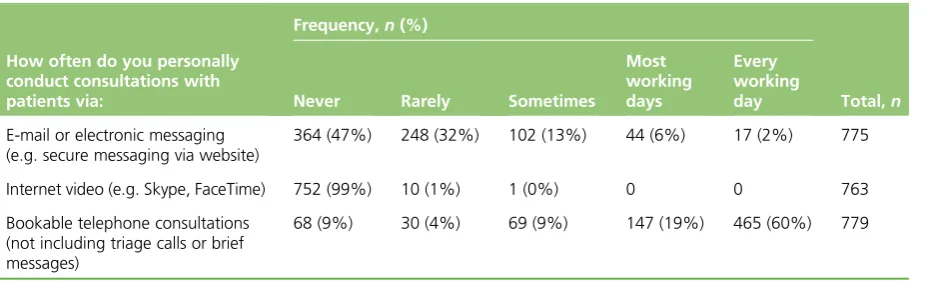
We found that alternatives to the face-to-face consultation were not in widespread use in general practice in the UK, with the exception of telephone consulting. In the scoping survey, we found barely any use of video consulting and very little use of e-mail or electronic consultation. Bookable telephone consultations were used by most, but not all, of the GPs surveyed. When asked about intentions to introduce alternatives to the face-to-face consultation, the majority of practices reported no plans to use video or electronic messaging. Thus, despite the policy pressure to introduce consultations by e-mail and internet video, there was little actual use and a reluctance among GPs to implement alternatives to face-to-face consultations other than telephone consulting. Even in the eight case study sites, selected because alternatives to face-to-face consultation were in use, or had been in use, actual levels of uptake were very low. Across all of the case study practices, the vast majority of consultations (80%) were still conducted face to face in surgery.
In our case study practices, the uptake of e-mail consultation was linked to the way in which GPs were offering this type of consultation, doing so selectively and basing their decisions on patient characteristics. For other alternatives to the face-to-face consultation, the role of reception staff was crucial in offering these consultation types. The conceptual review had identified a lack of evidence on how the wider practice team influences this uptake, and, in focusing on these staff members in our focused ethnography, we found that receptionists and administrators could have a key role in ensuring that new consultation methods were taken up by patients. Despite low use and uptake, our case study practices were all using alternatives to the face-to-face consultations. In the case studies, we were able to explore the rationale for introducing alternatives to the face-to-face consultation. The rationales included:
l the desire to be a modern practice and respond to the expectations of busy, time-poor patients l the acknowledgement that alternatives may be the only way of providing health care for patients in
remote locations or with other barriers to attending the practice
l the acknowledgement that the previous system was broken and unethical in providing a‘first come, first served’system that left patients without appointments that they needed
l the recognition that reception staff and telephone lines were overwhelmed l the desire to manage demand and improve efficiency.
Rationales were not exclusive to individual practices; different team members had different rationales, and rationales also differed according to the type of alternative to the face-to-face consultation.
The conceptual review showed that health-care professionals worry about certain patient groups being disadvantaged by alternatives to the face-to-face consultation, but this was speculation from the
face-to-face consultation, referring to the‘sensible patient’or‘exceptions.’For both patients and staff, there were times when alternatives to the face-to-face consultation represented a‘second best’, and this was particularly the case with telephone consultation, which, among the alternatives that we examined, was used most frequently and was universally well integrated within the practices.
Our examination of routine consultation data meant that we could explore the characteristics of patients engaging in alternatives to the face-to-face consultation. Within the case study practices, the pattern of consultation rates was broadly in line with what we would expect, with higher rates in children and the elderly, in women, in patients from ethnic minority groups and in patients with multimorbidity. Surgery consultation rates were slightly higher in the least deprived areas, and telephone consultations were slightly higher in the most deprived areas, but otherwise there was no strong relationship with deprivation for these consultation types. However, for electronic consultations, some of these patterns were reversed, with the highest rates in young adults and white patients. There was also a trend towards higher rates of e-mail consultations in the less deprived areas. However, this finding should be treated with caution, because of the very small number of e-mail consultations.
We have synthesised our findings to develop a web resource aimed at GPs, practice staff and commissioners. Given the variability in the rationale for and implementation of alternatives, the principal objective of the resource was to provide a self-appraisal and guidance tool. It was envisaged that potential users could dip in and out of the resource depending on what stage of implementation they were at. The key themes from our analysis were used to produce five key headings that were felt to be useful for practices:
1. Why do you want to introduce an alternative to face-to-face consultations? 2. Which alternative to the face-to-face consultation are you interested in? 3. Who is it for and why?
4. How do we get it right?
5. How will we know if it has worked?
In line with the‘modelling process and outcomes’phase of the MRC’s guidance on complex interventions, we used our findings to develop a framework for future evaluation of the use of alternatives to face-to-face consultations. This included key parameters determining the feasibility of research and considerations about the target population, type of technology to be evaluated and appropriate outcome measures.
We also identified a range of questions that require further research:
l Is it possible to improve the uptake of alternatives to face-to-face consultations and, if so, does this lead to benefits for patients and general practices?
l What is the impact on access to care as perceived by patients (speed of access, convenience, timely access to care that meets their perceived needs)?
l What is the impact on the NHS workload and, in particular, the impact on different sectors of the NHS (primary and secondary care) and different professional groups (doctors, nurses, receptionists and administrative staff)?
l What is the impact on the quality and safety of patient management?
l For which patients and for which conditions are different forms of alternatives most efficient and effective? l How do different forms of consultation change the content of the consultation?
l How satisfied are clinicians and patients with different forms of alternatives to face-to-face consultations?
Although we have used qualitative methods to explore some of these questions and to generate hypotheses, more research is now needed to test these hypotheses, in some cases by using trial
methodologies to assess uptake or effectiveness. Future research may need to use different methods and explore different questions for each of the different technologies. However, unless or until uptake of e-consultations or video consultations increases, any attempt to measure the impact will be of doubtful value.
Conclusions
Alternatives to the face-to-face consultation are not currently in mainstream use in general practice, and we observed low uptake in our case study practices. We have identified the underlying assumptions and logic that patients and staff report in relation to the use of these alternatives, and have shown that different stakeholders have different perspectives of what they hope to achieve through the use of alternatives to face-to-face consultations. Through observation of real-life use of different forms of alternative, we have gained an understanding of how, under what circumstances and for which patients such alternatives might result in benefits or in potential unintended adverse consequences. We have used this understanding to develop a framework and recommendations about future evaluation of the use of alternatives to face-to-face consultations. The low uptake of alternatives coupled with the lack of clear evidence of benefit may influence their uptake on a wider scale, something that policy-makers currently favour. We have highlighted key issues for practices and policy-makers to consider, and have made recommendations about priorities for further research to be conducted before or alongside the future roll-out of alternatives to face-to-face consultations.
Funding
Chapter 1
Introduction
Background
Communication technologies are routinely used by the public in everyday life, and there is an expectation that this should extend to health care.
Globally, the use of such technologies in health care is variable. In Denmark, the use of e-mail for consultations in general practice became mandatory in 2009, a measure intended to raise the quality of services delivered to patients, and in 2013 there were four million consultations conducted this way.1,2 The USA has well-established options, including patient portals for online access to clinicians and routine telephone consultations, which are offered by several of the large health maintenance organisations, under fee for service arrangements.3
In Finland, e-mails between doctors and patients have been a routine part of care for over a decade.4 Mobile devices in parts of Africa have vastly increased access to the telephone, as well as to the internet; the potential impact on health care is arguably more transformational than in countries with pre-existing landline networks.5
In the UK, policy-makers have suggested that alternatives to face-to-face consultations in the general practice setting could have a transformative impact by alleviating staff workload and improving patient access.6,7Policy has reflected this, and there has been sustained interest in encouraging general practice to adopt alternatives to the face-to-face consultation. In 2012, the UK Department of Health and Social Care (DHSC) produced a target:
All patients should be able to communicate electronically with their health and care team by 2015.
DHSC.6Contains public sector information licensed under the Open Government Licence v3.0
However, this target for implementation was not met. A 2014 policy document from the DHSC and NHS England outlined government proposals8and suggested that the introduction of alternative methods, such as e-mail or internet video [e.g. Skype™(Microsoft Corporation, Redmond, WA, USA)], to provide consultations could improve the current provision of primary care in the UK. NHS England has consistently pursued a digital agenda for primary care.Patient Online9is a NHS England programme, which encourages general practices to:
offer and promote online services to patients, including access to coded information in records, appointment booking and ordering of repeat prescriptions.
NHS England.9Contains public sector information licensed under the
Open Government Licence v3.0
The scope of Patient Online is set to be extended to the use of online consultation. Most recently, in 2016, General Practice Forward View,7published by NHS England, outlined an investment of‘£45 million for a multi-year programme to support the uptake on online consultation systems’7(contains public sector information licensed under the Open Government Licence v3.0), although the nature of these was
encourage practices to offer online services to patients, in particular to increase rates of video-consultation use.11In Wales, the NHS strategy is for patients to:
use the internet, email and video conferencing to connect with clinicians and care professionals in a way that suits them, potentially reducing delays and costs to the service and service users.
Welsh Assembly.12Contains public sector information
licensed under the Open Government Licence v3.0
In 2014,GP Access Fundsupported 20 pilot projects, to the value of £50M over 1 year, to test new approaches to improve access to general practices.13,14
An evaluation of the first wave of projects has been published. This evaluation reported that six pilot15 sites intended to introduce video-consultation tools and six pilot sites trialled e-mail consultations. The conclusion of the report was that non-traditional modes of contact (e.g. video or e-mail consultations) have yet to prove any significant benefits and have had low rates of patient uptake.15A second wave of funding under theGP Access Fundhas now been released.14Several of these pilots also include the use of alternatives to face-to-face consultations, including e-mail consultations, Skype consultations and/or greater use of telephone consultations. Despite the second wave commencing in 2015, the findings from the evaluation have not yet been published by NHS England.
There is pressure on general practice to offer alternative methods of consulting with patients. However, apart from the increased use of telephone consultations, most practices have been slow to adopt alternatives.16–18This reflects concerns expressed by GPs about the impact of introducing additional consultation methods and, particularly, concerns about increased workload and achieving safe use.19,20
Although professional bodies are now making tentative steps towards embracing some of the newer technologies, and supporting practitioners21–23who wish to use alternatives to the face-to-face consultation, this support has been slow to arrive. This reflects the uncertainty arising from a lack of evidence in the general practice setting, and wider concerns about the general practice workload. This view was supported by the recent report by the Primary Care Workforce Commission,24which stated that more evidence is required before e-mail or internet video consultations can be recommended as a routine part of primary care.
Given that some general practices have already adopted alternative methods of consulting,17,25and that there is an increasing expectation that they should be available, this provides an opportunity to provide GPs with guidance for using these new methods, based on best evidence and existing experiences, encouraging those taking them up to do so as safely and effectively as possible, and bringing the maximum benefit for patients and the NHS.26
Evidence explaining why this research is needed now
The underlying assumptions that drive the policy rhetoric relate to convenience and accessibility for patients and an efficient use of practitioners’time.27,28However, there is little evidence to support such assumptions. The Nuffield Trust,29among others, have identified the potential for the use of remote consultation in primary care, but also the need for more evidence on the impact of remote consulting.
Evidence to date has assessed the potential impact of some alternatives on clinical outcomes.30,31Although trial evidence for some types of alternatives is poor, observational data have pointed towards some clinical benefits, such as improved outcomes from e-mail communication for those with diabetes mellitus and hypertension32and better monitoring of health concerns with online access to records,33at least in market-driven health systems. When combined with self-monitoring, telephone and e-mail consultation have been effective in the management of hypertension and diabetes mellitus.34,35
Studies have sought opinions from patients and health-care professionals on whether or not, and how, they would use alternatives,20,36,37but these data have been based on hypothetical opinions rather than experience.
Other studies have attempted to assess the impact of alternatives to the face-to-face consultation on workload and consultation numbers in primary care settings;38–40however, these studies have been of low quality,30 or have assessed impact in the context of a patient portal that offers additional functionality,33,41making it difficult to draw conclusions about the impact of the alternative to the face-to-face consultation alone.
Recent years have seen a plethora of small and local pilot projects and commercial initiatives around specific systems,42,43which proliferate in an environment of patchy and inconclusive evidence.
What the existing literature does not tell us is under what conditions, with which patients and in which ways alternative methods of consultation actually work. This project addresses this need and builds on previous research by focusing on the experiences of patients and practitioners who have used these alternatives to the face-to-face consultation with different groups of patients for different purposes.19,44
Where GPs have started to use alternatives to the face-to-face consultation, we can learn from their experiences and from their rationale for introducing them, as well as their reasons for persisting with or discontinuing use. The feasibility of these alternatives to the face-to-face consultation is likely to rely on factors that are identifiable only when they are used in practice (e.g. patient characteristics or the purpose of consultation). Barriers to, and facilitators of, use become apparent as patients and practitioners navigate their way through use. The existing literature on experience can be utilised to develop a picture of how alternatives might be expected to work.45–47
Existing research has demonstrated a limited understanding of the fact that consultation methods are complex interventions.30The lack of good quantitative evidence on technologies such as e-mail and video consultation reflects the difficulties of testing them in trials, as their use has not been clearly defined.48 Often, distinct elements of the consultation have not been taken into consideration. By developing a theoretical framework, we hope to deconstruct what makes alternatives different from face-to-face consultations, allowing us to assess if and how they should be tested, in relation to the appropriate populations, outcome measures and methodological approach.
This research builds on the previous literature in related fields on how new technologies are adopted and implemented in health care. There has been some research in relation to telehealth interventions to support patients in their own homes. For example, the application of the normalisation process theory to the implementation of telehealth has demonstrated that it is the work involved in adopting new approaches that influences whether or not they normalise in practice; that is, they must fit in with health-care professionals and their roles for successful implementation.49,50Other work using the technology acceptance model has highlighted the importance of both usefulness and perceived ease of use in influencing behavioural intentions to use new technology.51
Work by Greenhalghet al.52on the failed introduction of the HealthSpace communication platform also highlighted the importance of ensuring that the technology used meets people’s perceived needs and fits with their other health-care arrangements.52We will take account of these related theoretical perspectives, including insights from the normalisation process theory, the technology adoption model and the diffusion of innovations theory, but we do not propose to base our analysis on any of these specific models.
whether or not they provide better access to care in relation to need, and, subsequently, their influence on health inequalities.
What is the problem being addressed?
It is important to understand how these alternatives work for patients, and to determine the benefits, advantages and disadvantages for different groups of patients and for a practice as a whole. Some groups are likely to benefit more than others.55,57Although attempts have been made to determine the impact of some alternatives on clinical outcomes,30,31,58,59there has been a lack of focus on appropriate application and implementation, and this is key if we are to inform safe use and to be able to successfully evaluate their use in practice.
Use of alternatives to the face-to-face consultation
The study was designed to explore the use of alternatives to face-to-face consultations, including telephone consultations (but not those used to triage all requests for consultations before offering any face-to-face appointments), e-mail, structured e-consultation systems (e.g. eConsult, Hurley Innovations Ltd, London, UK; askmyGP, GP Access Ltd, Leicester, UK) and internet video [e.g. Skype™(Microsoft Corporation, Redmond, WA, USA)]. It was expected that in many practices, different combinations of these alternatives to the face-to-face consultation would be offered to varying extents; for example, practices offering internet video consultations are likely also to offer telephone and e-mail consultations.
Furthermore, several methods of communication may be used over the course of one illness. For example, a patient with asthma may have a regular review by completing a structured review form online (which is checked later by the practice nurse), may send an e-mail with a query about their medication, might make a telephone consultation to assess if they need to be seen urgently during an acute attack or may make a face-to-face consultation if their attack does not resolve.
Practices may also offer the same technology for different purposes; for example, most practices allow patients to contact the GP by telephone (most commonly by leaving a message and the doctor telephoning them back), but some practices encourage patients to use telephone consultations as the usual first form of contact. This study explores the use of alternatives to face-to-face consultations for any clinical purpose, including consultations for initial assessment of symptoms or triage, follow-up, chronic disease management and/or discussion of test results. This excludes remote monitoring of health conditions not involving a consultation and also excludes administrative purposes, which do not usually involve direct contact with a clinician (e.g. making an appointment or requesting a repeat prescription).
On the practice side, examples of models of delivery include those that are very simple (e.g. e-mails being routed to the patient’s chosen individual GP for a response) and those that are structurally more complex (e.g. the use of a duty doctor who conducts all telephone and e-mail consultations on any given day).
It is important to note that although we are examining alternatives to the face-to-face consultation, they are not replacements–rather, they are additional methods of consultation. The different type of alternatives to the face-to-face consultation that will be considered are described next.
Types of technology
Telephone consultations
Telephone consultations have been in use for a long time; therefore, the issue for our study is not
plausibility but, rather, optimal application. This includes gaining a greater understanding of how practices have addressed potential problems, such as concerns about increased workload or safety.
Several telephone-based initiatives have been introduced in general practice, with a view to reducing GP workload, for example, telephone triage.60Some practices offer a system of care in which almost all patients are offered a telephone consultation initially (variously labelled GP Access61or Doctor First62); however, as the National Institute for Health Research (NIHR) has funded another parallel study that specifically looks at this model of care, we will exclude these approaches from our study.
E-mail consultation
The application and use of e-mail consultation are varied. Some GPs offer e-mail consultations using conventional e-mail programs, whereas others favour asynchronous consultations via a structured online form.63There are commercial providers that offer website services to general practices, which can act as a secure host for e-mail consultations (e.g. MySurgeryWebsite).64In the case of e-mail communication with patients, NHS Digital has supported NHS policy with the introduction of NHSmail 2.65This system allows clinicians to engage in secure e-mail communication with patients, but NHS Digital does not provide guidance on how this might be done.
E-mail consultation includes secure messages sent using webmail. The most commonly described method of applying practice-wide access is via a secure website, whereby patients log in to the practice website and are given the option to send online messages. Responses are received via the patient’s e-mail inbox or an inbox they can access via the website. These sites also tend to offer appointment-booking and repeat prescriptions in the manner of a patient portal, and there is speculation that they could also offer access to medical records. UK policy-makers draw on examples of these sites from the USA, for example, from Kaiser Permanente and the Mayo Clinic, where patient portals are in use.3,32,66Thus, UK policy-makers appear to believe that a patient portal system is the most plausible model for the introduction of online consultation,7despite the fact that this is not backed by robust evidence and has not been tested in a UK setting. Even in the USA, the uptake rate of electronic communication is low and it has not achieved widespread adoption.67
E-consulting
In this study, e-consulting refers specifically to consultations mediated by software provided by two commercial providers (eConsult, previously known as WebGP,68and askmyGP69), which claim to manage demand by allowing patients to complete a‘structured online consultation’.70Patients enter information about their symptoms and, in some cases, leave an electronic message for the GP. This provides the GP with a history to enhance the subsequent contact, which is usually made by telephone. eConsult68 software is linked into the practice website and supported by Egerton Medical Information Systems (EMIS; EMIS Web, EMIS Health, Leeds, UK), a main supplier of electronic medical record software in the UK.71 NHS England has openly supported the roll-out of these software systems in its plans for how general practice will deliver care in the next 5 years, providing:
£45 million [for a] national programme to stimulate uptake of online consultations systems for every practice.
NHS England.7Contains public sector information licensed
under the Open Government Licence v3.0
Video
Aim
To use a theory-based evaluation approach to understand how, under what conditions, for which patients and in what ways alternatives to face-to-face consultations may offer benefits to patients and practitioners in general practice, and to use this understanding to develop guidance for general practices and a
framework for subsequent definitive evaluation.
Objectives
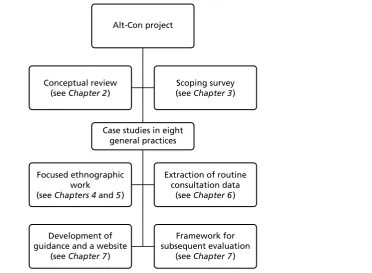
Our study covers the first stages of the MRC’s complex intervention framework, that is, identifying the evidence base, identifying/developing a theory and modelling the process and outcomes.73It utilises a mixed-methods case study design.74Figure 1shows a chart outlining the various elements of the project and their relationship.
Identifying the evidence base
Objective 1: to conduct a conceptual review, synthesising the literature (qualitative and quantitative) on patients’and practitioners’experiences of alternatives to face-to-face consultations, with a particular focus on the views of different groups of patients and factors that promote or hinder the wider implementation and uptake of these alternative forms of consultation.
Developing a theory
Objective 2: to use a scoping exercise to identify the range of ways in which general practices in England and Scotland are currently providing alternatives to face-to-face consultations in order to create a typology of these alternatives.
Objective 3: to identify and recruit approximately eight practices with varied experience of implementing alternatives to face-to-face consultations to act as focused ethnographic case studies.
Alt-Con project
Case studies in eight general practices Conceptual review
(see Chapter 2 )
Scoping survey (see Chapter 3 )
Focused ethnographic work
(see Chapters 4 and 5 )
Extraction of routine consultation data
(see Chapter 6 )
Development of guidance and a website
(see Chapter 7 )
Framework for subsequent evaluation
[image:37.595.164.537.467.740.2](see Chapter 7 )
Objective 4: in the case study practices, to explore how practice context, patient characteristics, the type of technology and the purpose of the consultation appear to interact to determine the feasibility and impact of alternatives to face-to-face consultations, from the perspectives of both patients and staff. This includes the impact on the clinician–patient dynamic. The impact for people living in isolation, people with disabilities, disadvantaged groups and other vulnerable or hard-to-reach groups will be a particular focus.
Objective 5: to identify the factors that act as the main barriers to, and facilitators of, wider use of these alternatives.
Modelling the process and outcomes
Objective 6: to use the findings to develop guidance and a website resource for general practice, detailing the most promising applications of alternatives to face-to-face consultations for different patient groups and different purposes, and in different practice and population contexts.
Objective 7: to treat the provision of alternatives to face-to-face consultations as an intervention, in order to develop a framework for a subsequent evaluation. We will clarify the target population, appropriate outcome measures and best methodological approach for this evaluation.
The research is focused to fill the gaps in the existing evidence base in a way that leads to practical and applicable findings, and provides a framework for future evaluation. It is hoped that the research findings will broaden the scope for research in this area.
Conceptual framework
This study uses a theory-based evaluation approach, which‘examines the conditions of program implementation and mechanisms which mediate between processes and outcomes as a means to understand when and how programs work’.75There are a number of other related approaches to intervention development and evaluation, including logic models,76realist evaluation,77intervention mapping78and causal modelling.79Although these approaches have different emphases, they have many ideas in common, including the importance of context in determining outcome and the need to clarify the underlying theory about how an intervention leads to change and clearly specify the intended outcomes. In addition, Mayet al.80have developed the normalisation process theory in order to understand the processes of implementation and integration that lead to innovations becoming embedded in everyday work.
Weiss75distinguishes between programme theory, which specifies the mechanism of change (the
theoretical causal chain for how an intervention leads to intended outcomes), and implementation theory, which describes how the intervention is carried out. This theory-based evaluation approach is helpful in identifying factors that are deemed to be key mediating processes through which an intervention achieves its aims and moderating factors that influence the extent to which process and outcomes are achieved.
In order to develop the programme theory, we drew on a realist approach81to describe the provision of alternatives to face-to-face consultations in terms of:
l context [e.g. characteristics of the general practice, the target patient population, the policy framework and the information technology (IT) infrastructure]
l the theory and assumptions underlying the introduction of an alternative to the face-to-face consultation (how and why different staff members thought that alternatives to face-to-face consultations might lead to benefits)
l the flow of activities that comprise the intervention (the key processes that occur when patients make use of these alternatives)
The implementation theory explored moderating factors that influence the extent to which the process and outcomes are achieved, such as factors acting as barriers to, and facilitators of, practices offering alternatives to face-to-face consultations or to different groups of patients using them.
By focusing on practices that have tried to offer alternatives, including some that deemed their use successful, we aimed to learn lessons about how practices have overcome problems, such as barriers to implementation, and the key factors that made this possible. We will also gain an understanding of the motivations of practitioners who have or have not offered alternatives to the face-to-face consultation, the experience of different groups of patients who have had the opportunity to use these alternatives, the benefits and disadvantages from the perspectives of patients and practitioners, and the problems that remain.
A key focus of interest will be which groups of patients make use of, and have the most to gain from, these alternative forms of access and whether these new approaches are increasing or reducing inequalities of access. This includes consideration of which groups are currently disadvantaged by the limited provision of alternatives to face-to-face care. We will explore the impact of provision of these alternatives on patient satisfaction with access to general practice. We will also explore clinicians’perceptions of the impact of new forms of consultation on their workload and the appropriateness of the content of patient contacts, as well as factors that would facilitate the wider implementation of these new models of care.
The recently published Wachter report,82commissioned by the UK DHSC, focused on making IT work in the health service in England, and was largely concerned with implementation at the secondary care level. However, some of the findings were pertinent for the introduction of alternatives to the face-to-face consultation in primary care:‘digitise for the correct reasons’, and‘it is better to get digitisation right than to do it quickly’82(both of these quotations contain public sector information licensed under the Open Government Licence v3.0). This study will explore both the reasons that practices have introduced
alternatives to the face-to-face consultation and how they have done it, allowing us to explore perceptions about the‘right’way to do this.
Team
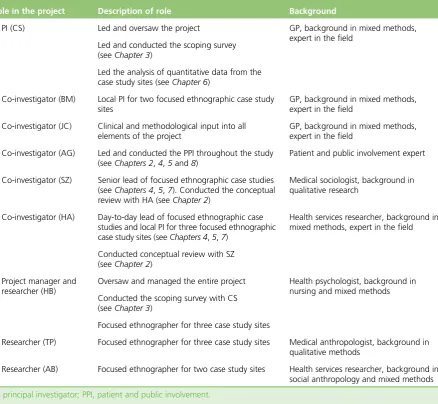
The project team was deliberately diverse and was situated across four different universities.Table 1 provides an outline of team member contributions and backgrounds.
Structure of the report
Chapter 2outlines the conceptual review of the literature.Chapter 3presents the scoping study, which informed identification of the case study sites for recruitment.Chapter 4details the methods of the focused ethnographic work in our case study sites andChapter 5presents the results of this.Chapter 6 describes the routine consultation data obtained from the electronic medical record in each case study site.
Chapter 7synthesises the different elements of the study, both qualitative and quantitative, and describes how the guidance for the practical application of alternatives to the face-to-face consultation was
developed. It includes the framework for future evaluation. The report concludes with the discussion in Chapter 8.