ADOPTION OF CLOUD COMPUTING SERVICES AMONGST THE
MICRO-ENTERPRISE SECTOR IN CAPE TOWN
by
ALBIN BORIS LUGERERO CHIZA
Thesis submitted in fulfilment of the requirements for the degree
Master of Technology in Business Information Systems
in the Faculty of
Business
at the Cape Peninsula University of Technology
Supervisor:
Professor S. Pather
Cape Town
November 2018
CPUT copyright information
The dissertation/thesis may not be published either in part (in scholarly, scientific or technical journals), or as a whole (as a monograph), unless permission has been obtained from the University
i
DECLARATION
I, Albin Boris Lugerero Chiza, declare that “Adoption of cloud computing services amongst the micro-enterprise sector in Cape Town” represent my own unaided work, and that the thesis has not previously been submitted for academic examination towards any qualification. Furthermore, it represents my own opinions and not necessarily those of the Cape Peninsula University of Technology.
7 November 2018
ii
ABSTRACT
Micro-enterprises play a vital role towards the South Africa’s economic growth by contributing towards job creation. Despite the importance of the role of micro-enterprises, micro-enterprises face several challenges such as lack of finance, lack of skilled workers and lack of technological resources. Previous studies indicate that Information Technology has a distinct role in assisting micro-enterprises overcome several challenges. It is further evidenced in the extant literature that cloud computing, provides a low cost entry for enterprises to support several facets of their business operations. In the current era cloud computing requires a constant as well as fast internet connection and the South African government has various interventions to address the infrastructure divide. However, we have a scant understanding of the adoption challenges amongst micro-enterprises to adopt cloud solutions, which to date feature more prominently amongst larger organisations.
This research investigated the factors that influence cloud computing adoption in the micro-enterprise sector in Cape Town. This is a city that promotes the contribution of micro-micro-enterprises to their economic activity, and was such an ideal location to investigate cloud computing adoption amongst the micro-enterprise sector. This research provides a rich understanding of the factors that influence micro-enterprises in Cape Town to adopt cloud computing services and proposes guidelines to encourage micro-enterprises in Cape Town to use cloud services to improve their productivity. The researcher uses the UTAUT model as a framework and a qualitative research methodology to investigate the research question. Data for this research study was collected via face to face interviews with semi-structured questions of ten micro-enterprises and an IT expert. The findings showed that the factors influencing the adoption of cloud computing services are performance expectancy, effort expectancy, social influence, facilitating conditions, lack of training, cost efficiency and reduction of working hours.
iii
ACKNOWLEDGEMENTS
I wish to thank:
God for his grace and blessings in my life.
Professor Shaun Pather for his patience, guidance and advice throughout this research.
Family and friends for their love and continued support.
iv
DEDICATION
v
Table of Contents
DECLARATION ... i ABSTRACT ... ii ACKNOWLEDGEMENTS ... iii DEDICATION ... iv GLOSSARY ... ix CHAPTER ONE ...1 INTRODUCTION ...11.1 Background to the problem ...1
1.2 Problem statement ...3
1.3 Research question, sub-questions and objectives ...3
1.4 Research design ...4
1.4.1 Sampling and research participants ...6
1.4.2 Data analysis ...6
1.5 Delineation of the research ...7
1.6 Managing research ethical issues ...7
1.7 Contribution of the research ...8
1.8 Overview of chapters ...8
1.8.1 Chapter One: Introduction ...8
1.8.2 Chapter Two: Literature Review ...8
1.8.3 Chapter Three: Research Methodology and Design ...8
1.8.4 Chapter Four: Research Findings and Discussion ...9
1.8.5 Chapter Five: Recommendations and Conclusions ...9
1.9 Conclusion ...9
CHAPTER TWO ... 10
LITERATURE REVIEW ... 10
2.1 Introduction ... 10
2.2 Overview of the small, medium and micro-enterprises ... 10
2.3 Small, medium and micro-enterprises in South Africa ... 11
2.4 Role of Information and Communication Technology in SMMEs ... 14
vi
2.4.2 Adoption of ICTs amongst the SMMEs ... 14
2.4.3 Challenges of ICT adoption by SMMEs ... 15
2.4.4 Adoption of ICTs amongst the micro-enterprises ... 15
2.4.5 Challenges of ICT adoption by micro-enterprises... 16
2.5 Cloud computing ... 17
2.5.1 Types of clouds ... 17
2.5.2 Cloud computing delivery models ... 18
2.6 Cloud computing in South Africa ... 19
2.7 The challenges of cloud computing adoption in micro-enterprises ... 19
2.8 Benefits of ICT Information and Communication Technologies adoption for SMMEs ... 21
2.9 Cloud computing adoption ... 21
2.10 Theories, frameworks and models underpinning technology adoption ... 22
2.10.1 Theory of planned behaviour model ... 22
2.10.2 Technology, Organisation and Environment (TOE) framework ... 24
2.10.3 Technology Acceptance Model ... 26
2.10.4 Unified theory of acceptance and use of technology model ... 28
2.11 The proposed model for this research ... 29
2.12 Conclusion ... 32
CHAPTER THREE ... 33
RESEARCH METHODOLOGY AND DESIGN ... 33
3.1 Introduction ... 33
3.2 Research design process ... 33
3.3 Research philosophy ... 33
3.3.1 Epistemology... 33
3.4 Research methods ... 35
3.4.1 Qualitative research methodology ... 35
3.5 Sampling techniques ... 36
3.5.1 Non-probability sampling ... 37
3.5.2 Targeted population ... 37
3.5.3 Micro-enterprises in Cape Town ... 38
3.6 Data collection instruments ... 39
3.6.1 Interviews ... 39
3.6.2 Field notes ... 41
3.6.3 Audio recording ... 42
vii
3.7.1 Using qualitative analysis software (Atlas.ti) to conduct data analysis ... 43
3.8 Evaluation of qualitative research ... 44
3.8.1 Confirmability ... 45 3.8.2 Dependability... 45 3.8.3 Trustworthiness ... 46 3.9 Ethical considerations ... 46 3.10 Chapter summary ... 47 CHAPTER FOUR ... 48
RESEARCH FINDINGS AND DISCUSSION... 48
4.1 Introduction ... 48
4.2 Demographic overview of respondent businesses ... 48
4.2.1 Description of research participants ... 49
4.2.2 Summary ... 51 4.3 Research findings ... 52 4.3.1 Performance expectancy ... 54 4.3.2 Effort expectancy ... 57 4.3.3 Social influence ... 58 4.3.4 Facilitating conditions ... 59
4.3.5 Behavioural intention to use cloud computing ... 65
4.4 Conclusion ... 66
CHAPTER FIVE ... 68
RECOMMENDATIONS AND CONCLUSIONS ... 68
5.1 Introduction ... 68
5.2 Factors influencing adoption of cloud computing by micro-enterprises in Cape Town ... 68
5.3 Use of UTAUT model to assess adoption of cloud computing by micro-enterprise in Cape Town ... 70
5.4 Evaluation of response to the research sub-questions and literature review questions ... 70 5.5 Research contribution ... 72 5.6 Recommendations ... 72 5.7 Research limitations ... 75 5.8 Future research... 76 5.9 Conclusion ... 76 REFERENCES ... 78
viii LIST OF FIGURES
Figure 2.1:Theory of Planned Behaviour Theory 23
Figure 2.2:The Technology, Organisation and Environment framework 26
Figure 2.3:Technology Acceptance Model 27
Figure 2.4:Unified theory of acceptance and use of technology model 29
Figure 3.1:Research epistemologies in qualitative research 34
Figure 3.2:Concept coding with Atlas.ti 44
Figure 4.1:Interlinking of codes as displayed in Atlas.ti 54
Figure 5.1: Graphical overview of the key factors adopted from the UTAUT model 69
LIST OF TABLES
Table 1.1: Research question, sub-questions and objectives 3
Table 1.2: Literature review questions and objectives 4
Table 2.1: The definitions of SMMES in accordance with the National Small Business Act 102 of 1996 11
Table 2.2: South Africa SMMEs promotion initiatives 13
Table 4.1: Demographic information of research participants 48
Table 4.2: Summary of use of IT and cloud computing services amongst respondents 51
Table 4.3: Categories of concepts derived from the evidence 52
Table 5.1: Response to the research sub-questions 70
Table 5.2: Response to the literature review questions 71
APPENDICES
Appendix A: Interview Schedule 96
Appendix B: Interview Design 99
Appendix C: Letter to Research Participants 102
Appendix D: Interview transcript 103
Appendix E: Transcripts loaded on the CAQDAS report 111
Appendix F: Concepts labels used to code the data (Report from Atlas.ti) 112
Appendix F1:Screenshot of the initial list of concepts before categorisation 114
Appendix G:Codes quotations list 115
Appendix H: Sample Interview note 140
Appendix I: Concepts with statistics 144
Appendix J: Quotation as they link to codes 145
ix
GLOSSARY
Acronyms Definitions
ASGISA Accelerated and Shared Growth Initiative of South Africa
CRM Customer relationship management
EE Effort Expectance
GDP Gross Domestic Product
IaaS Infrastructure as a service
ICT Information and Communication Technology
IDT Innovation Diffusion Theory
IT Information Technology
Ne-SDI National e-Skills Dialogue Initiative
PaaS Platform as a service
PC Personal Computers
PEOU Perceived ease of use
PU Perceived usefulness
SaaS Software as a service
SAMAF South Africa Micro- Finance Apex Fund
SCT Social Cognitive Theory
SI Social Influence
SLAs Service Level Agreements
SLA Sustainable Livelihood Approach
SMMEs Small, Medium and Micro-enterprises
TAM Technology Acceptance Model
TOE Technology-Organisation-Environment
TPB Theory of planned behaviour
UB Use Behaviour
1
CHAPTER ONE
INTRODUCTION
1.1 Background to the problem
Small, medium and micro-enterprises (SMMEs) are businesses owned by one or more individuals, which can play a role in creating jobs and contributing to the economic growth in South Africa (South Africa, 2017). South African government understands the contribution of SMMEs to the economy, as SMME employers account for 14% of the total employment and contribute 42% to the gross domestic product (South Africa, 2017). The National Development Plan projected that by 2030, 90% of the jobs generated will come from SMMEs (Marrian, 2014). The government of South Africa, in creating a small business ministry to impact positively on unemployment and poverty in South Africa, has appointed a new minister of Small Business Development.
According to Wolcott, Kamal and Qureshi (2008), a micro-enterprise is a business with five or fewer employees which may be a home-based, farm-based or street front business that can function on a full or part time basis. Micro-enterprises, employing no more than five employees, contribute to economic growth by providing employment opportunities, most of which are opportunities for working closely with consumers; however, they struggle to meet consumer needs for one of several reasons: lack of knowledge, skills, planning, funds or innovation (Mariah Brown, n.d). The government understands the importance of developing the micro-enterprise sector and supporting the sector in training or mentoring because growing the micro-enterprise sector will boost a nation to defeat poverty, unemployment and inequality (Iolbusinessreport, 2014). Poor infrastructure, such as Information and Communication Technology (ICT), is a barrier to micro-enterprise growth. With better access to affordable technology, micro-micro-enterprises will be able to fulfil their customer needs and save time while performing their tasks.
The underlying issues of the research reported on in this study concern the adoption of Information Technology in the micro-enterprise sector. Studies have shown that Information Technology (IT) can allow micro-enterprises to compete with large companies, to avoid high labour and productions costs, and to increase the quality of their products or services (Corso, Martini, Pellegrini & Palolucci, 2003; Levy, Powell & Yetton, 2001; Nguyen et al., 2007; Premkumar, 2003). However, it has been established that in spite of the exponential increase in access of Information Technology (IT) to the micro-enterprise sector, the rate of IT adoption by micro-enterprises has remained quite low (Ghobakhloo, Hong, Sabouri & Zulkifli, 2012). Southern and Tilley (2000)
2
suggest that the rate of IT adoption by micro-enterprises is low because managers are uncertain about the opportunities that IT offers. Levy, Powell and Yetton (2001) add that Information Technology implementation in micro-enterprises regularly happens without correct planning; as a result, the percentage of successful adoptions is low. Modimogale and Kroeze (2011) point out that the lack of ICT infrastructure make the access to information difficult in South Africa. They add that it is vital, though, for micro-enterprises to use ICT within their organisation because ICT can be beneficial for micro-enterprises and fulfil their strategic, operational or marketing needs. In this current era in which Information Technology is ubiquitous and pervasive, cloud computing has been at the forefront of ICT discourse. Kim (2009:1) defines cloud computing as “being able to find files, data, programs and have access to services via the internet provided by a cloud provider and paying only for cloud computing services used”. Studies show that computer software can be an expensive resource for organisation. According to Abdulaziz (2012:235), companies using cloud computing, however, are not required to have software packages for every computer in the company because employees can use software from the cloud and this drives to lower software costs.
Pienaar (2012) adds that cloud computing can be beneficial to micro-enterprises with no available financial or human resources to invest in IT, in that they can now compete directly with big businesses because enterprise solutions are presently more affordable and more widely available than ever before.
Sharum et al. (2013) suggest that micro-enterprises have little knowledge or interest in cloud computing because they hire more generalists than specialists who can promote innovation or create competitive advantage: they do not trust security in the cloud and they do not have Internet access. According to a research study released by the World Wide Worx late in 2013, only 50% of South African SMMEs are using cloud computing services (Bizcommunity, 2014).
Goldstuck (n.d) states that the level of Internet penetration is caused by the use of cell phones and South Africa is fifth in terms of Internet users in Africa behind Nigeria, Egypt, Morocco and Kenya. Goldstuck (n.d) suggests that SMMEs and entrepreneurs should make use of the Internet by having an online presence with a website, by adopting and investing in new technology such as cloud computing. The South African government argues that improving Internet penetration and the use of Internet by citizens and businesses will result in a strengthened economy (Department of Communications, 2013). The Department of Communications (2013) of South Africa indicates that the broadband plan of South Africa in 2013 provided an outline of the government strategy to fast-track that and while the efforts were meant at improving Internet infrastructure, many areas of this infrastructure still need our attention, especially in rural areas.
3
According to a 2011 study in South Africa conducted by the BMI-TechKnowledge Group, fixed as well as fixed wireless broadband penetration is estimated at 2%, with results furthermore showing that 64.8% of households in the country have no access to the Internet; 16.3% of households had access to the Internet via mobiles; 8.6% from home; 4.7% from work; and 5.6% from elsewhere (Department of Communications, 2013). In the Western Cape, the provincial government is at an advanced stage of planning to deliver a provincial broadband network. Based on a study called ‘Western Cape Digital Readiness Assessment 2015', Alfreds (2016) posits that 93.8% of the residents in the province have access the Internet via mobile phone, as compared to a national average of 70.8%. Moreover, 38% of Western Cape households have a computer with Asymmetric Digital Subscriber Line Internet access as compared to the national average of 22%.
Hinde and Van Belle (2012) posit that micro-enterprises are a key part of most developing economies and hence a unique sub-set of the SMME sector that need to be supported more substantively to grow the economy. In South Africa, as micro-enterprises contribute to job creation, cloud computing aid micro-enterprises in cost savings for their business operations, to compete with large companies and to contribute more to the growth of the South African economy.
1.2 Problem statement
In view of the foregoing, the research problem for the proposed research is as follows: as cloud computing adoption by micro-enterprises in South Africa remains slow, the sector has not yet been successful in realising the advantages and benefits of this technology.
1.3 Research question, sub-questions and objectives
The formulated research question is expanded into four research sub-questions, summarised in Table 1.1. The research methods and objectives of the respective research sub-questions are also provided.
Table 1.1: Research question, sub-questions and objectives
Research question What are the factors influencing the adoption of cloud
computing in the micro-enterprise sector? What is the state of cloud
computing in South Africa?
Analysis of reports and white papers on industry
Determine the state of cloud computing in
4 What are the levels of
awareness of cloud computing?
What factors promote or inhibit technology adoption in general, and specifically with regard to cloud computing?
Interviews, and
qualitative data analysis
Investigate the levels of awareness of cloud computing and identify the factors that promote or inhibit technology as well as cloud computing
adoption
What recommendations can be made to improve adoption of cloud computing by micro-enterprises in Cape Town?
Interpretation of findings To make recommendations based on the findings with regards to the improvement of cloud computing adoption rates by micro-enterprises in Cape Town
The above questions relate to the empirical investigation. In order to answer these research questions, a detailed literature review was undertaken. The specific questions and objectives of the literature review are as follows in Table 1.2:
Table 1.2: Literature review questions and objectives
Literature review questions Objectives of review
What is cloud computing?
Why is cloud computing relevant to micro-enterprise sector?
To understand the importance of
micro-enterprises in Cape Town using cloud computing in order to keep the edge over competitors Could technology and cloud computing
adoption be implemented in the micro-enterprise sector?
To determine the concerns about technology and cloud computing adoption
What are the relevant theories, models and frameworks which are relevant to the study of cloud computing adoption?
Which of these are suitable for investigating the main research question?
To identify various models theories that have been used to study adoption of cloud computing To derive a suitable theoretical framework for the empirical study
1.4 Research design
Creswell (2009:4-5) describes research design as the blueprint to conduct research, including the intersection of philosophical strategies of inquiry and specific methods.
5
There are two types of designs approaches: qualitative and quantitative research. The combination of both approaches is called a mixed mode approach.
Qualitative research
According to Remenyi, Williams, Money and Swartz (1998), qualitative research is a research that is not based on numbers but based on evidence, which is why statistics is not preferable for qualitative research.
Quantitative research
Creswell (2009) proposes that quantitative research is a means for collecting data which are
numbered and converted using statistics. Considering the two approaches, the qualitative approach was selected for this study.
According to Hoepfl (1997), qualitative methods can be used in situations where variables are first identified and then tested quantitatively at a later stage. A qualitative approach in this study provides an avenue to best understand cloud computing adoption issues in the natural setting of the selected businesses and analyse rich data to understand the factors affecting the adoption of cloud computing by micro-enterprises in Cape Town, to find out the level of awareness of owners of micro-enterprises in Cape Town regarding new technology, to generate a plausible guideline as well as to make recommendations for improving the uptake of cloud computing services amongst the micro-enterprises in Cape Town.
The research was conducted as follows: Interviews
The researcher has conducted face-to-face interviews with semi-structured questions with owners and employees of micro-enterprises as well as an IT expert. According to Creswell (2009), interviews include unstructured and generally open-ended questions used to elicit perspectives, views and opinions from participants. Creswell (2009) confirms that these interviews can be used for an exploratory type of study because the person conducting the research can readjust the questions as necessary. The purpose of interviews is to get an in-depth view on cloud computing adoption within the micro-enterprises in Cape Town and to determine the level of awareness and understanding of cloud computing within these Cape Town micro-enterprises. The interviews were framed using UTAUT constructs to influence the design of the questions. A total of ten micro-enterprises and one IT expert in Cape Town were interviewed. The interviews were curtailed at the point at which saturation was achieved, meaning that the ability to obtain additional information had been reached (Fusch & Ness, 2015). It was found that no new codes in the data were being
6
revealed after the eight interviews. Ten micro-enterprises, which employ no more than five employees in various sectors – finance, tourism, healthcare, retail, communication and transport – were purposively selected for collecting qualitative data regarding their understanding and experience of the phenomena under study. A Digital Marketing Manager in a company that operates in an IT sector was also selected based on his expertise with cloud computing. This particular company in the IT sector, with forty-five employees, makes use of cloud computing. The ten micro-enterprises in the financial, tourism, healthcare, retail, communication and transport sectors are micro-enterprises with no more than five employees but which do not make use of cloud computing. The reason for selecting micro-enterprises from the various sectors (financial, tourism, healthcare, retail, communication, Information technology and transport) is because a South African SMME survey conducted by World Wide Worx shows that the IT and communication sectors are sectors with high cloud computing adoption percentages, while the tourism, retail, healthcare and transport sectors are, by contrast, sectors with low cloud computing adoption percentages (McConnachie, 2012). After analyzing each micro-enterprise in each of the sectors, the outcome was the same. They were all similar in terms of facing difficulties adopting cloud computing services due to shortage of resources, shortage of IT specialists, lack of interest or a general lack of knowledge from micro-enterprise owners towards the cloud system. Therefore, there was no need to select more micro-enterprises above these ten.
Micro-enterprises, in particular enterprises employing five or fewer employees, as well as an IT expert in Cape Town, comprised the units of analysis for this study.
1.4.1 Sampling and research participants
Polit and Beck (2004:729) refer to purposive sampling as “a non-probability sampling” technique which decides on individuals that will participate in the research who will not only be knowledgeable but will also provide helpful information.
This study used purposive sampling to find participants for this study. Therefore, micro-enterprises in Cape Town were selected as units of analysis.
1.4.2 Data analysis
Data were sourced through interviews, documents and literature findings. After data has been consolidated, it was summarised to understandable texts. According to Miles and Huberman (1994), data analysis is associated with the following components: data reduction, data display and conclusion drawing or verification.
7 Data reduction
Miles and Huberman (1994) define data reduction as processing and converting the data that
appears in written field notes or transcripts. Data display
Miles and Huberman (1994) describe data display as information that has been organised and compressed and that permits conclusion and action.
Conclusion drawing and verification
Miles and Huberman (1994) posit that conclusion drawing and verification is a phase where the person conducting the research realises the meaning of the data obtained.
1.5 Delineation of the research
The research will focus on a sample of such micro-enterprises in Cape Town given this geographical location is in close proximity to the researcher. This may have an indication of the generalisability of the study but this is discussed further in the final chapter.
1.6 Managing research ethical issues
Research ethics can be defined as set of values that researchers should follow when interacting with research participants to ensure their behaviours are acceptable (Resnik, 2015).
Some of the common ethical issues related to research, as indicated in the Faculty of Informatics and Design ethics checklist (Cape Peninsula University of Technology, n.d), are as follows:
• participants who are not capable of giving informed consent;
• co-operation of a gatekeeper for access to research participants;
• participants involved in the research without providing any agreement;
• discussion of sensitive topics with research participants and use of invasive, intrusive, or
potentially harmful procedures in the study;
• testing on sentient subjects and the use of financial inducements to garner participant
cooperation; and
8
None of the above is pertinent to this study. However, the issue of informed consent of research participants is relevant to this study. The researcher obtained informed consent from each research participant for this research study (The Ohio State University, n.d). In this research study, informed consent was obtained by offering the research participant an opportunity to consider whether or not to participate in the research and minimizing the possibility of undue influence (Johns Hopkins Medicine, n.d).
1.7 Contribution of the research
Many studies related to technology adoption in SMMEs have been conducted, but fewer studies relating to cloud computing adoption in the micro-enterprise sector have been done. This research will contribute to that body of knowledge by identifying the factors that influence micro-enterprises in Cape Town when considering to adopt cloud computing. In addition, it will provide guidelines to encourage micro-enterprises in Cape Town to use cloud computing. Vendors can use the outcomes of this research to meet the high demands of micro-enterprises increase awareness of cloud computing by conducting a presentation to Cape Town micro-enterprises presenting benefits of cloud computing and explaining how to use cloud computing.
1.8 Overview of chapters
1.8.1 Chapter One: Introduction
Chapter One provides an overview of the research. It also provides details of the research problem, the research question, the research sub-questions, the research objectives, the literature review questions, the literature review objectives, the research design, research ethical issues, and the contributions of the research.
1.8.2 Chapter Two: Literature Review
Chapter Two presents a literature review of the key concepts of this research. An overview of cloud computing in South Africa and the challenges of cloud computing adoption in micro-enterprises are discussed within the chapter. The chapter also explores the various theories and technological models underpinning cloud computing adoption.
1.8.3 Chapter Three: Research Methodology and Design
Chapter Three, focusing on the research methods, sampling techniques and data collection instruments, discusses qualitative research and details why a qualitative approach was used to
9
obtain data to understand the factors that influence the adoption of cloud computing by micro-enterprises in Cape Town. Furthermore, it also discusses how face-to-face interviews with semi-structured questions were conducted with the use of UTAUT constructs to influence the design of the interview questions, and how the Atlas.ti software tool was used to facilitate qualitative data analysis. Lastly, the research discusses how ethical clearance was obtained to conduct this research study.
1.8.4 Chapter Four: Research Findings and Discussion
Chapter Four reports the findings based on the interview analysis concerning adoption of cloud computing by micro-enterprises in Cape Town. The findings of the results from the interviews provide responses to the research question with key constructs of the UTAUT model as framework.
1.8.5 Chapter Five: Recommendations and Conclusions
The research objective, research problem and research questions are addressed within the chapter. Then, Chapter Five provides recommendations based on the findings with regards to the improvement of cloud computing adoption rates by micro-enterprises in Cape Town. Additionally, the chapter examines the limitations of the research and the research contribution, thereby proving guidance for future research.
1.9 Conclusion
The chapter presents a background of the research study undertaken and highlights the background of the research problem, the research question, the research sub-questions as well as research objectives. The chapter discusses the delineation and contribution of the research study.
10
CHAPTER TWO
LITERATURE REVIEW
2.1 Introduction
This chapter provides a literature review of key concepts and background to this research study. Firstly, the researcher discusses the overview of the SMMEs (2.2). This is followed by an examination of the current state of SMMEs in South Africa (2.3). Following this is an analysis concerning the role of ICT in SMMEs and an overview of cloud computing globally and in South Africa (2.4 to 2.6). Finally, the researcher discusses the challenges of cloud computing adoption in micro-enterprises (2.7); Information and Communication Technologies adoption (2.8); cloud computing adoption (2.9); theories, framework and models underpinning technology adoption (2.10.); and lastly, the proposed model for the research (2.11).
2.2 Overview of the small, medium and micro-enterprises
SMMEs contribute to over 90% of African business operations and 50% of African employment as well as Gross Domestic Product (Ramukumba, 2014). In many SMMEs, either one person or a small team of employees is in charge of running the activities within the organisation, which can be a disadvantage because many activities are poorly managed, as SMMEs do not have managerial resources or functional specialists. Simultaneously, this can also be an advantage because there are few coordination issues as there is regular face-to-face interaction, engendering numerous opportunities for communication between members of the management team (Jones & Tiley, 2003:17). According to Schlenker and Crocker (2003), as 70% of SMMEs are more worried about quality of life issues than stock value, the purpose of these firms is to produce an income for their owners. Burns (2001:9) suggests that SMMEs do not have the resources to use expensive advertising and promotion campaigns in their businesses, so instead the manager puts extensive effort into developing relationships with customers, investing time rather than money. However, Schlenker and Crocker (2003) explain that often the management team does not share knowledge or experience with employees and decisions are made by the owner based on instinct instead of analysis of data collected by the business.
Schwarze (2008) states that micro-enterprises can be classified into businesses in which there is only one owner and no employees and those that employ between one and four people over and above the entrepreneur. Micro-enterprises are major contributors for employment creation,
11
increasing professional abilities, procuring basic resources to rural areas, or in other words, they are vital for basic household economic survival (Kamal, 2011). Kamal (2011) also reports that micro-enterprises are different from large businesses by explaining that micro-enterprises use traditional technologies such as email, web and simple accounting packages as opposed to larger firms using more complex applications such as CRM.
2.3 Small, medium and micro-enterprises in South Africa
According to the latest research conducted by the Small Enterprise Development Agency (January, 2016), there are 2 251 821 SMMEs in South Africa, 667 433 operating in the formal sector and 1 497 860 in the informal sector (South Africa, 2017). The study also adds that black owned formal SMMEs account for 34% (226 927) of the total formal SMMEs (South Africa, 2017). The framework primarily used in South Africa is the definition of the National Small Business Act 102 of 1996, which describes five categories of businesses in South Africa (Abor & Quartey, 2010).
Table 2.1: The definitions of SMMES in accordance with the National Small Business Act 102 of 1996 (Source: Abor & Quartey, 2010)
Enterprise size
Number of employees Annual turnover (in South
African rand)
Gross assets, excluding fixed property
Medium Fewer than 100 to 200,
depending on industry
Less than R4 million to R50 million, depending upon industry
Less than R2 million to R18
million, depending on industry
Small Fewer than 50 Less than R2 million to R25
million, depending on industry
Less than R2 million to R4.5 million,
depending on industry
Very Small Fewer than 10 to 20,
depending on industry Less than R200 000 to R500 000, depending on industry Less than R150 000 to R500 000, depending on industry
Micro Fewer than 5 Less than R150 000 Less than R100 000
The small businesses are classified by the National Small Business Amendment Act 26 of 2003 (South Africa, 2003) as follows:
12
• Survivalist enterprises: These are enterprises where the income produced is usually less
than the minimum income standard; there are no paid employees.
• Medium enterprises: These are enterprises employing up to a maximum of two hundred
employees, with power frequently decentralised to another management layer.
• Small enterprises: Small enterprises are enterprises with higher number of employees (fifty) compared to very small enterprises and their management structures are more complex.
• Micro-enterprises: These are enterprises, often home-based businesses, with a limit of five employees including the owner, and thus are often not registered.
There are well over 800 000 SMMEs in South Africa. These SMMEs in South Africa account for 50% of the Gross Domestic Product as well as provide employment to about 60% of the labour force (Department of Trade and Industry, 2012). However, SMMEs in South Africa face numerous challenges: lack of management skills; lack of funds; limited ability to develop relationships with customers; lack of affordable technology and poor quality of products as well as services (Ntsika, 2011; Department of Trade and Industry, 2012).
Makoza and Chigona (2011) believe that micro-enterprises in South Africa constitute a high percentage of the SMME sector, stating that South Africa has a dual economy structure. Makoza and Chigona (2011) explain that the first economy is well developed and uses sophisticated technologies, while the second economy is not developed as well as mature. They further discuss that government and development agencies have, with ongoing effort, tried to bridge the two economies by offering services such as Internet access and computer support to shift micro-enterprises from the second economy into the first economy.
In South Africa, there is evidence of continued escalation of Internet users which means that there is an increase of potential Internet users who may be interested in conducting online transactions (Ndayizigamiye, 2014). Ndayizigamiye (2014) argues that the South African government has introduced an initiative to stimulate online SMME presence through a website called The Woza online, a platform that enables SMMEs to create their website using the .co.za domain. An Internet Economic Impact Study conducted by World Wide Worx for Google South Africa in 2011 revealed that the Internet economy in South Africa contributes 2% to the country's gross domestic product (GDP) (World Wide Worx, n.d). Another survey published by Statistics South Africa in 2014, the General Household Survey (GHS), showed that access to the Internet was the highest in the Western Cape (62.1%), Gauteng (59.9%), Free State (48.7%) and lowest in Limpopo (32.6%) and the Eastern Cape (37.4%) (Mybroadband, 2015). Cloud computing offers Information Technology services over the Internet but even so, the response of micro-enterprises towards the use of the new technology has been slow. Consequently, this research contributes to the knowledge of
13
micro-enterprise factors that should considered for stimulating growth of cloud computing by micro-enterprises in South Africa.
The government has a variety of policies, legislations, regulations and initiatives to ensure SMMEs’ support (Makoza & Chigona, 2011).
Table 2.2: South Africa SMMEs promotion initiatives (Source: Makoza & Chigona, 2011)
Initiatives Main Focus Objectives
Accelerated and Shared Growth for South Africa (AsgiSA)
National Support SMME business start-ups through capital financing
Nsika Enterprise Promotion Agency National Support SMME businesses through
non-financial services Small Enterprise Development
Agency
National Promote and support SMMEs through training, funding and business advice South Africa Micro- Finance Apex
Fund (SAMAF)
National Provide support for access to finance for microenterprises
Khula National Support SMMEs in accessing financial
services Real Enterprise Development (RED)
Door Program
Provincial Small business formation support through funding and training.
Thlabela, Roodt, Paterson and Weir-Smith (2007) aver that the Accelerated and Shared Growth Initiative of South Africa (ASGISA), introduced by the government in 2006, determined factors such as the cost of telecommunications, which are influencing South Africa’s plan to achieve 6% economic growth and to eliminate unemployment and poverty in South Africa by 2014. The cost of telecommunications and the availability of ICT infrastructure will significantly improve or prevent access to ICT (Thlabela et al., 2007).
In terms of increasing the percentage of ICT intake in SMMEs, SEDA is the body accountable for ICT initiatives and support programmes for SMMEs (Afolayan, 2014).
Jere, Thinyane and Terzoli (2011) posit that the Department of Communications has introduced a new ICT programme called the National e-Skills Dialogue Initiative (Ne-SDI) to address the country's ICT skills shortage and to ensure ICT applications are accessible in rural areas. The National e-Skills Dialogue Initiative (Ne-SDI) program produces workplace-ready ICT graduates emphasising the categories of e-skills such as ICT practitioner skills, ICT user skills, e-business
14
skills and e-literacy (Jere, Thinyane & Terzoli, 2011). The action taken by Ne-SDI to assist SMMEs in rural areas with ICT skills and an improved understanding of the value of ICT will contribute to an increase in the user percentage for advancing technologies such as cloud computing by SMMEs.
2.4 Role of Information and Communication Technology in SMMEs
The sections below discuss the categorisation and role of ICT in SMMEs before examining the role of ICT in micro-enterprises. Challenges of ICT adoption by SMMEs and by micro-enterprises will also be discussed.
Ritchie and Brindley (2005) define ICT as a group of digital technologies intended to collect, store, process and communicate information within an organisation.
Apulu and Latham (2009:64) report that in developed countries, ICTs have been implemented to positively impact the operational needs of SMMEs. ICTs improve the percentage level of efficiency and offer poor individuals a voice (South Africa, 2017). The number of SMMEs using ICT tools in their enterprises has increased due to the use of mobile phones and the use of technologies on mobiles phones such as WhatsApp and Facebook (South Africa, 2017).
Mostert and Ntetha (2008:23) are of the opinion that if ICTs are exploited in analysing, accessing and evaluating information, they are capable of improving business communication as there is infrastructure which allows this to occur.
2.4.1 Categorisation of ICT for SMMEs
Various business needs resulted in the categorisation of ICT use. Lucchetti and Sterlacchini (2004) classify them into the next categories: general-user, production-integration and market-oriented groups.
Micro-enterprises are currently in the general-user group where the basic ICTs such as telephone and Internet are used for administrative tasks. With the use of cloud computing services, micro-enterprises will potentially move into the production-integration and market-oriented groups where ICTs are used to produce quality goods and to market those goods to communicate with customers globally.
15
ICTs are essential to the SMMEs because they bring competitiveness to the SMMEs, thereby enabling them to compete against big businesses (Alam et al., 2007:125; Alberto & Fernado, 2007:352). Those SMMEs handling masses of information are probably going to use ICTs in their business operations to do less paperwork and to provide high quality services to their customers (Manueli, Latu & Koh, 2007). The benefits of ICT for SMMEs consist of making the organisation effective through better processes as well as giving organisations the skill to better manage information and save cost (Ismail, Jeffrey & Van Belle, 2011).
World Wide Worx has conducted surveys to determine uptake of ICTs by SMMEs in South Africa and undertook a survey in January 2012 which established a strong relationship between being online and being competitive, profitable and sustainable (South Africa, 2017). The results showed that 79% of SMMEs with a website reported profitability, whereas only 59% of SMMEs without a website reported the same (South Africa, 2017). Johnson, Kabanda, Adams and Davids (2008) argue that the future of SMMEs will depend on how well it can manage and use ICTs; however, despite the accruing benefits of adopting ICTs, the adoption of these technologies by SMMEs remains slow. Due to the lack of ICT infrastructure, the government has planned to develop the communications sectors by improving access to the telecommunications infrastructure in the country, especially in rural areas (Wolf, 2001). Moreover, the government is engaged to use ICT to enable rapid shared economic growth, better service delivery and completely transform society (Smith, 2016).
2.4.3 Challenges of ICT adoption by SMMEs
Kroeze and Modimogale (2011) explain that as the issues influencing the adoption of ICT are both socio-economic and technological, they argue that SMMEs face the challenge of an owner taking the majority of the decisions about the business (strategic direction) which means that the owner’s limitations becomes limitations of the business. The adoption of ICT by the SMMEs is affected by the owner's ICT skills, personality and attitude towards technology (Mutula & Van Brakel, 2007). Additional barriers to ICT adoption consist of high ICT cost, shortage of finance, lack of knowledge about the benefits of using ICT and security concerns (Ismail, Jeffrey & Belle, 2011; Esselaar et al., 2007).
2.4.4 Adoption of ICTs amongst the micro-enterprises
Having examined ICTs in SMMEs, in general, the two subsequent sections will focus on micro-enterprises in particular, given that as a subset of SMMEs, they have specific unique challenges.
16
According to Makoza and Wallace (2011), the use of ICTs in the micro-enterprise sector is restricted to non-advanced technologies such as personal computers, laptops, radios and telephones. To the contrary, the benefits of using ICTs in micro-enterprises consist of better productivity, improved access to data, smaller amount of administrative costs and high quality communications. ICTs can assist micro-enterprises in their plan to expand while also attracting customers (or more generally, stakeholders) and growing in the knowledge and skills needed to run their business operations more efficiently (Qureshi, 2005).
The section highlighted that due to lack of infrastructure and limited access to finance, micro-enterprises primarily make use of ICTs such as mobile phones to run their daily operations. Hopefully, micro-enterprises take advantage of advancing technologies on their mobiles such as WhatsApp or Facebook, as these are easily accessed cloud solutions that build brands or reach new markets.
2.4.5 Challenges of ICT adoption by micro-enterprises
Makoza and Wallace (2011) believe that the use of ICT in micro-enterprises has the following challenges: lack of ICT skills; lack of knowledge for applying ICTs to support business activities; lack of time, finance and information; and a resistance to technology which negatively impacts the confidence of micro-enterprise owners in their use of ICTs.
The lack of sufficient guidance available to micro-enterprises about the Internet ‘start-up’ process could also be the reason why these businesses fail to take advantage of ICT (Docherty & Simpson, 2004).
Furthermore, the lack of training on ICT is problematic for micro-enterprises as most of them are not using IT for their business activities except few businesses operating in the accounting field (Barba-Sanchez, Martinez-Ruiz & Jimenez-Zarco, 2007). Grandon and Pearson (2004) suggest that the level of education of the owner is positively correlated with the presence of a computer in the business.
Factors such as high demand from customers, pressure to stay competitive with other companies and size are all criteria that can influence a business to use ICT (Zappala & Gray, 2006:264). The section covered challenges affecting micro-enterprises in terms of ICT adoption. A majority of micro-enterprises do not have ICT skills or knowledge to run their businesses. Consequently, ICT training courses should be introduced to micro-enterprise owners who make the business decisions, to help them in terms of increasing their productivity and reaching new customers.
17 2.5 Cloud computing
The previous section discussed the challenges faced by micro-enterprises in respect of ICT adoption. Cloud computing in the current era is one category of ICTs which could benefit micro-enterprises.
Murugan and Bay (2010) define cloud computing as an Information Technology paradigm shift in which server hardware and software are accessed over the Internet on demand. Gustafson and Orrgren (2012) explain that cloud computing derives from grid computing, a domain of connected computers. Gustafson and Orrgren (2012) further discuss that a cloud computing provider is a company that offers cloud computing services to enterprises or individuals. Many local businesses, without knowing, make use of cloud-based applications such as an online backup service where no human intervention is required (Joubert, 2012). Many people have used sophisticated cloud computing applications like Dropbox or Google Drive to store and manage documents and sensitive personal information (Adjei, 2015).
2.5.1 Types of clouds
Bowen (2011) believes that in order to provide a protected cloud computing solution, it is essential to choose the type of cloud to be used. There are various types of cloud computing models: private, public, hybrid or community (Davids & Van Belle, 2017).
2.5.1.1 Private cloud
Keung and Kwok (2012) suggest that private cloud utilises in-house Information Technology infrastructure to build a cloud environment to ensure support of the business operational needs, offering flexibility in the resource allocation and improving data security where data are stored. They add that the private cloud model is utilised by companies that need control over their data assets to have the resources available to them to maintain their own cloud infrastructure (Keung & Kwok, 2012).
2.5.1.2 Community cloud
Community clouds contain resources that are shared with others in the community (Aharony, 2015). Furthermore, community cloud refers to a collective effort where several organisations put a great deal of effort to share common cloud infrastructure as well as policies and concerns (Dillon, Wu & Chang, 2010).
18 2.5.1.3 Public cloud
Mohlameane and Ruxwana (2014) express that public cloud involves resources that are shared among individuals using the cloud over the Internet. They further state that public cloud computing services are mainly delivered to the public by cloud providers (examples include Google Apps, Amazon Web Services and Salesforce). The benefits are cost-efficiency, flexibility and easy management (Yeboah-Boateng & Essandoh, 2013).
2.5.1.4 Hybrid cloud
Hybrid cloud occurs in businesses where sensitive data are managed on a private cloud whilst general and non-critical processes are performed in a public cloud (Yeboah-Boateng & Essandoh, 2013).
Keung and Kwok (2012) state that the maturity level of Information Technology (IT) of a micro-enterprise plays a key role when choosing if a private cloud or a public cloud solution is appropriate for a micro-enterprise. They further explain that only micro-enterprises with higher levels of IT maturity can use a private cloud; a public cloud is for micro-enterprises with low IT maturity as their IT infrastructure is still developing.
2.5.2 Cloud computing delivery models
There are various cloud computing services that micro-enterprises can adopt.
Ogigau-Neamtiu (2012) suggests that cloud computing providers deliver services based around three fundamental models: infrastructure as a service (IaaS), platform as a service (PaaS), and software as a service (SaaS).
Sahandi, Alkhalil and Opara-Martins (2013) define IaaS as IT equipment that is managed by a cloud provider and then used by a cloud consumer in a pay-as-you go manner. They also underline that IaaS services consist of storage, where virtualised storage is offered on demand.
According to Aharony (2015), PaaS facilitates powerful tools for developers to generate
applications without having to handle concerns about the infrastructure. Software as a Service (SaaS) uses hardware as well as software applications provided by the cloud provider and the cloud applications can be accessed from the user’s web browser (Maqueira-Marín, Bruque-Cámara & Minguela-Rata, 2017). In a SaaS infrastructure, applications are made available by cloud providers for personal and business use such as MS Exchange and QuickBooks (Qureshi
19
& Kamal, 2011). Another example is Google Docs which eliminates the need to run the application on the user‘s local computer as the application can be accessed from user devices (e.g. Smartphones, tablets, laptops and desktops) that have Internet connection (Sabwa, 2013). The section discussed three cloud computing delivery models. Micro-enterprises can benefit from the services offered by these three models as their IT equipment and encrypted data can be stored in the cloud and managed by a cloud provider in a pay-as-you go manner at a very reasonable price. For example, Zimbra offers numerous productivity tools available in the Cloud which can cost 49 rands per month (Koeries, 2012).
2.6 Cloud computing in South Africa
Nicholas (2013) states that the BSA Global Cloud Computing Scoreboard analysis positions South Africa as 20th out of 24 with regard to the use of cloud computing, a lower ranking than its ranking of 18th the previous year. Nicholas (2013) expresses that the study also found that South Africa fails to have a high percentage of broadband penetration and still encounters ICT infrastructure challenges.
Kshetri (2010) believes that South Africa is a leader in using the cloud to support telecommuting and in South Africa; the call centre industry has been the fastest growing field for the cloud. In 2015, World Wide Worx conducted another survey to indicate the levels of uptake of Cloud computing by SMMEs in South Africa and the results were the followings: 47% of SMMEs said that they made use of online backups; 37% utilised online accounting; 27% used an online project management service; and 25% had an online customer relationship management (CRM) solution (Goldstuck, 2015). There may be an indication of few uptakes but there is a lack of understanding among SMMEs as to what constitutes the cloud (Goldstuck, 2015). There is also a lack of understanding of the benefits of the cloud environment in the micro-enterprise sector, especially on how it may alleviate some micro-enterprise concerns regarding lack of time as well as financial resources for new technology projects (Singh, 2016).
Cohen, Mou and Trope (2014) suggest that the latest software and hardware are available to micro-enterprises via cloud computing, offering benefits such as the availability of backup systems and disaster recovery, both of which are available from the cloud service provider.
2.7 The challenges of cloud computing adoption in micro-enterprises
Abdulaziz (2012:236) argues that the use of cloud computing obliges a constant and fast Internet connection. In addition, he specifies that a large bandwidth for the connection is needed for the
20
download of a large document from web-based applications. Internet coverage in developing economies, though, remains a challenge due to lack of basic infrastructure such as roads, telecommunications, electricity and water (Mujinga & Chipangura, 2011). Bowen, Morara and Mureithi (2009) report that inadequate infrastructure severely delays micro-enterprise growth and Internet availability. In South Africa, there were high expectations regarding the Internet and how it would help enterprises compete with larger organisations but unfortunately micro-enterprises did not materialise these opportunities due to limited knowledge of the technology being implemented and lack of understanding of some crucial aspects of the business such as human resources, marketing and finance (Daniel, 2011).
Dillon, Wu and Chang (2010) emphasise that the cost of moving data to and from the cloud and the cost of hardware as well as software are still high. They further discuss that users should reach an agreement with cloud providers on the supply of cloud computing service via Service Level Agreements (SLAs). Ramgovin, Eloff and Smith (n.d) suggest that one of the principal challenges of cloud computing is that of holding the service provider responsible for managing the application and ensuring high quality service.
Mather, Kumaraswamy and Latif (2009) identify the following barriers to cloud computing adoption by micro-enterprises: economic value, interoperability, reliability issues due to the non-availability of the cloud infrastructure, Information Technology governance and political issues due to global boundaries.
Abdollahzadehgan, Hussin, Gohary and Amini (2013) posit that the skills, time, funds and staff necessary for planning are also major issues in micro-enterprises, as micro-enterprises have fewer slack resources to absorb the shock of an unsuccessful investment in Information Systems adoption.
Point blank the main cloud computing challenge is security because firms allow a cloud provider via Service Level Agreements to manage their hardware and software applications (Carroll, Van der Merwe & Kotzé, n.d). Furthermore, firms do not want to lose their data in the cloud due to unauthorised access. Therefore the cloud provider will address those concerns by using encryption to protect the firms’ data.
The adoption of cloud computing in the micro-enterprise sector remains slow due do a variety of reasons presented in this section, reasons such as constant Internet connection, large bandwidth, cost of data communication, responsibilities of cloud provider, shortage of talents, shortage of time, shortage of funds and critical security.
21
2.8 Benefits of ICT Information and Communication Technologies adoption for SMMEs
Qureshi and Kamal (2011) explain that micro-enterprises are generally owned by people who do not have enough resources or skills to use ICTs, so cloud computing can be beneficial to these micro-enterprises in terms of growth by making low cost Information Technology solutions available to micro-enterprises that may be adopted with little effort or skill. In this section, selected previous studies are reviewed to identify how the use of ICTs can assist micro-enterprises to envision, and attain, better economic outcomes.
Makoza and Chigona (2011) noted that the Sustainable Livelihood Approach (SLA) was used for the study regarding the impact of making use of ICTs in microenterprises. Study results indicated that the implementation of ICTs for the microenterprises was not high in terms of assets, and the ICTs were mostly applied for information gathering (Makoza & Chigona, 2011). They explained that the Sustainable Livelihoods Approach was regarded as beneficial because SLA helps understand the livelihoods of poor people. Micro-enterprises are an option for alleviating poverty. Another study also showed that a qualitative research approach was used to examine the role of ICTs within micro-enterprises in Gauteng, South Africa (Modimogale & Kroeze, 2011).Their results demonstrated that micro-enterprises should invest in educating their staff and management about the benefits of ICT and invest in recruiting Information Technology specialists (Modimogale & Kroeze, 2011).
Finally, Gupta, Dasgupta and Gupta (2008) examined the Unified Theory of Acceptance and Use of Technology to investigate the use of ICT to improve government-to-employee interactions in a government organisation in a developing country, with results determining that performance and effort expectancy, social influence and facilitating conditions stimulate the update of ICT adoption. (Gupta, Dasgupta & Gupta, 2008).
2.9 Cloud computing adoption
Abdollahzadehgan, Hussin, Gohary and Amini (2013) state that several advantages of cloud computing can benefit SMEs in terms of remaining competitive in a fast changing business environment. Previous studies on cloud computing adoption are reviewed to identify various models and theories that have highlighted the determinants affecting the use of the cloud.
The first study reviewed was a study conducted by Tan and Lin (2012) to investigate the status of organisational implementation of cloud computing in Singapore and the determinants affecting their adoption. Applying the TOE framework during their investigation, their study findings
22
indicated that factors such as organisational technology-sensing capability, perceived relative advantage as well as perceived industry pressure are all associated with cloud computing adoption (Tan & Lin, 2012).
The next study reviewed was a study by Prasetya and Dachyar (2012) who investigated factors affecting cloud computing implementation in Indonesia. They applied the Technology Acceptance Model to obtain results showing that factors such as cost effectiveness, security and reliability will influence decision makers regarding the application of cloud computing (Prasetya & Dachyar, 2012).
The final study reviewed, conducted by Oliveira, Thomas and Espadanal (2014), applied a Diffusion of innovation (DOI) model to determine the factors that influence the adoption of cloud computing. Results of their study showed that relative advantage, complexity, technological readiness, top management support, as well as organisation size affect the use of cloud computing within an organisation (Oliveira, Thomas & Espadanal, 2014).
2.10 Theories, frameworks and models underpinning technology adoption
Technology adoption can help businesses and people to gain a competitive advantage in a world that is changing at a fast pace (Van Donk, 2008). Elibol (2003) as well as Dulkadir and Akkoyun (2013) note that Information Technology plays a huge contribution to the success of SMMEs in terms of saving cost in their business operations, collecting data to make decisions and providing excellent products to their customers. Straub (2009) posits that adoption theories study the choices of an individual with regard to accepting or discarding an innovation.
There are a number of technology adoption theories in the Information Systems field: the Technology Acceptance Model (TAM), the Theory of Planned Behaviour (TPB), the Unified Theory of Acceptance and Use of Technology (UTAUT) and The Technology Organisation and Environment (TOE) framework. The above theories and frameworks have been selected for review in order to derive a suitable theoretical framework for this empirical study.
2.10.1 Theory of planned behaviour model
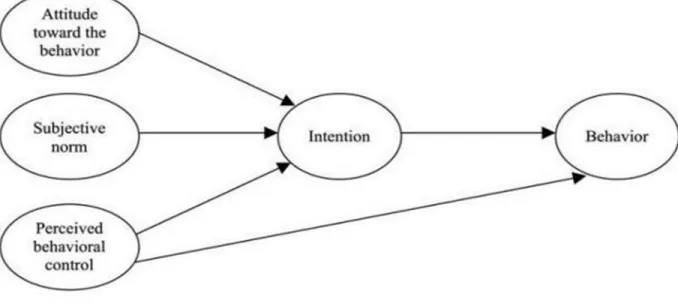
Theory of planned behaviour (TPB) (Figure 2.1), a concept proposed by Icek Ajzen (Azjen, 1991), states that human behaviour is governed by an individual’s attitude as well as behavioural intention and behavioural intentions are characterised by social norms and the view of the individual on how easy the behaviour can be achieved (Martin, 2017)..
23
Lee, Cerreto and Leffor (2010) posit that the extent to which a person can view a precise behaviour in a positive manner (attitude), believes that important others want them to adopt a specific behaviour (subjective norm) and lastly believe that they are capable of adopting the behaviour (perceived behavioural control). These factors contribute to the intention of the individual to perform the behaviour. George (2004) suggests that intentions reveal upcoming behaviour, while actual behaviour reveals what occurred previously
The theory of planned behaviour has been applied in numerous studies. As an example, the theory of planned behaviour was used in a study by Neneh (2017) to understand employee theft
intentions in small businesses.The results ofthe study showed three factors (attitudes towards
theft, perceived behavioural control and moral norms) connected with the intentions to participate in employee theft and recommended that these be taken into consideration when recruiting employees (Neneh, 2017).
Figure 2.1: Theory of Planned Behaviour Theory (Azjen, 1991)
2.10.1.1 Limitations of Theory of Planned Behaviour Model
24
• It disregards the emotion such as threats, fear and positive or negative feelings (Bergman,
2005).
• It is restricted to individual rational behaviour that does not offer a precise justification for
individual behaviour related to emotion (Zhang, 2018).
• It overlooks the variances of human behaviour and the culture that can anticipate human
behaviour (Zhang, 2018).
Based on the above, the theory of planned behaviour model was not found useful to understand the factors that influence micro-enterprise owners in Cape Town in adopting cloud computing as micro-enterprise owners’ intentions are vitally important when making business decisions concerning which direction to take – such as with adopting cloud computing services – to drive profits in their businesses.
2.10.2 Technology, Organisation and Environment (TOE) framework
SMME competitiveness, determined by many factors, is usually considered by a firm’s external, internal and entrepreneurial-related factors (Porter, 2004:126). Oliveira, Martins and De Lisboa (2011) state that the TOE framework is used to consider organisational factors that influence decisions to use technology within a firm.
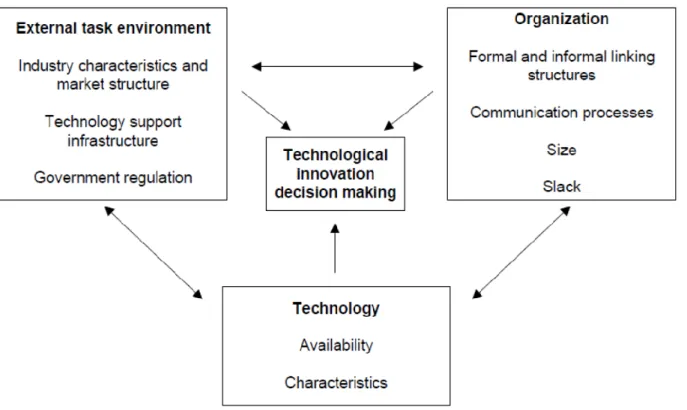
The TOE framework (Figure 2.2), originally developed by Tornatzky and Fleischer (1990) and later updated by Zhu and Kraemer (2005:61-84), avers that adoption is determined by technology development (Kauffman & Walden, 2001), organisational conditions and reconfiguration (Chatterjee, Grewal, & Sambamurthy, 2002), and industry environment (Kowath & Choon, 2001). The TOE framework offers a helpful analytical framework beneficial for examining the use of various forms of Information Technology innovation (Tiago & Martins, 2011). The TOE framework is argued to be an integrative framework that makes available a guiding theoretical basis since research in the adoption of ICT typically evaluate various technological, organisational, and environmental factors that either ease or obstruct adoption (Ramdani, Chevers & Williams, 2013). Technology context
Technological context suggests that adoption relies on the pool of technologies inside and outside the firm as well as the perceived relative advantage (gains) of the application, compatibility (both technical and organisational), complexity (learning curve), trialability (pilot test) and observability (visibility) (Awa & Ukoha, 2012).
The cost of hardware and software, as well as the cost of ensuring compatibility within the existing ICT infrastructure, fall under the technological context (Ellis & Van Belle. 2009).