Simulation Tool for Market-Based Cloud Resource Allocation
Carlos Mera Gómez
a, bSupervisor: Dr. Rami Bahsoon
b, cMSc in Internet Software Systems
a
School of Computer Science, University of Birmingham, Birmingham, United Kingdom
Word count (excluding keywords, acknowledgments, table of content and bibliography): 13350
I
Abstract
Market-Based Systems are aimed at improving the resource allocation and control in dynamic distributed systems by creating autonomous agents that carry out their trading based on market models and financial strategies. Cloud Computing is a model which offers IT infrastructure and applications as services in accordance with expected Quality of Services (QoS) parameters which are specified in a Service Level Agreement (SLA). The aim of this research is to design and explore a new market-based model which uses reputation mechanisms to minimize SLA violations in market-based Cloud architectures. In order to experiment with the impact of different reputation metrics, a simulation tool has been developed by extending a Cloud Computing framework called CloudSim. Two different market mechanisms, Posted Offer and Reverse Auction, have been chosen to compare and contrast their performance at implementing the resource allocation in the Cloud under varying resource configurations and experimental economics scenarios. The evaluation of the results in the performed simulations of this work shows that the reputation metrics significantly improve the resource allocation in distributed autonomous trading such as auctions. Keywords: SLA, Market-Based Systems, Reputation Mechanism, Cloud Computing architectures, Experimental Economics.
II
Acknowledgements
I would like to thank Dr. Rami Bahsoon for sharing his ideas, giving me his guidance, encouraging me to carry out the research and keeping my confidence at the appropriate level in the most challenging activities to push the project ahead. Additionally, I would like to dedicate this effort to my father Carlos Mera, my mother Neris Gómez and my girlfriend Rommy Márquez for all their patience and support during my postgraduate studies.
III
Table of Content
Abstract ... I Acknowledgements ... II Table of Content ... III
1 Introduction ... 1
2 Background and Related Work ... 3
2.1 Cloud Computing ... 3
2.2 Market-Based Systems... 4
2.3 Market-Based Cloud ... 5
2.4 Experimental Economics ... 6
2.4.1 Auctions ... 7
2.4.2 Posted Offer Auction ... 8
2.4.3 Reverse Auction ... 8
2.4.4 Bargaining ... 9
2.4.5 Double Auction ... 9
2.5 Reputation Systems ... 10
2.6 SLA in Cloud Architectures ... 11
2.7 CloudSim ... 12 2.7.1 Simulation Approach ... 12 2.7.2 CloudSim Architecture ... 12 2.8 Related Work ... 14 3 Motivation ... 14 4 Research Objectives ... 15 5 Challenges ... 15 6 System Design ... 15 6.1 Model Description ... 15 6.2 Model Assumptions ... 17
6.3 Trading with Reputation Metrics ... 17
6.4 Simulation Tool Design ... 19
6.4.1 Use Cases Diagram ... 19
6.4.2 Class Diagram ... 20
6.4.3 Component Diagram ... 20
6.4.4 Sequence Diagrams ... 21
7 Implementation and Testing ... 22
7.1 Resource Allocation Algorithm ... 22
7.2 Simulator Features ... 24
IV
7.2.2 Scenario Simulation ... 24
7.2.3 Exporting and Importing Scenarios ... 24
7.2.4 Simulation Reports ... 24
7.3 Scenario Configuration ... 25
7.4 Simulation Reports ... 27
7.5 Testing ... 29
8 Experimentation and Evaluation ... 30
8.1 Evaluation Approach ... 30
8.2 Predicted Outcomes ... 30
8.3 Simulation Results ... 30
8.3.1 Scenario 1: Posted Offer with Reputation Metrics ... 31
8.3.2 Scenario 2: Reverse Auction with Reputation Metrics ... 33
8.3.3 Comparison between Posted Offer and Reverse Auction Curves ... 36
8.4 Threats to Validity ... 36
9 Project Management ... 37
9.1 Risk Management ... 37
9.2 Development Process and Schedule ... 37
9.3 Backup Management ... 37
10 Conclusions and Future Work ... 38
Bibliography ... 39
Appendix... 40
Appendix A: Test Case Specification ... 40
Appendix B: Other Simulator Screenshots ... 44
Appendix C: Instructions to Run the Tool ... 46
V
List of Figures
Figure 1 High Level Description of the Implemented Model... 2
Figure 2 Types of Delivered Services in the Cloud ... 3
Figure 3 Supply and Demand Curves ... 5
Figure 4 Architecture of a Reputation System ... 10
Figure 5 Some Core Classes in CloudSim ... 13
Figure 6 More Important Classes in CloudSim ... 14
Figure 7 Market-Based Cloud Resource Allocation Model ... 16
Figure 8 Posted Offer Auction without Reputation Metrics ... 17
Figure 9 Posted Offer Auction with Reputation Metrics ... 18
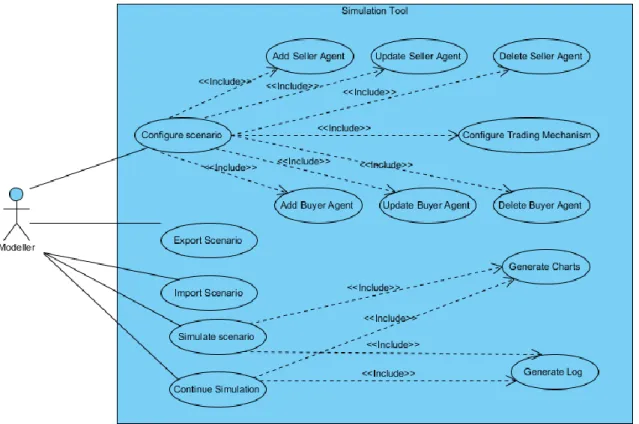
Figure 10 Use Case Diagram of the Simulator ... 19
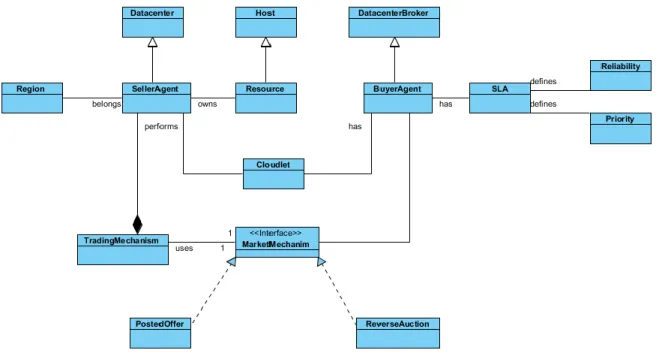
Figure 11 Class Diagram of the Simulator ... 20
Figure 12 Component Diagram of the Simulator ... 20
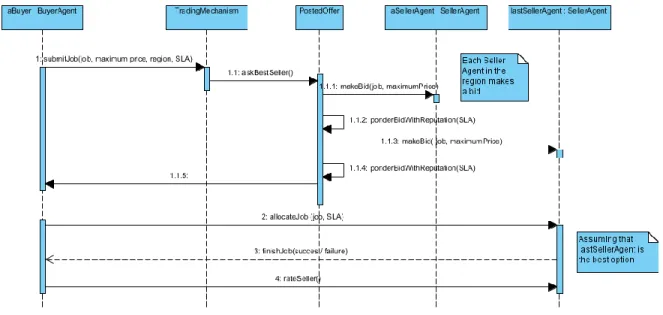
Figure 13 Sequence Diagram for Posted Offer Auction ... 21
Figure 14 Sequence Diagram for Reverse Auction ... 21
Figure 15 Screenshot of Seller Agents’ Configuration ... 25
Figure 16 Screenshot of Trading Mechanisms’ Selection ... 26
Figure 17 Screenshot of Scheduled Jobs’s Configuration ... 27
Figure 18 Screenshot of Allocated Jobs per Seller Agent Report ... 27
Figure 19 Screenshot of Final Seller Agent's Reputation Report ... 28
Figure 20 Screenshot of SLA Violations per Seller Agent Report... 28
Figure 21 Screenshot of Simulation Log ... 29
Figure 22 Seller Agents for Evaluation ... 30
Figure 23 Groups of Jobs for Evaluation ... 31
Figure 24 Curve of Posted Offer Auction with Reputation Metrics ... 33
Figure 25 Curve of Reverse Auction with Reputation Metrics ... 35
Figure 26 Curves of Posted Offer and Reverse Auction with Reputation Metrics ... 36
Figure 27 Project Schedule ... 37
Figure 28 Screenshot of Importing / Exporting Menu ... 44
Figure 29 Screenshot of Exporting a Scenario ... 44
Figure 30 Screenshot of Importing a Scenario ... 45
VI
List of Tables
Table 1 Trading with Simultaneous Decisions ... 6
Table 2 Trading with Sequential Decisions ... 7
Table 3 Buyer and Seller Record Sheets in a Double Action... 10
Table 4 Posted Offer Simulation Results with Weight for Reputation of 0.99 ... 31
Table 5 Posted Offer Simulation Results with Weight for Reputation of 0.75 ... 32
Table 6 Posted Offer Simulation Results with Weight for Reputation of 0.5 ... 32
Table 7 Posted Offer Simulation Results with Weight for Reputation of 0.25 ... 32
Table 8 Posted Offer Simulation Results with Weight for Reputation of 0.0 ... 32
Table 9 Reverse Auction Simulation Results with Weight for Reputation of 0.99 ... 33
Table 10 Reverse Auction Simulation Results with Weight for Reputation of 0.75 ... 34
Table 11 Reverse Auction Simulation Results with Weight for Reputation of 0.5 ... 34
Table 12 Reverse Auction Simulation Results with Weight for Reputation of 0.25 ... 34
Table 13 Reverse Auction Simulation Results with Weight for Reputation of 0.0 ... 35
Table 14 Risk Assessment ... 37
Table 15 Test Case Specification in Accordance with IEEE Standard 829-1998 ... 40
Table 16 Test Case Specification in Accordance with IEEE Standard 829-1998 (Continue) ... 41
Table 17 Test Case Specification in Accordance with IEEE Standard 829-1998 (Continue) ... 42
1
1
Introduction
Cloud Computing supplies IT services in a layered architecture where the bottom layer is referred to Infrastructure as a Service (IaaS); the middle layer to Platforms as a Service (PaaS) and the top layer to Software as a Service (SaaS). The relevance of the Cloud approach to provide these utility services is that customers pay to Cloud providers based on their usage of these utility services with the additional benefit of dynamically scaling up or down on demand. In a recent paper from the University of Melbourne Cloud Computing was called as the 5th Utility after water, electricity, gas and telephony [10].
Cloud users perform dynamic workloads in the Cloud and Cloud providers must be capable of fulfilling these expectations. Hence, it is important to define the expected QoS parameters in a SLA to guarantee an acceptable service performance for both parties. One idea to reduce the SLA violations in the Cloud is to make the analogy between a Cloud and an electronic marketplace [11]. Market-Based Systems are designed to improve the resource allocation and control in dynamic distributed systems by creating autonomous seller and buyer agents that carry out their Cloud jobs trading based on market models and financial strategies. In addition to this market oriented approach, we propose the use reputation metrics which are indicators to measure the dependability of a Cloud provider.
In order to experiment with a Market-Based Cloud we will analyze centralized and decentralized approaches to carry out the resource allocation. Additionally, we will provide an analysis of market mechanisms such as Posted Offers, Auctions and Bargains to be implemented as the autonomous trading mechanisms in the market negotiation. As reported by Experimental Economics [12], all these market experiments are focus on the predictions of neoclassical price theory, both Cloud providers and Cloud users need to estimate in advance the price for a Cloud job in the market. This price is the sum of the production cost plus the desired profit for performing the Cloud job. For this work, the estimation will be simplified by the assumption that the production cost of executing a job can be known in advance. However, the minimum and preferred profit of each Cloud provider is private and established according to his own preferences.
Carrying out all these experiments in real Cloud environments would be costly and time consuming. Moreover, the degree of complexity to reproduce the results under varying resources configuration and workloads would make the conclusions less confident. So, the best alternative to overcome these issues is to use a Cloud simulation framework. We have chosen the CloudSim [5] to extend it and develop the simulation tool to run our experiments. CloudSim is a generalized and extensible framework developed by the University of Melbourne that provides all the basic structure of a real Cloud architecture and performs the simulation using an event oriented approach [27].
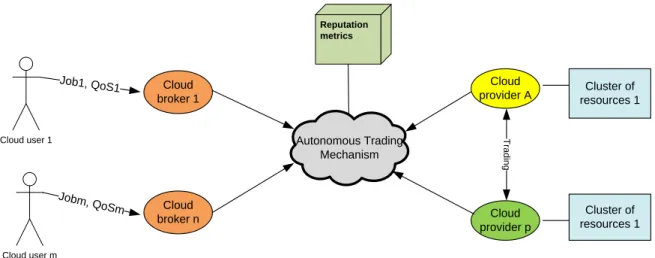
Our simulation tool is fully documented using UML, and it is designed to be extensible to other market mechanism in order to allow new experiments in the future with new algorithms. In addition to Cloud users and Cloud providers, our model [3] introduces additional autonomous agents called Cloud brokers which are capable to perform the negotiation for the resource allocation for Cloud jobs on behalf of the Cloud users. A high level description of the Market-Based Cloud with reputation metrics can be described by the following graphic:
2 Cloud user m
Jobm, QoSm Cloud
broker n Autonomous Trading Mechanism Cloud provider p Cloud
provider A resources 1Cluster of
Cluster of resources 1 T ra d in g Cloud user 1
Job1, QoS1 Cloud broker 1
Reputation metrics
Figure 1 High Level Description of the Implemented Model
The main contributions of this work are:
1. Build a simulation tool by extending CloudSim to evaluate the resource allocation in Market-based Clouds
2. Provide the design and implementation of a trading algorithm that links the reputation metrics ideas with the Market-Based Systems approach to evaluate to what extent they improve the resource allocation in Cloud Computing environments.
3. Show a graphical view of the simulation results to analyze the impact of reputation metrics and a given market mechanism in Cloud architectures.
The rest of the document is organized as follows: first, a background section where a general description about Cloud Computing, CloudSim, Market-Based Cloud and reputation metrics is presented. Following that, comprehensive details related to the solution design to extend CloudSim API are provided. This section ends with a brief overview of the trading algorithms to implement the chosen market mechanisms. Then, the next section describes the scenarios to simulate, shows the experimentation results, its evaluation and a discussion of issues and limitations found in the simulations. Finally, the paper ends with a summary, conclusions and a suggestion for future works.
3
2
Background and Related Work
2.1
Cloud Computing
Cloud Computing is a reference model to provide IT infrastructure and applications as a service in a scalable manner. It is aimed at optimizing the resource utilization according to customized SLAs by means of virtualization and sharing resources. One formal definition was given in a report from the University of Melbourne as: “Cloud Computing is a type of parallel and distributed system consisting of a collection of interconnected and virtualized computers that are dynamically provisioned and presented as one or more unified resources based on a service level agreement” *13+.
Cloud computing comprises three IT layers: infrastructure, platforms and software. All of them are delivered as services over the Internet, hence providers are classified as:
Infrastructure as a service (IaaS): offering web-access to processing, storage or connectivity. The key point is that hardware resources are abstracted and encapsulated by virtualization. However, end users have control over operating systems, storage and applications.
Platform as a Service (PaaS): offering easy development environments, reusable components, libraries, collaboration services and workflow facilities to design, develop, test, deploy and host applications.
Software as a Service (SaaS): offering services directly consumable by end- users. The main difference from conventional software suppliers is the deployment, licensing and billing model. The Cloud involves three major actors: the Cloud user, the Cloud vendor and the original Cloud provider. The cloud Vendor is an organization that has a local tax registration and provides the Cloud services to the Cloud user according to expected levels of quality of experience (QoE) and quality of service (QoS) based on a service level agreement (SLA). However, the Cloud vendor is not necessarily the owner of the infrastructure, platform or software offered to the Cloud user. Here appears the third actor, the original Cloud provider, who is the organization who owns the SaaS, PaaS or IaaS.
Clouds which are available to consumers in a pay-as-you-go manner are called Public Clouds or external clouds, while clouds which are owned, controlled and used by a single organization are denominated as Private Clouds or internal clouds. Single clouds from these types can be combined to get Hybrid Clouds and Federation of Clouds. Hybrid clouds are an alternative to get scalable IT resources provided by external clouds and to get security and privacy provided by internal clouds, at the same time. Federation Clouds are a group of single clouds collaborating to exchange data and processing resources through interfaces.
Software as a Service Platform as a Service Infrastructure as a Service Cloud Computing
Figure 2 Types of Delivered Services in the Cloud
Currently, there is a wide range of classification for Clouds. However, one of the most complete is established according to e-Science [1]. Here, Cloud taxonomy can be classified in the following categories:
4
1. Business model: this subtaxonomy classifies clouds into: Infrastructure as a Service, Platform as a Service, Software as a Service and Storage as a Service. The last one is a service that offers structured manners to access storage and databases remotely located. It is chiefly used in scientific experiments.
2. Privacy: this classifies clouds as: Public such as Google and Amazon, Private and Mixed such as Hybrid or Federated Clouds.
3. Pricing: based on this category, clouds are considered as: Pay-per-use and Free.
4. Architecture: According to architecture subtaxonomy, key cloud attributes classifies the clouds. These are: Heterogeneity, Virtualization, Security, Resource Sharing, Scalability and Monitoring. 5. Technology infrastructure: it takes into consideration the computational power of the cloud.
Hence, there two categories: High-Performance computing (HPC) support and non HPC support. 6. Access: it establishes four kinds of access criterion: Mobile clients, Web browser, Thin clients and
APIs
7. Standards: it classifies clouds based on the protocols and standards that are used for Security, Data, Virtualization, Syndication and Communication.
8. Orientation: based on this subtaxonomy, clouds are divided as Task-centric or User-centric.
Some of the Cloud Computing environments available in the IT industry are Amazon EC2, Microsoft Azure and Google App Engine. A comparison between six representative Cloud environments with industrial linkages is detailed in [10].
2.2
Market-Based Systems
People have been using markets to trade goods and services for thousands of years. A market is the natural environment where autonomous agents such as sellers and buyers carry out their trading without a global controller. In *14+, market based systems are defined as “any system that uses the concept or certain features found in a market”.
A key characteristic of the Market-Based Systems is that they have no need of a central coordinator or global controller. In fact, agents in the system have no way to know all the parameters and states in the market. As a result, the interaction among individual agents leads to a global optimization by adopting an appropriate economic trading behavior.
Market economics are applied in Computer Science to find new methods to define decentralized allocation policies for scarce resources among multiple agents, known as Market-Based Resource Allocation (MBRA) and to apply mechanisms of control, known as Market-Based Control (MBC) [11]. A Market-Based System is composed by
1. Traders: the components responsible of quoting prices and performing the haggling process; and 2. Marketplaces: the places where buyers and sellers meet in order to reach an agreement.
Market-Based Systems implement buyer agents who need to perform a job and have money to pay for it. Also, implement seller agent who own resources and compete with others sellers to get the job execution on their resources and charge to the buyer for it. All this trading obeys the two basic rules: when the demand surpasses supply, price will rise (seller’s market). On the other hand, when supply surpasses demand, price will fall (buyer’s market). In general we are familiarized with the idea that the price is a function of the demand or supply [11]. This demand curve is essentially a graph of price vs. quantity to represent the price that buyers would for a quantity as it is shown in the figure. In the same way, the supply curve can be drawn on a graph of price vs. quantity to represent the price that sellers are ready to sell the goods or services as it is also shown in the picture.
5
Price
Quantity
demand curve supply curveFigure 3 Supply and Demand Curves
2.3
Market-Based Cloud
A Market-Based Cloud is a Cloud environment implemented according to the definition for a Market-Based System. The main components in a Market-Based Cloud are:
1. Cloud users request job executions at an expected QoS parameters specified by a SLA, 2. Cloud providers or sellers own processing resources to trade,
3. Cloud brokers or buyer perform the Cloud trading on behalf of the Cloud users to select the most suitable Cloud provider for the job.
4. Market mechanism: establishes a set of rules to the trading interactions between buyers and sellers in order to define how buyers quote bid prices and seller quote offer prices.
This approach is aimed at analyzing to what extent the resource allocation based on market-based controls and reputation metrics can minimize SLA violation in Cloud architectures.
There are two approaches for managing resource allocation: centralized and decentralized [4]. In the first one, resource allocation is performed by a single node or a coordinator which is responsible for analyzing the user requirements and evaluating the current Cloud architecture configuration in order to decide how to optimize the utilization of resources from a global perspective. The key disadvantages for this classical approach include:
The Cloud architecture must be static while the central coordinator is carrying out the calculus of the resource allocation algorithm
The central coordinator knows the global state of the resources in the Cloud and
The central coordinator must be connected to every single resource which leads to scalability problems.
On the other hand, a decentralized resource allocation mechanism is carried out by multiple self-interested agents. Each of them acts on behalf of a user at the decision making level while trying to maximize its own good without concern for the global benefit.
The main advantages of this mechanism are: no single point of failure, no performance bottleneck and the amount of exchange of messages to converge on an optimal solution.
6
2.4
Experimental Economics
Economic theories are aimed at explaining market activity. Experimental economics [12] is the systematic evaluation of these economic theories in order to prove or disprove them by modeling experiments under controlled environments. Economics experiments were classified by Edward Chamberlain (1948) in three branches:
1. Market experiments: are aimed at analyzing the predictions of neoclassical price theories.
2. Game experiments: are focused on analyzing environments where each participant is playing a best response to the strategies choices of other participants.
3. Individual decision making experiments: are conducted on environments where uncertainty comes from external random events and not from other agents’ decisions.
This paper focus on market experiments were trading carried out by buyers and sellers is autonomous and decentralized.
The principal advantages of market experiments are the replication and control. Replication refers to the capacity to reproduce the experiment and get some tangible evidence to support the conclusions. Control refers to the capacity to configure the scenario in consonance with the required conditions to evaluate the theory. On the other hand, chief drawbacks of market experiments are sophistication and complexity. Sophistication because decision makers in the economy are more sophisticated than experimentation agents which may lead to some degree of uncertainty in the conclusion. The other drawback is complexity due to the degree of complexity achieved for an environment configuration may be simpler than real scenarios in the market.
Trading mechanisms can be classified in two categories of price competition: models with simultaneous decision and models sequential decisions. The following tables taken from [12] summarize the behavior of these trading mechanisms:
#Sellers/#Buyers (# units) Who proposes prices Decision and Timing How contracts confirmed Cournot (quantity choice) -/- Price is endogenous Quantities posted simultaneously Simulated buyers Posted Offer Auction
-/- sellers Offers posted
simultaneously Buyers shop in sequence Ultimatum Bargaining (offer version)
1/1 sellers Seller makes single
offer on 1 unit
Buyers accepts or reject
Posted Bid Auction -/- buyers Bid posted
simultaneously
Sellers shop in sequence
Discriminative Auction
1/- (N units) buyers Bid posted
simultaneously
Highest N bidders pay own bids 1st Price
Sealed-Bid Auction
1/- (1 Unit) buyers Bids posted
simultaneously
High bidder pays own 1st price Competitive
Sealed-Bid Auction
1/- (N units) buyers Bids posted
simultaneously
Highest N bidders pay N+1st price Second price
Sealed-Bid Auction
1/- (1 unit) buyers Bids posted
simultaneously
Highest bidder pays 2nd price Clearinghouse
Auction
-/- Buyers and sellers Bids and offers
posted simultaneously
Intersection of bid and offer arrays
7 #Sellers/#Buyers (# units) Who proposes prices Decision and Timing How contracts confirmed
Dutch auction 1/- (1 unit) Seller clock Price lowered sequentially
Buyer who stops clock
English auction 1/- (1 unit) Auctioneer Prices raised sequentially
Sale to high bidder
Bid auction -/- Buyer Prices raised
sequentially
Sellers
Offer auction -/- Sellers Prices lowered
sequentially
Buyers
Double auction -/- Both types Bids raised and
offers lowered sequentially
Both types
Decentralized auction
-/- Both types Sequentially but
decentralized
Both types
Table 2 Trading with Sequential Decisions
2.4.1 Auctions
An auction is defined by Krishna in [15] as “one of the many ways that a seller can use to sell an object to potential buyers with unknown values”. In an auction the price of the object is the result of a competition among the buyers based on the rules previously defined by the seller. An auction has a wide range of variants, for example: the seller may post a fixed price and sell the object to the first interested buyer, or the seller may pick up a buyer randomly and negotiate the price with him, or the seller may set out an auction and then negotiate with the winner, etc. In all the cases, the seller always tries to maximize his own benefit without any concern about the social good. He wants to sell a product and get the highest possible payment for it while the buyers aim at getting the product at the minimum possible price. Depending on the mechanism by which the bidder establishes the value of a product, there are three kinds of auction settings:
1. Private value auction: the value of the product depends only on the agent’s own preference. One valid assumption is that the agent knows in advance the value of the product.
2. Common value auctions: the product value determined by an agent depends on the value established by other agents.
3. Correlated value auctions: it is a combination between the two previous settings. The value of a product depends partly on agent’s own preferences and partly on others’ values.
Auction setting produce changes in the properties of each auction protocol. Some of the auctions protocols are:
1. English auction: each bidder raise his bid and when anyone else is interested in make more bids or offers, the auction finish and the product is sold to the bidder that made the bid with the highest. This kind of auction is also called First-price open-cry.
2. First-price sealed-bid auction: each bidder makes his offer with no knowledge of the other’s bids. After all the offers are received, the product is sold to the bidder with the highest price in his bid. 3. Dutch auction: the auctioneer sets a price for the product higher than the current one. Then during
the auction process, he is decreasing the price until one of the bidders makes a bid with the current price. This type of auction is also called descending auction.
4. Vickrey auction: each bidder makes his offer without any knowledge about the others’ bid. The bidder who made the offer with the highest price wins the auction but at the price of the second highest bid. It has two desirable results. First, the bidders make their truthful offers which leads to efficiency in the global process. Second, the bidders have no need to guess the value of the other bid because they have no relevant importance in making the bidding decision. Vickrey auction are widely used in computational multi-agent systems such as resource allocation in operating systems, bandwidth allocation in networks and to computationally control heating in buildings. However,
8
Vickrey auctions have not been widely adopted for human auctions. This auction type is also known as Second-price sealed bid.
5. All-pay auction: each bidder participating in the auction must pay an amount of his bid to the auctioneer. It is mainly used in resource reallocation by multi-agent systems.
2.4.2 Posted Offer Auction
Posted Offer Auction is a trading mechanism where sellers post their list of prices in a take-it-or-leave-it approach as it is done for example in retail markets. After a seller autonomously sets a price for a product, the potential buyers are expected to make an offer for it. A characteristic to be highlighted in this mechanism is that sellers have absolute influence over the market price because as the seller post a take-it-or-leave-it price offer, the buyers are not able to negotiate the price. As a result, the market usually converges from prices higher than the equilibrium [8]. The opposite approach, called Posted Bid Auction, is gotten by inverting the roles so that sellers are invited to make desired sales at the bids posted by buyers. The posted offer auction is based on a large number of repeated series of periods. For each period, the trading is composes by two phases. First, each seller autonomously announces a price for the period and the maximum number of units to be offered at that price. Each seller’s price (but not the maximum quantity) is shown to buyers and the other sellers, once these have also completed their own decision making processes for quoting prices. Then, when all sellers have quoted their prices, a buying sequence starts. Without any order in particular, buyers are sequentially given the opportunity to make their purchases from sellers at the specified prices. Buyers can make their trading with any seller as long as this one hasn’t reached his maximum sales quantity. This process finishes when all buyers have make their shops or all the available units have been sold.
As it is shown in experiments carried out in [12], both the stability and the structure of supply and demand curves in a posted offer auction usually generate a non competitive outcome. What is more, experiments prove that posted offer prices converge slowly to conditions of excess supply. Finally, as buyers have a reduced capacity to lead the changes in reservation values (the highest value a buyer is willing to pay for an object), posted offer markets have a poor reaction to demand-side adjustments. On the other hand, these markets are very responsive to supply-side shocks.
2.4.3 Reverse Auction
Reverse auction is described in *17+ as an auction where “suppliers are bidding to supply an object or service to a buyer and are pushing the prices down. [It is] likely to be most used where standardization of products/services is desired, markets are fragmented, transaction costs are high and global sourcing expertise is required”. So, a reverse auction is not recommended for highly customized specifications where just a few numbers of sellers have the capacity to offer the object or service. A good checklist for the conditions to apply reverse auction as the market mechanism is given in [16] and they can be summarized as:
1. Spend characteristic: generic
2. Specifications: defined by industry standard 3. Market driver: Mostly price/volume
4. Industry competitiveness: very competitive (commoditized) 5. Supplier availability: very many (large pool)
6. Riskiness of switching suppliers: low 7. Supplier relationship: transactional 8. Switching cost: negligible
9. Level of detail for supplier qualification: low 10. Supply lead time: shot/immediate
11. Spend examples: no custom packaging; bulk chemicals; lab supplies
Reverse auctions are a mechanism that leads to a healthy competition among participants by giving them a clear insight into true market conditions. Their major benefits are:
9
1. Time: the negotiation process takes less time, which increases the productivity. 2. Money: it saves costs by increasing the negotiation rate with big amounts of sellers.
3. Trust: all the information is equally available for the participants at the same time which leads to a competitive process under openness and fairness conditions. This transparency gives a clear view of the trading process.
2.4.4 Bargaining
Bargaining is defined in *18+ as “a situation in which individuals have the possibility of concluding a mutually beneficial agreement, there is a conflict of interests about which agreement to conclude and no agreement may be imposed on any individual without his approval”. In a bargaining a point of interest is the relationship between its outcome and the characteristics of the scenario.
In a bargaining mechanism, agents can make a mutual beneficial agreement, but they may have a conflict of interest about the terms of the agreement to reach. Bargaining in real world is composed by a finite number of competing agents so it is the middle between a monopoly and a perfect competition. There are two approaches for bargaining:
1. The Axiomatic approach: This approach is the most commonly used and it is based on the Nash solution, proposed by Nash (1950). It describes a set of N bargainers. They either achieve an agreement or fail to achieve it which leads a disagreement event. An agreement may be a price or any other contract that defines the action to be performed by the parties in each of the contingencies. The framework describes a bargain as a place where some axioms or desirable characteristics of a solution are postulated and then the solution concept that matches with the axioms is accepted. On the basis of Nash solution, the axioms are: Pareto optimality, symmetry, independence of irrelevant alternatives, and invariance to linear transformations of utility [12]. 2. The Strategic approach: it is an approach that models the bargaining mechanism as an
uncooperative game where the solution is given by the model’s equilibrium. 2.4.5 Double Auction
Double auctions so-called open outcry markets are described in *8+ as: “Buyers and sellers post prices simultaneously, bids and asks, respectively, and whenever there is match, trade occurs. At any point in the trading period, buyers and sellers can observe the highest bid and lowest ask (or all bids and asks), accept an outstanding bid/ask or post new offers, which are queued and could be accepted in the future”.
On one side, in auctions with multiple buyers and a single seller, the buyers raise price bids until one interested remain which leads to an ascending-bid auction. On the other side, in auctions that a single buyer receives offers from competing sellers trying to sell a fixed number of objects, prices offers tends to being reduced until there is no excess of supply. On double auctions, these two opposite processes take place at the same time and trades occur during this negotiation.
Double auction creates a competitive market in prices and quantities. In fact, it appears to create these competitive results more quickly and reliably than any other market mechanism. Hence, when it comes to evaluation of any other trading mechanism, the comparison is usually performed against a double action as a standard mechanism.
Double action is composed by a sequence of trading intervals or periods, where each of them last a pre established duration depending on the volume of participants in the market. At the beginning of the trading interval, buyers receive unit valuations and sellers receive unit costs. After this, buyers are usually required to purchase first higher-valued units and then lower-valued units. The profit of the buyers is calculated as the difference between the unit value and the purchase price. There are no earned profits on units not bought. On the other hand, sellers earn profit as the difference between the contract price and the unit costs. As production is usually to fulfill orders, costs due to unsold units are not taken into consideration. An example of a double action scenario and the following table showing the negotiation carried out in one of the periods is given in [12]:
10
Record Sheet – Buyer m Record Sheet – Seller p
Unit 1 (1) Unit value 4.60 Unit 1 (1) Sales price 4.30
(2) Purchase price 4.30 (2) Unit cost 3.70
(3) Unit profit (1)- (2) 0.30 (3) Unit profit (1) – (2) 0.60
Unit 2 (4) Unit value 4.40 Unit 2 (4) Sales price
(5) Purchase price (5) Unit cost 4.40
(6) Unit profit (4) - (5) (6) Unit profit (4) – (5)
(7) Period profit (3) + (6) 0.30 (7) Period profit (3) + (6) 0.60
Table 3 Buyer and Seller Record Sheets in a Double Action
For experimentation purposes, only profitable actions are permitted in order to avoid bids above unit values or offers below unit costs. Otherwise, trades at a loss produce noisy signals to the market like predatory pricing, for example, which may be caused by the effort from one competitor to take another away from the business.
Markets organized under double auction mechanism are robust to a wide variety of supply and demand configurations, to limitations on the number of agents and to conditions determining communications between sellers.
2.5
Reputation Systems
Reputation is a collection of processed information about the performance of one agent as it was experienced by other who had a transaction with him. Reputation systems are described in *19+ as “an important block for achieving trust within large distributed communities, especially when mutually unknown agents engage in ad-hoc transactions. Based on the knowledge of the past behavior it is up to each agent to form his opinion on his potential transaction partner”. An important mentioned term is trust, which is the degree of willingness to carry on an action that put agents on risk of harm and is based on an evaluation of the risks, rewards and reputation related to all the agents involved in the situation.
The rating in a reputation system is a client agent’s opinion of a server agent after his request was completed by the server agent. The architecture of a reputation system is represented by the following figure according to [19]:
A: Rater
Collector Processor Emitter
3. ra ting 2. interact 1. c urre nt R ep (B ) 4. update B Ratee Figure 4 Architecture of a Reputation System
11
The architecture is composed by the following actors and components: The ratee or agent to be rated. The collector receives ratings from agents knows as raters. This information is processed and amassed by the processor. The algorithm used by the processor to calculate an accumulated representation of an agent’s reputation is the metric on the reputation system. The emitter publishes the results to other requesting agents.
It is worthwhile to highlight that a reputation is context dependant, which means, for example, that a reputation as IaaS provider cannot be applied in another context such as SaaS provider. On each independent context, a reputation system model is based on its specific metrics to compare different agents by measuring their reputation values. This measuring used for these metrics in reputation systems, classify the models in:
1. Accumulative Systems: system collects and amasses all the ratings in order to calculate the overall reputation of an agent. It means that metrics reflects the trustworthiness of an agent based on the number of good behaviors.
2. Average Systems: systems calculate the agent’s reputation as the average of all rating the agent has got. The idea behind of this metric is that an agent is going to behave in the same way most of the time.
3. Blurred Systems: reputation systems compute a weighted mean sum of all ratings. Newer ratings have more influence for the current reputation. This metric is based on the fact that agents may change their behavior during their lifetime.
4. OnlyLast Systems: this kind of systems computes the last gathered rating for an agent. In fact, it is an extreme case of the Blurred system.
5. EigenTrust Systems: systems combine the agent’s local reputation values iteratively to a global reputation. Local reputation is defined by a set of agents such that an agent may have a different reputation on each local reputation system. Whereas in a global reputation system there is a single value for each agent.
6. Adaptive Systems: systems behave differently to the received rating depending on the current reputation value of the agent. For instance, if the current reputation of the agent is low then a positive rating causes a big increment in the reputation. On the other hand, if the current reputation is high then the same positive rating produces only a small increment in the reputation. It may behave similarly for negative ratings.
7. Beta Systems: systems try to predict the future behavior of an agent by means of statistics. This prediction takes into consideration the past behavior of the agent and the probability to behave good or bad in the next request.
2.6
SLA in Cloud Architectures
The Cloud is a source of services on the basis of contracts that assure satisfaction of the Quality of Service (QoS) parameters of Cloud users conforming to specific service level agreements (SLAs). According to [20] the use of a SLA is intended to “define a formal basis for performance and availability the provider guarantees to deliver. SLA contracts record the level of service, specified by several attributes such as availability, serviceability, performance, operation, billing or even penalties in the case of violation of the SLA. Also, a number of performance-related metrics are frequently used by Internet Service Providers (ISPs), such as service response time, data transfer rate, round-trip time, packet loss ratio and delay variance”. Additionally, Cloud users and Cloud providers may determine cost and penalties on the basis of the achieved performance level in the so-called utility-based SLA. The Cloud resource allocation management may be included as revenues or penalties when QoS parameters are satisfied or violated.
Utilization of SLA in the Cloud may be intended to:
1. Control objectives: this use is aimed at regulating QoS metrics of interest such as CPU utilization, response time; or at optimizing QoS metrics to certain values specified by the Cloud user or Cloud
12
provider; or at rejecting unwanted workloads that might produce an unpredictable performance. It may also be a mix of the described objectives.
2. Metrics and Adaptation Mechanisms: this use is designed for controlling systems by using three kinds of metrics: system-level metrics such as CPU and memory utilization; application-level metrics such as response time and throughput; or business-level metrics such as profit in SLAs. However, adaptation mechanisms are required in the case of conflicting goals. The five principal mechanisms are: admission control to avoid excessive workloads, resource reallocations to manage dynamic reallocations; real-time scheduling of jobs; load balancing and content adaptation.
2.7
CloudSim
A challenge in Cloud Computing is the use of real Cloud environments such as Microsoft Azure, Google App Engine and Amazon EC2 for evaluating the performance of resource scheduling and allocation policy under varying resource configurations and user requirements. The results of the experiments on these dynamic environments are difficult to reproduce due to the cost and the unpredictable conditions in an Internet-based environment. For this reason, a valid alternative to overcome this challenge is to run the experiments on simulation tools.
CloudSim is described in *5+ as: “a new generalized and extensible simulation framework that enables seamless modeling, simulation, and experimentation of emerging Cloud computing infrastructures and management services”. Some of its features are:
A virtualization engine to manage independent virtualized services on a data center node, Allocation of resources based on space-shared and time-shared mechanisms. These features
are the basis for extending the framework and developing more complex algorithms for Cloud Computing.
A further reason to use CloudSim is that existing Grid simulators such as GridSim, SimGrid and GangSim offer a platform to model and simulate Grid applications in distributed environments, but none of them provides support for the multi-layering service abstraction differentiation required by the Cloud (i.e. SaaS, PaaS, IaaS). Additionally, CloudSim tackles economic-driven resource management and application scheduling, which are the basis for developing more complex algorithms for economic entities such as Cloud brokers and Cloud exchange for trading of services in a market-based Cloud. However, the main problem of the framework is the lack of documentation and examples which requires a considerable effort to understand it by debugging and reviewing the source code.
2.7.1 Simulation Approach
CloudSim API is an event and entity oriented simulation package. Its design decomposes the system under simulation in entities exchanging responsibilities each other by means of events. This way, the simulation clock progress is associated to the execution of these events.
2.7.2 CloudSim Architecture
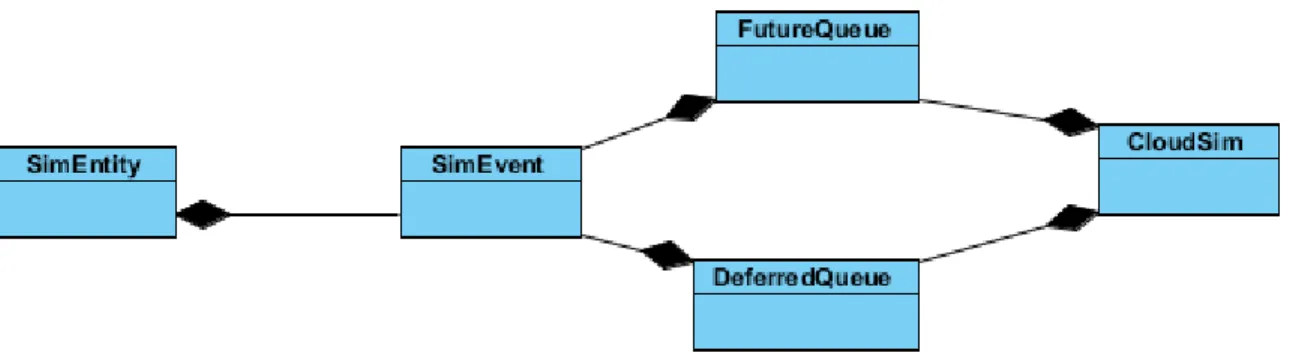
Event and entity driven simulation is supported in CloudSim by dozens of classes. However, only the most important are shown in the following diagram:
13
Figure 5 Some Core Classes in CloudSim
SimEntity is the abstract class that is used to represent entities in the framework. It is able to send and listen for an incoming event. The methods to be overwritten are startEntity, processEvent and shutdownEntity. This way, entities customize their behavior at initializing, destroying and performing the activities corresponding to the received event.
SimEvent is the class to represent the event that is exchanged between entities. It records the type of event, the generation time, scheduled time, finish time, source and destination and some commands to be executed at the destination entity or entities.
FutureQueue is the queue to hold all the events that have been generated by entities but with a delivery time that has not been reached yet by the simulation clock.
DeferredQueue is the queue holding all the events generated by entities and that have not been dispatched by its destination entity because it was busy at the arrival time.
CloudSim is the main class of the framework. It manages the event queues and controls the simulation clock to execute the events. On each step, scheduled events in the FutureQueue are removed and transferred to DeferredQueue. Then, events are executed by the responsible entity and removed from the queue.
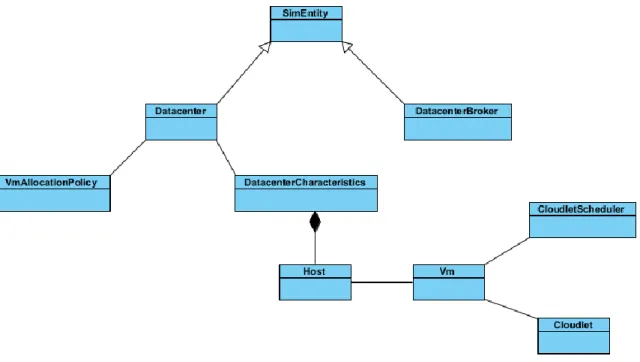
The framework also offers support to model the objects in the Cloud such as host, data center, broker, virtual machine and so on. Additionally, it models management of memory, bandwidth and storage.
Datacenter models the infrastructure provided by Cloud providers. This way, it encapsulates host, memory, storage and so on. Datacenter manages the allocation of host to virtual machines by means of the defined policies in the class VmAllocationPolicy.
Host models a server in the data center and encapsulates all the related information such as CPU cores, memory and storage capacity. Also, it contains the policy to share the processing power and bandwidth among the virtual machines running on that host. For example, a core might be assigned per VM (space-shared policy) or the processing capacity of each core might be distributed among all the running VM (time-space shared), etc.
Vm is the class to represent a virtual machine being managed by a host in the Cloud. It encapsulates all the related information such as processor, memory, storage capacity and so on. An instance of CloudletScheduler is responsible for the policy of scheduling performed by a virtual machine to execute jobs or cloudlets.
Cloudlet is the class responsible for modeling a job or an application to be executed in the Cloud. A job is expressed by its computational requirements; this is a number of instructions. Also, it defines the length of data to be transferred through the network in order to estimate the bandwidth consumption.
14
DatacenterBroker models a Cloud broker that mediates negotiations between the Cloud user and the Cloud provider to allocate resources driven by the job’s QoS needs defined in a SLA. It represents the Cloud user taken the specific need of the users.
Figure 6 More Important Classes in CloudSim
2.8
Related Work
There are some papers that have been considered to design the simulator proposed in this research. For instance, the article in [21] highlights the chief challenges inherent to the resource allocation in the Cloud and describes the resource allocation inputs: Cloud resources, resource modeling, application requirements and provider requirements. Another paper is [22], which proposes a real-time model consisting of a dynamic auction mechanism to improve the allocation problem in the Cloud. Finally, a research [3] still in progress is designing and exploring a market-based model that incorporates reputation metrics for managing SLA violations in Cloud architectures. So, our model takes and adapts these ideas, and based on them designs and implements a new model to improve the resource allocation in the environment of Cloud Computing.
3
Motivation
SLA violations in the environment of Cloud Computing are potentially caused by the gap between the Cloud user needs and the real capacity of a Cloud topology. In order to reduce this sort of violations, our core idea is to propose a new mechanism for dynamic resource allocation in the Cloud by combining concepts coming from market based systems and reputation systems. Market based systems apply pricing mechanism and autonomous trading among independent agents to achieve a global optimization. Additionally, reputation systems keep a record about the performance of specific targets at carrying out previous tasks to make predictions about a future behavior. In our experiments we will combine these two systems to design a novel model that matches more efficiently Cloud user’s requirements and Cloud providers’ offers based on price and reputation metrics. As, these experiments in a real environment would be expensive and would take a long time we have decided to implement a simulation tool to claim the results of our model.
15
4
Research Objectives
The objectives considered at the beginning of this work are listed below:
1. Design a new model to improve the Cloud resource allocation performance by means of market mechanisms and reputation metrics.
2. Develop a simulation tool that allows both GUI and file-based input parameters specification to experiment resource allocation mechanisms in the Cloud.
3. Implement an algorithm on the basis of the designed model and compare the predicted outcome with the simulation results.
4. Display graphically the simulation results in order to facilitate their analysis.
5
Challenges
The challenges of the current work may be summarized as is shown in the following list:
1. Learn about different market-based mechanisms and their use for resource allocation in Cloud environments.
2. Choose and implement an appropriate reputation system and its corresponding reputation metrics. 3. Understand a Cloud Computing simulation framework and then build on top of this a market-based
Cloud simulator.
4. Understand experimental economics to design controlled environments and suitable market-based scenarios to evaluate how the different trading mechanisms may improve the resource allocation in the Cloud.
6
System Design
6.1
Model Description
The model focuses on analyzing the resource allocation performance in a Market-Based Cloud by using different trading mechanisms with and without reputation metrics. For this reason, an artificial semi-decentralized market with the following actors and components has been considered:
1. Cloud user: he submits a job to the Cloud with specific resource requirements, the maximum price he is willing to pay and the expected QoS parameters in a SLA.
2. Job: it is a task to be submitted in the Cloud and it is defined by a number of millions of instructions required to complete the task.
3. SLA: it contains a formal specification of the required QoS parameters such as priority, reliability, availability and so on.
4. Buyer agent: the trading to allocate a Cloud user’s job in the Cloud is carried out by a Buyer agent who acts on behalf of the user and his interest is to earn money per allocated job successfully executed.
5. Seller agent: he is the owner of a Cloud resource and he carries out the trading to allocate resources on his infrastructure.
6. Cloud resource: a resource in the model is thought as a datacenter with virtual machines on physical host with specific computing capacity defined by millions of instructions per second to provide the three service layers.
7. Region: the Cloud is composed by several regions so that each region behaves as an independent Cloud.
8. Trading mechanism: it is the set of rules that defines the market mechanism by which buyer and seller agents reach an agreement to allocate a job in the Cloud.
9. Reputation mechanism: it collects the ratings given to a seller agent per allocated job and it also evaluates the current seller’s agent reputation.
16
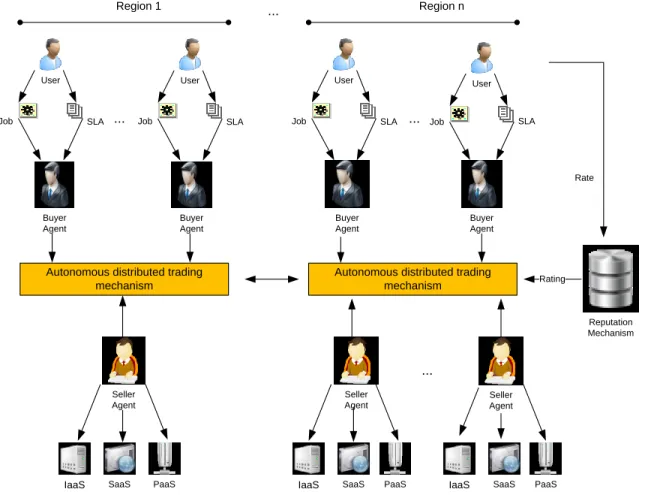
A graphical description of the model including its actors and components is shown in the following figure (Some icons taken from http://findicons.com):
...
...
Autonomous distributed trading mechanism Region 1 Region n User Buyer Agent Job SLA User Buyer Agent Job SLA User Buyer Agent Job SLA User Buyer Agent Job SLA ... Seller Agent
IaaS SaaS PaaS
Seller Agent
IaaS SaaS PaaS
Seller Agent
IaaS SaaS PaaS ...
Reputation Mechanism Rating
Rate
Autonomous distributed trading mechanism
Figure 7 Market-Based Cloud Resource Allocation Model
In a typical scenario, our model consists of a set of regions R, an autonomous distributed trading mechanism T and a reputation mechanism R. A region contains a set of Seller Agents S. Each seller agent owns resources that are available to provide layered services in the Cloud. We assume that the members of S are self-interested. Additionally, the region has a large population of users U and each user requires allocating a job in the Cloud to be executed as it is specified in a SLA. Finally, each region contains a pool of Buyer Agents B to take the jobs and the SLAs submitted by users to the Cloud, these buyer agents follow the set of rules defined in T and the reputation metrics provided by R to negotiate and allocate the job on one of the Seller Agent’s resources.
A seller agent sets a price for the use of their resources. This price is expressed in terms of artificial money because as long as all the trading mechanisms are done in this money, the value of the money is not relevant. Seller agents always attempt to maximize their own benefit without taking the global good into consideration. They establish a price according to their own preferences but always over the production cost, which is the value of the effort to execute the job expressed in terms of money. The price upper limit is defined by the preferred profit and the lower limit is given by the minimum profit that the seller agent is willing to keep his interest into performing the job. A seller agent’s resources have a probability p to succeed and a probability 1-p to succeed at executing a user’s job on his infrastructure.
17
Trading mechanisms are usually only centered on the product price. So, the model adds a reputation system to be considered in the negotiation process. The idea behind is that a seller agent with a high reputation is more likely to provide a high dependability on the offered service.
Using this trading mechanism, for each user’s job submitted to the system, a buyer agent performs the negotiation and chooses the best option to allocate the job. It trades with all the seller agents in his region and ponders the price of each offer with the corresponding reputation in order to carry out the calculation to get the best option. If the job execution fails the seller agent is given a bad rating. Then, the buyer agent performs a new resource allocation to a different seller agent in the same region. In case, there is no seller agent to execute the job, the buyer agent starts the negotiation to a different region.
After the job is successfully executed, the seller agent releases his resources, gets the payment for the performed job and is given an award to improve his reputation.
6.2
Model Assumptions
In order to focus more precisely on the core of the resource allocation problem, a number of simplifying assumptions that keep unaltered the underlying model behavior have been done:
1. That there is no collusion among seller agents,
2. That each seller agent sets up a price over the production cost,
3. That each buyer agents sets up a valuation not under the production cost, 4. That there is enough resources in the Cloud to satisfy any user’s job,
5. That each buyer agent is trading with seller agents to allocate only one job at a time, 6. That a buyer agent can negotiate with all the seller agents located in the same region, and 7. That network connectivity is uniform.
6.3
Trading with Reputation Metrics
The following graphic illustrates a typical posted offer auction without reputation metrics where a buyer submit a job to be done, then each seller post a price and finally the buyer chooses the best alternative only based on the lowest price. It must be highlighted that the price is given by the production cost plus a desired profit.
18
On the other hand, in our posted offer with reputation metrics, the buyer agent uses an adjusted price instead of a normal price. The adjusted price is defined by the production cost plus the desired profit plus a penalty which is inverse proportional to the seller agent’s reputation.
Figure 9 Posted Offer Auction with Reputation Metrics
Reverse auction with reputation metrics behaves similarly to posted offer with reputation metrics, but it has several rounds to try to push the prices down. So, the seller agents try to compensate a low reputation by reducing their expected profit in order to achieve a job on its infrastructure.
19
6.4
Simulation Tool Design
6.4.1 Use Cases Diagram
Use cases are their relationship is shown in the following figure:
20 6.4.2 Class Diagram
The following figure represents the class diagram that summarizes the main classes and their relationship utilized in the market-based model implementation.
Figure 11 Class Diagram of the Simulator
6.4.3 Component Diagram
The following figure represents the component diagram that summarizes the main components used in the market-based model implementation.
21 6.4.4 Sequence Diagrams
The sequence diagrams for both market mechanism implemented in the simulator is shown in the figures below:
Figure 13 Sequence Diagram for Posted Offer Auction
22
7
Implementation and Testing
7.1
Resource Allocation Algorithm
Declarations
Given a collection of a p number of jobs, where each Job:
a. Requires a number of CPU instructions to being executed in the Cloud. It is measured in MI (millions of instructions)
b. Belongs to a Cloud user which specifies the maximum profit that he is willing to pay c. A memory space to be allocated (in GB)
d. It has a SLA attached to it where they are specified the following parameters: 1. Priority: High, Medium, Low
2. Reliability: High (1), Medium (0.75), Low (0.25) 3. The region where the Cloud user is located
Given a collection of n Seller Agents, where each one owns resources with: a. A CPU capacity in MIPS (millions of instruction per second) b. A memory space (in GB)
c. A probability p to succeed and a probability 1-p to fail an agreed QoS parameter (In our model, this is Availability)
A Seller Agent has a reputation that might go from a minimum of 1 to a maximum of 50. These boundaries are aimed at guaranteeing a tradeoff between price and reputation. Otherwise, the reputation could become extremely high which would lead to covert the model in a simple reputation system. In the same way, if it is extremely low, the model would be a simple market-based system. The difference between the minimum and maximum boundaries is associated to the amount of the increment or decrement in the reputation given for a rating after completing with success or failure a job.
A Seller Agent makes a bid to perform a Job by means of: a. Price (Job) = Production Cost + Desired Profit
Given a pool of Buyer Agents with a preferred size m, where a Buyer Agent calculates an Adjusted Price to a Price offered by a Seller Agent according to:
a. Adjusted Price (Job) = Price + Penalty (Seller Agent’s Reputation) b. Penalty(Seller Agent’s Reputation) = Price * Increasing Price Factor
c. Increasing Price Factor = Weight for Seller Agent’s Reputation * Job Reliability in SLA * Seller Agent’s Failed Jobs Rate * (MAXIMUM_REPUTATION - Seller Agent’s current reputation)/MAXIMUM_REPUTATION
The Weight for Seller Agent’s Reputation defines an upper boundary of the percentage of the penalty. It goes from 0 to 0.99 because it is a percentage aimed at finding a tradeoff between price and reputation. A weight of zero (0) means that the Adjusted Price is always going to be equal to the Offered Price. On the other hand, if the value is 0.99, it means that the penalty caused by the reputation is almost as important as the price.
Given a Market that contains a pool of Buyer Agents and receive each Job to assign it to an existing or new Buyer Agent
23
Given a Trading Mechanism that defines a set of rules for the price negotiation in the market. The mechanism might be Posted Offer or Reverse Auction
Given an Adaptive Reputation System which increases the reputation of a Seller Agent by 1 after completing successfully a Job if his current reputation is below the maximum allowed or decreases his reputation by 1 after failing at performing a Job if his current reputation is above the minimum allowed.
Definitions
Randomly initialize Resources and Seller Agents with a medium level reputation. Randomly initialize each Job in the collection and dispatch them to the market Define the Trading Mechanism for the market: Posted Offer or Reverse Auction. Begin
Seller Agents are listening for any incoming Job in Distributed Trading Mechanism
Market receives incoming Jobs and for each of them assigns a free Buyer Agent in the corresponding region. If any Buyer Agent is free then creates a new one.
Buyer Agent submits the Job to the Distributed Trading Mechanism
Each Seller Agent performs a valuation of the Job and makes its offer to the Buyer Agent. This offer is the production cost plus the desired profit which oscillates from the minimum to the preferred profit.
Buyer Agent receives offers from interested Seller Agent for a period of time T. If there is no offer in the same Region, the Buyers start trading with Seller in the next Region.
Buyer Agent verifies its reputation in the central repository and calculates the Adjusted Price. Buyer Agent picks the best offer depending on the distributed Trading Mechanism.
In the case of Posted Offer, the lowest adjusted price is the best offer.
In the case of reverse Auction, it starts a new negotiation round based on the lowest Adjusted Price in the previous round.
The resource allocation is performed according to the Buyer Agent selection. The Seller Agent tries to perform the Job.
In case that the Job is successfully completed in accordance with the QoS parameters in the SLA (for example availability)
Increase Seller Agent’s reputation to the next level in case he hasn’t reached the maximum yet. In case that the Job is successfully completed but without accomplishing the QoS parameters in the SLA
Decrease Seller Agent’s reputation to the next level in case he hasn’t reached the minimum yet. In case that the Job is not completed conforming QoS parameters in the SLA
Decrease Seller Agent’s reputation to the next level in case he hasn’t reached the minimum yet. Then, reintroduce the task into the distributed Trading Mechanism to perform a new negotiation with other Sellers in the Region
24
The new reputation of the Seller Agent is recorded for new incoming jobs. End
7.2
Simulator Features
The simulation tool has four main functionalities: configure a scenario through GUI; then simulate it and continue it from last simulation run; prepare and display the results in pie charts, bar charts and a log; and export/import a scenario for reproducing results. We can summarize the features in the following way: 7.2.1 Scenario Configuration
1. Add a default Seller Agent. 2. Modify Seller Agents’ attributes. 3. Delete a Seller Agent.
4. Choose the trading mechanisms to run the simulation and set the weight for reputation. 5. Add a default Group of Jobs.
6. Modify the attributes of a Group of Jobs. 7. Delete a Group of Jobs.
7.2.2 Scenario Simulation
8. Execute the configured scenario. 9. Close previous simulation results.
10. Continue the simulation by resending the jobs and keeping the Seller Agents’ reputation values from the last simulation.
7.2.3 Exporting and Importing Scenarios
11. Export seller agents, trading mechanisms and buyer agents to a XML file (An example of the exported file is in the appendix D).
12. Import seller agents, trading mechanisms and buyer agents from a XML file. 7.2.4 Simulation Reports
13. Allocated Jobs per Seller Agent - Pie Chart (Screenshot of these reports are in the appendix B) 14. Final Seller Agents' Reputation - Bar Chart
15. SLA Violations per Seller Agent - Bar Chart 16. Log view to detail the simulation steps.
25
7.3
Scenario Configuration
A scenario is defined by a number of available Seller Agents, a group of scheduled Jobs to be sent to the Cloud and finally the trading mechanism to use to negotiate the resource allocation.
Each Seller Agent is implemented as a data center with one host which contains four cores. It is specified by the following attributes:
1. Name: the identifier of the Seller
2. Reputation: the initial reputation of the Seller. At the beginning all the Seller Agents must have the same reputation. (Reputation is limited from 1 to 50 to avoid distortions. For example, if a Seller Agent gets a high reputation the market would become a monopoly because it would be only a reputation system and the trading by price would make no sense).
3. Minimum Profit: the minimum profit at which the Seller Agent is willing to execute a Job on his infrastructure. It is a percentage of the production cost. So, it goes from 0.0 to 1.0. The lower limit ensures that the offered price will never be under the production cost.
4. Preferred Profit: the preferred profit that the Seller Agent would like to earn for performing a Job on his infrastructure. It is a percentage of the production cost. So, it goes from 0.0 to 1.0. The lower limit ensures that the offered price will never be under the production cost.
5. Millions of Instructions per Core: the processing capacity of each core in the Seller Agent infrastructure. It is of the expressed in millions of instructions per second.
6. Probability to Succeed: the probability p to perform a Job conforming to the specified SLA. As a consequence the probability to fail is 1-p. The probability can go from 0.0 to 1.0
7. Region: The region to which the Seller Agent belongs. There are four regions: North, South, East and West.
Figure 15 Screenshot of Seller Agents’ Configuration
Then, the Posted Offer Auction, Reverse Auction or both can be chosen as the trading mechanisms used to negotiate the allocation of Jobs in one of the Seller Agent’s infrastructure. A trading mechanism is specified by:
26
1. A weight for reputation: the maximum percentage of the penalty that might be imposed to the price offered by a Seller Agent depending on his reputation in order to calculate the adjusted price. (The weight goes from 0 to 0.99 because it is a percentage of the price. For example, if the price is 100