
Scholarship@Western
Scholarship@Western
Electronic Thesis and Dissertation Repository
4-24-2015 12:00 AM
Privacy in Cooperative Distributed Systems: Modeling and
Privacy in Cooperative Distributed Systems: Modeling and
Protection Framework
Protection Framework
Afshan Samani
The University of Western Ontario
Supervisor
Hamada H. Ghenniwa
The University of Western Ontario
Graduate Program in Electrical and Computer Engineering
A thesis submitted in partial fulfillment of the requirements for the degree in Doctor of Philosophy
© Afshan Samani 2015
Follow this and additional works at: https://ir.lib.uwo.ca/etd Part of the Computer and Systems Architecture Commons
Recommended Citation Recommended Citation
Samani, Afshan, "Privacy in Cooperative Distributed Systems: Modeling and Protection Framework" (2015). Electronic Thesis and Dissertation Repository. 2777.
https://ir.lib.uwo.ca/etd/2777
This Dissertation/Thesis is brought to you for free and open access by Scholarship@Western. It has been accepted for inclusion in Electronic Thesis and Dissertation Repository by an authorized administrator of
Thesis Format: Monograph
by
Afshan Samani
Electrical and Computer Engineering
A thesis submitted in partial fulfillment of the requirements for the degree of
Doctor of Philosophy
The School of Graduate and Postdoctoral Studies The University of Western Ontario
London, Ontario, Canada
ii
Abstract
A new form of computation is emerging rapidly with cloud computing, mobile computing,
wearable computing and the Internet-of-Things. All can be characterized as a class of
“Cooperative Distributed Systems” (CDS) in open environment. A major driver of the
growth is the exponential adoption by people and organizations within all aspects of their
day-to-day matters. In this context, users’ requirements for privacy protection are becoming
essential and complex beyond the traditional approaches. This requires a formal treatment of
“privacy” as a fundamental computation concept in CDS paradigm.
The objective is to develop a comprehensive formal model for “privacy” as base to build a
CDS based framework and platform in which various applications allow users to enjoy the
comprehensive services in open environments while protecting their privacy seamlessly. To
this end, this thesis presents a novel way of understudying, modeling and analyzing privacy
concerns in CDS. A formal foundations and model of privacy is developed within the context
of information management. This served as a base for developing a privacy protection
management framework for CDS. It includes a privacy-aware agent model for CDS platform
with the ability to support interaction-based privacy protection.
The feasibility of the proposed models has been demonstrated by developing an agent-based
CDS platform using JIAC framework and a privacy-based Contract Net Protocol. It also
included the application scenarios for the framework for privacy protection is
Internet-of-Things, cloud-based resource scheduling and personal assistance within the project of smart
space.
Keywords
Cooperative Distributed System (CDS), Interaction, Privacy, Sensitive Information,
iv
Acknowledgments
I would like to express my special appreciation and thanks to my supervisor Professor Dr.
Hamada H. Ghenniwa, you have been a tremendous mentor for me. I would like to thank you
for encouraging my research and for allowing me to grow as a research scientist. Your advice
and wisdom were always a support for my research and career as well as my life. Special
thanks to examiner committee Dr. Ali Ghorbani, Dr. Michael Katchabaw, Dr. Weiming Shen
and Dr. Luiz Capretz for making the defense a great experience for me with a lot of supports
and insights to my work. I would also like to thank Dr. Abdolmotalib Wahaishi for his
invaluable assistance in my research. I would specially thank my colleagues at CDS-Eng
research group Dr. Raafat Aburukba, Ali Hussain, Shawn Talbot, Adrian Bienkowski for
their support and encouragements.
A special thanks to my family. Words cannot express how grateful I am to my mother and
father for their sacrifices and prayers that sustained me thus far. I would also like to thank my
friends Dr. Razieh Samimi and Bahman Daei who supported me in writing, and incented me
to strive towards my goal. At the end I would like express appreciation to my beloved
husband Pouya for his patients and spending sleepless nights with me and always supporting
v
Table of Contents
Abstract ... ii
Acknowledgments... iv
Table of Contents ... v
List of Figures ... x
Symbols and Notations ... xii
Chapter 1 ... 1
1 Introduction ... 1
1.1 Cooperative Distributed System and Privacy Concerns ... 1
1.2 Privacy: Concepts, Issues and Models ... 3
1.3 Scope of the thesis ... 5
1.3.1Formal Privacy Model ... 5
1.3.2Privacy Protection Management Framework ... 6
1.3.3Privacy-Aware Computation Platform ... 7
1.4 Organization of Thesis ... 10
Chapter 2 ... 11
2 Background and Literature Review ... 11
2.1 Privacy In law ... 11
2.2 Privacy in Information Management ... 15
2.2.1Personally Identifiable Information (PII) ... 16
2.2.2Human Everyday Privacy Model ... 17
2.3 Privacy in Distributed Systems ... 18
2.3.1Privacy in Authorization Framework ... 18
2.3.2Privacy in Multiple Data Sources ... 20
vi
2.5 Privacy In Cooperative Distributed Systems ... 23
2.5.1Privacy in Auction Mechanisms ... 23
2.5.2Risk Analysis ... 24
2.5.3Targeting Advertisement ... 25
2.6 Summary ... 26
Chapter 3 ... 27
3 Privacy Concerns in CDS: Concepts and Model ... 27
3.1 CDS: Description and Agent-based Model... 27
3.2 Privacy Model and Analysis ... 29
3.2.1Privacy Concepts ... 33
3.2.2Differential Privacy In Privacy Information Management Model ... 36
3.3 CDS: Adequate privacy model ... 42
3.4 Summary ... 44
Chapter 4 ... 45
4 Privacy Protection Management Framework ... 45
4.1 Our Contribution ... 45
4.2 Privacy Protection in Incomplete Knowledge in CDS ... 46
4.3 Privacy protection mechanism ... 48
4.4 Privacy Protection Management Framework ... 51
4.5 Privacy Protection at the interaction level ... 52
4.5.1Privacy-based interaction protocol ... 52
4.5.2Privacy Protection Management Framework ... 57
4.5.3Privacy can sufficiently be protected at the interaction level ... 57
4.5.4Quantifiable Protection in Privacy-Based Interactions ... 61
vii
4.8 Summary ... 66
Chapter 5 ... 68
5 Privacy- Aware Agent Model and Implementation ... 68
5.1 Privacy: Computation Concept in Computation Entity ... 68
5.1.1Privacy Protection Management ... 72
5.1.2Capturing information and the exposure boundaries ... 72
5.1.3Identifying the Sensitive Information ... 74
5.1.4Diagnosing Privacy Concerns in the Interaction Protocol ... 74
5.1.5Determining Required Protection Operations with adequate PPL ... 76
5.1.6Expanding the Messages and Sequences ... 77
5.1.7Expanding Computation Entity with Privacy Solution ... 79
5.2 Implementation Challenges ... 81
5.3 JIAC: Implementation Platform ... 82
5.3.1JIAC Platform ... 83
5.3.2Agent Life Cycle ... 84
5.3.3Agent Actions ... 84
5.3.4Privacy Protection Management in JIAC Agent ... 85
5.4 Summary ... 87
Chapter 6 ... 89
6 A Privacy-based Interaction for CNP Protocol ... 89
6.1 Contract Net Protocol ... 90
6.2 Sensitivity Analysis ... 93
6.3 CNP in privacy protection management framework ... 96
6.3.1Task Announcement ... 97
viii
6.3.4Subcontractors ... 98
6.3.5Non Capable Potential Contractors ... 99
6.3.6Task History ... 99
6.3.7Result History ... 100
6.3.8REQUIRED information and Information Specification ... 101
6.4 Summary ... 103
Chapter 7 ... 104
7 Privacy aware CDS Model: Application Scenarios ... 104
7.1 Smart Space ... 104
7.1.1Setting of Smart Space ... 104
7.2 Privacy in IoT Environments ... 107
7.3 Privacy based Scheduling Protocol in Smart Space ... 108
7.3.1Privacy-based Scheduling Solution ... 111
7.4 Privacy in Personal Assistant ... 113
7.5 Privacy Based Personal Assistant ... 114
7.6 Summary ... 115
Chapter 8 ... 117
8 Conclusion and Future Work ... 117
8.1 Summary of contributions... 117
8.1.1Challenges and Contributions ... 117
8.1.2Formal Modeling of privacy ... 118
8.1.3Solution for privacy within CDS environments ... 120
8.1.4Privacy-Based Contract net protocol ... 121
8.1.5Implementation Challenges ... 121
ix
References ... 126
Curriculum Vitae ... 137
x
List of Figures
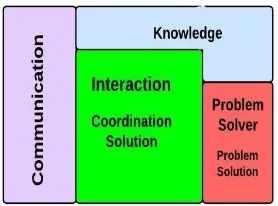
Figure 1. Computation Entity in CDS... 28
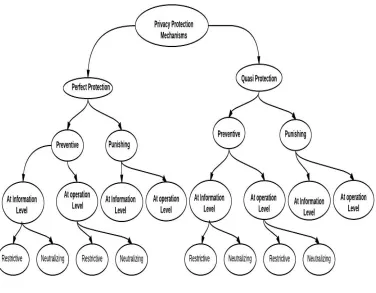
Figure 2. Classification of protection mechanisms ... 51
Figure 3. Operational view of privacy protection management framework ... 55
Figure 4. Logical Architecture of Computation Entity in CDS environments ... 68
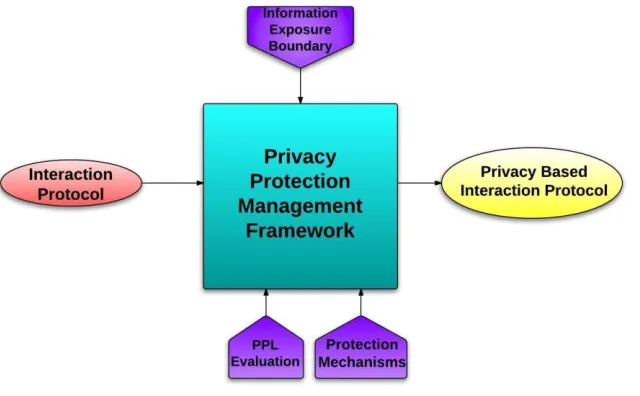
Figure 5. Privacy solution in relation with interaction in the computation entity in CDS environment ... 70
Figure 6. The logical architecture of privacy protection management in computation entity in CDS environments ... 73
Figure 7. Solution without privacy protection does not exist ... 80
Figure 8. Solution Exists with Applying Privacy Protection Mechanism ... 80
Figure 9. The Competent architecture of Privacy Protection Management in Computation entity ... 82
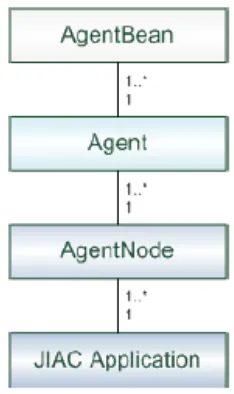
Figure 10. JIAC Applications and the relationships to other JIAC Concepts [28] ... 83
Figure 11. Agent Life Cycle in JIAC Platform [28] ... 84
Figure 12. Adding Dynamic Action to the agent at Node level... 85
Figure 13. Component diagram of the implemented JIAC agent ... 86
Figure 14. Privacy Protection Management component ... 87
Figure 15. Class Diagram of components of JIAC Agent ... 88
Figure 16. Contract Net Protocol ... 89
xi
Figure 19. Result history as sensitive information... 100
Figure 20. PB_CNP Sequence Diagram ... 102
Figure 21. Logical architecture of smart space ... 105
Figure 22. Deployment Diagram ... 106
Figure 23. Resource Broker High Level View ... 108
Figure 24. . Scheduling interaction protocol in resource broker in smart space ... 110
Figure 25. Scheduling solution space ... 111
Figure 26. Privacy based scheduling solution space ... 111
Figure 27. Privacy-based Scheduling Interaction Protocol... 113
Figure 28. Personal Assistant Architecture ... 114
xii
Symbols and Notations
The following is the list of symbols and notation frequently used in this work.
Notation/Symbol Concept
𝑊 World that is a CDS-based environment
ei A computation entity in CDS environment i: is the entity identity
Ii Set of information that is owned by 𝑒𝑖 i: is the entity identity
𝑂i Set of operations that is owned by 𝑒𝑖 i: is the entity identity
𝐸𝑖,𝑘 Exposure Boundary of Ii,k that includes entities for which sharing
Ii,k can take place without causing privacy concern. i: is the entity identity
k: is the information identifier
𝐼𝑆(𝐼
𝑖,𝑘, ej) 𝐼𝑖,𝑘 is Sensitive in relation with ej from ei perspective i: is the entity identity that owns the information
j: is the entity identifier that does not belong to 𝐸𝑖,𝑘
k: is the information identifier
𝑜̿(Ix1, Iaux, Ix2) Executing Operation (o) on explicit information Ix1 to transform the implicit information to explicit form of Ix2
𝑜̿(Ix1̃, Iaux) Preventing/Neutralizing Execution of operation (𝑜) on Ix1 given the auxiliary information Iaux
S(Ii,k, ej) Sharing Ii,k with ej
i: is the entity identifier that owns the information
j: is the entity identifier that receives Ii,k
k: is the information identifier
D(Ii,k, ej) Disclosure of Ii,k to ej
i: is the entity identifier that owns the information
xiii
𝑂̂𝑗 Non Authorized operations in 𝑂𝑗 that can be applied on Ii,k i: is the entity identifier that owns the information
j: is the entity identifier that Ii,k is disclosed to k: is the information identifier
𝑂̂𝑗𝑖 All possible non authorized operations in relation with ej
i: is the entity identifier that owns the information
j: is the entity identifier that can receive information from 𝑒𝑖
PV(ej, Ii,k, Ôji,k, 𝜃𝑖,𝑗𝑖,𝑘) Privacy Violation of ei by ejdisobeying the agreement θi,jbetween
ei and ejby executing a non-authorized operations belonging to
Ôji,kon Ii,k
PP(ej, (PS(Ii)), 𝑂̂𝑗) Privacy protection of ei when Ii is the space and 𝑂̂𝑗is all possible non authorized operations in ej
μ Privacy Protection Mechanism
μ̿ Applying privacy protection mechanism
PPL(ej, Ii, μ) PPL: probability of privacy protection of e𝑖using μ protection mechanism in interaction with ej
𝐼𝑃 Interaction protocol
𝑅∗ Participating Entities in an interaction protocol
𝐼𝑖𝑠 All sensitive information in e𝑖 in relationship with entities in 𝑅∗
𝑆𝑀 Sequences of messages in an interaction protocol
𝑠𝑠𝑞,𝑡 Sub-sequences of a sequence q: Sequence identifier
t: sub-sequence identifier
𝑠𝑠𝑞,𝑡𝑜 All operations of a sub-sequence q: Sequence identifier
t: sub-sequence identifier
𝑠𝑠̿𝑞,𝑡𝑜 (𝑀) Execution of operations of a subsequence q: Sequence identifier
t: sub-sequence identifier
Chapter 1
1
Introduction
Computation history is replete with changes in how people regard, use and interact with
computers. With the recent evolution of computation from the colossal machines to the
ever-present digital era that is characterized by technologies such as nanotechnologies,
quantum computing, cloud-based computing, mobile computing and the new area of
computation known as Internet-of-Things (IoT), a great paradigm shift through which
many technological services have become part of nearly every human activity. In spite of
the beneficial comforts that are experienced due to these technological services, the use
of information technology reveals the extent to which there could be a risk to privacy.
1.1
Cooperative Distributed System and Privacy Concerns
In an increasingly interconnected, intricate and quickly changing world, more entities
choose to connect and do business online. Both people and businesses are engaging with
various applications and because of this, it is envisioned that a significant part of our lives
will be steered by computation systems in near future. It is estimated that in 2020, there
will be 6.58 smart internet-connected devices for each person [1]. Despite the
development of computation environments in delivering services to people and
businesses, privacy is still a major challenge in these environments [2], [3].
The evolution of Cooperative Distributed Systems (CDS) created new forms of
computation that instituted the significant advances, involvement and tremendous
impacts of information technology on peoples’ lives. In CDS, autonomous self-interested
entities require the capabilities of others, resulting in interaction and exchange of
information between these entities. It is envisioned that information is collected by many
processes and devices and hence has brought increased risks regarding the concerns on
one’s privacy. Information about people is gathered through many service providers,
stored in various infrastructures, analyzed and reported for further objectives [4]. The
information is manipulated towards extracting and disseminating the information to other
information from separate parts of the building. Some of these sensors might collect the
electrical consumption rate of each apartment. The smart house manager application may
collect this information and send it to the power company. The aggregated view of this
information from all apartments in question can be used for designing and distributing
power plans in neighborhoods. However, the individualized type of this information can
reveal the time that householders are not available at their home based on identifying the
pattern of lowest consumption rate at each apartment. This suggests that disseminating
some information such as the individualized view of the power consumption can lead to
additional information about them. This also illustrates that the exchange of information
among entities in CDS environments can cause a level of concern from these entities for
their privacy. In particular, in open CDS environments, it would be a strong assumption
that entities in the environment will have a degree of respect for the privacy of others.
The computation in distributed heterogeneous environments that are modeled as CDS
occurs during interaction between entities where the information is shared. This entails
capturing privacy at the computation level [5]. This view is contrary to the traditional
approaches towards privacy through which the application filters the computation
solutions based on predefined rules [6], [7]. The privacy models can be classified into
two main categories: rule-based approaches and architectural-based approaches [8].
Privacy solution models that evolve from rule-based approaches are typically designed
for stable, low variant environments. These approaches mainly concentrate on applying
rules onto information that is collected during the process of sharing. Due to the open
environment assumption in many applications of CDS, the rule-based approaches [9] are
not sufficient [8], [10]. Information processing has been the engine of extracting
information by applying operations on it. This information is not necessarily captured in
rule-based privacy models. Furthermore, since the rules and policies can impose
limitation of the design and dynamism of the environments, many open CDS
environments cannot adopt these perspectives on privacy.
Among architectural-based privacy solutions are anonymization techniques [11], [12],
[13], privacy utility trade off mechanisms, [5], [14], [15] social tradeoffs and proxy-based
particular settings that include a trusted information collector entity and non-continuous
information dissemination processes for which it cannot be adopted by open CDS
environments [17]. The work in [16] illustrates that privacy utility trade off models do
not necessarily reflect the preferences that each entity might have over their privacy. The
utility tradeoff mechanisms have been applied in contexts such as smart power grid in
which privacy is reduced to limited access to individualized signal from the aggregated
view of the collected signal [15]. These models also evolved with approaches for
measuring the risk of privacy concerns. Such risk adheres to the execution of operations
that causes privacy concern but it can measure the probability of the entity’s information
being used [18]. In all cases, the limitation of the proposed models indicates the lack of
adequate privacy model for CDS.
It is noteworthy that privacy is correlated with the interaction aspects of computation
systems. This asserts that privacy is a computation concept that is related to the
interaction process and can be adequately addressed by interaction protocols. For
instance, if a specific entity 𝑒𝑖 can reach solution 𝑆1 by acquiring the capabilities of entity 𝑒𝑗, the devised interaction protocol for such engagement has to coordinate the pertinent activities with 𝑒𝑗. However, during this engagement, 𝑒𝑗may exploit the information as part of the messages in the interaction protocol and thus could result in
privacy concern for 𝑒𝑖. Capturing privacy as a concept in interactions still adheres to the mechanism of interaction as well as finding solutions that may not be conducive to
privacy concerns for the participant entities.
1.2
Privacy: Concepts, Issues and Models
Privacy is an ethical, a social and a legal concept that has gained substantial definitions.
The Merriam-Webster Dictionary defines privacy as “the state of being alone: the state of
being away from other people” while the Oxford Dictionary defines it as “the state in which one is not observed or disturbed by other people”. In all definitions, privacy
becomes an inherent feature of an environment of multiple people (entities/agents) or a
setting of decentralized entities/agents. Decentralized computation environments can be
In an information management model of computation, “privacy” contains some specific
connotations though in many ways the term is similar to how it is generally understood.
In communication-based interaction among entities, it becomes a privacy concern when
sensitive information flows outside the entity or the unit of entities in CDS. Evidently, it
will be a more difficult challenge in CDS in particular when communication-based
interactions are applied in open environments.
Motivated by the computational view on privacy, understanding privacy concept that can
be applied in contexts such as CDS requires formal analysis of privacy. The work in [20]
proposes a formal approach for capturing privacy in information management in the
context of social networks. However, the analysis stays at formulating the norms and
relationship of the roles, and the concept of privacy is not clearly stated. In addition, the
concept of norms and contexts can be implicit and exist in gray areas when it comes to
social networks [21]. In another work in [22], an extensive grammar and syntax of a
language is provided for expressing the privacy policies enforced by HIPPA through
which privacy becomes limited to policy context that is applied. Different approaches and
many privacy models have been proposed to deal with relevant privacy issues [23], [7],
[24]. However; to our knowledge, none of these approaches have treated and captured
privacy at the computational level adequate for the CDS environments.
There have been significant efforts towards building a foundation for privacy rights
during digital interactions. This enables an understanding of privacy and adopting the
associated concepts based on practices in information technology law [25], [26]. Many
countries have enacted laws and legislations to protect people’s privacy. For instance, the
Canadian law has several legal acts that oblige service providers and consumers to be
responsible on respecting privacy as a right for people. Canadian Information Privacy Act
and Access to information are among these legal supports. Furthermore, some privacy
models were motivated by the supporting legal scenarios and rules [22]. Due to
limitations on the setting of the rules and scenarios, employing these models impose
1.3
Scope of the thesis
A major objective of this work is to conduct a deep analysis of “privacy” and to develop
a formal model and computation concepts of privacy concerns. Also, it attempts to utilize
the formal model to develop a privacy protection frame work for CDS-based
applications.
In many cases privacy studied and treated in conjunction or within the context of
“security” and “trust”. Although practically these concepts might be directly related,
within this thesis, however, our focus was on analyzing the foundation of privacy and
developing a fundamental model as computation concept in CDS paradigm. Our belief is
privacy is an intrinsic concept. In this work, privacy is viewed within the context of
managing information manipulation, in particular “sensitive” information, within a given
exposure boundary, for a given of security and trust measurements. Where, “security”
mechanisms concern about the truthfulness of the communication within the areas of
confidentiality, integration and availability. And “trust” is defined as the degree of belief
of reliability among entities in a particular context. This direction makes the principle
foundations of our findings expandable to model and address situations where security
and trust are involved.
1.3.1
Formal Privacy Model
The lack of a formal privacy model that is applicable for a CDS was the motivation to
develop a formal treatment of privacy in CDS environments. The proposed model is used
as an analytical tool to evaluate the state of the privacy during any entity’s interaction.
Entities discern the sensitivity of information differently depending on the recipients of
the information in an interaction. Sensitive information perceived by one entity might be
considered totally as a non-sensitive in relation to another. Entities tend to not share
information, when it is labeled as sensitive. This creates an exposure boundary for
entities’ information which positions privacy as the state of the exposure boundary of the
information. Information within the exposure boundary is non-sensitive but becomes
Information exists in explicit form. However, it can be classified as implicit information
when it is in conjunction with operations. Operations can retrieve explicit information by
processing the said information. The execution of operations transforms the implicit
information to explicit form. Through this, information might be transferred to outside of
the exposure boundary and become sensitive. This implies that the concern with privacy
is about the disclosure of sensitive implicit information. For example, various IaaS
(Infrastructure as a Service) [27] providers serve their consumers by offering them
resources, including memory, storage, and computational power, among others. In many
forms of IaaS service delivery models, payment packages (pay per user) are based on the
demand of entities. When it is not serving a higher priority consumer, economical
packages receive response from the server. The advantage of costly packages is the
guarantee of service at any time. Hence, serving an economical plan at the server
implicitly implies not having a high priority job. Sharing scheduling information may
enable an entity with medium priority and a resource-demanding job to acquire the
service provider. Frequent preemption for lower priority consumers may lead to service
blocking. This explains that sharing the schedule is not sensitive when in possession of
the scheduler, but it is sensitive to share with other consumer entities.
In this work, we have provided an original privacy model that formally captures the
concepts and concerns about privacy. Within this model, privacy concerns, privacy
violation and privacy protection are formally explained and the necessary concepts to
develop a framework for privacy protection management are introduced.
1.3.2
Privacy Protection Management Framework
By employing the proposed privacy model, we established a privacy protection
management framework that incorporates privacy protection mechanisms at the
interaction level. Because achieving perfect privacy protection requires complete
knowledge about the world, we proposed quasi protection mechanism that can protect
privacy with a certain level of probability that is addressed as Privacy Protection Level
The framework captures the information of entities and accordingly evaluates the
exposure boundaries associated to information. Consequently, it identifies the sensitive
information and determines the necessary extension form for privacy protection. Using
the PPL measure of each mechanism, the PPL of the privacy-based interaction protocol is
evaluated and this enables applications to adopt privacy mechanisms that generate an
acceptable level of PPL at the interaction level. It is formally proven in this work that the
protection can sufficiently occur at the interaction level and the privacy-based interaction
protocol has quantifiable PPL.
1.3.3
Privacy-Aware Computation Platform
In order to capture privacy at the computation platform, it has to be treated as a
mathematical object. The computation system reduces the available solution choices to
the ones that can fulfill the expected privacy requirements. The quantifiable model for
privacy concept allows filtering the solutions space based on privacy measures as well as
maximizing the privacy protection in interactions among entities. For example,
scheduling solutions collect scheduling variables and boundaries to reach to global
schedule for the participant entities. Typically, privacy concerns are not incorporated as
the scheduling criteria for which the schedule might not be acceptable. The computation
view on privacy enables scheduler to capture privacy as solution boundaries or decision
variables that results in scheduling solutions for which privacy is protected. This example
will be discussed in more details in Chapter 7.
The proposed privacy protection framework can be applied as an analytical tool to
evaluate the state of privacy in interactions of entities as well as being applied at contexts
such as computation. The computation entity employs the privacy protection
management to extent the interaction protocol to a privacy-based interaction protocol
through which the solution inherit privacy at the computation. We have formally proven
that the resolution to privacy is part of the computation solution. In this work, we have
extended the computation entity in an agent-based model [19] by introducing the privacy
protection management and implemented the privacy-aware entity using the Java-based
Privacy is an immense area of research that has attracted many researchers, scientists and
developers within the computer science and engineering arenas. The tremendous work
devoted on the perspectives of the authorization and rule management within underlying
infrastructure [27], [6], privacy related concepts and the challenge with the new
technologies [22], taxonomy of privacy affairs [29], [10], privacy categorization and
personally identifiable information [8], privacy within the context of information
management including information collection, information processing and information
dissemination [23, 30], [31]. There also have been some attempts in formalizing the
languages used for privacy policies [22]. The economic mechanisms have been applied in
this area as well with the objective of developing strategies through which privacy
protection would be a dominant strategy [32]. Furthermore, privacy has been the concern
of multi-agent systems. Agents interact on behalf of their principals, engage in a number
of activities and exchange information, which inevitably raises issues and concerns with
regard to privacy[16]. Our research has contributed in several aspects of these areas,
which is shared with privacy in information management, formalizing privacy concepts,
personally identifiable information, privacy concepts and categorization and privacy
within multi-agent systems.
A major contribution of this work is to develop a privacy-aware computation in open
Cooperative Distributed Systems that addresses and manages privacy at the interaction
level and thus provides a certain degree of privacy protection at the interactions of
entities. The work introduces several new original and novel ideas that contribute to the
overall thesis that can be listed as follows:
1) The formal modeling of privacy in the context of information management
Formal analysis of privacy concepts is essential in capturing privacy as a computation
concept. In this work, we have investigated privacy within the context of information
management and sensitive information. Our attempts in understanding privacy in this
context results in developing a formal model that delivers a complete view on privacy in
information management.
Considering the incomplete knowledge of entities in open CDS environments, privacy
protection is encountered with an uncertainty level. To deal with the uncertainty, a
probability-based model is applied. The privacy protection framework enables managing
the expected level of privacy protection within the interactions of entities. The proposed
solution for protecting privacy has been congregated within an architectural approach
towards interaction-based framework for privacy protection in which the privacy
protection mechanisms are applied to interactions as it is required.
3) Expressing privacy as a computation concept.
The privacy concept is formally treated at the computation level by including privacy in
the computation solution. As a result, the computation entity adopts the privacy
protection management as part of the computation entity architecture.
4) A Privacy-Based Interaction Protocol
Applying privacy protection management framework on interaction protocols allows
identifying privacy concerns at the interactions. It evaluates the messages and sequences
of the interaction protocol and provides adequate protection operations within the
interaction protocol that result in privacy-based interaction protocol. The extended
privacy based interaction protocol that is generated by applying the privacy protection
management framework can sufficiently provide privacy protection in situations where
the knowledge in CDS environment is incomplete. One of the interaction protocols that
are utilized within this framework is Contract Net protocol (CNP). CNP is a negotiation
based interaction protocol that is designed for distributed problem solving. Due to
privacy concerns in this protocol, we have applied the privacy protection management
framework that resulted in a privacy-based Contract Net interaction protocol.
5) A Quantifiable Privacy Protection Level for the privacy based interaction
protocol.
With the proposed approach in the privacy protection management framework, the
values. As a result, the privacy based interaction protocol is able to define the level of
privacy protection that the protocol provides.
6) Applying the privacy aware computation entity in a Service Oriented Semantic
Driven Architecture (SOSDA) Environment.
The proposed privacy-aware computation entity can be integrated with CSD-ENG smart
space applying SOSDA principals [33] where the interaction protocol is providing the
privacy protection. The implementation challenges of expanding the Collaborative
Intelligent Rational (CIR) agent architecture to include privacy solutions as part of the
computation solution are elaborated and resolved in Java-based Intelligent Agent
Component Ware (JIAC) [28].
1.4
Organization of Thesis
The rest of this work is organized as follows: Chapter 2 provides an overview on privacy
in different areas of research. Chapter 3 provides a novel approach for a formal modeling
of privacy. Subsequently, Chapter 4 proposes a privacy protection management
framework. Chapter 5 elaborates on privacy-aware computation platform by expanding
the computation entity and its implementation challenges. Chapter 6 presents the
application of the privacy protection management framework on Contract Net protocol.
The applicability of the proposed privacy protection management framework in various
different environments and application domains is outlined in Chapter 7. The future work
Chapter 2
2
Background and Literature Review
Despite the comfort that is experienced with new information technologies, they have
imposed privacy concerns on people and businesses. The more people engage with digital
developments, the more are concerns for their privacy. Primarily, privacy concerns were
studied and practiced in legal communities and researches. However, privacy has become
inseparable challenge of nowadays’ digital interactions in which it carries tremendous
amount of information about people. Many disciplines have addressed privacy in their
solutions however, adequate privacy models for CDS environments is still a challenge.
2.1
Privacy In law
1Privacy is a multi-disciplinary concept that is mainly tented within Law researches and
legal schemes. Understanding privacy from the perspective of law enables us to observe
and perceive privacy concerns in the context of information management. There are
various views about privacy among different categories of law. One believes privacy is
the product of the modern life where gossips became curiosity while another claims that
privacy is as old as common law [25]. The work in [36] indicates that privacy is often
interpreted as security and it is traded in return for providing security for the society or
individual [26]. The concept of privacy has been studied in four main categories [25]:
Common Law
Constitutional Law
Statutory Law
International Law
1
Due to dynamic context of privacy, challenge in front of legal scholars is defining
privacy rights which, in many cases are typically abstract and vague [25]. Researchers in
legal areas try to retrieve the potentials of the existing law to propose solutions for
protecting privacy and evaluate Law responses to new subjects such as privacy rights.
Traditionally, privacy was treated as “decisional privacy” which mainly concerns the liberty of decisions about one’s body and family. Nonetheless, because of the role of
technology in spreading information about people and organizations and the direct effect
of privacy in ones’ lives, it has become the priority in legislative agenda in Congresses.
History of privacy rights indicates multiple stories about people and organizations in
which dissemination of information can directly target individuals’ lives [25].
One of the main achievements in Privacy Law is presenting it as one’s “Rights”. The
main issue in the current technology is the presence of medias that are utilized for
circulating information. Such trend increases the effect of privacy in people’s lives. Therefore, attorneys typically address privacy rights in the area of “common law”. The
objective is to protect privacy of private lives from unwanted intrusion. Accordingly,
there are four type of intrusion in interaction of people and society [25]:
1. Intrusion upon seclusion and solitude.
2. Public disclosure of embarrassing private facts.
3. Publicity which exposes people in a false light in public.
4. Appropriation for people’s interests.
As people’s lives are now virtually available among various type of services and data
sources, it would become essential for these services to adapt their solution in alignment
with common law. However, privacy rights are not limited to common law and people’s
private life. More importantly, privacy concerns are not only about people. It can also be
applied on how machines and software interact which can be addressed in information
privacy. In this section, we try to extract the necessary foundation for privacy interactions
In attempt to identify the interactions that result in privacy violation from law
perspective, four types of violation categories are presented above. Each of which can
represent various circumstances that individuals or machines confront in open
environments. For instance, the first category asserts on respecting people’s solitude and
private avocations. This implies that the actions performed by an entity in its private life
are being monitored by another entity apart from their awareness. This is equivalent to
the privacy concerns related to “information collection” and “information processing”. Currently, digital life is an inseparable part of individuals’ activities [25]. However, mainly, all the individual’s online private affairs and activities are usually monitored and
recorded by service providers. Software and machines are installed in many locations to
observe and analyze human interactions. The motivations supporting these systems are
tailored to improving business, security, better consumer support, safety, efficiency and
many human perspectives. Yet, such motivations has brought about and created a
tremendous challenge related to privacy in Cyberspace. Nonetheless, legal efforts are
directed to finding solutions that can mitigate the issue by eliminating unnecessary
monitoring and controlling tasks. The second Category implies the concern of public
exposure of information, which might cause humiliation and embarrassments for
individuals [25]. This is due to the sharing an individual’s information to others without
having the necessary consent. This form of privacy concerns is referred as secondary use
whenever a third party is involved. With the explosion of Internet Media and personal
pages in various web sites, individuals experience levels of disconcertion when their
information is used in other contexts. Personal information is excessively spreading
among Internet services and in noticeable amount of cases; it has been disseminated to
other providers or publicly exposed.
Similar to the second category, the third category of intrusion occurs when disclosing
false information entails the attraction of unnecessary attention to individuals [25].
Suppose in a reputation system built for auctions, an entity gets false negative feedback;
it is without doubt that such falsification impact further future activities with this entity.
Spreading false information about capabilities and availability of a service provider in a
grid environment can forge the scheduling mechanism and hence may overload a
The last category of intrusion discusses the appropriation of exposing individuals’
interest information [25]. Due to the possibility of extracting personal information about
people by processing their interests in various subjects, interest information become
sensitive. Given the growth of targeting advertisement, interest information is valuable to
advertisers. This could exhibit levels of privacy concerns when the interest information is
not appropriate.
As argued in [25], the challenge in investigating privacy violation is distinguishing the
discussed aforementioned categories. For simplicity, they are addresses respectively as 1)
intrusion, 2) disclosure, 3) false light and 4) appropriation. In spite of the similarity
among these categories, they have characteristics that assist in separating the concepts.
For instance, in intrusion and disclosure, existence of secret information is part of the
scenario. In disclosure and false light, the publicity is the main element. However, in
false light, falsified information or fiction differentiates it from disclosure. Appropriation
typically involves in providing advantages for the owner of information [25].
Borrowing the intrusion categories in common low, similar concerns exist in cyber space.
Among them are: “Breach of Confidentiality”, “Defamation”, “Infliction of emotional distress” and “privacy of home” [25].
Breach of Confidentiality”: this term commonly is used to define the revealing of patients’ and client’s information [25]. In this context, the patient is the consumer entity
and the doctor is the service provider. If the service provider breaches the confidentiality
of the information, it has disseminated the information to a third party without having the
consent of the consumer.
Defamation refers to disrupting individuals’ reputation by false information [25], where
Infliction of emotional distress is related to the emotional discomfort that individuals
experience when their sensitive information is shared in social networks and similar
communication mediums.
The Privacy of home concept addresses the physical resident of individuals. This is
This type of privacy concern can infiltrate to individuals’ digital interactions when their
information is spread across various sectors in machine.
2.2
Privacy in Information Management
Privacy has been defined from the perspective of multiple views. For example privacy
has been interpreted as: “the freedom of thought”, “having control over one’s body”, “the solitude in one’s home, “the freedom from surveillances”, “the protection of one’s reputation”, “protecting one from searches and interrogation” and “not selling one’s information” [29]. Also, there are fundamental legal privacy theories such as: Privacy is
the limited access to self [34], privacy is the right to be left alone [35], secrecy in many
legal communities were accepted as definition for privacy [36], Control over personal
information [37], Intimacy and Personhood [38] also were numerated as theories of
privacy. In addition, the work in [10] addressed privacy as “the condition of being protected from unwanted access by others” [38]. Similarly, the work in [9] defines the privacy as the right to determine “to what extent information about people or companies is communicated to others”. Adopting similar concepts in the context of information, privacy can be adequately treated in “information management” in CDS environments.
Entities in CDS autonomously interact and share information through which it can be
processed or disseminated. Due to self-interestedness and autonomy of the entities in
CDS settings, there might be privacy concern at each of the levels of information
management.
Information management can be categorized based on the nature of actions or operations
applied including [29]:
Information Collection: the process of compiling information such as
surveillance, online profiling, online tracking, collecting task specification and
requirements.
Information processing: applying operations on information such as aggregation,
Information dissemination: the process of publishing or diffusing information to
other entities such as breach of confidentiality and increased accessibility.
2.2.1
Personally Identifiable Information (PII)
Information or attributes such as SIN numbers and personal number can be used to
identify entities. Some attributes can be used in combination of others to identify an
entity; for example, combination of date of birth, gender, name and zip code. The
attributes that directly identify the entities are called “identified” and the attributes that can [implicitly] result in identifying an entity are called “Personally Identifiable Information” (PII). In this context, attribute disclosure happens when the value of
identifiable information reveals the identity of the entity. And, identity disclosure
happens when the identifiable information is a bridge to associate sensitive attributes to
an entity[39]. The challenge is that due to advances in technology and information
processing which can convert the non-PII attributes to PII attributes at higher scale, it
becomes not possible to directly identify PII[8].
Entities’ incomplete knowledge in open environments originates the concern on the
operations that might be applied on shared information. Combining information by
applying operations to extract new information is known as a secondary use problem.
This could lead to privacy concerns when the retrieved information is sensitive and the
information includes the identifier to the owner of the sensitive information. This issue
which is functionally equivalent to the PII problem is due to implicitly extracting
information from identifiable information that is shared [40],[10]. Resolving the PII
problem has been investigated in three approaches; reduction, expansion and PII2.0.
Reduction focuses more on “identified” attributes. For example, COPPA (Children
Online Privacy Protection Act) concerns only with information about “identified person”.
In fact, the “identifiable” concept has been reduced from this approach. In the Expansion
approach, the identifiable information is considered as critical as identified information.
from the practicality point of view, this approach is considered as a flaw. This is the
result of treating the identified and identifiable information equally[40]2.
PII 2.0 is an approach for privacy in interactions that deals with PII problem through the
perspective of risk analysis. Although, there are large amount of identifiable information,
that could implicitly retrieve new identified information, not all of them have a high risk
of privacy concerns. PII 2.0 introduces the risk of revealing information as a relative
probability measure. If the risk of a set of identifiable information is high, then
information should not be shared [40]. The risk of interaction is probabilistic view of the
occurrence of associated negative impact of privacy concerns on the entity. It allows
decision-making processes to evaluate the interaction and the sharing information with
regards to the risk of interaction, gain and the possible drawback that might affect the
entity.
In new forms of resolutions for PII complications, there are rule-based and
standard-based approaches. Typically, the rule-standard-based approaches are convenient when the area of
social and technological development have reached a fairly stable state [13]. Due to the
dynamic and open nature of environments in CDS, the rule-based solutions to resolve PII
are not adequate approaches.
2.2.2
Human Everyday Privacy Model
In every day interactions, humans follow a conceptual privacy model that is affected by
perception of humans on internal and external factors. Internal factors include [41]:
Information Sensitivity (IS): entity’s judgment on the sensitivity of the information
Information Receiver (IR): entity’s evaluation on the level of “trust” to the
recipients of the information
2
Information Usage (IU): entity’s assessment over the gain of using information or
the cost of the mistreatment of the information.
Additionally, there are external factors such as Laws (L), Market (M), Norms (N), and
Architecture (A) [technological context of communication] of the interaction, Contextual
variables (C) [set of traditional contextual variables such as activity, location,
companions,.., etc.] that can impact the perception of humans over their privacy state.
Therefore, the everyday conceptual privacy can be modeled as[41]:
𝑃𝑟𝑒𝑓𝑒𝑟𝑟𝑒𝑑_𝑝𝑟𝑖𝑣𝑎𝑐𝑦_𝑙𝑒𝑣𝑒𝑙 = 𝑢𝑠𝑒𝑟(𝐿, 𝑀, 𝑁, 𝐴, 𝐶, 𝐼, 𝐼𝑆, 𝐼𝑅, 𝐼𝑈)
Where 𝐼 is the shared information. The combination of L, M, N, A, C, I, IS, IR, IU can be interpreted as “situation”. This reduced the model to [1]:
𝑃𝑟𝑒𝑓𝑒𝑟𝑟𝑒𝑑_𝑃𝑟𝑖𝑣𝑎𝑐𝑦_𝐿𝑒𝑣𝑒𝑙 = 𝑢𝑠𝑒𝑟(𝑠𝑖𝑡𝑢𝑎𝑡𝑖𝑜𝑛)
Due to similarity of preferences of humans over different situations, the work in [1]
captures the similarities as “Face”.
𝐹𝑎𝑐𝑒 = 𝑢𝑠𝑒𝑟(𝑠𝑖𝑡𝑢𝑎𝑡𝑖𝑜𝑛)
The “faces” will become different in various contexts. Also, the variables affecting the “situation” might be numerous [1]. This results in difficulties and inconveniences in capturing and applying the “Face” model in CDS environments where entities have
distinctive interdependencies.
2.3
Privacy in Distributed Systems
Within the arena of distributed systems, privacy is a concern when the setting of the
environment is decentralized. Distributed Systems can be classified in more granular
categories that we address a few of them and discussed the related privacy models.
2.3.1
Privacy in Authorization Framework
Security and privacy in many cases have been interchangeably used where privacy is
management, privacy was investigated at security authorization mechanisms[9], [42].
Despite security mechanisms that are targeted to maintaining confidentiality, integrity
and availability of the communication among entities, privacy concerns are about
manipulating the information that could have been securely communicated [shared]. The
efforts within security mechanisms are geared towards assuring the information is to be
only accessible by the desired entity, and the entities’ communication is not compromised
with a third party. However, security mechanisms may not address the manipulation of
information among entities. For instance, the communication with a search engine can
have the required security measures and the integrity of the communication is supported.
Nonetheless, the information that is retrieved by the search engine after applying
operations on the collected information is not treated in security mechanisms. This
indicates that the nature of security mechanisms is not sufficient to resolve privacy
concerns. Privacy concerns are categorized on the control over “how” information is
collected, processed and disseminated. Typically, the security mechanisms are applied on
the established connection between at least two entities. If the confidentiality, integrity
and availability of the communicated information are satisfied, that interaction is secured.
Nevertheless, that does not guarantee that there is not privacy concerns with the
interaction.
Diverse set of models has been applied on authorization in CDS such as SAML, Akenti,
PERMIS, Shibboleth, VOMS, XACML, GT4 [9] and [42]. The objective of these models
is to provide authorization platforms that protect information from unauthorized access.
However, these models are still incapable of addressing privacy in relation with “how”
information is processed and “flow” within entities. Additionally, the solutions do not
provide privacy protection techniques for the collection and the dissemination of
information. The work in[42] addresses privacy as part of the populated rules for the
authorization mechanism. However, the model does not capture the identifiable
information that implicitly can lead to privacy concerns. In addition, the setting of the
applied model in this mechanism is assumed to include trusted entities to govern the
privacy rules. Such setting is not necessarily attainable in all CDS environments and the
2.3.2
Privacy in Multiple Data Sources
Data source providers provide aggregated view of the information that is collected from
people, business, and organizations. Typically, this information is published for research
collaboration purposes and data analysis for a particular problem. However, the process
of information collection can be pursued if exclusively, the aggregated information is
published. Disclosing information such as the participation of an entity in the information
collection process can lead to privacy concern for the entity. Many public data sources
contain information that might be common across multiple data sources. Linking the
available information across multiple data sources is based on their common information
can identify individuals and disclose sensitive information which can be captured as
identity disclosure and attribute disclosure [43], [12]. These concepts depend on
contextual variables, amount of released data, level of the knowledge of adversary[39],
[13]. Given this categorization, there are different privacy models that address specific
aspects of privacy. Models such as K-Anonymity [11], l-Diversity [12], SIPPA [13],
t-closeness [44] and Differential Privacy [38] aim to resolve identity or attribute
disclosure. The typical setting of anonymization mechanisms includes a trusted
information collector that collects the information and disseminates aggregated
information to other entities [23], [44]. There are assumptions in this setting that the
information collector is a trusted party and the process of information collection and
dissemination happens in non-continuous fashion [45]. These mechanisms are tailored
towards protecting sensitive information such as participation of entities in information
collecting process. The adversary consumes the aggregated information in conjunction
with previous knowledge to retrieve sensitive information about an entity. Evidently, not
all CDS applications can adhere to the setting of anonymization mechanism.
Furthermore, because of possibilities of attacks such as complementary attack in
K-Anonymity[43], these approaches are not applicable in CDS. In complementary attack,
the adversary accesses the published anonymized information in multiple sources and
2.3.3
Privacy in Distributed Constraint Satisfaction
Distributed Constraint Satisfaction Problem (DisCSP) is a Constraint Satisfaction
Problem (CSP) in which the variables and constraints are distributed among distributed
multiple entities (i.e., Agents). Those agents need to determine values for a set of
variables such that the cost of a set of constraints over the variables is sataisfied and thus
optimized (as either minimized or maximized). In other words, CSP is about finding a
consistent assignment of values to variables[46, 47]. The DisCSP framework was a focal
point of several areas such as Artificial Intelligent and agent Technology. In DisCSP,
privacy principles have been identified at four level [47]namely: 1) The Agent, 2) The
Topology, 3) The Constraint and 4) The Decision. At the Agent level, the algorithm has
to guarantee that no agent can learn the identity of any other agent unless they are in
sharing coordination constraints. At the topology level the algorithm should not allow
any agent to learn about the constraints and cycles of other agents. For example, the
constraint of an agent for specific resource is sensitive information that should be kept
private. The Constraint level is similar to topology level with focus on constraint and its
relations. Finally at the decision level, the algorithm has to protect the outcome of any
decision that the agent makes. The solution in [47] expands the Distributed Pseudotree
Optimization Procedure (DPOP) algorithm [48] by adding privacy metrics. This
algorithm creates a Depth First Search Tree (DFS tree) out of entities. Each entity
interacts only with their neighbors. Entities send their constraint to their parent, and the
root node (leader) accordingly solves the problem and sends it back to others. The
contribution of the solution in [47] anonymizes the construction of DFS. Nodes have
code names for interactions. Moreover, the leader in each round is anonymous and given
the associated assumptions, the approach can guarantee the required privacy levels.
However, the settings in these environments are limited to the topology that is defined in
priori and the maximum distance between two nodes in the environment which is known
for the used algorithm. Evidently, the adoption of the solutions in DisCSP in CDS will
not inherent to all settings of application. Furthermore, in this algorithm, it is possible for
a malicious entity to forge the coordination information in attempt to be the leader which
In addition, there are attempts to resolve privacy concerns in DCOP (Distributed
Constraint Optimization Problem) [49], [50]. DCOP consists of entities that set and
control the evaluation of variables. Entities decide which evaluation of the variables has
more benefit for them. However, the problem’s setting is based on the assumption that all
entities are aware of the constraints of other entities, and only the evaluation of the
variables is sensitive information [50]. Additionally, privacy solutions in DCOP are
derived from an information theoretic perspective [50] and do not necessarily reflect on
the privacy concern in setting in CDS environment
2.4
Privacy in Distributed Artificial Intelligence
Multi Agent System (MAS) is one of the computational models applied in CDS in which
the computational entities operate in a decentralized control fashion and modeled as
autonomous entities known as agents. MASs are designed for autonomous actions and
flexible interaction [51]. Agents act on behalf their principals and engage in various
interactions that might require in many cases the exchange of personal information[16].
This, as such makes privacy management an essential aspect.
Privacy management approaches in MASs have been categorized into three categories: (i)
policy-based, (ii) privacy utility tradeoff and (iii) social relationships. For instance, the
work in [30] is a policy-based framework in which a trusted broker compares the policies
of providers and consumers and decides on their compatibility. The broker resumes any
interaction only if the compared policies are compatible. However, the approach relies on
the assumption that the broker is a trusted entity[16]. The Privacy Enhancement Agent
(PEA)[52] is a similar approach that uses P3P (Platform for Privacy
Protection)[53]retrieve the P3P policies, validate the compatibility of policies and
accordingly decide on the possibility of further engagement in any interaction.
Other approaches adopt the ontological comparison of policies that are described and
represented using the Web Ontology Language (OWL) [54]. Once the conditions are
accepted among both parties, the consumer shares the information. In similar approaches,
with the privacy rules [6][7]. However, in these models, there is a lack of mechanisms
which obliged entities to comply with the commitments [16].
One of the major challenges in privacy management is to identify and measure the risk of
sharing the information. To deal with such issue, “Privacy- Utility Tradeoff”’
mechanisms were proposed[16],[5]. This work is based on calculating the information
gain of shared information. The elements such as history of two sides of interaction,
social aspects of interaction, relevancy of requested information to the offered service has
not been considered in these mechanisms. This motivated the complementary approaches
that applying concepts of trust and intimacy in measuring risk and utility. The challenge
with these approaches is the difficulty of validating these metrics, in particular in CDS
environments [16]. The utility trade off mechanisms evolved with approach of measuring
the risk of privacy concerns. The risk of interaction adheres to execution of operations
that might cause privacy concern but it can measure the probability of the entity’s data
getting used [18].
2.5
Privacy In Cooperative Distributed Systems
Many solutions are proposed for computations for which the environment is modeled as
CDS. Typically, the prospects of these models are tailored towards particular setting of
the environment where a certain type of information is exchanged in the interaction of
entities. Adopting these solutions for many applications of CDS imposes limitations and
assumption of their environments. In the following we address some of the related works
within this area.
2.5.1
Privacy in Auction Mechanisms
Auctions are subclass of markets that restrict the governing rules of the market in which
buyers and seller are trading goods and services. Auction mechanism design is the
attempt to manipulate the rules of the auction in order to achieve specific goals[55]. In
auction configurations, an auctioneer applies the rules of the auction mechanism and
rewards the winner(s). In this setting, it is possible that a faulty or malicious auctioneer



![Figure 11. Agent Life Cycle in JIAC Platform [28]](https://thumb-us.123doks.com/thumbv2/123dok_us/7767327.1277509/98.612.127.529.195.301/figure-agent-life-cycle-jiac-platform.webp)

