A Systemic Closed Loop Electronic
Medication Management Approach
Marcus Bowles1, Jianjun Lu2
Australian Maritime College, University of Tasmania, Launceston 7250, Australia1
College of Economics and Management, China Agricultural University, Beijing 100083, China2
ABSTRACT: The value of Closed Loop Medication Management (CLMM) systems resides in their ability to help
healthcare providers prevent medication errors (ME) and adverse drug events (ADEs) that may occur during the process of delivering prescription medicines [1-5]. This paper argues that the concept of ‘closed loop’ is being incorrectly conceptualised in a linear sense process from the pharmacist to the patient. As a result not only is the process (loop) not being ‘closed’, such thinking is preventing traditional CLMM systems being designed to provide the user functionality required to reduce waste and costs, improve performance, and thence improve patient outcomes through reduction of ME and ADEs. A case will be built for how a ‘closed loop’ medication management process should be conceptualised and results from a Kano Model Analysis presented to isolate the functions and attributes that raise performance and excite users managing medications within a closed loop process. This qualitative study will occur against the backdrop of an ongoing quantitative research based on a study of the innovative Closed Loop Electronic Medication Management (CLEMM) system being trialed in test sites located in Australia and Hong Kong. This will permit current practice and future best practice to be contrasted and the initial impact on improved patient outcomes to be advanced. Through soft systems analysis and user satisfaction studies initial evidence will confirm significant benefit can accrue in aged care or for community pharmacists when managing patient risk, process control, and overall medications systems throughout the loop from the point of supply and packaging through to ensuring that the right patient receives the right dose of the right drug at the right time, and then, beyond to post-delivery reporting and monitoring.
KEYWORDS: Closed Loop Electronic Medication Management System, Medication Errors, Adverse Drug Events,
Medication Management System, e-Health
I.
I
NTRODUCTIONThe magnitude of medication errors (ME) and resulting adverse drug events (ADEs) has become increasingly ap-parent over the years since studies began in earnest in the 1990s [6-12]. Research has demonstrated the magnitude and cost of medication-induced breaches in quality care and organisational performance [13-16].Adverse drug events (ADEs) encompass the concept of harm resulting from the use of a drug. Such events can be non-preventable or preventable (pADE). The concept of pADE is essentially that potential harm can be prevented (e.g. human error), whereas ‘non-preventable’ suggests harm was not considered preventable (e.g. unknown drug-on-drug interaction) [17].
Medication mishaps can occur anywhere in the medication management process. As currently conceptualised the core stages in the process include prescribing, repackaging, dispensing, administering and monitoring. The aim in the management of the medication management process (MMP) (alternatively titled medication management workflow or medication management cycle) is to remove or manage risks associated with potential causes of harm to a patient. Such actions need to occur not just at each point in the process but across all points in the process’s lifecycle [18-20] . If the lifecycle is incorrectly defined, then addressing impediments to patient outcomes through technology enabled medical management interventions will be inherently flawed from the outset.
right drug at the right time’, and that the correct dosage is prescribed [21]. Improved management of medications can promote a patient-centric approach to improving access, governance and overall cost reduction in the total supply chain. This includes such benefits as medication manage-ment for remote patients, especially in developing econo-mies.
MMS therefore can potentially go well beyond managing medications from pharmacy to patient at a single site. An MMS solution could span the complete supply chain, any-where in the world, in developed or developing countries. This conceptual reconsideration has profound implications for the management and shipping of drugs. Moreover, the perspective argues improvement to medication management has to expand beyond the current focus on the clinical ‘middle’ part of the medication process. This is because quality can only be guaranteed when problems are also managed in the medication supply chain from the original point of manufacture and after delivery to a patient through to the prescription renewal and the follow-up monitoring. In this sense MMS technologies need to evolve rapidly to promote a truly ‘closed loop’ approach to medication management.
The ‘closed loop’ approach derives its significance from quality hospitals, clinics and nursing homes seeking to inte-grate ICT in order to control and continuously improve all stages in the MMP. The focus has been on achieving con-nectivity and reporting even up to the bedside where the nurse issues medicines [22]. In the healthcare setting the closed loop therefore concentrates on deploying technologies that can enable integrated and timely information provision for a patient across all points in the clinical provision of medications, from the doctor to the patient. The aim is to improve quality significantly and prevent errors.
Current efforts to close the loop in medication manage-ment also have a single, pervasive flaw: the loop does not encompass the lifecycle of the medication management requirement or provide a systems-level view of each medi-cation management episode of care. As a result most existing closed loop medimedi-cation management (CLMM) technologies fail to provide fully integrated capability to manage pre-pharmacy packaging or supply from the manufacturer, as well as follow-up and prescription renewal stages after delivery of the medication to the patient. It will be argued these omissions respectively limit the ability to reduce errors and costs introduced into the clinical loop through fraud (counterfeiting, diversion and substitution) or waste.
All parts of the process must be addressed and variations removed before a single component of the MMP can be optimally improved. For complete closure of the loop the complete medication lifecycle (loop) has to be under control. This requires a fundamental extension of current technolo-gies and the current paradigm associated with the medication management process to encompass the supply chain man-agementconceptualisation of the closed loop. This concept assumes it is equally important to manage the problems introduced into the process prior to or even after the clinical ‘loop’ that has traditionally covered the journey between prescription and patients' receipt of medications.
In this paper, we investigate a new CLMM system, the Closed Loop Electronic Medication Management (CLEMM). It describes the advanced features required to close the loop of an MMP fully, confirms user satisfaction with the solution and confirms the potential of the new systems ahead of traditional medicine management solutions.
II. KEYDIMENSIONSTOTHESTUDY
The following section confirms some of the main con-textual issues in order to refine our appreciation for the role and function of a closed loop approach to medication management.
Adverse drug events (ADEs) are injuries resulting from the use of a drug. Such events can be non-preventable or preventable (pADE). The concept of pADE is that potential harm can be prevented (e.g. human error), whereas ‘non-preventable’ suggests harm was not considered pre-ventable (e.g. unknown drug-on-drug interaction) [17].
Whereas research in the last decade of the twentieth cen-tury quantified the breadth and depth of the problem, re-search in this century has focused on the exact nature of the problem. The conclusion from global research is that medi-cation errors (ME) and adverse drug events (ADEs) result in problems that are a substantial, pervasive and very signifi-cant— if not major—cause of events that lead to disability and death. Research estimates that ME in the United States (USA) for the year 2005 caused 218,000 deaths, cost up to $130 billion [23], resulted in 400,000 preventable ADEs and harmed at least 1.5 million patients [24]. In the United Kingdom (UK), as in the USA, 1 to 2 per cent of patients in hospitals are thought to be harmed by ME arising within the medication management process [25]. In Australia, albeit 1 per cent of patients admitted to hospitals may experience ADEs [26], studies indicate 2 to 3 per cent of hospital ad-missions are medication-related, which alone translated into a cost of AUD$660 million per annum in 2008 [27].
Global studies mirror the results from the USA, the UK and Australia. Studies in multiple countries suggest some 5 to 8 per cent of all hospital admissions [27] result from ME and 6.5 patients in every 100 admitted to a hospital will experience ADEs that can lead to death or disability [28]. In at least comparative terms, the numbers of reported ME and ADEs are growing everywhere, regardless of the healthcare system, institutional setting (hospital, nursing or aged care homes, or community health) [20, 23, 29], or professional (e.g. doctor, clinician, pharmacist, nurse, administrator) studied in the medicine management process [30].
The occurrences of ME and ADEs have a close relation-ship with stages in the medication management process. As also evidenced by data from elsewhere the National Patient Safety Agency (NPSA), which collected data on ME and ADE in the National Health Service of UK, confirmed the most error-prone stage to be administration/supply, rather than the latter phases of the medication management process. Three incident types – unclear/wrong dose or frequency, wrong medicine and omitted/delayed medicines – accounted for 71 per cent of fatal and serious harm from medication incidents [31].
Work since the early 1990s on the use of computerised equipment to prevent ADEs in hospital patients [32] and extensive research since has generated strong evidence for the efficacy of deploying technology to reduce ME and ADE in the medication management process. Interventions in-clude use of ICTs to address classified causes of ME.
Although countries have pursued national approaches and investment in e-prescriptions, administration of medicines [33, 34] or national personally controlled electronic health records (PcEHR) [35], research has continued to confirm that using computerised physician order entry systems (CPOES), clinical information systems associated with electronic medication management and barcode medication tracking systems can provide enormous cost savings by preventing ME and ADE [24, 36-38].
Yet the adoption and use of ICT in medication manage-ment has generated its own problems. AbhaAgrawal draws attention to three of the most significant [24]:
• Scepticism about the evidence and claims made regarding the impact and cost savings of such sys-tems on
clinical outcomes.
• The evidence of potential negative consequences of IT systems on patient safety and the generation of new
opportunities for ADEs arising from systems that require clinical care and existing workflows to change to suit the technology.
• That prevention is not just about focusing on the IT system itself, but also on how and who has to im-plement the
technology.
Medication Management Systems:
MMS combine information and communication technologies (ICTs) with applications designed to optimise the MMP to ensure that the ‘right patient receives the right drug at the right time’, and at the correct dosage [21].
• Medication administered to a patient has to be managed from the point of prescription through every stage and human intervention in the medication use process;
• A medication order should contain all necessary items in such a way that it is managed once and administered in a
single, transparent document (single copy);
• The patient should be identifiable in a unique man-ner;
• The consequences and costs of preventing ADEs are appreciable when it is recognised they are the most common
cause of harm to hospitalised patients and can be significantly mitigated or avoided by means of electronic reporting and MMS;
• Every MMS needs to be implemented across disci-plines and even locations;
• Ongoing drug innovations and approvals necessitate an up-to-date drug database directly accessible to each
practitioner in the medication supply chain; and
• All medication administration should be able to document and register all activities by uniquely linking a patient
to identified medication orders.
Medication management is a fast-growing niche within the e-Health or health IT segment. Efforts are advancing in the USA, Europe and select Asian countries, and increasingly in Australasia, to implement systems that provide much-needed clinical decision support, electronic prescrip-tion and other related features.
Electronic MMS in this context refers to use of Inter-net-connected devices to regulate, manage and improve the MMP, each and every time a patient enters the cycle to access prescription medications for prevention and treatment purposes. This is done through a central, common view that spans different care providers associated with delivery of prescribed medications to a single patient. Electronic MMS may therefore find application beyond a single site such as a hospital, clinic or nursing home. Medication management and, in particular, closed loop approaches must ensure that each episode of care (every cycle) in the MMP for a patient is not only managed but linked to the patient’s electronic medical records. The low level of successful implementation of these systems in hospitals, nursing homes and clinics is of concern, however, given the increasing need for an effective solution.
MMS therefore can potentially go well beyond managing medications from clinician prescription to a specific patient at a single site. An MMS solution could span the complete supply chain, anywhere in the world, in developed or de-veloping countries. If the perspective is expanded beyond the clinician to patient linear process to a system of medication management, quality can only be guaranteed where prob-lems are managed in the medication supply chain from the original point of manufacture and after delivery to a patient right through to the prescription renewal and the follow-up monitoring. In this sense MMS technologies need to evolve rapidly to promote a truly closed loop approach across the entire chain that constitutes medication management.
Closed Loop Medicine Management (CLMM):
Closed loop has focused on using technology to achieve connectivity and reporting from the point when the clinician writes the prescription up to the bedside where the nurse or carer issues medicines [22]. In the healthcare setting closed loop therefore concentrates on deploying technologies that can enable an integrated, timely information provision for a patient across all points in the clinical medication manage-ment process, from the doctor to the patient. The aim is significantly to improve quality and prevent errors.
Closing the loop in the medicine management process essentially means using different technologies for the fol-lowing purposes:
• Prescription and Order Writing
o E-Prescribing
o Computerised physician order entry (CPOE) systems
o Clinical data repository (CDR)
o Drug information systems/databases
o E-Pharmacy and pharmacy ordering and infor-mation systems
• Automating Drug Dispensing and Administration
o Barcode technologies
o Nanotechnologies
• Addressing Medication Errors in Various Areas of Care Delivery
o Automating emergency department care processes
o Automating bedside care processes
o Automating perioperative care processes
o Preventing medication errors at patient discharge
Electronic medication reporting and medication reconcil-iation span all stages including confirming that medications are supplied at each and every stage in the process and over different cycles (episodes of medication care provision) to the agreed specifications. Closure of the loop cannot there-fore focus solely on a single episode of care.
Even with the multiple solutions and their often extensive features the focus still tends to be on the clinical aspects of the medication management loop. These aspects do not necessarily support the non-clinical, supply chain manage-ment view of the medication management value chain.
The clinical concept of a closed loop system is quite unlike that used in supply chain management. In this setting the term goes even further to encompass a value chain that:
• Considers the full lifecycle of a product, including its expected use after fulfilment and waste man-agement [39];
• Ensures that value chain design has a forward and a reverse logistics element associated with the re-covery of
unused products, confirmation of actual usage patterns, and disposal of used products or waste associated with the supply of a product (e.g. packaging) [40];
• Ensures that replenishment and new orders are continuously linked with the product end-of-life as supplied (e.g.
use-by date) [41] or reverse cycle in the closed loop;
• Offers direct reuse or replacement and quality re-view of product or services during the ‘return loop’ in a closed
loop supply chain [42].
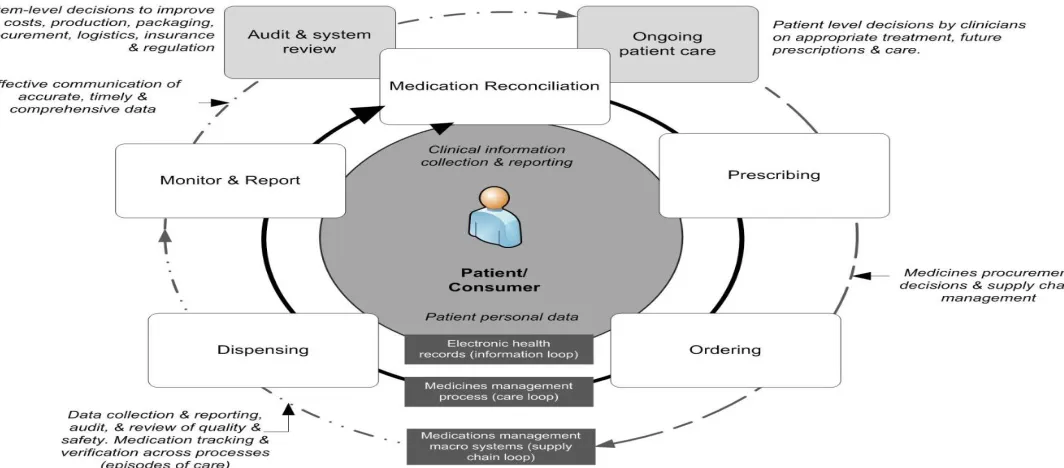
This extended focus is essential in assessment of the potential of any closed loop medication management solution. It ensures that the loop (process) is not closed in the linear sense from the pharmacist to the patient. This is of critical importance to pharmacists that may be working to serve community and aged care or nursing homes [20, 21, 43]. The process has to be considered as a cycle encompassing all points involved in delivering medications to the patient. This extends traditional CLMMS beyond controlling single points to close the information loop that informs those paying for medications (government benefits schemes, insurers, etc.), pharmaceutical manufacturers and non-clinical supply chain partners.
The extended view of the closed loop above (Figure 1) il-lustrates how CLMMS can be used to encompass the non-clinical aspects of supply and the subsequent use/non-use of the medication. It encourages the improved systems-level flow of information that can drive an increase in quality of care, removal of waste and cost savings. This loop covers a patient over the life of the medications pre-scribed, across each medication episode of care provided over time, and beyond any single point in a cycle.
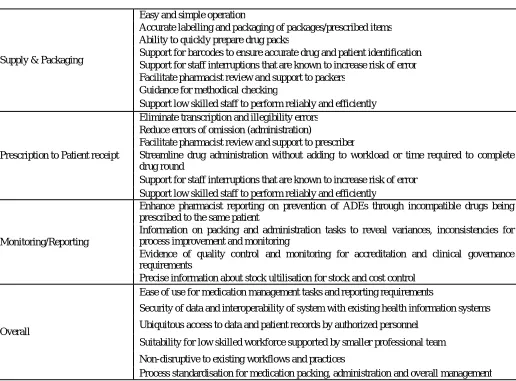
Table 1: Existing CLMM systems user desired attributes
III. CLOSED LOOP ELECTRONIC MEDICATION MANAGEMENT SYSTEM (CLEMM)
System (CLEMM) Description:
A breakthrough clinical solution called the Closed Loop Medication Management system (CLEMM) offers insights into the features of a more effective approach to CLMM. CLEMM is an integrated solution that resides in the clinical information systems component of the e-Health or health IT market segment of the healthcare industry. CLEMM can satisfy existing and expanding demand in the two largest parts of the e-Health vertical segment within healthcare: clinical information systems and secondary specialised usage non-clinical systems. CLEMM is distinct from tradi-tional closed loop medicine management (CLMM) tech-nologies for the following reasons:
• it assists clinicians or pharmacists with patient risk and process control;
• it manages medications to remove ADE from the point of packaging through to ensuring the right patient
receives the right dose of the right drug at the right time;
• it offers end-to-end coverage across all aspects of the medication management process;
• it offers a single, integrated system that includes all the hardware and software required to achieve a more
robust, value-adding closed loop approach than is currently available in the market. Supply & Packaging
Easy and simple operation
Accurate labelling and packaging of packages/prescribed items Ability to quickly prepare drug packs
Support for barcodes to ensure accurate drug and patient identification Support for staff interruptions that are known to increase risk of error Facilitate pharmacist review and support to packers
Guidance for methodical checking
Support low skilled staff to perform reliably and efficiently
Prescription to Patient receipt
Eliminate transcription and illegibility errors Reduce errors of omission (administration)
Facilitate pharmacist review and support to prescriber
Streamline drug administration without adding to workload or time required to complete drug round
Support for staff interruptions that are known to increase risk of error Support low skilled staff to perform reliably and efficiently
Monitoring/Reporting
Enhance pharmacist reporting on prevention of ADEs through incompatible drugs being prescribed to the same patient
Information on packing and administration tasks to reveal variances, inconsistencies for process improvement and monitoring
Evidence of quality control and monitoring for accreditation and clinical governance requirements
Precise information about stock ultilisation for stock and cost control
Overall
Ease of use for medication management tasks and reporting requirements
Security of data and interoperability of system with existing health information systems
Ubiquitous access to data and patient records by authorized personnel
Suitability for low skilled workforce supported by smaller professional team
Non-disruptive to existing workflows and practices
Medication management, including medication packaging and administration, accounts for a large amount of the resources spent on health (Expenditure in the medicine-related pharmaceutical segment of global packaging is forecast to grow by 20 percent from 2014 to reach US$25b in 2019)[52]. CLEMM uniquely addresses the need for medication management in poorly resourced and high-volume environments. In under-resourced, high-volume or regionally dispersed healthcare systems, the challenge is greatest. Until now, no solution was sufficiently scalable, flexible or affordable to address user needs. Conventional e-Health solutions are capital-intensive, enterprise-style systems suited to a top-down approach. In contrast, the CLEMM system uses existing infrastructure and is a highly adaptable managed service.
CLEMM is an MMS that provides point-to-point risk and process control, especially from pharmacist-to-patient, to ensure that the right drug reaches the right patient at the right time. The beauty of CLEMM is that it empowers medical and healthcare staff to work together across points in the medication management process to improve medication safety in areas such as packing, review, management and administration. This ability completely closes the medication
management loop.
CLEMM is fully integrated from drug packaging through to administration, and provides a full audit trail for process control and accountability. Designed to enable the full uti-lisation of pharmacy services, CLEMM offers clinicians, pharmacists and care providers a convenient way to provide remote support and expert advice. Delivered as a managed service, the system is non-capital-intensive, uses existing infrastructure, is easy to deploy and is designed specifically for healthcare environments where staff and resources are limited.
Table 2: CLEMM system
IV.THE FEATURES OF CLEMM
CLEMM Closes the Loop:
Simply concentrating on an institution’s internal clinical MMP will not reduce errors and waste introduced in previous cycles. Systems-level improvement requires closing the loop in all parts of the medications supply chain, delivery and subsequent use by a patient.
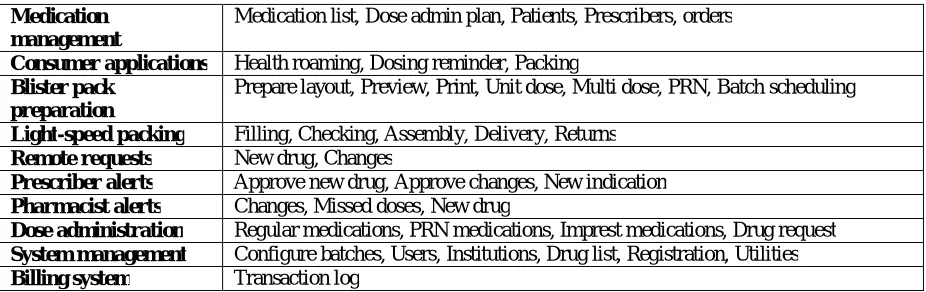
As depicted below the CLEMM software supports the administration, reconciliation and reporting required to close the complete loop across all points in the medication man-agement process.
Medication management
Medication list, Dose admin plan, Patients, Prescribers, orders
Consumer applications Health roaming, Dosing reminder, Packing
Blister pack preparation
Prepare layout, Preview, Print, Unit dose, Multi dose, PRN, Batch scheduling
Light-speed packing Filling, Checking, Assembly, Delivery, Returns
Remote requests New drug, Changes
Prescriber alerts Approve new drug, Approve changes, New indication
Pharmacist alerts Changes, Missed doses, New drug
Dose administration Regular medications, PRN medications, Imprest medications, Drug request
System management Configure batches, Users, Institutions, Drug list, Registration, Utilities
Figure 2: CLEMM spans all points in the full lifecycle of a closed loop medication management process
In the context of a more sophisticated and accurate understanding of the loop that constitutes the medication management process and each subsequent cycle of care a patient may enter, the CLEMM solution delivers a strong value proposition:
• The CLEMM solution is easy to use because it uses existing infrastructure and widely deployed mobile
devices.
• CLEMM can be implemented quickly without significant skill requirements.
• As it is a managed service customers pay per use and have no capital costs or operational overheads sunk into
technology or infrastructure.
• CLEMM ensures closed loop accountability seamlessly spans clinical, regulator and supply chain aspects.
• CLEMM supports a high-quality care continuum that is patient-centric.
• CLEMM reinforces existing, effective workflows and practices.
• CLEMM gives ubiquitous access, anytime, through multiple devices.
CLEMM is a Single System
CLEMM no longer requires multiple applications, technologies or systems. It is a single system with integrated features and benefits (tables 2, 3 and 4).
Features Benefits Pharmacist definition of patient
medication packing template
Removes guesswork for low-skilled staff
Can be performed remotely for efficiency and convenience
Enables full utilisation of pharmacy services
Barcode scan of medications being packed
Ensures that correct medication is selected and correctly
packed
Integrated within CLEMM dose administration system
Provides full medication audit trail for accountability and
automated record keeping
Medication changes Facilitates and manages medication changes and schedules the change for packing
Table 3: Drug Packaging
Table 4: Dose Administration System
Table 5: Health Roaming Clinicians not Technology Drive Workflows:
CLEMM is seemingly designed to complement existing workflows. Neither clinical practice nor existing work prac-tices have to be amended to adopt and implement the tech-nology.
Figure 3: Workflows of New Drug Request accurately and efficiently
Touch screen with clear, visual instructions
Prompts user to perform accurate, sequential packing of
cells within blister packs
Medication stock tracking Assists packing staff with monitoring stocks by maintaining a count as medications are packed
Multidimensional checking Facilitates methodical pack checking
Features Benefits
Integrated Light-Speed Drug Packaging Full audit trail from packaging through to administration – closed loop medication management
Barcode-confirmed dose administration Confirms correct patient, medication and time and records administration to close the loop
View of patient allergies Increases patient safety
New medication request Sent by administering nurse to doctor’s smartphone for review and approval or rejection
Medication requests and approvals Enables medical professionals to review and approve medication requests remotely
Smartphone alert Enables low-skilled staff administering medications conveniently to contact medical professionals for guidance Alert details are sent toprofessional for review
Features Benefits Smartphone-accessed medication list
summary
Enables patient conveniently to access personal medication list
wherever and whenever they need to
Dose reminders for in-community medication administration
Enables governments to fully monitor the use of medication, even in
the community
CLEMM Features:
Ubiquity: CLEMM can be accessed anytime, on any Inter-net-connected mobile device, anywhere—whether in urban or rural settings, or in developed or developing countries. The model has a practical impact on improving the delivery of healthcare in rural areas that suffer from isolation, small size, scattered populations and a limited resource base. Im-plementing CLEMM can therefore ensure the democratisa-tion of access, especially in developing countries.
CLEMM is device-agnostic. It can be accessed via multi-ple technologies and networks. Its primary model is Inter-net-connected mobile devices using 3G cellular or wireless broadband networks. Given the global penetration and fa-miliarity of mobile phones this approach ensures a very low threshold to competent use by medical professionals, ancil-lary service providers and patients.
Closed Loop Deployment: CLEMM delivers on the mantra that the right patient re-ceives the right drug at the right dose and at the right time. Moreover CLEMM removes variations during the supply and after the delivery of prescribed medications to the patient to include subsequent episodes of care. Thus CLEMM closes the loop before and after a single medication management process.
CLEMM is designed on the fundamental premise that medication management needs a patient-centric view that slices across the horizontal to encompass all those involved in the process of care. This is distinct from outmoded ap-proachesthat try to impose linear control between points of care that are discrete parts of the overall medication man-agement process.
CLEMM empowers healthcare providers by providing a central repository for electronic patient medical records such as history, medication and problem notes, and allergies. Because the information is digital it can easily integrate with existing electronic health record systems and platforms. The system also allows multiple people or disciplines involved in a patient’s healthcare to share information, thereby reducing potential medical errors, facilitating urgent decisions, and sharing and confirming a diagnosis. All this can occur at anytime and anywhere around the globe.
CLEMM can be deployed rapidly to achieve immediate efficiencies and improve overall management. Early wins guarantee that each step in the medication management process adds value, removing barriers to improving cost efficiency or quality clinical and patient outcomes (e.g. removing errors, delays, waste).
Through the use of a plug-in application CLEMM can access drug information databases or therapeutic information for medicines. This offers the potential to trigger a drug-drug clinical alert when a combination of certain medicines may lead to harmful effects on a patient.
Security:
Another feature of the CLEMM portal alongside interop-eration and integration with existing technologies and communications networks is its ability to securely manage the increased volume of data associated with e-Health reform [37]. The cloud-based Internet portal for CLEMM permits managed access permissions and protection of critical data that is stored on- or off-site. This means a security layer augments user access and administrators control user accounts and what a user has permission to access.
The security layer and authentication enforce protocols and user requirements in terms of prevention of data loss and unauthorised intrusion, promotion of easy access for au-thorised users, control of network access, and management of privacy or other regulatory requirements.
Medication reconciliation is the standardised process of obtaining a complete and accurate medication history and in the context of the plan for care comparing it with admission, transfer or discharge medication orders [45].
This concept reinforces the broad need to ensure that medications can be reconciled at any point, continuously throughout all stages in the medication management process. To achieve this outcome in any system, and across both supply side and clinical side, management of medication standards is required.
To effectively complete reconciliation all stakeholders involved in reporting require a standardised or, at minimum, a benchmark set of medication definitions against which other definitions can be compared. The CLEMM solution uses the medication list, which is a complete and compre-hensive list of medicines with sufficient information for full identification of all products. Key elements include the name(s), strength, and dose form and directions for use [18]. In addition CLEMM has a plug-in that permits the use of standardised terminology. CLEMM is compliant with Aus-tralian medicine terminology. This ensures standardised use of medication terminology across all partners in the medi-cation management process, whether supply chain (non-clinical) or clinical people, enterprises and systems. This optimises the integrity of the data and reporting systems. CLEMM also has a plug-in that permits users to access multiple drug databases.
Ease of Use:
CLEMM does not require a long learning curve. Users of mobile devices can intuitively use the application. Merging communications technology and networks optimises usability. CLEMM fits with the existing workflow so no change is required by clinicians in terms of their existing practices when they adopt the technology.
Speed of Implementation:
CLEMM is a ‘turn-key’ solution. This means it is ready to go to suit the user’s needs. It can be adopted at a micro level and scale up to meet any level of demand.
CLEMM leverages what exists: technology, networks, skills and workflows. In addition no protracted procurement processes are required to buy expensive technologies or enhance communications infrastructure. CLEMM harnesses existing or low-cost mobile handsets or devices that connect by using existing cellular or wireless network infrastructure.
V. TRIALS OF CLEMM
Methodology:
Prior to field trials it was considered critical that the user requirements and the functions or features of existing CLMM systems be confirmed and user satisfaction deter-mined. Consistent with studying innovation in information and communication technology within health settings the Kano Model Analysis was used to identify not only user requirements for improved CLMM systems [46], but also isolate the technical features or feature that would have the most impact on improved deployment [47]. Kano attributes span three levels:
Threshold - "Must Have", cannot sell it without it, but low op-portunity for product differentiation.
Performance - "More Please", the more the merrier, if they are weak in the product they will reduce satisfaction but they do offer an opportunity to be strong and grow satisfaction and product differentiation.
Excitement - "WOW", unknown but highly desired, these provide unique satisfiers and a great opportunity for providing product differentiation [48].
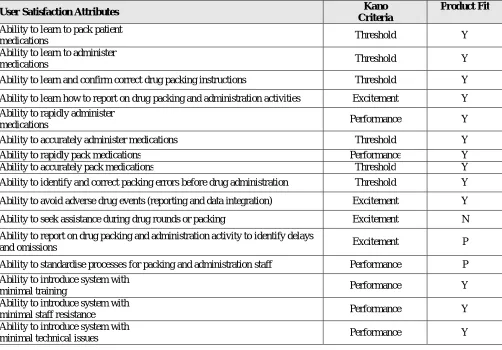
Using the rating scales below initial interviews were conducted with users (e.g. clinicians nurses, pharmacists, dispensary clerks) to rank the importance for any new CLMM system to have certain attributes (as listed previously in Table 1).
A. Satisfied;
B. Neutral (Its normally that way);
C. Dissatisfied;
D. Don’t care.
‘exciting’ new attributes. The table below indicates not only the importance of the attributes but the initial satisfac-tion of users with the CLEMM solution after the first round of implementation in the trials.
User Satisfaction Attributes Kano Criteria
Product Fit
Ability to learn to pack patient
medications Threshold Y
Ability to learn to administer
medications Threshold Y
Ability to learn and confirm correct drug packing instructions Threshold Y
Ability to learn how to report on drug packing and administration activities Excitement Y
Ability to rapidly administer
medications Performance Y
Ability to accurately administer medications Threshold Y
Ability to rapidly pack medications Performance Y
Ability to accurately pack medications Threshold Y
Ability to identify and correct packing errors before drug administration Threshold Y
Ability to avoid adverse drug events (reporting and data integration) Excitement Y
Ability to seek assistance during drug rounds or packing Excitement N
Ability to report on drug packing and administration activity to identify delays
and omissions Excitement P
Ability to standardise processes for packing and administration staff Performance P
Ability to introduce system with
minimal training Performance Y
Ability to introduce system with
minimal staff resistance Performance Y
Ability to introduce system with
minimal technical issues Performance Y
Table 6: Kano ranking of attributes and priority drivers for user satisfaction with CLEMM System
Product fit ranking related to whether the overall user feedback confirmed if CLEMM system being reviewed had the attribute: Y – Yes, N – No, P – Partial, RM - On Roadmap (being developed before full deployment).
While this research will continue with users it must be acknowledged research is ongoing. In particular the quanti-tative analysis of the impact on such factors as patient care and process efficiency will be covered in late publications. This includes research surrounding CLEMM trials where its usability, ease of deployment, information and decision requirements performance were tested. Two pilot projects were conducted: (1) a Hong Kong nursing home, for four months; (2) an Australian-based nursing homes trial as part of the Personalised Electronic Health Records e-Health Trial to be completed in early 2016.
There are three broad methodologies that are relevant to conducting research and testing in relation to these longer term, quantitative pilots.
will play a primary role in the initial marketing of CLEMM, and also be useful for groups that are not directly involved in hands-on medication-related activities themselves (e.g. healthcare funders and healthcare services organisations).
Qualitative assessments involve capturing general obser-vations or people’s experiences, as a means to develop broad understanding or model a situation. In terms of CLEMM trials, this information is likely to centre on structured in-terviews or casual discussions with people using CLEMM. It may assist with user statements on areas of benefit or areas for possible improvement, tips on services or assistance that can be provided in the adoption process, and gathering sto-ries on improved patient outcomes or CLEMM-enabled ‘wins’.
Grounded theory involves developing an overall theory or model of a situation based primarily on qualitative observations [49]. It is achieved through careful review and categorisation of qualitative evidence, as a means to identify an explanatory model or theory that emerges from the research data. Although this approach is usually conducted by a researcher first-hand to gather a diverse and rich array of research data, it is likely to be useful in research associated with medication management to identify phenomena and behaviours that form an improved basis for formulating a structured explanation of current practices and a set of propositions that can underpin a more robust understanding of the closed loop theoretical model. Grounded theory is well positioned to complement action research approaches and may be modified to review and integrate observations across all trials in a summative manner.
VI. IMPLICATIONS OF THE RESEARCH
While this study raises the need to change our perspective on ‘closed loop’ and capability of emerging systems such as the CLEMM system, it remains early days in terms of the impact this changed perspective on the process of medica-tions management and resulting innovation to improve the functional design and attributes associated with existing CLMM systems. Evidence supports persisting with this approach as the removal of restrictions associated with traditional concepts of closed loop and MMS is tightly tied to and user satisfaction with the CLEMM system being trialled. In particular the user excitement over functions and attrib-utes that improve speed, accuracy and integration of sup-ply-side packaging and labelling with correct administration of medications and the subsequent re-ordering and moni-toring activities that can occur through electronic reporting. While substantially qualitative in nature the initial research provides significant, positive evidence to suggest the longi-tudinal studies on the quantitative impact on patient out-comes will be equally positive.
While Australian trials are ongoing in terms of reporting quantifiable patient outcomes and process improvement, initial post-trial structured user satisfaction interviews in nursing home and pharmacy users indicate significant gains:
• The system processes are capturing 100% of pack-ing errors when reconciled to order
• Online access to incompatible drug checking is highly valued by pharmacists and clinicians
• Spell check and accuracy of labels and transcribed scripts
• Zero errors were introduced in the transition of the dosing system, how many were not caught by the system
process
• Positive user feedback on the system regarding improved the efficiency of their work
• Positive user feedback that the system has improved the safety of their processes and procedures
• Positive user feedback that the system has improved their confidence in the accuracy of their work, or reduced
their stress
In terms of packaging and performance:
• More packs are being packed
• Average packs per week total have attained a 20% improvement
• Average time to package medications has reduced by 215 to 109 seconds
• Packaging labels and barcodes have attained zero errors
• Dose administration confirms
• Key staff using packaging and reporting technolo-gies
improved access and quality of services has been heavily offset by the difficulties associated with technology adoption. These difficulties include financing innovative solutions, integrating different technologies and networks, unwanted changes to accepted work practices, extensive reskilling of users and, ultimately, highly visible examples of the failure to deliver initiatives on budget or on time. All these factors reinforce a dark side to ICT adoption that tends to make all stakeholders in healthcare increasingly cautious.
CLEMM is far ahead of traditional medicine management solutions, which were costly and complex and typically required long lead times to achieve effective deployment. Around the globe healthcare providers face the challenge of providing effective medication management in ever-extending supply chains that span disciplines, service providers, and even geographic locations. This has signifi-cantly increased the complexity of service delivery and accounted for accelerated costs. The ability to provide equity of access to medication and quality healthcare services is under threat, especially in regional areas.
CLEMM is a breakthrough in terms of how ICT can im-prove healthcare delivery associated with medication man-agement. As with many important breakthroughs CLEMM is an elegant solution that draws on existing global practices and employs a compelling business model. Using smart, mobile technology and communication networks CLEMM returns control to those directly responsible for delivering healthcare to the patient. Moreover, it is a ‘turnkey’ solution requiring no upfront capital expenditure or reinvestment in new skills or technology.
In the world of e-Health there is often a significant gap between the imperative of those funding ICT initiatives and medical professionals responsible for implementing the technology. CLEMM was not only developed to meet the closed loop medication management requirements of fund-ing bodies, but was also designed by people who have worked in or been responsible for implementing ICT in medication management processes around the globe. CLEMM is therefore designed to improve access anywhere at any time and to ease adoption without sacrificing the improvements to quality or efficiency which all stakeholders demand.
The healthcare market is extremely fragmented. This often makes it hard to position technology in a market, let alone accurately determine the customer or commercial benefits. CLEMM integrates packaging, supply chain management, clinical information systems, medication management and electronic reporting capabilities that individually and collectively hold significant market attractiveness in the broader healthcare, pharmaceutical, medicine packaging, medicine management, mobile health (m-Health) and e-Health segments. For existing and emerging companies in all these growing market segments CLEMM offers a differentiated business solution that combines both clinical and commercial appeal.
VII. CONCLUSION
Around the globe healthcare providers face the challenge of providing effective medication management in ev-er-extending supply chains that span disciplines, service providers, and even geographic locations. This has signifi-cantly increased the complexity of service delivery and accounted for accelerated costs. The ability to provide equity of access to medication and quality healthcare services is under threat, especially in regional areas.
Previous solutions have required a large upfront invest-ment in infrastructure, delivery management, training and improvement for the integration of electronic reporting with the management of medications from point of prescription to the patient.
requires a fundamental extension of current technologies and the current paradigm associated with the medication management process to encompass the supply chain management conceptualisation of ‘closed loop’. This concept assumes it is equally important to manage the problems introduced into the process prior to or even after the clinical ‘loop’ that has traditionally spanned the chain from prescription to patient receipt of medications.
As evidence of how revised views on a closed loop can enhance the MMP this paper has studied the Closed Loop Electronic Medication Management system, which inte-grates packaging, supply chain management, clinical information systems, medication management and electronic reporting capabilities. Such capabilities reinforce both the linear clinician-patient process and the secondary systems-level loop that spans the whole of the medication supply chain. The features of CLEMM, that individually and collectively hold significant market attractiveness in the broader healthcare, pharmaceutical, medicines packaging, medicine management, mobile health (m-Health) and e-Health segments. CLEMM is far ahead of early CLMM solutions that have typically been costly, required changes to workflows or added complexity and often required long lead times to achieve effective deployment.
CLEMM is a breakthrough in terms of how ICT can im-prove healthcare delivery associated with medication man-agement. As with many important breakthroughs CLEMM is an elegant solution that draws on existing global practices and employs a compelling business model. Using smart, mobile technology and communication networks CLEMM returns control to those directly responsible for delivering healthcare to the patient. Moreover, it is a ‘turnkey’ solution requiring no upfront capital expenditure or reinvestment in new skills or technology.
CLEMM was not only developed to solve the closed loop medication management requirements of funding bodies, but was also designed by people who have worked in or been responsible for implementing ICT in medication manage-ment processes around the globe. CLEMM is therefore de-signed to improve access anywhere at any time and to ease adoption without sacrificing improvements to quality or efficiency.
REFERENCES
[1] Bates DW, Cohen M, Leape LL, Overhage JM, Shabot MM, Sheridan T: White paper - reducing the frequency of errors in medicine using information technology. J Am Med Inform Assn 2001;8:299-308.
[2] Thompson DI, Classen DC, Haug PJ: Emrs in the fourth stage: The future of electronic medical records based on the experience at intermountain health care. J Healthc Inform Manag 2007;21:49-60.
[3] Pauldine R, Beck G, Salinas J, Kaczka DW: Closed-loop strategies for patient care systems. J Trauma-Injury Infect Crit Care 2008;64:S289-S294.
[4] Datta C, Tiwari P, Hong Yul Y, Broadbent E, MacDonald BA: Utilizing a closed loop medication management workflow through an engaging interactive robot for older people. 2012 IEEE 14th International Conference on e-Health Networking, Applications and Services (Healthcom 2012) 2012:313-316.
[5] Pinkney S, Trbovich P, Fan M, Rothwell S, Cafazzo JA, Easty A: Do smart pumps actually reduce medication errors? Biomed InstrumTechnol 2010;44:64-69.
[6] Cohen MR: Medication errors. Nursing 2012;42:11.
[7] National Coordinating Council for Medication Error Reporting and Prevention (NCCMERP): What is a medication error?: 2012, 2013, [8] 8 Mansour M, James V, Edgley A: Investigating the safety of medication administration in adult critical care settings. NursCrit Care 2012;17:189-197.
[9] Flynn L, Liang YL, Dickson GL, Xie MG, Suh DC: Nurses' practice environments, error interception practices, and inpatient medication errors. J NursScholarsh 2012;44:180-186.
[10] Cooper L, DiGiovanni N, Schultz L, Taylor AM, Nossaman B: Influences observed on incidence and reporting of medication errors in anesthesia. Can J Anesth 2012;59:562-570.
[11] Falade CO, Michael SO, Oduola AMJ: Enhanced efficacy of amodiaquine and chlorpheniramine combination over amodiaquine alone in the treatment of acute uncomplicated plasmodium falciparum malaria in children. Med PrinPract 2008;17:197-201.
[12] Mansour AA, Odaa AH, Wanoose HL: Corticosteroid nonprescription use: A cross-sectional hospital-based study in basrah. Med PrinPract 2010;19:182-187.
[13] Ammenwerth E, Schnell-Inderst P, Machan C, Siebert U: The effect of electronic prescribing on medication errors and adverse drug events: A systematic review. J Am Med Inform Assn 2008;15:585-600.
[14] Ferner RE: Medication errors. Brit J ClinPharmaco 2012;73:912-916.
[15] Doherty C, Mc Donnell C: Tenfold medication errors: 5 years' experience at a university-affiliated pediatric hospital. Pediatrics 2012;129:916-924.
[16] Minville V, Ruiz S, Ferre F, Gris C, Girbet MN: Medication error: Account the shape but the context too. Ann FrAnestReanim 2012;31:493-495.
[18] Australian Pharmaceutical Advisory Council (APAC): Guiding principles to achieve continuity in medication management. Canberra, Commonwealth of Australia, 2005.
[19] Stowasser DA, Allinson YM, O’Leary KM: Understanding the medicines management pathway. J Pharm Pract Res 2004;34:293-296. [20] Oyebode F: Clinical errors and medical negligence. Med PrinPract 2013;22:323-333.
[21] Lenderink BW, Egberts TCG: Closing the loop of the medication use process using electronic medication administration registration. Pharm World Sci 2004;26:185-190.
[22] Enrado P: Key is closing the loop: Healthcare IT News2007, 2012,
[23] Field TS, Gilman BH, Subramanian S, Fuller JC, Bates DW, Gurwitz JH: The costs associated with adverse drug events among older adults in the ambulatory setting. Med Care 2005;43:1171-1176.
[24] Agrawal A: Medication errors: Prevention using information technology systems. Brit J ClinPharmaco 2009;67:681-686. [25] Schachter M: The epidemiology of medication errors: How many, how serious? Brit J ClinPharmaco 2009;67:621-623.
[26] Runciman WB, Roughead EE, Semple SJ, Adams RJ: Adverse drug events and medication errors in australia. Int J Qual Health C 2003;15:I49-I59.
[27] Lu CY, Roughead E: Determinants of patient-reported medication errors: A comparison among seven countries. Int J ClinPract 2011;65:733-740.
[28] Lisby M, Nielsen LP, Mainz J: Errors in the medication process: Frequency, type, and potential. Int J Qual Health C 2005;17:15-22. [29] Gurwitz JH, Field TS, Avorn J, McCormick D, Jain S, Eckler M, Benser M, Edmondson AC, Bates DW: Incidence and preventability of adverse drug events in nursing homes. Am J Med 2000;109:87-94.
[30] Franklin BD, Vincent C, Schachter M, Barber N: The incidence of prescribing errors in hospital inpatients - an overview of the research methods. Drug Safety 2005;28:891-900.
[31] National Patient Safety Agency (NPSA): Npsa annual report and accounts 2009/10: 2010,
[32] Classen DC, Pestotnik SL, Evans RS, Burke JP: Computerized surveillance of adverse drug events in hospital patients. Jama-J Am Med Assoc 1991;266:2847-2851.
[33] Canada National System for Incident Reporting (NSIR): External field review (efr) results for the national system for incident reporting. Ottawa, Canadian Institute for Health Information, 2009,
[34] US eHealth Initiative: A clinician's guide to electronic prescribing. Washington, American Medical Association, 2008. [35] Australian Department of Health and Ageing: Personally controlled electronic health records for all australians: 2010, 2013, [36] Bates DW, Gawande AA: Patient safety: Improving safety with information technology. New Engl J Med 2003;348:2526-2534.
[37] Scott JT, Rundall TG, Vogt TM, Hsu J: Kaiser permanente's experience of implementing an electronic medical record: A qualitative study. Brit Med J 2005;331:1313-1316.
[38] Franklin BD, O'Grady K, Donyai P, Jacklin A, Barber N: The impact of a closed-loop electronic prescribing and administration system on prescribing errors, administration errors and staff time: A before-and-after study. Qual Saf Health Care 2007;16:279-284.
[39] Hu G, Wang L, Bidanda B, Wang Y: A new model for closed-loop product lifecycle systems: IIE Annual Conference and Expo 2007 - Industrial Engineering's Critical Role in a Flat World, May 19, 2007 - May 23, 2007. Nashville, TN, United states, Institute of Industrial Engineers, 2007, pp 1660-1665.
[40] Wikner J, Ou T: A structural framework for closed-loop supply chains. Int J LogistManag 2008;19:344-366.
[41] Flapper SDP, NunenJAEEv, Wassenhove LN: Introduction; in Flapper SDP, NunenJAEEv, Wassenhove LN (eds): Managing closed- loop supply chains. Heidelberg, Germany, Springer-Verlag, 2005
[42] Grant DB, Banomyong R: Design of closed-loop supply chain and product recovery management for fast-moving consumer goods: The case of a single-use camera. Asia Pac J Market Logist 2010;22:232-246.
[43] Ball DE, Al-Othman F: Drug information resources at private community pharmacies in kuwait. Med PrinPract 2007;16:107-109. [44] Institute for Health and Public Service Value: Information governance: The foundation for effective e-health: 2010, 2013, [45] of medication reconciliation. J Pharm Pract Res 2007;37:231-233.
[46] Kano NS, Takahashi, F, Shinichi Tsuji, S: Attractive quality and must-be quality (in japanese). JJpnSoc Qual Contr 1984;14:147-156. [47] Yu HJ, Ko HT: Integrating Kano Model with strategic experiential modules in developing ict-enabled services an empirical study. ManagDecis 2012;50:7-20.
[48] ReVelle, Jack B, John WM, Charles AC: The QFD handbook. New York, Wiley, 1998.
[49] Strauss AC, Corbin JM: Basics of qualitative research: Grounded theory procedures and techniques, ed 2nd. London, Sage Publications, 1990.
[50] Stroetmann KA, Jones T, Dobrev A, Stroetmann VN: An evaluation of the economic impact of ten european e-health applications. J TelemedTelecare 2007;13:S62-S64.
[51] Shekelle PG, Goldzweig CL: Costs and benefits of health information technology: An updated systematic review. London, The Health Foundation, 2009.