Scholarship@Western
Scholarship@Western
Electronic Thesis and Dissertation Repository
3-1-2017 12:00 AM
Supporting Educator Access to Evidence-Informed School-Based
Supporting Educator Access to Evidence-Informed School-Based
Mental Health Programs: An Effectiveness Evaluation
Mental Health Programs: An Effectiveness Evaluation
Renelle Claudette Bourdage The University of Western Ontario
Supervisor Dr. Alan Leschied
The University of Western Ontario Graduate Program in Psychology
A thesis submitted in partial fulfillment of the requirements for the degree in Master of Arts © Renelle Claudette Bourdage 2017
Follow this and additional works at: https://ir.lib.uwo.ca/etd
Recommended Citation Recommended Citation
Bourdage, Renelle Claudette, "Supporting Educator Access to Evidence-Informed School-Based Mental Health Programs: An Effectiveness Evaluation" (2017). Electronic Thesis and Dissertation Repository. 4419.
https://ir.lib.uwo.ca/etd/4419
This Dissertation/Thesis is brought to you for free and open access by Scholarship@Western. It has been accepted for inclusion in Electronic Thesis and Dissertation Repository by an authorized administrator of
i Abstract
This study provides an evaluation of the utility of a website and list of resources to aid educators in addressing mental health concerns within schools. It builds on a previous study which assessed the effectiveness and strength of recommendation in implementation for School Based Mental Health (SBMH) programs. In this previous study, ninety nine studies were assessed representing nine areas of mental health concern and / or promotion: emotional intelligence, stigma reduction, mindfulness, anxiety, depression, addictions, suicide prevention, trauma and eating disorders. The results of this program review served as partial content for the creation of a Mental Health Literacy (MHL) website and Program Assessment Tool (PAT). The PAT included nine decision-making frameworks that were created for each area of mental health concern and promotion. The decision-making frameworks served as a support and guide for educators seeking to select and implement a SBMH program. Additional resources were contributed to the MHL website by the research team and the Advisory Committee. Effectiveness of the MHL website and PAT was evaluated via a mixed methods qualitative and quantitative design. Implications for making accessible the MHL website and PAT in supporting educators in making decisions regarding SBMH strategies are discussed.
ii
Acknowledgements
iii
Table of Contents
Abstract... i
Acknowledgements ……… ii
Table of Contents………... iii
Introduction... 1
Mental Health for Children, Youth and Educators in the School Environment...1
Child and Youth Mental Health...1
Literature Review...1
Mental Wellness and Academic Achievement………1
Educator Wellbeing... 2
The Importance of Supporting Mental Health in Schools and Classrooms...3
A Call to Researchers for Mental Health Support...3
Understanding and Assessing the Strength and Quality of School Based Mental Health [SBMH] Program Literature via a GRADE Analysis...4
The Importance of Knowledge Translation... 5
Effective School Based Mental Health Literacy... 6
Traditional Classroom Practices……… 6
Web-Based Learning……… 7
The Online Resource: Mental Health Literacy Website and Program Assessment Tool (PAT)... 8
Design of the On-line teacher Mental Health Website……….. 9
Current Study………. 9
Method………...10
Design and Participants...10
Post – Test Only Evaluation Component...10
Participants...10
Table 1: Participants Demographics………..…...11
iv
Procedure and Measures... ...13
Qualitative and Quantitative Data Analysis Component...15
Ethical Considerations...14
Results... ... ...15
Table 2: Coded Ratings...15
Theme 1: School Board Support………16
Theme 2: Mental Health Literacy Website Effectiveness……….19
Theme 3: Access of the Website’s Resources………...21
Table 3: Average Scores………22
Theme 4: Educator Concerns……….23
Theme 5: Website Improvements………..24
Discussion………..26
Relevance to Previous Research………26
Effectiveness of the MHL Website………27
Relevance to Practice……….29
Relevance to Policy………30
Recommendations of Future Research………..30
Limitations………...31
Summary………31
References………..33
Appendix A: Sample of Questionnaire………..39
Appendix B: Letter of Information ……….. 41
Introduction
Mental Health for Children, Youth and Educators in the School Environment
Child and Youth Mental Health. An estimated 1 in 5 Canadian children and youth experience a mental illness (McMartin, Kingsbury, Dykxhoorn & Colam, 2014; Offord, Boyle, et. al., 1987) with those between the ages of 12 to 25 years having the highest prevalence of mental illness of any age group (McGorry, Bates & Birchwood, 2013). Further, a large number of young people do not obtain a diagnosis and therefore, according to Flett and Hewitt (2014), “fly under the radar”, going undiagnosed and without necessary supports.
Teachers are now commonly referred to as being on the front line of mental health support to children and youth. Yet these same teachers indicate they are not well prepared to assume this task. The purpose of this study was to evaluate the effectiveness of a process for teachers to become better informed regarding the mental wellness of their students in an effort to improve the support that they are able to provide.
Literature Review
Remarkably, even when obtaining a diagnosis with a mental health disorder, only 20% of Canadian children and youth receive service within the current mental health care system (Waddell et al, 2005). Given the extended amount of time Canadian children and youth spend in classrooms, the inevitable conclusion is that there is a need to recognize the role that educators can potentially play in being the first point of contact for students experiencing mental health difficulties. Indeed, due to the rate of exposure, teachers are often the most likely person to identify a student in distress. However, educators report being ill-equipped in managing and coping with the mental health needs of their students (Rodgers et al., 2014). Thus, there is an educational systemic reality in educator mental health competency, or self-efficacy, in addressing mental health within schools and classrooms (Tolan and Dodge, 2005; Climie, 2015).
Educator wellbeing. Educators express difficulties in coping with their own mental health challenges that are reflected in stress, anxiety and depression (Rodgers et al., 2014). Nevertheless, the school-based mental health [SBMH] research literature and Canadian policy imply that educators are “front line workers” for their students (CYAC, 2010; Kirby & Keon,
2006; Koller & Bertel, 2006; Roberts & Grimes, 2011). Therefore, the mental health and wellbeing of educators is essential in addressing burn out, stress leave and turnover (Corr, Davis, Cook, Waters & LaMontagne, 2014). Thus, there is a need to recognize educators as a vital source of information regarding the mental health needs for students in their care as well as their own health needs (Tolan and Dodge, 2005; Climie, 2015). More recent research has suggested a link between the level of teacher wellness and the degree of the wellness in their students (Guhn, Gadermann, Almas, Schonert-Reichl & Hertzman, 2016).
(Froese-Germaine & Riel, 2012; Jamieson, 2006). In addition, educators equally report being overwhelmed in attempting to manage their own stress (Rodgers et al., 2014). This fact is underlined by Kovess-Masfety et.al. (2006) who characterize teaching as a “high risk profession”. As stated by the authors, educators are subject to particularly high levels of job stress (Kovess-Masfety, Rios-Seidel & Sevilla-Dedieu, 2006). It is estimated that 50% of educators will leave their profession within 5 years of entering the workforce (Ingersoll & Smith, 2003). An exploratory study by Ingersoll and Smith (2003) investigated the causes for educator career termination. The majority of teachers listed stress and student behaviour problems as the primary cause of early career leaving. In addition, Kovess-Masfety et.al. (2006) compared educator working conditions to other occupational groups, concluding that they experienced higher levels of mental fatigue, reflected in psychological distress and burnout (Kovess-Masfety, Rios-Seidel & Sevilla-Dedieu, 2006).
In sum, there is a high prevalence of mental illness in educators (Kovess-Masfety, Rios-Seidel & Sevilla-Dedieu, 2006). This has the consequence of high educator turnover, which lends itself to students losing a positive adult role model (Gibson, Stephan, Brandt & Lever, 2014). While educators are expressing a concern for mental health in modern schools, 87% state they have a lack of training and knowledge regarding how to support mental health in schools (CFT, 2012).
The Importance of Supporting Mental Health in Schools and Classrooms
educators have identified mental health education and support as an immediate priority in their professional development (Rodger et al., 2014). Indeed, in most working environments, there is an emerging social prerogative from a legal and productivity perspective (Shain, 2009) to address work related mental health employee wellness (Kunyk et al., 2015; Lamontagne et al., 2014).
There is a call for school-based mental health programs and resources to help educators shift from a crisis behaviour management position to that of sustainable wellness promotion (Froese-Germaine & Riel, 2012; SBMHSAC, 2012). Given that children and youth spend the majority of their lives in classrooms, the school environment provides an ideal location for delivering comprehensive mental health initiatives (Morrison & Kirby, 2010). In fact, according to the Mental Health Commission of Canada (2013) there is considerable momentum regarding the implementation of school-based mental health programs and resources that best fit the needs of Canada’s systemic educational mental health capacity.
Understanding and Assessing the Strength and Quality of School Based Mental Health [SBMH] Program Literature via a GRADE Analysis
In order to effectively improve the state of SBMH in providing resources and support, it is first necessary to appreciate the strength and quality of the school-based mental health research literature.
Rodger, Bourdage, Hancock, Hsiang, Masters & Leschied (2017) synthesized research findings via a Grading of Recommendations, Assessment, Development and Evaluations
prominent areas of mental health concern for children and youth (Rodger et al., 2015). In addition, a study in partnership with the Physician Support Program of the British Columbia Medical Association identified the four top mental health areas of concern for children and youth that included anxiety disorders, ADHD, depression and behavior problems (Leschied, 2013). Moreover, teachers identified additional areas of concern in a study by Short and colleagues (Short, Weist, Manion & Evans, 2012) that included attention and learning difficulties, ADHD, anxiety, bullying, social relationships, behavioral problems, depressed mood, depression, oppositional behavioral and aggression (Leschied, 2013). Thus, the GRADE study provided an understanding of the overall quality of the SBMH research literature in nine of these selected areas of interest. The study’s conclusion: that effective mental health programs within the school environment are characterized by the following: they are delivered over a period of weeks or months; require training and supervision; draw on parent support and homework assignments and provided manualized guidance towards implementation (Rodger, et.al., 2015). These research findings are pertinent information to provide in school-based settings.
The Importance of Knowledge Translation
Effective School Based Mental Health Literacy
There are three conditions to be met for a mental health intervention to effectively operate within the school environment. These are: accessibility; feasibility in being transferable to the school system; and ability to meet the particular needs of the school-based environment (Rodgers et al., 2015). With respect to transferability, program implementation researchers have argued that the theory of knowledge translation that reflects effective and supportive communication between academic and non-academic environments should guide the design of intervention strategies (Rycroft-Malone, 2007).
Traditional Classroom Practices. As reflected in Information and Communication Technology (ICT) reform, schools are increasingly utilizing web-based knowledge translation practices in supporting teacher-student communication (Tubin & Klein, 2007). As early as 2003 in the United States, 93% of instructional rooms had access to the internet (Tubin & Klein, 2007). As ICT reform has gained momentum, educators have sought ways in which to strengthen traditional classroom practices (Rock, Gregg, Ellis & Gable, 2008). Limitations of traditional classroom practices, such as “teaching to the middle”, heavily influenced student success
To ignore diversity in learning is to ignore diversity in student individual mental health needs, cognitive abilities, culture and socioeconomic status, all of which are determinants of educational success (Rock, Gregg, Ellis & Gable, 2008). For example, according to the 26th Annual Report to Congress on IDEA, the U.S Department of Education found that 96% of general education teachers have students with learning disabilities in their classrooms, most of whom have needs that go unmet (Rock, Gregg, Ellis & Gable, 2008). Similarly, high poverty rates in urban school districts increase the probability of a readiness gap among children beginning school, whose needs also generally remain unmet (Rock, Gregg, Ellis & Gable, 2008). Therefore, differentiated instruction, defined as “ensuring that what a student learns, how he/she learns it, and how the student demonstrates what he/she has learned is a match for that student’s
readiness level, interests, and preferred mode of learning” (Tomlinson, 2004, p.188).
between levels of learning and perceived efficiency between online and face-to-face instruction, participants demonstrated a significant difference in perceived efficiency, favoring online learning (2015). Finally, web-based learning is often describe as being accessible, that is, any learner can have access to learning materials as soon as they are placed in front of a server from anywhere in the world (Jolliffe, Ritter & Stevens, 2012). In sum, the research literature is showing convergence in supporting the effectiveness, efficiency and accessibility of web-based learning.
The Online Resource: Mental Health Literacy Website and Program Assessment Tool (PAT)
The MHL website acts as a web-based learning hub for various resources and tools to support mental health within schools and classrooms. As part of the MHL website, the Program Assessment Tool (PAT) is supported in part by the content of the previously described GRADE analysis (Rodger et.al. 2017). The PAT is a decision making-framework or guide that aids educators in selecting and implementing relevant SBMH programs addressing their particular mental health needs. The goals of the Mental Health Literacy website are to:
1. Develop and support educator competencies in addressing child and youth mental health in schools and classrooms.
2. Develop and support mental health literacy for the benefit of educator wellbeing.
3. Provide direction and guidance for sustainable mental wellness promotion via using evidence-informed intervention programs.
Design of the On-line teacher Mental Health Website
The goal of the Mental Health Literacy website is to act as an online access point within which to organize relevant mental health resources for educators. Several types of resources were included in the website to ensure: focus on areas of teacher interest; as an accessible point of contact to a wide array of resources; and as host the input of other educators. Resources are presented in the form of audio recordings (e.g. podcasts), audio-visual recordings (e.g. teacher to teacher interviews), notes, tip sheets, books, recommended web links, and videos. To ensure quality, the resources were created and collected in collaboration with an Advisory Committee comprised of experienced educators. The Advisory Committee volunteered any resource they thought would be a valued part of the website. The design of the website relied on Social Capital Theory (Warren, 2005) in the co-production of developing resources. The Mental Health Literacy Website and Program Assessment Tool was designed by the Portico Consulting Group that is based at the Centre for Addiction and Mental Health (CAMH) (2015).
Current Study
This study utilized an effectiveness evaluation framework of the MHL website to support mental health literacy for educators investigating:
a) The MHL website to support mental health delivery within schools and classrooms via consumer satisfaction;
b) Educators sense of competency in mental health literacy through utilization of the MHL website;
d) The relationship between experience and level of mental health education and competency in mental health literacy and;
e) The relationship between perception of school board support and competency in mental health literacy.
Method
Design and Participants
This study was a program evaluation using a mixed methods approach in evaluating the effectiveness of the Mental Health Literacy website based in part on a phenomenological approach.
Post – Test Only Evaluation Component. The website was designed via hosting a series of meetings over a period of one year with an Advisory Committee which focused on the creation of resources such as videos and audio-recordings relevant to school based mental health. This input was collected and sent to Portico which is a part of the Centre for Addiction and Mental Health (CAMH). Portico contributed their expertise in website design in assisting with the integration and posting of the various sources of information on the website. The Program Assessment (PAT) Tool and decision-making framework were designed in the Excel program by members of the research team. Evaluation of the website consisted of a post-test only design using both quantitative and qualitative survey questionnaires (see Appendix A) that were hosted on a confidential and secure online survey software system called Qualtrics.
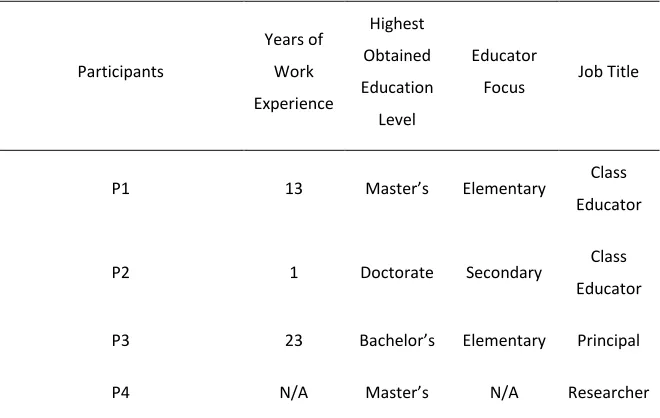
The study sample reflected 1 to 40 years of education related experience. Participants reflected a wide range of formal academic qualification: 38.5% of the sample had a bachelor’s degree in education, 30.8% had a master’s degree, and the remaining 30.7% had a doctoral degree. For the educator sample, 60% of the participants had an elementary school level focus; 70% of the sample were in-class educators; two of the participants were board administrators and one a school principal. Table 1 provides a summary of the participant’s demographics.
Within the post test only design, participants were asked to review three case studies, with each simulating a real world situation reflecting a student mental health concern. The first case addressed the topic of general student mental health well-being and classroom mental health promotion. The second case study addressed teacher mental health well-being and accessibility to mental health support. The third case study focused on the utilization of resources to aid a student who is struggling with trauma exposure.
Table 1: Participants Demographics
Participants
Years of
Work
Experience
Highest
Obtained
Education
Level
Educator
Focus Job Title
P1 13 Master’s Elementary Class
Educator
P2 1 Doctorate Secondary Class
Educator
P3 23 Bachelor’s Elementary Principal
P5 3 Master’s Elementary Class Educator
P6 40 Bachelor’s Secondary Board
Administrator
P7 N/A Master’s N/A Researcher
P8 27 Bachelor’s Elementary Board
Administrator
P9 11 Bachelor’s Secondary Class
Educator
P10 N/A Doctorate N/A Researcher
P11 34 Doctorate Elementary Class
Educator
P12 40 Doctorate Secondary Class
Educator
P13 8 Bachelor’s Elementary Class
Educator
Phenomenological Theoretical Framework and Action Research. This research study
reflects a phenomenological framework. A phenomenological theoretical framework is defined
as capturing the “lived experiences” of participants in describing the essence of a phenomenon
(Creswell, Hanson, Plano Clark & Morales, 2007). The purpose of this study was to reflect participants’ experiences with the MHL website in evaluating its effectiveness. School-based
learning settings comprise a fast-pace environment where mental health needs are changing
rapidly. Action research, which is focused on problem solving and interchange between research
and practice, is a necessary part of developing and adapting strategies while considering the
Procedure and Measures
After reading each case study, participants were asked to complete a series of self-report surveys. The surveys were comprised of both qualitative and quantitative questions related to: consumer experience and satisfaction; feelings of competency in mental health literacy; experience and education in mental health; and perceptions of school board support for mental health initiatives. Credibility of the data was assessed via the adoption of well established research methodologies including mixed methods quantitative and qualitative data gathering, the input of mental health experts as research team members, and experienced educators from the Advisory Committee. Transferability was promoted by providing sufficient study information regarding the participants, study methodology, procedure and the time period of data collection. Dependability was promoted through explanation of the research design, implementation and limitations of the study, as well as reflective evaluation of the study. Finally, confirmability was assured in the absence of leading questions and in the collection of data based on open ended
qualitative questions.
Participants were invited to attend a 1 hour computer lab meeting for the purpose of data
collection. Participants were directed to the on-line Qualtrics questionnaire where, after
providing explicit consent, they were asked to review the three case studies and view all
Qualitative and Quantitative Data Analysis Component. Qualitative data was
analyzed via content analysis. According to Matthews and Ross (2010), content analysis groups
words, phrases and context in order to detect relational meaning into coded ratings to deduce
meaning codes. Coded ratings identify the frequency of significant meaning codes (Matthews &
Ross, 2010). Once the meaning codes were identified, they were grouped under an integrated
theme for the purpose of obtaining a statistically viable representation of intended communicated
messages (Matthews & Ross, 2010). To ensure reliability and consistency in the thematic
identifications, an impartial coder provided independent coded ratings for the themes. Identical
coded rating and theme match between the primary coder and the secondary provided an index
of inter-rater reliability. Fifteen participant coded ratings were assigned by the secondary coder to the potential themes. This resulted in a satisfactory inter-rater reliability agreement of 88.3%. The qualitative data was also supported by quantitative data in the form of Likert scales for which frequencies are reported.
Ethical Considerations
The research team obtained ethics approval from the Research Ethics Board (REB) of the University of Western Ontario to collect data on the creation and evaluation process of the MHL website. This was a low risk study. However, participants may have experienced some dissonance and feelings of discomfort when reflecting on personal and/or student mental health
challenges. If this were to have occurred the participant was encouraged to contact the research
Results
The thirteen participant responses reflect the following: perception of school board
support, effectiveness of the Mental Health Literacy website, most used resources, educator
concerns on school-based mental health and website improvements. These themes were
identified via the analysis of the qualitative data for commonalities in rating codes, which were
then organized into meaning codes and themes. The following section provides participant rating
codes and in depth analyses of participant responses within the five primary themes. The total
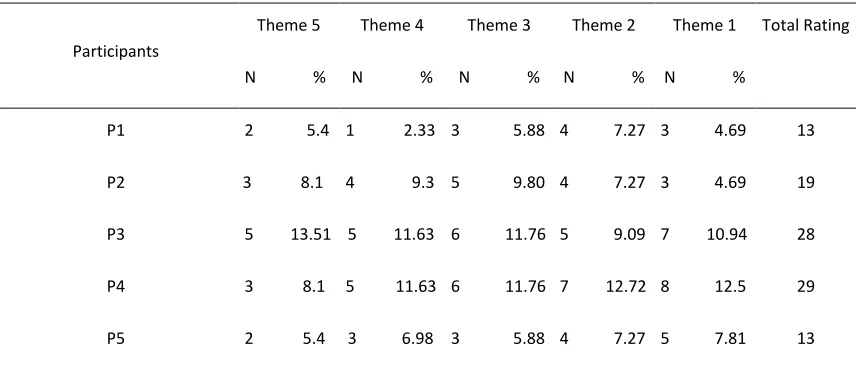
number of coded ratings for the five themes was N = 246 (M = 18.92, SD = 5.74). The total
number of coded ratings per participant ranged from 1 to 8, and the total number of coded ratings
per theme ranged from 37 to 64 (see Table 2). The organization in presentation of the data
follows the outline of data outcomes. For all of the data across the five themes, the first reported
theme reflects the most ratings and meaning codes with subsequent themes in descending order
of frequency.
Table 2: Coded Ratings
Participants
Theme 5
N %
Theme 4
N %
Theme 3
N %
Theme 2
N %
Theme 1
N %
Total Rating
P1 2 5.4 1 2.33 3 5.88 4 7.27 3 4.69 13
P2 3 8.1 4 9.3 5 9.80 4 7.27 3 4.69 19
P3 5 13.51 5 11.63 6 11.76 5 9.09 7 10.94 28
P4 3 8.1 5 11.63 6 11.76 7 12.72 8 12.5 29
P6 2 5.4 3 6.98 3 5.88 2 3.63 3 4.69 13
P7 3 8.1 3 6.98 4 7.84 5 9.09 6 9.38 21
P8 7 18.92 4 9.3 4 7.84 4 7.27 5 7.81 24
P9 3 8.1 5 11.63 3 5.88 4 7.27 4 6.25 19
P10 3 8.1 2 4.65 5 9.80 6 10.91 7 10.94 23
P11 1 2.7 2 4.65 3 5.88 5 9.09 5 7.81 16
P12 1 2.7 3 6.98 3 5.88 2 3.64 4 6.25 13
P13 2 5.4 3 6.98 3 5.88 3 5.45 4 6.25 15
The total coded ratings (N)
for the theme
37 43 51 55 64 246
Mean 2.85 3.31 3.92 4.23 4.92 18.92
Standard Deviation 1.6 1.25 1.19 1.4 1.67 5.74
Theme Percentile 15% 17% 20% 22% 26% 100%
Theme 1 School Board Support
Theme 2 Effectiveness
Theme 3 Most Used Resources
Theme 4 Educator Concerns
Theme 5 Website Improvements
Theme 1: School Board Support
The theme of school board support reflects the extent and nature of perceived support
educator’s experience when implementing a school-based mental health initiative. For the
purpose of the current study, a working definition of school board support was created in order to
encapsulate the identification of meaning codes. School board support was defined as the
health needs. Educator perception of school-board support was assessed in four ways. The first
reflects appropriate mental health policies that reflect mental health initiatives. For mental health
initiatives to be effectively initiated within a school environment there is a need for appropriate
policies that define the goals and limitations of incorporating mental health endeavors. Second,
educators need to possess understanding and familiarity of school board policies in order to
provide clarity within which they can operate when implementing a school-based mental health
initiative. Third, educators are not only required to have an understanding of school board
policies, there is also a need for collaboration in having school policies align with an educator’s
perception of mental health needs. Fourth, given the required resources and training in mental
health programs, reasonable funding invested in mental health awareness is key when perceiving
the extent of support a school offers regarding mental health care.
Meaning Code 1: Appropriate Mental Health Policies
“Schools could go a long way toward supporting a healthier environment by recognizing and valuing the significant difference a healthy environment can have on teachers and students. We have lived through a constant state of 'piling on' to the list of expectations and perhaps have reached a breaking point. School's need to take a 'big picture' approach and see how as we accept responsibilities and new goals, we must look at what we can stop doing.”
“Rather than being ‘subjected’ to school policies created from outside the school all of the time, I would enlist the administration and my colleagues to develop our own policy that articulates the way that we value a healthy workplace and what we commit to together to create one.”
“I want to avoid having to work with/against school policy. Having to jump through too many hoops makes me much less motivated and excited about a new program, idea, or resource for classroom well-being.”
“Given the amount of stress and burnout often experienced by teachers, you would hope there would be some sort of formal avenue for support.”
“The policy and practice of "leaving" would (i think) cause more stress, the ability to trust in the resources available- confidentiality - dealing with the stigma and reaction of colleauges, peers and administration.”
“You want to be sure you are not over extending your role.”
“How do we support that student? It would be great to have a procedure established.”
“Should be information about accessing possible employee assistance programs.”
Meaning Code 2: Understanding of School Policies
“Must know the school's policy regarding potentially problematic home environment for child.”
“Will need to understand the school policy on that kind of support.”
“I am not very familiar with school policy. no one teaches you how to handle these situations. My principle is fairly unsupportive and unapproachable so it would be helpful to understand what I can do to ensure my actions adhere to school policy. If there is not policy, maybe I can collaborate with others to create a procedure of what to do and how to help navigate these types of situations in the future.”
“Not aware of any.”
“I don't feel that school policy would be impacted.”
“None that I can think of.”
“What is my school's policy, my school-board's policy?”
Meaning Code 3: Perceived Alignment of Mental Health Initiatives
“Focus on mentally healthy classrooms has to be consistent with overall school goals.”
“Hopefully any resources or steps I take will align with the school boards policy on mental health promotion and inclusive classrooms, and maybe the resources can be shared board wide to reach more people.”
“I would think somehow you would need to establish a clear link to: curriculum: requirements.”
“I would be required to link any initiatives with the curriculum.”
“Anything free is always best....limited funding means there are strict policies on what can be purchased.”
“Have to find things that can integrate with curriculum, low to no cost.”
“Is there cost?”
“Will there be cost?”
In addition to participant qualitative responses, quantitative data reflected that 38.5 % of
the participants reported “Neither Supported nor Unsupported” by their school boards. Of the
remaining participants, 23.1% reported being “Supported” and “Very Supported”, with only
7.7% of participants reporting being “Extremely Supported”.
Theme 2: Mental Health Literacy Website Effectiveness
Website effectiveness was defined as the perception of consumer satisfaction and
consumer loyalty (i.e. the reuse of the website tool at a future time). Website effectiveness was
determined in three ways. First, a website needs to be helpful, meaningful, and able to fulfill a
determined need. In the current study, the website should reflect the availability of appropriate
resources that align with identified mental health concerns. Second, consumer satisfaction should
reflect the repeated use of an item in participant’s statement of their intention to reuse the
website. Third, consumer satisfaction should be reflected in a recommendation of the use of
aspects of the website to others.
Meaning Code 1: Website Helpfulness
it was because they thought it was an important message and you know what they are important messages and discussions that haven’t been put out there before so that is AMAZING!”
“It was worthwhile; heard, saw and read many pieces of information that was helpful and would be useful in the school and classroom.”
“Yes, it provided very relevant information in many different form.”
“Yes- overall- lots of places to look - the resources also seem to consider intensity, duration, frequency along with "availability" of the reader- ie quick resource or more in depth resource.”
“Definitely helpful! The resources were organized and explained in a way that made them easy to find, navigate and learn about!”
“I do think that the resource would be helpful in a variety of situations. In each case study, I was able to see a different way it could be useful.”
“Yes, it is easy to navigate and find real and current solutions and help with mental health.”
“There are considerable resources available to meet a broad spectrum of needs and concerns. Feeling as though there is a "one stop" website I can go to, to get support and information is very helpful.”
“It is useful because of its breadth; to be honest, the internal resources are the ones that excite me the most, because the others are available, and while I appreciate the time that has gone into ensuring we don't have to review everything on the web, it is hearing from real people who have walked this journey that has the most impact.”
“Helpful - I like the quick access to tip sheets and podcasts. I like knowing there are well regarded resources (i.e. through GRADE) that I can depend on. I REALLY like having so many different kinds of resources available all within one site!”
“Very helpful; I thought that regardless of the case study or circumstance, I was able to find something that comforted me. I don't think I could walk away from the site empty handed, and that's great!”
Meaning Code 2: Reuse of Resource
“Absolutely would return for any additional concerns I have, or for simply seeking more information on a particular topic.”
“I would return to this resource as long as I remembered to come back the next time there was a challenging situation.”
“YES - again the ready access to highly useful 'in the moment' resources such as tip sheets and podcasts.”
“Yes; I think that the ability for an educator to visit the site and know that they will find something suited to their needs is very comforting!”
Meaning Code 3: Recommendation to Others
“I would recommend many of the suggested resources in the dropbox, and the focus on both teacher and student wellness is unique, as is the range of modalities (apps, videos, tipsheets, etc)”
“Yes, it offers peer-reviewed, evidence based resources in a variety of media to appeal to everyone. Very accessible.”
“Yes, because I have colleagues that struggle with mental health concerns in their schools and classrooms and I feel they would use the site to access information, and they would appreciate that everything was in 1 place.”
“Yes, it is very user friendly and has resources on topics that cannot be found anywhere else.”
“Yes I would definitely recommend this resource to friends and family in the field!”
“Yes. I think educators would find it very helpful.”
“Yes. There is a wealth of information in one package. One stop shopping for educators is good.”
“Yes, I would recommend this particularly to new teachers who are in need of many broad resources.”
This qualitative data was additionally supported by participant reports regarding their
perception of competency. In regards to their competency in using the website to address mental
health concerns of their students, , 61.5% of the participants reported “Very Competent”; 30.7%
reported “Competent” and 7.7% reported “Extremely Competent”. In response to the question
participants reported “Very Competent”, 30.8% “Competent” and 23.1% “Extremely
Competent”.
Theme 3: Access of the Website’s Resources
Resources refer to any and all tools incorporated in the website such as the apps, videos,
and tip sheets. To insure depth and breadth of available resources, a wide array of resource
formats were included in part as a response to the differentiated learning styles and the needs of
the participants.
Meaning Code 1: Variability in Resources
“Videos, tip sheets, and podcasts for quick helps. I loved the tip sheets on tough kids and anxious students tips. For more info on supportive classrooms I would read the book on Stop the Stress.”
“Books for teacher knowledge of how to promote a positive classroom environment; tip sheets (student focused wellness sheet); tool kits.”
“Like the TIPS sheets-they are general, but contribute to the positive climate in the classroom and might provide some additional support to the healthy classroom environment; Like the videos--found one about happiness and resiliency and thought that those themes might be a good connect for the teacher who is trying to create a learning env. that promotes mental well being.”
“I really liked the Supporting Minds document because it was helpful to understand what a supportive classroom looks like. The podcasts were a great idea and provided a sense of community because I felt like I could relate to what they were talking about. The tip sheets were great and I would definitely love to print those out for the students to.”
“the tip sheets and videos were very helpful- i would likely spend more time with apps as this grade would be interested -going forward.”
“Website has great resources - pan Canadian, videos, web links.”
“My promotion of mental-wellbeing in my classroom will draw upon the innate resources that my students bring to the class, resources I bring to the class and lastly resources and strengths our community has as a whole.”
“Tip sheets for anxious students, tough conversations podcast and tip sheet (from case study one but I think they are even more useful in this case), video on supportive classroom, ABCs of mental health website search for anxiety, sadness, same for supporting minds pdf, book: trauma sensitive classrooms; grade program: I would recommend PSSA to my admin because it integrates the arts and health, has a medium effectiveness rating, free and low to no training required.”
“For personal use I would check out the apps, I might read one or all of the books, they all seem relevant. I would listen to one or all of the podcasts, also seem relevant and accessible format. Same for videos. I like that there are videos by teachers experiencing the same struggles I have.”
“Apps would be a simple resource to implement, if you have classroom iPads, and if the apps are free. Tip sheets are quick and easy, and videos are helpful as teacher "homework' (doesn't require more reading!).”
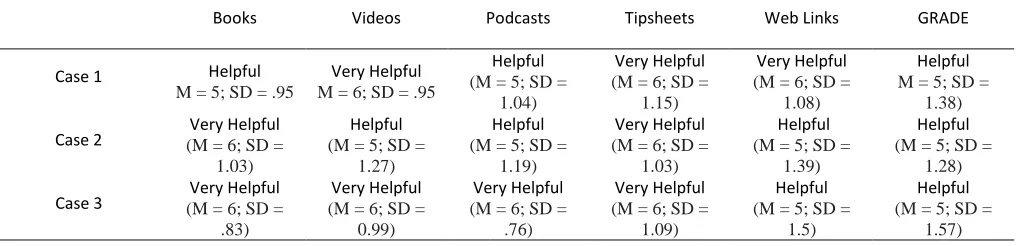
For each case study, participants were asked to rate how helpful each resource was. The
average score for each case was calculated and summarized below, see Tables 3.
Table 3: Average Scores
Books Videos Podcasts Tipsheets Web Links GRADE
Case 1 Helpful
M = 5; SD = .95
Very Helpful
M = 6; SD = .95
Helpful
(M = 5; SD = 1.04)
Very Helpful
(M = 6; SD = 1.15)
Very Helpful
(M = 6; SD = 1.08)
Helpful
M = 5; SD = 1.38)
Case 2 (M = 6; SD = Very Helpful
1.03)
Helpful
(M = 5; SD = 1.27)
Helpful
(M = 5; SD = 1.19)
Very Helpful
(M = 6; SD = 1.03)
Helpful
(M = 5; SD = 1.39)
Helpful
(M = 5; SD = 1.28)
Case 3 (M = 6; SD = Very Helpful
.83)
Very Helpful
(M = 6; SD = 0.99)
Very Helpful
(M = 6; SD = .76)
Very Helpful
(M = 6; SD = 1.09)
Helpful
(M = 5; SD = 1.5)
Helpful
(M = 5; SD = 1.57)
In summary, participant preferences for different resources were dependent on an
assessment of the student’s situational context and concern to be addressed.
Theme 4: Educator Concerns
Educator concerns were defined as a participant’s noting of a negative connotation
educator’s need for resources, it is necessary to appreciate an educator’s concerns regarding the
current state of acceptance for school-based mental health approaches.
Meaning Code 1: Mental Health/School Environment
“Educator is feeling stressed and overwhelmed; questioning if teaching is the right career choice.”
“Another challenge is understanding how to reach out for help or who to talk to because I am worried about stigma or people finding out.”
“I often feel alone and I feel like none of my friends really understand how hard teaching really is.”
“I am feeling overwhelmed and stressed.”
“My view on my teaching career has been clouded by the anxiety and stress I am feeling.”
“How to cope with the disillusionment in the profession when you entered teaching to make a difference.”
“Burn out, stress, feeling overwhelmed, questioning myself and my path.”
“You may not be the best one to assess your thoughts and feelings and the potential stigma of asking someone else for their input.”
“The potential seriousness of whether this means you have to face leaving the profession.”
“My goals are to connect with other teachers and to people who understand the stressors I experience.”
In summary, there are numerous mental health concerns that an educator is challenged by
throughout their career. Namely, these concerns are surrounding the stigma associated with
mental health challenges and finding the appropriate resources.
Theme 5: Website Improvements
Finally, to understand the website’s limitations, areas for improvement and future
implications, a theme was generated that reflected participants’ recommendations for
Meaning Code 1: Improvements for the Mental Health Literacy Website
“One of the search strategies could be: looking for in depth or quick helps - this would filter out longer things like books and programs or shorter things like podcasts and videos. Another filter could be cost: free, $, $$ Also having all types of resources reviewed by users, not just books but apps etc.”
“Perhaps be more specific in the resource summaries the ages of the students it seeks to help.”
“The programs are often out of reach for teachers and principals due to the time constraints and money; I wondered if a focus on programs that are "doable" in the classroom might be more valuable (although I appreciate that they might be hard to find).”
“Just add to the resource pool and provide space to see whether other teachers have used it with X grade and if it worked. Suggestions for implementation by teachers who have used a resource would be great!”
“I know you are just starting to build it- so continuing to populate the information will be important. Also remember despite having a target population of educators other may use the site- please be inclusive- how about "community" individuals working within schools and with families and students.”
“As time goes on - build on particular areas and this can come from looking at the resources already there and what might be recommended.”
“Keep adding more resources!”
“I didn't see a resource for children's books to help children understand emotional difficulties at their own level of understanding. I thought this might have come up with the grade two student. Picture books are an excellent tool for helping children to talk about what is really going on.”
In summary, there are areas where participants suggested improvements to the website.
These suggestions reflect the commitment of the researchers and educators to develop a
responsive and effective framework within which to provide mental health knowledge to
Discussion
Mental illness at a minimum affects 1 in 5 Canadian children and youth aged 12 to 25years (Offord, Boyle, et. al., 1987). . Schools are currently looked upon as playing a key role in providing mental health support to students (McMartin, Kingsbury, Dykxhoorn & Colam, 2014;). Considering the extended amount of time children and youth spend in schools, educators may be best positioned to address student mental health (CYAC, 2010; Kirby & Keon, 2006; Koller & Bertel, 2006; Roberts & Grimes, 2011). Current Canadian policy implies that educators can act as “front line workers” or the “first point of contact” for their students’ mental health needs (CYAC, 2010; Kirby & Keon, 2006; Koller & Bertel, 2006; Roberts & Grimes, 2011). However, teachers report being ill-equipped in managing and coping with their student’s mental health needs (Rodgers et al., 2014). Moreover, educators have expressed difficulties in coping with their own mental health challenges in stress, anxiety and depression (Rodgers et al., 2014). Recent findings suggest that educator and student mental health are not isolated concerns. Guhn and colleagues (2016) reported a link between teacher wellness and the degree of wellness of their students. Essentially, educators are expressing a concern for mental health in schools, yet 87% report they have a lack of training and knowledge regarding how to support mental health in schools (CFT, 2012). The purpose of this study was to evaluate the effectiveness of the Mental Health Literacy website which was designed to act as a resource hub to help support educator’s involvement in school-based mental health initiatives by increasing perceptions of competency in mental health literacy.
(Rodgers et al, 2014). The current findings align with this perception. Perceptions of school board support were reflected in four areas: appropriate mental health policies, understanding of school policies, perceived alignment of mental health initiatives and funding support. Educator’s are reporting a perceived absence of school board support regarding mental health initiatives. Participants voiced opinions on school mental health policies as being dated and inappropriate for the current state of needs. Educators also reported a lack of knowledge regarding school policy in the mental health area. In addition, participants also reported perceiving an absence of alignment between their mental health initiatives and school board goals. Finally, they reported a barrier to mental health initiatives due to the lack of financial support. The quantitative data supported the qualitative data, with only 23.1% of the participants reporting that they were
supported by their school board in advancing mental health initiatives within their schools. One
participant concisely reflected the current state of school board support in stating:
“Schools could go a long way toward supporting a healthier environment by recognizing and valuing the significant difference a healthy environment can have on teachers and students. We have lived through a constant state of 'piling on' to the list of expectations and perhaps have reached a breaking point. School's need to take a 'big picture' approach and see how as we accept responsibilities and new goals, we must look at what we can stop doing.”
With a perceived absence of school board support, these findings add understanding to the
reasoning of the existing body of research depicting educators as feeling ill-equipped managing
student and their own mental health needs.
Effectiveness of the MHL Website. Website effectiveness had the second most coded
ratings with a total of 55 units. This theme and the third theme of variability in resources with 51
reported the website as being effective and participants reported their intention to reuse this tool
and recommend it to others. Throughout this theme, educators voiced being pleased to have a
hub of resources which was readily available through on-line access. This finding aligns with
previous research regarding educators moving away from traditional instructional methods such
as in-class courses or workshops in embracing an online mental health tool. Moreover, educators
expressed considerable variability in their resource type preference. Again this reflects a move
away from traditional methods of teaching where educating via one method of instruction for one
style of learning is no longer acknowledged as relevant in meeting a variety of educational needs.
Rock, Gregg, Ellis and Gable (2008) suggest that to ignore diversity in learning is to ignore diversity in student individual mental health needs, cognitive abilities, culture and socioeconomic status. Therefore, to reflect the most current understanding regarding how individuals learn, the MHL website offers a variety of resources being provided that includes audio recordings, recommended books, web links, and apps, as examples. One participant spoke to the importance of variability in resources in stating:
“There are considerable resources available to meet a broad spectrum of needs and concerns.
Feeling as though there is a "one stop" website I can go to, to get support and information is
very helpful.”
In response to the helpfulness of each resource type, quantitative data reflected considerable variability in the participant’s preference for learning opposed to a singular method of instruction.
The fourth theme, educator concerns, reflected educator perceptions of the current state
of school-based mental health. Participants voiced numerous concerns, all of which echoed
feeling not only a lack of mental health support but even fear of stigma associated with seeking
help. Many participants wrote about their considerations of leaving their profession due to their
mental health needs:
“My view on my teaching career has been clouded by the anxiety and stress I am feeling”.
These findings are consistent with the high turnover rates reported by Corr, Davis, Cook, Waters & LaMontagne, 2014.
Relevance to Practice. As previously stated, there is a need for mental health literacy in classrooms for the benefit of not only the students’ wellbeing, but also that of educators. To address this need, the current study created a mental health literacy website that provides a resource hub for ease of access for educators. The importance of accessibility is a key issue when discussing the improvement of mental health literacy. Educators balance competing priorities and often report feeling stressed and overwhelmed. Restrictions on time necessitate that resources be as efficiently and effectively provided as possible. Results of this study reflect that when resources are provided in an efficient and easily accessible tool localized within a single domain, this need can be met. One participant stated:
“I definitely would [recommend this tool] as there is so much here and it is all in one place. It
saves time in trying to search various resources to solve a problem. It also presents information
in a variety of formats to adapt to different situations”.
Relevance to Policy. In order for a tool to be accepted systemically, there is a need for appropriate policy aiding in the adoption of the resource within the school environment. Results from the current study suggest that educators currently report there is insufficient policy surrounding the incorporation of mental health initiatives and mental health literacy in the school. One participant spoke to their feelings of policy acting as a barrier against mental health endeavours,
”I want to avoid having to work with/against school policy. Having to jump through too many
hoops makes me much less motivated and excited about a new program, idea, or resource for
classroom well-being”.
This study highlighted the importance of having corresponding policies, reflecting the values of mental health wellbeing that is necessary for the success of all members within the school environment.
Recommendations of Future Research. To understand the full capacity of the website, it will be beneficial for future research to assess user’s reflections when the website is fully operational. A future study should extend the scope of the current investigation in examining the utility of the mental health literacy tool. Future research should evaluate the extent to which utilization of the mental health literacy website not only impacts educator’s perception of their competency, but also their ability to deliver mental health initiatives in the classroom. Such future investigations should include a larger sample size and a broader representative of educators not involved in the website’s development Finally, the last theme of this study reflected the participants’ thoughts for future considerations. The website developers would be
search terms for specific resources; improve summaries of information for recommended
resources; and report the cost of implementation of certain programas.
Limitations
With respect to study limitations, potential threats to external validity include the small
sample size and methodology of sampling from the actual website developers which influence
the limited generalizability of the results. Limits to internal validity include selection bias due to
the methodology of sampling; possible expectancy effects due to the participants’ perceptions of
the study’s outcome; and possible systematic effects due to the lack of standardization in the
Mental Health Literacy website.
Summary
Notwithstanding the limitations of this study, consistent with the existing body of literature, there is insufficient support directed at the promotion of school-based mental health wellness. There is a need for improved policy that supports mental health endeavors in shifting from a crisis behaviour management position to that of sustainable wellness promotion (Froese-Germaine & Riel, 2012; SBMHSAC, 2012). Further, this study adds understanding to the importance of supporting teacher mental health as well as student mental health given the interconnectedness in wellbeing for these two populations. One participant spoke to this importance:
“Yes [the website is helpful], there is nothing else out there like this. I think it is very useful place
where you can find trustworthy information and resources for BOTH students and
TEACHERS!!! Most websites just provide help with lesson plans for students or students mental
experiences. It is also a great place to feel connected to others in education field - if someone
else spent the time to create that podcast it was because they thought it was an important
message and you know what they are important messages and discussions that haven’t been put
out there before so that is AMAZING!”.
The Mental Health Literacy website offers educators a resource to be better positioned in addressing student mental health needs.
References
CTF. (2014). Mental Health, Safe & Caring Schools, and Teachers. Retrieved from http://www.ctf-fce.ca/Research-Library/Issue8_Editorial_EN.pdf
Climie, E. A. (2015). Canadian Children’s Mental Health Building Capacity in School-Based
Intervention. Intervention in School and Clinic, 1053451215579265.
Corr, L., Davis, E., Cook, K., Waters, E., & LaMontagne, A. D. (2014). Fair relationships and policies
to support family day care educators' mental health: a qualitative study. BMC public health, 14(1), 1214.
Creswell, J. W., Hanson, W. E., Clark Plano, V. L., & Morales, A. (2007). Qualitative research designs:
Selection and implementation. The Counseling Psychologist, 35, 236-264. doi: 10.1177/0011000006287390
CYAC. (2010). Evergreen: A child and youth mental health framework for Canada. Retrieved from:
http://www.mentalhealthcommisssion.ca/SiteCollectionDocuments/family/ Evergreen_Framework_English_July2010_final.pdf
Durlak, J. A., Weissberg, R. P., Dymnicki, A. B., Taylor, R. D., & Schellinger, K. B. (2011). The impact
of enhancing students’ social and emotional learning: A meta‐analysis of school‐based universal
interventions. Child development, 82(1), 405-432.
Santor, D., Short, k., & Ferguson, B. (2009). Taking mental health to school: A policy-oriented paper on school-based mental health for Ontario. The Provincial Centre of Excellence for Child and Youth
Mental Health at CHEO. Ottawa: Ontario. Retrieved from
http://www.excelllenceforchildandyouth.ca/sites/default/files/position_sbmh.pdf
Flett, G. and Hewitt, (2014). Disguised Distress in Children and Adolescents “Flying Under The Radar”:
Why Psychological Problems Are Underestimated and How Schools Must Respond. Canadian
Fox, O. (2016). Using VoiceThread to Promote Collaborative Learning in Online Clinical Nurse Leader
Courses. Journal of Professional Nursing, 1-7.
Froese-Germain, B., & Riel, R. (2012). Understanding Teachers' Perspectives on Student Mental Health: Findings from a National Survey. Canadian Teachers' Federation, 1-20.
González, J. A., Jover, L., Cobo, E., & Muñoz, P. (2010). A web-based learning tool improves student
performance in statistics: A randomized masked trial. Computers & Education, 55(2), 704-713.
Gibson, J. E., Stephan, S., Brandt, N. E., & Lever, N. A. (2014). Supporting Teachers through
Consultation and Training in Mental Health. In Handbook of School Mental Health (pp. 269-282). Springer US.
Guhn, M., Gadermann, A. M., Almas, A., Schonert-Reichl, K. A., & Hertzman, C. (2016). Associations
of teacher-rated social, emotional, and cognitive development in kindergarten to self-reported
wellbeing, peer relations, and academic test scores in middle childhood. Early Childhood Research Quarterly, 35, 76-84.
Haager, D., & Klingner, J. K. (2005). Differentiating instruction in inclusive classrooms: The special
educator's guide. Pearson College Division, 19(4), 443-465.
Ho, T. K. L., & Lin, H. S. (2015). A web-based painting tool for enhancing student attitudes toward
learning art creation. Computers & Education, 89, 32-41.
Hwang, G. J., Wu, P. H., & Chen, C. C. (2012). An online game approach for improving students’
learning performance in web-based problem-solving activities. Computers & Education, 59(4), 1246-1256.
Jamieson, B. (2006). The state of the teaching profession 2006: Back in the day. Retrieved from http://professionallyspeaking.oct.ca/september_2006/survey.asp
Jolliffe, A., Ritter, J., & Stevens, D. (2012). The online learning handbook: Developing and using web-based learning. Routledge.
Kirby, J. J. L., & Keon, W. J. (2006). Out of the Shadows at Last: Transforming Mental Health, Mental
Illness and Addiction Services in Canada. Retrieved from
http://www/parl.gc.ca/Content/SEN/Committee/391/soci/rep/pdf/rep02may06 part1-e.pdf Koller, J. R., & Bertel, J.M. (2006). Responding to today’s mental health needs of children, families and
schools: Revisiting the teacher education training and preparation of school-based personnel. Education and Treatment of Children, 29(2), 197-217
Kovess-Masféty, V., Sevilla-Dedieu, C., Rios-Seidel, C., Nerrière, E., & Chee, C. C. (2006). Do
teachers have more health problems? Results from a French cross-sectional survey. BMC Public Health, 6(1), 101.
Kunyk, D., Craig-Broadwith, M., Morris, H., Diaz, R., Reisdorfer, E., & Wang, J. (2015). Employers’ perceptions and attitudes toward the Canadian national standard on psychological health and safety in the workplace: A qualitative study. International journal of law and psychiatry. http://dx.doi.org/10.1016/j.ijlp.2015.08.030
LaMontagne, A. D., Martin, A., Page, K. M., Reavley, N. J., Noblet, A. J., Milner, A. J., Keegel, T., & Smith, P. M. (2014). Workplace mental health: developing an integrated intervention approach. BMC psychiatry, 14(1), 131.
Lo, J. J., Chan, Y. C., & Yeh, S. W. (2012). Designing an adaptive web-based learning system based on students’ cognitive styles identified online.Computers & Education, 58(1), 209-222.
Offord, D. R., Boyle, M. H., Szatmari, P., Rae-Grant, N. I., Links, P. S., Cadman, D. T., ... &
Woodward, C. A. (1987). Ontario Child Health Study: II. Six-month prevalence of disorder and
rates of service utilization. Archives of general psychiatry, 44(9), 832-836.
Matthews, B., & Ross, L. (2010).Research methods: A practical guide for the social sciences (1st ed.). New York, NY: Pearson Longman.
McGorry, P., Bates, T., & Birchwood, M. (2013). Designing youth mental health services for the 21st
century: examples from Australia, Ireland and the UK. The British Journal of Psychiatry, 202(s54), s30-s35.
McMartin, S. E., Kingsbury, M., Dykxhoorn, J., & Colman, I. (2014). Time trends in symptoms of
mental illness in children and adolescents in Canada. Canadian Medical Association Journal, 186(18), E672-E678.
Morrison, W., & Kirby, P. (2010). Schools as a setting for promoting positive mental health: Better practices and perspectives. Joint Consortium for School Health. Retrieved from
http:// www.jcsh-cces.ca/upload/PMH%20July10%202011%20WebReady.pdf
Rycroft-Malone, J. (2007). Theory and knowledge translation: setting some coordinates. Nursing research, 56(4), S78-S85.
Rock, M. L., Gregg, M., Ellis, E., & Gable, R. A. (2008). REACH: A framework for differentiating classroom instruction. Preventing School Failure: Alternative Education for Children and Youth, 52(2), 31-47.
Rodger, S., Bourdage, R., Hancock, K., Hsiang, R., Masters, R. and Leschied, A.W. (2015). Supporting
Students: A GRADE Analysis of the Research on Student Wellness and Classroom Mental
Health Support. Canadian Journal of School Psychology. (In Press )
Rodgers, S., Hibbert, K., Leschied, A., Pickel, L., Stepien, M., Atkins, M., Koenig, A., Woods, J., & Vandermeer, M. (2014). Mental Health Education in Canada: An Analysis of Teacher Education and Provincial/Territorial Curricula. Physical & Health Education Canada.
Short, K. H., Weist, M. D., Manion, I. G., & Evans, S. W. (2012). Tying together research and practice: Using ROPE for successful partnerships in school mental health. Administration and Policy in Mental Health and Mental Health Services Research, 39(4), 238-247.
School-Based Mental Health and Substance Abuse Consortium (supported by the Mental Health Commission of Canada), (2012). Survey on School-Based Mental Health and Addictions
Services in Canada. Retrieved from
http://www.mentalhealthcommission.ca/English/system/files/private/SubstanceAbuse_SBMHS Shain, M. (2009). Psychological safety at work: emergence of a corporate and social agenda in Canada.
International Journal of Mental Health Promotion, 11(3), 42–48.
Smith, R., Flamez, B., Vela, J., Schomaker, S., Fernandez, M., & Armstrong, S. (n.d.). An Exploratory Investigation of Levels of Learning and Learning Efficiency Between Online and Face-to-face Instruction. Counseling Outcome Research and Evaluation,6(1), 47-57.
Tolan, P. H. & Dodge, K. A. (2005). Children’s mental health as a primary care and concern: A system
for comprehensive support and service. American Psychologist 60 (6), 601-614.
Tomlinson, C. A. (2004) Sharing responsibility for differentiating instruction. Roper Review, 26, 188-192.
Tubin, D., & Klein, S. (2007). Designing a School Website: Contents, Structure, and
Responsiveness. Planning and Changing, 38, 191-207.
Waddell, C., McEwan, K., Shepherd, C.A., Offord, D.R., & Hua, J.M.H. (2005). A public health strategy to improve the mental health of Canadian children. The Canadian Journal of Psychiatry, 50, 226-233.
Warren, M. (2005). Communities and schools: A new view of urban education reform. Harvard Educational Review, 75(2), 133-173.