Article
1
Solid-state highly efficient DR mono and
poly-2
dicyano-phenylenevinylene fluorophores
3
Barbara Panunzi 1, Rosita Diana 2, *, Simona Concilio 3, *, Lucia Sessa 4, Rafi Shikler 5, Shiran
4
Nabha 5, Angela Tuzi 2, Ugo Caruso 2 and Stefano Piotto 4
5
6
1 Department of Agriculture, University of Napoli Federico II, Portici NA, Italy
7
2 Department of Chemical Sciences, University of Napoli Federico II, Napoli, Italy
8
3 Department of Industrial Engineering, University of Salerno, Fisciano SA, Italy
9
4 Department of Pharmacy, University of Salerno, Fisciano SA, Italy
10
5 Department of Electrical and Computer Engineering, Ben-Gurion University of the Negev, Israel
11
* Correspondence: [email protected]; [email protected]; Tel.: +39-081-674-366; +39-089-964-115
12
13
Abstract: A highly efficient deep red (DR) emitting organic solid based on a
dicyano-14
phenylenevinylene derivative was reported. The structural and spectroscopic properties of the solid
15
have been described in terms of crystallographic data and time dependent DFT analysis. A
16
noteworthy fluorescence quantum yield of 53% was observed for the brightest emitter cast into solid
17
films. This result can be explained in terms of aggregation-induced emission (AIE) effect.
18
Keywords: DR; OLED/PLED; PPV; fluorophores, AIE.
19
20
1. Introduction
21
Deep red/near-infrared (DR/NIR) solid-state emitters have gained much attention as dopants in
22
fabrication of OLEDs and PLEDs devices, in optical probes for bioimaging and in biomedical
23
applications [1-3]. In white PLEDs (WPLEDs) white emission has provided using polymer–polymer
24
blend or polymer–small-molecule blend as emissive layer and the role of the red emitting component
25
is relevant and sensitive [4]. Compared with green and blue emitters [5-11], the development of
red-26
light emitting materials is far behind in terms of both purity and efficiency but highly required for
27
RGB (red-green-blue) based devices. In particular, for fluorescence bioimaging and assay
28
applications, the optimal materials are DR/NIR photo emitters with high photoluminescence
29
quantum efficiency, large Stoke’s shifts (for eliminating self-absorption), good chemical and thermal
30
stability, good solubility and processability [12].
31
So far, the most reported DR/NIR organic emitters consists of a planar polycyclic skeleton having
32
extended -system or a strong donor–acceptor framework featuring a large dipole moment in the
33
excited state [13]. NIR emitters are often designed utilizing intramolecular charge-transfer (ICT) to
34
obtain red-shifted emission. Nevertheless, these materials usually tend to aggregate in highly
35
concentrated solutions and in solid states, and this could result in non-uniform thin films and in
36
concentration quenching (aggregation-caused quenching, ACQ effect), due to the strong dipole–
37
dipole interactions. Most dyes are highly emissive in dilute solution but become weakly luminescent
38
or even non-emissive in the solid phase due to the strong dipole–dipole interactions that causes the
39
formation of detrimental excimers and exciplexes. Recently, new types of luminogens showing the
40
aggregation-induced emission (AIE) effect, have received much research attention because of their
41
unique optical properties and wide applications [14-17]. The AIE molecules display weak emission
42
when dissolved in solutions, but strong emission in aggregate state, showing the opposite effect of
43
ACQ. Among these molecules, the red emitters are very few, although they are the most promising,
44
for example, in the field of bioimaging, and OLEDs [15,17].
45
Phenylenevinylene (PV) derivatives are among of the most widely investigated DR/NIR
46
fluorogens. Many oligo or polyphenylenevinylene (PPV) have been reported in literature as emitting
47
layers in OLEDs and PLED [18-23]. Monomeric and polymeric systems based on PV scaffolds are
48
simple and cheap to realize, processable and easily chemically tuned to give colors in the whole range
49
of the visible spectrum. The introduction of the electron withdrawing cyano groups on the vinylene
50
moiety leads to an increase in the energy of the occupied and unoccupied * states [19], reducing
51
the barrier for electron injection into the conjugated system and improving the electron-transporting
52
properties. This introduction causes also a red shift of the emission maximum compared to less
53
substituted phenylenevinylene systems. Widely reported fully conjugated polymers based on
cyano-54
modified PPV structures feature both good electron transport and efficient emission at high
55
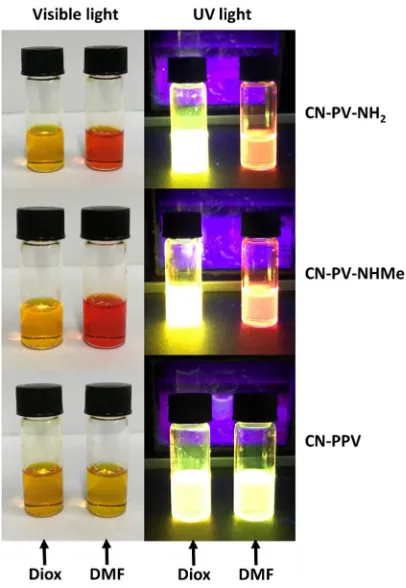
wavelengths in the visible spectrum. In many cases, they represent efficient DR probes with large
56
Stoke’s shift. The nitrile group provides high electron affinity [24] and exerts a large influence on the
57
photoluminescent (PL) and electroluminescent (EL) properties of the final material [25,26]. Moreover,
58
it can induce steric hindrance resulting in a twisted conformation, which enables the fluorophores to
59
be protected from the ACQ effect [27-29]. Our approach consists in linking well-defined CN-PV
60
emitting units to non-emitting blocks determining an interruption of the conjugation path. In this
61
way, we can improve the polymer processability as well as prevent the aggregation-caused
62
quenching effect.
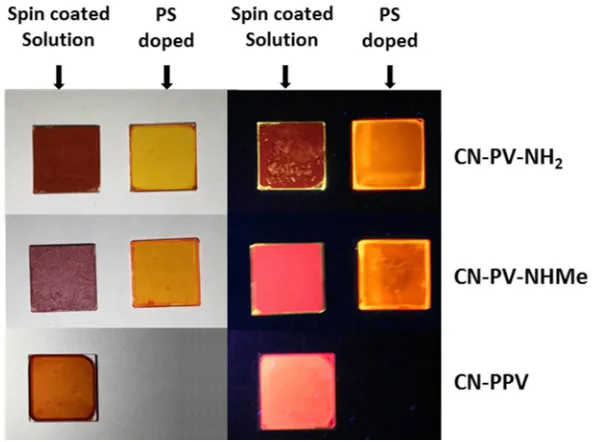
63
In a previous work, we presented a series of blue fluorophores and the related polyamides with
64
the PV units co-polymerized with non-photoluminescent co-monomers [23]. In this article, we
65
describe the facile synthesis of a new PV based donor-acceptor system (D-A-D-A-D). This probe is
66
symmetrically functionalized with electron donating terminal amino-groups and electron
67
withdrawing cyano groups on the vinylene moiety. The same diamino precursor was employed to
68
obtain both the final low molecular weight fluorophore and to realize the polyamide. In the latter
69
case, two different dichlorides were simultaneously employed with the aim to obtain an amorphous
70
ter-copolymer, optimizing both solubility and glass transition temperature. An accurate examination
71
of PL properties in solution and in the solid state has been carried out. Both the fluorophore and the
72
polymer act as DR emitters in the solid state, showing also large Stoke’s shift and relevant
73
solvatochromic effects. Remarkably, AIE effect is dominant for the CN-PV-NHMe fluorophore, with
74
a medium quantum efficiency in solution (30%) and a remarkable PLQY (50%) in the solid state.
75
These results were discussed by a correlation of the X-Ray results with a computational study.
76
2. Results and Discussion
77
2.1. General Route for the Synthesis of Fluorophores
78
Mono and polymeric fluorophores were obtained as summarized in Scheme 1. The reduction of
79
CN-PV-NO2 led to the monomer CN-PV-NH2. The diamino derivative was employed to prepare both
80
82
Scheme 1. Sinthetic route to the target compounds CN-PV-NHMe and CN-PPV
83
The identification and the evaluation of the purity degree were assessed by mass spectrometry and
84
1H NMR. Phase behavior was examined by optical observation and DSC and TGA analysis. All
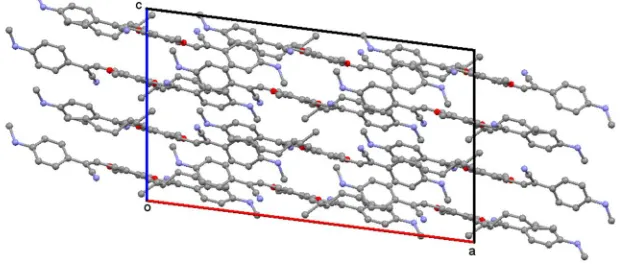
85
materials are thermally stable up to 300 °C under nitrogen flow. The ter-polymer CN-PPV was
86
synthesized by polycondensation reaction between the chromophore CN-PV-NH2 and a mixture of
87
two different acyl dichlorides (dodecanedioyl and suberoyl). It was designed to guarantee a random
88
and hence more soluble amorphous material, in which chromophores are diluted in a processable
89
polymeric system. Based on Tg and inh values, the polymer can be consider an oligomer, although
90
no evidence of COOH terminl groups was found in the 1H NMR spectrum. On the other hand, the
91
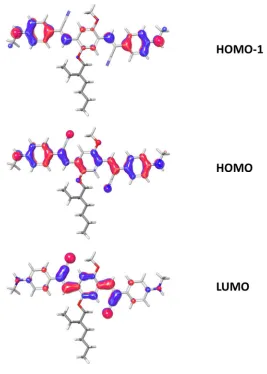
low degree of polymerization guarantees good solubility in many common solvents and therefore
92
easy processability.
93
2.2. Photophysical properties
94
Photophysical measurements were performed both in solution and in the solid state, including
95
PLQY measurements. A strong solvatocromic effect was detected for both the low molecular weight
96
compounds CN-PV-NH2 and CN-PV-NHMe (see Table 1, columns 2 and 3).
Table 1. Optical data of synthesized compounds.
98
Compound abs-sol (nm)a
em-sol (nm)b
abs-film (nm)c
em-film (nm)d
PLQY% filme
PLQY% solutionf
CN-PV-NH2 436i;449ii 536i; 609ii 476j; 462jj 530j; 559jj 51j; 275jj 263
CN-PV-NHMe 464i;470ii 554i; 622ii 495j; 474jj 635j; 598jj
535j; 508jj 293
CN-PPV 441i;445ii 518i,ii 458j 613j
183j
263
a Wavelength of UV-Visible absorbance maxima in (i) dioxane (ii) DMF solution. b Wavelength of emission
99
maxima in (i) dioxane (ii) DMF solution. c Wavelength of UV-Visible absorbance maxima on thin film obtained
100
(j) by slow evaporation of the sample or (jj) by dispersing the sample in polystyrene at 10% by weight.
101
d Wavelength of emission maxima on thin film obtained (j) by slow evaporation of the sample or (jj) by
102
dispersing the sample in polystyrene at 10% by weight. e PL quantum yield on thin film obtained (j) by slow
103
evaporation of the sample or (jj) by crystalline micro-dispersion in polystyrene, 10% by weight. f PL quantum
104
yield in dioxane.
105
In solution, the absorption was recorded in the range from 436 to 470 nm and the emission from 518
106
to 622 nm with a red-shif effect dependending on solvent polarity. In dioxane the compounds appear
107
yellow-green emitters. In more polar solvents as DMF, we observed a red shift of the emission peak.
108
This is consistent with the existence of a polar excited state, which is stabilized in a polar environment
109
and has an increased probability of decaying to the ground state by non radiative paths (Figure 1).
110
Furthermore, quantum efficiency in DMF decreases significantly. In the case of CN-PPV polymer, we
111
do not observe the same solvatochromic effect: the polymer exhibits a strong yellow-green emission
112
both in dioxane and in DMF, with CIE 1931 coordinates of (0.36, 0.57) and a measured PLQY of 26%
113
in dioxane or in DMF solution (see Figure 1).
114
Figure 1. Precursor CN-PV-NH2, fluorophore CN-PV-NHMe and polymer CN-PPV solution (10% w/w) in
116
dioxane (left) and DMF (right) in natural light (left column) and under 375 nm UV light (right column).
117
In solution, PL quantum yields were measured by relative methods using as standard quinine sulfate
118
QS (UQS ¼ 0.546 in H2SO4 1 N, when excited at 365 nm according to Melhuish [30]). The values
119
appear independent from the solvent and very similar. All compounds show deep red
120
photoluminescence with a pronounced Stoke’s shift both in solution and in the solid state.
121
Remarkably, in the solid state, Stoke’s shifts range from 140 to 160 nm. In order to test the effect of a
122
dilution in the solid state, we prepared two types of solid films: by spin-coating of a solution of each
123
compound or by microdispersion of the shattered crystals in a polystyrene matrix at 10% by weight
124
(PS doped film). In some cases, the use of a microdispersion of the crystalline fluorophores in PS
125
represented the right way to prevent ACQ effect in the solid state [12,22]. In Figure 2, the solid
126
samples on quartz slides are shown.
127
128
Figure 2. Fluorophores thin film (left) and in 10% PS doped thin flm (right) in natural (left column) and under
129
375 nm UV light (right column).
130
All solid compounds are red both under natural and UV lamp. CN-PV-NH2 micro-dispersed in
131
polystyrene (Figure 2, top) showed enhancement of PL emission respect to the pure thin film,
132
reaching the same value measured in dioxane diluted solution (see also Figure 1). CN-PV-NHMe
133
displays a strong deep red emission, with a remarkable 53% PLQY in thin film. The same compound
134
dispersed in polystyrene emits at 598 nm with a comparable 50% PLQY, whereas in solution shows
135
only a faint emission. The stronger emission observed in the solid state can be ascribable to the
136
presence of cyano substituents on the conjugated system, whose effect is to restrict molecular motions
137
and to stabilize a twisted conformation in the solid. This permits the fluorophore to emit more
138
efficiently in the aggregated state. In fact, the twisted geometry, hindering intermolecular close
139
stacking and intense - interaction, may lead to intense aggregation-induced emission effect (AIE)
140
[14]. In order to verify this hyphotesis, we carried out a crystallographic study on CN-PV-NHMe,
141
which shows the higher PLQY in the solid and was easily obtained as single crystals.
142
In the solid phase, also the polymer is a DR emitter (see Figure 2), but with a PLQY value similar to
143
those of the compounds in solution (Table 1). CN-PPV can be considered infact a diluted system of
144
the fluorophore core. PLQY value measured for CN-PPV thin film is lower than the value of
CN-PV-145
NHMe and close to the value of CN-PV-NH2 dispersed in polystyrene, so in the polymer chain the
146
however is not easily rationalizable because dipole–dipole interactions in the polymeric amorphous
148
sample are conceivably very different from the same interactions acting in the crystalline samples.
149
2.3 X-Ray Crystallography
150
The molecular structure of CN-PV-NHMe was determined by single crystal X-ray analysis.
151
Compound crystallizes in the monoclinic C2/c space group with one molecule contained in the
152
asymmetric unit. All bond lengths and angles fall within the normal range. An ORTEP view of the
153
molecular structure is reported in Figure 3. Details of crystallographic data and refinement
154
parameters are reported in Table S1 of Supplementary Materials.
155
156
Figure 3. Ortep view of CN-PV-NHMe with thermal ellipsoids drawn at 30% probability level. Only
157
major part of the disordered aliphatic group is shown for clarity
158
The molecule is characterized by three phenyl rings mutually twisted each to the other. The
159
mean planes of outlying C1/C6 and C19/C24 phenyl rings are 49.01(18)° and 31.47(16)° tilted with
160
respect to the central C10/C15 mean plane ring. An overall elongated, almost flat shape of the
161
molecule is observed, with aminic and alifatic groups quite in-plane. As expected, the planar
162
geometry at the aminic N atoms shows a degree of conjugation with the binded phenyl group. The
163
crystal packing is stabilized by face-to-edge aromatic interactions (Figure 4). No - aromatic stacking
164
is found, due to the twisting of phenyl rings in adjacent molecules (Figure S1, Supp. Mat.).
165
166
Figure 4. Crystal packing of CN-PV-NHMe viewed along b axis. Ball-and-stick style, H atoms not drawn
167
for clarity.
168
In the crystal packing the aminic hydrogen atoms are involved in intermolecular weak interactions
169
1 0) directions (N1-H···N4i : 0.97(6) Å, 2.34(6) Å, 3.237(7) Å, 153(5)°, i = x+1/2, y-1/2, z; N2-H···N3ii
171
0.84(5) Å, 2.51(5) Å, 3.323(7) Å, 166(5)°, ii = x-1/2, y+1/2, z) (See Figure S2, Supp. Mat.).
172
2.4 Computational Studies
173
The excitation energies were obtained at the density functional level by using the
time-174
dependent perturbation theory approach (TDDFT) with the adiabatic local density approximation,
175
which have high reliability in obtaining accurate predictions for excitation energies and oscillator
176
strengths. Calculations on CN-PV-NHMe in DMF showed the localization of HOMO and LUMO
177
orbitals (see Figure 5).
178
179
Figure 5. HOMO-1, HOMO and LUMO representation for CN-PV-NHMe
180
HOMO is delocalized overall the conjugated backbone, with only a moderate contribution of the
181
cyano groups. Contrarily, the LUMO is mainly focused on the central part of the molecule and on the
182
electron withdrawing cyano groups. The main transition, at 487 nm, is the HOMO LUMO. The
183
second main strong absorption at 394 nm is due to the transition HOMO–1 LUMO. The predicted
184
absorption maximum is in good agreement with the experimental values (see Table 2 and Table 1),
185
the two main absorptions corresponding to the HOMOLUMO and HOMO-1LUMO transitions.
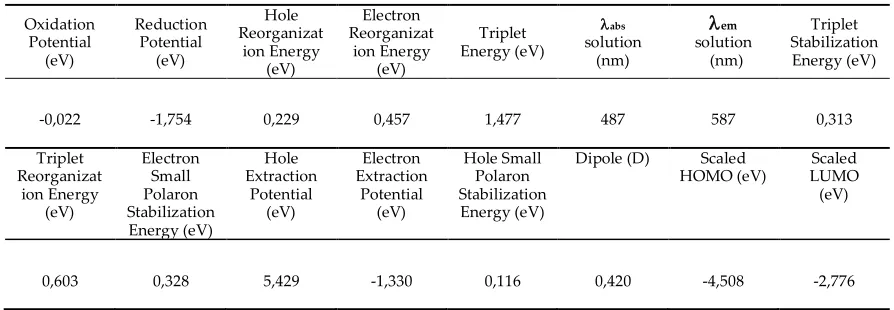
186
Table 2. Calculated electro-optical parameters for CN-PV-NHMe.
188
Oxidation Potential (eV) Reduction Potential (eV) Hole Reorganizat ion Energy (eV) Electron Reorganizat ion Energy (eV) Triplet Energy (eV) abs solution (nm) em solution (nm) Triplet Stabilization Energy (eV)-0,022 -1,754 0,229 0,457 1,477 487 587 0,313
Triplet Reorganizat ion Energy (eV) Electron Small Polaron Stabilization Energy (eV) Hole Extraction Potential (eV) Electron Extraction Potential (eV) Hole Small Polaron Stabilization Energy (eV)
Dipole (D) Scaled
HOMO (eV)
Scaled LUMO
(eV)
0,603 0,328 5,429 -1,330 0,116 0,420 -4,508 -2,776
CN-PV-NHMe exhibits hole and electron reorganization energies (HRE and ERE respectively)
189
that are typical for these compounds. DFT calculations permit to investigate the first oxidation
190
potential to explain the electron-donating properties of the compound. Withdrawal of the electron
191
from the compound in a redox reaction is performed from its HOMO. The observed trend in
192
oxidation potential for the three compounds indicates destabilization of the HOMO.
193
The intense DR emission of CN-PV-NHMe arises from the D-A-D-A-D motif with strong donor and
194
acceptor functionalities and at the same time largely delocalized frontier MOs, giving rise to a large
195
oscillator strength of the emitting state. As reported for similar compounds [12], in our systems, only
196
a minor intramolecular charge transfer character is observed, and the oscillator strength is thus large
197
for the ground to the first excitedstate transition (f= 2.27) [29]. The large radiative decay and the
198
strong fluorescence, with a quantum yield of about 50% in the solid, could also be attributed to
199
strongly twisted equilibrium structures, as confirmed by the X-ray analysis (Figures 3, 4).
200
4. Materials and Methods
201
All starting products were commercially available. The chlorides were distilled before use.
202
2-(2-Ethylhexyloxy)-5-methoxyterephthalaldehyde was obtained as described in [23]. Optical
203
observations were performed by using a Zeiss Axioscop polarizing microscope equipped with a FP90
204
Mettler heating stage. Phase transition temperatures and enthalpies were measured using a DSC
205
scanning calorimeter Perkin Elmer Pyris 1 at a scanning rate of 10 °C/min, under nitrogen flow. 1H
206
NMR spectra were recorded with Varian Gemini 300 MHz apparatus. Mass spectrometry
207
measurements were performed using a Q-TOF premier instrument (Waters, Milford, MA, USA)
208
equipped by an electrospray ion source and a hybrid quadrupole-time of flight analyzer. Mass
209
spectra were acquired in positive ion mode, in 50 % CH3CN solution, over the 400-800 m/z range.
210
Instrument mass calibration was achieved by a separate injection of 1 mM NaI in 50% CH3CN. Data
211
were processed by using MassLynx software (Waters). UV-Visible and fluorescence spectra were
212
recorded with JASCO spectrometers. Jasco F-530 (scan rate 200 nm min-1) and on a spectrofluorimeter
213
Jasco FP-750 (excitation wavelengths set at the absorption maxima of the samples, scan rate 125 nm
214
min-1).
215
Thin films of the amino precursor, the fluorophore and the polymer were obtained by the
spin-216
coating technique of a micro-dispersion of shattered crystals (10% by weight) and low weight
217
commercially available polystyrene (PS) in acetone/dichloromethane (1:2) by a SCS P6700 spin-coater
218
operating at 800 RPM. Thin films of the sample without polystyrene were obtained by casting from
219
a chloroform solution (about 30% by weight).
220
4.1 Preparation of CN-PV-NO2
221
2-(2-Ethylhexyloxy)-5-methoxyterephthalaldehyde (7.60 g, 0.0260mmol) [23] and piperidine (2
222
mL) were dissolved in pyridine (20 mL). The solution was warmed at 40°C and then
2-(4-223
solution color turned to red and the formation of a solid occurred. After one more hour, the reaction
225
was stopped and the suspension was poured in 40 mL of ethanol at room temperature. The bright
226
red solid was then recovered by filtration. The compound was recrystallized from ethanol in needle
227
shaped, dark red crystals. Yield: 55%; mp: 232 °C. 1H NMR (300 MHz, DMSO-d6, 25°C, ppm): 0.84
228
(m, 6H), 1.31 (m, 8H),1.90 (m, 1H), 3.91 (s, 3H), 4.01 (d, J =4.8 Hz, 2H), 7.81 (d, J= 3.2Hz, 4H), 8.00 (t, J
229
= 8.4 Hz, 2H), 8.26 (d, J =4.0Hz, 4H), 8.32 (m, 2H).
230
HRMS(ESI): m/z calcd for C33H32N4O6 + H+: 581.23; found 581.12 [M + H]+
231
4.2 Preparation of CN-PV-NH2
232
To CN-PV-NO2 (1.00 g, 0.700 mmol) dissolved in DMF (20.0 mL) 5.60 mL of a 1.20 M Na2S·9H2O
233
aqueous solution was added and the color turned from red to black. After 15 min, water (1.00 mL)
234
was added and the system kept at 150°C for 15 min. The mixture was slowly cooled to room
235
temperature leading to the formation of a red crystalline solid. The compound was recovered by
236
filtration and washed with slightly acid water (acetic acid, pH about 5) and then with water. The red
237
crystalline product was crystallized again from chloroform/ethanol. Yield: 90%; mp: 190 °C. 1H NMR
238
(300 MHz, DMSO-d6, 25°C, ppm): 0.96 (m, 6H), 1.48 (m, 8H),1.90 (m, 1H), 3.96 (s, 3H), 4.06 (d, J =4.0
239
Hz, 2H), 5.19 (s, 4H), 6.80 (d, J= 8.2Hz, 4H), 7.49 (d, J = 8.2 Hz, 4H), 7.85 (m 4H). HRMS(ESI): m/z calcd
240
for C33H36N4O2 + H+: 521.28; found 521.30 [M + H]+
241
4.3 Preparation of CN-PV-NHMe
242
To 1.35 g (5.37 mmol) of CN-PV-NH2, suspended in 10 mL of dry THF, 2.79 g (16.0 mmol) of
243
terzbutyl carbonate (tBOC) was added under stirring at room temperature. After 6 hours, the solvent
244
was removed in vacuo and the crude product washed with hot hexane three times. The compound
245
was employed in the following step without any further purification.
246
To CN-PV-NHtBOC dissolved in 200 mL of boiling acetone, 8.10 g (145 mmol) of KOH powder was
247
slowly added, followed by a first aliquot of 7.70 mL of ICH3. Then a second aliquot of ICH3 (7.70 mL)
248
was added dropwise after 15 min. The reaction was kept to the boil under stirring for 15 min. The
249
mixture was cooled at room temperature, filtered and the solution concenteredin vacuo to 50 mL and
250
added of 100 mL of heptane, the precipitation of a red-orange solid ensuing. The product was
251
recovered by filtration and crystallized from acetone/heptane. Yield: 70%; mp: 160 °C. 1H NMR (300
252
MHz, CDCl3, 25°C, ppm): 0.90 (m, 6H), 1.46 (m, 10H), 2.90 (s, 6H), 3.94 (s, 3H), 4.01 (d, J =5.4 Hz, 2H),
253
6.68 (d, J = 8.2Hz, 4H), 7.55 (m, 3H), 7.85 (m, 5H). HRMS(ESI): m/z calcd for C35H40N4O2 + H+: 549.32;
254
found 549.30 [M + H]+
255
4.4 Preparation of CN-PPV
256
To 0.160 g (0.60 mmol) of dodecandioic dichloride and 0.126 g (0.60 mmol) of suberic dichloride
257
dissolved in 5.0 mL of THF a solution of CN-PV-NH2 (0.607 g, 1.20 mmol) dissolved in 5 mL of dry
258
pyridine was added. The reaction was kept under vigorous stirring at reflux for 2 h. The solution was
259
poured into 150 mL of water and a solid product was recovered by filtration. The red crude product
260
was dissolved in hot DMF (50 mL) and precipitated again in 400 mL of water, recovered by filtration
261
and dried at 120 °C for 4 h. Yield: 80%; Tg= 112 °C. inh (DMF, 25 °C)= 0.50 dL/g. 1H NMR (300 MHz,
262
DMSO-d6, 25°C, ppm): 0.85-0.95 (m, 6H), 1.31-1.61 (m, 20H), 2.30-2.46 (m, 3H), 3.96 (m, 5H), 7.76 (m,
263
12H), 10.17 (s, 2H).
264
4.5 PLQY measurements
265
Photoluminescence efficiency measurements were conducted with a setup similar to the one
266
suggested by de Mello et al. [31]. This setup takes into account not only the exciting laser and direct
267
photoluminescence spectrum but also the photoluminescence that originates due to the scattering
268
effect of the integrating sphere that is part of the setup. The setup consists of a 376 nm laser whose
269
(Stellarnet Inc) and a photospectrometer (BLACK Comet Stellarnet Inc). The emission was measured
271
at five different points on the sample.
272
4.6 X-ray cristallography
273
Single crystals of CN-PV-NHMe were obtained by slow evaporation of acetone/heptane solution
274
at ambient temperature. It was not possible to obtain very good quality crystals. One selected crystal
275
was mounted in flowing N2 at 173 K on a Bruker-NoniusKappaCCD diffractometer equipped with
276
Oxford Cryostream apparatus (graphite monochromated MoK radiation, = 0.71073 Å, CCD
277
rotation images, thick slices, and scans to fill asymmetric unit). Semiempirical absorption
278
corrections (SADABS [32]) were applied. The structure was solved by direct methods (SIR97 program
279
[33]) and anisotropically refined by the full matrix least-squares method on F2 against all independent
280
measured reflections using SHELXL-2016 [34] and WinGX software [35]. The H atoms at aminic
281
groups were located in difference Fourier maps and freely refined with Uiso(H) equal to 1.2Ueq of the
282
carrier atom. All the other hydrogen atoms were introduced in calculated positions and refined
283
according to the riding model with C–H distances in the range 0.95–1.00 Å and with Uiso(H) equal to
284
1.2Ueq or 1.5Ueq(Cmethyl) of the carrier atom. Difference Fourier maps showed two disordered positions
285
of the branched aliphatic group that refined with occupancy factors 0.596 and 0.404. Some restraints
286
were introduced in the last stage of refinement to model the disorder using DFIX, SAME and SIMU
287
commands of Shelxl program. Crystal data and structure refinement details are reported in Table S1
288
(Supp. Mat.). The figures were generated using ORTEP-3 [36] and Mercury CSD 3.9 [37] programs.
289
Crystallographic data were deposited at Cambridge Crystallographic Data Centre with assigned
290
number CCDC 1843139. These data can be obtained free of charge from
291
www.ccdc.cam.ac.uk/structures.
292
4.7 Computational studies
293
All quantum calculations were carried out using the Jaguar program [38] as implemented in the
294
Schrödinger Material Science Suite [39]. Geometry optimizations were performed with the B3LYP
295
functional and the 6-31G** basis set in which the transition metals are represented using the Los
296
Alamos LACVP** basis that includes relativistic effective core potentials. The energies of the
297
optimized structures are re-evaluated by additional single-point calculations on each optimized
298
geometry using Dunning's correlation-consistent triple-ζ basis set42 cc-pVTZ(-f) that includes a
299
double set of polarization functions. Vibrational frequency calculation results based on analytical
300
second derivatives at the B3LYP/6-31G**(LACVP**) level of theory were used to confirm proper
301
convergence to local minima and to derive the zero-point-energy (ZPE) and entropy corrections at
302
room temperature where unscaled frequencies were used.
303
5. Conclusions
304
A new DR dicyano-phenylenevinylene emitter and the ter-polymer containing the same
305
fluorophore unit have been synthesized. A detailed study of PL properties in solution and in the
306
solid-state compounds has been carried out. A bright red emission for the fluorophore was recorded
307
with 50% PLQY in the solid state. Interestingly, no ACQ effect was detected on the fluorophore. A
308
detailed X-ray investigation correlated with TD-DFT analysis was presented in order to explore this
309
behavior. In the solid state of CN-PV-NHMe (film or doped PS film), owing to the restriction of
310
intramolecular motions induced by the cyano substituents, the radiative channel is activated, causing
311
intense aggregation-induced emission (AIE). Regarding the polymer, although a noteworthy
312
quantum efficiency was not observed, this was a way of exploiting the advantages to covalently bond
313
the fluorophores into an easily processable material retaining medium DR photoluminescence.
314
Supplementary Materials: The following are available online at www.mdpi.com/link, Table S1:
315
Crystallographic data and structural refinement details of NHMe. Figure S1: Partial packing of
CN-PV-316
NHMe with shortest distances involving aromatic centroids. Figure S2: Molecular ribbon of CN-PV-NHMe
317
Acknowledgments: The authors are grateful to the Italian Ministry of Education, University and Research
319
(MIUR) [grant number 300395FRB17] for financial support.
320
Author Contributions: B.P. and U.C. conceived and designed the experiments; R.D. and S.C. performed the
321
experiments; S.P. and L. S. performed the theoretical analysis; A.T performed the crystallographic experiments;
322
R.S and S. N. performed the optical measurements; B.P and R. D. analyzed the data; R.D. and S. C. wrote the
323
paper.
324
Conflicts of Interest: The authors declare no conflict of interest.
325
References
326
1. Lindla, F.; Boesing, M.; van Gemmern, P.; Bertram, D.; Keiper, D.; Heuken, M.; Kalisch, H.; Jansen, R.H.
327
Employing exciton transfer molecules to increase the lifetime of phosphorescent red organic light emitting
328
diodes. Applied Physics Letters 2011, 98, 84.
329
2. Shi, C.; Guo, Z.; Yan, Y.; Zhu, S.; Xie, Y.; Zhao, Y.S.; Zhu, W.; Tian, H. Self-assembly solid-state enhanced
330
red emission of quinolinemalononitrile: Optical waveguides and stimuli response. ACS applied materials &
331
interfaces 2012, 5, 192-198.
332
3. Song, M.; Park, J.S.; Kim, C.-H.; Kim, J.S.; Gal, Y.-S.; Lee, J.W.; Jin, S.-H. Development of efficient
solution-333
processed red phosphorescent organic light-emitting diodes using carrier transport materials. Synthetic Metals
334
2010, 160, 1623-1626.
335
4. Bruno, A.; Borriello, C.; Luccio, T.D.; Nenna, G.; Sessa, L.; Concilio, S.; Haque, S.A.; Minarini, C. White
336
light-emitting nanocomposites based on an oxadiazole-carbazole copolymer (poc) and inp/zns quantum dots.
337
Journal of Nanoparticle Research 2013, 15.
338
5. Concilio, S.; Bugatti, V.; Iannelli, P.; Piotto, S.P. Synthesis and characterization of new photoluminescent
339
oxadiazole/ carbazole-containing polymers. International Journal of Polymer Science 2010, 2010.
340
6. Concilio, S.; Bugatti, V.; Neitzert, H.C.; Landi, G.; De Sio, A.; Parisi, J.; Piotto, S.; Iannelli, P. Zn-complex
341
based on oxadiazole/carbazole structure: Synthesis, optical and electric properties. Thin Solid Films 2014, 556,
342
419-424.
343
7. Kim, S.O.; Lee, K.H.; Kwon, H.J.; Kim, Y.K.; Yoon, S.S. In Diarylamino-substituted stilbene derivatives for blue
344
organic light-emitting diodes, Nanoelectronics Conference (INEC), 2010 3rd International, 2010; IEEE: pp 678-679.
345
8. Argeri, M.; Borbone, F.; Caruso, U.; Causà, M.; Fusco, S.; Panunzi, B.; Roviello, A.; Shikler, R.; Tuzi, A. Color
346
tuning and noteworthy photoluminescence quantum yields in crystalline mono-/dinuclear znii complexes.
347
European Journal of Inorganic Chemistry 2014, 2014, 5916-5924.
348
9. Borbone, F.; Caruso, U.; Causà, M.; Fusco, S.; Panunzi, B.; Roviello, A.; Shikler, R.; Tuzi, A. Series of o, n,
o-349
tridentate ligands zinc (ii) complexes with high solid-state photoluminescence quantum yield. European Journal
350
of Inorganic Chemistry 2014, 2014, 2695-2703.
351
10. Caruso, U.; Panunzi, B.; Roviello, A.; Tingoli, M.; Tuzi, A. Two aminobenzothiazole derivatives for pd (ii)
352
and zn (ii) coordination: Synthesis, characterization and solid state fluorescence. Inorganic Chemistry
353
Communications 2011, 14, 46-48.
354
11. Borbone, F.; Caruso, U.; Concilio, S.; Nabha, S.; Panunzi, B.; Piotto, S.; Shikler, R.; Tuzi, A. Mono-, di-, and
355
polymeric pyridinoylhydrazone znii complexes: Structure and photoluminescent properties. European Journal of
356
Inorganic Chemistry 2016, 2016, 818-825.
357
12. Kim, M.; Whang, D.R.; Gierschner, J.; Park, S.Y. A distyrylbenzene based highly efficient deep
red/near-358
infrared emitting organic solid. Journal of Materials Chemistry C 2015, 3, 231-234.
359
13. Du, C.; Ye, S.; Liu, Y.; Guo, Y.; Wu, T.; Liu, H.; Zheng, J.; Cheng, C.; Zhu, M.; Yu, G. Fused-seven-ring
360
anthracene derivative with two sulfur bridges for high performance red organic light-emitting diodes. Chemical
361
Communications 2010, 46, 8573-8575.
362
14. Zhao, Q.; Sun, J.Z. Red and near infrared emission materials with aie characteristics. Journal of Materials
363
Chemistry C 2016, 4, 10588-10609.
364
15. Wang, Y.J.; Shi, Y.; Wang, Z.; Zhu, Z.; Zhao, X.; Nie, H.; Qian, J.; Qin, A.; Sun, J.Z.; Tang, B.Z. A red to
near-365
ir fluorogen: Aggregation-induced emission, large stokes shift, high solid efficiency and application in
cell-366
imaging. Chemistry-A European Journal 2016, 22, 9784-9791.
367
16. Yang, W.; Liu, C.; Gao, Q.; Du, J.; Shen, P.; Liu, Y.; Yang, C. A morphology and size-dependent on-off
368
switchable nir-emitting naphthothiazolium cyanine dye: Aie-active ciee effect. Optical Materials 2017, 66,
623-369
629.
370
17. Zhang, J.N.; Kang, H.; Li, N.; Zhou, S.M.; Sun, H.M.; Yin, S.W.; Zhao, N.; Tang, B.Z. Organic solid
371
fluorophores regulated by subtle structure modification: Color-tunable and aggregation-induced emission.
372
18. Cho, N.S.; Hwang, D.-H.; Jung, B.-J.; Lim, E.; Lee, J.; Shim, H.-K. Synthesis, characterization, and
374
electroluminescence of new conjugated polyfluorene derivatives containing various dyes as comonomers.
375
Macromolecules 2004, 37, 5265-5273.
376
19. Dos Santos, D.; Beljonne, D.; Cornil, J.; Brédas, J. Electronic structure of the lowest singlet and triplet excited
377
states in cyano-substituted oligo (phenylene vinglene) s. Chemical physics 1998, 227, 1-10.
378
20. Gill, R.E.; van Hutten, P.F.; Meetsma, A.; Hadziioannou, G. Synthesis and crystal structure of a
cyano-379
substituted oligo (p-phenylenevinylene). Chemistry of materials 1996, 8, 1341-1346.
380
21. Makowski, B.T.; Lott, J.; Valle, B.; Singer, K.D.; Weder, C. Functionalized cyano-opvs as melt-processable
381
two-photon absorbers. Journal of Materials Chemistry 2012, 22, 5190-5196.
382
22. Wen, W.; Shi, Z.-F.; Cao, X.-P.; Xu, N.-S. Triphenylethylene-based fluorophores: Facile preparation and
full-383
color emission in both solution and solid states. Dyes and Pigments 2016, 132, 282-290.
384
23. Roviello, A.; Borbone, F.; Carella, A.; Diana, R.; Roviello, G.; Panunzi, B.; Ambrosio, A.; Maddalena, P. High
385
quantum yield photoluminescence of new polyamides containing oligo-ppv amino derivatives and related
386
oligomers. Journal of Polymer Science Part A: Polymer Chemistry 2009, 47, 2677-2689.
387
24. Friend, R.; Greenham, N.; Skotheim, T.; Elsenbaumer, R.; Reynolds, J. Handbook of conducting polymers.
388
Eds.: Skotheim, TA 1998, 823.
389
25. Cirpan, A.; Rathnayake, H.P.; Gunbas, G.; Lahti, P.M.; Karasz, F.E. New conjugated materials containing
390
cyano substituents for light-emitting diodes. Synthetic metals 2006, 156, 282-286.
391
26. Chen, S.; Su, C.; Su, A.; Chen, S. Molecular aggregation and luminescence behavior of bulk poly (2, 5, 2 ‘, 5
392
‘-tetrahexyloxy-8, 7 ‘-dicyano-di-p-phenylenevinylene). The Journal of Physical Chemistry B 2004, 108, 8855-8861.
393
27. Upamali, K.A.; Estrada, L.A.; De, P.K.; Cai, X.; Krause, J.A.; Neckers, D.C. Carbazole-based cyano-stilbene
394
highly fluorescent microcrystals. Langmuir 2011, 27, 1573-1580.
395
28. Park, J.; Seo, J.; Lim, S.; Ryu, G.; Shin, D.; Kim, Y. The effect of the molecular structure of organic material
396
on the properties of solid-state fluorescence and electroluminescence. Journal of Physics and Chemistry of Solids
397
2008, 69, 1314-1319.
398
29. Shimizu, M.; Kaki, R.; Takeda, Y.; Hiyama, T.; Nagai, N.; Yamagishi, H.; Furutani, H. 1, 4-bis
(diarylamino)-399
2, 5-bis (4-cyanophenylethenyl) benzenes: Fluorophores exhibiting efficient red and near-infrared emissions in
400
solid state. Angewandte Chemie International Edition 2012, 51, 4095-4099.
401
30. Melhuish, W. Quantum efficiencies of fluorescence of organic substances: Effect of solvent and
402
concentration of the fluorescent solute1. The Journal of Physical Chemistry 1961, 65, 229-235.
403
31. de Mello, J.C.; Wittmann, H.F.; Friend, R.H. An improved experimental determination of external
404
photoluminescence quantum efficiency. Advanced materials 1997, 9, 230-232.
405
32. SADABS, B. 1; Bruker AXS Inc. Madison, Wisconsin, USA 2001.
406
33. Altomare, A.; Burla, M.C.; Camalli, M.; Cascarano, G.L.; Giacovazzo, C.; Guagliardi, A.; Moliterni, A.G.;
407
Polidori, G.; Spagna, R. Sir97: A new tool for crystal structure determination and refinement. Journal of Applied
408
Crystallography 1999, 32, 115-119.
409
34. Sheldrick, G.M. Crystal structure refinement with shelxl. Acta Crystallographica Section C: Structural
410
Chemistry 2015, C71, 3-8.
411
35. Farrugia, L.J. Wingx and ortep for windows: An update. Journal of Applied Crystallography 2012, 45, 849-854.
412
36. Farrugia, L.J. Ortep-3 for windows-a version of ortep-III with a graphical user interface (gui). Journal of
413
Applied Crystallography 1997, 30, 565-565.
414
37. Macrae, C.F.; Bruno, I.J.; Chisholm, J.A.; Edgington, P.R.; McCabe, P.; Pidcock, E.; Rodriguez-Monge, L.;
415
Taylor, R.; Streek, J.v.; Wood, P.A. Mercury csd 2.0–new features for the visualization and investigation of crystal
416
structures. Journal of Applied Crystallography 2008, 41, 466-470.
417
38. Bochevarov, A.D.; Harder, E.; Hughes, T.F.; Greenwood, J.R.; Braden, D.A.; Philipp, D.M.; Rinaldo, D.;
418
Halls, M.D.; Zhang, J.; Friesner, R.A. Jaguar: A high-performance quantum chemistry software program with
419
strengths in life and materials sciences. International Journal of Quantum Chemistry 2013, 113, 2110-2142.
420
39. 2018, S.R. Jaguar, New York, NY, 2018.
421
Sample Availability: Samples of the compounds CN-PV-NH2, CN-PV-NHMe and CN-PPV are available