Available Online atwww.ijcsmc.com
International Journal of Computer Science and Mobile Computing
A Monthly Journal of Computer Science and Information Technology
ISSN 2320–088X
IJCSMC, Vol. 3, Issue. 3, March 2014, pg.1018 – 1023
RESEARCH ARTICLE
A NOVEL APPROACH TO ENHANCE
OBJECT DETECTION USING INTEGRATED
DETECTION ALGORITHMS
1
Swati Gossain,
2Jagbir Gill
1
[email protected] 2 [email protected]
Abstract - Image processing plays an important role in the detection of object. The object detection is very necessary. In the object detection many technologies are used. But there are some reasons due to which the detector may face some problems in object detection. These problems are: congestion, noise effect and so on. Hence to remove these distortions, we are going to use the region prop along with skull detection. It helps to remove the distortions coming while we detect an object. It recognize a particular object not the noise or any other distortion. Hence it gives us a better result than the previous techniques.
Keywords - object detection, skull detection, security, video surveillance
I. INTRODUCTION
Object detection is the process of finding instances of real-world objects such as faces, bicycles, and buildings in
images or videos. Object detection algorithms typically use extracted features and learning algorithms to recognize
instances of an object category. It is commonly used in applications such as image retrieval, security, surveillance,
and automated vehicle parking systems. In the image processing, object detection and tracking plays an important
role. It requires in the computer vision. The computer vision applications includes: recognition, automotive safety,
and surveillance.
Object detection is the process of finding instances of real world objects. Object detection algorithms are used to
detection system is used to find objects in the real world from an image of the world, using object models which are
known a priori. Humans perform object detection effortlessly. The object detection problem can be defined as a
labeling problem based on models of known objects. An image contains one or more objects of interest and a set of
labels corresponding to a set of models known to the system. The object detection problem is closely tied to the
segmentation problem: without at least a partial recognition of objects, segmentation cannot be done, and without
segmentation, object recognition is not possible.
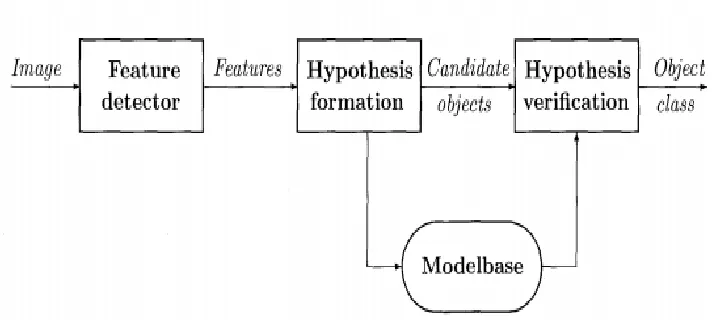
Fig 1: Different components of an object detection system
A. DESIGN ISSUES IN OBJECT DETECTION SYSTEM
1) Object Representation: For some objects, geometric descriptions may be available and may also
be efficient. The representation of an object should capture all relevant information without any
redundancies and should organize this information in a form that allows easy access by different
components of the object recognition system.
2) Feature Extraction:Thefeatures can be computed in two dimensional images but they are related
to three dimensional characteristics of objects. Due to the nature of the image formation process,
some features are easy to compute reliably while others are very difficult.
3) Feature Model Matching: In most object recognition tasks, there are many features and numerous
objects. An exhaustive matching approach will solve the recognition problem but may be too
slow to be useful.
4) Hypotheses Formation: The hypothesis formation step is basically a heuristic to reduce the size of
the search space. This step uses knowledge of the application domain to assign some kind of
5) Object Verification: If the models are geometric, it is easy to precisely verify objects using camera
location and other scene parameters. In other cases, it may not be possible to verify a hypothesis.
II. LITERATURE REVIEW
Gesture Controlled Robot using Image Processing Harish Kumar Kaura et.al ,[2013]: In this paper author
discuss the gesture control robot using the image processing. Robotic industry has been developing many new trends
to increase the efficiency, accessibility and accuracy of the systems. The robots replace the human beings. But still
these robots want the attention of the human being. To control a robot a human being is required. Robots can be
wired or wireless. The wired and wireless robots have the controller device. To control robotic system through
physical devices the gesture control is the popular method. The main purpose of using gestures is that it provides a
more natural way of controlling and provides a rich and intuitive form of interaction with the robotic system. Service
robots directly interact with people, so finding a more natural and easy user interface is of fundamental importance.
In this paper, the works have focused on issues related to manipulation and navigation in the environment. To solve
this problem, author implemented a system through which the user can give commands to a wireless robot using
gestures. With the help of this method, the user can control the robot by using gestures of his/her palm, thereby
interacting with the robotic system.
Development of Human Tracking in Video Surveillance System for Activity Analysis
Neelam V. Puri 1 and Prof. P. R. Devale,[2013]: in this paper, author discuss about the video surveillance system.
The continuous video capturing systems are the replacement for human watch. As human can be easily distracted
and one mistake may lead to big disaster. So video surveillance systems make this kind of work very easier for user
and it provides security and control where all time watch is required. In this paper author proposed a algorithm,
which helps to detect moving object and classify it as human being and keep track of moving human. It can be done
without any use of a sensing device. In this paper proposed system can classify in three steps detection, tracking and
action analysis. Detection of human being is done by combination of morphological procedure and feature
extraction method.
A SURVEY OF ACTIVITY RECOGNITION AND UNDERSTANDING THE BEHAVIOUR IN VIDEO
SURVEILLANCE, A.R.Revathi and Dhananjay Kumar, [2013]:
In this paper author discuss about the video surveillance. The visual surveillance strategies have long been in use to
gather information and to monitor people, events and activities. Video surveillance used to detect moving object,
classify the detected object track them through the sequence of images and analysis the behaviors. The goal of visual
surveillance is to develop intelligent visual surveillance to replace the traditional passive video surveillance that is
proving in effective as the numbers of cameras exceed the capability of human operators to monitor them. The
the information in that sequence. In this paper, author presents a review of human activity recognition and behavior
understanding in video sequence. The key objective of this paper is to provide a general review on the overall
process of a surveillance system used in the current trend.
Visual Surveillance of Human Activity, Larry Davis et.al: in this paper author discuss about the visual
surveillances. The ground based mobile surveillance system is used to monitors an extended area for human activity.
During motion the surveillance system must detect other moving objects and identify them as humans, animals,
vehicles. When one or more persons are detected, their movements need to be analyzed to recognize the activities. In
this paper, author uses the detecting independent motion using directional motion estimation. This paper is describes
an application of the theory developed in to the problem of detecting independent motion in long image sequences.
The approach is based on two simple geometric observations about directional components. Due to the projection
method the original problem of detecting independent motion is reduced to a combination of robust line.
III. PURPOSED WORK
In the current era of digital technology visual surveillance systems are being easier to use, versatile, inexpensive and
very fast. During motion, the surveillance system must detect other moving objects and identify them as humans,
animals, vehicles. When one or more persons are detected, their movements need to be analyzed to recognize the
activities that they are involved in. So video surveillance systems make this kind of work very easier for user and it
provides security and control where all time watch is required. Object Tracking is an important task in video
processing because of its variety of applications in visual surveillance, human activity monitoring and recognition,
traffic flow management etc. Multiple object detection and tracking in outdoor environment is a challenging task
because of the problems raised by poor lighting conditions, variation in poses of human object, shape, size, clothing,
etc. The surveillance system would be able to accomplish this even while continuing to move. The proposed
algorithm will helpful for to detect moving object and classify it as human being and keep track of moving human.
In our proposed work, we can done it with the help of two basic attributes. These attributes are
1) Activity detection and tracking: For the activity detection and tracking, we can improve the
robustness in activity analysis by providing intelligent control and fail over mechanisms. It can be
built from the top of low level motion detection algorithms. These mechanisms improve the
robustness and accuracy by maintaining tracking and recovering of the moving objects.
2) Activity recognition: for this purpose, we propose an efficient representation of human activities
based on tracked trajectories. We have developed a scheme that distinguishes different interaction
patterns among a group of people by identifying the unique signatures in the relative position and
velocity of the human being.
Object detection is use to detect the particular object from a large number of objects, the problem occurs in detection
because of shadow and background objects. Here to solve this problem we are going to use skull detection and
from whole image so that we can properly detects it Object detection technique is used to detect a particular object
from image.
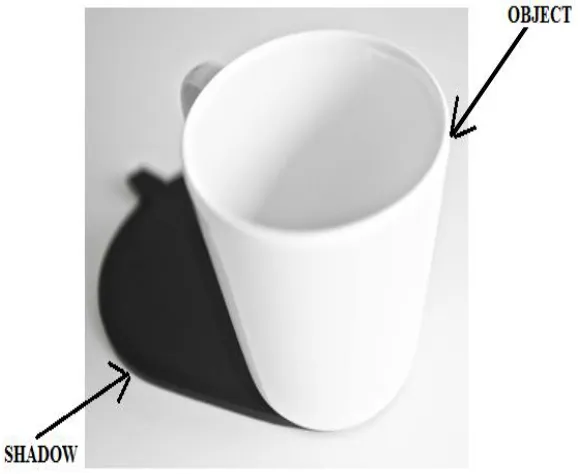
Fig 2: Image with object and shadow
Here in the figure 2, an object is shown with its shadow. Hence when we apply region growing technique, it will
helps in detecting the object.
In the figure 3, with the help of skull detection, the detected object is removed from whole image. Hence the skull
detection is helpful in removing all other objects like shadow, background and can properly detects particular
object. A fine object is appearing at the end.
REFERENCES
[1] A SURVEY OF ACTIVITY RECOGNITION AND UNDERSTANDING THE BEHAVIOUR IN VIDEO
SURVEILLANCE, A.R.Revathi and Dhananjay Kumar
[2] Development of Human Tracking in Video Surveillance System for Activity Analysis, Neelam V. Puri and Prof.
P. R. Devale, IOSR Journal of Computer Engineering (IOSRJCE) ISSN: 2278-0661 Volume 4, Issue 2 (Sep.-Oct.
2012), PP 26-30 www.iosrjournals.org
[3] Visual Surveillance of Human Activity,Larry Davis, Sandor Fejes et.al, ACCV-98, Mumbai-India, Material
Subject to ACCV Copy-Rights
[4] Nikhil Sharma, Niharika Mehta, Region Filling and Object Removal by Exempeler Based Image Inpainting,
International Journal of Inventive Engineering and Sciences (IJIES) ISSN: 2319–9598, Volume-1, Issue-3, February
2013 26
[5] Norman D. Jorstad, CRYPTOGRAPHIC ALGORITHM METRICS, January 1997
[6] Pakorn KaewTrakulPonga,*, Richard Bowdenb, A real time adaptive visual surveillance system for tracking