Overtraining Phenomena: Expert and Athlete Perspectives on Pathogenic Sport Involvement
Sean Oliver Richardson
Thesis submitted in partial fulfilment of the requirements for the Doctor of Philosophy Degree
October 14, 2005
School of Human Movement, Recreation and Performance Faculty of Arts, Education and Human Development
ABSTRACT
The purpose of this research project was to provide an in-depth account of elite athletes' experiences of, and experts’ perspectives on, overtraining and its negative outcomes. I conducted interviews with athletes and sports experts, including coaches, sport doctors, scientists, and psychologists across a variety of sports. The interviews were focussed on identifying personal and situational risk factors for overtraining behaviours and outcomes. This thesis includes discussions of the responses to the interviews from the athletes’ and the experts’ perspectives, with distinct approaches to analysing and presenting the
DECLARATION
I, Sean Oliver Richardson, declare that the Doctor of Philosophy thesis entitled “Overtraining Phenomena: Expert and Athlete Perspectives on Pathogenic Sport Involvement” is 108,300 words in length, exclusive of tables, figures, appendices, references, and footnotes. This thesis contains no material that has been submitted previously, in whole or in part, for the award of any other academic degree or diploma. Except where otherwise indicated, this thesis is my own work.
TABLE OF CONTENTS
ABSTRACT ...1
DECLARATION...2
LIST OF TABLES...10
LIST OF FIGURES ...11
DEDICATION ...12
ACKNOWLEDEGMENTS ...13
CHAPTER 1: INTRODUCTION...14
Background to the Thesis...14
Perspectives on Telling Tales...15
Rationale for the Thesis ...17
Purpose of the Thesis ...18
Evolution and Changes in Research Perspective...19
Summary ...20
CHAPTER 2: REVIEW OF LITERATURE ...22
Definitions ...22
Overtraining ...23
Overreaching ...25
Staleness ...26
Burnout...27
Underrecovery ...33
Review of OT Terminology ...35
Research Findings on Overtraining ...39
Prevalence ...39
Variations in Overtraining Processes and Outcomes...43
Markers of Overtraining ...51
Comments on the Research ...64
Overtraining Experiences and Risk Factors ...66
Expert Perspectives...67
Athlete Perspectives ...75
Summary of Risk Factor Research...81
Conclusions of Literature Review ...82
Chapter 3: My Interest in and Experience with overtraining...85
My Story of Overtraining...85
CHAPTER 4: INTRODUCTION TO STUDY 1 AND STUDY 2 METHODS ...88
Choosing an Approach...88
Role of the Researcher ...89
Rigour/Trustworthiness...90
CHAPTER 5: STUDY 1: EXPERTS’ PERSPECTIVES ON OVERTRAINING ...96
Study 1 Methods ...96
Participants ...96
Ethical Considerations...96
Design...96
Procedures...97
Analysis ...97
Third Round of Coding and Analysis ...100
Fourth Round of Coding and Analysis ...100
Final Construction of the OT Risk Factor Tree Diagram...101
Study 1 Results ...102
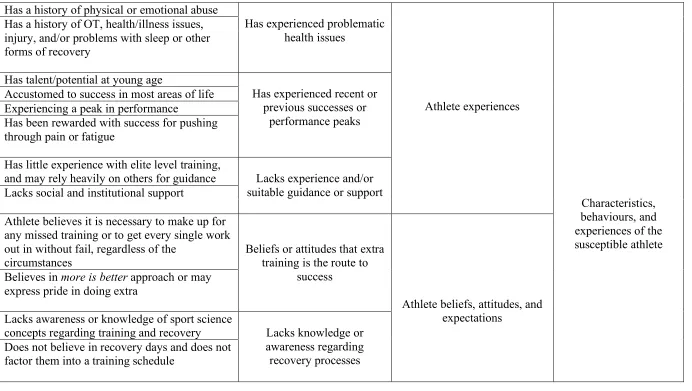
General Dimension 1: Characteristics, Behaviours, and Experiences of Susceptible Athletes ...112
Athlete Character or Personality Factors Contributing to Overtraining Risk...112
Athlete Physical Susceptibilities ...116
Athlete Experiences Contributing to Overtraining Risk...120
Athlete Beliefs, Attitudes, and Expectations ...125
Athlete Behaviours ...130
Introduction to General Dimensions 2 and 3 ...136
General Dimension 2: Situations, Factors, or People that Pressure Athletes to Increase Training...137
Behaviours and Attitudes of Coaches...138
Behaviours and Attitudes of Family and Others...141
Specific Sport Factors ...146
Socio-Cultural Factors...155
General Dimension 3: Situations, Factors, or People that Affect Athletes’ Needs for Recovery ...159
Behaviours and Attitudes of Coaches...159
Specific Sport Factors ...165
Other Life Factors that Affect Athletes’ Needs for Recovery ...172
Other Significant Results Emerging from the Expert Interviews...173
Observing Athlete Behaviours ...175
Monitoring Physiological Parameters ...176
Observing Emotional States ...176
Summary of OT Markers ...177
Preventing Overtraining...177
Engaging in Preventive Actions and Behaviours...178
Improving Education and Awareness ...180
Enhancing Communication ...181
Summary of OT Prevention ...182
Study 1 Discussion...183
General Comments...183
Literature Review...184
Definitions of Overtraining...184
Prevalence ...184
Variations in Overtraining Processes and Outcomes ...185
Markers of Overtraining...186
Comparison of Perspectives on Overtraining Risk Factors...188
Summary of Study 1 Results...196
CHAPTER 6: STUDY 2: ATHLETES’ STORIES OF OVERTRAINING...198
Study 2 Methods ...198
Participants ...198
Ethical Considerations...198
Design...198
Procedures...199
First, Second, and Third Rounds of Coding and Analysis...199
Shift in Analysis...200
Developing the Thematic Structure of the Tales...201
Writing the Tales...202
Protecting Anonymity...203
Study 2 Results ...203
Professional and Pathological: The Story of Steve ...203
Olympic Seduction: The Story of John...224
The Overtrainer: The Story of Jane ...251
Study 2 Discussion...282
Athlete Perspectives and Risk Factors for Overtraining ...282
Coaches and Parents...283
Injury in Overtraining ...285
Athlete Interviews Compared to Athlete Experiences from the Literature ...287
Coaches ...287
Injury ...289
Sport Culture...289
Personal Factors...292
Summary of Study 2 Results...294
CHAPTER 7: GENERAL DISCSUSSION ...297
Synthesis of Experts’ Perspectives and Athletes’ Experiences...297
The OT Risks and Outcomes Model...300
Introduction to Modelling OT Risk Assessment...300
Background to the Model ...301
Risk Factors ...304
Processes ...305
Responses...306
Outcomes ...306
Describing OT Risk Assessment within a Temporal Framework ...307
Planning Training and Recovery ...308
Monitoring Stress and Recovery ...309
Responding to Stress/Recovery Imbalances ...310
Responding to Setbacks ...311
Conclusions on the OT Risks and Outcomes Model ...311
Comparing the OT Risks and Outcomes Model to Current Conceptual Models of OT311 Multi-Systemic Model (Myers & Whelan, 1998) ...312
Conceptual Model of Overtraining (Kenttä & Hassmén, 1998, 2002)...314
OT Risks and Outcomes Model vs. Multi-Systemic and Conceptual Models...317
Methodological Issues, Future Research, Implications for Professional Practice, Implications for Me, and Contributions to the Literature ...323
Methodological Issues...323
Future Research...324
Implications for Professional Practice ...326
Implications for Me as Researcher, Practitioner, and Athlete...329
Contributions of the Thesis...330
REFERENCES...333
APPENDIX A ...344
Semi-Structured Interview Guide for Expert Participants ...344
Information for Expert Participants Involved in Research ...346
APPENDIX C...347
Consent Form for Expert Participants Involved in Research ...347
APPENDIX D ...348
Information for Athlete Participants Involved in Research ...348
APPENDIX E...349
LIST OF TABLES
Table 1: Major Components of the Burnout Syndrome.………..30
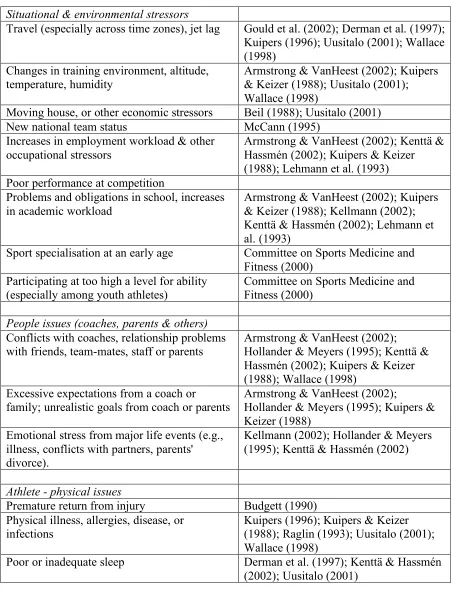
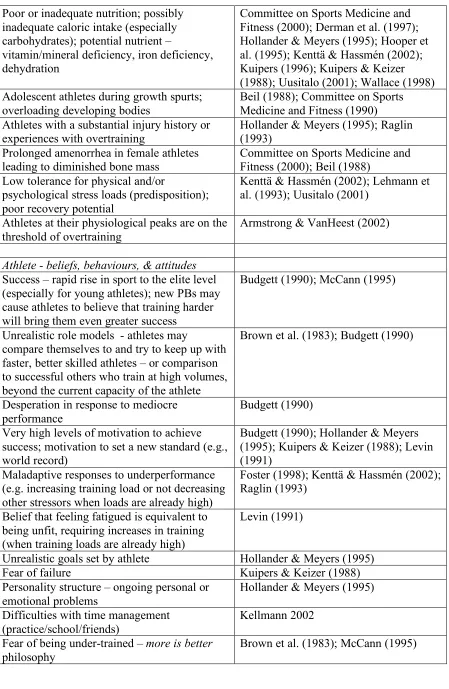
Table 2: OT Risk Factors Identified in the Literature by Researchers...71
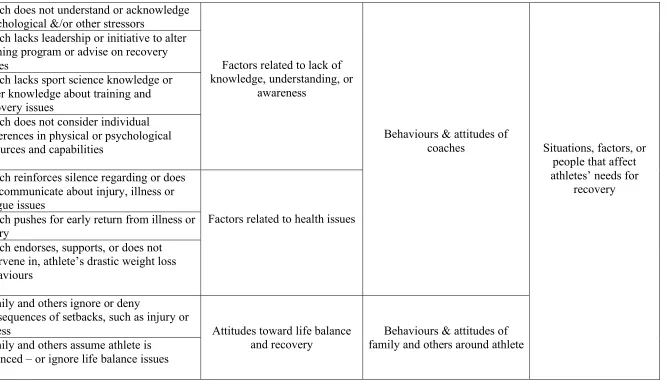
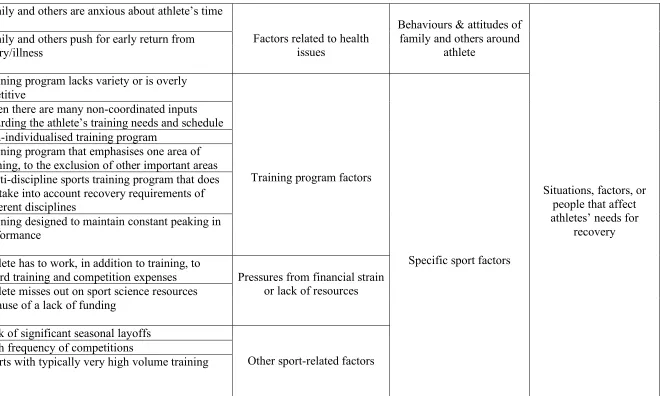
Table 3: Personal and Situational Risk Factors for OT from Expert Interviews...98
Table 4: Markers of OT...169
Table 5: Tactics for Preventing or Minimising OT...173
LIST OF FIGURES
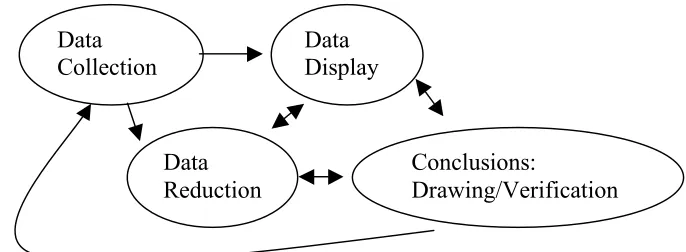
Figure 1. Components of Qualitative Data Analysis...93
Figure 2. OT Risks and Outcomes Model ...297
Figure 3. Systemic View of the Athlete in Sport Contexts...307
Figure 4. Systemic View of the Athlete in Non-Sport Contexts...307
DEDICATION
ACKNOWLEDEGMENTS
Thank you Dr. Tony Morris and Dr. Mark “BD” Andersen for your guidance over the last five years, both academically and personally. Tony, as my principle thesis
CHAPTER 1: INTRODUCTION Background to the Thesis
In the pursuit of excellence, athletes push themselves to the limits of their physical capacities, and many athletes and coaches have tended to equate large volumes of training with success. Such heavy training, however, can lead to the undesirable outcomes of decreased performance levels, illness, and injury. Athletes and coaches in this situation commonly respond to drops in performance by increasing the training load still further (O’Toole, 1998). In many sports, athletes are under substantial pressure to perform from coaches, parents, administrators, and themselves, and often will do “whatever it takes” to win (Gould, Tuffey, Udry, & Loehr, 1997; Krane, Greenleaf, & Snow, 1997). Although the intuitions of coaches and athletes alike drive them to this more is better philosophy in training for peak performance, the risk for an athlete to descend to a state of physiological exhaustion or injury escalates with mounting pressures and increasing workloads.
In response to the increases in training volumes and intensities, potentially leading to illness, injury, and other OT outcomes, prevalent in today’s competitive sports, athletes, coaches, and researchers seem to be improving awareness for the importance of balancing training with adequate recovery (Botterill & Wilson, 2002; Davis IV, Botterill, &
MacNeill, 2002; Gould & Dieffenbach, 2002; Hanin, 2002; Hogg, 2002; Kellmann, 2002; Kellmann, Patrick, Botterill, & Wilson, 2002; Kenttä & Hassmén, 2002; Norris & Smith, 2002), acknowledging, perhaps, that more is not always better. Noting this shift in
awareness, Kellmann (2002) quoted statements made by several professional athletes to German newspapers. A tennis player reported, "My recent successes are due to less tennis, more regeneration, and the forced break (due to injuries); I'm less exhausted and burnt out than the other players," (p. 4) and a cyclist reported, "I'm better this year because I train less; in other years, I was already tired before the race" (p. 4).
The previous quotes provide examples where athletes seem to have responded positively to potential OT situations. Nonetheless, it is likely that there are many athletes and coaches who are still risking OT and its negative outcomes. What I was interested in with this thesis was to present descriptive research on athletes’, coaches’, and sport
scientists’ experiences with OT processes and outcomes in elite sport. With the two studies in this thesis, the first an interview study with sports experts, and the second with athletes, I planned to illustrate different perspectives and experiences with OT. In congruence with these different perspectives, I have presented the interviews from the experts and the athletes in styles that fit the stories told by these two distinct groups.
Perspectives on Telling Tales
of the different ways of representing knowledge in qualitative research traditions. Sparkes noted the following:
Some suggest that researchers-as-authors need to indicate their positioning in relation to the research process and the other people involved. They also suggest that researchers engage in a self-reflexive analysis of the social categories to which they belong, since these enter into and shape what constitutes knowledge in any project. Consequently, for them, the author needs to be written into, and not out of, the text.
My life in sport as a competitor, a coach, an observer, and a sport psychologist, and my own experiences with the phenomena of OT and injury, have positioned me as an active participant in the research process and affected the way that knowledge will be represented in this thesis. As an author, I have been written into the text.
I began this thesis believing I would be telling a realist tale, highlighting the voices of the experts and the athletes. The results sections of the thesis are dominated by
quotations from the participants. As Sparkes (2002) noted:
Realist tales are characterized by extensive, closely edited quotations. These are used to convey to the reader that the views expressed are not those of the researcher but are rather the authentic and representative remarks transcribed straight from the mouths of the participants. (p. 44)
With the extensive use of participants’ quotations, I hope to invite the reader to take part in the stories, perhaps to identify with the athletes’ experiences of overtraining or the experts’ experiences of working with overtraining athletes. Nonetheless, with my own story of OT to tell, and with the changing viewpoints I encountered conducting this research, I have also included my voice, the confessional element of telling the tale, especially with respect to telling the stories of the athletes. As Sparkes remarked:
Even though there is a set of key conventions that frame realist tales, this frame is not rigid or impermeable. Those who feel increasingly uncomfortable about producing author-evacuated tales might consider writing more of themselves into the text when, for certain purposes, they feel this to be appropriate. (p. 54)
The field worker's point of view is often represented in confessional tales as part of the character-building conversion tale in which the researcher, who had a view of how things might happen at the start of the study, comes to see things very differently as the study progresses. (p. 60)
I am not sure how often this evolution occurs in most qualitative studies, but I found that my views of how my research on OT might progress changed substantially during the course of the project. I still feel that the main thrust of my story comes from the participants’ voices, from the experts’ tales of working with OT athletes, and from the athletes’ tales of OT and injury. I have, however, couched the experts’ perspectives more in the realist tale mode, whereas, I have filtered the tales of the athletes’ experiences through my own confessions. I hope that, by including my own voice in telling the tale, the reader may understand more clearly the perspectives presented and find the journey
through the complex phenomena of OT experience more interesting and informative. Rationale for the Thesis
Despite research findings that have linked changes in psychological and
physiological variables to alterations in intensity and volume of training (Lehmann, Foster, & Keul, 1993; O’Toole, 1998; Rowbottom, Keast, & Morton, 1998, Steinacker &
Lehmann, 2002), the research on OT has not clearly distinguished between markers that identify intense training and those that identify OT (Martin, Andersen, & Gates, 2000; Rowbottom et al., 1998, Steinacker & Lehmann, 2002). This lack of clarity about markers of OT seems to indicate that OT may not be identified easily during its onset, making it difficult for coaches and athletes to monitor training stress accurately. Nonetheless, coaches and athletes could benefit from more knowledge about the process of, and experiences with, OT to anticipate the situations that might put athletes at greater risk.
in which they emphasised a holistic approach to understanding the stress/recovery balance in athletes. Kenttä and Hassmén outlined the importance of “focusing on the individual athletes and their perceptions of training and recovery” (p. 74). Through observation, case studies, and anecdotal reports, other researchers have also identified circumstances under which the balancing act is upset, or where personal and situational variables (sport and non-sport), lead to states of OT, illness, or injury (Gould, Guinan, Greenleaf, Medbery, & Peterson, 1999; Gould, Tuffey, Udry, & Loehr, 1997; Krane, Greenleaf, & Snow, 1997; Uusitalo, 2001).
Research efforts could be concentrated on looking at the development of OT behaviour among athletes before the onset of OT syndrome, how and why athletes begin these behaviours in the first place, and what sorts of internal and external variables influence the OT process. Kenttä and Hassmén’s (2002) conceptual model provides a useful framework to describe the interactions among stressors, individual stress tolerance, and recovery processes. This model could be augmented with experts’ observations of athletes who have overtrained and stories describing athletes’ experiences with OT. In researching the multiple perspectives on and experiences with OT, I hope that we will gain a better understanding of what got athletes to the point of OT in the first place, what are the myriad possibilities that upset the balance of training and recovery, and to what sorts of situations or personal variables coaches and athletes might be alerted in the future to avoid upsetting the balance.
Purpose of the Thesis
awareness to make better decisions about training and recovery. I am guided by the following research questions: What do experts, such as coaches and sport scientists, say about overtraining? What are their experiences of working with athletes who have overtrained? What factors may predispose athletes to OT behaviour and outcomes in the first place, even before a cycle of training has commenced? How would one describe athletes susceptible to OT? What situations and intra- and interpersonal variables push athletes to overtraining?
Evolution and Changes in Research Perspective
There has been a shift in goals for the outcomes of this project from producing a checklist of risk factors for OT to presenting detailed descriptions of experts’ perspectives on OT and rich accounts of athletes’ experiences with OT. Originally, I thought I might develop a neat checklist that could be applied to athletes in most situations; I have found, however, through the interviews with experts and athletes, that athlete behaviour, whether in sports or other areas of life, is too detailed and too complex to describe adequately in a checklist. Instead of an ostensibly exhaustive list, the interviews provided stories of athletes, and people who have worked with athletes, which tell us about the human experience with adversity (injury, illness, OT syndrome) in competitive sport.
risk factors for this relatively infrequent outcome in elite sport, OT syndrome, to looking at risk factors for an entire process encompassing OT behaviour and outcomes, illness and injury, which are common experiences for most athletes. My view has deepened in that I have seen OT as an elaborate set of behaviours, with multiple outcomes, resulting from interactions among many variables in athletes’ lives. I have observed that OT is about more than just understanding how athletes handle a given training load; it encompasses seeing athletes as complex beings, characterised by ontogenetic histories, influenced by significant others, and driven by intrapsychic conflicts. What I realised when I began talking to athletes was that, regardless of sport and intensity of training, most athletes have stories to tell of times when they have gone too hard, not recovered enough, got
overstressed, returned too early from injury, turned a blind eye to a niggle that eventually got worse, acted desperately to achieve a goal that may not have been realistic, or made poor decisions about health, training, and injury, in general, when physically or
psychologically vulnerable. The similarity among many of the stories is that they are connected by an underlying behaviour pattern (that of doing too much given the
individual’s capacity to cope). With an OT process-focussed perspective, one can see that it is possible for athletes to overtrain without high training volumes or intensities, and to risk negative outcomes beyond just OT syndrome, such as illness or injury, if they are compromised in other areas of their lives.
Summary
balance. I developed a plan to interview elite athletes, coaches, sport doctors,
psychologists, and exercise scientists. I thought I could get significant insight into the personal and situational factors surrounding OT processes and outcomes by exploring multiple perspectives from athletes in the field who have experienced OT and from experts who have worked with athletes who overtrained.
I endeavoured to continue the trend Kenttä and Hassmén started (2002), distinguishing causes and consequences of OT, and extending the understanding of personal and situational risk factors. The field is moving from research on identifying OT once it has happened to research focusing on anticipating OT behaviours and outcomes by looking at risk factors. With risk factor research, it might be possible to answer the
CHAPTER 2: REVIEW OF LITERATURE
This chapter comprises a review of the literature pertaining to OT in sport,
including sections on definitions of terminology, research findings, and evidence of expert and athlete perspectives on and experiences with OT.
Definitions
As mentioned in the introduction, I started out this project thinking I would be examining something specific, called overtraining syndrome, a relatively infrequent (Urhausen & Kindermann, 2002), albeit significant, outcome in exercise and sports. With the broadening of my research focus, as guided by the interviews I conducted with experts and athletes, I began to stumble over the uses of overtraining terminology. Overtraining did not seem sufficient to describe what was going on with athletes in their everyday battles to balance their stressors with recoveries, their illnesses and injuries with good health practices, their intra- and interpersonal conflicts with well-being and quality of life. In workshops and presentations of my research, I started to talk about over-doing-it behaviour in athletes because I wanted to move away from stereotypes that people in the sport world, such as coaches and athletes, seemed to hold about overtraining. Nonetheless, I still felt challenged to look for adequate terms to describe what was going on, and I felt anxious about creating new terms that people in the field would understand and accept. Perhaps, where this process brings me is to a place where I will use certain terms in this thesis for descriptive purposes, while maintaining a shared awareness with the reader that OT processes and outcomes may elude comprehensive (and agreed upon) definitions. I will attempt, however, to present the different terminology that has been applied to the various aspects of OT in the literature.
2002). Terms that have been used to describe, define, or have been associated with OT include the following: overreaching, staleness, burnout, overfatigue, overwork, overload, underperformance, underrecovery, and short- and long-term OT (Kreider et al., 1998b; Kellmann, 2002). There has been confusion, however, about whether OT may have positive or negative sequelae, about whether it should be considered a process, an
outcome, or both, about whether different aspects of OT are causes or consequences, and about the varied usage of different terms in the field associated with OT. I have presented definitions in the following sections, illustrating some of the subtle differences among usage of OT terminology.
To begin with, it may be useful to look at a description of how the training process is viewed today. Steinacker and Lehmann (2002) outlined what training includes:
Athletic training consists of repetitive phases of normal training, high-load training, overload training, overreaching, and recovery. During the training program,
training load -- defined by the intensity, duration, and frequency of exercise -- varies and should gradually increase in response to the training-induced adaptation of various physical systems. This increase in training load is necessary to ensure further responses to a training program. Coaches often organize training in alternating cycles of increasing training load and enhancing regeneration. Such training cycles, which are relatively safe, allow the training load to reach a high, sustainable level for a short time. During the process (which is called
supercompensation, or overreaching) the exhaustion and fatigue resulting from the high-load training phases elicit corresponding cellular stresses and consecutively raises [sic] performance in the recovery phases as an adaptation to the training overload. (p. 103)
What seems evident from the above description of the training process is that athletes are intentionally pushing their training hard to get optimum results; high levels of fatigue and physiological adaptations are to be expected, and peak performance after a period of recovery, usually referred to as a taper, is the objective of the process.
Overtraining
Overtraining is a long-lasting performance incompetence due to an imbalance of sport-specific and nonsport-specific stressors and recovery with atypical cellular adaptations and responses. Besides performance incompetence, many other clinical problems may arise as a result of overtraining, including sports injuries, infections, or mood disturbances such as fatigue or depression. Imbalance of stress (training-specific, psychological, and non-specific) and recovery determines the outcome of a given training situation. Most clinical problems are observed in training with a high metabolic load of more than 4000 kilocalories per day. Training with lower metabolic demands may also result in performance incompetence and clinical symptoms; however, these problems result mainly from non-metabolic causes rather than sport-specific stressors and incomplete recovery. (pp. 103-104) Steinacker and Lehmann have provided a definition that describes OT as both a process and an outcome, and have included several other possible adverse outcomes associated with the process of OT. Similarly, Hooper and Mackinnon (1995) and O’Toole (1998) outlined many of the possible outcomes of OT, describing OT as a process, or behaviour, that leads to a state of non-adaptation associated with negative outcomes, such as
prolonged fatigue, depression, illness, injury, and long-term disruption of general physical and psychological well-being. Nonetheless, Hooper and Mackinnon indicated that
overtraining is a process, whereas overtraining syndrome is an outcome, representing the extreme end state of non-adaptation that results from OT behaviour.
In contrast to authors who have presented OT in a negative light, Raglin (1993) originally described OT as an “integral and necessary aspect of endurance training”, where it is regarded as a “stimulus consisting of a systematic schedule of progressively intense physical training of a high absolute and relative intensity” (p. 842). Hackney et al. (1990) viewed OT as part of the training process, but described it as an abnormal extension that leads to a state of “staleness” or “being overtrained” (p. 22). Kreider et al. (1998b), however, focussed on OT as a state of stress accumulation, not distinguishing OT as a process from OT as an outcome, with the following definition:
Lehmann et al. (1999) presented OT in both positive and negative terms, distinguishing the definitions by time frame, short- or long-term:
Short-term overtraining (also called overreaching or supercompensation training) is a common part of athletic training, which leads to a state of overreaching in
affected athletes. This state of overreaching is characterized by transient
underperformance, which is reversible within a short-term recovery period of one to two weeks and can be rewarded by a state of supercompensation (an increase in performance ability following one to two weeks of regeneration after a short-term phase of overtraining); therefore, short-term overtraining, or overreaching, is a regular part of athletic training. (p. 2)
Long-term overtraining occurs when overreaching is too profound or is extended for too long; this occurs if the necessary regeneration period is inappropriately short or recovery therefore remains incomplete and is additionally associated with too many competitions and non-training stress factors. The athlete clearly runs the risk of a resulting overtraining syndrome (p. 2).
With the above definitions, Lehmann et al. have still attached positive implications to OT, equating short-term OT with overreaching, and seeing it as a necessary process in
achieving optimal performance. Armstrong and VanHeest (2002) noted the ongoing debate about positive and negative uses of the terms overtraining and overreaching, stating that “some authorities view overreaching as a deliberate attempt to induce optimal
performance” and “others view it as an unplanned, undesirable outcome of strenuous training.” (p. 187). Armstrong and VanHeest indicated that, although they saw overreaching as positive, defining it in terms of a process that brings about
supercompensation, they viewed OT, short- or long-term, as negative, and associated with chronic performance decrement.
Overreaching
Overreaching refers to training that involves a brief period of overload, with inadequate recovery, that [sic] exceeds the athlete's adaptive capacity. This process involves a temporary performance decrement lasting from several days to several weeks. (Armstrong & VanHeest, 2002, p. 187)
Overreaching is an accumulation of training and non-training stress resulting in a short-term decrement in performance capacity with or without related physiological and psychological signs and symptoms of overtraining in which restoration of performance capacity may take from several days to several weeks. (Kreider et al., 1998b, viii)
Although some coaches, researchers, and others might claim overreaching is necessary during the training process, a consensus statement, outlined at a USOC/ACSM human performance summit, concluded that overreaching should be avoided because of its
unpredictable outcomes (Urhausen & Kindermann, 2002). Such comments, questioning the necessity of overreaching, may be at odds with many training practices; it seems that in using these terms, researchers are juggling semantics and artificial categories. Having been a competitive athlete in several different sports throughout my life, I have yet to hear a coach or other athlete refer to a planned process of training as overreaching or
overtraining. Elite athletes train hard, often extremely hard, and get tired during heavy training; fatigue is expected no matter what it is called. Following heavy training, if the training and recovery have been well managed, athletes will recover and perform well. If the training and recovery have not been handled well, athletes will not recover sufficiently to perform at their peaks.
Staleness
If there was not already enough confusion about overreaching and OT, researchers often use the term staleness to refer to the state of sustained fatigue or underperformance experienced by athletes. Staleness ostensibly represents a less severe stage in the
development of the OT syndrome (Silva, 1990). Staleness has been regarded as an
also been equated with OT syndrome (Hooper & Mackinnon, 1995), and Hackney et al. (1990) defined staleness as:
A state in which the athlete has difficulty maintaining standard training regimens and can no longer achieve previous performance results (i.e., performance decline). The terms "staleness" or "being overtrained" are commonly used interchangeably. This term can be defined as the end "result." (p. 22)
Silva (1990) described staleness as “an initial failure of the body’s adaptive mechanisms to cope with psychological and physiological stress” (p. 10). Perhaps, like croissants, stale athletes could be described as a little mouldy, dry, and crusty around the edges. Although most researchers appear to be in agreement that staleness is an outcome of the OT process, and is pretty much the same thing as OT syndrome, there does not seem to be any good reason to use the term, aside from adding more jargon to an already confusing lexicon in the field. It might be important to acknowledge the usage of staleness by researchers throughout history; yet, to promote understanding among future researchers and readers, it appears parsimonious to use only the terms overtraining syndrome to describe the outcome state of fatigue, resulting from overtraining processes.
Burnout
If there were not enough terms used to describe athletes’ changes in performance and struggles with fatigue, researchers have added the term burnout to the list of
used to describe stress responses among athletes training in competitive sports. I am not sure that using the term burnout in overtraining research does more than add confusion; nonetheless, the large amount of research on, and the seeming similarities between, the two concepts justify a more thorough examination of the terms.
The term burnout was coined by clinical psychologist Herbert Freudenberger (1974), who used it to describe stress responses among staff members of clinical
institutions, such as free clinics and halfway houses. Most burnout research has continued to focus on people in human services occupations, and has been based on Maslach and Jackson’s (1981) definition of burnout as a stress reaction syndrome comprised of three dimensions, emotional exhaustion, depersonalisation, and feelings of low personal accomplishment. Maslach (1982) suggested that burnout:
Is a response to the chronic emotional strain of dealing extensively with other human beings, particularly when they are troubled or having problems. Thus, it can be considered one type of job stress. Although it has some of the same deleterious effects as other stress responses, what is unique about burnout is that the stress arises from the social interaction between helper and recipient. (p. 3)
Furthermore, Maslach also commented:
A pattern of emotional overload and subsequent emotional exhaustion is at the heart of the burnout syndrome. A person gets overly involved emotionally, overextends him- or herself, and feels overwhelmed by the emotional demands imposed by other people. (p. 3)
If the original definitions do not seem clear enough to warrant keeping burnout and overtraining separate, questions surrounding the conceptualisation of burnout detract from the already uncertain association between the two terms. Although Maslach’s conception of burnout included three dimensions, emotional exhaustion has often emerged in research as the most significant component of the burnout response (Jackson, Schwab, & Schuler, 1986; Posig & Kickul, 2003). Various researchers (Evans & Fischer, 1993; Lee & Ashforth, 1990; Meier, 1984) have called into question the dimensionality and construct validity of the Maslach Burnout Inventory (MBI; Maslach & Jackson, 1981), suggesting that support for the three-component model has been equivocal. It seems, therefore, that if there is disagreement in the burnout research about the construction of the burnout
concept, it would make sense not to apply the term to a new domain, at least until questions within the original field have been settled.
seems to be no reason, however, to use the term burnout with athletes, at least based on how it has been defined.
Looking for ways to integrate the concept of burnout into sport, Smith (1986) presented a theoretical cognitive-affective model of athletic burnout, which might be applied to athletes and people, such as coaches, working with athletes. Smith suggested that burnout is more severe than staleness and defined burnout as a psychological,
emotional, and, often, physical withdrawal from a formerly pursued and enjoyable activity as a result of chronic stress. Smith described the major components of burnout with several key statements, outlined here in Table 1:
Table 1.
Major Components of the Burnout Syndrome (adapted from Smith, 1986, pp. 37-42) Statements Regarding Burnout
Burnout is a reaction to chronic stress.
People suffering burnout experience low energy, chronic fatigue, and an increased susceptibility to illness.
At an emotional level, feelings of depression, helplessness, and anger are frequently reported.
Tension and irritability occur . . . and increasingly negative attitudes toward the activity may generalize to other areas of life as well.
At a behavioural level, decreased efficiency and inconsistent performance occur, and at extreme levels . . . withdrawal may result.
In most cases of burnout, the person feels outweighed by the demands of the situation, although boredom experienced when resources greatly exceed demands can also be involved.
A state of learned helplessness can result that undermines still further the person’s motivation and ability to cope.
Here, Smith (1986) provided a description of burnout that could, conceivably, fit with the concept of OT in some ways. A few of the symptoms of burnout, such as fatigue, susceptibility to illness, and inconsistent performance, echo those observed in OT, and perhaps have prompted OT researchers to integrate the two terms. Nevertheless,
descriptions of OT differ from those of burnout in significant ways. OT is often associated with extremely high levels of motivation, as opposed to the loss of motivation proposed with burnout; boredom, where resources exceed demands, is the antithesis of OT; and, athletes who are overtraining do not seem to devalue their activities, rather they pursue them vehemently. Despite apparent differences between OT and burnout, Smith’s model seems applicable to coaches and other employees in sport. In a review of the burnout in sport literature, Dale and Weinberg (1990) noted, “coaches fit into the framework of the human service or helping professions and seem to be a prime candidate [sic] for burnout” (p. 74). Several researchers in sport, thus, have chosen to explore the burnout concept within these sport employment related contexts (e.g., Kelley, 1994; Kelley & Eklund, 1999; Kelley & Gill, 1993; Rainey, 1995; Vealey et al., 1992)
Returning to looking at burnout in athletes, McCann (1995) identified the
cannot overtrain without the presence of the physical stressor. In contrast, burnout seems to involve overload primarily from psychological stressors, which leads to emotional
exhaustion and loss of motivation.
More recently, researchers in overtraining have begun to talk about burnout within stress-recovery based approaches (Kallus & Kellmann, 2000; Kellmann & Kallus, 2000; Kentta & Hassmen, 2001), where athletes may be considered to be at higher risk for burnout if they do not have resources to manage the balance between their stress and recovery states. Looking at the parallels in processes preceding both overtraining
syndrome and burnout, researchers (e.g., Kallus & Kellmann, 2000; Kentta & Hassmen, 2002) have suggested OTS and burnout result from stress-recovery imbalances. Hassmen (2001) depicted burnout, however, as a more severe outcome than overtraining syndrome. Describing burnout as a result of stress-recovery imbalances fits with McCann’s (1995) illustrations of burnout as resulting primarily from psychological stress; nonetheless, suggesting that burnout follows from OTS obscures the clear distinction between the two terms as resulting from either primarily physical or psychological sources. Burnout happens because people get emotionally overloaded, which can happen to athletes. Overtraining syndrome occurs because people have overloaded their bodies, physically. The two terms are most clearly distinguished along these lines – stress recovery
imbalances may lead to either state, with similarities in symptomatology. Why not call the state burnout when the imbalance results from psychological stressors and leads to an emotional overload, and overtraining syndrome when the imbalance results from primarily physical stressors and leads to a physiological breakdown?
response to chronic stress – similarly, overtrained athletes can be characterised as being exhausted in response to chronic stressors. The emphasis on the psychological stressors in burnout, in contrast to the emphasis on the physical stressors in OTS, seems to be a key factor in distinguishing the two concepts. Burnout may be considered one outcome of a stress-recovery imbalance – athletes get fed up with stress overloads and feel like they don’t want to do their sports anymore – but burnout does not necessarily involve the physical break-downs associated with OT. It is the physical element of OTS that leads me to feel uncomfortable suggesting that burnout is the most severe end stage of OTS; it seems that the term overtraining syndrome adequately describes the state of physical exhaustion, and associated symptoms, experienced from a prolonged imbalance between sport-related stressors and recovery. Burnout might occur as part of a stress-recovery imbalance but only where the resulting exhaustion could be attributed primarily to emotional/cognitive stressors. Therefore, burnout could be seen to be a possible outcome of overtraining processes, but I do not see it as a more severe outcome than OTS on a linear continuum of overtraining outcomes. Given the original definitions of burnout, the applications of the term in sport, and previous discussions of OT terminology, it seems that there might be some benefit to using the term burnout to describe emotional overload from stress-recovery imbalances, but not as a descriptor of a severe end-state following OT syndrome.
Underrecovery
Finally, in an attempt to shift attention away from training, OT, and the confusion surrounding these terms, Kellmann (2002) has moved to a focus on the recovery aspect of athletic experience. According to Kellmann’s view, instead of OT, athletes can be
described as experiencing “underrecovery”:
competition, or other stressors. Underrecovery can result from training mistakes, such as monotonous training programs, more than three hours of training per day, more than a 30 percent increase in training load each week, ignoring the training principle of alternating hard and easy training days or by following two hard days with an easy day, no training periodization and respective regeneration micro-cycles after two or three weeks of training, or no rest days (p. 3).
The introduction of the term underrecovery might draw attention away from the “over” terminology, and take the heat off some coaches for training athletes too intensively. Kellmann even suggested that “insufficient and/or lack of recovery time between practice sessions is the main cause of the overtraining syndrome” (p. 12). Budgett (1998) supported this statement, proposing that underrecovery, not necessarily too much training, leads to the overtraining syndrome.
Inter-individual differences in recovery potential, exercise capacity, non-training stressors, and stress tolerance may explain the different degrees of vulnerability experienced by athletes under identical training conditions. (p. 16)
Kellmann concluded his discussion of underrecovery, suggesting that it has the same impact as OT in that performance declines, but Kellmann noted that underrecovery is the precursor/cause of the OT syndrome. Using the term underrecovery seems to have highlighted some important factors on which coaches, athletes, researchers, and others might focus to ensure a holistic and healthy approach to athletic training; nonetheless, the concept of balancing stress and recovery behaviours may still elude definition by a single term.
Review of OT Terminology
Labels and definitions may be helpful to keep an area of research focussed; although, it seems that defining OT processes and outcomes has created some confusion, or, at least disagreement, among researchers and others. Perhaps the confusion and
disagreement have arisen because the process of balancing stressors and different forms of recovery, life issues, and intra- and inter-psychic challenges is not easy to describe with a few concise terms. Generally, in OT research, there has been a focus on one outcome, OT syndrome. Many of the definitions presented, except for those offered by Steinacker and Lehmann (2002) and Hooper and Mackinnon (1995), whether describing OT processes or outcomes, exclude reference to other significant outcomes, such as injury and illness, which researchers (e.g. Kibler & Chandler, 1998; Steinacker & Lehmann, 2002) have also related to the same underlying behaviours.
even if researchers are using these terms to describe effective forms of training. For the coaches and athletes, there is just “training,” and either athletes are training well or they are not. Coaches seem particularly defensive about using any such terms because the implication for them is that there is something wrong with their training programs.
What seems pragmatic is to look at how competitive athletes and coaches work with these terms. As mentioned, in sport, there is training, which is either effective or ineffective in bringing about improved performance. There is an assumption that training has to be pushed, or increased, as fitness and performance improve, to stimulate further gains. Armstrong and VanHeest (2002) referred to this approach as overload training, “a planned, systematic, progressive increase in training stimuli that is required for
Perhaps, the most useful approach to understanding athletes’ experiences with OT processes and outcomes is to stay focussed on effective and ineffective training and
recovery processes and behaviours in the context of the stress/recovery balance. Kenttä and Hassmén (2002) have emphasised this focus, making distinctions between optimal training and negative OT, and viewing optimal training as an ongoing psychosocial-physiological balancing act. Kenttä and Hassmén suggested essential components of optimal training include physical adaptation to the training performed and the possibility for athletes to practice at the highest level of performance (optimal technique, speed, strength, aerobic power, and mental abilities). Ideally, general well-being is maintained despite heavy training loads, and performance capacity increases in a steady fashion. Optimal training is contrasted with negative OT, during which
a number of less desirable outcomes will become obvious. For example, the potential for high-quality performance or technique training becomes limited, and training increasingly psychologically demanding. The immune system becomes negatively affected, resulting in more infections and the resultant absence from training. Uncertainty exists as to whether the body will adapt only to a previous level of performance or accomplish a super compensation after recovery. (Kenttä & Hassmén, p. 59)
In looking at the stress/recovery balance and OT/underperformance issues, Kenttä and Hassmén (2002) also attempted to broaden understanding of what constitutes stress in athletes’ lives:
Physiological stress is usually described in the literature as the predominant cause of underperformance associated with staleness and burnout. However, nontraining stressors have more recently gained a wider acknowledgment in regard to
overtraining and burnout among athletes. (p. 69)
rather than consequences of too much stress and/or not enough recovery, they may be more likely to repeat the maladaptive behavioural patterns, however inadvertently.
Some of the difficulty with defining OT is illustrated by the lack of clear indicators of OT. Hawley and Schoene (2003) suggested “some level of fatigue, depression, feelings of burnout, anxiety, irritability, and difficulty concentrating or sleeping is normal for athletes undergoing heavy training or competition” (p. 25). Furthermore, they stated that “athletes may also experience persistent muscle soreness, decreased coordination, reduced libido, and frequent upper respiratory infections. This training state is . . . an expected part of vigorous training” (p. 25).
The apparent lack of clarity regarding signs and symptoms of OT syndrome illustrates that when one uses the term overtraining in reference to athletes displaying certain signs and symptoms, it may not be clear whether those athletes are actually
Conclusion on Terminology
In this thesis, the term overtraining is used to refer to a negative process or pattern of behaviour. Outcomes of the OT process are identified separately, whether they are OT syndrome, injury, illness, or other forms of maladaptation. Other terms, such as staleness, overreaching, short- or long-term OT, and burnout, are used only when making reference to statements by other authors. I acknowledge that my usage of terms is consistent with the views of some, but not all, researchers.
Research Findings on Overtraining Prevalence
in the studies, there did not seem to be any clinical assessment of depression in the athlete participants, although this was deemed to be an important component of the staleness definition. The researchers also did not state if staleness was explained or described to athletes before being asked to respond to the question of whether they had experienced staleness at some point during their careers. Based on an unclear description, even if the researchers did explain the concept of staleness to the athletes, it seems that the athletes may not have been in the position to make reliable statements about their OT experiences, leaving the reported frequencies in question. In a series of studies spanning 10 years, Morgan, O’Connor, Ellickson et al. (1987) monitored mood states, using the Profile of Mood States (POMS; McNair, Lorr, & Droppleman, 1992), in college swimmers, and suggested that, during peak, twice-daily training, “it is not uncommon for 5-10% of the swimmers to experience what we regard as staleness” (p. 108). Although Morgan, O’Connor, Ellickson et al. (1987) may have developed sensitivities for which swimmers were overtraining during their 10 years of observing such athletes, the prevalence statistics presented were only from an estimate made in passing, and not a frequency value derived from systematic inquiry. In contrast to the previously mentioned studies, where athletes were classified as stale/overtrained based on general definitions of OT syndrome, Hooper et al. (1995) derived an OT syndrome frequency statistic in a small group of swimmers, from a specific classification of OT syndrome, which they also referred to as staleness. Hooper et al. stated that swimmers were classified as stale if all of the following occurred:
Based on these specific staleness/OT syndrome classification criteria, Hooper et al. found three out of the 14 swimmers (approximately 21%) could be identified as stale by the end of the season, that is following the Australian National swim titles. Here, Hooper et al. provided some idea of prevalence of OT syndrome, based on clear, specific criteria, among a group of elite swimmers. Unfortunately, the small sample size makes it difficult to generalise the finding to other athletes.
In examining much larger samples of athletes, Gould et al. (2002) noted that 28 percent of 296 U.S. Atlanta Olympians and 10 percent of 83 Nagano Olympians reported that they were overtrained in the 90 days prior to the Games and that the overtraining had a negative effect on performances. In all cases, Olympians in the Gould et al. studies were identified as overtrained if they answered yes to the statement “I overtrained in preparation for the Olympics” (p. 181). The researchers, however, appeared not to have given either the Atlanta group or the Nagano group definitions or explanations of OT. Given the concerns already discussed about clearly defining OT, it would seem that these prevalence statistics are not reliable; self-reports of OT, without any reference to OT criteria or definitions, do not seem to provide much useful data.
In a recent investigation, looking at the problem of overtraining in adolescent athletes, Raglin, Sawamura, Alexiou, Hassmén, and Kenttä (2000) asked 231 young swimmers from Greece, Japan, Sweden, and the United States if they had ever had a loss of performance sometime during their swimming careers, for at least two weeks, which was not a result of injury or illness, but due to training. Raglin et al. used this definition (i.e., perceived loss of performance) as the criterion for classifying athletes as having experienced OT, which the researchers referred to as staleness. Across the four countries, an average of 35% of the young swimmers reported experiencing the perceived
Greece. Subsequently, the researchers classified these 35% as having experienced
staleness at some point during their swimming careers. Although, Raglin et al. employed a more specific question than simply asking if athletes had been overtrained, it is not clear how reliable athletes might be for retrospectively assessing episodes of performance loss. How did these athletes decide what constituted a loss of performance? There could be any number of variables that affected the athletes’ perceptions; for example, maybe some did not do as well as they hoped to do at certain swim meets, but were physically healthy. The comparison to others might have given them the impression that they were not performing well for a period of time. Maybe other young swimmers had pressure from their parents that made them feel they were not doing so well, but, objectively, they could have been performing adequately. In these examples, one would probably not want to attribute any perceived performance decrement to OT. It seems that it may have been helpful if the retrospective recall of performance losses was augmented with corroborating evidence from the coaches and others (competition results, training results, objectively identified episodes of performance decrement). With retrospective recall, which is a dubious method for gathering performance data, even asking athletes to refer to objective markers of performance in answering questions about performance decrements might help to produce more valid data, especially if backed up by coaches’ reports, training data, and competitive performance results.
field, I seem better equipped than previously to examine, retrospectively, different episodes of my own potential overtraining experiences, but I would still question how accurate I might be with such recall. There are difficulties defining overtraining in the first place, and therefore, it would follow that reliable prevalence data for overtraining may be hard to obtain. It might be acceptable to speculate that perceived performance decrements stand as preliminary evidence of OT syndrome prevalence, especially when athlete reports of performance losses are augmented with objective measures. Nonetheless, it might still be too big a leap to label such data on performance decrement as clear evidence of OT frequency in the athlete population.
Summarising the prevalence research reported here, given very specific criteria for judging OT syndrome, or what most researchers have called staleness, it seems that quite a small percentage of athletes may be classified as having experienced the syndrome. Given vague definitions, however, or none at all, for OT syndrome or staleness, and varying the targeted time span of retrospective recall (anywhere from the previous few months to a whole season to a whole athletic career), quite a large percentage of athletes may be classified as having experienced the syndrome. It seems that research has to become more rigorous in this area before one can make more definitive comments about the prevalence of OT syndrome in competitive sport.
Variations in Overtraining Processes and Outcomes
Besides performance incompetence, many other clinical problems may arise as a result of overtraining, including sports injuries, infections, or mood disturbances such as fatigue or depression. (p. 103)
There also has been some suggestion in the literature that OT can be broken down into sympathetic and parasympathetic classifications (Kellmann, 2002; Lehmann et al. 1998; Lehmann et al., 1993). Sympathetic OT has been associated with such characteristics as increased resting heart rate and blood pressure, decreased appetite, loss of body mass, disturbed sleep, and irritability; parasympathetic OT has been associated with such patterns as low resting heart rate and blood pressure, long periods of sleep, and depression
(Kellmann, 2002; Lehmann et al., 1993; Mackinnon & Hooper, 1994). Sympathetic OT has been linked to power and speed sports; parasympathetic OT has been linked to
endurance sports (Kellmann, 2002; Lehmann, Dickhuth, & Gendrisch, 1991; van Borselen, Vos, & Fry, 1992). The distinctions between sympathetic and parasympathetic
classifications appear clean, and make intuitive sense: if an athlete overloads the body in distinctly different ways (aerobic vs. anaerobic), one might expect to see distinctly different physiological responses. Nonetheless, based on the research findings, it is not clear whether such distinctions add clarity or increase confusion in trying to understand OT processes and outcomes. Fry (1998) made a clear statement that aerobic and anaerobic exercises should be considered differently in the context of overtraining:
It is quite evident that the adaptations to aerobic, or endurance, types of exercise are quite different from the adaptations to anaerobic exercise . . . [such as]
resistance exercise. . . . What has not been as apparent in the overtraining literature is that overtraining with endurance exercise is also quite different from overtraining with resistance exercise. . . . As a result, one must be wary of using the endurance-overtraining literature to infer what happens during endurance-overtraining with resistance exercise.
with increased volumes of anaerobic training and concomitant decreases in performance, expected changes in sympathetic nervous system activity did not occur; there were no significant increases in resting heart rate and blood pressure.
In a pilot study on intensive resistance (anaerobic) training, Fry, Kraemer, Lynch, Triplett, and Koziris (1994) found no decrease in performance for maximal strength following an overload protocol, but did observe decreases on other physical tasks, such as speed-controlled strength and sprint speed. The investigators concluded that an overload stimulus in resistance training might create an OT response in non-training specific musculature, which is important for athletes and coaches to consider when designing training programs. To gain greater insight into the types of overtraining associated with anaerobic overloads, Fry, Kraemer, van Borselen et al. (1994) conducted a follow up study, during which they tested participants’ responses to an even more intensive
resistance training protocol than the one from the pilot study. In the follow up study, the researchers also looked at endocrine adaptations to the training. With higher intensities of resistance training, all participants experienced both decreased maximal strength on the training specific task and decreased performance on non-training specific tasks. To differentiate this type of overtraining from endurance types of overtraining, the
investigators noted that participants did not display symptoms normally associated with aerobic overtraining (i.e., changes in sleep patterns, resting heart rate, or body
composition). Furthermore, Fry, Kraemer, van Borselen et al. noted that endocrine profiles of these athletes were quite different than those associated with athletes training under endurance overloads:
overtraining) reported for overtrained endurance athletes, again indicating the unique differences of training and overtraining with different modalities and protocols. (p. 118)
Although the results of these resistance training studies and of other anaerobic studies (e.g., Fry, Barnes, Kraemer, & Lynch, 1996) seem to provide some support for differentiating OT into sympathetic and parasympathetic classifications, it is difficult to reconcile such clean classifications of OT with much of the other research findings on physiological markers of OT. If no physiological marker, or group of markers, has been unequivocally identified for the OT syndrome, and if none of the changes in physiological markers can differentiate intensive, but effective, training from OT, then how can such markers be used to classify different types of OT? Fry (1998) mentioned that elevated catecholamine levels together with attenuated muscular performance may be indicative of the onset of a sympathetic OT syndrome; yet, he also pointed out that resistance trained subjects, who were not overtrained, exhibited significant positive relationships between immediately post-exercise circulating concentrations of catecholamines and muscular strength performance. Therefore, in the cases of both OT and non-OT outcomes, there may be elevations in catecholamines, but in OT there is a decrease in performance with no significant associations to levels of circulating catecholamines. It sounds like
types of OT syndrome. Similar to aerobically-trained athletes, anaerobically-trained athletes might also display the same array of physiological signs and symptoms while engaging in effective training as they would while engaging in OT.
The key element for any type of OT syndrome seems to be performance decrement, and although there are a number of physiological signs and symptoms OT athletes might display, there are no clear physiological markers of OT syndrome, whether athletes are training aerobically or anaerobically. Nonetheless, the research looking at different types of training in the OT context appears to have been important in illustrating that it is possible to overtrain (as defined by sustained performance decrement) in different ways, and with different outcomes. Sometimes, athletes will feel heavy, fatigued, want to sleep a lot, other times, athletes may seem jittery and agitated in responding to different forms of training, but in all cases, with overtraining, there will be some clear indicators of sustained performance decrement or stagnation, which do not improve, even after a substantial period of recovery.
With regard to the variations in outcomes, it seems that it may be important to consider injury and illness along with OT syndrome as possible consequences of OT. Flynn (1998) suggested that, in some sports, OT might lead to musculoskeletal breakdown before the onset of OT syndrome. For example, excessive training volumes in swimming might lead to OT syndrome, whereas running at comparable volumes would more likely lead to joint or other musculoskeletal injury due to the high impact activity of the sport. Despite differences among sports, it seems possible that overtraining, as defined by an imbalance between stressors and recovery, might lead to injuries in any sport. Kibler and Chandler (1998) have discussed the potential interaction between OT and musculoskeletal breakdown:
maladaptive responses occur to some extent in most all sports; however, they can certainly become part of the overtraining syndrome. The maladaptive responses may be objectively documented as distinct musculoskeletal injuries, such as alterations in muscle strength, flexibility, or balance, changes in joint range of motion, or stress reactions in bone. (p. 169)
Although Kibler and Chandler suggested that the precise mechanisms of musculoskeletal overtraining are not comprehensively understood, they pointed out that the maladaptations seem to originate from disruptions in cellular homeostasis (p. 169). Furthermore, Kibler and Chandler noted that, although “cellular disruptions occur in all athletes, the overtrained athlete is particularly susceptible to maladaptation and injury as the result of chronic
overloads and disruptions” (p. 170). From this description of musculoskeletal breakdown in the context of overtraining, one might infer that athletes with the highest training loads and intensities are most likely to be at risk for OT and its outcomes. Nonetheless, Kibler and Chandler also were careful to clarify that the training load is only important as a “relative load compared to the muscle’s ability to protect itself against strain. Normal loads on weakened muscles, a relative force overload, are as capable of causing strain as
supernormal loads on normal muscles, an absolute force overload” (p. 171). Reviewing Kibler and Chandler’s (1998) discussions of musculoskeletal
adaptations to training overloads, it seems that the relationship between overtraining and injury is subtle, sometimes hard to detect. According to these authors, adaptations associated with overload training may not appear as overt clinical symptoms, but may manifest in the system as mechanical alterations or decreases in performance efficiency (p.173). Furthermore, injuries from overload often arise from an accumulation of stress, with a gradual onset, making detection difficult and increasing the likelihood of
misattributions about the causes of injuries. Kibler and Chandlers pointed out how
Tissue compromise can more frequently create functional biomechanical deficits as a result of alterations in flexibility, strength, strength balance, or skeletal reaction. The athlete attempts to compensate for these deficits by adopting alternate patterns of movement, position, and activity. These patterns are usually less efficient, creating even more overload, thereby closing the circle. (p. 174-175)
If athletes begin a training cycle with muscle weaknesses, muscle imbalances, or areas of inflexibility, they may be predisposed to overload types of injuries. Kibler and Chandler noted that such athletes would be susceptible to OT when exposed to the extrinsic demands of their sports, and may experience tissue failure and clinical symptoms if they continued to train in this susceptible state. In particular, Kibler and Chandler remarked that stress fractures may be manifestations of OT because the fractures often occur as the skeletal system cannot keep up with the demands of overload training (p. 177). In describing the potential mechanisms of skeletal injury, Kibler and Chandler suggested that weakened or fatigued muscles may not be able to handle either absolute or relative force overloads, thus transferring those forces to the skeletal system, producing stress reactions (p. 177-178). In relation to soft tissue injuries, the authors also noted that “inappropriate overload can be a causal factor in the acute muscle strain both in the form of abnormal biomechanics and a decrease in the ability of the muscle to protect itself” (p. 178). Timing also seems to be a crucial factor in the aetiology of OT injuries; often times, athletes returning from previous injuries will begin intense training too soon, risking further overloads, and chronic OT injury problems. It seems that coaches and athletes may not always be aware of the myriad ways that stress/recovery imbalances may occur, and may not look at OT as playing a role in the lead up to injury. Kibler and Chandler noted that OT might be overlooked in
analysing common sports injuries:
In reviewing the OT literature, the interactions between injury and OT are often not emphasised; yet, it appears that injury can be both a possible outcome of, and a
contributing factor to, OT. In highlighting some of the potential injury/OT interactions, Kibler and Chandler noted, “musculoskeletal maladaptations and injuries can be a warning signal to the athlete and coach that the volume or intensity of training is too high, and overtraining is a possible causative factor” (p. 186).
Apart from injury, OT has also been associated with illnesses, such as increases in head colds, allergic reactions, and upper respiratory tract infections (Armstrong &
VanHeest, 2002; Costill, 1986; Jokl, 1974; Mackinnon & Hooper, 1994; Niemen, 1998; Steinacker & Lehmann, 2002; Weinstein, 1973). In contrast to findings that regular physical activity has positive effects on immune function, there is evidence that high training loads will increase the risk of infections (Steinacker & Lehmann, 2002). It appears that prolonged, exhaustive exercise taxes the immune system and may result in clinically significant alterations in immune function.
infectious illness should be discounted or documented when diagnosing OT among athletes” (p. 234). Mackinnon did not seem to answer the question of whether illness contributes to OT syndrome, rather she seems to say that the consequences of illness mimic those of OT syndrome, and goes on to say that the presence of illness should be discounted in diagnosing OT. I am somewhat confused because OT syndrome seems to result from the inability of the body to adapt to stressors; if one of those stressors could be considered illness, then how would illness not contribute to OT syndrome?
In conclusion, it seems that illness might be both a contributing factor and an outcome of OT. When athletes are in a state of stress/recovery imbalance, they become more susceptible to infections and illnesses, which further stress their bodies, leading to higher risk for greater imbalances and OT syndrome. The initial stress/recovery imbalance is a manifestation of an OT process; the interaction of this OT process with illness is circular, each one may contribute to and be an outcome of the other. Gotovtseva, Surkina, and Uchakin (1998) made a clear statement that illness is part of the OT aetiology: “Along with the other classic symptoms of overreaching and overtraining, immune dysfunction and frequent colds have been found in overreached and overtrained athletes, and thus may be considered as markers of this athletic pathology” (p. 265).
Markers of Overtraining
Although underperformance is regarded as the hallmark of OT syndrome, it is not clear how much performance has to drop to indicate a state of OT, or whether the