University of South Carolina
Scholar Commons
Theses and Dissertations
2017
Framing Marijuana: A Study of How us
Newspapers Frame Marijuana Legalization Stories
and Framing Effects of Marijuana Stories
Hwalbin Kim
University of South Carolina
Follow this and additional works at:https://scholarcommons.sc.edu/etd
Part of theMass Communication Commons
This Open Access Dissertation is brought to you by Scholar Commons. It has been accepted for inclusion in Theses and Dissertations by an authorized
Recommended Citation
FRAMING MARIJUANA: A STUDY OF HOW US NEWSPAPERS FRAME MARIJUANA LEGALIZATION STORIES AND
FRAMING EFFECTS OF MARIJUANA STORIES
by
Hwalbin Kim
Bachelor of Arts Korea University, 2003
Master of Communication Korea University, 2007
Master of Science Ohio University, Athens, 2010
Submitted in Partial Fulfillment of the Requirements
For the Degree of Doctor of Philosophy in
Mass Communications
College of Information and Communications
University of South Carolina
2017
Accepted by:
Sei-Hill Kim, Major Professor
Andrea H. Tanner, Committee Member
Robert McKeever, Committee Member
Ken W. Watkins, Committee Member
ABSTRACT
The current study was initially designed to look at how the issue of marijuana
legalization was presented in U.S. newspapers and how news frames could influence the
audiences’ attitudes or behavioral intentions. To investigate these questions, two different
types of research methods were employed: content analysis and experiment. Using
framing theory as a theoretical framework, this study found that marijuana legalization
has been largely described as a legislation issue or a law enforcement issue, and medical
benefit and medical risk were most frequently mentioned attributes to support and oppose
marijuana legalization. Findings indicated that news frame could influence the public’s
attitudes toward marijuana legalization. Also, this study found as a two-sided frame
effect, respondents who read a two-sided frame showed the middle ground between those
who read a support frame and those who read an opposition frame. Individual marijuana
experience did not moderate the framing effects on attitudes toward marijuana
legalization. However, findings showed that marijuana experience played an important
role in shaping attitudes. Using the mediation model, this study showed that significant
indirect effects on behavioral intention to use medical and recreational marijuana and
support for medical and recreational marijuana through two each mediating path: via
TABLE OF CONTENTS
ABSTRACT ………...iii
LIST OF TABLES ……….vi
LIST OF FIGURES ………..…vii
CHAPTER 1: INTROCUTION ………..1
CHAPTER 2: LITERATURE REVIEW ………..11
2.1 MARIJUANA USE IN THE UNITED STATES ………...11
2.2 ISSUE OF MARIJUANA LEGALIZATION ………13
2.3 THEORETICAL FRAMEWORK: FRAMING THEORY ………19
2.4 FRAMING EFFECTS ………29
2.5 RESEARCH QUESTIONS AND HYPOTHESES ………34
CHAPTER 3: METHODS ………45
3.1 CONTENT ANALYSIS ……….45
3.2 EXPERIMENTAL DESIGN ………..49
3.3 ANALYTIC STRATEGY ………..57
CHAPTER 4: FINDINGS ………66
4.1 NEWS FRAMES OF MARIJUANA LEGALIZATION ………...66
CHAPTER 5: DISCUSSION …….………...……….102
5.1 KEY FINDINGS ……..………...……….102
5.2 PRACTICAL IMPLICATIONS ………...……….….111
5.3 THEORETICAL IMPLICATIONS …………....…………....…………...114
5.4 LIMITATIONS AND FUTURE RESEARCH DIRECTIONS ………117
5.5 CONCLUSION …………....…………....…………....…………....……...120
REFERENCES ………....…………...………....…………....………...123
APPENDIX A: CODING BOOK …………....…………....…………....…….……...135
APPENDIX B: EXPERIMENTAL QUESTIONNAIRE …………....…………...141
APPENDIX C: EXPERIMENTAL STIMULI …………....…………....…………...144
LIST OF TABLES
Table 2.1 Marijuana laws in 50 states and DC (February 2017) ………..42
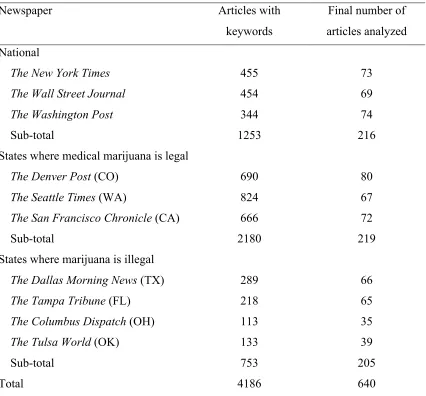
Table 3.1 Description of the sample ……….61
Table 3.2 Coding categories and intercoder reliability ……….62
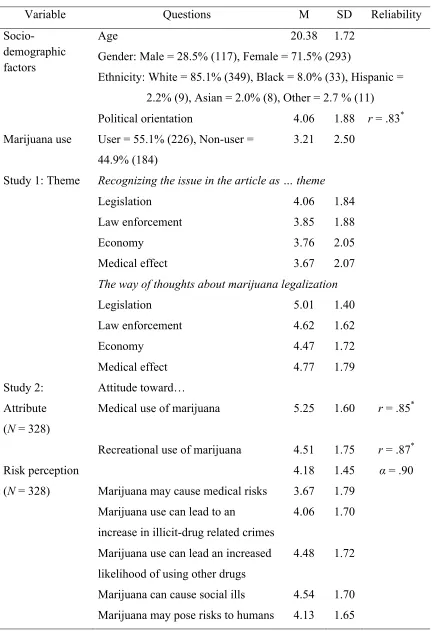
Table 3.3 Descriptive statistics of key variables and reliability coefficients ………64
Table 4.1 Organization themes in marijuana legalization articles ………82
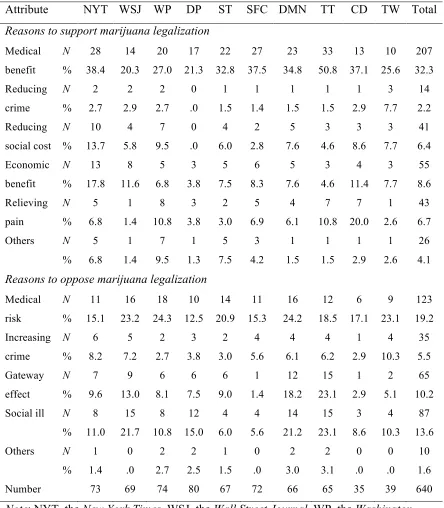
Table 4.2 Issue attributes: reasons to support or oppose marijuana legalization ………..83
Table 4.3 Issue attributes between conservative and liberal newspapers ……….84
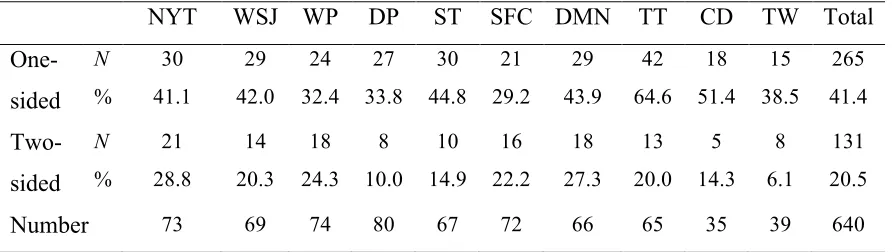
Table 4.4 Issue attributes between one-sided and two-sided frames ………85
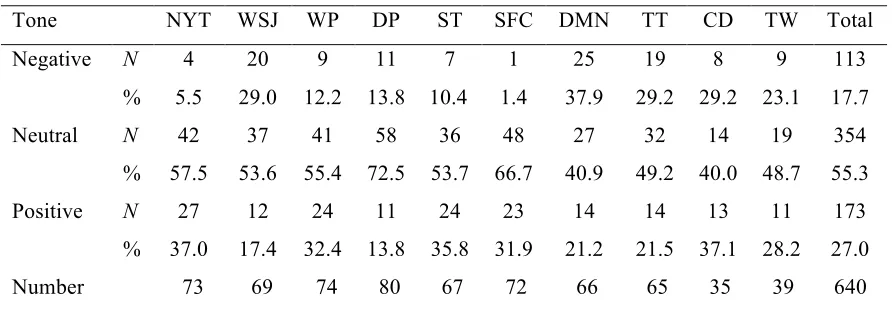
Table 4.5 Story tone in marijuana legalization articles ……….86
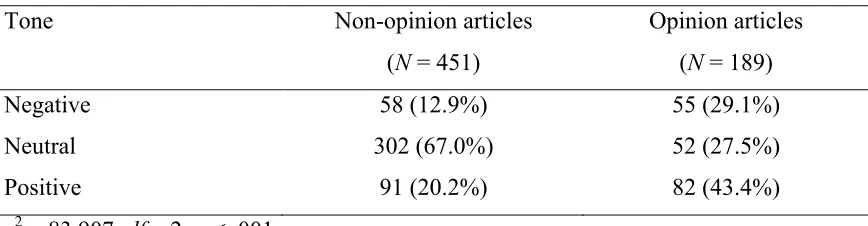
Table 4.6 Story tone between opinion and non-opinion articles ………..87
Table 4.7 The way that the article’s theme is recognized as across experimental conditions ………...……...88
Table 4.8 The way of thoughts about marijuana legalization across experimental conditions ………...……….…………..89
Table 4.9 Levels of support for medical marijuana use across conditions …………..….90
Table 4.10 Levels of support for recreational marijuana across conditions ...91
Table 4.11 Two one-sided test (TOST) results …...…...……….…….……….………..92
LIST OF FIGURES
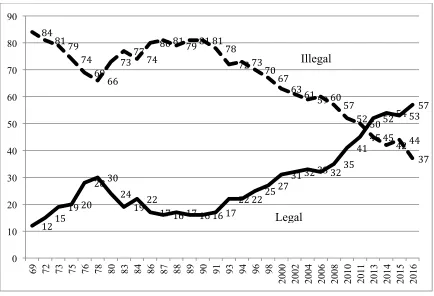
Figure 2.1 Views of legalization marijuana between 1969 and 2016 ………...43
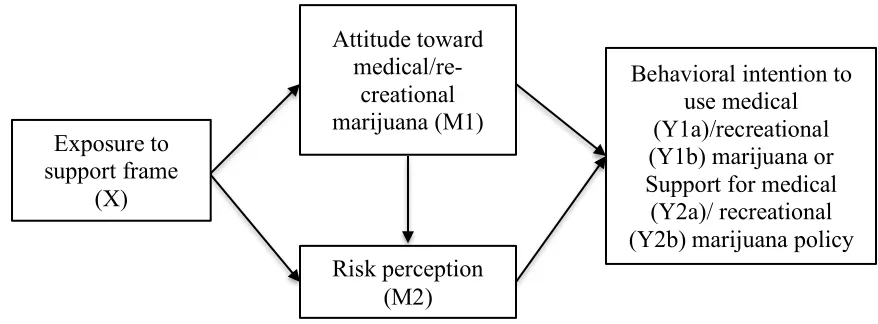
Figure 2.2 Conceptual framework: Mediation model of new frame, attitude, risk
perception, and behavioral intention or support for policy………44
Figure 4.1 Percentage of articles reporting specific organizing themes over presidential periods (1995 ~ 2014) ……….………..94
Figure 4.2 Percentage of articles presenting specific issue attributes over presidential periods (1995 ~ 2014) ………...95
Figure 4.3 Percentage of story tone over presidential periods (1995 ~ 2014) …………..96
Figure 4.4 Effects of news frames in competitive framing environments ………97
Figure 4.5 Medication model with path coefficients of behavioral intention to use medical marijuana ……….……..98
Figure 4.6 Medication model with path coefficients of behavioral intention to use
recreational marijuana ………...99
Figure 4.7 Medication model with path coefficients of support for medical marijuana policy ……….…...100
CHAPTER 1
INTRODUCTION
Marijuana is the most frequently used illegal drug in the United States (American
Public Health Association, 2014; Cerda, Wall, Keyes, Galea, & Hasin, 2012; Wilkinson,
Yarnell, Radhakrishnan, Ball, & D’Souza, 2016). It has been used for thousands of years
for medical and social purposes (Caulkins, Hawken, Kilmer, & Kleiman, 2012; Finkel,
2007). Marijuana is the American term for a mix of dried flowers, stems, seeds, and
leaves of the plant Cannabis sativa (Caulkins et al, 2012; Finkel, 2007), and the Institute
of Medicine (1999) refers to marijuana as “unpurified plant substances, including leaves
or flower tops whether consumed by ingestion or smoking.” Marijuana contains
delta-9-tetrahydrocannabinol (THC), which is the key psychoactive ingredient (Wilkinson et al.,
2016). THC stimulates specific sites in the brain and leads to the “high” that users
experience when users smoke marijuana (National Institute on Drug Abuse, 2016).
Medical applications of marijuana encompass “the use of Cannabis sativa (THC in
particular) as a therapeutic drug prescribed for a wide variety of therapeutic applications,
including relief from nausea and appetite loss, reduction of intraocular pressure,
reduction of muscle spasms, and relief from chronic pain” (Finkel, 2007, pp. 71-72).
In 1972, the U.S. Congress classified marijuana as a Schedule I Controlled
Substance because it was considered as having no accepted medical effect and having a
of marijuana are illegal under the Controlled Substances Act (CSA) except for federally
approved research (Garvey & Yeh, 2014). As of February 2017, however, a total of 28
states and the District of Columbia (DC) have allowed medical use of marijuana for
patients with approved health conditions. In recent years, eight states – Alaska,
California, Colorado, Maine, Massachusetts, Nevada, Oregon, and Washington – and DC
have enacted laws to authorize the production, distribution, and possession of marijuana.
There are three ways to liberalize marijuana policies: marijuana legalization,
marijuana decriminalization, and medical marijuana (Office of National Drug Control
Policy, 2014). First, in the states where marijuana is legal, laws or policies permit the
possession and use of marijuana under state law (e.g., Alaska Ballot Measure 2,
California Proposition 64, Colorado Amendment 64, Maine Question 1, Massachusetts
Question 4, Nevada Question 2, Oregon Measure 91, Washington Initiate 502, and
Washington D.C. Initiative 71). In Colorado and Washington, for example, individuals
over the age of 21 can use marijuana for nonmedical (so-called “recreational”) use.
Second, in the states where marijuana is decriminalized (e.g., Mississippi, North
Carolina, etc.), laws or policies can reduce the penalties for possession and use of small
amounts of marijuana. In these states, the penalties can be treated as civil rather than
criminal. Third, in the states where medical marijuana is permitted (e.g., Arizona, Illinois,
New York, etc.), laws allow individuals to use or possess marijuana under state law. In
these states, the use of marijuana is acceptable for therapeutic and medical purposes only
by qualified patients.
In 2015, more than 113 million Americans aged 18 or older (nearly 46.9%)
Statistics and Quality, 2016). According to the FBI crime report (2015), the number of
arrests for drug abuse violations was approximately 1.5 million (estimated at 1,488,707
arrests) in 2015. Among these arrests, 38.6% were for marijuana possession and 4.6%
were for marijuana sale or manufacturing. In particular, the proportion of arrests from the
West region was only 16.5%, while 46.1% were from the Northeast, 50.7% from the
Midwest, and 46.5% from the South. In 2010, there were more than 1.6 million arrests for
drug violations nationwide, and 45.8% (about 732,800 Americans) were arrested for
possession and 6.3% for sale or manufacturing (Caulkins et al., 2012). Compared to the
2010 report, the proportion of arrests for marijuana possession, sale, and manufacturing
has somewhat decreased in 2015. This can be explained in that more and more states,
particularly states from the West, legalized nonmedical and medical use of marijuana.
Why is the issue of marijuana legalization important in the U.S.? What are the
points of controversy? In the U.S., marijuana legalization may be one of the most
controversial issues including legal, policy, science, health, medical, and individual rights
considerations. First, the essential question may be whether marijuana has medical value.
The national controversy over marijuana legalization involves some benefits and risks of
marijuana use including medical marijuana use (American Public Health Association,
2014; Finkel, 2007). For example, proponents advocate that marijuana should be
legalized because of the benefits of marijuana use (e.g., medical benefits, reducing
illicit-related crimes, or positive economic benefits), while opponents argue that it should be
illegal because of the risks of marijuana use (e.g., medical risks or side effects, gateway
marijuana in 1996, marijuana legalization has been a highly contested public issue
between state and federal drug laws (Golan, 2010). Third, marijuana legalization has
been debated as a socially controversial issue (Caulkins et al., 2012). For example,
proponents argue that marijuana legalization could reduce illicit-drug related crimes and
social costs such as enforcement or imprisonment, while opponents contend that
marijuana legalization may increase crimes and cause social ills such as abuse and
automobile crashes. Fourth, it is also important to consider economic effects of marijuana
legalization (Caulkins et al., 2012). After legalization, for example, governments can gain
revenues by imposing taxes on marijuana sales, while taxes and regulations involve
enforcement and cost, as well.
Above all, the public health effect of marijuana legalization has been discussed as
a controversial issue (Wilkinson et al., 2016). As states continue to legalize both medical
and recreational use of marijuana, numerous public health issues have become gradually
relevant. Wilkinson et al (2016) point out that more research is needed to better
understand the impact of marijuana legalization on public health. Although it is very
prominently discussed in terms of public health, legal, public policy, and economic
perspectives, communication researchers have paid little attention to how the media
presented this issue and the effects of news frames on the public.
Therefore, in order to reduce the gap in the literature, the current study makes an
attempt to comprehensively examine how U.S. newspapers have presented the issue of
marijuana legalization. Further, this study investigates the effects of news frames related
to marijuana legalization stories on the public. Mass media can play a key role in the
telling the readers what is important to know about the issue (Gitlin, 1980). Also, the
media may play an important role in behavior change, providing health information that
may influence individual or social variables that ultimately affect behavior (Stryker,
2003). Health communication scholars have used framing as a theoretical framework for
the analysis of media content (e.g., Golan, 2012; Menashe & Siegel, 1998; Smith &
Wakefield, 2006).
It is necessary to indicate why this study examines how newspapers present this
issue in the U.S. and how news frames can have an influence on the public. First, the
manner in which an issue is framed can shape public opinion (Price, Tewksbury, &
Powers, 1997), including public opinion associated with the medical use and recreational
use of marijuana. This news framing, in turn, can affect public policies about marijuana
use. Thus, it is essential to investigate how the media inform the public of relevant
information and present a variety of opinions or arguments toward the issue.
Second, marijuana legalization shows a conflict between federal and state
governments. Although marijuana is legalized in a few states, the possession or
cultivation of marijuana is illegal under the federal law. Thus, this topic offers a clear
example regarding how the states can implement policies that deviate from those
advanced by the federal government (Garvey & Yeh, 2014), and this conflict means that
marijuana legalization is a political issue. Thus, political orientation of newspapers can
influence selection of certain frames related to marijuana legalization. Some newspapers
may support that each state can legalize marijuana. Thus, it is important to look at how a
Third, since the 1990s, the public’s support for marijuana legalization has
increased (Pew Research Center, 2016). If there is a relationship between the public
support and the way in which the issue is framed, it can be argued that the media can play
an important role in shaping public opinion about marijuana legalization. Thus, it is
important to explore the readers’ interpretation of certain frames and the effect of frames
on public opinion about marijuana legalization.
Fourth, use of drugs such as marijuana is an unobtrusive issue in which people
know the drug problem mainly via the media rather than via personal experience though a
high percentage said they had tried it in their lifetime (Johnson, Wanta, Boudreau,
Blank-Libra, Schaffer, & Turner, 1996; McCombs, 2004; Zucker, 1978). Because the public
may receive news and information related with marijuana largely by the media, it is
possible that the media can play an important role in shaping how the public thinks about
the issue of marijuana legalization. The way in which marijuana legalization is framed
can affect how the public thinks about it. Thus, it is necessary to investigate how
newspapers frame the issue, and how certain news frames can influence the way people
think about this issue.
The current study has three purposes to better understand how marijuana
legalization has been presented in the U.S. newspapers and how news frames can affect
public opinion. The first purpose of this study is to provide an initial summary of news
coverage about marijuana legalization in the U.S. As a theoretical framework, framing
theory is used to examine how U.S. newspapers have presented marijuana legalization to
the public. First, this study examines the organizing theme of marijuana legalization
be framed as a medical issue, describing the public debate on medical benefits and risks
of marijuana. Alternately, marijuana legalization stories can emphasize legislative
procedures by focusing on conflicts between governors and state legislatures. Another
alternative is the framing of marijuana legalization as an economic issue, debating the
effects on tax revenues and revitalizing regional economies. Second, this study
investigates issue attributes – the reasons to support or oppose marijuana legalization
(Kim, Scheufele, & Shanahan, 2002). This study analyzes which attributes of the issue
have appeared more often than others in news coverage. For example, the attribute to
support marijuana legalization may be mentioned as medical benefit, maintaining that
marijuana can have therapeutic value in treating appetite loss, nausea, and chronic pain.
On the contrary, as the attribute to oppose marijuana legalization, a story may highlight
medical risks of marijuana, suggesting that marijuana has no scientific evidence about
therapeutic value. Third, this study examines the tone of each news article (Ghanem,
1997). The story tone refers to answering the question of whether the story is overall in
support of or in opposition to marijuana legalization.
The second purpose of this study is to investigate factors that can affect
newspapers’ selective use of frames. This theoretical background draws upon the notion
of frame building (Kim, Besley, Oh, & Kim, 2014; Scheufele, 1999). This study
examines how a certain frame-building factor – political orientation of newspapers – has
affected newspapers’ choice of specific organizing themes, issue attributes, and story
tones. As a recent survey shows (Pew Research Center, 2015), Democrats and
Democrats support legalizing marijuana. When covering the issue of marijuana
legalization, political orientation of newspapers, as a frame-building factor, may
influence selecting certain frames. To test this theoretical perspective, this study makes a
series of comparisons with news frames of conservative and liberal newspapers.
To explore the first and second purposes, the current study content analyzes 10
U.S. newspapers, including three national newspapers, three newspapers in states where
marijuana is legalized, and four newspapers in states where marijuana is illegal. To
explore political orientation of newspapers, this study analyzes five conservative and five
liberal newspapers between 1995 and 2014.
The third purpose of this study is to comprehensively explore the effects of news
frames on the public in the context of marijuana legalization. Specifically, this study
examines whether certain news frames can play a role in shaping public opinion toward
marijuana legalization (Lancaster, Hughes, Spicer, Matthew-Simmons, & Dillon, 2011)
in competitive framing environments (Borah, 2011a, 2011b; Nisbet, Hart, Myers, &
Ellithorpe, 2013). Also, the role of individual marijuana experience is explored in
framing effects. Lastly, the current study evaluates how attitude and risk perception may
mediate framing effects on behavioral intention and support for policy. To examine this
purpose, this study employs an experimental design. Data are collected from college
students enrolled in a large public southeast university in April 2016.
First, the framing effect is tested in terms of readers’ cognition. Specifically, this
study investigates whether respondents who read a news article that highlights a certain
frame can recognize the frame accordingly. And then, it is examined whether exposure to
legalization. To test these effects of news frames, four types of frames are examined:
legislation, law enforcement, economy, and medical effect.
Second, this study aims to explore the role that the media can play in shaping
public perceptions about marijuana legalization. Specifically, it examines whether certain
news frames can affect attitudes toward marijuana legalization in competitive framing
environments. Three types of news frames are analyzed: support frame (to support
marijuana legalization), opposition frame (to oppose marijuana legalization), and
two-sided frame (both to support and to oppose marijuana legalization). Many scholars have
criticized that little research has been done to examine two-sided (dual, mixed, or
competitive) frames (Borah, 2011a, 2011b; Chong & Druckman, 2010, 2007a; Nisbet et
al., 2013). In order to address the gap in the framing literature, this study initially
investigates the effect of a two-sided frame in the context of marijuana legalization
stories.
Third, to gain a more accurate understanding of personal experience in framing,
the current study explicates the influence of individual marijuana use on framing effects.
As mentioned earlier, more than 113 million Americans have tried marijuana in their
lifetime. Personal marijuana experience may play a key role in shaping attitudes toward
marijuana related issues (i.e., Alvaro, Crano, Siegel, Hohman, Johnson, & Nakawaki,
2013; Cho & Boster, 2008). For example, Cho and Boster (2008) found that prior
marijuana use could influence antidrug attitudes. Respondents who answered having
never used marijuana showed more positive attitudes toward antidrug messages than
marijuana experience can play a role in shaping attitudes toward marijuana legalization
across three framed conditions.
Lastly, the current study aims to test the mediating effects of attitudes and risk
perceptions on behavioral intentions to use medical and recreational marijuana and
support for medical marijuana and recreational marijuana. In numerous framing effects
studies, researchers have explored the influence of frames on outcomes of attitudes or
opinions (e.g., Chong & Druckman, 2007a; Iyengar, 1991). As Borah (2011b) indicates,
however, only a few studies examined outcomes of behavioral intentions. Thus, this
study seeks to address this relative gap in the literature by exploring how attitudes and
risk perceptions of marijuana legalization can mediate the effects of exposure to different
frames on the outcomes of behavioral intentions and support for marijuana policy.
In summary, the results of the current study can provide a comprehensive
understanding of how U.S. newspapers present the issue of marijuana legalization and of
how news frames can influence public attitudes and behavioral intentions. In addition,
this study can make theoretical contributions to the framing literature by examining frame
building, competitive framing effects, the effects of personal marijuana experience, and
CHAPTER 2
LITERATURE REVIEW
Chapter 2 Summary: This chapter starts with a review of the literature on
marijuana use in the United States and reviews literature on the issue of marijuana
legalization, including disputes between federal and state governments, public opinion,
and debates regarding risks and benefits of using marijuana. As a theoretical framework,
this chapter presents literature on framing theory, including organizing themes, issue
attributes, and story tone. Then, it presents literature on framing effects, including a
two-sided frame effect. This chapter discusses the role of personal marijuana experience in
shaping attitudes toward marijuana and proposes a mediation model that includes
behavioral intentions to use medical and recreational marijuana and support for policy as
dependent variables. Finally, this chapter provides the research questions and hypotheses
the current study seeks to answer.
2.1. Marijuana Use in the United States
In 2015, approximately 33 million Americans aged 18 or older (nearly 13.6% of
Americans aged 18 or older) reported marijuana use in the last year, and more than 20
million Americans (nearly 8.4%) answered that they had used marijuana in last month
(Center for Behavioral Health Statistics and Quality, 2016). Many Americans are still
Health Statistics and Quality, 2016). However, the true number will be even higher
because some respondents are unwilling to report their illegal behaviors (Caulkins et al.,
2012).
Many American teenagers consume marijuana; 49.8% of 12th graders have tried
marijuana at least once, and 27.6% used marijuana one or one more times during the past
month (Office of National Drug Control Policy, 2016). About 1.7 million adolescents
aged 12 to 17 (nearly 7% of American youth aged 12 to 17) reported marijuana use in
past month (Center for Behavioral Health Statistics and Quality, 2016). The trend over
the past 10 years showed a steady decline in marijuana use among American youth aged
12 to 17 (Center for Behavioral Health Statistics and Quality, 2016). However, recent
trends in marijuana use showed that the rate of past-month marijuana use among 11th
graders increased from 21.0% in 2005 to 24.8% in 2015, and the rate among 12th graders
increased from 22.8% in 2005 to 27.6% in 2015 (Office of National Drug Control Policy,
2016).
Marijuana cultivation is mostly gardening and marijuana can be grown almost
everywhere (Caulkins et al., 2012). For example, California is the state where most
marijuana is produced in outdoor plants (74% of the 9.8 million plants in 2009) (Caulkins
et al., 2012). However, most marijuana comes from Mexico and other countries. Many
users seem to obtain marijuana from around them. Approximately 90% of respondents
report that they got marijuana most recently from their friend or relative, and more than
half said obtaining it for free (Caulkins et al., 2012). Thus, marijuana can be one of the
2.2. Issue of Marijuana Legalization
2.2.1. Positions of federal and state governments regarding marijuana use
Marijuana is illegal under the federal law. Because marijuana has a high potential
for abuse, no currently accepted medical use and a lack of consensus on the drug’s safety
safety, it is classified as a Schedule I substance (Office of Diversion Control, 2014). The
Obama administration repeatedly opposed marijuana legalization because of the belief
that increasing access to the drug would be against public health policy. In August 2013,
the U.S. Department of Justice announced an updated marijuana enforcement policy,
making clear that marijuana remains illegal federally (Department of Justice, 2013).
States can individually vote to legalize marijuana despite the federal law. In 1996,
California voters passed Proposition 215, allowing for the medical use of marijuana.
Since then, a total of 28 states and DC have legalized medical marijuana. In November
2012, for the first time, Washington Initiative 502 legalized marijuana by amending state
law to allow for small amounts of marijuana and Colorado Amendment 64 provided a
general outline to allow for possession, use, purchase, consumption, and transportation of
up to one ounce of marijuana (Garvey & Yeh, 2014). Then, adults’ recreational use of
marijuana was legalized through Oregon Measure 91, Alaska Ballot Measure 2, and
Washington D.C. Initiative 71 in 2014, and California Proposition 64, Maine Question 1,
Massachusetts Question 4, and Nevada Question 2 in 2016.
States with medical marijuana laws have an evident form of patient registry, and
they provide protection against arrest for possession up to a limited amount of marijuana
medical marijuana. In October 2009, the Department of Justice issued a memorandum,
which instructed law enforcement officials not to focus federal resources on individuals
“whose actions are in clear and unambiguous compliance with existing state laws
providing for the medical use of marijuana” (Department of Justice, 2009). This
memorandum actually decriminalized medical use of marijuana at the federal level.
Since California allowed for medical marijuana, the issue of marijuana
legalization has been highly debated. The national controversy on marijuana offers “a
clear example of the confusion associated with the states’ ability to pursue policies that
deviate from those advanced by the federal government” (Garvey & Yeh, 2014, p. 1).
Table 1 shows three legal positions – marijuana legalization, medical marijuana, and
illegal – in 50 states and DC in February 2017.
2.2.2 Public opinion about legalization of marijuana use
Public support for marijuana legalization has varied over time and across
demographic groups since surveys began measuring it in the 1969. Figure 1 shows that
public support for legalizing marijuana use increased during the 1970s, dropped through
the 1980s, and has grown since the 1990s. According to a recent survey (Pew Research
Center, 2016), public support for legalization marijuana use is at an all-time high of 57%
in 2016, up from 16% in 1989. It was in a 2013 survey that public support for legalization
(52%) first outnumbered public opposition (45%). The results of a 2015 survey also show
that opinions about marijuana legalization remain divided along age, race, and partisan
lines (Pew Research Center, 2015). That is, respondents who are Black (58%), young
(aged 18 to 34, 68%), and Democrats (59%) are more supportive of marijuana
older, 29%), and Republicans (39%). According to the same survey, however, about 62%
of Americans report that if marijuana use were legal, it would bother them if people used
it in public. Also, another survey reveals that about 69% of Americans regard alcohol as
more harmful than marijuana, while merely 15% view marijuana to be more harmful
(Pew Research Center, 2014).
In addition, the survey results from the Pew Research Center (2015, 2013) show
that approximately 68% of Millennials (born 1981-now) support marijuana legalization,
up from only 39% in 2008. Interestingly, around 50% of Boomers (born 1946-1964) now
favor legalizing the use of marijuana. In 1978, 47% of Boomers favored legalizing
marijuana, but support dropped during the 1980s, reaching a low of 17% in 1990.
Support for marijuana legalization among the Generation X (born 1965-1980) has
increased noticeably from 28% in 1994 to 42% a decade later and 52% in 2015. The
Silent Generation (born 1925-1945) continues to oppose marijuana legalization more
strongly than younger age cohorts. However, the percentage of Silents who favor
legalization has nearly doubled from 17 % in 2002 to 29% in 2015.
2.2.3 Risks and benefits of using marijuana
While the available science about marijuana impacts is inconclusive, the debate
over legalization is grounded in a number of studies that describe risks and/or benefits of
using the drug. After legalizing recreational use of marijuana use, there were two things
that affected public health (Walker, 2014). First, legalization somewhat increased the
number of marijuana users and the quantity being consumed because of cheaper price and
The scientific community has not reached a consensus on the risks and benefits of
marijuana use because marijuana is not a standardized good and it is difficult to
determine whether marijuana use causes negative consequences or just happens to be
correlated (Caulkins et al., 2012; Wilkinson et al., 2016). Generally, opponents (those
who have an unfavorable attitude toward marijuana legalization) tend to argue that there
are many risks of marijuana use, while proponents (those who have a favorable attitude
toward marijuana legalization) are more likely to maintain that marijuana use should be
legalized because of medical benefits.
There are several domains regarding the risks of marijuana use. First, marijuana
use can lead to dependence as a need for treatment. A distinctive marijuana withdrawal
syndrome has been identified; the syndrome involves restless, irritability, mild agitation,
insomnia, nausea, and cramping (Institute of Medicine, 1999). Research indicates that
30% of users can develop problematic use habits, which can lead to dependence
(National Institute on Drug Abuse, 2016). The earlier the youths begin to use marijuana,
the more likely they are to become dependent on it (Winters & Lee, 2008). However,
marijuana dependence does not, on average, create the same social and personal problems
as alcohol or heroin dependence. Room, Fischer, Hall, Lenton, and Reuter (2010) found
that marijuana posed less addictive risk than tobacco, alcohol, cocaine, stimulants, or
heroin.
Second, marijuana use may lead to emphysema and other respiratory problems.
Frequently inhaling smoke is harmful for people’s lungs (Caulkins et al., 2012). Smoking
marijuana includes many of the same irritants as smoking tobacco. Numerous studies
respiratory disease (Institute of Medicine, 1999). Analyzing 452 marijuana users (but
who did not smoke tobacco) and 450 non-users (of either marijuana or tobacco), for
example, Polen, Sidney, Tekawa, Sadler, and Friedman (1993) found that smokers who
use marijuana frequently but do not smoke tobacco have more respiratory problems than
nonsmokers.
Third, marijuana use may lead to mental health problems. Statistically, there is a
strong relationship between marijuana use and the occurrence of psychotic symptoms
(National Institute on Drug Abuse, 2016; Wilkinson et al., 2016). Depression, anxiety,
paranoia, and personality disturbances have been associated with frequent marijuana use
(Brook, Cohen, & Brook, 1998; Green & Ritter, 2000). For example, Moore et al. (2007)
found that marijuana use can increase the risk of schizophrenia, and heavy users are
vulnerable to acute psychotic reactions.
Fourth, marijuana use can lead to a gateway effect. The youth who try marijuana
are statistically much more likely than their peers who do not use marijuana to proceed to
use other illegal drugs (Caulkins et al., 2010; National Institute on Drug Abuse, 2016).
Because many people have opportunities to use marijuana before they have opportunities
to use other drugs, marijuana use could precede hard drug use.
Fifth, marijuana use can lead to crime and adverse educational outcomes.
Marijuana use under a prohibition can cause other crimes and delinquency in the form of
violations of drug laws (Caulkins et al., 2012). Also, there is a correlation between
marijuana use and poor performance in high school (Caulkins et al., 2012). Meier et al.
Sixth, marijuana use may influence driving ability (American Public Health
Association, 2014; Wilkinson et al., 2016). For example, after the change in federal
policy in 2009, the number of motor vehicle accidents has increased in Colorado
(Wilkinson et al., 2016). However, there are still mixed results regarding associations
between marijuana use and driving accidents (American Public Health Association,
2014).
In addition, many risks and problems of marijuana use have been indicated and
examined as follows: overdose, cancer, cognitive impairment, secondhand smoke, effect
of parental use on children, lower life satisfaction, and higher health and financial costs
for society (Caulkins et al., 2012; National Institute on Drug Abuse, 2016).
On the contrary, proponents point to marijuana as having therapeutic value in
treating a range of symptoms: among the most common are appetite loss, nausea, chronic
panic, anxiety, sleeping disorders, muscle spasms, and intraocular pressure (Caulkins et
al., 2012). Cannabis has been reported anecdotally as being beneficial for many common
complications of HIV, including poor appetite and pain caused by HIV-related peripheral
neuropathy (Finkel, 2007). Woolridge, Barton, Samuel, Osorio, Dougherty, and
Holdcroft (2005) found that 143 of 523 (27%) respondents reported using marijuana for
treating HIV symptoms. The patients said use of cannabis provided a reduction in muscle
and nerve pain, nausea, depression, and an improvement in appetite.
The Institute of Medicine (1999) found therapeutic value in particular for
symptoms such as pain control, glaucoma, control of nausea and vomiting, multiple
sclerosis (MS), and appetite stimulation. The Institute of Medicine (1999) also concluded
While there are numerous anecdotal reports of the benefits of marijuana, there is a
paucity of clinical trials and studies that would provide more definitive findings about the
benefits and the risks of marijuana (Finkel, 2007).
2.3. Theoretical Framework: Framing Theory
2.3.1. Framing theory: News framing and frame building
Framing theory has its origins in many disciplinary traditions, and different
researchers have defined framing as a concept at different levels of analysis (Scheufele,
1999). In general, there are two approaches to examining framing theory: sociological
and psychological views. First, the sociological (macro-level) approach has been
developed from assumptions drawn in attribution (Heider, 1959) and frame analysis
(Goffman, 1974). Second, the psychological (micro-level) approach can be summarized
in studies on prospect theory (Kahneman & Tversky, 1979). Thus, framing has both
macro-level and micro-level constructs (Scheufele, 1999). As a macro-level construct,
framing means types of presentation that communicators including journalists use to
provide information in a way that is reflected in existing primary schemas among their
readers. As a micro-level construct, framing refers to how people present information and
characteristics about issues as they form impressions.
Communication researchers have defined framing. Entman (1993, p. 52) defines
framing as “to select some aspects of a perceived reality and make them more salient in a
communicating text, in such a way as to promote a particular problem definition, causal
interpretation, moral evaluation, and/or treatment recommendation.” Gitlin (1980, p.7)
discourse, whether verbal or visual.” Gamson and Modigliani (1989) refer to frames as
interpretative packages that offer meaning to an issue. At the core of this package is “a
central organizing idea, or frame, for making sense of relevant events, suggesting what is
at issue” (Gamson & Modigliana, 1989, p. 3). Media frames suggest how the public can
interpret an issue or event, and framing involves selection and salience (Entman, 1993).
In order to understand framing function in terms of the production and
consumption of news and explain the constructs of framing theory, it is important to
review a process model advocated by Scheufele (1999). He suggested a process model of
framing effects that “conceptualizes framing as a continuous process where outcomes of
certain processes serve as inputs for subsequent process” (Scheufele, 1999, p. 114). In
this model, there are two kinds of frames: individual frames and media frames. These
frames can be either independent variables or dependent variables. The model examines
four processes: frame building, framing setting, individual-level effects of framing, and a
link between individual frames and media frames (journalists as audiences). Frame
building and framing setting are important in understanding how news is produced and
consumed. In particular, with the notion of frame building, the present study explores
how media organizations – conservative and liberal newspapers – describe marijuana
legalization stories.
Frame building refers to “the processes that influence the creation or changes of
frames applied by journalists” (Scheufele, 1999, p 115). This term describes how some
internal factors of news media organizations can affect the selection of news frames.
Such factors include social norms and values, organizational pressures and constraints,
of journalists (Scheufele, 2000). External factors, such as interaction between journalists
and elites, are important in the frame building process, as well (de Vreese, 2005). As
Scheufele (1999) points out, the term frame building well explains how the
organizational factors of news media can impact the selection of frames.
Gans (1979) discusses several theories with regard to how news stories are
presented. The first theory is journalistic-centered influence. Journalists select stories
depending on their professional news judgment. Thus, beliefs, attitudes, and political
ideologies of journalists may play an important role in framing a story. That is, the
characteristics of individual journalists can affect the way they frame news stories. The
second type of influence is organizational pressures and constrains (Kim, Carvalho, &
Davis, 2010). Gans (1979) explains this notion as media organizational routine,
suggesting that journalists are subject to seniority, struggling for promotion, and news
gathering routines. Also, local newspapers tend to represent local interests because they
are generally subject to local market and interests (e.g., Griffin & Dunwoody, 1997; Kim,
Carvalho, Davis, & Mullins, 2011). The third theory is event-centered influence. Gans
(1979, p. 79) called this the “mirror theory,” which posits that events decide news
selection. In this theory, journalists are a conveyor of news events’ images to the readers.
The final type of influence describes news selection processes according to external
factors. These factors include interest groups, advertisers, government controls, and
ideology. For example, journalists may frame news stories by following a dominant
2.3.2. News framing studies on the issue of marijuana legalization
A number of researchers have used framing theory in their communication
studies. However, there are small numbers of studies that examine the issue of marijuana
use or marijuana legalization by applying framing theory (e.g., Golan, 2010; McGinty,
Samples, Bandara, Saloner, Bachhuber, & Barry, 2016; Stryker, 2003). For example,
Stryker (2003) examined how aggregate levels of news coverage about marijuana have
affected adolescents’ marijuana behavior. As dependent variables, Stryker measured
three constructs: abstinence from marijuana in the past 30 days, perceived harmfulness of
trying marijuana, and personal disapproval of trying marijuana. As independent variables,
Stryker defined marijuana news coverage as stories that mentioned positive or negative
consequences of marijuana use. From news articles of the Associated Press since 1977,
two media variables are measured: a PRO reference and a CON reference. A PRO
reference was defined as a story that talked about any negative consequences of
marijuana use. This includes references to punishments for using marijuana (e.g.,
suspensions, arrests, loss of jobs, etc.) and harmful effects of marijuana (e.g., lung
damage, gateway effects, abuse). A CON reference refers to a story that talked about
positive consequences of marijuana (e.g., medical uses of marijuana) or marijuana
legalization. Findings showed that aggregate media coverage affected adolescents’
abstinence from marijuana use and personal disapproval over time.
Golan (2010) explored how opinion journalists framed the medical marijuana
issue in editorials and op-ed newspaper stories. Using the keywords “medical marijuana”
between November 11, 2006 and November 11, 2008, Golan located and analyzed a total
tested two types of frame: issue frame and sub-issue frame. Issue frame is the main frame
that was articulated in the opinion stories. This frame includes moral, medical, legal,
political, and social frames. Then, the sub-issue frame focuses on certain aspects of
medical marijuana. This frame includes marijuana’s addictive properties, medical
benefits (justification for the use of medical marijuana), state vs. federal laws, medical
risks and side effects, program administration, and other. The findings showed that the
editorials framed medical marijuana as a legal (33%) and political (28%) issue, while the
op-eds framed it as a medical issue (50%). For sub-issue frames, the results indicated that
the editorials framed medical marijuana as program administration (36%) and state vs.
federal laws (30%), while the op-eds framed the issue as medical benefits (50%).
Recently, McGinty, et al. (2016) content analyzed how U.S. news media covered
the issue of marijuana legalization between 2010 and 2014. By analyzing a total of 610
news articles from three types of news media outlets including print news, television
news, and Internet news, they found that news stories about recreational marijuana were
frequently reported in news outlets from the states, including Arkansas, Colorado,
Oregon, and Washington, and DC, where legalized recreational use of marijuana is legal.
With regard to the most often mentioned pro-legalization arguments, findings revealed
that legalization would reduce criminal justice system involvement and costs (20%),
increase tax income (19%), control criminal drug syndicates (15%), and improve current
drug policy (13%). As the most frequently reported anti-legalization arguments, on the
contrary, news stories mentioned that legalizing would harm youth health (22%), build
pro- and anti-legalizing arguments between Democrat-affiliated and Republican-affiliated
newspapers.
2.3.3 Organizing theme
According to Gamson and Modigliani (1989), a frame refers to a key organizing
idea that provides meaning to issues or events reported in a news story. A frame is an
idea organizer that packages an issue in a specific way, telling what the issue is about
(Kim et al., 2014). Because researchers paid little attention to examining news frames of
marijuana legalization, I carefully reviewed more than 100 news articles to find out
organizing themes in stories related to marijuana legalization and medical marijuana.
Then, seven organizing themes were identified after examining marijuana legalization
stories and previous studies (e.g., Golan, 2010; Lewis, Broitman, & Sznitman, 2015).
First, a marijuana legalization story can be framed as a legislation issue (Golan,
2010; Lewis et al., 2015). News stories in this theme primarily emphasize the legislative
proceedings regarding marijuana use and marijuana legalization. This theme focuses on
the conflicts between the governor and state legislature. Second, a marijuana legalization
story can be organized as a law enforcement issue (Lewis et al., 2015). This theme
highlights regulations of marijuana use. This frame includes operating procedures,
regulations, controls, and activities associated with marijuana use and marijuana
legalization. Third, a marijuana legalization story can be organized as a trial issue. A
story in this category emphasizes debates in an official juridical trial. Forth, a marijuana
legalization story can be covered as a youth drug use issue. This theme points out the
problems and risks of young users and the so-called gateway effect. Fifth, a marijuana
economic effect of marijuana legalization. This frame presents tax effects, new
employment, and revitalizing regional economies. Sixth, a marijuana legalization story
can be organized as a patients’ issue (Lewis et al., 2015). This theme focused on the
personal history about patients’ marijuana use. This frame primarily deals with marijuana
legalization as a private issue, corresponding with a nonelite patients frame that Lewis et
al., (2015) presented. Finally, a marijuana legalization story can be presented as a
medical effects issue (Golan, 2010; Lewis et al., 2015). This theme emphasizes the
debates with regard to medical effects or benefits of marijuana use and chiefly regards
marijuana legalization as a science or public health issue.
2.3.4 Issue attribute: cognitive perspective
Generally considered, issue attributes refer to certain characteristics or aspects of
an issue that can be engaged to evaluate and think about the issue (Kim et al., 2002).
When it comes to marijuana legalization, proponents advocate the benefits of marijuana
use including medical marijuana, while opponents argue the risks of marijuana use. A
discussion of marijuana legalization can comprise some reasons (or attributes) to support
marijuana legalization (e.g., medical benefits or reducing illicit-drug related crimes) and
at the same time reasons to oppose it (e.g., medical risks or gateway effect).
Likewise, news articles were reviewed in order to find out the reasons to support
and oppose marijuana legalization or the risks and benefits of marijuana use (issue
attributes). Then, I carefully selected some issue attributes, and arranged them for similar
concepts. Next, I referred to the previous studies (e.g., Golan, 2010; Stryker, 2003) and
issue attributes are examined: the reasons to support marijuana legalization (the benefits
of marijuana use) and the reasons to oppose it (the risks of marijuana use). Two
categories include several sub-categories.
The present study classifies the reasons to support as five sub-categories: medical
benefit, reducing crime, reducing social cost, economic benefit, and relieving pain. First,
medical benefit refers to the attribute that marijuana has therapeutic value in treating
several symptoms, including appetite loss, nausea, chronic pain, anxiety, sleeping
disorder, and intraocular pressure (Caulkins et al, 2012). A story focusing on this attribute
maintains that marijuana should be legal for medical purposes and benefits. For example,
“The strongest evidence for the health benefits of medical marijuana or its derivatives
involves the treatment of chronic neuropathic pain and the spasticity caused by multiple
sclerosis” (Brody, 2014). Second, reducing crime refers to the attribute that marijuana
legalization can lead to reducing crimes associated with illicit drugs. A story in this frame
also focuses on the increase of safety in communities. For example, “That it would
provide a new stream of revenues for government cut down on drug-related violence and
end a modern-day prohibition that effectively turns many citizens into lawbreakers”
(Nagourney, 2010). Third, reducing social cost refers to the mention that marijuana
legalization can lead to reducing social costs such as jail and law enforcement. For
example, “… has now apparently fully embraced the idea of legalizing marijuana,
arguing that it is a way to bring down soaring rates of incarceration and reduce the social
and financial costs” (McKinley, 2012). Fourth, economic benefit refers to the mention
that marijuana legalization can lead to increasing tax revenues and reduce the price
new hires and revitalization of local communities. For example, “Legalization would
move that trade into the open market, driving down the price and undermining the
cartels’ power and influence” (Longmire, 2011). Fifth, relieving pain refers to the
attribute that the story focuses on the sympathetic aspects of patients or family suffering
from a severe pain. Thus it is necessary to legalize marijuana in order to relieve pain. A
story in this category highlights a humane story of some patients with a compassion tone.
For example, “It’s an issue of compassion. Mr. Slater said. It’s an issue for those who are
sick and dying and suffering and need that last-minute peace of mind” (Zezima, 2005).
The reasons to oppose have four sub-categories: medical risk, increasing crime,
gateway effect, and social ill. First, medical risk refers to the attribute that there is no
scientific evidence about medical marijuana benefits or no therapeutic value of marijuana
(Wilkinson et al., 2016). Also, this frame focuses on the risks of marijuana use, especially
to adolescents. For example, “The best studies of marijuana’s effects on humans have so
far shown little objective evidence of benefit in patients with epilepsy or multiple
sclerosis” (Hurley, 2005). Second, increasing crime refers to the mention that marijuana
legalization can lead to increases in illicit-drug related crimes and endanger society
(Caulkins et al., 2012). For example, “Marijuana has been a destructive force … bringing
into an otherwise largely peaceful rural environment an influx of weapons as a result of
what he says are criminal cartels involved in the drug trade” (McKinley, 2011). Third,
gateway effect refers to the attribute that marijuana legalization can lead to increased
likelihood of future hard drug use (Caulkins et al., 2012). This frame also highlights that
and creating a path to full legalization” (Johnson, 2011). Fourth, social ill refers to the
mention that marijuana legalization can lead to social ills. These social ills include
dependence, adverse education and employment outcomes, and car accidents (National
Institute on Drug Abuse, 2016). For example, “The rising use and increased potency
could affect the likelihood of car accidents and could lower school performance”
(O’Connor, 2013).
2.3.5 Story tone: affective perspective
As Ghanem (1997) indicates, there are two types of attributes within framing
effects: cognitive attributes and affective attributes. Cognitive attributes refer to issue
attributes that deal with what is an issue about, while affective attributes refer to the story
tone that the media present. Affective attributes consider audience’s emotional responses
to media stories (Ghanem, 1997). Coleman, McCombs, Shaw, and Weaver (2009) also
suggest that issue attributes deal with the cognitive aspect of a news story, while story
tone assumes affective perspective, providing the story a positive, neutral, or negative
connotation. In the present study, story tone is identified as negative, neutral, or positive
tone towards marijuana legalization or marijuana use (e.g., Kim et al., 2014). Story tone
is considered after reviewing a whole story mainly based on headline and lead sentences.
For example, if a story covers that marijuana legalization can solve social problems and
improve the economy at a community, the evaluative tone of this story is positive. On the
contrary, if a story highlights that marijuana legalization can cause crimes and ruin
individuals’ life and communities, this tone is negative. Neutral is an evaluative tone of
2.4. Framing Effects
2.4.1 Framing effects in a competitive environment
In numerous experimental studies on framing, researchers have mostly examined
the difference of framing effects in single frame conditions (Borah, 2011a). That is, most
studies have employed an experimental design that examines a one-sided message design
in which participants are randomly assigned to have one of two or more alternative
messages of an event or an issue (Chong & Druckman, 2010). In a one-sided design,
researchers test the effect of a certain frame compared to a control frame condition or an
alternative frame condition. For example, Iyenga (1987) tested how different frames can
affect the public’s attitudes. In his experimental design, episodic and thematic frames
were examined as alternative representations of a poverty issue.
In competitive frame environments, researchers test an additional condition, a
two-sided or mixed frame condition, where the same subjects have both frames (e.g.,
both episodic and thematic frames in the same article) of an issue (Borah, 2011b; Chong
& Druckman, 2007a; Cobb, 2005; Sniderman & Theriault, 2004; Nisbet et al., 2013). For
example, Borah (2011b) tested the effects of news frames on behavioral intentions by
using a 2 (motivated processing) × 3 (frame conditions) experimental design. As three
frame conditions, participants received a story about the KKK rally on campus either as a
free speech frame, or a public safety frame, or a mixed frame. Findings revealed that
motivated processing enhanced framing effects in the mixed frame condition. That is,
participants in the mixed frame condition indicated more willingness to seek information
frame and the public safety frame in the attitude toward the KKK rally, suggesting that
the participants had a neutral stance when they read the mixed-framed story.
To better understand what actually occurs in controversial issues such as
marijuana legalization, it is necessary to add a mixed argument in framing experiments.
As Sniderman and Theriault (2004) indicate, we should make choices between several
competing values in real politics. For example, the media may present reasons to both
support and oppose marijuana legalization in the same story. It can be a more realistic
setting for the public to receive two-sided arguments or values at the same time. Over the
past decade, the political discourse around the issue of marijuana legalization has been
dominated by competing frames over the legal, law enforcement, economic, and public
health consequences of proposed state and federal government policies (Golan, 2010;
McGinty et al., 2016). Thus, the topic of marijuana legalization can provide a proper case
study to better understand opinion formation in a competitive framing environment.
However, scholars have paid little attention to the effects of multiple or
competitive frame conditions (Borah, 2011a, 2011b; Chong & Druckman, 2010, 2007a;
Nisbet et al., 2013; Sniderman & Theriault, 2004). As Chong and Druckman (2007a, p.
101) point out, “the role of multiple competing frames in each of these processes has
gone largely unexplored.” According to one recent study (Borah, 2011a), only 3.2% of
the framing studies (of 329 peer-reviewed papers) investigated competitive or mixed
frames in communication journals. Future research on the competitive framing effects
should be greatly explored. Thus, the present study addresses the gap in the literature by
2.4.2 Framing effects and marijuana experience
Marijuana is the most widely used illegal drug in the U.S., with about 3.3 million
Americans aged 18 or older admitting to marijuana use in 2015 (Center for Behavioral
Health Statistics and Quality, 2016). According to a recent survey (Pew Research Center,
2015), respondents who have ever tried marijuana (65%) are more likely to support
marijuana legalization than those who have never tried it (29%). Another survey shows
that respondents who have never tried marijuana (50%) are more likely to view marijuana
as a gateway to hard drugs than those who have ever tried it (26%) (Pew Research
Center, 2013). Marijuana users may have a certain preconception toward the issue related
to marijuana legalization. Thus, it is necessary to explore how personal marijuana
experience can influence attitude toward marijuana legalization across multiple framed
conditions.
In the framing effects literature, researchers have examined the role of personal
experience in shaping attitudes or opinions toward an issue (Alvaro et al., 2013; Cho &
Boster, 2008). With a sample collected from elementary, middle, and high school
students, for example, Cho and Boster (2008) explored how message framing (gain
versus loss) influenced antidrug attitudes. In this study, early drug use was tested as a key
factor to explain youths’ drug-related risk. Findings revealed that never-used respondents
tended to have more positive attitudes toward antidrug ads and greater intentions to not
use marijuana. Loss frame messages were more persuasive for those who ever used
marijuana in terms of attitudes and intentions, while there were no differences between
showed more positive attitudes toward the antimarijuana ads than vulnerable nonusers
and users. However, most of these studies aimed to examine the effects of anti-drug
advertising.
As Nisbet et al. (2013) indicate, framing researchers have investigated how
individual factors such as personal characteristics can moderate framing effects. To
contribute to the framing effects literature, the present study investigates how prior
marijuana use can moderate the framing effects (support vs. opposition) on attitudes
toward medical marijuana and marijuana legalization.
2.4.3 Mediation model
As Borah (2011b) points out, numerous framing studies have demonstrated how
news framing can influence information processing and changes in attitudes and opinions
(Chong & Druckman, 2007a; Lecheler & de Vreese, 2012; Price et al., 1997; Scheufele &
Tewksbury, 2007; Sniderman & Theriault, 2004) but examining behavioral intentions is
not as frequent. One of the few studies testing behavioral intention investigates the effects
of strategy and issue frames on intention to vote (Valentino, Beckmann, & Buhr, 2001).
The issue frame focuses on the central issue positions of a candidate, while the strategy
frames highlights a candidate’s strategic motivations. Valentino et al. (2001) found that
among nonpartisans and non-college graduates, those who were exposed to the strategy
frame were less likely to vote than those who were exposed to the issue frame. In a more
recent study, Borah (2007b) also tested the influence of competitive frame on two
behavioral intentions: willingness to seek information and talk.
It is important to look at the influence of news frames on information processing
examine framing effects on behavioral intentions. Although behavioral intentions do not
necessarily confirm the evidence of respondents’ behavioral change, they should not be
neglected in the framing literature because intention is the strongest predictor of doing
the behavior (Ajzen & Fishbein, 1980). As dependent variables, the current study
examines behavioral intention to use medical and recreational marijuana and policy
attitude toward medical marijuana and marijuana legalization. In other words, this study
tests the effects of news frames on the behavioral intentions of participants in different
ways.
In addition, this outcome can be explained through the mediation model. In
framing studies, the mediating procedures have increasingly received scholarly interest
(Chong & Druckman, 2007b; Borah, 2011a). In general, a mediating variable explains the
relationship between an independent variable (a predictor) and a dependent variable (a
criterion variable). There is much research that shows these mediating effects in the
framing literature (e.g., Jang, 2013; Lecheler & de Vreese, 2012; Niederdeppe, Gollust,
& Barry, 2014; Nisbet et al., 2013). Examining news framing effects on political
attitudes, for example, Lecheler and de Vreese (2012) tested the mediation processes of
belief importance and belief content. They found that framing effects were significantly
mediated by both mediators. In addition, mediators such as attitudes and perceived risks
have been explored in communication studies (e.g., Martinez & Lewis, 2016). For
example, Martinez and Lewis (2016) examined how two mediators, shifts in attitude and
perceived normative pressure, could mediate the effects of information seeking on
information seeking from media and interpersonal channels and behavioral intention to
use marijuana through two mediators.
The current study tests how attitudes and risk perceptions toward marijuana can
mediate the effects of news frames on behavioral intentions and policy attitudes.
Although those who read an article with reasons to support marijuana legalization are not
changed in their behavioral intentions, the associations between exposure to a certain
news frame and behavioral intentions can be indirectly explained through specific
mediators such as their attitudes and risk perceptions about marijuana.
2.5. Research Questions and Hypotheses
First of all, the current study examines how U.S. newspapers present the issue of
marijuana legalization, and then it explores the factors that can affect newspapers’
selective use of certain frames. Previous studies have shown that medical marijuana is
primarily framed as a legal and political issue (e.g., Golan, 2010; Lewis et al., 2015).
However, it seems unclear which organizing themes are most common in the media.
Also, this study examines whether the frequency of organizing themes remains steady or
not over time. As a recent survey (Pew Research Center, 2016) shows, public opinion on
legalizing marijuana has dramatically changed. The time period of the current study
ranges from 1995 to 2014. Thus, it is necessary to look at how organizing ideas have
changed over time between 1995 and 2014. Therefore, we put first research questions as
below:
RQ1a: (Organizing theme) What are the major organizing themes that emerge in
RQ1b: (Time) How have organizing themes changed over time, 1995 through
2014?
Likewise, researchers paid little attention to issue attributes (reasons to support or
oppose marijuana legalization) in news coverage. It is important to examine how
newspapers have presented issue attributes. Since the 1990s, public support for marijuana
legalization has increased (Pew Research Center, 2016). As mentioned above, because
marijuana is an unobtrusive issue, it is through the media that the public can know about
the marijuana controversy (Johnson et al, 1996; McCombs, 2004; Zucker, 1978). Thus,
the current study looks at how issue attributes have changed over time, 1995 through
2014. The second research questions are presented:
RQ2a: (Issue attributes) Which attributes of marijuana legalization have appeared
more frequently than others in the newspapers?
RQ2b: (Time) How have issue attributes changed over time, 1995 through 2014?
In addition, the current study examines frame building by making a series of
comparisons between conservative and liberal newspapers. As a factor of frame building,
political orientation of newspapers is tested in this study. As mentioned earlier, marijuana
legalization is a politically divided issue. Proponents argue that marijuana should be
legalized with a liberal perspective, while opponents contend that marijuana should be
prohibited and regulated with a conservative view. Thus, the following hypotheses are
proposed:
H1a: Conservative newspapers will be more likely to contain the reasons
H1b: Liberal newspapers will be more likely to contain the reasons (attributes) to
support marijuana legalization than conservative newspapers
In the framing effects literature, researchers have begun to examine a two-sided
message design (Borah, 2011a). However, they have paid little attention to explore how
the media present an issue in competitive environments. Because a competitive frame
environment related to a controversial issue is more similar to a realistic setting, it is
important to look at whether the media also describe the issue with a one-side frame or a
two-sided frame. Thus, to address this gap in the literature, the current study asks the
third research question as below:
RQ3: (Two-sided frame) How often do two-sided framing and one-sided framing
appear in newspaper coverage of marijuana legalization?
This study examines how the tones of marijuana legalization are presented over
time between 1995 and 2014. Likewise, it can be predicted that liberal newspapers tend
to describe the issue of marijuana legalization with a positive tone more often than
conservative newspapers do. Also, this study aims to explore the story tone according to
two news article types: non-opinion and opinion articles. Opinion articles can provide a
specific format where editors and expert groups show a subjective journalism style
(Golan, 2010; Firmstone, 2008). It can be expected that opinion articles are more likely to
present the issue with either a positive or a negative tone, while non-opinion articles tend
to describe it with neutral tone. Thus, the following research questions and hypotheses
are posed: