High-intensity Interval Training in
Team Sports:
Testing, Monitoring and Prescription
A thesis submitted in fulfilment of the requirements for the degree of
Doctor of Philosophy
To
Institute of Sport, Exercise and Active Living
Victoria University
Melbourne, Australia
June, 2017
Tannath James Urquhart Scott
i ABSTRACT
Aerobic fitness and repeated high-intensity efforts have been shown to be a determinant in the performance of team sports, especially in the ability to finish a match, to cover a distance, to repeat and recover between sprints and explosive movements (e.g. accelerations, changes of direction; COD) and to reduce the deterioration in some technical skill. Due to this, coaches must appropriately develop these capacities to adequately prepare athletes for match-play demands. High-intensity interval training is considered an effective and time efficient means to optimise individual physiological adaptation. However, the best processes which examine these qualities (physical testing protocols), prescribe training and monitor the response of this training requires attention, particularly in team sport athletes that possess heterogenous physical attributes. Therefore, this thesis aimed to examine a valid and reliable approach to assess the training outcome as well as prescribe and monitor the training process in rugby league athletes.
Chapter III examined the reliability and usefulness of the 30-15 Intermittent
Fitness Test (30-15IFT) within rugby league. Fifty-five elite-junior rugby league players
participated in the study. These included representative players from Under 16’s (n=19, 15.6 ± 0.3 y, 78.1 kg ± 10.9 kg), Under 18’s (n=21, 17.4 ± 0.5 y, 86.9 ± 11.2 kg) and Under 20’s (n=15, 19.4 ± 0.5 y, 95.9 ± 8.7 kg) squads within a professional rugby league club. Players performed the 30-15IFT twice within nine days of each other. Coefficients
of variation (%CV) were 1.9% (95% CI, 1.6-2.4) for the combined test-retest of the 30-15IFT and 0.6% (0.5-1.0) for HRpeak. As the typical error of measurement (TE) (0.36
ii
similar to the SWC, rating the usefulness of this variable as ‘OK’. Despite the usefulness of the 30-15IFT being deemed ‘marginal’, a change as small as 0.50 km.h-1 (1 stage) in
VIFT was considered substantial or ‘real’. As a consequence, the 30-15IFT presents both a
reliable and useful field test to assess intermittent fitness within rugby league players.
Chapter IV examined the construct validity of the 30-15IFT within rugby
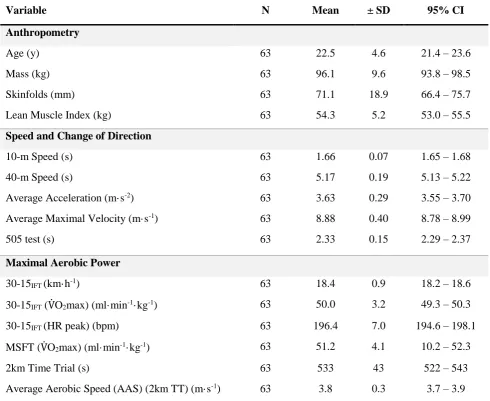
league. Sixty-Three Australian elite and junior-elite rugby league players (22.5 ± 4.5 y, 96.1. kg ± 9.5 kg, Σ7 skinfolds: 71.0 ± 18.7 mm) from a professional club participated in this study. Players were assessed for anthropometry (body mass, Σ7 skinfolds, lean mass index), prolonged high-intensity intermittent running (PHIR; measured by 30-15IFT),
predicted aerobic capacity (estimated from the multi-stage fitness test; V̇O2maxMSFT) and
aerobic power (average aerobic speed), speed (40 m sprint), repeated sprint and change of direction (COD; 505 agility test). Validity of the 30-15IFT was established using
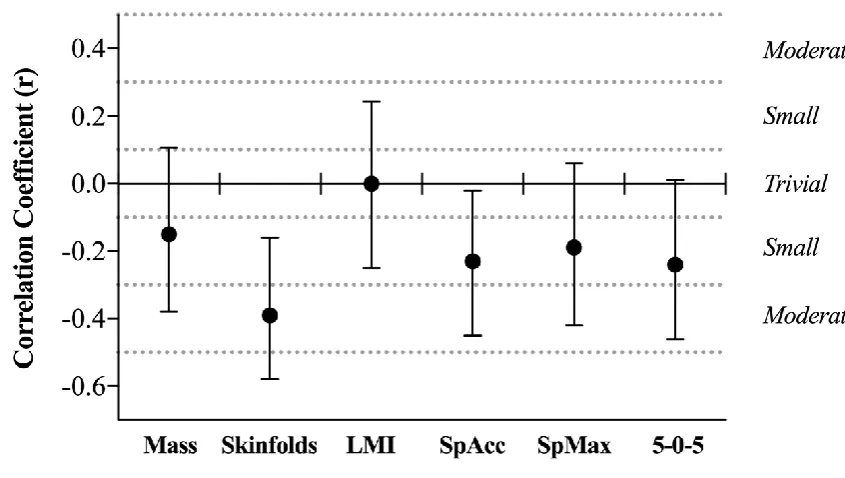
Pearson’s coefficient correlations. Forward stepwise regression model identified the fewest variables that could predict VIFT and change in 30-15IFT performance. Significant
correlations between VIFT and Σ7 skinfolds, repeated sprint decrement, V̇O2maxMSFT and
average aerobic speedwere observed. A total of 71.8% of the adjusted variance in 30-15IFT performance was explained using a 4 step best fit model (V̇O2maxMSFT, 61.4%;
average aerobic speed, 4.7%; maximal velocity, 4.1%; lean mass index, 1.6%). These findings demonstrate that whilst the 30-15IFT is a valid measure of PHIR, it also
iii
Chapter V determined differences in PHIR performance and running
momentum (pIFT) between competition levels and positional groups in rugby league. Elite
Australian National Rugby League (NRL), sub-elite [state-based competition (SRL); national youth competition (NYC); local league (LL)] and junior-elite (U18; U16) rugby league players completed the 30-15IFT to quantify PHIR performance. Running
momentum (pIFT; kg∙m∙s-1) was calculated as the product of body mass and final running
velocity (VIFT; m.s-1). Effect sizes (ES ± CI) were used to examine between-group
differences. 30-15IFT performance was possibly to likely higher in NRL players (19.5 ±
1.0 km.h-1; mean ± SD) when compared to SRL (18.9 ± 1.0 km.h-1; ES= 0.6 ± 0.5), NYC (18.9 ± 1.0 km.h-1; ES = 0.6 ± 0.5) and U18 (18.6 ± 1.2 km.h-1; ES= 0.8 ± 0.5) players. NRL players (537 ± 41 kg.m.s-1) possessed possibly to very likely greater pIFT than SRL
(506 ± 50 kg.m.s-1; ES= 0.7 ± 0.5), NYC (484 ± 50 kg.m.s-1; ES= 1.2 ± 0.5), U18 (447 ± 37 kg.m.s-1; ES= 2.3 ± 0.6), U16 (399 ± 50 kg.m.s-1; ES= 3.0 ± 0.7) and LL players
(466 ± 31 kg.m.s-1; ES= 2.0 ± 0.7). Middle forwards attained a likely superior pIFT(ES=
0.5−1.8) to all other positional groups. This study demonstrated that higher level rugby league players possess superior PHIR capacities compared with lower levels of competition, while highlighting that pIFT can account for the disparities in body mass
between groups.
Chapter VI compared relative and absolute speed and metabolic thresholds
for quantifying match output in elite rugby league. Twenty-six professional players competing in the NRL were monitored with global positioning systems (GPS) across a rugby league season. Absolutespeed [moderate-intensity running (MIR >3.6 m∙s-1); high
intensity running (HIR > 5.2 m∙s-1)] and metabolic (>20 W·kg-1) thresholds were
iv
estimated from the 30-15IFT, as well as the metabolic threshold associated with VT2IFT
(HPmetVT2), to examine difference in match-play demands. VT2IFT mean values represent
a 146%, 138%, 167% and 144% increase in the HIR dose across adjustables, edge forwards, middle forwards and outside backs. Distance covered above VT2IFT was almost
certainly greater (ES range = 0.79 – 1.03) than absolute thresholds across all positions. These findings demonstrate that using absolute HIR speed thresholds may underestimate the relative HIR load. Chapter VII evaluated the validity of the relative speed thresholds proposed in chapter VI. Eighteen professional male rugby league players (n= 18, 23.3 ± 3.4 y, 101.5 ± 8.3 kg) competing in the NRL competition, were monitored over a three-week pre-season training period (14.8 ± 0.8 field-based sessions) to examine the relationships between relative locomotor output and measures of internal load.This study observed moderate to large associations between these relative measures of external load and criterion measures of internal TL. This study concluded that VIFT-derived thresholds
are valid as a measure of quantifying training. Taken together, Chapter VI and VII
suggest using relative thresholds allow for better prescription and monitoring of external training loads, whilst incorporating individual physical capacities.
Chapter VIII examined the acute metabolic, cardiorespiratory and
neuromuscular effects of differently structured HIT and tactical training sessions, as well as changes following a pre-season training period. Thirty-one junior-elite Australian rugby league players completed four × 4 minute HIT exercises typical of team sport athletes with a 2 minute passive recovery in between exercises. Exercise intensity was prescribed relative to 30-15IFT performance conducted prior to each testing period,
ranging from 85 – 105% VIFT, with manipulations made to shuttle length, work: rest
v
HIT exercise. Blood lactate ([La−]b), counter-movement jumps (CMJ) and RPE were
recorded following HIT exercises (within 60 s of completion), while time spent above 90% heart rate maximum (HR90) was calculated. The order of HIT exercises where
randomised over three protocols undertaken two days apart to assess the influence on exercise arrangement. Each protocol was re-tested following a six-week training period. Effect sizes (ES) quantified between-condition differences. Substantial increases in [La−]b occurred following the second 4 min exercise bout (ES range = 0.94 – 1.18). No
differences were witnessed following each protocol in [La−]b or RPE, despite some
substantial differences witnessed in HR90 between each protocol at the conclusion. The
4 min HIT exercise incorporating active recovery had the greatest effect on (ES range = 0.06 – 0.88). Following the training period, [La−]b (protocol one; ES= 0.68 ± 0.31; ES ±
CI) and HR90 (protocol one; ES = 0.75; ±0.37 and two: ES = 0.40; ±0.29) reposes were
substantially lower. CMJ power outputs showed no substantial changes across any condition. These findings demonstrate that the arrangement of HIT exercises can influence the physiological responses of a training session. The accumulation of [La−]b
vi STUDENT DECLARATION
I, Tannath Scott, declare that the PhD thesis by publication entitled ‘High-intensity interval training in team sports: testing, monitoring and prescription’ is no more than 100,000 words in length, including quotes and exclusive of tables, figures, appendices, bibliography, references and footnotes. This thesis contains no material that has been submitted previously, in whole or in part, for the aware of any other academic degree or diploma. Except where otherwise indicated, this thesis is my own work.
Tannath James Urquhart Scott
6
thJune 2017
vii
DEDICATIONS AND ACKNOWLEDGEMENTS
Well…. Wow! Over five years from starting this journey it ends (hopefully), and there were certainly times I didn’t think I’d be writing this. For the very few of you who will take time out of your day to read this, these acknowledgements are directed right at you (whether you’re mentioned or not!).
Firstly, I must thank the tireless efforts of all my supervisors. Dr Grant Duthie, you have helped me in every way you could since I first met you as an undergraduate student. Your assistance with data management and philosophies on strength and conditioning have helped me throughout every stage of my career. The constant reminder to keep it simple has shortened this thesis by plenty of pages, for that I, the reviewers, and anyone reading this are very appreciative. I sincerely thank you for all of this, especially helping me ‘get a foot in the door’. Dr Ben Dascombe, I thank you for your mateship, support, and guidance over the duration of this PhD – and particularly in the early stages. I sincerely thank you for your effort, right up until submission and helping me ease into the rigours of elite sport. Lastly, to Dr Colin Sanctuary who helped develop my strength and conditioning knowledge and assisted with another set of eyes and ears through testing and study designs, thank you for the many laughs!
viii
in the ‘rave cave’ during the early days and congratulations on getting your PhD finished in a ‘timely’ manner! Heidi Thornton, thanks for your help in the past 18 months on matters far over my head. To Dave Ballard and Scott Barker, thanks for the advice, knowledge and most importantly mateship over the past five years! Finally, to everyone else at the Newcastle Knights, Brisbane Broncos, University of Newcastle and Victoria University who has leant a helping hand along the way... I’m so very appreciative.
To Dr Greg Dupont and Dr Martin Buchheit, thank you for your advice along the way. It has been fantastic to be able to shoot around ideas within this area, something I’m eternally grateful for.
To all my friends, I’m so grateful for the support and (attempted) interest you’ve shown over the past five years. This would not have been at all possible without the unconditional support, guidance, and advice of my family. You have helped and supported every decision I have made over the past 28 years; I cannot express enough gratitude for all the sacrifices and opportunity you’ve given me throughout my life. Although there is a fair list this includes (but not limited to) Mum and Dan, Dad and Anna, Farley, Grandma, Ilona, Aurora, and Sarinah, David, Libby and Simon. This is as much yours as mine!
ix
x
LIST OF PUBLICATIONS ARISING FROM THIS THESIS
Peer-reviewed Articles
Scott, T. J, Delaney, J. A., Duthie, G. M., Sanctuary, C. E., Ballard, D. A., Hickmans, J.
A and Dascombe, B. J. (2015). Reliability and usefulness of the 30-15 Intermittent Fitness Test in Rugby League. Journal of Strength and Conditioning Research, 29(7), 1985 – 1990.
Scott, T. J, Duthie, G. M., Delaney, J. A., Sanctuary, C. E., Ballard, D. A., Hickmans, J.
A. and Dascombe, B. J. (2017). The validity and contributing physiological factors to 30-15 Intermittent Fitness Test performance in rugby league. Journal of Strength and
Conditioning Research, 31(9), 2409 – 2416.
Scott, T. J., Dascombe, B. J., Delaney, J. A., Sanctuary, C. E., Scott, M. T. U., Hickmans
J. A.and Duthie, G. M. (2017). Running momentum: a new method to quantify prolonged high-intensity intermittent running performance in collision sports. Science and Medicine in Football, 1(3), 244 – 250.
Scott, T. J., Thornton, H. R., Scott, M. T. U., Dascombe, B. J. and Duthie, G. M. (2018).
xi Conference Proceedings
Scott, T. J, Delaney, J. A., Duthie, G. M., Sanctuary, C. E., Ballard, D. A., Hickmans, J.
A. and Dascombe, B. J. (2013). Predictors of intermittent running performance in rugby league. 19th Congress of the European College of Sport Science, Amsterdam, The Netherlands.
Scott, T. J., Delaney, J. A., Duthie, G. M., Sanctuary, C. E., Ballard, D. A., Hickmans,
J. A. and Dascombe, B. J. (2014). Effect of playing level on 30-15 Intermittent Fitness test performance in rugby league. 6th Exercise and Sport Science Australia Conference, Adelaide. Australia. (Appendix I)
Scott, T. J. and McLaren, S. J. (2018). The validity of relative speed thresholds derived
xii TABLE OF CONTENTS
Abstract ... i
Student Declaration... vi
Dedications and Acknowledgements ... vii
List of Publications Arising From This Thesis ... x
Table of Contents ... xii
List of Tables ... xvii
List of Figures ... xix
List of Equations ... xxi
List of Abbreviations ... xxii
Chapter I General Introduction ... 1
Background ... 2
Research Problem ... 5
Research Objectives ... 7
Research Progression ... 8
Purpose of the Studies... 9
Linking the research Manuscripts ... 11
Limitations and Assumptions ... 12
Delimitations ... 13
Chapter II Literature Review... 14
Introduction ... 15
xiii
Training Prescription ... 25
Monitoring Training Loads ... 32
Conclusions ... 38
Chapter III The reliability and usefulness of the 30-15 Intermittent Fitness Test in rugby league ... 41
Abstract ... 43
Introduction ... 44
Methods ... 47
Results ... 51
Discussion ... 55
Limitations ... 58
Practical Applications ... 58
Chapter IV The validity and contributing physiological factors to 30-15 Intermittent Fitness Test performance in Rugby League ... 60
Abstract ... 62
Introduction ... 63
Methods ... 65
Results ... 72
Discussion ... 77
Limitations ... 82
xiv Chapter V
Running momentum: a new method to quantify prolonged high-intensity
intermittent running performance in collision sports... 84
Abstract ... 86
Introduction ... 87
Methods ... 91
Results ... 94
Discussion ... 99
Conclusions ... 103
Practical Applications ... 103
Chapter VI Differences between relative and absolute speed and metabolic thresholds in team sports ... 105
Abstract ... 107
introduction ... 108
Methods ... 111
Results ... 114
Discussion ... 119
Conclusion ... 123
Practical Applications ... 124
Chapter VII The validity of relative speed thresholds to quantify training in team sports ... 125
Introduction ... 127
xv
Results ... 130
Discussion ... 130
Chapter VIII Acute metabolic, cardiorespiratory and neuromuscular effects of high-intensity interval training in rugby league players ... 132
Abstract ... 134
Introduction ... 136
Results ... 144
Discussion ... 150
Conclusions ... 155
Practical Applications ... 157
Chapter IX Summary and Conclusions ... 158
Overview ... 159
Research Outcomes... 160
Conclusions and Recommendations ... 171
Directions for Future Research ... 173
Chapter X References ... 174
Chapter XI (Appendices) Appendix I ... 204
xvi
Introduction ... 206
Methods ... 206
Results ... 206
xvii LIST OF TABLES
Table 3.1: Mean (± SD) maximal intermittent running velocity (VIFT) observed for
the 30-15 Intermittent Fitness Test (30-15IFT). ... 52
Table 3.2: Measures of reliability for maximal intermittent running velocity (VIFT)
and peak heart rate (HRpeak) during the 30-15 Intermittent Fitness Test
(30-15IFT). ... 53
Table 4.1: Descriptive measures (mean ± SD) for all measured variables taken from the testing battery. ... 73 Table 4.2: Multiple correlation summary of the deterministic model assuming 30-15IFT (VIFT) as a dependent variable. * ... 76
Table 6.1: Mean velocity (mean ± SD) for relative and absolute speed and metabolic thresholds across positional groups. ... 116 Table 6.2: Distances (mean ± SD) covered across relative and absolute speed and
metabolic thresholds across positional groups. ... 116 Table 7.1: Within-athlete relationships between session distances covered above
VIFT-derived speed thresholds and session internal loads during a
three-week pre-season training block in elite rugby league players... 130 Table 8.1: Training events (commencement time) [mean individual session training
load ± SD; determined from the sRPE method] completed by rugby league players during the six-week training period (pre-season)... 141 Table 8.2: Outline of high-intensity running exercises. ... 142 Table 8.3: Outline of each high-intensity interval training protocol. ... 142 Table 8.4: Raw data collected across all variables over each high-intensity interval
xviii
Table 9.2: VIFT-based HIT strategies developed as a result of Chapter VI to VIII.
xix LIST OF FIGURES
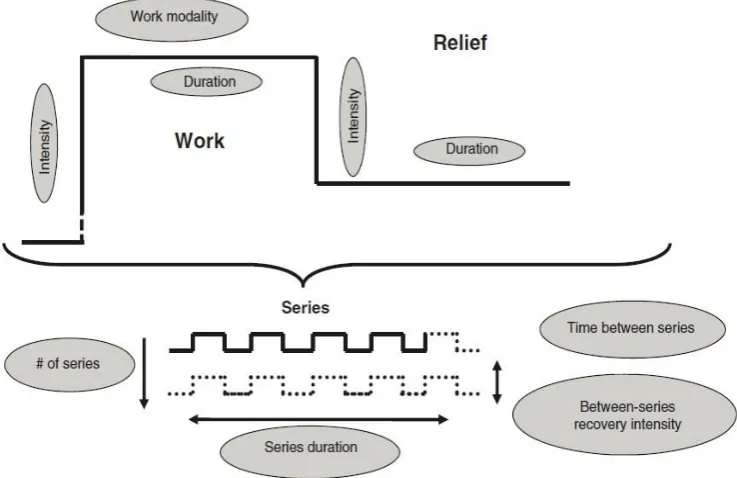
Figure 1.1: The conceptual model of the training process... 3 Figure 1.2: Outline of the research progress linking the major studies of this thesis. 8 Figure 2.1: Variables that may be considered during high-intensity interval training.
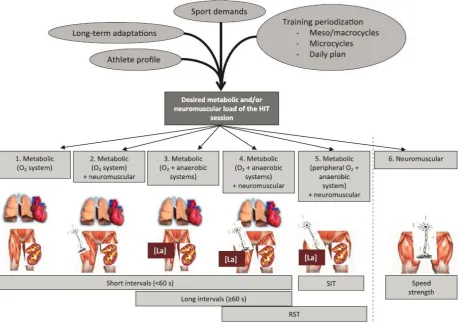
Taken from Buchheit and Laursen (2013b) ... 16 Figure 2.2: High-intensity interval training decision tree, considering individual drills
based on the expected acute physiological strain responses. Taken from Buchheit and Laursen (2013b). ... 27 Figure 3.1: Schematic representation of the 30-15IFT. Taken from Buchheit (2008a)
... 49 Figure 3.2: Heart rate (HR) response to the 30-15 Intermittent Fitness Test during two
different trials [Trial 1 (black) and Trial 2 (grey)] in a representative subject. ... 54 Figure 4.1: Correlations between VIFT and various anthropometrical and
physiological measures (mean ± 95% CI) ... 74 Figure 4.2: The correlations between VIFT and various physiological measures (mean
+/- 95% CI). ... 75 Figure 5.1: Box plots of 30-15IFT performance (VIFT) and final 30-15IFT running
momentum (pIFT)for the different rugby league competition levels ... 95
Figure 5.2: Differences in 30-15IFT performance (VIFT) and final 30-15IFT running
momentum (PIFT) between NRL and other levels of competition. Values
presented as standardised effects (effect size ± 90% CI) ... 96 Figure 5.3: Differences in 30-15IFT performance (VIFT) and final 30-15IFT running
momentum (PIFT) between lower levels of competition. Values presented
xx
Figure 5.4: Differences in 30-15IFT performance (VIFT) and final 30-15IFT running
momentum (PIFT) across rugby league positional groups. Values are as
standardised effects (effect size ± 90% CI) ... 98 Figure 6.1: Magnitude of differences in running and high metabolic distance between
relative and absolute thresholds across positional groups. Values are as standardised effects (effect size ± 90% CI). ... 117 Figure 6.2: A: VT1IFT raw velocity and the differences in distance covered above
VT1IFT vs. MIR; B: VT2IFT raw velocity and the differences in distance
covered above VT2IFT vs. HIR; C. HPmetVT2 raw power and the differences
in distance covered above HPmetVT2 and HPmetTh. ... 118
Figure 8.1: A schematic depiction of the study protocols and high-intensity interval training exercises within each protocol (ordered from top to bottom). 142 Figure 8.2: Box plots of metabolic and neuromuscular responses for each exercise
over protocol one, two, three and all data ... 147 Figure 8.3: Magnitude of differences in metabolic, cardiorespiratory and
neuromuscular responses between HIT exercises and between protocols. Values are as standardised effects (effect size ± 90% CI) ... 148 Figure 8.4: Magnitude of differences in metabolic, cardiorespiratory and
neuromuscular responses for each protocol between post and pre- training period. Values are as standardised effects (effect size ± 90% CI). ... 149 Figure 9.1: The physical preparation feedback loop as proposed by the current thesis.
xxi LIST OF EQUATIONS
xxii LIST OF ABBREVIATIONS
2kmTT 2000-m time trial
30-15IFT 30-15 Intermittent Fitness Test
AAS Average aerobic speed
ASR anaerobic speed reserve
AU arbitrary units
b∙min-1 beats per minute
CI confidence interval
cm centimetre
CMJ counter-movement jump
COD change of direction
CV coefficient of variation
ES effect size
GPS global positioning systems
h hour
HIR high-intensity running
HIRTh absolute high-intensity running threshold
HIT High-intensity interval training
HPmetTh absolute high power metabolic threshold
HPmetVT2 high power metabolic threshold associated with VT2IFT
HR heart rate
HRmax maximal heart rate
HRpeak peak heart rate
HR90 heart rate > 90%max
HRV heart rate variability
HRR post-exercise heart-rate recovery
Hz hertz
ICC Interclass correlation coefficient
kg kilogram
km kilometre
km∙h-1 kilometres per hour
LL local level rugby league competition
LMI Lean mass index
m metre
xxiii
m∙min-1 metres per minute
m∙s-1 metres per second
m∙s-2 metres per second/ per second
MAS maximal aerobic speed
MIR moderate-intensity running
MIRTh absolute moderate-intensity running threshold
MSFT multi-stage fitness test
n number
NRL National Rugby League
NYC National Youth Competition
PCr phosphorylcreatine
PHIR prolonged high-intensity intermittent running
pIFT Final running momentum during 30-15IFT
RPE rating of perceived exertion
s seconds
SD standard deviation
sRPE session-RPE
SRL state-based rugby league competition
SWC smallest worthwhile change
TE typical error of measurement
TL training load
T@𝐕̇O2max time above 90% of V̇O2max
UM-TT Montreal Track Test
VIFT final velocity achieved during the 30-15 Intermittent Fitness Test
VT1 first ventilatory threshold
VT2 second ventilatory threshold
VT1IFT relative first ventilatory threshold from 30-15IFT
VT2IFT relative second ventilatory threshold from 30-15IFT
𝐕̇O2 oxygen consumption
𝐕̇O2max maximal oxygen uptake
v𝐕̇O2max minimal running speed required to elicit maximal oxygen uptake
y year
Yo-Yo IRT Yo-Yo Intermittent Recovery Test
Yo-Yo IRT1 Yo-Yo Intermittent Recovery Test Level 1
xxiv [La−]b blood lactate
% percentage
~ approximate
> greater than
< less than
∑ sum
∆ change (delta)
1
Chapter I
2 BACKGROUND
3
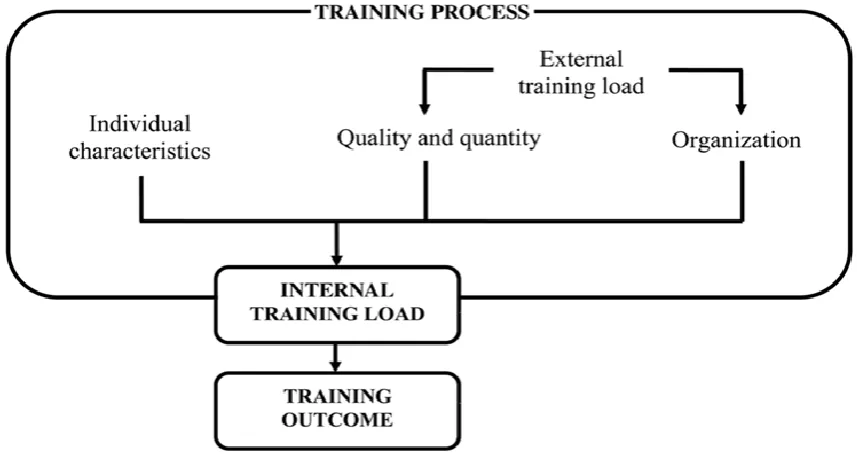
Figure 1.1: The conceptual model of the training process (Impellizzeri et al., 2005). The training outcome is the result of the internal training load. This internal training load is the product of: (a) Individual characteristics (training status and genetic makeup), and (b) The quality, quantity and organisation of the external training load.
4
coaches must appropriately develop these aerobic and repeated high-intensity capacities to adequately prepare athletes for match-play demands.
High-intensity interval training (HIT) has become increasingly more common in physical training preparation for team sports, as it has been shown to be a time effective method that stresses the physiological capacities common to team sport match-play (Billat, 2001b; Buchheit & Laursen, 2013a; Buchheit & Laursen, 2013b). Typically, HIT incorporates either repeated short (<45 s) or longer (2-4 min) bouts of high-intensity exercise that are interspersed with set recovery periods (Buchheit & Laursen, 2013a). Given most team sports are largely acyclic in nature, the energy supply required for these physical efforts is derived collectively from both anaerobic and aerobic sources and requires high levels of neuromotor drive (Bangsbo, 2000b; Bangsbo, Iaia, & Krustrup, 2007; Bangsbo, Mohr, & Krustrup, 2006). As such, HIT protocols may not only aim to improve cardiorespiratory function (usually considered the primary aim) but focus on the metabolic and neuromuscular responses (Buchheit & Laursen, 2013a; Buchheit & Laursen, 2013b).
To achieve the desired physiological adaptations, physical conditioning programs must be specifically prescribed for individuals and consider current training state, training history and physiological demands of match-play. However, the dose-response relationship to this training stimulus must also be monitored. High-intensity interval training sessions have typically been prescribed using an individual’s velocity at V̇O2max (vV̇O2max) or an individual’s maximal aerobic speed (MAS), traditionally
5
tests such as, the multi-stage fitness test (MSFT) (Ramsbottom, Brewer, & Williams, 1988) or the Yo-Yo Intermittent Recovery Test Level 1 (Yo-Yo IRT1) and/or Level 2 (Yo-Yo IRT2) (Bangsbo, 1994). However, the limitations concerning the ability to test these qualities [e.g. prolonged high-intensity intermittent running (PHIR)] and subsequently prescribe movement specific HIT protocols have previously been recognised (Buchheit, 2008b). For example, the MSFT may estimate V̇O2max, yet does
not evaluate many qualities of intermittent performance (e.g. inter-effort recovery ability) (Haydar, Haddad, Ahmaidi, & Buchheit, 2011). In contrast the Yo-Yo IRT’s examine these physiological determinants but do not provide a reference speed that is sensitive enough to guide the homogenous prescription of HIT (Buchheit, 2008b; Krustrup, Mohr, Ellingsgaard, & Bangsbo, 2005). This is important as through the individualisation of HIT we may aim to maximise the training outcome (and potential physiological adaptation). For example, it has been demonstrated that only the time spent at high intensity (>90% of maximal HR) was related to changes in aerobic fitness in soccer players across a pre-season period (6-8 weeks) (Castagna, Impellizzeri, Chaouachi, & Manzi, 2013). As such, it appears vital that coaches prescribe and monitor workloads relative to each individual athlete in team sports.
RESEARCH PROBLEM
6
duration, number of sets and repetitions and recovery between sets); any of which may alter the physiological response to training. However, establishing a reliable and valid testing protocol to establish a reference speed that may appropriately prescribe HIT velocities across large squads has limitations. The final velocity achieved during the 30-15 Intermittent Fitness Test (30-30-15IFT; VIFT) has been demonstrated to provide a reference
speed delivering homogenous physiological responses during HIT (Buchheit, 2008b). However, the validity of the 30-15IFT in team sports has been limited to primarily
basketball, soccer, handball and ice hockey cohorts (Buchheit, 2008b; Buchheit, Lefebvre, Laursen, & Ahmaidi, 2011b; Covic, Jeleskovic, Alic, Rado, Kafedzic, Sporis, McMaster, & Milanovic, 2016). While VIFT incorporates the ability of an individual to
tolerate directional changes, it is theorised that individual COD ability may be affected by greater mass, due to the increased inertia and thus superior proportional impulse required to decelerate and re-accelerate (Frost, Cronin, & Newton, 2010). Due to this, it has been suggested that heavier team sport athletes (e.g. rugby league, rugby union, American football) would experience a greater mechanical and metabolic load throughout the 30-15IFT compared to previously assessed cohorts (e.g. soccer or
7 RESEARCH OBJECTIVES
Despite the specificity of the 30-15IFT test to rugby league, no literature has
investigated the validity and reliability of this test among such a population. Due to the greater body mass of rugby league players, it’s likely that greater mechanical and metabolic loads would be evoked throughout the 30-15IFT. Firstly, this series of studies
aims to examine the reliability, usefulness and validity of this test among a primarily mesomorphic athletic population. Additionally, this research aimed to explore a new and novel method to both longitudinally track the PHIR capacity (assessed as 30-15IFT
performance) of athletes and monitor the relative physical output during match-play. Lastly, this body of research intended to provide a more complete understanding on the acute metabolic and neuromuscular effects of HIT prescribed from the 30-15IFT. Overall,
8 RESEARCH PROGRESSION
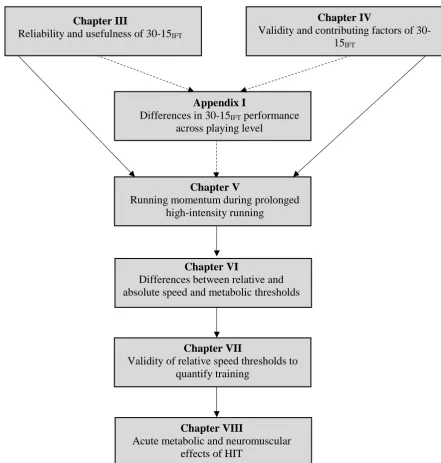
Figure 1.2: Outline of the research progress linking the major studies of this thesis. Chapter III
Reliability and usefulness of 30-15IFT
Appendix I
Differences in 30-15IFT performance
across playing level
Chapter V
Running momentum during prolonged high-intensity running
Chapter VI
Differences between relative and absolute speed and metabolic thresholds
Chapter IV
Validity and contributing factors of 30-15IFT
Chapter VII
Validity of relative speed thresholds to quantify training
Chapter VIII
9 PURPOSE OF THE STUDIES
The reliability and usefulness of the 30-15 Intermittent Fitness Test in Rugby
League (Chapter III).
• To examine the reliability of the 30-15IFT (VIFT and HRpeak) within rugby league
players;
• To assess the usefulness of the 30-15IFT among this cohort through quantifying
the smallest ‘practical’ changes in PHIR capacity.
The validity and contributing factors physiological factors to 30-15 Intermittent
Fitness Test performance in rugby league (Chapter IV).
• Investigate and re-examine the validity of the 30-15IFT among a typically
mesomorphic population;
• Explore the contribution of physiological functions to VIFT across positional
groups in rugby league;
• Examine what changes in physiological capacities contributes to changes in VIFT
across a preparatory macrocycle.
Running momentum: a new method to quantify prolonged high-intensity
intermittent running performance in collision sports (Chapter V).
• Determine if the calculation of PHIR ‘final momentum’ (pIFT) may better
10
• Investigate any differences in pIFT and VIFT between elite, sub-elite and
junior-elite players.
Differences between relative and absolute speed and metabolic thresholds in team
sports (Chapter VI).
• Identify the differences between relative and absolute speed and high metabolic power thresholds across rugby league match-play.
The validity of relative speed thresholds to quantify training in team sports
(Chapter VII).
• Identify the construct validity of these newly proposed individual thresholds across rugby league training.
Acute metabolic and neuromuscular effects of high-intensity training in team sport
athletes (Chapter VIII).
• Identify the metabolic and neuromuscular effects of different training exercises within a HIT session as prescribed from the 30-15IFT;
• Examine the influence by tactical/technical sessions undertaken immediately before the HIT protocol;
11 LINKING THE RESEARCH MANUSCRIPTS
This research project aimed at providing a systematic process to practically test, prescribe and monitor the training process and outcomes of team sport athletes, specifically in rugby league. To achieve this outcome, the 30-15IFT was employed to
examine the PHIR capacity of these athletes and prescribe individualised HIT protocols. Due to a large somatic discrepancy between the current cohort and those athletes previously examined, Chapter III and IV aimed to determine the reliability and usefulness, as well as the validity and contributing physiological factors to 30-15IFT
performance in such a cohort. This research allows for additional investigation into applying this test to monitor and prescribe HIT. Subsequently, Chapter V investigated differences in 30-15IFT performance across levels of competition, while introducing a
new and novel method associated to tracking longitudinal PHIR performance. Chapter VI utilised previous research on the 30-15IFT to design relative speed and metabolic
thresholds to GPS-derived match-play loads. Chapter VII examined the validity of 30-15IFT derived speed thresholds proposed in Chapter VI. The specificity of this relative
running load aimed to provide greater insight into the volume of running performed at higher-intensities and consequently can be used by performance staff to more precisely monitor match-play and training sessions. Finally, Chapter VIII employed 30-15IFT
12
Overall, this thesis aimed to investigate the implementation of the 30-15IFT to
test PHIR, design and prescribe HIT protocols suitable for team sport athletes and monitor the dose-response relationship during training and match-play. As a result of these series of studies, new and novel methods to longitudinally asses PHIR capacity and examine relative HIR were developed. Both in their individual and collective capacities, these studies contribute to the current understanding of the physical development and preparation of team sport athletes for match-play.
LIMITATIONS AND ASSUMPTIONS
The following limitations apply to the studies reported in the current thesis.
Specificity of results
Whilst the studies implemented in this thesis were undertaken among a rugby league cohort, they relate to heterogenous collision-sport athletes (i.e. rugby league, rugby union, American football).
Interference in physiological responses
13 DELIMITATIONS
The following delimitations may apply to the present research:
Limited sample size
Due to the applied nature of the research, some studies may incorporate limited participant numbers. However, the sample size of each study is typical of previous research assessing similar performance outcomes in elite team sport.
Gender restrictions of the participants
The participants recruited across the research project were restricted to males to avoid any effect of gender on exercise performance.
Sample representation
The data contained within the entire research project are based on a specific sample of participants, and therefore may not be a true representation of similar populations.
Environmental conditions
Testing and training conditions across the studies contained in the thesis were commonly performed on a field in an open environment. Testing measures were performed at times the athletes typically trained to control for natural circadian rhythms and effect of dietary intake.
Dietary Intake
14
Chapter II
15 INTRODUCTION
Background to High-Intensity Interval Training in Team Sports
High-Intensity interval training has been incorporated into training programs for the past 100 years (Billat, 2001a). Indeed, between the 1910s and 1930s, HIT was utilised by middle- to long- distance athletes in a similar manner to contemporary practices (Billat, 2001a). As the metabolic fundamentals of training became better understood, HIT programming incorporated shorter bouts of HIR, until Emil Zatopek popularised current HIT programming in the 1950s (Billat, 2001a). Over the past 20-40 years, the conception and understanding of the direct acute and longitudinal physiological responses and subsequent adaptations to these training methods has developed substantially, with HIT emerging as a primary method of conditioning team sport athletes (Billat, 2001a; Buchheit & Laursen, 2013b). While substantial evidence suggests that cycling-based HIT may improve specific physiological functions and physical performance (Billat, 2001a; Billat, 2001b; Laursen & Jenkins, 2002), the purpose of this literature review will focus on running-based HIT in a context specific to field-based team sport athletes.
High-intensity interval training is flexible and can be modified to stress specific physiological processes, with up to nine variables (including work intensity and duration, work: rest intervals, number of sets and repetitions and recovery between sets) being able to be manipulated to alter the imposed training stress (see Figure 2.1 below). These physiological functions typically include cardiopulmonary (i.e. V̇O2max; allowing
16
and phosphocreatine resynthesis) (Buchheit, 2012; Buchheit & Laursen, 2013a) and neuromuscular (i.e. regulation of neural drive, muscle fibre recruitment and changes in force-generating capacity) related elements (Buchheit, 2012; Buchheit & Laursen, 2013a; Buchheit & Laursen, 2013b). It is appropriate to distinguish between these physiological processes as HIT methodologies are easily manipulated to stress these different qualities, with the aim to build toward inducing match specific training responses. Indeed, comparable HIT strategies may have similar cardiorespiratory responses yet markedly diverse neuromuscular and/or anaerobic contributions (Buchheit & Laursen, 2013a). As such, ruminating about the desired outcome of HIT sessions and considering the individual neuromuscular, metabolic and cardiorespiratory load are important when integrating into concurrent team sports training.
17 PHYSICAL TESTING
Background
The physical assessment of athletes in the field provides a valid and reliable means of examining various physiological capacities that are central to team sport performance (Bangsbo, 2000b). Pertinent to implementing any test in a team sport environment, is its validity (construct and ecological), reliability and usefulness (Bangsbo, 1994). Each test result should provide a repeatable outcome that delivers an increased understanding of physiological functioning and can be interpreted to guide the prescription of the training stimulus. Moreover, utilising a physical test that may deliver a reference workload to prescribe the training may increase the specificity of the feedback practitioners may receive (Buchheit, 2008b).
18
Continuous Running Tests
From the 1960s to 1980s an increase in research on the metabolic and energetic cost of walking, jogging, and running lead to the development of ecologically valid field tests to evaluate aerobic performance (Cooper, 1968; Jankowski, Ferguson, Langelier, Chaniotis, & Choquette, 1972; Shephard, 1969). These assessments of aerobic capacity were examined through continuous, indirect, and incremental running methods and become largely popularised in team sports due to their ability to test multiple athletes (Leger & Boucher, 1980; Leger, Mercier, Gadoury, & Lambert, 1988).
Montreal Track Test
The Montreal Track Test (UM-TT) is a continuous, indirect multi-stage running field test first developed as an alternative to a 12-minute maximal running test (Leger & Boucher, 1980). This test involves running continuously on a large field or track at a pace governed by a pre-recorded audio track, until the subject fails to maintain the incremental speed. The test was one of the first field used consistently in track and field and team sport athletes to predict V̇O2max without having to conduct laboratory testing (Berthoin,
19
Multi-stage Fitness Test
The MSFT (or 20-m Shuttle run test) was developed to overcome the limitations of the UM-TT. Whilst the UM-TT was both valid and reliable, it was limited by the field or track requirements (Leger & Lambert, 1982). The MSFT was developed to incorporate an athletes change of direction ability, with early research demonstrating that the MSFT provided a valid measure of aerobic fitness on a wide range of surfaces, which increased its popularity within team sports (Leger & Lambert, 1982). However, despite early studies indicating the MSFT to be both valid and reliable (Leger & Lambert, 1982), its ability to estimate V̇O2max has recently been scrutinised. Lamb and Rogers (2007)
suggested the MSFT was not reliable enough for the purpose of monitoring changes in V̇O2max due to excessive non-random error, with only a moderate-strength relationship
established between V̇O2max (absolute and relative) and MSFT performance (r = 0.43
and r = 0.54, respectively) (Aziz, Chia, & Teh, 2005). Further, O’Gorman and colleagues (2000) reported no significant correlation between MSFT scores and laboratory-derived V̇O2max for 7 international level rugby players (r = 0.42) or 15 competitive sports
participants (r = 0.41), however the limited sample size used in this study makes drawing correlation conclusions difficult. Whilst these studies question the basis for the MSFT to measure and report changes in V̇O2max, it still may be an appropriate field based measure
20
not only estimate V̇O2max more accurately than the MSFT, but also provide greater
specificity to the intermittent running demands experienced in team sports.
Intermittent Running Tests
With an increased understanding of the physical demands of team sport match-play, field tests that examine physical capacities with greater transference to the demands of their sport are becoming more frequently employed. As such, it is important to examine both the aerobic and anaerobic capacities to match physical output of competition (Bangsbo, Iaia, & Krustrup, 2008), which has provoked a shift to assess the aerobic capacities through intermittent testing protocols (Bangsbo, 1994; Castagna, Abt, & D'Ottavio, 2005). The two most common physical tests to evaluate an athletes PHIR capacity are the Yo-Yo IRT and 30-15IFT (Bangsbo et al., 2008; Buchheit, 2008b). Both
these tests incorporate supra-maximal efforts (above vV̇O2max) and also incorporates an
athlete’s ability to recover between incremental efforts. Combined with the COD, these tests provide an outcome of athlete’s inter-effort recovery ability, acceleration and deceleration ability, aerobic capacity, and anaerobic speed reserve (ASR). Whilst the direct constructs of these tests may vary slightly (Buchheit & Rabbani, 2014), both deliver a PHIR performance measure, which can be used to estimate V̇O2max.
Yo-Yo Intermittent Recovery Test
21
extensively reported upon in team sport athletes (Buchheit & Rabbani, 2014; Krustrup, Bradley, Christensen, Castagna, Jackman, Connolly, Randers, Mohr, & Bangsbo, 2015; Krustrup, Mohr, Amstrup, Rysgaard, Johansen, Steensberg, Pedersen, & Bangsbo, 2003; Krustrup, Mohr, Nybo, Jensen, Nielsen, & Bangsbo, 2006a). Briefly, this test involves 2 x 20 m shuttle runs at incremental speed that are interspersed with 10 s of active recovery. Endurance team sport athletes (i.e. soccer, Australian football) have typically completed the Yo-Yo IRT2, which increases speeds at a greater rate in order to exaggerate the intensity of the repeated high-intensity efforts. Indeed, while both the Yo-Yo IRT1 and IRT2 maximally stress the aerobic system, the latter evokes greater anaerobic metabolism which results in a shorter time to exhaustion (Krustrup et al., 2003; Krustrup et al., 2006a). The Yo-Yo IRT1 and IRT2 demonstrate both construct and ecological validity within team sport athletes and correlate well with other field and laboratory based physiological tests, (Krustrup et al., 2003; Krustrup et al., 2006a; Krustrup, Randers, Horton, Brito, & Rebelo, 2012; Povoas, Castagna, Soares, Silva, Lopes, & Krustrup, 2016). The reliability of the Yo-Yo IR1 and IR2 have been shown to be good (< 5.0% CV) (Krustrup et al., 2003) to moderate (5.1 – 10.0% CV) (Krustrup et al., 2006a; Thomas, Dawson, & Goodman, 2006).
22
intermittent exercise performance of soccer players across different seasonal periods, competitive levels and playing positions (Ingebrigtsen et al., 2012; Krustrup et al., 2006a). However, a limitation of the Yo-Yo IRT is its inability to prescribe exercise based on individual performance during testing as it does not provide a sensitive reference speed for training purposes (Buchheit, 2008b). Indeed, despite previous equations developed to provide a sensitive HIT reference speed it appears problematic due to the nature of the test. (Kuipers, Verstappen, Keizer, Geurten, & van Kranenburg, 1985). For example, athletes can reach the same stage but complete a different number of shuttles resulting in difficulties optimising homogenous physiological responses during HIT.
30-15 Intermittent Fitness Test
The 30-15IFT has been introduced as a practical alternative to the commonly used
field tests mentioned above (Buchheit, 2010a; Buchheit, Laursen, Kuhnle, Ruch, Renaud, & Ahmaidi, 2009b; Haydar et al., 2011; Mosey, 2009). The 30-15IFT is an intermittent,
incremental shuttle-run test that is designed to elicit heart rate peak (HRpeak) and
V̇O2peak, in addition to providing an overall measure of PHIR ability (Buchheit, Al
Haddad, Millet, Lepretre, Newton, & Ahmaidi, 2009a). Briefly, the 30-15IFT consists of
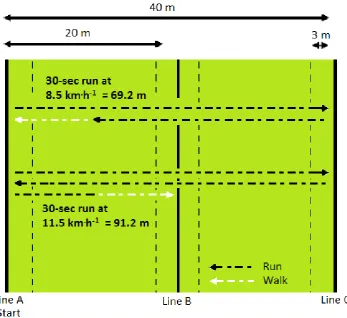
30-s shuttle runs interspersed with 15-s periods of passive recovery, with an initial running velocity (8 km.h-1) which is increased by 0.5 km.h-1 for every subsequent 45-s stage. Participants follow a pre-recorded beep as a pacing strategy over a 40-m shuttle. Similar to the Yo-Yo IRT and unlike continuous field based tests the 30-15IFT evaluates
23
the 30-15IFT has been perceived to be less “painful” than continuous field-based tests in
70% of team sport athletes examined (Buchheit, 2005a).
As the 30-15IFT incorporates periods of recovery, VIFT is much faster than
vV̇O2max, whilst the inclusion of COD results in greater anaerobic metabolism than
continuous incremental field tests. For example, the 30-15IFT elicits a 40% increase in
blood lactate concentration when compared to the UM-TT (Buchheit et al., 2009a), as well as higher peak minute ventilation and maximum carbon dioxide production due to the greater buffering of anaerobic metabolism by-products (Buchheit et al., 2009a). Buchheit et al. (2009a) observed that post exercise autonomic function was characterised by a decreased parasympathetic activity and a greater sympathetic predominance after the 30-15IFT when compared to continuous running tests. This reduced parasympathetic
modulation after 30-15IFT agrees with previous data showing that anaerobic contribution
and muscle power engagement influences post exercise parasympathetic reactivation (Buchheit, Laursen, & Ahmaidi, 2007). Importantly, this increased reliance on anaerobic metabolism toward the conclusion of the test may allow practitioners to further asses’ individuals ASR. The consideration of individual ASR (the difference between maximal sprint speed and vV̇O2max) may further provide context to coaches to evaluate the
capacity of their athletes to complete PHIR. The validity of this construct has been demonstrated in team sport athletes with the 30-15IFT relating well to tests of anaerobic
capacity (Scott, Hodson, Govus, & Dascombe, 2016a). As such, Buchheit (2010a) reported the contribution of the anaerobic capacity and neuromuscular qualities to the VIFT reached is indirectly related to both the magnitude and the percentage of the ASR
24
The 30-15IFT has also been designed to easily integrate performance testing data
into HIT prescription (Buchheit, 2008b), as this is a limitation of preceding field-based tests. For example, the MSFT may obtain a maximal running velocity, however certain physiological determinants of intermittent performance (e.g. inter-effort recovery ability and anaerobic speed reserve (ASR) are not evaluated (Haydar et al., 2011). In contrast the Yo-Yo IRT examine these physiological determinants and quantify PHIR performance, yet they do not deliver a sensitive reference speed that can be used for homogenous HIT prescription (Buchheit, 2008b; Krustrup et al., 2005). However, the 30-15IFT provides a reference speed upon termination (VIFT), that may be guide individual
HIT programming (Buchheit, 2008b), overcoming the previous limitations discussed above. As such, prescribing HIT from VIFT increases the homogeneity of training content
across a team level (Buchheit, 2008b).
The validity and reliability of the 30-15IFT has been demonstrated among
numerous team sports [including basketball, soccer, handball and ice hockey; modified from running to ice skating) (Buchheit, 2008b; Buchheit et al., 2011b; Covic et al., 2016; Darrall-Jones et al., 2015). Previously, Buchheit (2008b) demonstrated significant relationships between VIFT and CMJ, 10-m sprint time, V̇O2max, and heart rate recovery
index scores in young athletes (randomly selected from two competitive basketball and handball teams), illustrating the construct validity of the 30-15IFT for intermittent
exercise. However, these assessments of validity and reliability have primarily occurred with ectomorphic populations, whereas heavier team sport athletes would experience greater mechanical and metabolic loads throughout the 30-15IFT than these previously
assessed cohorts (Darrall-Jones et al., 2015). While the 30-15IFT incorporates the ability
25
to change direction may be affected by greater mass, due to the increased inertia and thus superior proportional impulse required to decelerate and re-accelerate (Frost et al., 2010). Limited research has explored the use of the 30-15IFT within a more mesomorphic athletic
population. Interestingly, these limited findings reported that VIFT remains relatively
stable from U16 to senior rugby union players, despite a continued increase in body mass (Darrall-Jones et al., 2015), suggesting that the interaction between VIFT and body mass
may be of greater importance in sports where an increased body mass is ideal. As such, future investigations should explore the validity and reliability of the 30-15IFT among a
more mesomorphic athletic population, typical of collision-based sports.
TRAINING PRESCRIPTION
26
endurance and strength qualities through multiple planes of movement) (Reilly et al., 2009).
High-Intensity Interval Training
27
Figure 2.2: High-intensity interval training decision tree, considering individual drills based on the expected acute physiological strain responses. Taken from Buchheit and Laursen (2013b).
28
such games, means that the overall load is problematic to standardised across individuals. For example, SSGs are highly variable when examining measures of internal (with reported blood lactate concentrations between 15−30% CV) and external (HIR 30–50% CV) loads (Hill-Haas, Coutts, Rowsell, & Dawson, 2008; Hill-Haas, Rowsell, Coutts, & Dawson, 2008).Moreover, such training methods may provide a ‘shotgun’ approach that encompasses both physical and technical training, it may be more difficult to systematically allow for the neuromuscular and metabolic systems to be overloaded. Consequently, while SSGs provide specific game-based training, their unpredictability presents difficulty when periodising the running load of athletes in team sports. As such, HIT may provide a useful method to complement this training throughout extended training blocks when there is greater need for specific physiological adaptation, due to its adaptability to target differing physiological capacities and qualities with specific outcomes (Hill-Haas et al., 2011; Hoff et al., 2002).
The manipulation of HIT can alter the physiological outcomes of training. Depending on the desired outcome, the prescription of training may incorporate longer (e.g. 1-2 min) efforts around vV̇O2max to emphasise the cardiorespiratory (Faisal,
Beavers, Robertson, & Hughson, 2009; Richard, Lonsdorfer-Wolf, Dufour, Doutreleau, Oswald-Mammosser, Billat, & Lonsdorfer, 2004), skeletal muscle oxygenation (Christmass, Dawson, & Arthur, 1999; Christmass, Dawson, Passeretto, & Arthur, 1999) and cardiac autonomic stress (Buchheit et al., 2007; Hammami, Kasmi, Yousfi, Bouamra, Tabka, & Bouhlel, 2016; Mourot, Bouhaddi, Tordi, Rouillon, & Regnard, 2004). Alternatively, shorter (e.g. 30 s) efforts with repeated changes of direction above vV̇O2max increase the anaerobic glycolytic energy contribution and musculoskeletal/
29
metabolic, cardiopulmonary and neuromuscular systems to varying degrees. Importantly the periodising of HIT in team sports should recognise that each individual athlete has their own physiological profile to appreciate their acute response to the exercise.
For example, consider ‘athlete A’; they have a high aerobic capacity (and subsequent vV̇O2max) but low maximal sprint speed, reducing their ASR. ‘Athlete B’
has a contrary physiological profile, attaining a high maximal sprint speed but only moderate aerobic capacity. Both these athletes may undertake the same training stimulus but Athlete B will likely have a greater anaerobic contribution. Indeed, differences in ASR, V̇O2max, vV̇O2max and maximal sprint speed between individual athletes are likely
to change the aerobic and anaerobic contributions to an athlete performing PHIR, which may affect the accumulation of fatigue or performance. When prescribing HIT it is therefore important that this training elicits relatively homogenous physiological responses in order to reduce the variability of the associated fatigue. Conversely, consideration for the individual physiological profile should be undertaken when identifying appropriate methods to prescribe supramaximal HIT. The importance of ASR has been demonstrated, as higher maximal sprint speed proceeds high vV̇O2max when
athletes are performing HIR, given the metabolic power available from anaerobic sources (Bundle, Hoyt, & Weyand, 2003). Indeed, it has been established that ASR relates better to time to exhaustion during HIR (above vV̇O2max) than V̇O2max (Bundle et al., 2003).
30
Heart Rate HIT Prescription
Through the utilisation of many physical tests (e.g. maximal V̇O2max
treadmill protocols, 30-15IFT, MSFT), practitioners are provided with maximal heart rate
(HRmax) values for each athlete which can then be used to prescribe HIT as a percentage
of HRmax (Achten & Jeukendrup, 2003). The use of heart rate to prescribe training
intensity is based on the linear relationship between HR and V̇O2maxduring steady-state
submaximal workloads (Arts & Kuipers, 1994; Åstrand & Rodahl, 1986; Hopkins, 1991; Robinson, Robinson, Hume, & Hopkins, 1991). As such, utilising HR zones to prescribe exercise intensity may be suited to prolonged and submaximal exercise bouts (Achten & Jeukendrup, 2003; Aubert, Seps, & Beckers, 2003). However, when prescribing HIT, any stimulus that is performed at or above vV̇O2max suffers from a dissociation of this
linear relationship, limiting its use in team sports (Laursen & Jenkins, 2002). Whilst other external factors such as environmental conditions, medication and hydration status may influence the heart rate response to HIT (Lambert, Mbambo, & St Clair Gibson, 1998). Hence, the use of heart rate to prescribe HIT is limited due to the lack of association during supramaximal exercise.
Rating of Perceived Exertion HIT Prescription
31
to internal measures of TL, such as heart rate and blood lactate (Coutts, Rampinini, Marcora, Castagna, & Impellizzeri, 2009; Noble, Borg, Jacobs, Ceci, & Kaiser, 1983) and has been proven to be valid for intermittent exercise (Foster et al., 2001; Impellizzeri, Rampinini, Coutts, Sassi, & Marcora, 2004). Whilst RPE has successfully been used to prescribe exercise intensity in runners (Dantas, Doria, Rossi, Rosa, Pietrangelo, Fano-Illic, & Nakamura, 2015), this method is seldom used in team sports for a variety of reasons (i.e. the heterogeneity of athletes, pacing strategies, and the mentality of conditioning sessions). Further, while this method may be valid in examining exercise intensity, its reliability has been reported to be poor (25–40% CV) (Scott, Black, Quinn, & Coutts, 2013; Wallace, Slattery, Impellizzeri, & Coutts, 2014). This is likely due to the additional psychological and biomechanical (Marcora, Staiano, & Manning, 2009) stressors imposed during exercise, which may be further influenced by external influences (Scott et al., 2013). While this may be appropriate when examining and monitoring the internal training load of an athlete longitudinally, these holistic psychophysical elements may reduce the homogeneity of the exercise intensity across a team.
Reference Speed-Based HIT Prescription
Typically, running intensities of interval-based training sessions have been set according to an individual’s vV̇O2max (Billat, 2001a; Billat, 2001b; Dupont, Akakpo, &
32
developed in intermittent team sports. Conceptually, in order to maximise physiological adaptations through HIT, intensities must be prescribed using a relative speed derived from a training outcome, accounting for athlete’s individual physical characteristics. This method has been demonstrated to deliver a more homogenous physiological load than absolute distances (Buchheit, 2008b; Dupont, Defontaine, Bosquet, Blondel, Moalla, & Berthoin, 2010a). For example, Buchheit (2008b) reported that a more homogenous metabolic demand was associated with lower inter-individual differences using 30-15IFT
performance (VIFT) as a reference speed for determining intermittent run distances that
continuously determined running speeds. Through greater standardisation of the physiological load during HIT, performance staff are more precisely able to assess the prescribe training process against the completed training process. Therefore, reference-speed based HIT has become a popular conditioning tool to improve athlete physiological deficiencies allowing for a greater consideration of the separate cardiorespiratory/metabolic and neuromuscular/musculoskeletal strain/fatigue the athletes are exposed to across training.
MONITORING TRAINING LOADS
Athlete training monitoring and control systems are established on our understanding of the relationship between the training process and training outcome (see Figure 1.1 in Chapter I) (Impellizzeri et al., 2005). Although physiological tests (e.g. 30-15IFT, MSFT, Yo-Yo IRT) are commonly used to assess training outcomes, the training
33
repetition of physical training, the applied TL can be progressively overloaded, delivering a positive adaptation to the training outcome through the monitoring of external and internal TLs. Indeed, to integrate any conditioning training (including HIT) performance staff must monitor and review the dose-response relationship to the concurrent training program to provide the most effective facilitation of this stimulus.
Internal training load
It has been suggested TL is best quantified through exploring an individual’s response to training stress (i.e. internal TL) (Impellizzeri et al., 2005). To assess internal TL, quantification of the duration and intensity of the training session are required to quantify the physiological stress imposed on by the training stimulus. While training duration is easily calculated, training intensity is a more difficult measure to quantify and is commonly quantified through measures of HR and RPE.
Heart Rate
As HR may be used to prescribe HIT, its use in monitoring the response of HIT appears fundamental. When aiming to optimise cardiovascular adaptions during HIT, it is believed that athletes should spend at least several minutes above 90% of V̇O2max
(T@V̇O2max) (Billat, 2001a; Buchheit & Laursen, 2013a; Midgley, McNaughton, &
Wilkinson, 2006). Given measuring T@V̇O2max is difficult and impractical to measure
in the field with large squads, HR (specifically HR > 90%max; HR90) may present a more
suitable alternative to assess the cardiopulmonary stress of HIT (Buchheit & Laursen, 2013b). However, the relationship between HR90 and T@V̇O2max is highly dependent
34
whilst is likely influenced by the limitations earlier described (e.g. disassociation between HR and exercise at supramaximal intensities (Impellizzeri et al., 2004). As such, alternate methods of applying HR data may provide better indications for fatigue sustained from HIT. Specifically, the ANS utilises both sympathetic and parasympathetic modulation (Robinson, Epstein, Beiser, & Braunwald, 1966) during and following exercise in order to maintain homeostasis (Pichot, Busso, Roche, Garet, Costes, Duverney, Lacour, & Barthelemy, 2002). While current findings are slightly ambiguous, it appears through monitoring indices of parasympathetic and sympathetic modulation (including HRV, HRR and changes in HR acceleration), the fatigue/adaptations related to HIT (and concurrent team sport training) sessions may be better understood. As such, by examining the ANS responsiveness to changes in training load, the body’s ability to tolerate or adapt to HIT may be better assessed (Aubert et al., 2003; Borresen & Lambert, 2008), potentially indicating training status (Bellenger, Fuller, Thomson, Davison, Robertson, & Buckley, 2016).
Session-RPE
35
As RPE can be used to prescribe HIT sessions, the monitoring of sRPE following these sessions may reflect whether athletes could holistically self-regulated the session as the coaches had planned. Importantly, the construct validity of sRPE to monitor TL in team sports has been witnessed across rugby league (Coutts, Reaburn, Murphy, Pine, & Impellizzeri, 2003; Gabbett & Domrow, 2007; Killen, Gabbett, & Jenkins, 2010; Lovell, Sirotic, Impellizzeri, & Coutts, 2013), rugby union (Cunniffe, Griffiths, Proctor, Davies, Baker, & Jones, 2010), soccer (Impellizzeri et al., 2004) and Australian football (Scott et al., 2013). Due to the simplicity of the sRPE method to quantify internal TL, there is a volume of research that quantifies the relationship between TLs and injury, illness, soreness [see review from Drew and Finch (2016)]. Indeed, when aiming to evaluate the acute and longitudinal physiological responses of HIT, it is imperative that a valid relationship exists between prescribed load and the internal response. This philosophy provides practitioners a starting point to assess the overload of their training program and evaluate the prescribed TL against the actual (or completed) TL. Importantly, RPE has been shown to be related to blood lactate during HIR (Dantas et al., 2015) and SSGs (Coutts et al., 2009), which may help to account anaerobic metabolism incurred through HIT, allowing greater consideration to the dose-response relationship.
External Training Load
36
external TL. Consequently, although potentially valid and reliable measures of external TL exist, this should not be done in isolation (Impellizzeri et al., 2005).
Global Positioning Systems (GPS)
The use of GPS technology to track player movement patterns (i.e. distance, HIR, repeated sprints, accelerations) has becoming increasingly popular amongst team sports. The ability to quantify external work completed is appealing as it provides valuable information that quantifies the demands of match-play to assist in prescribing training. However, despite its widespread use, the validity and reliability of these devices has been questioned, particularly during HIR (Coutts & Duffield, 2010; Gray, Jenkins, Andrews, Taaffe, & Glover, 2010; Scott, Scott, & Kelly, 2016b). These studies may have implications in quantifying the intensity of running undertaken during HIT as most the prescribed running is undertaken above these velocities (Laursen & Jenkins, 2002). However, the increased sampling rate (10-15 Hz) of more recent GPS units aim to overcome many limitations of earlier models allowing for greater use in accurately quantifying movement during HIT (Scott et al., 2016b), albeit with doubts over the ability to precisely quantify accelerations and decelerations (Buchheit, Al Haddad, Simpson, Palazzi, Bourdon, Di Salvo, & Mendez-Villanueva, 2014).


![Figure 3.2: Heart rate (HR) response to the 30-15 Intermittent Fitness Test during two different trials [Trial 1 (black) and Trial 2 (grey)] in a representative subject](https://thumb-us.123doks.com/thumbv2/123dok_us/8017822.1333310/79.595.89.508.240.522/figure-heart-response-intermittent-fitness-different-representative-subject.webp)