1 The Effect of a Curved Non-Motorized treadmill on Running Gait Length, Imbalance and Step
Angle
Authors: Andrew Hatchett1 * , Kaitlyn Armstrong1, Brian Parr1, Mallory Crews1 and Charlie Tant 1Department of Exercise and Sport Sciences, University of South Carolina Aiken, Aiken, SC,
29801 USA
*Correspondence: Email: [email protected] ; tel.:803-641-3682 ABSTRACT
Running on a non-motorized, curved-deck treadmill is thought to improve gait mechanics. It is not known, though, if the change in gait carries over to running on a motorized treadmill or level ground. To determine the effect of running on a curved non-motorized treadmill (CNT) on gait characteristics measured during a subsequent bout of running on a traditional motorized treadmill (TMT). Sixteen healthy college-aged participants, age (mean±SD) 20.4±1.6 years volunteered to have their gait analyzed while running on a TMT and CNT. After familiarization and warm-up on both treadmills, each subject completed five, 4-minute bouts of running alternating between traditional motorized and curved non-motorized treadmills: TMT-1, CNT-1, TMT-2, CNT-2, and TMT-3. Variables of interest included step length (m), stride length (m), imbalance score (%), and step angle (°) and were measured using Optogait gait analysis equipment. Differences in gait char acteristics among TMT-1, TMT-2, and TMT-3 can be
Keywords: Treadmill, Curved, Running Gait, Imbalance, Step Angle, Stride Length, Step Length
Introduction
Running has remained a popular exercise for decades, if not longer. In the United States of America alone, it is estimated that over 16 million people finished running races [1]. According to some experts, long-distance running was crucial in creating our current upright body form [2]. Humans are one of the few species who have mastered bipedal locomotion and their foot has evolved to be the basis for such a specialized gait [3]. The human foot alone comprises 26 bones, 33 joints and 19 muscles [3,4]. The bones are arranged to form a medial longitudinal arch which makes it ideal for its function of supporting the weight of the body and spreading the forces experienced during gait [3,5]. As mentioned by Altman and Davis [6] analysis of rear foot striking in a barefoot condition results in very high vertical ground reaction load rates. It has been suggested that the anatomy and small surface area of the heel is suited for the loads of walking, but not for attenuating the repeated impacts associated with running [6,7]. Even with running shoe evolution, approximately 75% of shod runner’s heel strike [6]. Interestingly, the percentage of runners reporting injury associated to running is at a similar value - up to 79% [7]. Forefoot striking while running takes greater advantage of the energy-storing capacity of the arches, which is observed by the increased vertical arch motion during load acceptance [6,8].
even run at a variety of speeds they choose. As technology improved, designers began creating treadmills able to simulate walking or running up or down hill by manipulating incline. These improvements in technology have led to the modern treadmill where users can now pick a predesigned workout programmed into the machine. These designed programs
increase/decrease speed and incline at specified times throughout the exercise routine. Due to treadmill versatility, they have become one of the most widely used pieces of aerobic exercise equipment [9]. Motorized and non-motorized treadmills allow participants the convenience of training aerobically on a machine while staying in one place. Non-motorized treadmills have no motor and rely on the user’s energy to move the belt [9,10]. Due to total manual operation, participants can instantly adjust their pace with a few explosive steps. One evolution of the non-motorized treadmill has been an arced platform. Manufactures believe that the arced design inspires the user to run with a more mechanically efficient gait. If this is an accurate belief, certain aspects of a runner’s gait such as foot strike pattern, stride length, step angle and imbalance may be retrained with the absence of advanced and costly laboratory equipment.
gait. Traditional gait retraining efforts occur on a motorized treadmill. Therefore, the purpose of this study was to determine if running on an arced non-motorized treadmill influences running gait.
Methods
Based upon an a priori power analysis with α=0.05 and β=0.20, 16 volunteer participants were used in this research. Male and female recreationally trained athletes, between the ages of 18
and 60 years old, were solicited through advertisements. The participants had to be free of
injury and capable of running for the required time-period designated in the study guidelines
(20 minutes). Prior to inclusion, all subjects provided inform consent according to the
institution review board of the University of South Carolina.
Participants had anthropomorphic measures (height, weight, age) recorded before engaging in any running effort. Once this preliminary data was collected, participants were given time to familiarize themselves with the two different types of treadmills. All participants had
speed in which the participants ran during each bout was self-selected based upon the speed in which they believed they could maintain on the arced non-motorized treadmill.
The variables of interest for this research included step length, stride length, imbalance and stride angle.
Stride length is defined as the distance between the tip of two subsequent footprints of the same foot or the distance between the heel of two subsequent footprints of the same foot.
Stride angle is defined as the angle of the parable tangent deriving from the movement of a stride (L=stride length, h=height to which the foot is risen).
Step length is the distance between the tip (toe) of two subsequent feet or the distance between the heel of two subsequent feet.
Imbalance is an indicator of running 'asymmetry' between the right and the left legs. The difference between ideal and real time, the relation between the difference and the ideal time (expressed in %) can be defined as imbalance.
The Optogait photoelectric cell system (Microgate, Bolzano, Italy) was used to measure gait
variables (step length, stride length and step angle). The Optogait system consists of two
parallel bars (a transmitter unit and a receiver). The bars were placed on either side of the
traditional motorized treadmill, approximately 70 centimeters apart and parallel to each other.
Optogait software (software version V1.10.7.0) was used for quantification of all gait
measurements.
Imbalance was measured using a Gyko inertial measurement tool. The Gyko inertial sensor system (dimensions: 50 × 70 × 20 mm, mass: 35 g; Microgate, Bolzano, Italy) contains
three-dimensional accelerometer, gyroscope, and magnetometer, which allows recordings (full scale
range: 8 g) at a sampling frequency of 500 Hz. The Gyko system was perpendicularly attached
to an elastic belt provided with the system. The Gyko system was fixed on the mid-scapular
level on the back of the body (between the shoulder blades), as indicated by the manufacturer
(http://www.gyko.it/en). During assessment, accelerometer and gyroscope signals are
transferred via blue tooth to a personal computer and stored using the proprietary software
(GykoRePower Software).
Treadmills used in this research effort included a traditional motorized treadmill and an arced
non-motorized treadmill. The traditional motorized treadmill used in this collect was a GE 2000
Series clinical grade treadmill set at a grade of 0 degrees. The arced non-motorized treadmill
used in this research was a TrueForm Runner Enduro model (True Form runner, Chester, CT
USA).
Analysis of variance were conducted to determine if a statistically significant difference existed
motorized treadmill. All calculations were performed using SPSS (Version 24) with an a priori
level of significance set at p ≤ 0.05.
Results
Table 1 Physical characteristics of female and male participants (Mean ± SD)
Characteristic Pooled (N=16) Female (n=10) Male (n=6)
Age (y) 20.46±1.69 20.06±1.78 21.01±1.67
Height (cm) 172.33±7.17 167.28±5.17 178.22±3.74
Body Mass (kg) 69.08±11.14 64.93±9.38 75.99±11.05
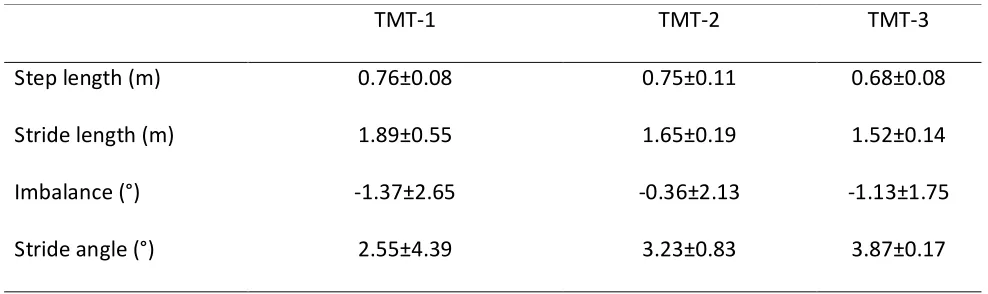
Table 2 indicates the mean and standard deviation of the variables of interest
TMT-1 TMT-2 TMT-3
Step length (m) 0.76±0.08 0.75±0.11 0.68±0.08
Stride length (m) 1.89±0.55 1.65±0.19 1.52±0.14
Imbalance (°) -1.37±2.65 -0.36±2.13 -1.13±1.75
Stride angle (°) 2.55±4.39 3.23±0.83 3.87±0.17
Values expressed as mean±SD
TMT-1 vs TMT-2 TMT-1 vs TMT-3
Step length (m) p =0.000* p =0.000*
Stride length (m) p =0.000* p =0.000*
Imbalance (°) p =0.000* p =0.000*
Stride angle (°) p =0.009 p =0.000*
Discussion
The aim of this study was to determine if running on an arced non-motorized treadmill
significantly influenced running gait. Results revealed that short (4-minute) bouts of running on an arced non-motorized treadmill can significantly influence stride length, step length,
imbalance and stride angle when compared to running on a flat traditional motorized treadmill. There were statistically significant differences in three of the four and all four of the variables of interest when comparing the results of trial 1 to trial 2 and trial 1 to trial 3, respectively.
Research has indicated that a mid/forefoot strike pattern with a stride angle of less than 4 degrees correlates to a better running economy19. Results from this research show that
A reduction in stride length, although it would appear smaller in trained runners, may be advantageous as it has been shown to reduce impact peaks [21-23] and loading rates [20,23] experienced by runners. A shorter stride length means the heel is located more underneath the center of mass (COM) which reduces the amount of hip and knee flexion required [25]. A more efficient running gait pattern leads to a reduction in stride length by 6 – 8% in inexperienced runners and those with a long history of running [20-24]. Schubert [25] indicated that increased stride rate (decreased stride length) affects impact peak, kinematics, and kinetics and therefore may be considered as a mechanism with which to influence injury risk and recovery of a runner. Specifically, similarities are seen across all studies, with decreased center of mass vertical excursion, ground reaction force, impact shock and attenuation, and energy absorbed at the hip, knee, and ankle as step rate is increased or step length is decreased at a constant speed [25].
Conclusion
Analysis of imbalance resulting from running on an arced non-motorized treadmill yielded statistical significance as well. A lack of symmetry, that is relative differences in muscle
Future research may consider examining the translation of arced non-motorized gait retraining to real-world gait patterns. Additional research may include the length of effect gait retraining from the use of arced non-motorized treadmills may have on running gait pattern.
Funding
This research received no external funding. Acknowledgements
The authors would like to thank the study participants and TrueFormRunner for their generosity of time and knowledge.
Conflicts of Interest
The authors declare no conflict of interest. References
1. United States Running Event Finishers 1990-2015. Running USA. (2016) http://www.runningusa.org/statistics
2. Bramble DM, Lieberman DE. Endurance running and the evolution of Homo. Nature. (2004) 432:345 - 352.
3. Franklin S, Grey M, Heneghan N, et al. Barefoot vs common footwear: A systematic review of the kinematic, kinetic and muscle activity differences during walking. Gait & Posture. (2015) 42(3):230–239.
4. Theodore D. Anatomy of the moving body: A basic course in bones, muscles, and joints. (2015) North Atlantic Books, USA, 2nd edition.
6. Altman AR, Davis IS. Barefoot Running: Biomechanics and Implications for Running Injuries. Current Sports Medicine Reports. (2015) 11(5):244-250.
7. Van Gent RN, Siem D, van Middelkoop M, et al. Incidence and determinants of lower extremity running injuries in long distance runners: a systematic review. Br J Sports Med. (2007) 4(8):469–480.
8. Hamill J, Russell EM, Gruber AH, et al. Impact characteristics in shod and barefoot running. Footwear Sci. (2011) 3(1):33–40.
9. Norton N. Comparing caloric expenditure and rate of perceived exertion between the Curve and a motorized treadmill [unpublished thesis]. (2014) Eastern Washington University, USA.
10.Lee S, DeWitt JK, Smith C, et al. Physiologic responses and biomechanical aspects of motorized and nonmotorized treadmill exercise: A ground-based evaluation of treadmills for use on the International Space Station. NASA Technical Paper, NASA/TP2006213734. (2008) Washington, DC, National Aeronautics and Space administration.
11.Ardigò LP, Lafortuna C, Minetti AE, et al. Metabolic and mechanical aspects of foot landing type, forefoot and rearfoot strike, in human running. Acta Physiol Scand. (1995) 155(1):17–22.
12.Ogueta-Alday A, Rodríguez-Marroyo JA, García-López J. Rearfoot striking runners are more economical than midfoot strikers. Med Sci Sports Exerc. (2014) 46(3):580–585. 13.Perl DP, Daoud AI, Lieberman DE. Effects of footwear and strike type on running
14. Crowell HP, Davis IS. Gait Retraining to Reduce Lower Extremity Loading in Runners. Clinical Biomechanics. (2011) 26(1):78–83.
15.Davis IS, Futrell E. Gait Retraining: Altering the Fingerprint of Gait. Physical Medicine and Rehabilitation Clinics of North America. (2016) 27(1):339–355.
16. Wannstedt GT, Herman RM. Use of augmented sensory feedback to achieve symmetrical standing. Phys Ther. (1978) 58(5):553–559.
17.Seeger BR, Caudrey DJ. Biofeedback therapy to achieve symmetrical gait in children with hemiplegic cerebral palsy: long-term efficacy. Arch Phys Med Rehabil. (1983) 64(4):160– 162.
18. Seeger BR, Caudrey DJ, Scholes JR. Biofeedback therapy to achieve symmetrical gait in hemiplegic cerebral palsied children. Arch Phys Med Rehabil. (1981) 62(8):364–368. 19.Santos-Concejero J, Tam N, Granados, C, et al. Interaction effects of stride angle and
strike pattern on running economy. Int J Sports Med. (2014) 35(13):1118–1123. 20. Cavanagh PR, Lafortune MA. Ground reaction forces in distance running. J Biomech.
(1980) 13(5):397–406.
21.Thompson M, Lee S, Seegmiller J, et al. Kinematic and kinetic comparison of barefoot and shod running in mid/forefoot and rearfoot strike runners. Gait & Posture. (2015) 41(4):957–959.
23. Heiderscheit BC, Chumanov ES, Michalski MP, et al. Effects of step rate manipulation on joint mechanics during running. Med Sci Sports Exerc. (2011) 43(2):296–302.
24.Squadrone R, Gallozzi C. Biomechanical and physiological comparison of barefoot and two shod conditions in experienced barefoot runners. J Sports Med Phys Fitness. (2009) 49(1):6-13.
25. Schubert AG, Kempf J, Heiderscheit BC. Influence of Stride Frequency and Length on Running Mechanics: A Systematic Review. Sports Health. (2014) 6(3):210-217. 26. The Effect of Asymmetry on Running Performance and Injury Prevention. Competitor