University of Windsor University of Windsor
Scholarship at UWindsor
Scholarship at UWindsor
Electronic Theses and Dissertations Theses, Dissertations, and Major Papers
2018
Optimization of a Dual-Channel Retailing System with Customer
Optimization of a Dual-Channel Retailing System with Customer
Returns
Returns
Mohannad Hassan Radhi University of Windsor
Follow this and additional works at: https://scholar.uwindsor.ca/etd
Part of the Engineering Commons
Recommended Citation Recommended Citation
Radhi, Mohannad Hassan, "Optimization of a Dual-Channel Retailing System with Customer Returns" (2018). Electronic Theses and Dissertations. 7413.
https://scholar.uwindsor.ca/etd/7413
This online database contains the full-text of PhD dissertations and Masters’ theses of University of Windsor students from 1954 forward. These documents are made available for personal study and research purposes only, in accordance with the Canadian Copyright Act and the Creative Commons license—CC BY-NC-ND (Attribution, Non-Commercial, No Derivative Works). Under this license, works must always be attributed to the copyright holder (original author), cannot be used for any commercial purposes, and may not be altered. Any other use would require the permission of the copyright holder. Students may inquire about withdrawing their dissertation and/or thesis from this database. For additional inquiries, please contact the repository administrator via email
Optimization of a Dual-Channel Retailing
System with Customer Returns
By
Mohannad Hassan Radhi
A Dissertation
Submitted to the Faculty of Graduate Studies
through the Industrial and Manufacturing Systems Engineering Graduate Program in Partial Fulfillment of the Requirements for
the Degree of Doctor of Philosophy at the University of Windsor
Windsor, Ontario, Canada
2018
Optimization of a Dual-Channel Retailing System with Customer Returns
by
Mohannad Radhi
APPROVED BY:
_______________________________________________________ J. Bookbinder, External Examiner
University of Waterloo
_______________________________________________________ Y. Aneja
Odette School of Business
_______________________________________________________ Z. Pasek
Department of Mechanical, Automotive & Materials Engineering
_______________________________________________________ L. Oriet
Department of Mechanical, Automotive & Materials Engineering
_______________________________________________________ G. Zhang, Advisor
Department of Mechanical, Automotive & Materials Engineering
iii
DECLARATION OF CO-AUTHORSHIP / PREVIOUS
PUBLICATION
I. Co-Authorship Declaration
I hereby declare that this thesis is a joint research wherein all key ideas, primary contributions, experimental designs, data analysis and interpretations were performed by the author and Dr. Guoqing Zhang as the advisor.
I certify that, with the above qualification, this thesis, and the research to which it refers, is the product of my own work.
II. Declaration of Previous Publication
This thesis includes four original papers that have been previously submitted for publication in peer reviewed journals, as follows:
Thesis Chapter Publication title/full citation Publication status
Chapter 3 Radhi, M., Zhang, G., Pricing Policies for a Dual-Channel Retailer with Cross-Dual-Channel Returns, Computers and Industrial Engineering.
Submitted
Chapter 4 Radhi, M., Zhang, G., Prices and Responsiveness Level Decisions for a Dual-Channel Retailer with Cross-Channel Returns, Information Systems and Operational Research.
Submitted
Chapter 5 Radhi, M., Zhang, G., Optimal Cross-Channel Return Policy in Dual-Channel Retailing Systems, International Journal of Production Economics.
Submitted
Chapter 6 Radhi, M., Zhang, G., Inventory Policies for a Dual-Channel Retailer with Customer Returns, Production and Operations Management.
Submitted
I certify that I have obtained a written permission from the copyright owner(s) to include the above published material(s) in my thesis. I certify that the above material describes work completed during my registration as graduate student at the University of Windsor.
iv
I certify that I have obtained a written permission from the copyright owner(s) to include such material(s) in my thesis.
v
ABSTRACT
A plethora of retailers have begun to embrace a dual-channel retailing strategy wherein items are provided to consumers through both an online store and a physical store. As a result of standards and competitive measures, many retailers provide buyers who are unhappy with their purchases with the ability to achieve a full refund. In a dual-channel retailing system, full reimbursements can be done through what is called a cross-channel return, when a buyer purchases a product from an online store and returns it to a physical store. They can also be done through what is called a same-channel return, when a buyer purchases a product from a physical store and returns it back to the physical store, or purchases a product from an online store and returns it back to the online store. No existing research has examined all common types of customer returns in the context of a dual-channel retailing system. Be notified that the practice of cross-returning an item purchased from the physical store back to the online store is not common. Thus, it is not considered in this dissertation.
We first study the optimal pricing policies for a centralized and decentralized dual-channel retailer (DCR) with same- and cross-channel returns. We consider two factors: the dual-channel retailer’s performance under centralization with unified and differential pricing schemes, and the dual-channel retailer’s performance under decentralization with the Stackelberg and Nash games. How dual-channel pricing behaviour is impacted by customer preference and rates of customer returns is discussed. In this study, a channel’s sales requests is a linear function of a channel’s own pricing strategy and a cross-channel’s pricing strategy.
The second problem is an extension of the first problem. The optimal pricing policies and online channel’s responsiveness level for a centralized and decentralized dual-channel retailer with same- and cross-channel returns are studied. Indeed, the online store is normally the distribution centre of the enterprise and is not limited to the customers in its neighbourhood. Also, the online store experiences a much higher return rate compared to the physical store. Thus, it has the capability and the need to optimize its responsiveness to customer returns along with its pricing strategy. A channel’s sales requests, in the second problem, is a linear function of a channel’s own price, a cross-channel’s price, and the online store’s responsiveness level.
vi
different strategies, and propose models to determine optimal order quantities for each strategy when a dual-channel retailer offers both same and cross-channel returns. Several decision making insights on choosing between the different cross-channel return strategies and some properties of the optimal solutions are presented.
From the retailer’s perspective of outsourcing the e-channel’s management to a third party logistics and service provider, we finally study three different inventory strategies, namely transaction-based fee, flat-based fee, and gain sharing. For each strategy, we find both channels’ optimal inventory policies and expected profits. The performances of the different strategies are compared and the managerial insights are given using analytical and numerical analysis.
vii
DEDICATION
viii
ACKNOWLEDGEMENTS
This Ph.D. study has enriched my knowledge in the field of Supply Chain Management. It has given me the opportunity to expand my horizon and get to know new business opportunities. For such knowledge I am truly indebted to the University of Windsor in which I was able to continue my success journey.
I am deeply grateful and truly indebted to my supervisor Dr. Guoqing Zhang for his care, encouragement and patience. Dr. Zhang has stimulated excellent supporting efforts and technical knowledge that have guided me throughout this work.
ix
TABLE OF CONTENTS
DECLARATION OF CO-AUTHORSHIP / PREVIOUS PUBLICATION ... iii
ABSTRACT ... v
DEDICATION ... vii
ACKNOWLEDGEMENTS ... viii
LIST OF TABLES ... xii
LIST OF FIGURES ... xiii
INTRODUCTION ... 1
CHAPTER 1: 1.1 Dual-Channel Retailing Strategy ... 1
1.2 Customer Returns ... 2
1.3 Research Objective ... 3
1.4 Research Methodologies ... 3
1.5 Dissertation Organization ... 6
LITERATURE REVIEW ... 7
CHAPTER 2: 2.1 Literature on Dual-Channel Systems ... 7
2.1.1 Dual-Channel Supply Chains ... 7
2.1.2 Dual-Channel Retailing Systems ... 9
2.2 Literature on Customer Returns ... 10
2.2.1 Single Retailer Systems ... 11
2.2.2 Manufacturer-Retailer Systems ... 13
2.2.3 Two Competitive Retailers Systems ... 14
2.2.4 Dual-channel Retailing Systems ... 15
PRICING POLICIES ... 16
CHAPTER 3: 3.1 Introduction and Motivation ... 16
3.2 Model Formulation ... 17
3.3 Centralized Dual-Channel Retailing System ... 22
3.3.1 Dual-Channel Retailing System under the Differential Pricing Strategy ... 24
x
3.4 Decentralized Dual-Channel Retailing System ... 27
3.4.1 Dual-Channel Retailing System under the Stackelberg Game ... 29
3.4.2 Dual-Channel Retailing System under the Nash Game ... 31
3.5 Sensitivity Analysis ... 32
3.5.1 Total System Performance under Unified-Pricing Strategy and Competition ... ... 32
3.5.2 Channel's Performance and Pricing Strategy under Competition Schemes ... 33
3.5.3 Pricing Strategies under Centralized Management ... 34
3.5.4 Retailer’s Performance under Single Resalability and Infinite Resalability . 36 3.6 Managerial Insights ... 37
3.7 Conclusion ... 38
PRICES AND RESPONSIVENESS LEVEL DECISIONS ... 40
CHAPTER 4: 4.1 Introduction and Motivation ... 40
4.2 Model Formulations ... 41
4.3 Centralized Dual-Channel Retailing System ... 43
4.3.1 Dual-Channel Retailing System under the Differential Pricing Strategy ... 44
4.3.2 Dual-Channel Retailing System under the Unified Pricing Strategy ... 46
4.4 Decentralized Dual-Channel Retailing System ... 47
4.4.1 Dual-Channel Retailing System under the Stackelberg Game ... 47
4.4.2 Dual-Channel Retailing System under the Nash Game ... 50
4.5 Sensitivity Analysis ... 51
4.6 Conclusion ... 56
OPTIMIZING CROSS-CHANNEL RETURN POLICY ... 58
CHAPTER 5: 5.1 Introduction and Motivation ... 58
5.2 Model Formulation ... 58
5.3 Ship all Cross-Channel Returns Back to Online Store (i= ro) ... 61
xi
5.5 Perform Inventory Shift for Cross-Channel Returns Under a Decentralized
Management (i= D) ... 65
5.6 Perform Inventory Shift for Cross-Channel Returns Under a Centralized Management (i= C) ... 69
5.7 Sensitivity Analysis and Managerial Insights ... 71
5.8 Conclusion ... 76
OPTIMAL ONLINE STORE’S OUTSOURCING STRATEGY ... 78
CHAPTER 6: 6.1 Introduction and Motivation ... 78
6.2 Model Formulation ... 81
6.3 Transaction-Based Fee Strategy (i=1) ... 83
6.4 Flat-Based Fee Strategy (i=2) ... 85
6.4.1 The Retailer’s Problem ... 86
6.4.2 The Provider’s Problem ... 87
6.5 Gain Sharing Strategy (i=3) ... 87
6.6 Managerial insight with numerical analysis ... 90
6.6.1 Effect of Retailer’s Share on the Provider’s Performance ... 91
6.6.2 Effect of retailer’s share on his performance ... 92
6.6.3 Effect of return rates on partners’ performances and choices ... 93
6.6.4 Effect of customer preference on the retailer’s profitability ... 94
6.7 Conclusion ... 95
CONCLUSION AND FUTURE RESEARCH ... 97
CHAPTER 7: 7.1 Conclusion ... 97
7.2 Future Research ... 98
APPENDICES ... 101
REFERENCES ... 115
xii
LIST OF TABLES
Table 3.1: Third Chapter’s Notations ... 22
Table 4.1: Fourth Chapter’s Notations ... 43
Table 5.1: Fifth Chapter’s Notations ... 61
Table 6.1: Sixth Chapter’s Notations ... 83
xiii
LIST OF FIGURES
Figure 2.1: Dual-Channel Supply Chain (Chiang and Monahan 2005) ... 7
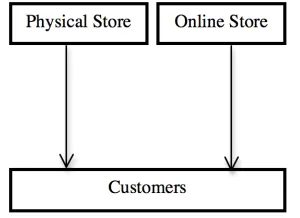
Figure 2.2: Dual-Channel Retailing System ... 10
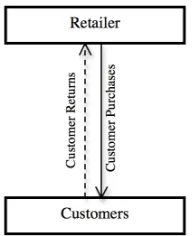
Figure 2.3: A Single Retailer System with Customer Returns ... 13
Figure 2.4: A Manufacturer-Retailer System with Customer Returns ... 14
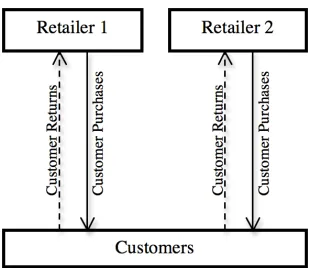
Figure 2.5: Two Competing Retailers with Customer Returns ... 14
Figure 2.6: A Dual-Channel Retailer with Online Store’s Customer Returns ... 15
Figure 3.1: A Dual-Channel Retailer with Same- and Cross-Channel Returns ... 18
Figure 3.2: Total profit comparison between centralization with unified pricing strategy and decentralization ... 33
Figure 3.3: Comparison of a channel’s profit under different competition schemes ... 33
Figure 3.4: Return rates’ effect on physical and online store pricing strategies in competition schemes ... 34
Figure 3.5: Return rates’ effect on physical and online pricing strategies under centralization schemes ... 35
Figure 3.6: Increase in profitability for different cases when resalable returns can be resold infinitely ... 37
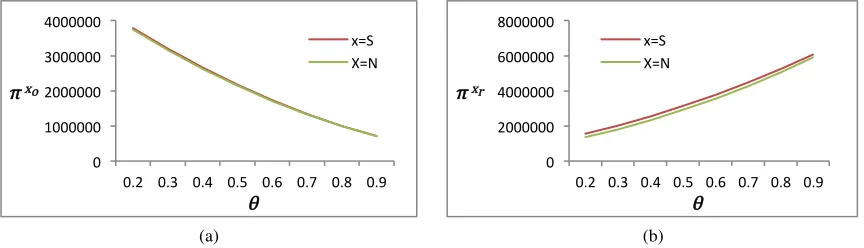
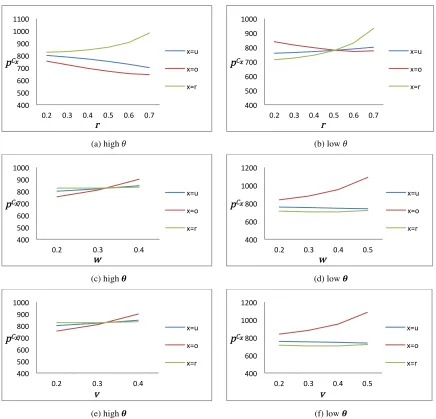
Figure 4.1: Effect that θ and r have on the equilibrium prices and responsiveness level . 52 Figure 4.2: Effect that θ, r and λ have on total system profit ... 53
Figure 4.3: Effect that different return rates have on responsiveness level ... 55
Figure 5.1: A Dual-Channel Retailer with All Common Forms of Customer Returns ... 59
Figure 5.2: c’s Effect on Online Stores’ Profits ... 74
Figure 5.3: c’s Effect on Retailers’ Profits ... 74
Figure 5.4: k!’s and k!"’s Effects on Retailer’s Profit ... 75
Figure 6.1: Effect of retailer’s share on logistics provider ... 92
Figure 6.2: Effect of retailer’s share on retailer ... 93
Figure 6.3: Effect of e-tail store’s same-channel return rate on partners’ performances ... 94
1
INTRODUCTION
CHAPTER 1:
1.1
Dual-Channel Retailing Strategy
The rapid development of the Internet, the growth of third-party logistics and service providers (herein called providers), and the existence of several competitive players have inspired enterprises to adopt a dual-channel retailing strategy. According to Ryan et al. (2013), such a strategy offers products through both physical stores (sometimes called retail, brick-mortar, traditional, conventional or offline stores) and online stores (sometimes called e-tail, click or electronic stores). The dual-channel retailing strategy was first introduced by Sears in 1925 when it initiated a physical store beside a catalogue store (Zhang et al. 2010). About 42% of merchants in the different industries implement the dual-channel retailing strategy (Dan et al. 2012). 80% of all US retailers and almost every top US retailer use more than one channel to sell products and services (Zhang et al. 2010). For example Wal-Mart, Toys“R”Us, Target, IBM, Hewlett– Packard, Nike, Pioneer Electronics, Dell, Costco, Kmart, Barnes and Noble, Kohl’s, and Cisco System are all dual-channel retailers. Those DCRs are, sometimes, referred to as click-and-mortar companies. In the coming few years, it is expected that dual-channel retailing will be the dominant retailing strategy for all type of enterprises (Chen et al. 2012).
2
store, or purchase a product online and return it to a physical store. Furthermore, having an online channel facilitates stock-out substitutions for consumers, as retailers can provide easy access to their inventory levels (Chian 2010). A dual-channel retailer can use a differential pricing strategy to direct customer traffic depending on an enterprise’s best interest (Zhang et al. 2010). For example, if revenue to weight ratio is low, then the enterprise can set a higher price in the online channel to avoid high shipping and return cost. Coordinated channels allow retailers to collect wide information about their customers’ behaviour. Thus, marketing activities can be easily performed and uncertainty can be efficiently reduced.
On the other hand, the dual-channel retailing strategy is normally associated with sales substitution or cannibalization that may form competition between stores. If stores are not coordinated, then this competition may lower a retailer’s total profitability (Ryan et al. 2013). Moreover, selling through the online channel imposes operational difficulties when it comes to receiving large packaged items and then repackages customer orders in smaller cartoons (Zhang et al. 2010).
1.2
Customer Returns
In today’s market, many North American retailers implement a full refund policy. The policy increases the number of customer purchase returns, as it allows customers to return purchased products for numerous reasons. For example, a product can be returned to a merchant because it is defective, a wrong order, or a wrong product, because the
customer did not like it, or because the purchase was impulsive. However, a full refund
policy allows retailers to increase customer loyalty, provide customer satisfaction, boost sales, and/or comply with country legislations.
3
According to the Center of Logistic at the University of Nevada, Wal-Mart, alone, process returns worth of $6 billion dollars every year (Chen & Bell 2012). While a significant amount of returned apparel is of good quality and can be resold several times without a recovery process, electronic returns cannot be resold as new and must instead be sold as open-box items (Akcay et al. 2013). In general, defective returns constitute only 5% of all customer returns (Akcay et al. 2013; Su 2009).
Moreover, many retailers (for example, Wal-Mart or Toys“R”Us) allow same-channel returns, wherein an item purchased from one of their physical stores is returned to one of their physical stores, or an item purchased from their online store is returned to their online store. However, many also allow cross-channel returns, wherein a product purchased from their online store may be returned to one of their physical stores. Allowing cross-channel returns is vital for online stores as such a policy increases sales and customer satisfaction and allow physical stores to create additional cross-selling opportunities (Zhang et al. 2010; Cao and Li 2015). Notice that the process of purchasing items from the physical stores and return them to the online stores is not common. Thus, it is not considered in this work.
1.3
Research Objective
The objective of this dissertation is to analyze the problem of customer returns under the dual-channel retailing system. The main goal is to investigate the different cross-channel return polices, to study selected outsourcing options for the management of the online store, and to develop proper methodologies of inventory control management, price management and responsiveness level management.
1.4
Research Methodologies
We will now explain some of the tools and methodologies that have been used throughout this dissertation.
Unconstrained non-linear programming: the unconstrained non-linear
4
We use the second derivative test to check the concavity or convexity of single variable, two variables, or three variables functions as the following:
For single variable functions:
1. Assume that the second derivative of the function 𝑓 is continues on ℝ. 2. The function’s “Hessian” matrix is 𝐻= 𝑓!! .
Let 𝐷 = 𝑓!! .
(a) If 𝐷 > 0, then the function 𝑓 posses a global minimum at 𝑎 ; where 𝑓! 𝑎 = 0. (b) If 𝐷 < 0, then the function 𝑓 posses a global maximum at 𝑎 ; where 𝑓! 𝑎 = 0. For two variables functions:
1. Assume that the second derivative of the function 𝑓 is continues on ℝ!.
2. The function’s “Hessian” matrix is 𝐻= 𝑓𝑓!! 𝑓!"
!" 𝑓!! .
Let 𝐷! = 𝑓!! and 𝐷! = 𝑓𝑓!! 𝑓!"
!" 𝑓!! .
(a) If 𝐷! > 0 and 𝐷! >0, then 𝑓 posses a global minimum at 𝑎,𝑏 ; where 𝑓! 𝑎,𝑏 = 0
and 𝑓! 𝑎,𝑏 = 0.
(b) If 𝐷! <0 and 𝐷! > 0, then 𝑓 posses a global maximum at 𝑎,𝑏 ; where 𝑓! 𝑎,𝑏 = 0
and 𝑓! 𝑎,𝑏 = 0.
For three variables functions:
1. Assume that the second derivative of the function 𝑓 is continues on ℝ!.
2. The function’s “Hessian” matrix is 𝐻=
𝑓!! 𝑓!" 𝑓!"
𝑓!" 𝑓!! 𝑓!"
𝑓!" 𝑓!" 𝑓!!
.
Let 𝐷! = 𝑓!! , 𝐷! = 𝑓𝑓!! 𝑓!"
!" 𝑓!! and 𝐷! =
𝑓!! 𝑓!" 𝑓!"
𝑓!" 𝑓!! 𝑓!"
𝑓!" 𝑓!" 𝑓!!
.
(a) If 𝐷! >0, 𝐷! >0 and 𝐷! > 0, then 𝑓 posses a global minimum at 𝑎,𝑏,𝑐 ; where
𝑓! 𝑎,𝑏,𝑐 =0, 𝑓! 𝑎,𝑏,𝑐 =0 and 𝑓! 𝑎,𝑏,𝑐 =0.
(b) If 𝐷! < 0, 𝐷! > 0 and 𝐷! < 0, then 𝑓 posses a global maximum at 𝑎,𝑏,𝑐 ; where
𝑓! 𝑎,𝑏,𝑐 =0, 𝑓! 𝑎,𝑏,𝑐 =0 and 𝑓! 𝑎,𝑏,𝑐 =0.
5
simultaneously choose their decisions in isolation. Let us consider two competitors where
players’ decisions affect each player’s payoff. Thus, if player-1’s decision is 𝑝! and
player-2’s decision is 𝑝!, then player-1’s utility is 𝑢! 𝑝!,𝑝! and player-2’s utility is 𝑢! 𝑝!,𝑝! . The objective of each player is to maximize his/her own utility. Assuming 𝑢!
and 𝑢! are differentiable, then the following conditions are necessary for the existence of
Nash equilibriums: !!! !!,!!
!!! = 0
!!! !!,!! !!! = 0
To find the equilibrium points, the above system of equations should be solved simultaneously. Thus, for as long as the competitor adheres to Nash equilibrium, a player will generate a lower payoff when deviating from the equilibrium point. If each utility
function is concave with respect to the player’s own strategy, i.e. 𝑢! 𝑝!,𝑝! is concave in 𝑝! and 𝑢! 𝑝!,𝑝! is concave in 𝑝!, then there exists at least one Nash equilibrium in the game. To test for the Nash equilibrium uniqueness, we construct the hessian matrix as the following:
𝐻=
!!! ! !!!!
!!! ! !!!!!! !!!!
!!!!!!
!!!! !!!!
.
If −1 ! 𝐻 is positive, then a unique Nash equilibrium is guaranteed. 𝑛 in the previous relationship is the number of strategies and it equals two in our example.
Stackelberg games: the Stackelberg game is another non-cooperative game that is widely used in supply chain management where one competitor dominants the other. The game is dynamic in nature and the events occur in two stages. The dominant competitor is the leader and is allowed to initiate the game or choose his/her strategy first. Based on the revealed strategy, the dominated competitor or the follower end the game or chooses his/her strategy second. Knowing that both players are rational, the leader should use the backward induction and choose his/her decision based on the follower’s best response function or strategy. Again, let us consider two competitors where players’ decisions
affect each player’s payoff. If the leader’s decision is 𝑝! and follower’s decision is 𝑝!,
then the leader’s utility is 𝑢! 𝑝!,𝑝! and the follower utility is 𝑢! 𝑝!,𝑝! . The objective
of each player is to maximize his/her own utility. Assuming 𝑢! and 𝑢! are differentiable,
6 !!! !!,!!
!!! ! !!!!∗ !!
= 0
!!! !!,!!∗ !!
!!!
!!!!!∗ =0
If 𝑢! 𝑝!,𝑝! is concave in 𝑝!, then there is a unique solution for the follower. However, if
𝑢! 𝑝!,𝑝!∗ 𝑝
! is concave in 𝑝!, then there is a unique solution for the leader and we can
guarantee the existence of a unique Stackelberg equilibrium.
Stochastic programming: the purpose of stochastic programming is to seek optimal
decisions that best suit all applicable random parameters. Thus, with stochastic programming one may minimize the system’s expected cost or maximize the system’s expected profit.
1.5
Dissertation Organization
7
LITERATURE REVIEW
CHAPTER 2:
2.1
Literature on Dual-Channel Systems
This chapter sheds the light upon two streams of literature. The first stream addresses dual-channel systems under two settings: dual-channel supply chain setting and dual-channel retailing setting. The second stream addresses customer returns under four settings: single retailer setting, manufacturer-retailer setting, two competitive retailers setting, and dual-channel retailing setting.
2.1.1 Dual-Channel Supply Chains
Considerable research works have analyzed systems that contain a manufacturer (or supplier) that sells a single product to customers through both a manufacturer-owned online store and an independent retail store(s) (Figure 2.1). Several different types of competition take place between the two channels, including competition in price (Balakrishnan et al. 2014; David and Adida 2015; Ryan et al. 2013), competition in services (Lu and Liu 2013; Dan et al. 2012), and competition in product availability (Takahashi et al. 2011; Chiang 2010; Chiang and Monahan 2005). Price competition may take a horizontal form, between an online store and a physical store; take a vertical form, between an upper echelon (i.e. manufacturer) and a lower echelon (i.e. retailer); or take both forms (David and Adida 2015; Lu and Liu 2013; Ryan et al. 2013; Dan et al. 2012). According to Chiang (2010), vertical competition enhances price double marginalization inefficiency, while horizontal competition enhances cannibalization. Literature shows that a great deal should be exerted to coordinate both channels in order to diminish, eliminate or, even, reverse the negative effect of competition.
Figure 2.1: Dual-Channel Supply Chain (Chiang and Monahan 2005)
8
price, a production quantity, a service level, and/or a delivery lead time. A retailer competes by selecting retail price, an acquisition quantity, and/or a service level. This competition is primarily modeled as a manufacturer-Stackelberg game (e.g. David and Adida 2015; Lu and Liu 2013; Ryan et al. 2013; Dan et al. 2012; Huang et al. 2012; Chen et al. 2012; Hua et al. 2010; Bin et al. 2010; Chiang 2010; Yao et al. 2009; Cai et al. 2009). However, it is sometimes modeled as a Nash game (e.g. Lu and Liu 2013; Ryan et al. 2013; Chiang 2010; Cai et al. 2009). A few existing papers have also modeled this competition as a retailer-Stackelberg game (e.g. Cai et al. 2009).
In a coordinated or centralized duopolistic system, each player maximizes its own profit. However, it is done within the boundaries of a contract. David and Adida (2015) examined the equilibrium quantities and prices of a supplier selling items through a
self-owned online store and 𝑁 different retailers. They proposed a linear quantity discount contract to coordinate the system wherein the amount of discount offered to a retailer store is linearly related to the quantity ordered. Ryan et al. (2013) studied the performance of a system under a modified revenue sharing contract in which a retailer shares part of its revenue with a manufacturer. They also studied the performance of a system under a gain/loss sharing contract in which a manufacturer shares part of its gain or loss with a retailer. Moreover, a two-part tariff contract was studied by Chen et al. (2012). In such a contract a retailer is charged a lump sum fee and a wholesale price equivalent to production costs. Chen et al. (2012) also studied a profit-sharing agreement wherein channels share their profits with competitors’ channels for better system performance.
Furthermore, an 𝑎,𝑑 contract was examined by Bin et al. (2010). In such a contract, a
retailer pays a franchise fee of the value 𝑑 to a manufacturer. In turn the manufacturer
offers the retailer a portion, 𝑎, of its total revenue. Chiang (2010) implemented an inventory and direct revenue sharing contract wherein a retailer shares part of its inventory cost with a manufacturer. The manufacturer then shares part of its revenue with the retailer. Finally, Cai et al. (2009) compared a system’s performance with and without price discount contracts. They assumed prices were either consistent (i.e., channels’ prices were equal) or inconsistent (i.e., channels’ prices were not necessarily equal).
9
to adopt a menu of contracts, while lower uncertainty leads to a single contract. Cai et al. (2009) found that contract coordination and consistent pricing strategy reduce conflict and increase profitability in a system where customers are considered to be either brand loyal or retailer loyal. On the other hand, Chen et al. (2012) claim that coordination through complementary contracts such as two-part tariff and profit sharing is not always profitable to the system.
A fully coordinated or centralized monopolistic system uses a sole decision maker to maximize the system’s total profit (e.g. Huang et al. 2012; Hua et al. 2010; Yao et al. 2009; Dumrongsiri et al. 2008). Bin et al. (2010) used both centralization and the principle agent method to examine an asymmetry in information that occurs within the dual-channel system when demand is stochastic. Chiang (2010) argued that a monopolistic dual-channel supply chain outperforms both duopolistic and uncoordinated channel supply chains. Yao et al. (2009) optimized the inventory system of a dual-channel supply chain with a single period newsvendor model. They compared three different management styles. In the first style, the inventory levels of both channels were managed by one central manager. In the second style, each channel managed its own inventory level. In the third style, the retailer managed its own inventory level while the online store’s inventory level was managed by a third-party logistics provider.
Different than most papers in dual-channel supply chain literature, Chiang and Monahan 2005, Takahashi et al. 2011, and Chiang 2010 study Markovian systems that capture competition in product availability. Portion of a channel’s loyal customers will cross fill when products are not available in their preferred channel (stuck out base substitution). Chiang and Monahan (2005) claim that the increase of this portion might harm profitability as it could increase total inventory related costs. They argue that retailers and manufacturers are, almost, always better off in adopting dual-channel supply chain. In there modeling, they capture holding and lost sale costs and apply one-for-one inventory control policy. In contrast, Takahashi et al. (2011) have included production and delivery setup costs and found that one-for-one inventory control policy is not an appropriate policy for a dual-channel supply chain.
2.1.2 Dual-Channel Retailing Systems
10
always outperform the Nash game. Yan et al. (2010) argue that by using profit sharing to integrate the dual-channel retailing system, conflict is eliminated, coordination is improved, and both channels generate more profit. Yan (2010) stated that higher brand differentiation better handle conflict especially when consumers are less price sensitive and market size is large. Additionally, Berger et al. (2006) examined the profit enhancement induced by a dual-channel retailer that integrates the advertisement efforts of both online and physical stores. They found that higher integration leads both channels to generate higher profits.
Figure 2.2: Dual-Channel Retailing System
Using branch-and-bound algorithm, Mahar et al. (2009) examine the positive impact that a real time information capability has on a dual-channel retailer. Such a capability allows the dynamic assignment policy to replace the common static assignment policy. Based solely on the proximity, the static policy pre-identifies the e-fulfilment location responsible to serve a certain customer. On the other hand, based on both proximity and real time inventory position, the dynamic policy identifies the e-fulfilment location. It is found that such a policy might decrease total cost (holding, backorder and shipping) for up to 8.2%.
One may note that each study presented above examined the possible coordination strategies or policies between different competing channels in a dual-channel system. None of the papers have considered customer returns and the impact that the returns have had on dual-channel retailing systems. Papers that have considered customer returns are reviewed next.
2.2
Literature on Customer Returns
11
Vlachos and Dekker 2003). Other papers have compared a system’s performance with no refund policy to a system’s performance with a full refund policy (Chen and Grewal 2013; Choi et al. 2013; Chen and Bell 2012; Chen and Zhang 2011). Several papers that conducted such a comparison also examined a partial refund policy (Chen and Grewal 2013; Li et al. 2013; Chen and Bell 2012; Chen and Zhang 2011; Su 2009; Yalabik et al. 2005). Hsiao and Chen (2012) found that the optimal refund policy may exceed the full price of the item. Su (2009), Chen and Bell (2009), and Yalabik et al. (2005) all argued that a full refund policy is not optimal as it overwhelms retailing systems. In contrast, Chen and Zhang (2011) argued that a full refund policy may be optimal in the presence of competition. However, Hu et al. (2014) and Su (2009) claimed that the optimal refund policy depends upon the refunded product’s salvage value. According to Li et al. (2013), retailers should offer either a lenient return policy with a low quality and a low price or a strict return policy with a high quality and a high price. Their choice depends upon customer sensitivity in regards to price, return policy, and quality. Moreover, Yu and Goh (2012) stated that retailers should enforce a return policy that takes the nature of products and their condition upon return into consideration. Akcay et al. (2013) encouraged retailers to reduce the number of returns they receive by controlling selling prices and enforcing a refund policy with restocking fees. However, Hu and Li (2012) argued that offering a manufacturer buyback price equivalent to the retailer’s refund price is the optimal coordinating mechanism.
2.2.1 Single Retailer Systems
Additionally, many papers have considered a retailer faces returns from unsatisfied customers (Figure 2.3). Reimann (2016) considered a retailing system where refurbished returns can be used to satisfy demand that exceeds the order quantity. Akcay et al. (2013) studied a system wherein customers could differentiate between a new sell and a resell but their product valuation was uncertain. Yu and Goh (2012) examined a retailer facing eight different scenarios. The eight scenarios had several combinations that consisted of whether or not returns occurred within a grace period, whether or not returns were accompanied by a penalty, and whether or not returns were recoverable. While their research did not consider a resell option for returns, it was considered that recoverable items could be salvaged in a secondary market. Additionally, according to You et al.
multi-12
period setting. Wang et al. (2010) investigated a system wherein customer returns could be resold several times. Inventory holding cost and deterioration over time is incorporated in their model. Selling periods were divided into three sub-periods: a period in which sales consumed both new and returned stocks, a period in which sales only consumed returned stocks, and a period in which there were only returns, not sales. Li et al. (2013), Hsiao and Chen (2012), and Mukhopadhyay and Setaputra (2007) discussed the interrelationship between price, refund policy, and quality. Li et al. (2013) define quality as product consistency with the online description, while Hsiao and Chen (2012) identify product defects, misfit, and unconformity as quality risks that face customers. Choi et al. (2013) and Mukhopadhyay and Setoputro (2005) examined a system in which demand is linearly dependant on price, refund policy, and modularity level, while return is linearly dependant on refund policy. They claim that with higher level of modularity, retailer should charge higher price regardless of the refund policy applied. Vlachos and Dekker (2003) studied six different systems according to whether or not returns could be resold in the primary market, whether or not resalable returns needed a recovery process, and whether or not the needed recovery process was associated with fixed or variable costs. The objective of the paper is to maximize the profit by selecting the optimal ordering quantity where resalable returns can be resold once a season. Mostard et al. (2005) and
Mostard and Teunter (2006) examined a system wherein a resalable return could be
resold an infinite number of times until it became non- resalable by not having demand to consume it or by being returned after the end of the selling season. Mollenkopf et al. (2007) studied the effect of customer return related services on the Internet shoppers’ perceived loyalty and the key drivers that positively impact the return experience. The paper Yalabik et al. (2005) is an extension of the work done by Davis et al. (1998). They
classify customers into matched and mismatched with product valuation𝑣1 and 𝑣2,
13
Figure 2.3: A Single Retailer System with Customer Returns
2.2.2 Manufacturer-Retailer Systems
14
Figure 2.4: A Manufacturer-Retailer System with Customer Returns
2.2.3 Two Competitive Retailers Systems
Several other papers have considered customer returns when two retailers compete in the same market (Figure 2.5). Chen and Bell (2012) examined a system with two customer behaviours: return-sensitive customers willing to pay more and enjoy the privilege of returning a product if it is a mismatch, and price-sensitive customers willing to pay less and keep the product if it is a mismatch. Both a returnable channel and a non-returnable channel are thus considered in Chen and Bell’s study. Furthermore, Chen and Grewal (2013) studied Stackelberg and Nash competitions in situations wherein a new channel competes with a well-established retailer that offers a full refund policy. Additionally, Chen and Zhang (2011) studied Stackelberg and Nash competitions between two retailers that both offered a full refund policy. Balakrishnan et al. (2014) studied the browse and switch behaviour exerted by consumers on the brick and mortar stores. The effect of such behaviour on system’s profits and prices are examined when returns are allowed for online purchases only. None of the above works considered dual-channel retailers. Contrary to practice, they also assumed returns to be non-resalable.
15
2.2.4 Dual-channel Retailing Systems
Widodo et al. (2010) and Widodo et al. (2009) studied both Nash and Stackelberg competitions between a retailer’s physical and online channels (Figure 2.6). Contrary to practice, they studied returns that were only allowed for online purchases. Online customers were allowed to return items to the online store (a same-channel return) or the physical store (a cross-channel return). Also, the two studies assumed that returns could be exchanged but not refunded. One may note that none of the above two papers has collectively considered all common forms of customer returns a dual-channel retailer may experience. There is thus a research gap in this area.
16
PRICING POLICIES
CHAPTER 3:
3.1
Introduction and Motivation
Since coordination coincides with high costs and imposes operational difficulties, most multi-channel retailers (i.e., Target, Nike, Kmart, Barnes and Noble, Jo-Ann Fabric and Craft Stores, and Kohl’s) use decentralized teams to run their stores (Zhang et al. 2010; Yan et al. (2010); Neslin and Shankar 2009; Yan 2008; Berger et al. 2006; Webb
and Hogan 2002; Schoenbachler and Gordon 2002). Also, a variety of managerial skills are needed for different channels; thus, some retailers outsource the management of unfamiliar or newly opened channels to a third party. An example is Toys“R”Us, which outsources the management of its online channel to Amazon (Berger et al. 2006).
Many often believe that decentralizing the dual-channels reduces market shares due to cannibalization. This will in turn spark competition and trigger a price war that may harm the parties involved. If decentralization is uncoordinated, its resulting
competition may lower supply chain profitability (Ryan et al. 2013; Yan et al. 2010; Steinfield 2004; Schoenbachler and Gordon 2002; Webb and Hogan 2002). Furthermore, as Webb and Hogan (2002) have stated, “goal incompatibility” (between physical stores and online stores, for example) is an inevitable result of decentralization. Channels may generate internal conflict due to scarce resources (for example, a tight budget or few customers) or tight objectives (for example, a targeted revenue and profit). They define competition as goal-centered behaviour and conflict as opponent-centered behaviour. Webb and Hogan’s research supports this; they found that 66% of 50 interviewed retail businesses viewed channel conflict as the most troublesome issue that is faced when they
run dual-retailing channels. The competition associated with such conflict may cause channels to limit cooperation and inspire customers to change companies due to confusion and agitation (Steinfield 2004). These limitations may be so intense that one channel may sabotage another. For example, Levi Strauss and Best Buy had terminated their online stores after a few years of their first operational trial due to internal competition (Yan 2010; Falk et al. 2007). Consequently, companies such as Wal-Mart Stores, Gap, and the Home Depot have successfully integrated their dual channels under a sole decision maker to maximize their total profits (Yan 2008).
17
store. This is done by conducting an inventory transfer that is subjected to the retailer’s internal rules. The retailer’s policy and practice of having cross-channel returns can be acquired through partial integration. As Cao and Li (2015) have stated, channels will only have full integration when prices align to meet the retailer’s goals and objectives. That is to say, cross-channel returns do not contradict the fact that channels may still undergo price competition.
Many studies have considered competition and possible coordination strategies between dual channels, which are owned by either the same retailer or different
enterprises. The customer returns topic has also been thoroughly studied in single retailer or two retailers systems. However, few papers have studied customer returns under a dual-channel retailing system. As stated before, there is no work that has collectively considered all common forms of customer returns for both types of stores of a
dual-channel retailer. Also, there is no published paper that has studied the impact of cross-channel returns on both stores of a DCR, especially when those returns are resalable. For example, the effect of cross-channel returns on channels’ pricing policies and inventory management has not being studied yet. Thus, Chapter 3 studies a dual-channel retailer with both return mechanisms and investigates optimal pricing policies. Both centralization with differential and unified pricing schemes and competition in regards to theoretical game frameworks are addressed.
When determining prices in a Stackelberg game, the online store leads and the physical store follows. However, in a Nash game, the physical store and the online store determine optimal prices simultaneously. This study provides several contributions to existing literature in three ways. First, it collectively considers all common forms of customer returns for a dual-channel retailer. As stated previously, purchasing an item from a physical store and returning it to an online store is not a common practice and, thus, it is not considered in this work. Second, it addresses dual-channel competition from a game theoretic perspective. Third, it compares dual-channel retailer’s total performance under centralization with unified pricing scheme, and Stackelberg and Nash games.
3.2
Model Formulation
18
within a merchant-specified time period. The probability that a product purchased from a
physical store is returned to a physical store is 0≤𝑟≤ 1. The probability that a product
purchased from an online store is returned to an online store is 0≤ 𝑤≤ 1. The probability that a product purchased from an online store is cross-returned to a physical
store is 0≤ 𝑣≤ 1 (Figure 3.1). The assumption of ratios for returns has been implemented in literature before, such as in works by Chen and Grewal (2013), Mostard and Teunter (2006), Mostard et al. (2005), Vlachos and Dekker (2003), and many more.
Figure 3.1: A Dual-Channel Retailer with Same- and Cross-Channel Returns
Akcay et al. (2013) have stated that apparel is often returned “as good as new”;
thus, apparel can be resold several times during a single period. Therefore, for a returned
product to be resalable it must be returned in its original packaging and condition. We
assume that a returned product has a resalability rate of 𝑘! if the item was purchased from
and returned to a physical store, 𝑘! if the item was purchased from and returned to an online store, and 𝑘!" if the item was purchased from an online store but cross-returned to a physical store.
We assume that all same-channel resalable returns can be resold for 𝜀 times from their original channels. Regardless of the number of times an item is sold in the online store, all cross-channel resalable returns can be resold for 𝜀 times from the physical store. According to Vlachos and Dekker (2003), if a resalable returned product takes a relatively long time to be placed on a store’s shelf from the moment it is purchased, then one may
assume it can only be resold once during a selling season (i.e. 𝜀= 1). In contradistinction, if a resalable returned product takes a relatively short time to be placed on a store’s shelf from the moment it is purchased (i.e., if it has a lead time of zero), then
19
season until it is permanently sold, cross-channel returned, or returned but not resalable (Mostard and Teunter 2006; Mostard et al. 2005). Therefore, two cases are studied: a
general case where returns are assumed to be resold 𝜀 number of times; 𝜀∈ 1,∞ , and a
more simplified special case where returns are assumed to be resold infinitely; 𝜀= ∞. Each returned item is associated with a return collection cost of the value 𝑑. If an item is returned as not resalable or as resalable after the end of the selling season, then its salvage value, 𝑠, is acquired by selling the item in a secondary market. The unit’s salvage value must be less than or equal to the unit’s purchasing cost 𝑠 ≤𝑐; otherwise the profit function would be unbounded above. Items that are purchased from or returned to the online store will cost the store a per-unit shipping expense of 𝑡.
The parameter 𝛼 represents the base level of sales, or the sales level when items are offered to customers free of charge (Chen et al. 2012; Huang et al. 2012). If 0≤𝜃 ≤1 is the degree of customer preference for the physical store, then 𝛼!= 𝛼𝜃 is
the physical store’s base level of sales. Similarly, if 1−𝜃 is the degree of customer
preference for the online store, then 𝛼! =𝛼 1−𝜃 is the online store’s base level of
sales.
20
dual-channel retailing, a new competing player in the market may increase customer base for the incumbent, thus, increasing the channel’s profitability (Huang and Swaminathan 2009).
𝛽 is an ownership price sensitivity that measures the rate at which sales are
affected by a channel’s own price. 𝛾 is the cross-price sensitivity that reflects the degree of cannibalization between two channels. A channel’s cross-price sensitivity has a lesser
effect on sales than a channel’s ownership-price sensitivity, which is 𝛾 ≤ 𝛽. 𝐷! and 𝐷!
denote total customer sales within the physical store and the online store, respectively.
Therefore, physical and online store sales functions are given, respectively, as:
𝐷! =𝛼!−𝛽𝑝!+𝛾𝑝! and (3.1)
𝐷! =𝛼!−𝛽𝑝!+𝛾𝑝!. (3.2)
Linear sales functions in a dual-channel system were utilized in Ryan et al. (2013), Huang
et al. (2012), Chen et al. (2012), Bin et al. (2010), and more. 𝑄!! and 𝑄
!! are the order quantities placed at the physical store and the online store
at the beginning of the selling season, respectively. Since the studied retailing system allows customer returns and a portion of those returns to be resold in the same selling season, then it is intuitive to see that a channel’s order quantity is lower than its total sales. Thus, if resalable returns can be resold 𝜀 number of times, then an online store will sell its order quantity (𝑄!!), all of its same-channel first time resalable returns (𝑤𝑘
!𝑄!!),
all of its same-channel second time resalable returns (𝑤!𝑘!!𝑄!!), and so on. Thus,
𝐷! =𝑄!! 1+𝑤𝑘!+ 𝑤𝑘! !+⋯+ 𝑤𝑘! ! =𝑄!! !! 𝑤𝑘! ! (3.3)
The order quantity is as follows:
𝑄!! = !!!!
!!
!
! (3.4)
Due to the ratio 𝑣, a quantity of 𝑣𝐷! is cross-returned from the online store to the
physical store. A portion, 𝑘!" of this quantity, is resaleable and can be resold 𝜀 number of
times to satisfy part of the physical store’s total sales 𝐷!. Thus, the physical store will sell
its order quantity (𝑄!!), all of its same-channel first time resalable returns of (𝑟𝑘
!𝑄!!), all
of its same-channel second time resalable returns (𝑟!𝑘!!𝑄!!), and so on. Similarly, it will
sell the quantity (𝑣𝑘!!𝐷!) and all of its same-channel first time resalable returns
(𝑟𝑘!𝑣𝑘!"𝐷!), all of its same-channel second time resalable returns (𝑟!𝑘!!𝑣𝑘!"𝐷!), and so
21
𝐷! =𝑄!! 1+𝑟𝑘!+⋯+ 𝑟𝑘! ! +𝑣𝑘!"𝐷! 1+𝑟𝑘!+⋯+ 𝑟𝑘! !!! =
𝑄!! !! 𝑟𝑘! !+𝑣𝑘!"𝐷! !! 𝑟𝑘! !!! (3.5)
The order quantity is as follows:
𝑄!! =!!!!!!"!! !!! !!!
!
!
!!!!
!
! (3.6)
Notice that the term 𝑣𝑘!"𝐷! !! 𝑟𝑘! !!! is conditioned to be less than or equal to 𝐷! (i.e. 𝑄!! ≥ 0); otherwise the physical store would be overwhelmed by cross-channel returns that would allow the store to start its selling season without any quantity ordered from the supplier. Such a case is unrealistic; thus, its analytical complications are omitted from the calculations.
Assume that resalable returns can be resold several times in a selling season. If
return rate, resalability rate and sales requests are not staggeringly high, then 𝜀 is safely
assumed to be infinity (i.e. 𝜀= ∞). The previous assumption will greatly simplify the calculation of equilibrium points. Under such a case equations (3.3), (3.4), (3.5), and (3.6) are modified respectively as the following:
𝐷! = !!!!
!
!!!!!, (3.7)
𝑄!!!!= 1−𝑤𝑘! 𝐷!, (3.8)
𝐷! =!!!!
! !!! !"!!
!!!!! , and
(3.9)
𝑄!!!!= 1−𝑟𝑘
! 𝐷!−𝑣𝑘!"𝐷!. (3.10)
To comprehend, let us assume that the apparel industry is being studied. If the selling season consists of four months and the unsatisfied customers posses sold items for two
weeks before reimbursing, then it is expected that 𝜀 =8. Assume that 𝑤 = 0.5 and
𝑘! = 0.7, then using both equations (3.3) and (3.7) an ordered quantity of 5000 can
satisfy up to 7692. The answers are closely similar and thus the special case (i.e. 𝜀 = ∞) can be used to model the problem.
22
Notation Description
𝒓 Probability an item purchased from the physical store is returned to the physical store
𝒘 Probability an item purchased from the online store is returned to the online store
𝒗 Probability an item purchased from the online store is cross-returned to a physical store
𝒌𝒓 Probability an item purchased from and returned to the physical store is resalable 𝒌𝒐 Probability an item purchased from and returned to the online store is resalable
𝒌𝒐𝒓 Probability an item purchased from the online store and cross-returned to the physical
store is resalable
𝒄 & 𝒔 Unit purchasing cost and salvage value, respectively
𝒅 & 𝒕 Return collection and shipping costs, respectively
𝒄 Amount a physical store pays to an online store for every cross-channel return in the decentralization scheme
𝑫𝒓 & 𝑫𝒐 Retail and online stores’ total sales including returns, respectively
𝑸𝜺𝒓 & 𝑸𝜺𝒐 Quantities ordered by retail and online stores, respectively
𝜶, 𝜶𝒓 & 𝜶𝒐 Enterprise, physical store and online store base levels of sale, respectively
𝜽 Customer preference for the physical store
𝜷 & 𝜸 Ownership price and cross-price sensitivities of a channel, respectively
𝒑𝒓 & 𝒑𝒐 Retail and online store’s prices, respectively
𝝅𝜺𝑪𝒓, 𝝅 𝜺
𝑪𝒐 & 𝝅 𝜺
𝑪 Physical store, online store, and enterprise profits in the centralized case, respectively
𝝅𝜺𝑫𝒓 & 𝝅 𝜺
𝑫𝒐 Physical store and online store profits in the decentralized case, respectively
𝜺 Number of times a resalable return can be resold in a selling season
Table 3.1: Third Chapter’s Notations
3.3
Centralized Dual-Channel Retailing System
This section studies pricing policies in a centralized system wherein a retailer’s physical and online stores are vertically integrated. One may assume the existence of a
central decision maker who pursues the maximum total supply chain profit (𝜋!!). The
central decision maker simultaneously determines the physical store’s price, 𝑝!, and the
online store’s price, 𝑝!, to meet the retailer’s goals and objectives.
The online store’s profit function is modeled as the following:
𝜋!!! =𝐷
! 1−𝑤−𝑣 𝑝!−𝑡−𝑤 𝑑+𝑡 +𝑤 1−𝑘! 𝑠+𝑠 !!!
!!! !!! !
!
! −𝑄!
!𝑐. (3.11)
A portion from 𝐷!, 1−𝑤−𝑣 , is a final sale and contributes positively. Every sold
item contributes negatively due to the shipped cost 𝑡 paid by the store. A 𝑤 portion from
𝐷! is returned to the online store and contributes negatively due to collection and
23 it is returned as non-resalable. The term 𝑠 !!!!!!!!
!!
!
! assures the salvaging of an item that
ends up being returned as resalable after the end of the selling season. Notice that this term will be zero when 𝜀= ∞. The second term is the ordering cost for the quantity assigned to the online store.
The physical store’s profit function is modeled as:
𝜋!!! =𝐷! 1−𝑟 𝑝!−𝑟𝑑+𝑟 1−𝑘! 𝑠+𝑠 !!! !!!
!!!!
!
! +𝑣𝐷! −𝑑+ 1−𝑘!" 𝑠+
𝑠!!"!!!!
!!!!
!
! −𝑄!
!𝑐. (3.12)
In the first term, a portion of 1−𝑟 from 𝐷! is a final sale and contributes positively, a
portion of 𝑟 from 𝐷! is returned to the physical store and contributes negatively due to its
collection cost, and a portion of 𝑟 1−𝑘! from 𝐷! is salvaged and contributes positively
as it is returned as a non-resalable item. The term 𝑠 !!! !!!
!!! !
!
! assures the salvaging of items
that end up being resalable returns after the end of the selling season when the system experience no cross-channel returns. This term will be zero when 𝜀 =∞. In the second
term, a portion of 𝑣 from 𝐷! is cross-returned to the physical store and contributes
negatively due to its collection cost. A portion of 𝑣 1−𝑘!" from 𝐷! is salvaged and
contributes positively as it is cross-returned as a non-resalable item. The term 𝑠!!"!!! !
!!! !
! !
considers the increment in salvaged resalable returns at the physical store when the system experience cross-channel returns.Again, the term will be equivalent to zero when
𝜀 =∞. The third term is the ordering cost for the items assigned to the physical store. The total supply chain profit function can be modeled by adding functions (3.11) and (3.12) as the following:
𝜋!! =𝜋!!!+𝜋!!! =𝐷! 1−𝑤−𝑣 𝑝!−𝑡−𝑤 𝑑+𝑡 +𝑤 1−𝑘! 𝑠+𝑠 𝑤𝑘𝑜
!+1
𝑤𝑘𝑜 𝑛
!
0 −
𝑣𝑑+𝑣 1−𝑘!" 𝑠+𝑣𝑠𝑘𝑜𝑟 𝑟𝑘𝑟
!
𝑟𝑘𝑟 𝑛
!
0 +𝐷! 1−𝑟 𝑝!−𝑟𝑑+𝑟 1−𝑘! 𝑠+𝑠
𝑟𝑘𝑟!+1
𝑟𝑘𝑟 𝑛
!
0 −
𝑄!!𝑐−𝑄!!𝑐. (3.13)
By replacing the quantity 𝑄!! and 𝑄!! with their functions, the total supply chain
profit can be transformed into the following:
General Case (i.e. 𝜺∈ 𝟏,∞ ):
24
𝜋!! =𝐷! 1−𝑤−𝑣 𝑝!−𝑡−𝑤 𝑑+𝑡 +𝑤 1−𝑘! 𝑠+𝑠𝑤𝑘𝑜
!+1−𝑐
𝑤𝑘𝑜𝑛
!
0 +𝑣 1−
𝑘!" 𝑠−𝑑+𝑘𝑜𝑟 ! !!!
!!!
!
! !𝑠𝑟𝑘𝑟 !
!!!!
!
! +𝐷! 1−𝑟 𝑝!−𝑟𝑑+𝑟 1−𝑘! 𝑠+
𝑠𝑟𝑘𝑟 !+1−𝑐 𝑟𝑘𝑟 𝑛
!
0 . (3.14)
Especial Case (i.e. 𝜺 =∞):
With the formulas (3.8) and (3.10), one obtains: 𝜋!!!!=𝐷
! 1−𝑤−𝑣 𝑝!−𝑡−𝑤 𝑑+𝑡 +𝑤 1−𝑘! 𝑠− 1−𝑤𝑘! 𝑐+
𝑣 𝑐𝑘!" + 1−𝑘!" 𝑠−𝑑 +𝐷! 1−𝑟 𝑝! −𝑟𝑑+𝑟 1−𝑘! 𝑠−𝑐 1−𝑟𝑘! . (3.15) One may reformulate profit functions (3.13) and (3.14) as the following:
𝜋!! =𝐷! 𝐽𝑝!−𝐵! +𝐷! 𝐼𝑝!−𝐴! =𝐷! 𝑅𝐸𝑉!!! +𝐷! 𝑅𝐸𝑉!!! . (3.16)
Where;
𝐼= 1−𝑟, 𝐽= 1−𝑤−𝑣, 𝐴! =𝑟𝑑−𝑟 1−𝑘! 𝑠−𝑠𝑟𝑘𝑟 !+1−𝑐
𝑟𝑘𝑟 𝑛
!
0 ,
𝐵! =
𝑡+𝑤 𝑑+𝑡 −𝑤 1−𝑘! 𝑠−𝑠𝑤𝑘𝑜!+1−𝑐
𝑤𝑘𝑜 𝑛
!
0 −𝑣 1−𝑘!" 𝑠−𝑑+
𝑘𝑜𝑟 ! !! !!!!!!!𝑠𝑟𝑘𝑟 !
!!! !
!
! ,
𝐴!!! =𝑟𝑑−𝑟 1−𝑘! 𝑠+𝑐 1−𝑟𝑘! , and
𝐵!!! =𝑡+𝑤 𝑑+𝑡 −𝑤 1−𝑘! 𝑠+ 1−𝑤𝑘! 𝑐−𝑣 𝑐𝑘!"+ 1−𝑘!" 𝑠−𝑑 . Notice that 𝑅𝐸𝑉!!! and 𝑅𝐸𝑉
!!! is the revenue generated by satisfying a single sale from
the online store and physical store, respectively. Thus, the optimal solution is subjected to the following constraints:
𝐷! ≥0, 𝐷! ≥0, 𝑅𝐸𝑉!!! ≥0, 𝑅𝐸𝑉!!! ≥0, and 𝑄!! ≥ 0.
Section 3.3.1 presents an analysis of a situation wherein a central decision maker adopts a differential pricing strategy or does not add any constraint to prices. Section 3.3.2 studies a situation wherein a central decision maker adopts a unified pricing strategy or constrains prices so that they are equal.
3.3.1 Dual-Channel Retailing System under the Differential Pricing
Strategy
25
However, several other authors have argued that a unified pricing strategy is not optimal for a dual-channel retailer and that a channel’s pricing strategy should be proportional to its customer’s preference and its provided services (Chen et al. 2012; Dan et al. 2012; Hua et al. 2010). Thus, this section investigates the effect customer preference and rates of return have on pricing policies when a sole manager chooses to run its enterprise using the differential pricing strategy.
Proposition 3.1
i. !!"!!!< 0 and !!"!!!< 0
ii. The profit function (3.16) is strictly and jointly concave in 𝑝! and 𝑝!, given that
4𝛽!𝐼𝐽≥ 𝛾! 𝐼+𝐽 !. The system will perform at its best with the online store’s optimal
price of 𝑝!! and the physical store’s optimal price of 𝑝!!:
𝑝!!= !"!!!!!!! !!!!!"!! !!! !!!!"!!!!!!!
!!"!!!!! !!!! . (3.17)
𝑝!! = !"!!!!!!! !!!!!"!! !!!!!!!"!!!!!!! !!"!!!!!!!!! .
(3.18)
From (3.17) and (3.18) we get:
!!!! !! =
!"!!"!! !!!
!!"!!!!! !!! !, !!!!
!! =−
!" !!"!! !!!
!!"!!!!! !!! !, !!!!
!! −
!!!! !! =
!"!!! !!!
!!"!!!!! !!!!
If 𝑝!! = 𝑝!!, then
𝜃 =!"!!"!! !!! !!" !!! !!!!! !!!!!!!!!!! !!!!!! !!!!!
!!!"#!!!!!! .
(3.19)
The proofs for Proposition 3.1 and all other propositions can be found in the appendix. The first part of the proposition indicates that returns impose difficulty and loss on the system. The assumption that the same-channel return can infinitely generate salvage value with each sale does not impose the superiority of a system with returns over
a system without returns. Since this is true for the worst-case scenario 𝜀= ∞, then it will be true for the general case. Thus, the proof for the later is omitted.
The condition stated in Proposition 3.1 may not apply if 𝛾 is very close to 𝛽 and the total return rate of a channel is much higher than what it is for the other channel. Those cases are less likely to occur since 𝛾 is expected to be much less than 𝛽. Also, a channel with excessive total return rate will, most likely, be eliminated or its return policy will, at least, be changed.
The optimal price for a certain channel will not always increase as customers’ preference for that channel increases. It could instead increase or decrease depending on
26
respectively. That is, managers should not assume that higher customer preference for a certain channel drives prices in that channel up; they must first consider customer returns. Compare the above result with the fact that a higher base level of demand in a single sale channel leads to a higher selling price. Also, if the physical store has a high level of customer preference (i.e., if there is a higher base level of demand for the physical store), then when customer returns are not considered, the physical channel should have a higher selling price than the online channel (Dan et al. 2012 and Hua et al. 2010).
As 𝜃 increases, the online store is found to have a higher corresponding rate of
change in its optimal price than the physical store if 𝑤+𝑣< 𝑟, an identical rate if
𝑤+𝑣= 𝑟, and a lower rate if 𝑤+𝑣> 𝑟. If 𝜃= 𝜃 and 0≤𝜃 ≤1, then it is optimal for
both channels to have a similar pricing strategy. Note that 𝜃 will mostly lie out of range if
!!!! !! and
!!!!
!! are either positive or negative. From the above proposition, one may
observe that customer preference for a certain channel has a significant impact on the optimal prices of channels.
3.3.2 Dual-Channel Retailing System under the Unified Pricing Strategy
Webb and Lambe (2007) have stated that pricing strategy causes most of the conflicts that arise between channels. In addition, several authors have stated that one may avoid customer confusion and retain a business’s image by using a unified price
across all channels (Neslin and Shankar 2009; Webb and Lambe 2007). Consequently, 80% of all multichannel retailers choose to unify their pricing strategies across all channels (Ofek et al. 2009). Thus, this section investigates the effect that customer preference and rates of return have on pricing policies when a sole manager choses to run
its enterprise with a unified pricing strategy. Due to the added constraint (i.e., 𝑝! = 𝑝! = 𝑝), it is trivial that the profit generated by the unified pricing strategy is less than or equal to the profit generated by the differential pricing strategy.
Proposition 3.2
If 𝑝! =𝑝! =𝑝, the profit function is strictly concave in 𝑝. Thus, there is a unique optimal
solution of 𝑝!! that derives the maximum system’s profit 𝜋!!.
𝑝!! =!
!
!!! !!!!! !!!!!!!!
!!! !!! .
(3.20)