ISSN(Online): 2320-9801
ISSN (Print): 2320-9798
I
nternational
J
ournal of
I
nnovative
R
esearch in
C
omputer
and
C
ommunication
E
ngineering
(A High Impact Factor, Monthly, Peer Reviewed Journal)
Website: www.ijircce.com
Vol. 7, Issue 5, May 2019
A Machine Learning Approach for Better
Identification of Human Nature Based on the
Current Health Care Data
Gopinadh Sasubilli
Mc Donald’s, IL, Sr. Solution Architect
ABSTRACT: Machine Learning approaches are abundantly used over the globe for identification of different
approaches related to real life scenario. There is a required scenario to be included in machine learning approach to identify the human nature based on his current health condition. A better health leads to a person to be active in all his activities and if at all he disturbs with anyone will distract him in all his activities until that issue resolves. Here what we mean is when a person is having a critical health issue and it will effect his/her current nature or mood which will effect that person in two ways. In this article we are presenting our research component which is to identify the current nature or mood of the person based on his health issues and what are the treatment he was given and how to predict the things related to him which he is going to be perform in future and what are the two things to be affected in his life because of the health issue and current nature he is having. This approach will use Neural Networks and other effective Machine Learning algorithms to design and effective prediction model which will help for the doctors, practitioners and also researchers to understand and perform better healthcare models and based on their requirement related to the patient. An effective deep learning approach will also help this research based on which we can map the relations between the health information systems and health information data. We need to correlate between data variables related to the scenario we are considering.
KEYWORDS: Machine Learning, Deep Learning, Health Information System, Health Information Data, Prediction
I. INTRODUCTION
Human health and Nature of the person are directly proportional to each other. If the person is not feeling well he may show that effect to his work and the people surrounding him or her in their work place or anywhere. There is a chance of behaving in a rude manner if there is any health issue he or she may be facing and they are not diagnosed properly and because of it they may behave in a wrong way and nature will change from time to time. This may show effect in future if the case is got worst. In this article we are focusing on identification of the problem of the patient based on his or her present mental condition or we can call that as the nature of the patient because of which he may get effect in some other place. Let’s take a real time example. A person was joined in corporate and he was facing lot of trouble with the implementation of the project and finally because of the over pressure and stress he got lot of health issues like not feeling starving, overweight, dumbness in body parts, eyes problem, migraine, sinus etc. He may have the chance of urinary bladder obstruction. If the person is suffering with over stress and pressure he have most of the chance of getting UTI. Which cause the internal obstruction and leads to damage of the internal organs of the body. We may think that the person is having stomach ache and he may get cured by the tablets and small treatments. But the case is he may behave weird suddenly because of the pain he may face for UTI and he cannot express the factors or symptoms he is having[1-6]
ISSN(Online): 2320-9801
ISSN (Print): 2320-9798
I
nternational
J
ournal of
I
nnovative
R
esearch in
C
omputer
and
C
ommunication
E
ngineering
(A High Impact Factor, Monthly, Peer Reviewed Journal)
Website: www.ijircce.com
Vol. 7, Issue 5, May 2019
are the things the patient is facing and predict the treatment and medication for the patient.
There is another novel thing we are trying to implement is identifying the operation that patient may do in future because of his or her current health condition, mental condition. For better understanding of the people around us we need to consider this type of applications and architecture to save people, save health, better utilization of technology, helps people to work according to their wish and needs, give better treatment and medication without regular access to the doctors.[7-13]
In further sections of the section we are considering the current scenarios and types of EHR applications and what are the machine learning models are using for implementation of the research, What are the disadvantages of using current methodology in this concept, expected result and conclude the research work in final section.
II. RELATED LITERATURE SURVEY AND IMPLEMENTATIONS
In this section we will discuss about the different EHR applications which are available for better implementation of data collection and pre-processing of the data. If we need to pre-process the data need to eliminate the missing values and reduce the errors in the dataset.[14-17]
a. Mobile health Application
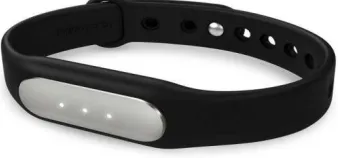
In this kind of mobile EHR applications we need to wear a device which is connected to the mobile application and will give update to the user to do some tasks and update the same to the application and that application will be accessed by the server and doctors can watch that details of the current position of his patient and can give some of the suggestions to the patient when he comes to the review. The below is the sample application of the mobile EHR application
Figure 1 explains the basic architecture of the mobile EHR application in which we can get oximeter access and updates the same oxygen levels in the body in the application and that application will give some support methodologies if the patient is not in a position to work or operate properly in his work.
ISSN(Online): 2320-9801
ISSN (Print): 2320-9798
I
nternational
J
ournal of
I
nnovative
R
esearch in
C
omputer
and
C
ommunication
E
ngineering
(A High Impact Factor, Monthly, Peer Reviewed Journal)
Website: www.ijircce.com
Vol. 7, Issue 5, May 2019
Figure 2: Oximeter for indentifying oxygen levels in the body
In the above two figures we can get a basic idea on what the mobile EHR applications works.
b. Time Series Based.
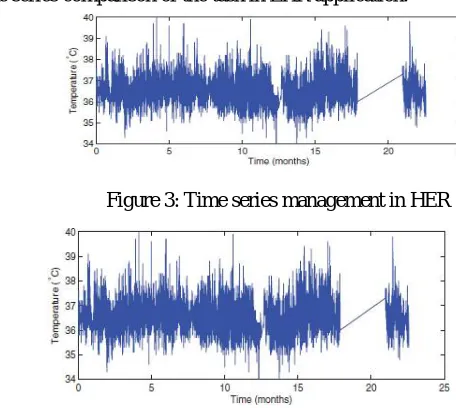
We have EHR applications which are based on the Time series management. In this kind of applications we can track the graphs of the condition of the person using the mobile application as well as the device which is there in the hospital which is related to mobile EHR application.
Figure 3 explains the time series comparison of the task in EHR application.
Figure 3: Time series management in HER
Figure 4: Change point detection based on the Bayesian classifier.
ISSN(Online): 2320-9801
ISSN (Print): 2320-9798
I
nternational
J
ournal of
I
nnovative
R
esearch in
C
omputer
and
C
ommunication
E
ngineering
(A High Impact Factor, Monthly, Peer Reviewed Journal)
Website: www.ijircce.com
Vol. 7, Issue 5, May 2019
c. Community Electronic Health Records
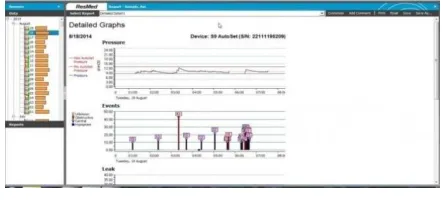
These CEHR (Community Electronic Health Records) is based on connecting the devices to the main server and gather the medical data based on the community purpose in a group of operations and we can get the common factors in the data available in the community EHR.
For example we can consider ResScan as the basic example of the CEHR. Figure 5 is the basic operation of that device. [7-9]
Figure 5: Patient details graph
In this scenario we can consider another type of approach like patient suicidal approach. Through which we can identify the nature of the person and can try to avoid the faults in him/her.
Patients with self-destructive ideation can be recognized from non-self-destructive people with high precision by applying machine-learning procedures to the portrayal of death-and life-related ideas in the cerebrum, reports a paper distributed online this week in Nature Human Behavior. This strategy can likewise recognize self-destructive ideators who have influenced a suicide to endeavor from the individuals who have not.
As per the World Health Organization, near 800,000 individuals bite the dust by suicide consistently. The evaluation of suicide chance is among the most difficult issues confronting emotional well-being clinicians: self-destructive patients much of the time mask their goal to confer suicide, while clinicians' forecasts of suicide chance have appeared to be poor. Markers of suicide hazard that don't depend on self- reports are accordingly much required.
Marcel Just, David Brent, and partners introduced self- destructive patients and control people experiencing utilitarian attractive reverberation imaging (fMRI) examines with death- and life-related words. They found that neural movement because of six of the words (demise, mercilessness, inconvenience, joyful, great and laud) and in five mind areas best segregated between the self-destructive patients and controls. The creators at that point prepared a machine- learning calculation to utilize this data to distinguish which members were patients and which were controls. The calculation effectively distinguished 15 of 17 patients as having a place with the suicide gathering and 16 of 17 sound people as having a place with the control gathering. The creators went ahead to research only the self-destructive patients, who were isolated into two gatherings: the individuals who had endeavored suicide (nine members) and the individuals who had not (eight members). The creators prepared another calculation that effectively recognized suicide attempters and non-attempters in 16 out of 17 cases.
ISSN(Online): 2320-9801
ISSN (Print): 2320-9798
I
nternational
J
ournal of
I
nnovative
R
esearch in
C
omputer
and
C
ommunication
E
ngineering
(A High Impact Factor, Monthly, Peer Reviewed Journal)
Website: www.ijircce.com
Vol. 7, Issue 5, May 2019
The clinical evaluation of self-destructive hazard would be generously supplemented by a naturally based measure that surveys modifications in the neural portrayals of ideas identified with death and life in individuals who participate in self-destructive ideation. This examination utilized machine- learning calculations (Gaussian Naive Bayes) to distinguish such people (17 self-destructive ideators versus 17 controls) with high (91%) exactness, in view of their adjusted practical attractive reverberation imaging neural marks of death-related and life-related ideas. The most segregating ideas were 'demise', 'brutality', 'inconvenience', 'joyful', 'great' and 'acclaim'. A comparative arrangement precisely (94%) separated nine self-destructive ideators who had influenced a suicide to endeavor from eight who had not. Additionally, a noteworthy feature of the idea adjustments was the evoked feeling, whose neural mark filled in as an elective reason for precise (85%) amass characterization. This examination sets up an organic, neurocognitive reason for adjusted idea portrayals in members with self-destructive ideation, which empowers exceptionally precise gathering enrollment grouping.
Suicide is a noteworthy general wellbeing concern. More than 40,000 individuals across the nation bite the dust by suicide every year. Suicide was the second driving reason for death in 2015 for youthful grown-ups matured 18 to 26. Knowing who is in danger for suicide may help lessen the suicide rate.
Researchers have been trying a few ways to deal with attempt to anticipate suicide hazard. An exploration group drove by Dr. Marcel Just at Carnegie Mellon University and Dr. David Brent at the University of Pittsburgh utilized fMRI to search for marks of cerebrum movement among youthful grown-ups with self-destructive contemplations. They concentrated on the systems of action that speak to ideas and the feelings they inspire. Their examination was subsidized by NIH's National Institute of Mental Health (NIMH). It seemed online in Nature Human Behavior on October 30, 2017.
The group enrolled 38 youthful grown-ups with current self- destructive considerations and 41 sound controls with no history of a mental issue or suicide endeavor. While in a fMRI scanner, the members were demonstrated 30 words for 3 seconds each identified with suicide (e.g., "passing," memorial service," miserable"), positive thoughts ("delight," "cheerful," "solace"), and negative thoughts ("fatigue, "misery," "stressed").
The researchers utilized information from 33 members to prepare a machine-learning framework to spot contrasts in systems of mind action. They at that point tried it on cerebrum pictures from 34 members. The framework accurately recognized 15 of 17 self-destructive individuals and 16 of 17 controls—a precision of 91%. The most grounded contrasts between the gatherings, all together, were for the words "passing", "joyful," "great," "cold-bloodedness," "acclaim," and "inconvenience." Within the gathering of 17 individuals with self-destructive considerations, the framework was likewise ready to recognize the 9 who had already influenced a suicide to endeavor from the 8 who hadn't with an exactness of 94% (16 out of 17). Segregating locales were spread over a few territories of the cerebrum.
III. PROPOSED APPROACH
In this proposed approach we need to consider the different architectures of the EHR applications and design the neural networks graph based on the variables we are considering. Here we are considering hybrid architecture of the EHR which will combine two models of electronic health records.
a. EHR with doctors
ISSN(Online): 2320-9801
ISSN (Print): 2320-9798
I
nternational
J
ournal of
I
nnovative
R
esearch in
C
omputer
and
C
ommunication
E
ngineering
(A High Impact Factor, Monthly, Peer Reviewed Journal)
Website: www.ijircce.com
Vol. 7, Issue 5, May 2019
collected we need to combine the second model of health records.
In this EHR data we cans see the symptoms, previous health data, personal information of the patient, job related information etc. using this kind of information we can form the modal based on which we can plot the graph 1 for the patients health condition based on symptoms and their ratio of effect. Figure 6 explains the sample data set we can consider
Figure 6: Sample Dataset considered based on the EHR model
a. Dataset collection for Mental Disability.
We need to collect the dataset for the description of the mental disorders. The reason for considering this dataset is to identify the reason for the behavior of the patient. To identify for which symptoms what is chance of mental behavior of the patient. The dataset consists of the symptoms and for the specific group of symptoms what will be the behavior of the person in future and present too.
This is a typical task for combining the models together to form a new model.
IV. PROPOSED ARCHITECTURE AND RESULTS
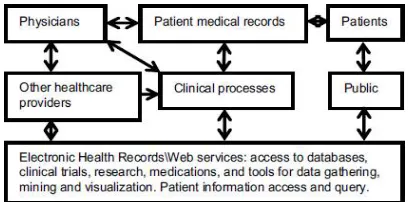
In this section we will discuss about the prescribed architecture of the system we are prescribing. Figure 7 indicates the architecture of normal EHR applications and will know how we can get the data from the repository and how we can deal with the processing of the data.
ISSN(Online): 2320-9801
ISSN (Print): 2320-9798
I
nternational
J
ournal of
I
nnovative
R
esearch in
C
omputer
and
C
ommunication
E
ngineering
(A High Impact Factor, Monthly, Peer Reviewed Journal)
Website: www.ijircce.com
Vol. 7, Issue 5, May 2019
In this architecture we will collaborate with the doctors who will use this application and based on their treatment data and the considerations we will get the dataset domain specifically.
In figure 8 we will collect the mental disorder patients dataset.
Figure 8: Mentally disorders patient dataset sample
Based on the available datasets we need to apply the neural networks individually and combine the both models and apply again the same model.
V. CONCLUSION
The future work depends on the available datasets in the respective domain and the operations we can perform on those domains. In this research work we are focusing on identification of the nature of the person based on his current health condition which will help to predict the nature of the patient in the future and help him to rectify him with his health conditions based on the Electronic Health Records data. We need to apply machine learning algorithms like neural networks, Decision trees, Random Forest, SVM, CNB Classifier etc for better implementation.
REFERENCES
[1] “An improved approach for prediction of Parkinson’s Disease using Machine Learning Techniques”, Kamal Narayan Reddy Challa* ,2016, IEEE
[2] Adoption of Electronic Health Record System: Multiple Theoretical Perspective”, Qiwei Gan, Qing Cao – 2014 IEEE [3] “A Scalable mHealth System for Noncommunicable Disease Management”, G D Clifford* - 2014 IEEE
[4] “Predictive Medication and use of BigData”, Avijit Goswami – 2017 IEEE
[5] “Variation in Outcome in Tethered Cord Syndrome”, Norulain Iqbal*, 2016, Asian Spine Journal
[6] “Resource Frequency Prediction in Healthcare: Machine Learning Approach” Daniel Vieira, 2016 IEEE
[7] National Patient Safety Association, “Safer care for acutely ill patients:Learning from serious accidents,” Tech. Rep., 2007. [8] National Institute for Clinical Excellence, “Recognition of and response to acute illness in adults in hospital,” Tech. Rep., 2007.
[9] H. Gao, A. McDonnell, D. Harrison, S. Adam, K. Daly, L. Esmonde, D. Goldhill, G. Parry, A. Rashidian, C. Subbe, and S. Harvey, “Systematic review and evaluation of physiological track and trigger warning systems for identifying at-risk patients on the ward,” Intensive Care Med., vol. 33, no. 4, pp. 667–679, 2007.
[10] L. Tarassenko, D. Clifton, M. Pinsky, M. Hravnak, J. Woods, and P.Watkinson, “Centile-based early warning scores derived from statistical distributions of vital signs,” Resuscitation, vol. 82, no. 8, pp. 1013–1018, 2011.
ISSN(Online): 2320-9801
ISSN (Print): 2320-9798
I
nternational
J
ournal of
I
nnovative
R
esearch in
C
omputer
and
C
ommunication
E
ngineering
(A High Impact Factor, Monthly, Peer Reviewed Journal)
Website: www.ijircce.com
Vol. 7, Issue 5, May 2019
[12] A. Hann, “Multi-parameter monitoring for early warning of patient deterioration,”Ph.D. dissertation, Univ. Oxford, Oxford, U.K., 2008. [13] D. Wong, I. Strachan, and L. Tarassenko,“Visualisation of highdimensional data for very large data sets,” presented at the Workshop Mach. Learn. Healthcare Appl., Helsinki, Finland, 2008.
[14] B. Sch¨olkopf, J. Platt, J. Shawe-Taylor,A. J. Smola, and R. C.Williamson,
“Estimating the support of a high-dimensional distribution,” Neural Comput., vol. 13, no. 7, pp. 1443–1471, 2001.
[15] S. Hugueny, D. Clifton, and L. Tarassenko, “Probabilistic patient monitoring with multivariate, multimodal extreme value theory,” Commun. Comput. Sci., vol. 127, pp. 199–211, 2011.
[16] R. Kavitha, E. Kannan, S. Kotteswaran,"Implementation of Cloud based Electronic Health Record (EHR) for Indian Healthcare Needs",Indian Journal of Science and Technology,2016 Jan, 9(3), Doi no:10.17485/ijst/2016/v9i3/86391
[17] Meenakshi Sharma, Himanshu Aggarwal,“EHR Adoption in India: Potential and the Challenges”,Indian Journal of Science and Technology,2016 Sep, 9(34), Doi no:10.17485/ijst/2016/v9i34/100211
[18] ResScan Software : ResScan version 4.2 Clinical Guide from “ResMed Ltd 1 Elizabeth Macarthur Drive Bella Vista NSW 2153 Australia” [19] R. Lozano, and C. J. L. Murray, “Global and regional mortality from
235 causes of death for 20 age groups in 1990 and 2010: A systematic analysis for the Global Burden of Disease Study 2010,” The Lancet, vol. 380, no. 9859, pp. 2095–2128, 2012.
[20] "B. K. Mylavarapu and R. T. Mylavarapu, ""A Framework for Hierarchical Big Image Data,"" 2018 Second International Conference on Inventive Communication and Computational Technologies (ICICCT), Coimbatore, 2018, pp. 169-173.
doi: 10.1109/ICICCT.2018.8473339"
[21] Sreenivas Sasubilli, Kumar Attangudi Perichiappan Perichappan, P. Srinivas Kumar, Abhishek Kumar, An Approach towards economical hierarchic Search over Encrypted Cloud, pages 125-129; Annals of Computer Science and Information Systems, Volume 14. ISSN 2300-5963.
[22] "Kumar. Attangudi P. Perichappan, S. Sasubilli and A. Z. Khurshudyan, ""Approximate analytical solution to non-linear Young-Laplace equation with an infinite boundary condition,"" 2018 International Conference on Computing, Mathematics and Engineering Technologies (iCoMET), Sukkur, 2018, pp. 1-5.doi: 10.1109/ICOMET.2018.8346349"