MORRIS, S. GWYNN. Influences on Children’s Narrative Coherence: Age, Memory Breadth, and Verbal Comprehension. (Under the direction of Lynne Baker-Ward.)
Narrative coherence, or the measure of how well a particular memory has been structurally organized and interpreted, is receiving increased attention from memory researchers, likely due to its presumed links with effective coping and long-term remembering. The current study shed light on this important but elusive construct by exploring factors that influenced coherence in children’s personal memory narratives of events that occurred in both the recent and distant past. Specifically, 112 4- to 8-year-old children were asked to remember parent-nominated events that transpired within the past 4 months. One year later, when the children were 5- to 9-years-old, they were asked to
by
S. GWYNN MORRIS
A dissertation submitted to the Graduate Faculty of North Carolina State University
in partial fulfillment of the requirements for the
Degree of Doctor of Philosophy
PSYCHOLOGY Raleigh, North Carolina
2007 APPROVED BY:
_____________________________ Lynne Baker-Ward, Ph. D. Chair of Advisory Committee
_____________________________ _____________________________ Thomas Hess, Ph. D. James Kalat, Ph.D.
_____________________________
Biography
Acknowledgments
First and foremost, I would like to thank my advisor, Dr. Lynne Baker-Ward. I greatly appreciated all the scaffolding, guidance and enthusiasm throughout this process.
In addition, I would like to thank my committee members: Dr. James Kalat, Dr. Thomas Hess, and Dr. Shevaun Neupert. I appreciated their willingness to provide me with constructive feedback and support when needed. Special thanks are extended to Dr. Neupert for her patient and clear assistance with multilevel modeling, as well as to Natalie Cheung Hall for her aid in SAS programming.
I want to thank Dr. Patricia Bauer of Duke University for the opportunity to work with her valuable data. Further, I greatly appreciate all the coding assistance from Kim Turner and Julia Rice.
Table of Contents
List of Tables……… vi
List of Figures…...……… vii
I. Introduction……..……….. 1
A. Why is coherence important?……….……….. 3
1. Association with Adjustment Following a Traumatic Experience…. 3 2. Theoretical Association with Long-term Remembering………. 5
B. How is coherence defined and measured?……..…..………... 8
1. Coherence as an Adjective……….………. 8
2. The Unidimensional Approach to Coherence………….……… 11
a. Peterson and McCabe’s approach……….……… 11
b. Work from the Fivush laboratory……….. 14
3. The Multidimensional Approach to Coherence……….………. 16
4. Operationalization of Coherence in the Present Research………….. 19
C. Is coherence a function of the underlying memory representation or a function of a child’s reporting ability?...……….... 21
D. Age-related differences in coherence………….… ………. 25
1. Chronology………..…..……….. 26
2. Theme………..……...………. 28
E. Memory breadth and subsequent recall…………...……...…….………. 32
F. Verbal ability and memory reports..….……….………... 33
G. Rationale for the present study…...………….………... 37
II. Specific Aims and Hypotheses………...……… 41
A. Aim 1: To describe the age-related differences in two dimensions of 4-8-year-old children’s narrative coherence……… 41
1. Hypothesis 1A……….………..…….. 41
2. Hypothesis 1B………. 41
B. Aim 2: To examine the influences of age, memory breadth, and level of verbal comprehension on two dimensions of children’s narrative coherence in recent memories ……….……… 42
C. Aim 3: To examine whether two dimensions of children’s narrative coherence for a distant memory depends on a child’s initial encoding of the memory and/or the child’s narrative ability at time of retrieval………...….……… 43
III. Method……… 45
A. Participants……….………. 45
B. Procedures………..….. 46
1. Experimenter-Child Interviews (ECI)…….………..…….. 47
2. Verbal Comprehension Assessment………... 49
C. Coding……….………. 51
1. General Procedures………. ………….……. 51
2. Coherence…….………... 52
3. Breadth…….………... 54
IV. Results………. 56
B. Results Addressing the Specific Aims…..……..……… 58
1. Overview………..………...……… 58
2. Results addressing Aim 1……….………...……… 60
3. Results addressing Aim 2………...…………. 63
a. Chronology……… 64
b. Theme……… 68
4. Results addressing Aim 3……… 72
a. Chronology……… 72
b. Theme……… 78
C. Additional Analyses……...……….. 81
D. Summary of Results……….……… 84
V. Discussion……….... 85
A. Age-Related Differences in Theme and Chronology.……….. 86
B. Coherence in Children’s Recent Memory Narratives……….. 87
C. Coherence in Children’s Distant Memory Narratives……….. 89
D. Breadth as a Proxy for Underlying Memory Representation.……..…… 90
E. Limitations of Current Study…..……….. 94
F. Strengths of Current Study………..……..………...………… 97
G. Recommendations for Future Research….……….. 98
VI. References……….………….. 101
VII. Appendices………..……….. 108
A. Summary table of Peterson and McCabe’s three types of analysis examining narrative structure in children’s memory narratives……….. 109
B. Coherence coding scheme published by O’Keraney, Speyer & Kenardy (in press)……….... 110
C. Narrative Coherence Coding Scheme (NaCCS).………. 112
D. Dataset Specific Coherence Coding Rules…...……….. 120
E. Four Sample Coded Narratives.….………... 122
List of Tables
List of Figures
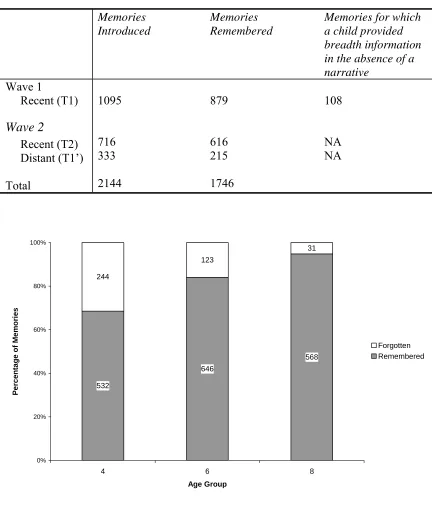
1. Percentage of Memories that were Remembered or Forgotten by Age
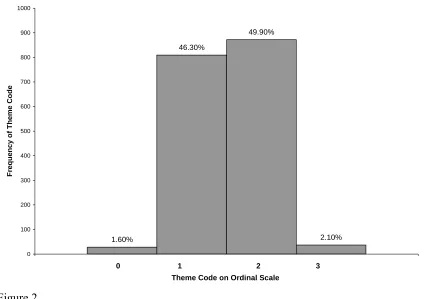
Group……… 57 2. Frequency of Levels of Theme Coded on the Ordinal Scale across All
Influences on children’s narrative coherence: Age, memory breadth, and verbal comprehension
Narrative coherence is a measure of how well a particular memory has been structurally organized and interpreted. Event narratives that are highly coherent situate the event within a specific context (i.e. a particular place and time), are ordered
chronologically, and have a consistent theme (Fivush, 2007). In short, a naïve listener of a highly coherent event narrative would know when and where the event took place, could temporally order the actions that make up the particular episode, and would understand how the episode affected the teller. In contrast, personal memory narratives that are lacking in these aspects are low in coherence.
Although narrative coherence is receiving increased attention in memory research as a predictor of various outcomes and is often central to theoretical conceptions of autobiographical narratives, very little is empirically known about what factors may influence coherence itself (Peterson & Biggs, 1998). Coherence has recently been
described as “conceptually critical,” yet “an elusive construct” (Fivush, 2007). There is a lack of consensus in the extant literature for both the definition of coherence and the way coherence should be measured. Thus, the present research sought to expand the
The study first described age-related differences in narrative coherence in 4-8 year-olds. Next, the research assessed the influences of age, memory breadth, and verbal comprehension on narrative coherence in children’s memory reports for both recent and distant events. These variables were selected to test theoretical assumptions that
coherence is a reflection of the organization and content of one’s underlying event
memory, rather than solely a reflection of a child’s current verbal abilities (Fivush, Haden & Adam, 1995; Peterson & Biggs, 1998). Further, extant studies have shown that
children talk about memories from the recent past and the distant past differently (Van Abbema, 2002; Van Abbema & Bauer, 2005). Thus, children’s memories for events that occurred within the past four months and memories for events that transpired over a year in the past were examined. The current investigation constitutes an original and valuable contribution to the understanding of verbal memory reports in general and narrative coherence as a construct specifically.
Why is Coherence Important? Association with Adjustment Following a Traumatic Experience
During adulthood, a lack of coherence in trauma memories has been associated with posttraumatic stress disorder (PTSD). This is often termed the disintegration view or fragmentation of trauma memories (cf. the landmark view as presented by Berntsen, Willert, & Rubin, 2003). Ehlers and Clark (2000) support the disintegration view and stated, “We propose that in persistent PTSD one of the main problems is that the trauma memory is poorly elaborated and inadequately integrated into its context in time, place, subsequent and previous information and other autobiographical memories” (p.325). Treatments based on this paradigm seek to reduce PTSD symptoms by increasing the coherence of trauma memories. Foa, Molnar, and Cashman (1995) examined the rape narratives of 14 women before and after undergoing such a therapy for PTSD. After treatment, the participants’ narratives had increased in the proportion of organized thoughts. Organized thoughts were utterances that indicated realization, decision
making, or planning. Pearson correlations indicated that an increase in organized thought was significantly related to a decrease in depression, as measured by the Beck Depression Inventory. Foa, Molnar, and Cashman’s work is consistent with the findings of
Pennebaker and his colleagues, who have shown that adults have better health outcomes and immune functioning when they repeatedly write about negative memories, often resulting in a more coherent written narrative (i.e. Pennebaker, 1993; Pennebaker, Kiecolt-Glaser, & Glaser, 1988).
the memory narratives from 80 children (between the ages of 7 and 16) four to seven weeks after they had been admitted to a hospital for treatment of an accidental injury. The majority of accidental injuries were caused by falling (26%), bike/scooter/skate accidents (16%) or tripping (15%) and all resulted in a hospital stay of 24 hours or more. To collect the narratives, interviewers visited the children in their own homes and asked the child to verbally report their injury. The interviewers used only the following prompt:
In a moment I will ask you to tell me about your accident, how you felt, what you saw, who was there with you, everything. I would like you to describe the
accident to me as if it is happening right now. I would like you to tell me as many things that you can remember that happened during the accident. Things like what happened around you, how you were feeling, and what you were thinking during the accident (p. 5).
The authors used coherence, along with other narrative qualities, child factors (gender and age), and accident factors (trauma and injury severity) to predict variance in post-trauma intrusive and avoidant PTSD symptoms. These PTSD symptoms were measured using the CRIES-8, a child-friendly and reliable version of the Horowitz Impact of Event Scale. In the CRIES-8, the child self-reports the frequency of eight symptoms on a Likert scale ranging from 0 (Not at all) to 5 (Often). The use of
coherence measures were not significantly adding to the accurate prediction of intrusions. Causal markers (a measure of cohesion, defined as the relationship or connections
between sentences and clauses) and negated conceptual references (i.e. “I forget,” “I don’t know”) did have significant standardized regression coefficients. It is difficult to draw conclusions from this study as the authors measured coherence in a slightly different way than in the present study (discussed below). Yet, it is evident from this carefully controlled study that certain narrative qualities do have the power to predict post-traumatic outcomes in children.
Thus, a deeper understanding of coherence in both adult and child narratives may be beneficial to the understanding of the causes and symptoms of PTSD. Further,
increased knowledge about coherence may improve our ability to successfully treat those suffering from PTSD.
Theoretical Association with Long-term Remembering
The importance of coherence extends beyond PTSD and trauma memories. Coherence has also been examined in the realm of children’s everyday autobiographical memories. Coherence is often assumed to be an important predictor of which memories are remembered or forgotten through the period of childhood amnesia. According to Fivush, Haden, and Adam (1995), “memories of personally experienced events that are not organized as coherent narratives will be less likely to be integrated into the
experiences may not be remembered into adulthood, resulting in childhood amnesia (Nelson & Fivush, 2004).
Surprisingly, few investigations to date have examined the relation between coherence and recall after a lengthy delay. A classic study by Pillemer, Picariello, and Pruitt (1994) is often cited as evidence of the role of coherence in the survival of early memories. For example, Peterson and Biggs (1998) stated, “In support of this
hypothesis, Pillemar, Picariello and Pruitt (1994) found that the coherence of
preschoolers’ narratives predicted their ability to recall those narrativized experiences 7 years later” (p. 52). Yet, in examining the original paper, it becomes clear that
“coherence” was not actually measured. In the study, the authors asked 25 children to recall being evacuated from their preschool in response to a fire alarm triggered by
burning popcorn. The participants were asked to recall the evacuation at two time points: two weeks after the event occurred and again seven years after the fire alarm. Eleven of the children were in the younger classroom at the time of the evacuation (mean age 3.5) and 14 were in the older classroom (mean age 4.5). All children were able to provide mnemonic information two weeks after the event and there were no age differences in the amount remembered. However, the older children provided more temporal and causal sequences than the younger children.
At the 7-year follow up, Pillemar et al. reported, “Only those preadolescents who had been in the older preschool group at the time of the alarm showed convincing
evidence of long-term memory” (p. 95). Inspection of their data reveals that eight of the 14 children who were in the older preschool class at the time of the incident could
in the past, whereas only two of the 11 children who were in the younger class produced fragmentary narratives. The authors themselves interpreted their results as suggesting that the increased causal reasoning and temporal sequencing in the older children’s initial reports may be related to long-term memory. Yet, these conclusions are based on a small sample size and were only analyzed at the group level. That is, the authors used chi-squared analyses to demonstrate that the group of participants who had been in the older classroom at the time of the fire alarm more frequently produced intact narratives than the group of participants who had been in the younger classroom. The authors did not link each particular narrative collected immediately after the fire-alarm to the same child’s narrative seven years later. Thus, while increases in causal and temporal reasoning may be associated with long-term memory in the study, it is not appropriate to conclude that these aspects actually predict long term memory. Further, although causal reasoning and temporal sequencing are often considered components of coherence, they do not
represent the exact same thing as coherence (see discussion below). In short, while it is tempting to use the classic fire alarm study as evidence for the role of coherence in long term remembering, the actual data are inconclusive. Clearly, a more comprehensive approach should be taken to test the theory that coherence of early memories predicts their survival through the period of childhood amnesia.
How is Coherence Defined and Measured?
As Fivush (2007) recently articulated, “Whereas there is almost universal agreement that coherence is conceptually vital, there is as yet no agreed upon definition or measure of narrative coherence in the literature” (p. 1). Fivush goes on to state, “Across multiple theoretical formulations of coherence, three dimensions are consistently argued to contribute to overall coherence: 1) context, i.e., orienting the narrative in place and time, 2) chronology, i.e., relating the component actions along a comprehensible timeline, and 3) theme, i.e., maintaining topic and providing a sense of rising action with a resolution and/or final point to the story” (p.1). In the past, literature has either (a) used the term coherence as an adjective to describe one of these dimensions, (b) measured coherence on one overall rating scale that lumps all or some of these dimensions together, or (c) taken a multidimensional approach, as will the present research. Each of these major approaches will be reviewed below, culminating in an explanation of the conceptualization of coherence that guided the current investigation.
Coherence as an Adjective
As an adjective, coherence could mean that narratives are on-topic, make sense, are in chronological order, etc. The term coherence has also been used to describe only one dimension of the three that are used in a multidimensional approach: context, theme, and chronology. In these cases, coherence is not viewed as a construct in and of itself. Two representative examples of extant literature that use the term coherence without explicit definitions will be presented.
The authors examined coherence in 113 adults’ memories of traumatic events. Twenty-five of these adults had after-effects consistent with PTSD, whereas the others did not. The authors quantified coherence using self-report to a single question (“When you recall the traumatic event, do you then think of it as a continuous series of episodes or as some isolated incoherent fragments?”) on a 1-5 Likert scale, anchored by “Totally Incoherent” and “Totally Coherent” (p. 693). They found that coherence ratings and trauma severity were correlated to a greater degree in the group suffering from PTSD symptoms (.51) than those that did not have PTSD symptoms (.01). However, the method used by
Bernsten et al. would not be developmentally appropriate for use with young children due to its advanced wording.
children in this study was given one of seven mutually exclusive content codes as follows: what, who, where, when, why, how, or intensifier. Three additional dependent variables were then formed from the content codes: total content, breadth, and ratio. Total content was simply the sum of all content codes and was used to assess the length of the narrative. Breadth was a count of the number of the traditional pieces of wh-information included in the narrative (who, what, when, where, why, and how). Thus, breadth ranged from 0-6 and was considered to be a marker of the global complexity of a narrative. Lastly, ratio was the average number of content codes per each proposition. Accordingly, ratio was used to indicate the local level complexity of a narrative.
The authors used these variables in a series of 2 (session: 1, 2) by 3 (age group: 7, 8, 9 years) ANOVAs, with session as a within-participant factor and age group as a between-participants factor. Although only a trend was found for changes in total content over sessions, main effects of session were found for both breadth and ratio, as well as for the when, why, and how variables. The authors reported, “In the present research,
Although studies that use the term coherence as an adjective may offer important insights about narrative properties, they do not present a complete picture of coherence as a construct and should not be directly compared to studies that define and utilize
coherence in a different manner.
The Unidimensional Approach to Coherence
Researchers who take a unidimensional approach to coherence tend to view coherence as a construct in and of itself. They typically measure coherence on one global rating scale that considers a combination of any of the contextual information, thematic information, and chronological sequencing provided in a narrative. Peterson and McCabe set the stage for this type of analysis in their early program of research on children’s narratives.
Peterson and McCabe’s approach. Much of the more recent research on coherence has been greatly shaped by the early work of Peterson and her colleagues. Although Peterson and McCabe (1983) did not consider coherence as a construct, they still provided the basis for analyzing children’s memory narratives by examining the structure of children’s narratives in three different ways: high point analysis, episodic analysis, and dependency analysis. Each of these analyses resulted in a global
provide a narrative through empty prompts (i.e., “Tell me more,” “Yes,” and exact echoes of the child’s comments). Peterson and McCabe provide the following example of a memory prompt:
I took my cat to the vet last summer and when the vet was about to give him a shot, my cat took off and ran around the office. Do you have any cats or other pets? (If necessary: Did anything ever happen to your _____?) (p. 16).
Prompts were designed to elicit experiences that were unique for children and included events such as bee-stings, spilling accidents, vacations, pet adventures, and sibling squabbles.
The authors proceeded to analyze the structure of these child memory narratives using three different coding schemes. The first coding scheme they used was high point analysis. High point analysis is guided by the assumption that a narrative has both referential functions (to factually recount events) and evaluative function (to interpret events). For high point analysis, each narrative was examined at the level of each clause. The organization of these clauses resulted in the narratives being classified as
representing a specific structure. The ideal structure of a narrative is termed the classic structure, in which the narrative builds to a high point, evaluatively dwells on the high point, and then resolves it.
classified as falling into a particular structure. Seven structures are possible, ranging from the least complex (descriptive sequences) to the most complex (interactive episode). The episodic analysis is similar to Story Grammar analysis popularized by Trabasso and his colleagues (e.g. Trabasso & Nickels, 1992; Trabasso & Stein, 1997; Stein & Albro, 1997). Like the episodic analysis, Story Grammars examine the structure, rather than the coherence, of a narrative. Examining the structure of a narrative may reveal something about the chronological sequencing of events within the narrative, but does not consider other aspects that coherence includes, such as contextual information and personal meaning making.
Each of the types of analysis used by Peterson and McCabe incorporated parts of the context, theme, and chronology dimensions now associated with coherence. Further, each analysis combined aspects of each of these dimensions in their final structural classification of narratives. The work of Peterson and her colleagues were used as a basis to develop coherence coding schemes by many researchers who subsequently examined children’s memory narratives. This section will focus on unidimensional schemes for examining coherence, although the Peterson and McCabe work also influenced the multidimensional schemes to be discussed in the next section.
Work from the Fivush laboratory. Fivush and her colleagues have taken a unidimensional approach to coherence in several of their studies (Fivush et al., 2003; Bohanek, Fivush, & Walker, 2005). For example, coherence was assessed globally on a 0-3 scale in their 2003 study. In this study, the authors interviewed 29 5-12-year-old children who were living in violent communities about events from their recent past. The participants were recruited from a waiting room in a clinic in the downtown of a large southeastern city. The children were asked to discuss two positive and two negative personally experienced events. Of these events, half were parent-nominated and half were child-nominated. The negative events that were discussed varied from traumatic to only mildly stressful events (e.g. violent interpersonal altercations, minor illness/injuries). Positive events were more homogeneous and included primarily family outings,
the child during free-recall. One of the goals of the study was to understand the impact of event valence (i.e. positive or negative) on children’s coherence. Although Fivush et al. did not explicitly define coherence, their definition is implicit in their coding scheme. They made a global rating of the coherence of each narrative using a 4 point scale based on work by Peterson and McCabe (1982) as follows:
0 = Disorganized pattern: Narrative is too confused, disoriented or contradictory for the listener to understand.
1 = Chronological pattern: Narrative describes successive events that are sequentially and/or logically ordered.
2 = Ending-at-the-high-point: Narrative builds to a climactic high point, then ends; there is no “wrap-up” or resolution.
3 = Classic pattern: Narrative builds to a high point, evaluatively dwells on it, then resolves it. (p. 7)
Thus, Fivush et al. incorporated aspects of the chronology and theme dimensions of coherence, but did not address the context dimension. Further, although the authors used a 2 (event valence) by 2 (nomination) by 2 (gender) ANOVA on coherence scores to demonstrate that negatively valenced events were more coherent than positively valenced reports, it is impossible to examine whether certain dimensions of coherence are
differentially affected by valence than others.
Thus, while the unidimensional approach provided an entry point into the study of coherence, there are limitations associated with operationalizing coherence in this way. As demonstrated in the example discussed above, a unidimensional approach to
Further, using such a broad scale may mask developmental trends in coherence that may be evident when examining the separate dimensions associated with coherence. For these reasons, many researchers have moved to the multidimensional approach to coherence, which will be discussed in the next section.
The Multidimensional Approach to Coherence
Researchers who take a multidimensional approach to coherence believe that coherence is composed of separate dimensions. However, these dimensions have been defined slightly differently by each researcher. Further, investigators have approached coherence coding in two different manners: through word counts or rating systems. In a word count approach, the researcher counts words that represent different dimensions of coherence. For example, temporal terms such as then and next may be counted to capture the chronology of a narrative. In the rating system approach to coding coherence,
narratives are given a subjective rating for each dimension based on a set of criteria. A representative example from each of these traditions will be reviewed in the current section. In the following section, the multidimensional approach to coherence that was employed in the present study will be articulated.
Peterson and her colleagues have more recently conceptualized coherence as multidimensional and have taken a word-count approach to examine coherence. For example, in their 1998 study, Peterson and Biggs quantified coherence by counting the number of propositions in a child’s narrative that were orientations (provided information about the context of an event), actions, or evaluations (evaluative or affective
by the authors was as follows: “It was assumed that narratives with more orientations and evaluations were more coherent because the narrated events were embedded within a richer descriptive and emotional context” (p. 68). Thus, the authors recognized two separate dimensions that compose overall coherence.
Peterson and Biggs used this method to examine children’s memories for a recent trip to the emergency room to treat a minor trauma, such as a laceration requiring stitches or a fracture requiring a cast. There were 90 participants in this study, 30 in each of three age groups: 2-3-year olds, 4-5-year-olds, and 9-13-year-olds. An interviewer asked the children to recount their injury and subsequent hospital visit in their homes during the two weeks following the event. The experimenter prompted the child with open-ended statements, such as “Tell me about when you hurt yourself. What happened?” The authors found that 2-3-year-olds provided almost no orientations or evaluations, 4-5-year-olds provided some evaluations but still few or no orientations, and 9-13-year-4-5-year-olds included significantly more actions, more orienting information (such as time, place, and background information), and more evaluations (such as affective or evaluative
comments) than the children who were at the end of early childhood. Thus, using this method, it appears that there may be age-related improvements in coherence. However, it should be noted that because older children produced significantly longer narratives than the younger children in this study, their findings are confounded with narrative length.
“[The word count approach] is problematic in that relations between the use of specific word types and overall narrative coherence are not always clear; for example, is a narrative more coherent just because the narrator uses a large number of “and then” connectives” (p.2). Due to these limitations, some researchers (including the present author) have turned to measuring coherence using rating scales rather than word counts.
One earlier-described study employed a multidimensional rating scale to examine children’s memories of recent accidents (O’Kearney et al., in press). This study of children’s accident narratives and post-trauma used a coding scheme that involved rating narrative coherence on an overall scale and several separate dimensions. Their coding scheme, again based on work by Peterson and McCabe (1983), consisted of a global rating of coherence as well as individual three-point ratings on three separate, ordinal scales: level of orientation, sequence of events, and level of evaluation (see Appendix B). Level of orientation was determined by rating how well the people, place, and time of the events were described in a narrative. Sequence of events was rated with regard to
non-independent measures of both cohesiveness and coherence into their hierarchical multiple regression, the independent effects of coherence may have been overshadowed by the effects of cohesion on their outcome measures of intrusive and avoidant symptoms. However, this study did allow for separate examination of the different dimensions of coherence.
The current study built on the work that has been reviewed in the above sections by taking a multidimensional approach to narrative coherence.
Operationalization of Coherence in the Present Research
In the current investigation, coherence was conceptualized as a multidimensional construct consisting of three separate dimensions: context, chronology, and theme. Context captures the time and location where a particular event occurs. Chronology refers to the ability of a naïve listener to successfully order all the actions within an event on a timeline. Theme attempts to measure how developed, evaluated, and tied to the self a particular event is. An attempt to succinctly capture this conceptualization of coherence was provided in the definition in the first sentence of this dissertation: Narrative
coherence is a measure of how well a particular memory has been structurally organized and interpreted.
In the present research, coherence was measured using a slight modification to the Narrative Coherence Coding Scheme (NaCCS). This scheme was devised by a
in Appendix C, the modification was to add more specificity in defining the lower two levels of the chronology dimension. As originally defined, a score of 0 indicated that none of the events of an episode could be chronologically ordered, and a score of 1 indicated that some but not most of the events could be placed on a timeline. A precise definition was added for use in the present study, so that a score of 0 indicated that 0-25% of the events in a narrative could be chronologically ordered and a score of 1 indicated that 25-50% of the events could be placed on a timeline. Thus, the chronology scale is interval in nature. However, the theme and context dimensions are ordinal scales.
Although this coding method is similar to the one used by O’Kearney et al., the individual scales in the NaCCS use a four-point rating system rather than a three-point rating system. This allows for a wider range of variability and makes the present scale appropriate for use with both children and adult narratives. Further, the levels on the individual scales of the current scheme are more specifically defined than the broad, more subjective ratings used by O’Kearney et al. This feature makes it easier for others to become reliable users of the scale.
simultaneously. For example, in the current investigation, interviewers used contextual information to prompt children to remember and narrate events from their past (e.g., “Tell me about visiting Chuck E. Cheese on your 4th birthday”). This procedure precluded children from independently providing contextual information in their narratives; however, theme and chronology could still be assessed. Finally, using this standardized measure of coherence is a great asset that will allow studies that are published from all the labs that use it to be directly compared. An understanding of coherence based on multiple studies from multiple labs will greatly enhance our understanding of the role of coherence in memory.
It is important to realize that the way coherence is measured is a reflection of the underlying assumptions about what coherence is actually tapping into. Thus, the next section will examine whether coherence is a function of the underlying memory representation or simply a function of a child’s verbal ability to convey a personal memory.
Is Coherence a Function of the Underlying Memory Representation or a Function of a Child’s Reporting Ability?
reports of encoded and stored experiences (although cf. the self-report measure used by Bernsten, Willert, & Rubin, 2003), it is difficult to determine whether coherence is being influenced by the mental representation of the memory, by the verbal abilities of the person creating the report, or a combination of these two forces. Indeed, this is a common concern that plagues all memory research examining verbal reports, but it is particularly salient when working with children due to their limited verbal abilities. Many researchers have suggested that for children six years of age or younger, verbal measures of memory recall underestimate children’s mnemonic competence (e. g., Price & Goodman, 1990; Bauer, 1996). Therefore, questions remain concerning the effects of age, verbal ability, and underlying memory on children’s narrative coherence.
It is important to address these questions to inform theoretical perspectives on children’s narrative coherence. If coherence is primarily a property of the underlying memory representation established at encoding, it may indeed play an important role in childhood amnesia, as theorized above. However, if it is influenced more by a child’s age and verbal abilities, it may not be an effective predictor of long-term memory, necessitating the revision of existing perspectives on narrative. Thus, it is worthwhile to assess the influences of the underlying representation versus verbal abilities on children’s narrative coherence.
longitudinal examination of preschoolers’ personal narratives to be reviewed in detail in the next section, Fivush et al. (1995) attributed the observed increase in coherence between ages 4 and 5 to the likelihood that children were reorganizing their earlier memories (i.e. underlying representations). In other words, it is possible that stored memory representations were changing over time, which subsequently affected the child’s coherence.
Even though some investigators have theorized that coherence may be a property of an underlying memory representation, it must be acknowledged that examining coherence in verbal recall is only a proxy measure of the representation, as “no one has direct access to these underlying representations” (Baker-Ward et al., 1997, p. 82). Because coherence is only a proxy measure, it may be subject to outside influences, particularly verbal skills. Since memories are typically shared using words, the
assessment of the representation is confounded with verbal skills. Coherence, therefore, may also be a reflection of linguistic ability. Supporting this proposition, “McCabe et al. (1991) found that the coherence of personal experience narratives matched the teller’s current linguistic competence, not their competence at the time when the events occurred” (Peterson & Biggs, 1998, p.74).
Thus, the primary goal of the current research was to examine what factors were influencing children’s coherence. If coherence is indeed a direct reflection of the
theme, context, and chronology may suffer. However, a memory encoded with a wide breadth may be necessary, but not sufficient, for a child to form a highly coherent narrative. For instance, perhaps some children have all the canonical components of an event stored in their memory representation, but these components could still be stored and reported in an unorganized, non-coherent manner. If this is the case, does the child not take advantage of these components due to limited verbal skills or to other capacities that may vary with age? Alternatively, the child may have encoded a wide breadth of components of an episode, and then take advantage of this to tell a very coherent narrative.
In summary, it has been postulated that coherence predicts coping outcomes and the long-term survival of early memories. Yet, these suppositions rest on the assumption that coherence is a function of the underlying memory representation established at encoding and then stored, in contrast to the alternative possibility that coherence is simply a function of a child’s ability to report a narrative. Presently, it is unclear if a non-coherent narrative corresponds to an impoverished or unorganized underlying memory representation, or merely to individual differences in the reporting child’s age or verbal skills (or to both of these factors). The desire to empirically address these questions about the fundamental nature of coherence shaped the aims of the current research. The findings presented below will help elucidate what coherence actually reflects.
memory representation (breadth) and the level of the child (verbal skills and age), multilevel modeling was used in the present investigation to address these cross-level influences.
Despite the disagreements in the definition and measurement of coherence as outlined above, existing literature was used to inform and guide the hypotheses in the present study. This information is reviewed below.
Age-Related Differences in Coherence
Children are independently capable of providing narratives of their past experiences by age 3 (Bauer & Wewerka, 1997). Much research demonstrates age-related improvements in various aspects of children’s narrative reports of personal memories. In the research reviewed above, Peterson and Biggs (1998) examined
personal narratives from 96 children aged 3 ½ to 9 ½ about a trip to the emergency room. They found age-related differences in the amount of evaluations and orientations
provided in each narrative, with older children using more evaluations and orientations than younger children. They also noted that a resolution was more often included in older children’s narratives rather than younger children’s narratives. Longitudinal examinations have resulted in findings consistent with this cross-sectional report.
Fivush, Haden, and Adam (1995) longitudinally examined personal narratives for recent events over time starting when children were 3 ½ and continuing until they were almost 6. In their study, fourteen children were asked open-ended questions about
complex, more coherent and more detailed over time. It should be noted, however, that the authors used the term coherence synonymously with cohesion and measured this by counts of orientations and evaluations.
It is clear that children’s overall narratives do change with age, but how does the construct of narrative coherence change with age? Presently, the extant literature cannot provide empirical answers to this question. Thus, the current research examined age-related differences in coherence in children’s narratives about specific parent-nominated past events. Let us now examine research that informs hypotheses about possible age-related differences in the chronology and theme dimensions of narrative coherence. As will be discussed below, the context dimension of narrative coherence will not be assessed in the present study, as aspects of the interview procedure prohibited the collection of the relevant data.
Chronology
In the current research, the chronology dimension of narrative coherence is a rating of how well the events in a particular narrative are temporally sequenced. Thus, the cognitive understanding of sequence and the understanding that this information must be conveyed to a listener are prerequisite skills for producing a narrative high in this dimension of coherence.
preoperational children may not realize that a listener needs explicit indicators of event sequence in a story to understand the order in which the events occurred. Piaget stated, “before the age of 7 or 8, children’s narratives…remain purely egocentric, i.e. events are linked together on the basis of personal interest and not on the real order of time” (Piaget, 1969/1928, p. 272). There is evidence in the extant literature that both contradicts and supports this statement.
Peterson and McCabe (1983) pointed out that Piaget’s perspective was mostly shaped by studies of children’s narratives that were retellings of experiment-provided stories or arranging stimulus pictures in an order, rather than from the basis of their narratives of personal experiences. They conclude, “Children do understand temporal order and can accurately reproduce it in their stories, unless they are attempting to recall complex and poorly structured stories such as those used by Piaget” (p. 164). Classic work by Nelson (1978) indeed showed that young children could tell chronologically ordered stories about familiar, repeated personally experienced events, such as going to eat at a fast-food restaurant. However, this conclusion may depend on children’s
knowledge of scripts about eating at fast food restaurant in general, and may not apply to their reports of less familiar experiences. Thus, young children may still have difficulties sequentially ordering events from novel personal events that lack scripts.
Other research has found support for Piaget’s predictions about children’s increasing ability to sequence events within a narrative after the age of 7 or 8. Hudson and Shapiro (1991) stated, “Research generally shows that preschool children
subordinate conjunctions (e.g., when, after)” (p. 104). Thus, as children age past the preschool years, one would expect their ability to convey chronological sequences to increase. Further, their research findings support this. They examined personal narratives from preschoolers (mean age 4 years, 8 months; n = 37), first graders (mean age 6 years, 7 months; n = 38), and third graders (mean age 8 years, 7 months; n = 34). The narratives were about four personal, past events: a birthday party, a doctor’s visit, Halloween, and a trip. Their results indicated that explicit temporal sequencing was exhibited by approximately 40% of preschoolers, 40% of first graders, and 80% of third graders (notably, who were older than 7 or 8, an outcome consistent with Piagetian theory).
Although the theory and literature reviewed in this section strongly suggest that the skills (i.e. temporal sequencing, recognition of a listener’s needs) that contribute to the chronology dimension of coherence in 4-8-year-old children’s narratives may show age-related differences, actual age-related differences in the chronology dimension itself have yet to be reported.
Theme
In the present study, the theme dimension of narrative coherence is a rating of how well the events in a particular narrative are described, elaborated, evaluated,
causally-linked, and related to other autobiographical memories or to the self. Thus, the ability to evaluate and link information is needed to produce a narrative high in this dimension of coherence.
Hudson and Shapiro’s (1991) earlier-described work also examined two
of coherence. They examined inclusions of explanations (descriptive information or why particular events were carried out) and high points (including emotional reactions). Approximately twice as many narratives produced by 8-year-olds included explanations and high points as did the narratives produced by 4- and 6-year-olds. Further, Hudson and Shapiro also reported, “the inclusion of codas that tie a narrative together or to bring the narrative up to the present are only found in the narratives of children 8 years and above” (p. 99).
Consistent with the Hudson and Shapiro work, Peterson and Biggs (1998) also showed age-related differences in the frequency of evaluations included in children’s personal narratives about a past injury. However, Peterson and Biggs were comparing groups of children aged 2-3, 4-5, and 9-13. Thus, they lack data on children aged 6-8, which were included in the present study. It is important to study children of this age because of the important Piagetian cognitive shifts that children of this age typically experience (discussed above).
In Fivush and colleagues’ (1995) longitudinal examination of preschoolers’ memory narratives for moderately positive events, the same fourteen children
participated when they were 40-, 46-, 58-, and 70-months-old. During each time point, an interviewer asked each child to discuss three parent-nominated events using only open-ended prompts. When the children were 40-months old, all three of the
memory at certain time points because a similar event had been experienced more recently, which negated the uniqueness of the distant event. The authors reported that 8 of the 11 children who were prompted to do so were able to remember and narrate the distant event during the 46-month time point, 7 of 9 children during the 58-month time point, and 9 of 10 children during the 70-month time point. Overall, 80% of the distant memories that were asked about were repeatedly recalled by the children. Fivush et al. reported that the almost-5-year-olds reported more evaluations in their repeated narratives of events than they had when describing these same events when they were almost 4. There was not a statistically significant increase in evaluations for events discussed at almost 5 and again when at almost 6. Thus, it seems that there was a shift in the quantity of evaluative information provided in narratives between ages 4 and 5, but not 5 and 6. However, Fivush et al. did not continue to follow these children beyond age 6, so one is unable to make conclusions about shifts beyond this point in the lifespan. Moreover, their conclusions were drawn from the analyses of a very small sample, only 24 repeated memories nested within 14 participating children. Finally, of course, they were only assessing evaluations, which is only one contributor to the theme dimension of coherence.
searches for it in many places, and finally finds his frog. Each clause in the children’s narratives was then classified as belonging to a goal-attempt-outcome (GAO) unit or a non-GAO unit. Non-GAO units consisted of isolated descriptors, names, or
identifications of items in the pictures. The authors found that 3- and 4-year-olds used primarily non-GAO units in their narratives. This pattern changed for the 5-year-olds who used more GAO units than their younger counterparts. The 9-year-olds and adults conveyed mostly GAO units in their narratives. Their findings suggest that as children age, they may be including an increasing number of goals as causal reasoning in their narratives. Although these interpretations are interesting, it is important to note that the narratives analyzed in this study were about pictures seen in the present and were not memories for personal events. As Trabasso and Stein (1997) point out, “The studies of Trabasso and his colleagues suggest that the spontaneous use of goals and purposes explicitly occurs at age 5 while tacit use may occur earlier. It is likely that in real-life situations where the stakes are high, children use knowledge of goals and plans as young as 2” (pp. 244-245).
Thus, while the literature suggests that there may be age-related differences in the components that contribute to theme dimension of coherence (i.e. use of evaluations and causal explanations in narratives), age-related differences in the theme dimension of coherence itself have yet to be empirically assessed.
Memory Breadth and Subsequent Recall
Breadth is a measure of the proportion of canonical components (who, what, when, where, why, how) recalled about a particular episode (Van Abbema, 2002). As stated above, if coherence is indeed a direct reflection of the underlying memory representation, one would expect that a child would be more likely to create a highly coherent narrative if the underlying memory contains a wide breadth of information. Clearly, if a child doesn’t have a wide breadth of information to draw from when creating a narrative, the coherence dimensions of theme, context, and chronology may suffer. However, there may be both developmental changes and individual differences in the association between breadth and coherence, meaning that a wider breadth may be necessary, but not sufficient, to produce a highly coherent narrative. While this is a logical theoretical position, there is currently no empirical evidence that explicitly address it.
coherence solely on the basis of the use of temporal connections. Thus, while this study does not preclude the possibility that the breadth of a memory may influence how coherently the past event is reported, Van Abbema and Bauer’s investigation does not provide a firm basis for this conclusion. Overall, although theory may point to a relationship between memory breadth and coherence, this association has yet to be empirically investigated.
However, memory breadth is only one possible influence on children’s narrative coherence. Verbal comprehension may also play a role and will now be discussed.
Verbal Ability and Memory Reports
Even children as young as age two are able to use words to describe past events that they have experienced (Morris & Baker-Ward, 2007). Nonetheless, there are questions about the relation of verbal comprehension and memory reports. Specifically, do children’s age-related increases in verbal skills influence their ability to talk about the past? Is it necessary to measure verbal comprehension when considering narrative coherence in children’s memory reports? Could age-related increases in children’s narrative coherence merely be a reflection of their increasing verbal abilities?
predictors of item recall and narrative cohesion, receptive language (verbal
comprehension) predicted both of these outcomes (ps < .0001). Although the to-be-remembered event in this study was experimenter-staged, it was a moderately pleasant event similar to many of the events nominated in the present study (e.g., a visit to science museum). Thus, at least for the youngest age group in the current study, it seemed important to consider receptive language as a possible predictor of narrative coherence.
The role of receptive language in older children’s memory reports, however, is less clear. Burgwyn-Bailes, Baker-Ward, Gordon, and Ornstein (2001) examined 24 3- to 7-year-old children’s memory for a facial laceration and subsequent treatment by a plastic surgeon. The children were interviewed about their experiences within a few days of the event, 6 weeks later, and again 1 year later. Interviews were based on a checklist of present features (i.e. the nurse applies a numbing agent, the doctor puts some medicine on the wound) that the surgeon completed at the time of the initial treatment. During the interviews, children were first asked open-ended questions about what had occurred when they were treated. These questions were followed up with as series of closed
wh-questions and then forced choice yes/no wh-questions about particular features of the event if they were not included in the child’s free response. Total recall was calculated as the percentage of features about which a child provided information (at any level of
adding PPVT-R scores and PPVT-R x Age interactions significantly increased the amount of variance in total recall at 1-year that the model explained from 24% to 43%. However, simply adding PPVT-R scores (without the age interaction term) did not have an effect on the model. The authors explained, “increases in receptive language skills were associated with increased total recall only for the younger children; among the older children, receptive language skill was no longer helpful in predicting recall” (p. S38). Assuming that the amount of information recalled impacts narrative coherence, this study further indicates that verbal comprehension may be an important predictor of narrative coherence for the younger children in the present study, but not the older 6- and 8-year-old children.
In contrast, other studies have indicated that verbal comprehension is not an important predictor of recall. Ornstein et al. (2006) examined 4- to 7-year-old children’s memories over a 6-month interval for a well-child check up by a pediatrician. Children’s scores on the PPVT-R only explained about 1% of the variance in open-ended recall (i.e., children’s free responses to “Tell me what happened at your check-up”). Yet, in this study, open-ended recall was quantified as a percentage of present features that a child reported. There was no measure of qualities of the child’s narrative, such as coherence.
Fivush, Hazzard, Sales, Sarfati, and Brown (2003) did measure 5- to 12-year-old children’s narrative coherence (a global rating of 0-3) when discussing both positive and negative events. Positive events were much like the majority of events discussed in the current study and included occurrences such as trips to amusement parks, vacations, and parties. Negative events included events such as illnesses, injuries, and parental
Vocabulary Test, Third Edition (PPVT-3). Vocabulary scores were not correlated with the amount of information recalled. The authors found that the coherence of negative events was correlated with both age (r = .58, p < 0.01) and PPVT-3 scores (r = .53, p < 0.01). Intriguingly, the coherence of positive events did not correlate with age or
vocabulary. Thus, future research should most certainly address the relationship between emotional content of a memory and vocabulary scores, however such an examination is beyond the scope of the present study. Also, the Fivush et al. study was based on the memories of only 29 participants who were living in a violent community; hence, caution should be used when generalizing these findings. For the purposes of the current study, however, it is important to note that there may be a relationship between vocabulary comprehension and coherence in children beyond preschool age, at least in certain situations. Overall, the extant literature has not provided a clear picture of the
relationship between children’s verbal abilities and their subsequent memory reports. In summary, the literature reviewed above has left many gaps in our
understanding of children’s narrative coherence. It has been demonstrated that older children include more orientations and evaluations in their personal narratives (Peterson & McCabe, 1983), and are more likely to use temporal markers than preschool children (Hudson & Shapiro, 1991). However, when coherence is conceptualized as a
children’s verbal abilities and subsequent properties of memory narratives (Walkenfeld, 2000), yet others only find this relationship under specific circumstances (e.g., in older but not younger children [Burgwyn-Bailes et al., 2001]; in narratives of negative but not positive events [Fivush et al, 2003]). Therefore, the influence that a child’s verbal ability may (or may not) exert on narrative coherence has not been firmly established. Thus, the present study attempted to fill the void of knowledge about coherence as presented below.
Rationale for the Present Study
memory representation that is encoded and stored or simply the reporting ability of children upon retrieval.
A major asset of the current research is that it used a method for measuring coherence that was developed and is now in use by many memory researchers. Thus, the results found here are directly comparable to all future studies coming out of the six labs that have adopted this method thus far. This could potentially lead to great gains in our understanding of the role of coherence in memory.
Furthermore, the present study examined coherence in memory narratives
provided by children when they were 4, 6, and 8 years of age, and again when they were 5, 7, and 9 years old. This age range is important as it offers a bridge between the many studies that include only preschoolers (i.e. Fivush, Haden, & Adam, 1995) and the few which include school-aged children (i.e. Van Abbema, 2005).
Lastly, this study involved the analysis of 2,144 memories collected from 112 children, resulting in more statistical power than found in any of the studies of children’s coherence in the extant literature. Thus, the analyses of the data described here offers valuable insights that others could not.
In the data set analyzed in present study, 4-, 6-, and 8-year-old children were asked about their memories of specific parent-nominated events from the past four months of their lives. They were first asked about the event in general terms (i.e., Tell me about your fourth birthday party), and then were asked a series of specific wh-questions about the event (i.e., Who was there?). Thus, the participating children
also assessed. One year later, the then 5-, 7-, and 9-year-olds were again asked about events from their recent past, as well as about events they had previously discussed during the initial session of the study. The cross-lagged design of this study allowed for both cross-sectional analyses and longitudinal analyses. Thus, we were able to examine the influence of variables over time. Additionally, asking each child about multiple memories allowed for the use of multilevel modeling, a powerful statistical tool for analyzing nested data. Further, by asking children about unique events in their lives, the design reduced the likelihood that children had repeatedly experienced the
to-be-remembered event and thus had the opportunity to reorganize the memory representation between the two assessment points (Nelson, 1993).
Two dimensions of coherence were assessed in the children’s free narratives about their recent and distant memories: chronology and theme. It would have been inappropriate to assess the context dimension because contextual information (when and where an event took place) was provided by the experimenter to the children in order to prompt for the specific memory. For example, in the prompt, “Tell me about the time you visited the fire station,” the location of the event (fire station) was provided by the experimenter. Thus, the child had no need to restate the location of the event.
The breadth of children’s memories was also assessed. In the previous studies that examined breadth (Van Abbema & Bauer, 2005; Kleinknecht & Beike, 2004), the assessment of memory breadth was confounded by narrative coherence, as these two measures were both based on children’s free narratives. The current study avoided this confound by assessing breadth only from the children’s answers to the specific
source. Further, by providing a framework for the provision of breadth information, the retrieval demands and the level of verbal skills needed was drastically reduced (Baker-Ward, Ornstein, & Principe, 1997). As Peterson and McCabe (1983) explained,
“Whenever probes are used, there is more in memory than is linguistically represented
when children tell of their personal or vicarious experiences” (p. 13). Given this, one can
expect that memory breadth is closer to the actual underlying memory representation than is coherence. For these reasons, in the present study, breadth was considered to be a close proxy for the underlying memory representation.
Specific Aims and Hypotheses
Aim 1. To Describe the Age-Related Differences in Two Dimensions of 4-8-year-old Children’s Narrative Coherence
At this point, it is still unclear whether there are age related differences in the theme and chronology dimensions of children’s narratives about their personal past. Thus, the first aim of the present study was to empirically address this using a cross-sectional sample. Only memories for recent events were examined to exclude possible effects from the duration of time a particular memory has been stored.
Hypothesis 1A
I hypothesized that children’s narratives would show an age-related difference in the chronology dimension of coherence. As reviewed above, Hudson and Shapiro (1991) examined narratives from children of the same age as were examined in the present study. They found that older children used more temporal connections than younger children. This could enable older children to better convey the chronological sequence of events that comprise a personal episode. The events the children discussed in Hudson and Shapiro’s work are also very similar to the mother-nominated events children discussed in the current research. Based on these similarities and Piaget’s perspective of the offset of egocentrism, I hypothesized that children’s narratives would show an age-related difference in the chronology dimension of coherence. Specifically, I predicted that chronology would be greater for the 8-year-olds than the 4- and 6-year-olds. Hypothesis 1B
above demonstrating that older children use evaluations to a greater extent than younger children, which could lead to a more developed theme. However, I was unable to make specific predictions about where in the age range the differences would appear, although in general I expected older children’s narratives to be higher in theme than younger children’s.
Aim 2: To Examine the Influences of Age, Memory Breadth, and Level of Verbal Comprehension on Two Dimensions of Children’s Narrative Coherence in Recent
Memories
A clear understanding of the influences of age, breadth, and verbal
comprehension will help empirically inform the theoretical view of what it is that
coherence is actually representing: the underlying memory representation that is encoded and stored or simply the reporting ability of children upon retrieval (or both). If breadth (a measure that is close to the underlying representation) exerts a strong influence on coherence, this would support the contention that coherence indeed taps into the underlying memory representation. However, if verbal comprehension has a strong influence on coherence, it would indicate that coherence is also influenced by reporting ability. Age influences on coherence could be a sign of developmental changes in both underlying memory representation and/or verbal abilities. Unfortunately, there was not enough strong empirical evidence in the extant literature to make specific predictions about each of the influences of each of these factors, thus these examinations were exploratory in nature.
coherence in children’s memory narratives. Again, only memories for recent events were examined to preclude possible effects from the duration of time a particular memory has been stored.
Based on the studies reviewed above, it was a possibility that verbal
comprehension could have exerted a stronger influence on the narrative coherence of younger, but not older, children. Therefore, an Age X Verbal comprehension term was also included in the models.
Aim 3: To Examine Whether Two Dimensions of Children’s Narrative Coherence for a Distant Memory Depends on a Child’s Initial Breadth and Coherence of the Memory
and/or the Child’s Narrative Ability at Time of Retrieval.
It has been speculated that childhood memories that are highly coherent are more likely to survive into adulthood than those memories that are not coherent (Fivush, Haden, & Adam, 1995). This would make sense if coherence represented something about a memory’s underlying representation, but not if coherence only tapped into a child’s ability to narrate. Thus, it is important to examine what factors may predict coherence over a long duration of time. Therefore, I examined the influences of the initial breadth and coherence of a memory, as well as a child’s current reporting ability, on the coherence of the same memory reported one year later.
memory will no longer be an influence on coherence one year later. Since the influences on coherence of distant memories have not been empirically explored in the extant literature, no specific hypotheses were made.
Method
This study was part of a larger, ongoing project being conducted at the University of Minnesota investigating the development of autobiographical memory under the direction of Patricia Bauer, Ph.Di. The data used in the present investigation were obtained through a collaborative agreement with the principal investigator and were not previously analyzed to answer the current questions. All memory data were obtained in the form of written transcripts, and coding was completed by the first author and her research assistants. All data collection procedures were approved by the University of Minnesota’s Internal Review Board (#1313) and the current investigation was reviewed by the Internal Review Board at North Carolina State University and classified as exempt (#155-06-5). Only those aspects of the larger project relevant to this study are described here.
Participants
Participants were recruited via phone calls from the Minneapolis/St. Paul metropolitan area from a database of families who had indicated at the time of their children’s births that they would be interested in becoming involved in later research. Initially, 198 families agreed to participate in the current study via telephone and were mailed information. Of these families, 135 (68%) subsequently completed participation in the first wave of data collection. Both the parent and child received a $10 gift card to a local merchant in appreciation of their participation. At wave 1, the sample consisted of 48 4-year-olds (Mean age = 4.19, SD = 0.07, 21 girls), 44 6-year-olds (Mean age = 6.19, SD = 0.05, 25 girls), and 43 8-year-olds (Mean age = 8.20, SD = 0.05, 27 girls).
i Although Dr. Bauer is now in the Department of Psychology and Neuroscience at Duke University in
Retention was high, with 84% returning for wave 2 one year later. Thus, the final sample consisted of 40 5-year-olds (Mean age = 5.21, SD = 0.09, 18 girls), 40 7-year-olds (Mean age = 7.18, SD = 0.11, 23 girls), and 33 9-year-olds (Mean age = 9.19, SD = 0.10, 20 girls). The data from one 4-year-old boy was excluded from analyses in the present investigation due to maternal reporting of developmental delays for which the child was receiving therapeutic assistance. Thus, the data for this study came from a total of 112 children. The sample, based on mothers’ reports for the child participants, consisted primarily of Caucasian individuals. In addition to the 104 Caucasian participants, 5 Caucasian/Asian, 2 American Indian/Caucasian, and 1 Hawaiian individual also contributed data.
Procedures
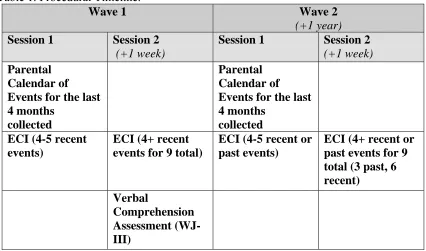
Participants visited the lab at the University of Minnesota for two hour-and-a-half sessions separated by one week at wave 1, and again one year later at wave 2. (See Table 1 for a timeline of the study). Four months prior to their visit to the lab each year, parents of the participants were sent a blank calendar and asked to record one or two unique events that occurred each week. Specifically, the parent instructions read: