International Journal of Emerging Technology and Advanced Engineering
Website: www.ijetae.com (ISSN 2250-2459,ISO 9001:2008 Certified Journal, Volume 3, Issue 8, August 2013)
6
The Application of Numerical Simulation on Groundwater
Yield Calculation of Seepage Well
Xu Jialu
1, Wang Wei
21,2School of Environmental Science and Engineering, Chang’an University, No. 126 Yanta Road,
Xi’an 710054, China
1,2Key Laboratory of Subsurface Hydrology and Ecology in Arid Areas, Ministry of Education, No.126 Yanta Road,
Xi’an 710054, China
Abstract—In regions where rivers are not perennial or have
low flow conditions during most part of the year(like banks of the Yellow River), the seepage wells are placed in the riverbed to obtain uninterrupted supply of naturally filtered groundwater through highly permeable saturated riverbed aquifers. Due to the complexities of flow, no exact analytical solution exists to provide steady state discharge drawdown relationship for seepage well. To overcome this difficulty, in this study a numerical model was developed for seepage well by adapting the equivalent hydraulic conductivity and the coupled seepage-pipe flow model. The numerical model is proposed to be applied for groundwater exploitation in Zaolinping Village which locates at Shenmu County, China. By calculation, the water yield of study area is 47600 m3/d. The results show that the proposed methodology based on the application of the coupled seepage-pipe flow model has been found to be efficient in constructing riverbed aquifer model with seepage well, which has a positive theoretical significance for guiding the design and construction of seepage well.
Keywords—seepage well, equivalent hydraulic conductivity, the coupled seepage-pipe flow model, groundwater yield
I. INTRODUCTION
The Quaternary alluvium of the Yellow River Valley is relatively thick with good permeability. Under the leakage recharge by the Yellow River, it is a favorable water source for centralized water supply. However, the water yield produced by traditional vertical wells is small, which can not meet the need of urban water consumption. According to the experience of regions with similar conditions, seepage wells can be adopted as the method for groundwater exploitation at the banks of the Yellow River.
A seepage well consists of a vertical well, chamber, gallery and a number of radiation holes. Each seepage well has several chambers to which the radiation holes are connected. The radiation holes spread laterally through an aquifer and collect water when groundwater abstraction occurs at the vertical well. Usually the vertical well is constructed at the bank of the river with a depth of 20-30m, which is the water intake of seepage well.
Seepage wells have the following advantages over traditional vertical wells: the drawdown is lower, groundwater tends to enter the wells at low velocities, the wells do not need frequent cleaning, and the operating cost of the wells tends to be low(Bakker et al., 2005). Owing to these benefits, in recent years, seepage wells have attracted considerable attention as groundwater supply wells. A number of studies on seepage wells have been carried out. Therefore, in this paper a methodology of numerical model is developed to construct the seepage well. The proposed model is applied in Zaolinping Village which locates at Shenmu County, China.
II. FLOW CHARACTERISTICS OF SEEPAGE WELL
Diverse flow regimes coexist in the seepage well system. Usually the groundwater flow through a porous medium is laminar flow with low Reynolds number(Re<1~10), which can be explained on the basis of mass conservation and Darcy’s law. In contrast, flow within a well pipe with great hydraulic radius and great Reynolds number can not be represented on the basis of Darcy’s law, which is only valid for laminar flows, thus other flow regimes can not be expressed.
The quantity of water intake is mostly from saturated riverbed aquifer in the early days, while the river infiltration is little. With the continuation of work time, the water level of the aquifer is lower than that of the river, then the river infiltration increases. When the pumping intensity is not too large and the seepage well system reach a steady state in a short period of time, the quantity of water intake is almost entirely from the river leakage supply. Groundwater flow around a seepage well has significant three dimensional flow characteristics.
III. CALCULATION MODEL OF SEEPAGE WELL
International Journal of Emerging Technology and Advanced Engineering
Website: www.ijetae.com (ISSN 2250-2459,ISO 9001:2008 Certified Journal, Volume 3, Issue 8, August 2013)
7 Chen et al. proposed a new numerical approach that a well can be represented by an equivalent hydraulic conductivity that depends on the Reynolds number within the pipe, which is called the coupled seepage-pipe flow model. According to the coupled seepage-pipe flow model, different flow regimes can be expressed and connected by the equivalent hydraulic conductivity.
When the water flow is laminar flow, the equivalent hydraulic conductivity Kl in the “well pipe” can be
expressed as:
Kl=
32
2d
(1)Where
is heavy rate of water, d is equivalent diameterof the well pipe
is the dynamic viscosity coefficient of water.When the water flow is turbulent flow, the equivalent hydraulic conductivity Kn in the well pipe can be expressed
as:
Kn=
fv
gd
2
(2)
Where g is the acceleration due to gravity, f is the coefficient of friction,
is the seepage velocity in well pipe.From the formula above, the flow law of a seepage well system can be expressed as the form of Darcy’s law, which means that the seepage flow can be coupled with the pipe flow. Thus a numerical model for seepage well is constructed:
boundary well vertical , , boundary able water t 0 flow pipe flow ulent rough turb 1 71 . 3 log 8 4 flow bulent smooth tur 1 316 . 0 2 4 flow laminar 32 4 aquifer and pipe between flow exchange boundary river boundary flow zero 0 | , , 0 2 10 2 75 . 1 25 . 0 2 2 2 2 s p p p e r r r r ve he he H z y x H H z H l H v e d gd d l H v d gd d l H g d d Q H H C Q q H H M K H D z y x z H K z y H K y x H K x n n Ke=
International Journal of Emerging Technology and Advanced Engineering
Website: www.ijetae.com (ISSN 2250-2459,ISO 9001:2008 Certified Journal, Volume 3, Issue 8, August 2013)
8 Where H is head; K is hydraulic conductivity; n is exterior normal vector of the second boundry; npis internal
normal vector of the water table boundary; C is the conductance of pipe screen material; Qe is the exchange
flow rate between well pipe and aquifer; Qp is the flow rate
in well pipe; Kr is the vertical hydraulic conductivity of
medium in riverbed; Mr is the thickness of medium in riverbed; qr is specific river leakage; q is the specific flow
rate of the second boundry of per unit area;
H is head loss and υ is fluid viscosity coefficient.IV. APPLICATION
The study area is located in Shenmu County, Shaanxi Province, China, longitude110°50′, latitude38°83′, where the aquifer medium is mainly Quaternary Holocene gravel layer and Triassic clastic bedrock weathering zone. The Yellow River lies on the northeast of the study area. Under natural conditions, the groundwater discharges to the Yellow River after the areal precipitation infiltration recharge; under the conditions of future exploitation, massive exploitation of groundwater will stimulate massive leakage recharge of the Yellow River. Thus the Yellow River can be conceptualized as the third kind of boundary. The southwest boundary of the study area is the interface between Mesozoic bedrock and alluvia of the river valley, which can be conceptualized as the non-flow boundary due to underdeveloped fractures of Mesozoic bedrock; the bottom surface is complete Mesozoic bedrock constituting regional impervious base. Under natural conditions, after being recharged through the infiltration of precipitation, groundwater is flowing from west to the east on the whole and finally discharging into the Yellow River.
Under the condition of riverside exploitation, the stimulated leakage of the Yellow River becomes the dominating recharge source, and the manual exploitation is the major discharge(Chen Chongxi et al.,2008). According to the experience of regions with similar conditions, seepage wells can be adopted as the method for groundwater exploitation at the banks of the Yellow River.
To depict the complex structure of the seepage well accurately, rectangular units are used in the fine discretization of the calculation domain. Zaolinping model area is discretized into 300 columns along the east-to-west direction and 602 rows along the north-to-south direction. The horizontal interval of the discretization grid is 5m. The number of active cells in a single-layer is 75502, and the horizontal area actually represented is 1888000m2. The model domain is subdivided into 11 layers vertically; in which the Quaternary aquifer is discretized into 3 layers and the bedrock fractured aquifer is discretized into 8 layers. Thus, the total number of active cells is 830522.
International Journal of Emerging Technology and Advanced Engineering
Website: www.ijetae.com (ISSN 2250-2459,ISO 9001:2008 Certified Journal, Volume 3, Issue 8, August 2013)
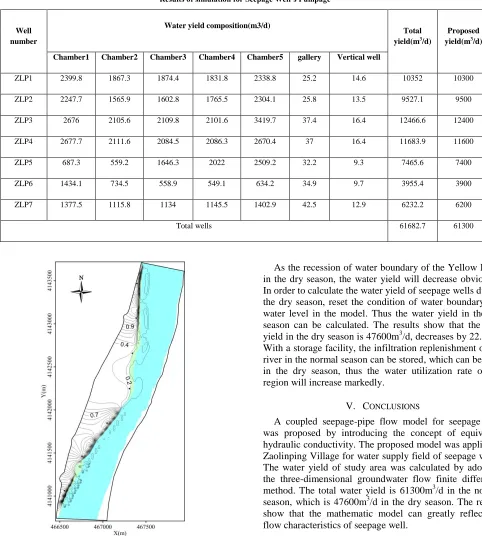
[image:4.612.61.543.150.686.2]9 Table I.
Results of simulation for Seepage Well’s Pumpage
Well number
Water yield composition(m3/d)
Total yield(m3/d)
Proposed yield(m3/d)
Chamber1 Chamber2 Chamber3 Chamber4 Chamber5 gallery Vertical well
ZLP1 2399.8 1867.3 1874.4 1831.8 2338.8 25.2 14.6 10352 10300
ZLP2 2247.7 1565.9 1602.8 1765.5 2304.1 25.8 13.5 9527.1 9500
ZLP3 2676 2105.6 2109.8 2101.6 3419.7 37.4 16.4 12466.6 12400
ZLP4 2677.7 2111.6 2084.5 2086.3 2670.4 37 16.4 11683.9 11600
ZLP5 687.3 559.2 1646.3 2022 2509.2 32.2 9.3 7465.6 7400
ZLP6 1434.1 734.5 558.9 549.1 634.2 34.9 9.7 3955.4 3900
ZLP7 1377.5 1115.8 1134 1145.5 1402.9 42.5 12.9 6232.2 6200
[image:4.612.63.283.168.678.2]Total wells 61682.7 61300
Fig I. Drawdown contour map of seepage wells, normal season
As the recession of water boundary of the Yellow River in the dry season, the water yield will decrease obviously. In order to calculate the water yield of seepage wells during the dry season, reset the condition of water boundary and water level in the model. Thus the water yield in the dry season can be calculated. The results show that the total yield in the dry season is 47600m3/d, decreases by 22.07%. With a storage facility, the infiltration replenishment of the river in the normal season can be stored, which can be used in the dry season, thus the water utilization rate of the region will increase markedly.
V. CONCLUSIONS
International Journal of Emerging Technology and Advanced Engineering
Website: www.ijetae.com (ISSN 2250-2459,ISO 9001:2008 Certified Journal, Volume 3, Issue 8, August 2013)
10 REFERENCES
[1] Bakker, M., Kelson, V.A., and Luther, K.H., 2005, Multilayer
Analytic Element Modeling of Radial Collector Wells. Ground Water.
[2] Bischoff, H. An integral equation method to solve three-dimensional
flow to drainage systems. Applied Mathematical Modeling, 1981.
[3] Chen Chongxi, Hu Litang, A review of the seepage-pipe coupling
model and its application. Hydrogeology&Engineering Geology.
[4] Chen Peng et al. Numerical Simulation Approach of Radial
Collector Well. 2011 International Symposium on Water Resource and Environmental Protection. Shaanxi, 2011.
[5] Eunhee Lee, Yunjung Hyun, Kang-Kun Lee. Numerical modeling of
groundwater flow into a radial collector well with horizontal arms. Geosciences Journal, 2010.
[6] Guo Dongping, Zhang Shifeng, Basic theory of fluids flow in porous
media, 1994.
[7] Hunt, B., 2005, Flow to Vertical and Nonvertical Wells in Leaky
Aquifers. Journal of Hydrologic Engineering.
[8] Li Xiao, Yang Lizhong, Yu Sujun. Characteristics of Seepage Water
Quality of Baisha Filter Well in Chongqing. Journal of Southwest Jiaotong University, 2002.
[9] Wang Wei, Zhang Ge, Numerical simulation of groundwater
flowing to horizontal seepage wells under a river, Hydrogeology, 2007.
[10] Wang Wei et al. Calculation of Groundwater Yield of Multiple
Seepage Wells in the Yellow River Valley. 2011 International Symposium on Water Resource and Environmental Protection. Shaanxi, 2011
[11] Zhan Hongbin, Cao J. Analytical and semi-analytical solutions of